Sopoćani Monastery
Sopoćani Monastery, Serbia
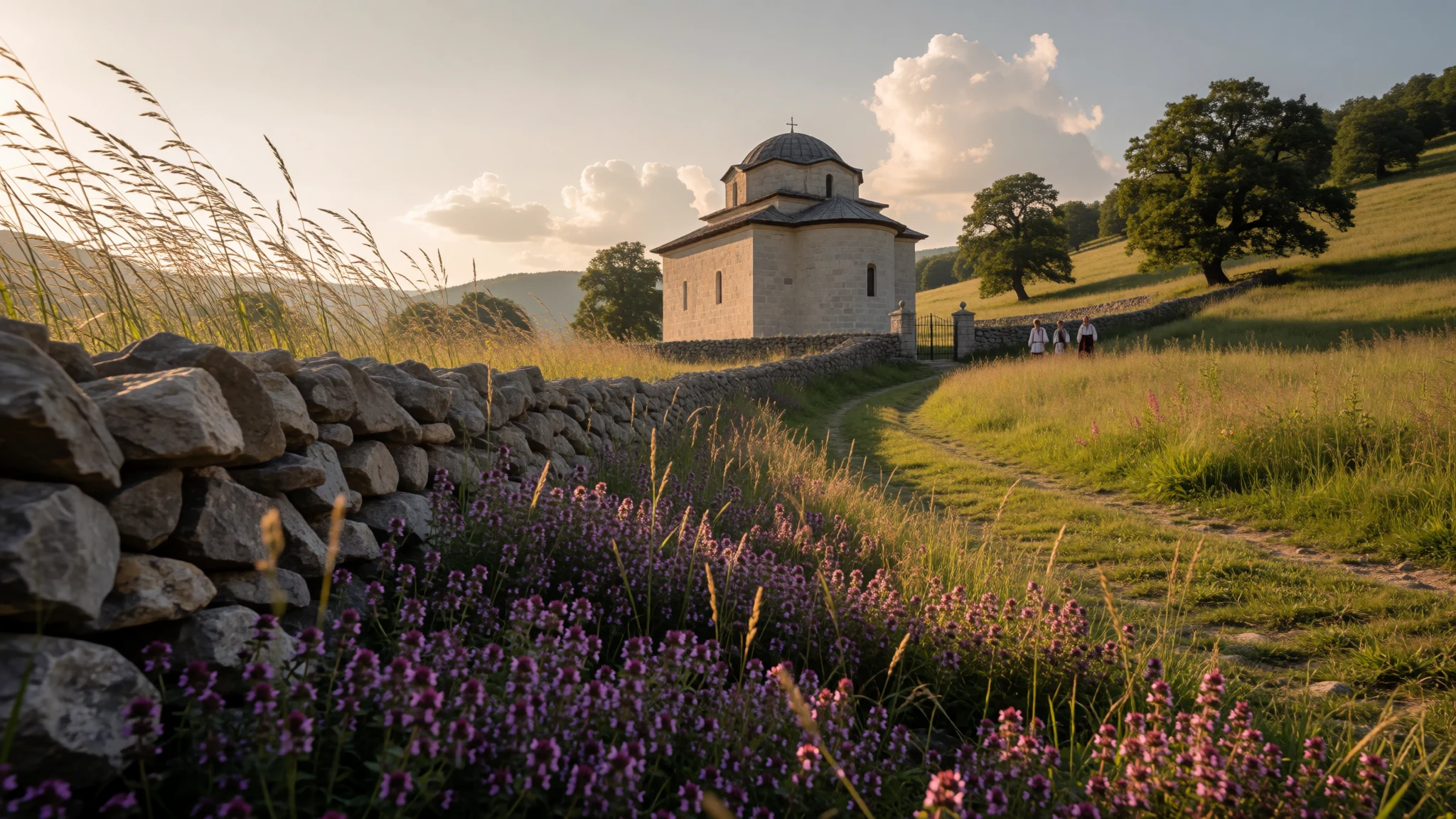
Sopoćani Monastery holds thirteenth-century frescoes in a quiet valley near Novi Pazar, painted for a Serbian king's tomb.
The place
Sopoćani Monastery (Serbian: Манастир Сопоћани) sits in south-western Serbia, a short drive west of the town of Novi Pazar and close to the spring of the Raška River. The setting is a quiet green valley rather than a hilltop fortress, and from outside the church reads as a plain, sturdy building with little decoration. The reward is indoors. This was Ras, the heartland of the medieval Serbian state, and the monastery is part of a World Heritage listing shared with the nearby site of Stari Ras. The Church of the Holy Trinity is all that remains of the original complex. The dining halls, living quarters and high surrounding wall have all gone, so the church now stands alone in open ground, easy to walk round. Visits tend to be quieter than at Serbia's big-city sights, and the mood is closer to a place of worship than a museum. Novi Pazar is the practical base for lodging, food and onward transport. The south of Serbia has hot, dry summers and autumns and cold winters with heavy snowfall, so the season matters: July and August are very hot, late spring and October are kinder for the road and the surroundings, and winter can mean snow on the approach and a chilly interior. Younger Serbs often speak some English and enjoy using it, while older people are more likely to know German or French, so asking directions in town usually works. A little patience, and a few words of Serbian, go a long way in the valley villages.
Its story
Sopoćani Monastery was founded in 1259 by King Stefan Uroš I as a church that would also serve as his burial place. He was a grandson of Stefan Nemanja, the ruler who in the later twelfth century made Raška a strong state, and a son of Stefan the First-Crowned, under whom the Serbian church became autocephalous, meaning self-governing. By the time Uroš commissioned Sopoćani, the dynasty already had kings, a self-governing church and its own coinage, and the commission was a way of planting a family monument in the old heartland. Once the walls were up, painters covered the interior, and the work can be dated only indirectly, to the years soon afterwards. The scheme follows a plan that had been taking shape through the thirteenth century. The sanctuary holds scenes of the liturgy; the nave tells the story of Christ's saving work through the major feasts of the church year; and the narthex, the entrance porch, carries Old Testament subjects alongside teaching on doctrine and the last judgement. Its dedication is to the Holy Trinity. Dušan, a great-grandson of Uroš, later enlarged and repaired the church, in the fourteenth century. Little else of the monastery survived: the other buildings vanished over time, and the church carries the whole story. That is why a visit here is really a visit to one building, but a densely painted one.
What to see
- Church of the Holy Trinity — Sopoćani valley, west of Novi Pazar
The only surviving building of the original monastery, the church is the reason for the journey. The exterior is restrained, a solid, compact mass with little carving to catch the eye. Walk the full circuit outside first, then go in; the contrast between plain walls and the painted interior is the whole point of the visit.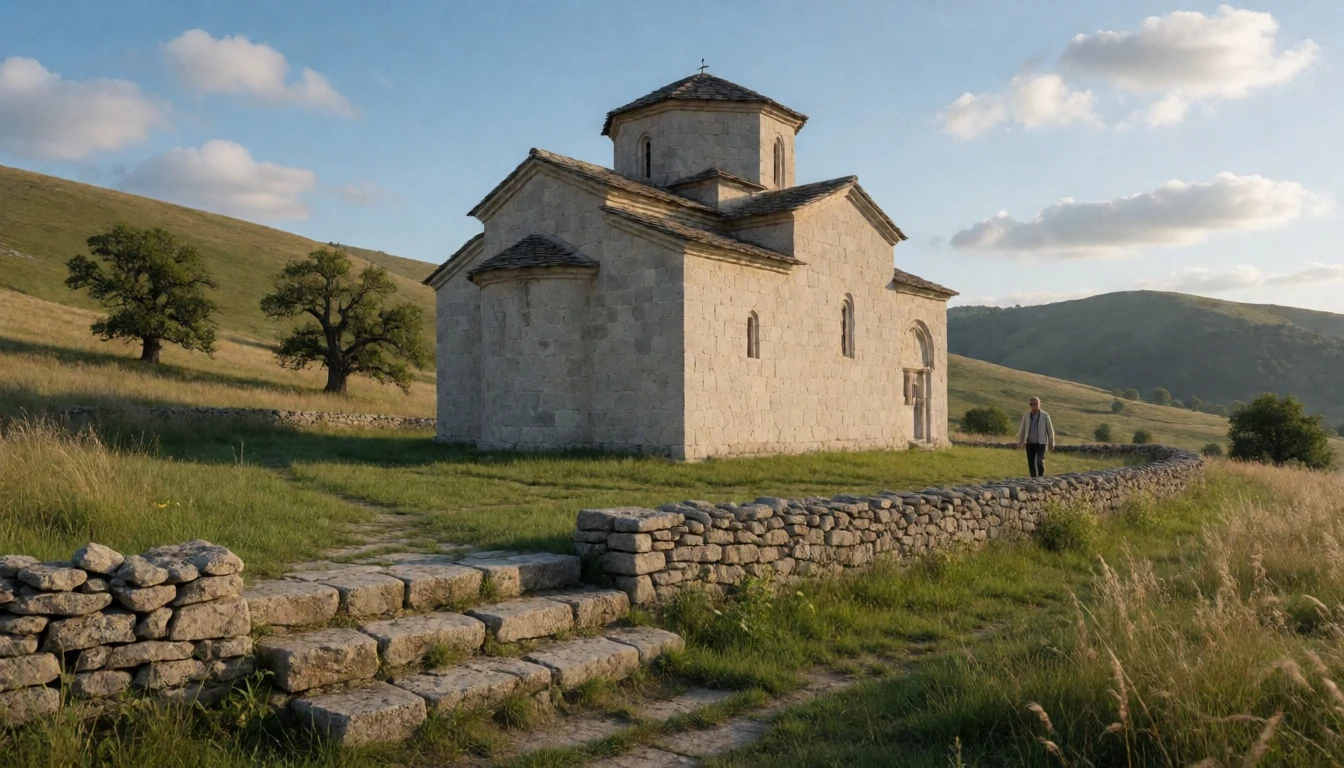
- The Death of the Virgin — Inside the church, Sopoćani
The Death of the Virgin, called the Dormition in the Orthodox tradition, is a crowded composition of mourners gathered around her bier, with Christ behind holding her soul. Photographs of it appear widely in art books, but the scale and the surviving colour read differently on the wall. Allow time for your eyes to settle.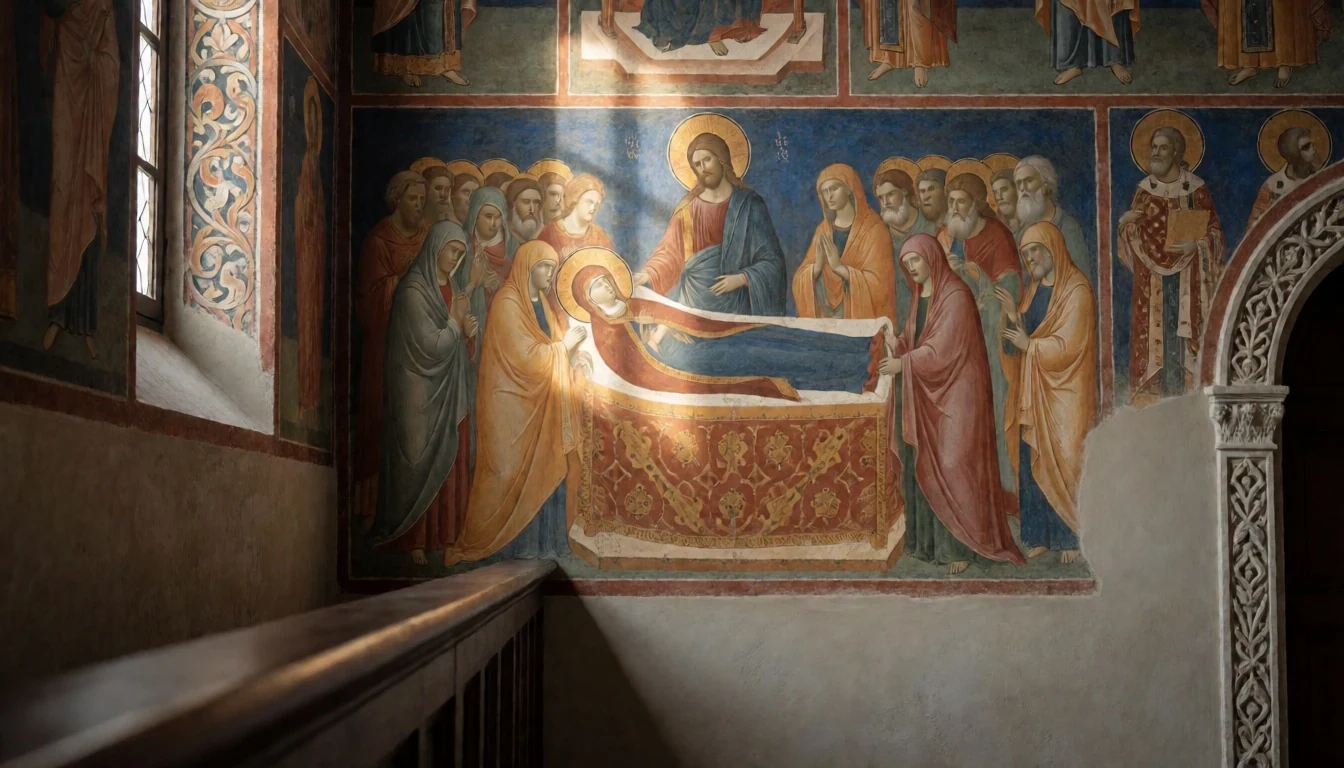
- The painted zones: narthex, nave, sanctuary — Inside the church, Sopoćani
The decoration is organised by zone. The narthex, or porch, carries Old Testament stories, doctrine and the last judgement; the nave gives the major feasts of the Christian year; the sanctuary holds scenes of the liturgy. Walking in that order, from entrance towards altar, turns the walls into a guided sequence rather than a blur of saints.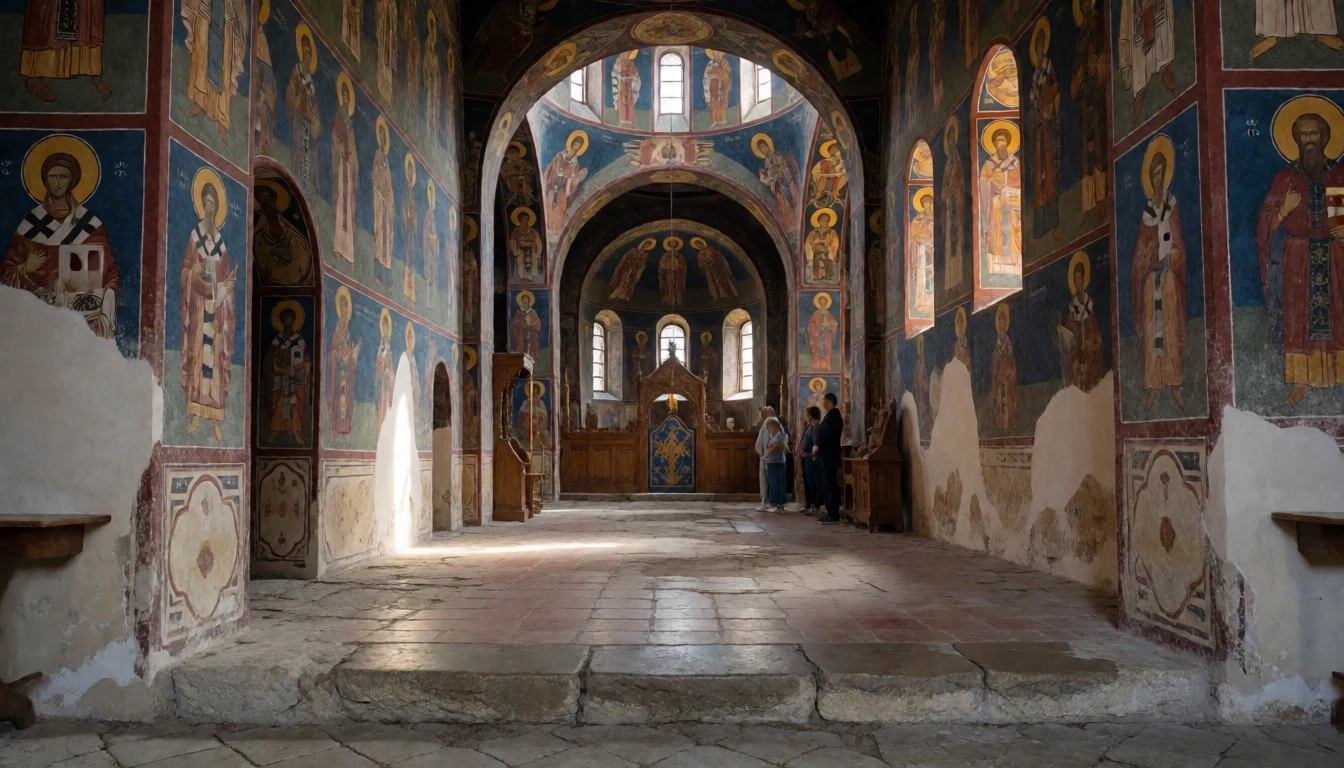
- Fresco details: shepherds and faces — Inside the church, Sopoćani
Close details repay patience: shepherds, mourners' faces, the fall of drapery. A compact pair of binoculars helps with the upper walls, where fine detail is hard to pick out from the floor. Photography rules vary inside churches, so ask before raising a camera, and never use flash on painted plaster.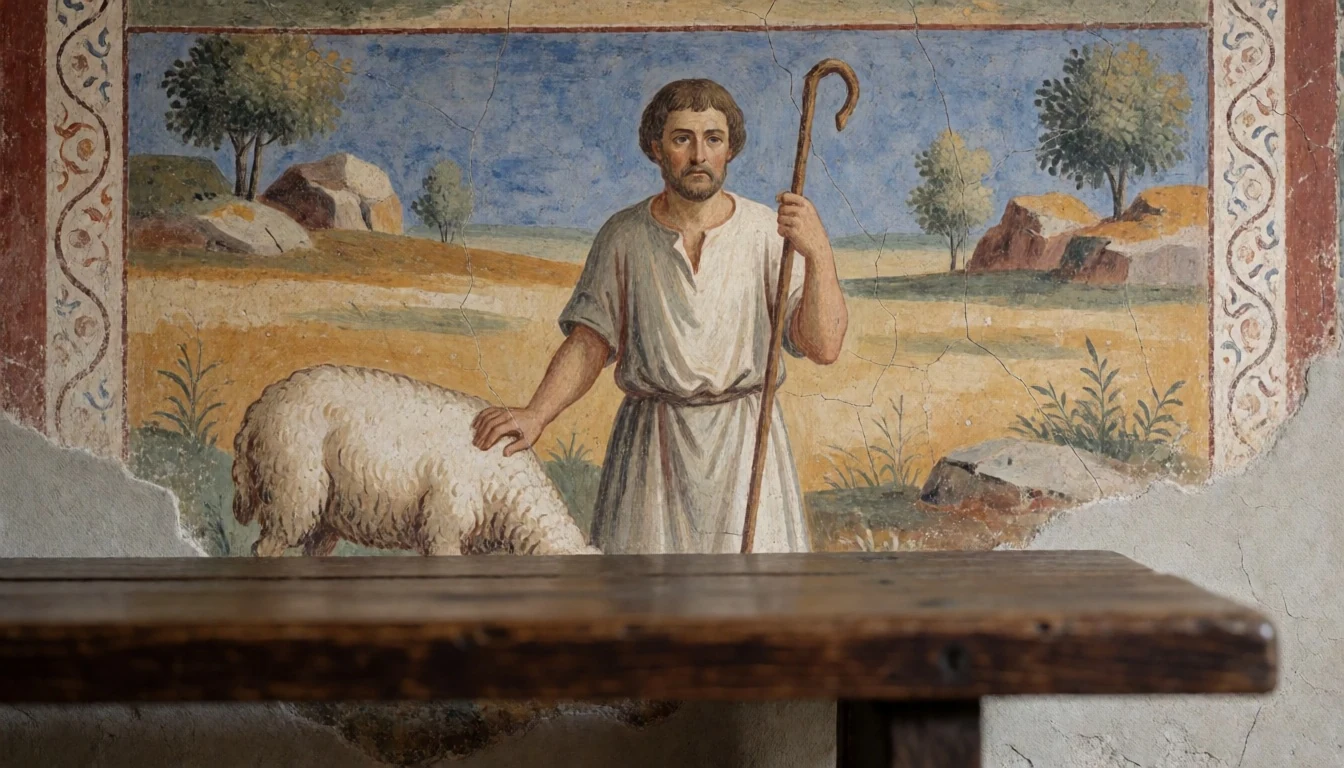
- The valley by the Raška spring — Sopoćani valley, west of Novi Pazar
The monastery stands near where the Raška River rises, and the valley rewards a slow walk before or after the church visit. The surrounding countryside makes a calm contrast to the intensity of the interior, and spring and early summer bring lush green views.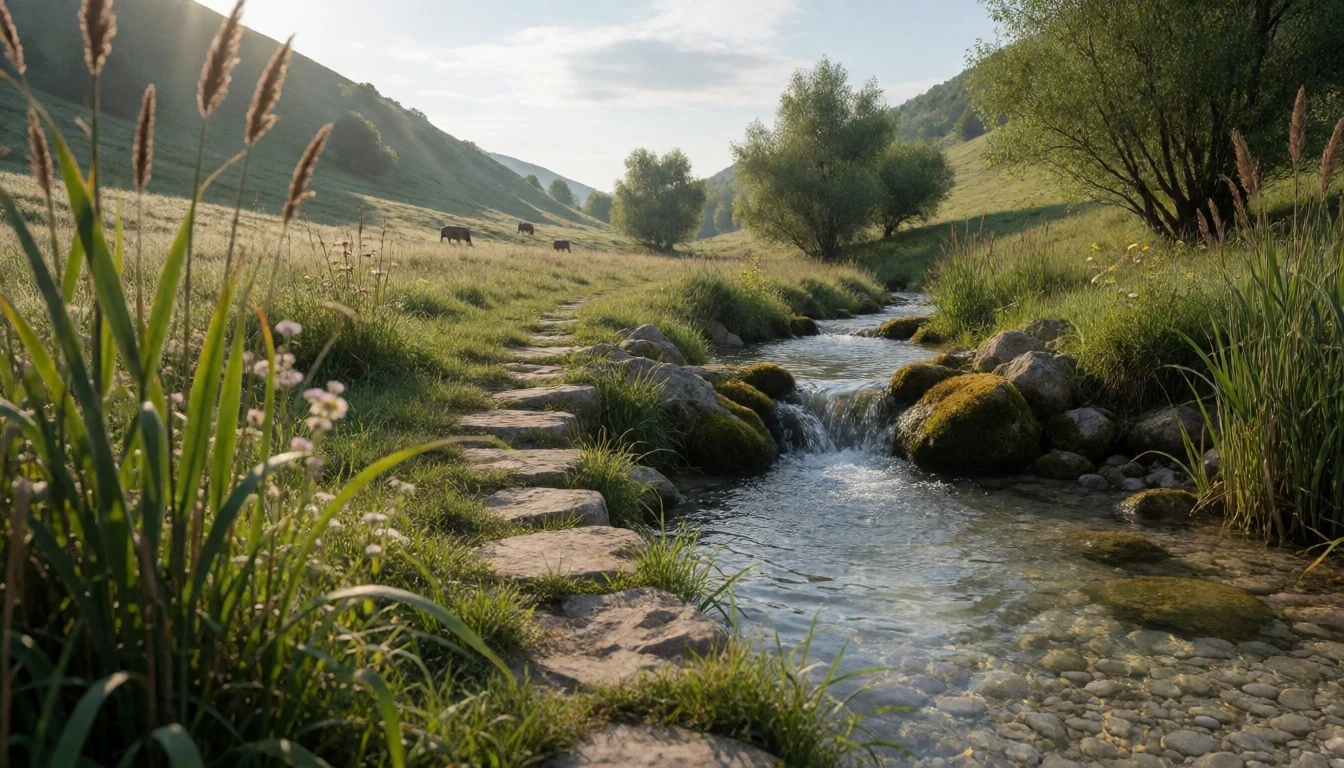
Culture
Sopoćani Monastery belongs to the Serbian Orthodox tradition, and its church was built for worship and royal remembrance, not for show. Orthodox church painting is meant to be read as teaching, with each saint and feast in a set place, so local worshippers may pause, cross themselves or light a candle before particular images. In the villages of the south, people are known for being hospitable and polite. If invited into a home, bring a small gift on a first visit, such as flowers or chocolate. In a rural house, take off shoes unless the host says otherwise, and wait to be offered refreshments, though asking for a glass of water is fine. On buses and trams, offering a seat to an older person or a pregnant woman is the norm. Many Serbs still feel raw about the Yugoslav wars and the NATO bombing, so let others raise those subjects and hold back strong opinions. Inside the church, speak softly, cover shoulders and knees, and ask before photographing frescoes or anyone at prayer.
What to wear
Sopoćani Monastery sits in a part of Serbia where traditional dress survives mainly at festivals, weddings, church feast days and folklore events. Village costume varied from region to region, but common elements include wool, linen and hemp cloth woven at home, embroidered blouses and waistcoats, woven belts and aprons, and opanci, soft leather shoes with upturned toes. Men's costume often included the šajkača, a flat-topped cap that remains a recognisable Serbian symbol. Everyday clothing around the monastery is plain and practical: jeans, shirts, jackets and sturdy shoes, with the usual European mix of sportswear and smart-casual in towns such as Novi Pazar. Older village women may still wear headscarves and long skirts, particularly at church. Visitors should dress for the church first: shoulders and knees covered, no hats indoors, and women may like to carry a light scarf in case a head covering is expected. Sleeves and hemlines matter more than colour. For the climate, summers are hot and dry, so light cotton layers, sun protection and water suit the season, while winters are cold with heavy snow, calling for a warm coat, hat, gloves and boots with grip. Footwear should cope with gravel paths and wet grass, and be easy to slip off if a home visit comes up.
What to eat
- Roštilj — Grill restaurants and eateries in Novi Pazar and along the main roads
A large plate of mixed grilled meats, the centrepiece of most Serbian menus. Expect sausages, chops and sometimes chicken wrapped in bacon and stuffed with cheese, served with bread and salad. It is hearty, so one plate can feed two modest appetites.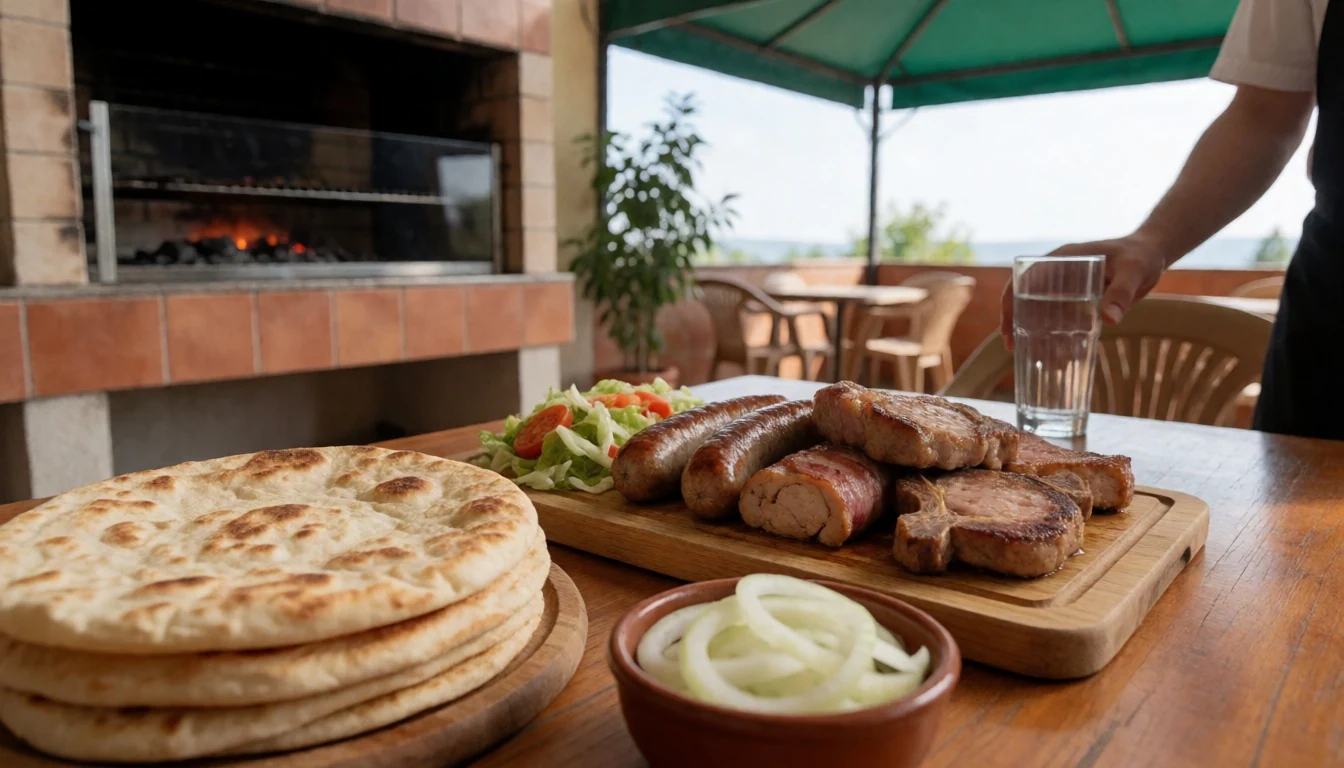
- Ćevapi — Grill counters in Novi Pazar's town centre
Small skinless minced-meat sausages, grilled over coals and tucked into flatbread with raw onion. Common across the Balkans and an easy quick lunch in Novi Pazar before or after the monastery. Eat them hot; they stiffen quickly as they cool.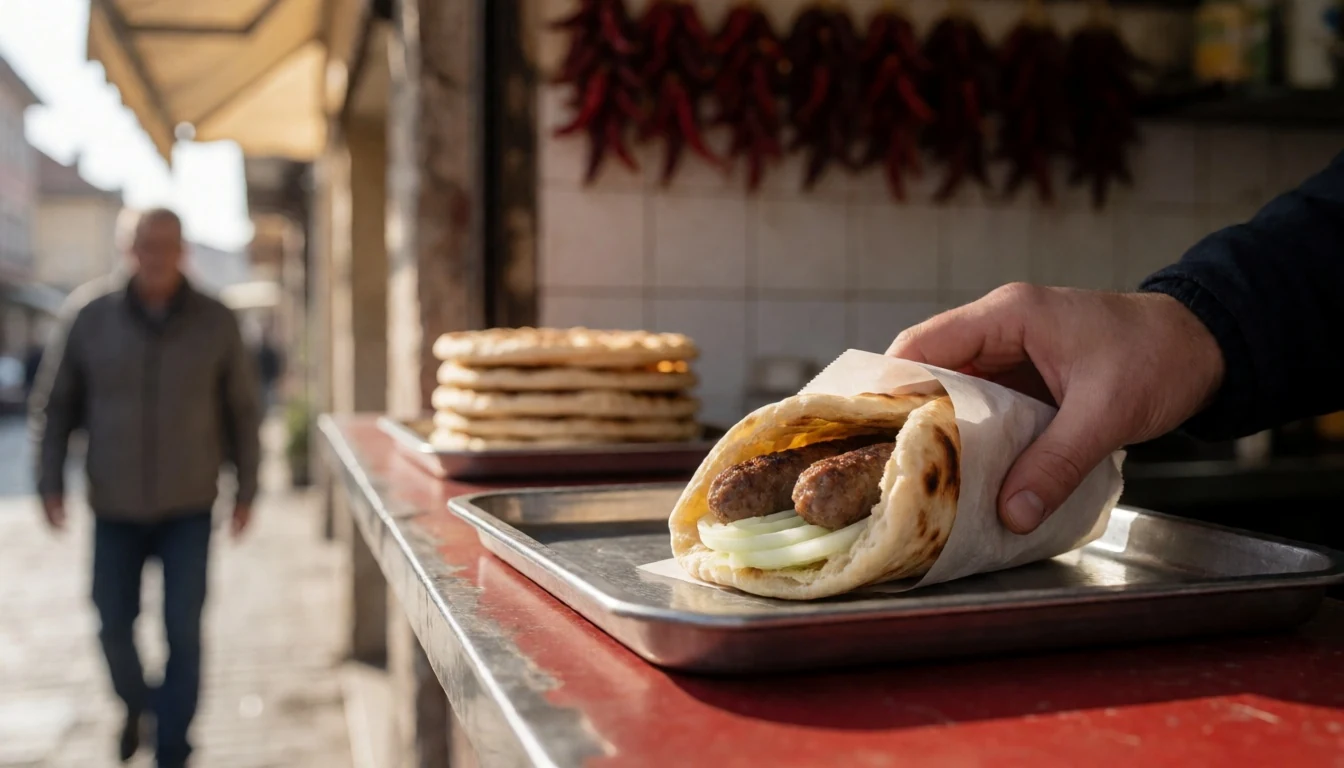
- Burek — Bakeries and pastry shops in Novi Pazar
A flaky pastry coil or pie filled with minced meat, cheese or sometimes potato, baked in large trays. It is a standard breakfast or snack in the region, often paired with plain yoghurt, and handy to carry for a morning at the monastery. - Kajmak with bread and local cheese — Village shops, roadside stalls and the town market
Kajmak is a thick, salty dairy cream spread on fresh bread, often served beside grilled meat. Local white cheeses and bread are the backbone of a simple meal, and a plate of them makes a sound picnic for a monastery visit. - Grilled vegetable plates — Most restaurants in Novi Pazar; ask in smaller places
For those avoiding meat, restaurants usually offer grilled vegetables, fresh salads, omelettes and pancakes. Peppers, aubergine and tomatoes are the usual base in warm months, dressed simply with oil and salt. Ask what is available, as menus lean heavily towards meat.
Plan it
Best time. Late April–May and October. The south has hot, dry summers and autumns, with July and August the hottest months, so late spring and October suit the valley walk and the roads. Winters are cold with heavy snowfall, which can slow the approach and leave the church chilly.
How long. 1–2
Getting there. Fly into Belgrade, then take a bus or hire a car to Novi Pazar, the town west of which the monastery lies. The last leg is a short drive or taxi from Novi Pazar; check current bus timetables locally.
Budget. low
Tips
- Check the official site, http://www.manastirsopocani.org/, for opening arrangements before travelling
- Go early in the day so the church is quiet and there is time to read the frescoes slowly
- Carry a light layer, as stone churches can be cool even in summer
- Bring a small pair of binoculars for the upper walls
- Pair the visit with Stari Ras, the other half of the World Heritage listing, to fill a day
Etiquette
- Cover shoulders and knees and remove hats before entering the church
- Ask before photographing frescoes, people at prayer or monastery staff
- If invited to a home, take a small gift and remove shoes at the door
Nearby
Sources
- Wikidata Q1142337 (CC0)
- Wikipedia: Sopoćani (CC BY-SA 4.0)
- Wikivoyage: Serbia (CC BY-SA 4.0)
- Manastir Sopocani, Pavle Marjanovic (CC BY 3.0)
- Cultural Heritage site of Serbia number СК 156, MarkoDekic (CC BY-SA 4.0)
- Meister von Sopocani 001.jpg, Meister von Sopocani (Public domain)
- Sopocani Monastery, Lordlazar98 (CC BY 3.0)
- Tod der Gottesmutter Sopocani, Orjen (CC BY 3.0)
- Tod der Gottesmutter Sopocani (detail), Orjen (CC BY 3.0)
- Pastiri, detalj sa freske iz manastira Sopoćani, Manastirski ikonopisac (Public domain)
- Cultural Heritage site of Serbia number СК 156, Zlatnogrivasti Marmozet (CC BY-SA 4.0)


