Our Lady of Promise
Our Lady of Promise, Serbia
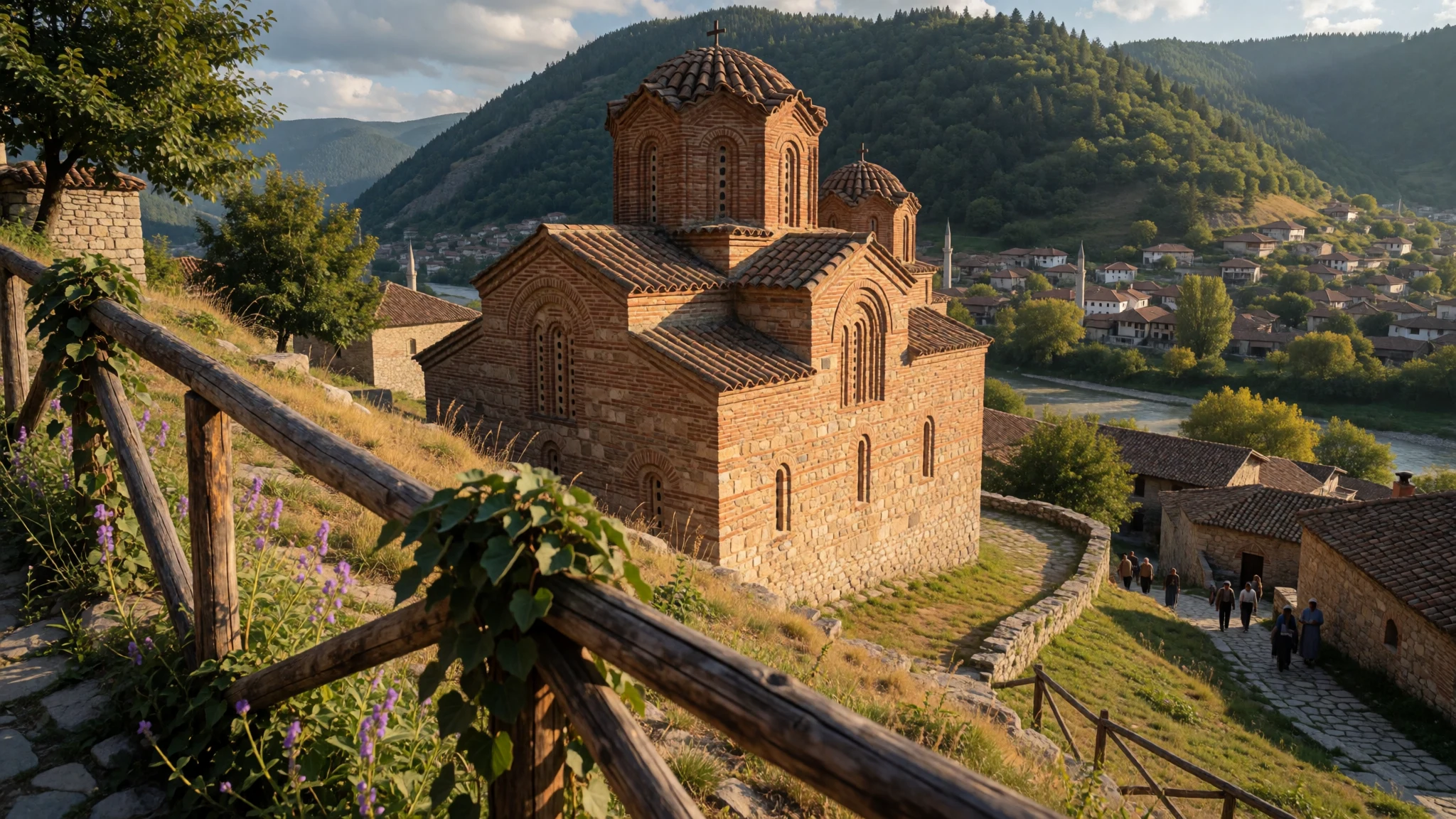
Visit Our Lady of Promise to experience a remarkable medieval Serbian Orthodox cathedral renowned for its layered Byzantine architecture and ancient fresco cycles.
The place
Our Lady of Promise sits in the historic city of Prizren, sheltered by the steep, forested slopes of the Sharr Mountains and divided by the flowing waters of the Lumbardh river. As you wander the old town alleys and bustling central squares, you'll notice street signs written in both Albanian and Serbian, alongside Turkish. The cathedral itself is tucked away within this vibrant urban fabric, offering a striking anchor of medieval masonry amidst low brick roofs and cobblestone lanes. Visitors arriving in the city will immediately notice the dramatic mountain backdrop that frames every view, creating a cooler microclimate near the heights while the valley streets hum with neighbourhood cafes and traditional eateries. The broader municipal area accommodates a diverse mix of communities, adding a warm, cosmopolitan energy to the riverbanks and artisan markets. Walking through the older quarters reveals architectural layers spanning centuries, from Roman remnants repurposed in stone walls to Ottoman-era additions that speak to the region's complex history. The river splits the urban core into distinct neighbourhoods linked by stone bridges, making exploration entirely walkable for those who wish to wander past craft shops, bubbling fountains and shaded courtyards. Despite the urban growth in the surrounding suburbs, the historic heart retains a distinct charm, inviting slow afternoons spent observing local daily life against a backdrop of ancient stone and soaring peaks.
Its story
Our Lady of Promise carries a long history written directly into its ancient stone walls and weathered masonry. Long before the medieval cathedral arose, the terrain served as a sacred and burial ground, evidenced by Roman-era altar remnants and laurel wreath reliefs discovered tucked into the exterior masonry. These fragments of earlier public structures were frequently re-utilised as building materials during medieval times, offering quiet clues about the early settlements along the river valley. In the beginning of the fourteenth century, King Stefan Milutin commissioned the grand rebuilding and expansion of the site on the foundations of an eleventh-century Byzantine basilica. Master builder Nicholas directed the construction of the new sanctuary, expanding its original three naves into five and incorporating distinctive architectural markers such as five domes, exterior monumental inscriptions, and a classical belfry. These stylistic choices were deliberate political symbols through which the monarch emphasised his partial Byzantine lineage and connections to the imperial court. Centuries later, following Ottoman annexation in the fifteenth century, the complex underwent another dramatic transformation when a minaret was added and the Christian cathedral was converted into a mosque. After regional annexations in the early twentieth century, the building's religious status was restored, followed by decades of careful restoration and operation as a museum. Although the complex suffered heavy damage during civil unrest, subsequent international preservation phases have continually worked to protect its invaluable heritage and storied structure.
What to see
- Shadervan — Central Prizren
The main stone piazza in the heart of town serves as the vibrant social hub, surrounded by traditional cafes, bustling bars, restaurants, and local ice cream parlors. During the daytime, it is an ideal place to sit outdoors, sip a coffee, enjoy a casual lunch, and watch the town go about its daily routine. - Prizren Hamam — Old Town
This distinctive historic complex features a striking arrangement of low brick domes that once served the community as public baths. While no longer functioning for its original purpose, the atmospheric brick interior is occasionally opened up to host local art exhibitions and cultural gatherings. - Suzi Celebi Mosque — Historic district
Erected in the early sixteenth century, this charming religious site stands as the oldest mosque in the entire town. Visitors can observe the tranquil grave of the famous local poet Suzi Celebi, which is enclosed by a low stone wall bearing the precise year of his death. - Orthodox Church — Prizren centre
Our Lady of Promise itself stands as an architectural masterpiece of the fourteenth century, featuring remarkable masonry and ancient Byzantine frescoes. Although the cathedral sustained heavy damage during past civil unrest and has undergone extensive repairs, visitors should check current local guidelines regarding gate access and exterior viewing protocols. - GuideKS — Citywide services
This umbrella organisation coordinates official tourist guides throughout the region, connecting independent travellers with knowledgeable local experts. They arrange tailored walking tours and excursions suited to specific visitor interests, ensuring deeper insight into local history, architecture, and mountain trails.
Culture
Our Lady of Promise and the surrounding city of Prizren reflect a fascinating convergence of diverse cultural, linguistic, and religious traditions. Daily life unfolds at an unhurried pace, centred around neighbourhood coffee culture, family gatherings, and traditional artisan crafts handed down through generations. Visitors will notice that the local community is notably welcoming, with Turkish, Albanian, and Serbian spoken fluidly across the bustling markets, tea houses, and historic squares. Respect for elders and religious traditions remains deeply embedded in the social fabric, visible in the quiet reverence maintained around sacred sites and neighbourhood mosques alike. Traditional hospitality is a core value, and shopkeepers or cafe owners will frequently take time to chat with curious travellers over a small cup of dark coffee or herbal tea. When visiting active religious buildings, sacred monuments, or archaeological zones, dress modestly with shoulders and knees covered, and always respect photography restrictions where posted.
What to wear
Our Lady of Promise and the streets of Prizren showcase a blend of contemporary European styles and modest traditional garments worn by older generations in the surrounding villages. Traditional attire historically featured hand-woven woollen textiles, embroidered vests, and tailored layers suited for mountain winters, though today these are largely preserved for cultural festivals and folk celebrations. In daily urban life, residents dress practically and neatly, favouring modern casual wear such as denim, smart jackets, and comfortable walking shoes suited for the uneven cobblestone lanes and steep hillsides. For travellers exploring the region, lightweight, breathable layers are ideal during warmer months, while a sturdy waterproof jacket is essential if visiting the Sharr Mountain foothills where weather can shift rapidly. When entering religious sites, monasteries, or conservative neighbourhood areas, both men and women should wear modest clothing that covers the shoulders and knees, and it is polite to carry a light scarf for women to cover their heads when required at specific Orthodox sanctuaries.
What to eat
- Qebapa — Qebaptore Afrimi and local grill houses
Classic grilled minced meat sausages served warm with fresh flatbread, raw onions, and spicy red pepper paste, found at traditional local kebab eateries. - Toplia — Furra Prizreni bakery
A comforting, simple traditional breakfast dish made with crumbled bread, cheese, and rich fats, best enjoyed alongside a steaming cup of tea. - Çig Köfte — Çigköfte Evi in the old town
Spicy, flavourful vegan patties and wraps made from fine bulgur, tomato paste, and herbs, wrapped tightly in flatbread with fresh lemon juice. - Local Vegetarian Plate — Noja Kuzhine in the central district
A hearty selection of regional vegetable casseroles, stuffed peppers, and herb-infused salads prepared with seasonal garden produce. - Grilled Meat Specialities — Restaurant Ambienti overlooking the river
Juicy cuts of seasoned lamb and beef grilled over open coals, accompanied by crusty bread and stunning views over the old town rooftops.
Plan it
Best time. May to June and September to October offer pleasant daytime temperatures for walking the historic streets and exploring mountain trails without summer heat.
How long. 2–3
Getting there. Arrive by bus from Pristina or Peja via connecting regional routes, or drive via scenic mountain highways from neighbouring countries.
Budget. low
Tips
- Wear sturdy walking shoes for the steep cobblestone streets
- Carry cash in local currency for small bakeries and markets
- Start morning explorations early before midday warmth
- Check local advisories regarding church interior opening hours
Etiquette
- Dress modestly with shoulders and knees covered at all sacred sites
- Ask permission before photographing local residents in traditional dress
Nearby
Sources
- Wikidata Q890652 (CC0)
- Wikipedia (rev 1379463517) (CC BY-SA 4.0)
- Wikivoyage (rev 5360499) (CC BY-SA 4.0)