Golubac Fortress
Golubac Fortress, Serbia
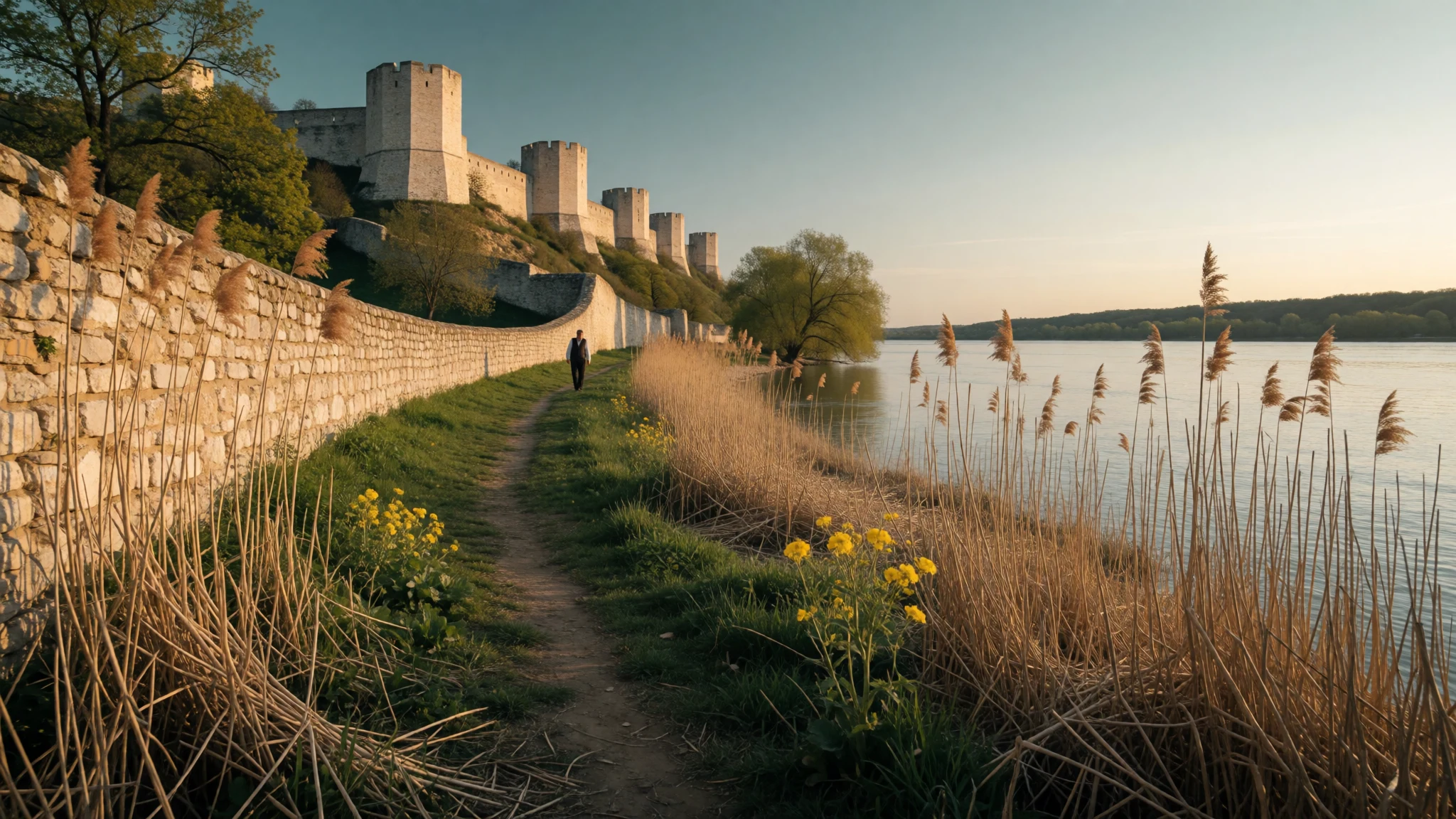
Golubac Fortress is a ring of ten restored medieval towers on the Danube, where the river narrows towards the Iron Gate gorge.
The place
Golubac Fortress stands on the right bank of the Danube in north-eastern Serbia, about 4 km downstream of the town of Golubac. Romania lies across the water, roughly 2 km away near the village of Coronini. The river is still about 6.5 km wide here, and the fortress sits where it begins to squeeze into the Iron Gate gorge, at the start of the Đerdap national park. That position explains the whole building. Whoever held it could watch the river and tax the traffic on it, and in the Middle Ages a heavy chain ran from here to a rock on the far bank called Babakaj. The walls step down the slope to the water in three compounds, built in stages, with ten towers in all. Most began as square towers, and several were later wrapped in many-sided outer skins once firearms arrived. The towers were deliberately left unconnected, so a defender could lose one and still hold the others. The stone is pale and freshly restored now, and the whole ensemble appears suddenly round a bend of the river road. It is a place for the setting more than for deep interiors. Restoration is recent, the exhibitions are modest, and the real pleasure is looking out over the water and picturing the chain, since only a few towers can be climbed, and only by adults with an assigned escort. Boat tours on the Danube pass beneath the walls, and the site is also a stop for river cruise ships.
Its story
Golubac Fortress has no single clear origin, and an honest account starts with doubt. During the recent restoration, workers found Roman and Byzantine remains, including brick-and-stone courses in the building the Ottomans later used as a bath-house, and traces of a water system. The site was therefore in use long before the medieval walls. Who raised those walls is unresolved. Bulgarians, Serbs and Hungarians have all been proposed, and nobody knows how many towers there were at first. Most of the fabric is generally dated to the early 14th century. One clue leans Serbian: an Orthodox chapel built into a tower suggests a local lord, though the chapel itself may be a later addition from the early 15th century, under Despot Stefan Lazarević. The first firm record, from 1335, is in Hungarian sources, when a Hungarian garrison held the place. Around the middle of that century the Serbian emperor Stefan Dušan toured the region and called in at Golubac, still under Hungarian command. By the Battle of Kosovo in 1389 it was in Serbian hands. Over the following centuries it passed between Ottomans, Hungarians, Bulgarians, Serbs and Austrians, until it was handed to Prince Mihailo Obrenović in 1867. It is credited with beating off more than 120 attacks. Restoration opened it to visitors in autumn 2016, and the fully reconstructed fortress opened in April 2019, when the whole project was finished.
What to see
- The riverside approach — Danube road, below the main gate
Golubac Fortress is best met first from the Danube road, where the towers rise in sequence from the water's edge. Stopping at a pull-in before the main gate gives the clearest sense of how the compounds step up the slope and why a chain across the river was ever thinkable.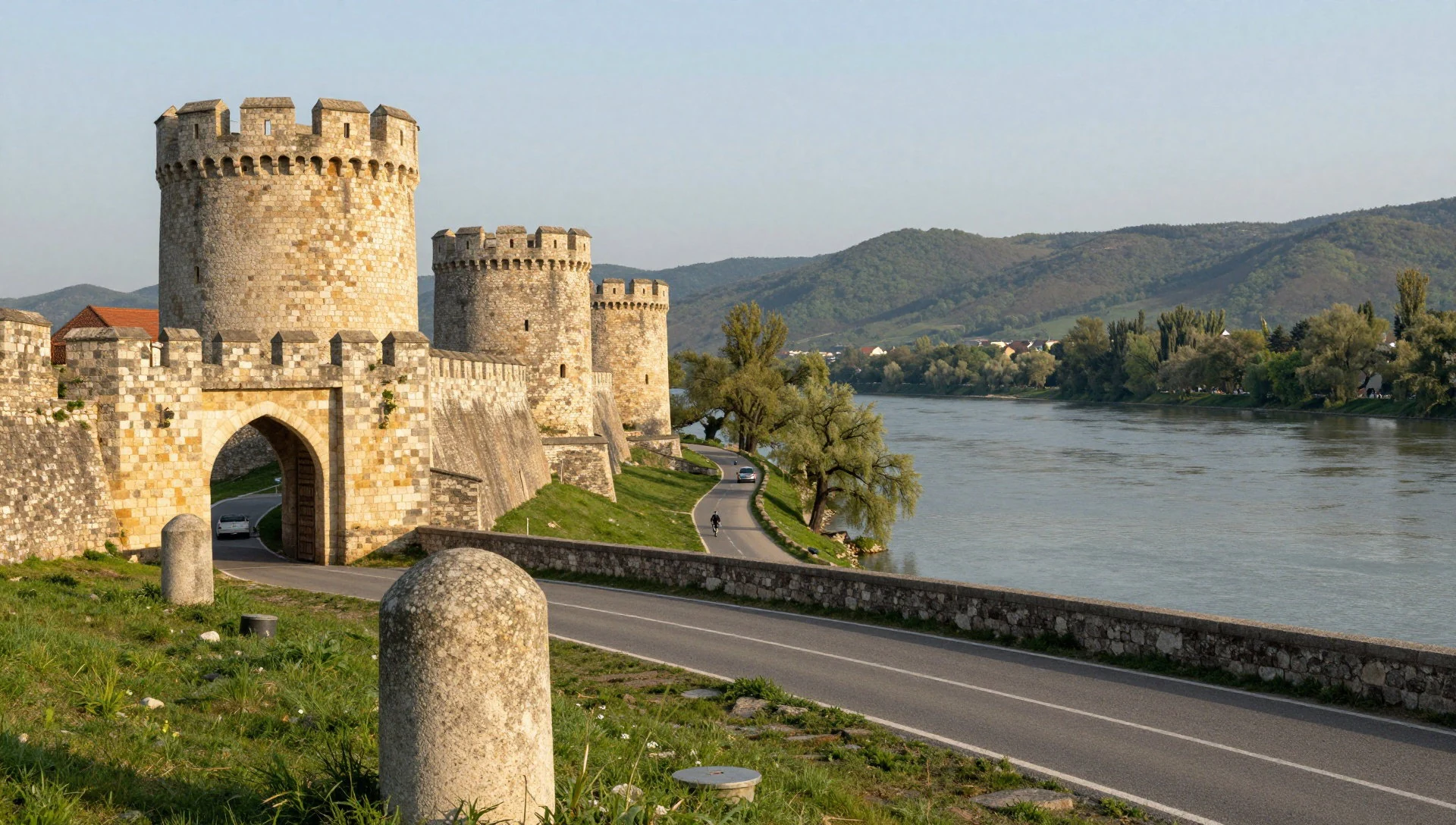
- The ten towers — Within the fortress walls
The towers are the point of the visit. Some are square, others wear many-sided reinforcements added for gunpowder warfare, and none is joined to its neighbour. Walking between them shows how each was meant to stand alone. Which towers are open and what they hold can change, so check the official site.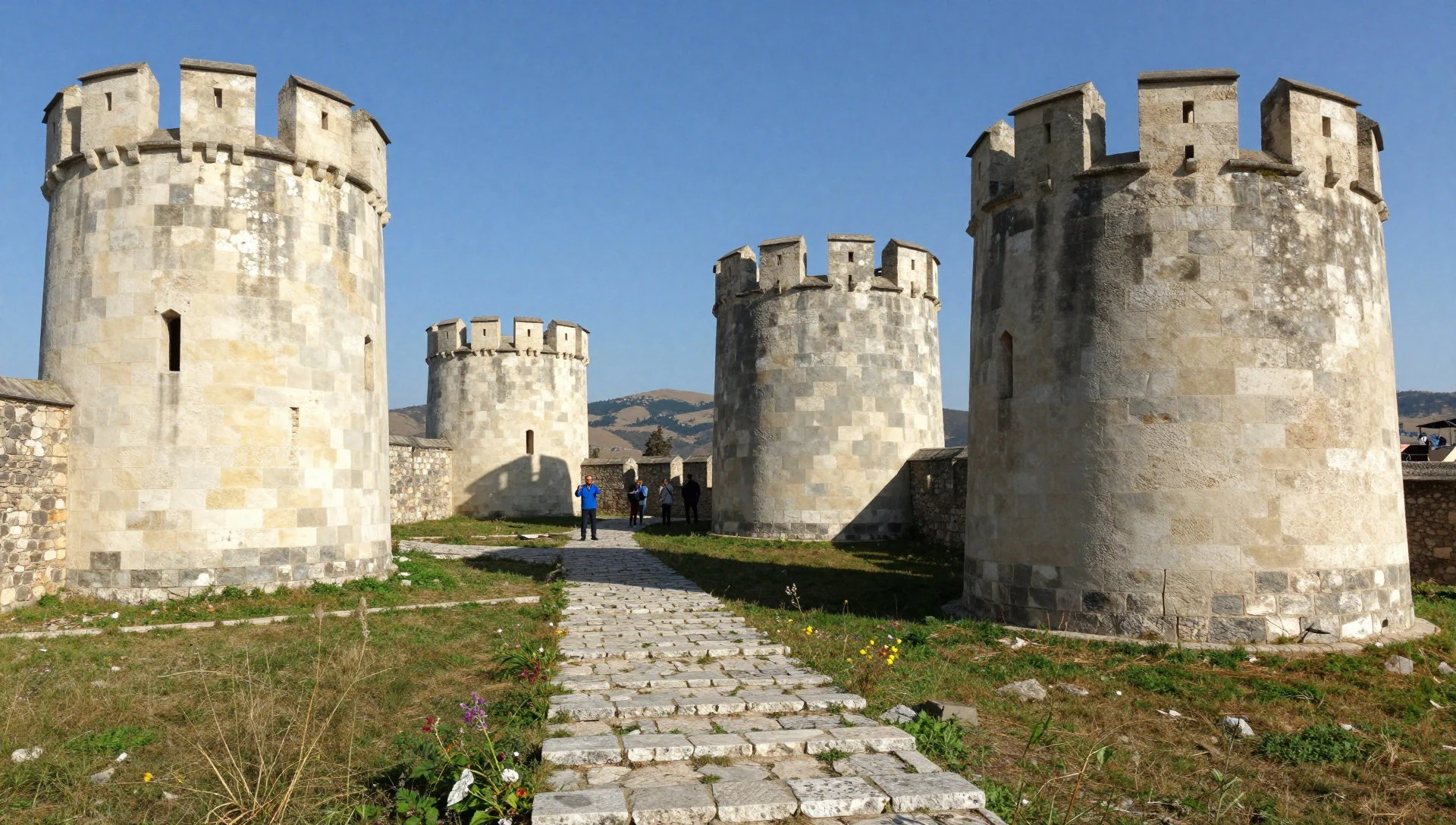
- The view from the citadel — Upper citadel
From the upper levels the Danube spreads out wide and slow, with Romania visible on the far bank and the gorge beginning ahead. Wind off the river can be sharp even on a warm day. Late afternoon light makes the stone look warmer and flatters photographs.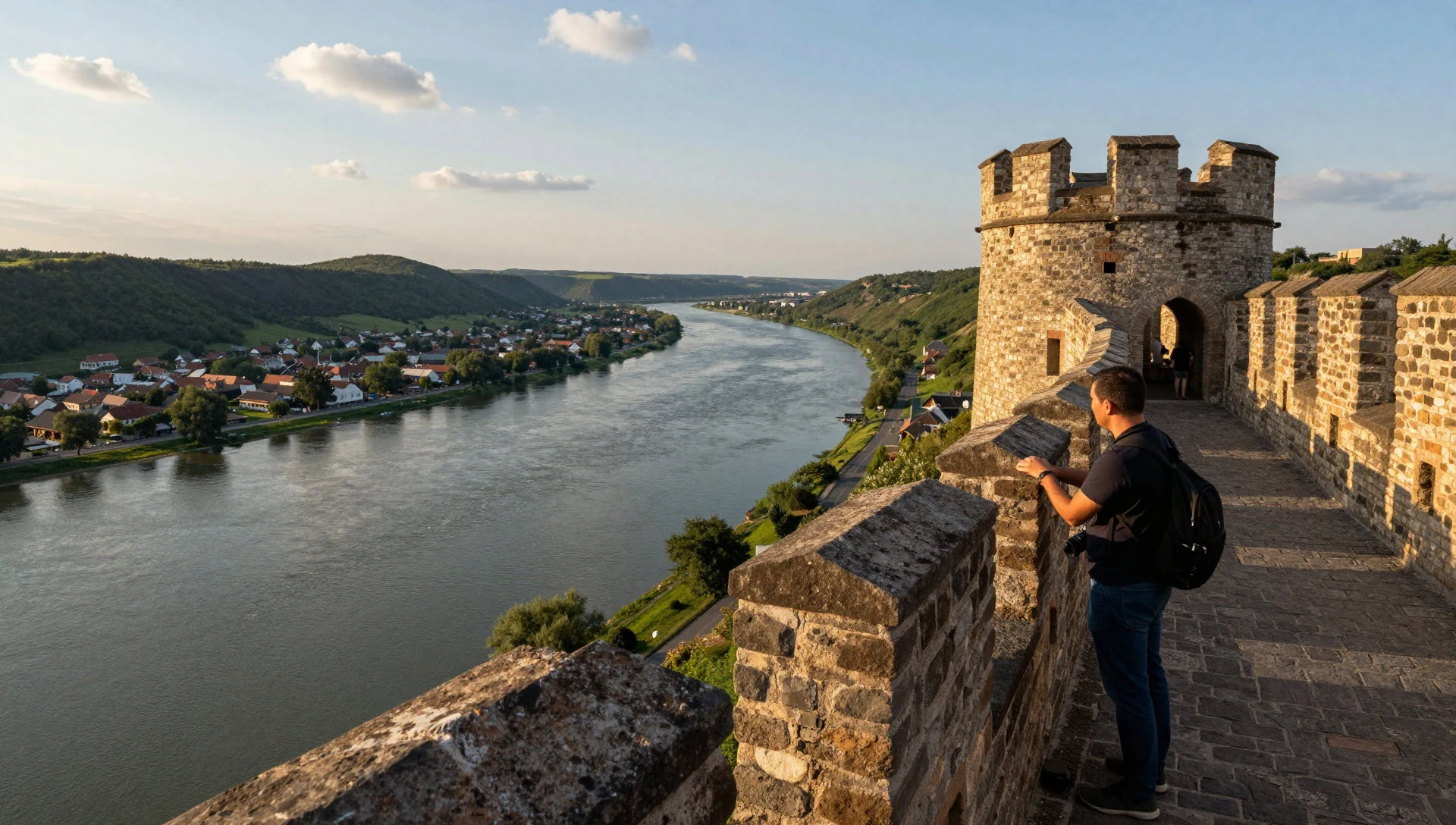
- The inner town — Inner enclosure
Behind the outer walls lies the inner enclosure, where the footprint of earlier buildings can be traced, including the structure the Ottomans used as a bath-house. Archaeologists found Roman and Byzantine masonry here during restoration. It rewards a slow walk with an eye on the lower courses of stone.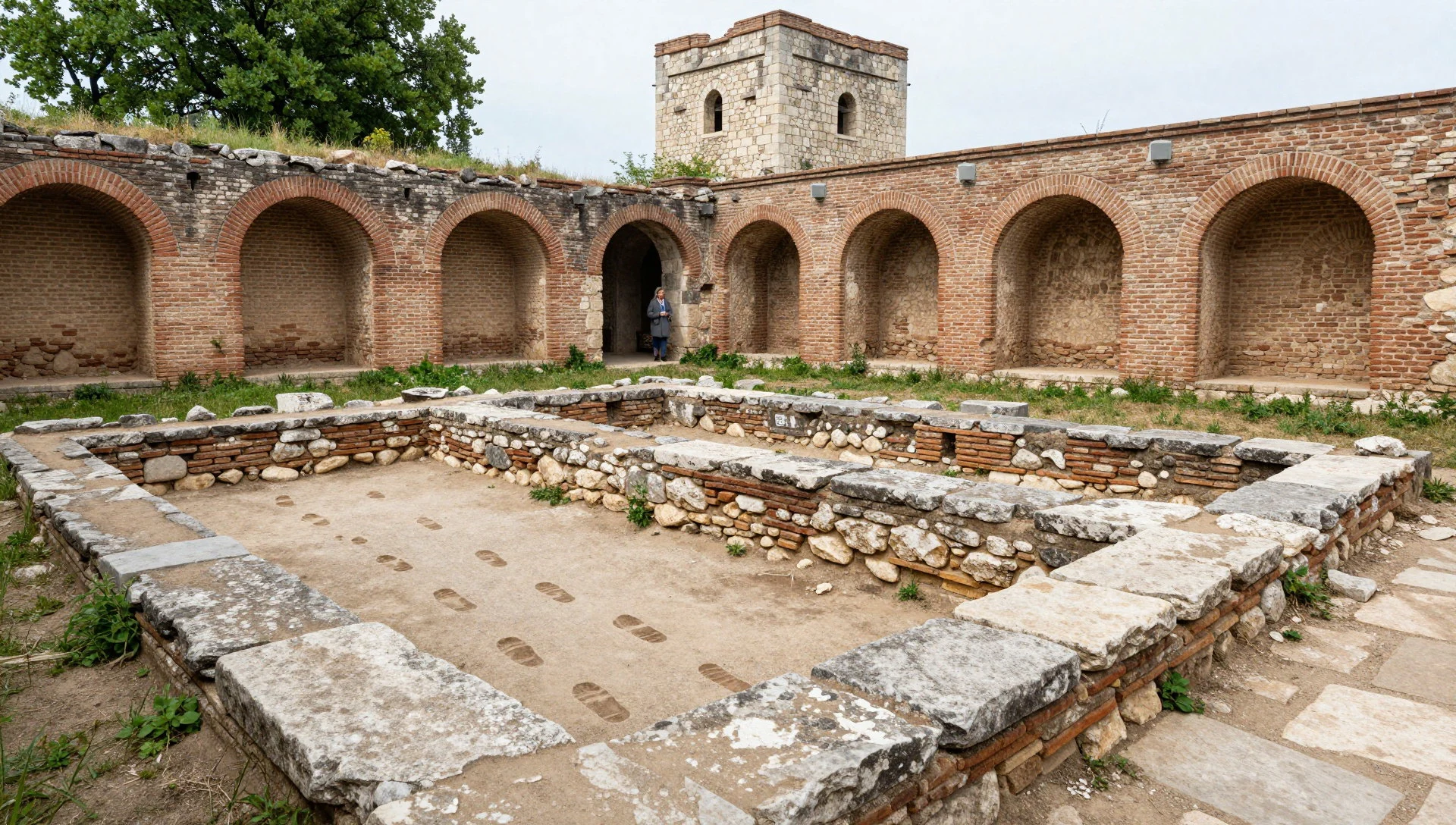
- The tower chapel — Inside one of the towers
An Orthodox chapel built into one tower is among the main clues that a local noble stood behind the fortress. Medieval frescoes have also been found inside the complex. Access to such rooms depends on conservation work, so ask at the entrance before assuming it is open.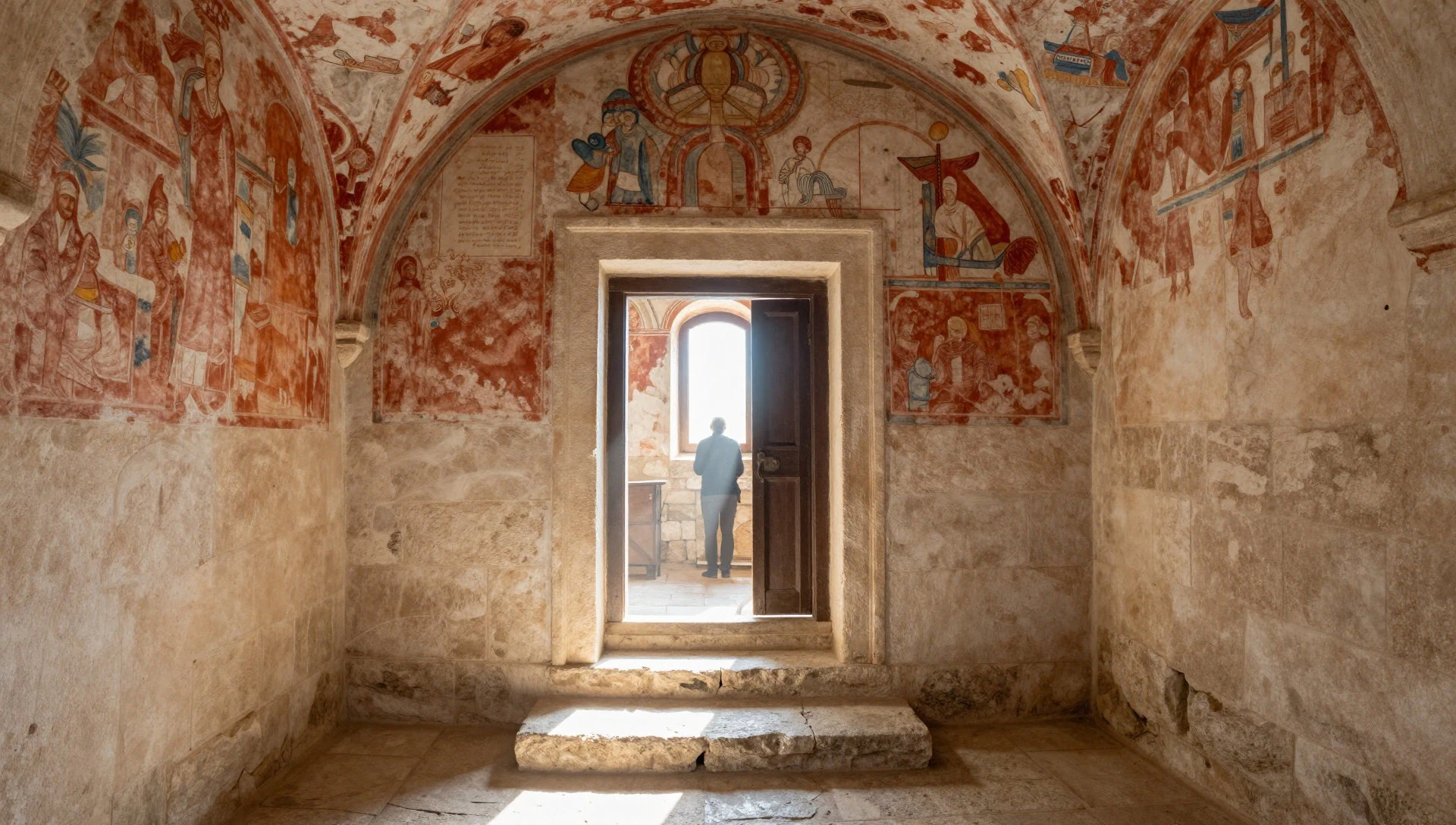
- The fortress from the water — Danube piers below the fortress
Boat tours on the Danube pass under the walls, and seen from the river the fortress makes the most sense as a toll-post and watchtower. Two piers have been built at the site, and cruise ships now call. Sailings depend on season and weather, so confirm locally.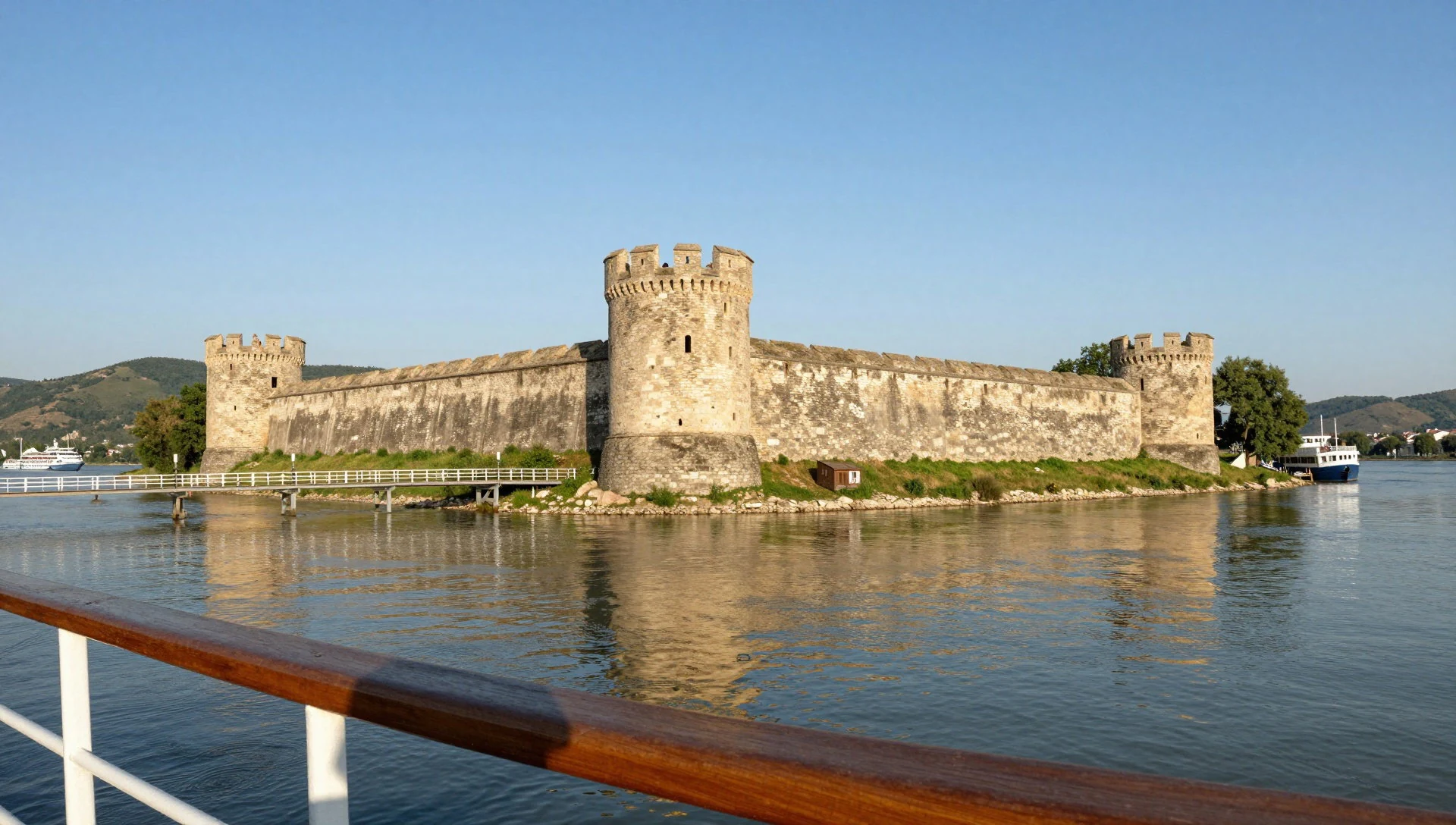
Culture
Golubac Fortress sits on a frontier that has been argued over for centuries, and the culture around it is a layered one. Serbian, Hungarian, Bulgarian, Ottoman and Austrian rule all left a mark on the region, and local guides tend to tell the story with a Serbian emphasis, pointing to the tower chapel and the frescoes as evidence of Orthodox roots. Historians are more cautious about who built the walls, and it is worth holding both versions at once. The Danube shapes daily life here more than the fortress does. Fishing, small riverside restaurants, boat trips and the national park nearby all draw on the river, and many local families have worked on or beside it for generations. Serbian hospitality is direct and generous. A conversation over coffee or a glass of rakija, the local fruit brandy, is common, and turning down a first offer politely is usually fine. Orthodox faith is visible in roadside crosses and small churches along the route, and the Serbian language is written in both Cyrillic and Latin script, so signs may vary. Romania is close enough to see, and the border is a real one, so cross-river conversations about history can carry feeling. If you enter any working church or chapel near the fortress, cover your shoulders and knees, keep your voice low, and ask before photographing anyone at prayer.
What to wear
Golubac Fortress lies in the Braničevo area of eastern Serbia, where traditional dress belongs to the wider Serbian narodna nošnja. Regional versions differ, but the common elements are linen, hemp and wool, embroidered blouses and aprons for women, waistcoats and woollen trousers for men, and opanci, soft leather shoes with upturned toes. Men's felt or cloth caps such as the šajkača are still seen. This clothing now appears mainly at folklore festivals, weddings, church holidays and dance performances, where groups dance the kolo in full costume. Everyday dress is the same as elsewhere in Europe: jeans, trainers, practical jackets, and fishing or work clothes along the river. Smart-casual is normal for an evening meal, and nobody dresses up to go to a fortress. A visitor needs mostly practical clothes. The stone steps and ramparts are uneven and can be slippery after rain, so shoes with real grip matter more than anything else. Summers on the Danube can be hot with little shade, so bring a hat, sunscreen and water, while spring and autumn bring cooler wind off the river, and a light windproof layer helps. Winter calls for proper warm clothing. If a stop at a church or monastery is planned, carry a scarf or light shawl and trousers or a skirt that cover the knees.
What to eat
- Riblja čorba (Danube fish soup) — Riverside eateries along the Danube road near Golubac
A red, paprika-rich soup of river fish, hot enough to warm a windy day on the water. It is served in a deep bowl with bread and chilli on the side, and each cook has a slightly different recipe.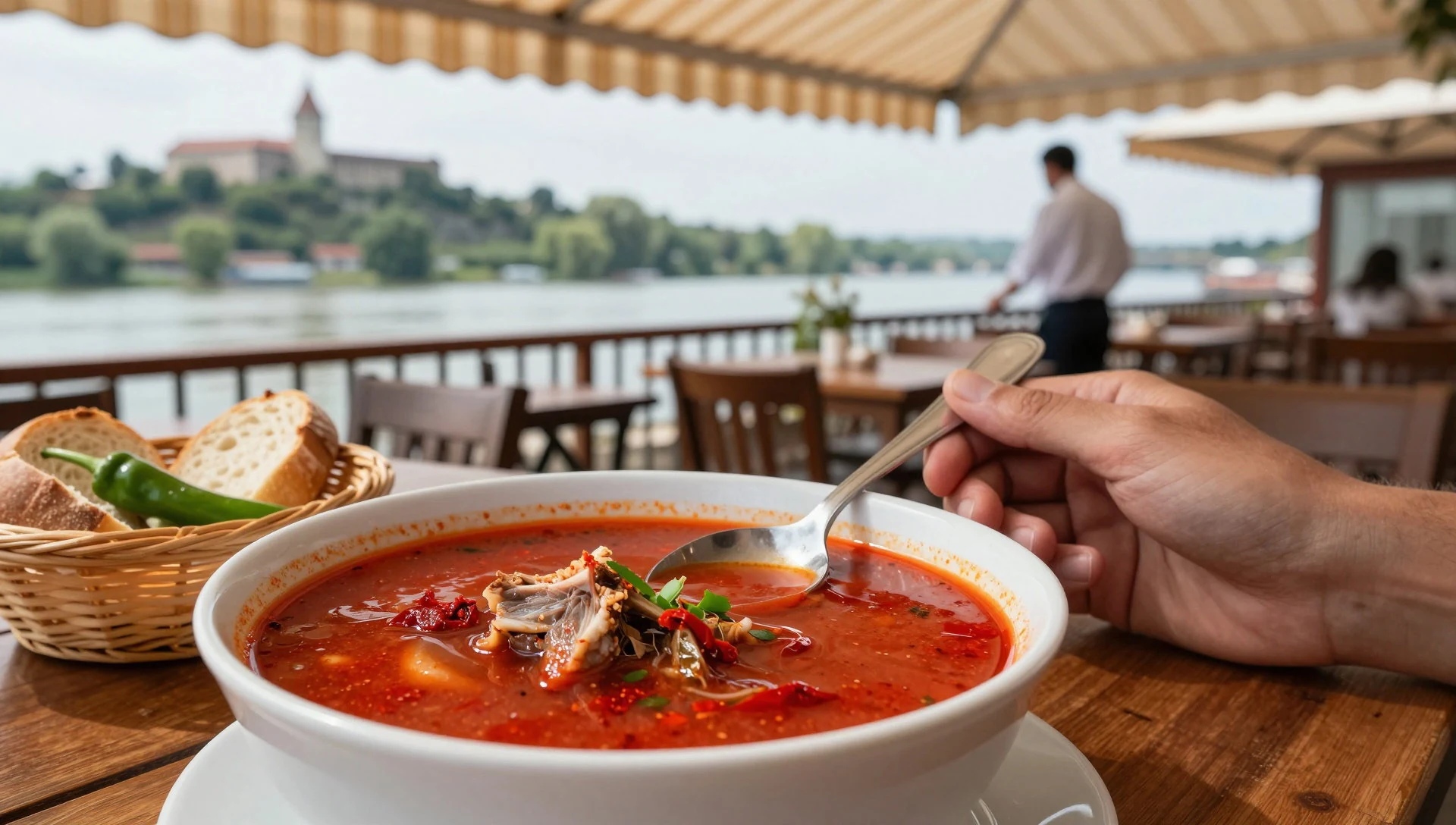
- Fried or grilled river fish — Family-run restaurants and fish eateries in Golubac town
Freshwater fish from the Danube, usually fried whole or grilled with salt and oil, then served with potatoes or a simple salad. Ask what was caught locally, as the species vary by season.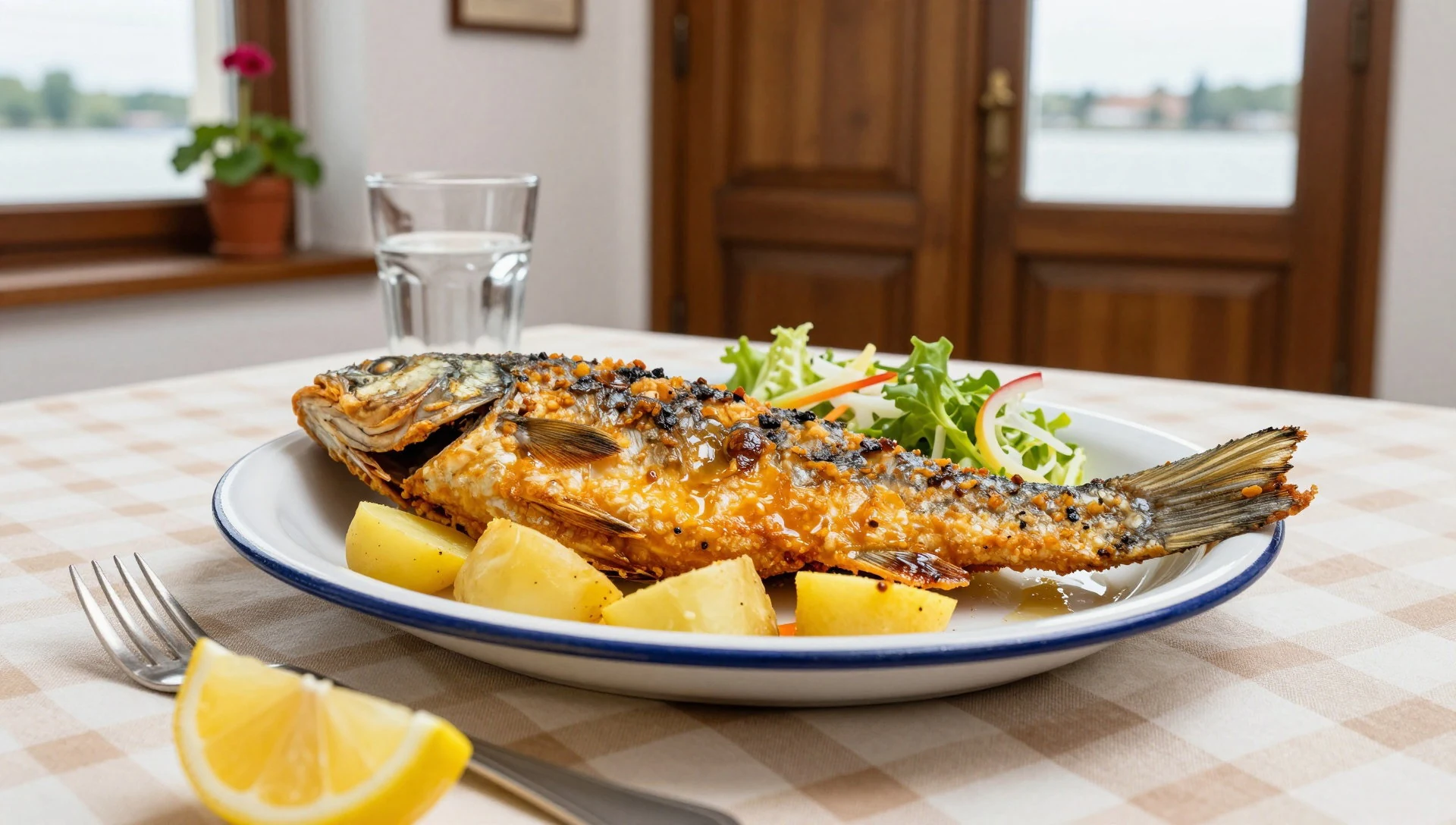
- Ćevapi and pljeskavica — Roadside grills and small restaurants along the route
Grilled minced-meat fingers and patties, served in flatbread with chopped onion and often a spoonful of kajmak, a soft salted cream. Dependable, filling and easy to find, and the usual fuel for a day on the road. - Burek — Bakeries in Golubac and the larger towns on the road from Belgrade
Flaky pastry filled with cheese, meat or spinach, baked in a round tray and cut in wedges. It is a standard breakfast, often eaten with plain yoghurt. Good for a picnic before the fortress. - Sarma — Traditional restaurants and home-style eateries, especially in autumn and winter
Cabbage leaves rolled around spiced minced meat and rice, cooked slowly, and served with bread. It is mostly a cooler-weather dish, and a sign of a kitchen cooking for local families.
Plan it
Best time. April and October are the most comfortable: mild days around 27 to 30 C, cool nights, and less rain than in May and June, with good light on the river. July and August can be hot with little shade on the walls, and winter is cold and windy, with some services reduced.
How long. 1
Getting there. Fly to Belgrade Nikola Tesla Airport, then continue east by road along the Danube to Golubac town; regional buses run on this route, though a hire car or taxi makes the last leg to the fortress easier. Check the official site for current visiting arrangements.
Budget. low
Tips
- Check the official website (https://tvrdjavagolubackigrad.rs/) for opening times, tickets and which towers are open before setting out
- Aim for early morning or late afternoon for softer light and fewer tour groups, especially when cruise ships are in
- Carry water, a hat and a windproof layer, as shade is limited and the river wind can be strong
- Bring some cash for small riverside eateries and car parks, as card acceptance can be patchy
- Pair the visit with a drive through the Đerdap national park rather than rushing back the same day
Etiquette
- Stay on marked paths and steps, and do not climb on unrestored walls
- Keep voices low and cover shoulders and knees if you enter a chapel or church
- Ask before photographing local people, especially fishermen and families
Nearby
Sources
- Wikidata Q2625461 (CC0)
- Wikipedia: Golubac Fortress (rev 1372814634) (CC BY-SA 4.0)
- Petar Milošević, Golubac Fortress by Danube river, Serbia (CC BY-SA 4.0)
- Ynhockey, Golubac Fortress, Golubac, Serbia (CC BY-SA 4.0)
- BuhaM, Golubac Fortress after renovation (2019_06) (CC BY-SA 4.0)
- NeroN_BG, view from the top of the citadel (CC BY 3.0)
- NeroN_BG, Inner city, Golubac (CC BY 3.0)
- Gol 5 10.jpg, unknown author (Public domain)
- Mickey Mystique, Golubac Fortress (CC BY-SA 4.0)
- BuhaM, Golubac Fortress after renovation (2019_08) (CC BY-SA 4.0)
- Wikivoyage (CC BY-SA 4.0)


