Niš
Niš, Serbia
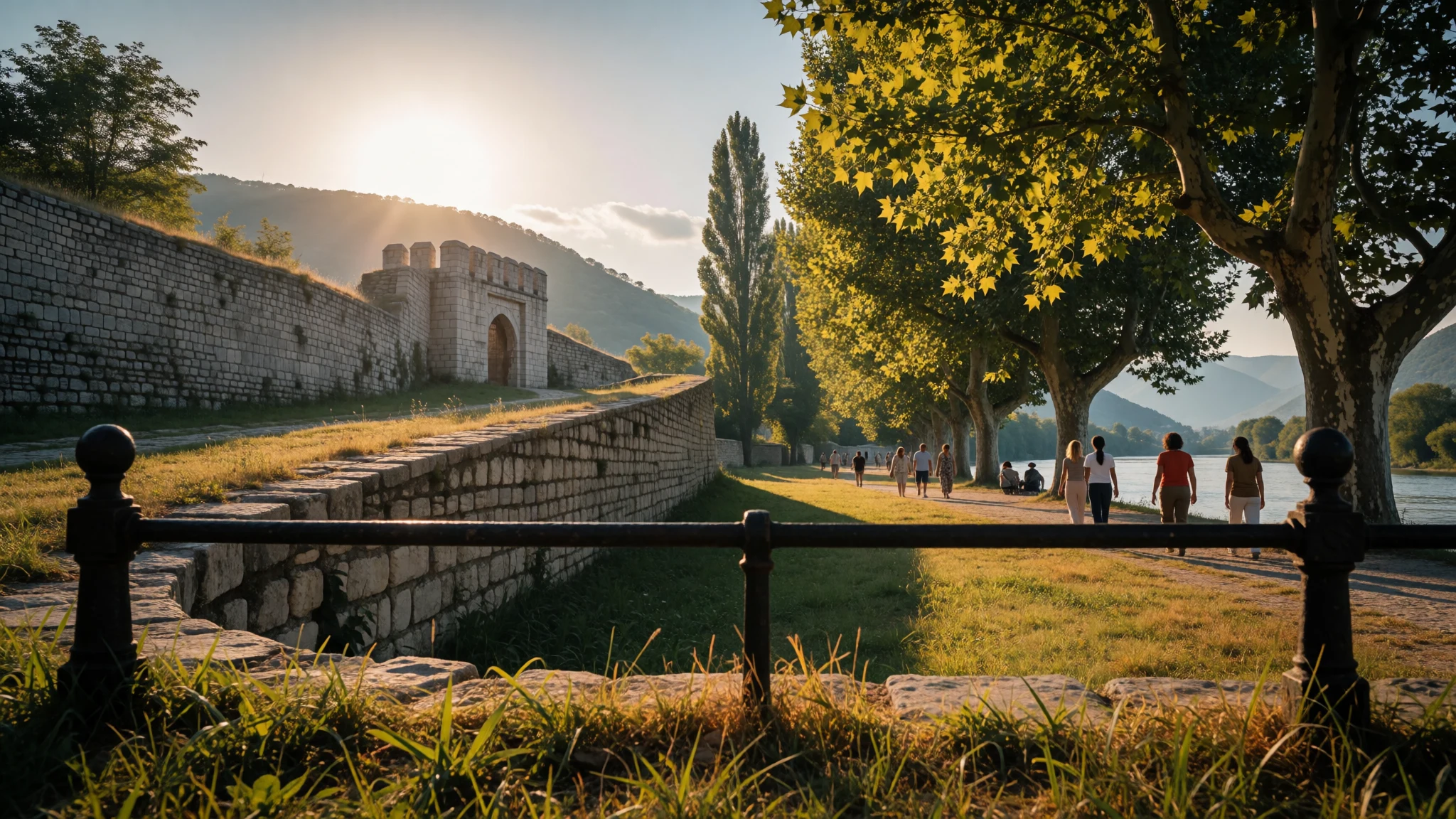
Niš is a lived-in southern Serbian city where Roman emperors, an Ottoman fortress and wartime memorials sit a short walk apart.
The place
Niš sits in southern Serbia, in a broad valley where the Nišava river runs past at about 195 metres above sea level. The city proper has some 183,000 people, and it feels like a working regional capital rather than a museum. Electronics, machinery, textiles and tobacco have all been part of its economy, and villages around it send people in to shop, study and sit in cafés, so the terraces and markets feel local rather than staged.
The old core is compact. A big fortress of pale stone and mature trees stands on the riverbank, and the pedestrian streets of the centre lie just across the water, an easy flat walk. Beneath the main promenade runs an underground passage lined with small shops, one of the city's best-known quirks. Further out, village churches and battlefield monuments can be reached by local bus or a short taxi ride.
Niš is also a crossroads. The north–south railway and road corridor from Belgrade towards Skopje, Sofia and Istanbul passes through it, so many travellers stop for a night on the way elsewhere. That is a fair use of the city, but a second day pays off. Summers are hot, winters can be grey and cold, and visitor numbers stay low, so queues are rare and people often have time to talk. The airport carries the name of Constantine the Great, a nod to the emperor born here.
Its story
Niš has been a settled crossing point for a very long time, though little survives from before the Romans, and the earliest settlers may have been Celts. What is clear is that Rome valued the spot, where a river valley links the Danube lands with the Aegean and Constantinople. Soldiers built a camp, and a town called Naissus grew around it into a garrison and market centre. Ptolemy noted it in his geography.
Naissus became an imperial stage. Constantine, later the first Christian emperor, was born here in the late third century, Claudius Gothicus beat the Goths nearby, and several other emperors were born or lived in the town. Byzantine, Bulgarian and medieval Serbian rulers each held it in turn, and it never lost its value as a gateway between north and south.
Ottoman rule lasted for centuries. The Ottomans raised the stone fortress that still stands by the river, over earlier Roman and Byzantine remains. In 1809 a Serbian uprising was crushed at Čegar, just outside the city, and the Ottomans built a tower from the skulls of the dead as a warning. The town was liberated in 1878 and joined the Serbian state.
The twentieth century left darker marks. In 1941 the occupiers opened a concentration camp beside the Red Cross building, and the city's memorials still reflect those years and later conflict.
What to see
- Niš Fortress — Riverbank, city centre
Niš Fortress is the city's open-air living room: Ottoman gateways, thick walls and shady lawns where people jog, picnic and drink coffee. It stands over older Roman and Byzantine layers, so look for the different stonework. Allow a leisurely hour or two, and come early or late in summer.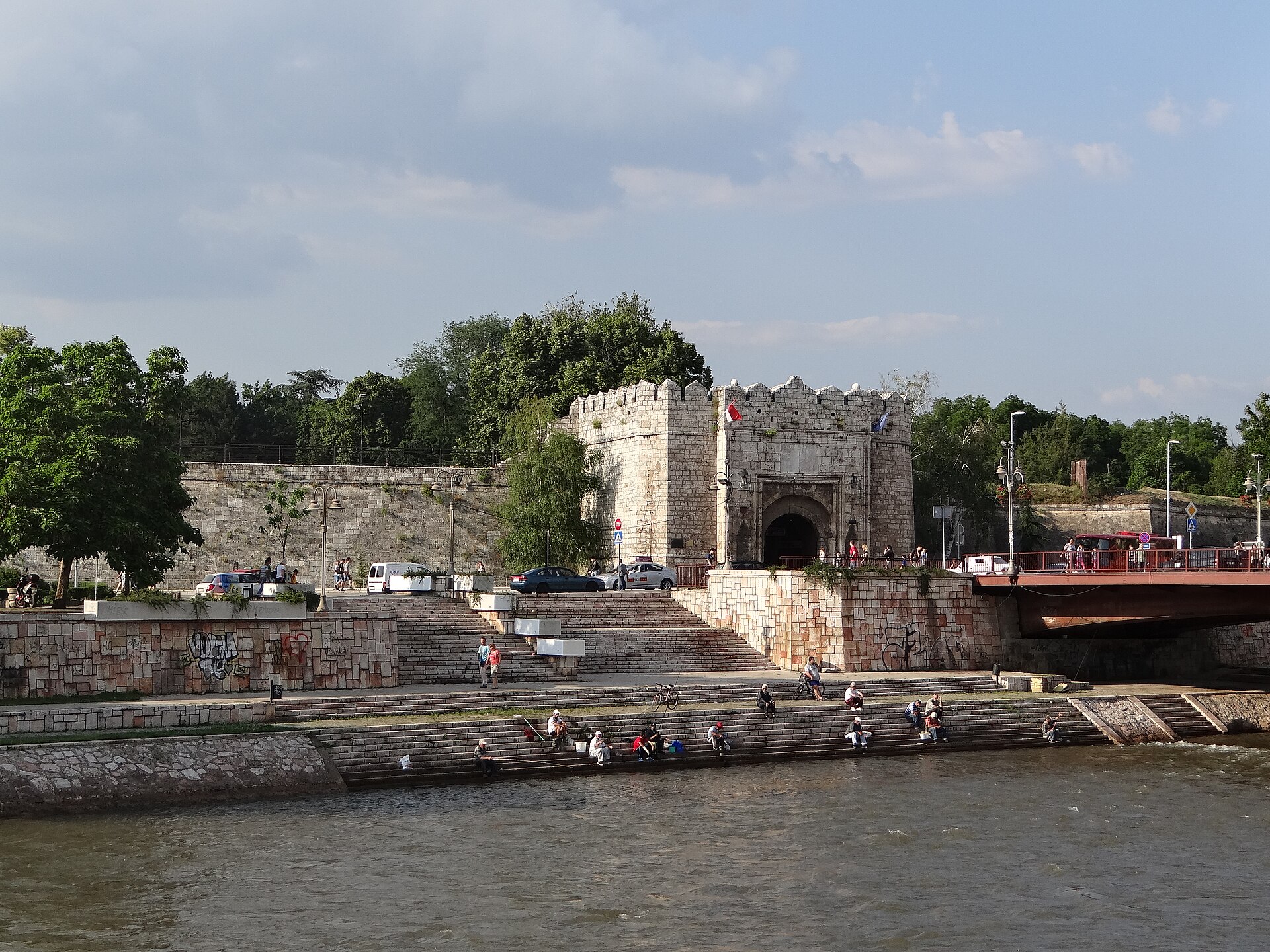
- Skull Tower — Eastern outskirts
Skull Tower stands in a small chapel-like building on the eastern edge of town. Skulls of Serbian fighters killed at Čegar in 1809 were set into its walls, and many remain. It is small, sobering and quickly seen, so pair it with the nearby Čegar monument on the same outing. - Rusalia Church — Gornji Matejevac, north-east of Niš
The Church of the Holy Trinity at Rusalia rises above the village of Gornji Matejevac, north-east of the centre. It is an old stone church set among fields, with a quiet, rural feel quite unlike the city. Reach it by taxi or local bus, and check opening before travelling. - Kazandžijsko sokače — Old quarter, city centre
Kazandžijsko sokače is a short lane in the old quarter where coppersmiths and other craftsmen once worked from low houses of the Ottoman period. Today it is a small stretch of cafés and restaurants with a few surviving buildings. It suits an evening stroll more than a long visit. - Red Cross Concentration Camp — North-west of the centre
The Red Cross camp was the first Nazi concentration camp in what was then Yugoslavia, set up in 1941. The preserved site and museum tell a hard story with restraint. Plan for a quiet hour, keep voices low, and check the official city website for current opening arrangements.
Culture
Niš has a strong theatre and literary life for a city of its size. Its National Theatre dates from 1889 and was first named after Sinđelić, a hero of the 1809 uprising. Productions are in Serbian, but the building itself and the crowds on a good night are worth seeing.
Writing runs deep here. Branko Miljković, a leading figure of modern Serbian poetry, belonged to the city's writers' society, and locals still quote him with affection. The Sićevo literary colony, a yearly gathering begun in 1991, brings Serbian and international writers to a nearby village.
Everyday culture is about conversation. Coffee is slow, often a single cup stretched over an hour, and people sit on the promenade for hours in the evening. Hospitality is generous, and a guest may be offered rakija, a fruit brandy, or sweets at a home visit. Most residents are Serbian Orthodox, and church feast days, known as slava, are important family occasions. The city's history is felt personally, so memorials such as the Skull Tower and the Red Cross camp are treated with real seriousness. Younger people speak some English, and visitors who try a few words of Serbian, such as hvala for thanks, usually get a warm reaction.
When you visit a church, cover your shoulders and knees, keep your voice low, and ask before photographing inside or pointing a camera at worshippers.
What to wear
Niš follows the wider Serbian tradition in folk dress, with local variations in the south. Traditional clothing was made from wool, linen and hemp, spun and woven at home. Women wore embroidered blouses, woven aprons and wide skirts, often with colourful sashes and headscarves, while men wore wool trousers, waistcoats and caps. Leather opanci, soft-soled shoes with upturned toes, completed the outfit. Today this dress appears at folk festivals, weddings, dance groups, and church celebrations, and some families keep pieces as heirlooms.
Day to day, Niš dresses much like the rest of urban Europe. Jeans, trainers, shirts and light dresses are normal, and people tend to dress a little smarter for evenings out than visitors expect. On warm days shorts are common, though older people and churchgoers dress more formally. Winter calls for coats and boots.
For a visitor, the climate decides most of it. Summers are hot, so bring light cotton or linen, sun protection and a hat for exploring the fortress, which has little shade on some paths. Spring and autumn can turn cool and wet, so pack a light waterproof and a layer. Churches and monasteries expect covered shoulders and knees, and a scarf or light shawl is useful. Comfortable shoes with decent grip matter more than style, because old paving stones and uneven fortress paths get slippery when wet.
What to eat
- Burek — Neighbourhood bakeries (pekara) across the centre
Burek is a flaky pastry filled with cheese or minced meat, baked in big trays and sold by the slice. It is the standard breakfast and late-night snack across Serbia. Smaller bakeries can differ noticeably in how greasy it is, so try a few. - Ćevapi and pljeskavica — Grill houses (roštiljnica) around the centre and ring roads
Ćevapi are small grilled minced-meat sausages and pljeskavica is the larger patty. Both come with flatbread, raw onion and often kajmak, a soft salty dairy cream. This is the default meat meal for many locals, filling and simple. - River and lake fish — Fish restaurants in the city centre
Fish is less central than grilled meat in Serbia, but the city has old-fashioned restaurants that cook it simply, often fried or grilled with salad and potatoes. Expect traditional interiors and unhurried service rather than fashionable plating. - Kajmak with bread — The green market behind the fortress
Kajmak is a thick, creamy dairy spread, mildly salty and slightly tangy, served with warm bread as a starter or breakfast. Quality varies by producer, so a stallholder will often let you taste before buying. It travels well in a cool bag for a day or two. - Ajvar and seasonal preserves — The green market and nearby grocery stalls
Ajvar is a smoky spread of roasted red peppers, sometimes with aubergine, made in autumn in many households and sold jarred. It goes with bread, grilled meat or cheese. Pickles and jams are sold alongside it by market sellers.
Plan it
Best time. May–June and September–October, when days are warm but not oppressive and the fortress lawns are green or golden. July and August can be very hot, and winter is cold and often grey.
How long. 1–2
Getting there. Constantine the Great Airport has seasonal and some year-round international flights; check current routes with the airport and airlines. Niš also lies on the Belgrade–Skopje–Sofia rail and road corridor. The bus station is just behind the fortress and green market, and the train station is a good 20-minute walk away, so allow time for connections.
Budget. low
Tips
- Visit the fortress early or late in summer, when it is cooler and quieter
- Trains can be old and sometimes delayed, so leave slack in your plans
- Carry some cash for markets and small bakeries, though cards work in many places
- Take a taxi to Rusalia, Čegar and other sites outside the centre
- Check the city website, https://www.ni.rs/, for current opening details of museums and memorials
Etiquette
- Dress modestly and speak quietly in churches and at memorials
- Ask before photographing people, especially at religious sites
- Accept hospitality warmly; refusing a coffee or rakija outright can seem curt
Nearby
Sources
- Wikidata Q129259 (CC0)
- Wikipedia: Niš (rev 1375226613) (CC BY-SA 4.0)
- Wikivoyage: Niš (rev 5412657) (CC BY-SA 4.0)
- Photo: Niš collage (Zeks127) (CC BY-SA 1.0)
- Photo: Panorama Nisa (Aleksic Ivan) (CC BY 3.0)
- Photo: Niš 34 (Manojlovic80) (CC BY 3.0)
- Photo: Niška tvrđava 5 (Dekanski) (CC BY-SA 4.0)
- Photo: Zgrada Sreskog načelstva (Ванилица) (CC BY-SA 4.0)
- Photo: Memorijalna kapela Niš (CrniBombarder!!!) (Public domain)
- Photo: Bubanj–Pesnice (FriedrickMILBarbarossa) (Public domain)
- Photo: Čegar spomenik (Scarix) (CC BY 3.0)


