Manasija Monastery
Manasija Monastery, Serbia
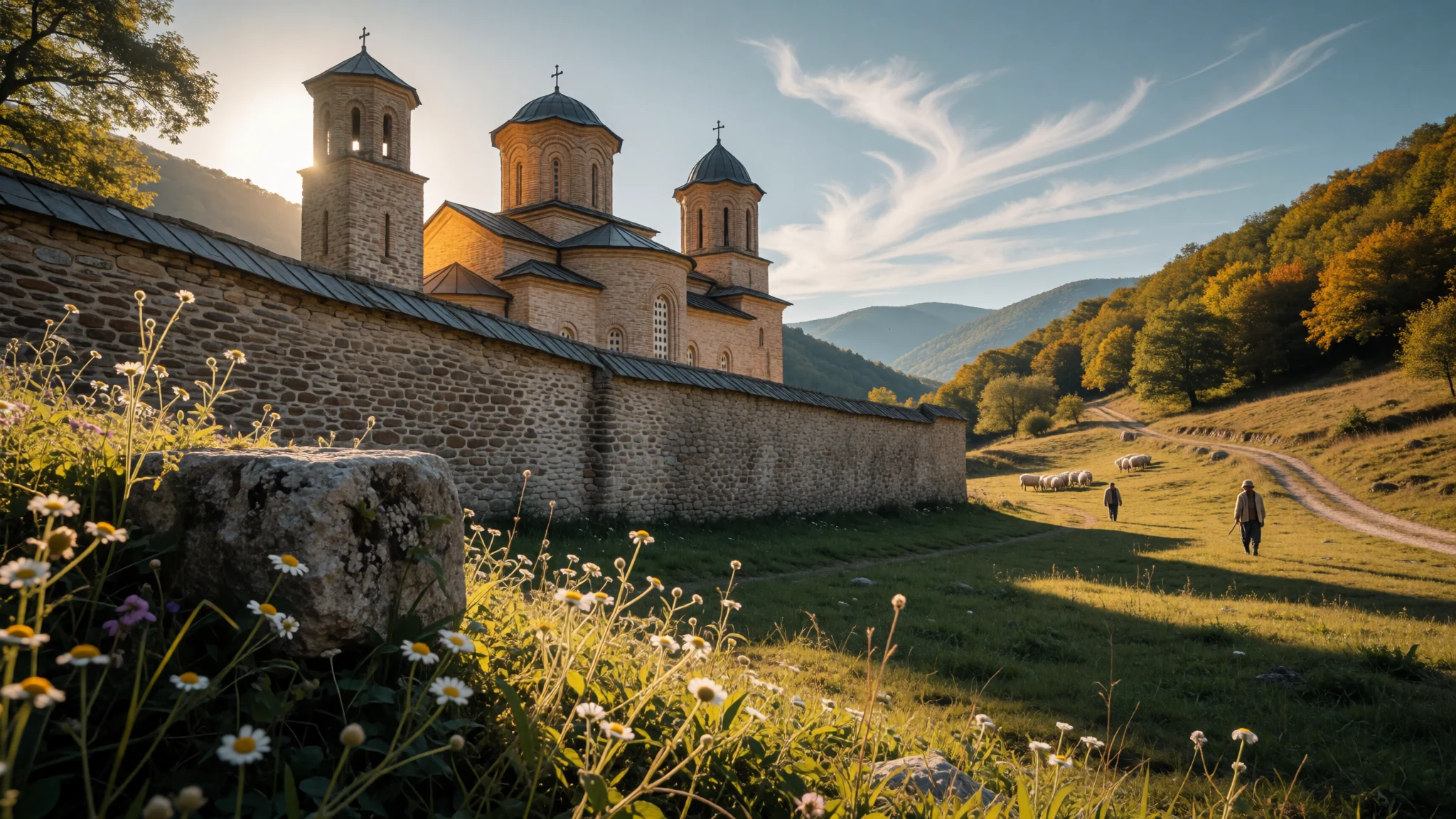
Manasija Monastery pairs a fortress ring of towers with a richly painted church, in quiet hills a short drive from Despotovac.
The place
Manasija Monastery stands in the hills of central Serbia, just outside the small town of Despotovac, in the Resava valley. It is a Serbian Orthodox monastery, also known as Resava, and the first impression is military: a ring of thick stone walls and tall towers around a compact church. The enclosure was built to protect as well as to pray, and from the road it looks more like a small fortress than a cloister. Inside the gate the mood changes. A lawn, a few monastic buildings and the church of the Holy Trinity share a calm courtyard where birdsong is more likely than traffic. The church belongs to the Morava school, a late medieval style of Serbian architecture known for carved stonework and carefully balanced domes. The monastery was founded between 1406 and 1418 by Despot Stefan Lazarević, and the state has protected the complex as a Monument of Culture of Exceptional Importance since 1979. It has been in the UNESCO Tentative List process since 2010, which makes it a candidate rather than an inscribed World Heritage site. It sits off the main tourist circuit, so visits tend to be unhurried, though weekends and holidays bring more families and church groups. Belgrade is the usual starting point, and many visitors combine Manasija with other monasteries and the caves and waterfalls around Despotovac. It is a half-day stop, not a full itinerary, and it rewards slow looking more than ticking off.
Its story
The story of Manasija Monastery begins with Despot Stefan Lazarević, the ruler of medieval Serbia, who planned it as his burial church and as a statement of his state's cultural ambitions. Building ran from 1406 to 1418, and the walls and towers were part of the plan from the start, because the region was politically unstable and the monastery had to be defensible. Once finished, it became the intellectual centre of the Serbian Despotate. Its scriptorium, known as the Resava School, copied manuscripts and produced new translations, and scribes trained there helped to standardise spelling and the way religious texts were written. That scholarly work is arguably as important to Serbian history as the architecture. The good times did not last. As Ottoman power advanced into the Balkans, the Despotate lost its independence, and the monastery went through centuries of damage, neglect, looting and partial repair. Monks left and returned. Some of the buildings inside the walls were lost, and the frescoes suffered from smoke, damp and time. A photograph from 1875 shows the complex already weathered and in need of care. Restoration work in the modern era has brought back much of the church and fortifications, and the community of monks has returned. Today Manasija is both a protected monument and a working religious house, carrying a layered history of royal ambition, scholarship, decline and slow recovery.
What to see
- The fortress walls and towers — Outer enclosure
Walk the outside of the enclosure first, before going in. The thick stone curtain wall and its towers explain why this is called a monastery-fortress, and the lawn and trees along the base make a good place to judge the scale. Late afternoon light turns the stone warm and picks out the repairs.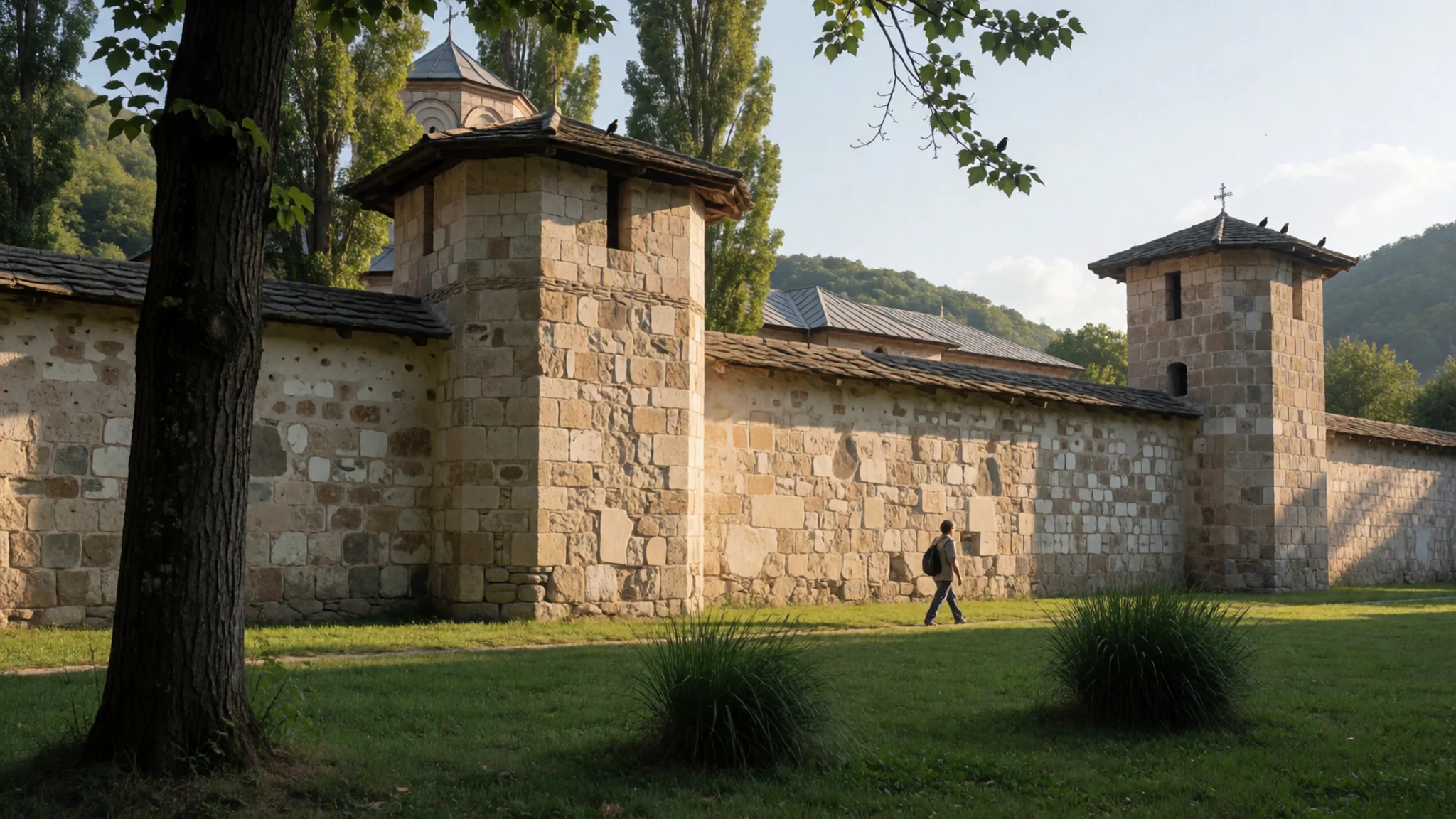
- Church of the Holy Trinity — Central courtyard
The church is the heart of the complex, a good example of the Morava school, with layered rooflines, domes and decorative stonework. Look at the proportions from the south side, where the whole building can be seen at once, then notice how the carving softens the heavy masonry.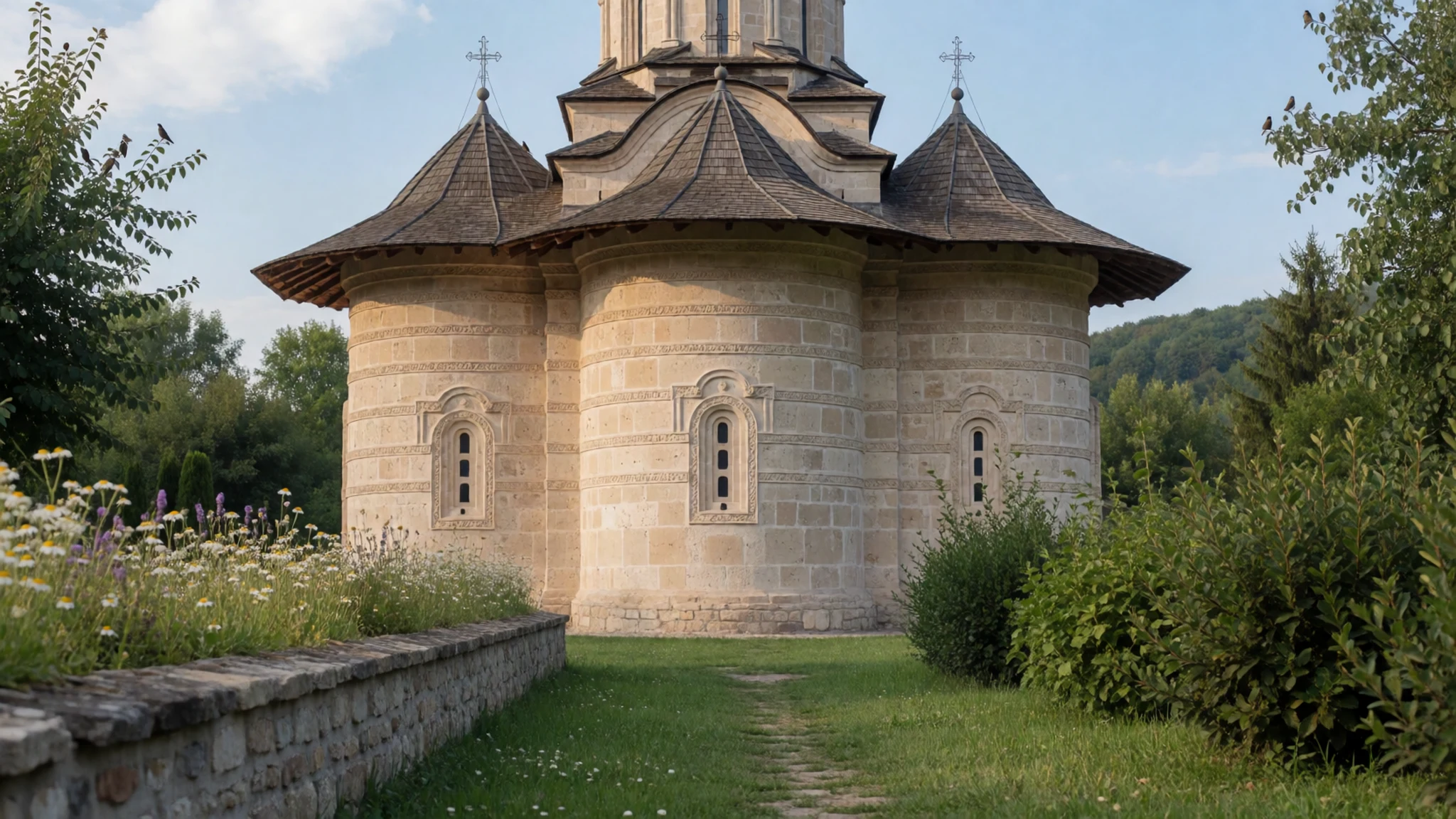
- The frescoes — Interior of the church
Inside the church, painted saints and scenes cover the walls and vaults. Over the entrance, the Hand of God holds the souls of the righteous, a calm and well-known image. Let your eyes adjust to the dim light, and be prepared for gaps where paint has been lost over the centuries.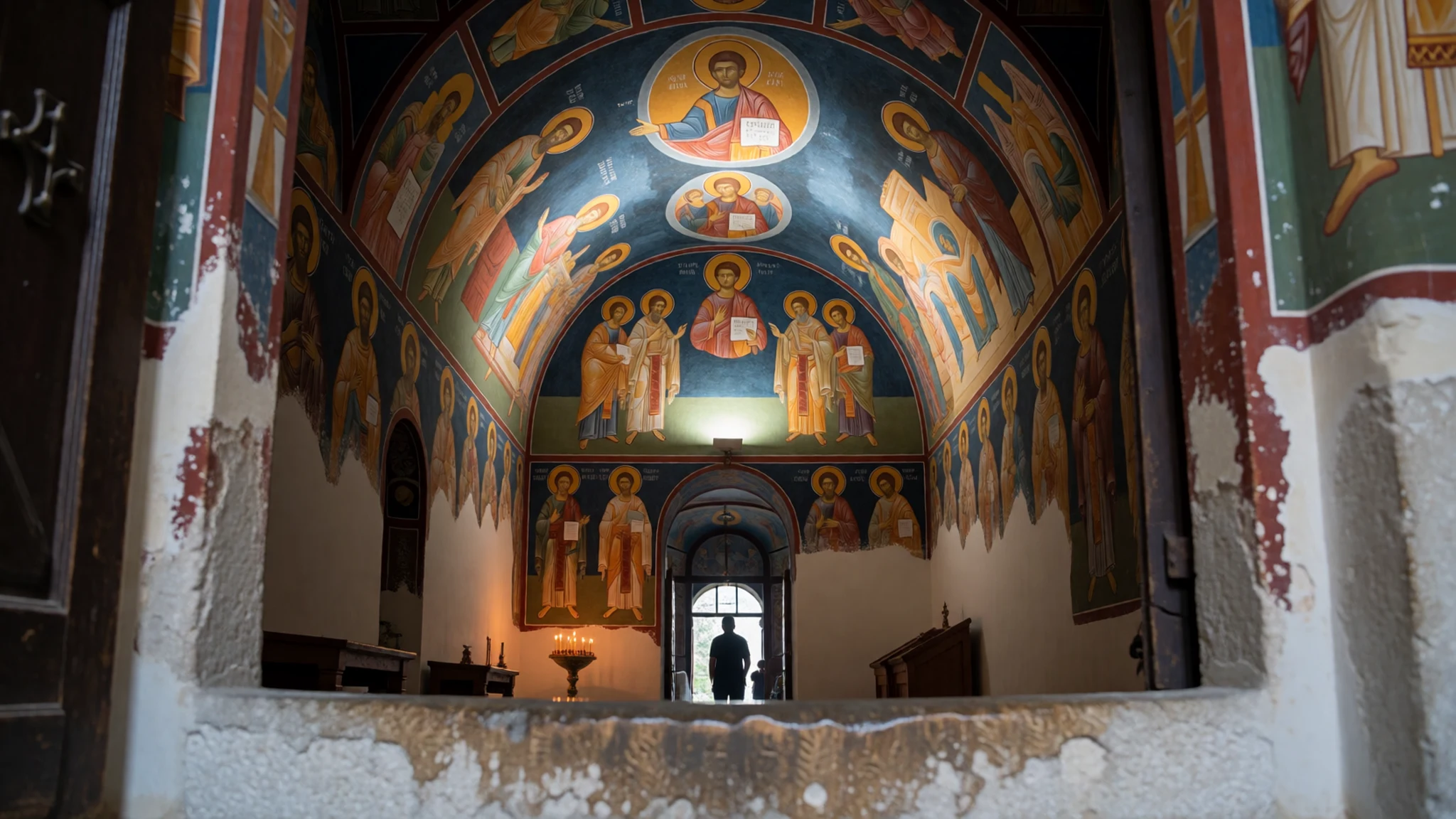
- The entrance gate — Main gate
The gateway is a short, shadowy passage through the walls, and it works as a threshold between the working countryside and the monastic world. Pause there to see how the defensive stonework meets the entrance to the courtyard, and to notice the shift in sound once inside.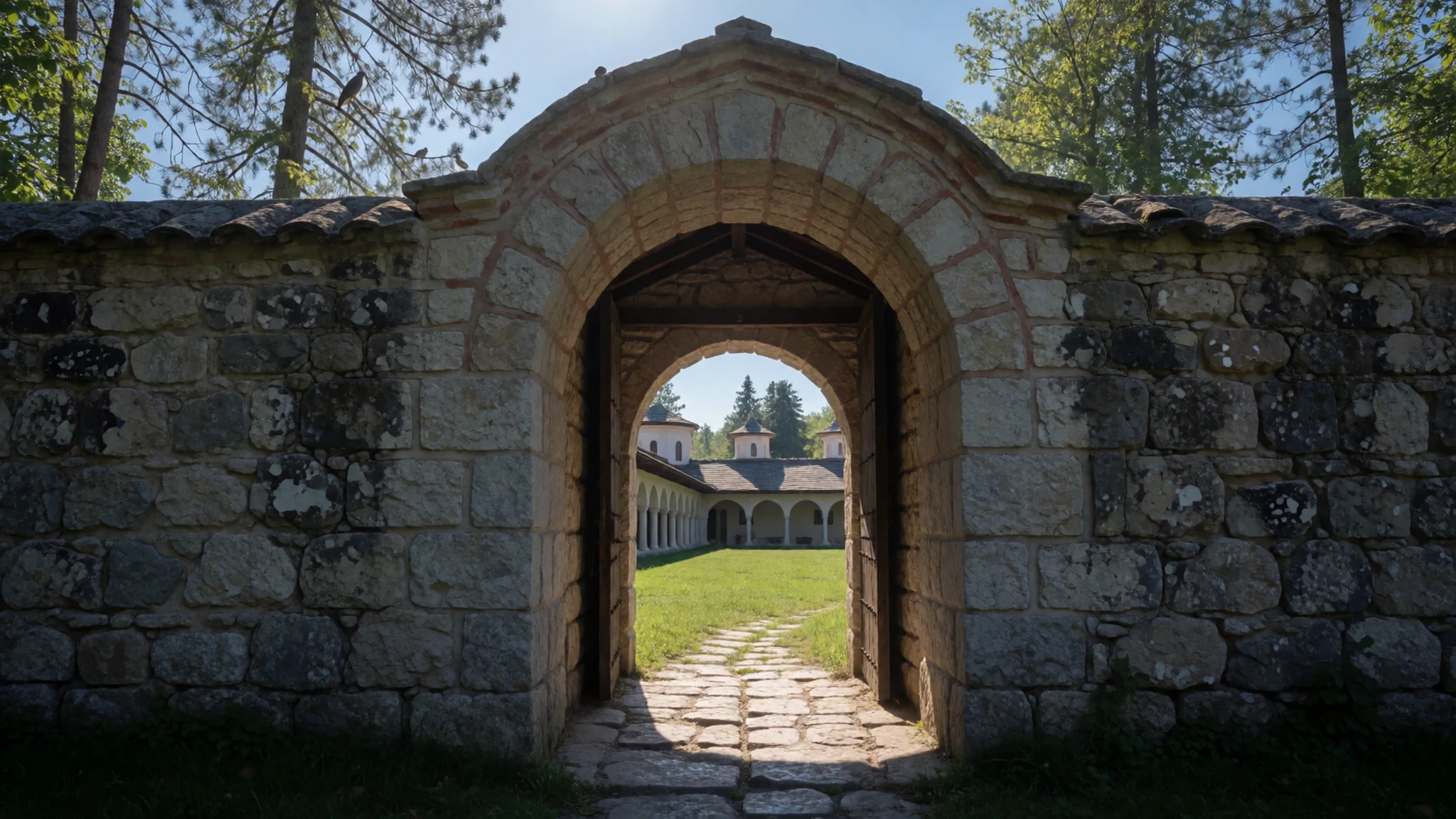
- Despotovac and the Resava valley — Despotovac
The nearby town is a practical base for a meal and a coffee, and the surrounding valley has forest paths, a cave and waterfalls that make a pleasant second stop. Ask locally about what is open in the season you visit, because smaller attractions keep irregular hours.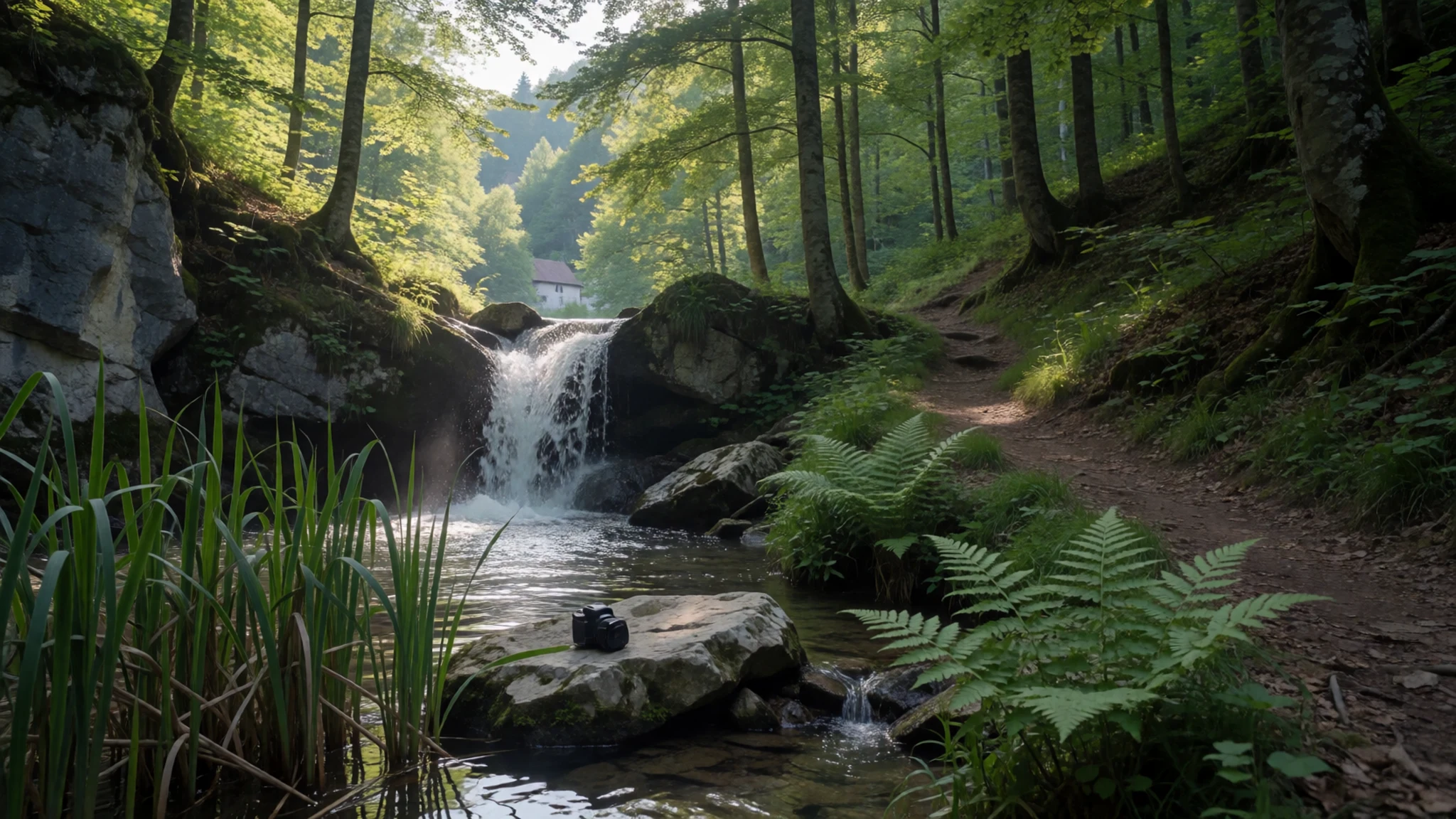
Culture
Manasija Monastery is a living Serbian Orthodox religious house, not only a monument, and that shapes everything about a visit. Monks live here, services are held in the church, and the rhythms of prayer set the pace of the day. Serbian Orthodox Christianity is part of national identity as well as faith, and the Despotate's monasteries are remembered as places where the language, writing and art of the medieval state were kept alive. Manasija's Resava School is a source of particular pride, because its scribes copied and translated books at a time when manuscripts were the main way knowledge travelled. Inside the church, icons and frescoes are not just decoration. Worshippers cross themselves, light thin candles and may kiss an icon, and visitors will see these gestures quietly repeated. Feast days bring more pilgrims and a more festive atmosphere, with singing and sometimes shared food in the courtyard. Visitors of any belief are generally welcome so long as they are respectful, and a quiet question to a monk or nun about the building is usually answered kindly. Many Serbs also visit for family blessings or simply for a calm hour away from town life. Cover your shoulders and knees, speak softly inside the church, and ask before photographing the frescoes or any monk or worshipper.
What to wear
Traditional Serbian dress around Manasija Monastery belongs to the central and eastern countryside. Men's costume included a woven wool jacket and trousers, a linen or hemp shirt, and the šajkača, a small peaked cap. Women wore embroidered linen blouses, wool aprons woven in bands of colour, waistcoats and headscarves, and both sexes wore opanci, soft leather shoes with turned-up toes. Wool and hemp suited the hills, and the patterns varied by village. This dress now appears mostly at folklore festivals, weddings, church feasts and dance groups, where it is worn with obvious pride. Everyday clothing is the same practical mix seen across Europe: jeans, shirts, trainers, light jackets. Monks and nuns wear plain black habits, and pilgrims often dress a little more formally than usual. For a visitor, modesty matters more than style. Cover shoulders and knees, and carry a light scarf, since women are sometimes expected to cover their heads inside the church. Choose sturdy flat shoes, because the courtyard paths are uneven and the grass can be wet. Pack layers: summers are warm, so a sun hat helps, while autumn and spring mornings can be cool and winters are properly cold. A light rain jacket is worth having in any season. Avoid shorts, sleeveless tops and anything with large slogans.
What to eat
- Kajmak with fresh bread — Village stalls and family-run eateries around Despotovac
Kajmak is a rich, salted cream skimmed from boiled milk, spread thickly on warm bread. It is a staple Serbian starter or breakfast, and it tastes best when it is local and fresh.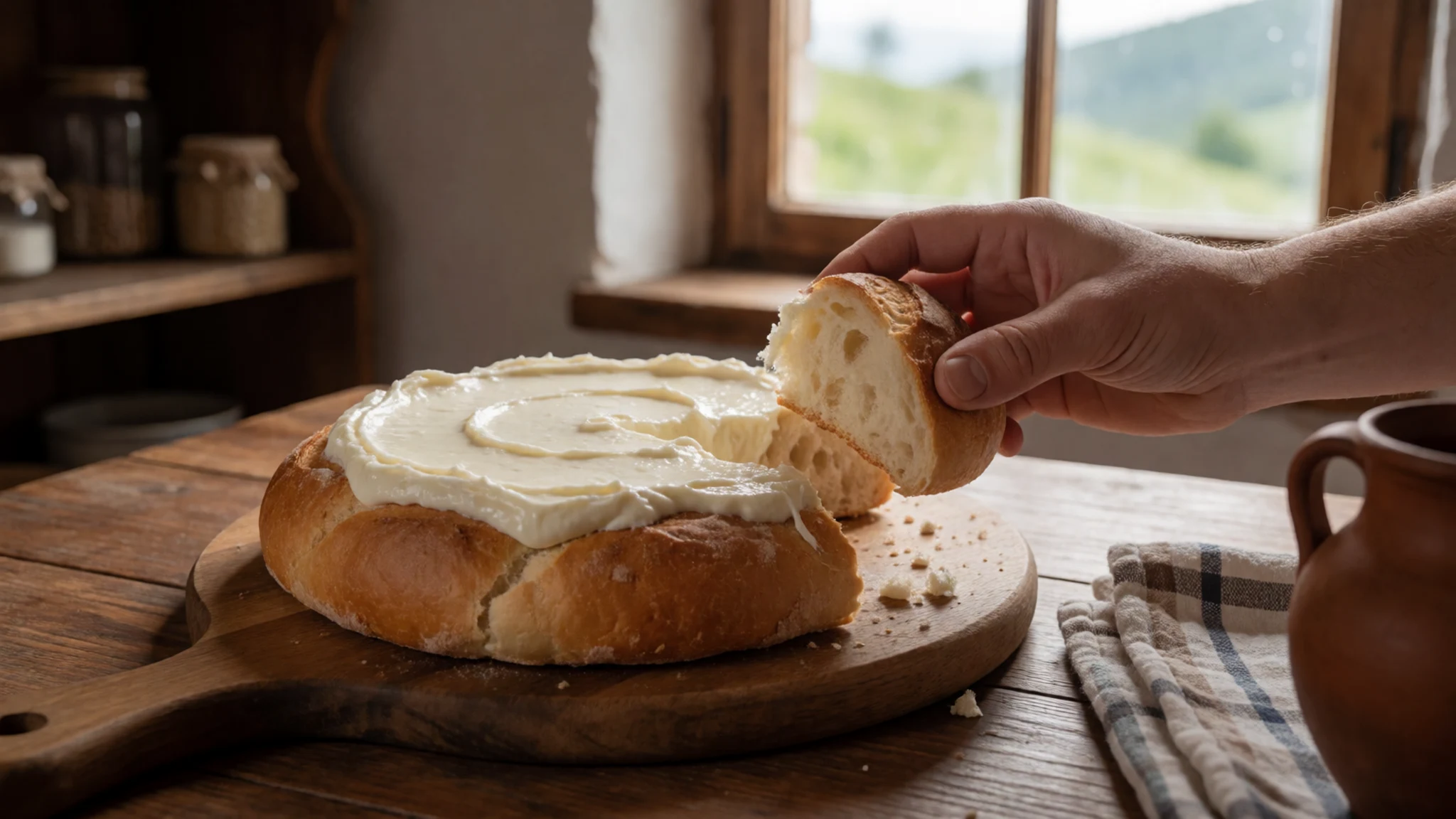
- Pita or burek — Bakeries in Despotovac and along the main roads
Layers of thin pastry baked with cheese, meat or spinach, served in a slice with plain yoghurt. It is the standard quick meal on the road in Serbia and suits a stop on the way to or from the monastery.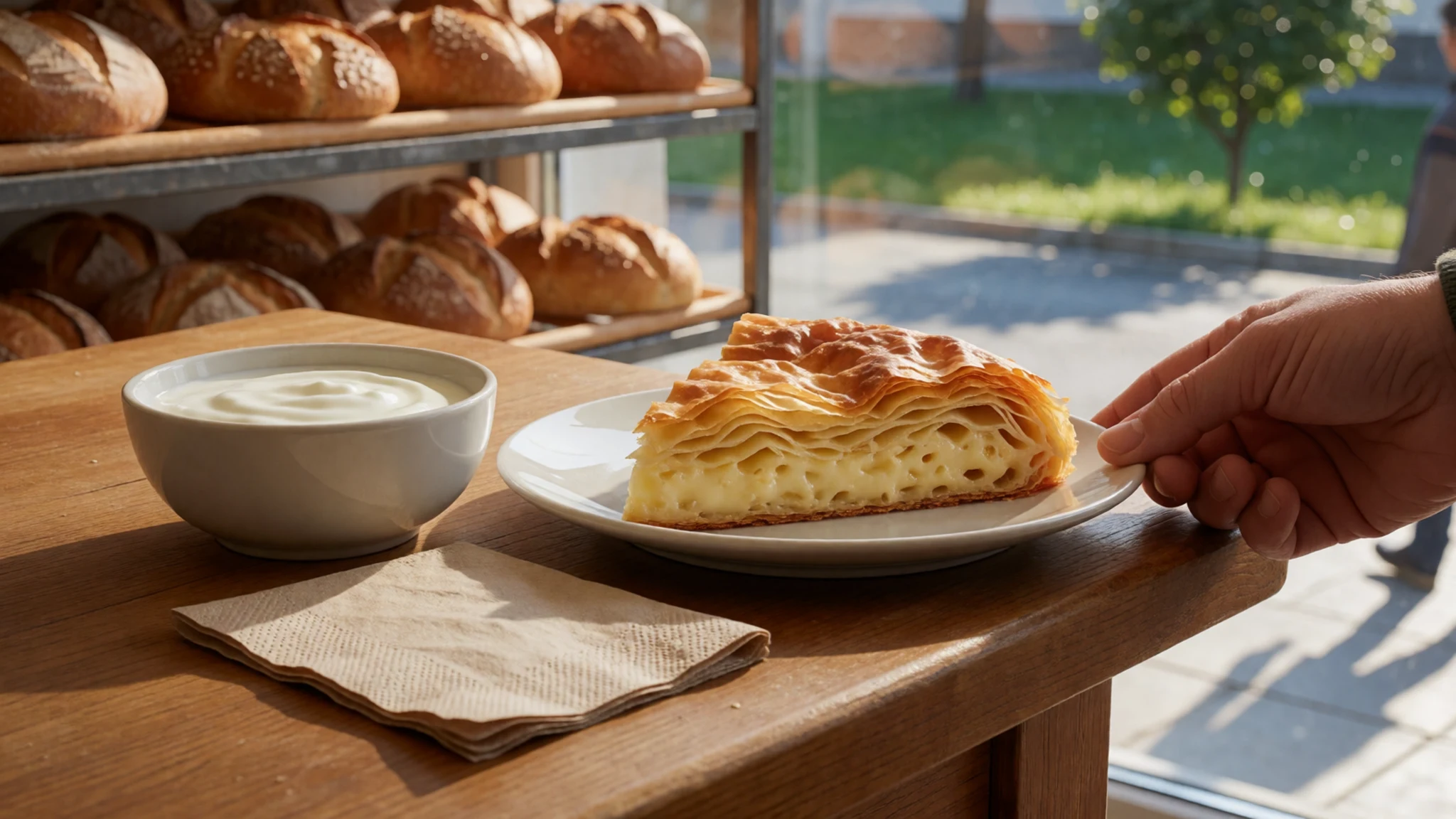
- Sarma — Traditional restaurants and eateries in town
Cabbage leaves wrapped around minced meat and rice, then simmered slowly, often in cooler months. It is a comforting home-style dish that appears at family tables and at feast days. - Roast lamb — Roadside grill houses and countryside restaurants
Slow-roasted lamb, usually cooked over embers or in a wood oven, is a celebration dish in Serbian homes. Ask what is served on the day, since portions are often large and meant for sharing. - Ajvar and homemade preserves — Local markets and roadside stands in autumn
Ajvar is a smoky spread of roasted red peppers, made in autumn and eaten with bread or grilled meat. Jars of ajvar, honey and plum jam are often sold by local producers.
Plan it
Best time. March and April, when the days are mild and the grounds are green, are the best time to visit. July and August are very hot, with average highs above 40°C, and winter is cold, with the courtyard bare and some local attractions closed.
How long. 1
Getting there. Fly to Belgrade Nikola Tesla Airport, then travel by road to Despotovac, either by hire car, bus or arranged transfer. The monastery is a short drive outside town, so a taxi from Despotovac is the usual last leg. Check current bus timetables before you travel.
Budget. low
Tips
- Go in the morning or late afternoon for softer light and fewer visitors
- Check the monastery's opening arrangements locally before you set out, as hours can change on feast days
- Carry some cash, since small shops and stalls near the monastery may not take cards
- Bring water and a light layer, as the courtyard has little shade and can be breezy
- Combine the visit with other sites in the Resava area to make the journey worthwhile
Etiquette
- Dress modestly, with shoulders and knees covered
- Keep your voice low and switch off your phone inside the church
- Ask permission before photographing people or the interior
Nearby
Sources
- Wikidata Q1264703 (CC0)
- Wikipedia: Manasija (rev 1379078769) (CC BY-SA 4.0)
- Wikivoyage (CC BY-SA 4.0)
- Photo: Despotovac, Manastir Manasija (en:User:Majstor Mile) (Public domain)
- Photo: Manastir Manasija (Ivanbuki) (CC BY-SA 4.0)
- Photo: Zidine Manastir Manasija (Magyshadow) (CC BY-SA 4.0)
- Photo: Monastery Manasija, 1875 (I.V. Groman) (Public domain)
- Photo: Hand of God fresco (DjordjeMarkovic) (CC BY-SA 4.0)
- Photo: South view of Manasija (Petar Milošević) (CC BY 3.0)
- Photo: Monastery Manasia fortress (Milena Zolnaj) (Public domain)
- Photo: Entrance, Manasija (PetarM) (CC BY 3.0)


