Sirmium
Sirmium, Serbia
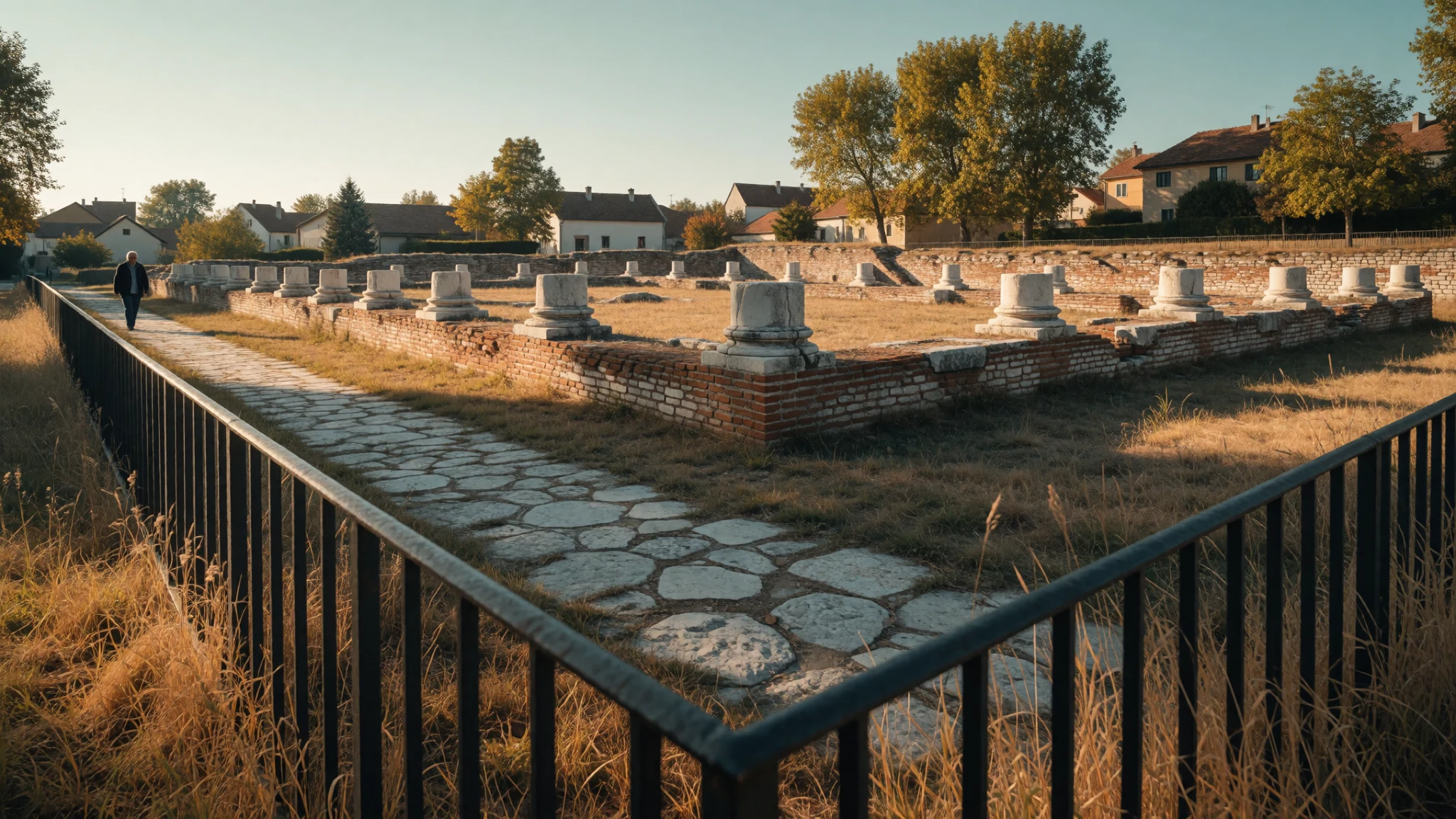
Sirmium, now Sremska Mitrovica in Serbia, was once a Roman imperial capital, and its palace ruins sit among ordinary town streets.
The place
Sirmium lies under the modern town of Sremska Mitrovica, in the Vojvodina province of northern Serbia, on the bank of the Sava river. West of Belgrade, the flat farmland of Srem spreads around it, and the region still carries the ancient city's name: Syrmia, Srem or Srijem, depending on the language. The site is not a single walled enclosure with a gate. Roman Sirmium is woven into the present town instead, with palace foundations in the centre, excavated blocks wedged between flats and shops, and a protected archaeological zone that Serbia ranks as a Site of Exceptional Importance. The name itself is thought to mean flowing water or wetland, a fair description of a settlement on low ground beside a river. Historians disagree about how big the city became. A figure of around 100,000 inhabitants is often repeated, while one cautious estimate, based only on the extent of the dig, suggests far fewer. Grain imports across the Roman centuries could have fed several hundred thousand people, which hints at a busy place, though all of these numbers are uncertain. What can be said safely is that Sirmium was a working administrative and military city rather than a purely ceremonial one. Today it suits slow, curious travellers who enjoy archaeology mixed with everyday life: a coffee beside a wall that Roman builders laid, a short walk to the river, and a quiet town that sees few tour groups.
Its story
Sirmium's story begins well before Rome. Traces of organised life on the site go back to around 5,000 BCE, and by the 4th century BC the settlement was held by Illyrian and Celtic peoples, among them the Amantini and the Scordisci. Legend gave the city a founder, a king named Syrmus, but the name more likely comes from a word for flowing water, and the king was attached to it later. Rome took Sirmium around 14 BC, helped by Celtic allies. It became a colony in the 1st century AD and a staging post for campaigns, with emperors such as Trajan and Marcus Aurelius preparing expeditions here. In 103 the province of Pannonia was divided, and Sirmium governed the lower half. Its great moment came with the Tetrarchy in 293, when the empire was split into four parts and Sirmium was named one of the four capitals, alongside Trier, Milan and Nicomedia. It was the seat of the emperor Galerius. Three years later Diocletian redrew the Pannonian provinces, leaving Sirmium capital of Pannonia Secunda and of the wider Diocese of Pannonia. From 318 it also headed the prefecture of Illyricum, until 379, when its diocese was moved under Italy. Byzantine rule followed, and the ancient name survives in the region of Srem.
What to see
- Imperial Palace site — Town centre, Sremska Mitrovica
The excavated palace quarter sits in the centre of Sremska Mitrovica, where low walls and foundations lie beside modern streets. A visitor centre explains how the rooms were arranged. Opening times vary, so check with the local tourist office before going. It is a good place to picture what an imperial capital looked like.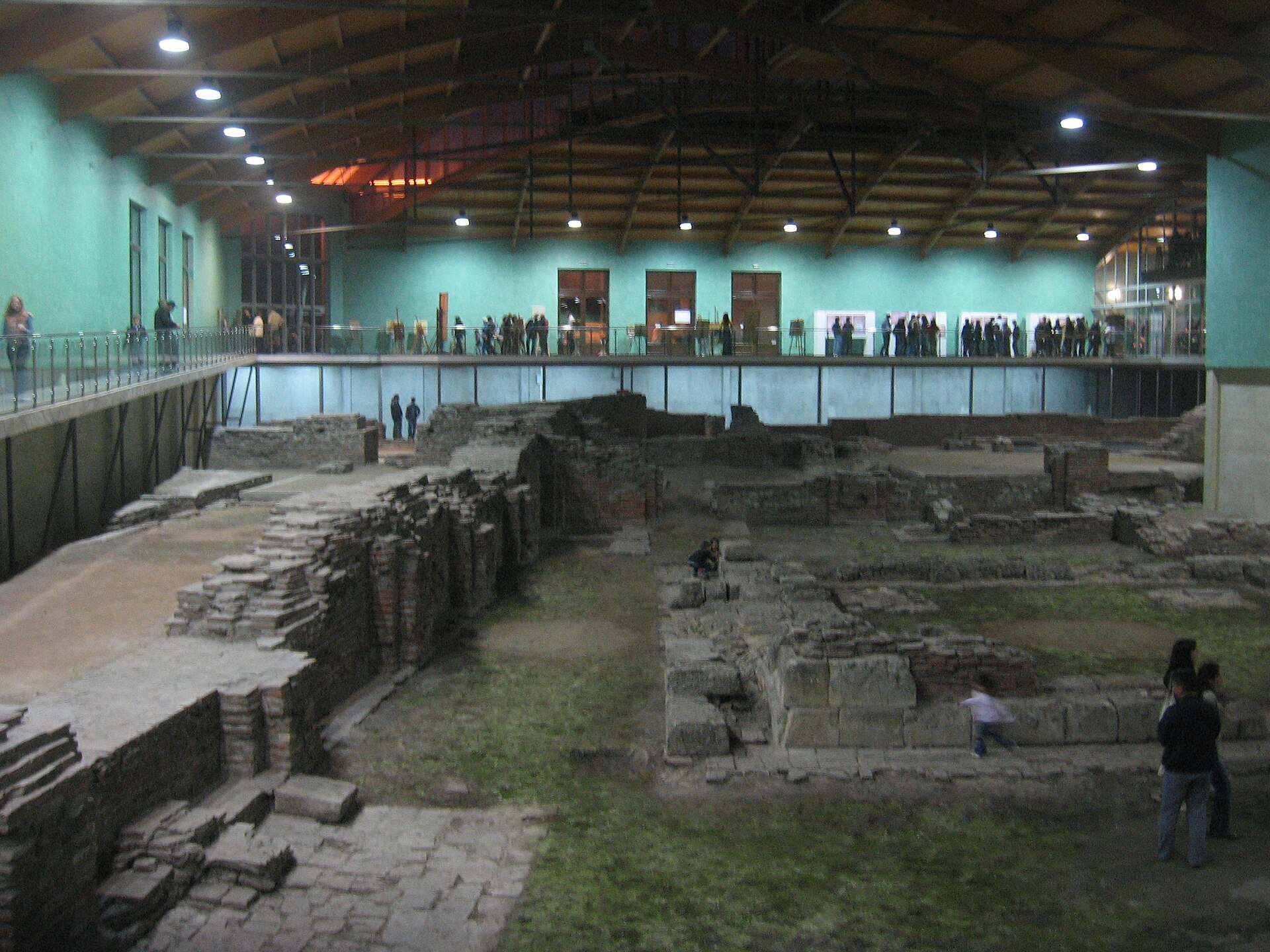
- Visitor centre and site model — Palace visitor centre, town centre
A layout model of Sirmium appears among the heritage material for the site, and it helps make sense of the fragments outside. Seeing street grid, palace and river in miniature turns scattered walls into a city. Ask at the visitor centre whether it is on display during your visit.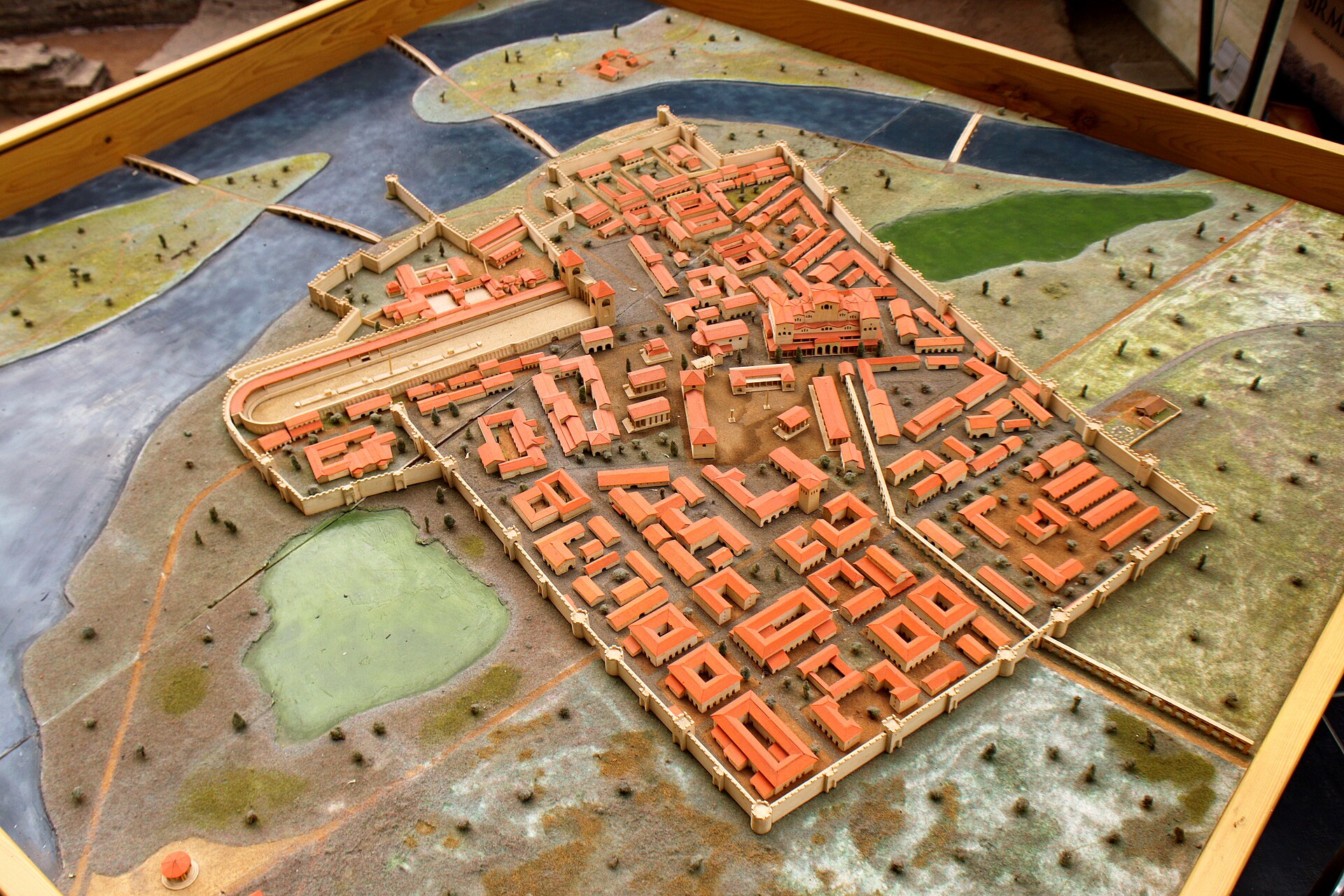
- Ruins among the houses — Residential quarter near the centre
Several residential streets in Sremska Mitrovica were built around exposed Roman walls, so flats and gardens share ground with ancient masonry. Wandering the blocks near the centre is unscripted and informal. Look for fenced or sunken foundations between buildings, and keep to public paths rather than stepping into private yards.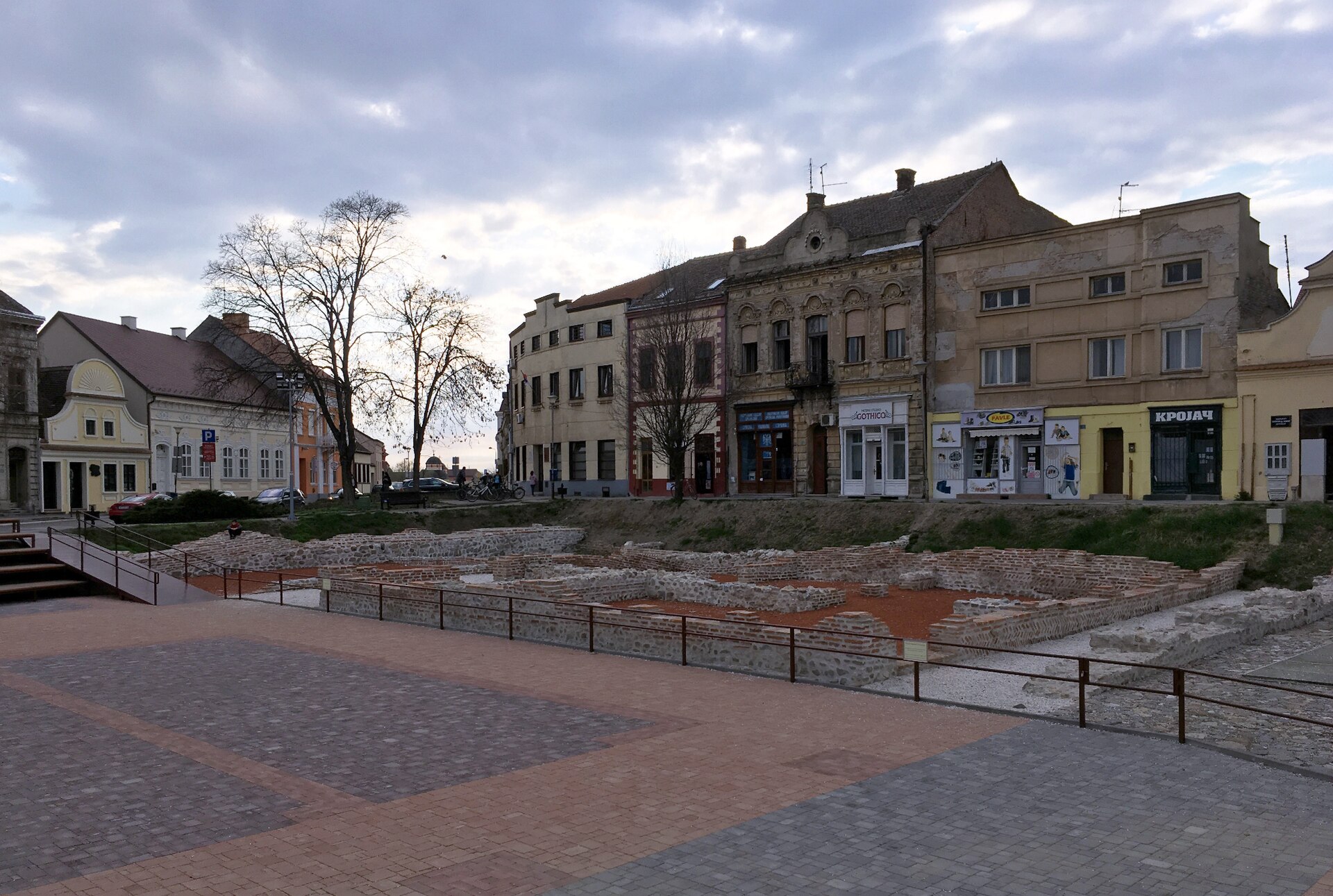
- The jewelled helmet — Museum collections, Vojvodina
A ridge helmet from the early 4th century, made of iron with gilded silver, glass and gems, shows the wealth of Sirmium's imperial age. This example belongs to a museum in Novi Sad and was lent to an exhibition in Rome. For similar finds, ask at the local museum in Sremska Mitrovica.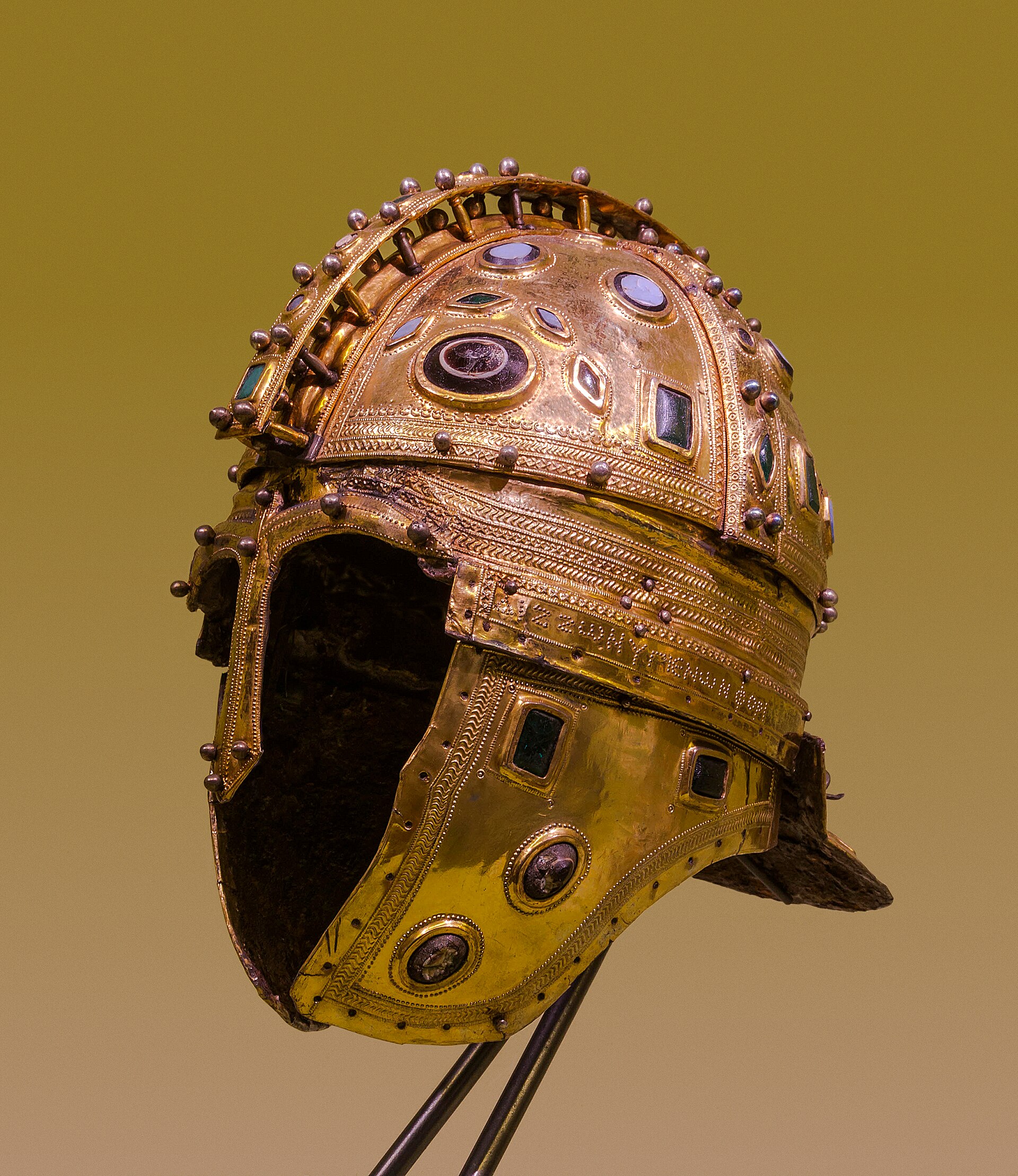
- The Sava riverbank — Sava river, north of the centre
The Sava gave Sirmium its name, a word linked to flowing water, and a walk along the banks shows why the Romans chose the spot. Flat, green and slow, the river made trade and troop movement easy. Early morning and evening are the cooler, quieter hours.
Culture
Sirmium's culture today belongs to Sremska Mitrovica and to Vojvodina, a province where Serbian, Hungarian, Slovak, Croatian and other communities have lived side by side for generations. Most locals are Serbian Orthodox, and church bells, family slava feasts and saints' days shape the calendar more than the Roman past does. Even so, the town is proud of its ancient identity, and the palace, the museum and several street names keep it visible. Social life runs on cafés. People linger over strong coffee, talk warmly and loudly, and treat a guest as someone to be fed. A glass of rakija, a fruit brandy, is a common welcome in homes, and refusing everything outright can seem cold. Football, river fishing and weekend market trips are everyday pastimes. Expect limited English away from the main square, though younger people often speak some, and a few words of Serbian, such as hvala for thanks, earn smiles. The Roman ruins are treated as a living part of the town, so they sit beside pavements, playgrounds and shops, and locals are usually happy to explain them to anyone who asks. When entering a home or an Orthodox church, take your cue from the hosts: leave your shoes at the door if others have, and keep shoulders and knees covered inside the church.
What to wear
Sirmium's Roman residents dressed in wool and linen tunics, with cloaks against the cold, and officials added the toga for ceremony; textiles rarely survive, so much is known from sculpture and mosaics. In the Srem countryside, traditional dress was made from homespun linen, hemp and wool, with white embroidered shirts, waistcoats, wide aprons and leather opanci shoes, while men wore the šajkača, a soft cap. Patterns differ from village to village. Today these outfits appear mainly at folk festivals, weddings, dance groups and church feast days. Everyday wear in Sremska Mitrovica is plain and European: jeans, trainers, light jackets, and neat shirts or dresses for evenings out. Visitors blend in easily with practical, modest clothes. In summer, bring a hat, sunscreen and breathable cotton, because the ruins offer little shade. Winters on the Pannonian plain are cold and damp, so layers and a waterproof coat help. Wear sturdy flat shoes, since excavated ground is uneven and paving can be slick after rain. For Orthodox churches, carry a scarf or light cover-up so shoulders and knees are covered; no special clothing is needed for the museum or the ruins.
What to eat
- Ćevapi — Grill eateries around the town centre
Small grilled minced-meat rolls, served in a flatbread called lepinja with chopped raw onion and sometimes kajmak, a soft dairy spread. They are a common quick lunch in Serbia and taste best fresh off the charcoal. - Burek — Bakeries near the main square
Layers of thin pastry wrapped round minced meat, cheese or sometimes potato, baked in a round tray and cut in wedges. Locals often eat it for breakfast with plain yoghurt, and a bakery counter is the place to try it. - Sarma — Family-run restaurants and home-style eateries
Cabbage leaves, soured in brine, rolled around minced meat and rice and simmered slowly. It is a winter and festival dish, often served with a spoonful of sour cream and plenty of bread beside it. - Riblji paprikaš — Riverside and village eateries along the Sava
A fish stew from the Pannonian plain, built on river fish, sweet paprika and onion, often cooked over a wood fire. It suits a town on the Sava, and is usually eaten with noodles or plenty of bread. - Palačinke — Cafés and pastry shops in the centre
Thin pancakes, folded or rolled around walnuts, jam, chocolate spread or sweet cheese. They are served as dessert or a late-afternoon treat, and any café or pastry shop in the town centre will usually have a version on the menu.
Plan it
Best time. May–June and September–early October for mild weather and comfortable walking among the ruins; July and August can be hot with little shade, and winters are cold, damp and grey.
How long. 1
Getting there. Fly to Belgrade Nikola Tesla Airport, then take a train or intercity bus west to Sremska Mitrovica; the palace site is in the town centre and reachable on foot from the station area.
Budget. low
Tips
- Check opening arrangements for the palace visitor centre with the local tourist office before travelling
- Pair Sirmium with Belgrade or Novi Sad, as the town is quiet and a short visit is enough
- Carry some cash for small cafés and bakeries
- Bring water and a hat in summer, as the ruins are exposed
- Wear sturdy shoes for uneven excavated ground
Etiquette
- Stay on public paths and do not climb on exposed walls or foundations
- Cover shoulders and knees when entering Orthodox churches
- Ask before photographing people in cafés or markets
Nearby
Sources
- Wikidata Q833060 (CC0)
- Wikipedia: Sirmium (rev 1383714337) (CC BY-SA 4.0)
- Wikivoyage: Sremska Mitrovica (CC BY-SA 4.0)
- Photo: Imperial Palace in Sirmium (sm022) (CC BY 3.0)
- Photo: Imperial Palace visitor centre (mediaportal.vojvodina.gov.rs) (CC BY 3.0)
- Photo: Roman jewelled ridge helmet (Jebulon) (CC0 1.0)
- Photo: Prefecture of Illyricum map (PANONIAN) (Public domain)
- Photo: Layout of Sirmium (mediaportal.vojvodina.gov.rs) (CC BY 3.0)
- Photo: A quarter in Sremska Mitrovica (Sadko) (CC BY-SA 4.0)
- Photo: A quarter in Sremska Mitrovica 2 (Sadko) (CC BY-SA 4.0)
- Photo: Roman ruins of the Imperial Palace in the town centre (Ant83) (Public domain)


