Kragujevac
Kragujevac, Serbia
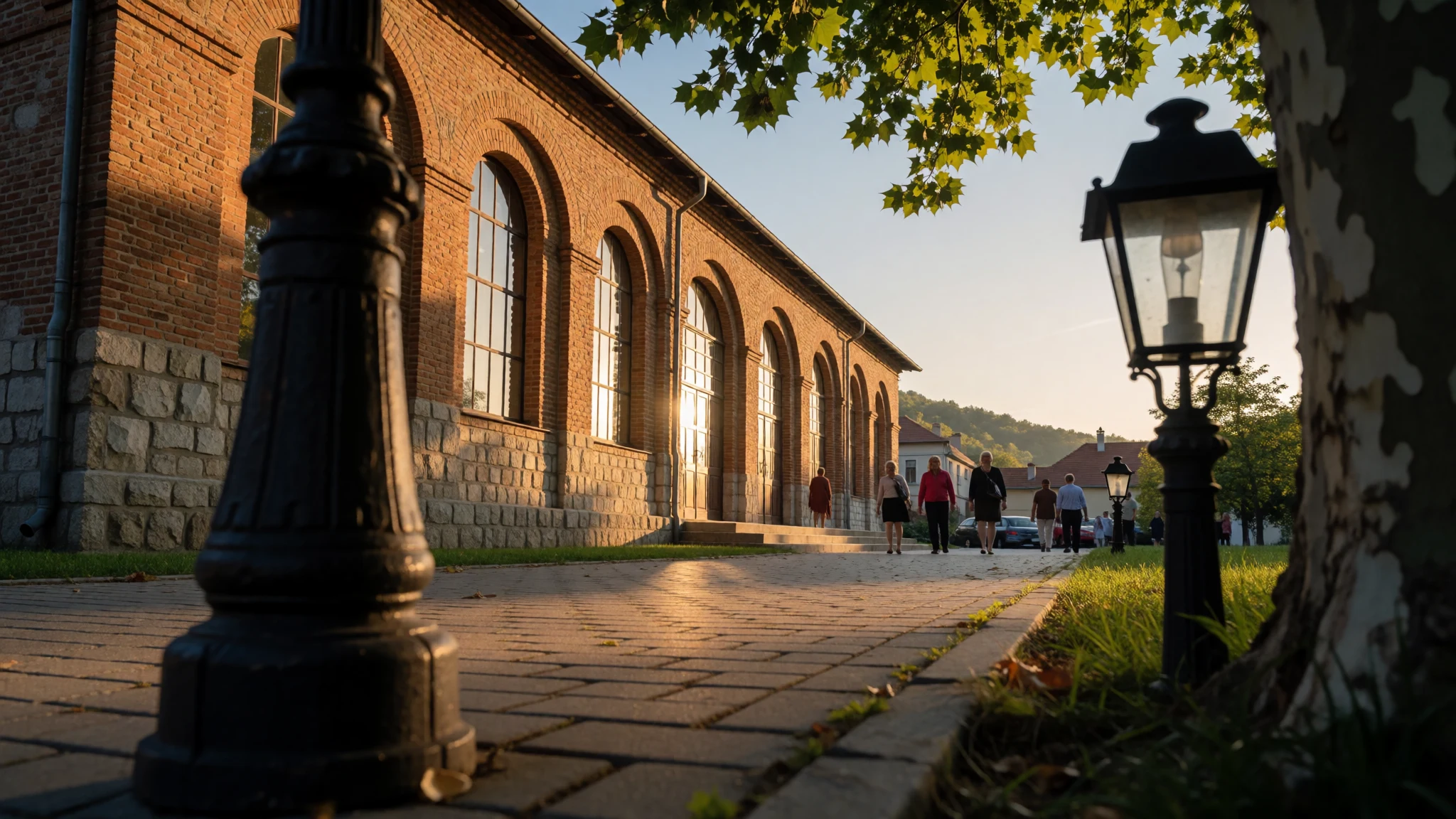
Kragujevac is Serbia's former capital, a lively university and factory city where history, memorials and grilled meat make an honest stop in the Šumadija hills.
The place
Kragujevac sits at 180 metres above sea level in the valley of the Lepenica, a modest river that threads through Šumadija, the rolling orchard-and-oak country of central Serbia. With 150,623 residents it is a working city rather than a resort: wide boulevards, a walkable centre, students on café terraces and factory districts that have shaped its economy for generations. Wooded slopes close the horizon, among them the Rudnik, Crni Vrh and Gledić hills, and the wider administrative area spreads across about 835 square kilometres of villages and farmland. Two industries set the daily rhythm: the Zastava arms works and the car plant that now builds Fiat models for Serbia. Alongside them, the University of Kragujevac gives the city a young, argumentative edge, especially in term time. Visitors expecting a quiet museum town tend to find something livelier, with the feel of a place that still makes things. It is not a city of postcard views. Its appeal lies in layers: the old quarter of a former capital, memorial parks that ask for quiet, and a food culture built around the grill. Foreign tourists are few, so prices and attention feel local, and English is spoken mainly by younger people. It works as a stop between Belgrade and the south, or as a base for day trips into Šumadija's villages, monasteries and hills. Summers are warm, winters grey and cold, and spring and early autumn are the easiest seasons for walking.
Its story
People have lived around Kragujevac for tens of thousands of years. Caves near the village of Gradac sheltered Palaeolithic hunters, and Neolithic farmers of the Starčevo culture later dug homes into the river valleys of the Lepenica and Gruža. Their best-known legacy is the Divostinke, small fertility figurines named after the village of Divostin. In antiquity the land belonged to Illyrian Dardani and Celtic Scordisci before Rome arrived, and in the centuries after Roman rule Slavic settlers pushed in, with the area passing for a time under the First Bulgarian Empire. Stefan Nemanja, the ruler who consolidated the medieval Serbian state, took the territory at the end of the twelfth century. Wikidata dates the town's founding to 1476. The modern chapter is what gives Kragujevac its standing. Under Prince Miloš the town served as Serbia's capital from 1818, and the Sretenje Constitution, proclaimed here in 1835, was the first of its kind in the Balkans. The twentieth century brought pride and grief in turn. During the First World War a unit of the Scottish Women's Hospitals worked in the city, treating the wounded. In the Second World War, German occupiers killed 2,778 Serb men and boys in a massacre carried out in reprisal for Partisan attacks. Memory of that day still shapes the city, and it is why the memorial park at Šumarice carries such weight for local people.
What to see
- Šumarice Memorial Park — Western edge of the city
A wooded park on the western edge of Kragujevac, set where thousands of local civilians, children among them, were killed by German forces in reprisal for a Partisan attack. Paths run between monuments among the trees. It is a place for quiet walking and reflection rather than a quick photo stop.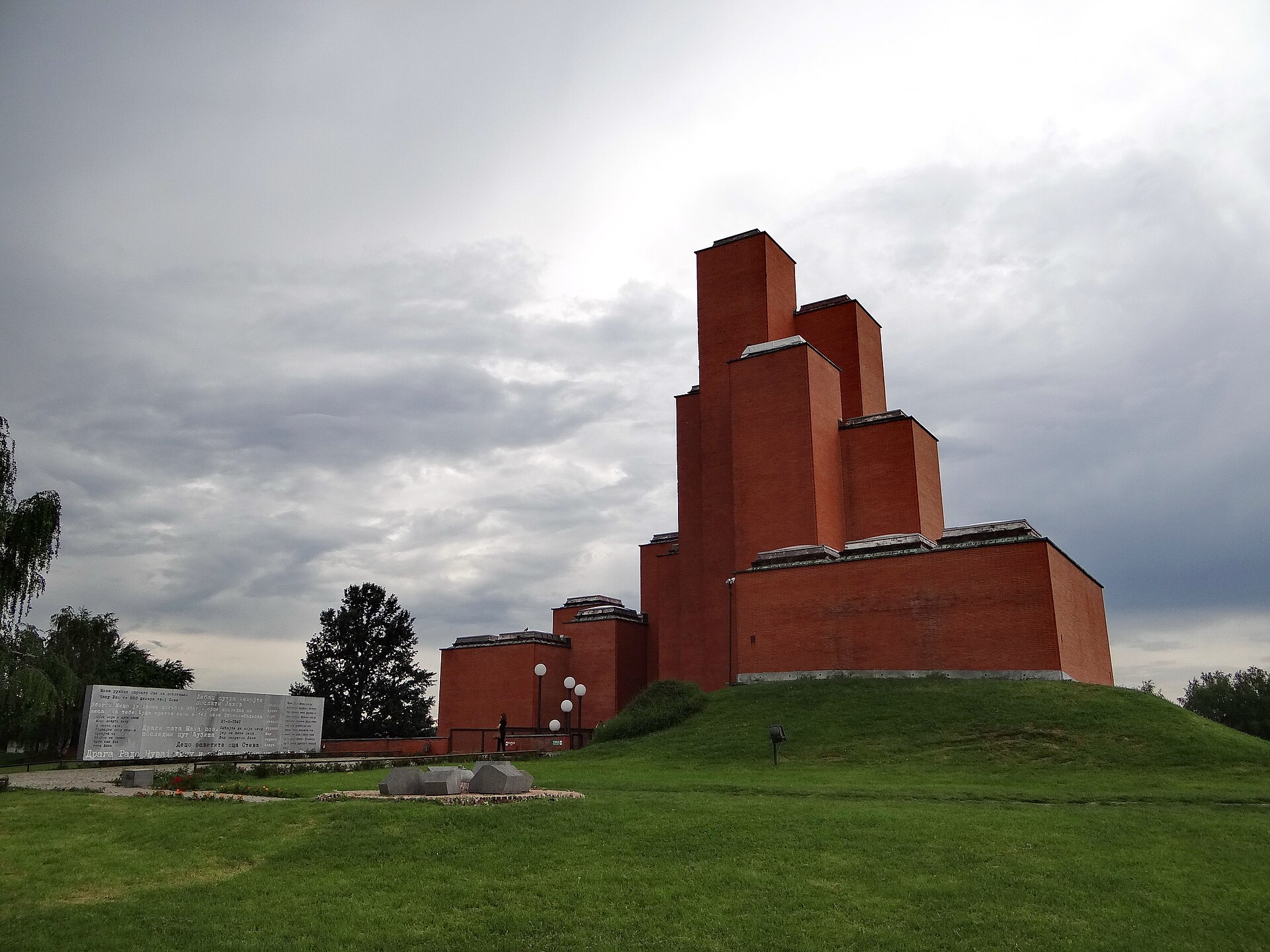
- Museum Stara livnica — Near the Zastava factory area
The Old Foundry museum occupies the former gun foundry of the military factory and traces the factory's history through the nineteenth and twentieth centuries. A display of modern weapons sits alongside. It helps explain why the city's industry matters so much to local identity and employment. - Amidža's Lodgings — Old centre, Prince Miloš's court area
This is the only surviving building from the court of Prince Miloš, and it now belongs to the National Museum. Visiting gives a sense of scale and domestic life in the days when Kragujevac was the seat of government, long before the modern city grew around it. - The Circle of Prince Miloš — Old centre
A cultural-historic complex of buildings that keep the look of the city from its years as capital. It is best taken slowly on foot, noticing how the architecture and the original purpose of each building tell the story of an early Serbian state finding its shape. - Prince's Arsenal — Industrial heritage quarter
An arsenal complex of factory buildings and workrooms from the turn of the nineteenth to the twentieth century. It shows the industrial side of Kragujevac's past, when the city's military works set it apart from other Serbian towns. Interiors are limited, so check with the city's official site before planning a visit.
Culture
Kragujevac's culture is that of a Šumadija city with a student population and a long memory. The University of Kragujevac, founded in 1976, fills cafés and bookshops with young people for much of the year, and the city's theatre, schools and museums give it more civic life than its size suggests. Local pride rests on being the early seat of the modern Serbian state, and residents readily link the city's identity to that role as well as to its factories. Weekends revolve around long café sittings, grilled meat, football and family lunches. The pace is unhurried and hospitality is generous, with guests often pressed to take another coffee or a glass of rakija. Football loyalties run deep, and the local club Radnički draws a passionate following. The memorial landscape is part of everyday life too: schools and families visit Šumarice, and the city treats the wartime massacre as a matter of solemn remembrance rather than a tourist story. Conversation about politics and history is common and often lively, but visitors do best by listening first. Serbian appears in both Cyrillic and Latin script, so signs may switch between them. Visitors at Šumarice should keep their voices low, dress plainly and avoid posing for casual photographs among the memorials.
What to wear
Traditional dress in Šumadija was rural and practical, made from wool, linen and hemp cloth woven at home. Men wore the šajkača, a soft cap with a pointed front, a woollen coat called a gunj, and opanci, leather moccasin-style shoes. Women wore embroidered blouses, aprons and waistcoats called jelek. Today these garments appear mainly at folk festivals, weddings, dance ensembles and national celebrations. In daily life, people in Kragujevac dress much as in other central European cities: jeans, trainers, jackets and shirts by day, with students favouring casual streetwear and people going out in the evening dressing a little smarter. Work clothing is common around the factory districts. A visitor needs nothing special. Pack layers, since winters are cold and summers warm, with a sun hat and sunscreen for July and August and a proper coat from November. Comfortable shoes matter for pavements, parks and hilly walks. For monasteries in the surrounding countryside, cover shoulders and knees, and carry a scarf for women who wish to cover their heads. At the memorial park, plain, sober clothing is more fitting than beachwear or loud slogans.
What to eat
- Pljeskavica — Grill houses in the central streets
A large, flat patty of seasoned minced meat grilled over charcoal and served in flatbread with onion, and often kajmak, the soft dairy spread. It is Serbia's everyday grill order, and Kragujevac's busy grill houses take pride in doing it well. - Karađorđeva šnicla — Traditional restaurants in the centre
A rolled veal or pork cutlet stuffed with kajmak, breaded and fried, usually served with chips and tartar sauce. It is a rich dish for a hungry evening, and a restaurant that specialises in it will usually say so on the menu. - Roštilj mixed grill — Barbecue restaurants near the centre
A plate of ćevapi, sausages and grilled cuts of pork, served with raw onion, bread and ajvar, a roasted red-pepper relish. The brief's grill spots are popular for exactly this kind of unfussy, meat-heavy meal. - Sarma — Local-cuisine restaurants and family kafanas
Cabbage leaves rolled around minced meat and rice, then simmered slowly. It is a winter staple across Serbia, best on a cold day with bread and a spoon of sour cream, and it appears on most menus serving home-style cooking. - Burek — Neighbourhood bakeries
A coil of flaky pastry filled with meat or cheese, sold by weight and eaten at any hour, often with plain yoghurt. It is the standard quick breakfast and works well for early starts before heading to a museum or a day trip.
Plan it
Best time. April–May and September–October, when walking is comfortable and the surrounding Šumadija hills are green or golden. July and August are warm, and winters are cold and grey.
How long. 1–2
Getting there. There is no commercial airport in the city. Morava Airport lies 30 km to the west but has only two flights a week, so most visitors fly to Belgrade (150 km north) or Niš (150 km south) and continue by bus, train or road. The E-75 highway links Kragujevac to both. Check current bus and train timetables before travelling.
Budget. low
Tips
- Fly into Belgrade and take a bus or hire a car; check timetables locally as they change
- Carry some cash for small grill houses and bakeries, though larger places take cards
- Visit Šumarice in the morning when it is quietest
- Check the city's official site, kragujevac.ls.gov.rs, for museum opening times before you go
Etiquette
- Keep voices low and behaviour respectful at Šumarice and other memorials
- Ask before photographing people, especially at memorial events
- Accept offered coffee or a drink as a gesture of hospitality, and say so politely if you cannot
Nearby
Sources
- Wikidata Q167394 (CC0)
- Wikipedia: Kragujevac (rev 1379728727) (CC BY-SA 4.0)
- Wikivoyage: Kragujevac (rev 5407583) (CC BY-SA 4.0)
- Photo: Kragujevac (BrankaVV) (CC BY-SA 4.0)
- Photo: The view on the Kragujevac (Струјајое) (CC BY-SA 2.0)
- Photo: Opstina Kragujevac (Jovan) (CC BY 3.0)
- Photo: Zgrada Okružnog suda (Ванилица) (CC BY-SA 4.0)
- Photo: Прва крагујевачка гимназија (Jovana.photo) (CC BY-SA 4.0)
- Photo: Grammar School Kragujevac (Asrdjan) (CC BY 3.0)
- Photo: Knjaževsko-srpski teatar (Струјајое) (CC BY 3.0)
- Photo: Cultural Heritage site ЗМ 9 (Dekanski) (CC BY-SA 4.0)


