Poon Hill
Poon Hill, Nepal
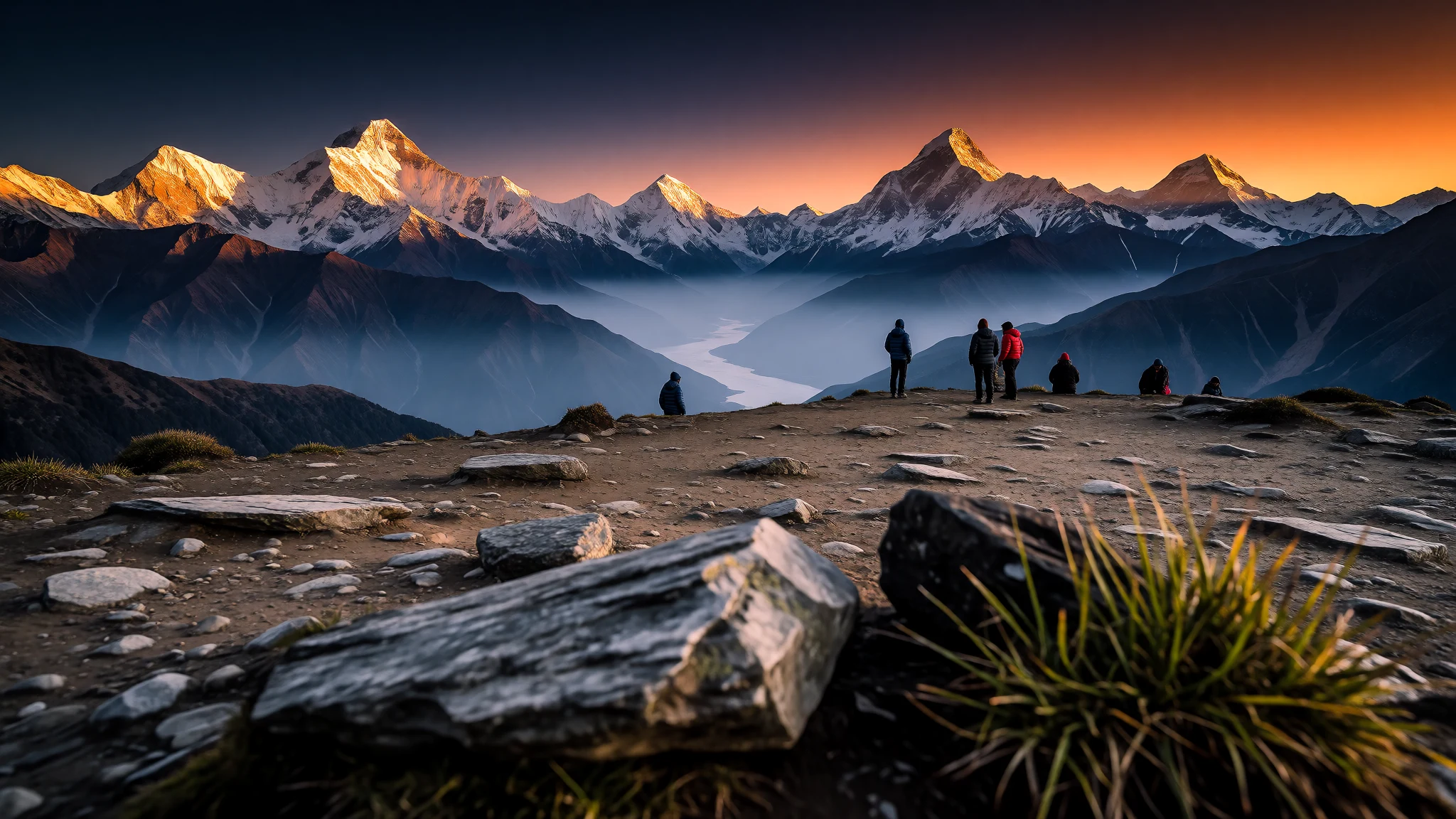
Poon Hill is a short, steady trek to a ridge where the Annapurna and Dhaulagiri ranges turn gold at sunrise.
The place
Poon Hill is a ridge-top viewpoint in western Nepal, on the line between Myagdi and Kaski districts in Gandaki Province, at 3210 m. It sits a short climb above the village of Ghorepani and is the main lookout of the Ghorepani Poon Hill trek, a popular way into the Annapurna region. The hill is about 270 km west of Kathmandu and roughly 36 km north-west of Pokhara, though the walking route is much longer because the path winds up through villages and forest. What draws people is the horizon. Dhaulagiri stands on one side and the Annapurna massif on the other, with Machhapuchhare, Annapurna South, Hiunchuli and Dhampus Peak among the named summits. Dhaulagiri reaches 8,167 m, so the white line above the green valleys is very high indeed. Below the ridge, the slopes are covered in rhododendron forest and terraced fields. The hill also lies on the way towards the Annapurna Sanctuary, inside the Annapurna Conservation Area, so walkers need a conservation permit, which is issued in Kathmandu or Pokhara before the trek begins. Most people start from Naya Pul, a short drive from Pokhara, and walk for two to three days to reach Ghorepani, the last village with places to sleep. The summit visit is a pre-dawn ritual: climb in the dark, wait in the cold among a crowd of other trekkers, and watch the peaks catch the first light. By Himalayan standards the altitude is modest, and most people avoid serious altitude sickness, but the thin air still shows up as tiredness and headaches.
Its story
Poon Hill has no ancient monument or battle behind it. Its story is the story of a path. Long before trekkers arrived, the slopes around Ghorepani were farmed and walked by hill communities, among them Gurung families, who moved between villages, forest and the valleys below on foot. Visitors came later, drawn by the views, and the villages on the way grew into a chain of small teahouses offering a meal and a bed. Today the route works like a ladder of overnight stops. Walkers climb from Naya Pul through terraced villages, reach Ghorepani after two days, rest, and go up the hill in the dark the next morning. Some then return the way they came, while others carry on to Tadapani, a walk of five to six hours that is mostly flat or downhill, and onwards towards the Annapurna Sanctuary. The permit system for the Annapurna Conservation Area belongs to the same story. It links walkers' fees and rules, such as the ban on plastic water bottles, to the care of the landscape they have come to see. The sunrise itself has become the shared event. Head torches bob up the final steps, people stand shoulder to shoulder at the top, and guides name each peak as the light reaches it. Then the crowd drifts back down to Ghorepani for breakfast, and the day's walking begins.
What to see
- Poon Hill sunrise viewpoint — Ghorepani, Myagdi and Kaski border
The summit of Poon Hill is the reason for the whole trek. Walkers climb from Ghorepani in the dark and wait on the viewing platform as the Annapurna and Dhaulagiri ranges turn from grey to gold. It gets crowded in the peak seasons, so arrive early for a clear spot.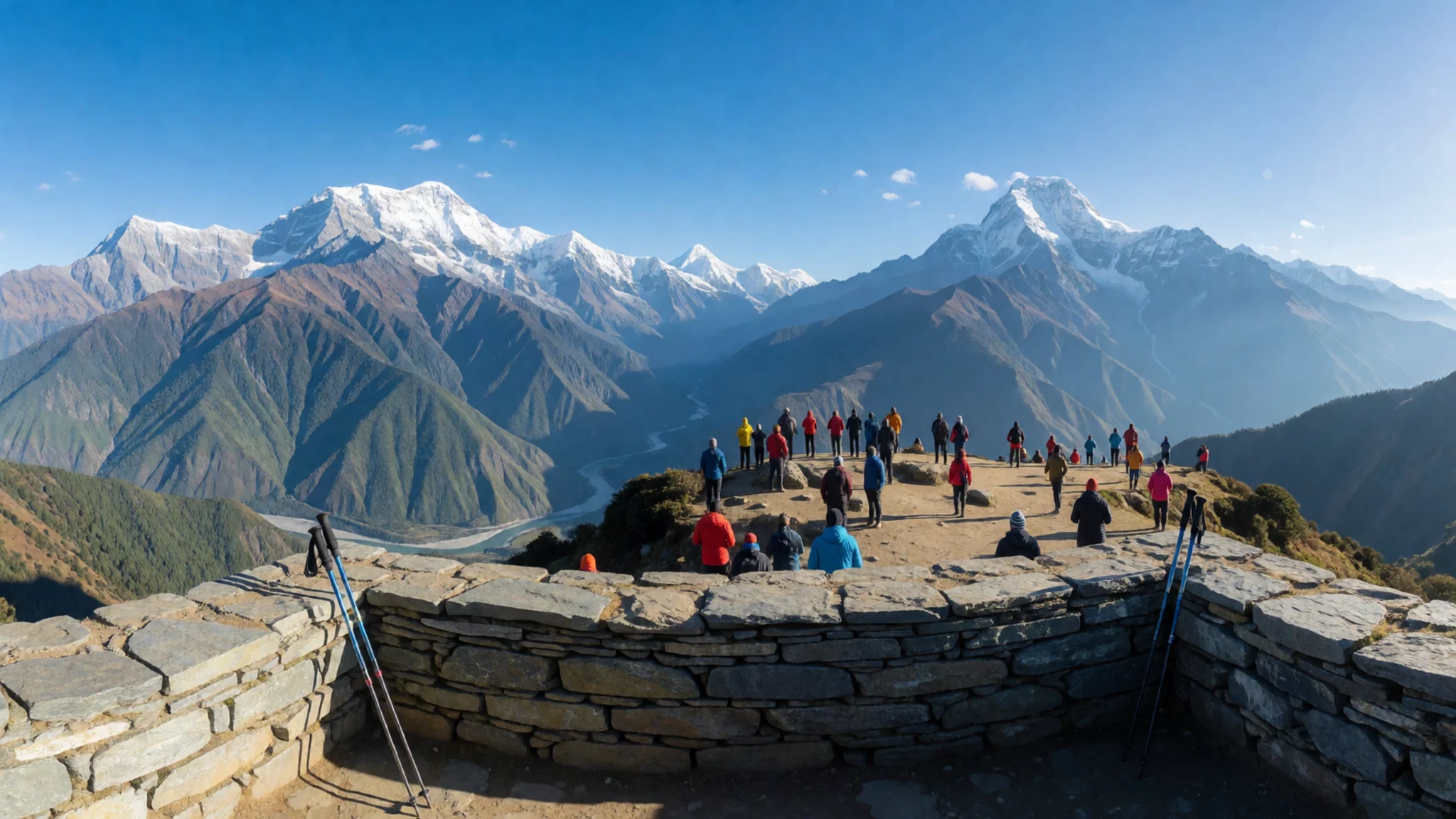
- Dhaulagiri — Dhaulagiri range, seen from the hill
Dhaulagiri dominates the western end of the panorama, a heavy white wall reaching 8,167 m. From Poon Hill it is the peak guides usually point out first, and it often holds the pink light longest. Clear mornings are most likely in the dry, cooler months.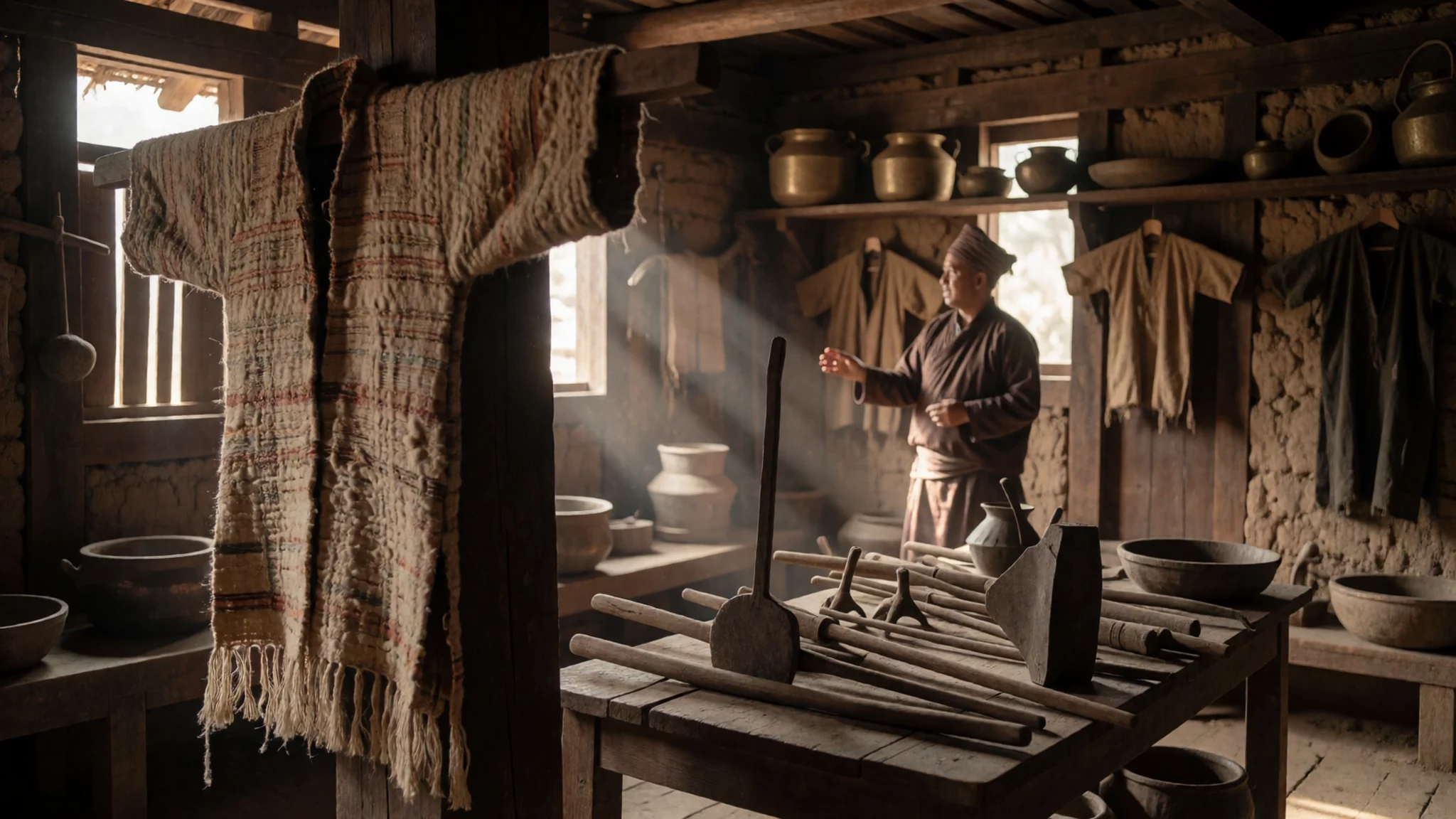
- Rhododendron forest above Ghorepani — Trail near Deurali
The trail between the villages and the ridge passes through thick rhododendron woods, in flower in spring and shady and cool the rest of the year. Walkers often stop at tea stalls along the way. The forest is also where the path steepens and the air starts to thin.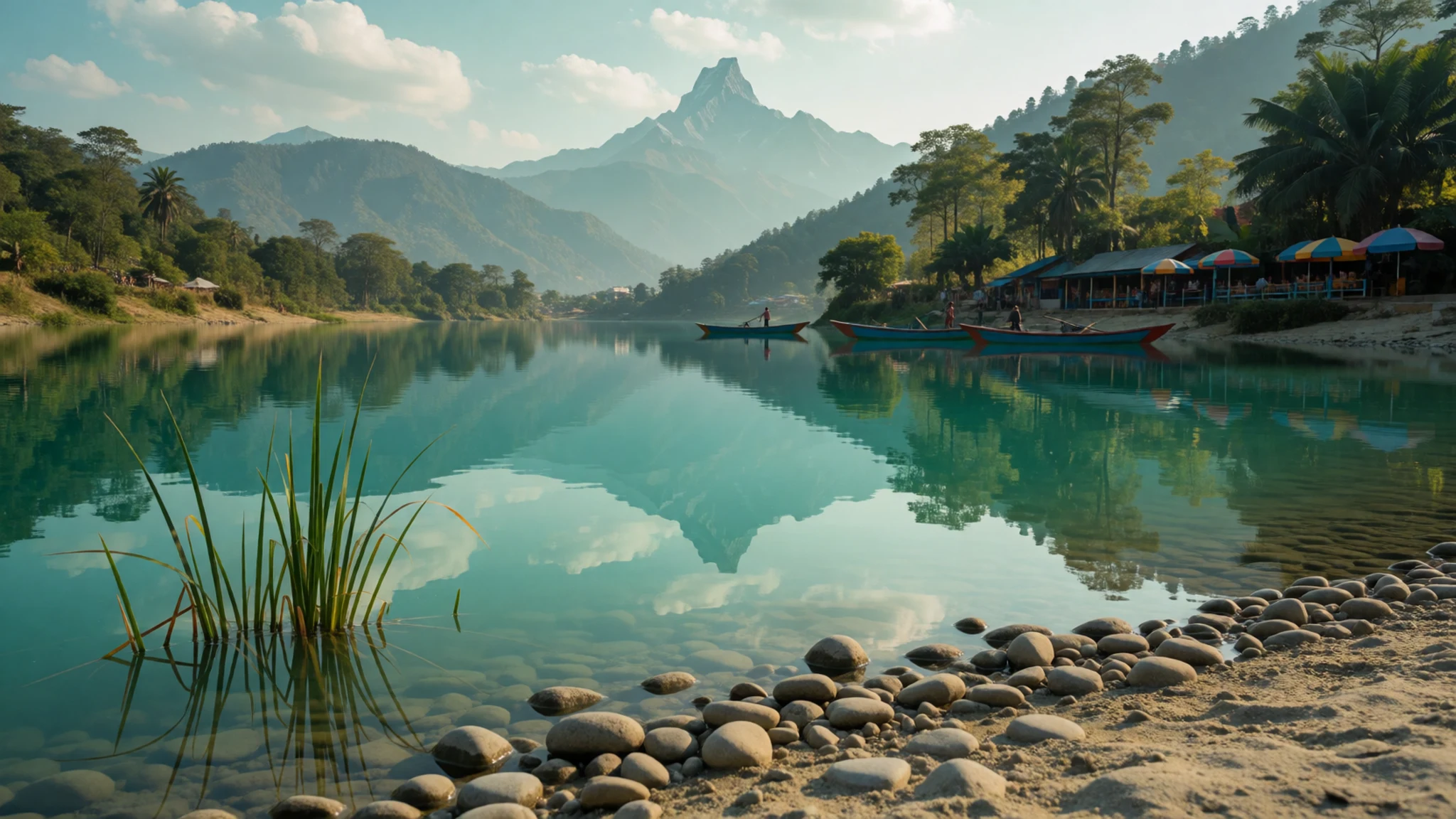
- Ghorepani village — Ghorepani, Myagdi District
Ghorepani is the overnight base for the hill, a cluster of teahouses strung along the trail. Walkers eat, share stories and set alarms for pre-dawn. It is wise to stay a night here before climbing, so the body has time to adjust to the altitude.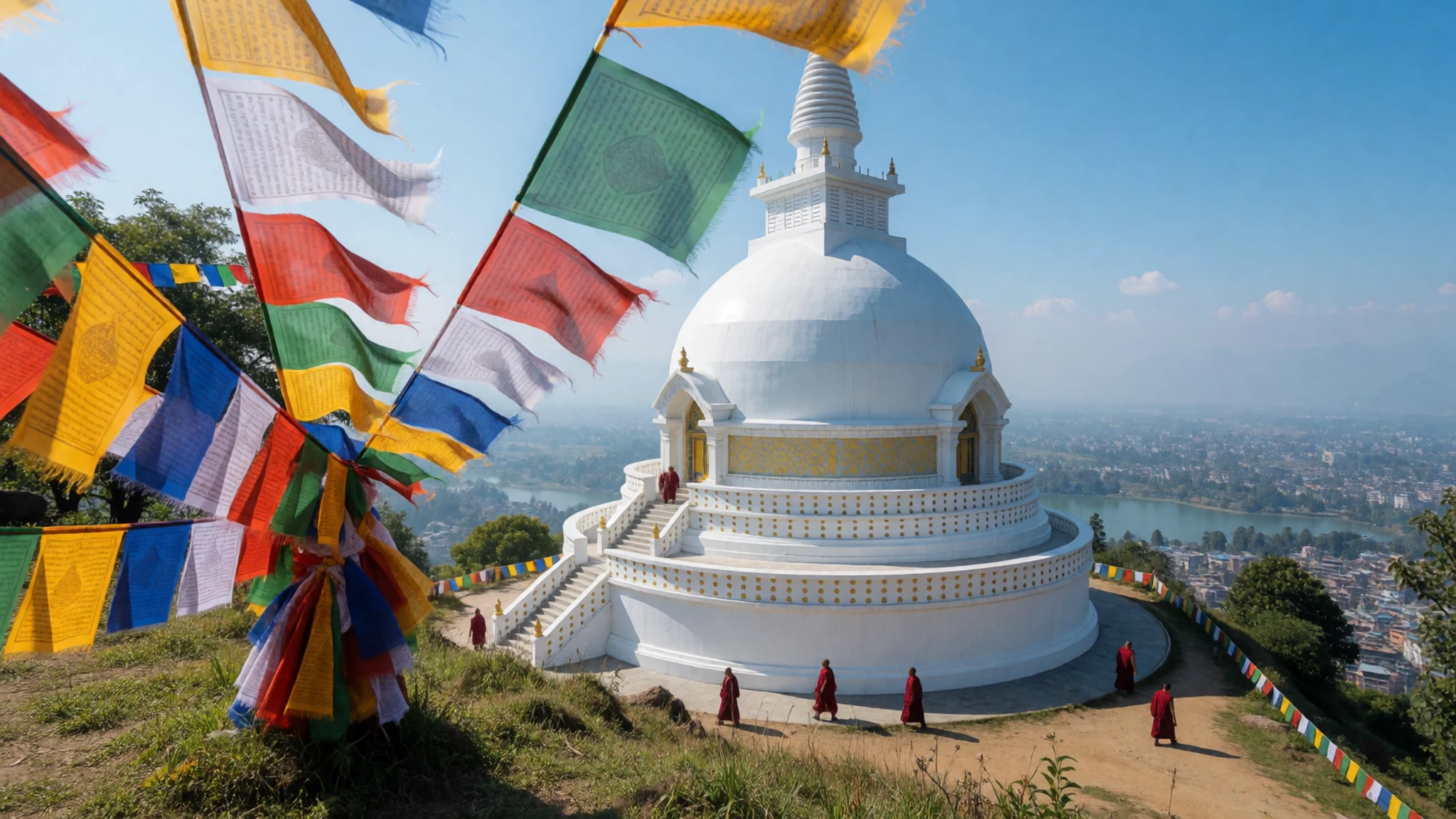
- Gurung Cultural Museum, Ghandruk — Ghandruk, Kaski District
Ghandruk is a Gurung village on the Annapurna side of the trek, and its small museum preserves older Gurung household life and customs. It makes a good stop for walkers who continue beyond the hill, and a way to understand the people who live along the route.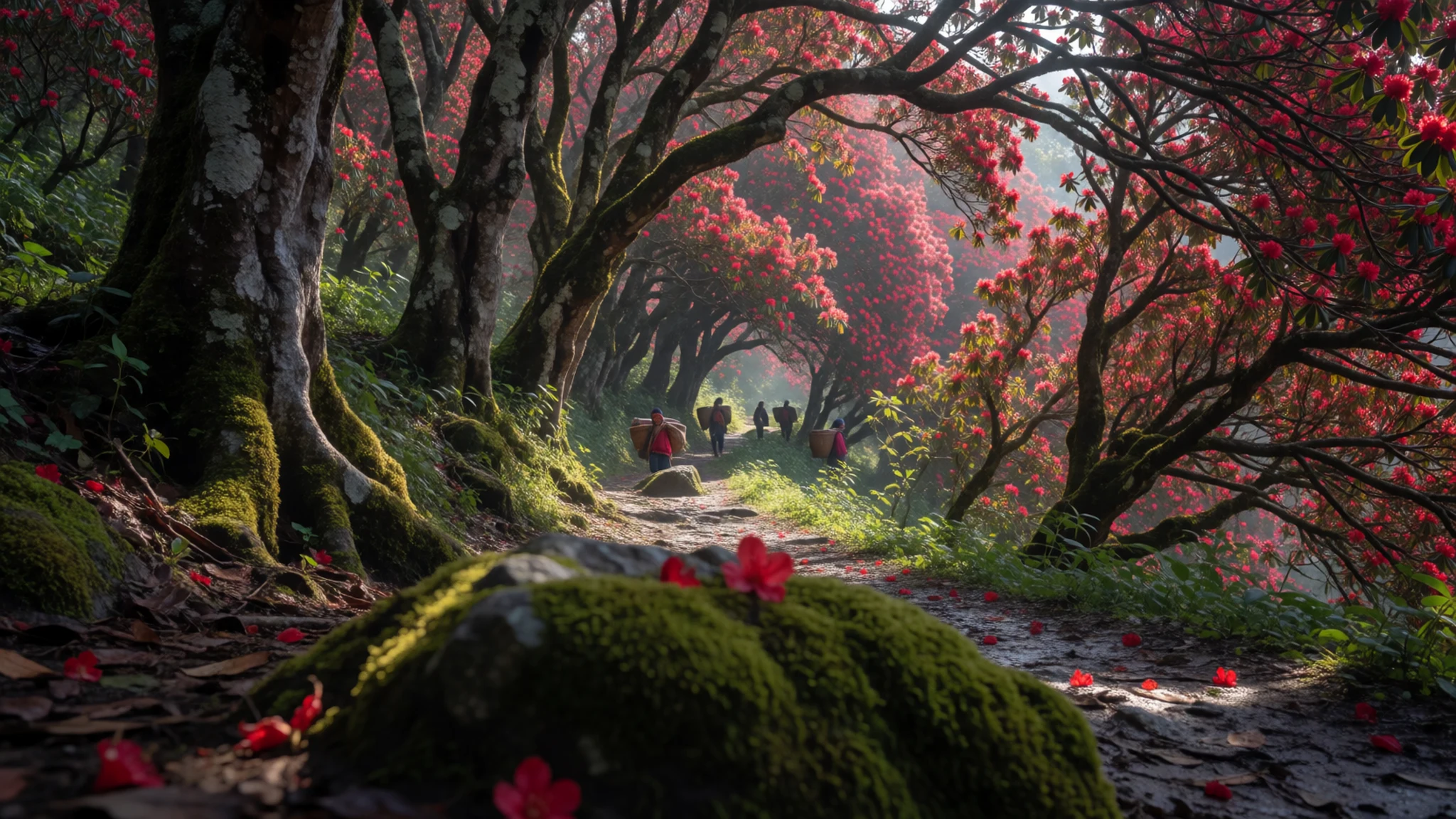
Culture
Poon Hill sits in country shaped by hill communities, above all the Gurung, whose villages such as Ghandruk line the trails around the Annapurna region. Many families here follow a blend of Buddhist and older local traditions, and village life revolves around farming, terraces, livestock and, increasingly, hosting trekkers. Teahouses are mostly family-run, and the person who cooks your dal bhat is often the person who owns the building and farms the land behind it. Gurung hospitality, music and dance are part of what the region offers beyond the mountains, and the cultural museum in Ghandruk is one place to see how households once lived. Prayer flags, carved stones and small shrines appear along the paths, a reminder that this is a lived-in landscape and not just a viewing platform. The conservation area adds another layer of culture: rules on plastic, refill stations for purified water and a permit system that visitors are expected to follow. Early mornings in Ghorepani are noisy with trekkers, but evenings are quiet, and a friendly 'namaste' goes a long way. Visitors who spend money in village teahouses, buy food locally and hire local guides help keep the economy working for the people who maintain the trail. Greet people politely, ask before photographing anyone or their home, and pass prayer stones and mani walls with the wall on your right-hand side.
What to wear
Poon Hill is Gurung country, and traditional Gurung dress still appears at festivals, weddings and cultural performances. Women wear a velvet blouse with a wrapped cloth skirt, a sash at the waist and gold or bead jewellery, often in deep reds and maroons. Men traditionally wear a wrap-over cotton shirt and a cloth tied at the waist, sometimes with a cap. Cotton, wool and velvet are the usual materials, and many families keep their finest pieces for celebrations. Everyday clothing on the trail is much more practical: fleeces, jackets, trousers, rubber boots for farmwork, and a shawl or woollen hat against the cold. Teahouse owners and guides tend to dress for the weather like their guests. Visitors should plan for big temperature swings. Days can be warm on the climb, but the pre-dawn summit is cold even in the best season, so bring layers, a down jacket, gloves and a hat, plus a head torch. Sturdy, broken-in walking boots with good grip matter more than anything else, because the route includes long flights of stone steps that become slippery after rain. Light, quick-drying trousers are better than shorts around villages, where covering shoulders and knees is a courteous habit. Bring a rain jacket for the wetter months.
What to eat
- Dal bhat — Any teahouse along the Ghorepani route
The standard trekker's meal: rice with lentil soup, vegetables and usually a pickle. Many teahouses offer refills, which is useful after a long day of climbing. It is the dish most often recommended for steady energy on the trail.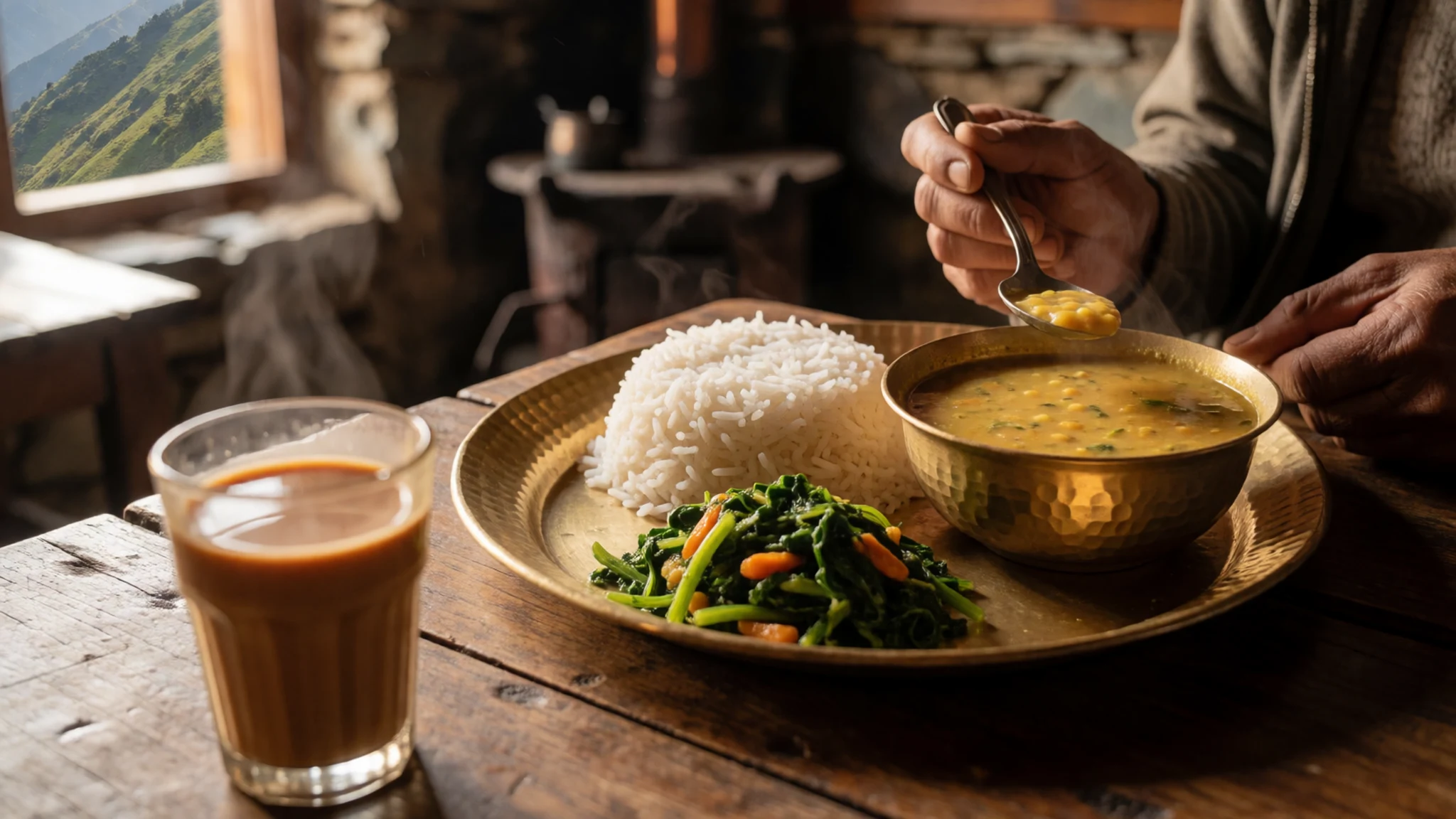
- Momo — Teahouses in Ghorepani and Ghandruk
Small steamed dumplings, usually filled with vegetables or meat and served with a spicy tomato dip. They make a popular snack in the afternoon when walkers arrive at the village. Fried versions are sometimes available too.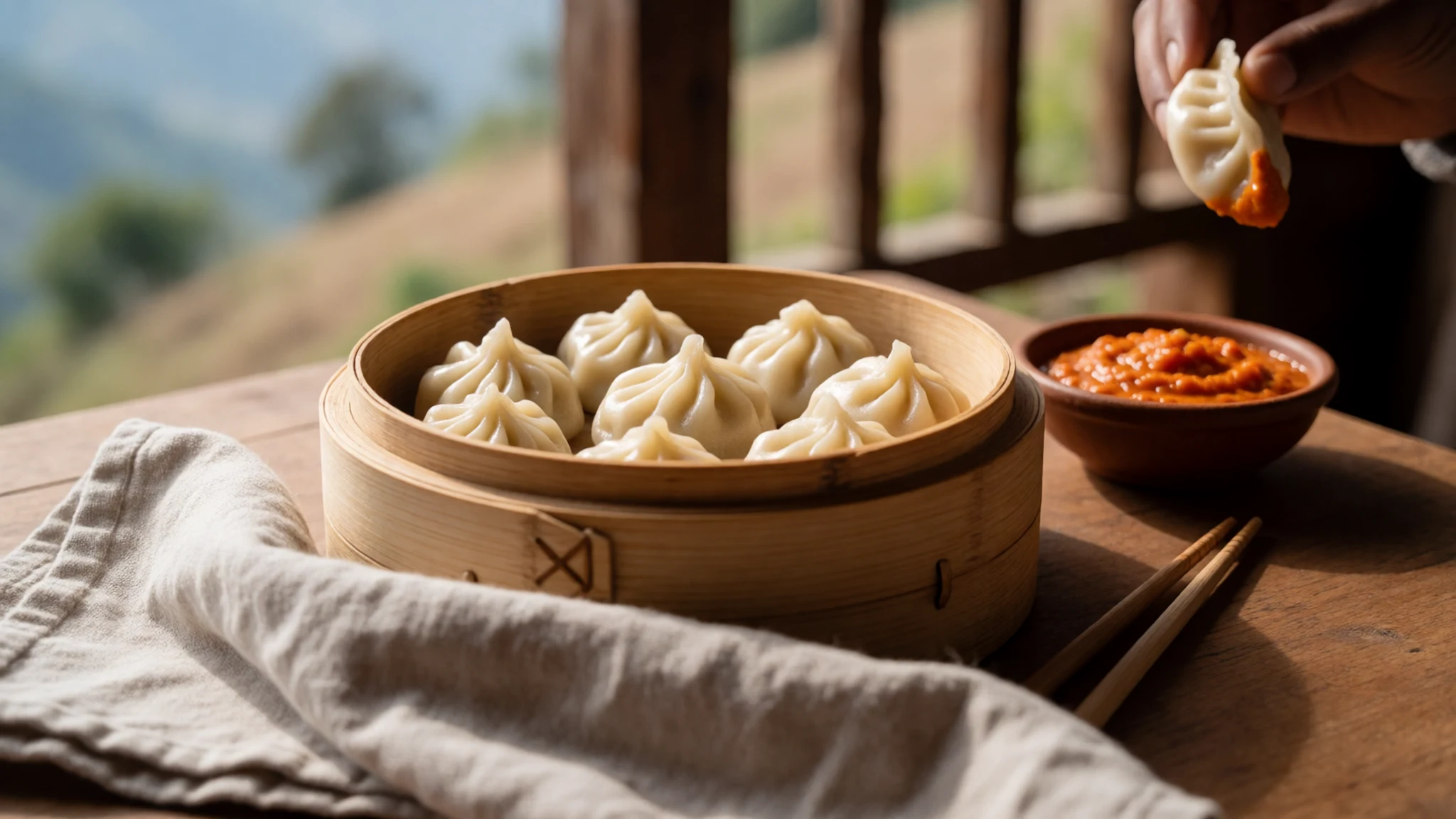
- Milk tea — Teashops and street vendors along the trail
Tea on the trail is usually sweet and made with milk, served in glasses or small cups from teashops and the teahouses. Other options such as black tea or coffee are common, and a hot cup at the summit makes the cold wait easier. - Noodles and chowmein — Teahouses throughout the route
Fried noodles and noodle soups are on nearly every teahouse menu, alongside pasta and spaghetti for those who want familiar food. Portions are filling, and they are quick to cook after a late arrival. - Pancakes and egg dishes — Ghorepani teahouses, after the sunrise climb
Breakfasts at the teahouses usually include pancakes, egg dishes and porridge. Walkers eat them after the sunrise climb, when everyone returns hungry. Prices rise with the elevation, as everything must be carried up on foot.
Plan it
Best time. March–April, when rhododendrons flower and the days are mild, and late October–November, when the air is usually clearer and the views are sharper. June to September is the monsoon, with cloud, rain and slippery steps, and mornings can be bitterly cold in mid-winter.
How long. 3–5
Getting there. Fly or take a bus to Pokhara from Kathmandu, then take a jeep, taxi or public bus from the Pokhara–Baglung bus park to Naya Pul, about two hours. From there the trek to Ghorepani takes two days on foot; Poon Hill is a short climb the next morning. A daily bus from Baglung to Ulleri avoids the steep steps between Naya Pul and Ulleri.
Budget. low
Tips
- Get the Annapurna Conservation Area permit in Kathmandu or Pokhara before you start walking
- Stay a night in Ghorepani before climbing Poon Hill to help with altitude, and start in the dark with a head torch
- Plastic water bottles are banned in the conservation area, so bring your own purification system and refill from the stations
- Carry cash for teahouses, since cards are rarely accepted and prices rise with the elevation
- Bring a sleeping bag, because teahouse blankets can be thin on cold nights
Etiquette
- Greet villagers with a 'namaste' and ask before taking photographs of people or homes
- Pass prayer stones and mani walls with the wall on your right
- Carry out your rubbish and avoid plastic bottles in the conservation area
Nearby
Sources
- Wikidata Q29015634 (CC0)
- Wikipedia: Poon Hill (rev 1384756664) (CC BY-SA 4.0)
- Wikivoyage: Poon Hill (rev 5297747) (CC BY-SA 4.0)
- Gerd Eichmann, Poon Hill in Nepal (CC BY-SA 4.0)
- Thapaliyashreeram, poon hill sunrise (CC BY-SA 4.0)
- Thapaliyashreeram, poon hill view (CC BY-SA 4.0)
- Thapaliyashreeram, View from Poon hill 3210 Meter (CC BY-SA 4.0)
- Thapaliyashreeram, Near Deurali (CC BY-SA 4.0)
- Thapaliyashreeram, poon hill board (CC BY-SA 4.0)
- Thapaliyashreeram, Mountain pointing (CC BY-SA 4.0)
- Thapaliyashreeram, Dhaulagiri 8167 meter mountain (CC BY-SA 4.0)


