Phoksundo Lake
Phoksundo Lake, Nepal
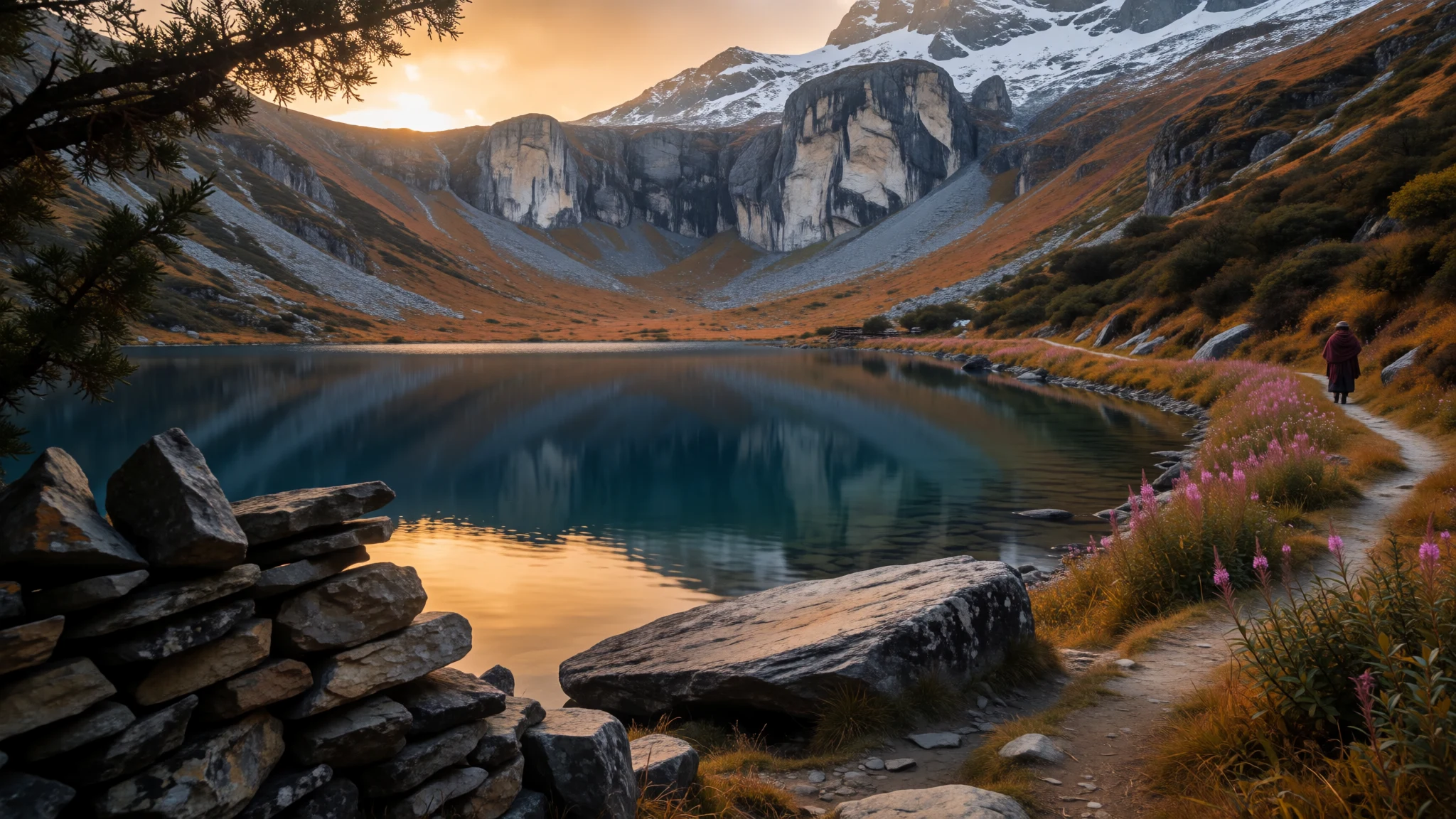
Phoksundo Lake is a deep turquoise lake high in Dolpo, reached only on foot, where Tibetan-influenced village life meets remote Himalayan wilderness.
The place
Phoksundo Lake lies in Dolpa District in western Nepal, inside Shey Phoksundo National Park, at 3,612 m above sea level. It is an alpine freshwater lake, cold, clear and low in nutrients, and its colour shifts between turquoise and deep blue depending on the light and the depth beneath it. Surveys by Nepal's Department of Hydrology and Meteorology have put its deepest point well over 100 m, which is part of why it looks so dark in the middle and so bright at the edges.
The lake was formed when a landslide blocked the valley, and the village of Ringmo now stands on that natural dam at the southern end. Water spills past the village and drops over a high waterfall, which is a sight in itself for anyone walking in from below. The lake and its surroundings were designated a Ramsar wetland site in 2007, recognising the value of the water and the life it supports.
There is no road to the lake. Dolpo is a restricted area for trekking, so visitors need permits and a registered guide, and facilities are simpler than on the busy Annapurna or Everest routes. That remoteness shapes everything: the lodges are small, supplies arrive on animals or backs, and the landscape stays quiet. The country around is dry, high and open, closer in feel to the Tibetan plateau than to the green hills of central Nepal. Anyone arriving should expect thin air, cold nights even in good months, and a slow pace.
Its story
Phoksundo Lake begins its story with a mountainside giving way. A landslide, estimated to be 30,000 to 40,000 years old, dammed the valley and the water gathered behind it. That barrier is still there. Ringmo village sits on it, so people live on the very thing that holds the lake in place, and the stream leaving the lake plunges over the far edge in a long fall.
The human story is tied to Dolpo, a high region long shaped by trade, herding and Buddhist practice. Villagers here have traditionally lived by farming barley where they can, keeping animals and trading across the mountains. Many follow Tibetan Buddhism, and the older Bon tradition is also part of the local religious life. The lake is regarded as sacred, which is why local people care about how visitors behave along its shore.
The modern chapter is about protection. The surrounding national park was set up to look after the mountain ecosystem, and the lake received Ramsar status in September 2007. Depth has been measured twice: a 2004 survey gave 145 m and a more detailed one in 2019 gave 136.20 m, a reminder that even the basic facts of a remote lake are still being checked. Trekking has grown slowly, and the permit rules for Dolpo have kept numbers modest compared with other Nepali routes.
What to see
- The lakeshore trail — Western shore of the lake
The path along the western side of Phoksundo Lake is the main walk, cut into the cliff above the water in places. It gives long views across the turquoise surface and is best taken slowly because of the altitude. Go early, before the afternoon wind lifts ripples across the water.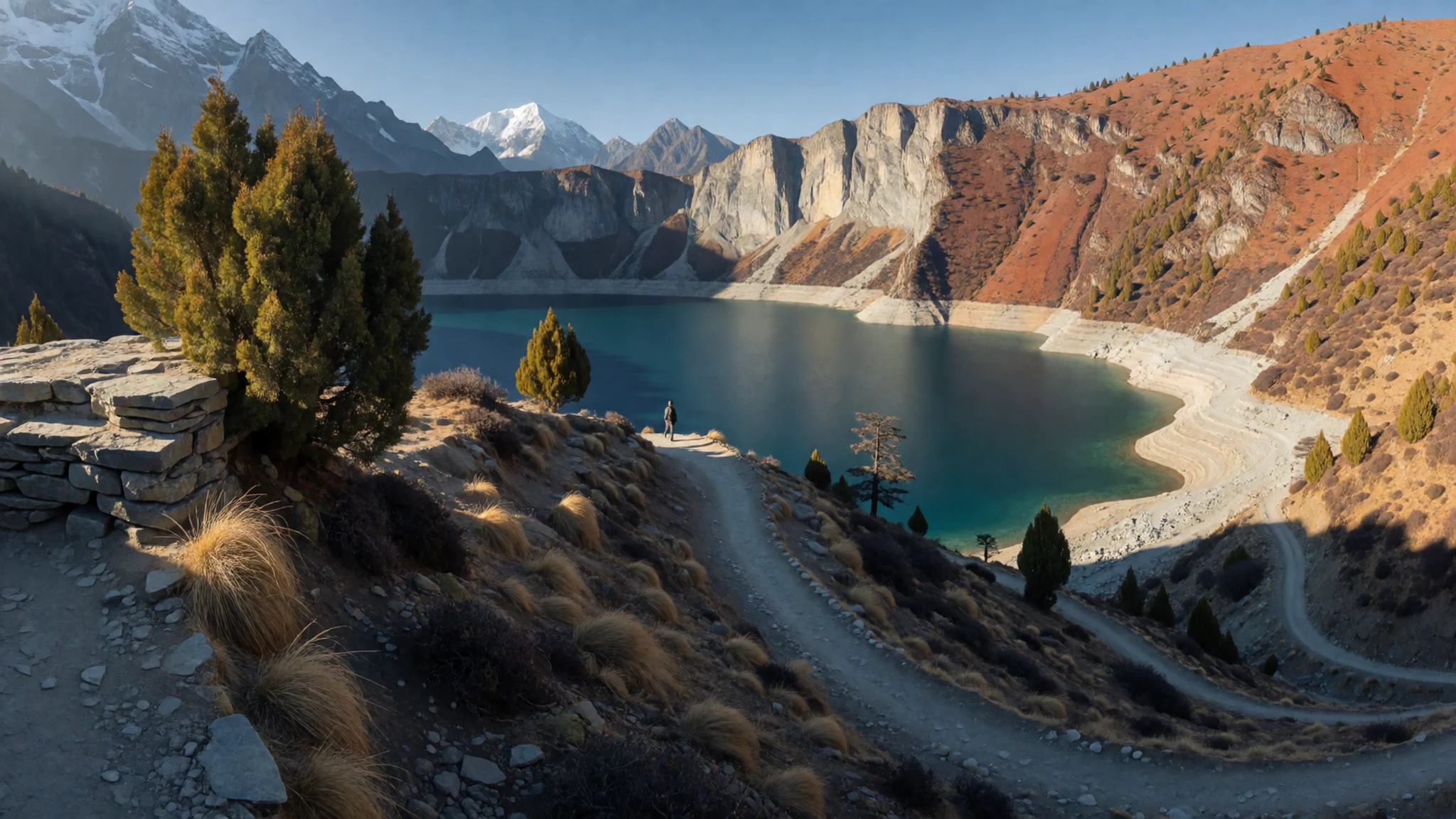
- Ringmo village — Southern end of the lake
Ringmo is the village on the old landslide dam at the lake's southern end. Stone houses, prayer flags, barley fields and mani walls make it the best place to see how people live here. Walk through quietly, keep to the left of mani walls, and ask before photographing anyone.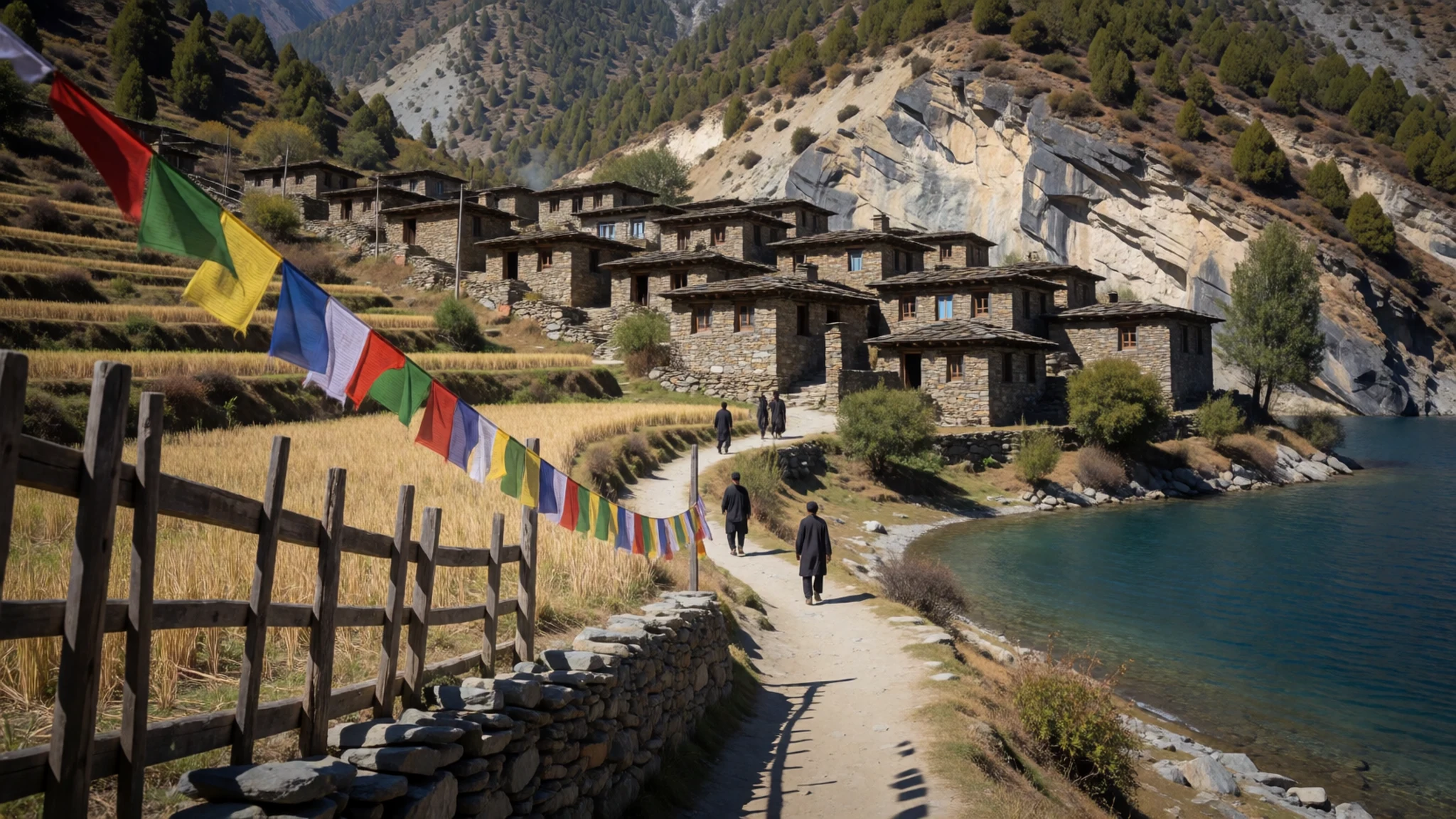
- The waterfall below the lake — Southern outlet, below Ringmo
Water leaving the lake drops over a waterfall of 167 m, reached on the route that climbs up from the lower valley. It is loudest after the rains and thinner in the dry months. Viewing it from the trail on arrival gives a good sense of the dam that holds the lake back.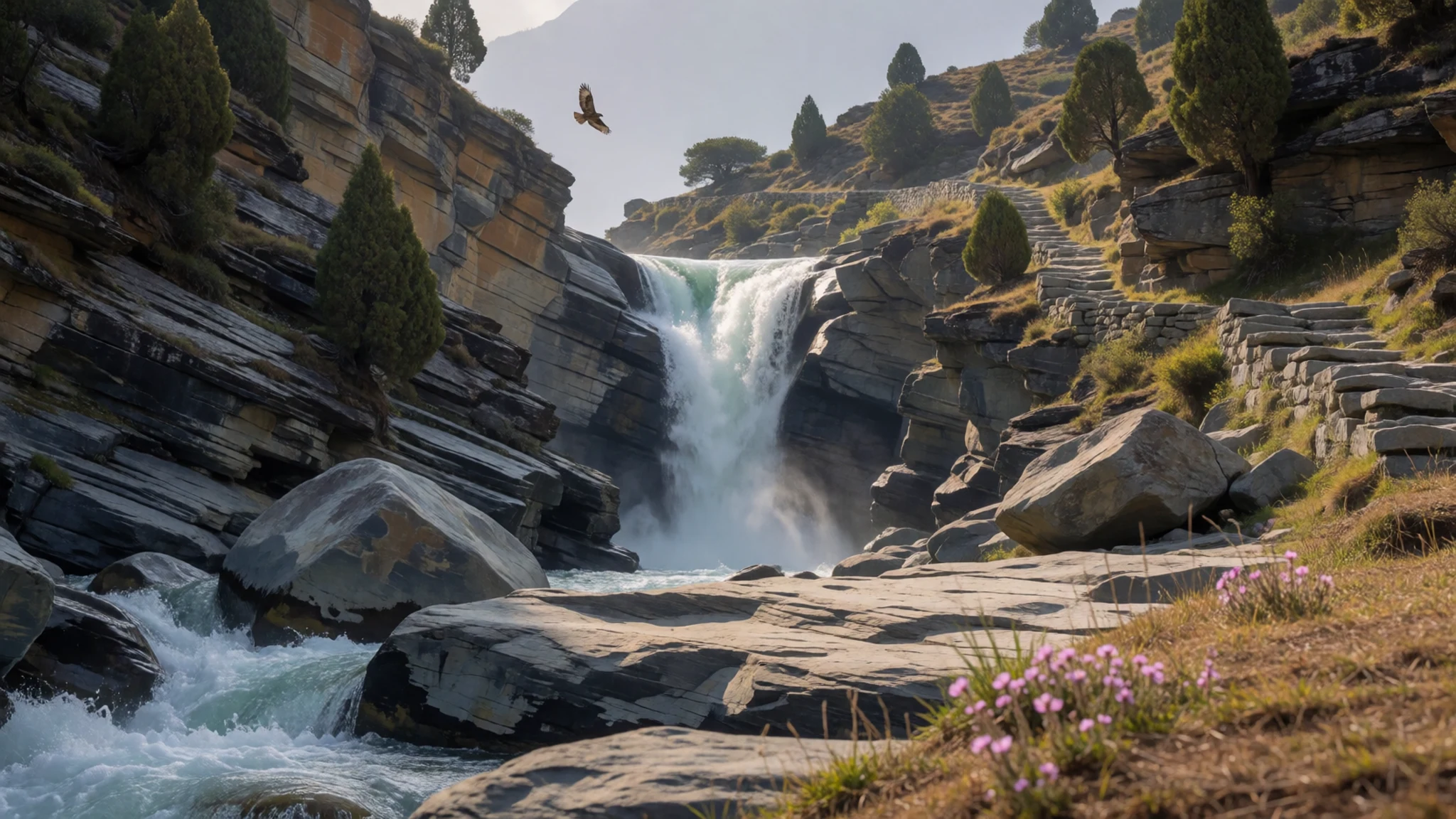
- Camp viewpoint above the lake — Lake shore camp area
A camp site on the shore gives a wide panorama of the lake with the dry ridges behind. It is the spot for photographs at dawn and dusk, when the water is calmest and the colour deepest. Camping needs the right permits, so arrange it through your trekking agency.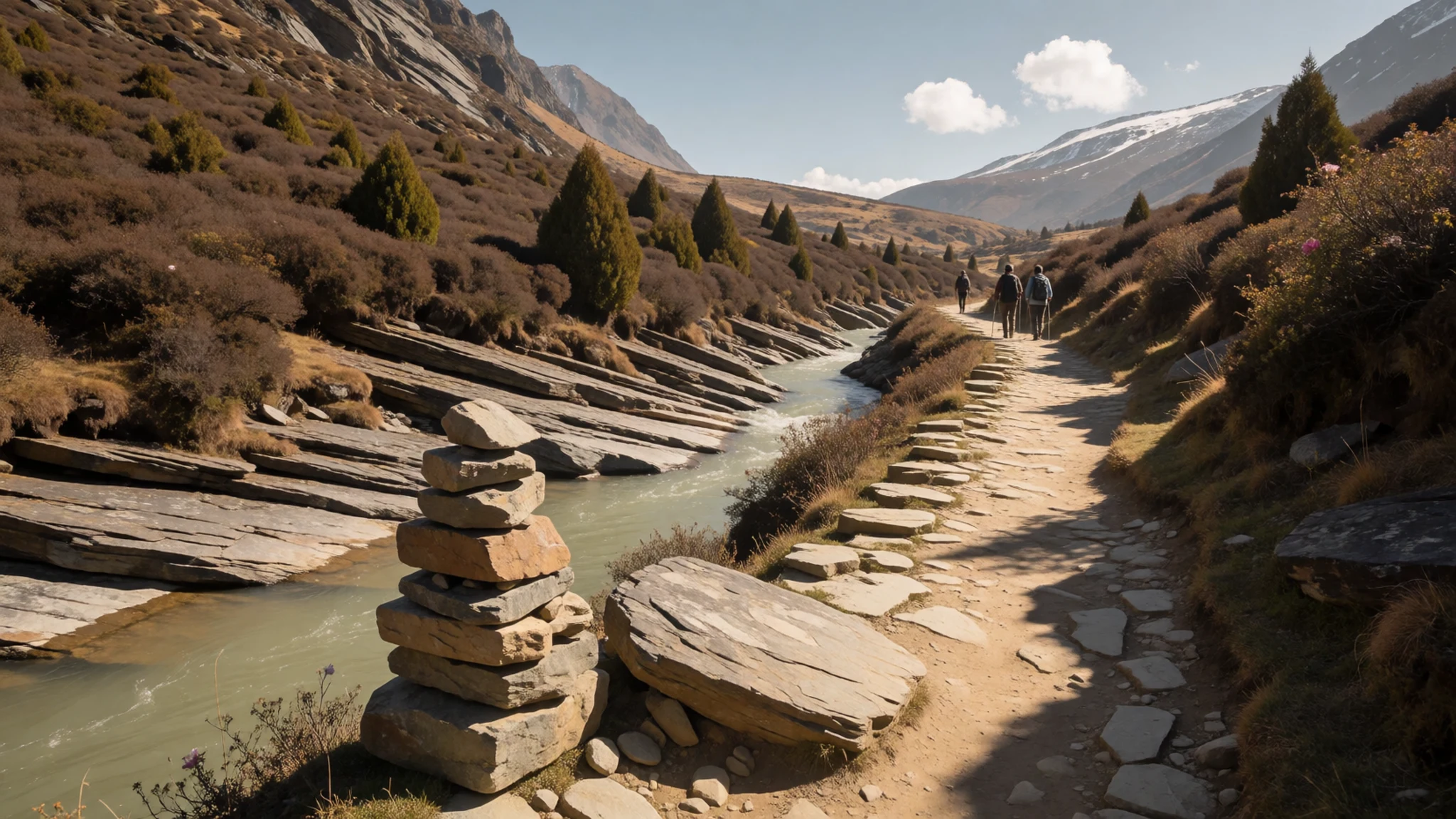
- Alpine flowers of the national park — Shey Phoksundo National Park
In the growing season the slopes of Shey Phoksundo National Park carry small alpine flowers, among them anemones and arisaema, which botanists have photographed here. They are easy to miss at speed. Stop, look low, and stay on the path so the thin soil is not trampled.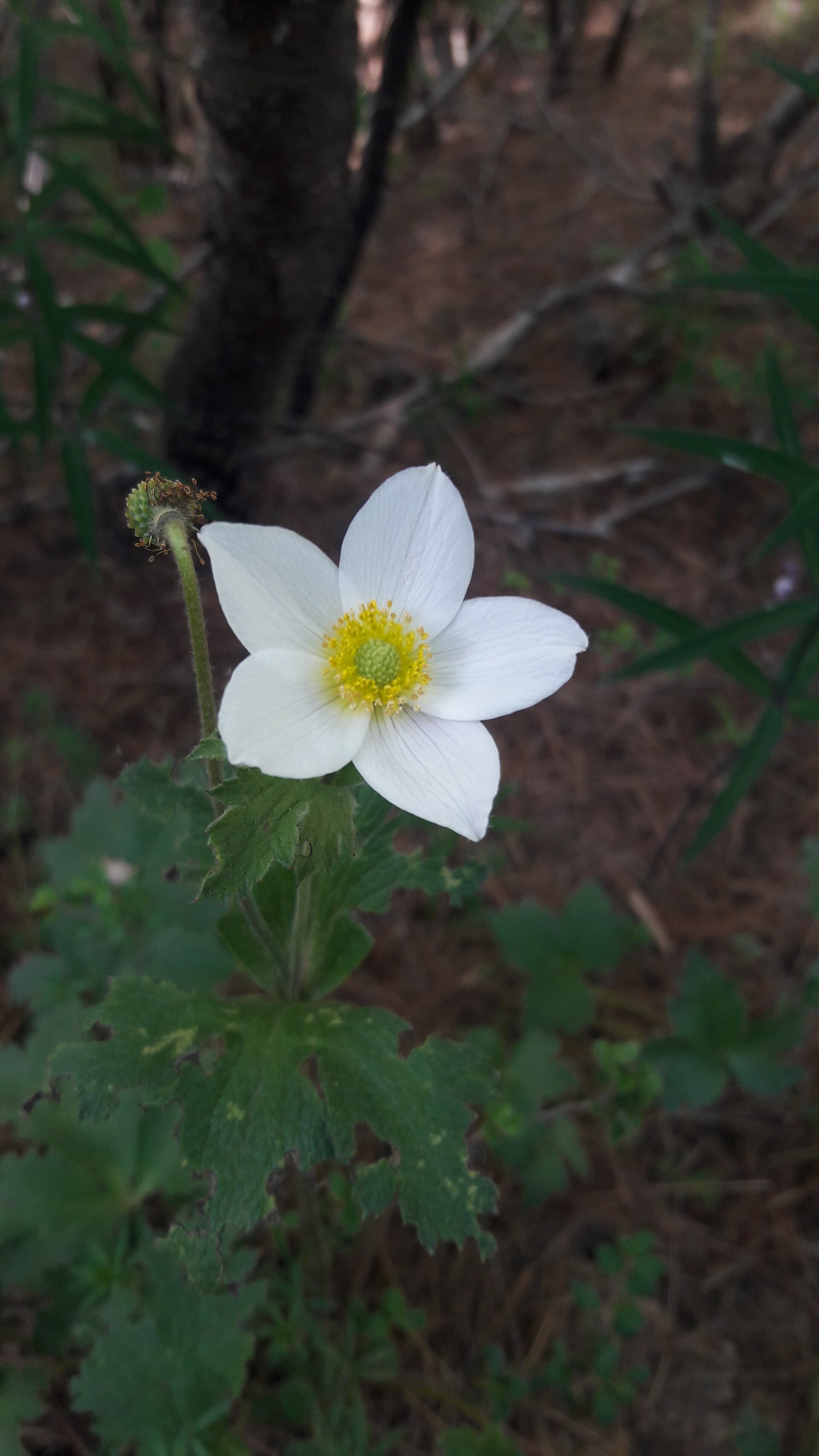
Culture
Phoksundo Lake sits in Dolpo, where daily life leans towards Tibetan Buddhist customs more than towards the Hindu culture of lower Nepal. Prayer flags, chortens and mani walls, long walls of stones carved with mantras, mark the paths around Ringmo and along the approaches to the lake. The lake itself is treated as sacred by local people, and that shapes the way they hope visitors will behave beside it.
Greetings matter. Namaste, with palms together, is the usual hello and goodbye, and thanking people with dhanyabaad goes down well. Elders are shown respect, and feet are considered unclean, so avoid pointing the soles at people or at religious objects, and never step over someone sitting or lying down. The left hand is regarded as unclean, so offer and accept things with the right hand, or both hands together.
In a household it is normal to take off your shoes before going in. Hosts in remote villages often have little to spare and still offer tea, so accept graciously and offer to pay for what you eat and sleep on. Travellers also tend to arrive with a guide, who can explain local etiquette and help with any awkward moments.
Walk clockwise around every mani wall, chorten and monastery you pass in Ringmo, keeping the structure on your right.
What to wear
Phoksundo Lake's villages follow Dolpo and Tibetan dress traditions shaped by cold, wind and altitude. Traditional clothing is built from wool, often homespun and woven locally, and from sheepskin and yak hair in heavier pieces. Women commonly wear a long wrap-style dress, sometimes with a striped woven apron, and men wear thick wool or skin-lined robes tied at the waist. Boots of felt and leather, and jewellery such as turquoise and coral, are part of festival and ceremonial dress.
In daily life today, people mix tradition with practicality. Wool layers, fleece jackets, caps and scarves are common, along with trainers or sturdy shoes, and many wear the traditional robe only for religious days and celebrations. Colourful striped aprons are still worn by many women in the villages.
A visitor should dress for cold nights and strong sun at altitude. Wear layers: a thermal base, a fleece, a windproof and waterproof shell, a warm hat and gloves, plus a sun hat and sunglasses for the day. Broken-in trekking boots with good grip are essential on rocky, uneven trails. Around villages and religious sites, cover shoulders and knees; shorts and sleeveless tops are better left for the trail. Trekking poles help on the steep sections near the waterfall.
What to eat
- Dal bhat tarkari — Any lodge or teahouse in Ringmo
The Nepali standard meal of lentil soup over boiled rice with spiced vegetables, often with a spoon of pickle. It is the fuel for most trekking days and is served in village lodges at mealtimes, often with refills.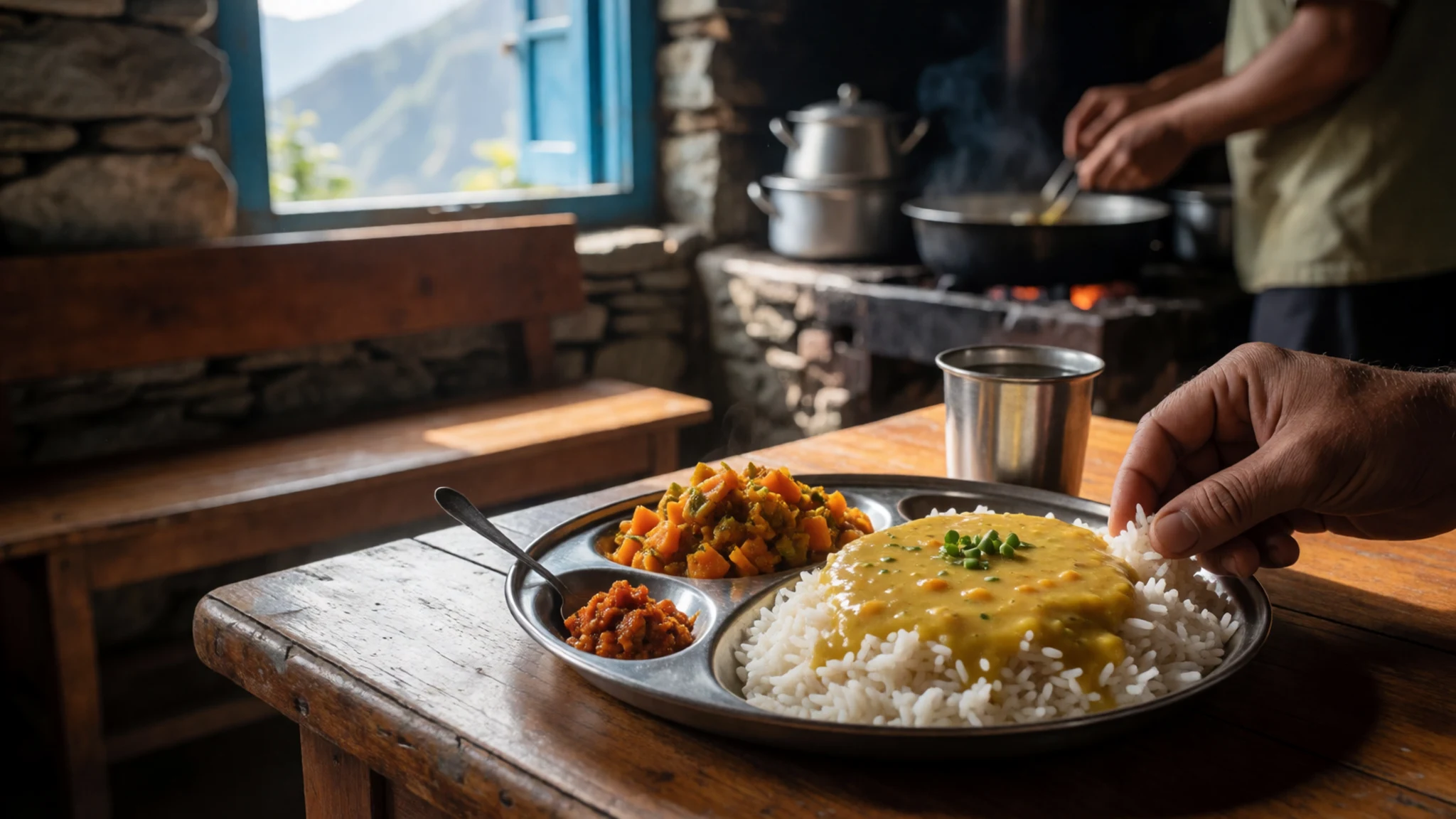
- Tsampa — Village kitchens and homestays in Dolpo
Roasted barley flour, a staple across Tibetan-influenced regions, mixed with tea or butter into a dough or porridge. It is filling, simple and well suited to the cold, and is eaten in local homes and some lodges.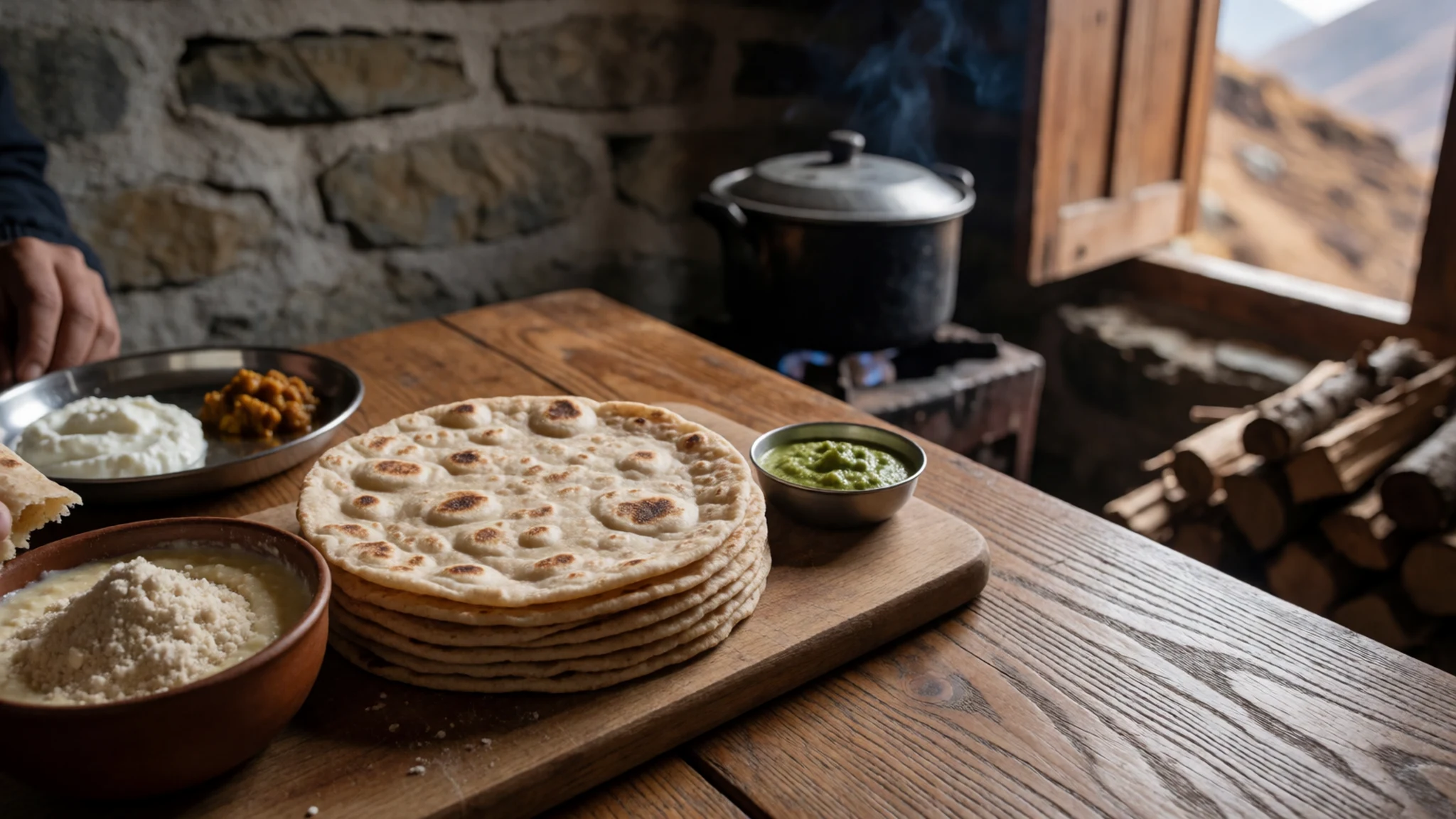
- Butter tea — Village homes and teahouses
A salty, buttery tea drunk through the day in high Himalayan villages. It tastes unusual at first, but gives warmth and calories on cold mornings. Sweet milk tea is also widely available if it is not to your taste. - Sukkha roti and barley bread — Homestays and small eateries along the trail
Flat breads made from wheat or barley, which stand in when rice is scarce. They are eaten with vegetables, pickle or yogurt and are common in high villages where grains must be carried or grown locally. - Freshwater fish — Occasionally at lodges near water, by arrangement
Fish is sometimes available near lakes and rivers in Nepal, though in a protected area like this supply and rules vary. Ask your guide what is appropriate and sourced responsibly before ordering.
Plan it
Best time. May–June and September–October. Spring brings flowers and milder weather, and autumn usually gives clear skies. Winter is very cold with snow on the passes; the monsoon season brings rain and slippery trails.
How long. 7–10
Getting there. Fly to Kathmandu, then to Nepalgunj, then take a small flight to Juphal in Dolpa. From Juphal the trek to Ringmo and the lake is on foot, normally over two to three days. Arrange this through a registered trekking agency.
Budget. mid
Tips
- Dolpo is a restricted area, so arrange the permits and a registered guide through an agency before you go
- Plan for altitude: ascend gradually and add a rest day if you feel unwell
- Carry enough cash in rupees, as there are no cash machines on the trail
- Flights to Juphal depend on weather, so leave spare days at both ends
- Bring a water filter or purification tablets and a warm sleeping bag
Etiquette
- Walk clockwise around mani walls and chortens
- Ask before photographing people or religious objects
- Take rubbish back out with you
Nearby
Sources
- Wikidata Q3215132 (CC0)
- Wikipedia: Phoksundo Lake (rev 1366608589) (CC BY-SA 4.0)
- Wikivoyage: Nepal (rev 5399421) (CC BY-SA 4.0)
- Panorama Phoksumdo lake from camp — Carsten.nebel (Public domain)
- South Asia non political, with rivers — DEMIS Mapserver, पाटलिपुत्र (CC BY 3.0)
- Bathymetric Map of Phoksundo Lake — Government of Nepal, Department of Hydrology and Meteorology (CC BY 4.0)
- Anemone rupicola — Ksuryawanshi (CC BY 3.0)
- Arisaema tortuosum — Ksuryawanshi (CC BY 3.0)
- Blues of Shey Phoksundo — Tannu 01 (CC BY-SA 4.0)
- Dolpa Blues — Nirojsedhai (CC BY-SA 4.0)
- Fallen Tree at Phoksundo Lake — Mala Deep Upadhaya (CC BY-SA 4.0)


