Petite Terre
Petite Terre, France
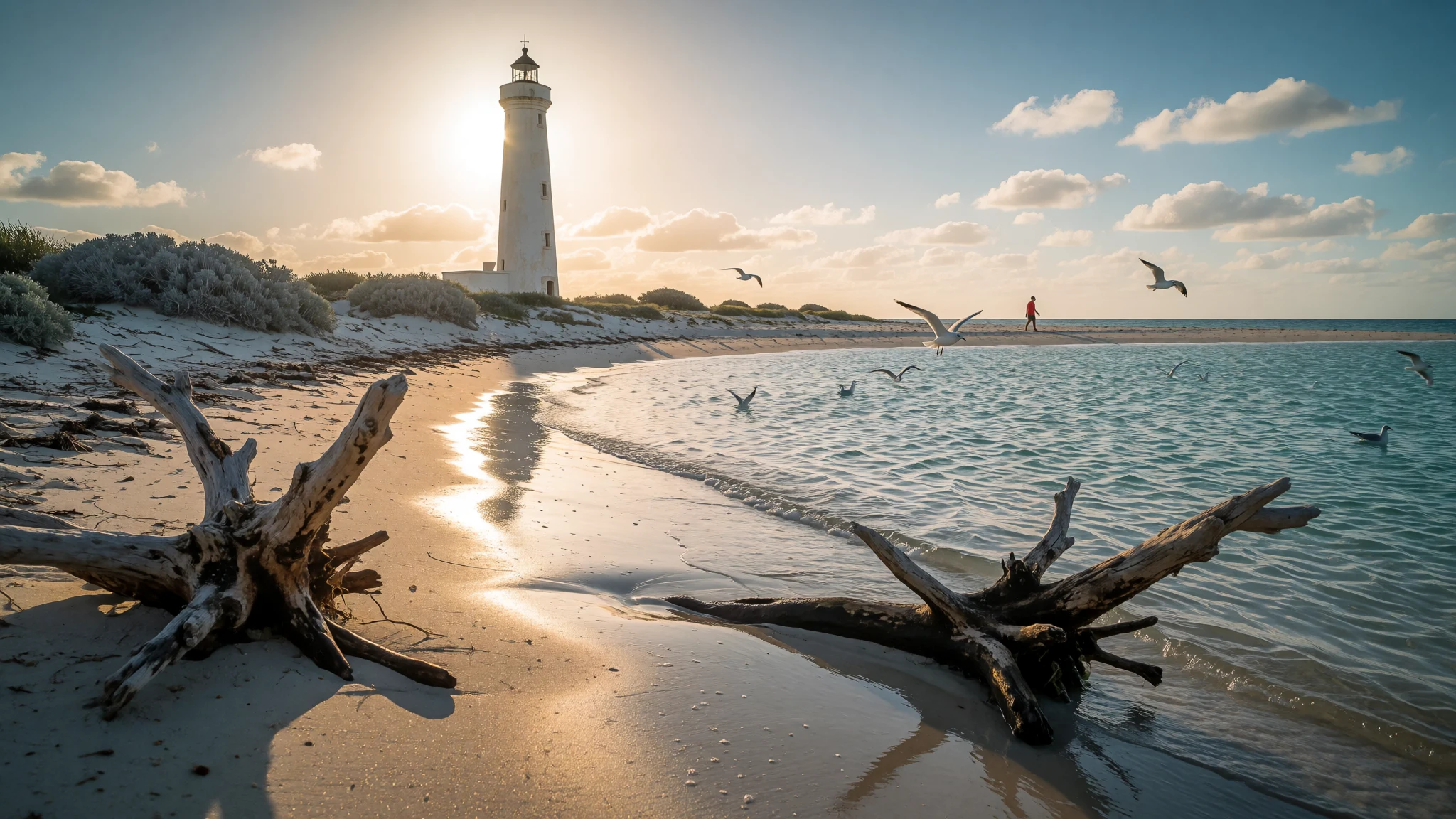
Two flat, uninhabited islands off Guadeloupe where iguanas outnumber people, the water is clear, and the only way in is by boat.
The place
Petite Terre is a pair of low, uninhabited islands in the Lesser Antilles, belonging to Guadeloupe and therefore to France. They lie about 10 km south-east of Grande-Terre, the eastern wing of Guadeloupe, and are administered from La Désirade, the nearest inhabited island. The name simply means small land, in contrast with the much bigger neighbour. The two islands are Terre de Bas to the south-west and Terre de Haut to the north-east, with a combined land area of 1.68 square kilometres, or 168 hectares. Terre de Haut catches the trade winds first, which explains the names: bas and haut describe position relative to the wind, not height, and neither island rises much above the sea. Around the land, 842 hectares of water are protected together with the islands as a national nature reserve. On the ground, that means a very quiet place. There is no village, no road traffic and no shop. The landscape is scrub, salt ponds, pale sand, limestone shore and a lighthouse that serves as the main landmark. Shade is scarce, the sun is strong and the wind is nearly constant, which keeps the heat bearable but dries the skin quickly. Most visitors arrive on a day trip by boat, walk a short marked path, swim or snorkel in the shallow water, and leave before evening. Wildlife is the reason to come: Lesser Antillean iguanas on the paths, sea turtles in the shallows, and plenty of birds. Because it is a reserve, the rules are firm, and that is part of why the place still looks the way it does.
Its story
Petite Terre has a history written mostly in wind and water. The islands are flat, low and uninhabited, and their character comes from the Atlantic: the north-east trade winds reach Terre de Haut first and sweep over Terre de Bas afterwards, which gave each island its name. Sailors working up and down the Lesser Antilles had reason to respect such low land. With no hill to mark it from a distance, it was a hazard as much as a landmark, and a lighthouse was eventually built to warn passing ships. That tower still gives the islands their silhouette, and it appears in most photographs. Anyone who tried to live here had to bring everything in. There is no spring or stream, and the vegetation is scrub that tolerates salt and drought. That is the main reason the islands never filled with houses and fields the way larger neighbours did. The lack of settlement turned out to be their best protection. Today the land and 842 hectares of surrounding sea form a national nature reserve, and the Lesser Antillean iguana, which has declined across much of the Caribbean, is among the animals the protection is meant to serve. On paper the islands answer to La Désirade, but day-to-day care comes from the reserve. The story, in short, is of a place too dry and too exposed to farm, and now valued for exactly that.
What to see
- The lighthouse — Terre de Bas
The lighthouse is the one tall object on a flat landscape, and the usual first stop after landing. Even without going up, the walk to its base shows how little shelter the islands offer and how the wind shapes the scrub. It is a good place for orientation: lagoon on one side, open sea on the other.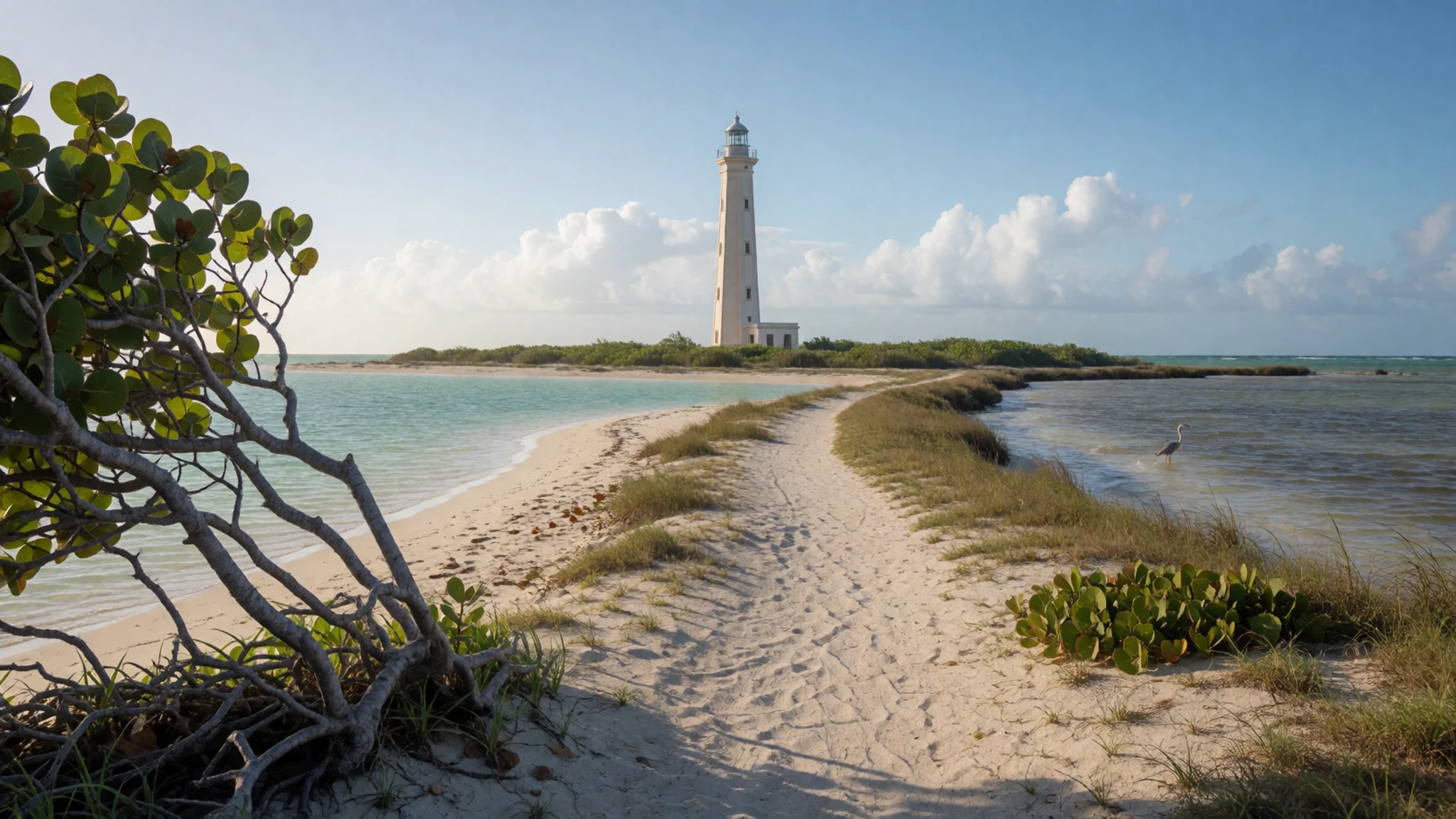
- The lagoon shallows and green turtles — Sheltered water near the landing beach
The sheltered shallows around the islands are where most visitors swim and snorkel. Green turtles graze on seagrass here and can often be watched from the surface in calm, clear water, alongside reef fish and young sharks. The rule is simple: keep a distance, never touch or chase an animal, and let it decide whether to come closer.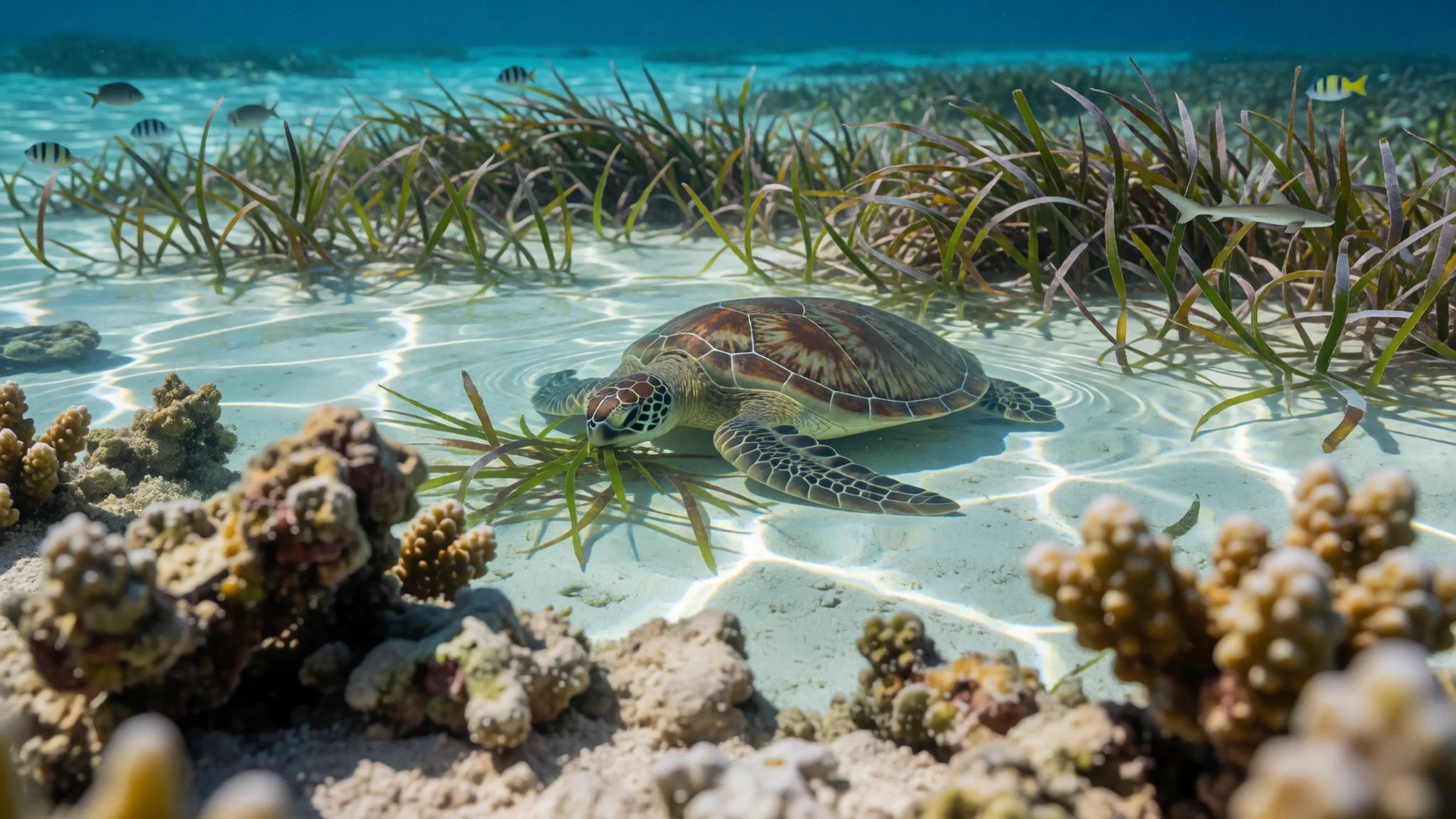
- Iguana paths — Marked trails across both islands
Petite Terre is a stronghold for the Lesser Antillean iguana, a grey-green reptile that looks prehistoric and wanders the paths and beaches with little fear of people. The reserve protects it, so the practice is to watch from a distance, stay on the marked trail and never feed it. Photographs work best in the cooler early hours.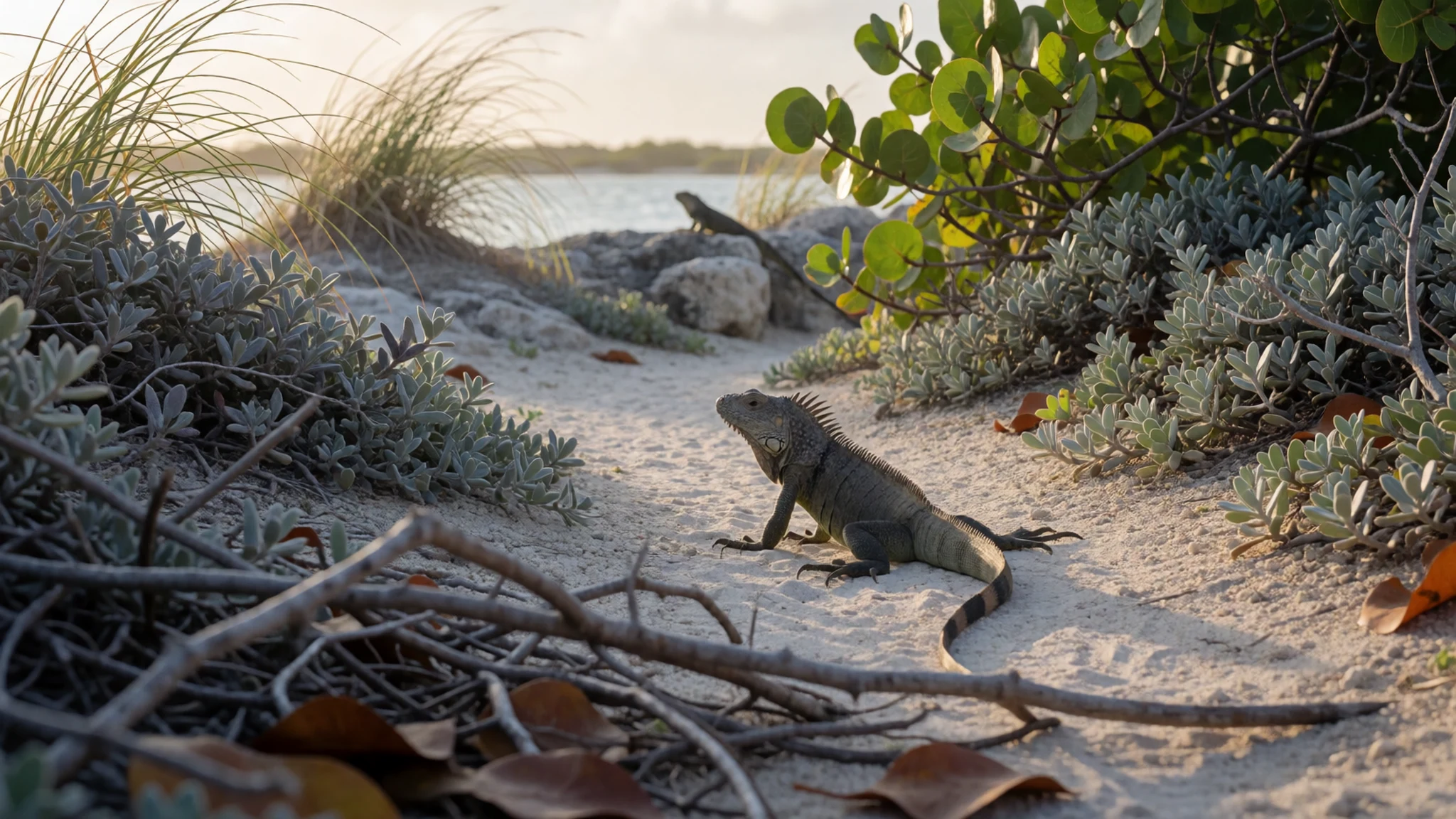
- The driftwood shore — Windward coast
Along the windward shore, the sea deposits driftwood, pale coral fragments and the odd bottle, and the beach becomes a long walk of bleached shapes. It is the quieter, wilder side of the islands, good for slow photography. Swimming is not advisable on this side because of the swell and rocks; the lagoon is the place for that.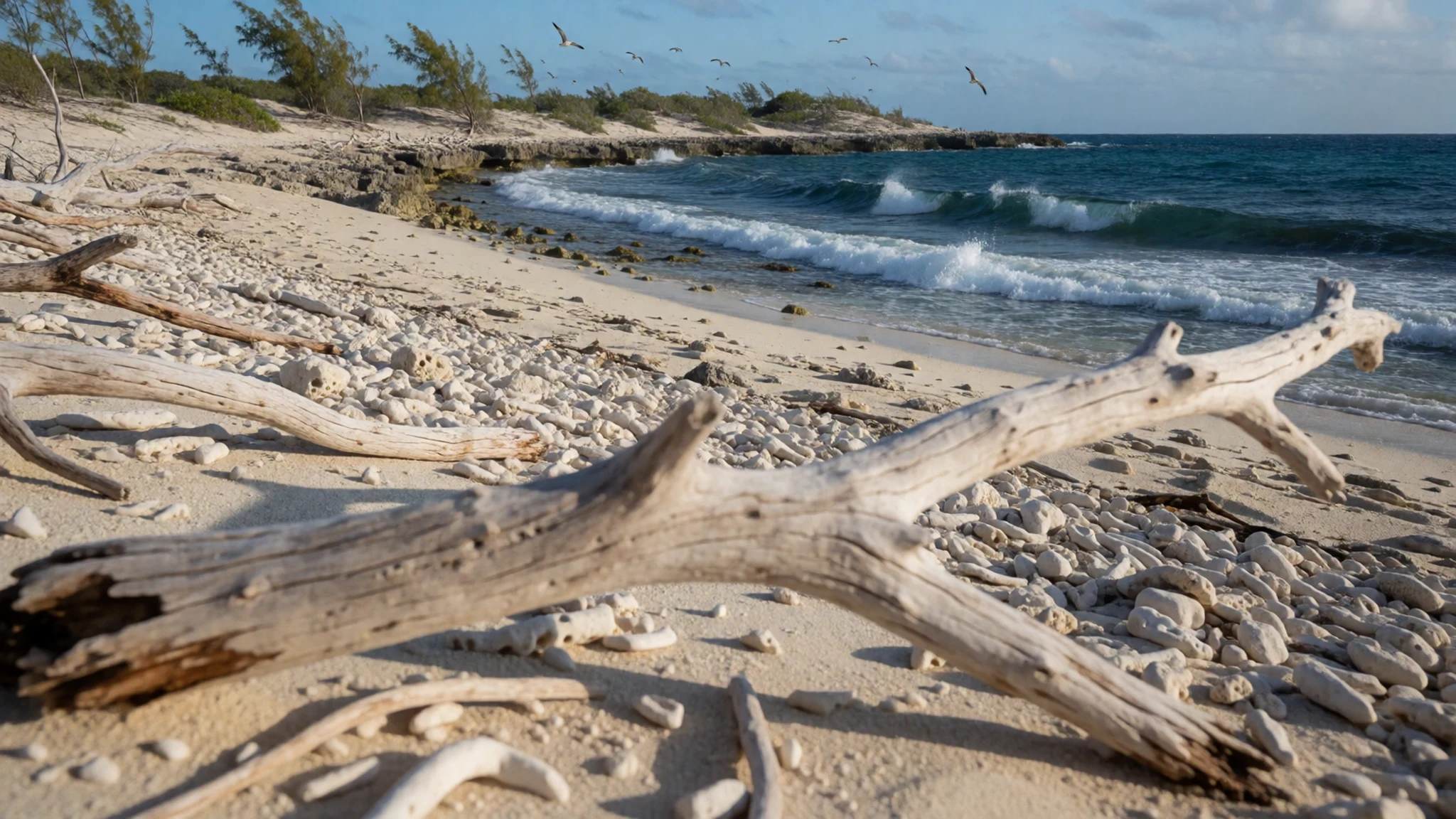
- The blowholes — Rocky seaward edge near the lighthouse
On the rocky seaward edge near the lighthouse, waves force water through gaps in the limestone and send it up as spray, which the French call souffleurs, or blowers. They are best watched from a safe distance when the swell is up, and the ground there is sharp, uneven and slippery, so closed shoes help.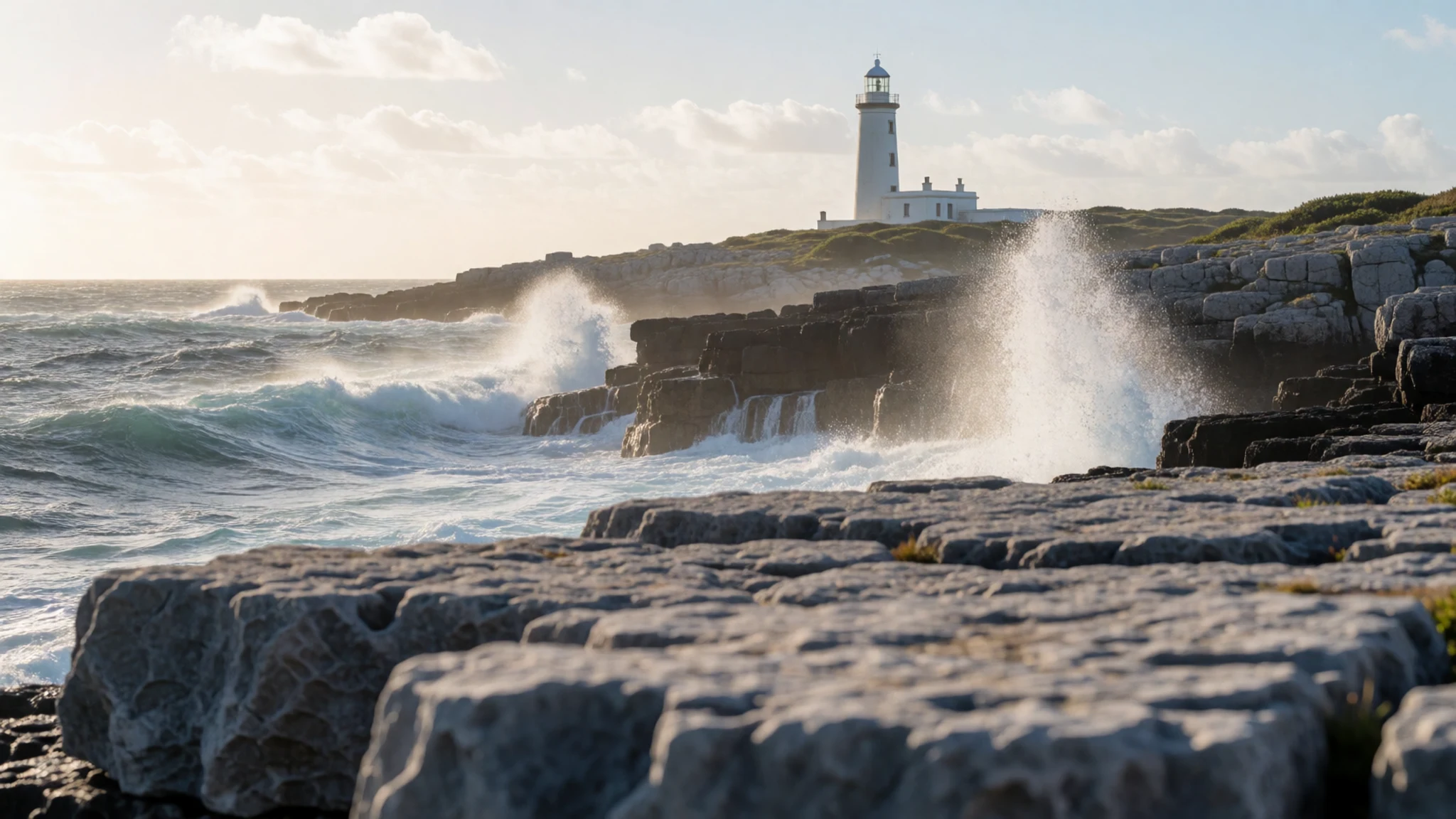
Culture
Petite Terre has no resident community, so its culture is borrowed from the Guadeloupe coast that sends people out to it. The islands belong to the commune of La Désirade, a quiet, lightly populated island, and boat trips tend to leave from there or from Grande-Terre. The day begins on a quayside where French and Guadeloupean Creole are both spoken, with a skipper's briefing that matters more than it sounds: weather, landing conditions and reserve rules are all explained before anyone steps ashore. Guadeloupe has a practical, long-standing relationship with the sea, shaped by fishing and sailing, and the islands are treated less as a postcard than as a working stretch of shoreline that happens to be protected. Because the reserve covers the water as well as the land, local boat operators have a direct interest in keeping it healthy, and the briefing is where that attitude shows. A simple bonjour to skippers, guides and fellow passengers is returned warmly and sets a good tone for the day. Remote beaches suffer most from rubbish, so the expectation is that everything brought ashore leaves again. There is no café, bin or toilet block to fall back on, which makes the day feel more like a shared outing than a tourist stop. Take all litter back to the boat, stay on the marked paths and keep your hands off the iguanas and turtles.
What to wear
Guadeloupe's traditional dress, the dress of the region Petite Terre belongs to, is the robe créole: a long, full skirt over petticoats, a fitted bodice and a head tie, worn today mostly for festivals, carnival, folklore groups and weddings. The key textile is madras, a lightweight cotton woven in bright checks, used for skirts, shawls and the folded head tie. Gold jewellery, especially the chunky bead necklace known as the collier chou, completes the outfit. Nobody lives on Petite Terre itself, so there is no local dress there. On the Guadeloupe coast, everyday clothing is practical: cotton shirts, shorts, sandals, swimwear and quick-drying fabrics, with smarter clothes for evenings and church. For the islands, a visitor should dress for sun, wind and rough ground. A long-sleeved rash vest or light cotton shirt, a hat that ties under the chin, sunglasses and swimwear underneath work well. Carry a dry change, because boat spray and wind can leave you chilled. For footwear, closed shoes or sturdy sandals with a grip suit the sharp limestone; barefoot is fine on sand but not on the rocks. Choose reef-friendly sun protection where possible, since the surrounding water is a protected marine area. Modesty norms are relaxed at the beach, but cover up when walking through towns or entering a church.
What to eat
- Accras de morue — Snack stands and market stalls on Grande-Terre and La Désirade
Accras de morue are small, crisp salt cod fritters, spiced with chilli and herbs, and eaten hot with a drink before a meal or as a snack. They suit a long beach day well, and are easy to pack for the boat.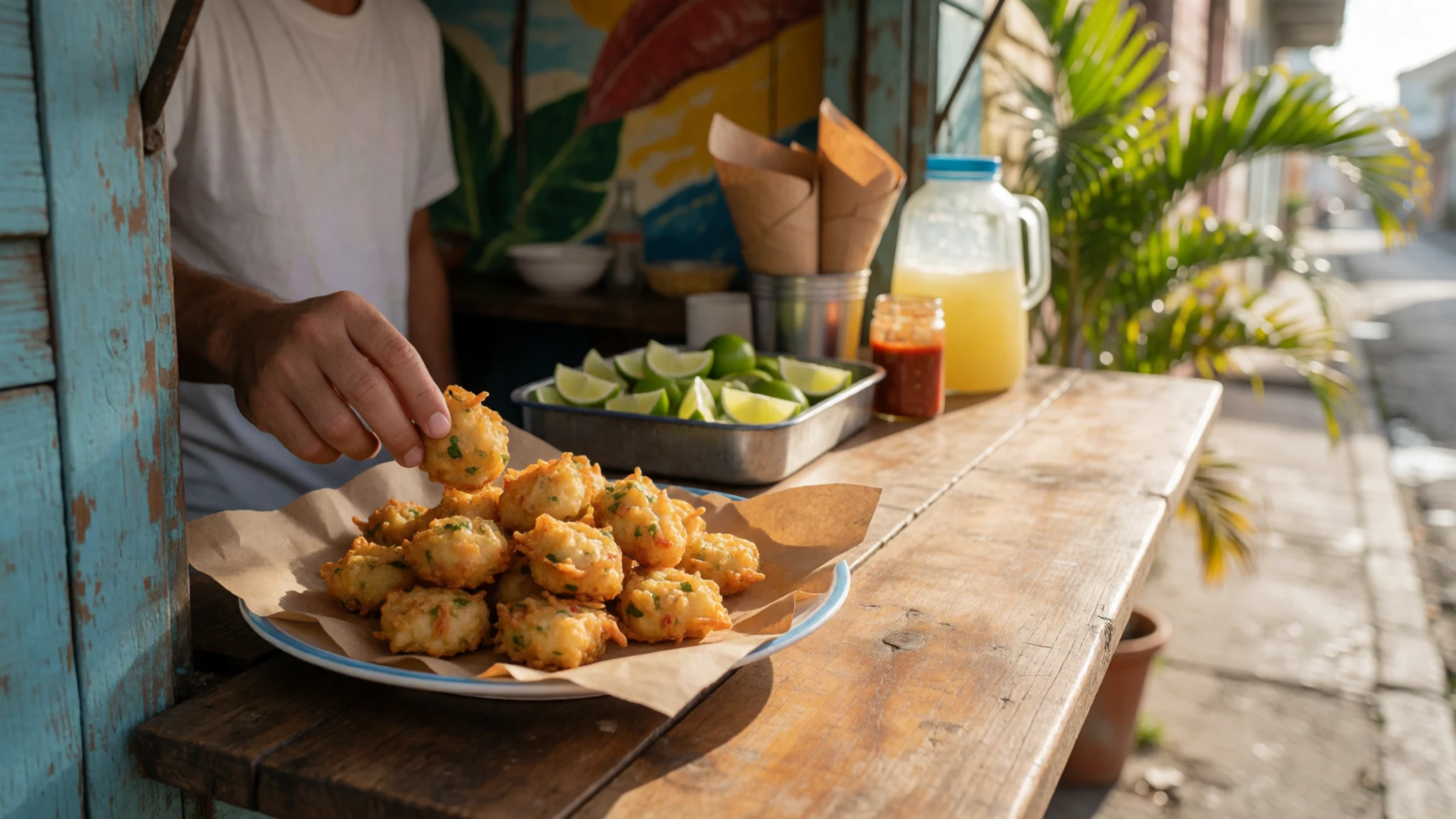
- Colombo — Family-run eateries and lunch counters in Grande-Terre towns
Colombo is the Guadeloupean take on curry, built on a roasted spice blend and usually made with chicken, goat or pork, served with rice. It is slow, fragrant cooking and heavier than a beach lunch might suggest, so it suits the evening after the boat has returned.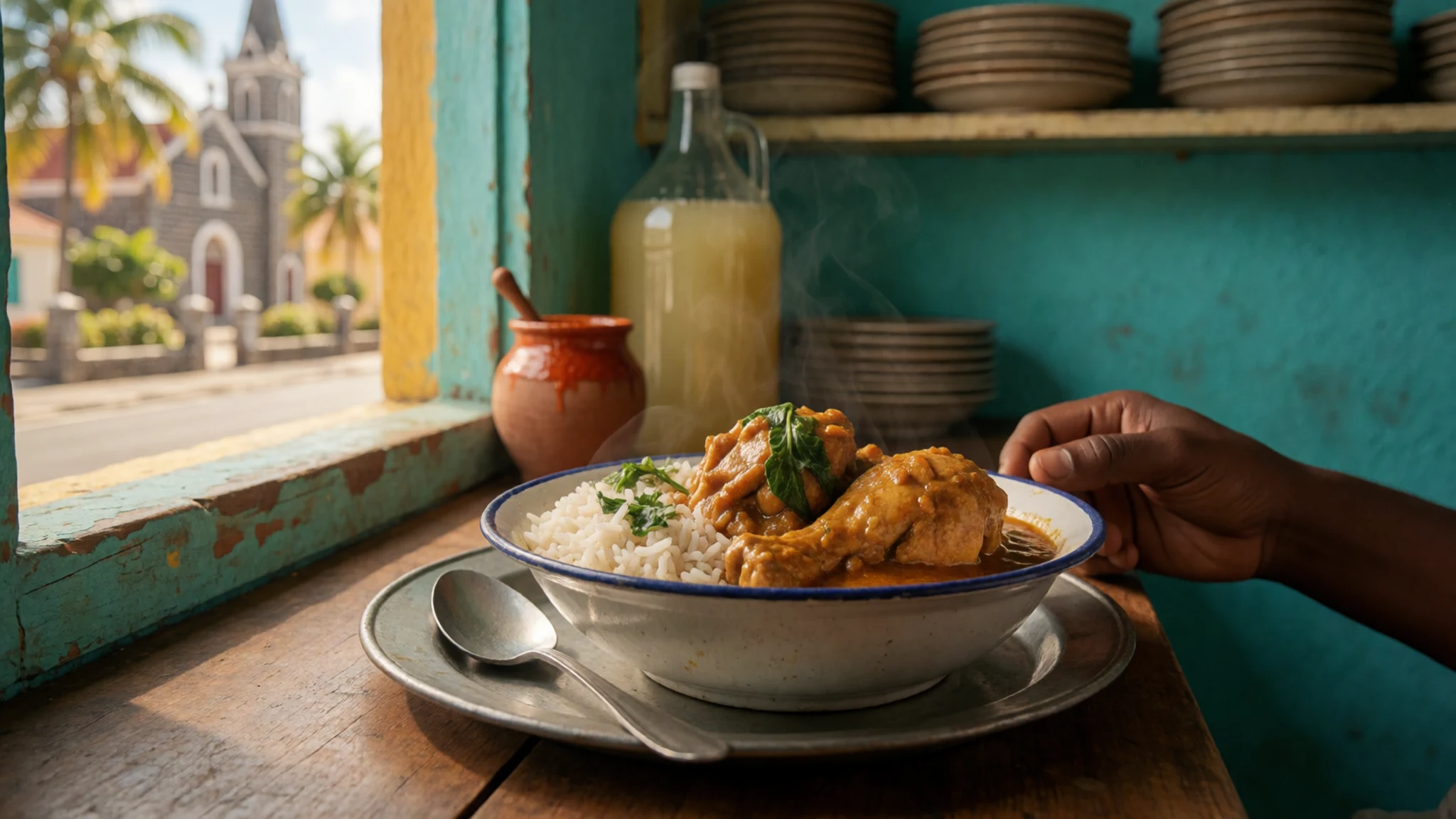
- Court-bouillon de poisson — Waterfront eateries near fishing quays
Court-bouillon de poisson is fish simmered in a tomato-based Creole sauce with onion, garlic, chilli, lime and fresh herbs. The fish varies with the catch, which makes it a good way to taste what local boats have brought in that day, with rice or boiled root vegetables alongside. - Boudin créole — Market stalls and butchers' counters in Guadeloupean towns
Boudin créole is a spiced blood sausage, soft and peppery, usually served hot as a starter or a snack with a little salad. It is a staple of Guadeloupean tables, especially around celebrations and weekends, and some butchers and stalls keep a reputation for their own recipe. - Ti-punch — Beach bars and restaurant terraces on Grande-Terre
Ti-punch is the local aperitif: white rum, a squeeze of lime and a little cane syrup, mixed to taste by the drinker. It is strong and often served with the bottles on the table, so a measured hand and plenty of water suit a hot day.
Plan it
Best time. February to May is the drier, calmer stretch, with steady trade winds, plenty of sun and clearer water for snorkelling. June to November is the Atlantic hurricane season, with more rain, hotter and stickier days, and a higher chance that crossings are rough or cancelled.
How long. 1–2
Getting there. Fly to Pointe-à-Pitre airport on Grande-Terre, then travel to the south-east coast of Grande-Terre or to La Désirade, where boat trips to Petite Terre depart. There is no public service to the islands, so the last leg is a licensed operator's boat, weather permitting.
Budget. mid
Tips
- Book the boat trip ahead in the dry season and ask what the operator's briefing and reserve rules include
- Take all drinking water and food with you; the islands have no shop, café or fresh water
- Bring strong sun protection and a hat, as shade is scarce and the wind hides how hot it is
- Check the sea state the day before, since rough weather can cancel crossings
- Carry some cash for small snack stands and quayside purchases on the mainland
Etiquette
- Stay on the marked paths and keep a distance from iguanas and turtles
- Never feed or touch wildlife, and take every piece of rubbish back to the boat
- Follow the skipper's and reserve wardens' instructions about where to land and swim
Nearby
Sources
- Wikidata Q292647 (CC0)
- Wikipedia: Petite Terre Islands (rev 1273806297) (CC BY-SA 4.0)
- Wikivoyage: Guadeloupe region guide (CC BY-SA 4.0)
- Le phare de Petite Terre — Vyskocil (CC BY 3.0)
- Green Turtle Petite-Terre — MagentaPeacock (CC BY-SA 4.0)
- Petite-Terre, bois flotté — Alpha Gwada (CC BY-SA 4.0)
- L'Iguana delicatissima (Godzilla?) — Mélina ROBIN (CC BY-SA 4.0)
- Iguane, île de Petite Terre — Amélie Duris (CC BY-SA 4.0)
- Caye et souffleurs derrière le phare de Petite Terre — Alain NEGRONI (CC BY-SA 4.0)
- La Désirade map — Godefroy (CC BY 3.0)
- Le maître des lieux — Mélina ROBIN (CC BY-SA 4.0)


Wildlife
- Green turtle (animal)
The green turtle is a big sea turtle that grazes on seagrass, rather like a cow of the sea. Around Petite Terre you can often watch one from the surface in still, clear water, drifting among reef fish and young sharks. Its name comes from the green tint of the fat under its shell, not the olive-to-black shell itself. Float quietly, keep well back, never chase or touch, never feed it, and go with a guide if you can.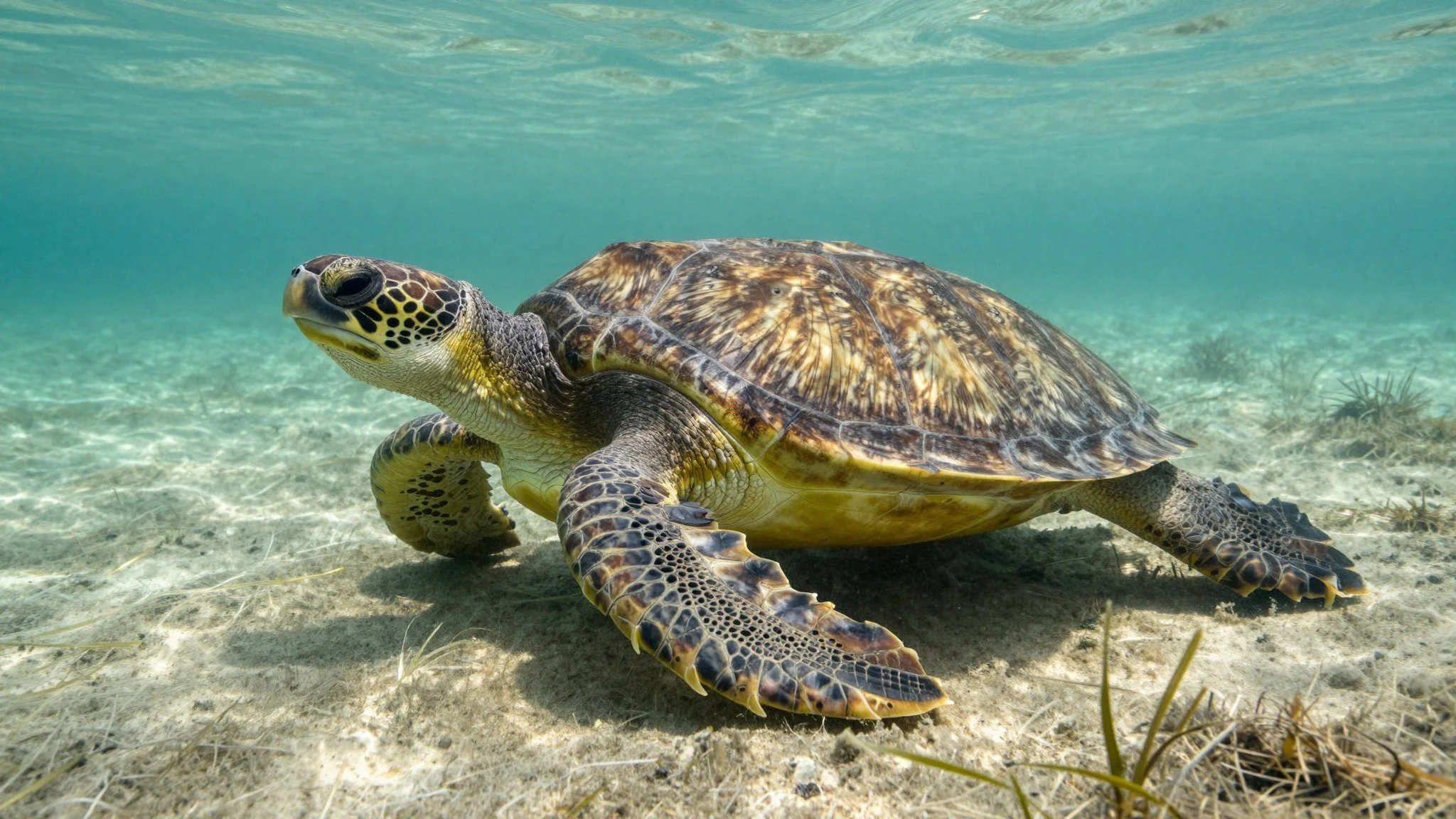
- Lesser antillean iguana (animal)
Imagine a grey-green dragon from the age of dinosaurs: that is the Lesser Antillean iguana, a big tree-climbing lizard found only in the Lesser Antilles. Petite Terre is one of its strongholds, and you may meet one strolling along the paths or across the beaches, oddly relaxed around people. Elsewhere it is vanishing fast, so every sighting is precious. Stay on the paths, keep your distance, speak softly, and never offer it food.