Pergamon
Pergamon, Turkey
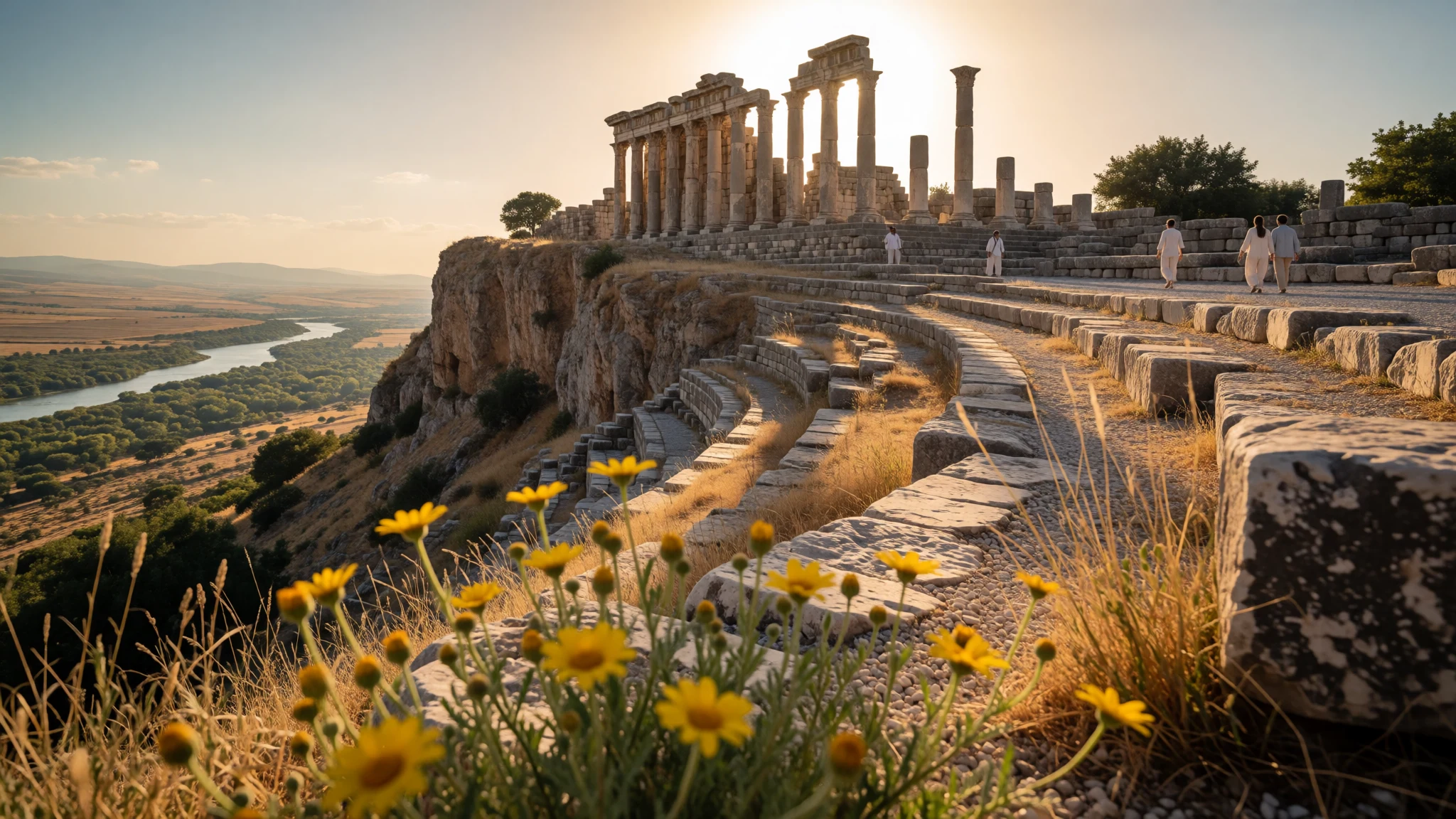
Pergamon is a hilltop Greek capital in western Turkey where theatre, temple and healing sanctuary ruins sit above a living market town.
The place
Pergamon sits in the north-west of Turkey, on the northern edge of a broad river plain, a short distance inland from the Aegean. The modern town of Bergama lies just to the south-east and carries on the old name in its own form. Anyone arriving finds a working Turkish town first, with the ancient city overhead.
The heart of the site is a mesa of andesite, a hard volcanic rock, rising about 335 metres above sea level. Its north, west and east sides drop away steeply, which made it an obvious place for a fortress. Only the southern flank offers a way up, in three natural terraces, and the ancient builders cut their roads and platforms into exactly those steps.
Two rivers frame the hill. The Selinus runs on the west side, passing through the lower town, and the Cetius runs past on the east. The larger Caicus river curves across the plain in the distance, and the mountains behind the hill give the whole setting a bowl-like shape.
The archaeological area is not one compact park. The acropolis crowns the ridge, while the healing sanctuary known as the Asklepion lies to the south-west, and the huge red-brick ruin called the Red Basilica sits down in the town itself. Visitors move between them by foot, cable car, local bus, dolmuş (a shared minibus) or taxi.
The site was added to the UNESCO World Heritage List in 2014, and Bergama still feels like a place where tourism is one trade among many. Farming, shops and weekly routines carry on around the stones, which makes the ruins feel lived beside rather than roped off.
Its story
Pergamon has a quieter early history than its later fame suggests. Pottery imported from the Greek world shows people living here by the late eighth century BC, but almost nothing of that first town survives. The reason is that later builders flattened and terraced the hilltop so thoroughly that earlier structures were largely cleared away.
The city first enters literature through Xenophon, the Athenian soldier-writer. His army of Greek mercenaries, the Ten Thousand, ended its long march at Pergamon, where he was hosted by Hellas, widow of a Greek exile whose family held the territory under Persian favour. A little later a local Persian governor used the town as a base for a failed rebellion. Only Alexander the Great's campaigns pulled the district out of Persian control.
The golden age came afterwards, in the Hellenistic period, when Pergamon became the capital of a kingdom ruled by the Attalid dynasty. These rulers rebuilt the hill as a showpiece of Greek culture, with a theatre, sanctuaries, palaces and the famous Pergamon Altar. Its sculpture was later carried away, and the altar now stands as a reconstruction in a Berlin museum, not on its original hill.
Rome took over the kingdom and the city carried on, adding grand monuments such as the temple to Trajan and the sprawling Egyptian-gods sanctuary that became the Red Basilica. In Christian tradition Pergamon was the northernmost of the seven churches addressed in the Book of Revelation.
Ottoman rule then reshaped the lower town. Mosques went up beside Roman ruins, and the old acropolis slowly emptied, leaving the hilltop to archaeologists and visitors.
What to see
- The Acropolis — Hilltop above Bergama
The acropolis is the main reason to come, and it needs a couple of hours. There is a single ticket office, at the top beside the cable car station, so everyone starts in the same place. The theatre cut steeply into the hillside, the palace foundations and the long views over the plain are the highlights.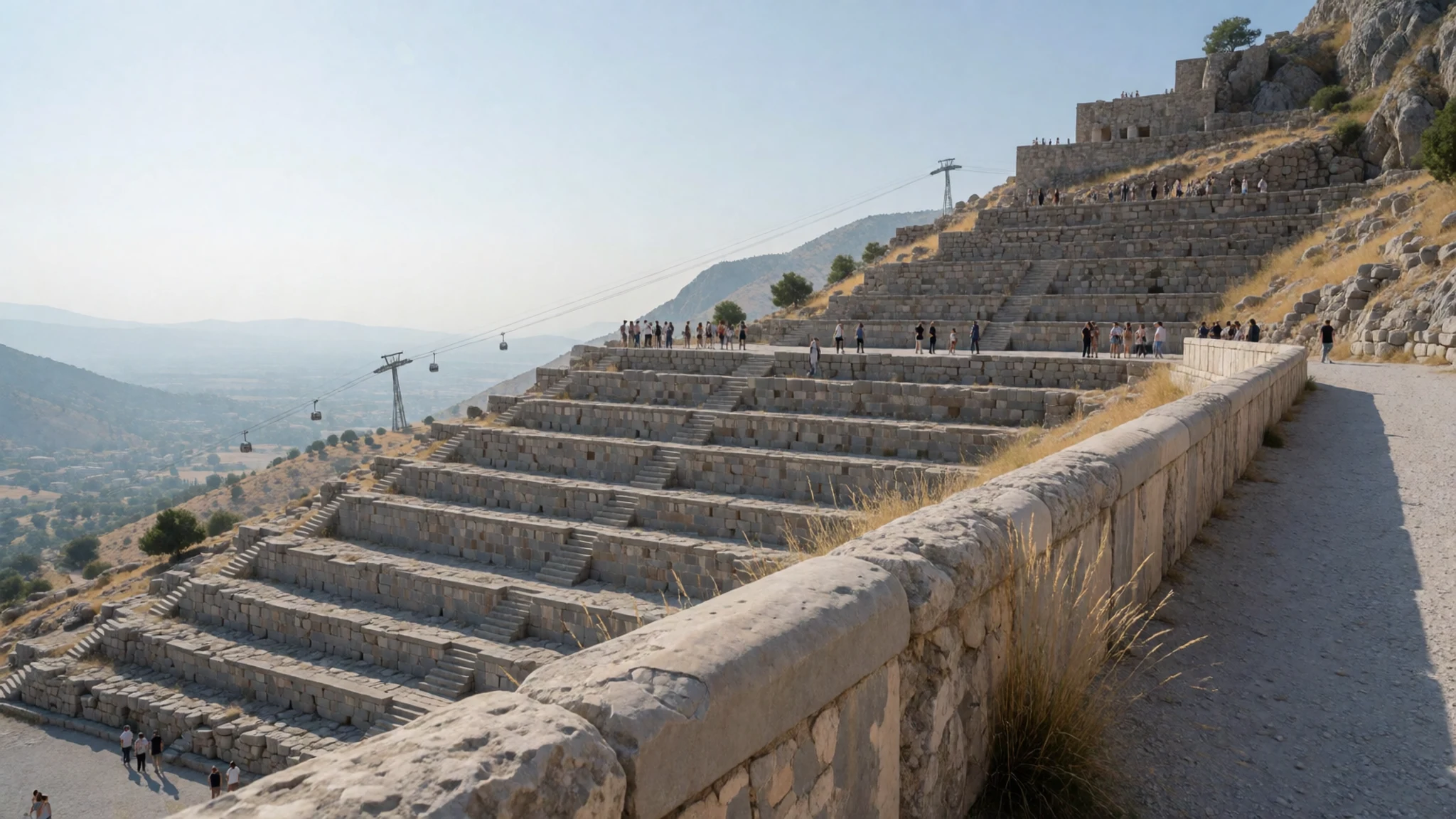
- Temple of Trajan — Top of the acropolis
The Temple of Trajan stands on the acropolis summit, where a row of restored marble columns catches the light. It was built under Roman rule and dedicated to an emperor. The stone steps and platform around it show how much levelling went into making the summit.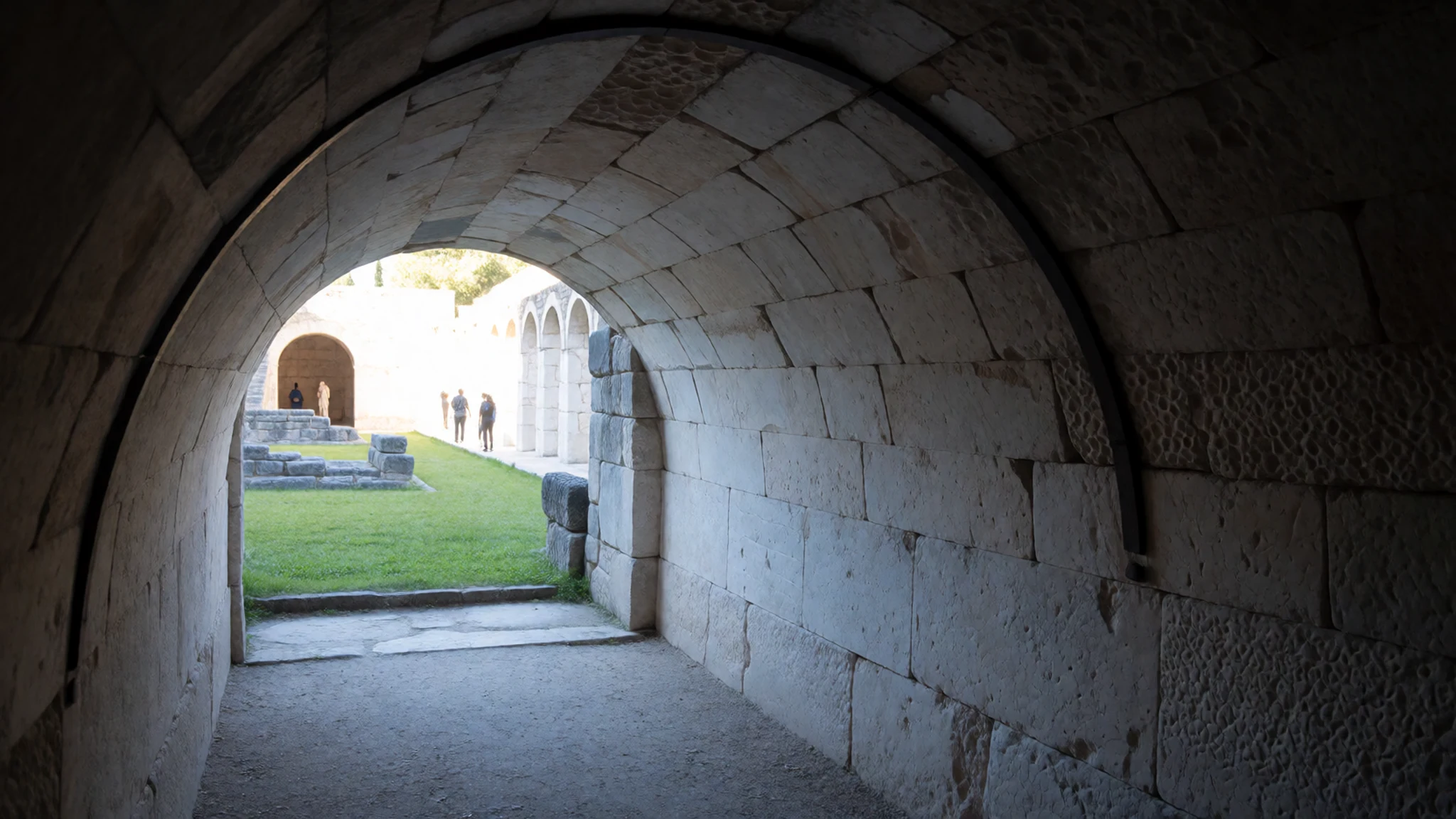
- Red Basilica — Central Bergama, beside the Selinus river
The Red Basilica is a huge red-brick shell in the lower town, probably begun in the time of Hadrian as a sanctuary to Egyptian gods including Serapis and Isis. The river once flowed through the complex in channels. One rotunda is now a mosque with its own separate entrance.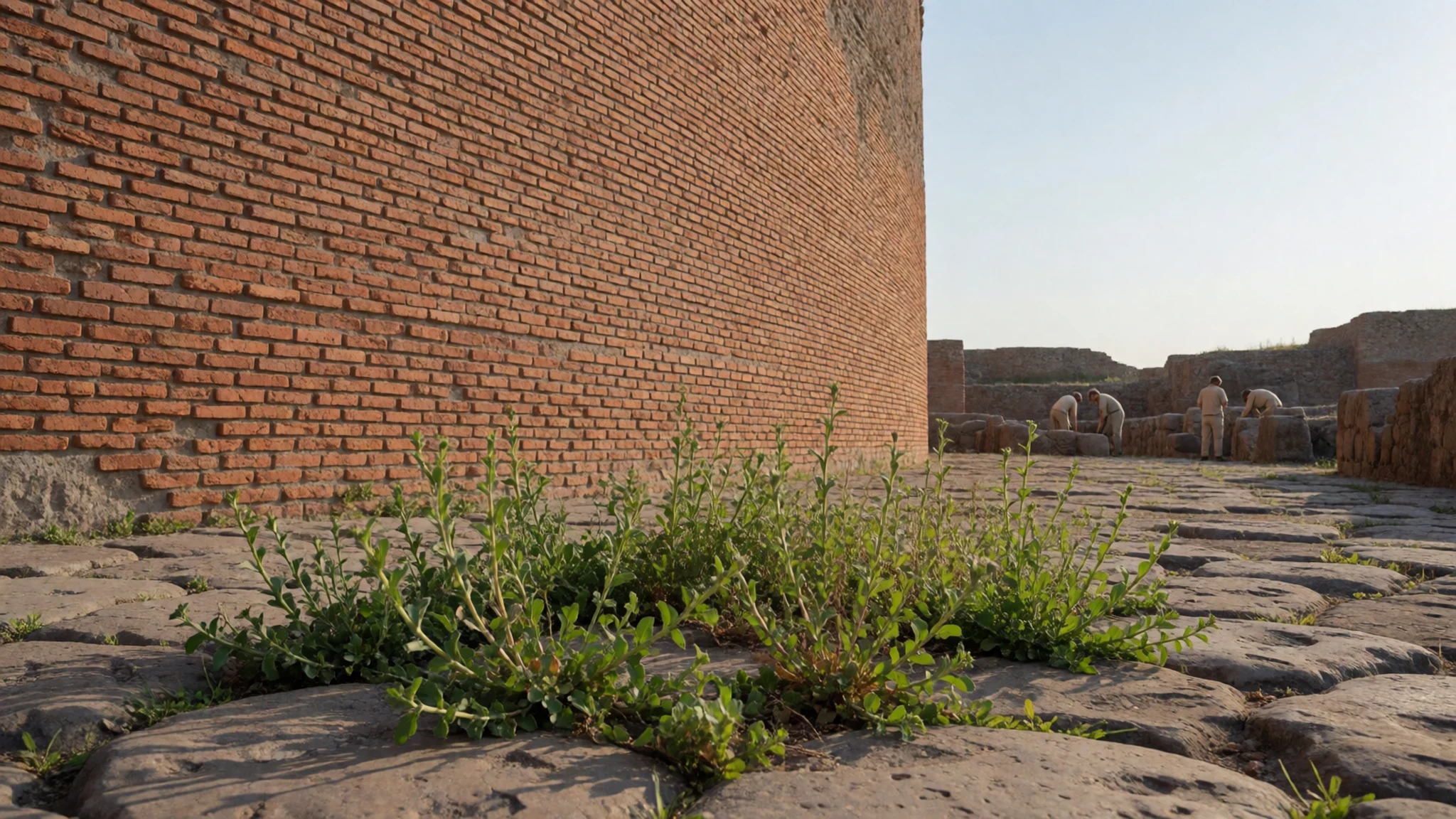
- Asklepion — South-west edge of Bergama
The Asklepion was a healing sanctuary dedicated to Asklepios, god of medicine, and worked as a mix of clinic and spa. Pergamon's is among the better preserved of the many such sites in the Roman world. Expect a colonnaded approach, a small theatre and shaded paths between ruins.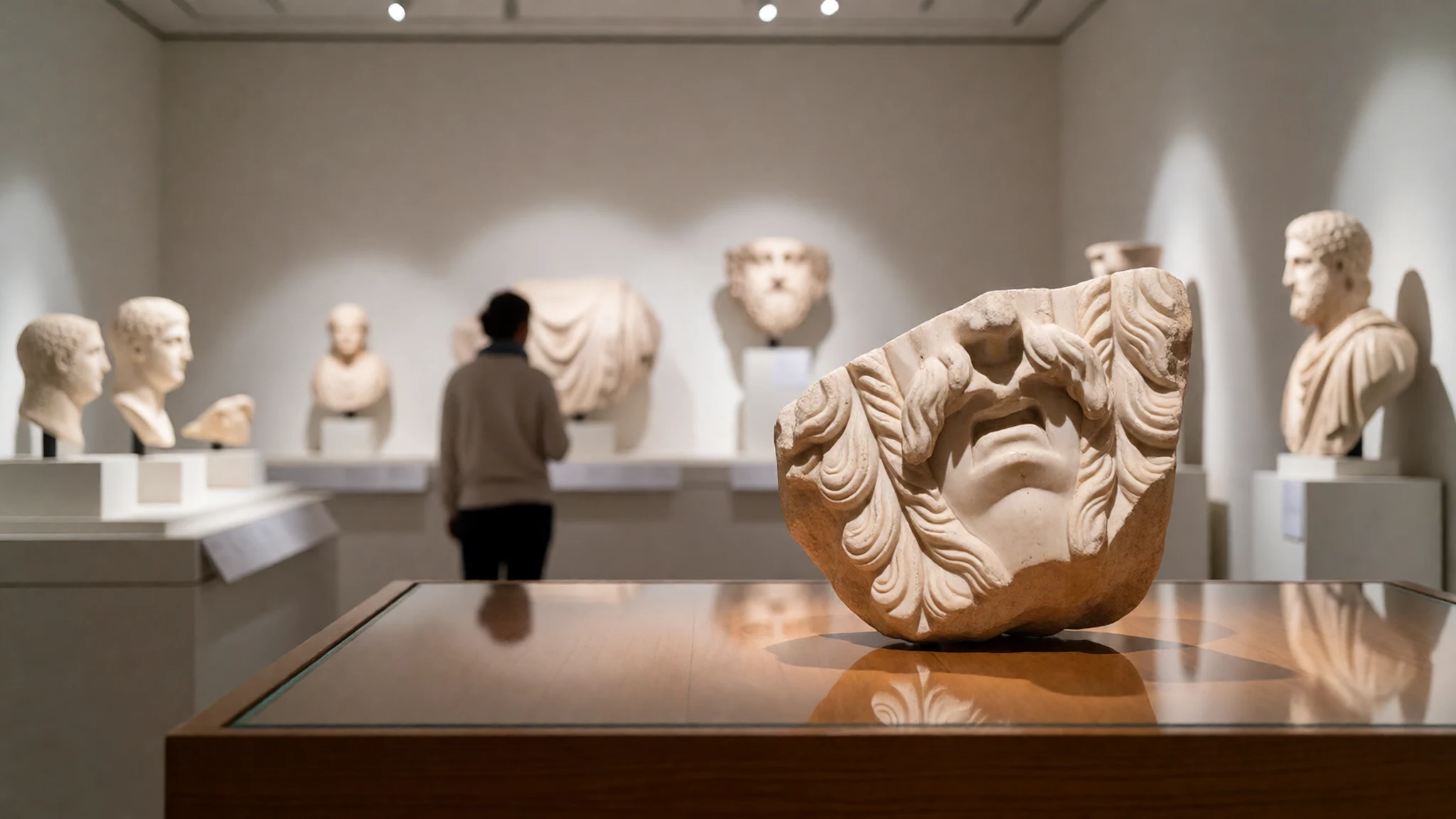
- Bergama Archaeology Museum — Town centre, near the main road
The Archaeology Museum is small, but its labelled finds from the city and its surroundings give useful background before the open-air sites. A visit early in the trip makes the ruins easier to read, particularly the sculpture fragments, which help picture how the hilltop once looked.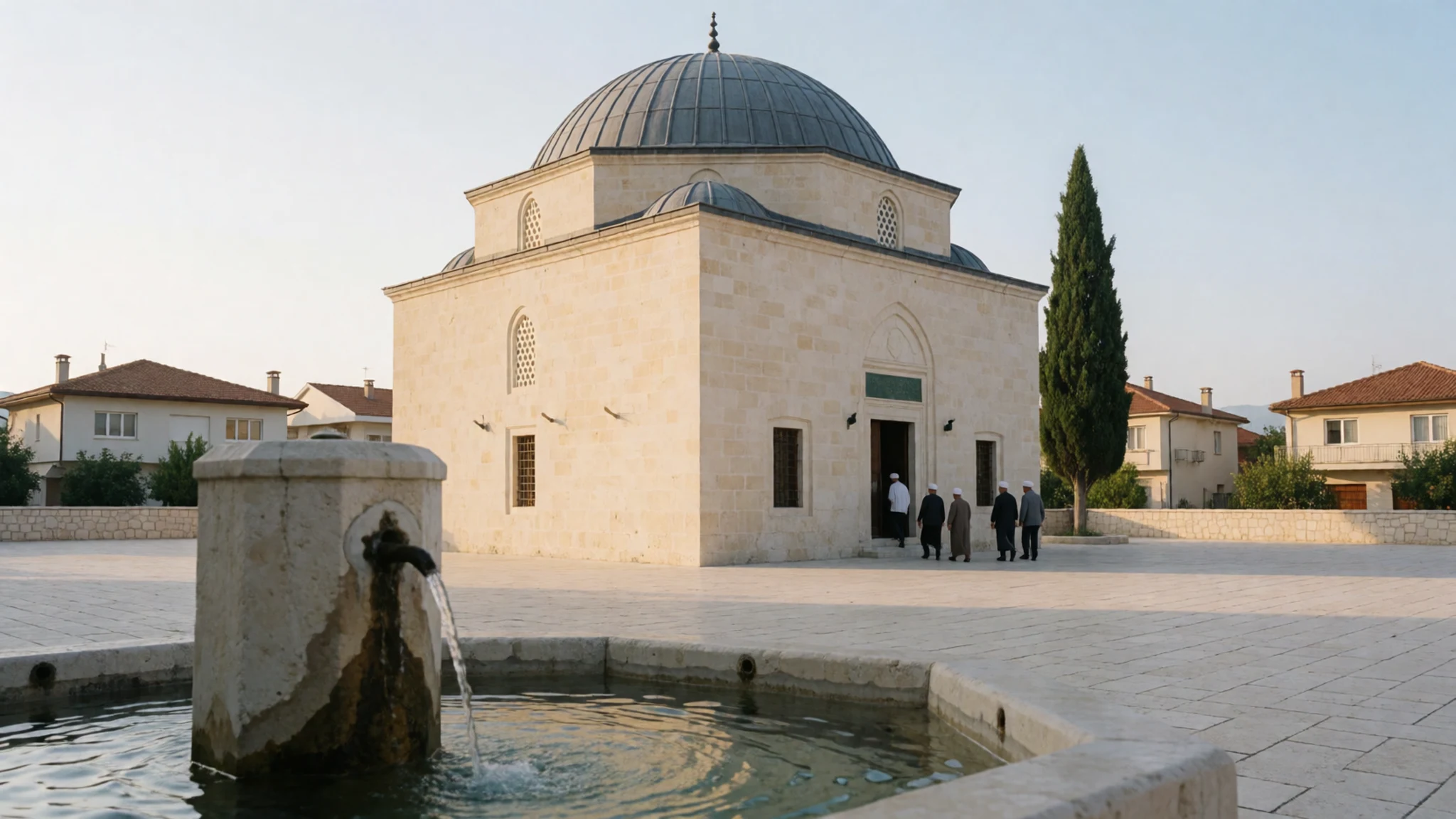
- Old Mosque (Ulu Cami) — Lower town, Bergama
The Old Mosque in the lower town was founded by Sultan Bayezid I, nicknamed Yıldırım, 'Thunderbolt'. After periods of neglect it was repaired and remains an active place of worship. It is a modest stop, but shows the Ottoman layer that sits over the Greek and Roman past.
Culture
Pergamon belongs to several cultures at once, and Bergama makes that easy to see. Greek kings planned the hilltop, Roman builders added temples and a vast sanctuary, early Christians knew it from the Book of Revelation, and Ottoman builders left mosques in the lower town. Walking between them takes only an afternoon.
Much of the ancient culture here was about learning and healing. The Attalid rulers were known as patrons of Greek art and scholarship, and the Asklepion shows that medicine then blended practical care with religion: baths, rest, dreams, and offerings to the god of healing.
Today Bergama is a modern Turkish town with an everyday rhythm. Shops open early, tea is drunk in small glasses, and the call to prayer carries across the valley. Several mosques here are used daily, including the one in the Red Basilica's north rotunda, which has its own door apart from the ruin.
The local wine tradition is a quiet reminder of how long the region has made drink and food from its own land. A vineyard west of the Asklepion welcomes visitors, and small meyhane (tavern-style) places near the museum serve alcohol in a relaxed way, though Bergama is not a nightlife town.
At Bergama's working mosques, remove your shoes before stepping onto the carpet, dress modestly with shoulders and knees covered, and keep your voice low, especially near prayer time.
What to wear
Pergamon's surrounding Aegean countryside has its own traditional dress, although it is now mostly seen at weddings, folk festivals and in museums. Older rural clothing included şalvar, the baggy gathered trousers, long printed or woven cotton gowns, vests and headscarves tied in local styles. Wool and cotton were the staple materials, and Bergama has a long tradition of weaving, including flat-woven and knotted rugs.
Everyday dress in Bergama today is simple and modern. Most people wear jeans or trousers, shirts, light dresses and cardigans, with practical shoes for streets that are often steep and uneven. Older residents, especially in the lower town, may dress more conservatively, and some women cover their hair. Visitors will see a mix, with tourists in shorts being common but not the norm among locals.
For a visit, dress for sun and stone. The acropolis is open and exposed, so wear a brimmed hat, light long sleeves or sunscreen, and breathable clothing in summer. Shoes matter most: choose sturdy trainers or walking sandals with grip, as marble and worn rock get slippery and the paths climb in places. Bring a light layer for spring and autumn evenings.
For mosques, carry a scarf or shawl and wear trousers or a long skirt, with shoulders covered. The ancient ruins have no dress rules, but the Red Basilica's mosque and other working mosques do, and it is easiest to dress modestly for the whole day than to change.
What to eat
- Kebap — Small eateries along the main street west of the Red Basilica
Kebap here usually means grilled meat served with flatbread, onions and salad. Small family-run kebab houses a block or two west of the Red Basilica are a good choice. Locals suggest judging a place by the smell from its grill, not its decor.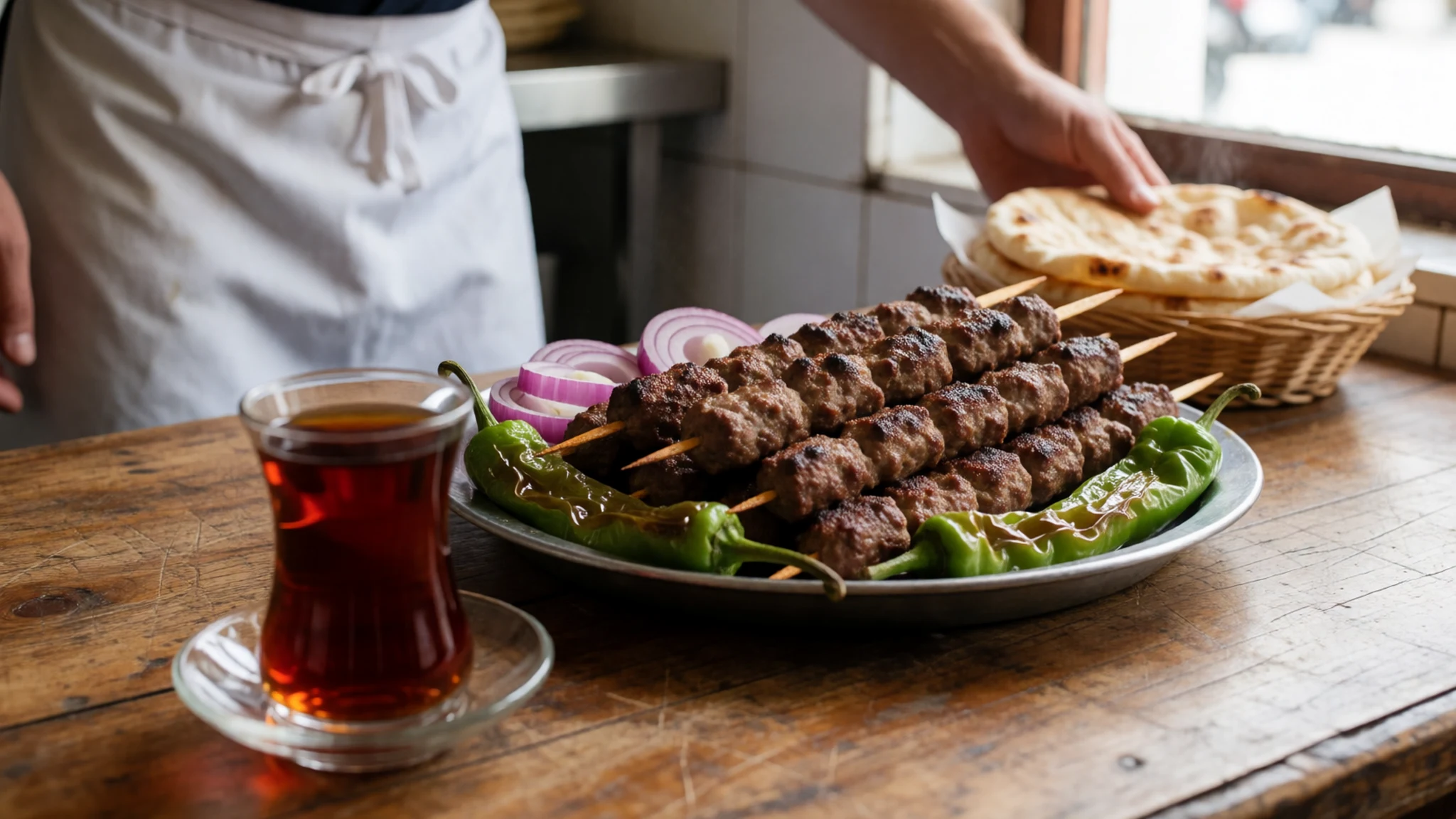
- Köfte — Simple lunch eateries in central Bergama
Köfte are spiced grilled meatballs, usually served with rice, tomatoes and peppers, or tucked into bread. They suit a quick lunch after the acropolis. Some places do better kebabs than köfte, so it is worth asking what the kitchen is proudest of.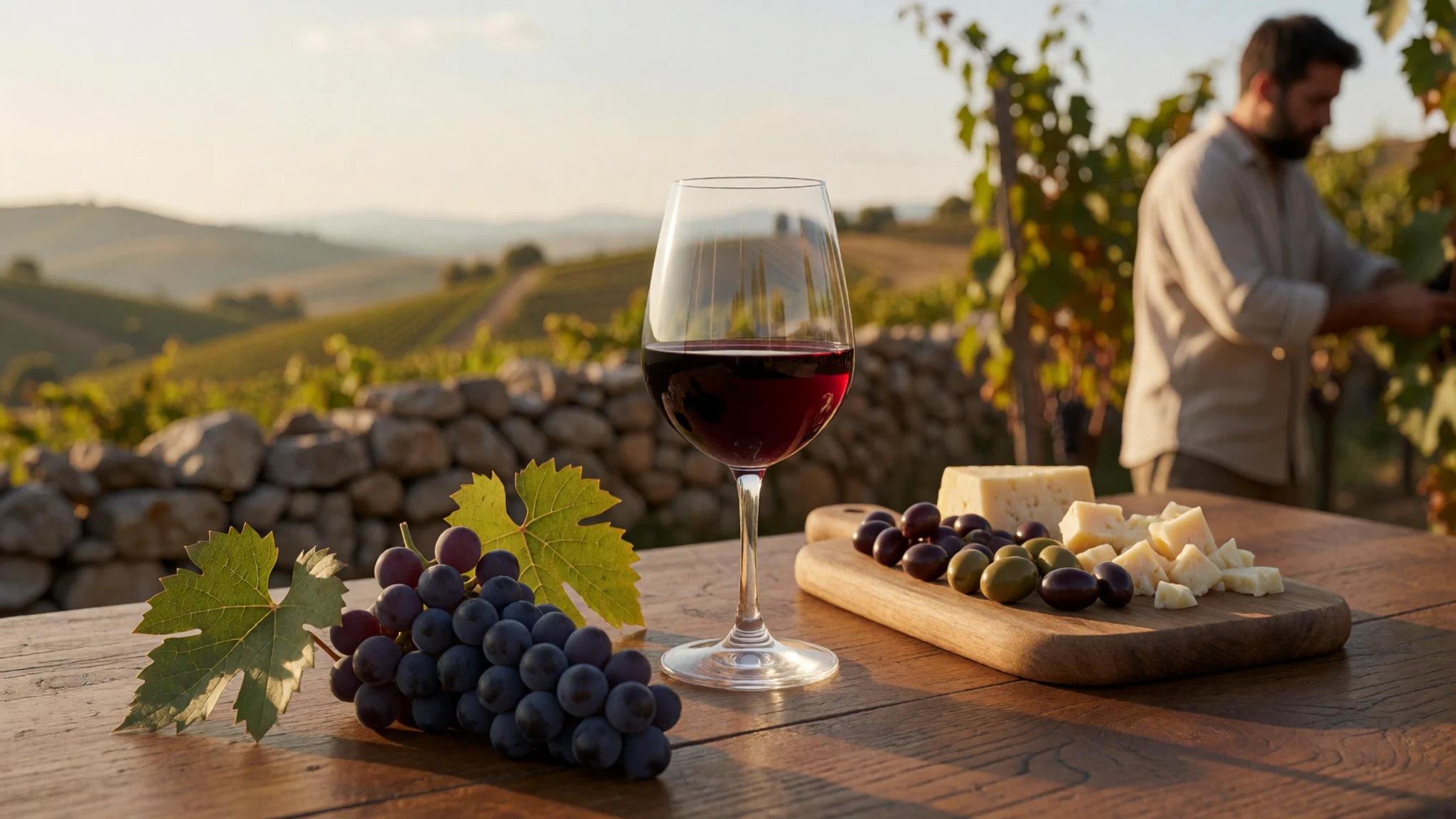
- Turkish breakfast — Family diners near the town centre, open from early morning
A typical breakfast spread has bread, olives, tomatoes, cucumbers, cheese, eggs and jam, served with endless tea. Some family-oriented diners open from dawn, which suits an early start before the acropolis gets hot and crowded. - Meze with rakı — Meyhane-style taverns near the Archaeology Museum
Meze are small shared plates, such as yoghurt dips, aubergine, beans and salads, traditionally eaten with rakı, an aniseed spirit, or with wine. They suit a slow evening once the day's walking is done. - Local wine — A vineyard in Teğelti village, west of the Asklepion
The Bergama area grows grapes and makes wine, which is uncommon enough for Turkey that a tasting feels special. Visits are best arranged in advance, and a driver or taxi is useful for the rural lanes.
Plan it
Best time. April–May and September–October are the comfortable months, when the exposed hilltop is warm rather than hot. July and August can be very hot for climbing and ruin-walking, so start at opening time. Winter is quieter, but can be cool and wet.
How long. 1–2
Getting there. The nearest big airport is Izmir. From there, take the IZBAN suburban train to its northern end at Aliağa, then bus 835 to Bergama bus station and the town centre; allow about two hours in total. Long-distance buses also stop at Bergama's main bus station, which is out west of town, so you need a local bus, dolmuş or taxi for the last stretch to the centre and the sights.
Budget. low
Tips
- Go to the acropolis early, before the heat and the tour groups arrive, and carry water as there is little shade.
- Check ticket arrangements and opening times on the official museum or ministry of culture website before you go.
- Plan the Archaeology Museum first for context, then the acropolis, Asklepion and Red Basilica.
- The Izmir train and bus link needs an izmirimkart, as cash is not accepted, so sort one out before you board.
- Wear grippy shoes, as marble slopes and steep paths can be slippery.
Etiquette
- Remove shoes before entering any working mosque, including the Red Basilica's mosque rotunda.
- Cover shoulders and knees when visiting mosques, and keep voices down.
- Do not climb on fragile ruins or take stones and pottery as souvenirs.
Nearby
Sources
- Wikidata Q18986 (CC0)
- Wikipedia: Pergamon (rev 1382745208) (CC BY-SA 4.0)
- Wikivoyage: Bergama (rev 5431403) (CC BY-SA 4.0)
- Photo: Columns in the Temple of Trajan, Pergamon — Bernard Gagnon (CC BY 3.0)
- Photo: Acropolis - Bergama (Pergamon) - Turkey - 10 — Adam Jones (CC BY-SA 2.0)
- Photo: Bergama - AKRAPOL — HALUK COMERTEL (CC BY 3.0)
- Photo: MYSIA, Pergamon. Mid 5th century BCE — CNG (CC BY-SA 2.5)
- Photo: Pergamon AvP VII 112 striding man — Mark Landon (CC BY 4.0)
- Photo: Pergamon in 188BCE — Munion (CC BY-SA 4.0)
- Photo: Mithridates VI as Heracles, Louvre — Unknown artist (CC BY-SA 2.5)
- Photo: Map of Asia Minor before the Mithridatic Wars — Baldamus and Schwabe (Public domain)


