Pentecost
Pentecost, Vanuatu
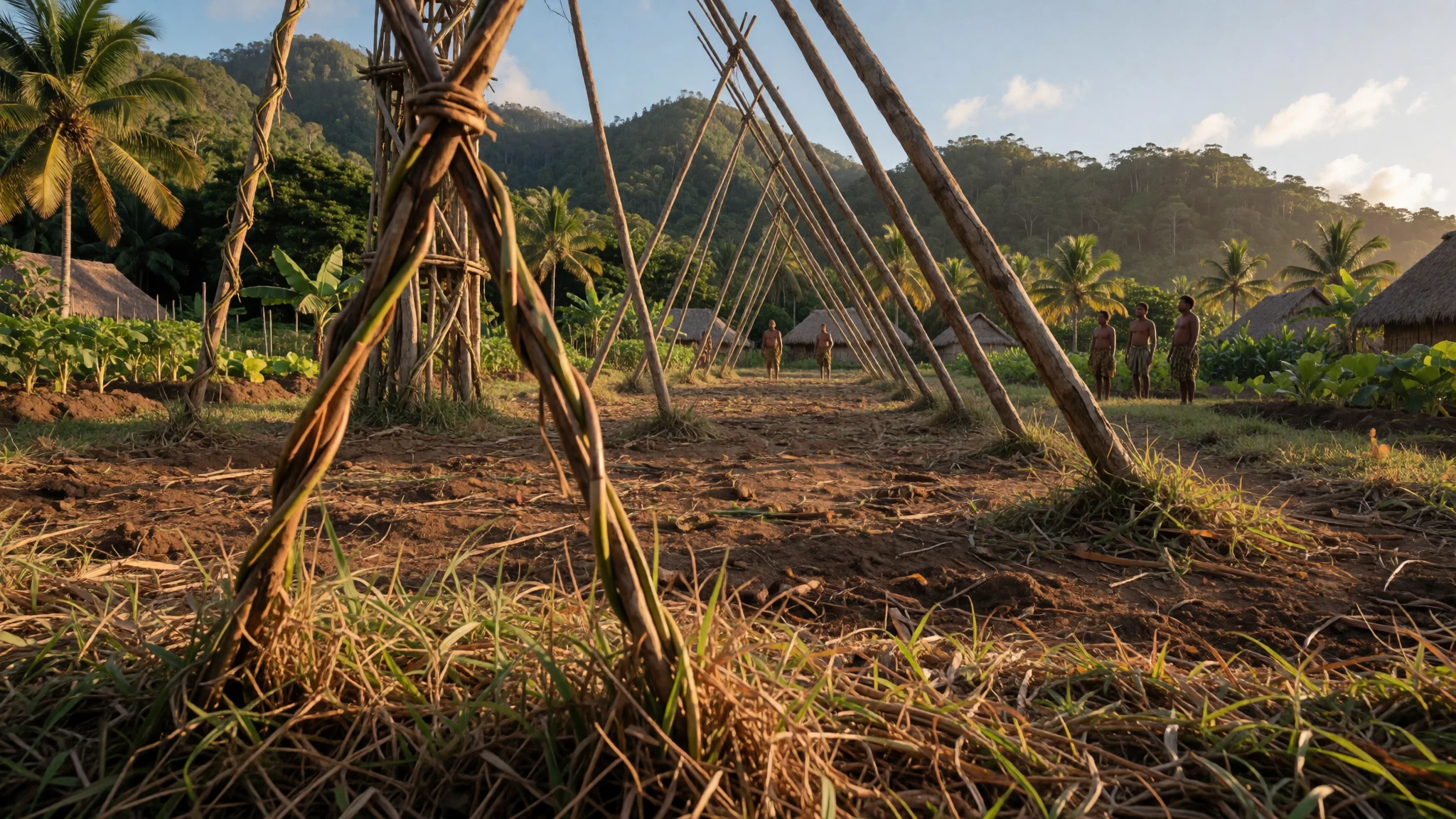
Pentecost is a green, mountainous Vanuatu island where men still leap from timber towers on vines, in the ritual that gave the world bungee jumping.
The place
Pentecost is a long, narrow, forested island in the north of Vanuatu, with the capital Port Vila lying due south across open sea. Its recorded population is 16,843, spread over coastal villages and garden clearings rather than any real town. A mountain spine runs most of the island's length and tops out at 617 m on the facts record. That ridge works as a weather divider: the eastern side takes the heavier rain and the western side is calmer and more temperate. Between ridge and shore lie narrow plains cut by small streams, green with food gardens, plantations and grazing land.
The climate is humid tropical. A rainy season runs from November to April and a drier season from May to October, but rain can arrive in any month, and the island is no stranger to cyclones and earthquakes. Visitors should expect mud, humidity and plans that shift with the weather.
The island carries several names. Pentecôte is the French form and Pentekos the Bislama one. Raga, or Araga, began as a tribal name from the north and is now often applied to the whole island. Older European sources sometimes call it Whitsuntide Island, and its older local names, such as Vanu Aroaroa, are rarely used today.
This is not a resort island. Travel here means small planes or boats, simple village stays and hosts who set the pace. That is much of its appeal, and also the reason to build slack into any schedule.
Its story
Pentecost carries layered stories, and the oldest are told by its people rather than by European logbooks. Some Bule families trace their descent to Nuenue, a woman taught weaving by the creator Tagaro. She walked the island passing the skill on, and was given land in return, so her descendants still hold rights wherever she settled.
European ships came later. The Spanish expedition of Pedro Fernandez de Quiros sighted the island in 1606. Louis Antoine de Bougainville passed in 1768 on the feast day of Pentecost, which gave the island its name, and James Cook sailed through the archipelago in 1774. Missionaries followed and reshaped island life, yet kastom, the body of customary practice, remains strong.
The best-known custom is the Gol, or land diving, from which modern bungee jumping descends. Between April and June, men in the south leap from tall wooden towers with vines tied to their ankles, in a ritual linked to a good yam harvest and to boys' passage into manhood. A BBC film crew carried images of it abroad in the mid twentieth century, and royal and papal visitors have watched it since.
Politics runs through the island too. Originally from Laone, a village in the north, Walter Lini steered Vanuatu to independence in 1980. The Turaga movement, which promotes a kastom economy as an alternative to the cash system, began on Pentecost. Anthropologists have also long studied grade-taking, in which social rank rises through the killing of valuable pigs.
What to see
- The land-diving towers — Southern Pentecost
Pentecost's southern villages build the diving towers each year from timber and lashed branches. The jump season runs from April to June, tied to the yam harvest. Dates depend on the villages, so book through a local operator or guesthouse. Treat it as a ceremony, not a show.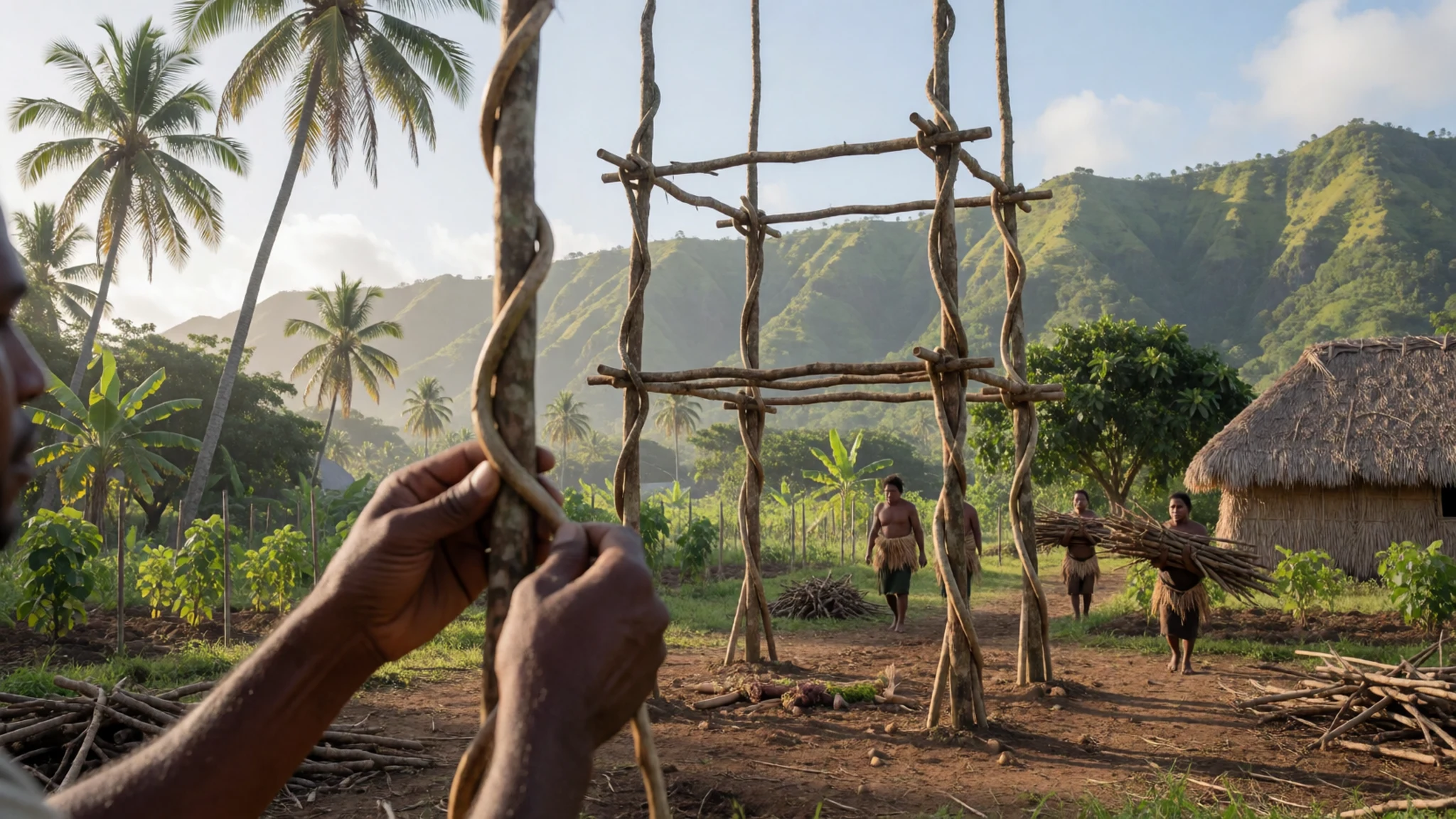
- Melsisi and the northern villages — North Pentecost
Melsisi sits on Pentecost's wetter side, and the view down onto its gardens and thatch gives a sense of how the island is lived in. Northern villages are best visited with an invitation from a host, who can explain which paths and gardens are private.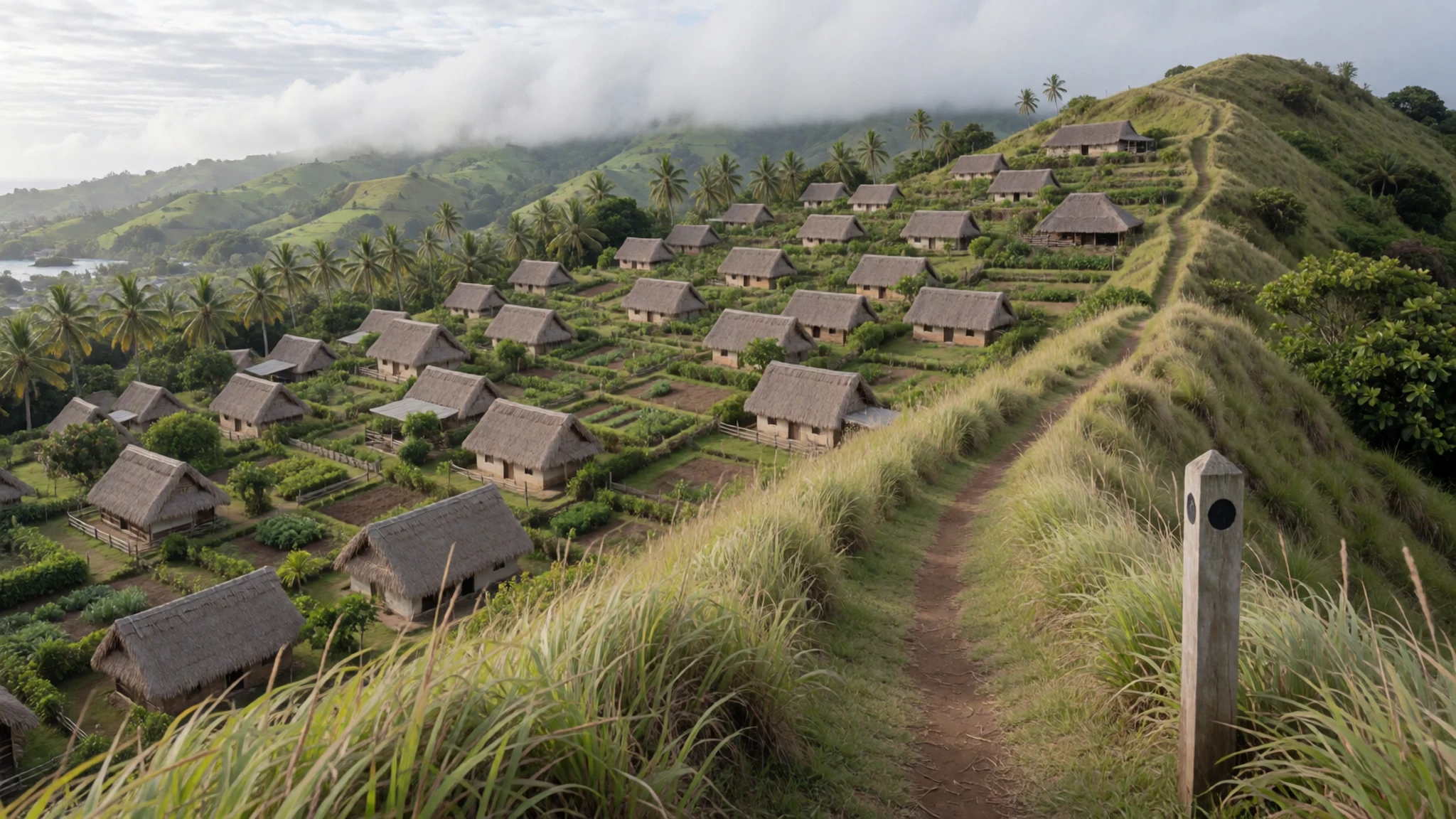
- Palm-lined shores — Coastal plains
The coast of Pentecost is mostly working shoreline: coconut palms, canoes pulled up on the sand and gardens close behind. Swimming and walking are pleasant, but ask locally about currents and about whose land the beach belongs to before settling in.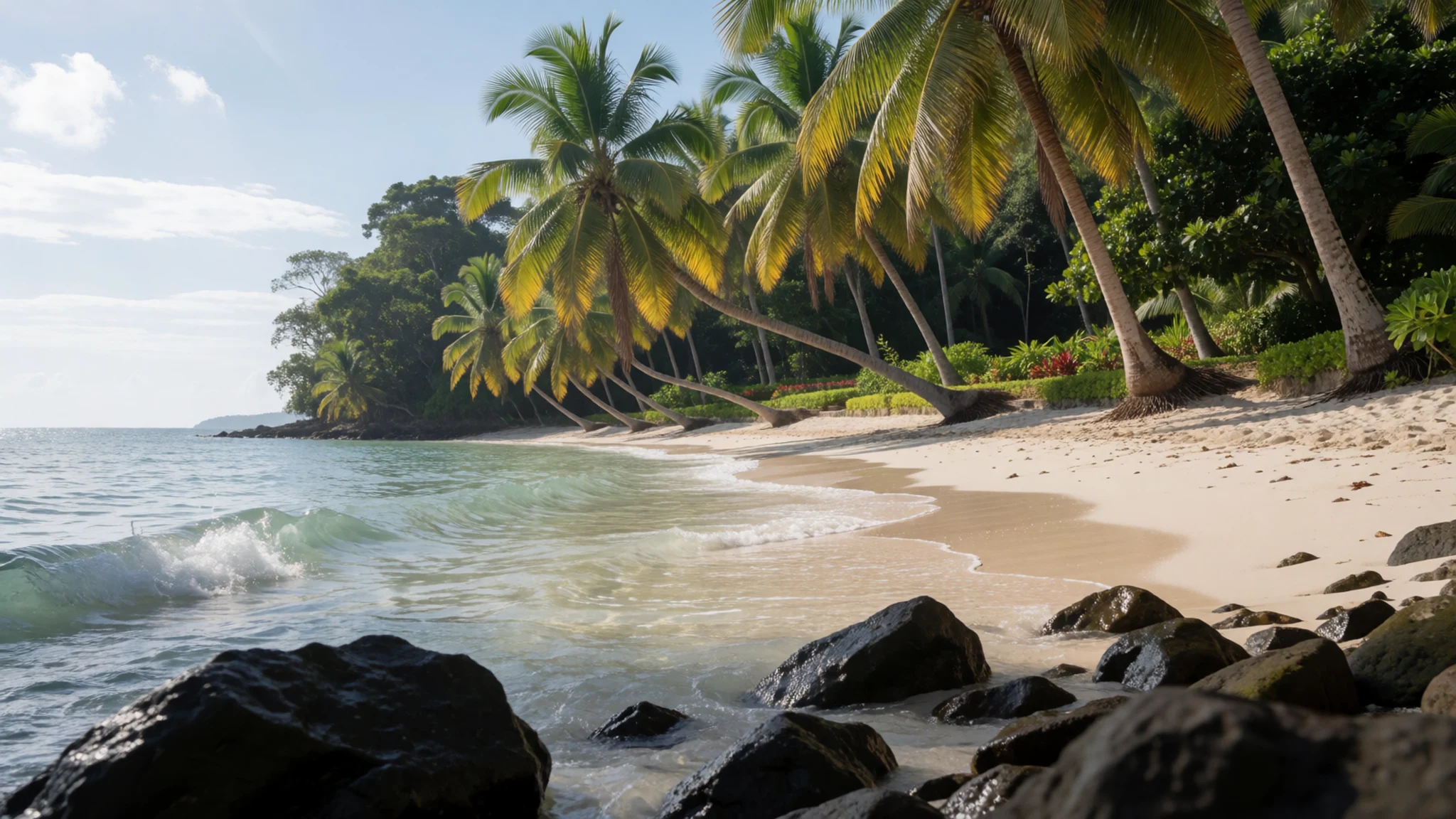
- Laone and the Lini memorial — Laone, North Pentecost
Laone, in the north, was the home village of Walter Lini, the leader who guided Vanuatu to independence. A statue honours him at the nearby Lini Memorial College. It is a quiet stop for anyone wanting the modern political story beside the ritual one.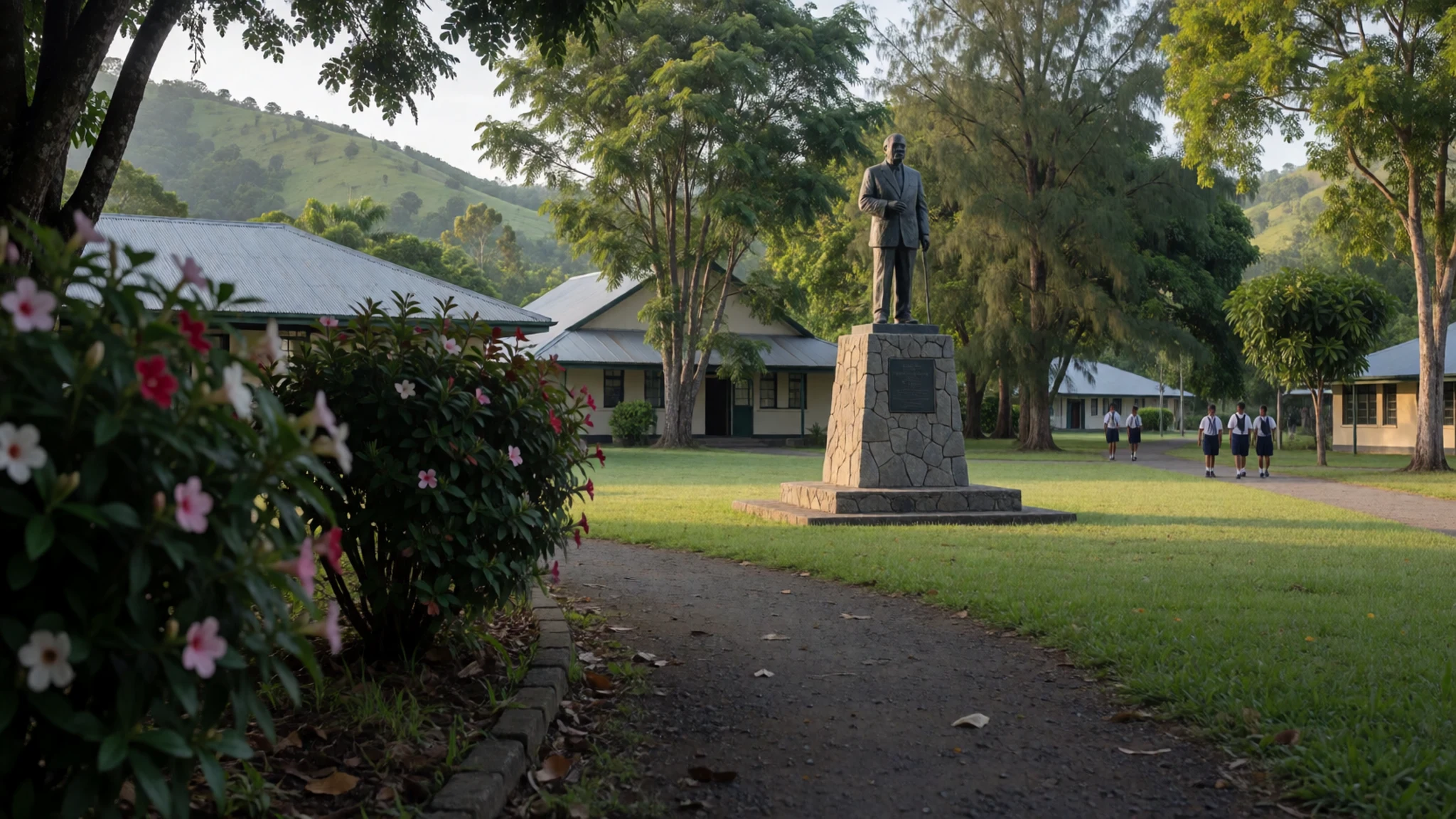
- Lavatmanggemu and the kastom economy — North-east Pentecost
Lavatmanggemu, in the north-east, is the base of the Turaga movement, which promotes a kastom-based alternative to the cash economy. Visits are a matter of hospitality, so approach through a local contact and ask what is welcome before taking photographs.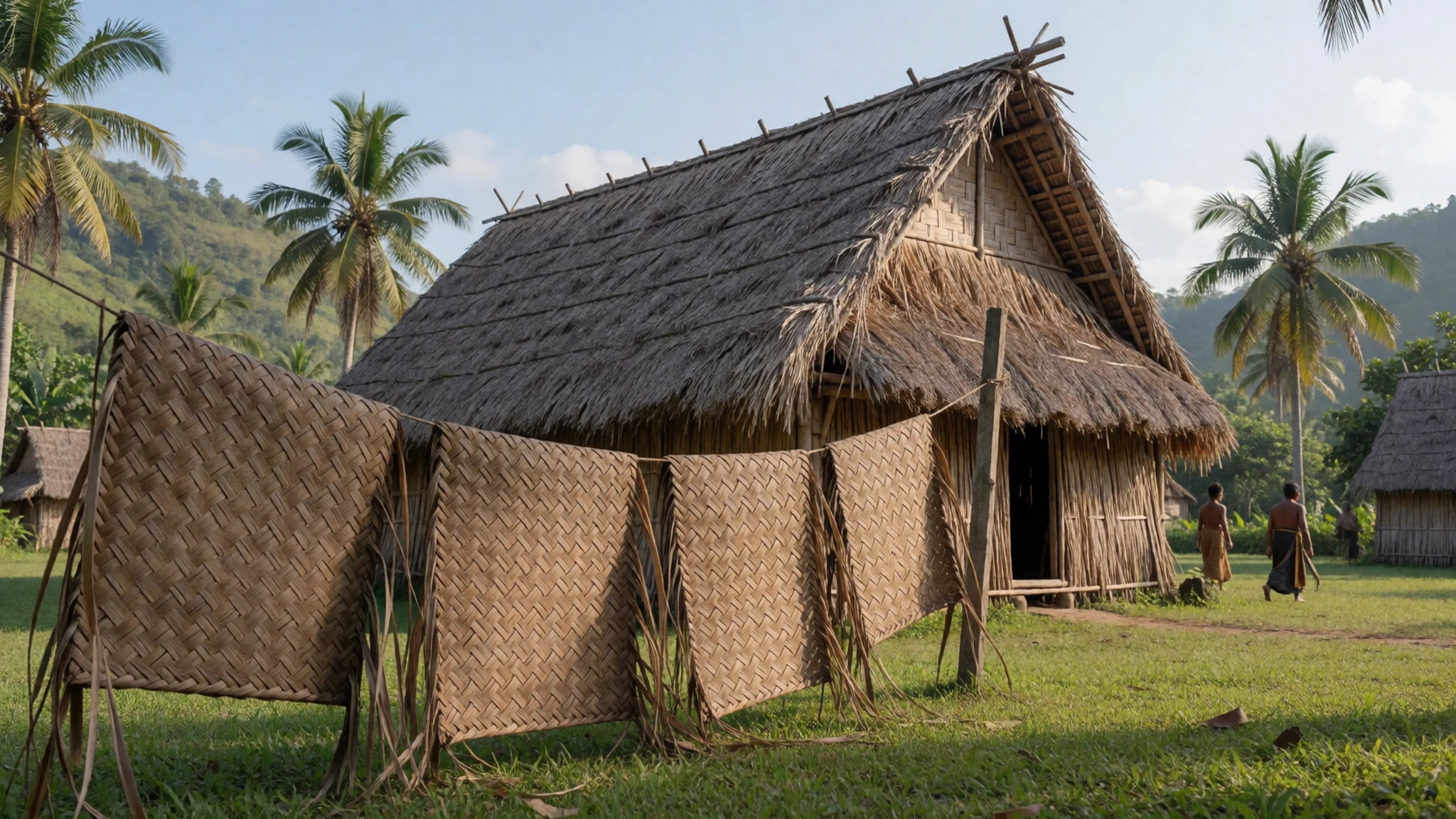
Culture
Pentecost is a place where kastom, the inherited body of custom, still shapes daily life, land rights and ceremony, even though Christian churches are woven into village routines. Land follows descent, so who may farm, build or walk where is settled by family stories, such as those of the weaver Nuenue's descendants. Strangers are welcomed, but within those rules.
The Gol, or land diving, is the best-known expression of this. It is a men's ritual connected to the yam harvest and to the passage from boyhood, and the diver takes a real risk. It is not staged entertainment, and the village decides when, where and how it happens. Many communities ask visitors for a contribution to attend, so agree arrangements with a local host in advance.
Social standing also moves through grade-taking, in which rank rises through the exchange and killing of valuable pigs. Pigs are wealth here, not just food, and a gift of one carries weight. Weaving, singing and dance are likewise tied to specific families and places, so ask before recording or sharing them.
Languages on the island are many. Bislama works as the common tongue, French and English are used in schools, and a few friendly words in Bislama go a long way. Sundays are generally quiet and observed.
Before photographing a ceremony, a person or a garden, ask your host first and follow their answer, because some sites and rituals are not for photographs.
What to wear
Pentecost's traditional dress is made from plant fibre and worn mostly for ceremony. Men's attire for kastom occasions includes the namba, a penis wrapper of woven pandanus or similar leaf, and mats and fibre skirts are made by women from pandanus and other leaves. The weaving skill is credited in local tradition to Nuenue, so woven mats and baskets carry a lot of meaning and are often exchanged as gifts. Dyes and patterns differ between villages and families.
Day to day, people wear what suits heat, rain and garden work. Cotton T-shirts, shorts and printed island dresses are common, with rubber sandals or bare feet on village paths. For church on Sunday people dress neatly, often in their best clothes. Women commonly wear the long, loose Mother Hubbard style dress that is typical across Vanuatu.
Visitors should pack for humid heat and sudden rain: light, quick-drying clothes, a waterproof layer and a hat. Cover shoulders and knees in villages and at church, and keep swimwear for the beach. Trails are muddy and root-tangled, so bring sturdy sandals or light walking shoes with grip, plus water shoes for river crossings. Avoid camouflage and military-style clothing, and do not wear it near ceremonies. A sarong is useful for sun, modesty and sitting on damp ground.
What to eat
- Laplap — Village feasts and family kitchens
Laplap is the national dish of Vanuatu, a pudding of grated yam, taro or manioc, often with coconut cream, wrapped in leaves and baked in an earth oven. It appears at feasts and family gatherings, so ask a host in any village.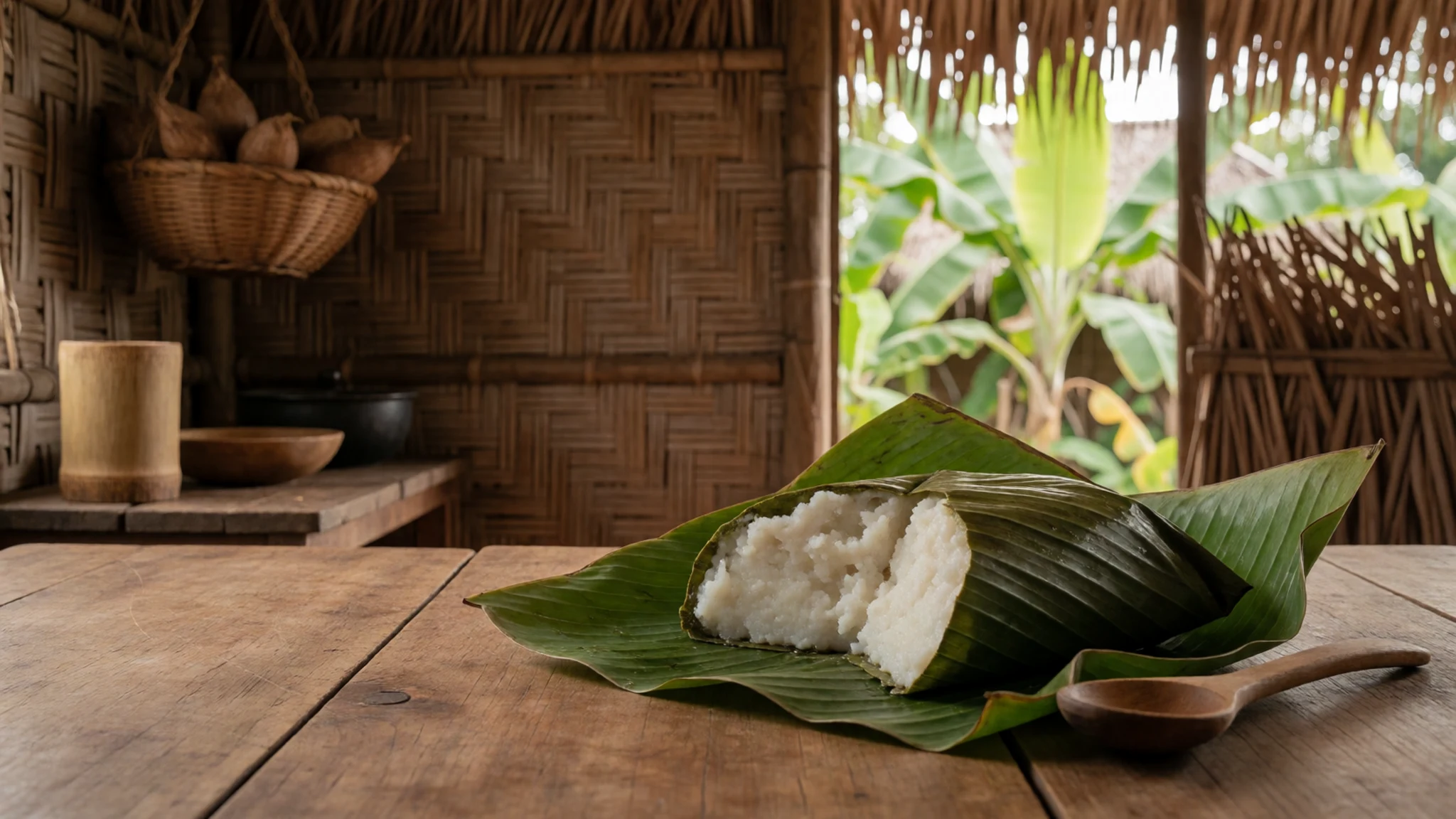
- Yam — Village gardens and communal meals
The yam is central to Pentecost, tied to the land-diving season and the harvest. It is boiled, roasted or pounded into dishes, and served at celebrations. Ask your host to explain the varieties and how they are grown.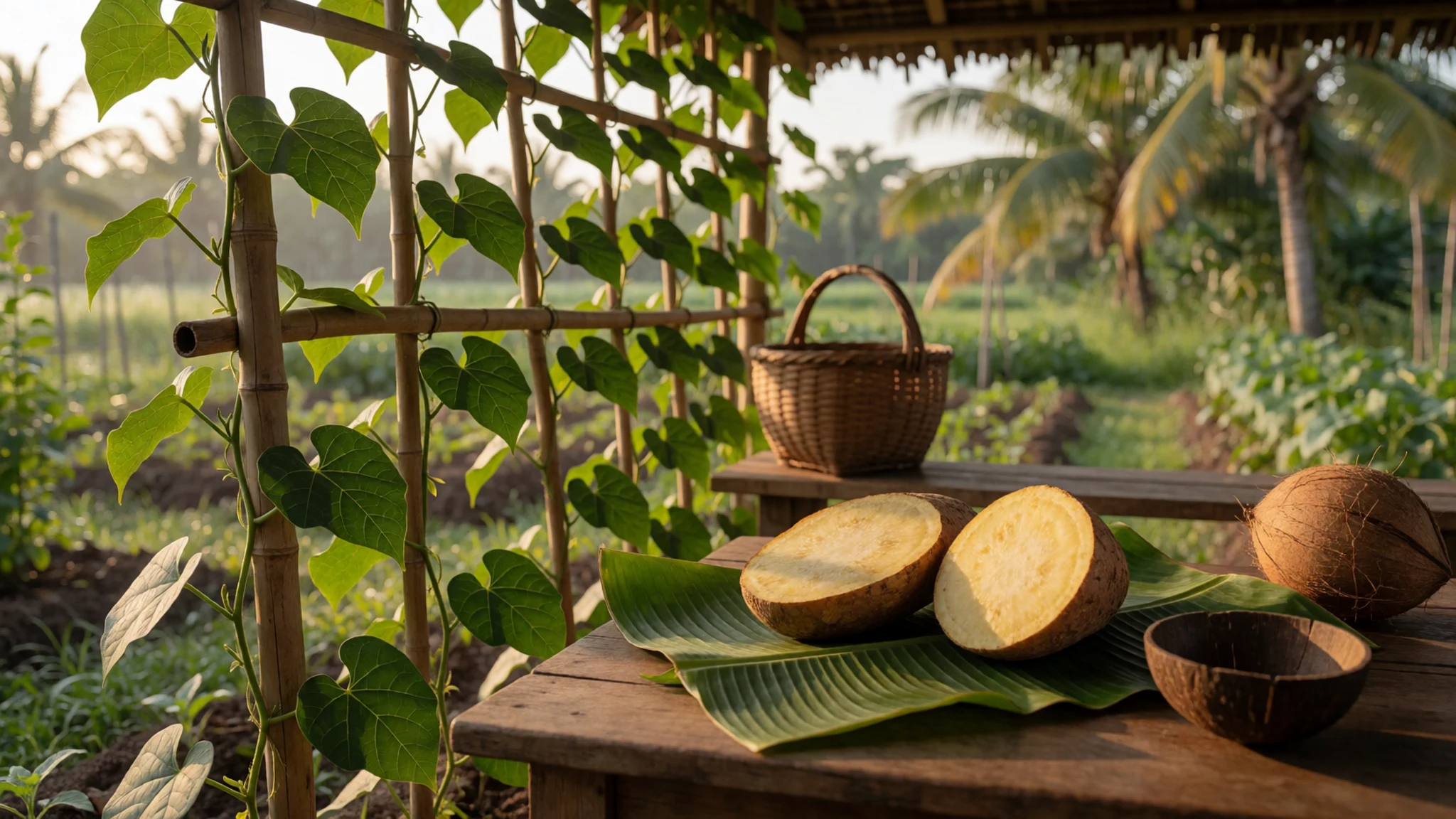
- Roasted taro and manioc — Home meals in villages
Taro and manioc are everyday staples, baked in coals or boiled until soft. Simple, filling and mild, they are often served with greens, fish or coconut milk. They suit long walking days between villages. - Fresh island fish — Coastal villages
Fish caught from the reefs and shoreline is cooked simply, grilled over fire or steamed in leaves with coconut milk. Availability depends on weather and sea conditions, so eat what has been landed that day. - Coconut and tropical fruit — Village gardens and roadside stalls
Green coconuts for drinking, plus bananas, papaya and citrus from village gardens, make easy snacks. Fruit follows the season, and a host will usually offer whatever is ripe. Ask before picking anything, since trees have owners.
Plan it
Best time. May to October, the drier season, is the easiest for travel; April to June also covers land-diving season. November to April is the wetter, cyclone-prone season, when flights and boats are more likely to be disrupted.
How long. 3–5
Getting there. Fly from Port Vila on a domestic flight to one of Pentecost's small airstrips, or reach the island by boat from neighbouring islands. The last leg is usually by truck or on foot along rough tracks, so arrange pick-up with your host.
Budget. mid
Tips
- Book land-diving visits well ahead through a local operator or guesthouse, as dates depend on the villages
- Bring enough cash, because card machines and banks are scarce outside Port Vila
- Build spare days into the plan, as flights and boats are weather-dependent
- Carry a water bottle and purification tablets, and check the safety of water with your host
- Pack insect repellent, a light rain jacket and a head torch
Etiquette
- Ask before photographing people, ceremonies or gardens
- Agree contributions and arrangements with your host before attending a ritual
- Dress modestly in villages and at church
Nearby
Sources
- Wikidata Q960808 (CC0)
- Wikipedia: Pentecost (island) (CC BY-SA 4.0)
- Wikivoyage: Penama (CC BY-SA 4.0)
- Locator map of Pentecost Island, edited by M.Minderhoud (Public domain)
- Palm trees on Pentecost Island, DiscoveryCampervans (CC BY-SA 4.0)
- Espiritu Santo, Simon_sees (CC BY 2.5)
- Pentecost Land Diving, Choguet (Christopher Hogue Thompson) (CC BY-SA 4.0)
- Melsisi from above, Andrew Gray (CC BY 3.0)
- Admiralty Chart No 1736, Plans in the New Hebrides, UK Hydrographic Office (Public domain)
- Manaro Voui and Manaro Lakua, Karoly Nemeth (CC BY-SA 4.0)
- Landdiving7, Paul Stein (CC BY-SA 2.0)


