Mystery Island
Mystery Island, Vanuatu
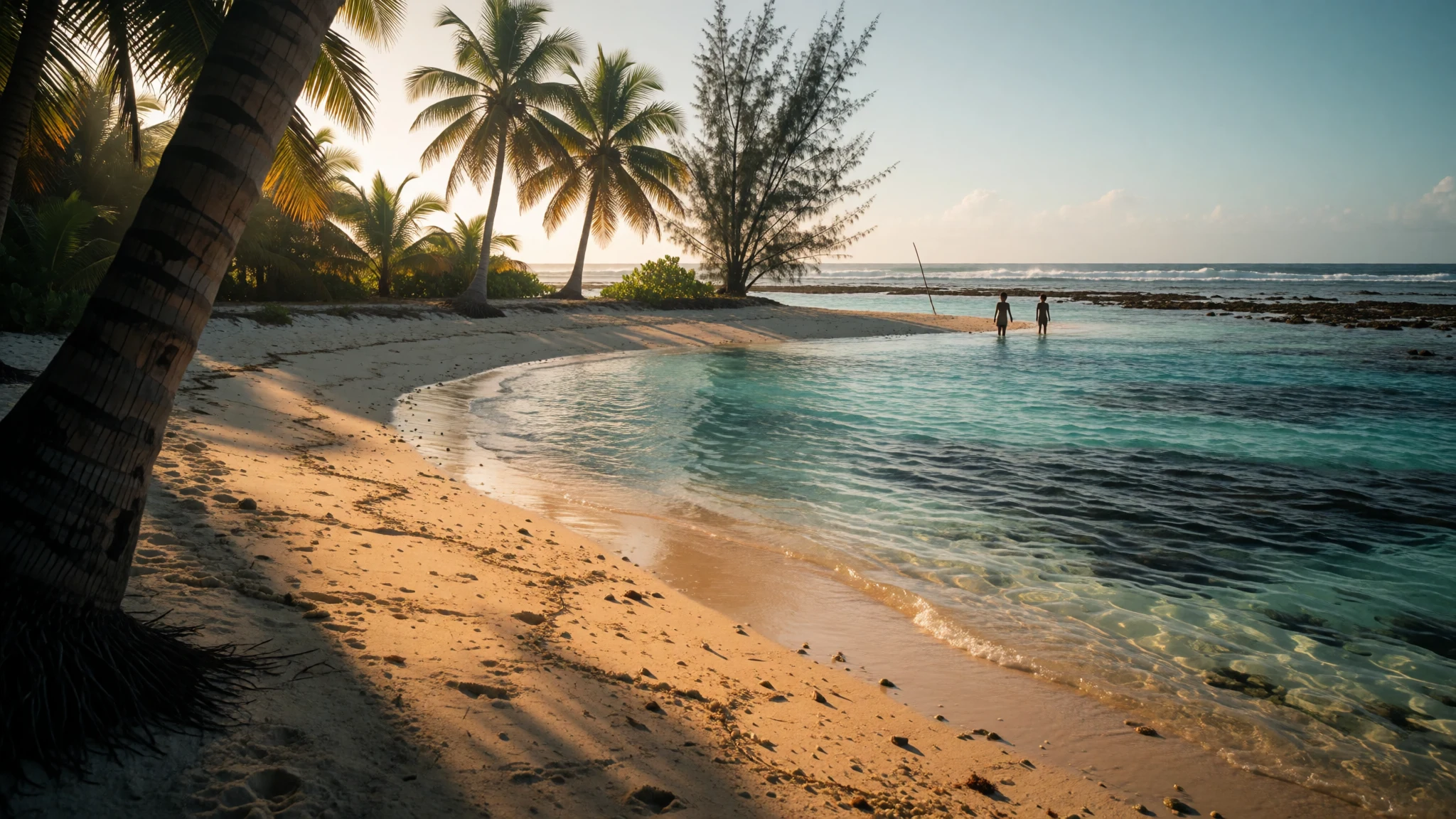
Mystery Island is a flat, palm-shaded reef islet in southern Vanuatu, a day of clear shallow water and simple shade.
The place
Mystery Island, known locally as Inyeug, is a small, flat reef island off the south-west coast of Aneityum in southern Vanuatu. Its highest point is only 7 m above sea level, so from the water it reads as a low green ribbon of coconut palms and casuarinas edged with pale sand. A fringing reef wraps most of the shore, and the water inside it is shallow, clear and usually calm. Nobody lives here permanently. The island is looked after by communities from Aneityum, who hold it under customary land tenure, and it comes to life when a cruise ship anchors offshore and passengers are ferried in by tender. On those days there are craft stalls under the trees, a beach bar, and local guides running snorkelling and walking trips. On the days between, the place goes back to birds, crabs and the tide. A grass airstrip runs along the island, a leftover from wartime use, and it is the one man-made feature that stands out: a visitor can walk its length in a few minutes. Honest expectations help. This is a beach stop, not a town with sights. The appeal is clear water, shade and simplicity, and the experience changes a good deal depending on whether a ship is in. Heat is steady, shade is limited away from the palms, and there is little on the island beyond what its hosts bring across for the day. Anyone wanting anything more than a swim, a stroll and some shopping for crafts should plan time on Aneityum itself.
Its story
Mystery Island has a human history far older than its cruise-stop reputation, though little of it is written down for outsiders. The islet lies within the territory of Aneityum, whose people have long fished its reef and treated it as part of their own landscape. Outside contact arrived in force with sandalwood traders, who stripped the forests and brought diseases that are recorded as having cut the island's population sharply. Missionaries followed, and Aneityum became an early centre of Presbyterian work in the southern islands; church life is still a strong thread in village routine. The flat ground of the islet made a natural airstrip, and one was laid out for military use during the Pacific war. It survives as a mown line through the palms. The English name is usually put down to sailors and later map-makers, though accounts differ, and the local name Inyeug is the one used on Aneityum. Local custom, not just tourism rules, still shapes where visitors may walk and what is expected of them. In recent decades cruise ships have begun to call regularly, and the income now matters to Aneityum households, which supply stallholders, guides, boat crews and cooks. The rhythm is set by the ship calendar, so busy days and empty days alternate. Between the two, the island is simply a reef platform with a few trees, a runway and a lot of sky. It is also worth knowing that the name is shared with an old American television series, which has nothing to do with this place.
What to see
- The lagoon beach — Sheltered shore facing Aneityum
Mystery Island's main draw is the pale sand and shallow lagoon on the side facing Aneityum. The water is calm and clear, good for wading and floating. Palms give patchy shade, but arrive early on ship days if a shaded spot matters to you.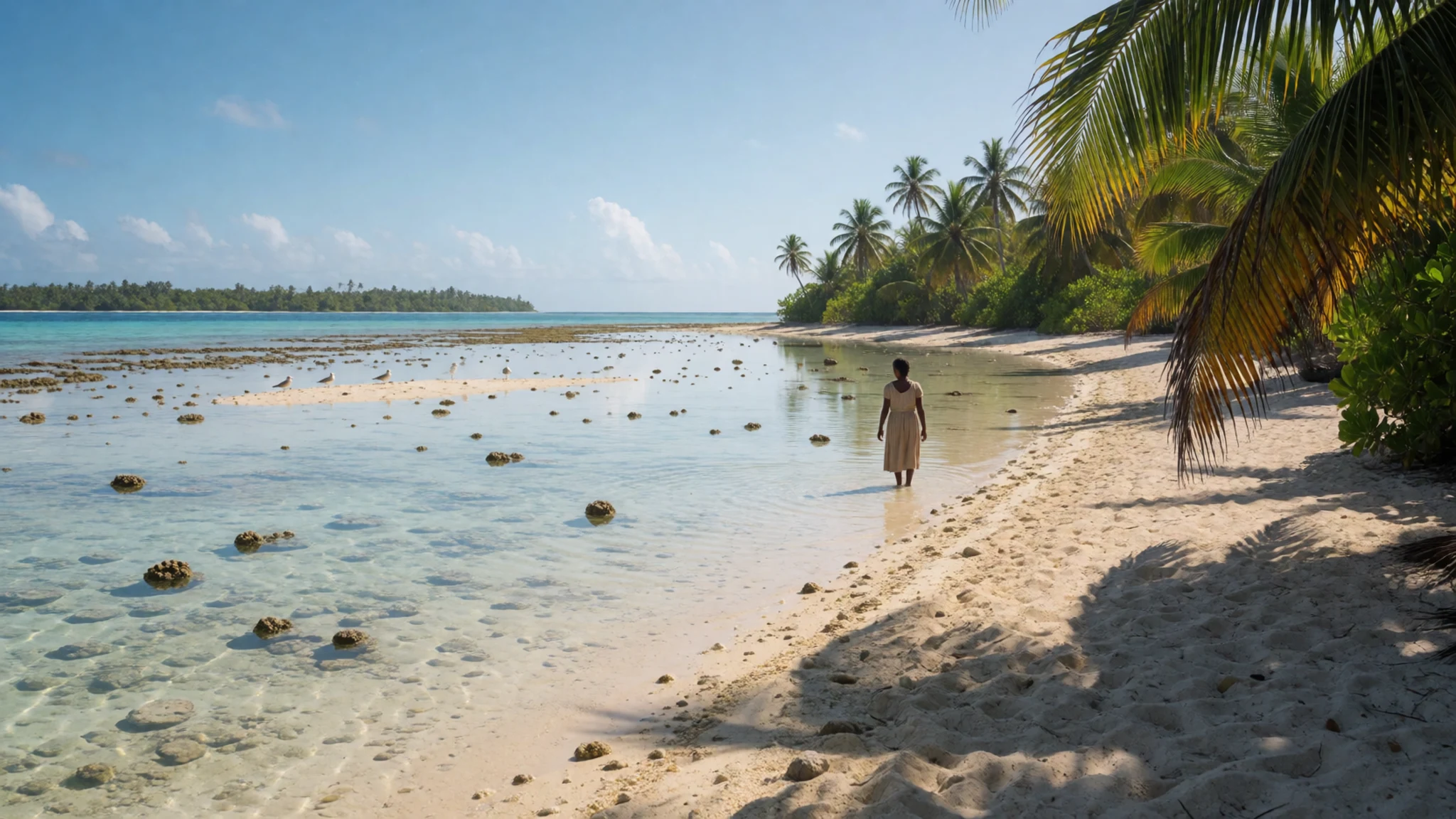
- The old airstrip — Centre of the island
A long grass runway cuts through the island, a reminder of its wartime role. It is flat, easy walking, and gives the best sense of how low and narrow the islet is. Expect a few goats of shade, little else, and wide views to the sea.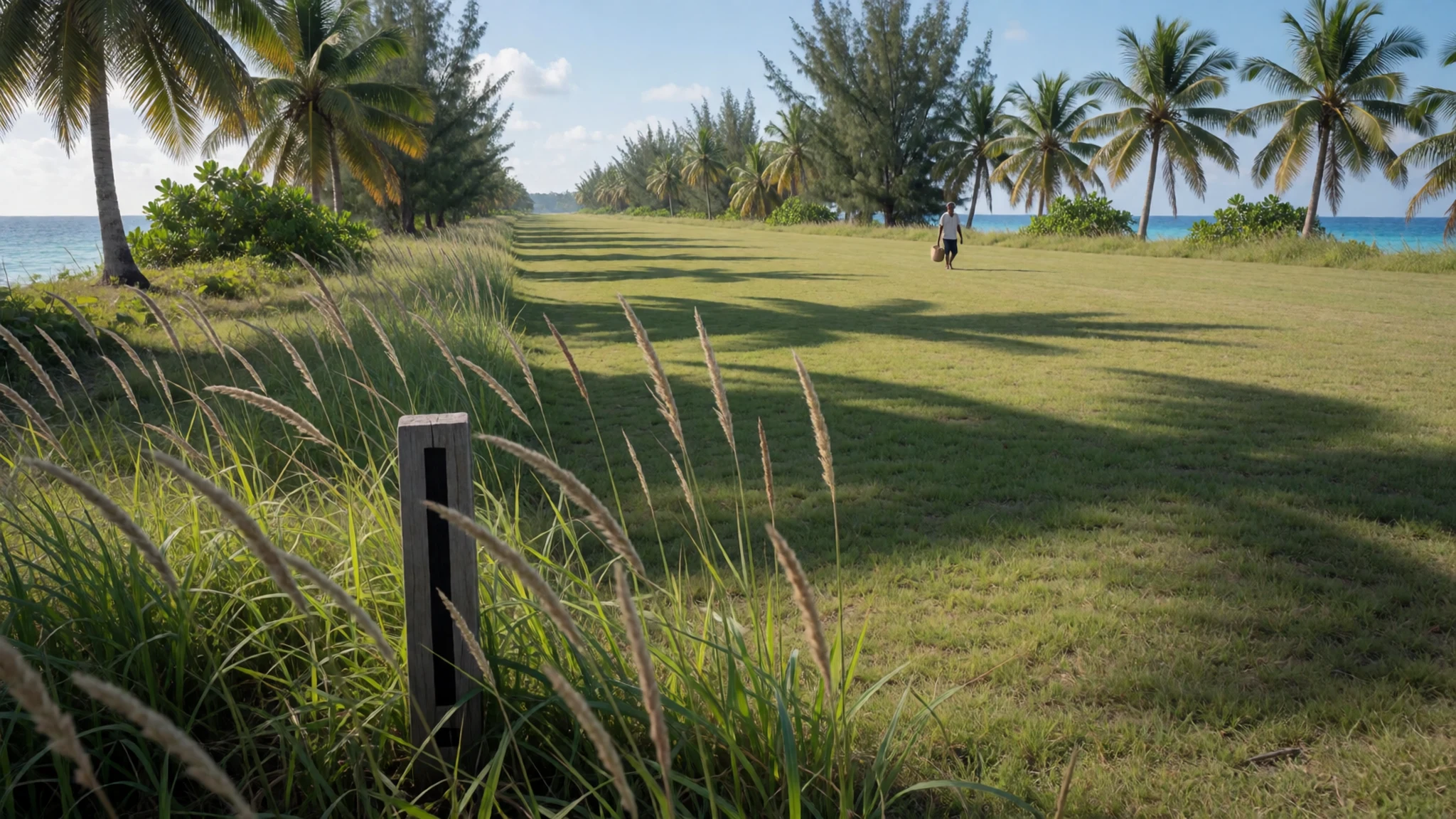
- Snorkelling on the fringing reef — Reef edge around the shore
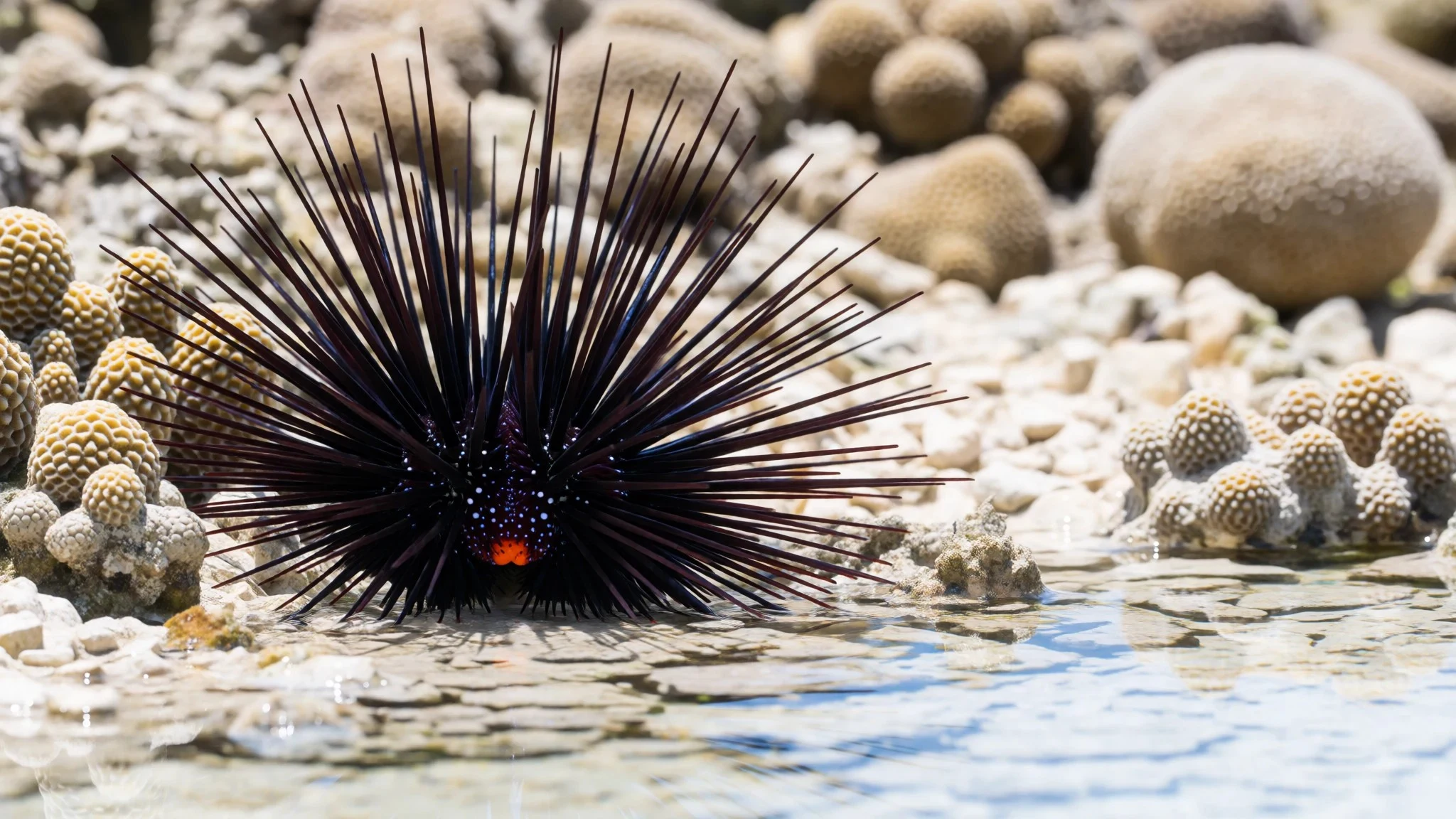
The reef around Mystery Island holds coral heads and small reef fish close to shore. Local guides run snorkelling sessions on ship days, and hire gear is usually available. Reef shoes help, since the edge has rubble and sea urchins, and the sun is strong on the back.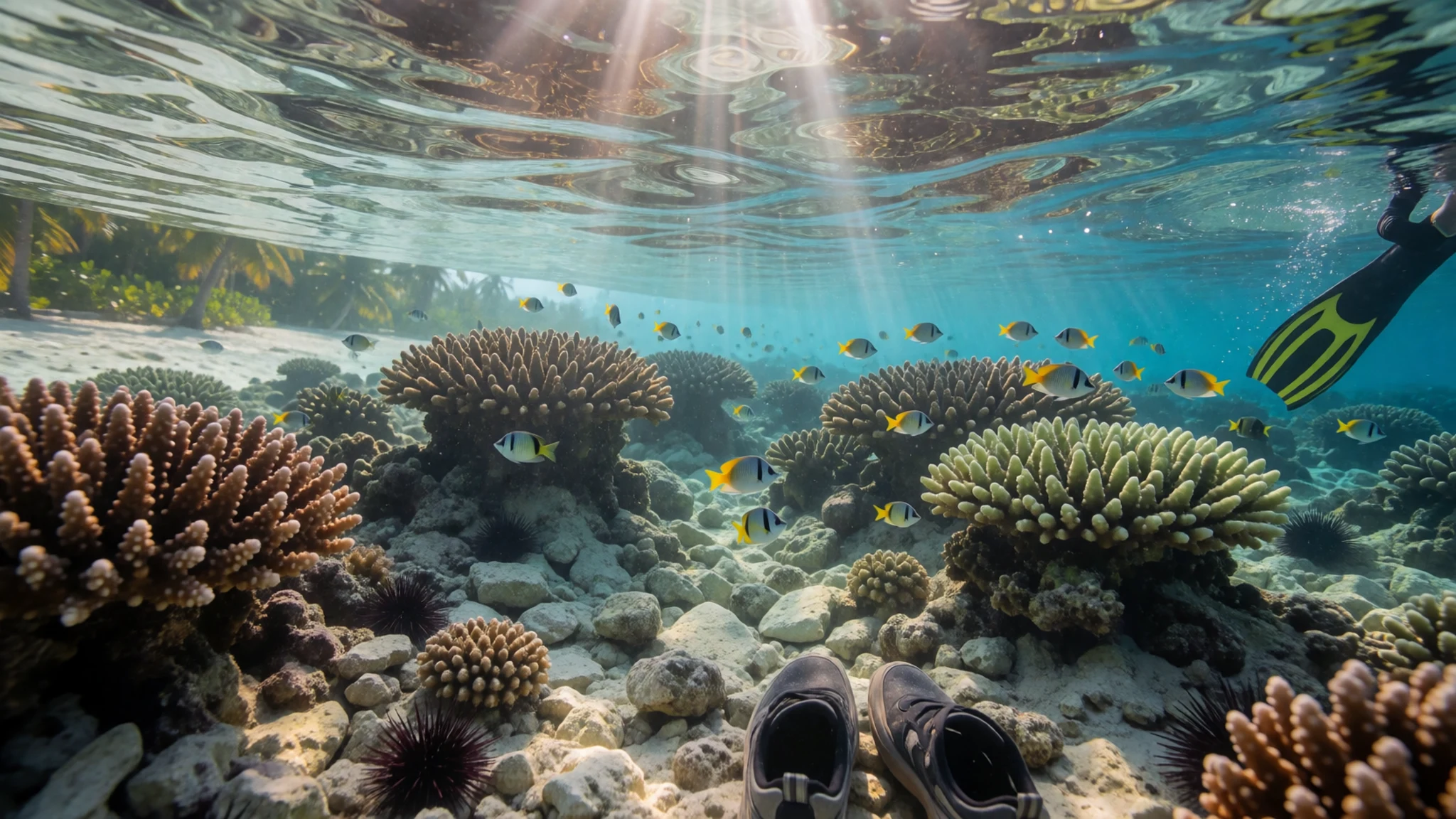
- Craft stalls under the trees — Shaded area behind the beach
On ship days families from Aneityum set up tables of woven pandanus work, carved wood, shell jewellery and printed cloth. Buying here goes straight to households. Cash in small notes is the easiest way to pay, and polite, light bargaining is fine.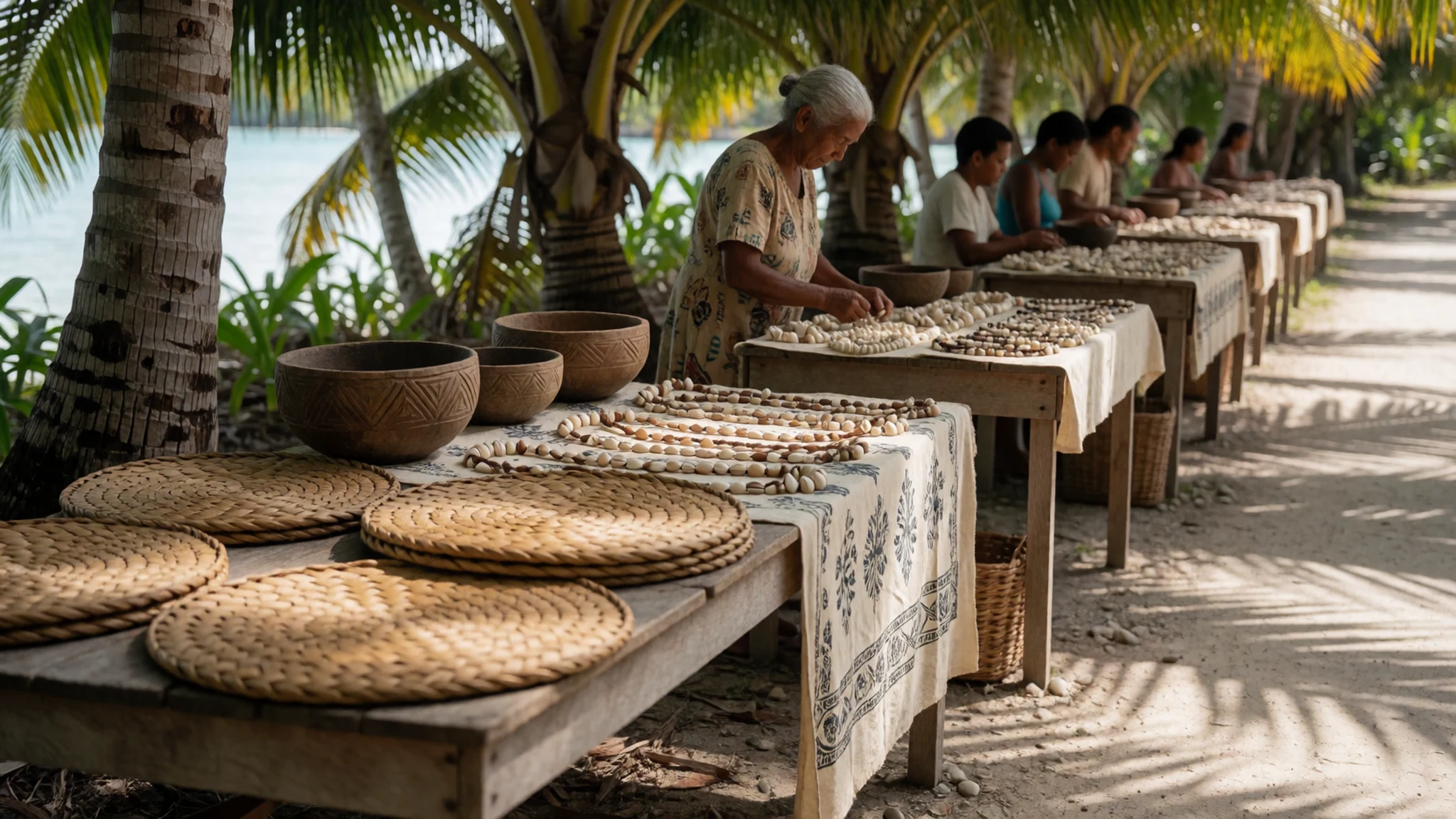
- The ship and the shore — Anchorage offshore
A cruise ship at anchor dwarfs the islet, and the view from the beach shows how small the island is by comparison. Tenders run back and forth all day. Walking the shore at the quieter end gives a more peaceful angle on it all.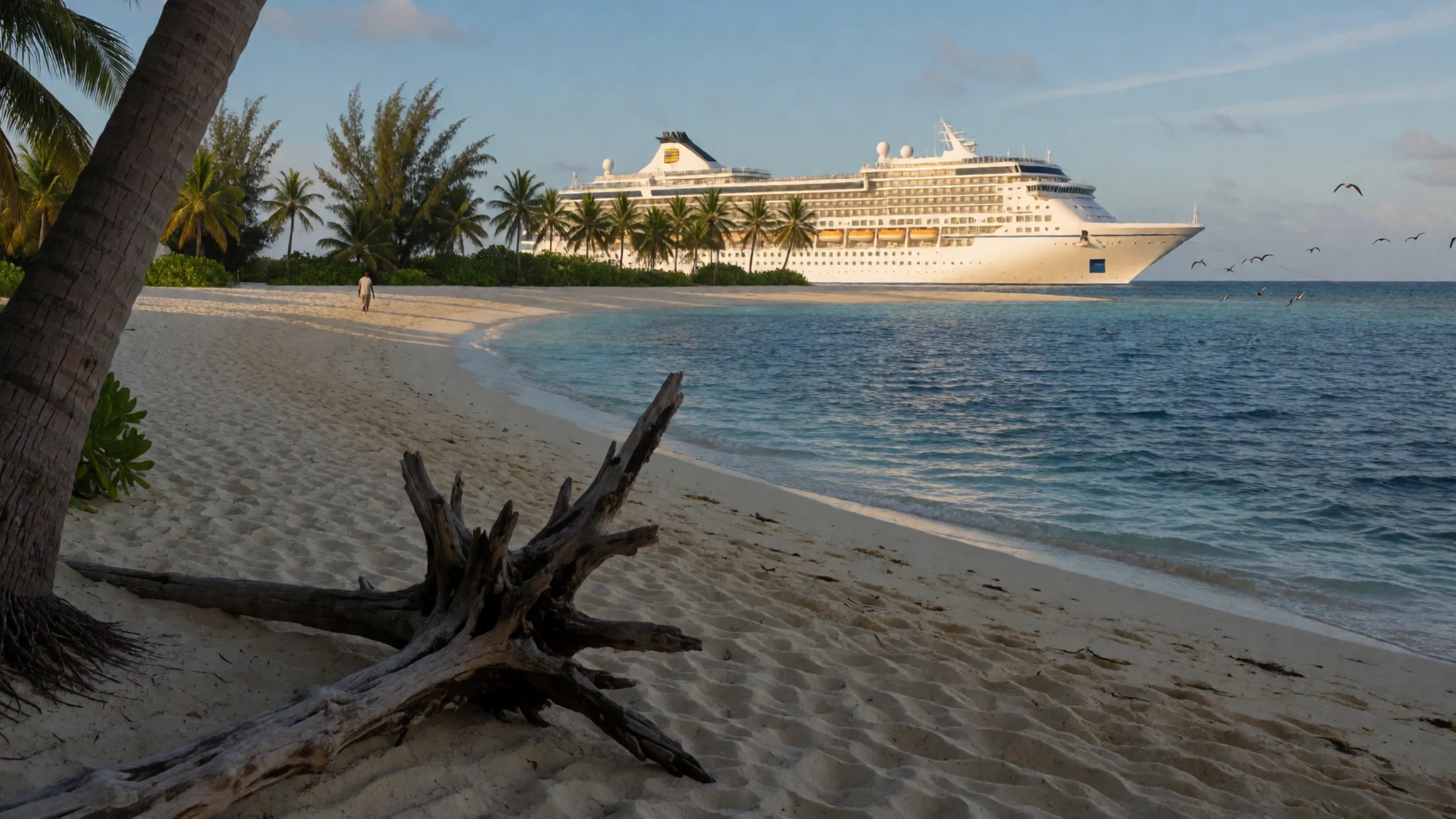
Culture
Mystery Island belongs, in custom, to people from Aneityum, and the rules of the day come from them rather than from the ship. Land and reef rights are held by families and clans, which is why stalls, tours and access are arranged through local committees and not freely by outsiders. Bislama, an English-based creole, is the shared language of Vanuatu, and many hosts also speak English; a few words such as "tank yu" for thank you land well. Christianity is central to life on Aneityum, with church shaping the week, so a ship that calls on a Sunday may find fewer activities running. Kastom, the body of traditional practice, still guides ceremony, gift exchange and respect for place, and some areas of the island or neighbouring coast can be restricted. Hosts will say where. Craft sales are a real part of household income, whether woven pandanus mats and baskets, carved wood or shell jewellery. Buying directly is welcomed, hard haggling is not, and asking about the maker is a good opening. There is no rubbish service beyond what hosts and the ship arrange, so litter matters on such a small island. Ask before photographing anyone, children especially, and follow your host's answer without argument.
What to wear
Mystery Island's wider region has a long tradition of woven dress. Across Vanuatu, skirts and mats of pandanus leaf and other plant fibres are made by hand, and ceremonial dress can include fibre skirts, decorated mats, feathers and shell ornaments. Such items are mostly worn for custom ceremonies and festivals rather than every day. The missionary era also shaped everyday clothing, and the loose, long-sleeved "island dress" in bright cotton prints is now a familiar women's garment across Vanuatu. Today on Aneityum people wear practical clothes for heat and work: T-shirts, shorts or lavalava wraps, printed cotton dresses and flip-flops. Sunday brings out the best outfit for church, with clean shirts for men and dresses for women and girls. On ship days, stallholders often wear brighter prints, and some add flower garlands. A visitor should pack for sun and sea: swimwear on the beach, with a sarong, shirt or shorts to cover up when walking among stalls or villages. A wide-brimmed hat, a long-sleeved rash vest and mineral sunscreen are worth more than fashion. Reef shoes protect feet from coral rubble and urchins at the water's edge, and sandals are enough on sand and grass. For any trip onward to Aneityum villages, shoulders and knees covered is the polite default, particularly near churches.
What to eat
- Lap lap — Villages on Aneityum, and sometimes served on ship days
Vanuatu's best-known dish is a pudding of grated root vegetable, often yam, taro or cassava, wrapped in leaves and baked in an earth oven, sometimes with coconut cream and meat or fish. It is dense, filling and mild.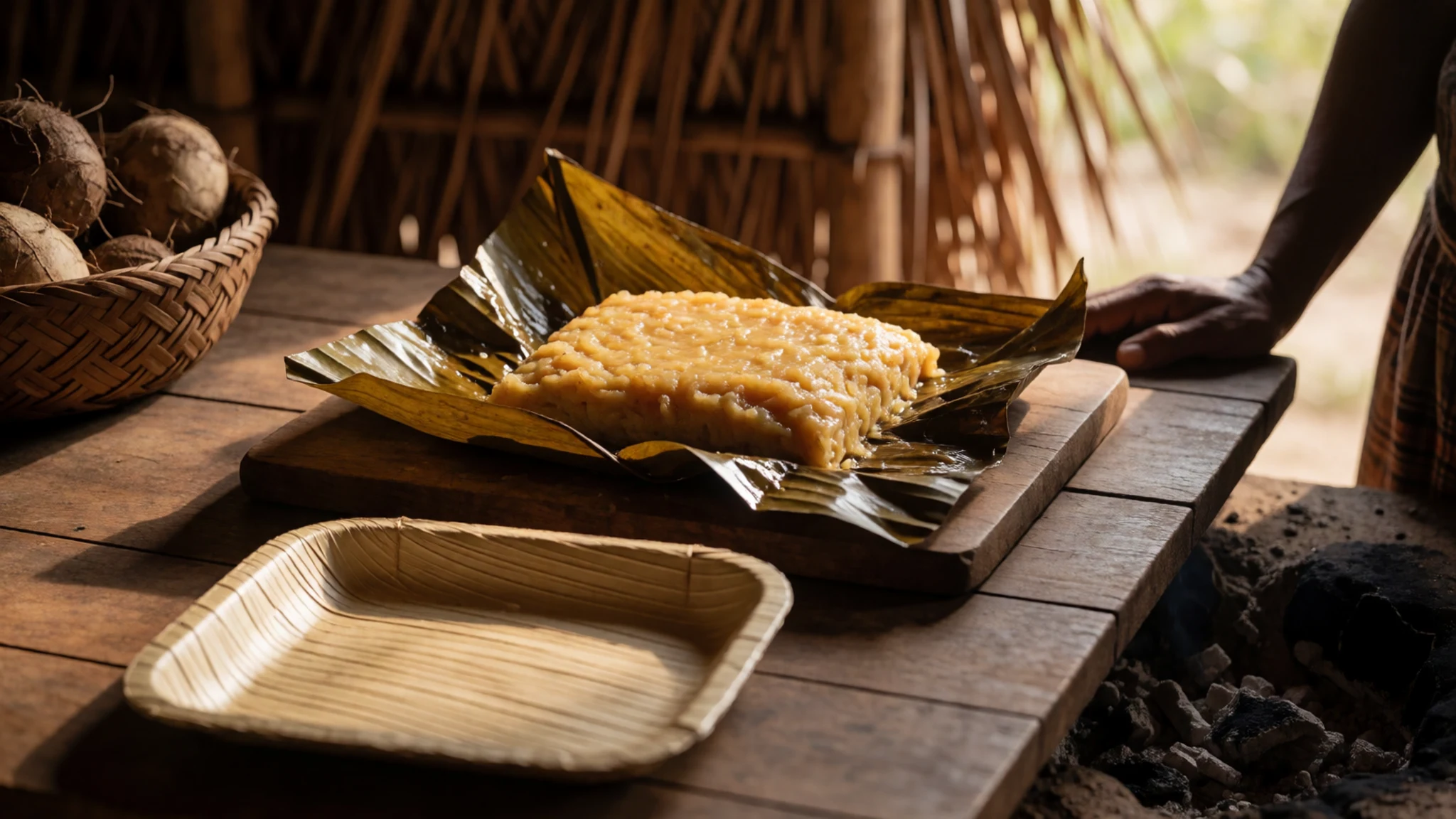
- Grilled reef fish — Beach grills on ship days and village kitchens
Fish from the reef or open water are grilled over open fire and served with root vegetables or rice. It is simple, smoky and fresh. Ask what the catch was, and whether it came from nearby, since some reef species are protected locally.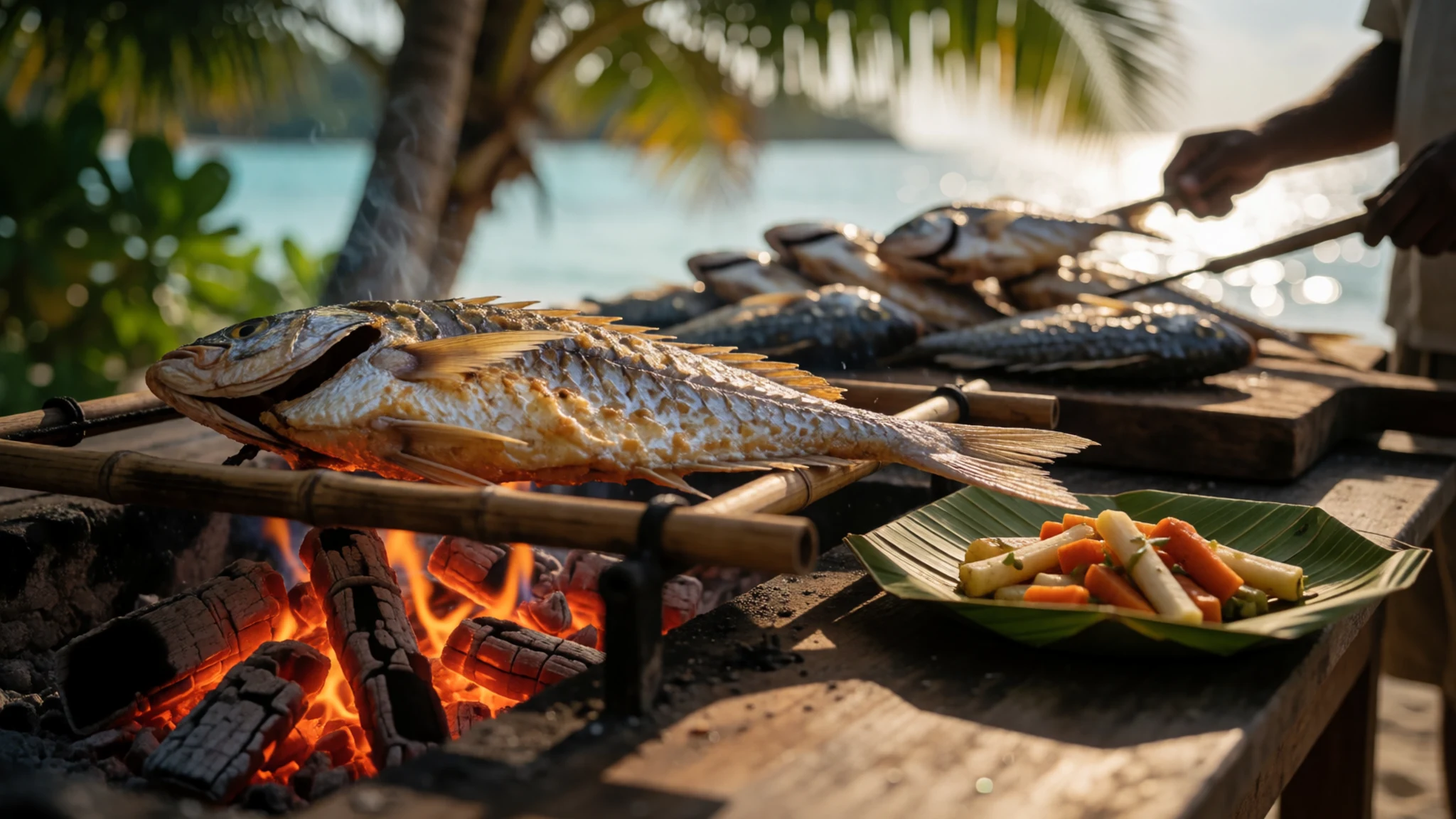
- Island cabbage with coconut cream — Village meals on Aneityum
Leaves from the island cabbage plant are cooked down in coconut cream, producing a soft, savoury green dish that comes alongside lap lap or fish. It is a staple of home cooking and rarely turns up on tourist menus. - Fresh coconut and tropical fruit — Stalls and carts near the beach
Drinking coconuts are cut open on request, and slices of pawpaw, banana or pineapple are sold when in season. They are the easiest, cheapest way to cool down on a hot beach day. Bring small notes. - Simboro — Village kitchens and community gatherings
Simboro is a Vanuatu parcel of grated taro or manioc rolled in a leaf with coconut cream and steamed or boiled. It is soft and a little sweet, often served at gatherings. Ask in a village rather than at a beach stall.
Plan it
Best time. May to October is the cooler, drier part of the year, with steadier breezes and less humidity. November to April is hotter, wetter and more humid, and falls in the Pacific cyclone season, so weather can change plans.
How long. 1
Getting there. Most visitors arrive by cruise ship and take a tender to the beach. Independent travellers can fly to Port Vila, then check Air Vanuatu or local operators for flights to Aneityum and a boat across; schedules are limited, so confirm well ahead.
Budget. low
Tips
- Bring small notes in the local currency for stalls, drinks and tips, as card use is unreliable
- Go in early and head to the quieter end of the beach before most tenders arrive
- Carry water and use a hat and sunscreen, since shade is patchy away from the palms
- Wear reef shoes for snorkelling, as the edge has coral rubble and urchins
- Check the cruise or operator timetable for the last tender back, and allow plenty of margin
Etiquette
- Ask before photographing people or entering roped-off areas
- Buy crafts directly from makers and bargain lightly
- Take all rubbish back with you
Nearby
Sources
- Wikidata Q31964864 (CC0)
- Wikipedia: Mystery Island (rev 1385914688) (CC BY-SA 4.0)
- Wikivoyage: Mystery Island (CC BY-SA 4.0)
- JustARandomEditor123, Carnival Adventure in Mystery Island (photo 01) (CC BY-SA 4.0)
- Dreizung, Inyeug 2022 02 (photo 02) (CC BY-SA 4.0)
- Dreizung, Inyeug 2022 03 (photo 03) (CC BY-SA 4.0)
- Dreizung, Inyeug 2022 10 (photo 04) (CC BY-SA 4.0)
- Dreizung, Inyeug 2022 11 (photo 05) (CC BY-SA 4.0)
- Dreizung, Inyeug 2022 12 (photo 06) (CC BY-SA 4.0)
- Dreizung, Inyeug 2022 13 (photo 07) (CC BY-SA 4.0)
- Dreizung, Inyeug 2022 14 (photo 08) (CC BY-SA 4.0)


Wildlife
- Long-spined sea urchin (animal)
The long-spined sea urchin is a spiky ball that lives underwater, rather like a pin cushion with hollow, needle-like spines. On Mystery Island, look for it along the rubbly edge of the shore. Its sting is only mildly venomous, yet it hurts if trodden on, so wear reef shoes and watch your footing. Enjoy it quietly from a respectful distance, ideally with a guide, and never touch or feed it.