Lopevi
Lopevi, Vanuatu
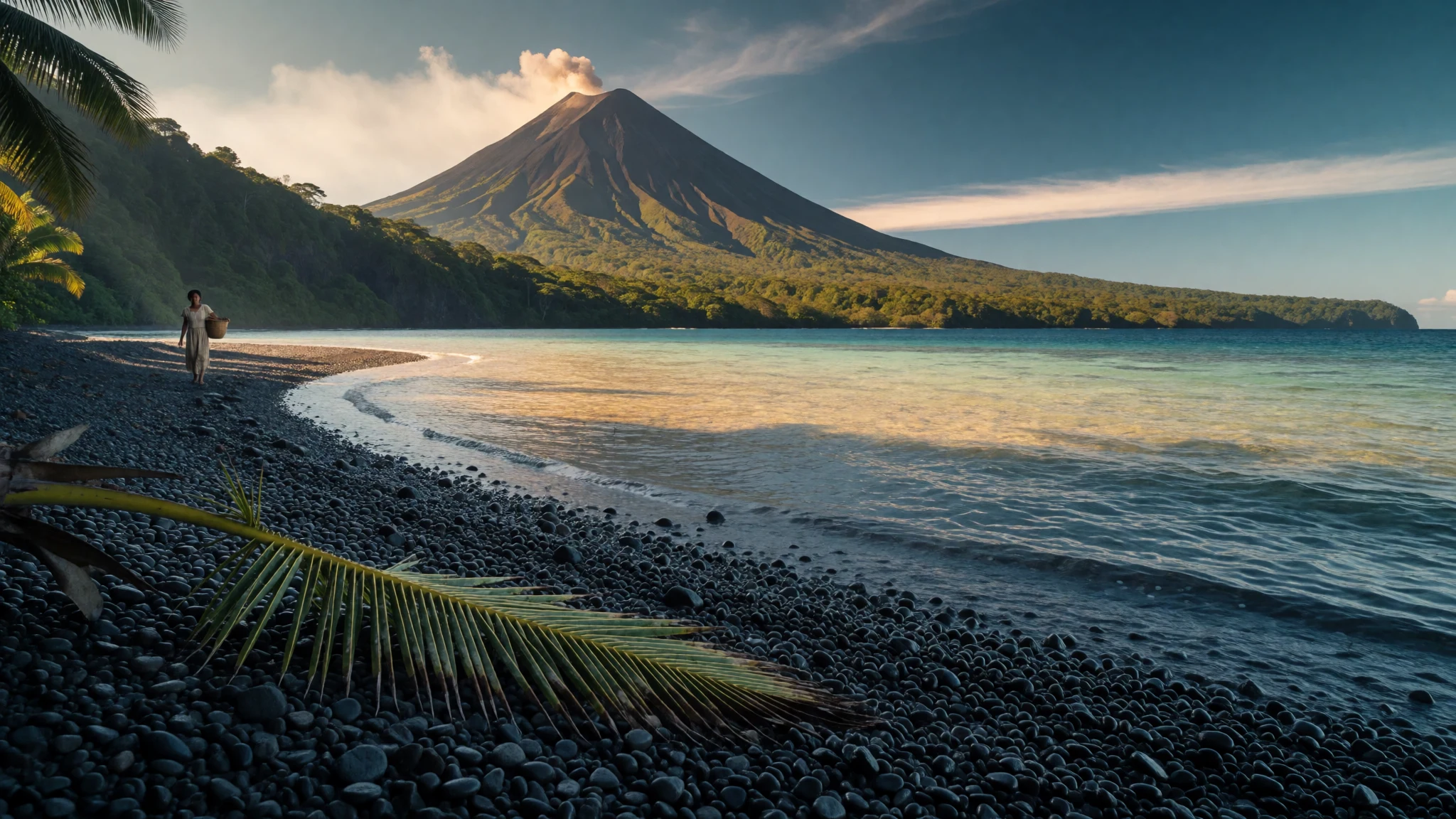
Lopevi is an uninhabited, smoking volcanic cone in Vanuatu, best admired from the shore of Paama alongside living island culture.
The place
Lopevi is an uninhabited volcanic island in Malampa Province, central Vanuatu, lying southeast of Ambrym and east of Paama. The whole island is a single cone, a near-symmetrical stratovolcano that climbs directly from the sea to 1413 m. There are no settlements, so Lopevi is a place seen rather than visited, usually from the coast of Paama on a clear morning. Cloud and haze often hide the summit, and the view is generally best early, before the day's weather builds.
The province around it is a study in contrasts. Malakula is large, forested and ridged, with mangroves, reefs and small offshore islands along its shores. Ambrym carries a vast caldera with active craters inside it. Paama is small and steep, a quiet island whose main spectacle is the view across the water.
Tourism here is thin compared with Efate or Espiritu Santo, which suits patient travellers and frustrates hurried ones. Flights on some routes operate only a few times a week, boats are informal, and bungalow owners often arrange transfers by truck. Visitors who plan ahead, keep the schedule loose and accept simple lodging find a part of Vanuatu where custom is lived rather than staged, and where a volcano on the horizon is simply part of the daily weather.
Its story
Lopevi's story starts deep underground. The island rides on the New Hebrides Plate, while the Australian Plate is forced down beneath it to the west. That sinking slab feeds the chain of volcanoes running through Vanuatu. Geologists also point to an odd gap in the earthquake record, with no tremors in a middle band of depth, which suggests the descending plate has broken and no longer forms one continuous sheet there.
Records kept since the nineteenth century list repeated eruptions, and the volcano has never really settled into long quiet. The island once had residents, who farmed its slopes. Because the danger kept returning, the community eventually left, with families resettling on neighbouring Paama and on Epi. Since then Lopevi has stood empty, its old gardens and paths left to the forest and the ash.
Today the mountain is watched by the Vanuatu Meteorology and Geohazards Department, which publishes alert levels for Lopevi and for Ambrym's craters. Those levels can change quickly, so a current bulletin is worth more than anything a guidebook or a friendly boat captain remembers. Hazards include sudden explosions, flying volcanic bombs, ash and gas, and landing on the island is not something to try casually. For people on Paama the cone is a familiar neighbour, a landmark that shapes the horizon and a reminder of why the island across the water is empty.
What to see
- Lopevi from Paama — Paama, Malampa
The classic way to see Lopevi is from the shore of Paama, where the cone rises alone from the sea. Go early, when the air is clear and the summit is more likely to show. Landing on the island itself is not advised, so treat the view across the water as the visit.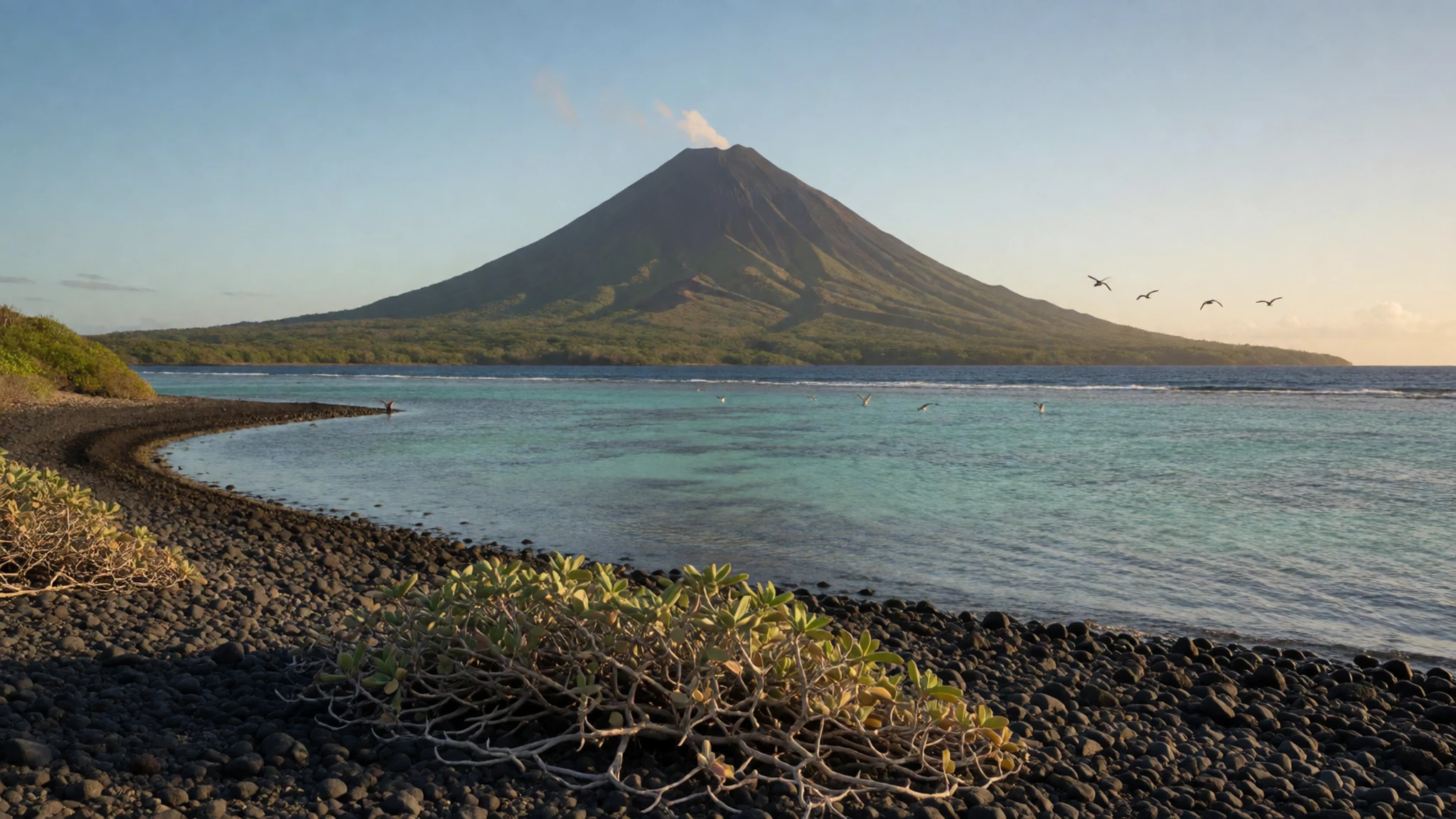
- Ambrym caldera — Ambrym, Malampa
Ambrym's interior is a wide volcanic bowl of black ash plains, deep craters and drifting gas, a stark contrast with the green coast around it. Walks start from several sides of the island. Ensure you are accompanied by a certified local guide and verify any active exclusion zones beforehand.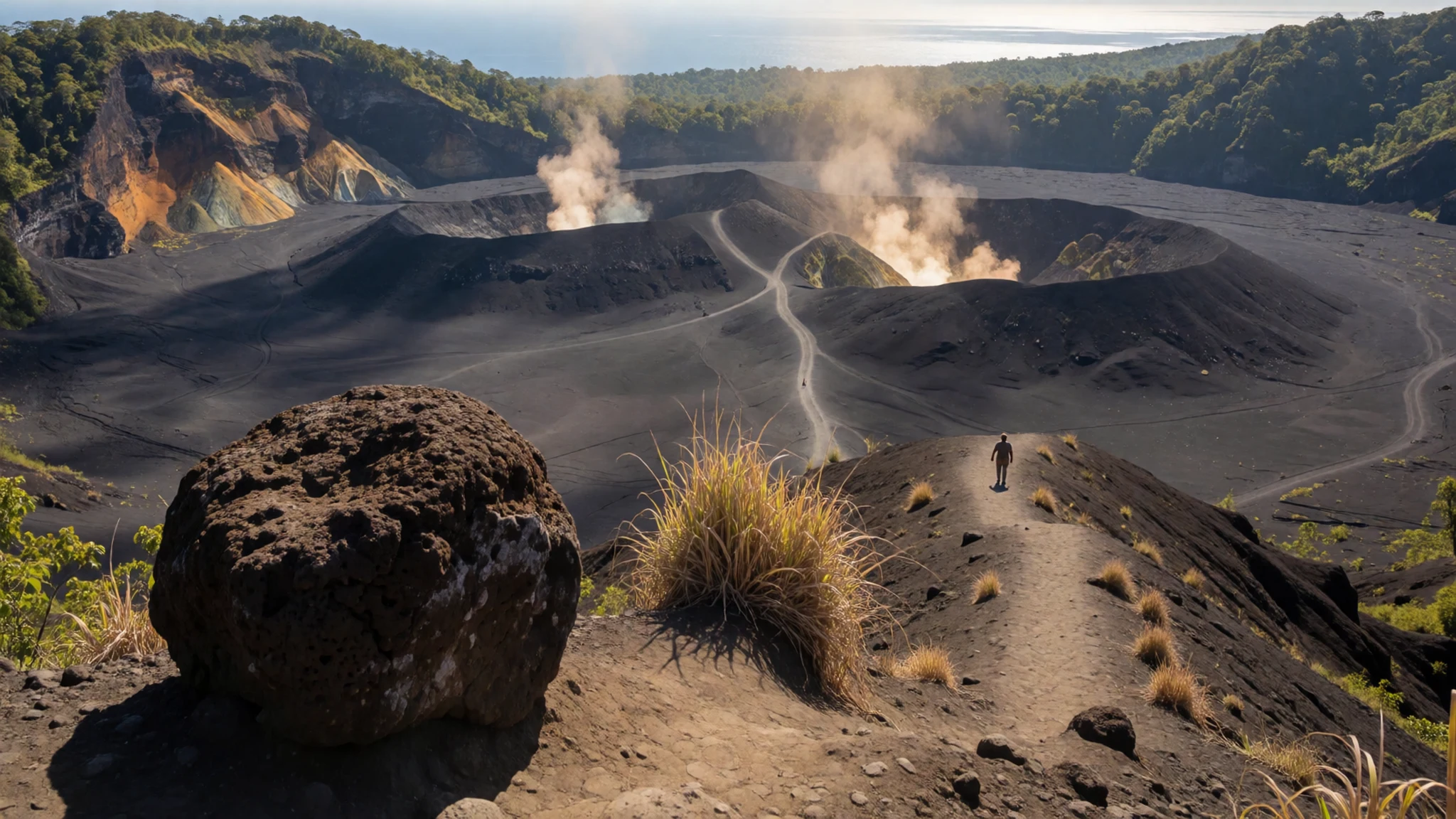
- Marum and Benbow — Ambrym caldera, Malampa
These two active centres sit inside the Ambrym caldera. The permanent lava lakes that once drew visitors vanished after the most recent major eruption, yet the volcano remains restless. Whether anyone may approach depends entirely on the alert level and exclusion zones in force that week.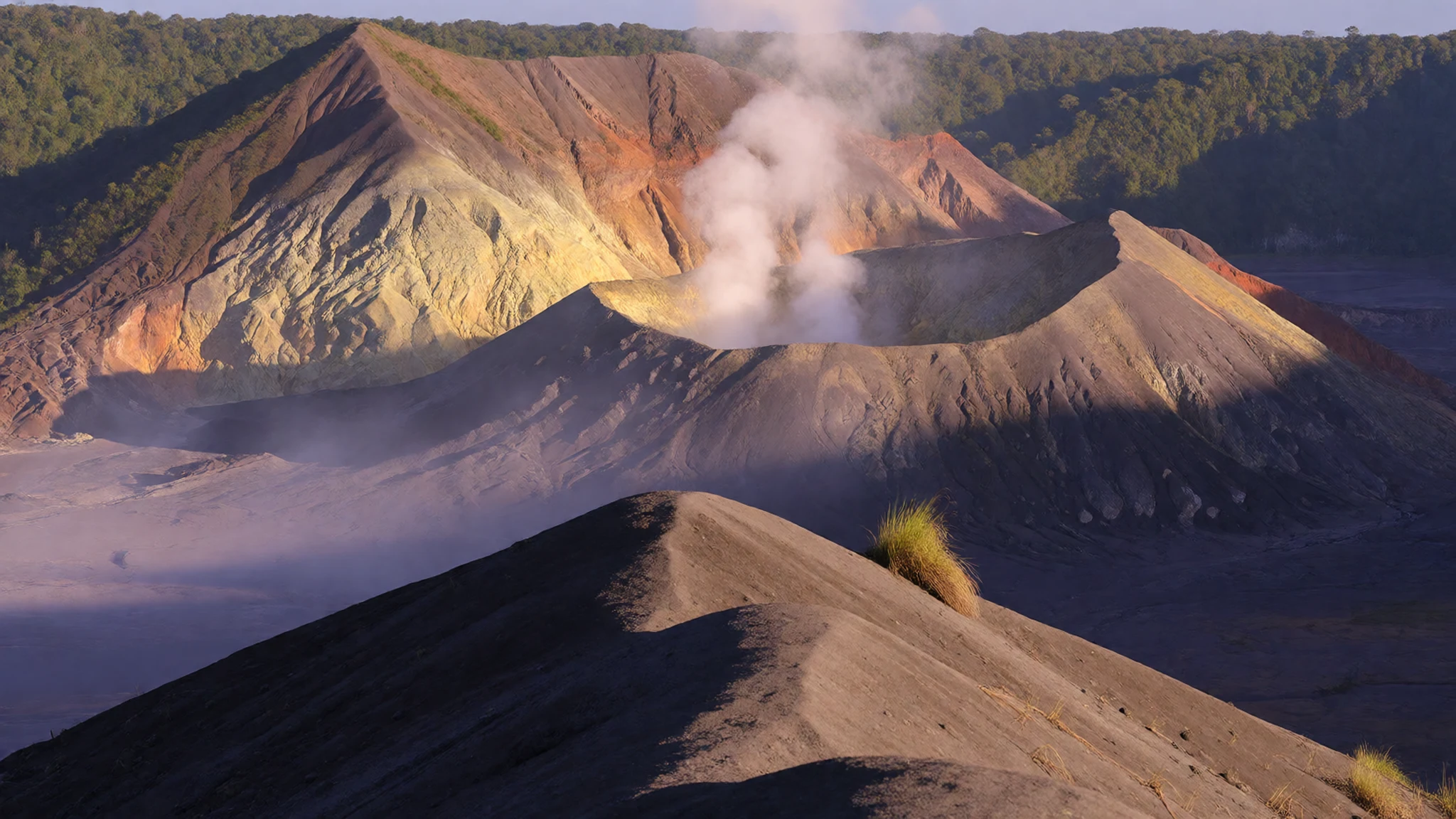
- Small Nambas villages at Rano and Vao — Off north-east Malakula, Malampa
Community-run visits on these small islands off Malakula share dance, cooking, craft work, sand drawing and storytelling, with the permission of the people involved. These are working communities, not stage sets, so go through a local guide or host and follow their lead on what may be photographed.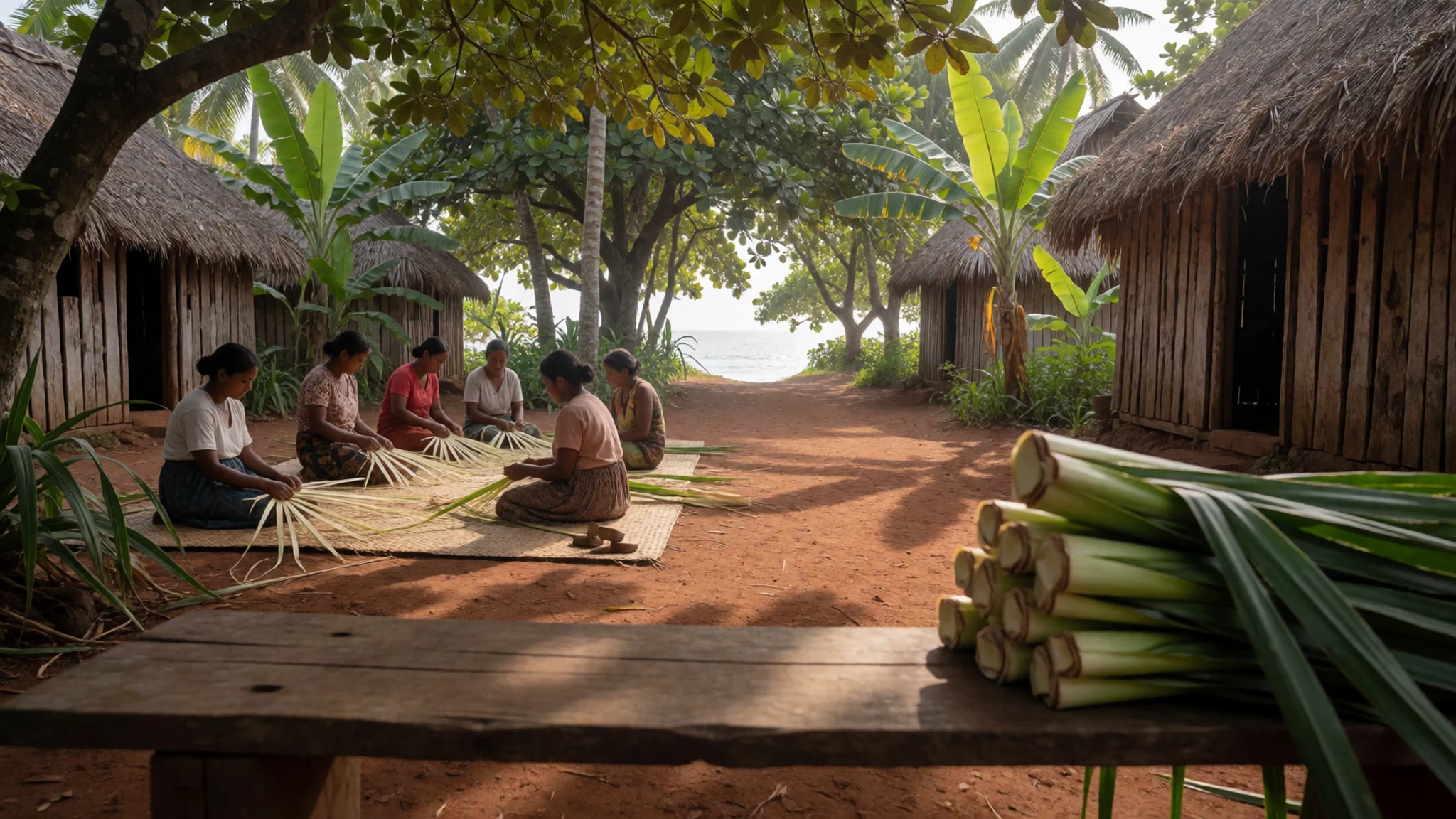
- Maskelyne Islands — South-east Malakula, Malampa
Low reef-fringed islands off the south-east coast of Malakula, known for canoe traditions and for seagrass where dugongs feed. Boat transfers are arranged locally, usually via Lamap. Visit with a host from the islands, since sea access and customary rights both matter here.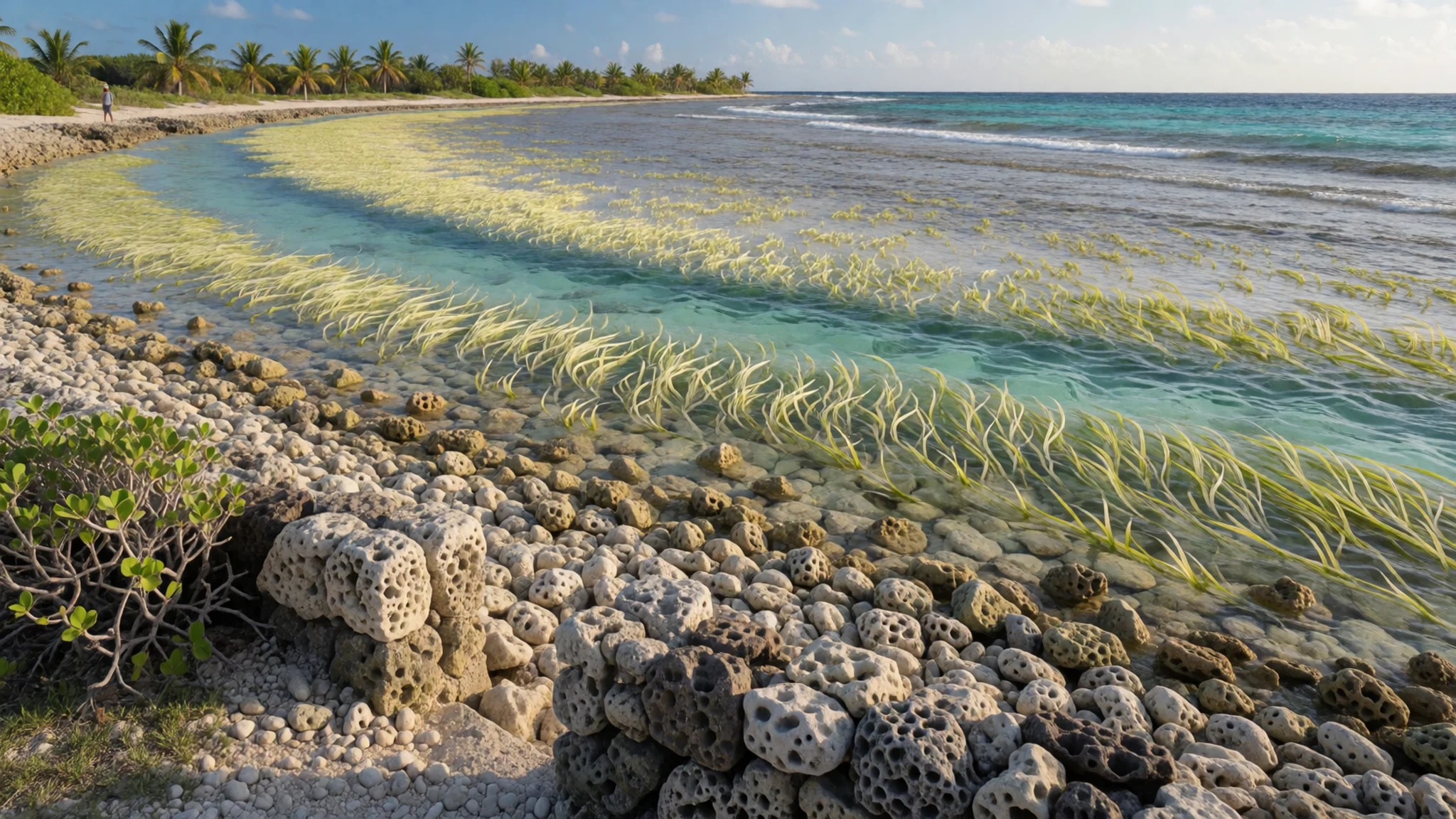
- Pialo Spirit Cave — Near Tenmaru, north-west Malakula
A guided site near Tenmaru in north-west Malakula, where hand markings on the rock, roosting bats and local stories come together in one visit. It makes a good cultural stop for anyone crossing Malakula, but it needs a local guide, who will explain what may be photographed and what should be left alone.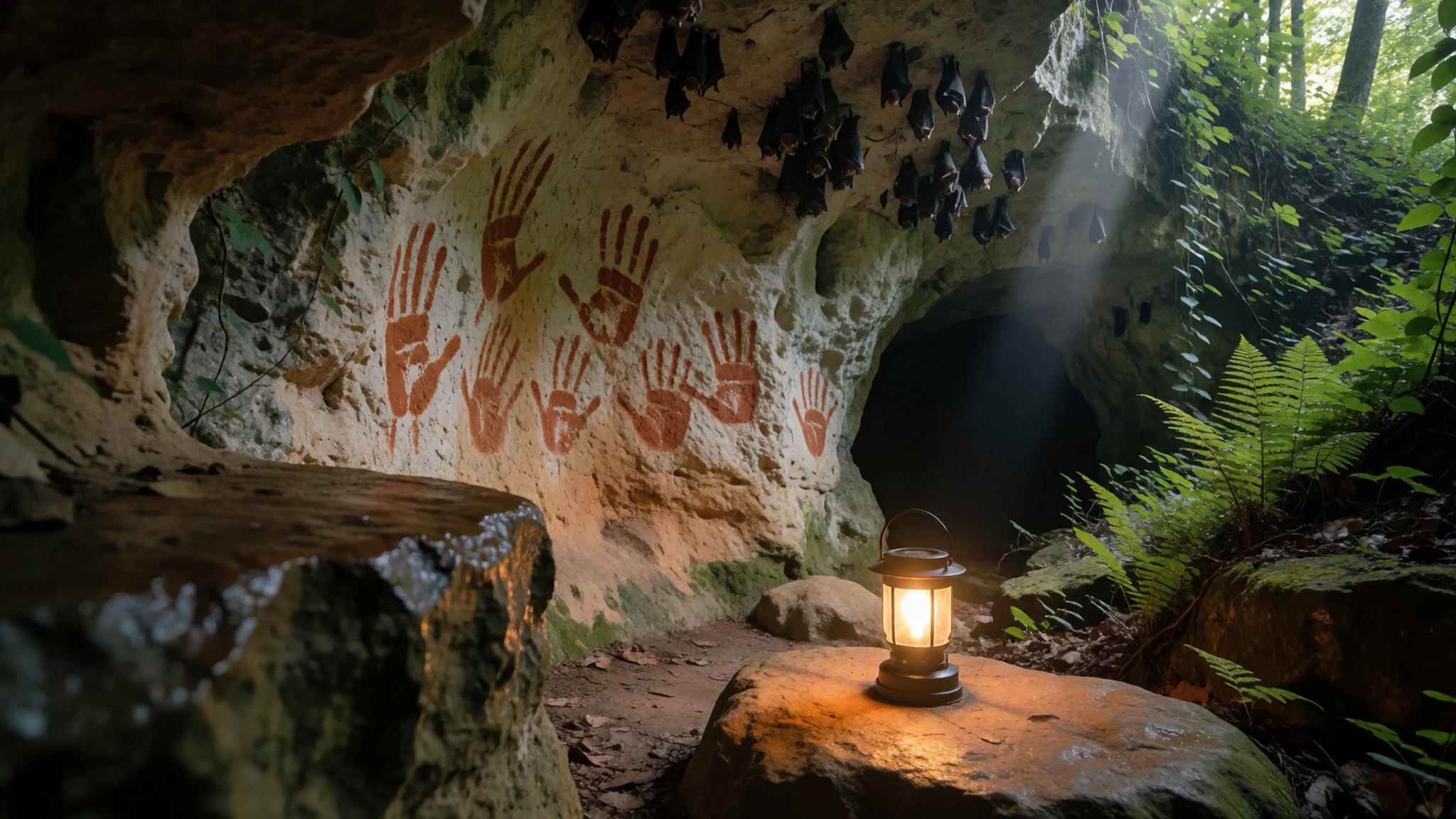
Culture
Lopevi has no residents now, but the surrounding province of Malampa holds some of Vanuatu's most active custom, known as kastom. On Malakula the Small Nambas and Big Nambas peoples keep ceremony, dance, carving, gardening and social rank at the centre of community life. Ambrym is known for rom dancing, carved masks, slit drums called tam-tams, wood carving and ceremonies in which men take successive grades.
The key point for visitors is that these are not shows put on for tourists. These are living villages, not ruins; specific ceremonies, holy sites, and certain items stay off-limits to visitors. Cultural tours at Rano and Vao are arranged with the consent of the people involved, and they work best when treated as an invitation rather than a service.
Kava, a mildly sedating drink, is part of social and ceremonial life and is taken at a nakamal, the gathering place. Rules about who may enter, where guests sit and when photography is acceptable differ between communities, so the host's instructions come first. Because kava dulls the senses, it is wise not to drive, swim or tackle a hard night walk after a large bowl.
Before photographing any person, ceremony, carving, grave, sacred stone or ritual area in Malampa, ask first, and accept a no without argument.
What to wear
Around Lopevi, traditional dress is tied to the kastom of Malakula and Ambrym. Men of the Small Nambas and Big Nambas peoples have historically worn wrappers of plant fibre and bark, with women in woven pandanus and grass skirts and plaited mats. Ambrym ceremonies bring out carved masks and costumes of leaf and fibre. These are mostly worn at dances, grade-taking events and other ceremonies, not on an ordinary weekday.
Everyday clothing in the islands is simple and practical. Women commonly wear the loose, brightly printed island dress, often with a cotton cover for church on Sundays. Men wear shirts, shorts or trousers, and many people wear rubber sandals or go barefoot in the village. Tee-shirts, caps and secondhand clothing from towns are common, and Sunday best is noticeably smarter than the working week.
Visitors should dress for heat, humidity and modesty. Light, quick-drying cotton or linen works well, with shoulders and knees covered in villages and at ceremonies; swimwear belongs on the beach or boat only. A sun hat, a light rain jacket and reef shoes for boat landings are useful. For volcano walks, sturdy closed boots matter because ash and cinder are rough and loose, and a scarf or buff helps with dust and gas. Carry a dry bag for boat rides.
What to eat
- Laplap — Village feasts and island bungalows, by prior arrangement
Vanuatu's national dish: a paste of pounded root crops or banana, layered with coconut cream, wrapped in leaves and cooked in an earth oven. It is dense, mild and filling, and is best eaten at a village feast or arranged ahead with a bungalow host.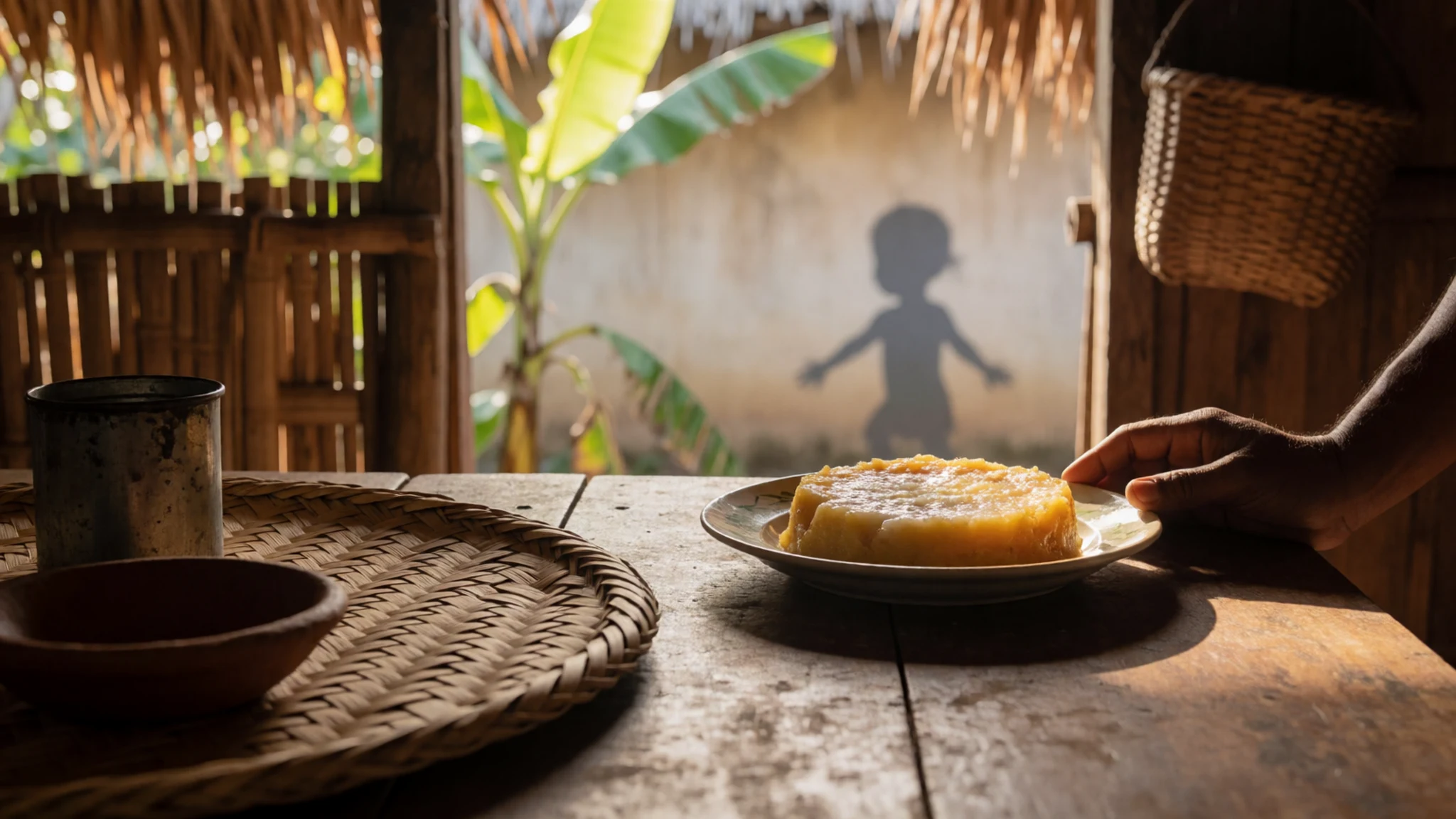
- Island cabbage — Home-cooked meals at bungalows and in villages
A leafy green cooked in coconut milk, soft and slightly slippery, often served alongside laplap or fish. It is an everyday vegetable rather than a special-occasion dish, and it tastes of the garden it came from.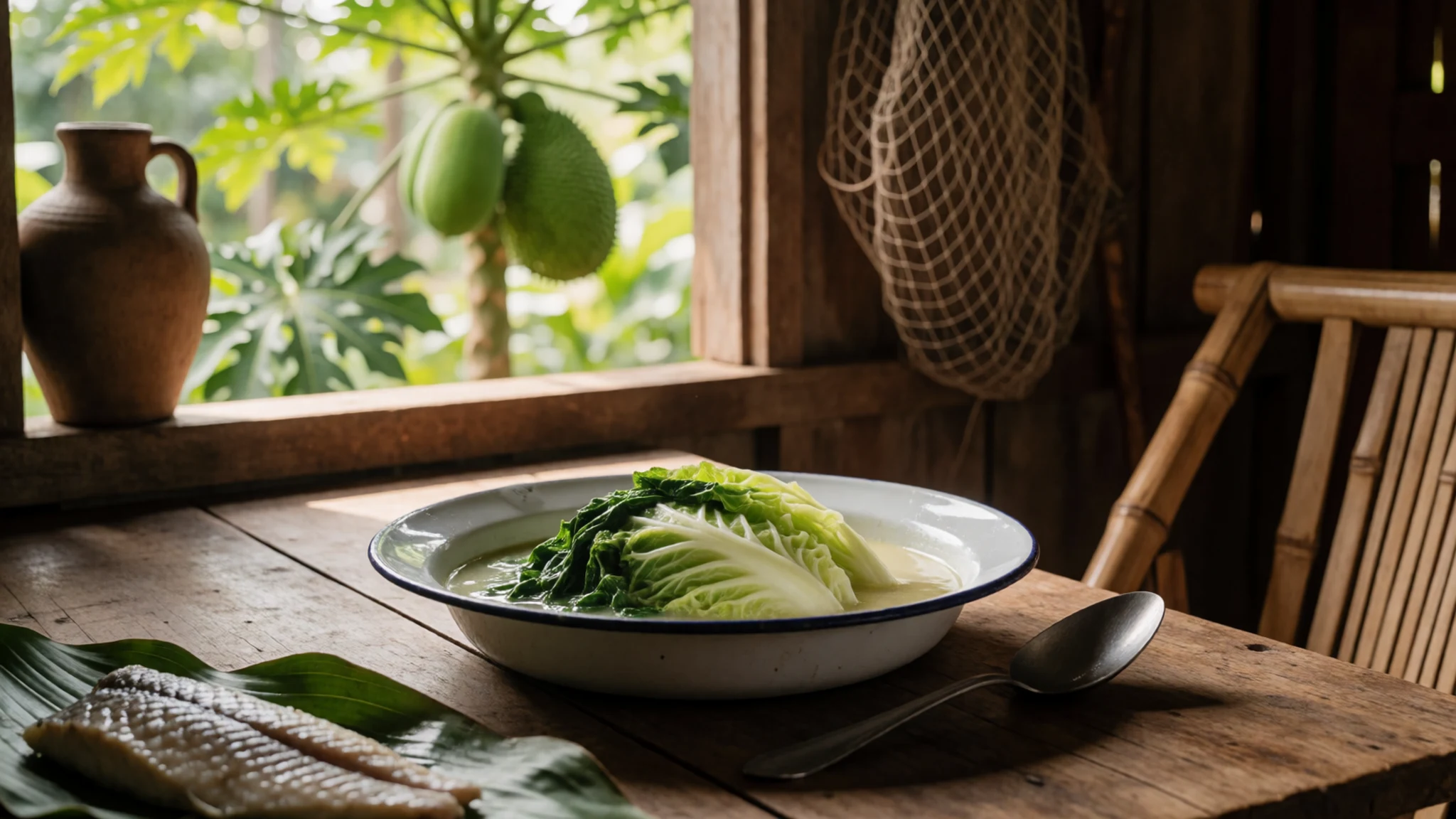
- Fish and shellfish in coconut cream — Coastal villages and Lakatoro eating places
Reef fish, shellfish and sometimes crab are cooked simply, usually with coconut milk, or grilled over a fire. What arrives depends on the day's catch and the weather. Hosts can plan around notice, so ask when booking. - Roast root crops — Village kitchens and bungalow meals
Yam, taro and manioc are baked or boiled and eaten as the staple, often with a little greens and meat. They are plain, starchy and satisfying after a long walk, and they show how closely island meals follow the gardens. - Kava at the nakamal — A village nakamal, with the host's invitation
Kava is a ceremonial and social drink, earthy and numbing on the tongue. It is drunk in the evening at a nakamal. Follow the host on where to sit and when to be quiet, and take it slowly, since it is strongly sedating.
Plan it
Best time. May to October is the drier, cooler part of the year in Vanuatu, with clearer skies for seeing Lopevi from Paama and easier walking. The wetter, hotter months from about November to April bring more cloud, heavy rain and the risk of cyclones, which can disrupt boats and flights.
How long. 3–4
Getting there. Fly to Port Vila, Vanuatu's main international gateway, then take a domestic Air Vanuatu flight to Norsup on Malakula or Craig Cove on Ambrym. Paama has a small airstrip, but scheduled service there can be irregular, so confirm locally. The last leg is often by boat or truck, arranged through your host. Lopevi itself is viewed from Paama or from the sea.
Budget. mid
Tips
- Check the Vanuatu Meteorology and Geohazards Department alert level before any volcano trip, and never enter an exclusion zone.
- Flight schedules are thin and change often, so reconfirm shortly before travel and leave a spare day before any international departure.
- Book bungalows and meals ahead and tell hosts your arrival day, since remote places may not have extra food.
- Carry safe drinking water and treat any uncertain supply, because many villages rely on rainwater tanks and springs.
- Bring cash, as card facilities are limited outside the larger towns.
Etiquette
- Ask before photographing people, ceremonies, carvings, graves or sacred places.
- Follow your host's guidance at a nakamal and in any village.
- Arrange cultural visits through local guides rather than walking into villages unannounced.
Nearby
Sources
- Wikidata Q1869839 (CC0)
- Wikipedia — Lopevi (CC BY-SA 4.0)
- Wikivoyage — Malampa (CC BY-SA 4.0)
Wildlife
- Dugong (animal)
The dugong is a gentle sea cow: a marine mammal that grazes underwater meadows much as a cow grazes a field. It belongs to a small group that also includes manatees, and its nearest modern relative, Steller's sea cow, was hunted out of existence long ago. The readings place dugongs on the seagrass around the Maskelyne Islands, off Malakula's south-east coast, though they give no season or hour. Watch from a respectful distance, stay quiet, go with a local guide, and never feed them.