Tanna
Tanna, Vanuatu
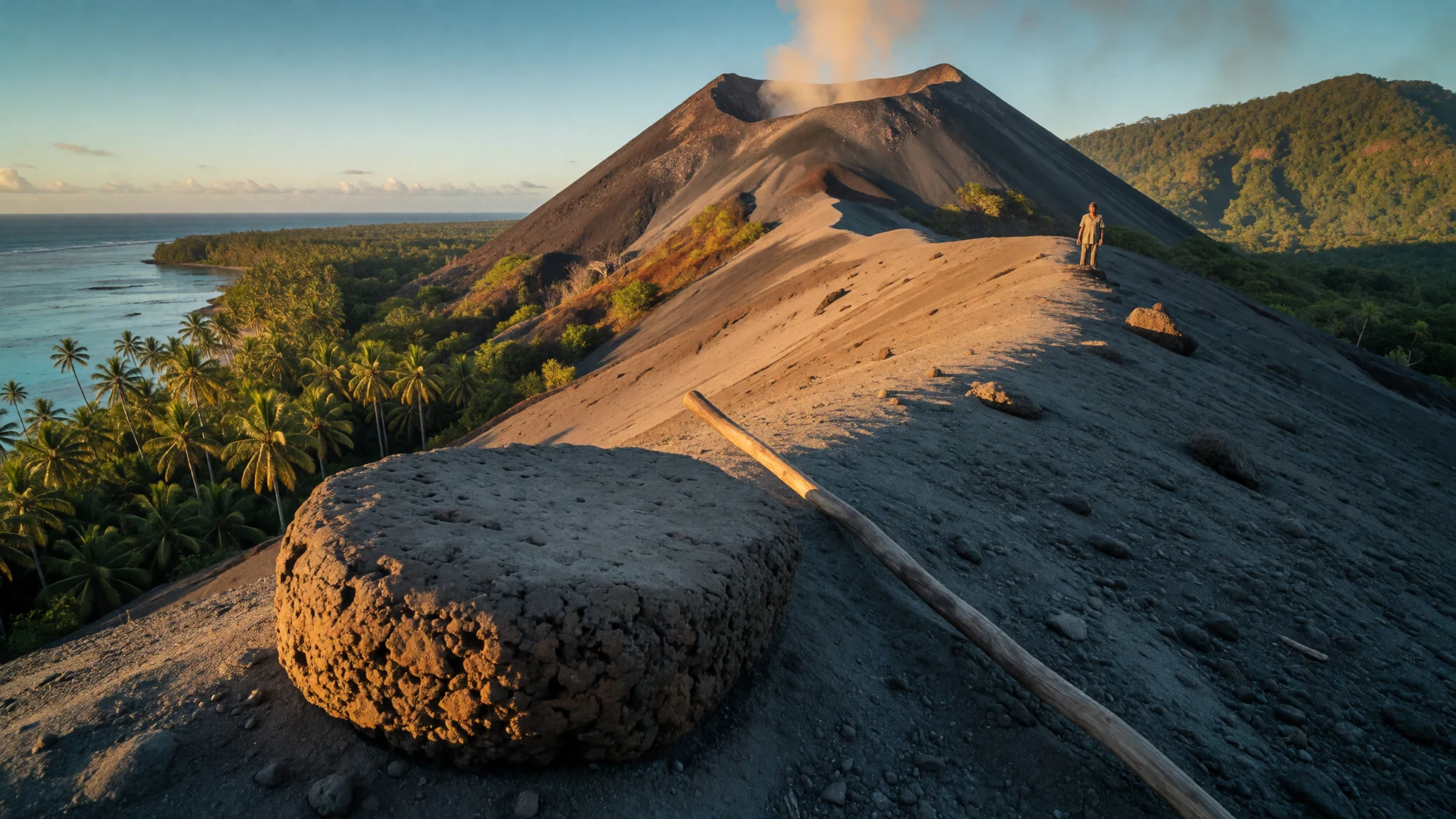
Tanna pairs a volcano that erupts every few minutes with villages still living by their own customs.
The place
Tanna lies in southern Vanuatu, south-west of little Aniwa, with Erromango to the north and Aneityum to the south. It is the main island of Tafea Province and home to about 28,800 people, almost all of them Melanesian. Five indigenous languages are spoken here, and some are among the most widely used in the whole archipelago. At about 40 km long and 550 square kilometres in area, the island is big enough to hold quite different landscapes: a volcanic east, a high forested interior with Mount Tukosmera in the south, black-sand shores on the north-east coast and coral-fringed bays elsewhere. The soil is fertile, producing kava, coffee, coconut and many fruits and vegetables, and gardens are visible almost everywhere.
Most visitor activity falls in two areas. White Sands, in the east, is the gateway to Mount Yasur, the active volcano on the south-east coast. White Grass, further west, has the snorkelling spots and the blue holes. Lenakel, on the west coast, is the largest town, with the provincial centre at Isangel close by. Away from these places the roads are rough, transport is mostly shared pick-up trucks, and a day's plan can change with the weather. Tanna has featured in documentaries for years and has long drawn anthropologists, but daily life is still organised around gardens, villages and kastom, the customary way of doing things.
Its story
People first settled Tanna about 400 BC, Melanesians arriving from nearby islands and building a society of gardens, ceremonial grounds and territories linked by exchange. European contact began in 1774, when James Cook saw the glow of Mount Yasur from the sea and brought HMS Resolution into an inlet on the south-eastern tip, which he named Port Resolution after the ship. He found several thousand people around the bay, with large plantations of sugar cane, plantains, yams and fruit trees. Cook made a show of his firepower to secure a landing, then traded trinkets and dogs for timber, water and food. The exchange was not peaceful: one islander was wounded by Cook and another killed by a marine.
Whalers became regular callers in the nineteenth century, and traders and missionaries, mostly Presbyterian, followed. Tanna's people held on to their customs more firmly than those of many neighbouring islands, and fewer islanders are Christian here than elsewhere in Vanuatu. That stubbornness shaped the island's modern reputation. The John Frum movement grew here, built around the story of a spirit who appeared at night at Green Point beach and told people to return to kastom. Outsiders label it a cargo cult; many islanders treat it as a living faith and a way of keeping control of their own affairs. The island's land has changed too: Lake Siwi, in the east, once burst its banks after exceptionally heavy rain and swept down to Sulphur Bay, destroying a village without loss of life.
What to see
- Mount Yasur — White Sands, east coast
Mount Yasur, on the south-east coast, is an active volcano that erupts every few minutes, and its glow once drew Cook ashore. Visits are usually made around dusk, when explosions throw lava against the dark sky. Only local guides may lead visitors, and access can be restricted when activity rises, so follow your guide's judgement.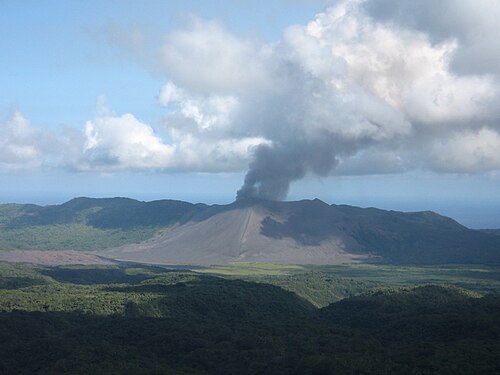
- Blue Holes and Blue Cave — White Grass area, south-west
Near White Grass, Tanna has two sites called Blue Hole and a larger sea cave known as Blue Cave. A blue hole is a flooded marine sinkhole, and these are good for snorkelling in clear water. Enter carefully and never stand on the coral, which breaks easily and takes years to recover. - Louniel Beach — North-east coast
Louniel Beach is a black-sand beach lined with palms on the north-east shore. The dark volcanic sand is a good place to see how the island's geology meets the sea, and it is quieter than the volcano area. Currents can be strong off open shores, so ask locally before swimming. - Port Resolution — South-east tip
Port Resolution is the south-eastern inlet where Cook anchored in 1774 and named the bay after his ship. Today it is a small settlement with a sheltered shoreline, close to Mount Yasur. It suits a slow half day of walking, talking with villagers and seeing steam and volcanic ground near the coast. - Lenakel — West coast
Lenakel is the island's main town on the west coast, and the most practical stop for supplies, eating and watching local life. The waterfront and market give a good picture of everyday Tanna. There is no proper harbour on the island, and boats usually moor here when they call.
Culture
Tanna is one of the places in Vanuatu where kastom, the customary way of life, still works as a daily framework rather than a performance for visitors. The population is almost entirely Melanesian, and several higher villages are known as kastom villages, where modern goods are limited, men wear nambas (penis sheaths), women wear grass skirts, and children do not attend public school. The anthropologist Joël Bonnemaison, who studied the island closely, linked this resistance to change to a distinctive way of understanding space and time. Land, ancestors and ceremonial grounds are bound together, which is why access to villages and sites is arranged through local people.
The island is also the centre of the John Frum movement, which began with a spirit said to have appeared at Green Point and urged a return to kastom. Dances and festivals, and the evening gatherings at the nakamal, the village meeting ground where kava is drunk, carry much of the island's social life. Five languages are spoken, with Bislama as the common tongue, and a few words of greeting are usually met with warmth. Visits to kastom villages are normally arranged through a guide, with any payment or gift agreed beforehand. Ask your guide or a village elder before photographing people or ceremonial places, and follow their lead on where you may walk or sit.
What to wear
Traditional dress on Tanna is made from plant fibres. In kastom villages men wear the namba, a penis sheath, and women wear grass skirts of dried leaf or fibre, sometimes with woven bands, feathers and body paint added for dances and ceremonies. These are worn for festivals, exchanges and when welcoming visitors, and in the kastom villages they remain everyday clothing for some people.
Elsewhere on the island, people dress much as in the rest of Vanuatu. Women often wear the loose, long island dress in bright printed cotton, a style introduced in the missionary era, while men wear shorts or trousers with shirts and T-shirts. In Lenakel and at church on Sundays, people tend to dress neatly and modestly, and swimwear belongs on the beach only.
For visitors, pack light cotton or quick-dry clothing that covers shoulders and knees, which suits both the heat and local modesty. Bring a hat and sunscreen, and a rain jacket in the wetter months. Closed shoes with grip are best for the ash slopes of Mount Yasur and muddy village tracks, while sandals or reef shoes help at the blue holes. Do not dress up in nambas or grass skirts as a costume.
What to eat
- Laplap — Village feasts arranged through a guide, and some Lenakel eateries
Laplap is the island's celebratory dish: grated root crops such as yam, taro or manioc, mixed with coconut cream, wrapped in leaves and baked in an earth oven with hot stones. It is dense, mild and filling, and is usually served with meat or fish. - Kava — Village nakamal in the evening, and kava bars in Lenakel
Kava is a root drink, pressed and strained into a cup and drunk at dusk at the nakamal. It tastes earthy and numbs the lips and tongue. Visitors are often welcome to try a small cup, and heavy regular use carries real health risks. - Tanna coffee — Roadside stalls, village stores and small cafés on the east coast
Coffee grows well on the fertile soil of Tanna, and small-scale local growers sell it roasted or as green beans. A cup is usually strong, smooth and a little earthy, and the bags make useful gifts to carry home. - Island fruit and coconut — Lenakel market and roadside stalls
The fertile island produces many fruits and vegetables, sold by the heap. Expect bananas, papaya, citrus, plantains and fresh coconuts opened with a bush knife, drunk for the water and eaten for the soft flesh. Cheap, fresh and good for a hot day. - Grilled fish with root vegetables — Seaside eateries in Lenakel and along the east coast
Fish caught along the coast is often grilled over a fire or cooked in coconut milk, and served with boiled or roasted yam, taro and plantain. The seasoning is simple, and the freshness is the point. Ask what the day's catch is.
Plan it
Best time. May to October is the drier, cooler season, with clearer skies for Mount Yasur and easier travel on the rough roads. November to April is hotter, wetter and more humid, with heavy downpours and a risk of cyclones, so flights and plans can change at short notice.
How long. 3–4
Getting there. Fly to Tanna (White Grass airport) from Port Vila, the usual route. There is no proper port, so cruise and yacht visitors land at Lenakel, the best place to moor. The last leg to Mount Yasur and the villages is by local 4x4 pick-up truck, usually arranged through your accommodation.
Budget. mid
Tips
- Book guides and accommodation ahead, since local guides are required for Mount Yasur and many village visits
- Ask your guide about volcano activity on the day, and be ready to change plans if access is restricted
- Carry cash, as cards and cash machines are scarce outside Lenakel
- Bring a head torch for dusk visits and a rain jacket in the wetter months
- Carry drinking water and sun protection, especially on the open, exposed volcano ash plain
Etiquette
- Ask before photographing people, ceremonies or sacred places
- Agree any fees or gifts with your guide before entering a kastom village
- Do not walk on coral at the blue holes
Nearby
Sources
- Wikidata Q378281 (CC0)
- Wikipedia — Tanna (island) (CC BY-SA 4.0)
- Wikivoyage — Tanna (CC BY-SA 4.0)
- Mount Yasur on Vanuatu — Charmaine Tham (CC BY 2.5)
- Island of Vanuatu - Tanna.PNG — edited by M.Minderhoud (Public domain)
- Photo of a volcano on Tanna island Vanuatu — Andrew J Swann (CC BY 3.0)
- Children at Yankel Custom Village on Tanna Island — Hullwarren (CC BY 3.0)
- IMG_4822 — Rafael Ávila Coya (CC BY-SA 2.0)
- A notice in Lenakel, Tanna, Vanuatu, June 2009 — Phillip Capper (CC BY 2.5)
- Tomb of Alexis Yolou on Lowanatom mission — Dominik M. Ramík (CC BY-SA 4.0)
- Under full sail approaching Tanna, Vanuatu — Simon Goodall (CC BY 3.0)


