Aneityum
Aneityum, Vanuatu
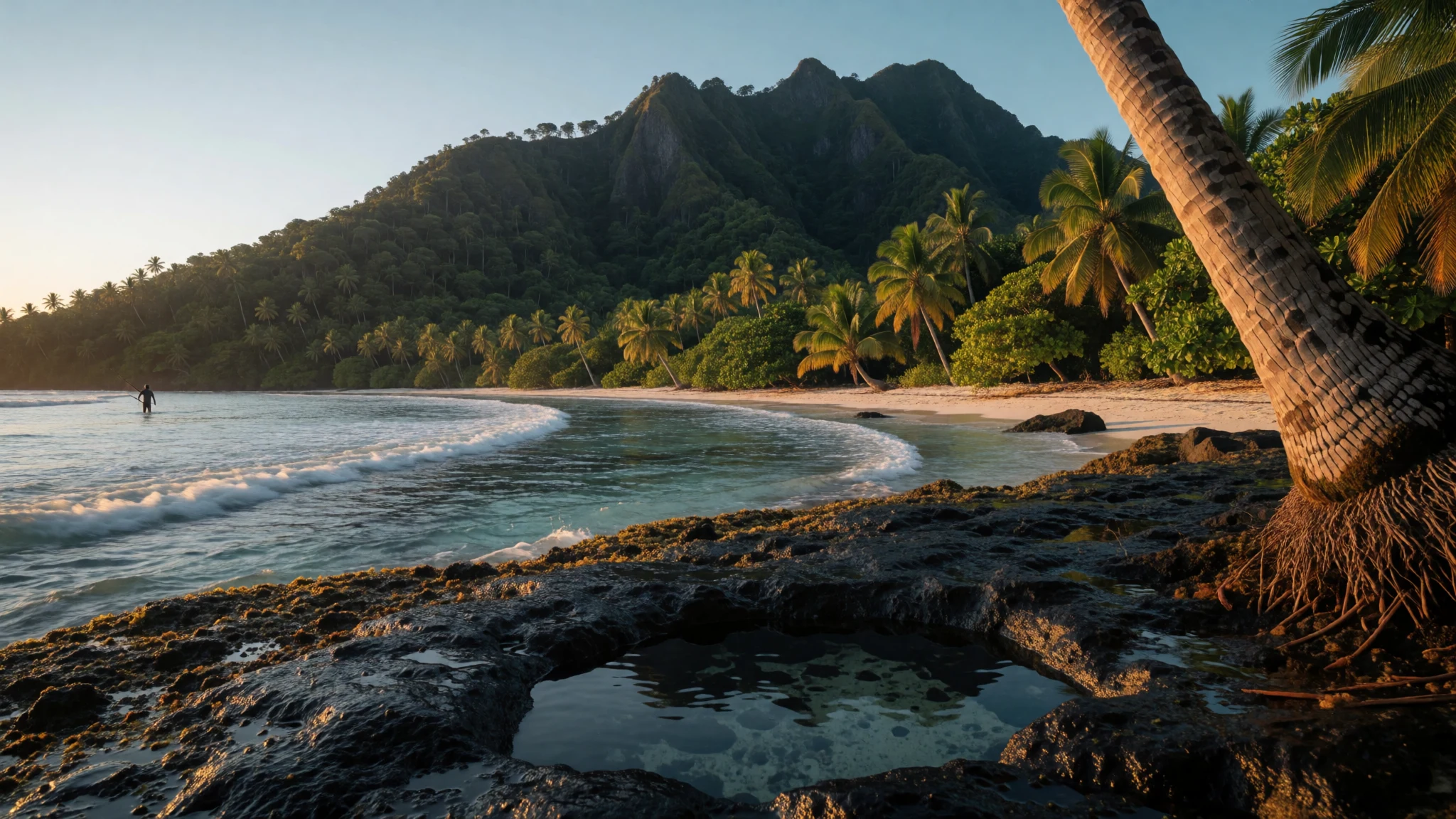
Aneityum is Vanuatu's southernmost inhabited island, a quiet volcanic outpost of reef, forested ridges and a few villages, well away from Tanna's busier routes.
The place
Aneityum is the southernmost inhabited island of Vanuatu, in Tafea province, and it appears on maps under several names: Anatom, Keamu and the spelling Aneitum. About 915 people live here, mostly in coastal villages, with Anelcauhat on the south side the larger of the island's two main settlements. Inland the ground climbs steeply to Mount Inrerow Atamein at 852 m, so this is a folded, forested volcanic island fringed by reef, not a flat coral atoll. At its south-eastern corner, the headland of Nétchan Néganneaing is where Vanuatu's dry land gives out, although the submerged Intao Reef around the islet of Inyeug reaches slightly further. Beyond that lie the Matthew and Hunter islands, disputed with New Caledonia, yet counted by Aneityum people as part of their customary land. The islanders speak their own language, also called Aneityum. Most visitors meet the island through Mystery Island, a small islet off the south-west coast that holds the airstrip and receives cruise-ship day trips. On those days the beach is busy; on other days the whole area is very quiet, with few facilities and little organised sightseeing. Tanna, to the north, has more going on and more infrastructure, so Aneityum suits people who want slow days, warm shallow water and conversation with villagers rather than a list of attractions. The climate is tropical: hot and humid for much of the year, with a cyclone season that can disrupt flights and ship calls.
Its story
Aneityum was densely settled long before outsiders arrived. Estimates of the pre-contact population run to many thousands, and some specialists point to the engineered irrigation of the valleys as evidence that the land supported a large, well-organised community. Society was divided into seven chiefdoms, each headed by a high chief called a natimarid, and the chiefdoms were split into dozens of districts under lesser chiefs. Their authority was mainly ritual rather than coercive. In the early nineteenth century the island began to meet sandalwood cutters, whalers and then missionaries. They brought epidemic diseases, and labour recruiters, who often tricked or kidnapped islanders to work on plantations overseas in a practice known as blackbirding, took still more people away. Within a few generations the population had fallen to a tiny fraction of its former size, and by the early twentieth century only a few hundred people remained. Around the middle of that nineteenth century the Royal Navy ship HMS Havannah called at Aneityum while surveying the islands then known as the New Hebrides, and later returned to carry missionaries. The recovery since has been slow but steady, and about 915 people live on the island today. Many of the old chiefly titles and land arrangements still matter in daily life, and the island's story is told by its own families as much as by the records that outsiders left.
What to see
- Mystery Island — Off the south-west coast
Mystery Island is a small islet just off Aneityum, sitting on the edge of a reef with an airstrip across it. It is the usual first stop for visitors, with sandy shallows for swimming and snorkelling. Expect crowds on cruise days and near-silence otherwise; check ahead which applies.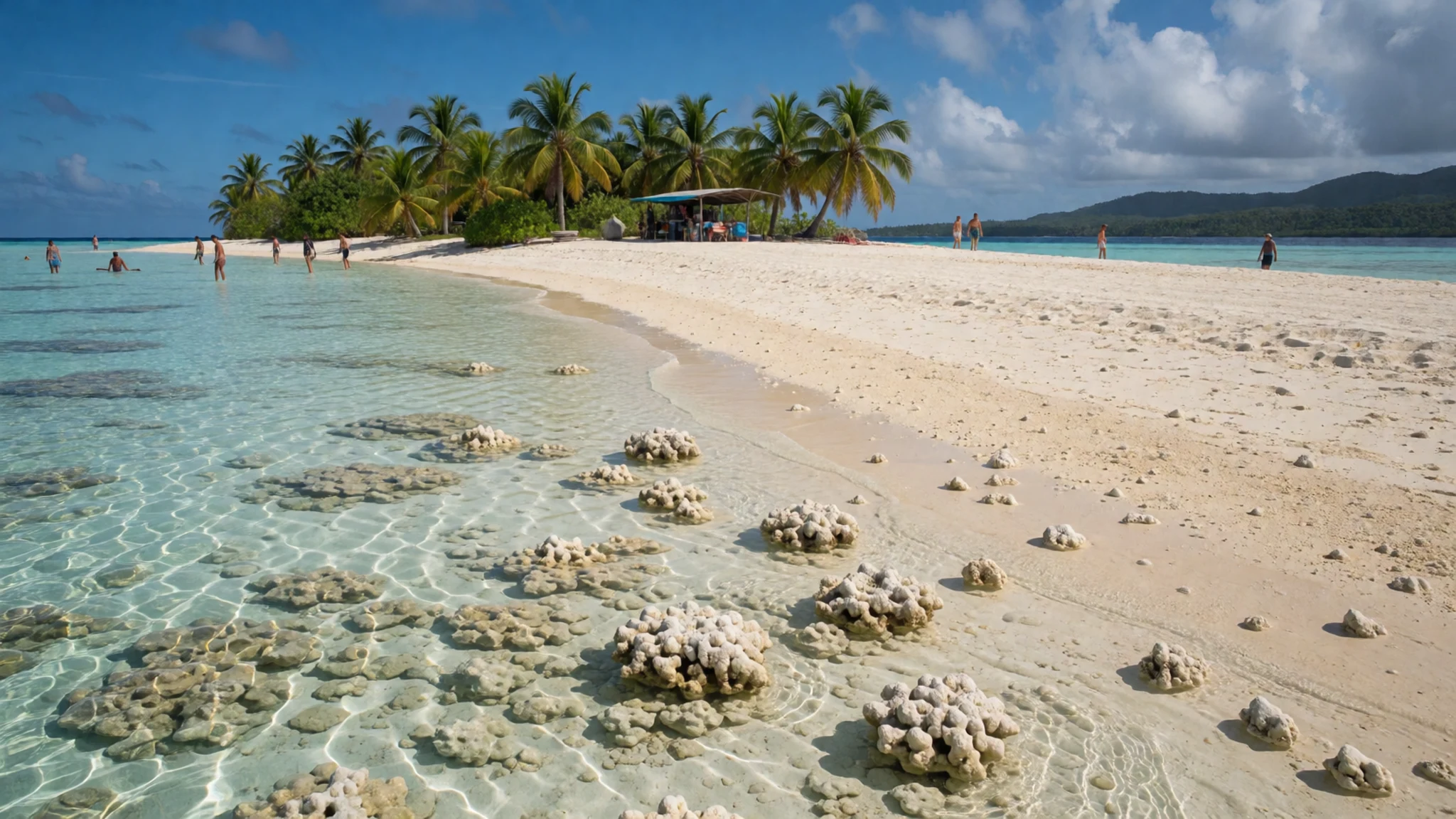
- Anelcauhat — South side of Aneityum
Anelcauhat is the larger of the island's two villages and sits on the sheltered southern coast, facing the reef and Mystery Island. A walk through shows daily life: gardens, church, children heading to school. Ask a host or the chief first, and treat it as a visit to a community, not an exhibit.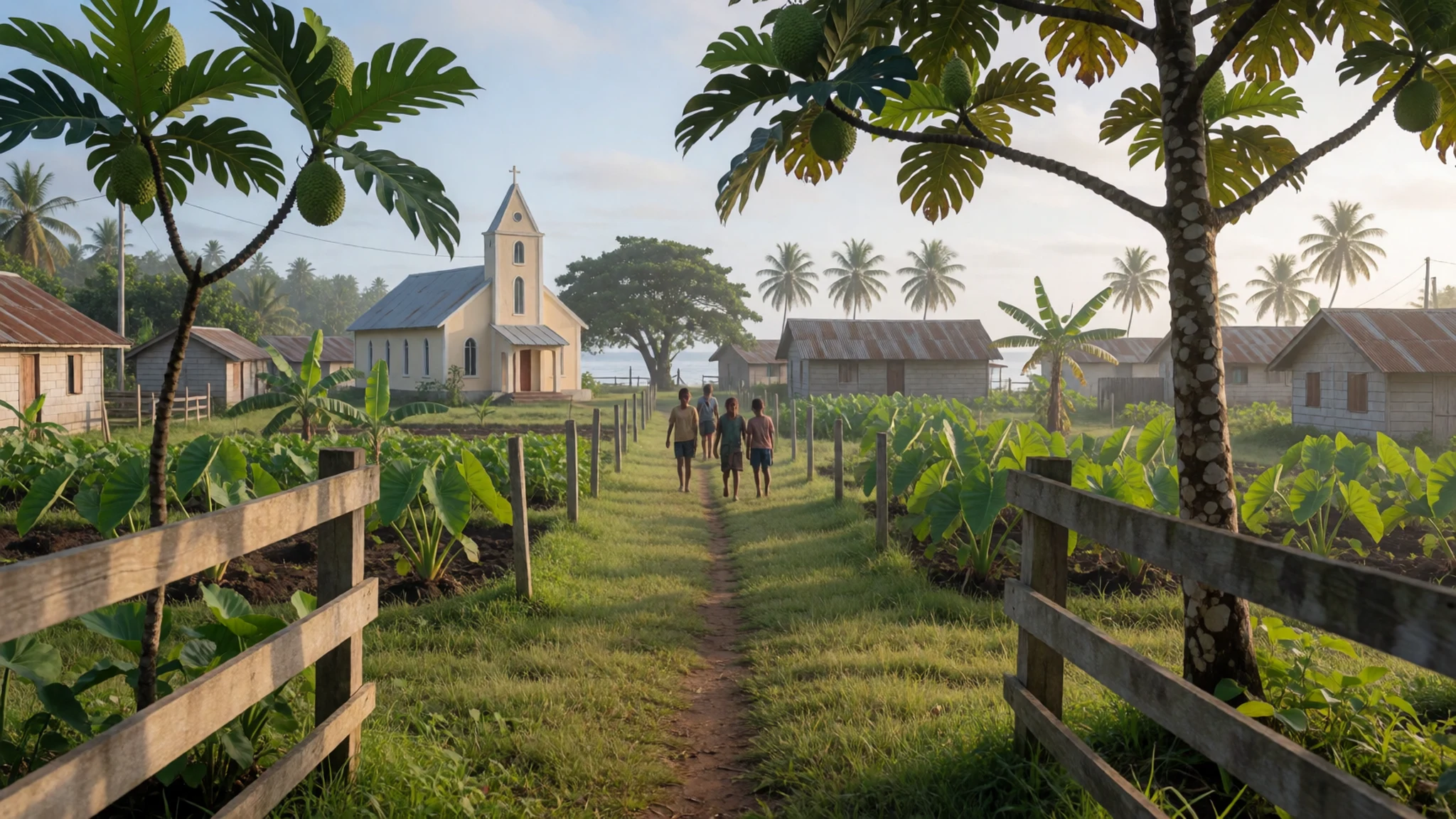
- Mount Inrerow Atamein — Island interior
Mount Inrerow Atamein is the island's high point at 852 m, a forested crest that dominates the skyline from the coast. Any climb or inland walk should be arranged through local guides and landowners, as paths cross customary land. Allow for heat, mud after rain and an early start.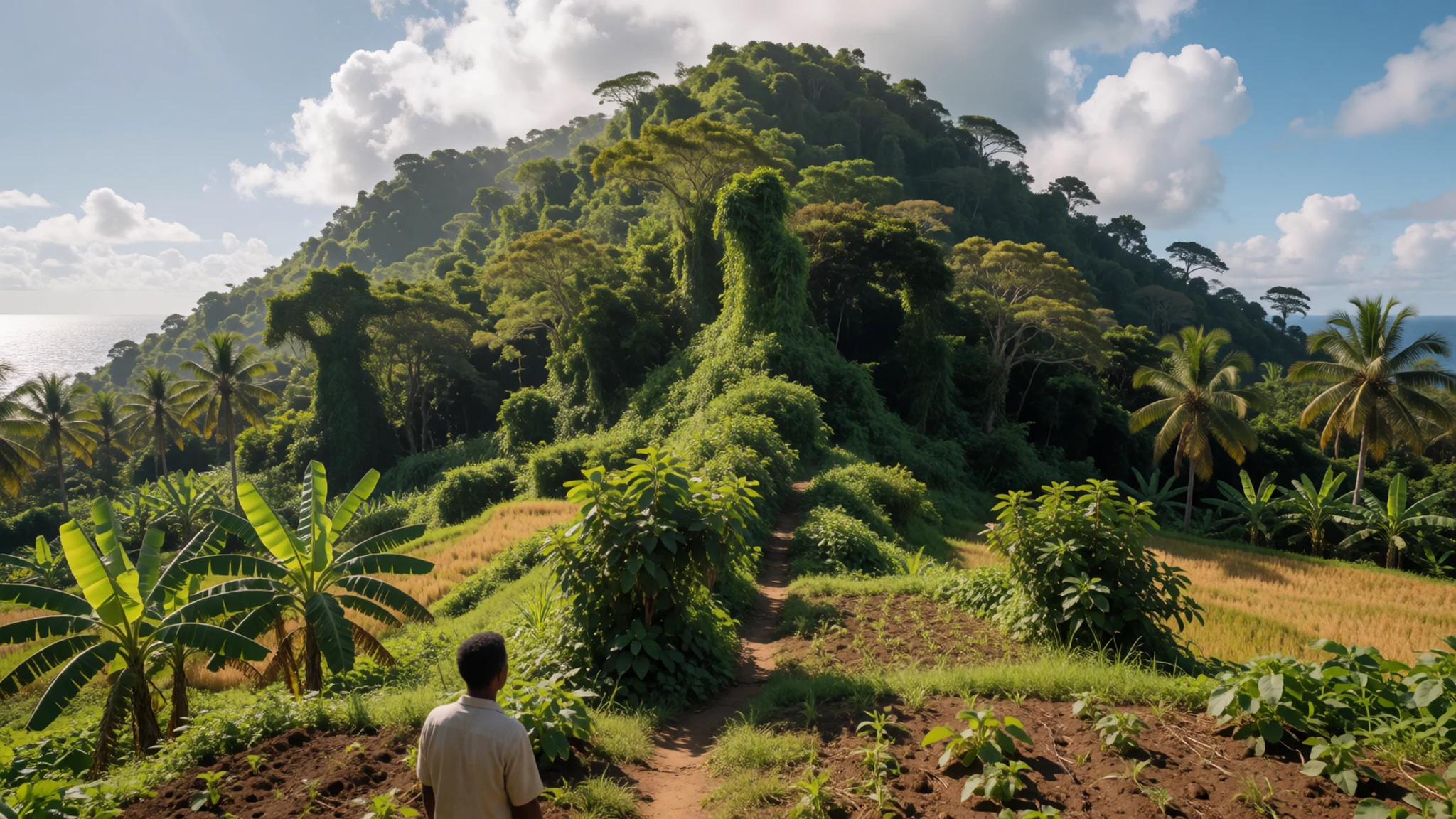
- Nétchan Néganneaing and Intao Reef — South-east cape
Nétchan Néganneaing is the south-eastern headland where Vanuatu's land ends, with the islet of Inyeug and the submerged Intao Reef just beyond. Reaching it needs local boat or walking arrangements, and weather decides everything. It is a place for those who like edges of maps and quiet sea horizons.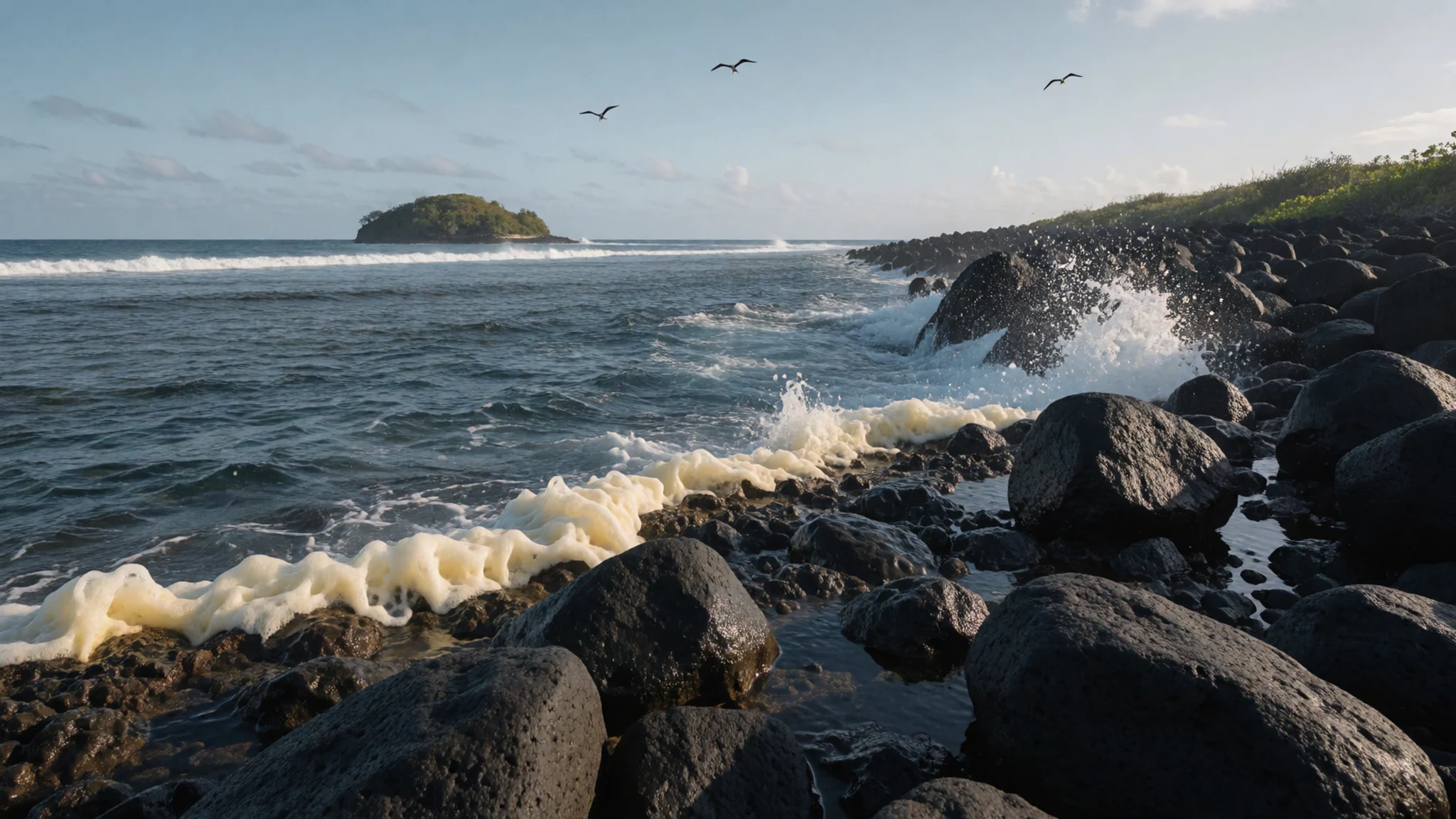
- Old irrigation terraces — Valleys behind the coast
The ancient irrigated gardens of Aneityum are one reason specialists regard the pre-contact community as sophisticated. How much is easy to see today varies, so ask villagers and guides what survives and where, and whether access is allowed. It is a walk for curiosity, not a signposted site.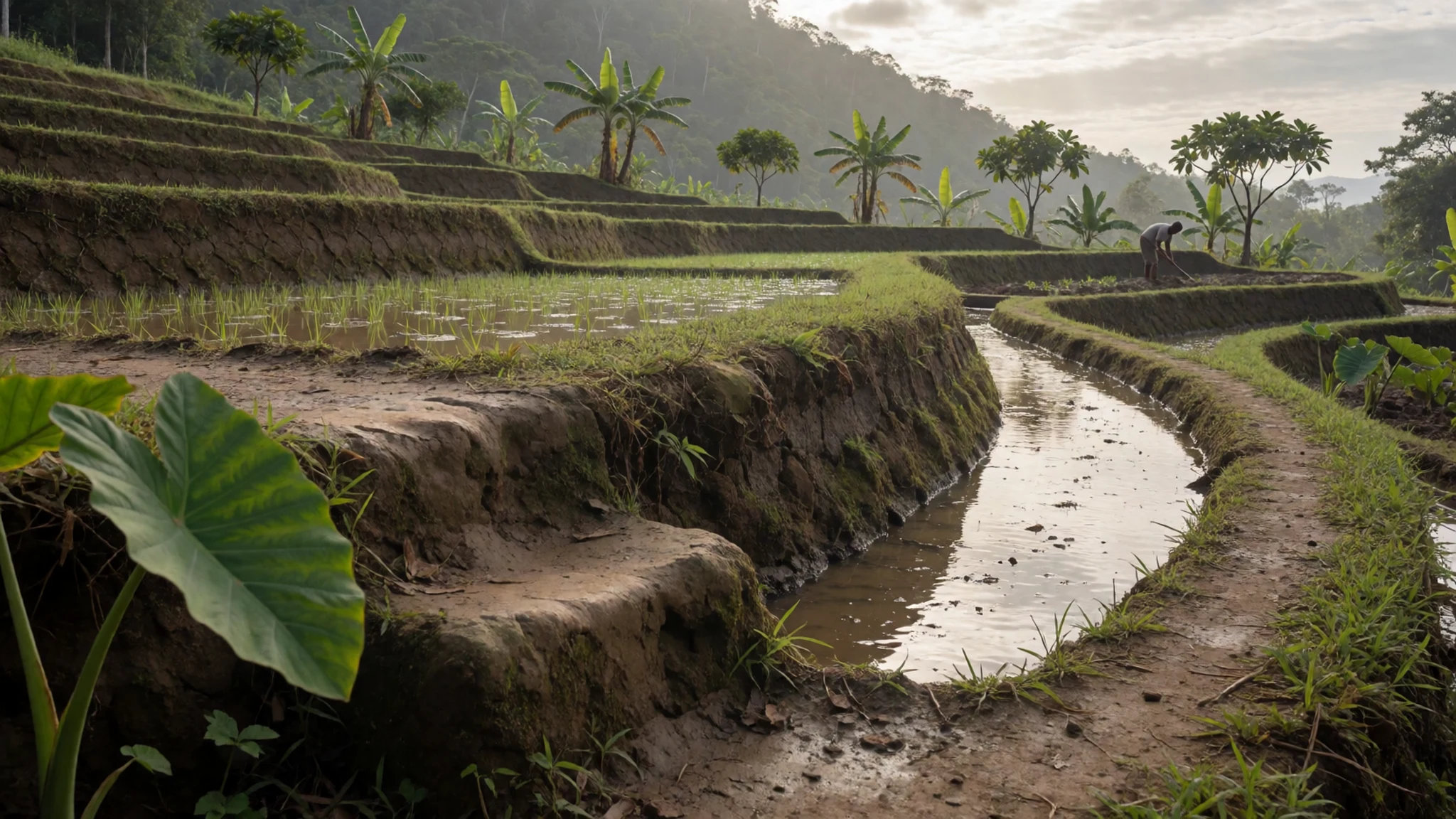
Culture
Aneityum life runs on kastom, the body of custom that governs land, chiefly titles, gift exchange and obligations between families. The old chiefdoms were led by high chiefs whose role was largely ritual, and that sense of respectful authority carries on in how villages make decisions and welcome outsiders. Land and reef are owned by families and clans, so even a beach or a path that looks empty usually belongs to someone, and fishing or anchoring rights are not open to everyone. Christianity arrived with nineteenth-century missionaries and remains central; church services, hymns and the rhythm of Sunday shape the week in villages. The island's history of depopulation is remembered, and local pride in recovery and in the Aneityum language is strong. Many people also work or study in Port Vila, so families are spread between the island and the capital, and news travels by phone, boat and word of mouth. Hospitality is real but informal: a coconut offered at a path-side, an invitation to eat after a church service, or a guide who happens to be a cousin of your host. Visitors do best by arriving with patience, a willingness to sit and talk, and small useful gifts agreed with their host. Ask the village chief or your host before walking on customary land, swimming off a village beach or photographing people, and keep Sundays quiet.
What to wear
Traditional dress in Vanuatu draws on woven pandanus, plant fibres, bark and feathers, worn mainly for ceremonies, dances and customary exchanges; the details differ from island to island, and on Aneityum such dress is now seen chiefly on formal occasions, so ask locally rather than assume. Everyday clothing on the island is practical and modest. Women commonly wear loose, brightly printed island dresses with sleeves, a style introduced during the mission era and still popular, while men wear shorts or trousers with T-shirts or shirts. Rubber sandals are the usual footwear, and church clothes on Sundays are neat and often white or pastel. Visitors should pack for heat, humidity and rain: light cotton or quick-dry layers, a hat, sunscreen and a lightweight rain jacket. In villages and near churches cover shoulders and knees, and keep swimwear to beaches, ideally with a sarong or loose shirt on top when walking through settlements. Reef shoes protect feet from coral and sea urchins, and sturdy closed shoes suit any inland walking on muddy tracks. Do not wear clothing with disrespectful slogans or military styling, and a sarong for sitting on the ground is useful. Laundry dries slowly in humid weather, so choose fabrics that do.
What to eat
- Fresh coconuts — Beach stalls near Mystery Island and village paths
Fresh coconuts are opened with a bush knife and drunk on the spot, the usual refreshment on Mystery Island's beach. The water is cool and lightly sweet, and the soft flesh can be scooped out afterwards. Carry small notes in case sellers cannot make change.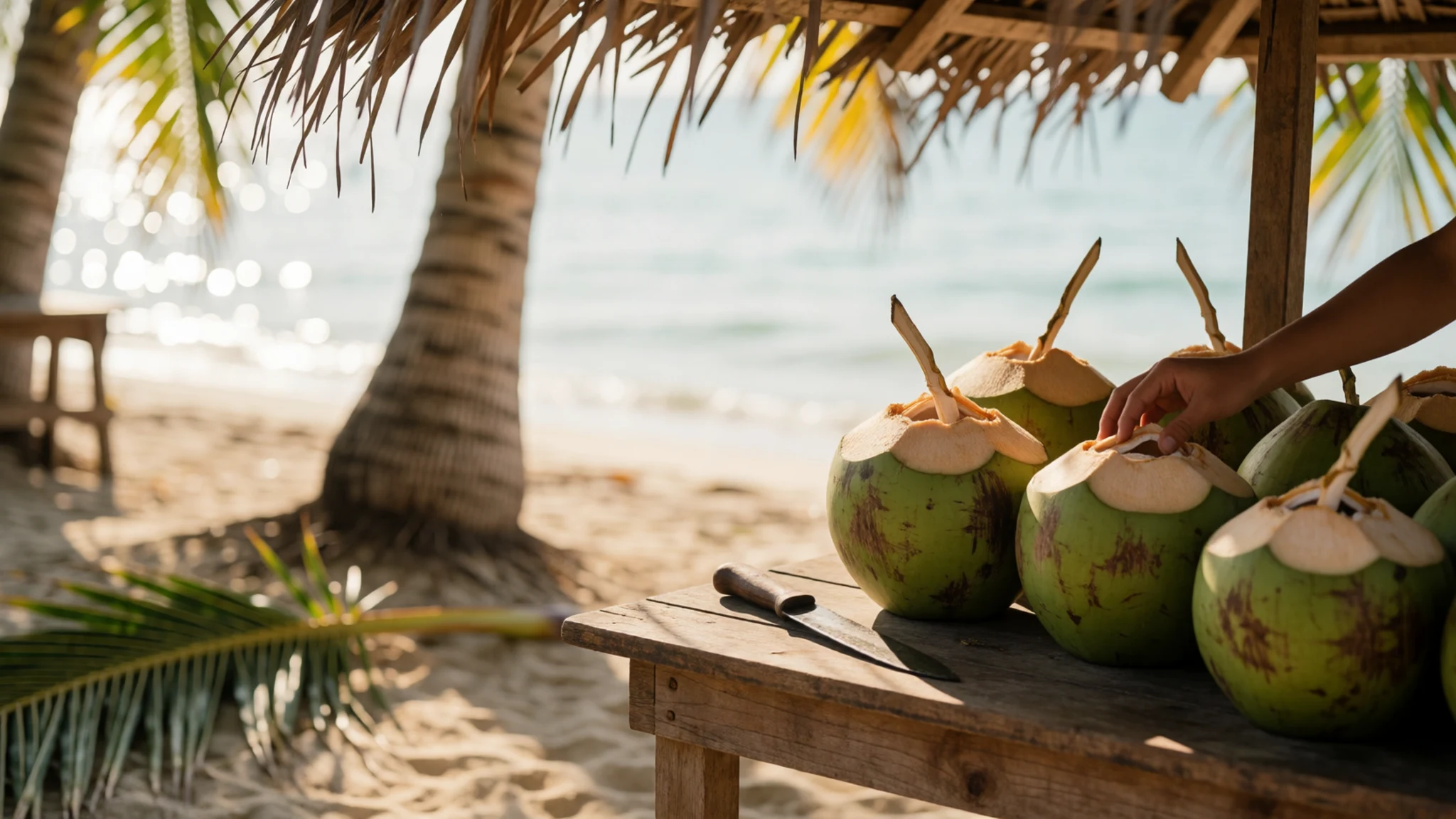
- Laplap — Village homes and feasts, by arrangement with hosts
Laplap is a Vanuatu staple of grated root vegetable, often with coconut cream, wrapped in leaves and cooked in an earth oven. It is a soft, dense, mildly sweet dish eaten warm. On Aneityum, ask a host in advance, since it takes time to prepare.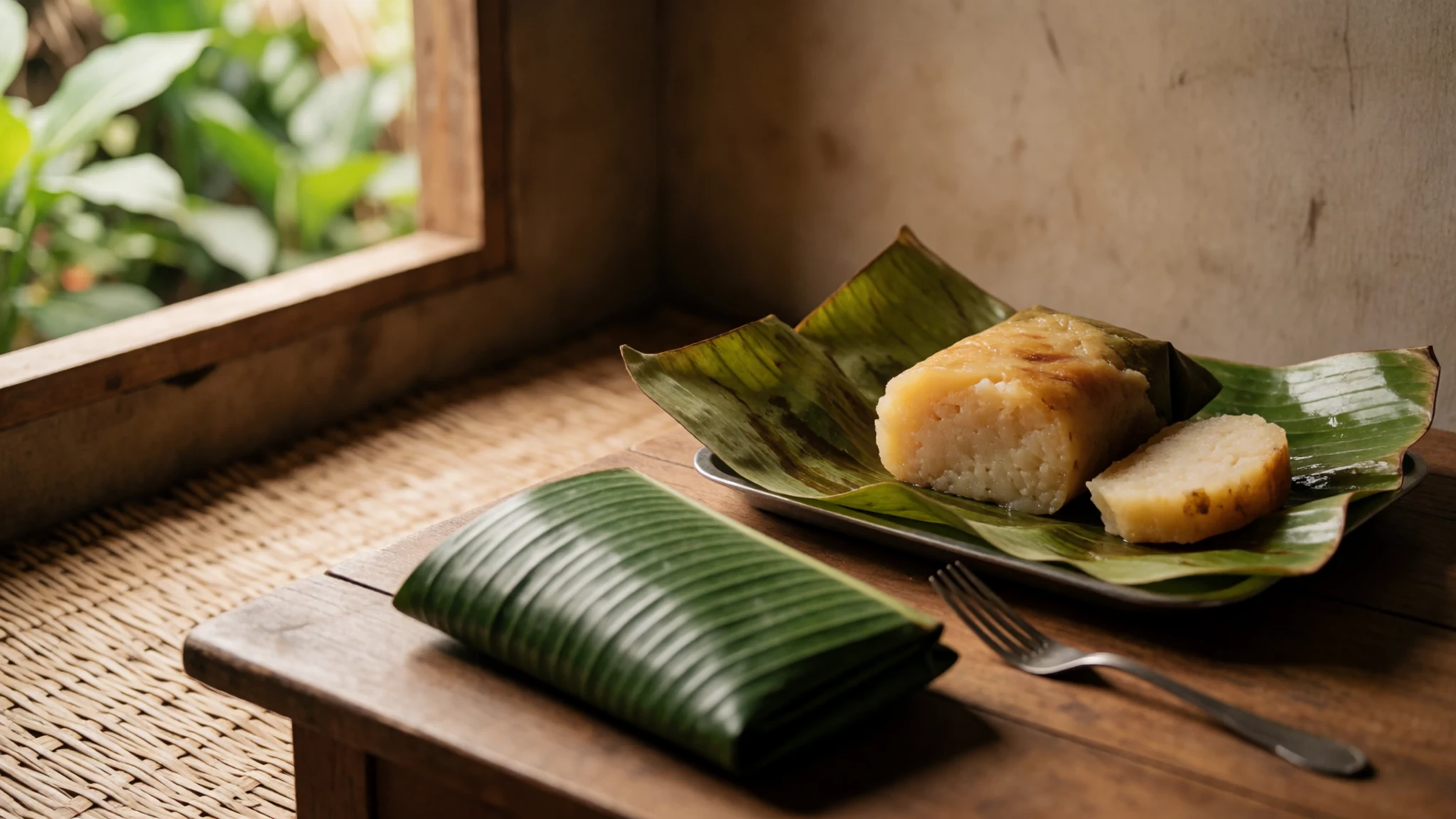
- Taro, yam and root crops — Village gardens and family meals
Root crops such as taro and yam are the everyday carbohydrate, boiled, baked or roasted in the fire. They are filling and plain, served with greens, fish or coconut milk. Meals are usually shared in homes, so your host's household is the best place to try them. - Grilled reef fish — Villages and canoe landings
Reef fish are caught from the lagoon and outer reef, then grilled over a fire or cooked in coconut milk with greens. Availability depends on weather and the day's catch. Ask the person fishing or your host about what is safe to eat, since some reef fish carry ciguatera risk. - Island cabbage and tropical fruit — Village gardens, plus small market tables when available
Island cabbage is a leafy green cooked in coconut cream and served alongside root crops. Bananas, pawpaw and citrus are usually in season somewhere, and are often sold from garden tables. Wash fruit with safe water and peel it before eating.
Plan it
Best time. June to October is the drier, slightly cooler part of the year, better for walking, snorkelling and flights. November to April is hot, humid and wet, and it is cyclone season, so ships and flights can change at short notice.
How long. 2–3
Getting there. Aneityum Airport (AUY) is on Mystery Island, with flights from Port Vila via Tanna on a small number of days each week; check the airline for current schedules. Some cruise ships also stop. From the airstrip, a short boat ride reaches the main island and Anelcauhat.
Budget. mid
Tips
- Book flights and any village stay well ahead, as seats are few and weather can delay them
- Carry enough cash in small notes, because cards and cash machines are not reliable on the island
- Bring reef shoes, sun protection and drinking water, and ask hosts about safe water for refilling
- Check when cruise ships are due, as Mystery Island is busy on those days and quiet on others
- Allow a spare day at the end of the trip in case a flight is delayed
Etiquette
- Ask the chief or your host before walking on customary land, swimming off a village beach or photographing people
- Dress modestly in villages and keep Sundays quiet
- Agree guide fees and any gifts in advance, and do not take shells, coral or plants
Nearby
Sources
- Wikidata Q528884 (CC0)
- Wikipedia: Aneityum (rev 1384827324) (CC BY-SA 4.0)
- Wikivoyage: Aneityum (rev 5311898) (CC BY-SA 4.0)
- NASA Astronaut Image of Aneityum, Vanuatu (Public domain)
- Island of Vanuatu - Anatom.PNG (Public domain)
- Old U.S. Nautical Chart of Aneityum (cropped) (Public domain)
- Old U.S. Nautical Chart of Aneityum (Public domain)
- Photo of Aneityum Island, July 2025 (JustARandomEditor123) (CC BY-SA 4.0)
- Tropical Cyclone Gene, MODIS (Public domain)
- View of Vanuatu, ISS Expedition 6 (Public domain)
- View of Vanuatu, ISS Expedition 35 (Public domain)


