Maewo
Maewo, Vanuatu
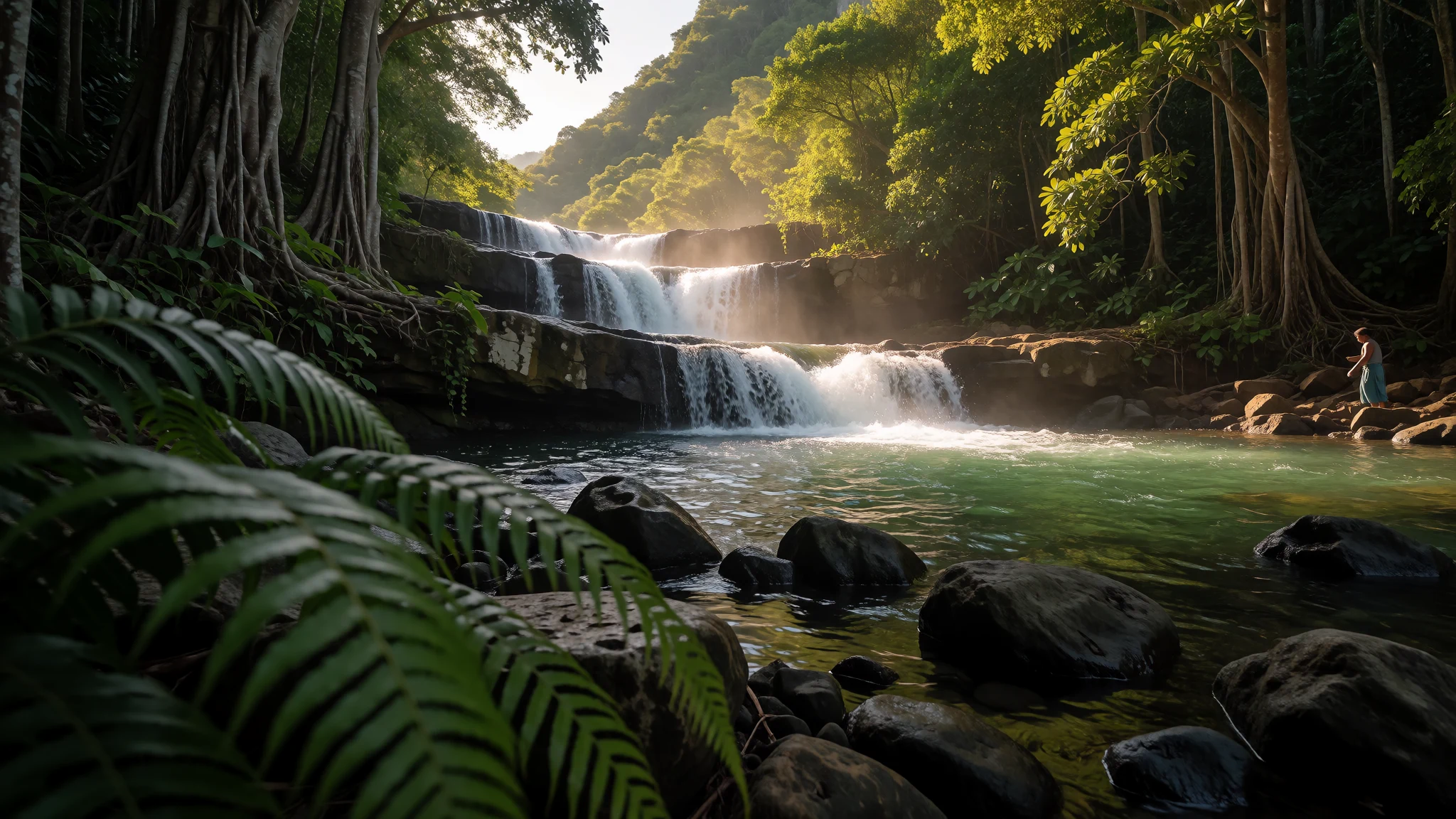
Maewo is a quiet, rain-fed island of forest, waterfalls and hot springs, where visiting means staying with villagers rather than at a resort.
The place
Maewo is a long, thin island in Vanuatu's Penama province, lying east of Espiritu Santo across about 105 km of open sea. It runs roughly 47 km from tip to tip yet is only about 6 km wide, with a land area of 269 km², so the forested interior is never far from the coast. The central ridge reaches 795 m, high enough to catch passing cloud and wring it out over the slopes. No island in Vanuatu gets more rain than Maewo, about 3,500 mm in an average year. The result is dense tropical forest with banyan trees, streams that rarely run dry, waterfalls tumbling towards the sea, and hot springs in the middle of the island. The best-known cascade is a stepped series near Naone at the northern end, close to Maewo-Naone Airport. Locals call it Big Wota, which is Bislama for big water. About 3,600 people live on Maewo, spread through small villages rather than any town, so the feel is rural and quiet. Visitor services are thin, and plans tend to depend on local arrangements and the weather. The climate is humid all year, with a wetter season from November to April and a drier one from May to October. Cyclones and earthquakes are a regular fact of life here, and villagers build and plan with that in mind.
Its story
Maewo has a short written history and a much longer unwritten one. People lived on the island long before any ship appeared, and the deep record of their languages, stories and customs is kept in the villages rather than in archives. The documents begin in 1606, when a Spanish expedition led by Pedro Fernández de Quirós sighted the island at the end of April. Europeans did not leave a lasting mark then, and the island slipped out of their records for well over a century. In 1768 the French navigator Louis Antoine de Bougainville passed by. He saw the land at first light and gave it a name to match, Aurora, a Latin word meaning daybreak. For a long time Europeans knew it as Aurora Island, and the name still turns up in older maps and books. Today the island goes by Maewo, a spelling that also appears as Maevo, and the old European name is mostly a curiosity. The land itself adds another layer to the story. Hot springs in the middle of the island hint at restless ground below, in a region where earthquakes and cyclones are frequent, and these forces have shaped where people settle and how they build. For a visitor, Maewo's history is best learned slowly, from the people who live there.
What to see
- Big Wota cascades — Naone, north Maewo
Near Naone at the northern end, close to the airport, Big Wota is a series of stepped waterfalls fed by the island's heavy rain. Flow is strongest in the wetter months and gentler in the drier ones. The pools and paths sit on custom land, so arrange the visit through a local host.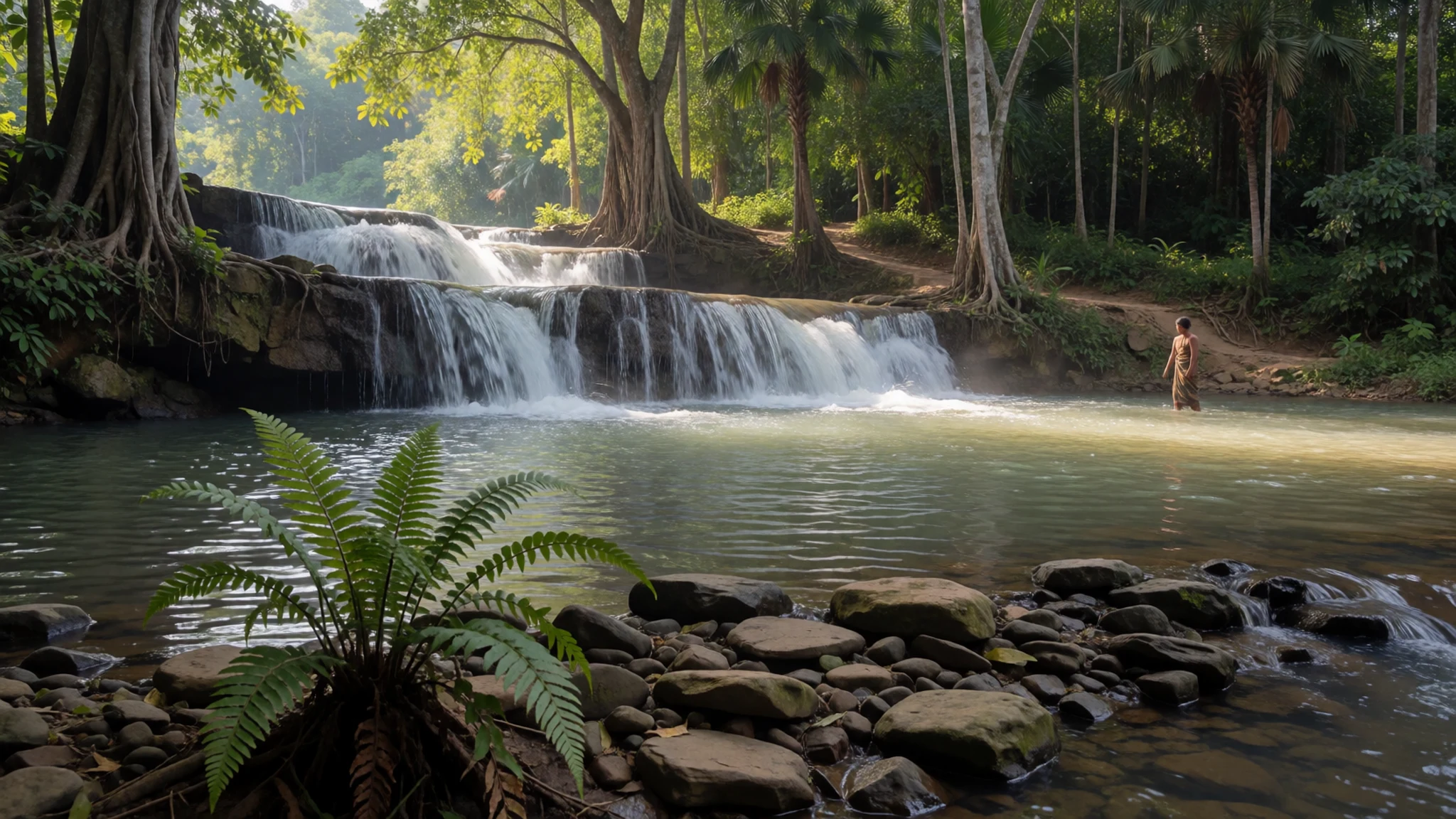
- The central hot springs — Central Maewo
Hot springs rise in the middle of the island, a reminder of the active ground beneath it. Reaching them means a walk through wet forest, and tracks can be slick after rain. Go with a local guide who knows the way and who looks after the site.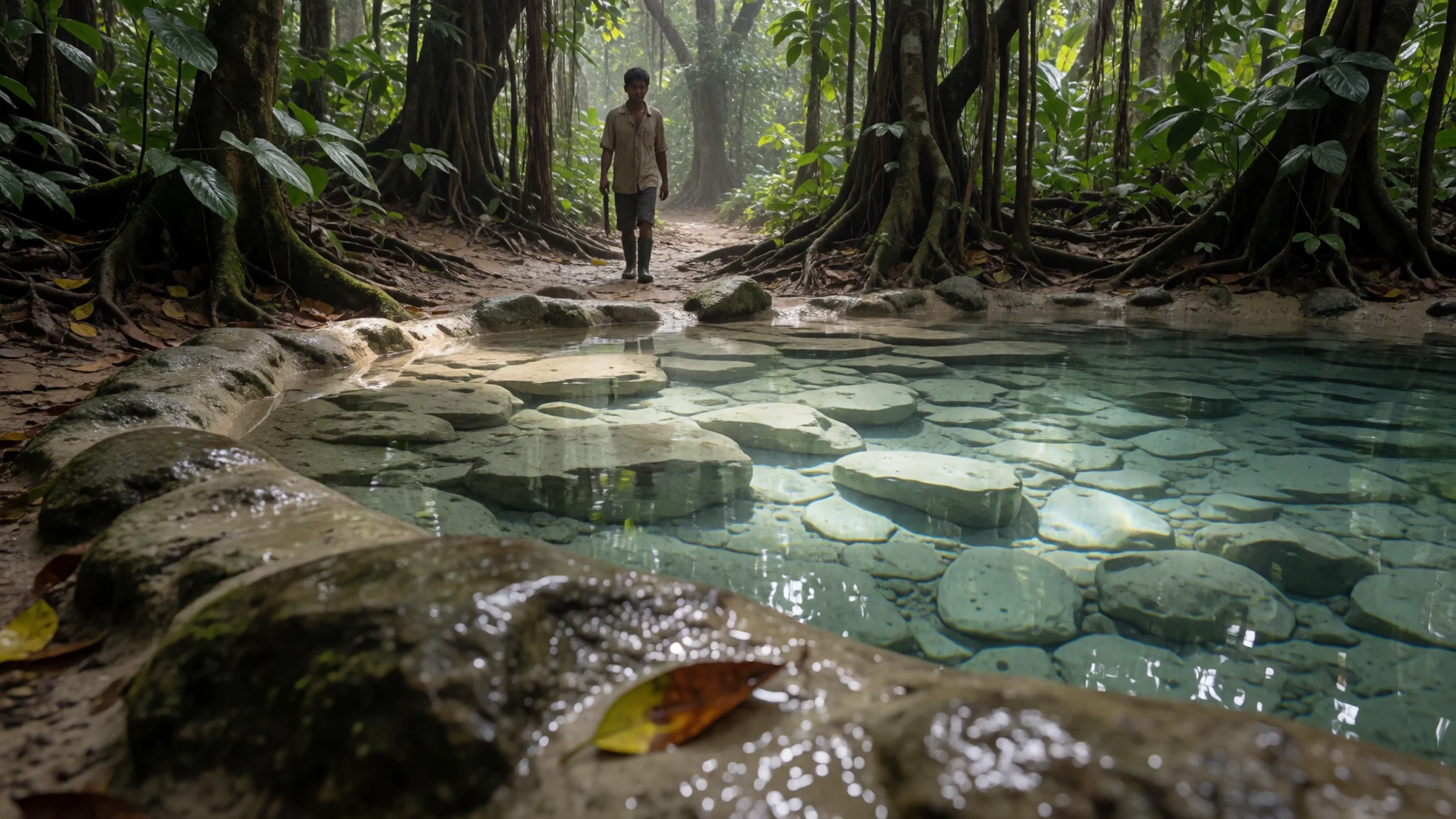
- Forest ridge and banyan walks — Interior ridge
Dense tropical forest covers much of Maewo, with banyan trees among the canopy. Walking tracks link villages along and across the ridge, which tops out at 795 m. Expect mud, streams to wade and humid air. Early starts help, since afternoon cloud and rain build quickly.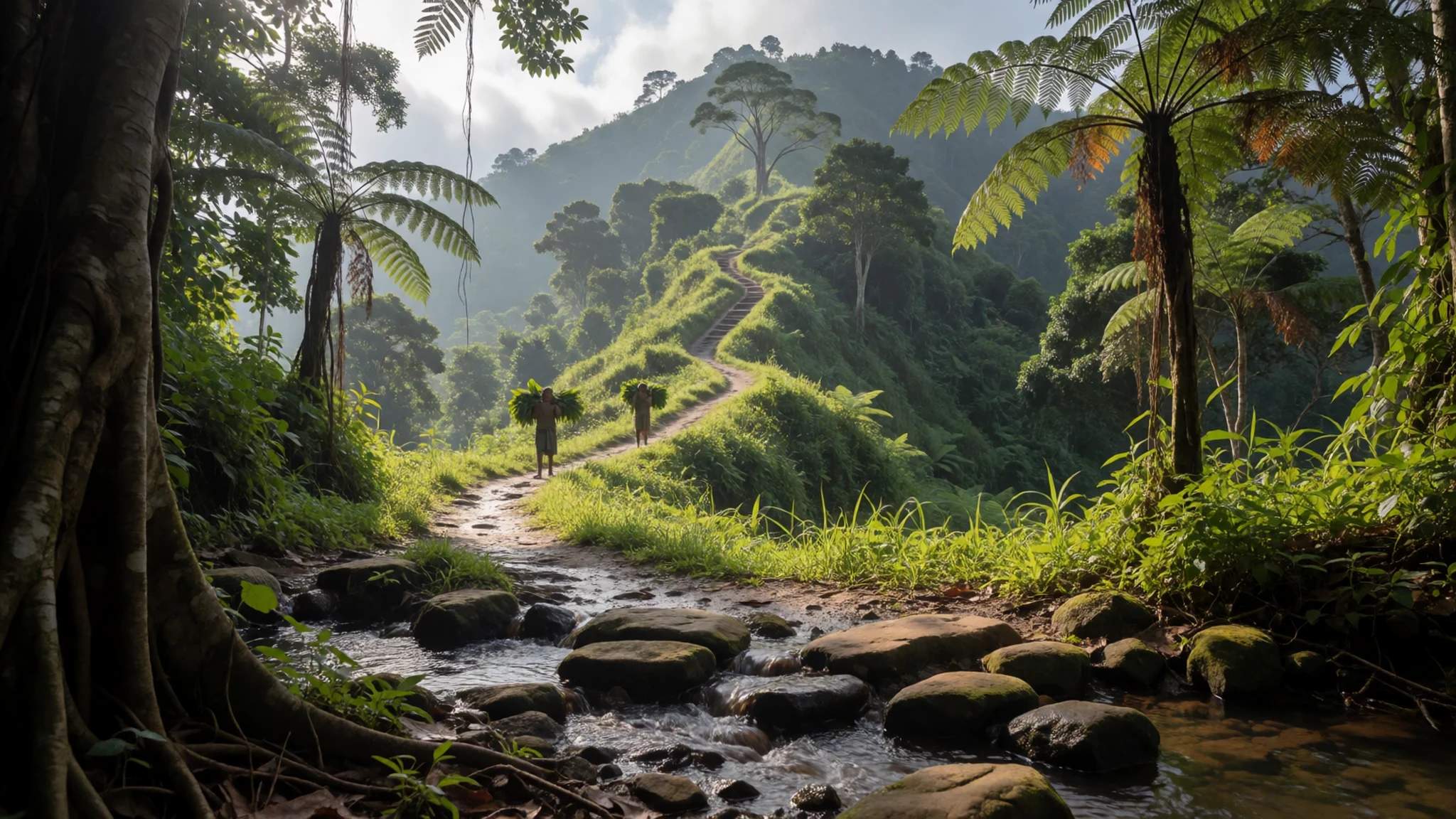
- Coastal villages — Coastal Maewo
Most of the island's people live in small villages near the shore, in gardens of yam, taro and coconut. Spending a night with a host family is how most visitors experience Maewo. Bring modest gifts of food or supplies and agree arrangements in advance.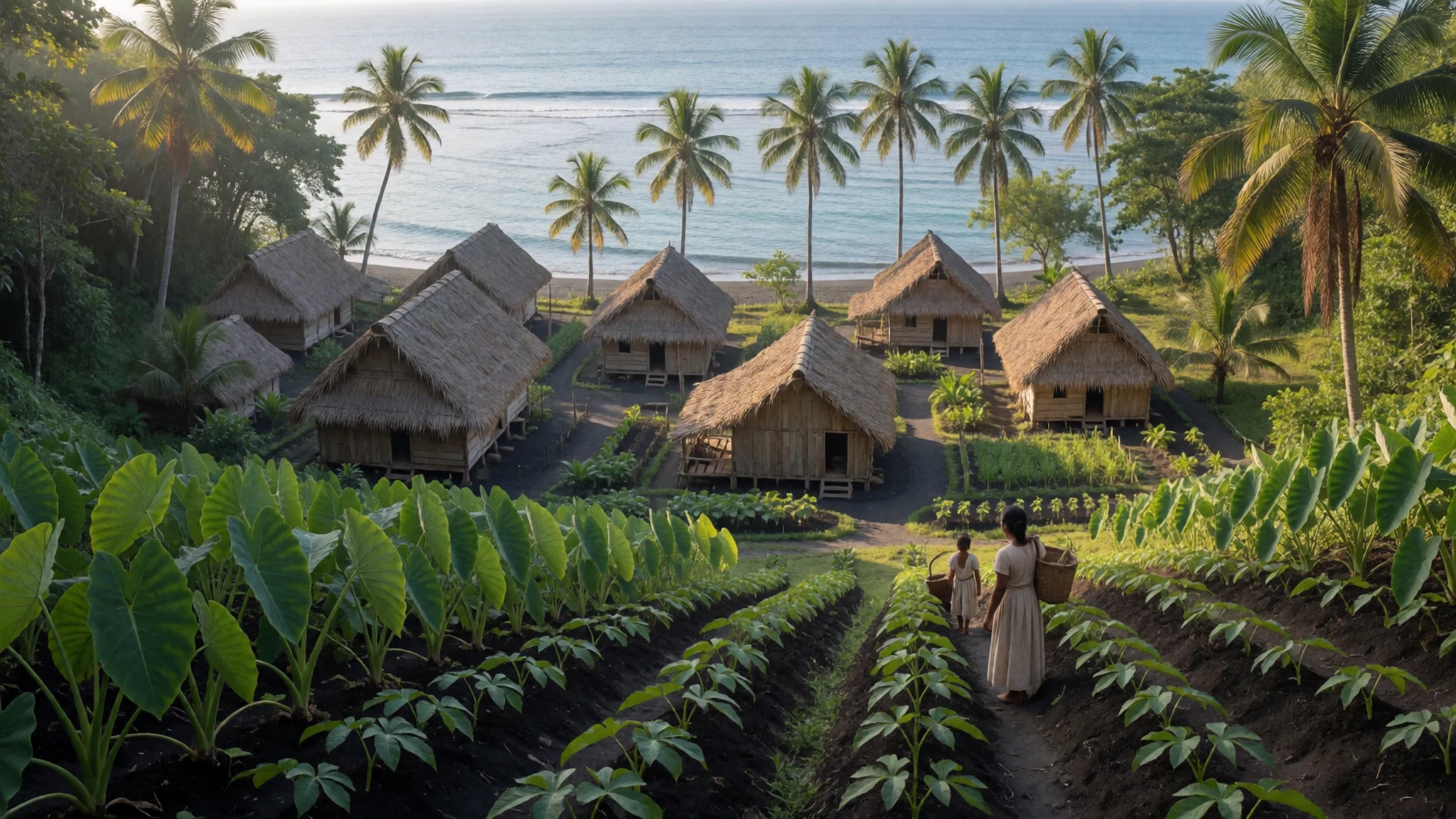
- Land diving on Pentecost — Pentecost Island, south of Maewo
Just south of Maewo, Pentecost is the birthplace of the naghol, or land diving, in which men leap from tall wooden towers with vines tied to their ankles. It takes place between April and June to bless the yam harvest. Confirm dates locally before planning around it.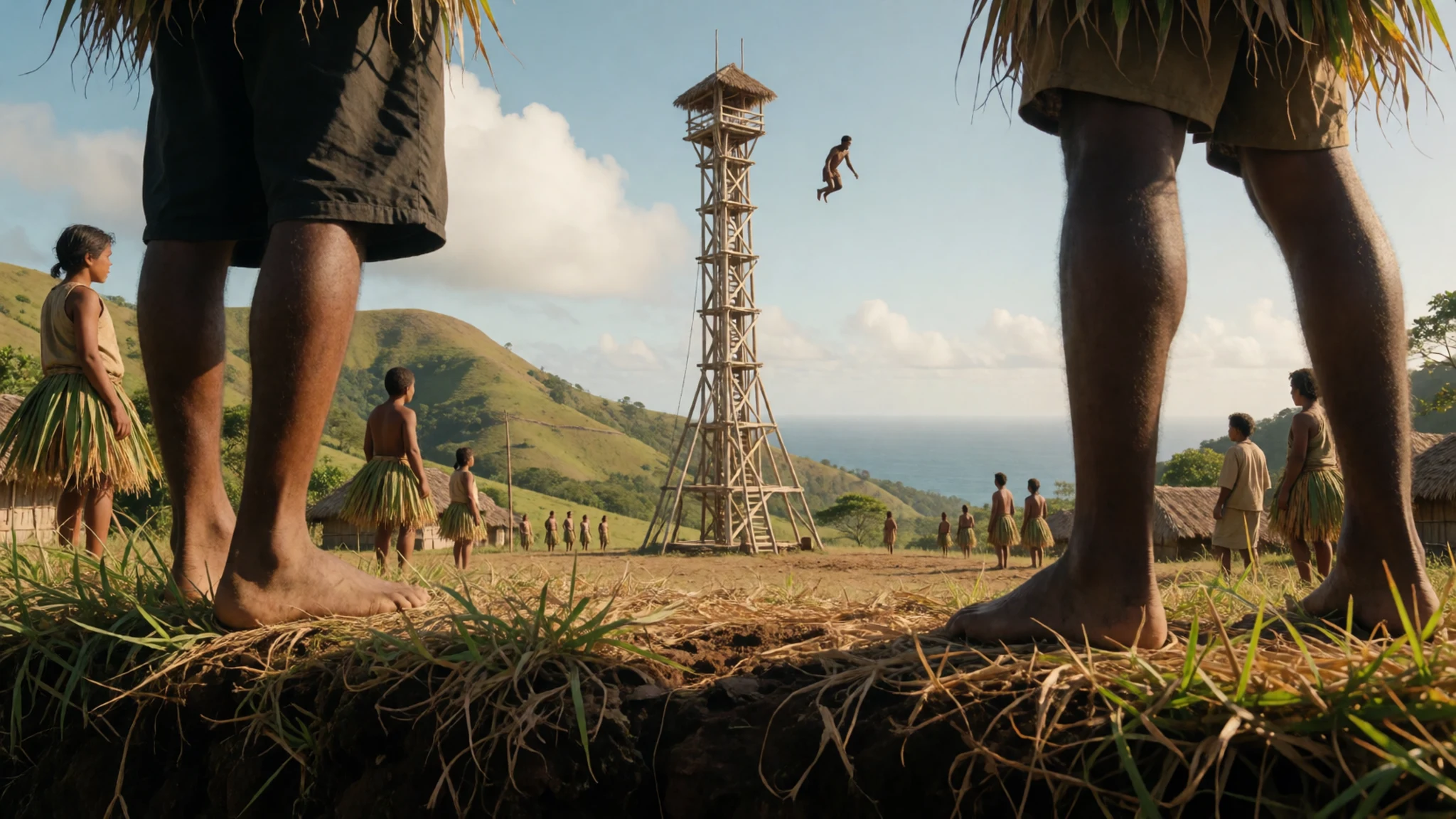
Culture
Maewo's social life runs on kastom, the Bislama word for custom: inherited rules about land, family, ceremony and respect that sit alongside church and government. Land belongs to families and clans rather than being open ground, which is why a waterfall, a spring or a forest path usually has someone who speaks for it. Visiting is therefore a matter of asking, and a host or chief will often say how and when. Bislama is the common language of Vanuatu, and several island languages are spoken in villages, so a few words of greeting go a long way. Church is central to community life across much of Vanuatu, and Sundays tend to be quiet, given to services and rest. Food is shared, and being offered a meal is a form of welcome that is best accepted. Ceremonies follow the seasons of the garden, as in the yam-harvest land diving on neighbouring Pentecost, where ritual marks both farming and the passage to manhood. Gifts and fees for guides or access are normal, and are agreed in advance with the village rather than haggled over on the path. Ask your village host before visiting a waterfall, spring or garden, and always ask permission before photographing people or ceremonies.
What to wear
Maewo's traditional dress belongs mostly to ceremony. Across Vanuatu, formal occasions call for woven pandanus mats, fibre skirts, beaten bark and leaf decoration, along with painted designs and feathers, and the details differ from island to island and from village to village. Ask your hosts what is worn for particular events on Maewo rather than assuming. Everyday clothes are simple and practical. Women commonly wear long, loose, brightly printed cotton island dresses, a style introduced in the missionary era and now thoroughly local, while men wear T-shirts, shorts or trousers and often go barefoot or in sandals around the village. Visitors should dress for heat, rain and mud. Quick-drying shirts and light long trousers or skirts cope best with the humidity and the insects. Cover shoulders and knees in villages and at church, and keep swimwear for the water, with a sarong or shorts over it on the way back. A light waterproof jacket is worth carrying in every month. For footwear, take sturdy sandals or trail shoes with a good grip, since forest paths and river crossings are slippery, plus a spare dry pair to keep for the evening.
What to eat
- Laplap — Village feasts and family kitchens, usually arranged with a host
Vanuatu's best-known dish is a pudding of grated root crop, such as yam or taro, wrapped in leaves with coconut cream and baked in an earth oven. It is dense, mild and filling, and often made for feasts and special visits.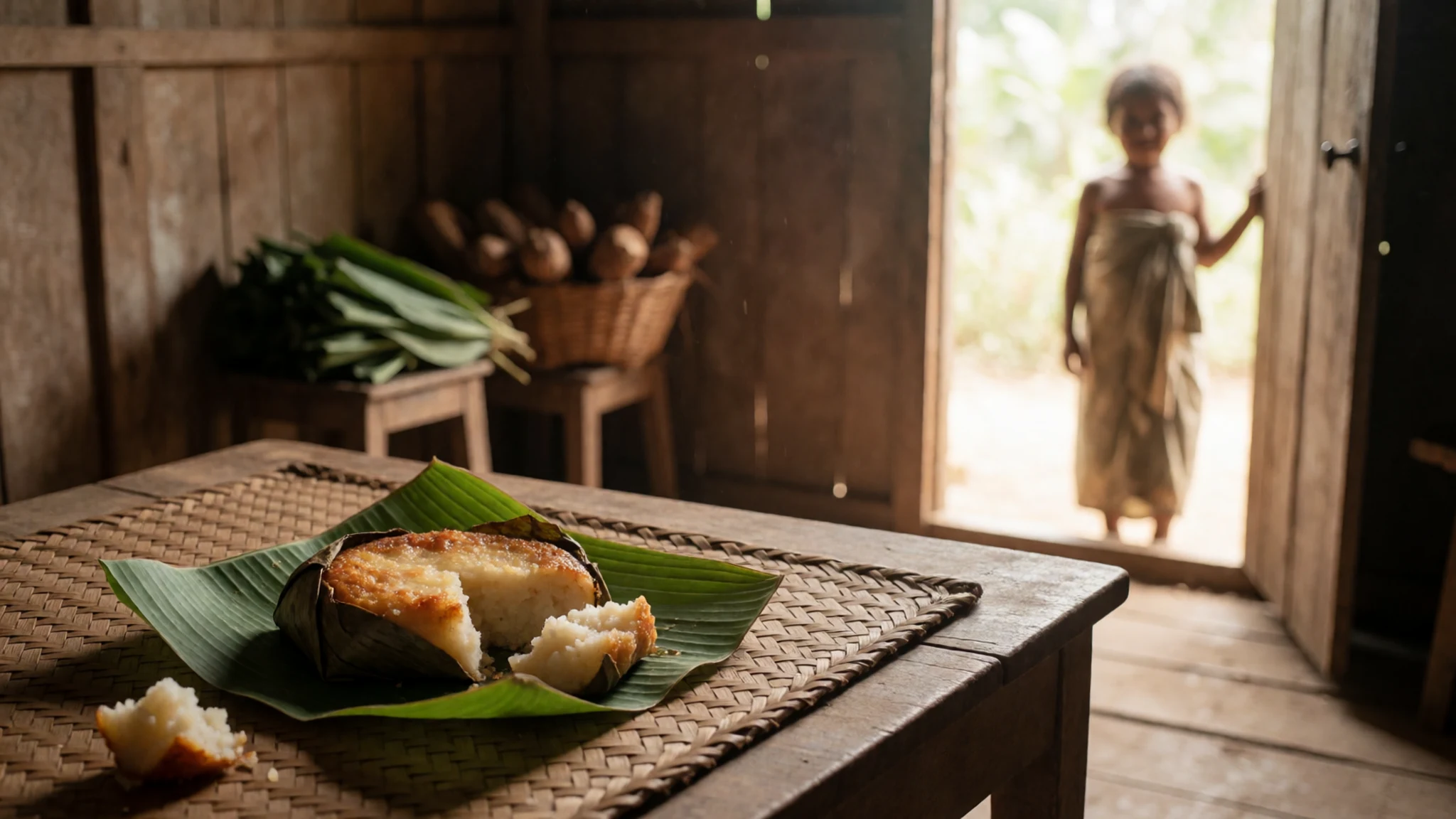
- Roast yam and taro — Village meals and the local garden market
Yam is central to island gardens and ceremony, and taro grows well in the wet climate. Both are roasted or boiled in their skins and served as the staple with fish, greens or a coconut sauce.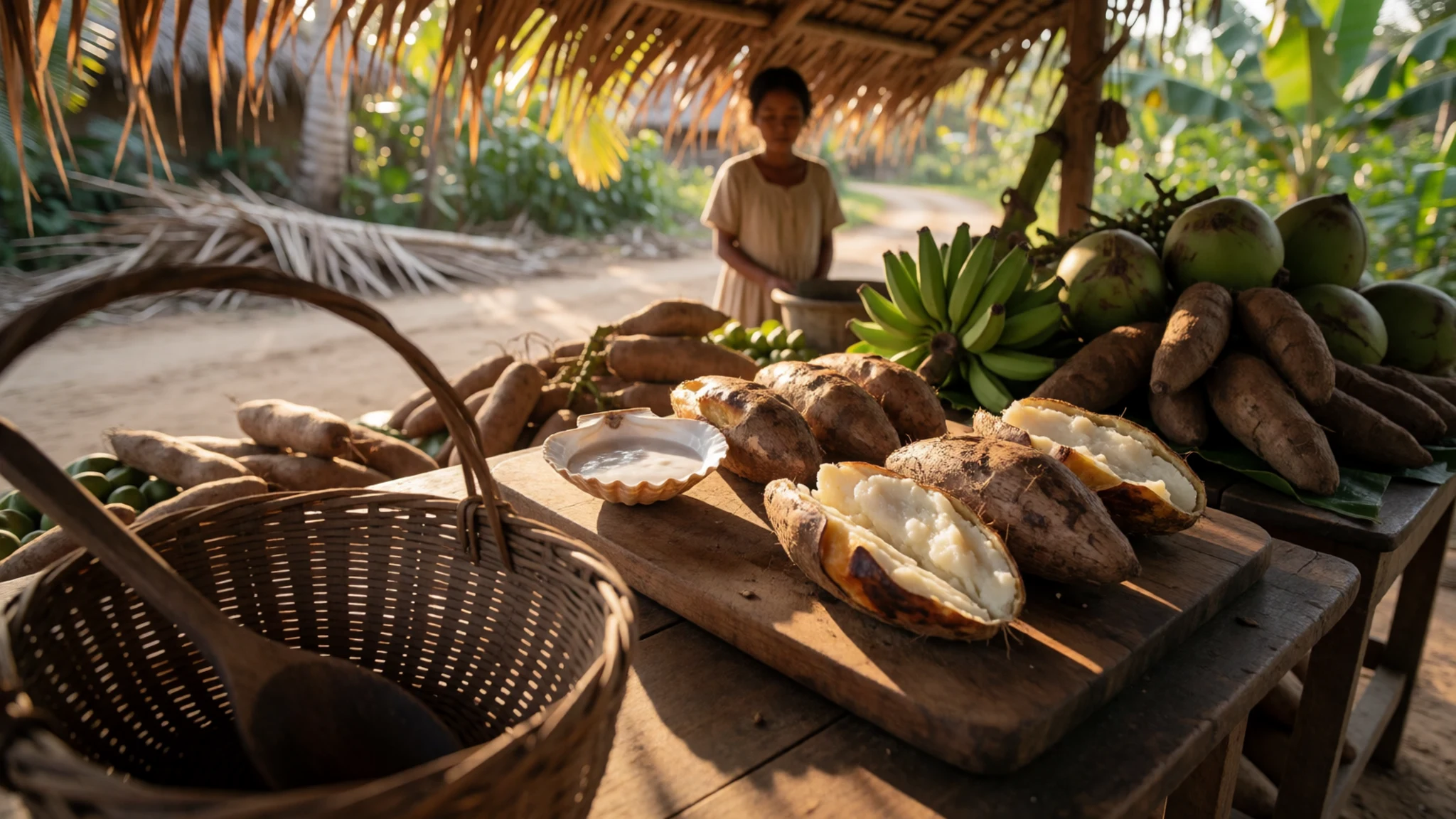
- Island cabbage in coconut milk — Home-cooked meals with host families
Leafy greens from the garden are simmered in thick coconut milk until soft. The flavour is gentle and slightly earthy, and it is a regular side dish beside root crops and fish in village kitchens. - Grilled reef fish — Coastal villages, straight from the fishers
Fish caught from the reef or the shoreline is grilled over an open fire or cooked in leaves. It usually comes with root crops and a squeeze of lime. What is served depends on the day's catch and the weather. - Fresh coconut and tropical fruit — Village gardens and roadside stalls
With so much rain, fruit trees thrive: coconut for drinking water and flesh, plus bananas, pawpaw and citrus in season. Green coconuts are cut open on request and make a good rehydration stop on a hot walk.
Plan it
Best time. May to October, the drier season, is the easiest time for walking and getting around, though Maewo is the wettest island in Vanuatu so showers can come in any month. November to April is wetter, with frequent cyclone risk.
How long. 3–4
Getting there. Domestic flights reach Maewo-Naone Airport at the northern end, usually connecting through Espiritu Santo or Port Vila, so check the current schedule with the airline. From there, local transport and boats to villages are arranged through your host, and timings shift with weather.
Budget. mid
Tips
- Arrange accommodation, guides and transport through local contacts before arriving, as services are limited
- Carry cash in small notes, since cards and cash machines are unlikely to be available
- Pack a waterproof bag, insect repellent and a spare set of dry clothes
- Keep a day or two spare, because flights and boats can be delayed by weather
Etiquette
- Ask the village host before visiting a waterfall, spring or garden
- Ask permission before photographing people or ceremonies
- Dress modestly in villages and on Sundays
Nearby
Sources
- Wikidata Q1355723 (CC0)
- Wikipedia: Maewo (rev 1364048930) (CC BY-SA 4.0)
- Wikivoyage: Penama (rev 5311263) (CC BY-SA 4.0)
- Island of Vanuatu - Maewo.PNG, edited by M.Minderhoud, via Wikimedia Commons (Public domain)
