Mount Yasur
Mount Yasur, Vanuatu
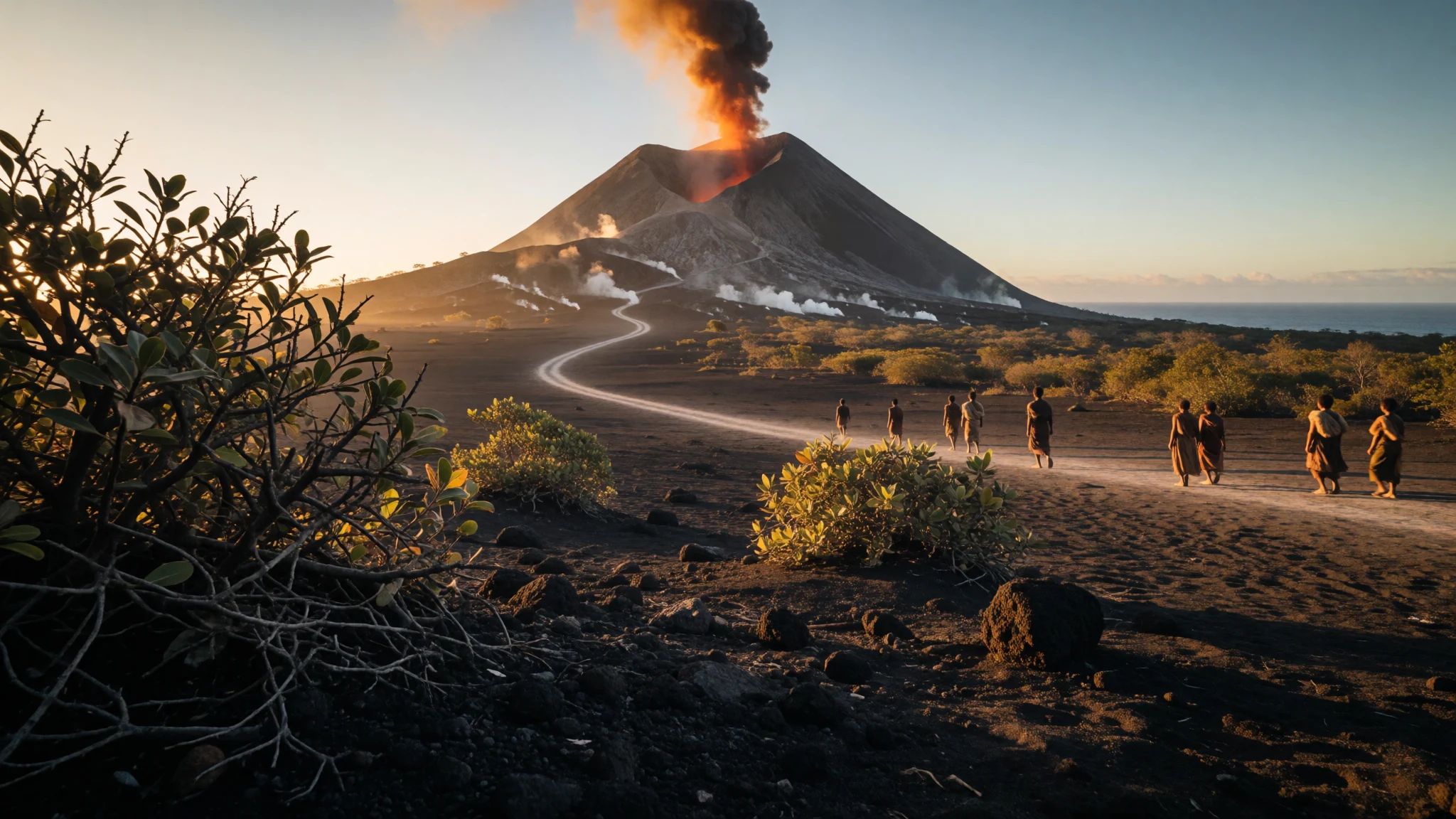
Mount Yasur on Tanna island lets visitors stand at the rim of a volcano that erupts several times an hour, best watched at dusk.
The place
Mount Yasur sits on the south-eastern coast of Tanna, an island in southern Vanuatu, and rises 361 m above the sea. That is modest for a volcano, but nothing softens it: the cone is bare grey ash and cinder, and the summit crater is roughly 400 m across. Beyond the cone a wide ash plain spreads towards the sea, dark, dry and dotted with scrub. Steam leaks from vents on the slopes. Nearby lies Sulphur Bay, the village community whose land includes the mountain.
Geologically, Yasur is a stratovolcano, one of a chain of volcanic islands formed where one tectonic plate slides beneath another in this part of the Pacific. What sets it apart for visitors is its habit. Rather than building towards a rare catastrophe, it erupts almost constantly, throwing glowing fragments of lava into the air several times an hour. Volcanologists describe the activity as Strombolian or Vulcanian. The explosions vary: some are a dull thump and a puff of ash, others send bombs of molten rock high above the rim with a shock wave that can be felt in the chest.
Because the pattern is so steady, the volcano can usually be approached, but not always. Activity changes, and the authorities set alert levels that decide whether the rim is open. Access is organised through local guides and the landowning villages, typically by four-wheel-drive truck from the island's small settlements, followed by a short walk up the ash. Tanna itself is green, rural and quiet, with gardens, villages and forest, which makes the black cone and its glow on the horizon all the more striking. Nights are the main draw, though the rim is also visited by day.
Its story
Mount Yasur has been erupting, with few pauses, for several hundred years, and that long glow is part of its story. In 1774 Captain James Cook made the first European voyage to Tanna, and the light from the mountain is usually said to have drawn him to the island. Sailors have used volcanoes as beacons for as long as there have been ships, and Yasur, bright against a dark coast, was an obvious one.
For islanders the mountain carries a far deeper meaning than any navigation mark. Tanna is a place where kastom, the body of inherited custom and law, still shapes daily life, and the volcano sits inside that world as a living presence. It is sacred to followers of the John Frum movement, a cargo cult. John Frum is revered as a deified messenger who foretold that wealth would reach the island through American forces, and believers hold that he lives inside Yasur together with his countrymen. Sulphur Bay, the village at the heart of the movement, regards the volcano as part of its territory.
That claim matters in practice. A trip to the rim is not a visit to an anonymous national park; it crosses land with owners, rules and ceremonies of its own. Visitors are expected to go through local arrangements, and the villages have a say in who goes where and when. What looks to an outsider like a natural spectacle is, for many people on Tanna, also a home, a neighbour and a holy place.
What to see
- The crater rim at dusk — Summit of Mount Yasur, Tanna
The crater rim at Mount Yasur is the main event. Guides lead small groups up the final ash slope as the light fades, and the rim looks down into vents that throw glowing rock into the sky. Dusk works well: colour still lingers overhead while the first orange flashes appear below.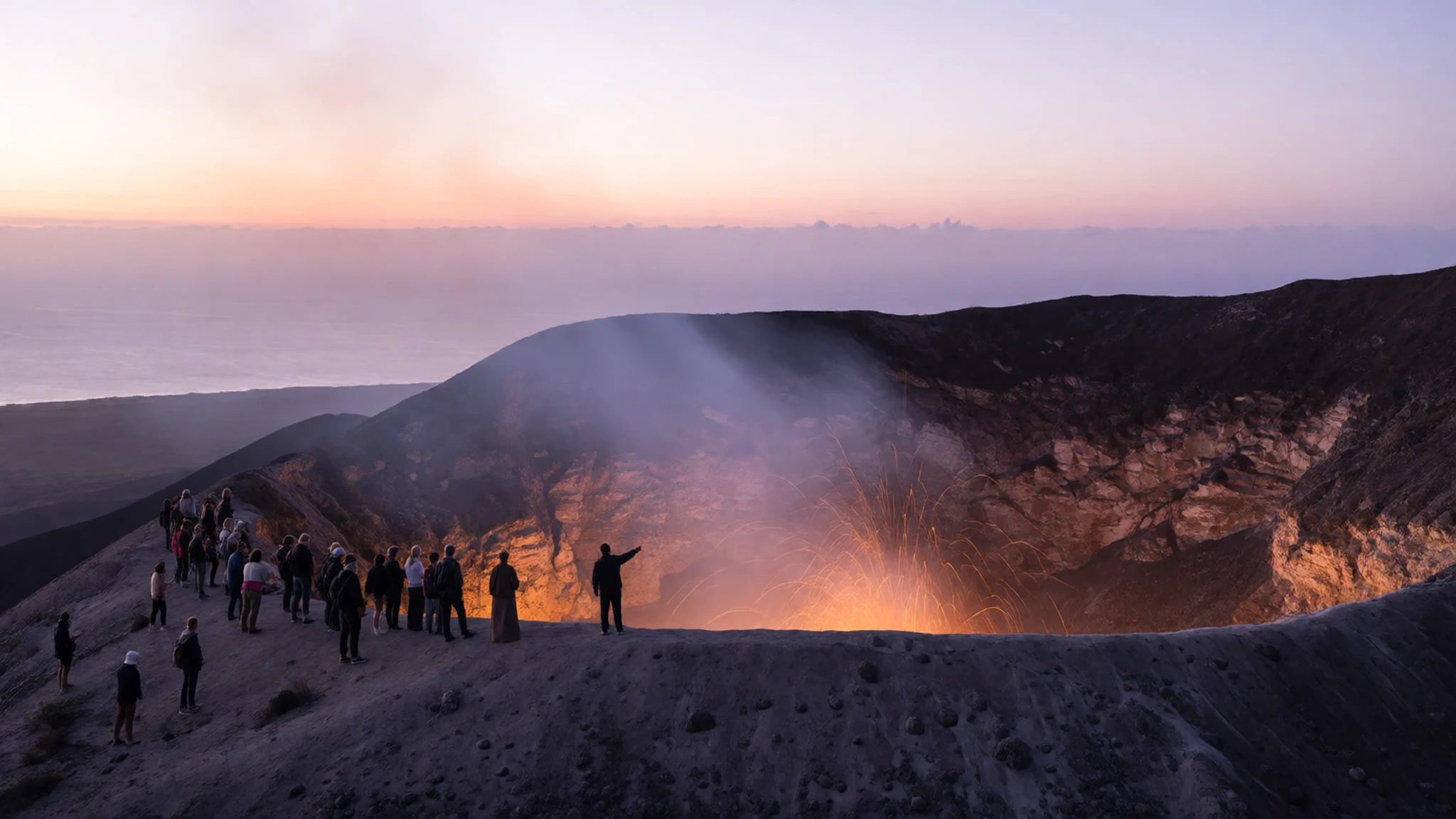
- The ash plains — Approach to Mount Yasur
The ash plains around Mount Yasur form a dark, open apron that the track crosses on the way in. By day the scene is almost monochrome, with the cone ahead and a plume drifting from the top. Arriving early enough to see this landscape in daylight is worthwhile before the glow takes over.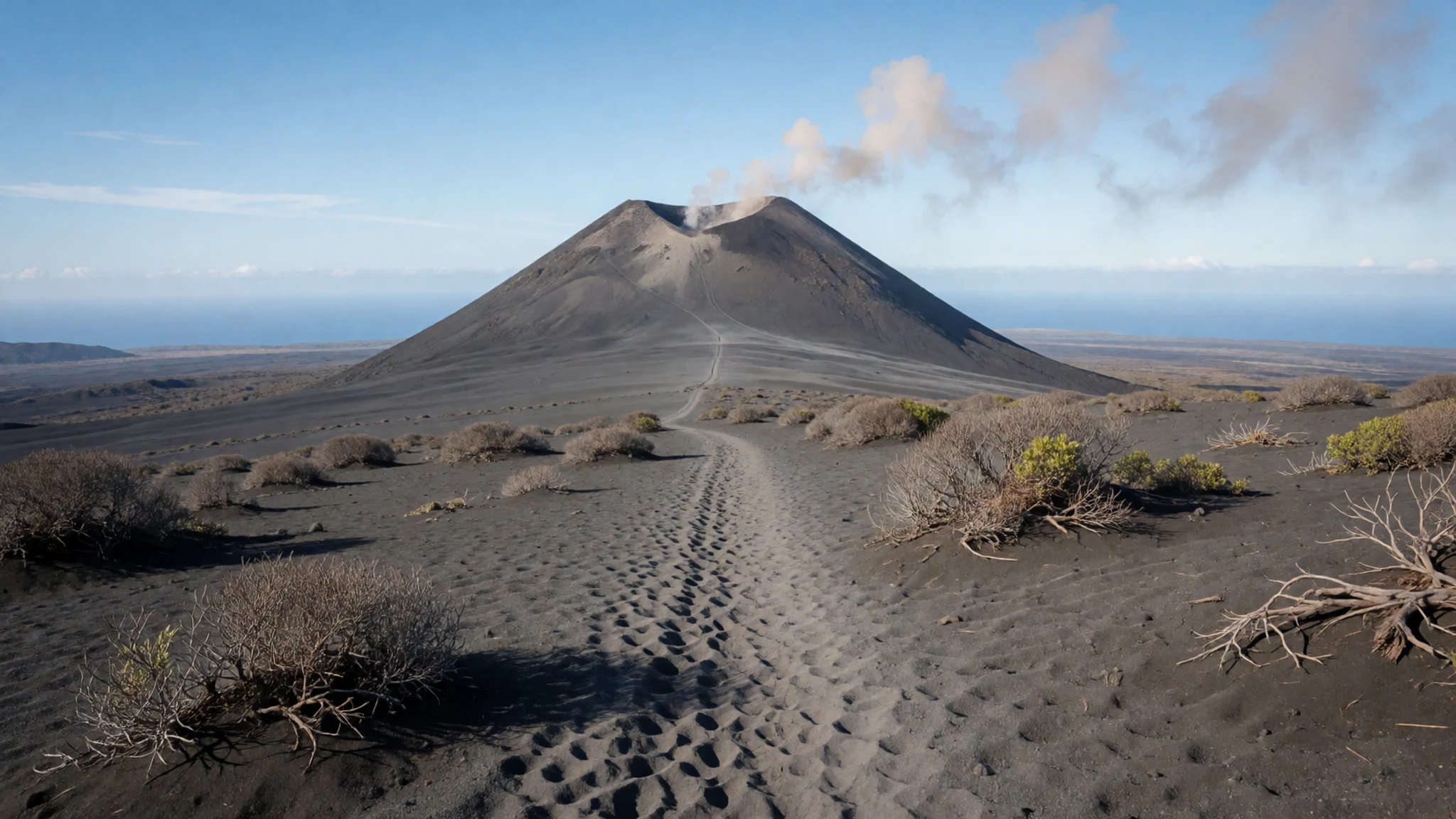
- The fumaroles — Flanks of Mount Yasur
The fumaroles on the flanks of Mount Yasur are vents where steam and gas seep out of cracks in the cone, often leaving yellowish sulphur stains on the rock. They show that the whole mountain is active, not only the crater, and they are one reason to stay on the paths the guides choose.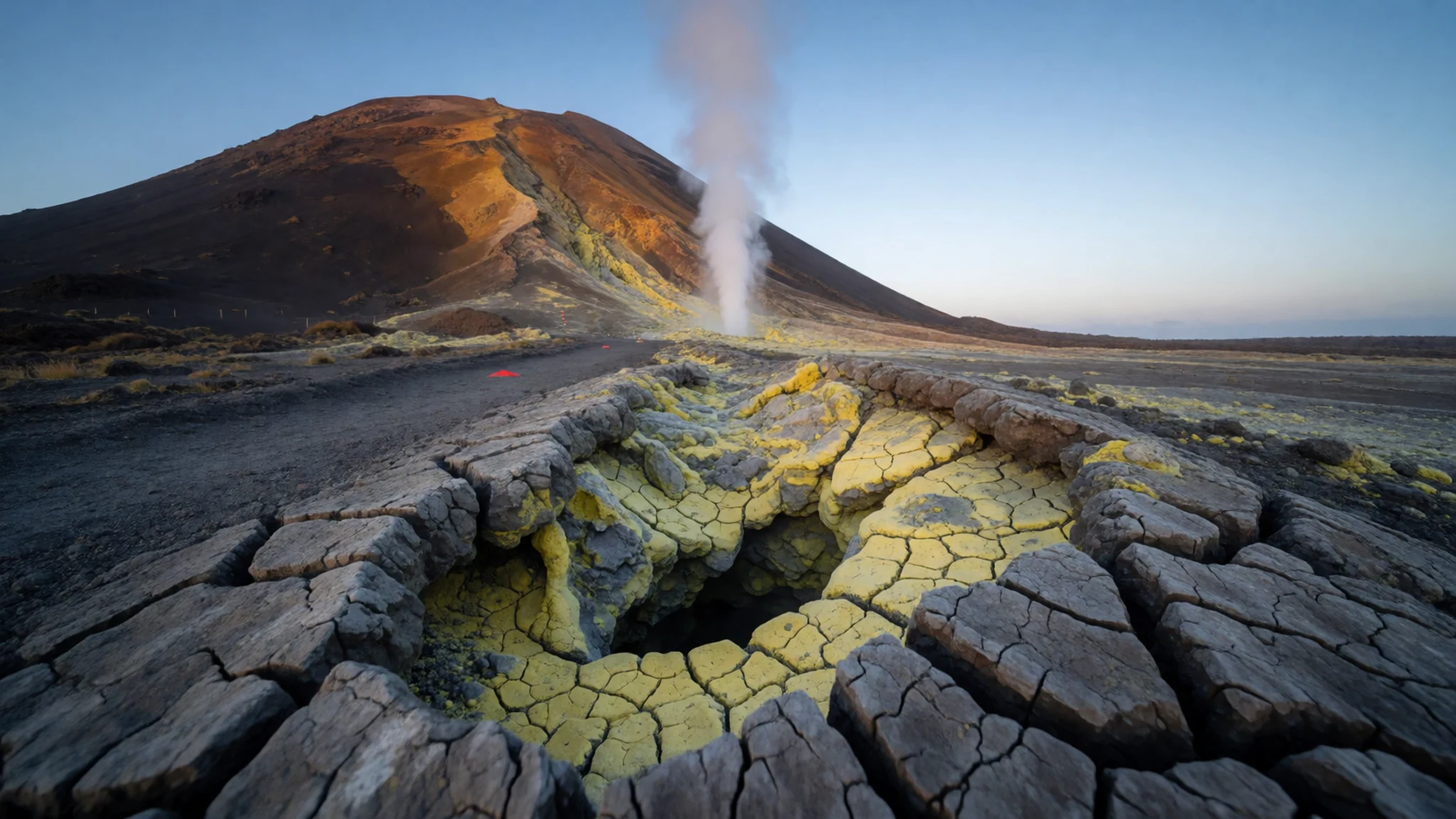
- Night photography at the rim — Crater rim, after dark
Night photography at Mount Yasur turns each explosion into a streak of light. Long exposures on a tripod, or the composite modes on some cameras, trace the arcs of molten rock as they rise and fall. Photographers should bring a tripod, spare batteries and a headtorch, and expect ash on everything.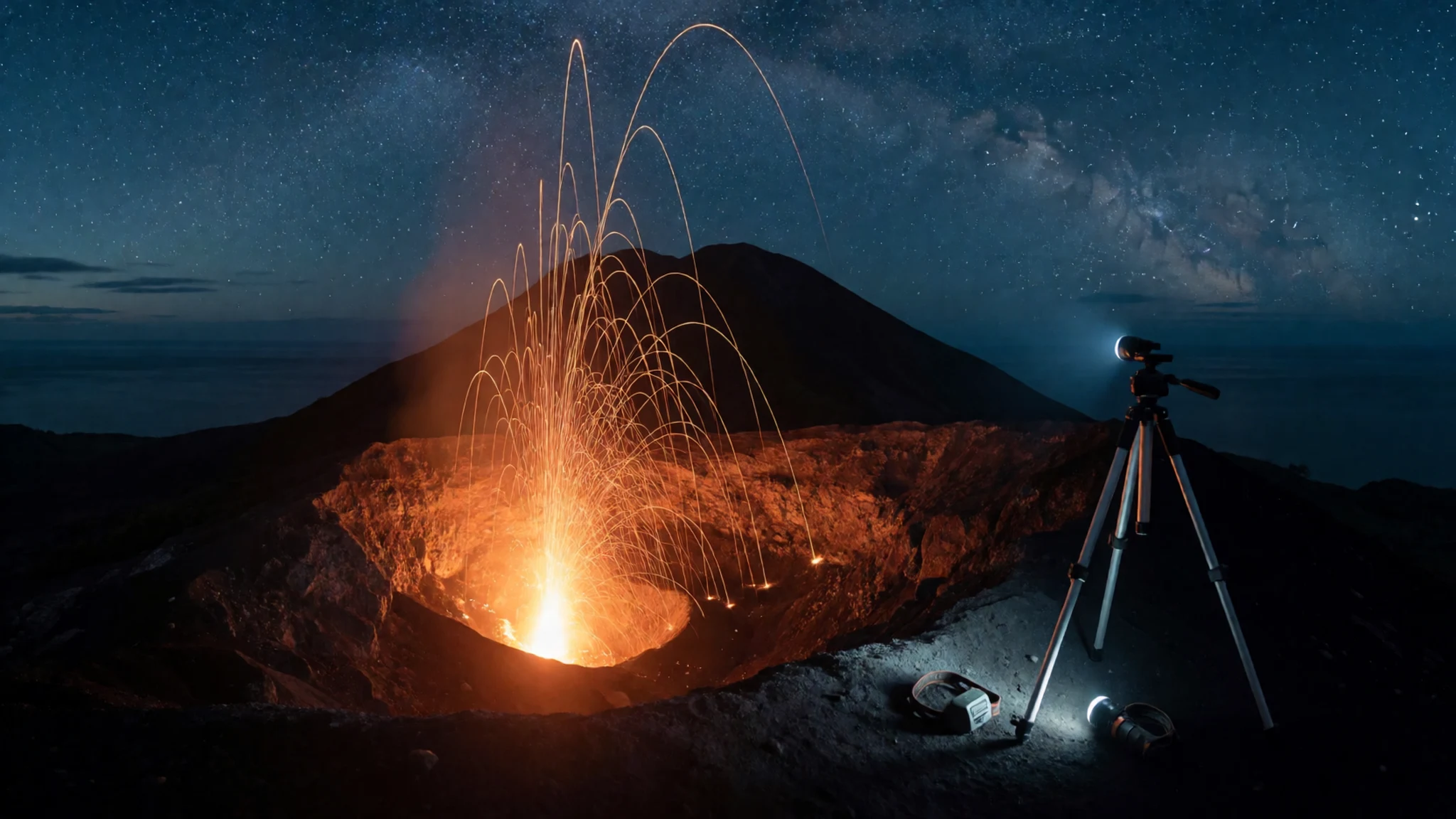
- Sulphur Bay village — Coast near Mount Yasur
Sulphur Bay is the coastal village that is the centre of the John Frum movement and claims the volcano as part of its land. A visit arranged with local hosts adds context that the crater cannot give: the beliefs, the gardens and the daily routines of a community living beside the mountain.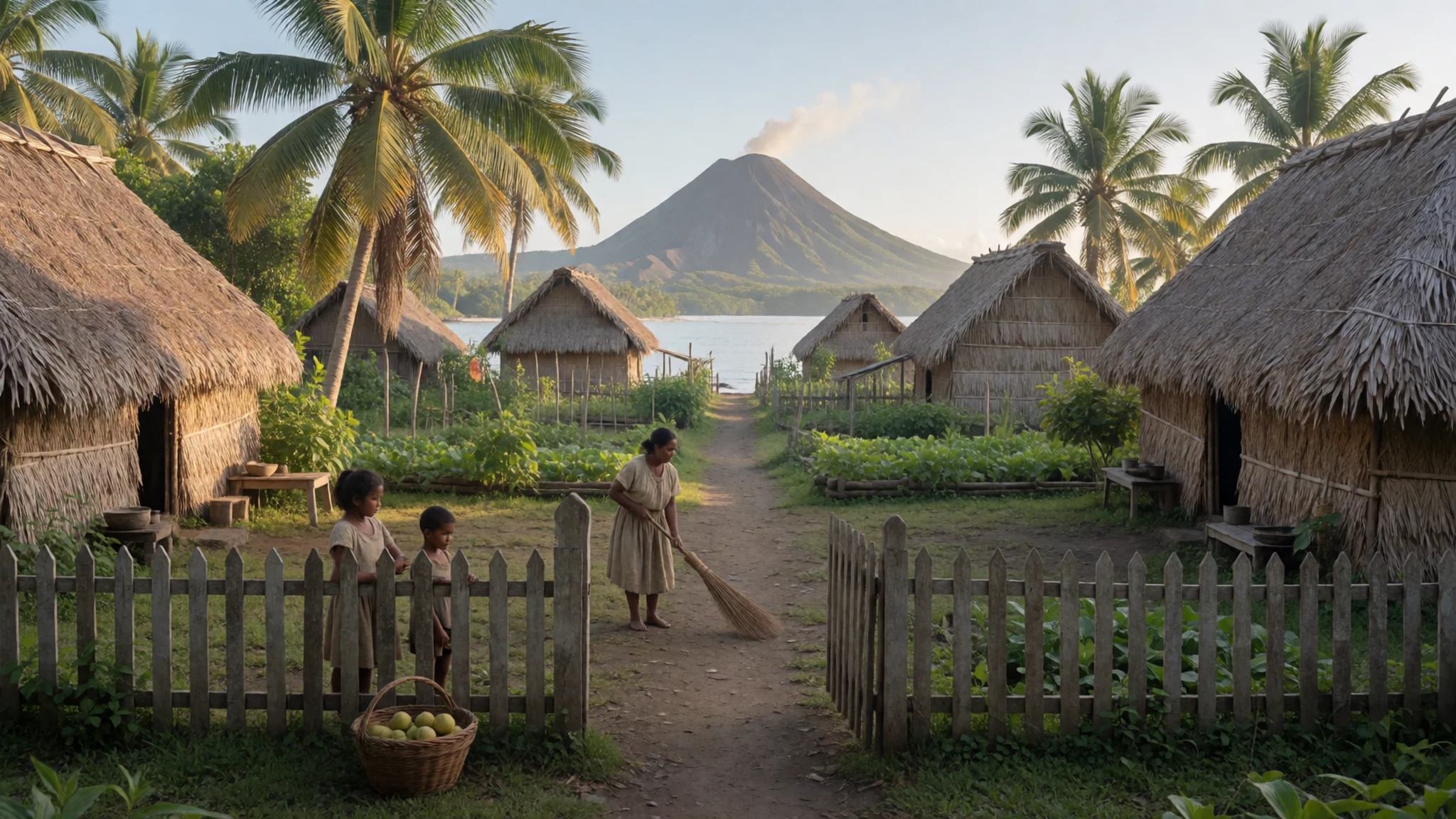
Culture
Mount Yasur belongs to a living culture, and life on Tanna is built around kastom: custom handed down through families, villages and chiefs. Land is held by named groups, and the volcano stands on land with recognised custodians. That is why access is arranged through local people rather than simply bought at a gate.
The John Frum movement is the best-known strand of belief tied to the mountain. Followers revere John Frum as a messenger and hold that he lives inside Yasur. The movement is still active around Sulphur Bay, where members mark special days with flags, marching and song. Visitors should treat it as a faith, not a curiosity.
Other traditions on Tanna include kava drinking at the evening gathering ground called a nakamal, and dances that mark exchanges and marriages. Many of these gatherings are closed to outsiders or open only by invitation. Bislama, the national creole, is widely spoken alongside local languages, English and French, and a few friendly words in Bislama are always appreciated.
Life on the island is unhurried. Plans shift with weather, ash and village obligations, and patience is part of the visit. Guides are community members as well as escorts, and what they ask is usually rooted in local rules about safety and respect for the mountain.
Follow your guide's instructions on where to stand at the rim, ask before photographing people or ceremonies, and never take stones or ash from the crater without permission.
What to wear
Around Mount Yasur on Tanna, traditional dress is made from plant fibre rather than woven cloth. In villages that keep kastom closely, men wear a wrapper of bark or leaf fibre called a nambas, and women wear skirts of grass or pandanus fibre. Woven pandanus mats are valued across Vanuatu and are given at ceremonies. Feathers, flowers, shell ornaments and painted designs are added for dances and special days, not for everyday life.
Day to day, most people on Tanna dress for a warm, humid climate. Men favour shorts, T-shirts and rubber sandals, while women often wear loose, bright cotton 'island dresses' with short sleeves, a style introduced by missionaries long ago and still common. On Sundays, people dress up for church.
Visitors should plan around the terrain and the climate. The ash at Mount Yasur is loose and abrasive, so closed shoes with a good grip matter more than style; sandals fill with grit. Lightweight long trousers protect the legs, and a warm layer helps because wind at the rim feels cold after sunset. Add a rain jacket, a hat, sunglasses, a headtorch and a buff or light mask against dust. In villages, both men and women should keep shoulders and knees covered, and swimwear belongs on the beach only.
What to eat
- Laplap — Village feasts and small local eateries on Tanna
Laplap is often called Vanuatu's national dish: grated yam, taro or manioc pressed into a parcel of leaves and cooked in an earth oven, usually with coconut cream and sometimes pork or fish. The result is dense, mild and slightly smoky.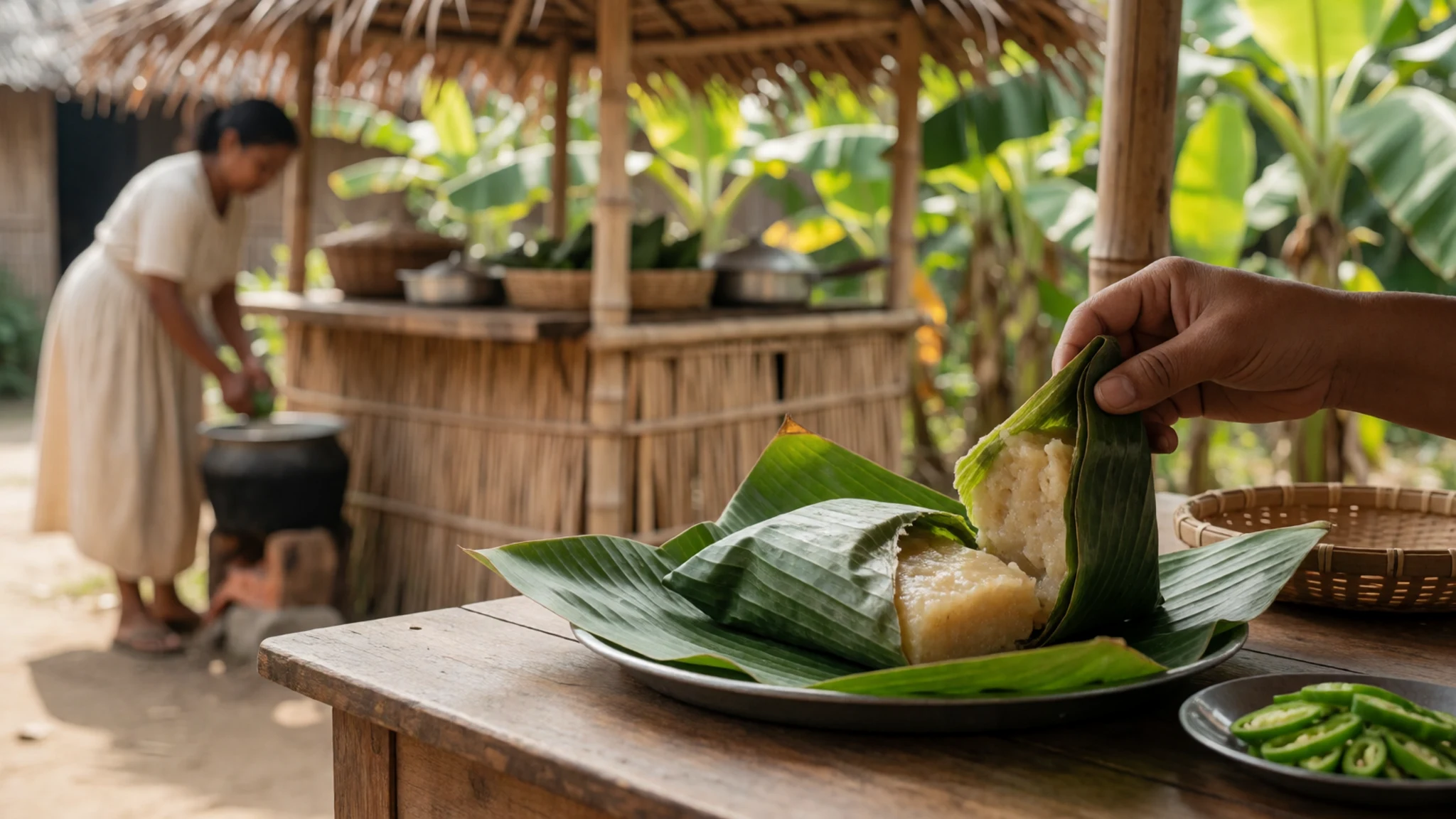
- Kava — A village nakamal in the evening
Kava is a mildly numbing drink made from the root of a pepper plant, taken at dusk at a nakamal. The taste is earthy and the effect calming rather than lively. Visitors are usually offered a small cup; sip slowly and ask the host how it is done.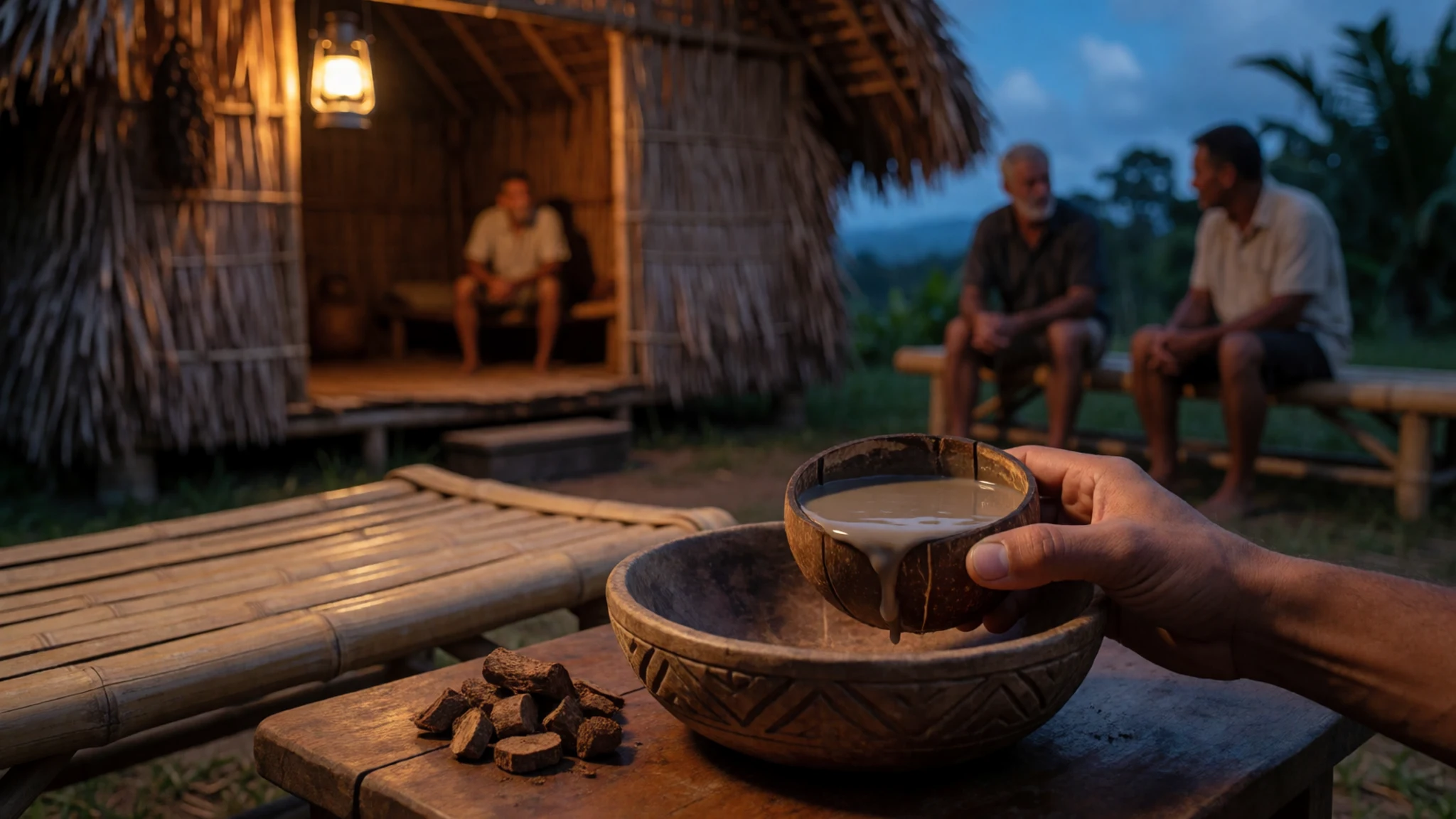
- Tanna coffee — Guesthouse breakfast tables and small roadside stalls
Tanna is known for its coffee, grown in volcanic soil and often roasted in small batches. A cup with breakfast is an easy way to taste the island, and it makes a practical gift to carry home. - Grilled reef fish — Coastal villages and simple eateries near the shore
Fish caught off Tanna is usually grilled over an open fire or cooked in coconut milk, then served with rice or root vegetables. The seasoning is light, so the smoke and the freshness do most of the work. - Island cabbage in coconut milk — Village meals and home-style eateries
Island cabbage, a leafy green known locally as aibika, is simmered in coconut milk and served beside root crops. It tastes mild and slightly slippery, and it offsets the heavier, smoky flavours of grilled meat and laplap. - Fresh island fruit — Roadside stalls and village markets
Bananas of several kinds, papaya, pineapple, pomelo and fresh coconut are sold from roadside stalls and small markets. Fruit is cheap to buy in the morning, travels well in a day bag and is welcome after a dusty night at the volcano.
Plan it
Best time. May to October is the cooler, drier season, with clearer skies for the night glow and easier travel on the island. November to April is hotter, wetter and more humid, and falls in the Pacific cyclone season, so flights and plans are more likely to be disrupted.
How long. 2–3
Getting there. Fly to Bauerfield International Airport at Port Vila on Efate, then take a domestic flight to Whitegrass Airport on Tanna. From there a local guide or guesthouse arranges the last leg by four-wheel-drive truck to the volcano area.
Budget. mid
Tips
- Book the domestic flights and the volcano trip ahead, and keep a spare day in case weather or the alert level cancels a crossing or a rim visit.
- Carry cash in small notes; cards and cash machines are unreliable outside Port Vila.
- Bring a headtorch, water, a rain layer and a dust mask or buff.
- Ask your guide about the current alert level and where it is safe to stand before leaving for the rim.
- Go in the late afternoon so one visit gives both daylight views and the glow after dark.
Etiquette
- Follow your guide's instructions at the rim, including stopping or moving back when told.
- Ask permission before photographing people, villages or ceremonies.
- Keep shoulders and knees covered in villages and treat the mountain as a sacred place.
Nearby
Sources
- Wikidata Q392766 (CC0)
- Wikipedia: Mount Yasur (rev 1381049205) (CC BY-SA 4.0)
- Eruption of Yasur — Rolf Cosar (CC BY 3.0)
- Mt. Yasur, Tanna — Stefan Heinrich (CC BY-SA 2.0 de)
- Approaching Mt. Yasur across the ash plains — Phillip Capper (CC BY 2.5)
- Photo of a volcano on Tanna island Vanuatu — Andrew J Swann (CC BY 3.0)
- Eruption of Mount Yasur on Vanuatu — Charmaine Tham (CC BY 2.5)
- Fumaroles on Mt. Yasur — Phillip Capper (CC BY 2.5)
- Mount Yasur, Tanna Island, Vanuatu — Vincent Albanese (CC BY 2.5)
- Lava trails at Mount Yasur Volcano — Romain Pontida (CC BY-SA 2.0)
- Wikivoyage (CC BY-SA 4.0)


