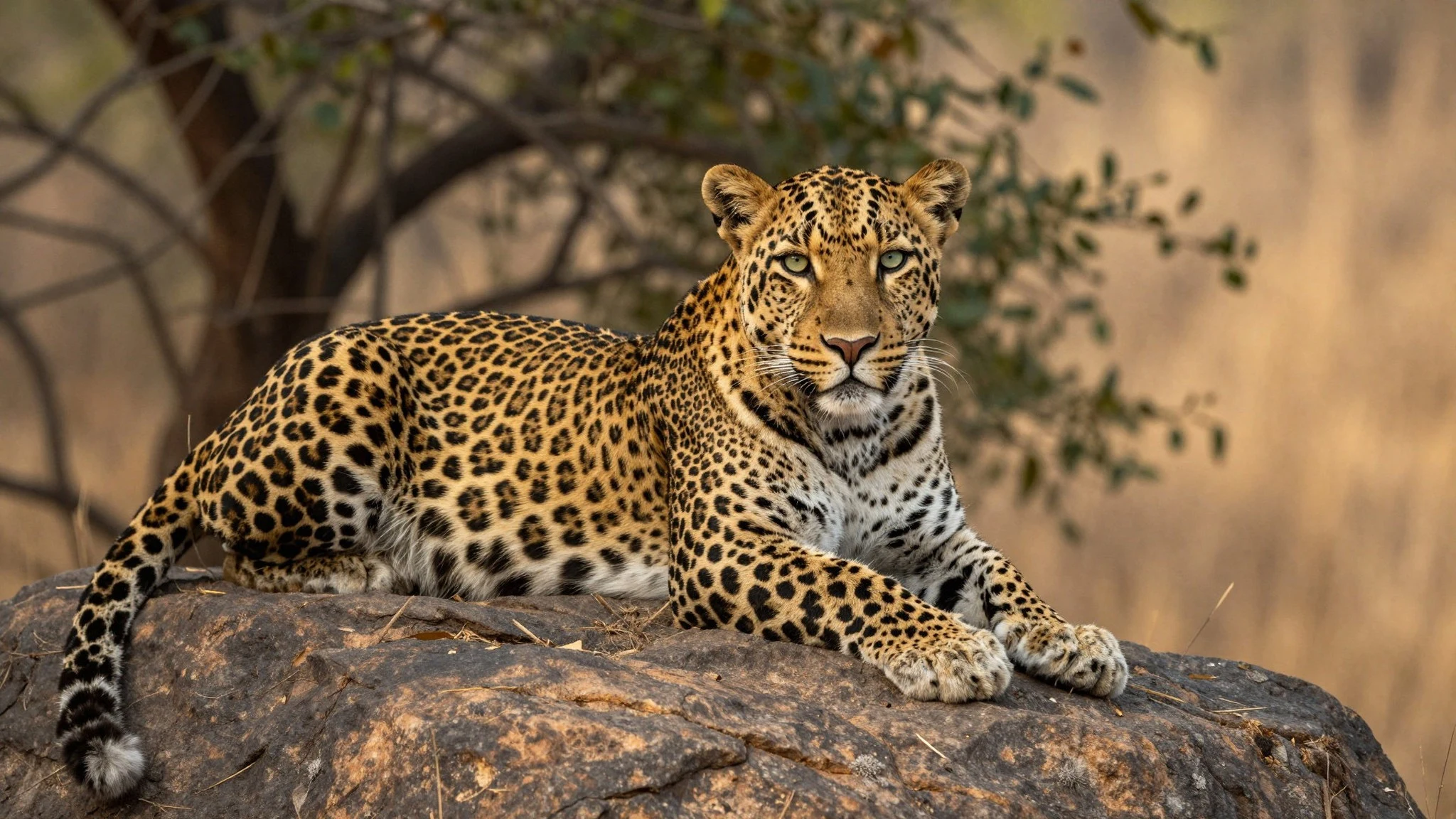
Pench National Park
Pench National Park, India
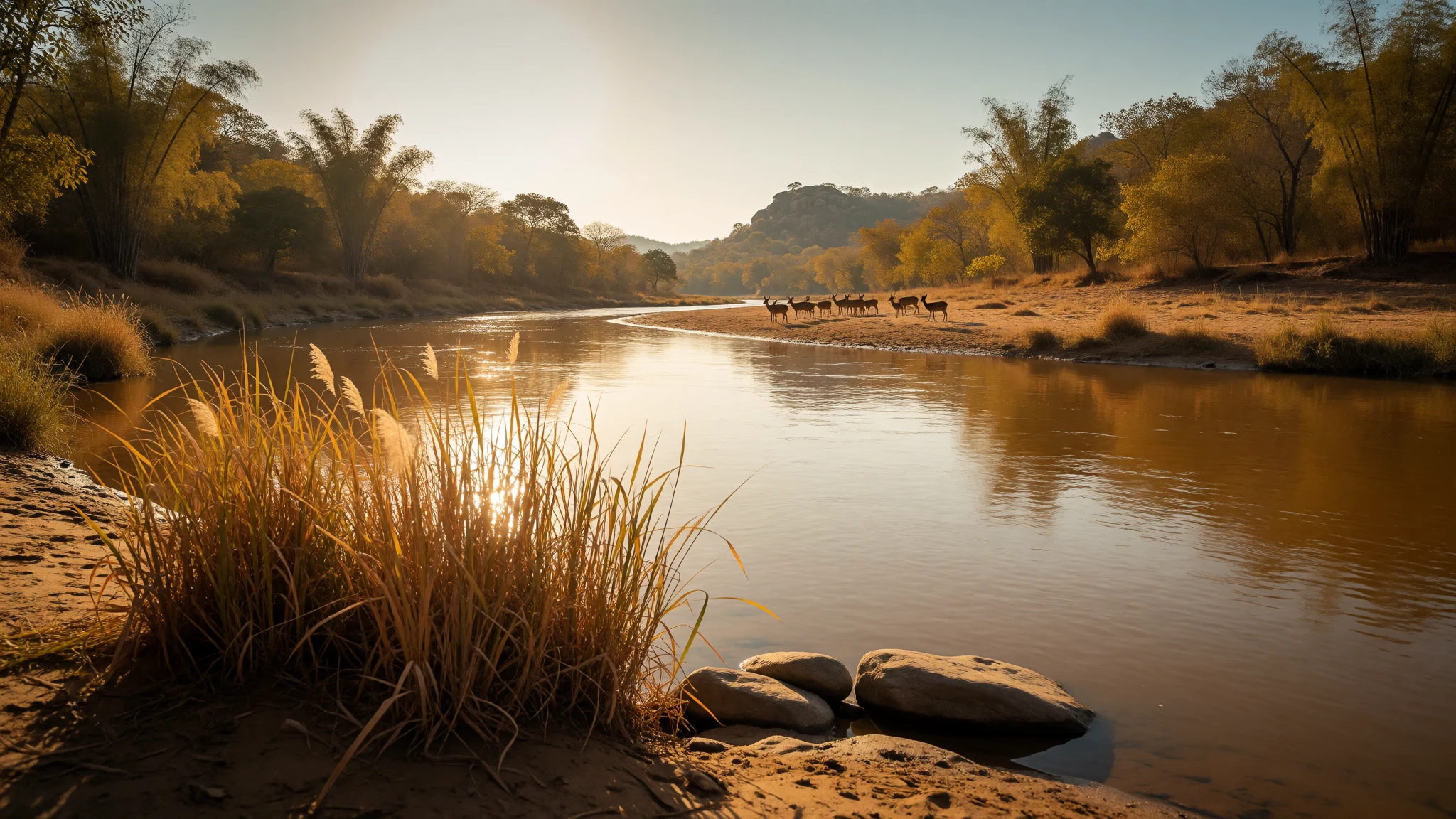
Pench National Park offers dry teak-and-grass forest, a river and a reservoir, and real chances of tigers, leopards and birds on early jeep safaris.
The place
Pench National Park lies in the Seoni and Chhindwara districts of Madhya Pradesh, in the middle of India's central highlands. The wider Pench landscape continues south across the state line into Maharashtra, so the same forest is managed and visited from two sides. Wikidata lists the park as founded in 1977, and it now forms the core of Pench Tiger Reserve. A separate sanctuary named after Mowgli and a buffer zone of forest and villages surround it. The protected core covers about 292.85 km², and the reserve as a whole is larger.
The country here is dry deciduous forest broken by rocky hills, open grassland and small streams. The Pench River gives the park its name and its lifeline, and a reservoir on the river draws animals and birds to its edges as the dry season wears on. Chital and sambar deer, gaur, wild boar and langurs are the animals most visitors see easily. Leopards, sloth bears, wild dogs and tigers are present too, but they reward patience and luck rather than promising a sighting.
The climate has two moods. Winter nights can drop to freezing, while summer afternoons are fiercely hot, and rain averages about 1,400 mm a year, nearly all of it in the monsoon. The land sits at modest altitude, between roughly 425 m and the low hills above it, so there is no relief from cooler mountain air. Visits are organised by safari zone and gate, which shapes everything from where you stay to what you are likely to see.
Its story
Pench National Park carries a long literary reputation. The forests around Seoni were already known for game in the sixteenth century, when the Ain-i-Akbari, the administrative survey compiled under the Mughal emperor Akbar, recorded the natural resources of this region. For centuries before and after, the land belonged to forest-dwelling communities, the Gond peoples among them, whose lives were tied to the trees, the river and the seasons.
In the nineteenth century British officers, sportsmen and naturalists came through Seoni and wrote about what they saw. Robert Armitage Sterndale is the name most often attached to the district. His accounts of its hills, jungle and wildlife helped fix an image of central India as a place of wolves, bears and big cats, and that image fed into later fiction.
The best-known claim is that this landscape inspired Rudyard Kipling's The Jungle Book. It is worth treating with care. Kipling never needed to stand in Pench to write the stories, and the connection rests on the Seoni setting in Sterndale's writing and on local tradition rather than on a documented visit. Even so, the claim has shaped the place. The Mowgli name appears on the neighbouring sanctuary, and guides around Turia happily point out spots that resemble scenes from the book.
Protection arrived in the twentieth century in stages. The area became a national park, then part of a tiger reserve, and the buffer around it was added later. The result is a forest that is formally protected but still lived in around its edges.
What to see
- Turia zone — Seoni district, Madhya Pradesh
Turia is the busiest entry on the Madhya Pradesh side and the usual base for first visits, with lodges clustered nearby. The track runs through teak forest and grassland, and the area is the one most often linked with Mowgli stories. Book the zone early in the season because places fill up.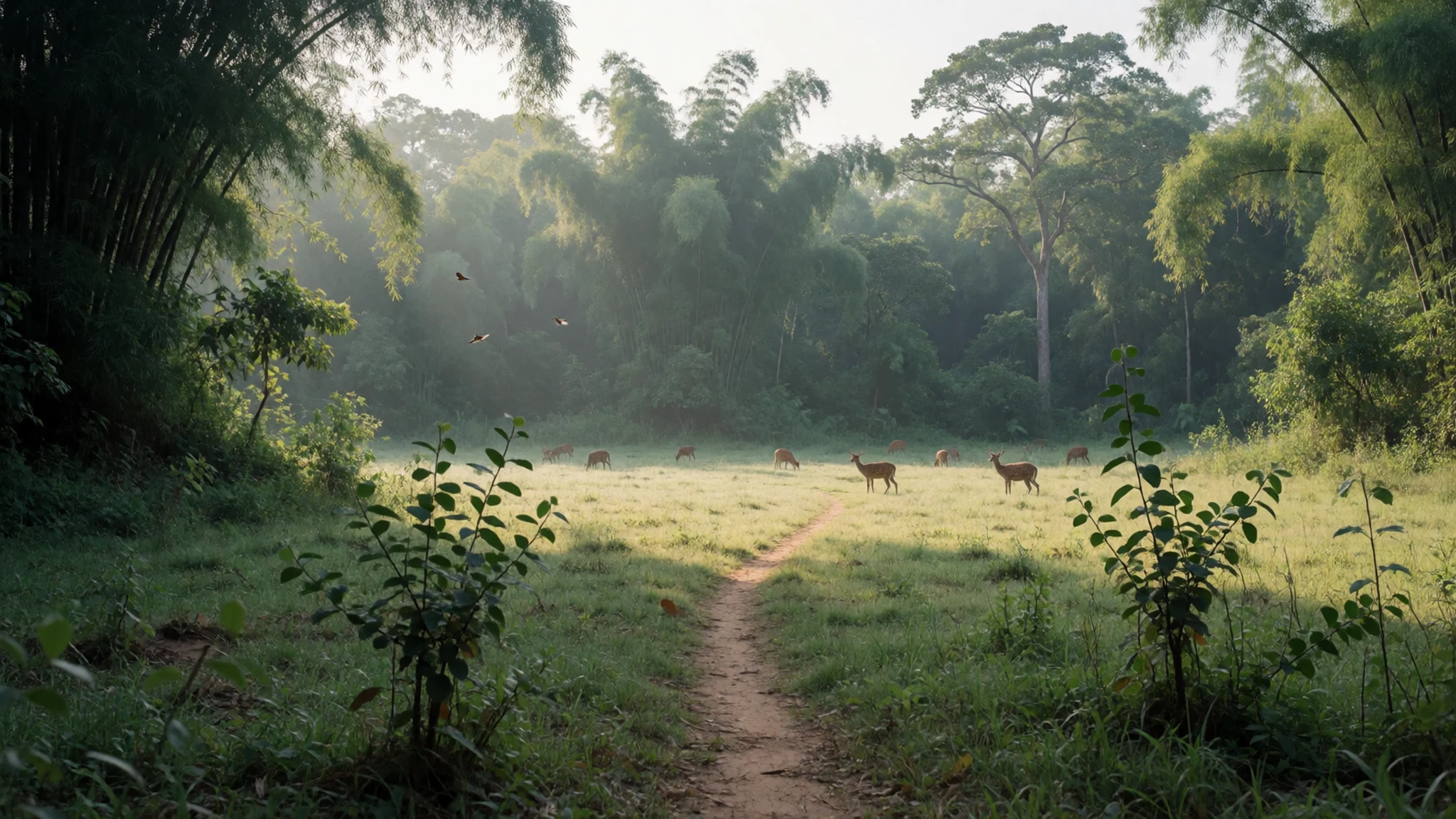
- Karmajhiri zone — Seoni district, Madhya Pradesh
Karmajhiri is a quieter gate on the same side of the reserve, reached by road through Seoni from Jabalpur. The forest is thick in places, with rocky ground and open clearings where deer graze. It suits visitors who prefer fewer vehicles at a sighting, though numbers are never guaranteed.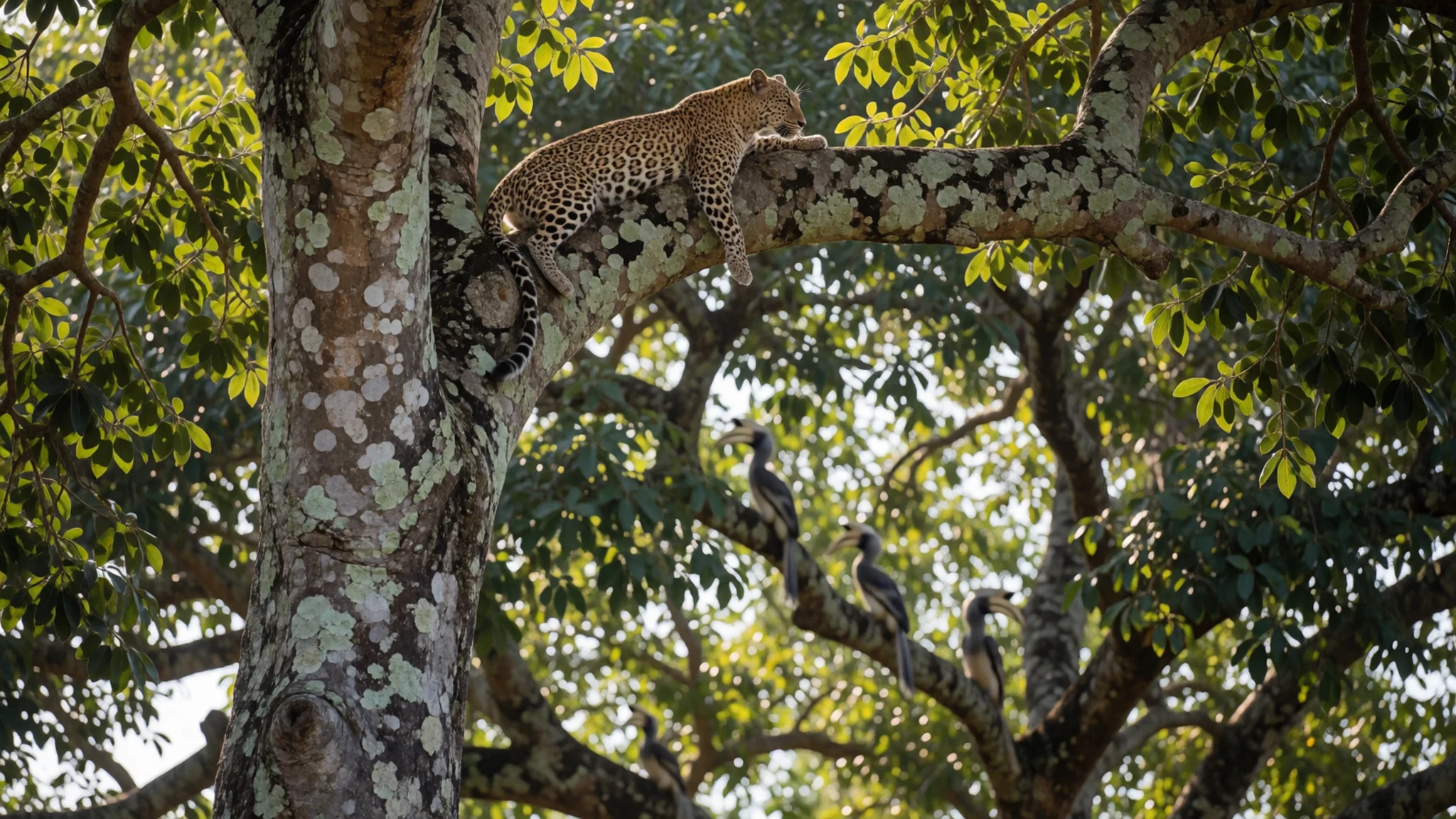
- Pench River and reservoir — Seoni and Chhindwara districts
The Pench River runs through the park and widens into a reservoir that becomes the main gathering point as other water dries up. Herds of deer, wild boar and many water birds come here. Sitting at a safe distance with binoculars often gives a better view than driving on to the next zone.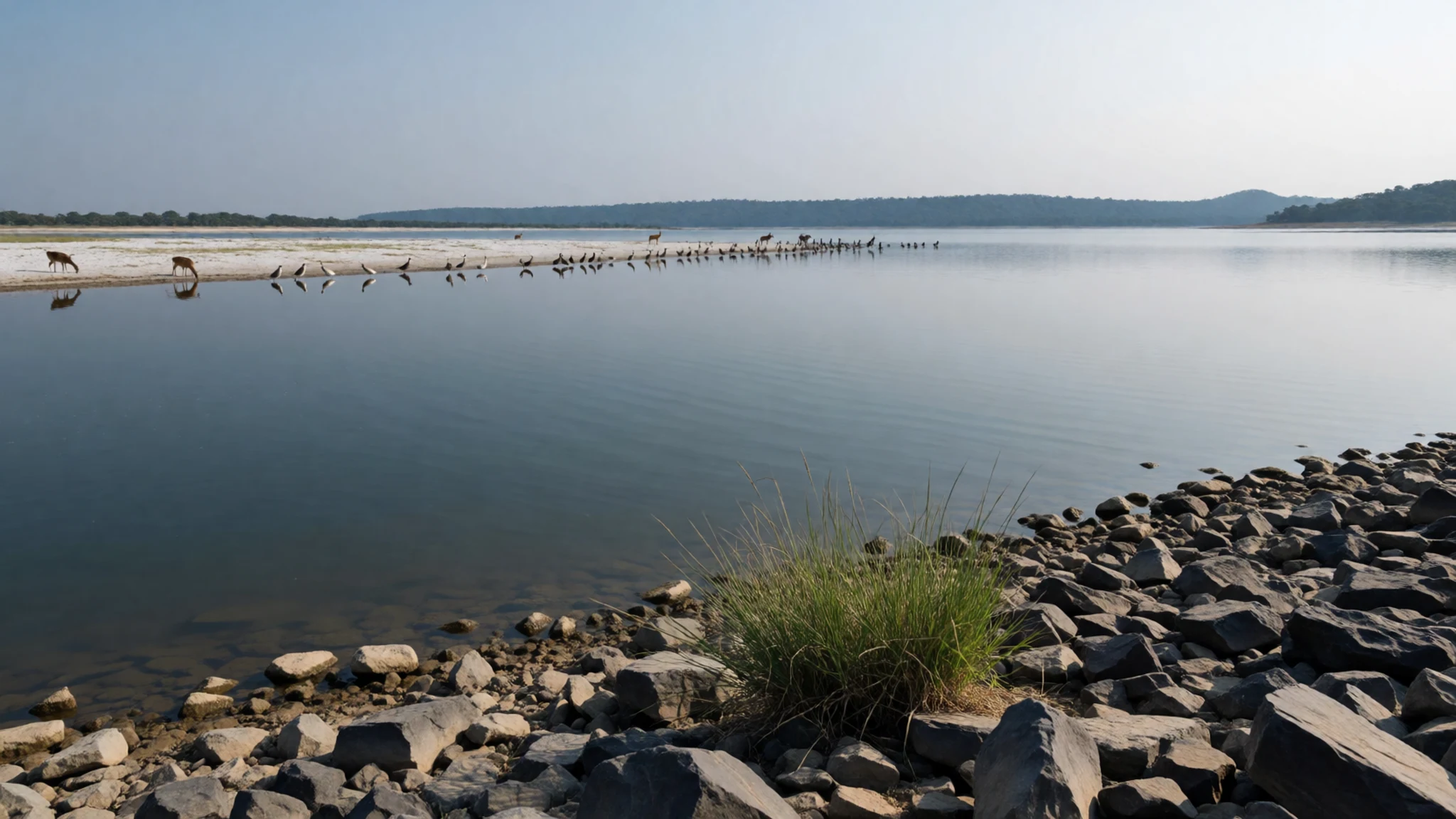
- Sillari and the Maharashtra zones — Nagpur district, Maharashtra
The Maharashtra side of Pench has its own gates, including Sillari, Khursapar and Kolitmara. Each opens onto different stretches of forest and shoreline. Visiting both states gives a wider sense of the habitat, but entry rules, permits and booking systems differ, so check each before you plan.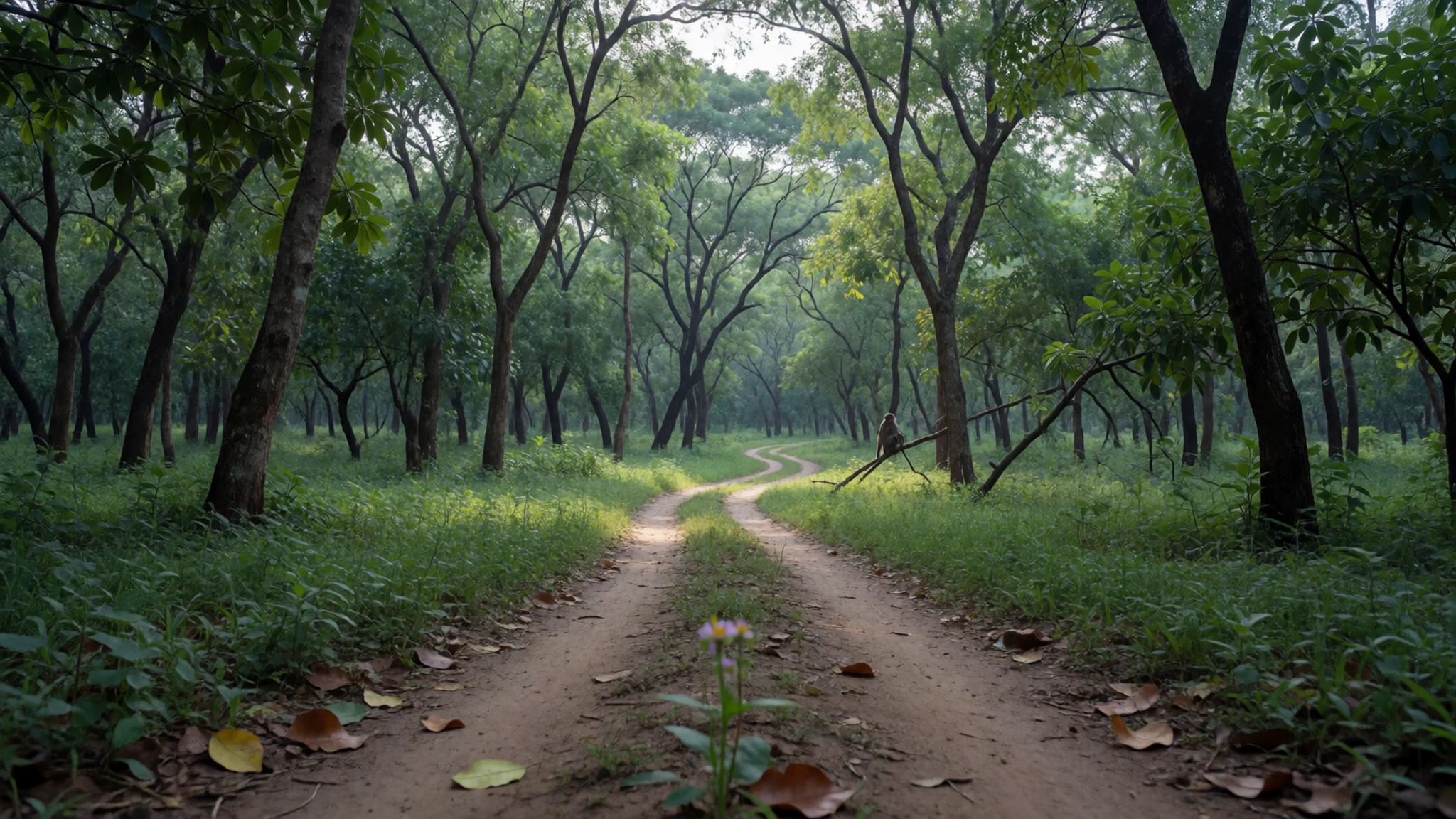
- Birdwatching in the forest — Throughout the reserve
Pench is good for birds as well as mammals. Indian grey hornbills sit in the canopy, green bee-eaters and Indian rollers perch on dead branches and wires, and waterbirds crowd the reservoir edge. Even visitors who come for tigers often end the day talking about the birds, which are easy to watch from a stationary jeep.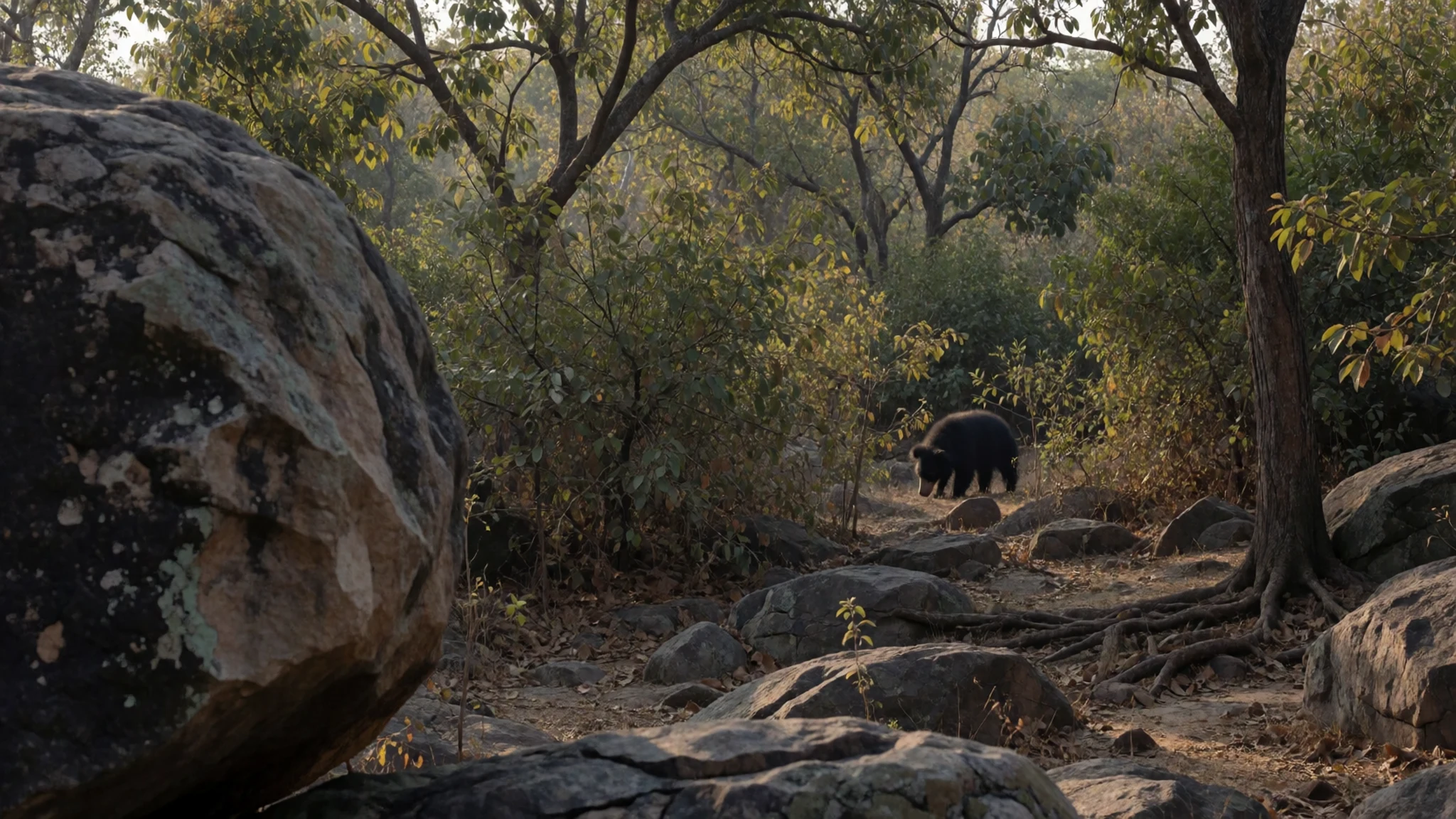
Culture
Pench National Park is a wildlife reserve rather than a pilgrimage site, so its culture is mostly about how people live with the forest. Villages sit around the buffer zone, and many residents farm, herd cattle or work in tourism as guides, drivers and lodge staff. The relationship between park and neighbours is not always easy, because cattle, crops and large predators share the same edges, and conservation rules limit what villagers may collect from the forest.
The cultural story most outsiders arrive with is Kipling's. Mowgli, Shere Khan and Baloo are familiar to readers in India and Britain alike, and local operators lean on that familiarity, naming sites, lodges and routes after characters. It is a friendly marketing story, but it sits beside older ones. Gond communities have long histories in this region, with their own relationships to trees, hills and animals, and their art and oral traditions are well worth seeking out in Madhya Pradesh more widely.
Day to day, the guides are the best window into the place. Many have grown up nearby and can tell you which birds call before a leopard moves, how the forest changes after rain, and what living beside a tiger reserve involves. Talk to them, listen properly and tip fairly if you are happy with the service.
Before you go, listen to your guide and keep to the safari vehicle, speaking quietly so the animals and other visitors are left undisturbed.
What to wear
Pench National Park is rural central India, and traditional dress here reflects village life across Madhya Pradesh and Maharashtra. Women commonly wear sarees, often in cotton, draped practical-style for fieldwork, while men wear dhoti or trousers with a kurta or shirt and a cloth tied around the head against the sun. Gond communities have their own jewellery and decorative traditions, and festival days bring out brighter silks and heavier ornaments. Specific textile names vary by village, so ask rather than assume.
What people wear day to day is simple and weather-led. Around the park gates you will see jeans and shirts on drivers and guides, cotton salwar suits and sarees on local women, and the olive, khaki or green uniform of forest staff. Lodge employees often dress in plain, neat clothes in muted colours.
For a visitor, the main aims are sun protection, comfort in an open vehicle and not standing out to wildlife. Light cotton or quick-drying layers in green, brown, olive or beige work well. Avoid white and bright colours. Winter mornings in an open jeep are cold enough to need a fleece, a scarf and a hat, and in summer a wide-brimmed hat, sunglasses and sunscreen matter more. Closed, sturdy shoes suit the dusty ground. Modest dress, covering shoulders and knees, is polite in villages and when visiting nearby temples.
What to eat
- Dal, roti and sabzi — Roadside dhabas near the park gates
Plain lentils, flatbread and a seasonal vegetable dish are the everyday meal around Pench. They are made fresh and eaten hot, and they suit the long early starts of safari days. Look for them at dhabas along the roads leading to the gates.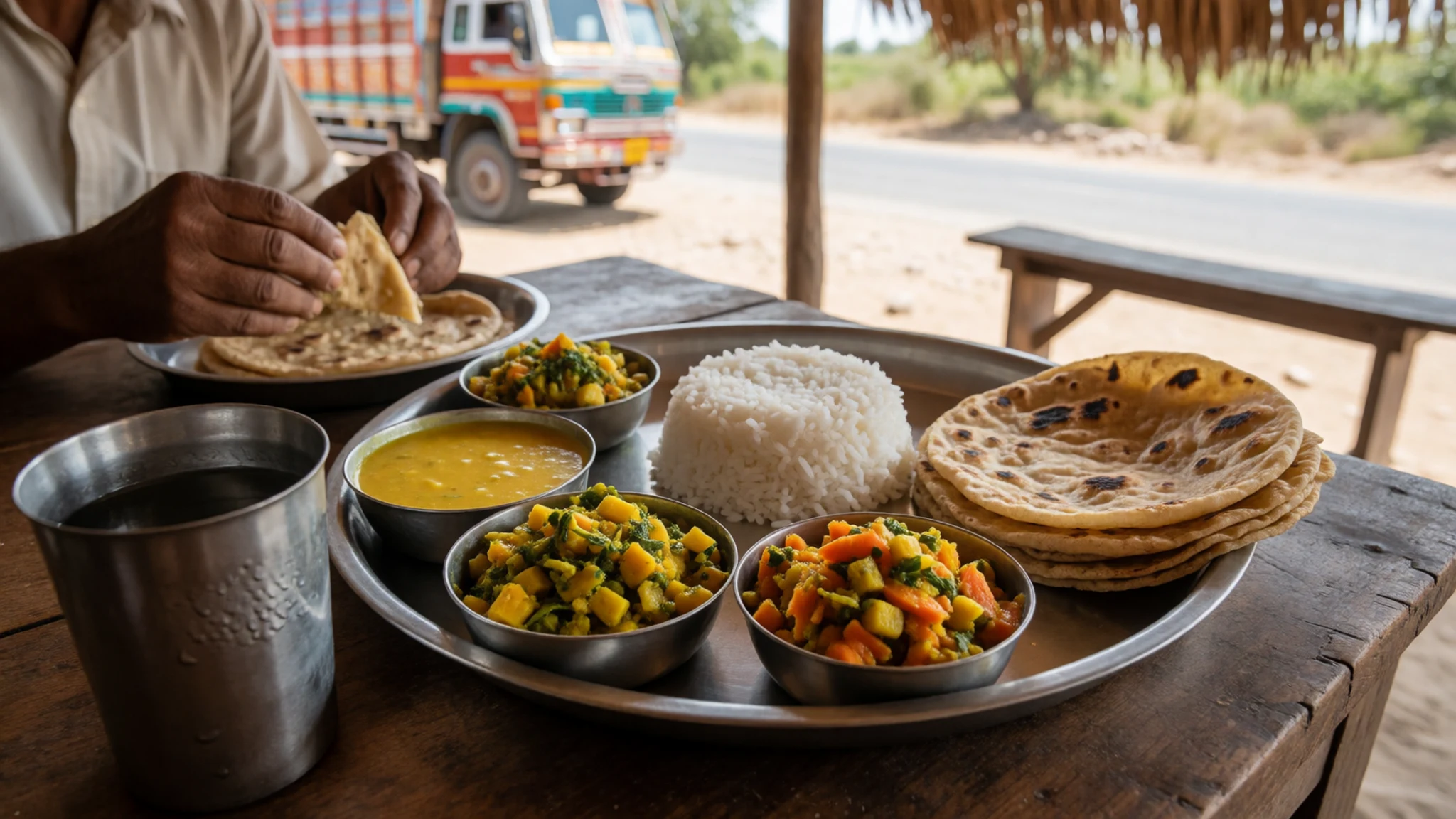
- Poha — Tea stalls and lodge breakfast tables
Flattened rice cooked with onion, mustard seed, turmeric and peanuts is a common breakfast in Madhya Pradesh. It is light, quick and often topped with sev and lemon. Many lodges and tea stalls serve it before or after the morning drive.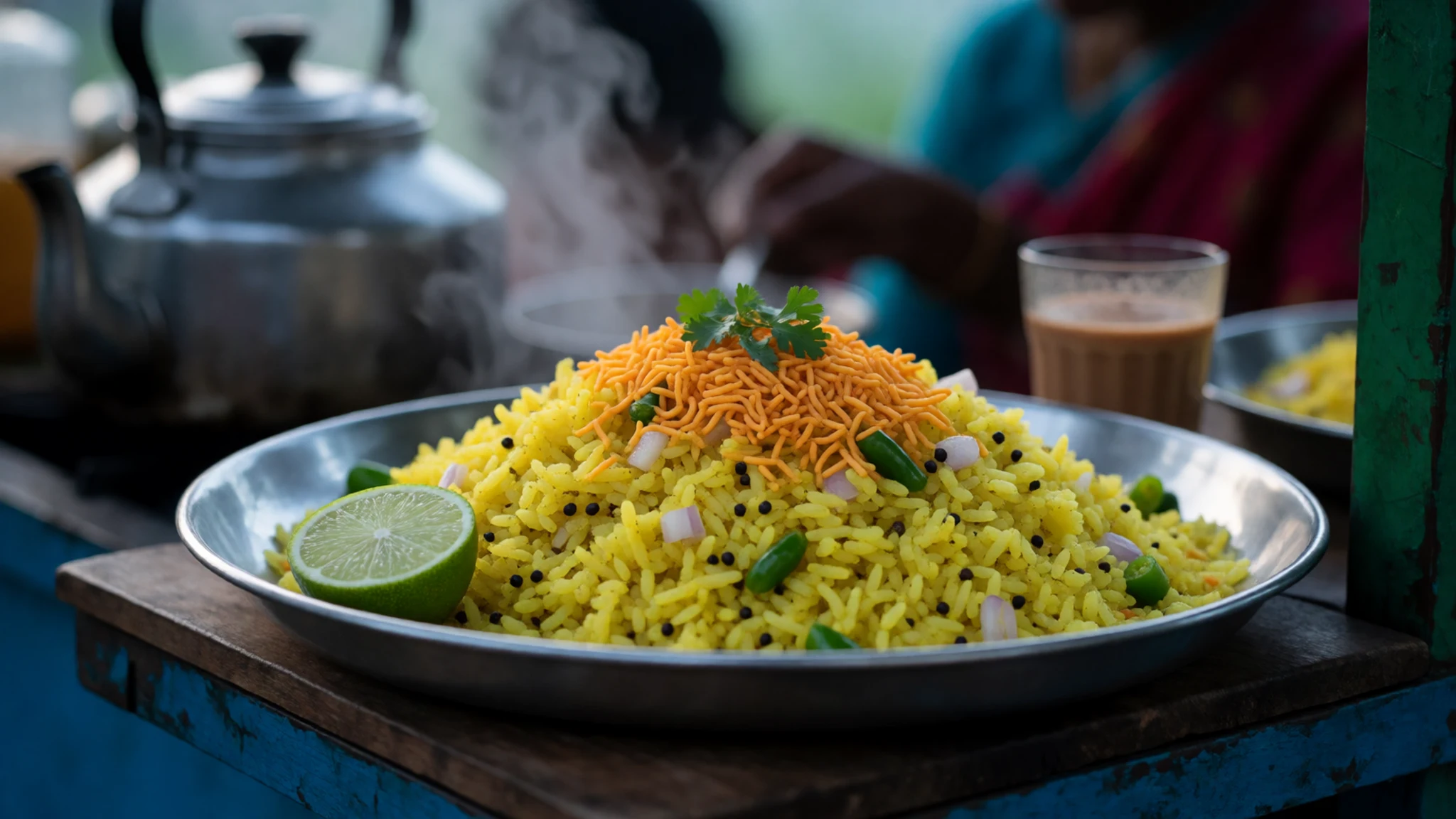
- Bhutte ka kees — Local eateries in Seoni and Chhindwara towns
This grated sweetcorn dish, cooked with milk, spices and green chilli, is associated with Madhya Pradesh and tastes best in the monsoon and after, when fresh corn is plentiful. Ask local eateries whether it is on that day. - Saoji mutton or chicken — Saoji-style eateries around Nagpur
Across the border in Maharashtra, Nagpur's Saoji cooking uses a dark, hot spice paste for rich, peppery curries. It is a strong dish for meat eaters and is easily found on the Nagpur side of the reserve. - Chai and fried snacks — Chai stalls and dhabas outside the park
A glass of sweet milky tea with pakoras or samosas is the standard pause on the road. Prices are low and the menu is short, which usually means everything is cooked fresh in front of you.
Plan it
Best time. November to March is the comfortable window, with cool mornings and pleasant days, though winter dawns in an open jeep can be properly cold. April to June is intensely hot, and some visitors accept that for animals gathering at water. Rain falls mostly in the monsoon, averaging about 1,400 mm a year, and the park generally closes for part of it, so check the official site for dates.
How long. 2–3
Getting there. Fly to Nagpur, the best-connected airport for Pench, or to Jabalpur or Chhindwara; Turia gate is the nearest main entry from Nagpur and can be reached by taxi. There is no major station at the gates, so take a train to Nagpur or Jabalpur and finish the journey by road, through Seoni if coming from Jabalpur towards Karmajhiri.
Budget. mid
Tips
- Book safari permits and a guide early through the official site (http://www.penchnationalpark.in/), especially for winter weekends.
- Take your original photo ID, as the one used for booking is checked at the gate.
- Choose morning drives where possible, since animals are most active in the cooler hours.
- Carry plenty of drinking water and take every bottle and wrapper back out with you.
- Pack layers: mornings are cold in winter, but afternoons warm quickly.
Etiquette
- Stay in the vehicle unless your guide says it is safe to step out.
- Keep voices low, and do not feed or try to attract animals.
- Leave no litter and bring no alcohol into the reserve.
Nearby
Sources
- Wikidata Q2720864 (CC0)
- Wikipedia: Pench National Park (rev 1374046878) (CC BY-SA 4.0)
- Wikivoyage: Pench National Park (rev 5375293) (CC BY-SA 4.0)
- Photo: Pench National Park habitat shot, Drashokk (CC BY-SA 4.0)
- Photo: Pench Safari, ChanchalJhanwar (CC BY-SA 4.0)
- Photo: India relief location map, Uwe Dedering (CC BY 3.0)
- Photo: Leopard at Pench, Subhrajyoti.m (CC BY-SA 4.0)
- Photo: Karmazari Pench National Park, Fitindia (CC BY-SA 4.0)
- Photo: Indian grey hornbill at Pench, Rohit Sharma (CC BY-SA 4.0)
- Photo: A Tree Demon and the NeelKantha, Sampurna490 (CC BY-SA 4.0)
- Photo: Asian green bee-eater at Pench, Rohit Sharma (CC BY-SA 4.0)


Wildlife
- Bengal tiger (animal)
The Bengal tiger is a huge striped wild cat, one of the biggest of all cats, and the star every visitor hopes to see. Pench is a sanctuary for it, yet it is shy and far harder to find than the deer, monkeys and big wild gaur grazing the plains, so patience matters. Keep a respectful distance, stay quiet in the vehicle, follow your guide's lead, and never feed any wild animal.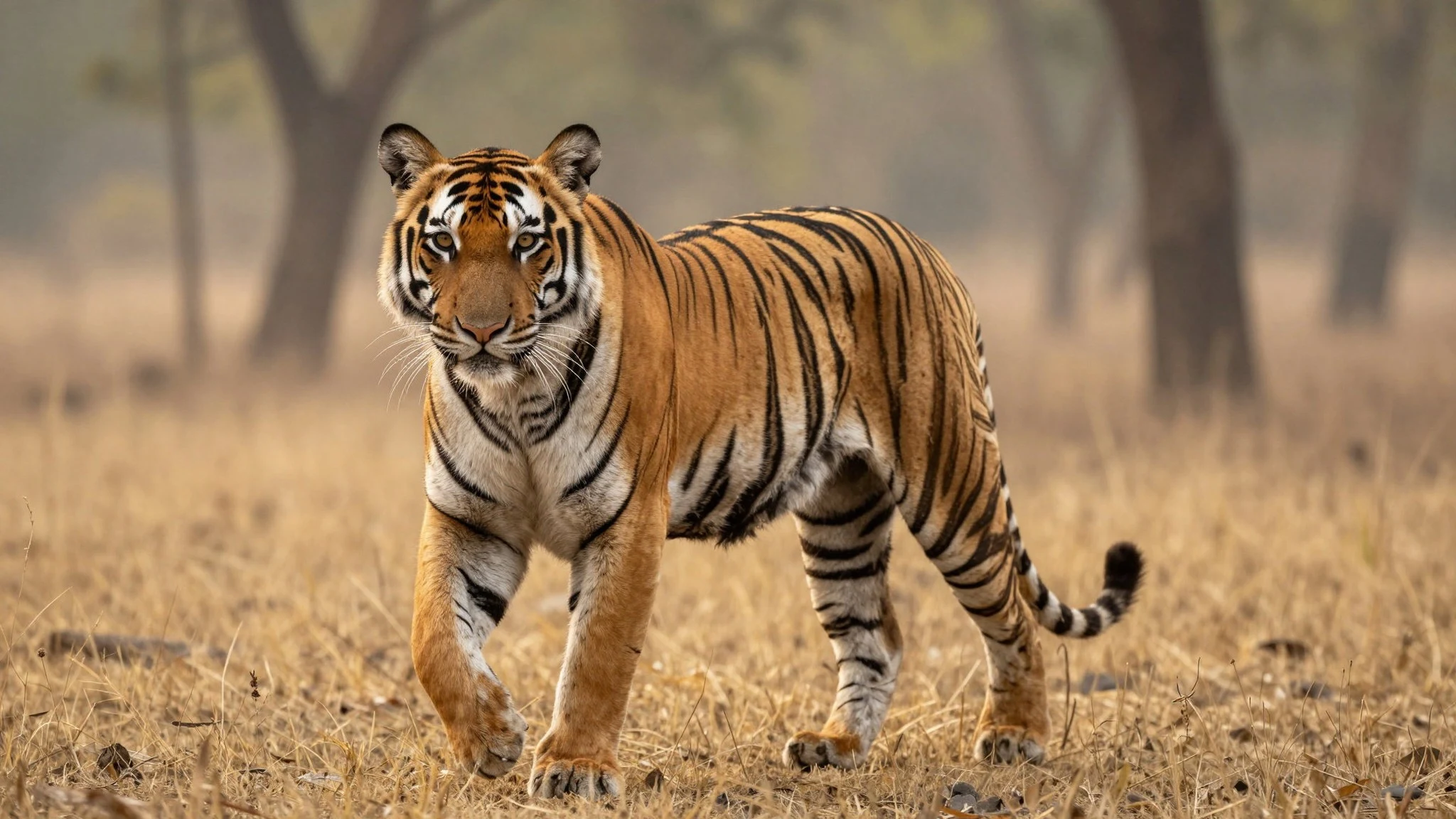
- Leopard (animal)
The leopard is a slender, muscular cat with a pale to deep golden coat dotted with dark rosettes. Pench's varied habitats give you a good chance of spotting one, and plenty of birds besides, so keep your eyes open for both. Watch from a comfortable distance, speak softly or not at all, listen to your guide, and never offer food, however close it seems.