Pembroke Castle
Pembroke Castle, United Kingdom
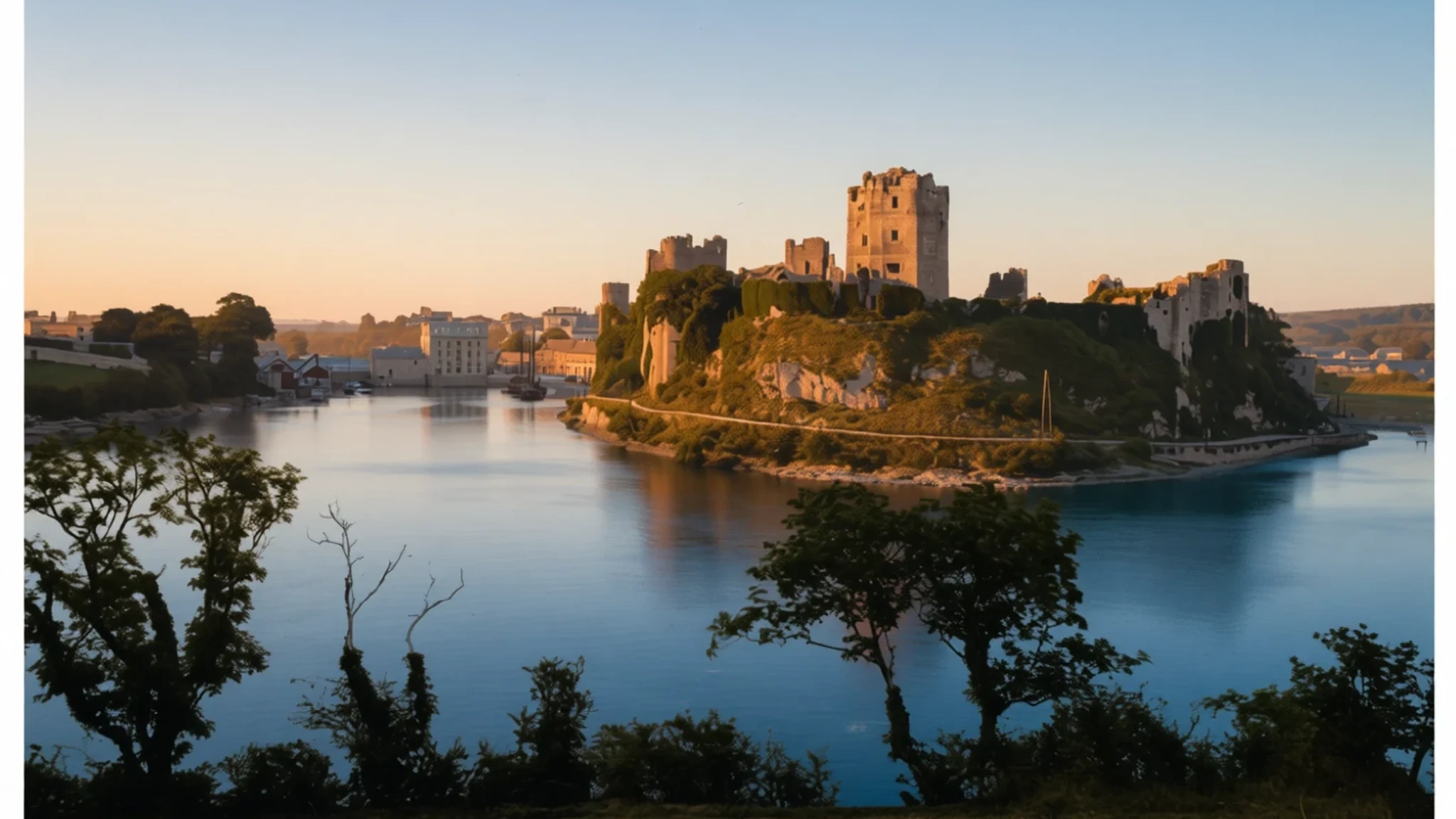
Pembroke Castle is a Norman fortress on a river promontory in west Wales, with a vast round keep and a cave beneath it.
The place
Pembroke Castle sits in the middle of the town of Pembroke, in Pembrokeshire, south-west Wales, on a rocky promontory beside the Pembroke River. Its Welsh name is Castell Penfro. The site stands about 20 metres above sea level, and the water on several sides is a large part of why the position was chosen: a tidal river and steep ground made a natural moat.
The castle began as a Norman stronghold in 1093 and was later rebuilt in stone. Much of what a visitor sees today is that stone work: a great round keep, curtain walls, gatehouses and towers, with an inner ward and a wider outer ward. A major restoration in the early twentieth century put back many walls and roofs that had fallen into ruin, so the place feels more complete than most Welsh castles.
It is a Grade I listed building and is open to the public. Ownership is held in a trust, which makes it the largest privately owned castle in Wales. The town's main street runs along the ridge below the walls, lined with Georgian houses and older buildings, so the castle is part of an ordinary working town rather than set apart from it.
The name Pembroke comes from the medieval Welsh land division of Penfro, roughly meaning 'land's end'. That fits the geography. This is the far south-west corner of Wales, a place of estuaries, tidal creeks and a long coastline, and the castle was once the base from which the Normans held the region and looked across the sea towards Ireland.
Its story
Pembroke Castle stands on ground used by people for a very long time. Finds in Wogan Cave, directly beneath the castle, show people sheltering here at the end of the last ice age, and the hill was occupied in Roman times too. The first Norman castle arrived in 1093, when Arnulf of Montgomery fortified the promontory during the Norman push into Wales.
It was a timber-and-earth stronghold at first, and it survived a serious siege in the 1090s under its castellan, Gerald de Windsor. When Arnulf rebelled against Henry I and lost his lands, the crown took the castle, and Gerald was later put back in charge. In the 1100s it passed to the de Clare family, who used it as a launching point for the Norman invasion of Ireland.
The great change came in 1189, when Richard I arranged for William Marshal to marry Isabel de Clare and so gain both castle and earldom. Marshal became one of the most powerful men in twelfth-century Britain. He rebuilt Pembroke in stone and raised the circular keep that still dominates the skyline. His sons then held the castle in turn, and the third, Gilbert, strengthened and enlarged it further in the 1230s and 1240s.
All the Marshal sons died without children, and the castle passed to William de Valence, a half-brother of Henry III, whose family held it for seventy years. Later centuries brought decline and ruin, until the early twentieth-century restoration that gave the castle its present shape.
What to see
- The great keep — Inner ward, Pembroke Castle
The round keep is the heart of the castle and the part most people photograph. Its walls are thick and its domed upper levels are impressive from inside as well as out. The climb up the stairs is worth it for the views over the river, the town roofs and the surrounding fields.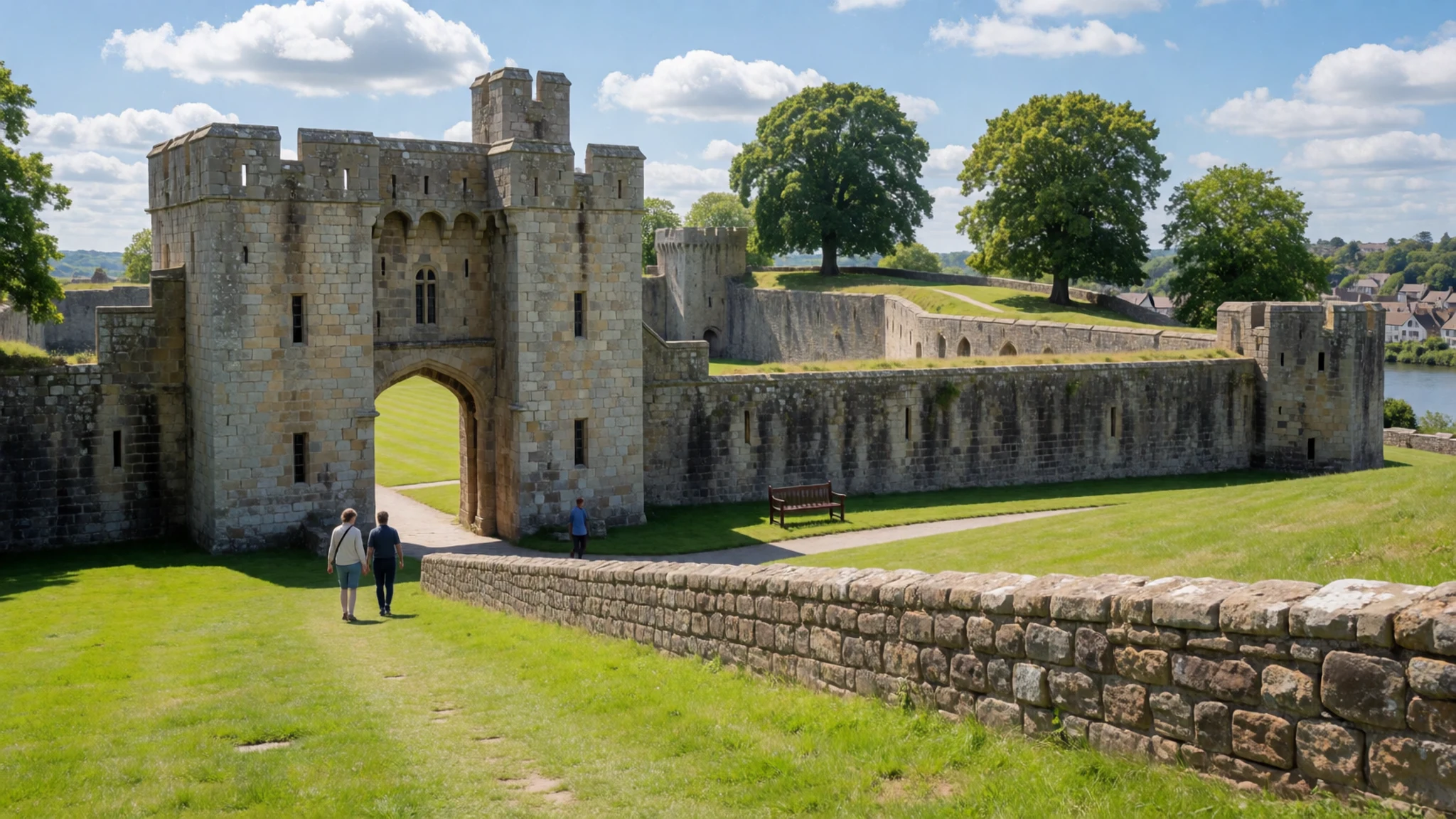
- Wogan Cave — Under the castle
Beneath the castle is a large natural cavern, reached by a stair from the inner ward. Traces of use here go back to the end of the last ice age, long before any stonework. It is cool and damp, with a very different atmosphere from the sunlit walls above, so allow time.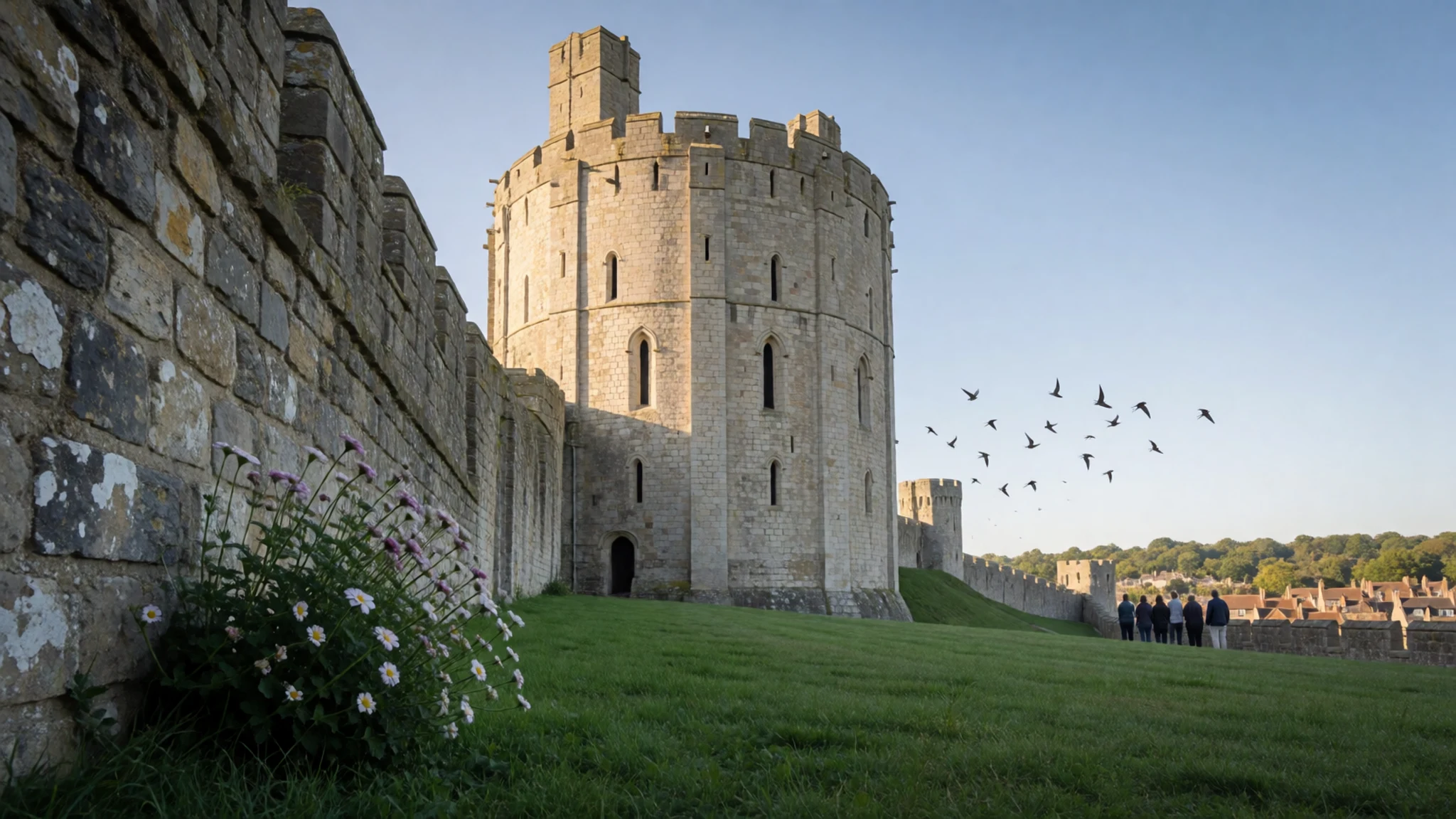
- Pembroke town walk — Main Street and the Commons
A short circuit of the old town takes in the Mill Pond, stretches of the original town walls and medieval buildings opposite the castle, one of which served as the town jail. A free booklet is available from the Tourist Office on the Commons. Allow at least an hour.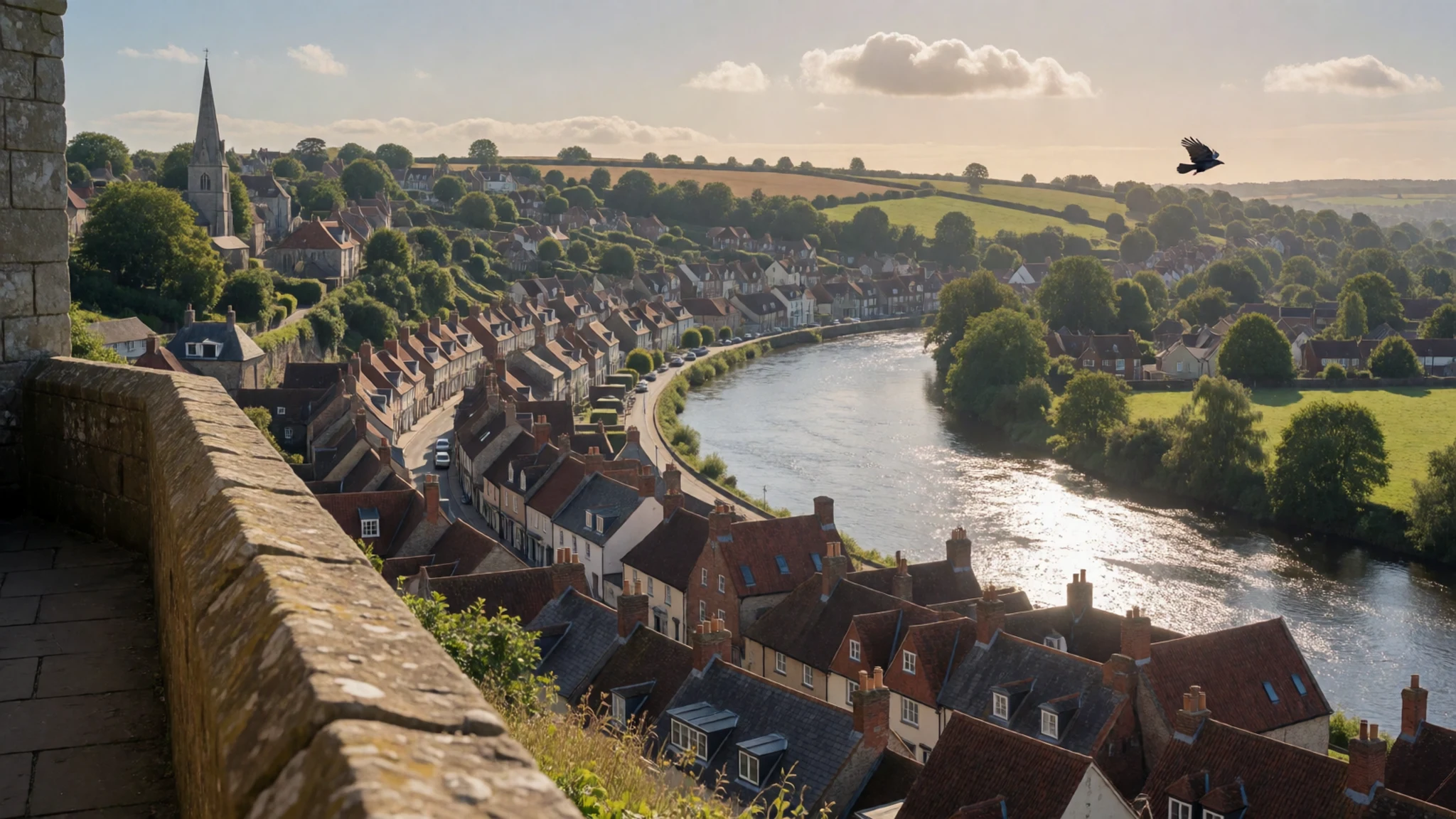
- Hamilton House and Georgian Main Street — Main Street, Pembroke
Hamilton House looks like one building but is two houses, tied to Lady Hamilton and Nelson through local lore. Nearby are Georgian townhouses such as Penfro, built for the landowner who also created the Bosherston Lily Lakes. The street is pleasant for slow browsing.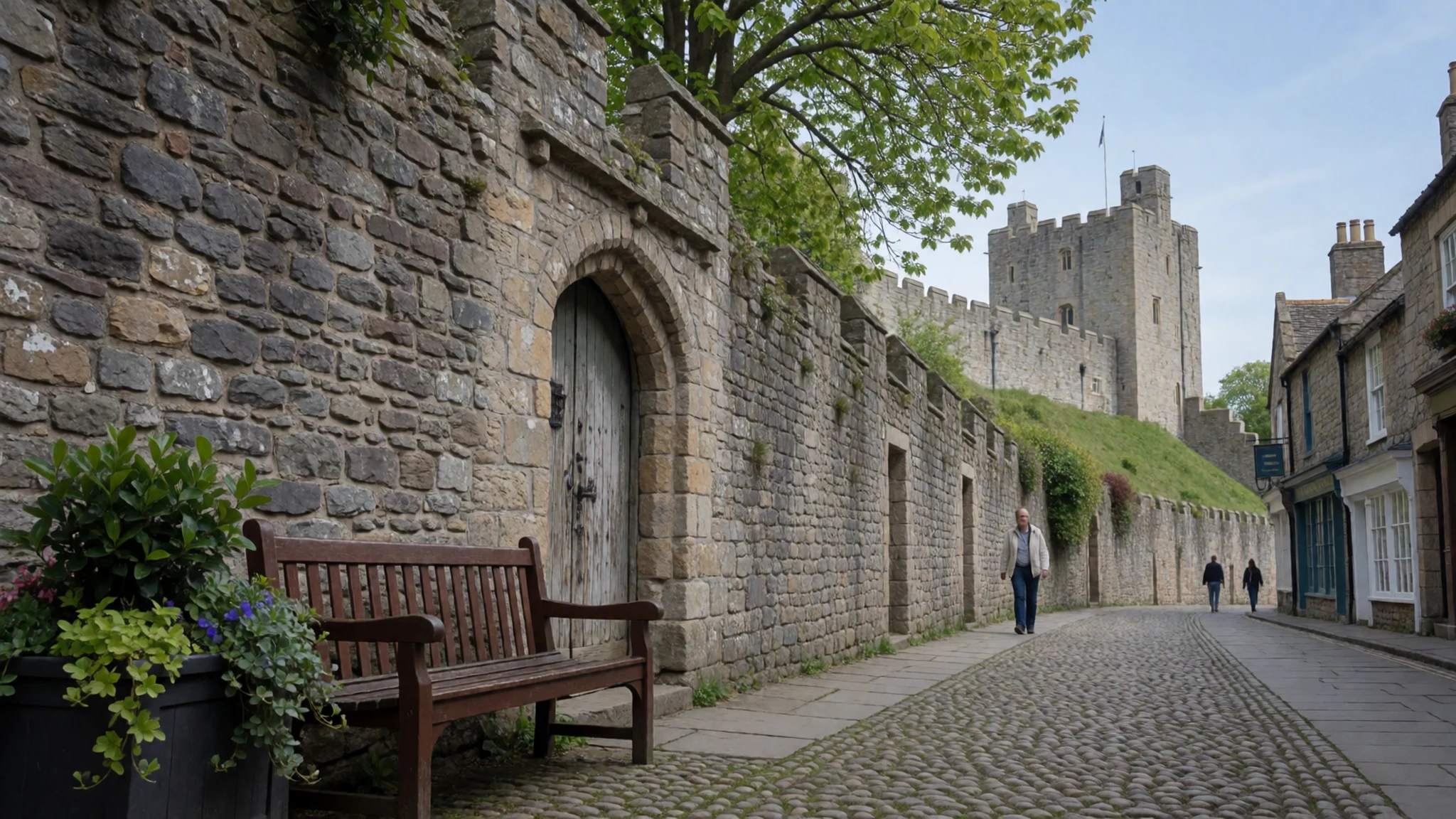
- Carew Castle — Carew, east of Pembroke
Carew Castle is a short drive from Pembroke and makes a good second ruin for the same day. It stands beside a tidal millpond, and its mix of medieval fortress and later Elizabethan additions offers a contrast with Pembroke's more restored, stronger-looking walls. Check opening arrangements before travelling.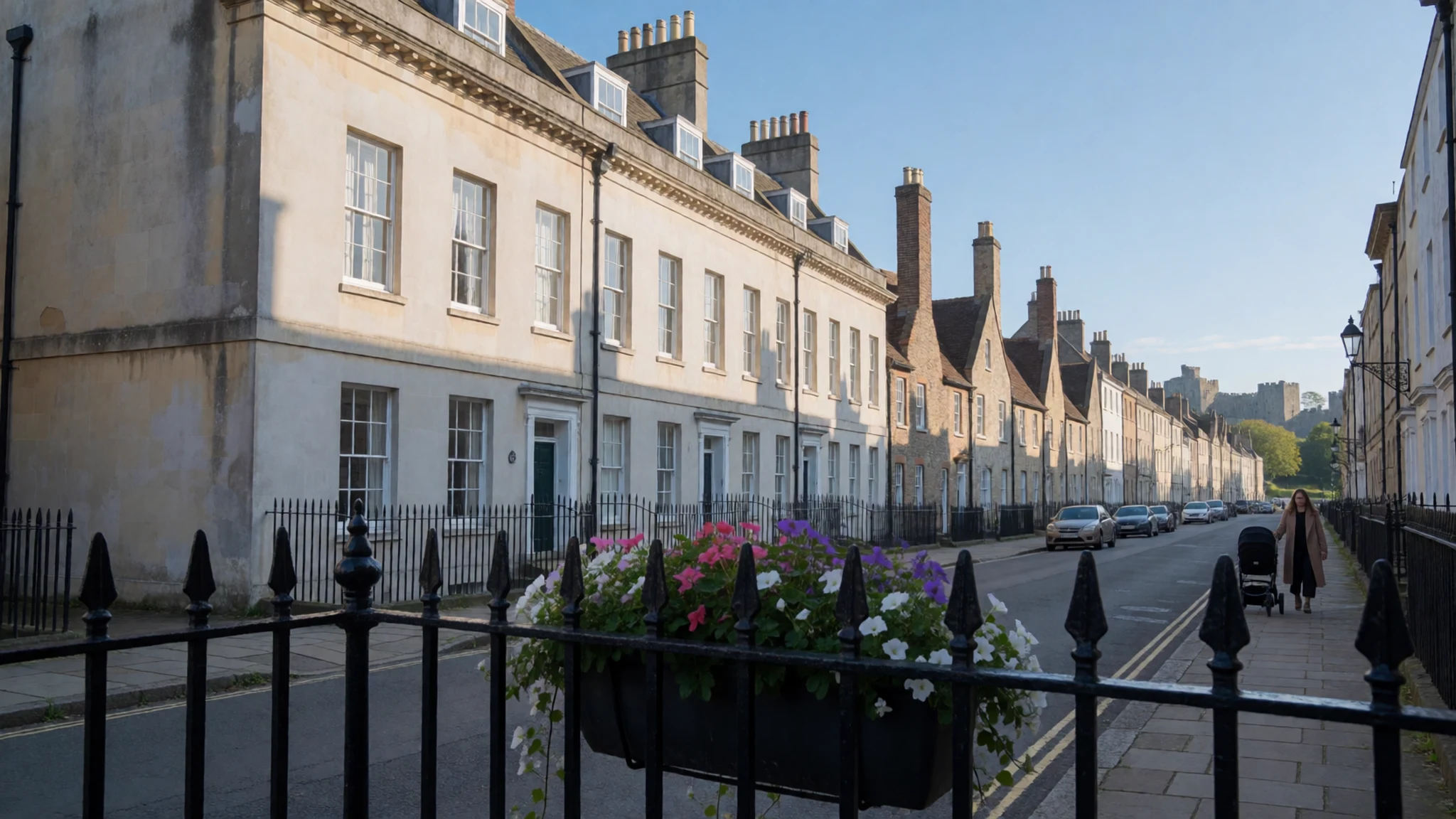
- Pembroke Dock Heritage Centre — Pembroke Dock
Across the water at Pembroke Dock, a small heritage centre tells the story of the flying boats once based on this waterway. It suits anyone interested in twentieth-century history, and it gives a very different view of what the sheltered harbour was used for after the castle's day.
Culture
Pembroke Castle carries a layered history, and local pride in it is strong. The town was shaped by Norman, Welsh and later English rule, and Pembrokeshire has long had a mixed identity: the south of the county is sometimes called 'Little England beyond Wales', while the north is more strongly Welsh-speaking. Signs are bilingual, and the Welsh name Castell Penfro appears alongside the English one.
The castle also has a strong Tudor link. Henry VII, first of the Tudor kings, is said to have been born here, and a display in the castle depicts the scene. That gives the place a role in the wider story of the English and Welsh crowns, which locals are happy to explain.
The castle is run by a trust rather than a national heritage body, and it hosts events through the year, including living-history days and family activities. These are a good way to see the walls in use, though they bring crowds in school holidays. The town itself is quiet and unhurried, with small shops, pubs and cafés along Main Street.
When visiting, keep to marked routes on the steep stairs and wall walks, and do not climb on unrestricted ruined stonework, since the old masonry is fragile and drops can be sudden.
What to wear
Pembroke has no single traditional costume of its own. The best-known Welsh national dress, with its tall black hat, striped woollen shawl and long wool skirt or flannel petticoat, was a nineteenth-century image of rural women and is now seen mainly at festivals, school events on St David's Day and cultural gatherings. Welsh wool, woven in flannel and tapestry-style blankets, is the textile most closely linked to it.
Day to day, people in Pembrokeshire dress practically for a coastal climate: waterproof jackets, fleeces, jeans, walking boots and trainers. Weather swings quickly between sun, wind and rain, so layers matter more than style. In town, smart-casual is typical, and nobody expects formal clothes anywhere.
For a visit, wear sturdy shoes with grip. The castle has uneven flagstones, worn spiral stairs, wall walks and a damp cave, and these can be slippery after rain. Bring a windproof layer even in summer, since the promontory is exposed, and a light waterproof for showers. A hat helps on sunny days, and warm layers are needed in autumn and winter. There are no dress rules for entering the castle, as it is not a place of worship.
What to eat
- Fresh crab and seafood — Seafood cafés at Angle, on the peninsula
Pembrokeshire's coast supplies crab, lobster and mackerel, served simply with bread and salad. Look for seafood cafés on the peninsula towards Angle, where a former fishing boat serves as one eatery, or ask at pubs in the town about the local catch.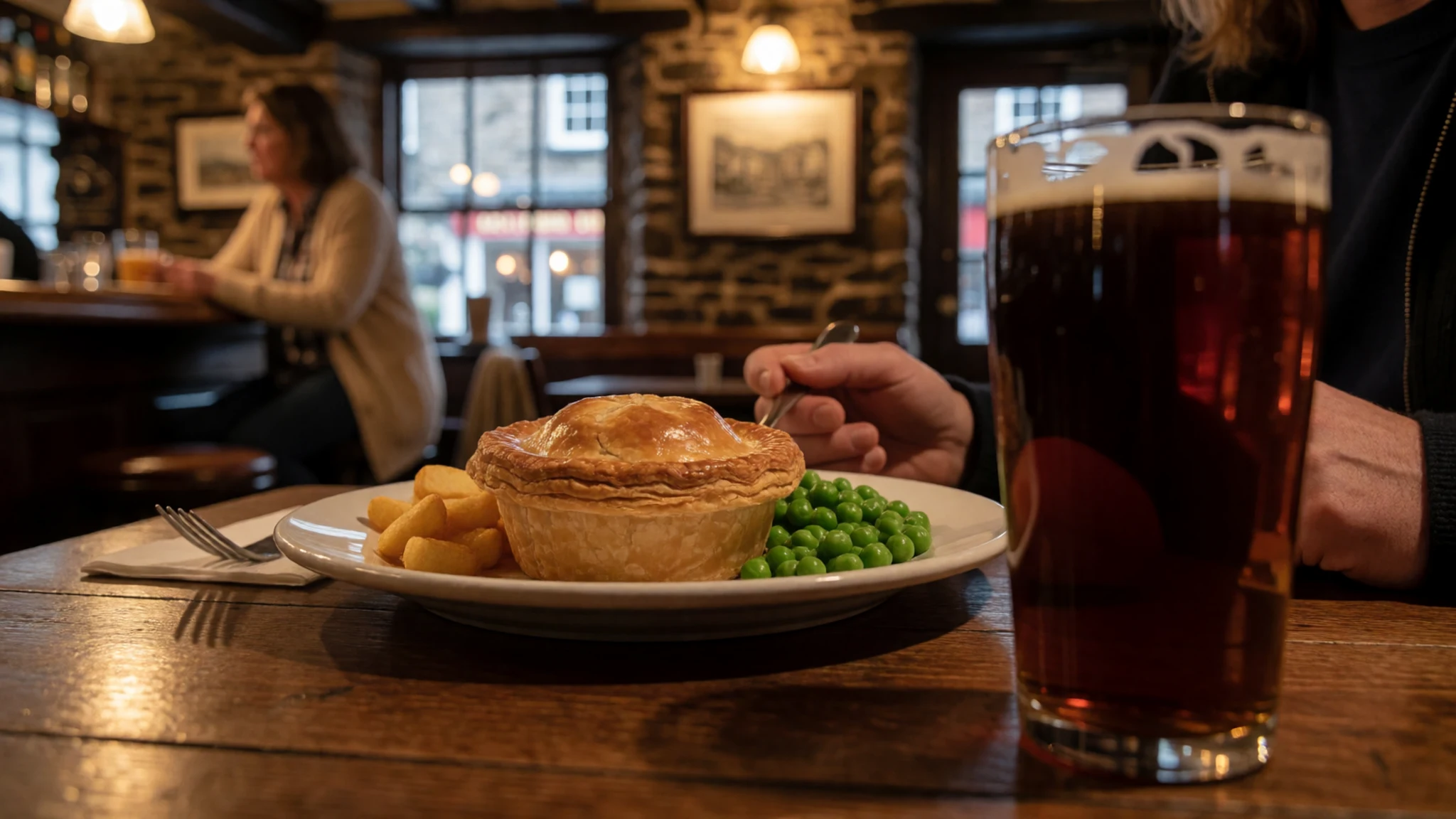
- Welsh lamb — Pubs on Main Street and around the castle
Lamb from Welsh hill and coastal farms appears as a Sunday roast or in stews and pies. It is mild and tender, often served with mint sauce, roast potatoes and seasonal vegetables. Pub menus in Pembroke are the easiest place to try it.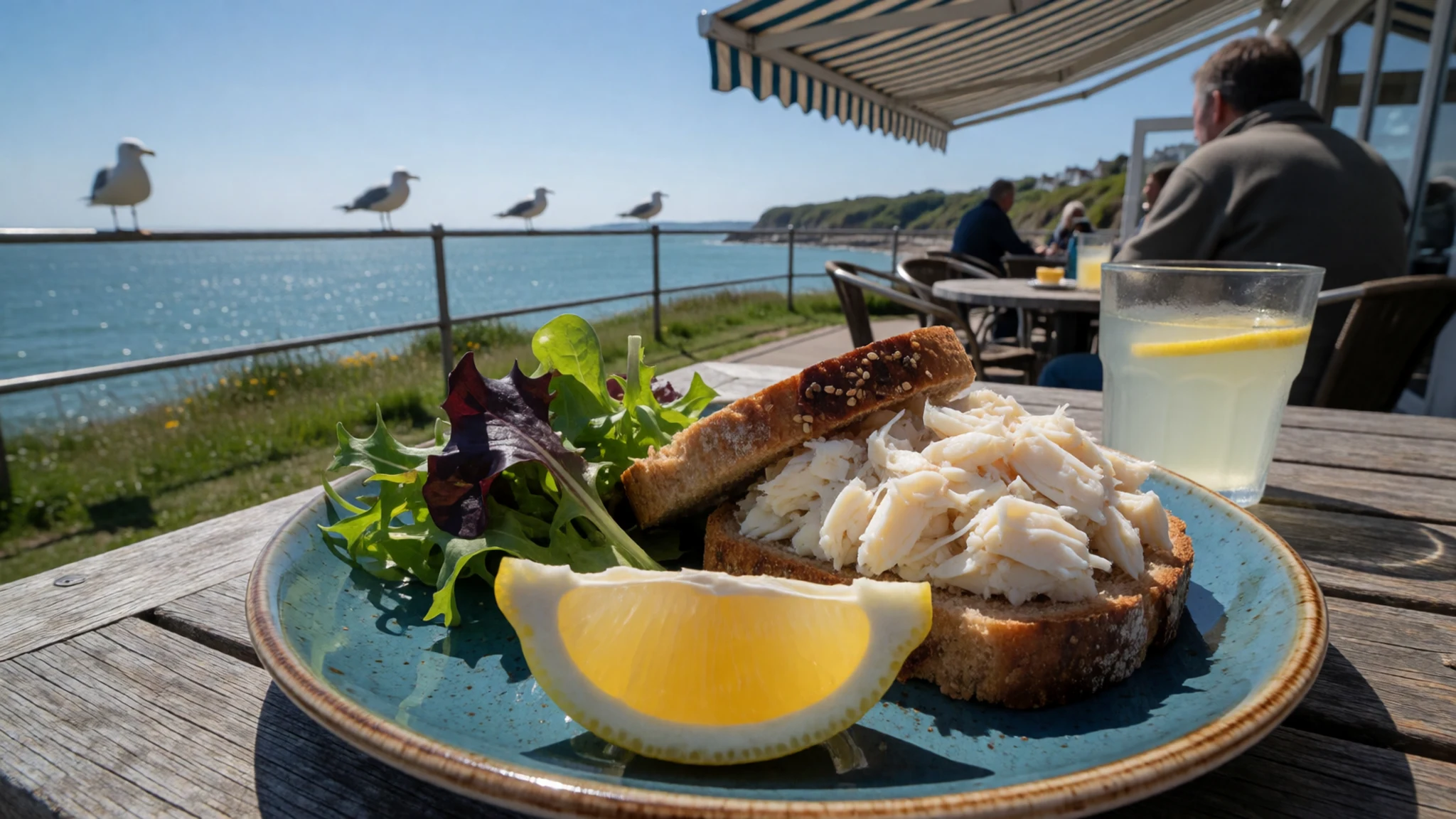
- Cawl — Traditional pubs and cafés in the town
Cawl is Wales's best-known one-pot dish, a broth of lamb or beef with leeks, carrots, swede and potatoes. It is warming after a windy walk on the castle walls and is often served with bread and a slice of cheese on the side. - Laverbread — Cafés and market stalls serving a Welsh breakfast
Laverbread is a savoury paste made from cooked seaweed, a Welsh coastal staple. It is traditionally eaten on toast or with bacon and cockles at breakfast. The taste is salty and deeply marine, so it suits people who enjoy strong flavours. - Welsh rarebit — Tea rooms and pubs in Pembroke
Welsh rarebit is a rich cheese sauce, often with mustard and ale, grilled on toast. It is a simple lunch that fits a cold day well, and many tea rooms and pubs offer their own version, sometimes topped with a tomato or egg.
Plan it
Best time. May to September is the most comfortable, with longer days and the best chance of dry weather; July and August are busiest because of school holidays. Spring and early autumn are quieter. Winter is mild but wet and windy, and daylight is short.
How long. 1–2
Getting there. The nearest major hubs are Cardiff and Swansea; from Swansea the A477 road runs west for just over fifty miles. Trains run to Pembroke and Pembroke Dock on the Whitland branch line, often with a change at Whitland. Buses also serve the town, and the castle is a short walk from Main Street.
Budget. mid
Tips
- Book accommodation early for summer, as B&Bs fill up
- Check the official site at pembrokecastle.co.uk for opening times and ticket prices
- Arrive early or late in the day to avoid school-holiday crowds
- Bring a waterproof, as showers arrive quickly
- Combine the visit with Carew Castle or a coastal drive
Etiquette
- Keep to marked paths and stairs, and do not climb on fragile ruined walls
- Supervise children closely near drops and on wall walks
- Keep noise down in the cave so others can enjoy it
Nearby
Sources
- Wikidata Q1422235 (CC0)
- Wikipedia: Pembroke Castle (rev 1367499767) (CC BY-SA 4.0)
- Wikivoyage: Pembroke (Wales) (rev 5077340) (CC BY-SA 4.0)
- Photo 01 — Monkeyrustler, Wikimedia Commons (Public domain)
- Photo 02 — JKMMX, Wikimedia Commons (CC BY 3.0)
- Photo 03 — Reading Tom, Wikimedia Commons (CC BY 2.5)
- Photo 04 — Mario Sánchez Prada, Wikimedia Commons (CC BY-SA 2.0)
- Photo 05 — Mario Sánchez Prada, Wikimedia Commons (CC BY-SA 2.0)
- Photo 06 — Richard Wilson, Wikimedia Commons (Public domain)
- Photo 07 — Aled Evans, Wikimedia Commons (CC BY-SA 4.0)
- Photo 08 — Jaggery, Wikimedia Commons (CC BY-SA 2.0)


