Paranapiacaba
Paranapiacaba, Brazil
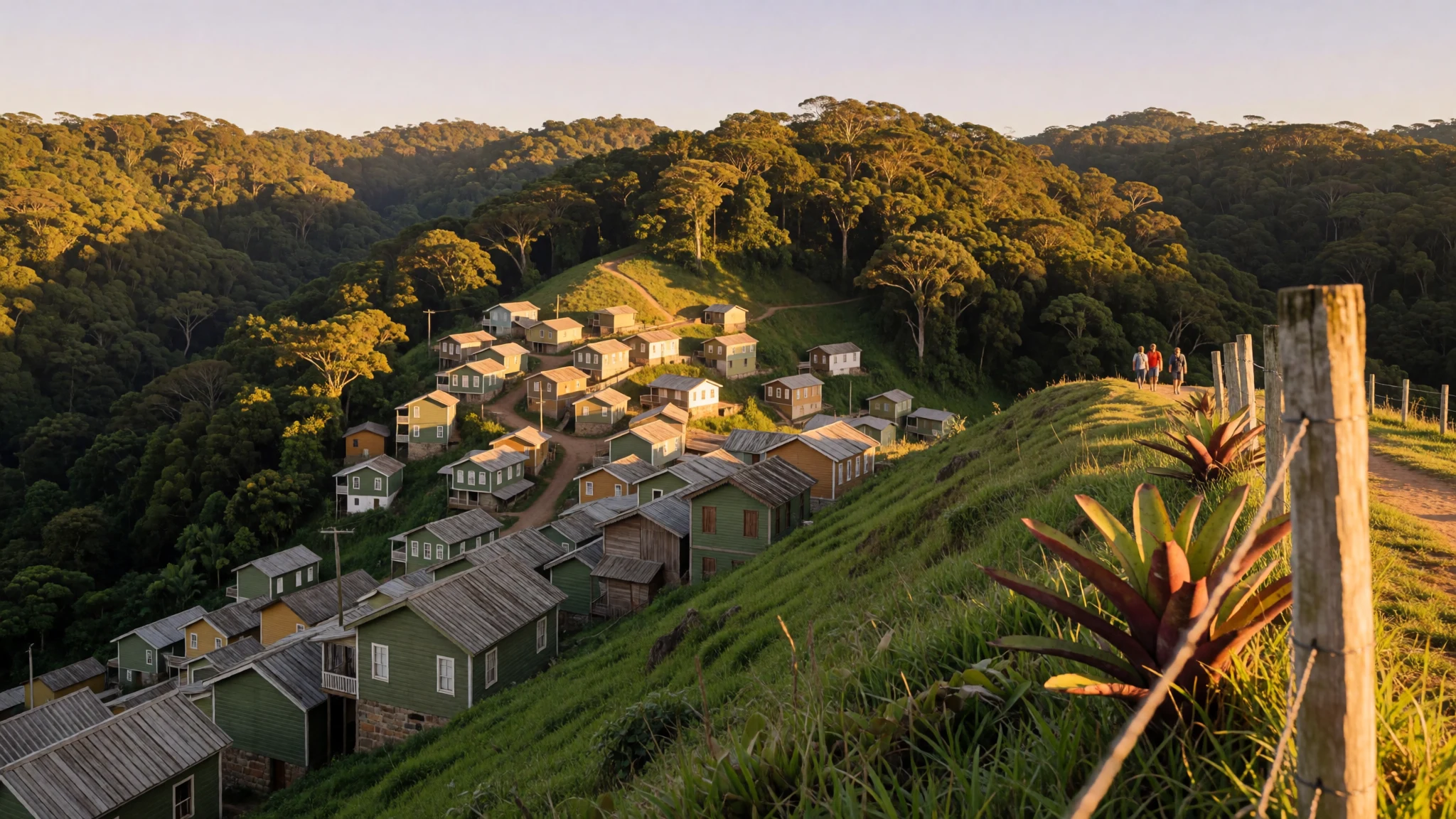
Paranapiacaba is a misty Victorian railway village in Brazil's Atlantic forest, where rusting engines and cloud-draped hills sit side by side.
The place
Paranapiacaba is a village-district belonging to Santo André, within São Paulo state, Brazil, set high on the Serra do Mar escarpment above the coastal plain. Its name comes from Tupi and is usually rendered as a place from which the sea can be seen, which suits a village on a ridge that is often wrapped in cloud. From a viewing platform, clear days reveal the Atlantic and the industrial skyline of Cubatão; on many others the mist closes in within minutes and the streets turn grey, damp and atmospheric.
The village was built by the British-owned São Paulo Railway to house and manage its workforce, and it still looks the part: timber houses in bright paint, laid out on a slope in an orderly, watchful pattern that writers have called panoptic. Around the old streets lies a railway complex of sheds, yards and workshops, larger than the village itself, strung along the road in from Rio Grande da Serra.
Beyond the last houses the Atlantic forest, the Mata Atlântica, takes over. It forms part of the Parque Estadual da Serra do Mar, where orchids and bromeliads reward patient walkers. The mood is quiet and slightly eccentric, with railway enthusiasts, day-trippers from São Paulo and hikers in muddy boots sharing narrow streets with residents who treat all of it as normal. Weekends and holidays are livelier, and weekdays can feel almost empty. English is not widely spoken, but people are friendly and a few words of Portuguese go a long way. The air is often cool and damp even when São Paulo is warm.
Its story
Paranapiacaba owes its existence to coffee and a very steep hill. In the Victorian era the São Paulo Railway Company, a British concern, needed a way to carry coffee from the interior of São Paulo state down to the port of Santos, and the Serra do Mar stood in the way. Its engineers answered with an inclined railway that hauled wagons up and down the escarpment by cable, a zig-zag feat of engineering for its time, and a village grew at the top to house the people who ran it. The settlement followed ideas associated with the philosopher Jeremy Bentham, with streets and buildings arranged so that supervisors could keep watch over the workforce. At its height the community had thousands of workers, many of them British.
Cable haulage, however, needed a great deal of labour. When automated machinery took over, the village lost its reason for being. The population fell sharply and many buildings were left empty, slowly decaying in the damp. Steam locomotives later disappeared from regular service, leaving the yards full of rusting rolling stock and quiet workshops.
What survives is a clear picture of a Victorian industrial settlement transplanted to the Brazilian hills. Heritage work and tourism now give the place a second life, though the wet climate keeps wearing at the timber, and visitors will see restored houses beside ones that are plainly struggling.
What to see
- The English-style village — Historic village centre
The historic centre of Paranapiacaba is a set of timber houses in colourful paint, built in a British style with much of the material shipped from Europe. Streets climb the slope in orderly rows, and the village is small enough to wander in an hour, though most people linger longer, especially when the mist rolls in.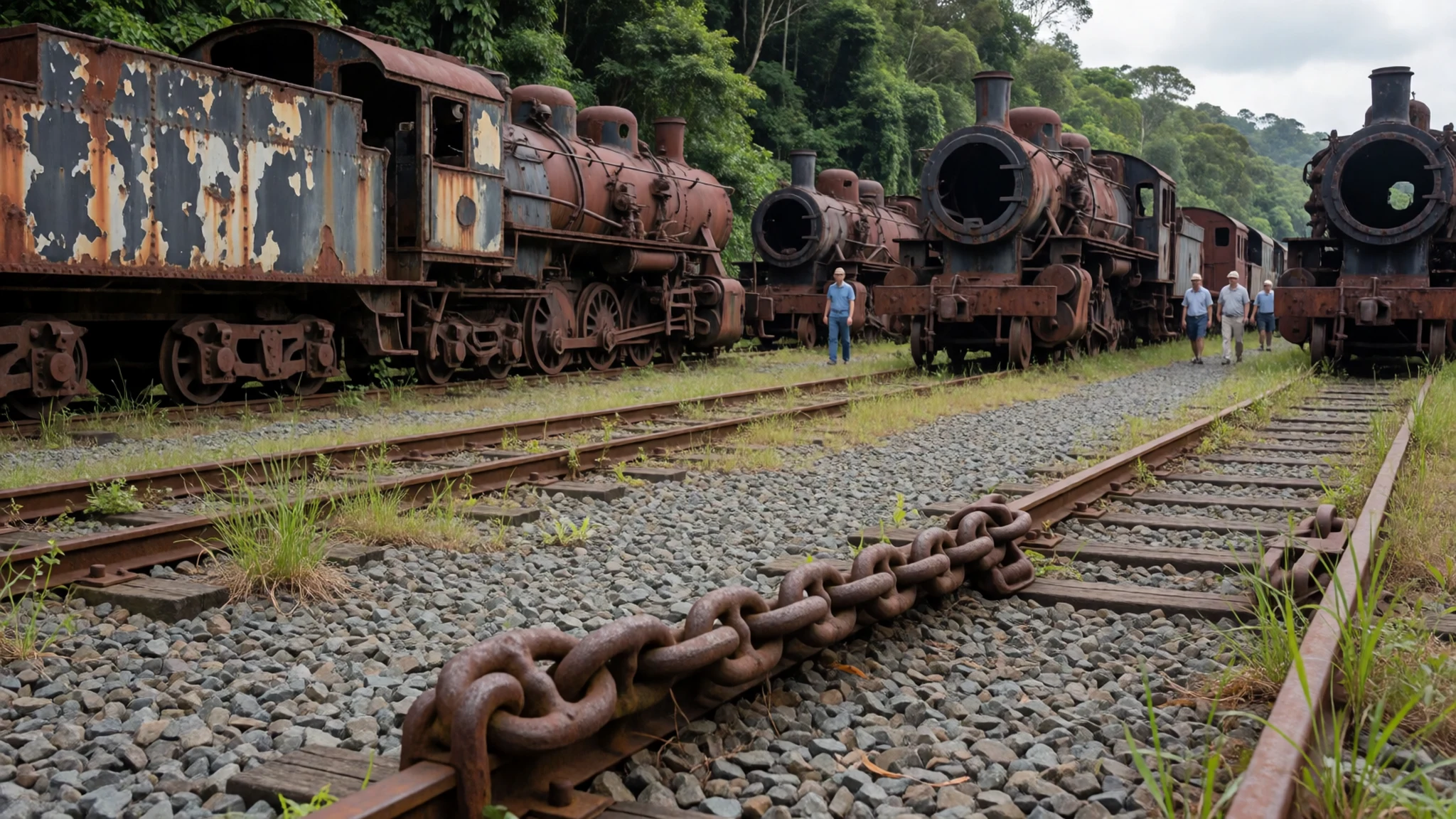
- Station platform and clock tower — Main station platform
A scaled-down copy of Big Ben stands on the main station platform, a reminder of who built the place. The tower belongs to the old station buildings and makes the obvious photograph. Behind it, freight trains still pass on their way to and from the port of Santos, so the tracks are not purely museum pieces.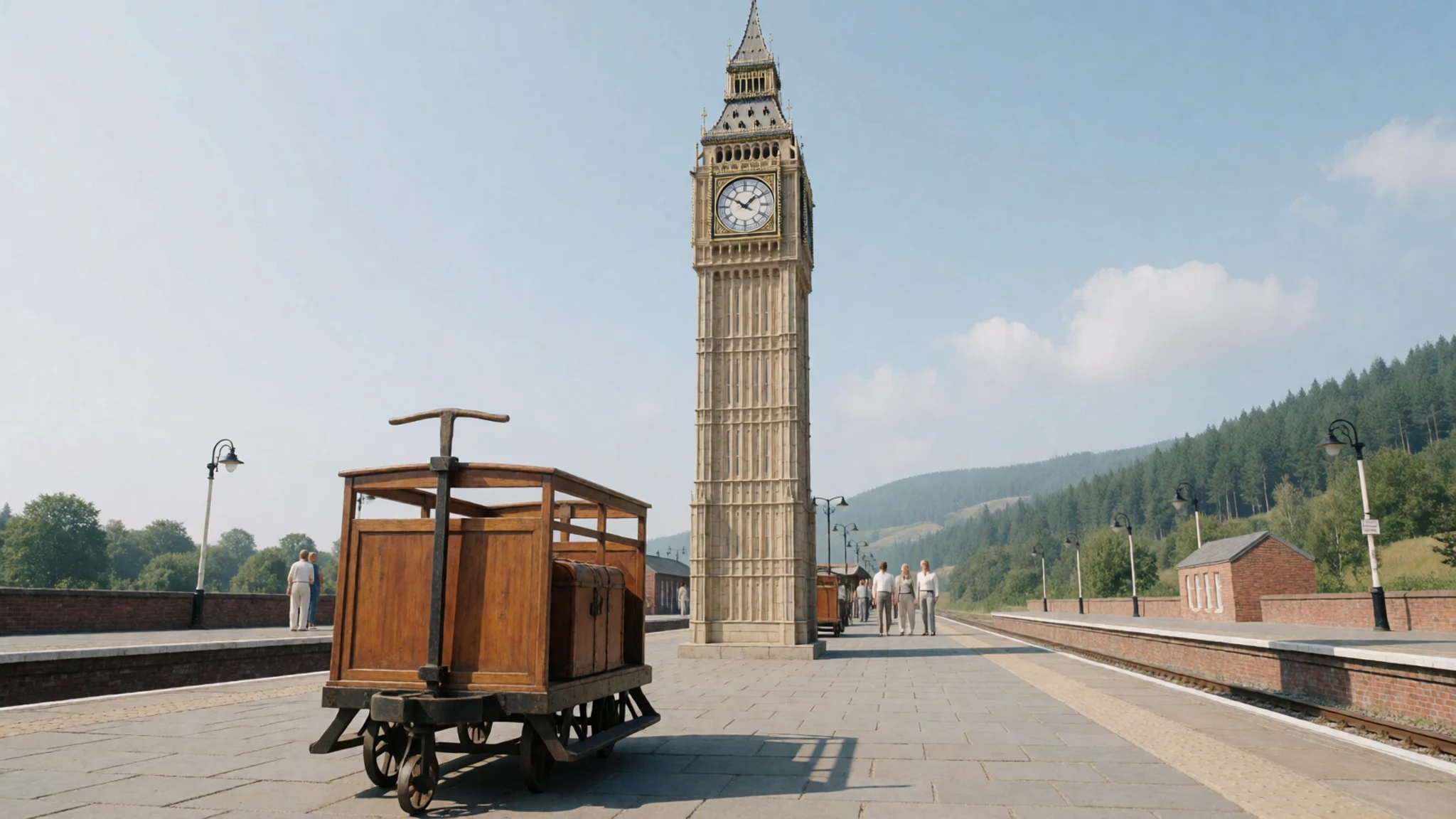
- The rail yard and railway museum — Railway yards below the village
The railway yard works as an open-air graveyard of rusting wagons and old engines, and visitors can walk between them and look inside. Nearby, a small railway museum covers the history of the line and its workers. Wear shoes with a good grip, since the ground is uneven, oily and often wet.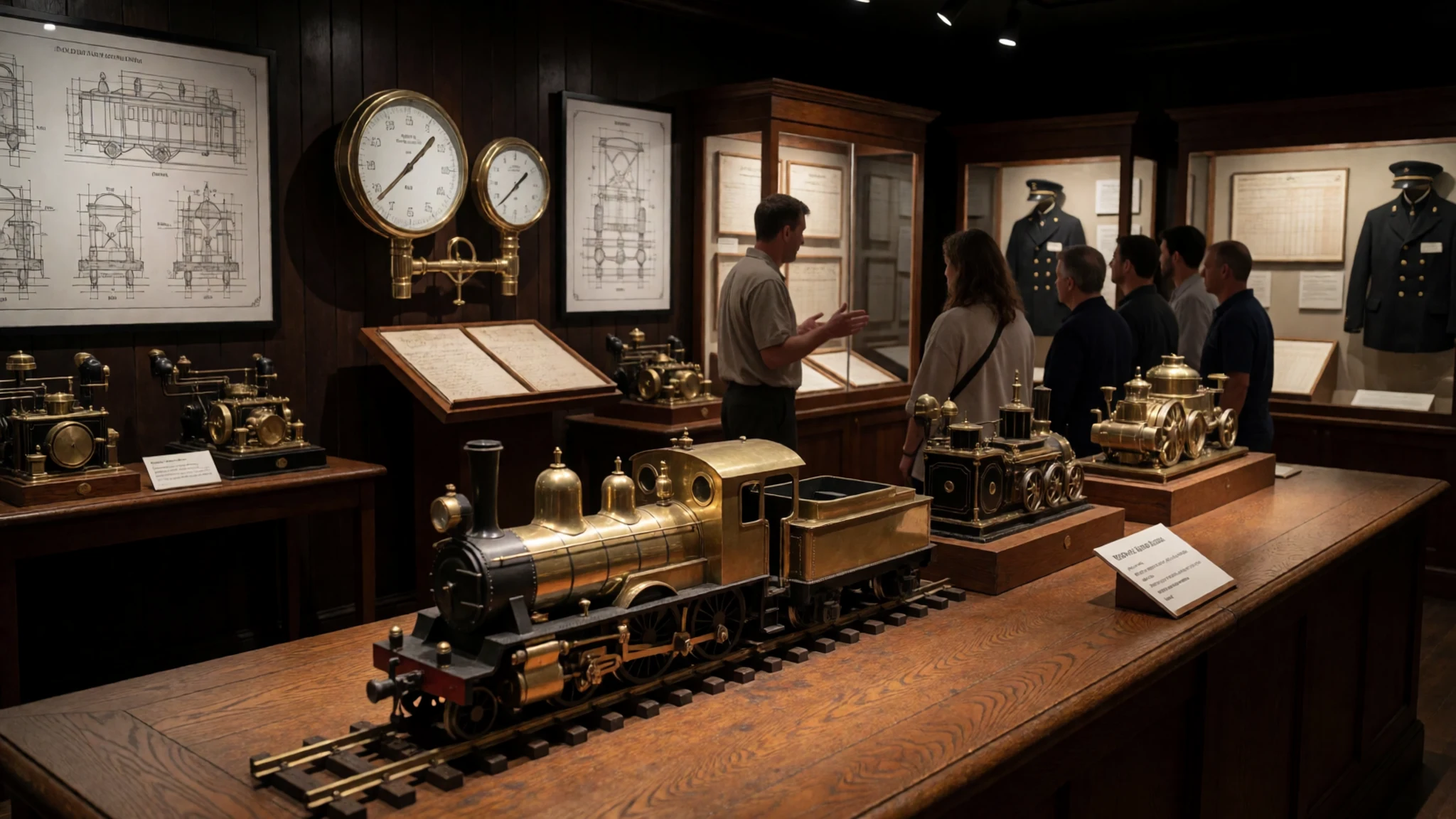
- Steam locomotive ride — Railway yard
On holidays and weekends a steam locomotive takes passengers on a short ride within the yard. It is more about atmosphere than distance, but the whistle, smoke and polished brass draw families and railway fans alike. Running days depend on the calendar, so check locally before planning a visit around it.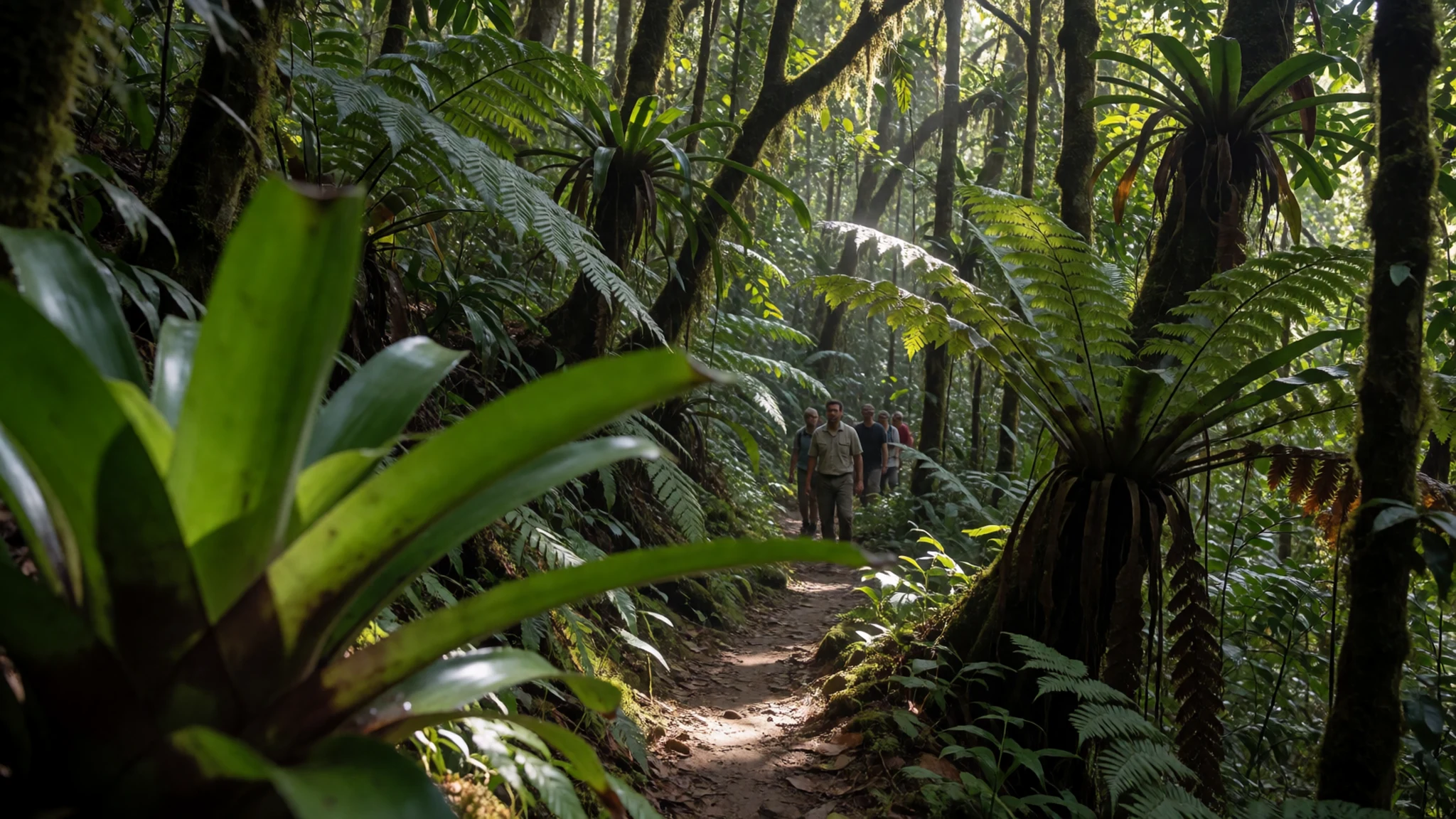
- Igreja Matriz — Village centre
The Igreja Matriz is the village's parish church, a modest building that makes a calmer stop than the rail yard. It still serves a living community, so it is best visited quietly and outside service times. Its setting among the timber houses makes a good photograph, particularly in soft, misty light.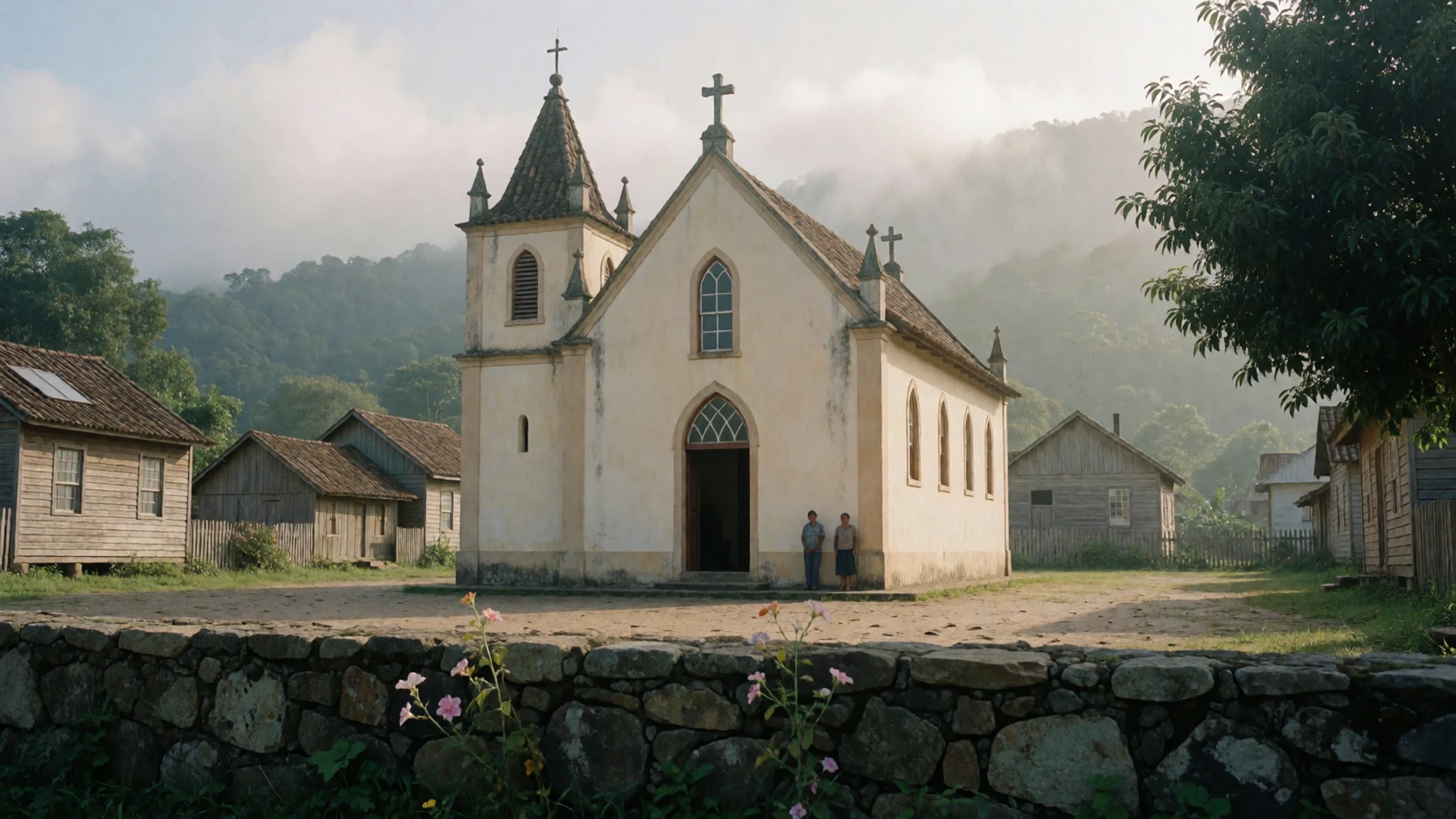
- Serra do Mar forest trails — Forest edge, Parque Estadual da Serra do Mar
Trails lead from the village into the Atlantic forest of the Parque Estadual da Serra do Mar, with orchids and bromeliads along the way. One long route descends to the coast through the Vale do Quilombo. The forest is dense and people do get lost, so hire a local guide through the monitors' association or in the village.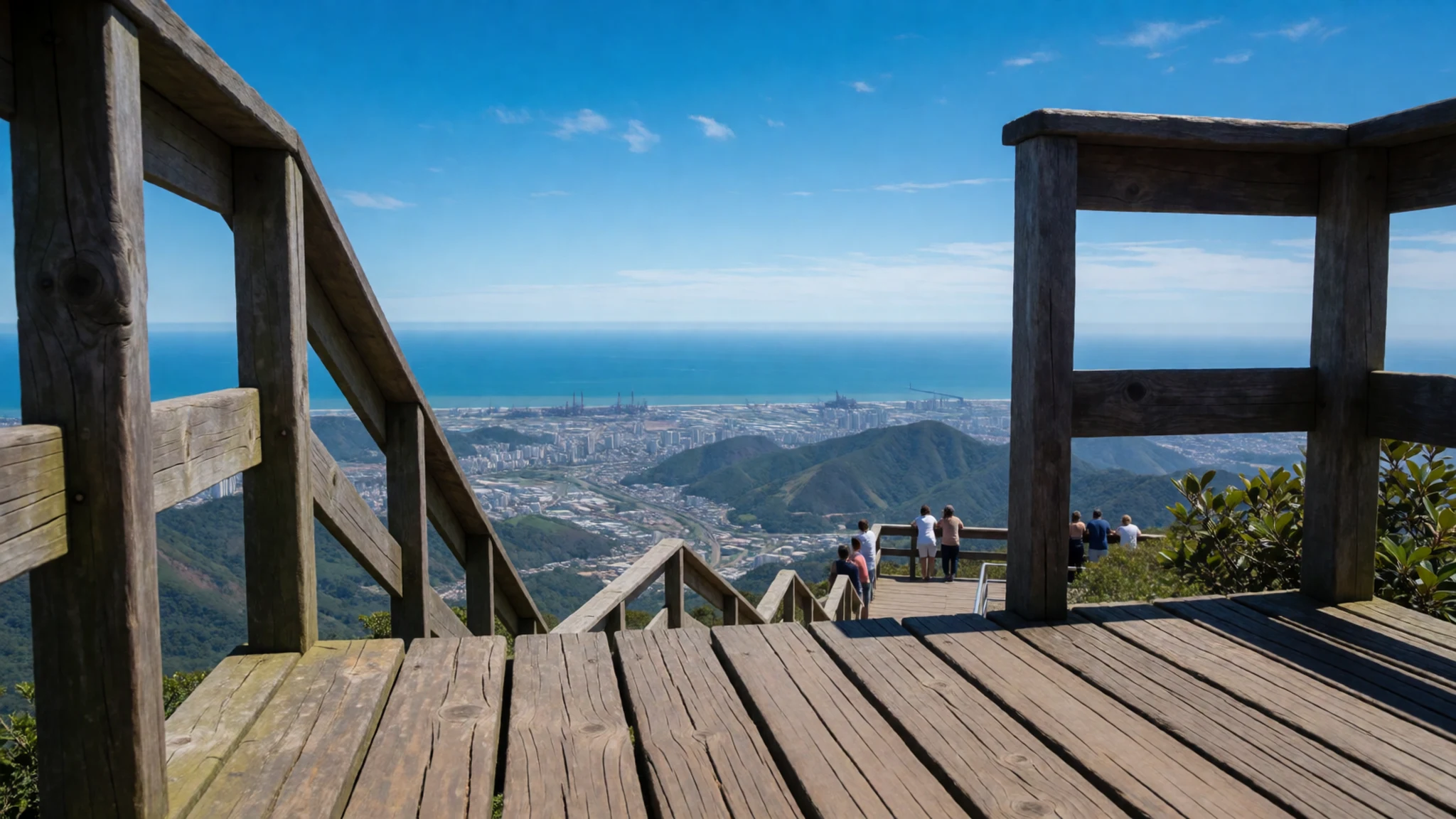
Culture
Paranapiacaba's culture is layered: a Tupi name, a British industrial past and a present that is thoroughly Brazilian. The village was built by railway engineers and managers from Britain, and their influence survives in the timber architecture, the clock tower and the way the streets still turn around the railway. Yet daily life now runs in Portuguese, with small cups of strong coffee, long conversations at the counter and the unhurried pace of a hill community that sees most of its visitors at weekends.
The railway is the village's central story. The decline of the old cable system emptied the community, and heritage work, guided walks and small businesses serving day-trippers have helped to rebuild a local economy. The neighbouring forest adds a second identity as a base for walkers, birdwatchers and plant enthusiasts, and local guides take real pride in knowing the trails.
The line between museum and home is thin here. Many of the timber buildings are private houses or working premises rather than exhibits, and residents go about ordinary life between the tourists. English is rarely spoken, but a greeting such as bom dia, or a thank-you with obrigado or obrigada, is noticed and returned warmly. Weather shapes plans too, since fog and rain can arrive without warning and change the mood of the whole village within minutes. Please ask before photographing residents or entering the yard of a private house, and do not climb on parked railway wagons unless you have been told that access is allowed.
What to wear
Paranapiacaba has no distinct regional costume of its own. The clothing most tied to the village is historical: the wool jackets, caps and work clothes of the British railway staff and the sturdy cotton and canvas overalls of the people who kept the engines and cables running. Those looks now appear mainly in museum displays, photographs and the occasional heritage event, rather than in daily life.
What people wear today is practical and casual. Residents favour jeans, fleeces, knitted hats and waterproof jackets, because the ridge is often cool, damp and windy. Weekend visitors from São Paulo arrive in a mix of trainers, light rain shells and hiking gear, and some railway enthusiasts dress the part with vintage-style caps and work jackets. Nobody expects formal clothing.
For a visitor, layers matter more than style. Bring a waterproof jacket and a warm top even in warm months, since mist and showers arrive quickly. Shoes with a good grip are essential for the oily, uneven rail yard and for wet forest paths, and long trousers help against scratchy vegetation and insects on the trails. A hat, sun protection and insect repellent are useful when the sun does come out. There is no strict dress code at the parish church, but covered shoulders and a respectful manner are sensible if services are under way.
What to eat
- Por kilo lunch — Simple eateries in the village centre
Por kilo is a self-service buffet priced by the weight of the plate, with rice, beans, salad, grilled meat and a few hot dishes. It is quick, filling and good for hungry walkers. One eatery in the centre is known for hummingbirds visiting its garden.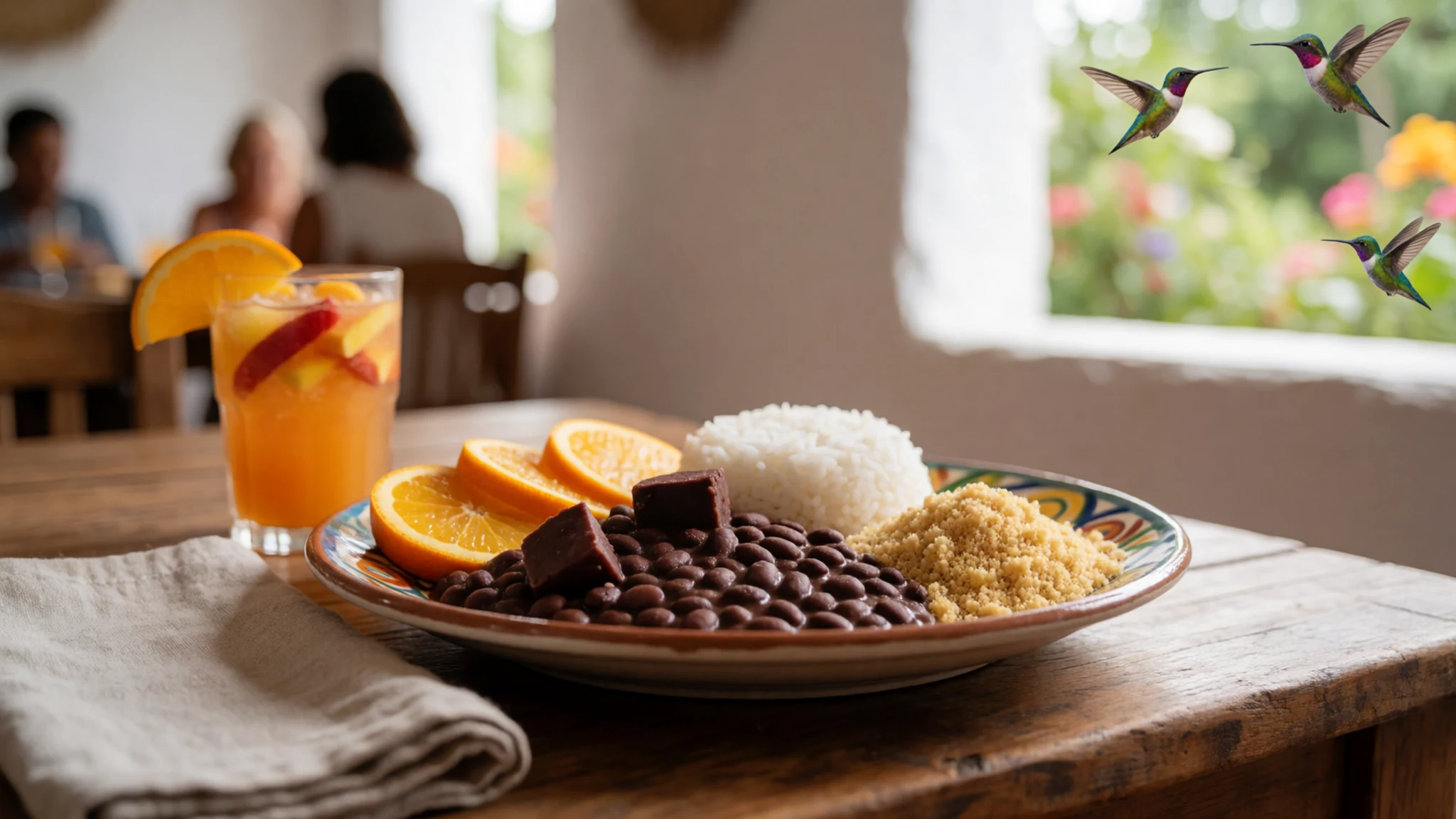
- Feijoada — Restaurants in the village, especially at weekend lunch
Feijoada is a slow-cooked stew of black beans with pork, served with rice, greens and orange slices. In Brazil it is traditionally a weekend lunch, and its heaviness suits the cool, damp air of the hills. Availability varies, so ask at the village restaurants.
- Pão de queijo — Bakeries and snack bars in the village
Pão de queijo are small, chewy cheese breads made with cassava starch, naturally free of wheat and best eaten warm. Snack bars and bakeries in the village sell them with coffee, and they make a handy snack for a morning walk into the forest. - Coxinha — Snack bars (lanchonetes) around the village
Coxinha is a teardrop-shaped fried snack filled with shredded chicken inside crisp dough. It is the standard order at Brazilian snack bars, and the small ones in the village sell it alongside pastéis and savoury pies, ideal for a quick stop between sights. - Caldo de feijão — Small restaurants and snack bars in the village
Caldo de feijão is a thick bean broth, often topped with bacon or sausage and served in a cup or bowl as a warming snack. It is commonly found in Brazilian cold-weather eateries, and the misty ridge makes it a sensible choice.
Plan it
Best time. May to September is generally the cooler, drier part of the year, with better odds of clear views and comfortable hiking, though mist and chilly evenings can come at any season. Summer brings heavier rain and humidity. Weekends and holidays are busiest, and weekdays are quietest.
How long. 1–2
Getting there. Fly into one of São Paulo's airports, then take a suburban train from central São Paulo to Rio Grande da Serra, where departures are frequent. From outside Rio Grande da Serra station, catch the local bus up to Paranapiacaba. Passenger trains do not run into the village itself, only freight.
Budget. low
Tips
- Go at a weekend or on a holiday if you want the steam locomotive running; choose a weekday for quiet streets
- Carry a waterproof jacket and a warm layer, as the weather on the ridge turns quickly
- Hire a local guide for forest trails through the monitors' association or in the village, since the forest is dense
- Bring some cash and a few Portuguese phrases, as English is not widely spoken
- Stay overnight in a simple guesthouse if you plan to hike, rather than rushing a day trip
Etiquette
- Ask before photographing residents or entering private yards
- Keep to marked paths in the rail yard and do not climb on rolling stock without permission
- Take litter back out of the forest with you
Nearby
Sources
- Wikidata Q15963338 (CC0)
- Wikipedia: Paranapiacaba (rev 1377918860) (CC BY-SA 4.0)
- Wikivoyage: Paranapiacaba (rev 4908624) (CC BY-SA 4.0)
- Vertematti, Visão Panorâmica da Cidade, via Wikimedia Commons (CC BY-SA 4.0)
- OS2Warp, Locomotiva a vapor em Paranapiacaba, via Wikimedia Commons (CC BY-SA 1.0)
- Dr. Blofeld, Rio Grande da Serra Paranapiacaba Sao Paolo map, via Wikimedia Commons (CC BY-SA 2.0)
- User:OS2Warp, Igreja matriz de Paranapiacaba, via Wikimedia Commons (Public domain)
- Paulocarmona, Paranapiacaba pic17, via Wikimedia Commons (CC BY 3.0)
- User:OS2Warp, Museu do Castelo, via Wikimedia Commons (Public domain)
- User:OS2Warp, Pátio Ferroviário, via Wikimedia Commons (Public domain)
- Alessandra Ramos Pinto, -i---i- (24503985596), via Wikimedia Commons (CC BY-SA 2.0)


