Alter do Chão
Alter do Chão, Brazil
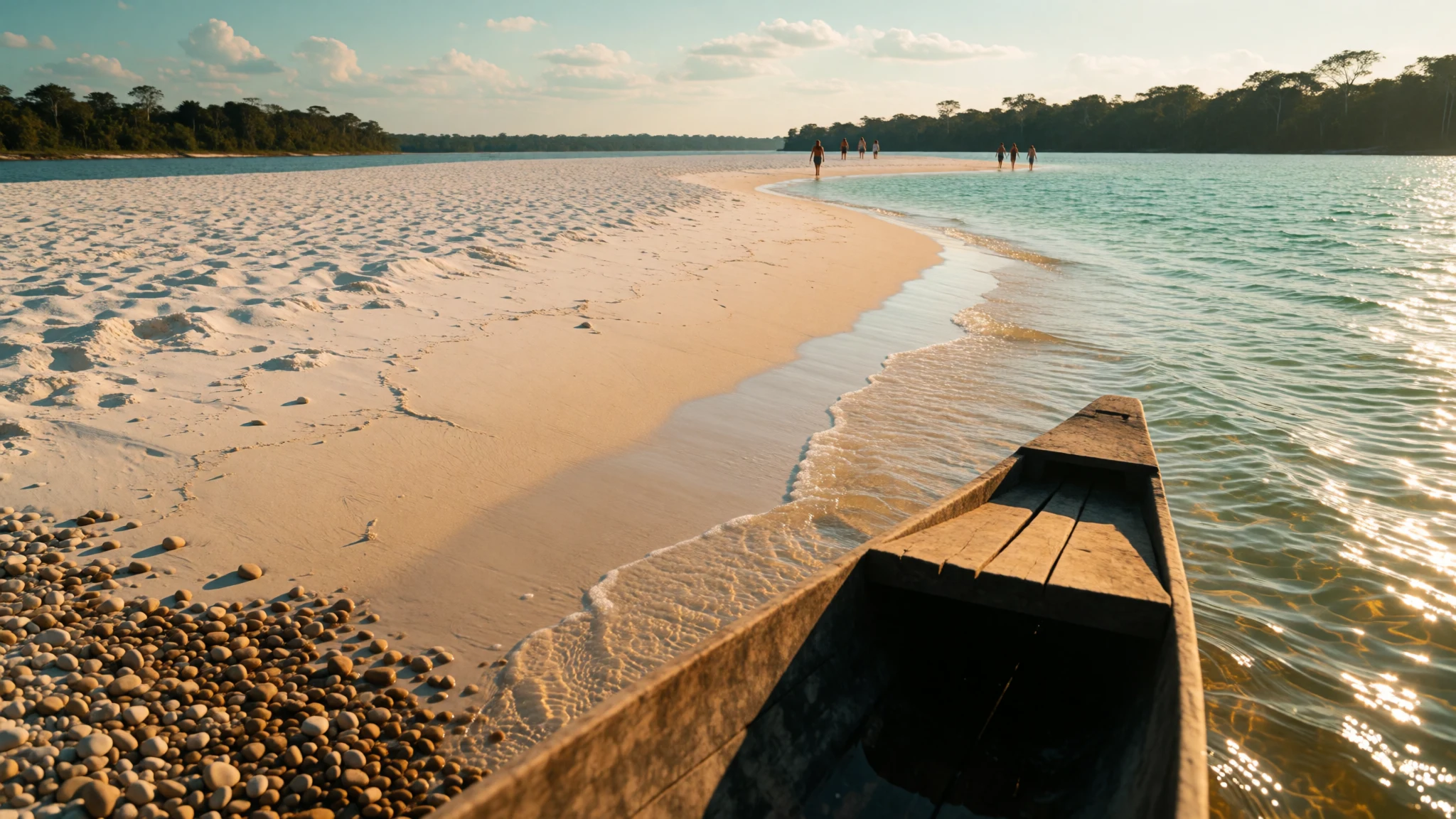
Alter do Chão pairs pale river beaches and warm, clear Tapajós water with Amazon forest, a lively festival and an easygoing riverside town.
The place
Alter do Chão lies on the right bank of the Tapajós river, a district of the city of Santarém in the Brazilian state of Pará. A highway, the PA-457, joins the two, and a regular local bus covers the run. The village is small: a few sandy streets around a square and a church, and a waterfront of boat landings. Weekends are noticeably busier, because families from Santarém come down for the river. What draws them is the beach, or rather the beaches. The Tapajós rises and falls with the seasons, and the sand follows it. In the low-water months broad pale strips appear opposite the village and the river looks almost like a bay. In the high-water months many beaches vanish, trees stand in the flood, and the town feels quieter and greener. People call the place the Brazilian Caribbean, a nickname that flatters the colour of the water more than its temperature, which is bath-warm, under a humid equatorial sky. Behind the village lies forest, and the Tapajós National Forest is close enough for a day trip. The mood is relaxed and slightly bohemian, with hammock hostels, wood-oven pizza, fish on most menus and boats waiting to ferry people to the sandbars. Police patrol the centre and petty crime is milder than in many Brazilian towns, though ordinary care still applies.
Its story
Alter do Chão was founded in 1626 by the Portuguese explorer Pedro Teixeira and raised to the rank of town in 1758 by the colonial governor of Grão-Pará and Maranhão. Long before that, the Borari people lived along this stretch of the Tapajós, and the ground still gives them away: pottery shards, pipes and polished stone axes turn up at several sites around the village. Missionaries followed the soldiers. Religious orders worked here through the seventeenth and eighteenth centuries, and Our Lady of Remedies became the patron saint, which is why Catholic ritual and older local tradition are so tangled together in the festivals held today. Early in the twentieth century the village was one stop on the route that carried latex from the rubber estates of Belterra and Fordlândia. That boom was brief. When Amazonian rubber and extraction declined from the 1950s, the village fell into economic hardship and stayed there for decades. The turn came in the 1990s, when the district began to bet on tourism. The river beaches, the festival and the nearness of forest did the work, and visitors from Brazil and abroad now keep the guesthouses, boat operators and eateries going. The old pattern of a small river port living off what outsiders wanted has simply changed its cargo. The layers are easy to read even on a short stay: a colonial church on the square, a waterfront built for boats, and a calendar that mixes saints with much older memory.
What to see
- Ilha do Amor and the river beaches — Waterfront, Alter do Chão
Alter do Chão's best-known sight is the sandbar of Ilha do Amor, a short boat ride from the waterfront when the water is low. In high water it shrinks or disappears. Shade is scarce, so bring a hat. Stingrays rest in shallows at quieter beaches, so shuffle your feet when you wade.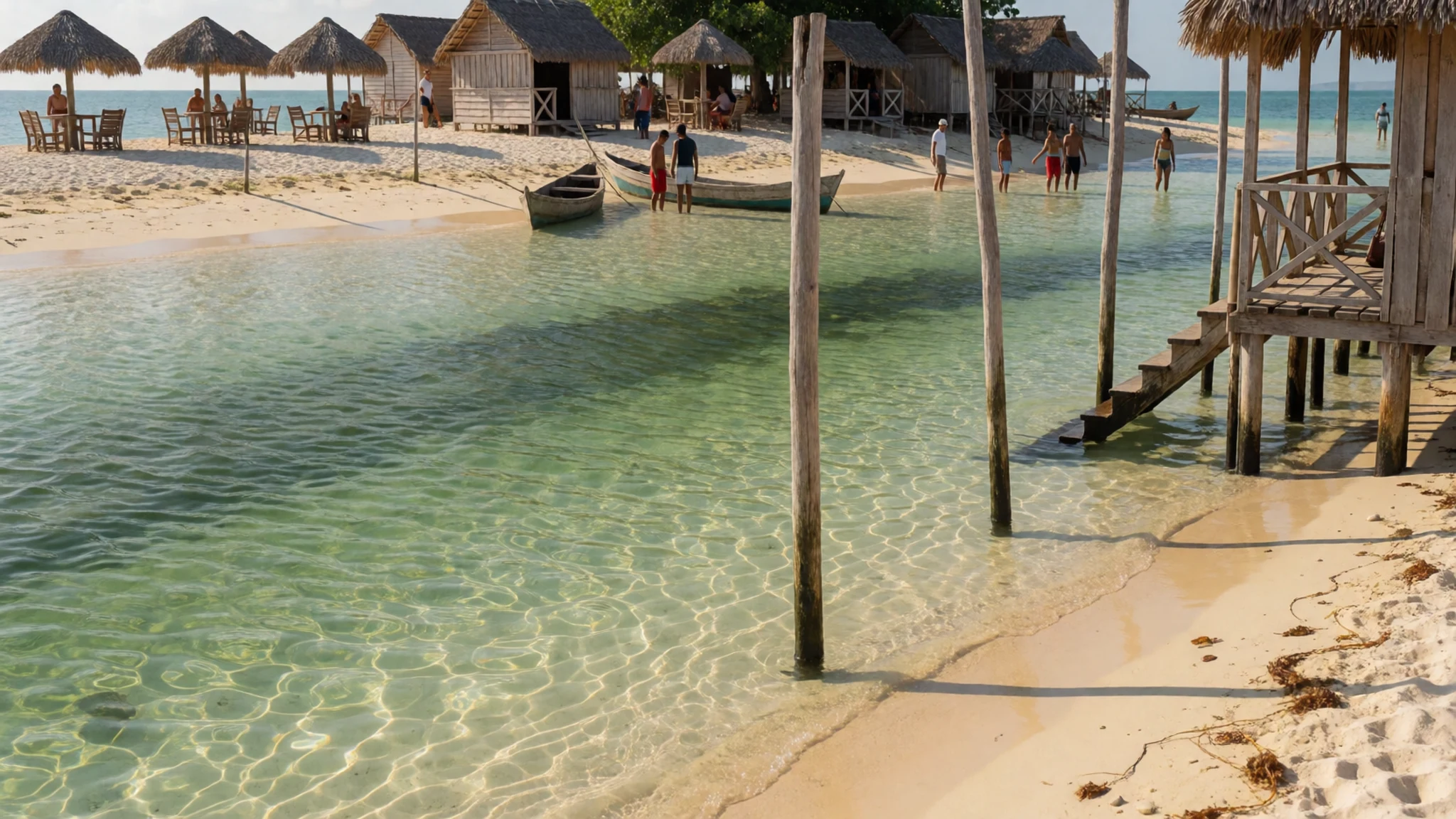
- Morro da Piroca — Just outside Alter do Chão
Morro da Piroca is the hill behind Alter do Chão, climbed for a panoramic view over river, sand and forest. The trail is of medium difficulty and takes about 45 minutes. Much of it is exposed, so carry water and sunscreen, and start early or late to avoid the midday heat.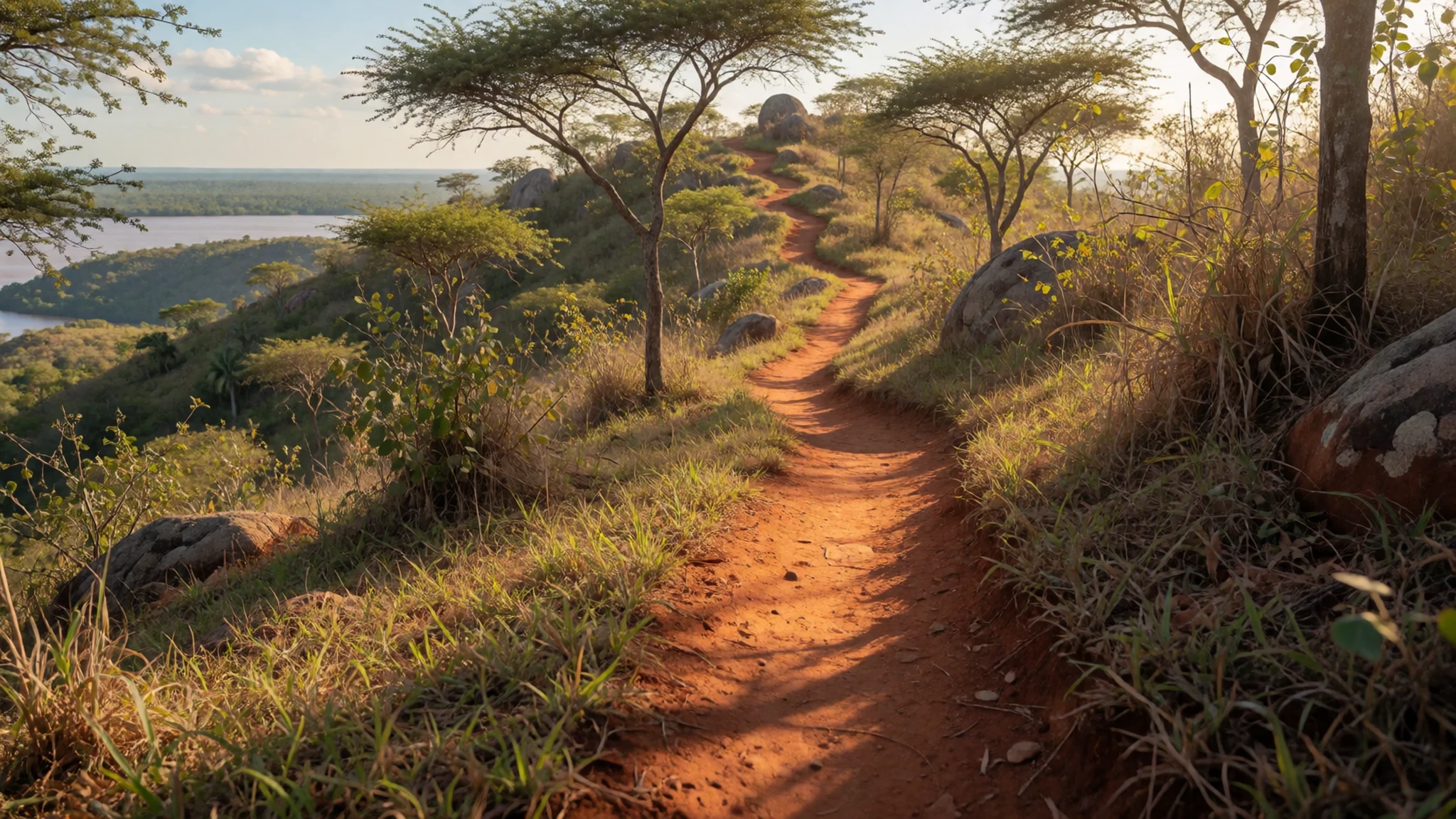
- Flona do Tapajós — Tapajós National Forest, near Alter do Chão
The Tapajós National Forest lies close to Alter do Chão and works best as a day trip. Visitors swim at forest beaches and streams, walk among giant trees such as the kapok, and see community enterprises: a flour house, ecological leather work and sustainable forest management.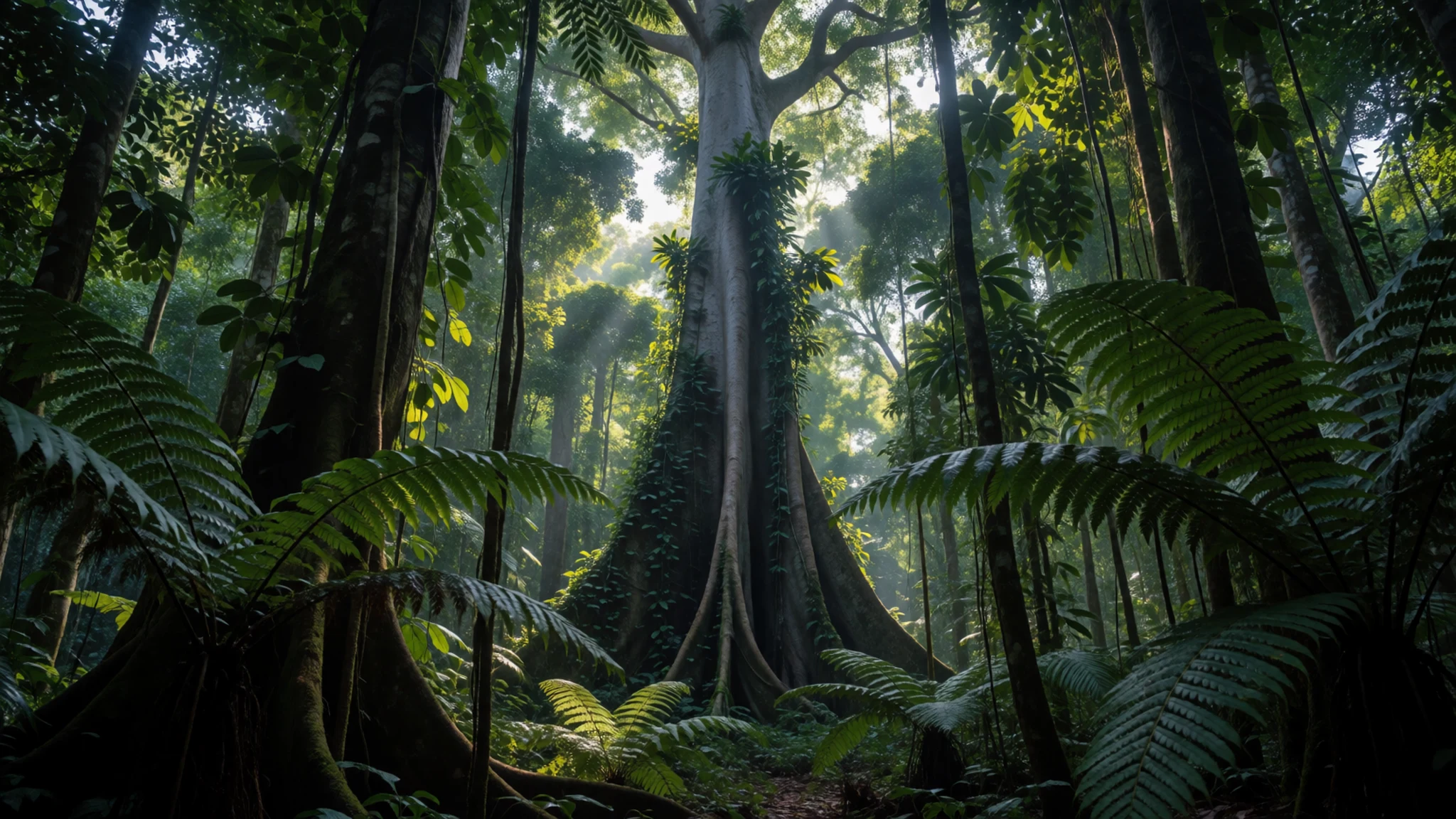
- Festa do Sairé — Central square and riverside, Alter do Chão
The Sairé festival in Alter do Chão mixes Catholic ritual with local Amazonian culture through processions, music and dance. Listings place it between June and September, but the exact dates vary, so check locally before planning a trip around it. Rooms fill early.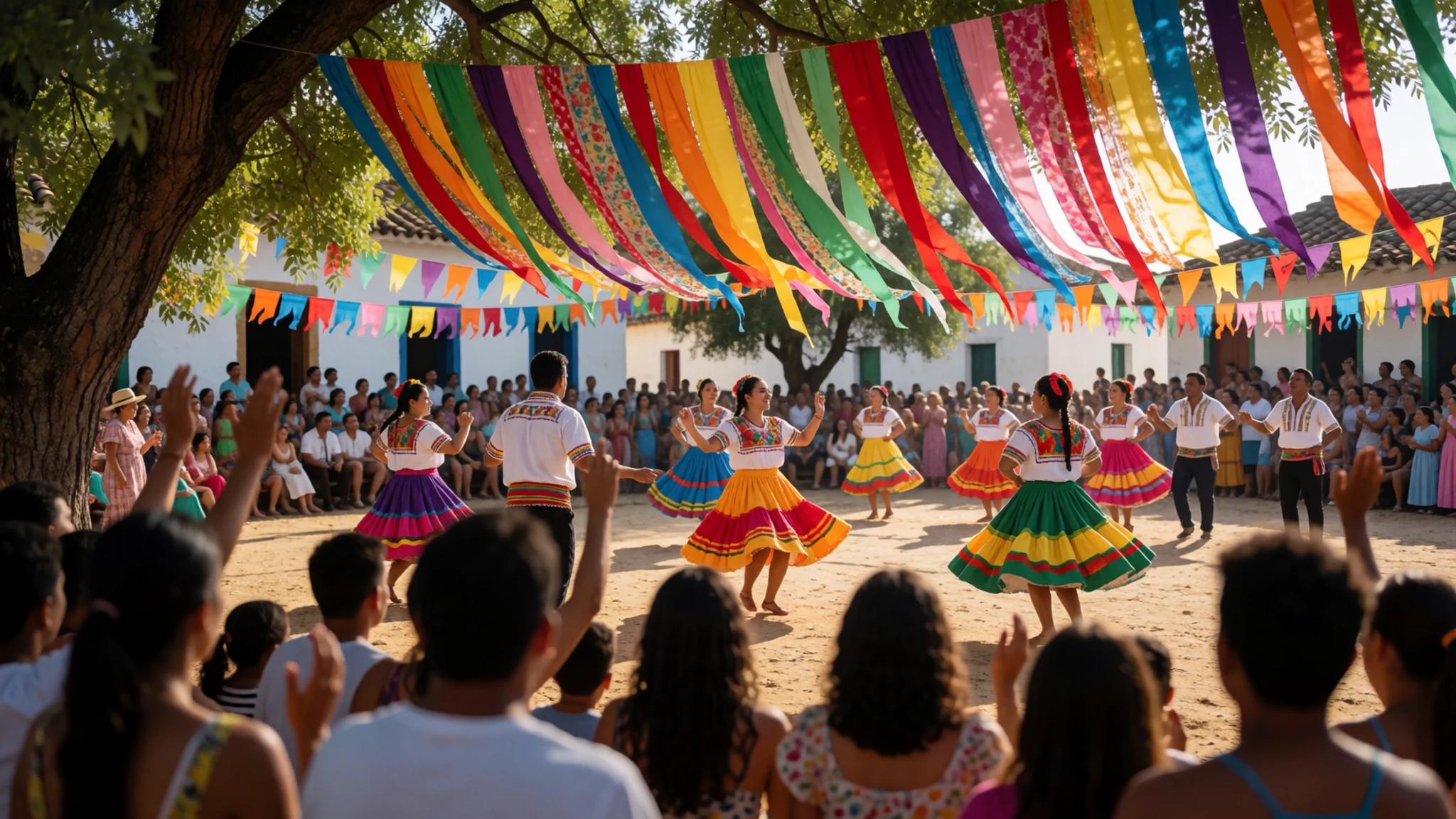
- Carimbó performances — Town centre, Alter do Chão
Carimbó is a drum-led music and dance style from Pará, and Alter do Chão stages presentations of it for locals and visitors. Ask at your guesthouse where one is happening that week. It is a good evening alternative to the beach bars and an easy way to hear regional music. - The church on the square — Central square, Alter do Chão
The church in Alter do Chão's centre recalls the missionary past and the devotion to Our Lady of Remedies, the patron saint. It is modest in scale, and worth a few minutes in the cooler part of the morning before the beach crowds and the heat build.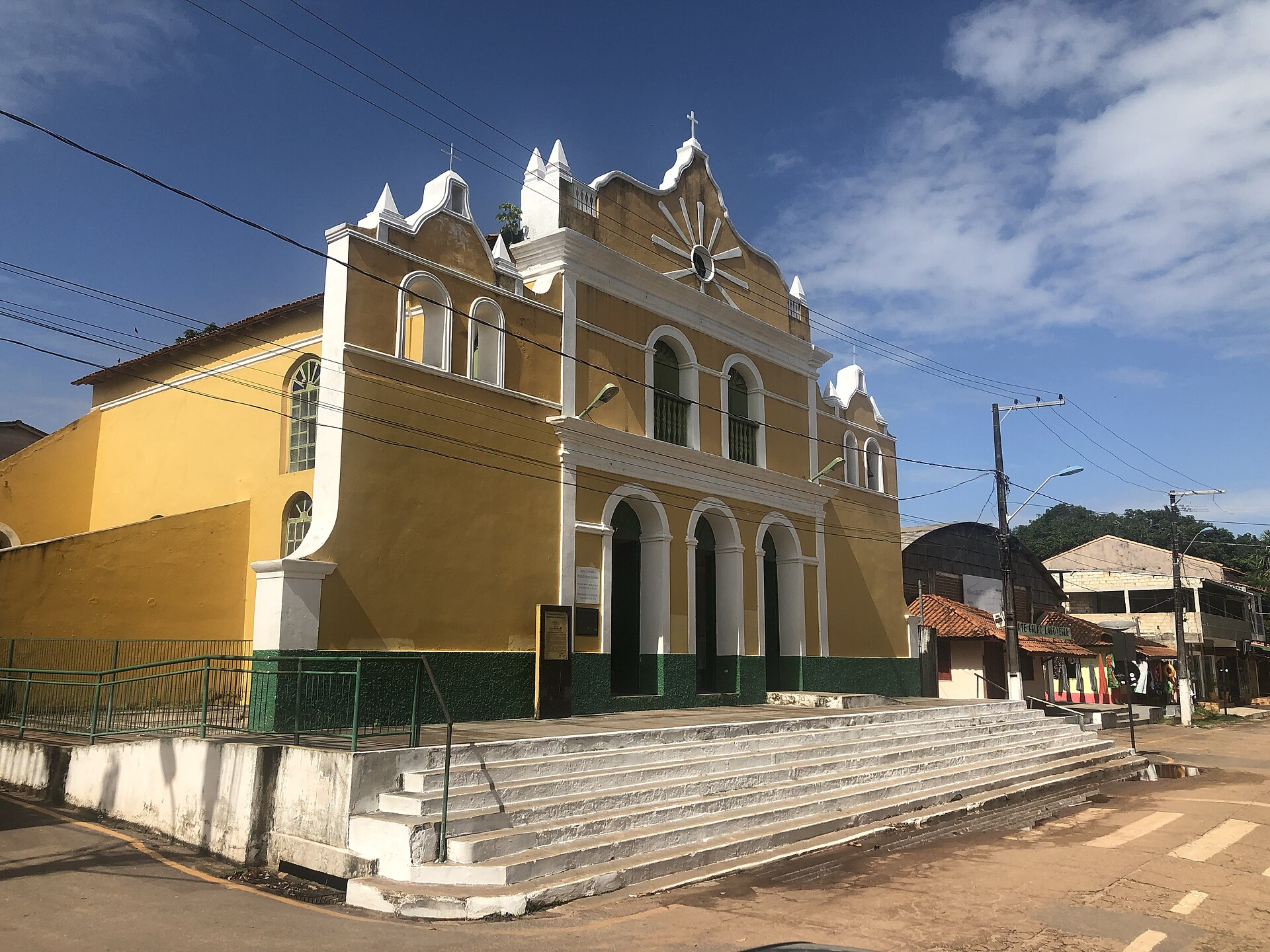
Culture
Alter do Chão's culture blends Indigenous memory, Portuguese Catholicism and river life. The Borari lived here before the colonists arrived, and their legacy survives in place-names, in craft and in the pottery fragments still found in the ground. Catholic devotion came with the missionaries, and Our Lady of Remedies remains the patron saint. The fullest expression of the mix is the Sairé festival, held between June and September, where procession, drumming, dance and religious ritual run together; dates shift, so ask locally. Carimbó, a drum-driven dance music of Pará, is also performed in town. Daily life is organised around the water: boats do the work of buses, the waterfront is the meeting place, and weekends bring Brazilian families with coolers, speakers and long lunches. Fishing, forest products and small crafts, including ecological leather from forest communities, sit alongside tourism. Portuguese is the everyday language, and a few words of greeting go a long way, since English may be limited outside businesses that serve visitors. The pace is unhurried, and meals in local eateries can be leisurely. Evenings are social, with people gathering outdoors near the square and the river once the heat eases. Ask before photographing people, especially during Sairé processions and in forest communities, and accept a refusal with good grace.
What to wear
Traditional dress around Alter do Chão belongs to the Indigenous peoples of the Tapajós region, among them the Borari, whose ornament has long used feathers, seeds, beads, plant fibre and body paint. Cotton and woven straw have also been part of everyday and ceremonial wear. Today such pieces appear mainly at festivals: Sairé costumes draw on feathers, straw, seeds and beadwork, with bright fabrics for dancers and dark, plain dress for religious moments. Everyday clothing in town is simple and made for heat. Locals and Brazilian weekenders wear shorts, swimwear, light cotton shirts, sarongs and flip-flops, with a cap or straw hat against the sun. Evenings are casual too, though people put a shirt or cover-up over beachwear for restaurants. Visitors should dress for a hot, humid equatorial climate: loose, quick-drying cotton or linen, a wide-brimmed hat, sunglasses and plenty of sunscreen. A light long-sleeved shirt helps against both sun and insects at dusk. Wear sandals with a firm grip for slippery boat landings, water shoes for sandbars where stingrays may lie, and closed shoes for the Morro da Piroca trail and forest walks. Cover swimwear when walking through the town or entering the church, and keep a light rain jacket in the flood season. Pack a dry bag for boat trips.
What to eat
- Wood-oven pizza — Garden pizzerias around the town centre
Alter do Chão has a surprising pizza habit, with wood-fired ovens in garden-style pizzerias near the centre, some run by Italian owners. Toppings often lean on local fish and tropical ingredients. It is an easy dinner after a day on the sand.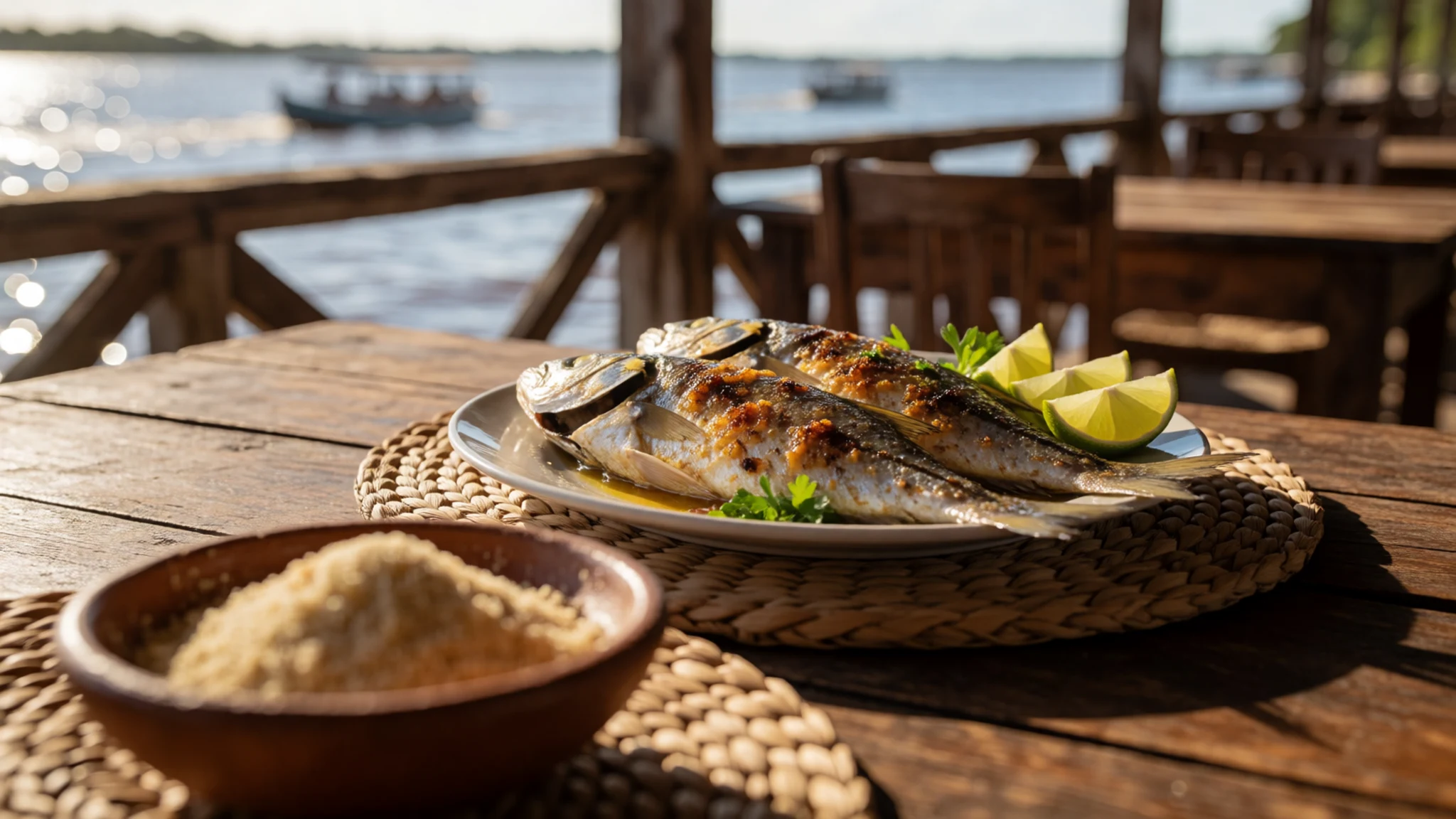
- Grilled river fish — Riverside eateries along the waterfront
Fish from the Tapajós and nearby waters is the staple of local menus in Alter do Chão. It is usually grilled or fried and served with rice, manioc flour and salad. Ask what was caught that day and choose the simplest preparation.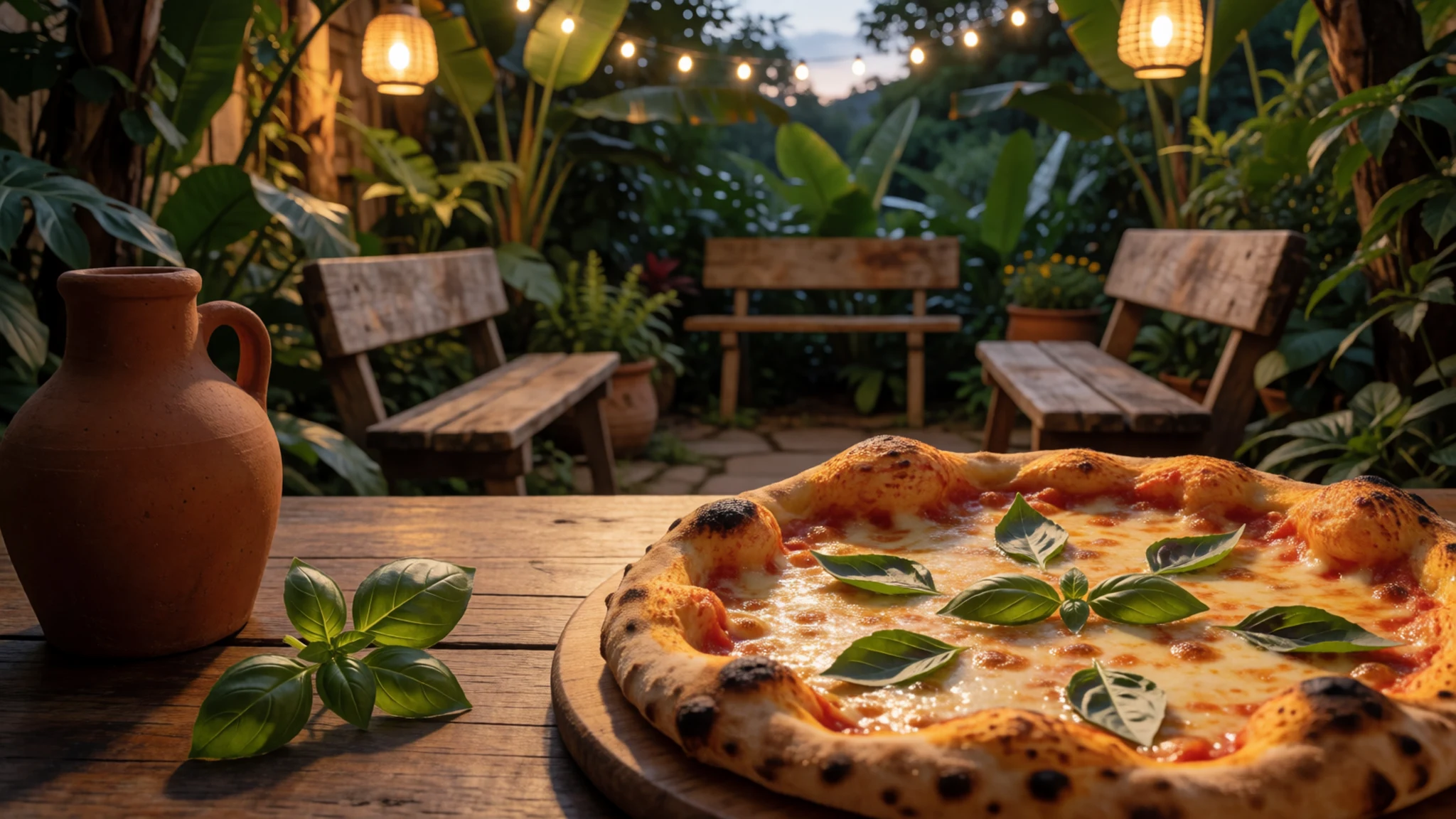
- Fish burger — Casual burger bars in the town centre
Alter do Chão's burger bars make traditional and inventive burgers, some of them with river fish in place of beef. It is cheap, filling beach food, easy to eat before a boat trip, and a good change from rice and fish plates. - Frozen fruit juices — Juice counters (sucos) near the main square
Juice bars in Alter do Chão blend frozen Amazonian fruit into thick, cold drinks, a welcome relief in the heat. Look for fruit you may not know, such as cupuaçu, and ask for it with or without added sugar. - Tacacá — Evening street stalls in Santarém, a short bus ride away
Tacacá is a hot, tangy Pará soup of tucupi broth, dried shrimp and the tingling leaf jambu, traditionally sold in the evening. It is an acquired taste, and most visitors try a small bowl first. Look for it in the region rather than on tourist menus.
Plan it
Best time. September to December, when the Tapajós is low and wide sandy beaches appear (the low-water season runs August to January). February to July is the flood season, when many beaches disappear but flooded forest and wildlife viewing are at their best. Mid-January offers a mix of both.
How long. 2–4
Getting there. Fly to Santarém International Airport (Maestro Wilson Fonseca). No bus runs from the airport to Alter do Chão, so take a taxi, or take an airport bus into Santarém and change. Buses from Santarém to Alter do Chão run frequently from early morning until late evening, leaving from Avenida Rui Barbosa or the Praça Tiradentes stand.
Budget. low
Tips
- Book rooms well ahead for the Sairé festival and for weekends in the low-water season, when the town fills up
- Carry water, a hat and sunscreen; sandbars and the Morro da Piroca trail have little shade
- Shuffle your feet when wading at remote beaches, because stingrays only sting when stepped on
- Bring some cash for boats, small stands and bus fares, and check the current bus fare locally
- Use weekdays for the beaches if you want quiet; weekends bring many visitors from Santarém
Etiquette
- Ask before photographing people, especially at festivals and in forest communities
- Cover up beachwear when walking through town or entering the church
- Take rubbish back from sandbars and forest beaches
Nearby
Sources
- Wikidata Q225060 (CC0)
- Wikipedia: Alter do Chão, Pará (rev 1321143041) (CC BY-SA 4.0)
- Wikivoyage: Alter do Chão (rev 5423978) (CC BY-SA 4.0)
- Ilho do Amor, Alter do Chão — idobi (CC BY-SA 1.0)
- Alter do Chão, Brazil - The Beach — Richard N Horne (CC BY-SA 4.0)
- Alter do Chão, Brazil - The Riverside Walk — Richard N Horne (CC BY-SA 4.0)
- Alter do Chão, Brazil - The Riverside — Richard N Horne (CC BY-SA 4.0)
- Alter do Chão, Brazil - Central Town boat landing — Richard N Horne (CC BY-SA 4.0)
- Alter do Chao, Brazil - The Church — Richard N Horne (CC BY-SA 4.0)
- River beach (River Tapajos) in Alter do Chao — JorgeFromBrazil (CC BY-SA 4.0)
- Alter do chao, Para, Brasil — krishna naudin (CC BY-SA 2.0)


Wildlife
- Freshwater stingray (animal)
The southern stingray is a flat, diamond-shaped fish that looks like a kite gliding along the bottom, with a brown, olive or grey back and a pale underside. Around Alter do Chão, freshwater stingrays rest in the sand of the shallower shoreline. Its tail carries a serrated barb coated in venomous mucus, kept for self-defence. So when you wade in, slide your feet along the bottom rather than stepping down, giving the ray warning to move away calmly.