Bonito, Mato Grosso do Sul
Bonito, Mato Grosso do Sul, Brazil
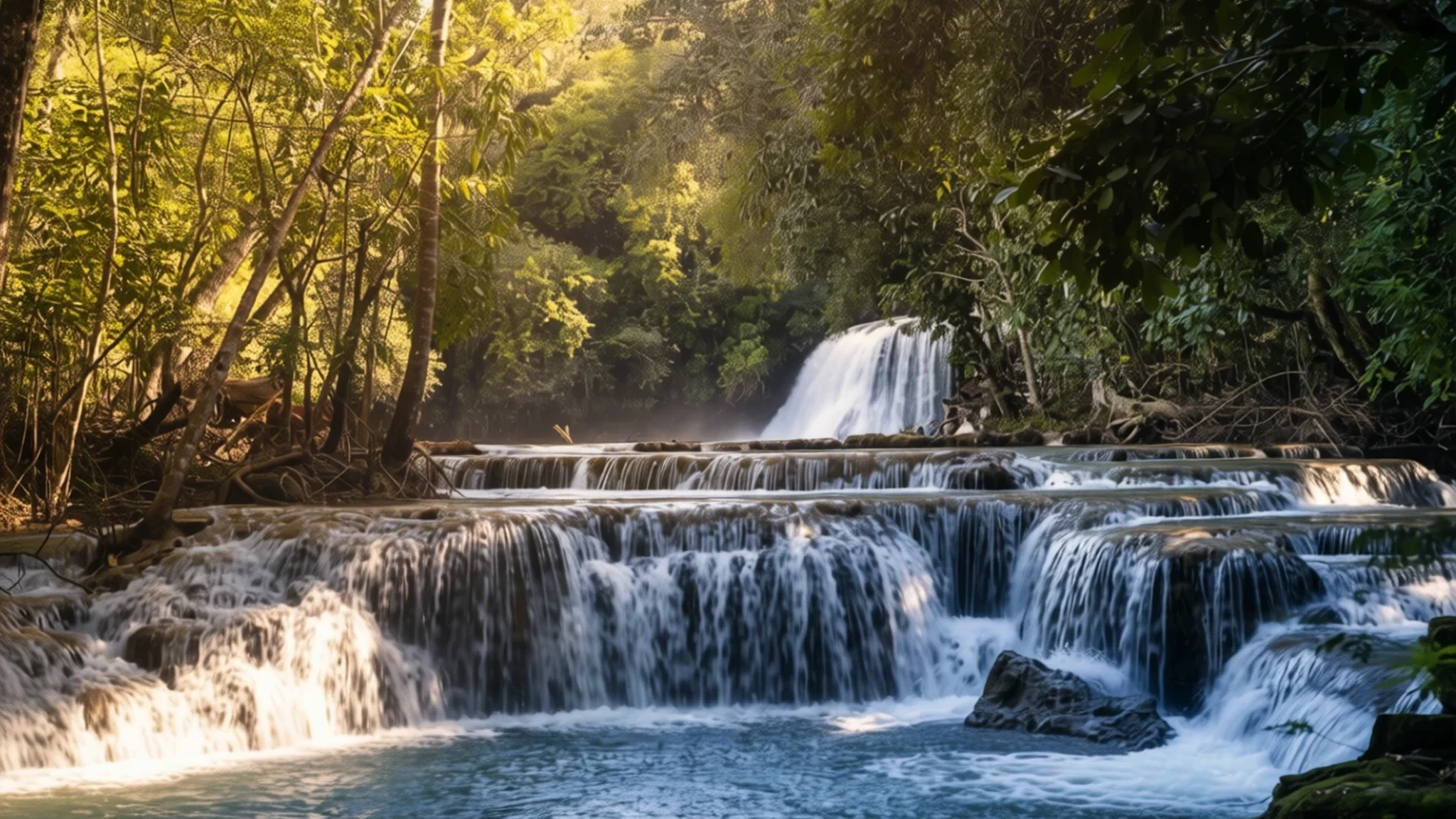
A small Brazilian town where the river water runs so clear you can snorkel among fish, with caves and sinkholes close at hand.
The place
Bonito is a small town in the west of Brazil, in the state of Mato Grosso do Sul, where cerrado savanna gives way to patches of forest. The municipality has about 25,000 people and sits at around 315 metres above sea level. Its reputation rests on water. Rivers in this limestone country carry dissolved calcium carbonate, which clings to floating particles and lets them sink, so the water stays unusually clear and the best stretches look like natural aquariums. The town is compact and walkable, with a main street of bars and eateries, and macaws and toco toucans are regularly seen close to the buildings. Most of the appeal lies a short way out: snorkelling floats, caves, sinkholes, horse rides and hikes through the cerrado. Nearly all organised trips run through agencies in town and require an accredited guide, so the booking desk is the real starting point. The dry season from May to August brings the famous clarity, mild days and fresh nights. The wet season, from December to March, brings lush green growth and strong waterfalls, but rain muddies the rivers and can close sites. Weekends and Brazilian holidays fill the town, so rooms can be hard to find.
Its story
The land that became Bonito began as the Rincão Bonito farm, which was acquired in 1869 by Captain Luiz da Costa Leite Falcão. He is remembered as the pioneer of the settlement and served as its first registrar and public notary. Administrative status came slowly. A state law of 1915 created the District of Paz de Bonito, carved out of the neighbouring municipality of Miranda and placed under its authority. In 1943, the creation of the Federal Territory of Ponta Porã brought the area under the district of Paz de Miranda. After the constitutional changes that followed, it returned to the state of Mato Grosso along with the Miranda district it had belonged to. The last stage came in 1948, when a state law gave it municipal status, with Bonito town as its administrative centre. Tourism is much newer than the settlement itself. The river clarity that now draws visitors is also a geological story. Limestone bedrock dissolves slowly over long periods, and the calcium carbonate it releases settles the suspended particles that would otherwise cloud the water. The result is transparent rivers, and caves and sinkholes that have formed underground over a very long time. The first settlers came for the land; later visitors came for what lies beneath it.
What to see
- Abismo Anhumas (Anhumas Abyss) — Anhumas abyss, outside the town centre, reached by agency tour
A rappel of roughly 72 metres takes you down a shaft into a cave holding an underground lake about 80 metres deep, with a surface area about the size of a football field. Daylight falls through a natural skylight, and snorkelling or diving reveal a few of the world's biggest underwater stalagmites, rising up to 18 metres. Tours run through town agencies and need an accredited guide. The descent is physically demanding, so check your fitness before booking.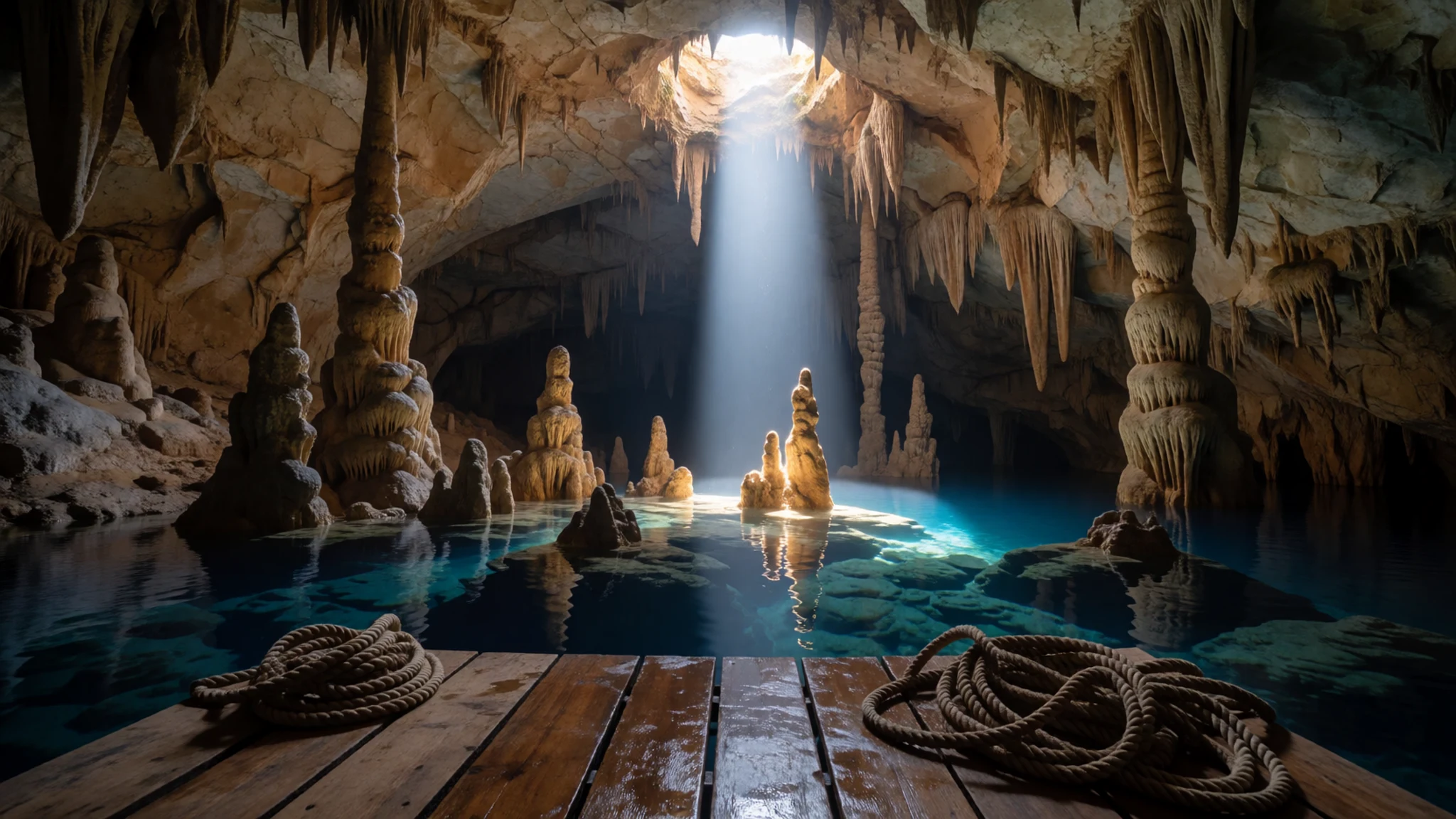
- Gruta do Lago Azul (Blue Lake Cave) — a short drive from the town centre
A large cave with a deep lake at its base, the water an intense and striking blue. The light is the main draw: between late December and early February, sunlight beams directly into the cave, and the lake takes on its most vivid colour. Visits follow a guided route, and the footing inside can be damp and uneven, so wear shoes with grip.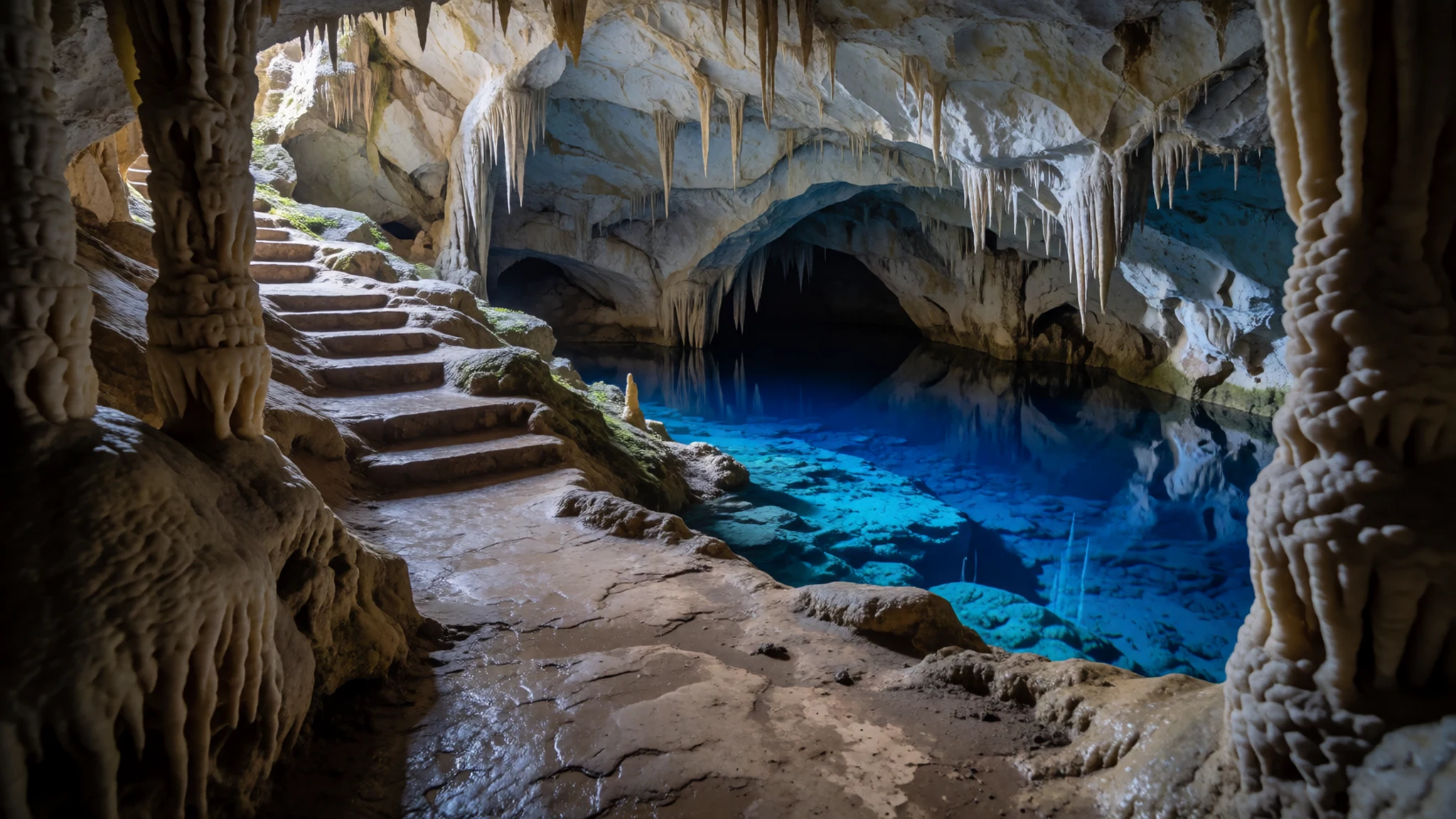
- Buraco de Araras (Macaw Sinkhole) — an hour's drive south of town, reached by agency tour
A huge sinkhole, around 500 metres across, home to a colony of macaws. Some 60 to 70 pairs live here, although on some days only a few birds are visible. Early morning and late afternoon give the best chance of seeing them flying in and out. Reach it by agency tour, and carry water, because there is little shade on the rim.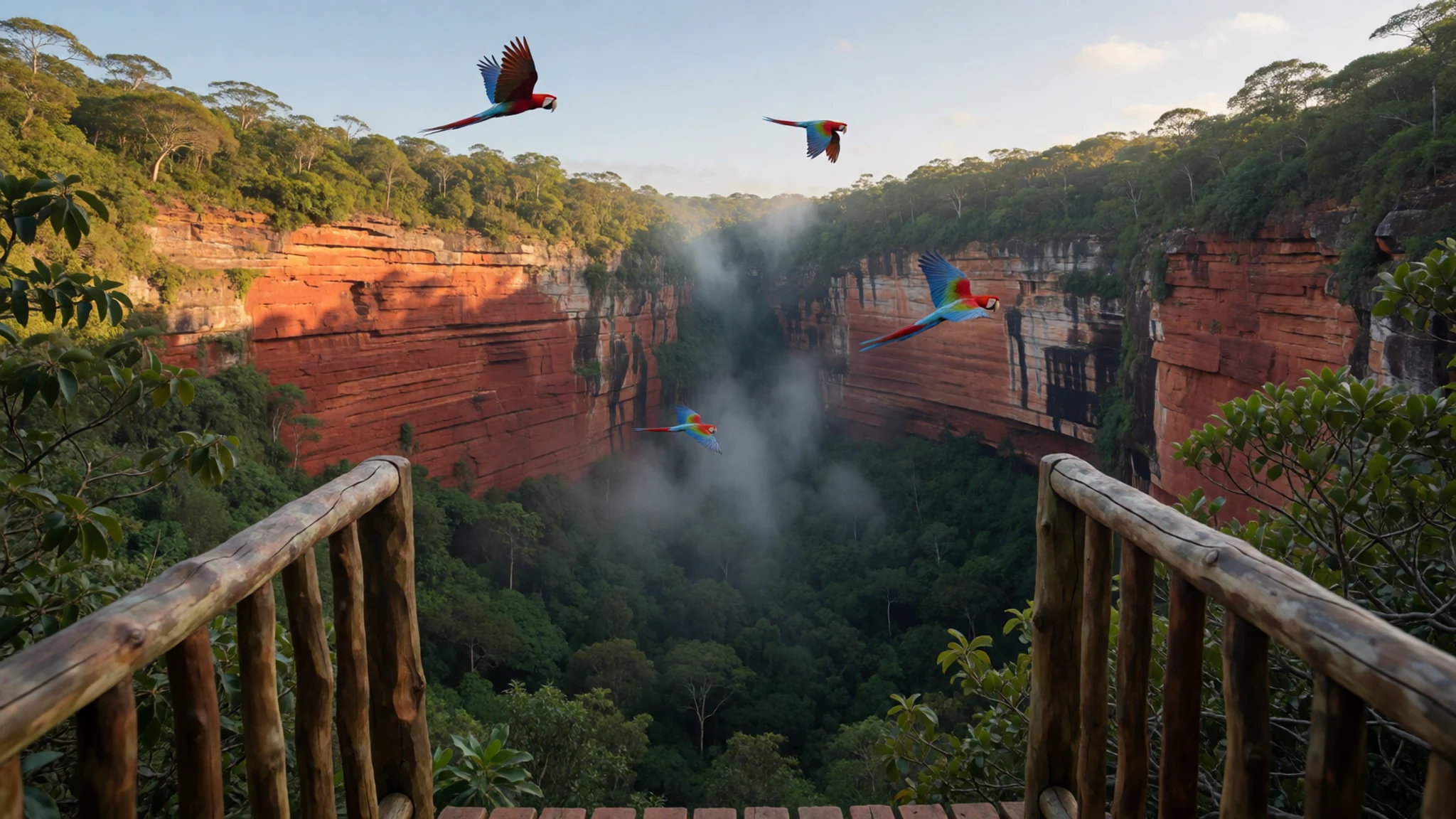
- Rio da Prata (Silver River) — a river outside Bonito, reached by agency tour
A snorkelling trip on the Silver River, with crystal-clear water, plenty of fish and a walk through forest on the way. The tour usually includes lunch, which makes it a good full-day option. With a guide, the water is calm enough for beginners, and the cooler dry-season months are more comfortable for time in the river.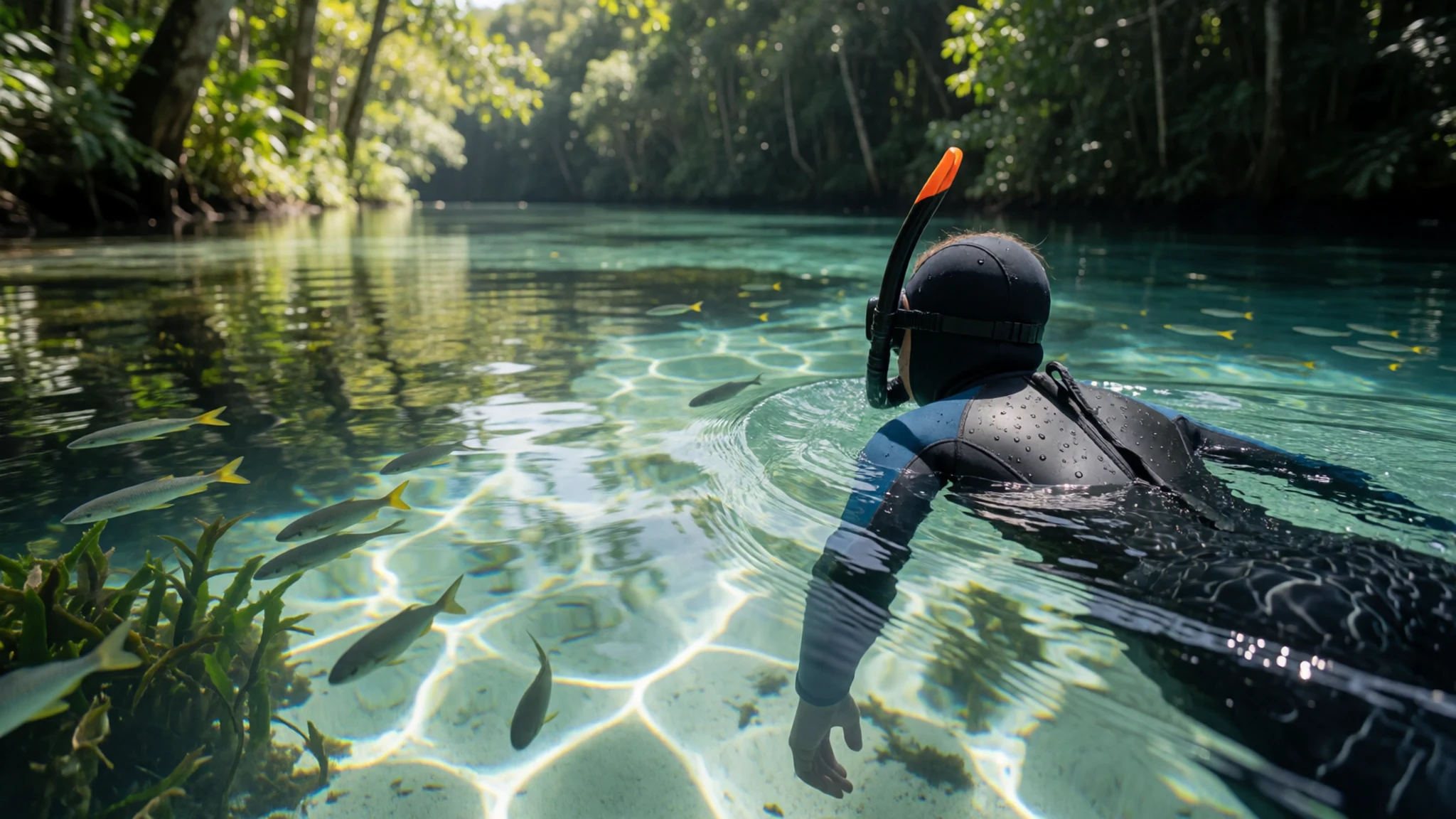
- Sucuri River — a river near Bonito, reached by agency tour
Similar in style to the Silver River, but the scenery is the main draw, with fewer fish. The water is clear enough to see the riverbed and banks, and the walk to the river passes through cerrado vegetation. Choose it if landscape matters more to you than a crowd of fish.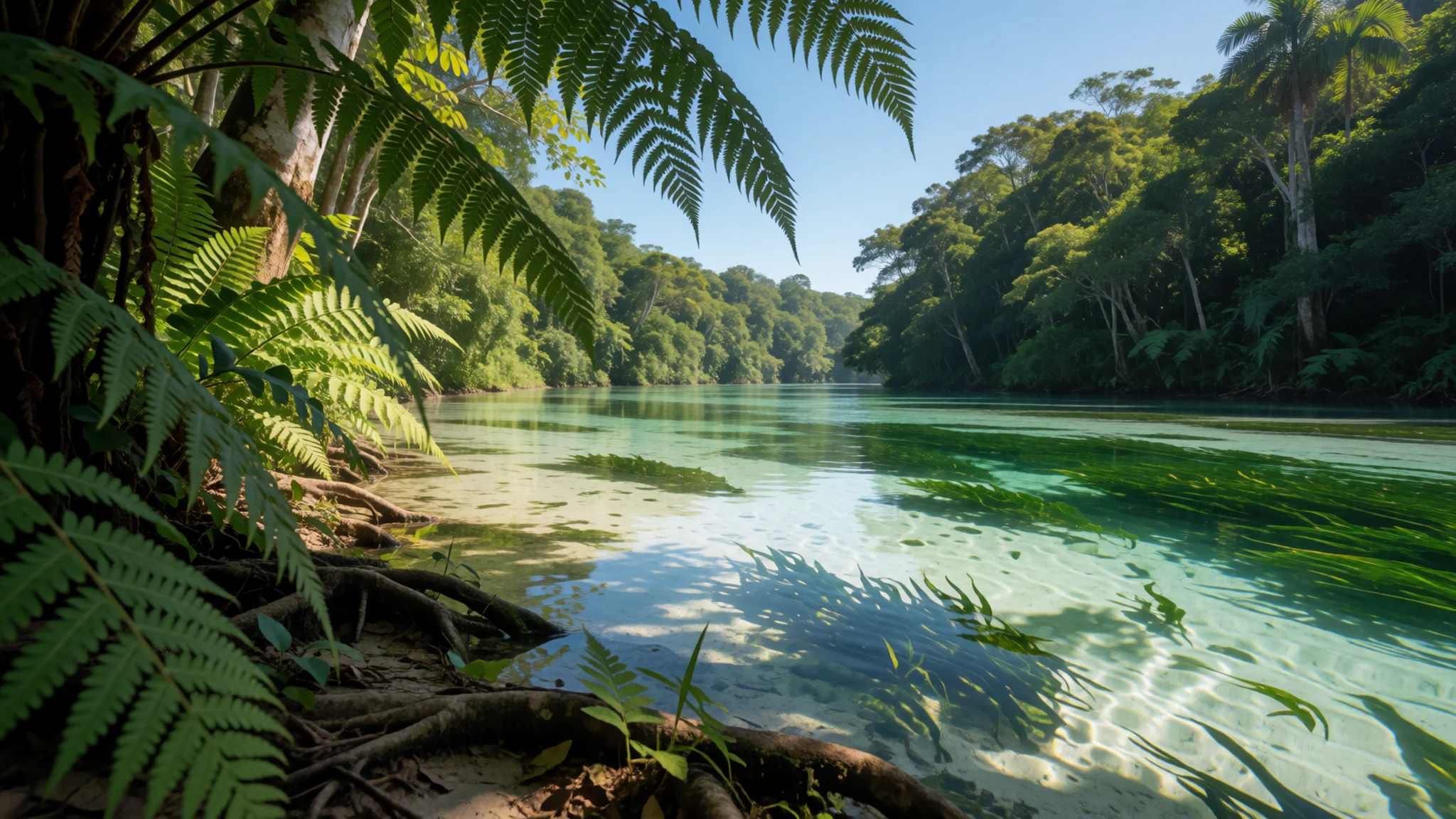
- Balneário Municipal (Municipal Swimming Area) — the edge of town, reachable by bike from the centre
The town's municipal swimming area, where residents go to sunbathe, play volleyball and swim in a river with plenty of fish. Bicycles can be hired in the town centre for the short ride out. It is an inexpensive way to see everyday local life, away from the organised tours.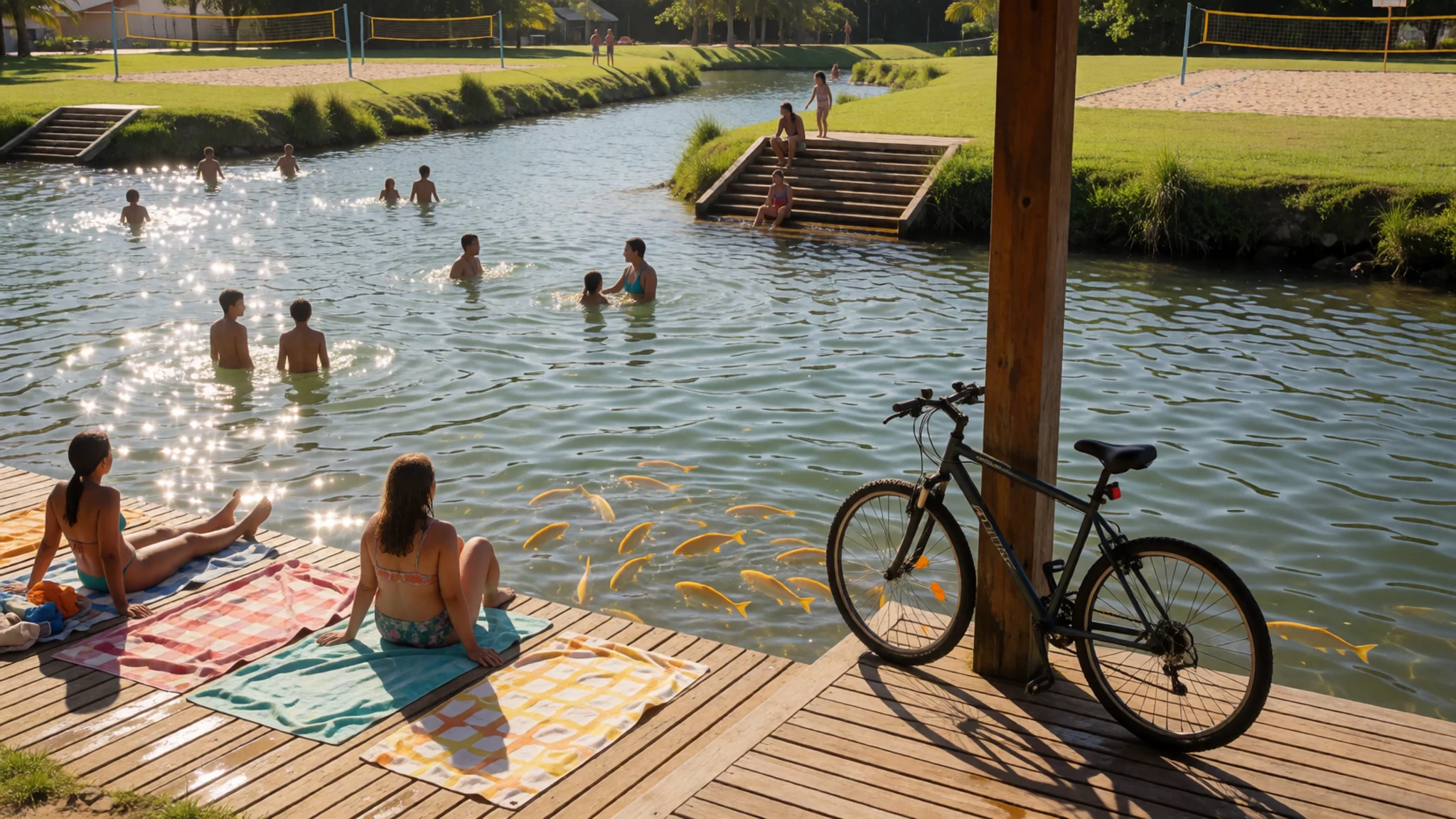
Culture
Life in Bonito moves at a relaxed pace, and much of the town's identity rests on its rivers. Locals treat the municipal swimming area as a shared space, and families spend time there sunbathing, playing volleyball and swimming beside the fish. Most organised trips depend on accredited guides working through town agencies, and not every guide speaks English or Spanish, so confirm the language before booking. Portuguese is the everyday language, and a few words go a long way in shops, bars and eateries. The land around town is working farmland, and haze from nearby farms can drift in during the dry season, so stay on marked paths and keep off private land. The macaws, toucans and monkeys around town are wild, so do not feed them. Take your rubbish back out of the caves and rivers, and do not touch the formations.
What to wear
Bonito's traditional dress comes from the cattle country of the wider region, where ranch work shaped what people wore. The classic outfit is practical rather than decorative: a long-sleeved cotton shirt, sturdy trousers, a wide-brimmed hat against the sun, and leather boots for riding. Cotton and leather are the working textiles, and they still suit the rural life around the town. Today most people in Bonito dress for the heat, in cotton T-shirts, shorts and sandals, with a long-sleeved shirt for the cooler dry-season evenings. Town-centre dress is casual. For visitors, the practical rules matter most. Pack light, quick-drying clothes and a swimsuit for the rivers, plus a long-sleeved rash guard if you snorkel, since the sun is strong on the water. Wear closed, grippy shoes for walks and caves, and sandals that can get wet for the rivers. A light layer helps on fresh dry-season nights and against insects. Sun protection, a hat and a waterproof bag will matter far more than fashion.
What to eat
- Jacaré (cayman) — eateries in the town centre
Local game is part of the menu in Bonito, and jacaré, a cayman, is the one most often offered. It is served in several of the eateries in the town centre. Ask what preparation is on offer before ordering.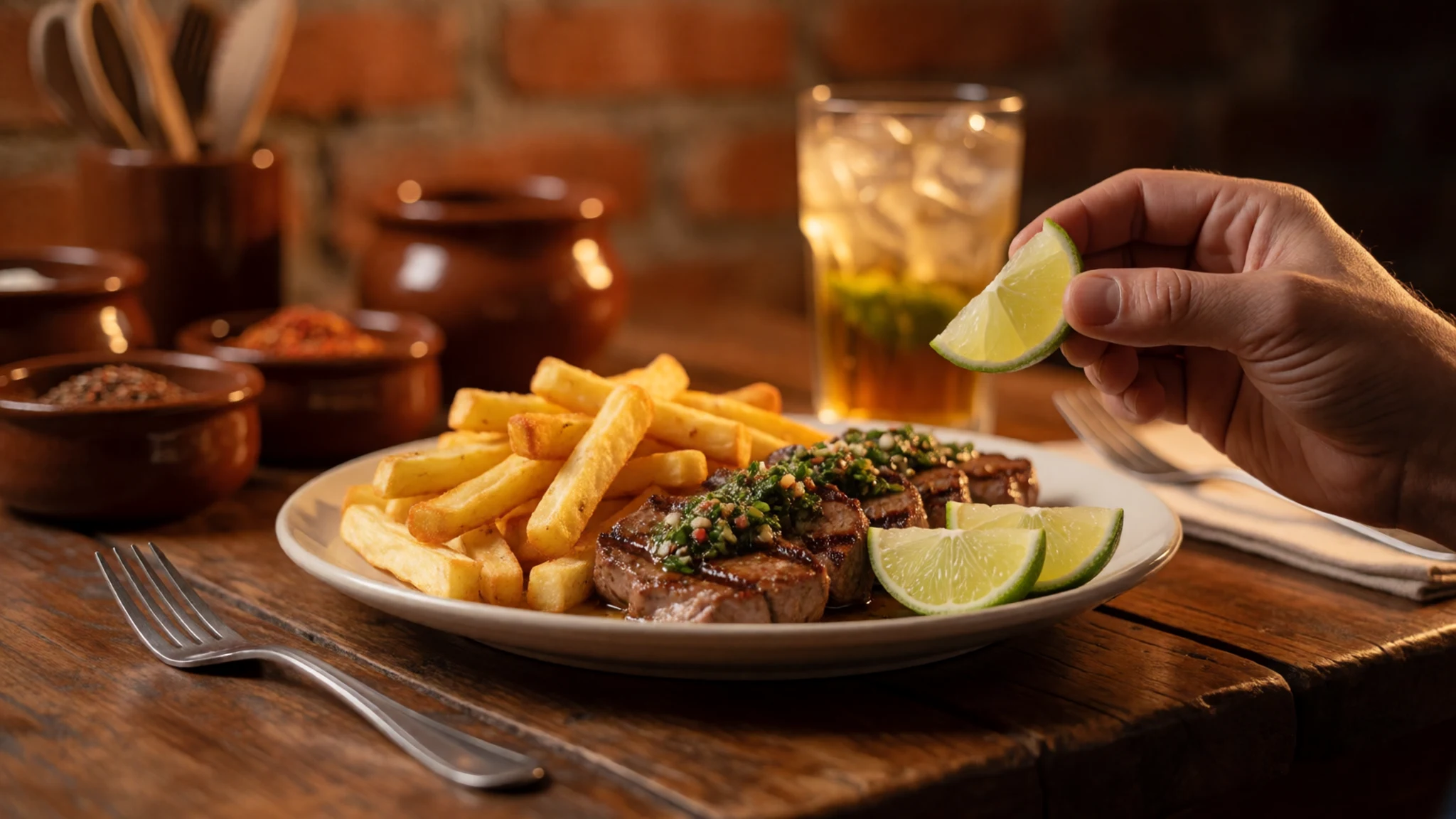
- River fish — eateries along the town-centre streets
Fish from the local rivers appears on menus around the town centre, a natural match for a cold beer on a warm evening. Ask what the kitchen recommends that day, and whether it comes from the nearby rivers.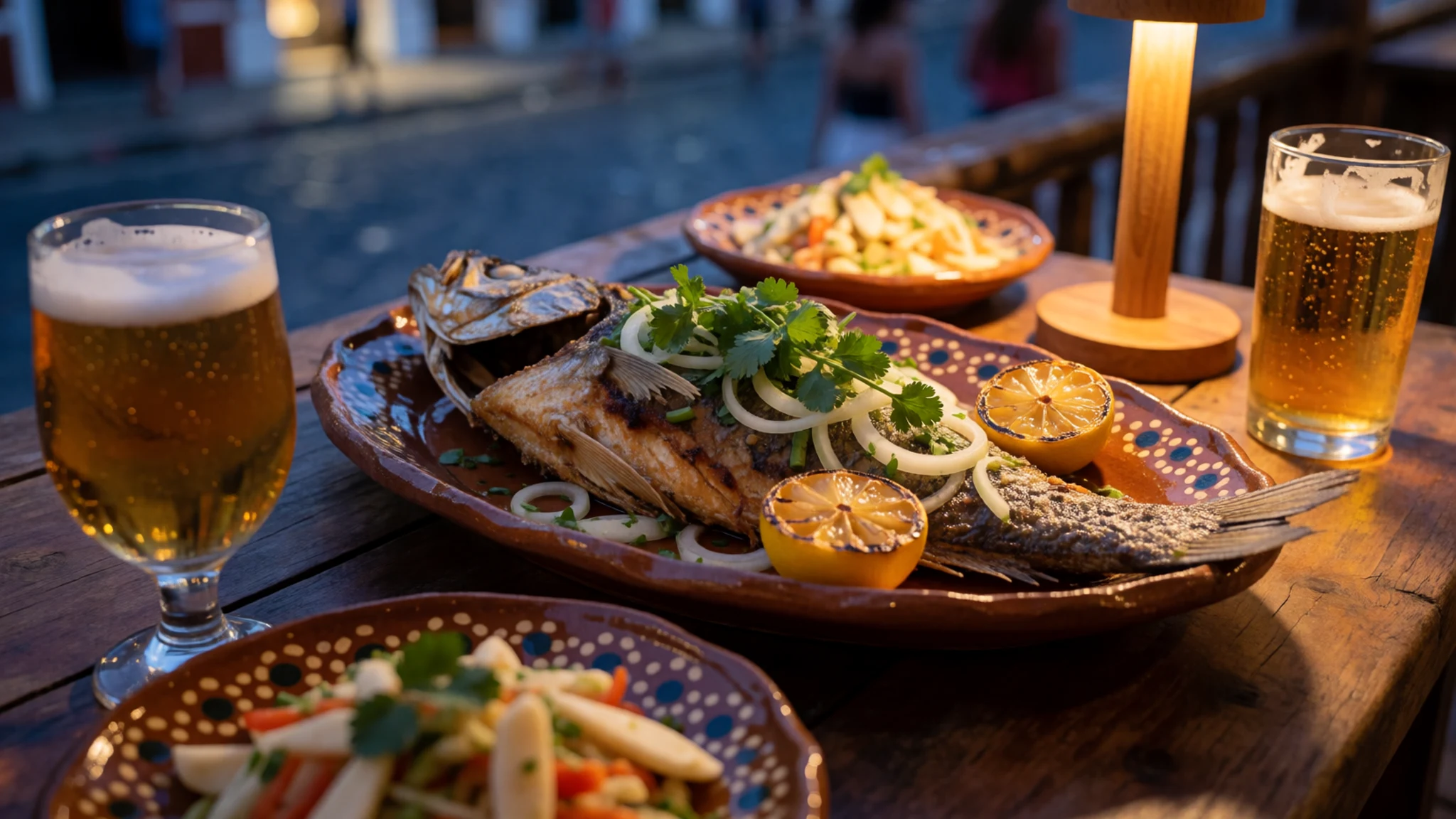
- Cachaça with local fruit — bars on the main street
Cachaça, the Brazilian sugarcane spirit, is the base for creative drinks mixed with local fruits. The bars on the main street are the place to try them. Order a small measure first, as the spirit is strong.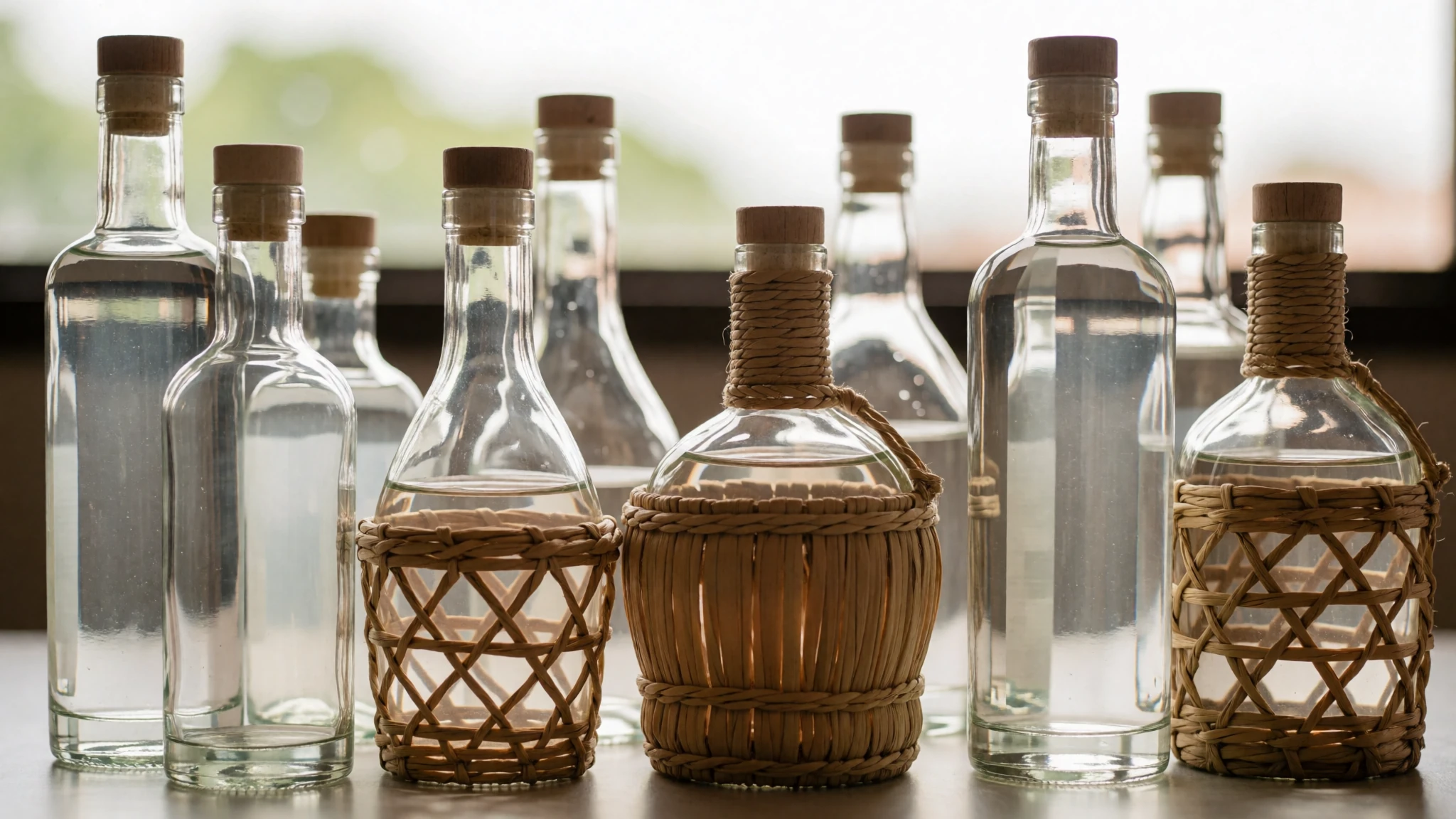
- Fresh natural juices — juice counters and bars in the town centre
Fresh juices made from local fruit are a good way to cool down between river trips. Bars and eateries in the centre serve them cold, and they make a sensible alternative to beer in the heat. Ask for plain water if you want something simpler.
Plan it
Best time. May to August, the dry season, for the famous clear water, mild days and cool nights. December to March is the wet season: vegetation is lush and waterfalls are strong, but the rivers turn murky, fish migrate, and it coincides with local summer, when temperatures can easily reach 35°C.
How long. 2–3
Getting there. Campo Grande's airport (CGR), some 300 km away, has far more flight options. From there, Cruzeiro do Sul runs buses from the Campo Grande bus station to Bonito, a long half-day journey. Bonito has its own small airport a short drive from town, with taxis or shared vans for the final leg.
Budget. mid
Tips
- Book accommodation as soon as your dates are firm, especially for weekends and Brazilian holidays
- Book river and cave tours through official town agencies, and confirm whether transport is included in the price
- Start early for macaws, which are most active in the early morning and late afternoon
- Carry cash for small purchases and plenty of drinking water, especially on open tours
- In the wet season, check that sites are open, since heavy rain can close attractions and make roads difficult
Etiquette
- Stay on marked paths and follow your guide inside the caves
- Do not feed the wild macaws, toucans or monkeys
Nearby
Sources
- Wikidata Q768535 (CC0)
- Wikipedia: Bonito, Mato Grosso do Sul (CC BY-SA 4.0)
- Wikivoyage: Bonito (Mato Grosso do Sul) (CC BY-SA 4.0)
- Abismo Anhumas, Bonito, MS (Caio Vilela) (CC BY 3.0)
- Bonito MS 1 (P199) (CC BY 3.0)
- Lagoa Azul (Angiecarla) (CC BY 3.0)
- 2013 02 Bonito D5100 224 cropped (Sergio Alexandre Korndorfer) (CC BY 3.0)
- 2013 02 Bonito D5100 224 (Sergio Alexandre Korndorfer) (CC BY 3.0)
- 2013 02 Bonito D5100 225 (Sergio Alexandre Korndorfer) (CC BY 3.0)
- 2013 02 Bonito D5100 226 (Sergio Alexandre Korndorfer) (CC BY 3.0)
- 2013 02 Bonito D5100 227 (Sergio Alexandre Korndorfer) (CC BY 3.0)


