Paraná Delta
Paraná Delta, Argentina
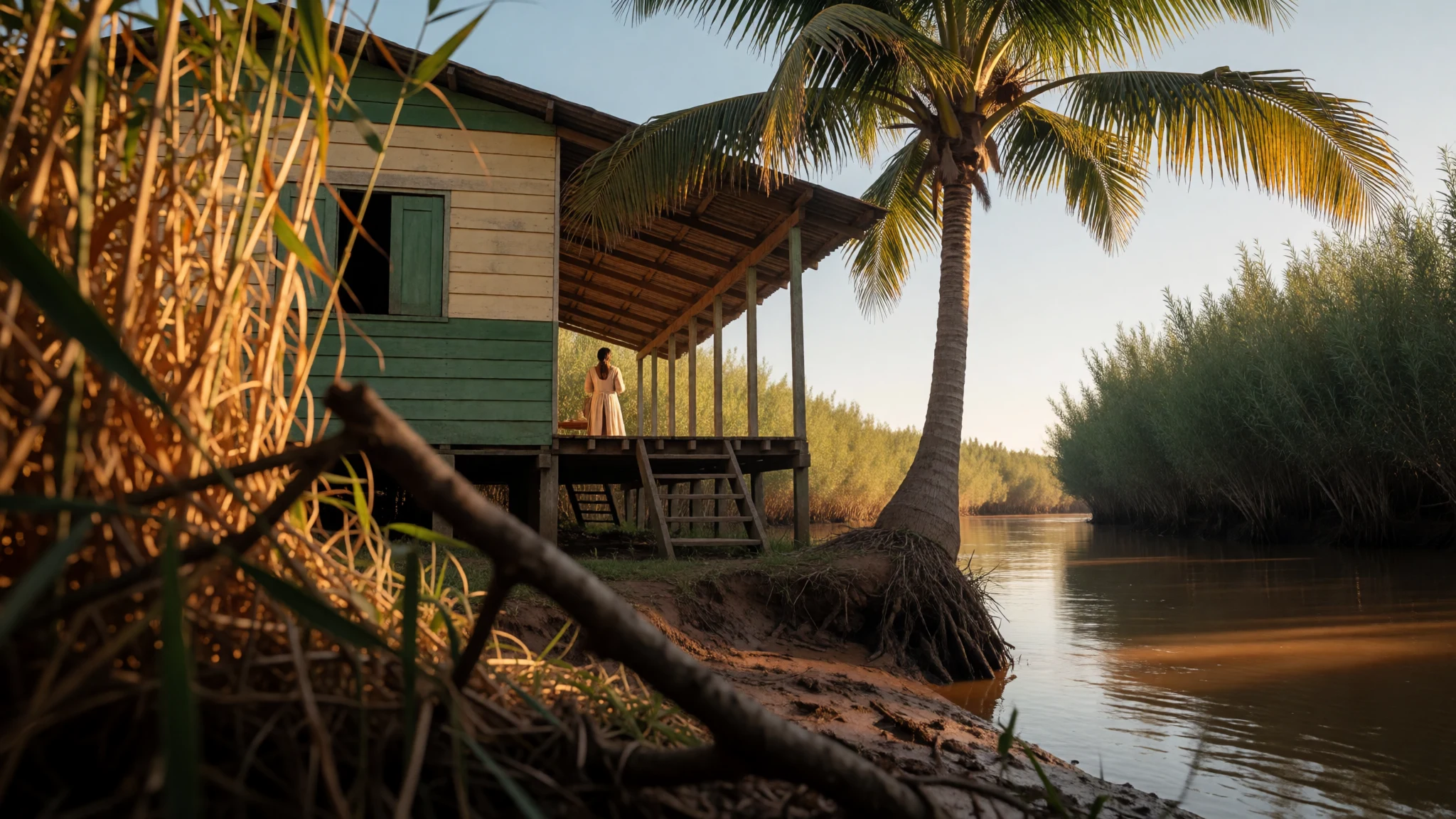
Paraná Delta is a maze of brown channels, stilt houses and willow-lined islands, a short boat ride from Buenos Aires that feels remote.
The place
Paraná Delta is where the Paraná River, after crossing a vast flat plain, breaks into a web of channels and islands before it reaches the Río de la Plata. It lies across three Argentine provinces: Entre Ríos, Santa Fe and Buenos Aires. Most of it belongs to Entre Ríos. The whole area covers about 14,000 square kilometres and stretches roughly 320 kilometres from top to bottom. Geographers split it into three parts. The Upper Delta begins where the river first divides, between Santa Fe and Rosario. The Middle Delta follows, and the Lower Delta runs down to the estuary near Buenos Aires. The ending is unusual. The delta empties into another river rather than an ocean, so the water around it is wide, brown and slow. The land is low and saturated, and the islands are a patchwork of reed beds, forest, lagoons and small plantations. Because of the water, the climate differs a little from the surrounding Pampas: nights are slightly cooler, winters milder and the air more humid, which lets some warm-weather plants and animals thrive. The two ends feel very different. The Lower Delta is close to the capital, busy with ports, farms and industry, and dotted with weekend houses. The Upper Delta is wilder and emptier. The main Paraná channel runs along the western side and carries large ships a long way upriver.
Its story
The story of Paraná Delta is largely a story of mud. The river collects sediment across an enormous catchment, and roughly half of it arrives from the Bermejo River by way of the Paraguay River. In total the Paraná carries about 160 million tonnes of suspended sediment, and it drops that load where the current slows at the Río de la Plata. The result is new land. Depending on which measurement is used, the delta front creeps into the estuary by 50 to 90 metres a year, so the map of the islands is always being redrawn. People came early. The Lower Delta hosted the earliest modern communities within the Paraná–Plata basin, as the channels provided sheltered landings and routes inland. Over time the surrounding area became an agricultural and industrial heartland with major ports, while the islands kept a slower life built on timber, fruit growing and river transport. Tigre grew into the gateway: a river town of boatyards, rowing clubs and later weekend houses for city families. Today the two worlds sit side by side. Container ships pass on the main river while islanders in small launches collect groceries and gas cylinders. Floods, storms and shifting channels are part of the deal, and houses, jetties and habits have adapted to them.
What to see
- Tigre waterfront — Tigre, Buenos Aires province
Tigre is the working gateway to the Lower Delta, a river town north of Buenos Aires where launches, rowing clubs and supply boats share the water. Walk the waterfront first to see how islanders move groceries, post and gas cylinders by boat, then choose a launch for the channels. Weekends are busy; weekday mornings are calmer.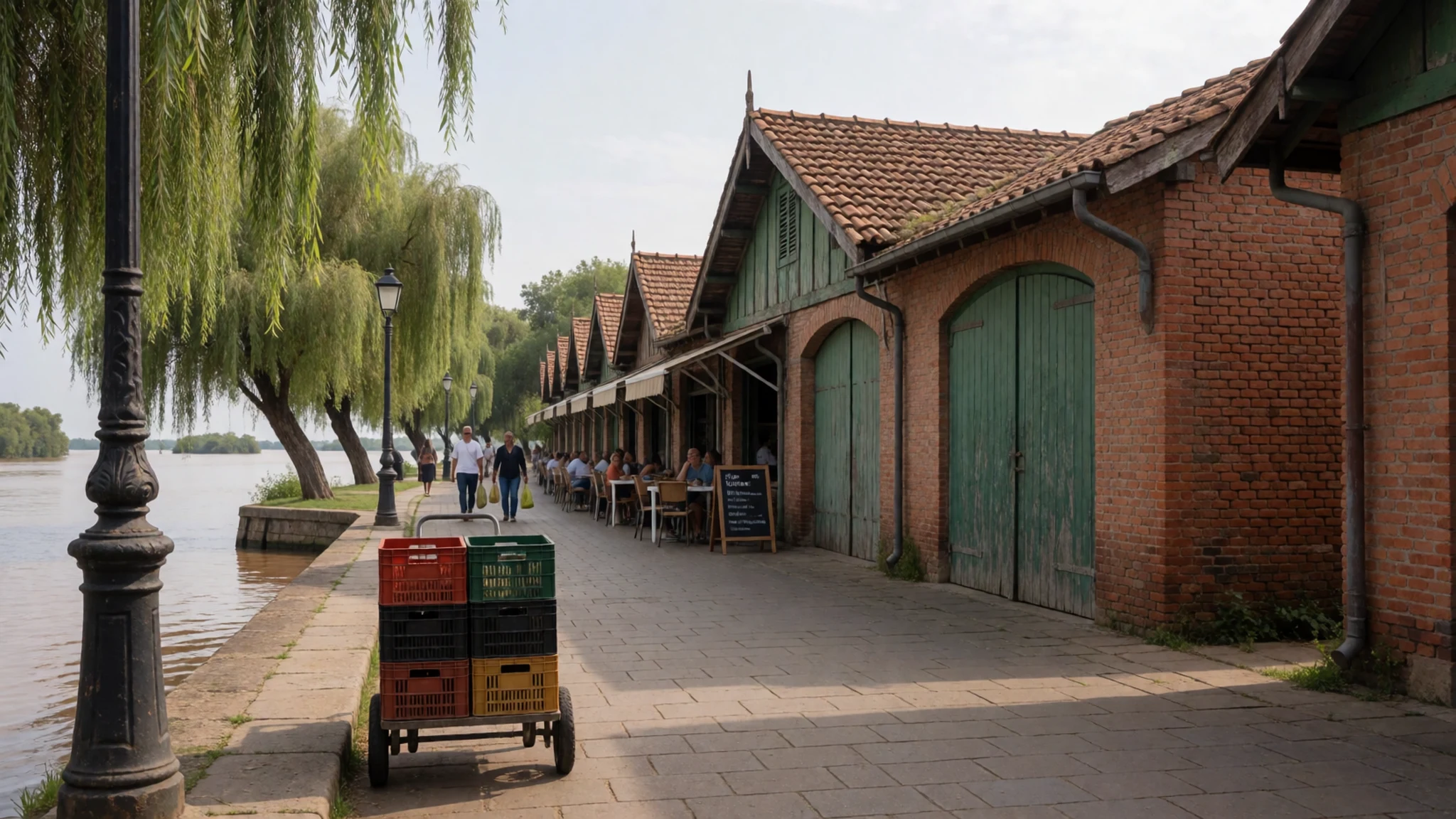
- Lower Delta channels by launch — Lower Delta, north of Buenos Aires
The narrow channels of the Lower Delta are best seen from a slow boat, with willow and poplar plantations, reeds and jetties passing on both banks. The water is tea-brown with sediment, and wading birds stand along the mud. A half-day trip covers a lot; a longer one reaches quieter side streams where engine noise fades.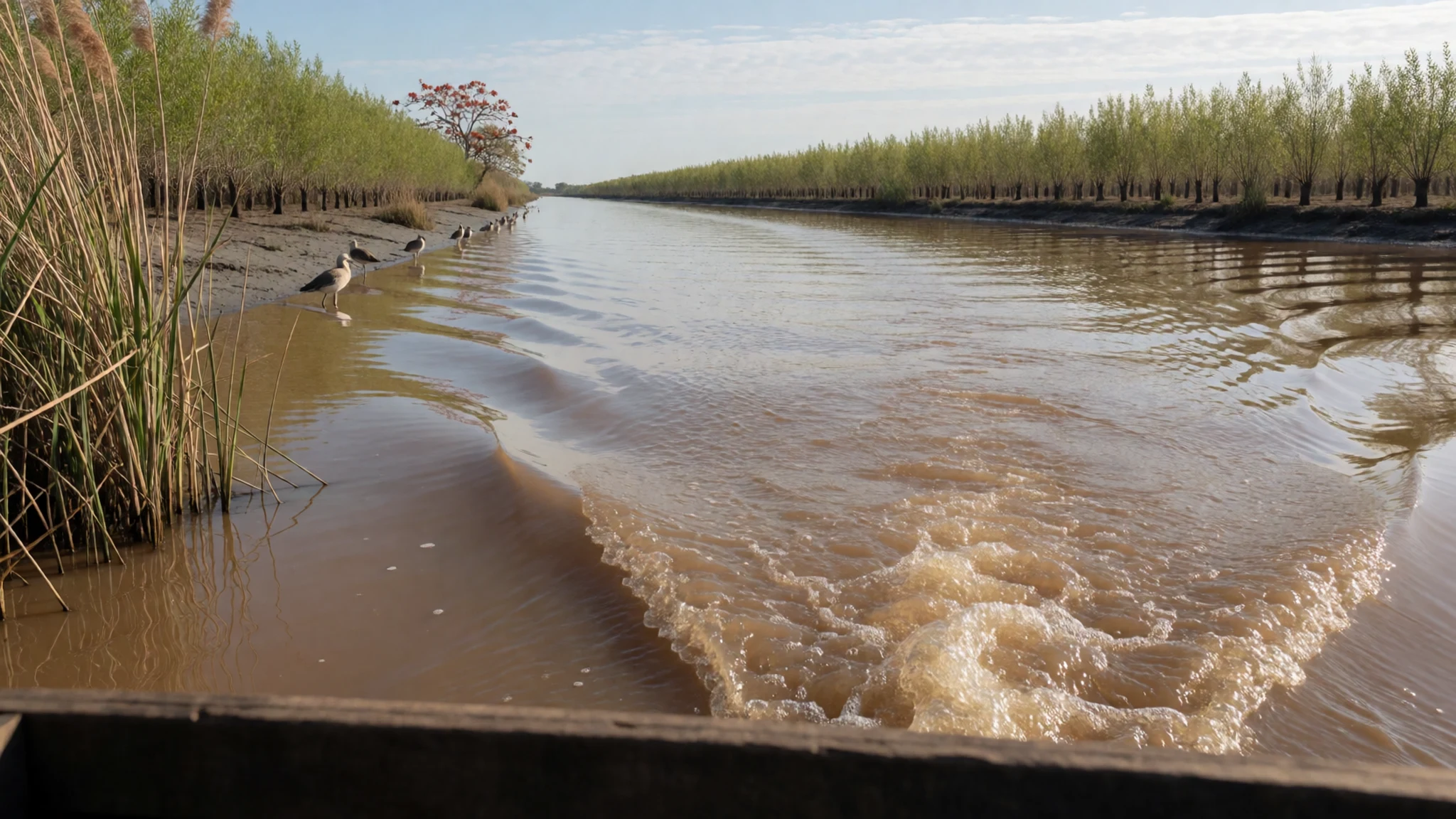
- Stilt houses and island homes — Residential islands of the Lower Delta
Many island homes stand on stilts because water levels shift, and the houses tell the story: timber verandas, jetties instead of garden gates, and plants growing wherever they please. One photographed house has a palm trunk rising straight through its balcony, a fair picture of how people here live alongside the vegetation rather than clearing it.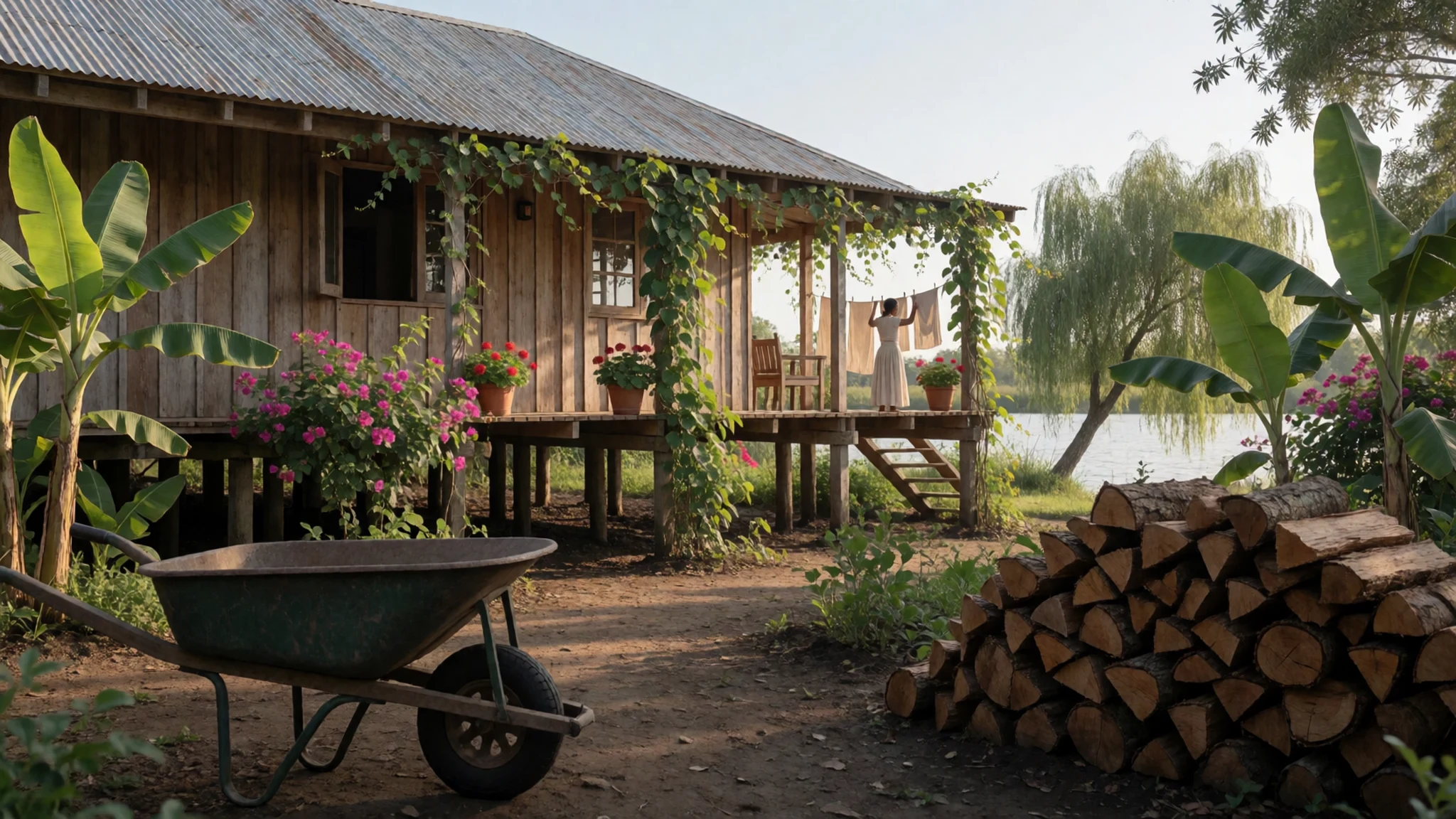
- Seibo trees along the banks — Riverbanks throughout the delta
The seibo, or ceibo (Erythrina crista-galli), grows along the delta's banks and carries red flowers in the warmer months. It is easy to pick out against the green of willows and reeds. Look for it from the boat at the water's edge, and take binoculars, because birds favour the same stretches.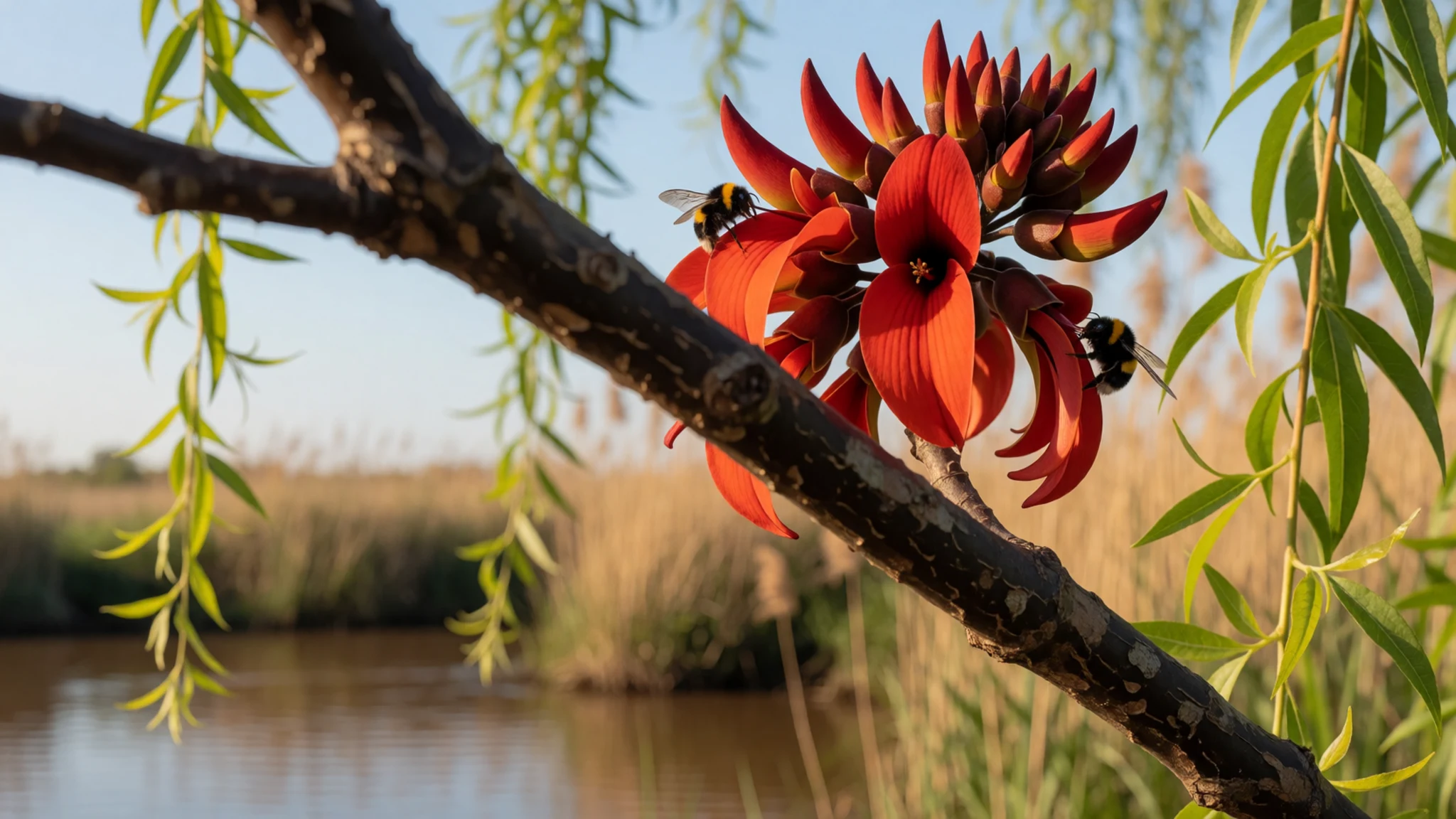
- Upper Delta islands near Rosario — Near Rosario, Santa Fe province
Further north, the Upper Delta begins where the Paraná starts to split between Santa Fe and Rosario. The islands here are low, wild and mostly unbuilt, a flood plain of grass, scrub and lagoons. Local operators around Rosario offer boat trips; these are quieter than Tigre and more about birds and open water than villages.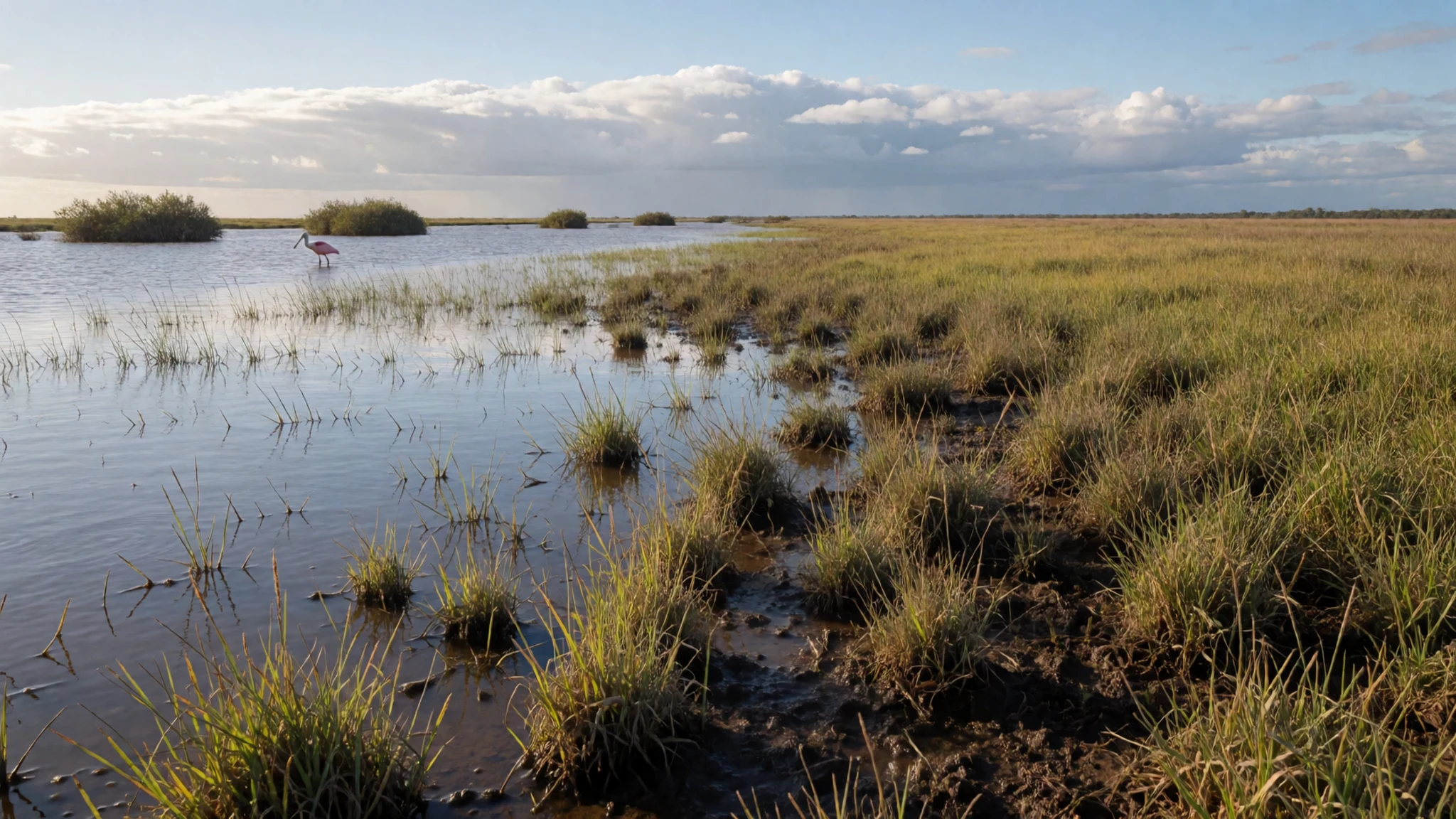
Culture
Paraná Delta culture is shaped by one plain fact: the river is the road. Islanders go to school, shop and visit neighbours by boat, supply launches call at jetties much as a bus service would, and an address is often a landing stage rather than a street. For many families from Buenos Aires, the delta is a weekend habit, with a rowing club, a long lunch on a wooden terrace and a barbecue on the bank. Life follows the weather and the water, and people talk about river levels the way others talk about traffic. Argentine habits carry on here as they do everywhere: Sunday asado, late dinners and mate, a bitter herbal infusion sipped through a metal straw from a shared gourd and refilled by one person for the whole circle. Pampas country traditions, including gaucho songs and horsemanship, mix with the immigrant history of the river towns, and small island communities keep their own pace, with plenty of time for conversation. Quiet is valued on the water, especially early in the morning, when the sound of an engine carries a long way across a flat landscape. Ask before stepping onto a private jetty or photographing people at home on the islands, and greet anyone you pass with a nod or a friendly "buen día".
What to wear
Paraná Delta dress starts from the gaucho tradition of the wider Pampas: bombachas de campo, loose cotton or twill trousers gathered at the ankle, a woollen poncho against river chill, a flat boina or wide-brimmed hat, a leather belt, and alpargatas or boots. This clothing appears today mainly at festivals, country fairs and among horse riders, rather than as daily wear on the islands. In everyday life, islanders dress for the boat: rubber boots, waterproof jackets, long sleeves against sun and mosquitoes, caps, and life jackets when moving fast. Weekenders from Buenos Aires wear casual clothes, such as shorts, trainers and football shirts in summer, and jeans and fleeces in winter. A visitor should plan for layers. Summers are hot, muggy and prone to sudden thunderstorms, so pack light long sleeves, a hat, sun protection, insect repellent and a rain jacket. Winters are cool, cloudy and sometimes foggy, with cold nights, so add a warm jumper and a windproof layer for the boat. Wear closed shoes with a good grip, since wooden jetties get wet and slippery, and keep sandals for the terrace. There are no strict modesty rules on the islands, though swimwear is best kept for the riverbank or the pool.
What to eat
- Grilled river fish — Riverside eateries in Tigre and on the islands
Surubí, dorado and other river fish are grilled whole or in thick steaks over embers and served with lemon and a simple salad. The flavour is mild and clean, with a firm texture. Order it at a riverside eatery on an island or at a waterfront restaurant in Tigre.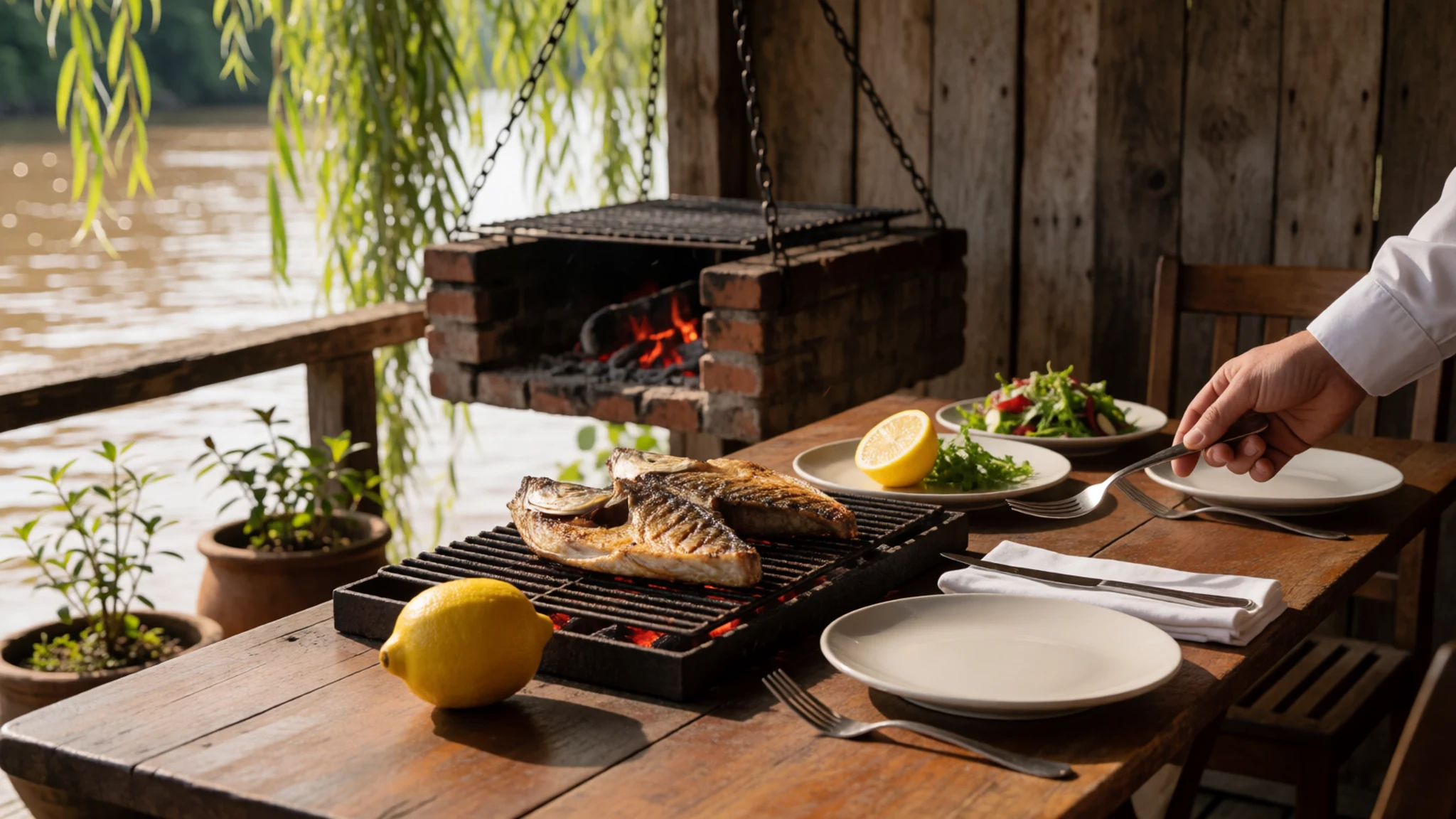
- Asado — Parrillas and island terraces near the water
The Argentine barbecue, with beef ribs, sausages and offal slowly cooked over wood or coals, is a fixture of delta weekends. It is a social meal that can last the whole afternoon. Look for a parrilla on a wooden terrace, often reached by boat from the main dock.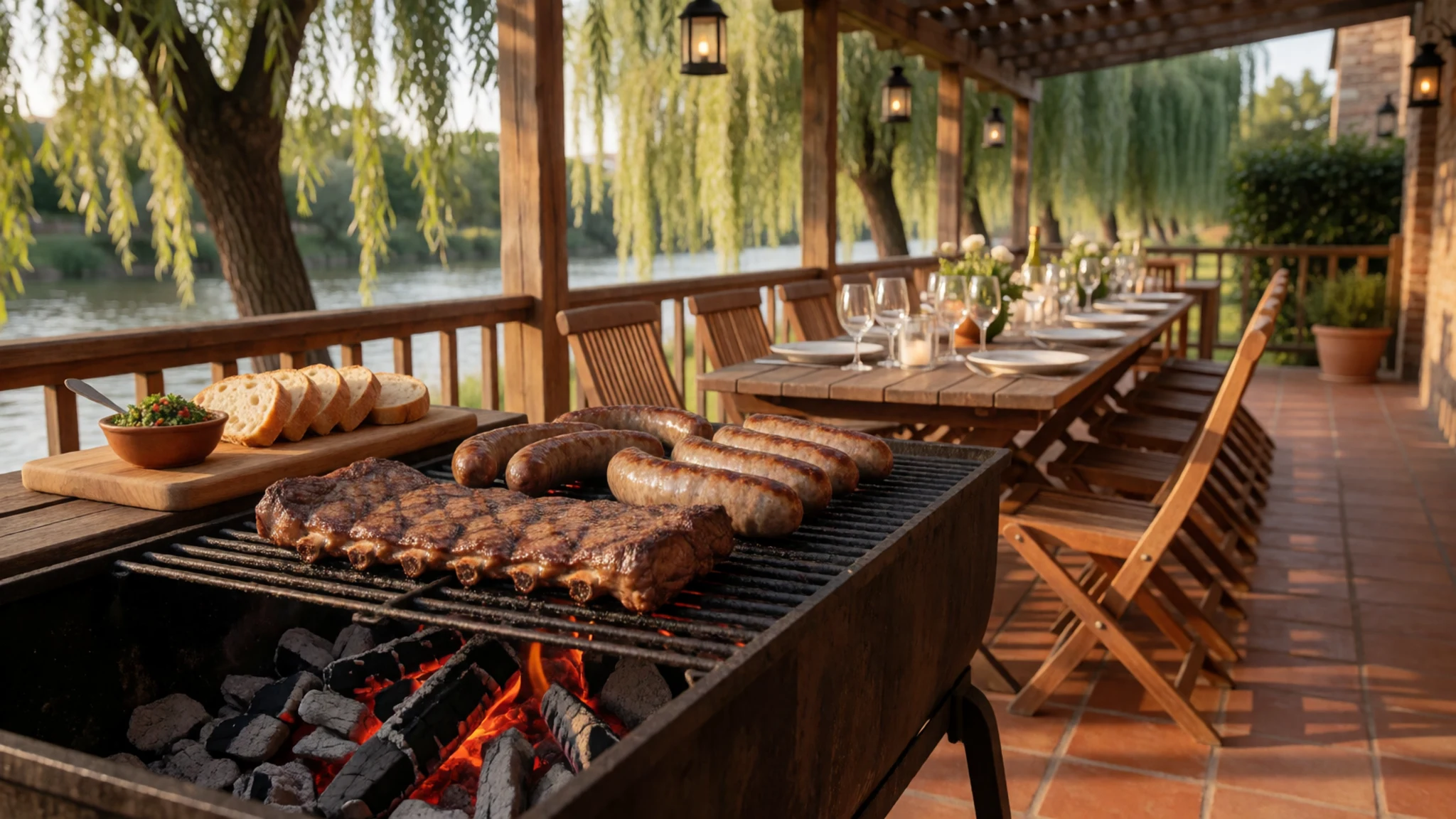
- Pejerrey milanesa — Casual restaurants along the Tigre waterfront
Pejerrey is a slim silvery river and estuary fish, often fried in breadcrumbs as a milanesa or lightly battered. It is crisp outside and soft inside, and it is usually served with chips or a green salad. Ask for it at casual restaurants near the Tigre waterfront. - Mate with facturas — Bakeries in Tigre and guest-house verandas on the islands
Mate is the shared herbal infusion of the region, often paired with facturas, sweet pastries such as medialunas. Many island guest houses serve it on a veranda in the afternoon. Bakeries in Tigre sell pastries to take on the boat. - Island preserves and fruit sweets — Market stalls near the Tigre river port
Fruit growing has long been part of delta life, and jams, quince paste (dulce de membrillo) and other sweet preserves are sold at small stalls. They go well with cheese or bread. Browse the craft and food stalls near the Tigre river port, and ask what is made locally.
Plan it
Best time. March–April, when summer humidity has eased and days are mild; April is especially pleasant. October–November, in spring, is also good, though showers are possible. Summer is hot, muggy and prone to thunderstorms, and winter, from late May to late August, is cool, cloudy and often foggy.
How long. 1–2
Getting there. Fly into Ezeiza (EZE) or the city airport Aeroparque (AEP) in Buenos Aires. From the city, take a suburban train or road transport to Tigre, then a public or private launch to the islands. For the Upper Delta, travel to Rosario and arrange a boat trip there.
Budget. mid
Tips
- Go on a weekday if you can, as weekends bring many day-trippers from Buenos Aires
- Confirm boat times with the operator on the day, since services depend on weather and water levels
- Carry some cash for small island eateries and jetty shops, as cards may not work
- Bring insect repellent, sun protection and a waterproof layer
- Take drinking water and a spare layer, because the wind on the river can be cool
Etiquette
- Ask before stepping onto a private jetty or photographing people at home
- Take your rubbish back to the mainland
- Keep voices and engine noise low in quiet channels, especially early in the day
Nearby
Sources
- Wikidata Q3021938 (CC0)
- Wikipedia: Paraná Delta (rev 1356470719) (CC BY-SA 4.0)
- Wikivoyage: Buenos Aires (province) (rev 5039429) (CC BY-SA 4.0)
- Photo: Lower Paraná Delta, Martin Terber (CC BY 2.5)
- Photo: La Palmera, David (CC BY 2.5)
- Photo: The River Plate Delta at Tigre, Robert Cutts (CC BY 2.5)
- Photo: Delta del Paraná sign, eric yeargan (CC BY 2.5)
- Photo: Seibo tree in the Delta, stelachi (CC BY-SA 2.0)
- Photo: Paraná Delta near Rosario, Pablo D. Flores (CC BY 3.0)
- Photo: Alpenhause dock, eric yeargan (CC BY 2.5)
- Photo: Alpenhause Beer hall, Restaurant and Guest house, eric yeargan (CC BY 2.5)


