Pangkor Island
Pangkor Island, Malaysia
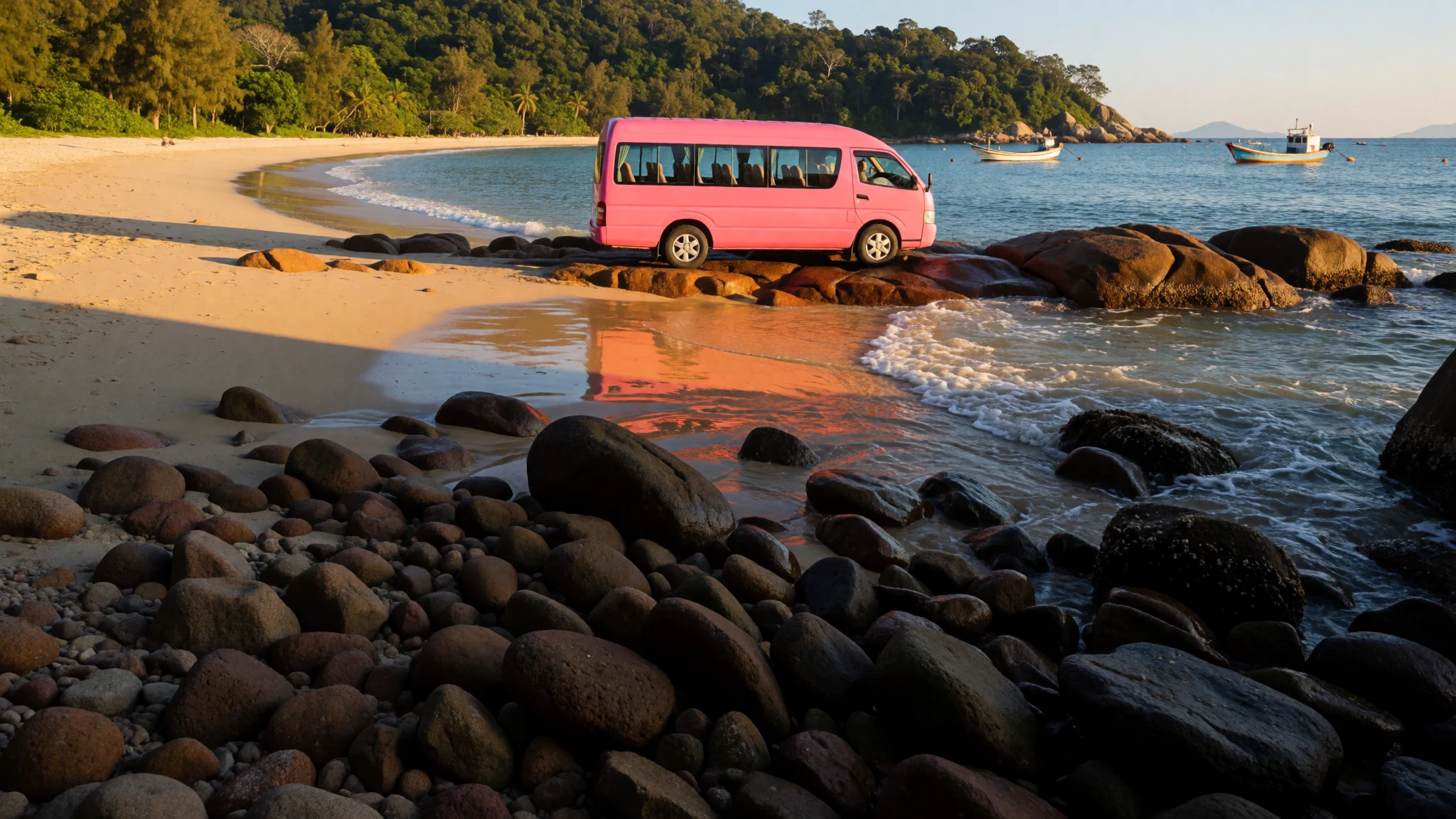
Pangkor Island is a small Malaysian island of fishing villages, a Dutch ruin and unhurried beaches, a short ferry hop from the mainland.
The place
Pangkor Island sits off the west coast of Peninsular Malaysia, in the state of Perak, and is reached by a short ferry crossing from the mainland town of Lumut. It is small enough that a single coastal road links most of it. The forested interior is left to birds, reptiles and amphibians, while people live along the shore. Fishing and tourism carry the economy. The east side faces the mainland and holds Pangkor Town, a single main street of coffee shops, dried-seafood sellers and souvenir stalls, with fishing villages strung out on either side. The west side has the beaches, resorts and beach cafés, and the mood shifts from working harbour to holiday island within a few minutes by road. The population is mixed: Malay families, Hokkien and Teochew Chinese communities, and a smaller Tamil community. That shows in the languages heard at shop counters, in the temples and in the food. The weather is hot and humid all year, so the island runs on early starts and long, slow lunches. Weekends and school holidays bring crowds from the mainland and higher room rates, while weekdays are noticeably calmer. Tourist minibuses here are painted a bright pink and are hard to miss on the road. Smaller islands, including Pangkor Laut, lie close by and are reached by boat. Pangkor suits a slow trip: swimming, eating fresh fish, wandering through villages and poking around old ruins, rather than ticking off a list.
Its story
Pangkor Island has long been a stopping point on the Strait of Melaka. Fishermen, sailors and merchants sheltered here, and so did pirates, which made the island useful to anyone who wanted to watch or tax the passing trade. In the 17th century the Dutch built a fort here to secure the tin trade of Perak and to back the Perak ruler against rivals from Aceh and Siam. The promised protection never really arrived, and the local ruler drove the Dutch out. The ruins seen today are a later reconstruction by Malaysia's museum department. The island's biggest place in regional history came in 1874. A contender for the Perak throne asked for British support and signed the Pangkor Treaty, which brought a British adviser into Perak and opened the colonial era on the peninsula. The British knew the island group as the Dindings. Older traces are harder to date. On a headland by Pasir Bogak beach, a rock carving of a gong, of unknown age, was recorded by a scholar in the early 1950s. In recent decades the island has changed again. A passenger jetty improved links to the mainland, and in this century an artificial island, Marina Island, was built as a resort and marina development with its own ferry connection. Fishing and dried-fish making have outlasted every ruler and treaty, and they are still part of daily life in the villages on the east coast.
What to see
- Dutch Fort (Kota Belanda) — South of Pangkor Town
The Dutch Fort stands just south of Pangkor Town, a low stone shell with a history of being destroyed, rebuilt and left to the weeds. Malaysia's museum department later reconstructed it. It is a short, shaded stop rather than an all-day sight, and works well before a swim at a nearby beach.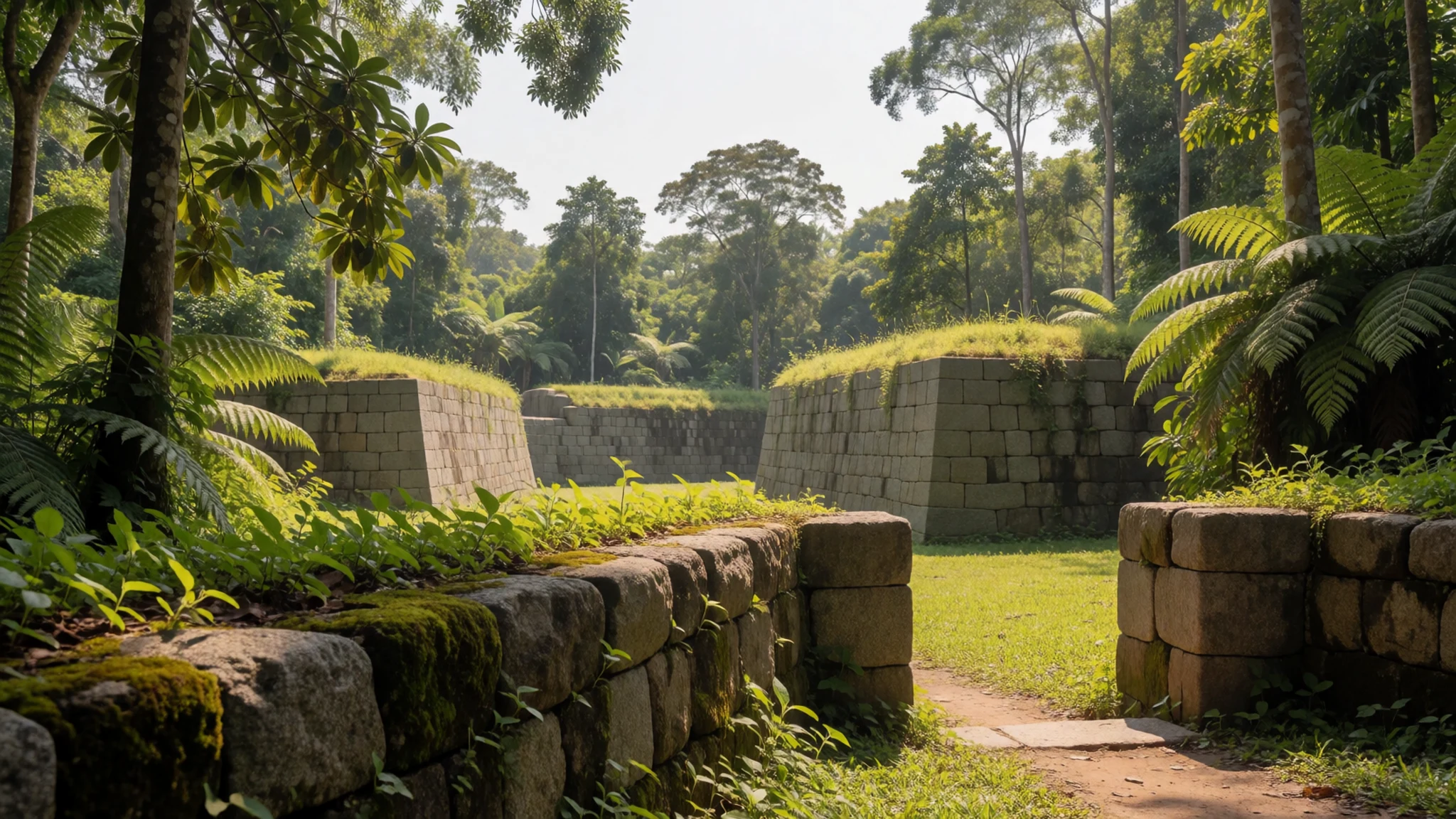
- Pangkor Town — East coast, by the main jetty
Pangkor Town is the island's working centre on the east coast, where the ferries land. Its single main street holds coffee shops, dried-seafood sellers, souvenir stalls and a handful of restaurants. Walk it in the morning, before the heat builds, and buy dried fish from the shops that sell by weight.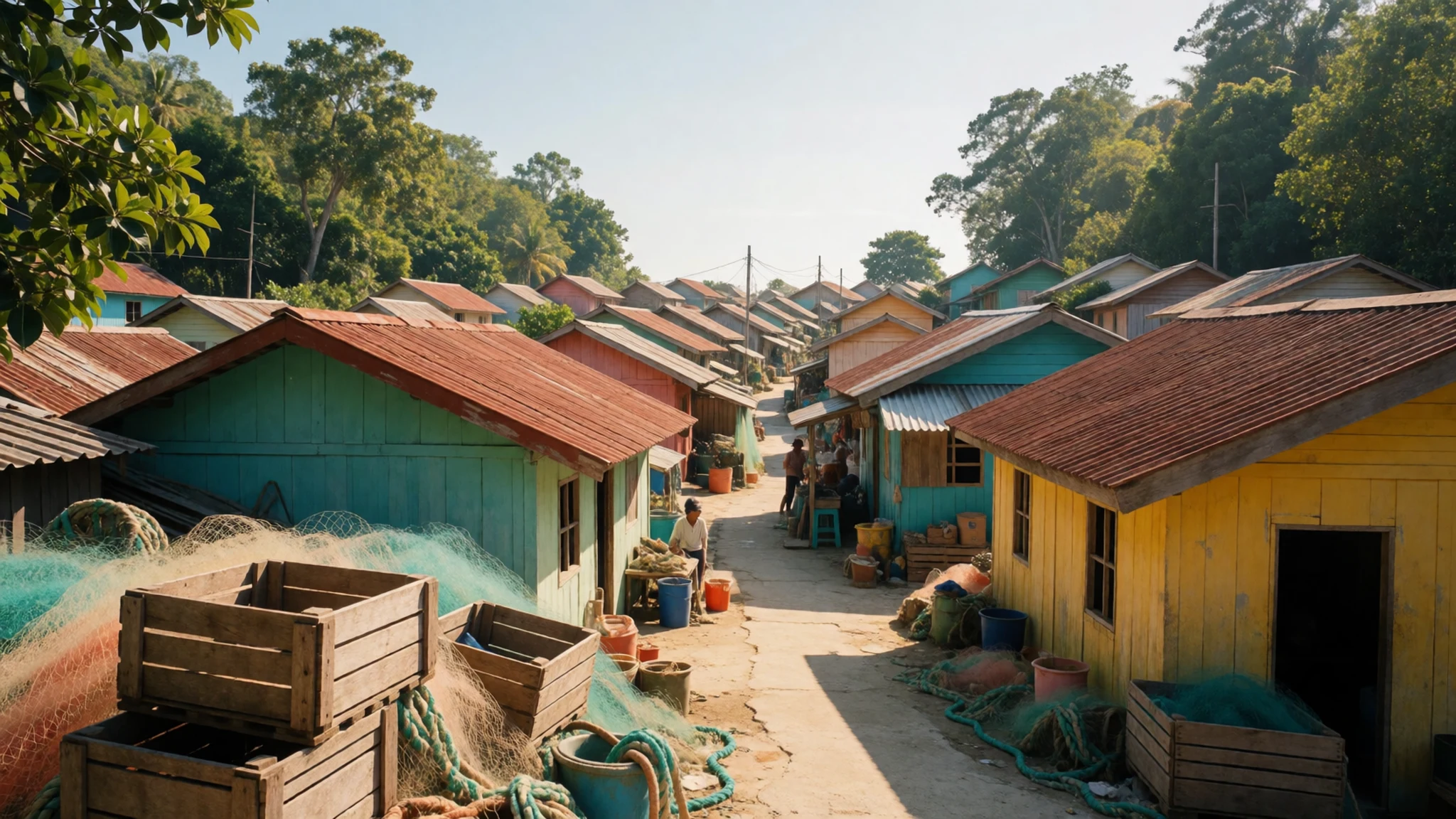
- Fishing villages — East coast
Sungai Pinang Kecil, Sungai Pinang Besar and Kampong Teluk Kecil face the mainland from the east side. Boats are moored along the waterfront, fish are dried for sale, and wooden fishing boats are still built by hand. Go early, when the catch comes in, and ask before photographing people.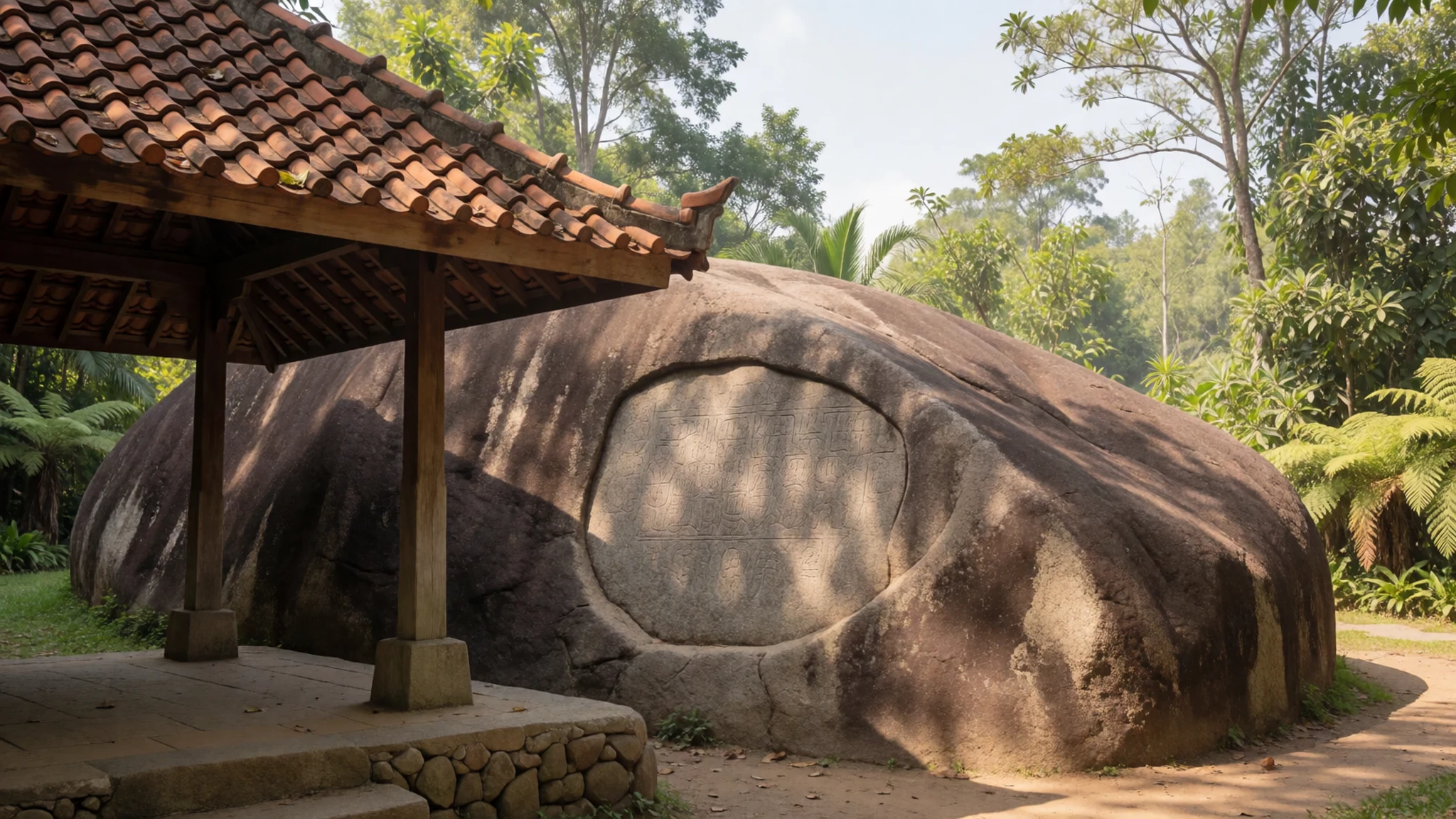
- Sri Pathira Kaliamman Temple — Sungai Pinang Kecil
Sri Pathira Kaliamman Temple stands in Sungai Pinang Kecil and is the island's main Hindu temple, a splash of colour among the fishing houses. Visit outside the midday heat, remove shoes at the entrance, and keep voices low if a prayer is under way.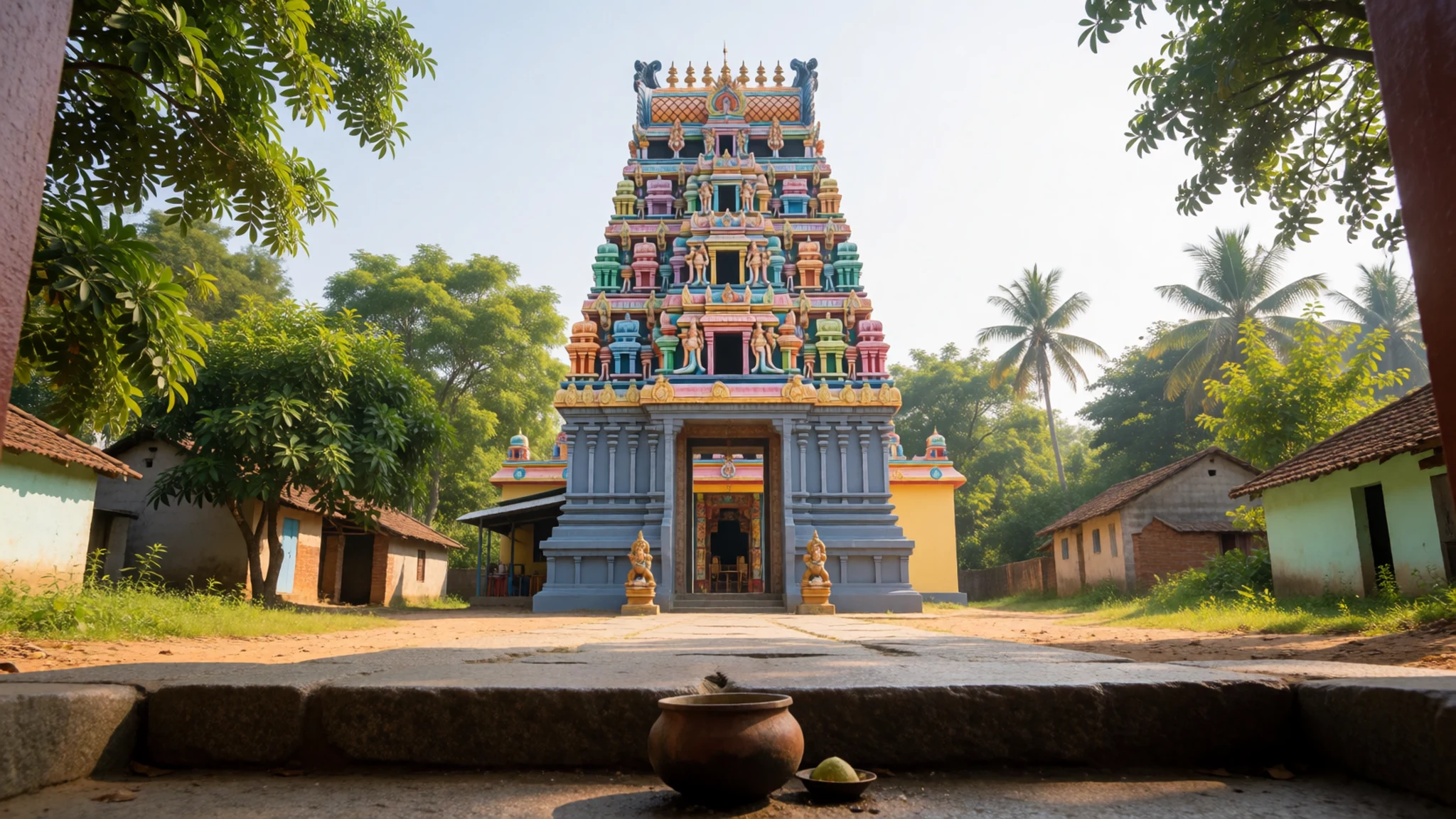
- Batu Bersurat (Tiger Rock) — Pangkor Island
Batu Bersurat is a large granite boulder with an etching that gives it the name Tiger Rock. A pavilion has been built over it for shelter. It is a small, quiet stop, worth a few minutes on a loop of the island, and easy to combine with other sights.
- Pasir Bogak and the Batu Gong carving — West coast
Pasir Bogak is one of the west-coast beaches, with cafés, guesthouses and calm water for paddling. On a headland at the beach is Batu Gong, a rock carving of a gong whose age nobody knows. The beach is busiest at weekends and holidays, so weekday mornings are quieter.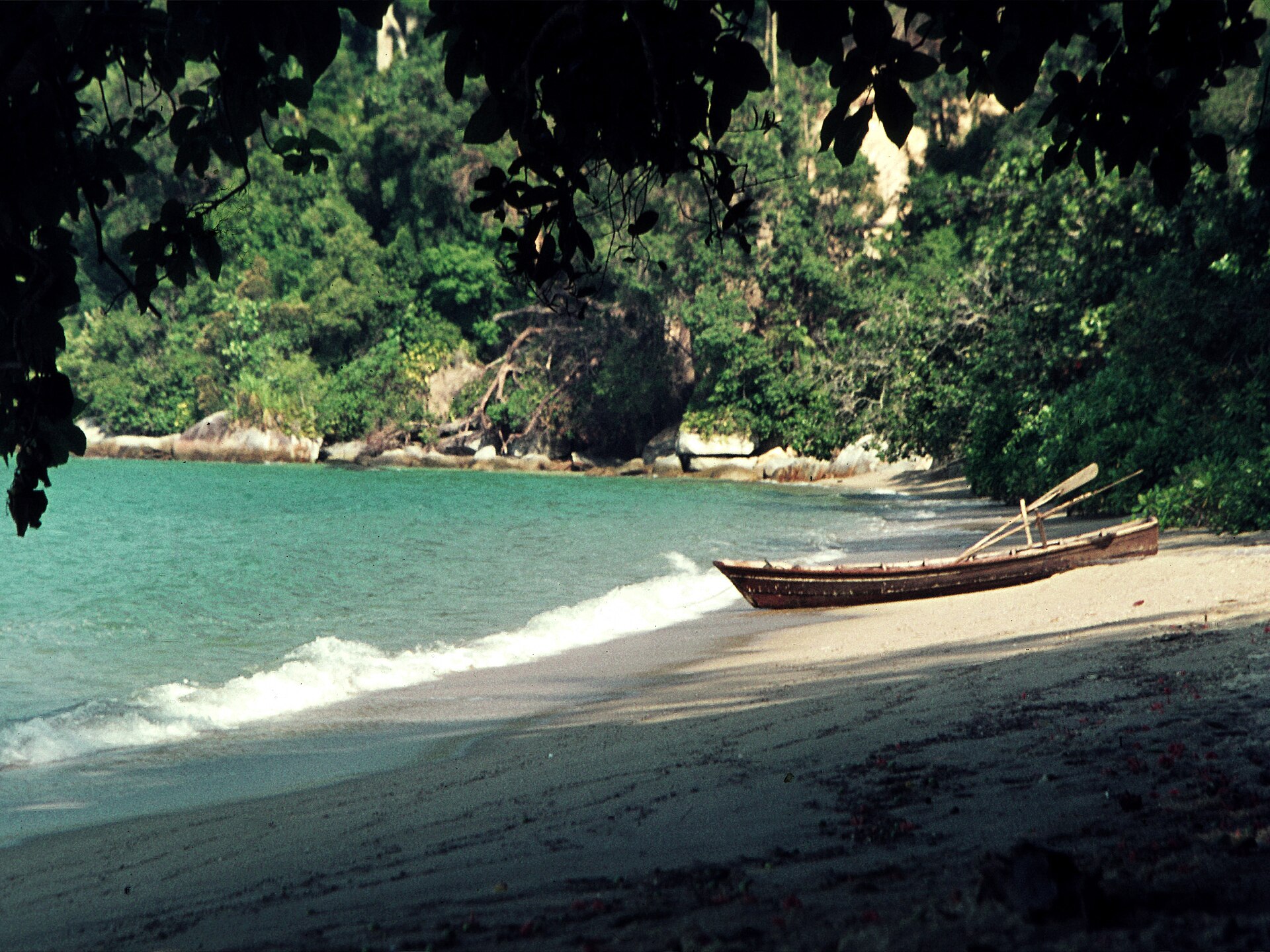
Culture
Pangkor Island is a good place to see how Malaysia's communities live side by side in a small space. Malay families, many of them Muslim, run boats and shops alongside Hokkien and Teochew Chinese families whose businesses line the main street of Pangkor Town. A smaller Tamil community keeps the Hindu temple in Sungai Pinang Kecil. Kedah-style Malay, Hokkien, Teochew, Mandarin and Tamil all turn up in everyday conversation, and shopkeepers often switch between them in a single exchange. Fishing shapes the rhythm of the day. Boats go out and come back on the tides, women and men prepare fish for drying, and boatbuilders still work with hand tools. The coffee shops are the social centre, where regulars linger over tea or coffee in the morning and swap news. Festivals follow each community's calendar, so a visit may coincide with a Chinese temple celebration, a Hindu festival or the Muslim fasting month, when daytime eating habits shift and evening food stalls come alive. Visitors are usually met with friendliness, and a few words of Malay, such as terima kasih for thank you, go a long way. Island life is relaxed, but it is also a working community, not a stage set. Cover shoulders and knees, remove your shoes before entering the Sri Pathira Kaliamman Temple, and ask before photographing worshippers or fishing families.
What to wear
Traditional Malay dress on Pangkor follows the national pattern. Women wear the baju kurung, a long tunic over a skirt, often in cotton or silk with batik or songket, a hand-woven cloth with metallic thread. Men wear the baju Melayu, a loose shirt and trousers, sometimes with a woven sarong, mainly for Friday prayers, weddings and festivals. Chinese families wear everyday clothes for most of the year and reserve traditional outfits for festivals, while Tamil women wear saris or salwar kameez for temple visits and celebrations. Day to day, most people dress for heat and work: lightweight T-shirts, cotton shirts, shorts and long trousers, and sandals or rubber boots for the boats. Many Muslim women wear a headscarf with loose, long-sleeved clothes even at the beach, and some swim fully clothed. Visitors should dress for hot, humid weather in light, quick-drying cotton or linen, with a hat and sunscreen, since the sun is strong and shade is patchy. Swimwear is fine on the beaches and at resorts, but cover up with a shirt or sarong when walking through villages or town. For temples and mosques, wear a top that covers the shoulders and trousers or a skirt below the knee. Sandals or flip-flops are practical, since shoes come off often, and light trainers help if walking jungle trails. Bring a light rain jacket for the wet months.
What to eat
- Dried fish and squid — Dried-seafood shops on the main street of Pangkor Town
Dried seafood is the island's best-known local product, and it comes in many forms, from small salted fish to dried squid. Look for the shops lining the main street of Pangkor Town, where it is sold by weight and makes a practical edible souvenir.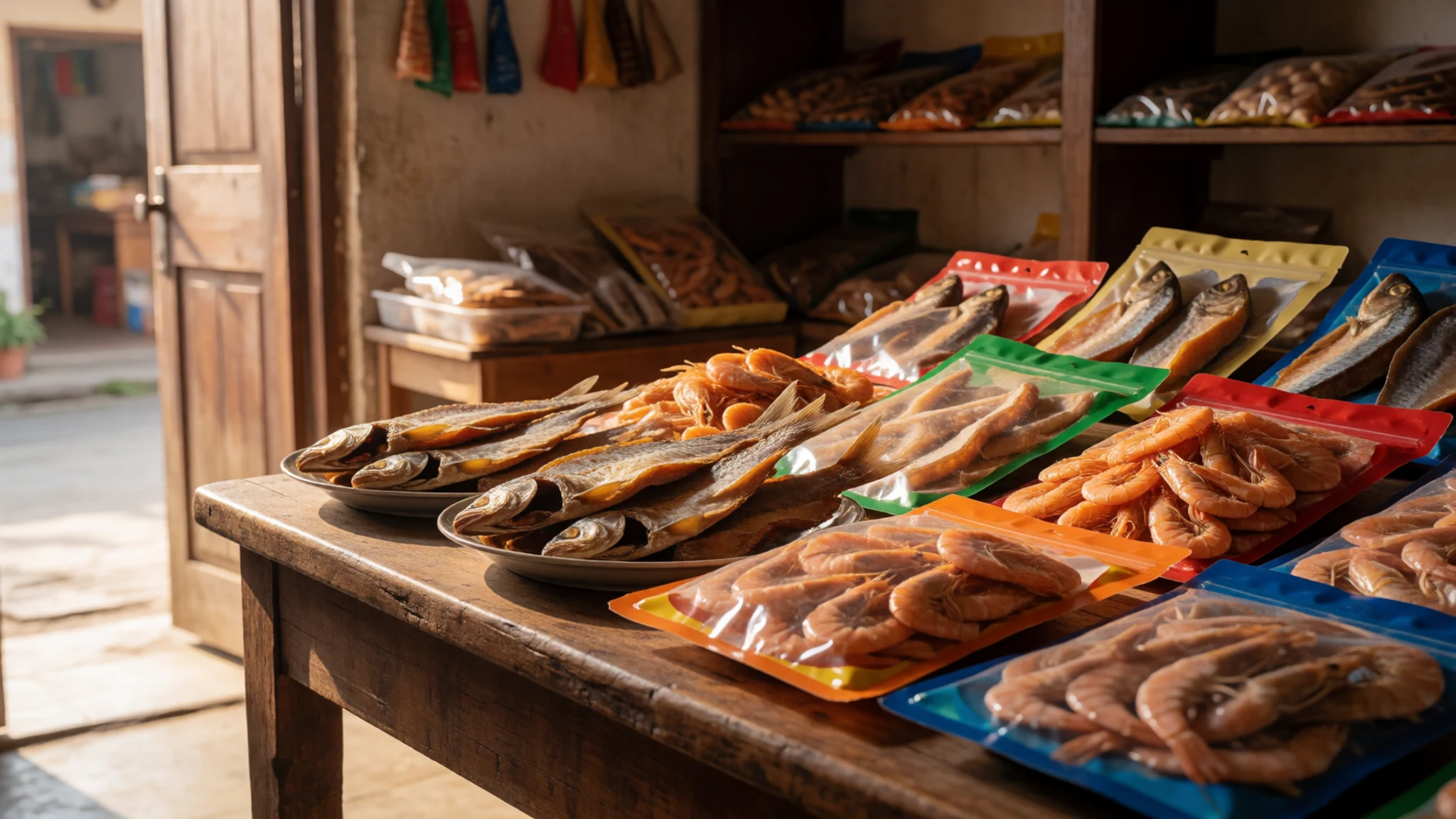
- Grilled fresh fish — Beach cafés at Coral Bay and Nipah Bay
Whole fish grilled over charcoal and served with sambal, lime and rice is the easiest way to taste the day's catch. Order whatever the kitchen recommends, and share, since portions suit a table of friends.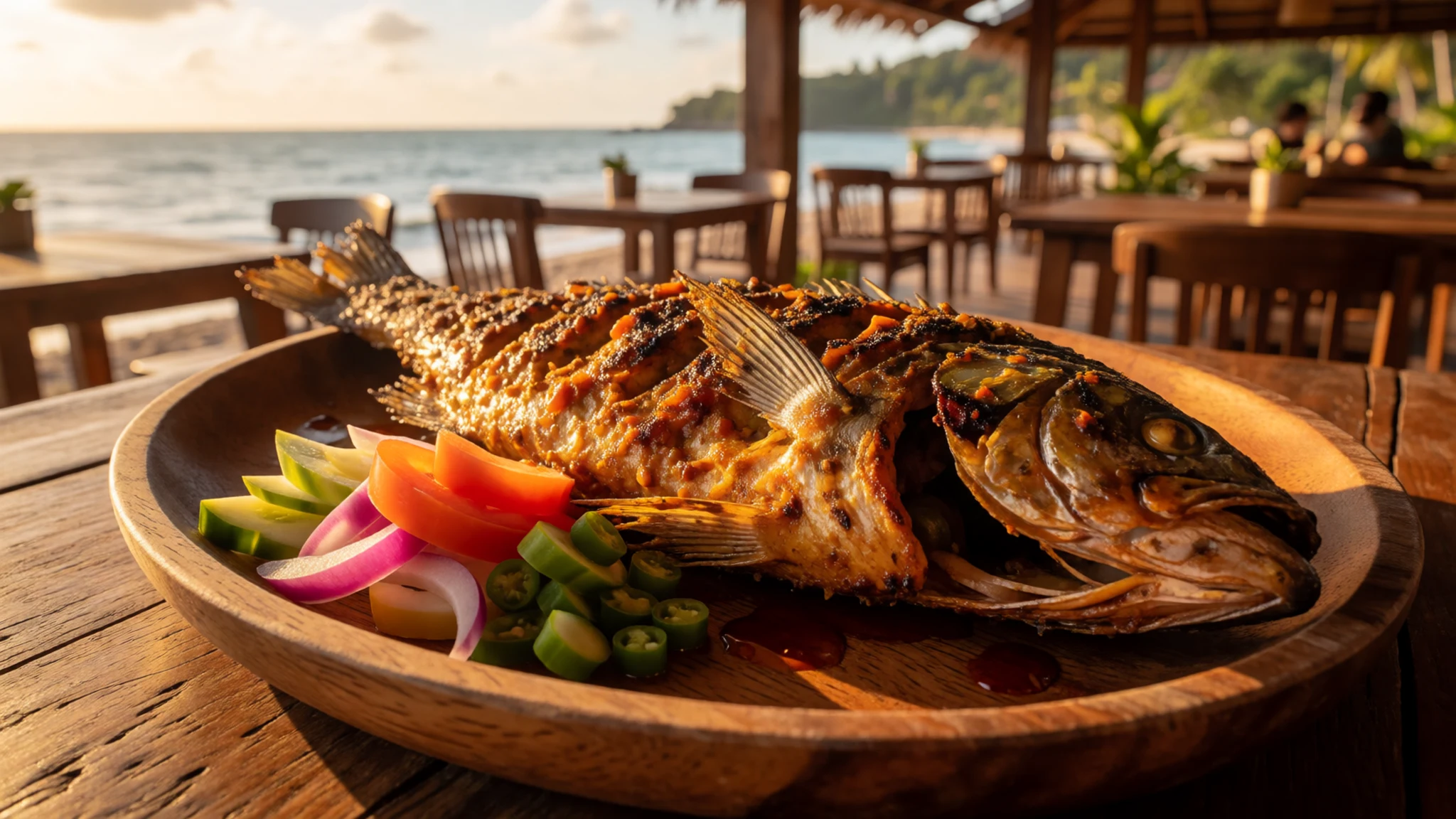
- Chinese-style seafood — Local Chinese seafood eateries near the beach resorts
Prawns, crab and fish are cooked in wok-fried styles, often with garlic, ginger or chilli, and served family style with rice. These simple local eateries are popular with islanders, and prices tend to be modest compared with resort restaurants. - Fish crackers (keropok) — Souvenir and snack shops in Pangkor Town
Keropok are crisp fish-based snacks, fried until puffy and usually eaten with a sweet-chilli dip. They are sold by weight, so buy a small bag for the ferry ride and a larger one to take home. - Kopi and tea at a coffee shop — Coffee shops along the main street of Pangkor Town
A morning stop at a traditional coffee shop means strong, sweet coffee or tea, often with toast, eggs or a simple rice dish. It is a good way to watch local life before the day heats up.
Plan it
Best time. December to March is the best bet: the dry season runs from about October to April, so skies are clearer and the sea is calmer. The rainy season runs from about April to October. It is hot and humid all year, so plan beach time for mornings and late afternoons.
How long. 2–3
Getting there. Fly into Kuala Lumpur or another major Malaysian airport, then take a bus to Lumut, where the bus station sits next to the ferry pier. Ferries run from Lumut to the jetty at Pangkor Town. A second route crosses from Marina Island, which is itself a short ferry ride from the mainland. Check the ferry operators for current fares and timetables.
Budget. low
Tips
- Avoid weekends and school holidays if you can, since rooms cost more and the ferries and beaches are busier
- Ask at the Lumut pier or the Pangkor jetty about your return ticket, as the arrangements differ between the two ferry routes
- Carry some cash for small eateries, villages and minibus rides, as cards are not accepted everywhere
- Bring a refillable water bottle, sunscreen and a hat, since the heat and humidity are constant
- Start sightseeing early, and keep the hottest part of the afternoon for swimming or a long lunch
Etiquette
- Remove your shoes before entering temples, and cover shoulders and knees
- Ask before photographing people, especially worshippers and families working on boats
- Dress modestly when walking through villages and town, even if swimwear is fine on the beach
Nearby
Sources
- Wikidata Q1545708 (CC0)
- Wikipedia: Pangkor Island (rev 1378741637) (CC BY-SA 4.0)
- Wikivoyage: Pangkor (rev 5431534) (CC BY-SA 4.0)
- Photo: Cmglee, Pangkor Island and Lumut (CC BY-SA 4.0)
- Photo: Michael C, Pangkor Island Tourist Buses (CC0 1.0)
- Photo: Gryffindor, Dutch Fort Pulau Pangkor (Public domain)
- Photo: Michael C, Pangkor Island Jetty (CC0 1.0)
- Photo: MithunAhamed, Pangkor Boat (CC BY-SA 4.0)
- Photo: wilford peloquin, 002 Pangkor Island, July 1976 (CC BY 2.5)
- Photo: wilford peloquin, 003 Pangkor Island, July 1976 (CC BY 2.5)
- Photo: wilford peloquin, 004 Pasir Bogak, Pangkor Island, July 1976 (CC BY 2.5)


