Panama City
Panama City, Panama
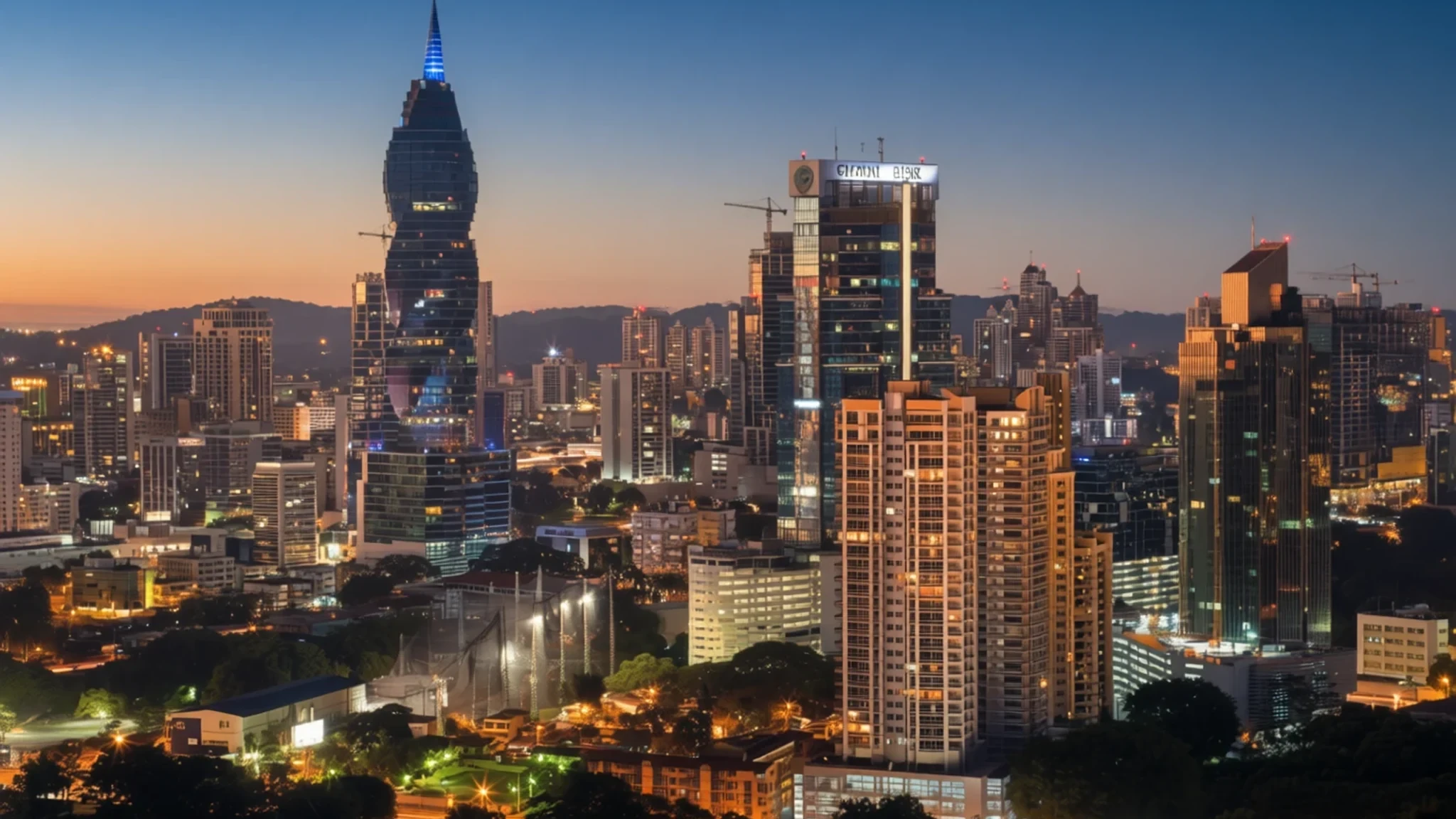
Panama City is a Pacific capital where a Spanish old town, a working canal and a high-rise skyline share a humid bay.
The place
Panama City stands on the Pacific side of the isthmus, a low, humid capital where the bay, the canal mouth and a line of modern towers sit close together. Casco Antiguo, the historic quarter, occupies a small peninsula of narrow streets, balconies and church fronts. East of it the newer city runs along the shore in avenues of banks, flats and shopping centres. Westward, the Amador Causeway leads towards the islands at the Pacific entrance of the canal, so ships and cranes belong to the ordinary view. Heat lasts all year. A drier spell in the early months makes walking kinder; through the rest of the year rain arrives in hard bursts, often after midday, and the pavements steam once it passes. Shade is thin at the ruins and along the causeway, and the glare stays strong under broken cloud. Districts change character within a short ride. Weekdays fill the banking streets with office clothes and guarded doors. Casco mixes long-time residents with visitors, restored façades beside houses that are still lived-in and worn. The seafood market and the big bus terminal pull in people from the rest of the country. Spanish is the language of shops, churches and fondas; English is common in business and in places that serve travellers. The city is the seat of government and the usual international gateway, and it feels larger than the walkable peninsula: traffic on the coastal roads rarely lets up, and a shower can stretch a simple crossing. This is a working harbour, not a resort beach. The pleasure of Panama City is practical and a bit odd: old stone, a service economy and a doorway between oceans, with salt air and fried plantain in the same breeze.
Its story
Panama City began as a Spanish settlement on the Pacific, planted where the isthmus narrows and a land crossing could join the Caribbean to the trade routes of South America. Silver, goods and travellers moved by path and river; the town on the southern shore collected warehouses, churches and a cathedral, wealthy and hard to defend, with forest and sea both near. Raiders under Henry Morgan burned that first city. The ruins are Panamá Viejo. Survivors rebuilt on a rocky peninsula that could be walled, the quarter now called Casco Antiguo, and for a long stretch of colonial life the capital was a provincial port: fine churches, a theatre still to come, and long quiet intervals between ships. Cutting a canal altered what the city was for. A French company tried and failed; a later project led from the United States opened a passage for ocean ships, and Panama City became the Pacific terminal of that shortcut. Labourers arrived from the Caribbean and beyond, which is why Antillean English, island churches and Caribbean food are still part of neighbourhoods here, not a recent import. As the new city grew eastward, Casco lost money and maintenance, and the first ruins sat out along the road. Control of the waterway later passed to Panama. Towers rose on the bay, and Casco was repaired building by building. The story can be read across the capital without a timeline in hand: scorched foundations at Panamá Viejo, ramparts and balconies on the peninsula, and past them the locks and the offices that keep the present city running.
What to see
- Casco Antiguo — Casco Antiguo
Panama City's old quarter sits on a peninsula of cobbles, timber balconies and church plazas. The Metropolitan Cathedral and the National Theatre mark the restored streets, while nearby blocks stay worn, with family life above quiet shops. Mornings are easier, before heat and tour groups gather, and the seaward ramparts make the shape of the peninsula clear.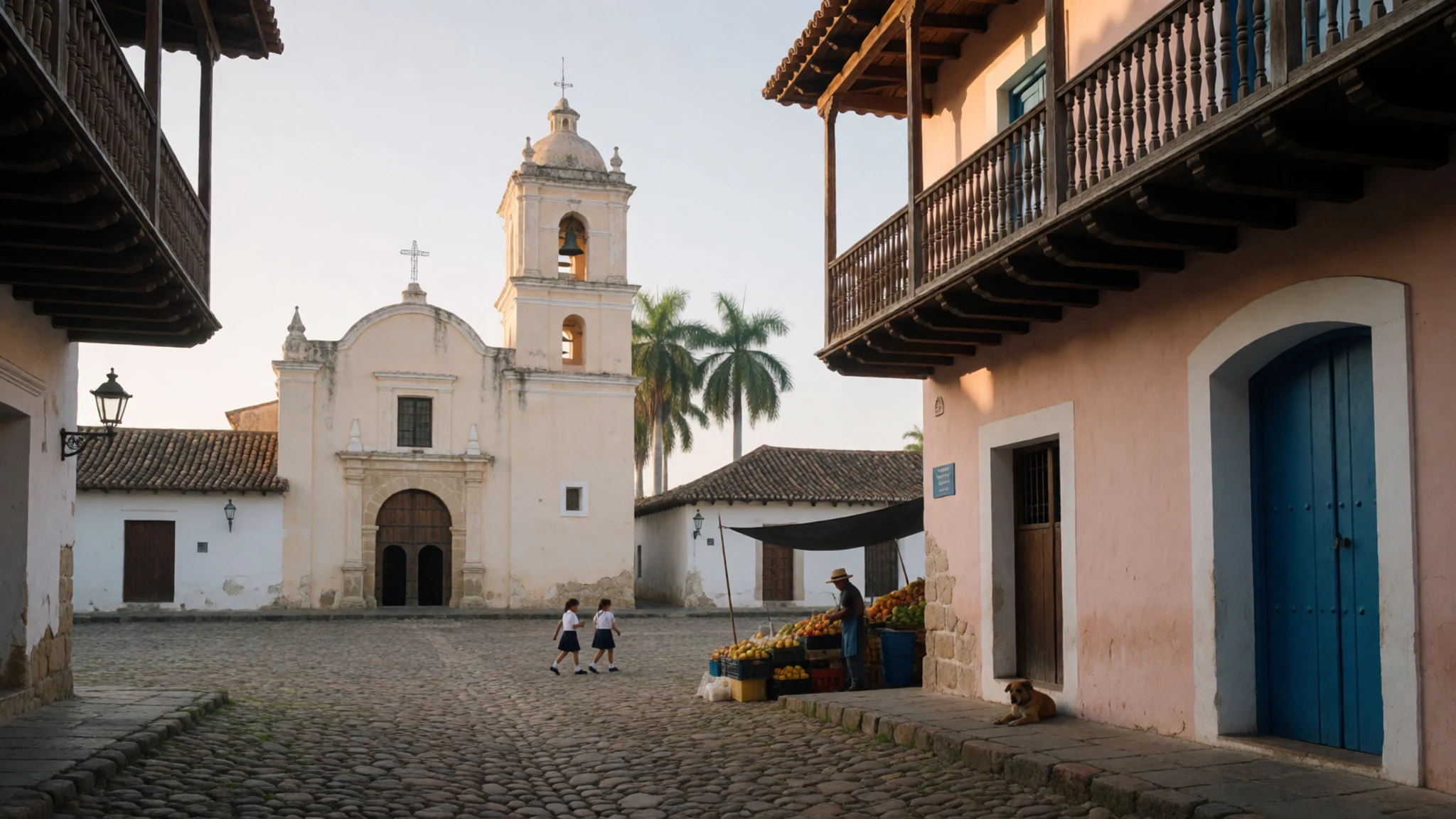
- Panamá Viejo — Panamá Viejo
Panamá Viejo, on Panama City's eastern side, is the ruined footprint of the original town: a cathedral tower, stretches of convent wall, and the church and convent of the nuns of the Conception standing in grass. Sun and road noise are part of the visit. It is an outdoor walk among stone, with the modern skyline off in the distance, rather than a set of furnished rooms.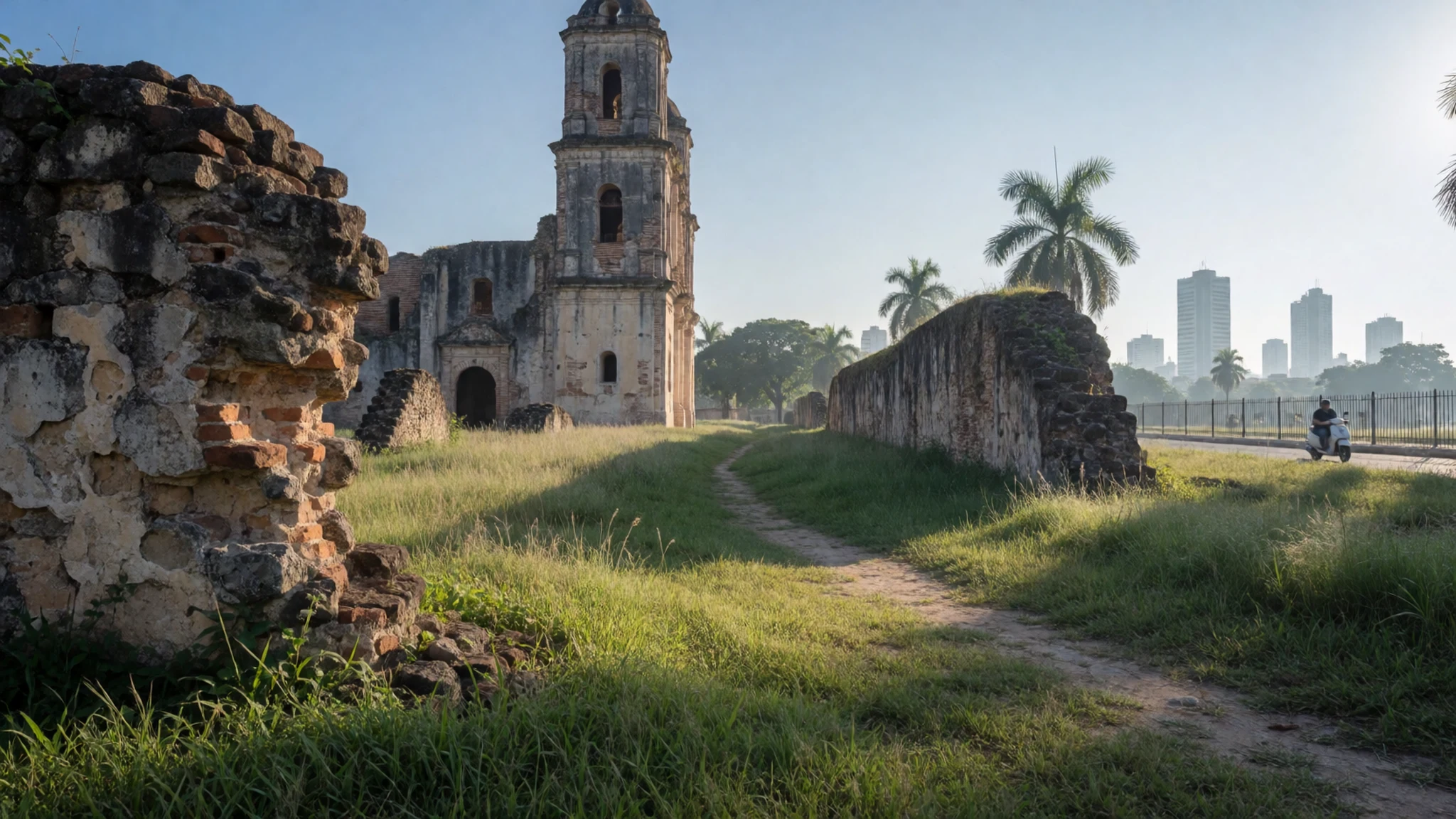
- Pacific entrance of the canal — Amador Causeway
The Pacific entrance of the Panama Canal meets Panama City at the end of the Amador Causeway, where the channel and waiting ships share the view with parkland and flats. This is a working approach, and the machinery is in use. A passing hull, set against the low shore, shows the scale better than any sign on the footpath.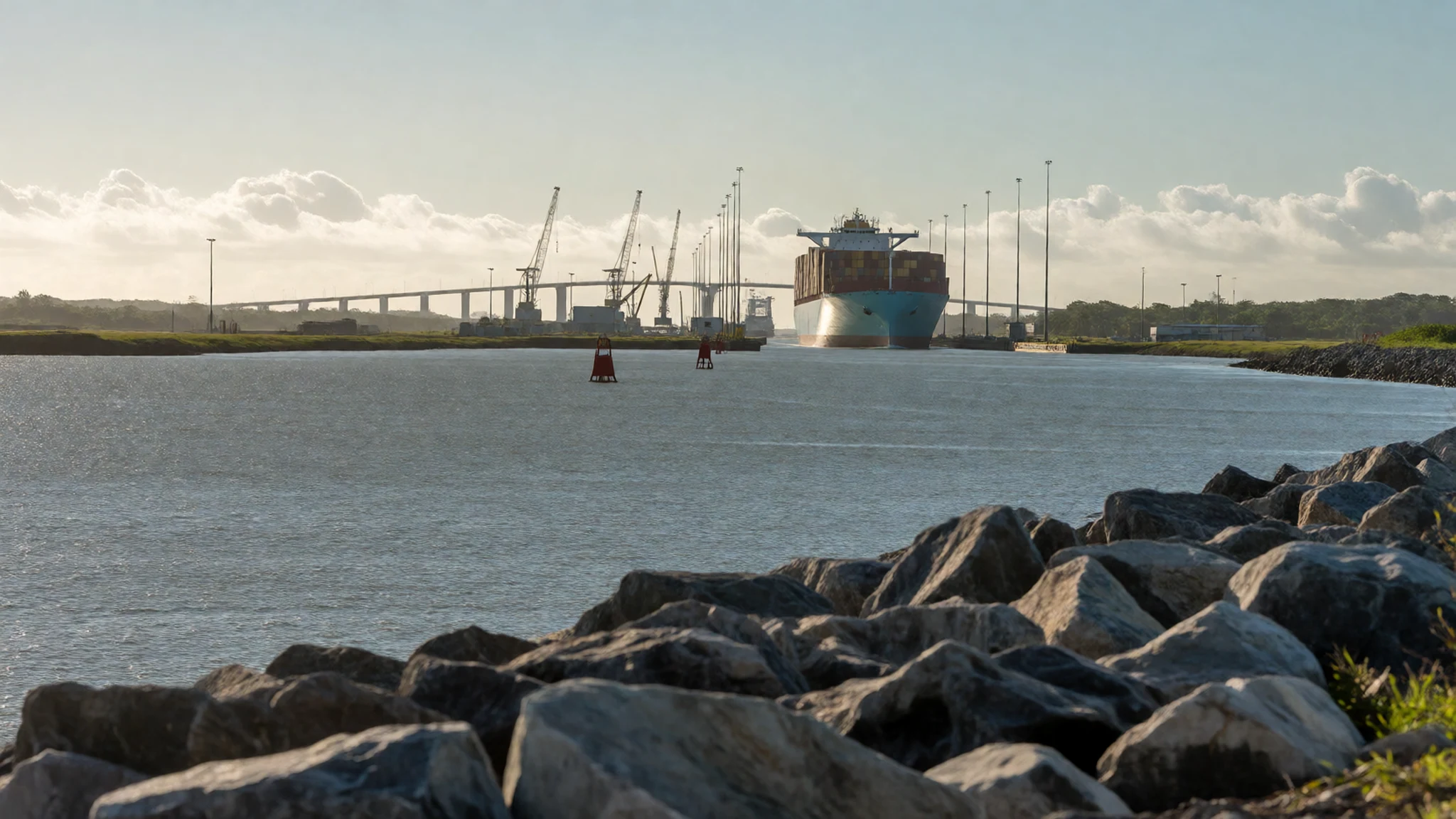
- Biomuseo — Amador Causeway
The Biomuseo, on the causeway in Panama City, is a cluster of brightly coloured folded roofs given over to the natural history of the isthmus. The building works as a landmark at the canal mouth as well as a museum. Inside, the displays follow plants and animals across the land bridge; outside, the terrace looks toward the ships and back toward the skyline.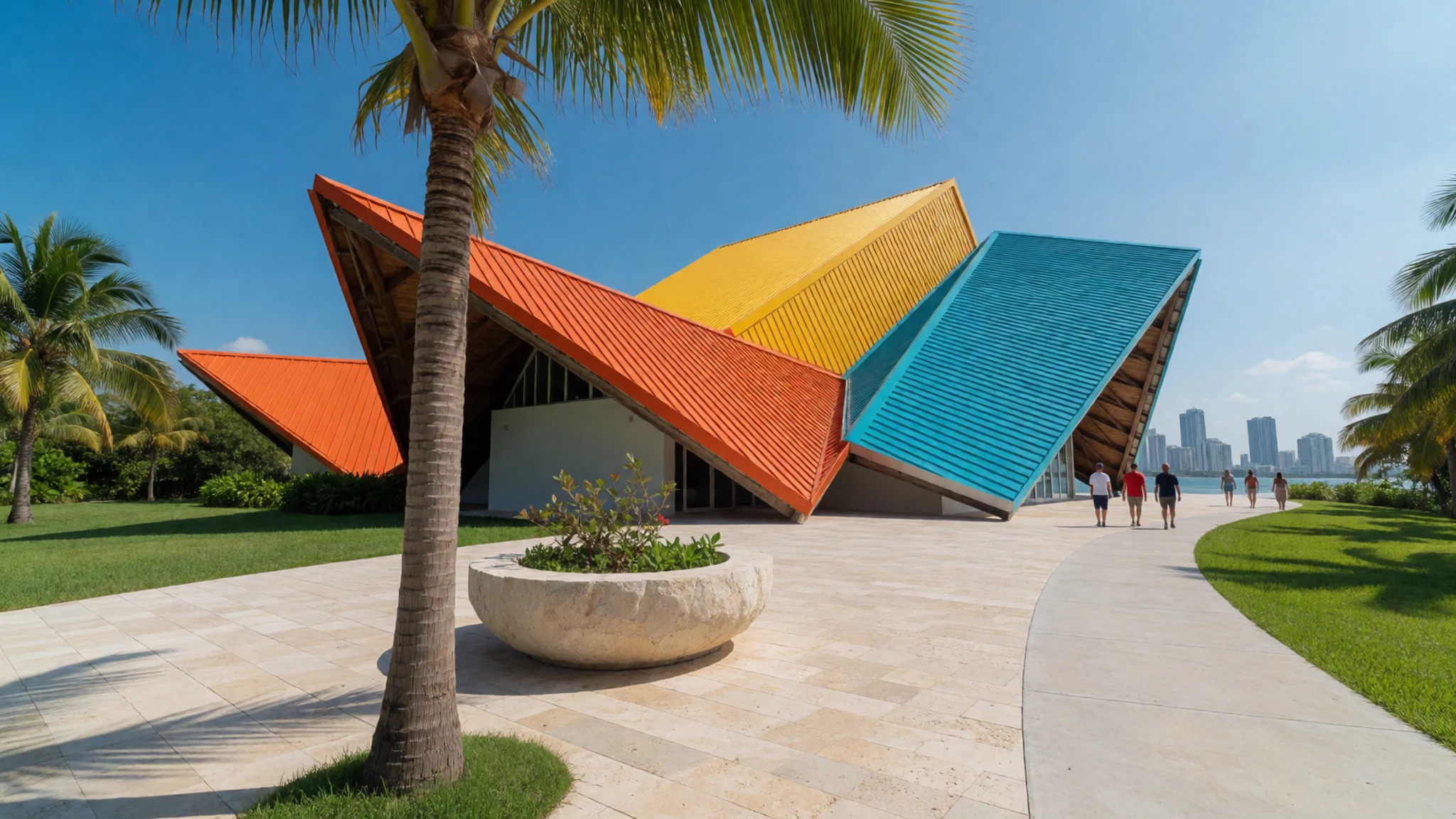
- Bridge of the Americas — Pacific entrance of the canal
The Bridge of the Americas crosses the Pacific end of the canal on Panama City's western side, a steel arch that carries the road between the capital and the rest of the isthmus. From the causeway and the banks it frames ships moving underneath. It is a view and a crossing. Traffic is heavy and the span is exposed, so the ships are easier to watch from the bank.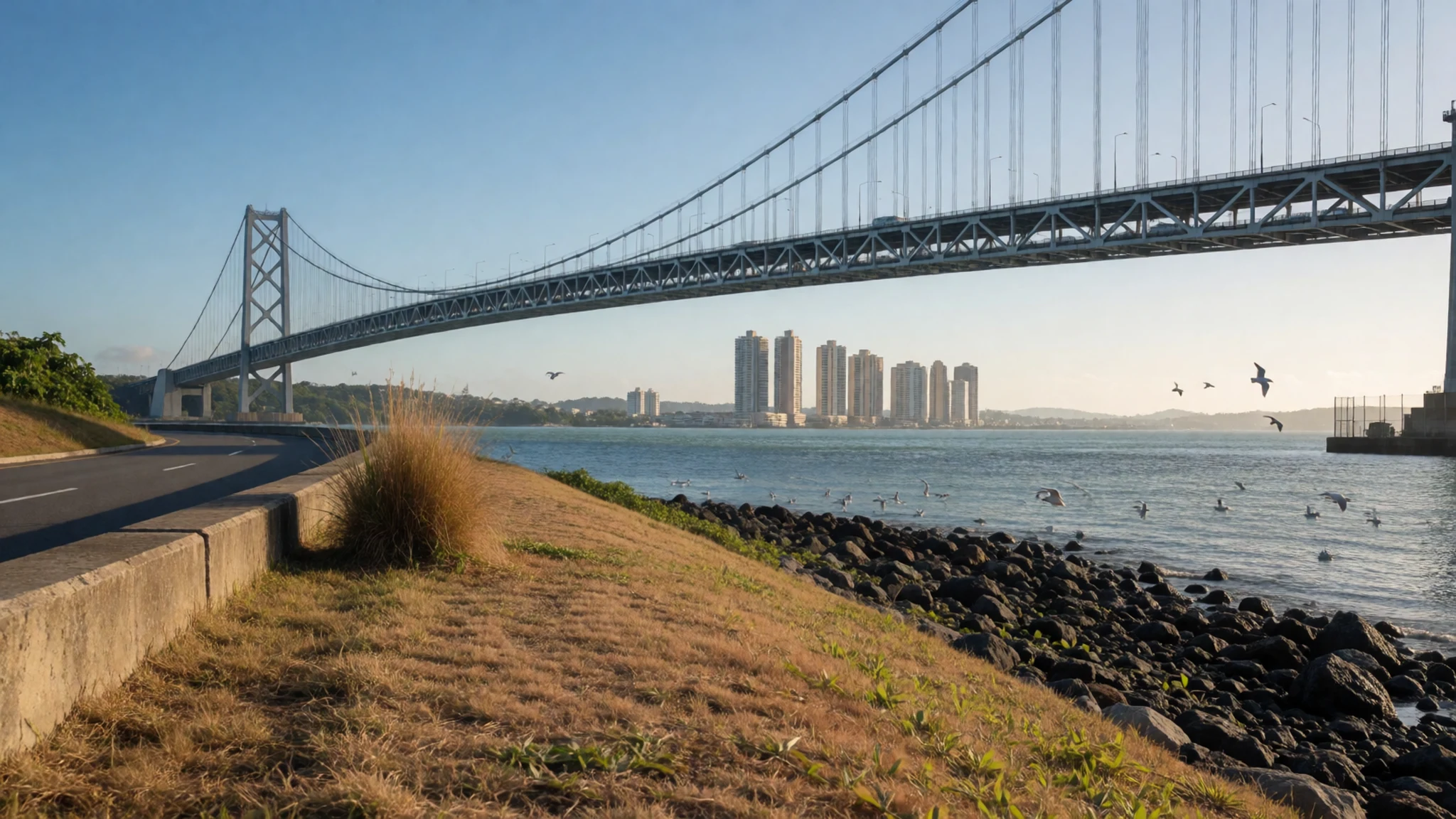
Culture
Panama City's public culture is a port culture that never really left. Catholic feast days and processions still shape the calendar in Casco, and churches fill for important celebrations, while the weekday city talks in the register of banks, shipping and government offices. Families from the interior bring típico song and a more rural sense of courtesy. Antillean descendants of people who came to build and run the canal keep English, Protestant congregations and Caribbean cooking in the mix. Shops run by Chinese and South Asian families have been ordinary fixtures of the commercial streets for generations. First meetings are warm but not casual. A buenos días to a shopkeeper or a driver is noticed, and friends often greet with a light kiss on the cheek. Offices stay dressed up despite the heat. Casco looks looser, yet a church door still implies covered shoulders and a hat in the hand. Lunch can run long; the evening meal starts late; Sunday quiets the centre without emptying the parks. Folklore is not confined to a hired show: the pollera comes out for festivals and family ceremonies, and drums turn up at carnival and on patron-saint days. In Panama City, ask before photographing people, and enter a church only with shoulders covered and voice low.
What to wear
Traditional dress in Panama City is festival dress, kept for ceremonies rather than the weekday commute. The pollera, a full skirt and embroidered blouse, is a women's garment worn for national celebrations. Formal versions are white, heavy with lace, yarn embroidery and gold jewellery, and they are worn with tembleques, the beaded hair ornaments that tremble when the dancer moves. A simpler pollera montuna uses stronger colour and less ornament, closer to rural fiesta clothes. Men wear the montuno, a loose shirt with embroidery down the front, usually with dark trousers, a straw hat and cutarras, open leather sandals. Cotton, lace and careful handwork are the textiles that matter; synthetic stage costumes exist, but families still prize the older needlework. On an ordinary day the city dresses for humidity and for cold indoor air at the same time. Banking districts favour pressed shirts, tailored trousers and dresses, with a jacket carried rather than worn outside. In Casco, younger people lean to jeans, trainers and bright tops. Visitors do better in breathable cotton or linen, with a light rain layer for the wetter months and shoes that can take cobbles and broken ground at the ruins. Swimwear stays on the coast, away from Casco and from church doors. A scarf or an extra shirt covers shoulders when needed, and a hat is worth more than a smart layer out on the causeway, where shade is scarce.
What to eat
- Sancocho — fondas and simple eateries
Sancocho is the soup Panama City eats when the rain arrives: chicken, yuca, ñame and culantro in a long-simmered broth. Fondas and simple eateries across the city serve it with rice, especially at lunch. Chilli sauce is usually on the table for anyone who wants more heat.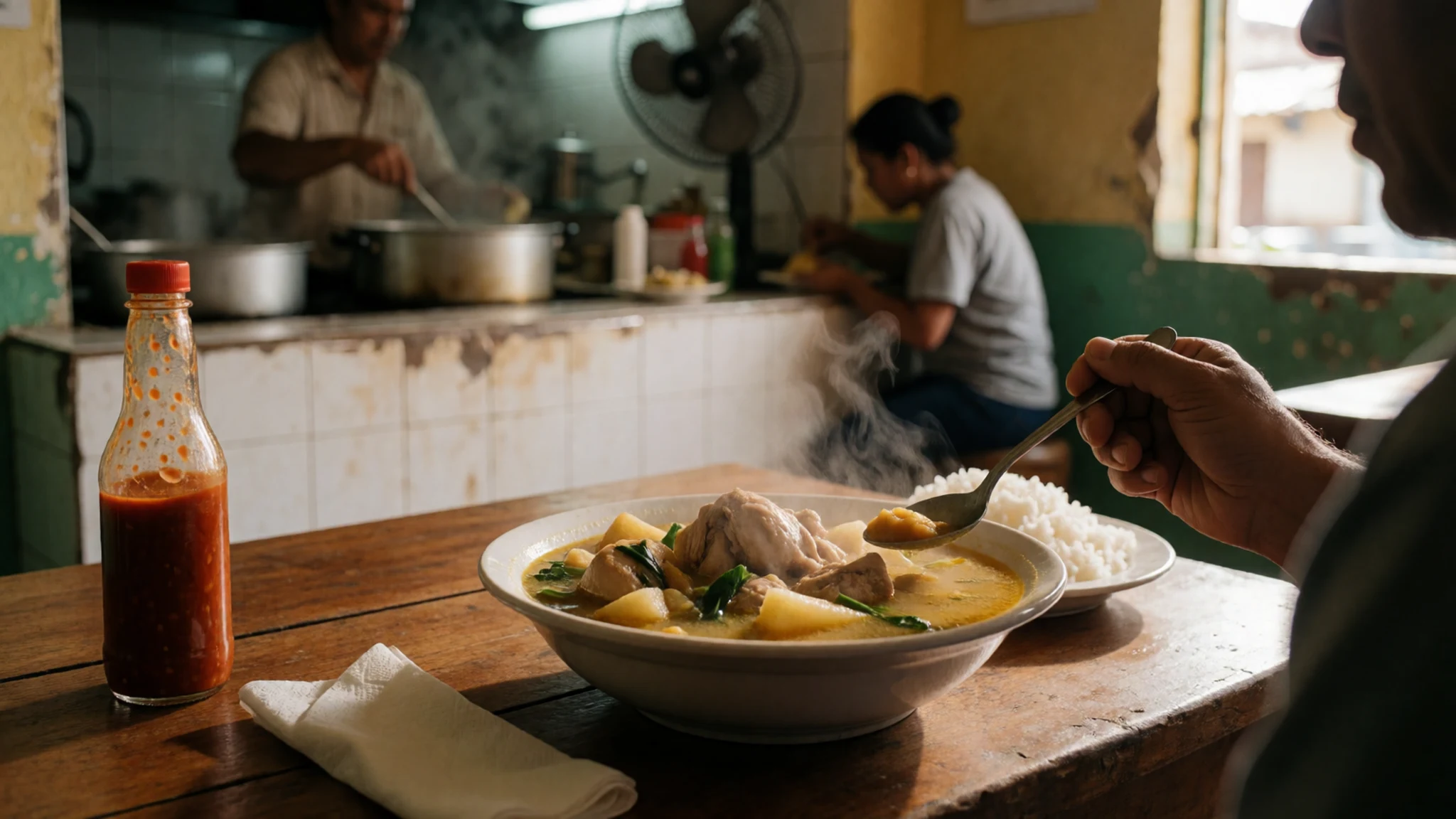
- Ceviche de corvina — Mercado de Mariscos and cevicherías
Ceviche de corvina is sea bass cured in lime with onion, served cold, often with crackers or fried plantain. Panama City serves it at the Mercado de Mariscos, the waterfront seafood market, and in cevicherías. A crowded counter is the safer sign.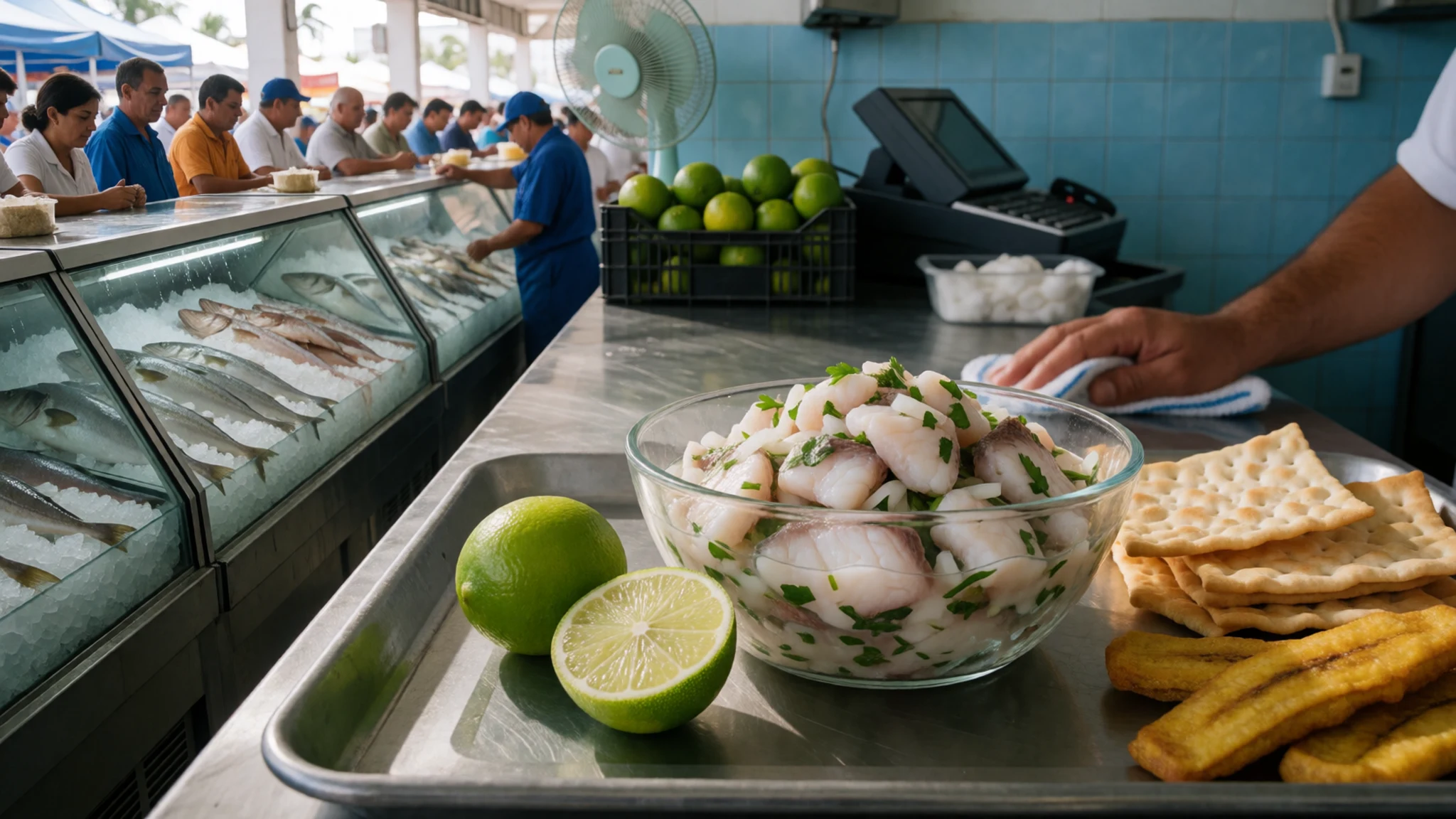
- Patacones — market counters and casual eateries
Patacones are green plantains pressed flat and fried until the edges crisp. Panama City puts them beside fish, stewed beef and almost any lunch plate, at market counters and casual eateries. They share the table with rice rather than replacing it. - Carimañolas — street stalls and bakeries in Casco and near bus hubs
Carimañolas are yuca dough fried into a tapered fritter, usually with a seasoned-meat filling. In Panama City they are street and bakery food: stalls in Casco, counters near bus hubs, and morning windows that sell coffee. They are meant to be eaten soon after frying; they toughen as they cool. - Hojaldres — street griddles and corner cafeterias
Hojaldres are rounds of dough fried until they puff, a breakfast bread as common in Panama City as a roll is elsewhere. Street griddles and corner cafeterias sell them early, with egg, sausage or white cheese, or with coffee. They stale quickly, so the morning batch is the better choice.
Plan it
Best time. The drier months early in the year are the comfortable window for walking Panama City, especially Casco Antiguo and Panamá Viejo. Later in the year, rain is frequent and often heavy after midday, with stickier air between storms. Museums and the canal are worth visiting in any month; the ruins and the open causeway are less kind once the downpours set in.
How long. 3–4
Getting there. Most people fly into Tocumen International Airport, east of Panama City, then take a taxi, a booked transfer or the coastal expressway towards the centre. Many domestic and regional bus links use the terminal at Albrook, on the canal side. Inside the city, taxis, hired cars and the metro cover the last stretch; once in Casco, the lanes are for walking.
Budget. mid
Tips
- Begin with Casco Antiguo and Panamá Viejo in the morning, before the heat and tour groups build.
- Carry a light rain layer outside the drier months; storms pass and the sun follows.
- Use cards in larger shops and restaurants; keep small cash for markets, fondas and buses.
- Check the official canal website before a visit, and arrange entry ahead around holidays.
- Allow extra time for bay-road traffic whenever rain starts.
Etiquette
- Cover shoulders and take off hats inside churches.
- Ask before photographing residents, vendors or people at worship.
- Offer a buenos días or buenas tardes to shopkeepers and drivers.
- Stay off the ruined walls at Panamá Viejo.
Nearby
Sources
- Wikidata Q3306 (CC0)
- Wikipedia — Panama City (CC BY-SA 4.0)
- Wikivoyage — Panama City (CC BY-SA 4.0)