Bocas del Toro
Bocas del Toro, Panama
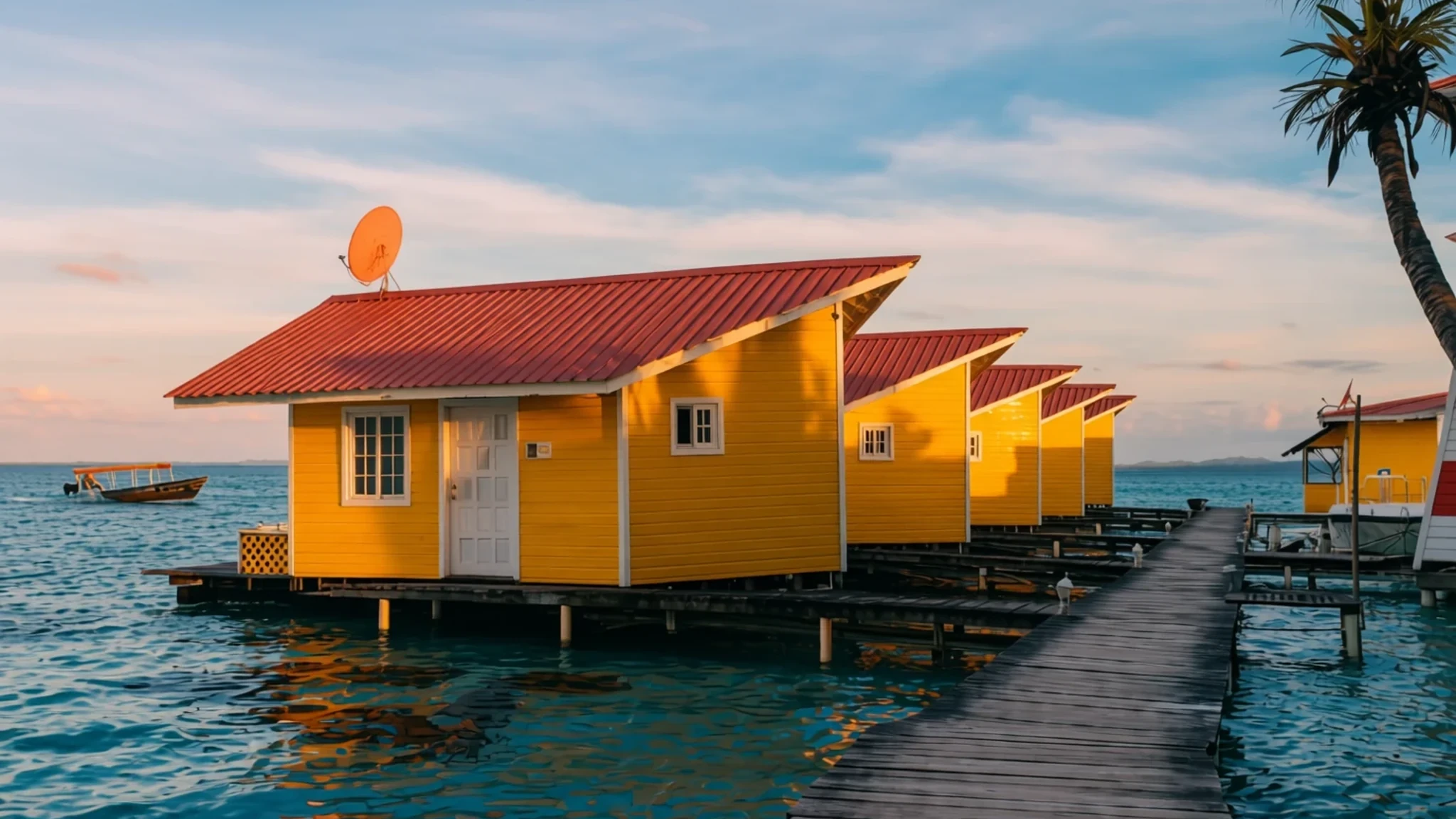
A small Caribbean island town with reef water, easy boat trips and a wet season to plan around.
The place
Bocas del Toro is a town and tourist resort on the southern tip of Colón Island, in the Caribbean Sea off Panama's north-western coast. It is the capital of Panama's Bocas del Toro province and its district, though most people simply call it Bocas Town. The centre is compact enough to walk in an afternoon, and daily life runs along the waterfront, where timber houses stand on stilts above the water and many have been turned into guesthouses, cafés and small shops. The town sits about 10 metres above sea level, so the air stays humid even when the sea breeze drops. Most of the archipelago's islands are reached by water taxi from here, among them Carenero, Bastimentos, Cristóbal and Solarte. Beyond the town edge, Colón Island has white-sand beaches and nature reserves, while the wider archipelago draws divers to its reefs and visitors hoping to spot sloths and wild dolphins. Bocas works best as a base rather than a grand city. It has a small airport with flights from Panama City, a handful of restaurants on the main streets, and a bar scene that stays busy into the night. The rain is heavy for much of the year, arriving in sudden downpours that tend to clear as quickly as they start.
Its story
Bocas del Toro's recent past is closely tied to bananas. Plantations on the mainland and the shipping that carried fruit out of the archipelago gave the settlement its reason to exist, and it is recorded as founded in 1903. For much of the twentieth century the local economy turned on that trade, and the town's layout, with its waterfront lanes and timber buildings, still reflects the commercial period that built it. When the fruit business shrank, fishing, small shops and visitors took over as the main sources of income. Tourism grew from modest beginnings into a steady trade that now supports guesthouses, diving operators and boat services around the islands. The town also carries older historical associations. In March 2025 the president of Colombia toured Bocas del Toro, visiting sites connected to the Thousand Days' War, a conflict that touched the region before Panama became a separate state. Such visits draw local attention and remind residents that the archipelago has long sat between national borders and shifting trade routes. Today the story is one of adaptation: a place that moved from export hub to resort while keeping its distinctly Caribbean character and its close relationship with the sea.
What to see
- Starfish Beach — Drago road, north-west of Bocas Town on Colón Island
Starfish Beach is busy, and it is worth going for the reason most people do: the shallow sandy flats hold starfish that are easy to see from the surface. Bring a snorkel and mask, since the water is clearest early in the day. The numbers vary a lot, so a handful of starfish is more typical than a carpet of them. Reach it on the hourly bus towards Drago, then walk the last stretch along the road. - Zapatillas day tour — boat trips from Bocas Town
The Zapatillas day tour is one of the most common boat trips from town, and it is busy. Many boats make the run, so the reef and sandbars can feel crowded by late morning. The stop that interests most people is a starfish area that many guides say shows more starfish than Starfish Beach. Go early if you can. - Bluff Beach — eastern side of Colón Island
Bluff Beach is on the far side of Colón Island from the busy waterfront, and its sand is a mix of hotel and restaurant frontage in the middle, with quieter stretches at either end. Swimming can be tricky because of the waves, so check conditions before going in. The surf is popular with local and visiting surfers. A taxi from town is the simplest way to reach it. - Finca Los Monos — private botanical garden just outside town
Finca Los Monos is a private botanical garden just outside town, and it is the place to go for birds and wildlife on land. The garden has a fair chance of wild monkeys and sloths, although sightings are never guaranteed. Admission is charged, so check the current price before going. - Dolphin Bay — lagoon a short boat ride from Bocas Town
Dolphin Bay is a lagoon a short boat ride from town where a resident group of wild dolphins can be seen. Many day tours of the islands make a stop there, so the lagoon can be busy at midday. Some visitors prefer to arrive by water taxi and arrange the trip themselves, which gives more control over timing. Dolphins are wild, so keep a respectful distance from the animals.
Culture
Bocas Town is a working island town as well as a resort, and its daily rhythm follows the boats. Fishing, water taxis and deliveries run through the morning, while the evening belongs to the bars along the waterfront and the wooden decks above the sea. Spanish is the main language of the town, and a few words of it go a long way in shops and small eateries. Panama's Caribbean side has a relaxed pace, and locals tend to greet strangers warmly without rushing the exchange. Tipping is less formal than in some countries, and many visitors simply round up the bill at small eateries. Houses here are often built of timber on stilts, and many families live close to the water, so late-night noise carries across the bay. Ask before photographing people at work on the docks or at the food carts, and keep voices low on the water taxis and streets after dark, because sound carries across the water.
What to wear
The best-known Panamanian dress is the pollera, a full skirt with embroidered detail that is most associated with the Azuero region rather than the Caribbean coast. It appears at national festivals and dance performances, and it is worn with care rather than for everyday errands. The textile most closely linked to this part of the country is the mola, a panel of reverse appliqué and embroidery made by Guna women of the San Blas islands to the east. Molas are sold in shops and markets in Bocas Town and are often stitched into blouses. Day-to-day dress on the island is relaxed: T-shirts, shorts, sundresses and flip-flops, with swimwear worn under light cover-ups on boats and beaches. Locals usually dress more neatly for church and for official business. For a visit, pack loose cotton or quick-dry fabrics, since the heat and humidity are constant. Bring water shoes or sturdy sandals for rocky landings and wet docks, a light rain jacket for sudden downpours, and a long sarong or shirt to cover your shoulders when entering a church.
What to eat
- Patacones and fried chicken — food carts along the main streets of Bocas Town
Patacones are green plantain slices fried, flattened and fried again, served with fried chicken, a pairing that shows up on many casual menus in the town. Look for them at the food carts along the main streets, where prices vary with location. - Empanadas — food carts and small bakeries near the main streets
Empanadas are pastry parcels usually filled with seasoned meat or cheese and then fried or baked. They are a common snack from the food carts and small bakeries near the main streets. They suit a quick lunch between boat trips. - Fresh fish and seafood — waterfront restaurants and seafood places on the main streets
Fresh fish and seafood are the strongest reason to eat out in an island town. Ask what came off the boats that morning, and look at the grilled and fried plates at the waterfront restaurants on the main streets. - Passion fruit drinks and cocktails — waterfront bars and breakfast cafés in Bocas Town
Bars in the town serve passion fruit cocktails, and the fruit also shows up in fresh juice blends at breakfast cafés. Sit at a waterfront bar in the evening, when the sea breeze makes the drinks easier to enjoy.
Plan it
Best time. Aim for January, March or October, the driest months, when showers are less frequent. Rain falls in every month, and there is no predictable dry season. Temperatures stay warm all year, around 28 to 32 °C, so the choice is about rain rather than cold.
How long. 3–4
Getting there. Fly from Panama City to the small Isla Colón airport, which runs several flights a day from Albrook Airport rather than the main international airport. The other route is by bus to Almirante, then a water taxi across to the island, with boats leaving frequently.
Budget. mid
Tips
- Go to Starfish Beach and the Zapatillas trip early, before the day's boats arrive
- Book boat tours with operators running that day, since weather can cancel trips
- Carry cash for small eateries, bus fares and water taxi rides
- Bring a dry bag and a rain jacket, because showers are heavy but usually short
- Drink plenty of water and use sun protection, as the heat and humidity are constant
Etiquette
- Cover shoulders and knees when entering a church
- Ask before photographing residents, especially at work
- Do not touch or remove starfish, and keep your distance from wild dolphins
Nearby
Sources
- Wikidata Q888971 (CC0)
- Wikipedia, Bocas Town, Bocas del Toro (rev 1378106216) (CC BY-SA 4.0)
- Wikivoyage, Bocas del Toro (rev 5395419) (CC BY-SA 4.0)
- Photo 01, Bocas del Toro aerial view, Dronepicr (CC BY 3.0)
- Photo 02, City of Isla Colon, Panapro (CC BY 3.0)
- Photo 03, Casa en Bocas del Toro, Tim Cook (CC0 1.0)
- Photo 04, Bocas del Toro Archipelago map, Alexrk (CC BY 3.0)
- Photo 05, Presidential tour of Bocas del Toro, Republic of Colombia (Public domain)
- Photo 06, Presidential tour of Bocas del Toro, Republic of Colombia (Public domain)
- Photo 07, Presidential tour of Bocas del Toro, Republic of Colombia (Public domain)
- Photo 08, Presidential tour of Bocas del Toro, Republic of Colombia (Public domain)


