Portobelo
Portobelo, Panama
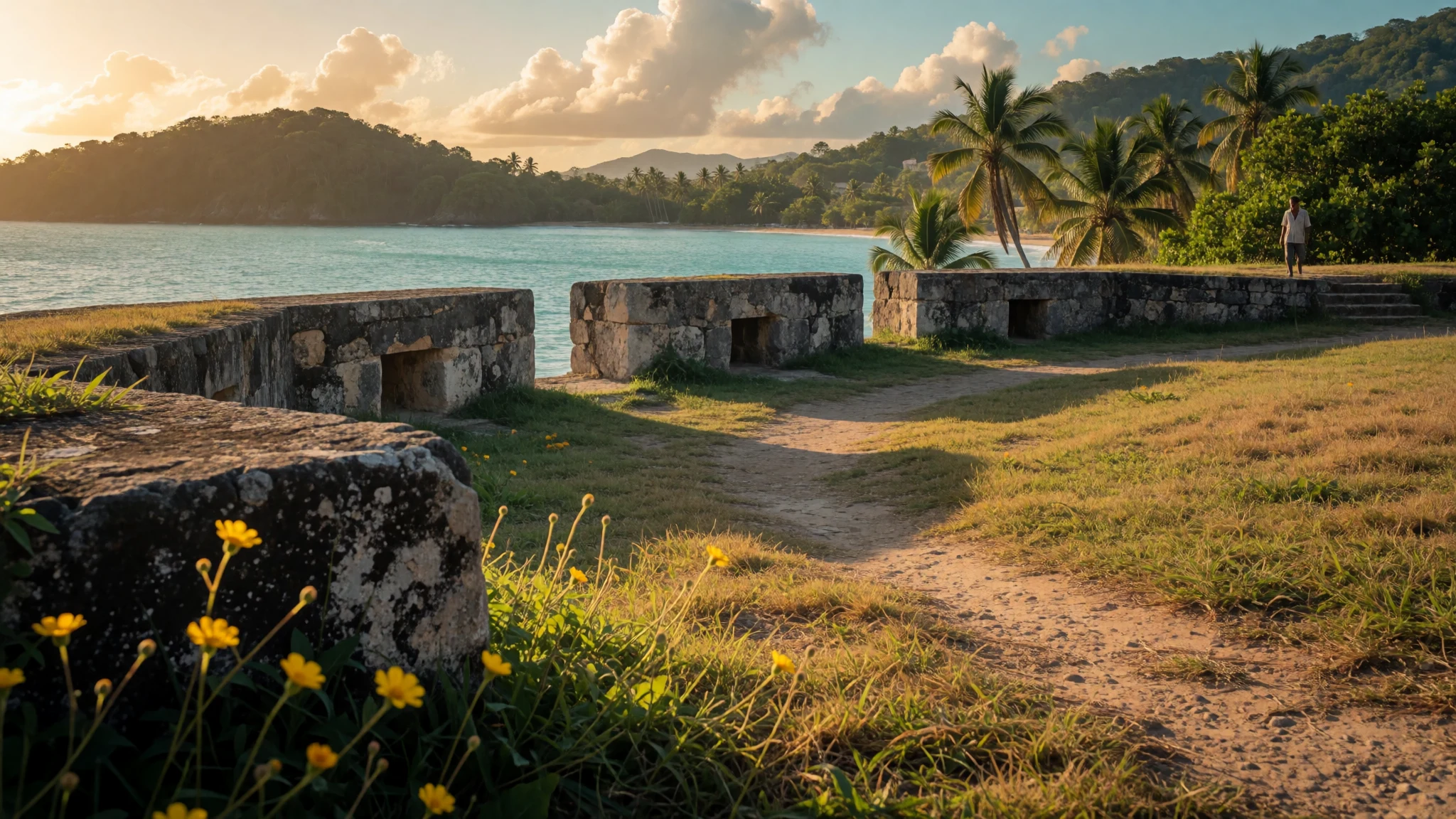
Portobelo is a quiet Caribbean bay lined with ruined Spanish forts, where treasure ships once loaded and pirates came to take the silver.
The place
Portobelo is a small Caribbean town on the northern side of the Isthmus of Panama, about 32 km northeast of Colón, where the Panama Canal meets the Atlantic. The name is Spanish for "beautiful port", and the bay earns it: a deep, sheltered inlet ringed by green hills, with the town strung along one shoreline road. Ruined stone forts sit close to the water, their gun ports still pointing across the harbour.
This is a working place rather than a resort. Fishing boats, a few small guesthouses and bars, and a scatter of dive and kayak operators share the road with local buses. The town is small, and most of the visible history can be covered on foot in about an hour. That makes it an easy half-day from Colón, or a longer stay for people who like to snorkel, paddle or take a launch to nearby beaches.
Portobelo is also a living centre of Afro-Panamanian Congo culture. Descendants of enslaved Africans keep their own music, dance, costume and a dark-skinned image of Christ, and that tradition gives the ruins a human context that stone alone cannot.
The weather is typical of Panama's Caribbean side: humid heat, a green and damp hinterland, and showers that can arrive at almost any time of year. Crowds are thin on ordinary weekdays and noticeably larger at weekends and during the late-October pilgrimage. UNESCO lists the Portobelo and San Lorenzo fortifications together as a single World Heritage property, so the careful stonework around this bay belongs to a wider chain of Spanish defences along the coast.
Its story
Portobelo was founded in 1597 by Francisco Velarde y Mercado, and it soon took over from nearby Nombre de Dios as the Caribbean landing point for Peruvian silver. The metal came to Panama City on the Pacific side, crossed the isthmus overland and was loaded here for Spain. That made the bay a fixed stop on the treasure-fleet route and a target for every rival power. Local tradition says Christopher Columbus gave the harbour its name in 1502, though that is a legend rather than a documented fact.
The forts went up to answer the threat, and they were tested often. In 1596, Francis Drake died of dysentery and was lowered into the ocean inside a lead casket just beyond the harbour mouth, where Isla Drake now bears his name. English privateers under William Parker took the town in 1601. In 1668 the Welsh privateer Henry Morgan arrived with about 450 men, overcame the defences and held the town for 14 days before leaving. Another English pirate, John Coxon, raided it again in 1680.
Later the contest became official. In 1726 Admiral Francis Hosier's Royal Navy squadron blockaded the port to stop the treasure fleet sailing home. His ships waited for months at Bastimentos, and tropical disease killed Hosier and many of his men. A successful Royal Navy siege followed in 1739, during the War of Jenkins' Ear. After that the port declined, and it saw a revival only when the Panama Canal was being built in the late nineteenth century.
What to see
- Fuerte Santiago and the waterfront ruins — West end of the town
Fuerte Santiago stands at the western end of Portobelo's waterfront and is the natural place to start. Its low stone walls and gun embrasures face the harbour mouth, showing how the Spanish tried to control the only approach by sea. Allow time to walk the ramparts and look across the bay.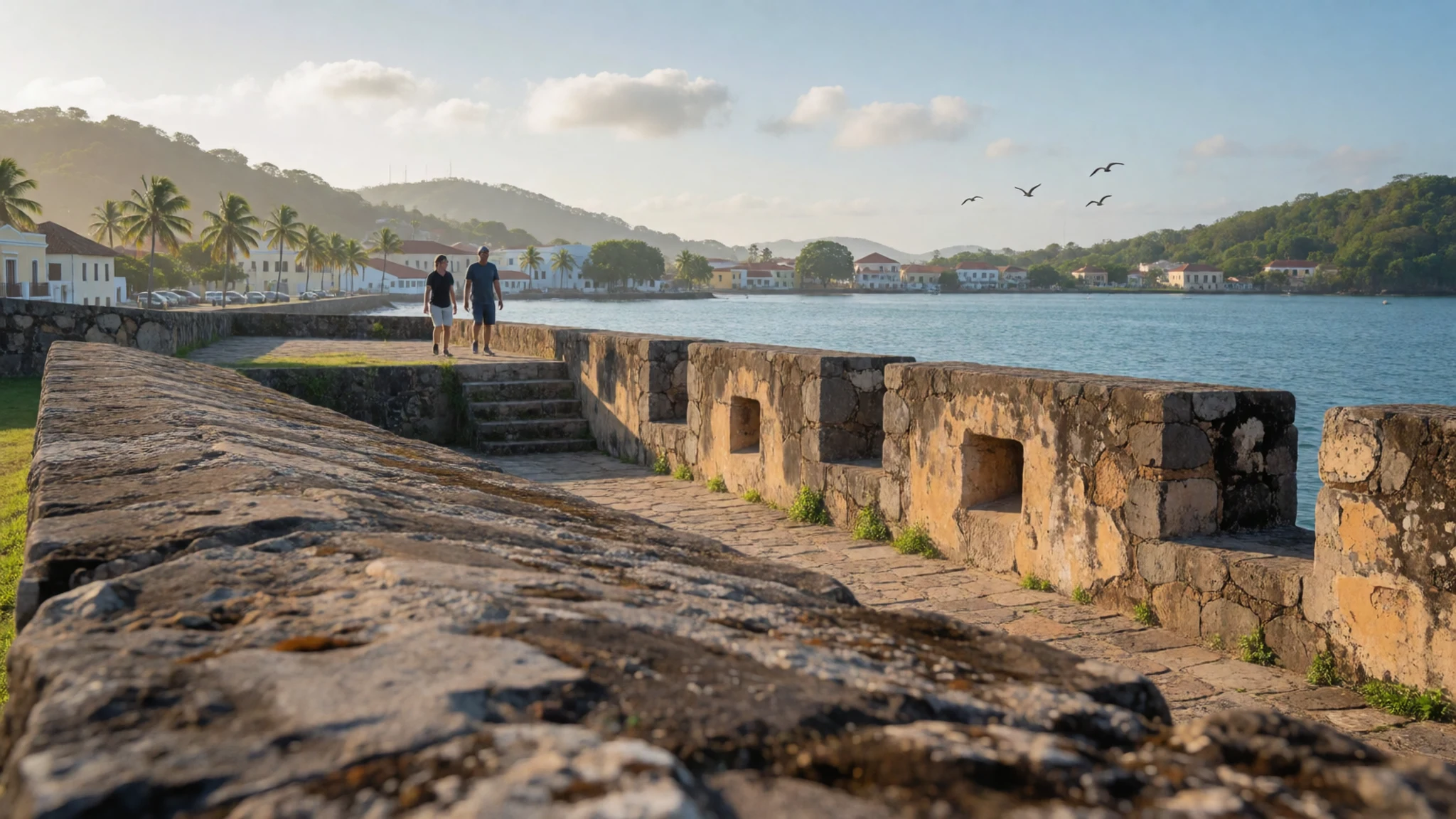
- Real Aduana (Customs House) and museum — Eastern side of the town centre
The Customs House was where silver and goods were counted and stored before shipping. Today it holds a museum that explains how Congo communities settled in Portobelo and why they venerate a dark image of Christ. It is the best single stop for understanding the town beyond its forts and pirates.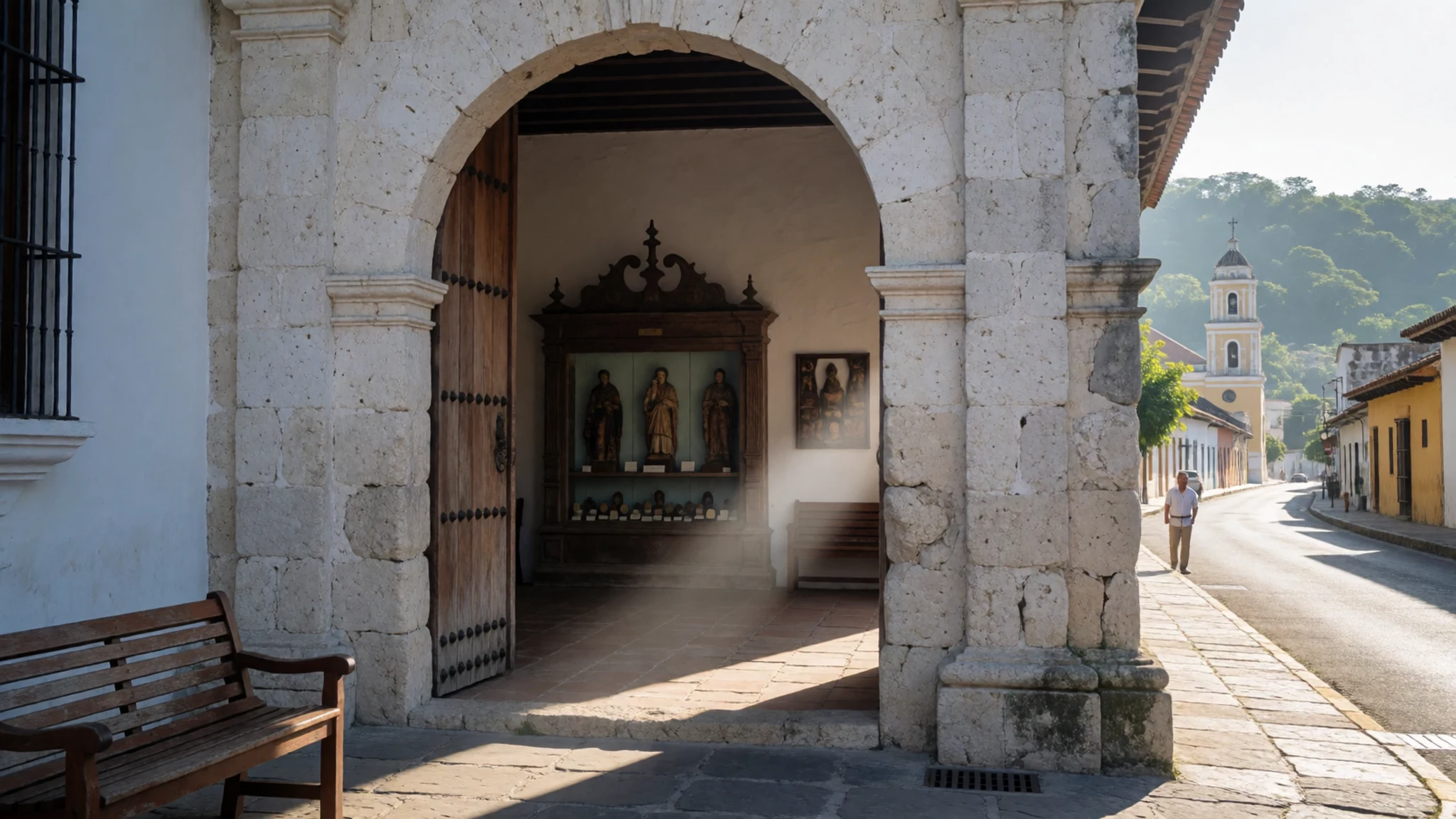
- The town church and the Black Christ — Town centre, near the Customs House
The church near the Customs House shelters the dark wooden figure of Christ at the heart of Portobelo's devotion. It is a working parish church, quietly busy on Sundays and crowded at the late-October pilgrimage, when visitors come from across Panama. Step in outside service times if you can.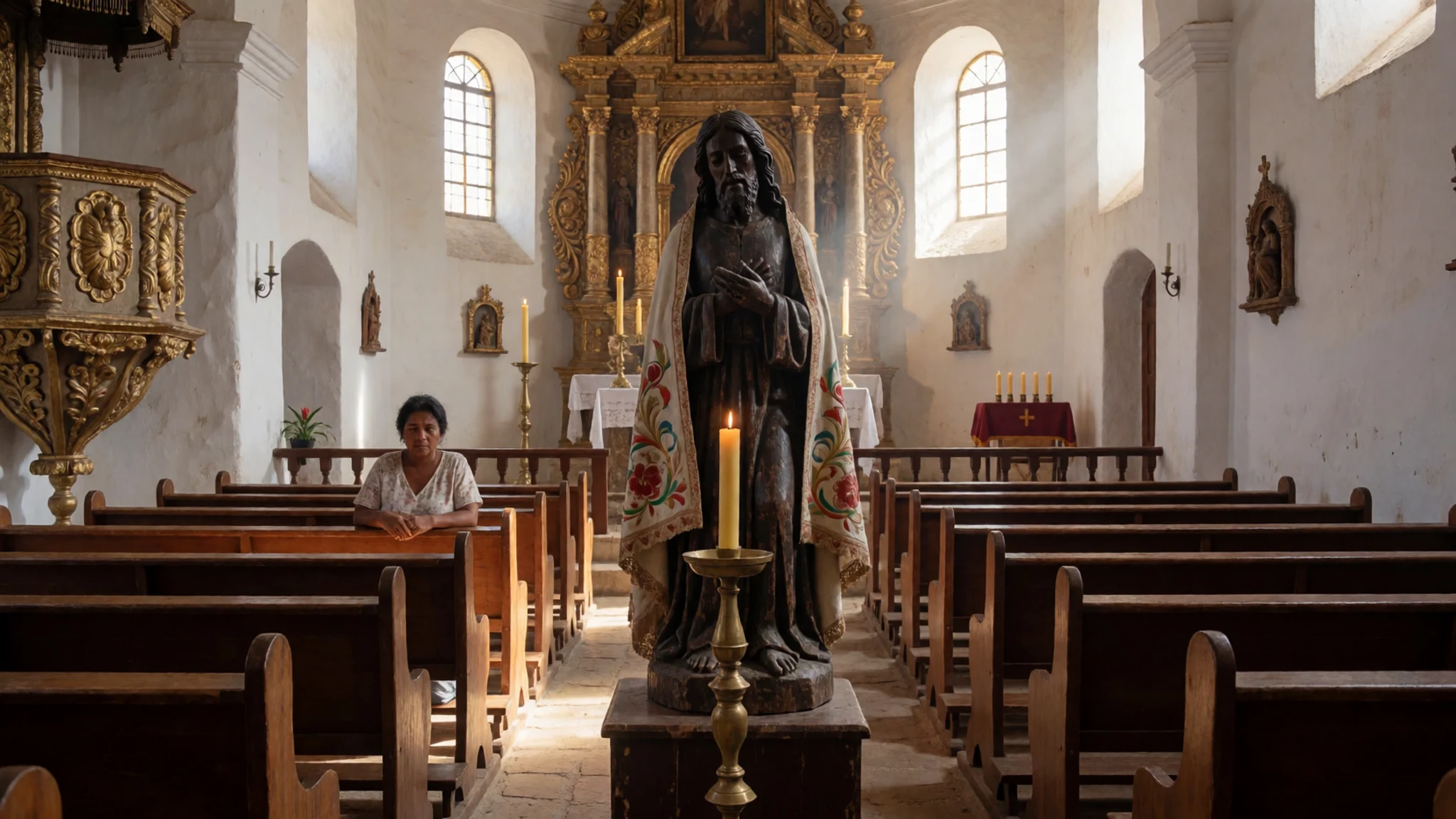
- The watchtower and bay viewpoint — Above the western fort
From the western fort, a staircase on the landward side of the road climbs to a watchtower with a clear view over the whole bay. The ruins, the church roof, the fishing boats and the surrounding hills all sit in one frame. The steps can be slippery after rain, so wear shoes with grip.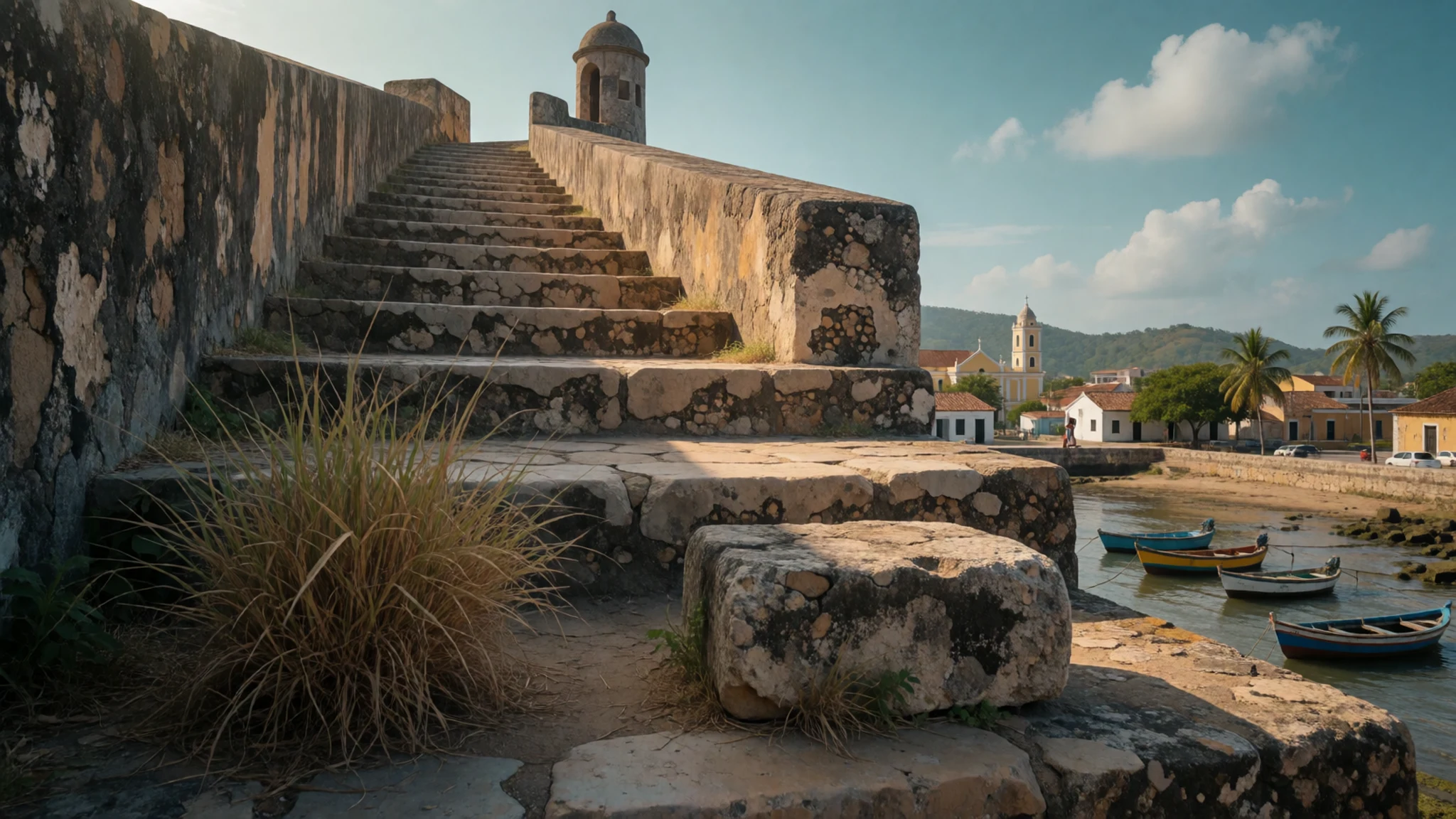
- Playa Blanca, Playa Frances and the reefs — Bay and coast east of the town
Small launches run from Portobelo to nearby beaches such as Playa Blanca and Playa Frances, where the water is clear enough for snorkelling. Local operators also arrange scuba dives, kayak hire, dugout canoe trips and horseback rides. Agree the price and the return time before boarding, and check the weather.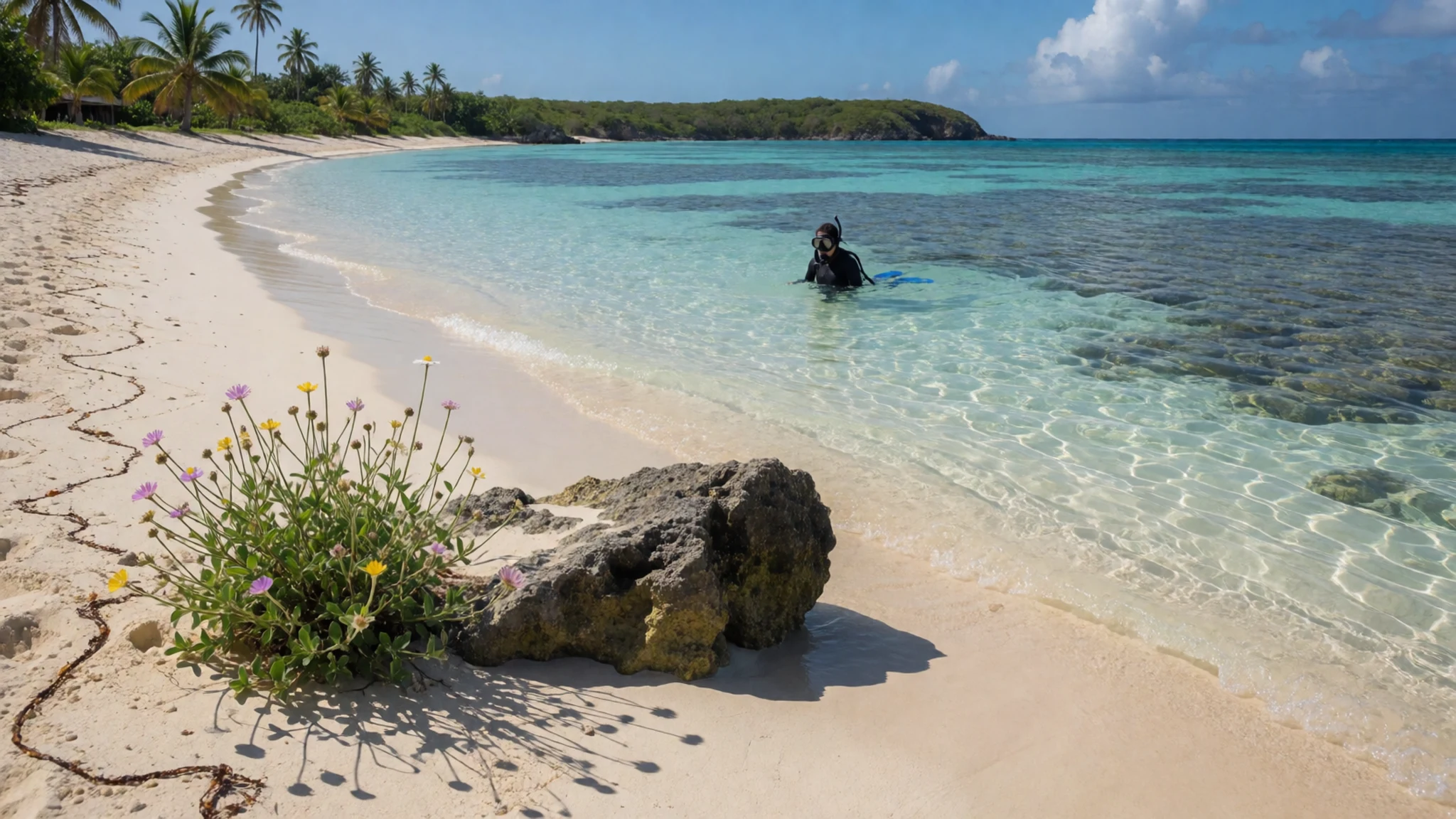
Culture
Portobelo's culture is shaped by the Congo tradition, a community whose roots go back to Africans brought to Panama under Spanish rule. Their identity shows in music, dance, speech games, costume and a strong Catholic devotion that blends European and African elements. The Customs House museum is the most useful place to see how this history is told locally.
The most important date is the pilgrimage to the Black Christ in late October. Devotees travel from across the country, many dressed in purple, and some approach the church on their knees. The streets fill with processions, food stalls and music, and the town feels very different from its usual calm. Congo carnival is another high point, with masked performers, drumming and a playful, theatrical reversal of meanings that outsiders often miss on a first visit.
Day to day, Portobelo is relaxed and friendly. Fishing, small trade and a modest tourist economy keep things going, and conversation is easy if you greet people first. Spanish is the common language, and a few polite phrases go a long way. The forts and church are public heritage places as well as visitor sights, so local people may be using them while you look around.
Ask before photographing people, especially during processions or inside the church, and keep shoulders and knees covered when you enter.
What to wear
Portobelo's traditional dress is tied to the Congo community and to wider Panamanian festival wear. For Congo carnival and church feasts, women wear brightly coloured skirts and blouses in cotton and similar light fabrics, often patchworked, ruffled or decorated with ribbons and flowers, and men and children join in with costumes that play with masks and rags. Elsewhere in Panama the pollera, a layered skirt and blouse with lace and embroidery, is the formal national dress, worn at major festivals rather than daily.
On an ordinary day people in Portobelo dress for heat and humidity: cotton T-shirts, shorts or light trousers, simple dresses, flip-flops and caps. Fishers and boat crews wear sturdy sandals or wellingtons and quick-drying clothes. For the October pilgrimage, many devotees wear purple, and smart clothes appear for church.
Visitors should pack light, breathable cotton or quick-dry fabrics, a hat, sunglasses and high-factor sunscreen. A thin rain jacket is more useful than an umbrella, because showers can be sudden and heavy. Choose closed shoes with grip for the fort steps and wet stone, and sandals that can get wet for boats and beaches. Carry a light shirt or scarf to cover shoulders and knees in church, and keep swimwear for the beach or boat rather than the town streets.
What to eat
- Fried fish with coconut rice — Small family eateries along the shore road
Caribbean-coast Panama cooks often serve whole fried fish with rice cooked in coconut milk, giving a sweet, rich base that suits the salty crust. It is simple, filling and usually made from the day's catch, so ask what came in that morning.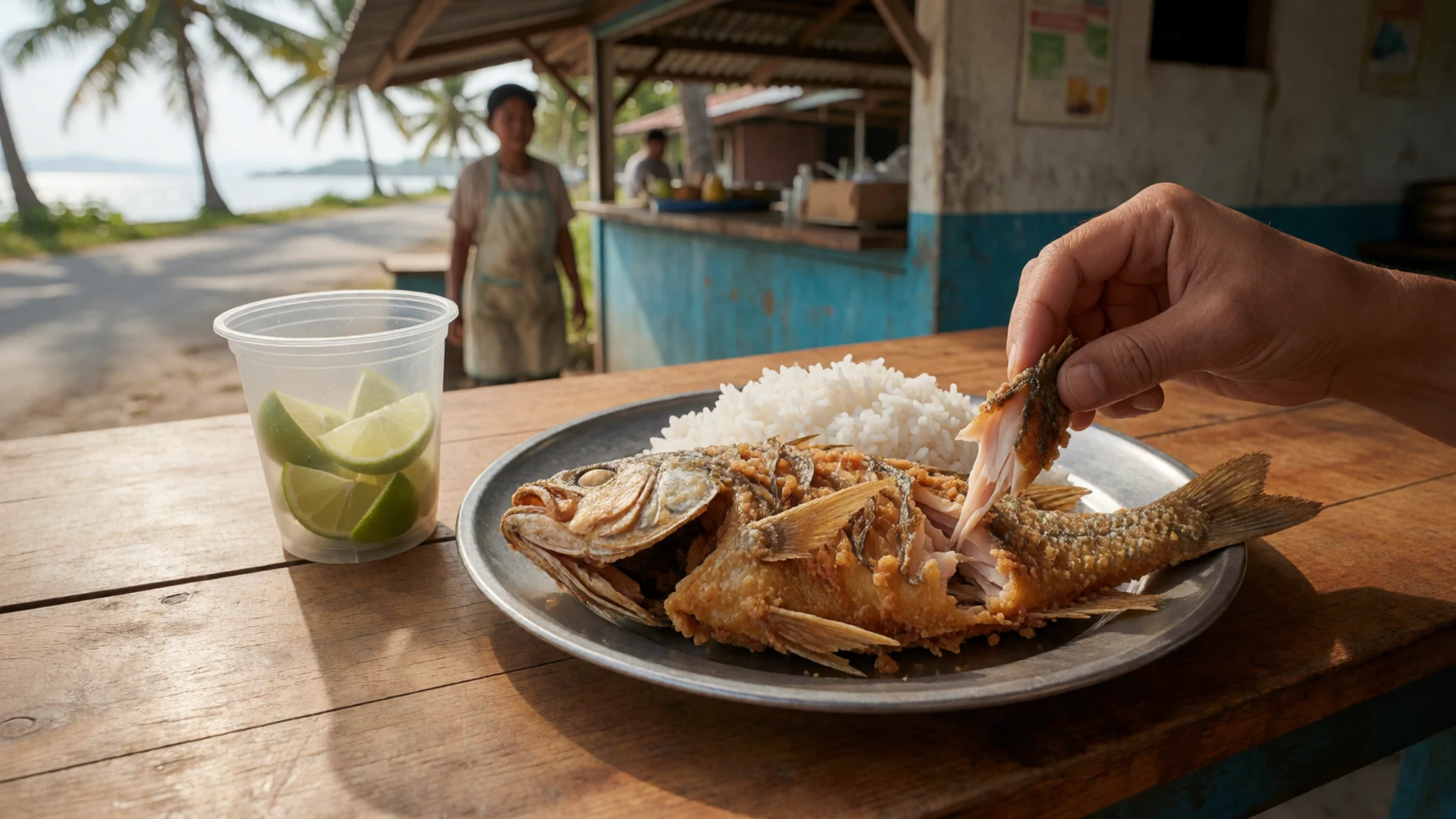
- Patacones — Roadside stalls and casual eateries in town
Patacones are green plantain slices fried, flattened and fried again until crisp. They come as a side with fish or meat, or as a snack with a little salt. Eat them hot, when the outside is crunchy and the inside is soft.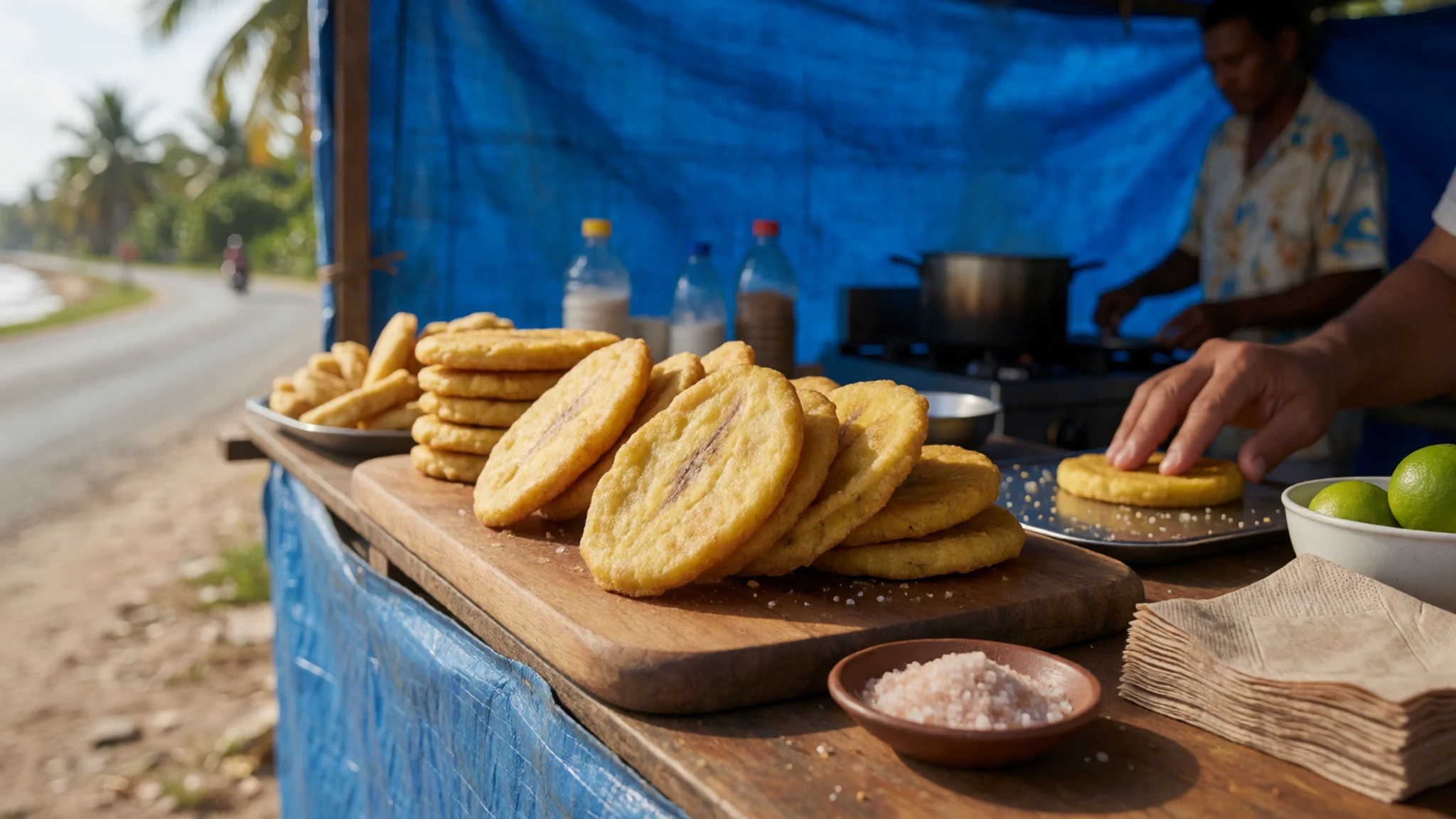
- Sancocho — Family-run eateries and home-style kitchens
Sancocho is a hearty Panamanian stew of chicken, root vegetables and herbs, with culantro giving a distinctive green flavour. It is comfort food, served in a bowl with rice on the side. It suits a wet afternoon better than a hot noon. - Ceviche — Seafront kitchens and busy local eateries
Ceviche in Panama is raw fish or seafood cured in lime juice with onion, chilli and coriander. On the coast it is eaten as a starter or a light lunch with crackers. Choose busy places, because freshness matters more than anything else. - Fresh tropical fruit juice — Small shops and cafés on the main road
Fresh juices, from passion fruit to pineapple and soursop, come cold with plenty of ice and often a little sugar. They are the easiest way to cool down after the forts and a short walk in the sun.
Plan it
Best time. January to April is the drier stretch, with calmer seas for boats and snorkelling. Panama's Caribbean coast is humid and showery for much of the rest of the year. Late October brings the Black Christ pilgrimage: atmospheric, but busy.
How long. 1–2
Getting there. Fly to Tocumen International Airport near Panama City. From there it takes about an hour and a half by road via the Transisthmian highway to Sabanitas, then the Portobelo road. By bus, take a service from Panama City towards Colón, change at Sabanitas for the Portobelo bus, or go via Colón. Check current timetables locally.
Budget. low
Tips
- Start at the western fort early, before the heat and any tour groups arrive.
- Carry some cash, because small shops, boat operators and roadside stalls may not take cards.
- Bring insect repellent, sun protection and a light rain jacket.
- Agree boat prices and return times before boarding any launch to the beaches.
- Check the dates of the October pilgrimage if you want to join it or avoid it.
Etiquette
- Dress modestly in church and keep voices low during services.
- Ask before photographing people, especially in processions.
- Do not climb on or remove stones from the ruins.
Nearby
Sources
- Wikidata Q797147 (CC0)
- Wikipedia: Portobelo (rev 1378797000) (CC BY-SA 4.0)
- Wikivoyage: Portobelo (rev 5414864) (CC BY-SA 4.0)
- Photo: Ruins and Bay at Portobelo, Panama (en:User:Tedder) (CC BY 3.0)
- Photo: Henry Morgan's attack on the Castillo de San Jeronimo, Porto Bello, 1669 (Esquemelin) (Public domain)
- Photo: View of the fort, the Aduana building, and the church (Lombana) (CC BY-SA 4.0)
- Photo: Fuerte Santiago (Jaime Massot Hernández) (CC BY-SA 4.0)
- Photo: Iglesia de San Juan, 2009 (Jaime Massot Hernández) (CC BY-SA 4.0)
- Photo: Iglesia de San Juan (Jaime Massot Hernández) (CC BY-SA 4.0)
- Photo: A bus on the road in Portobelo, above the ruins of the old fortress (Bärbel Miemietz) (CC BY-SA 4.0)
- Photo: Architectural Detail with Real Aduana de Portobelo (Adam Jones) (CC BY-SA 2.0)


