Palitana
Palitana, India
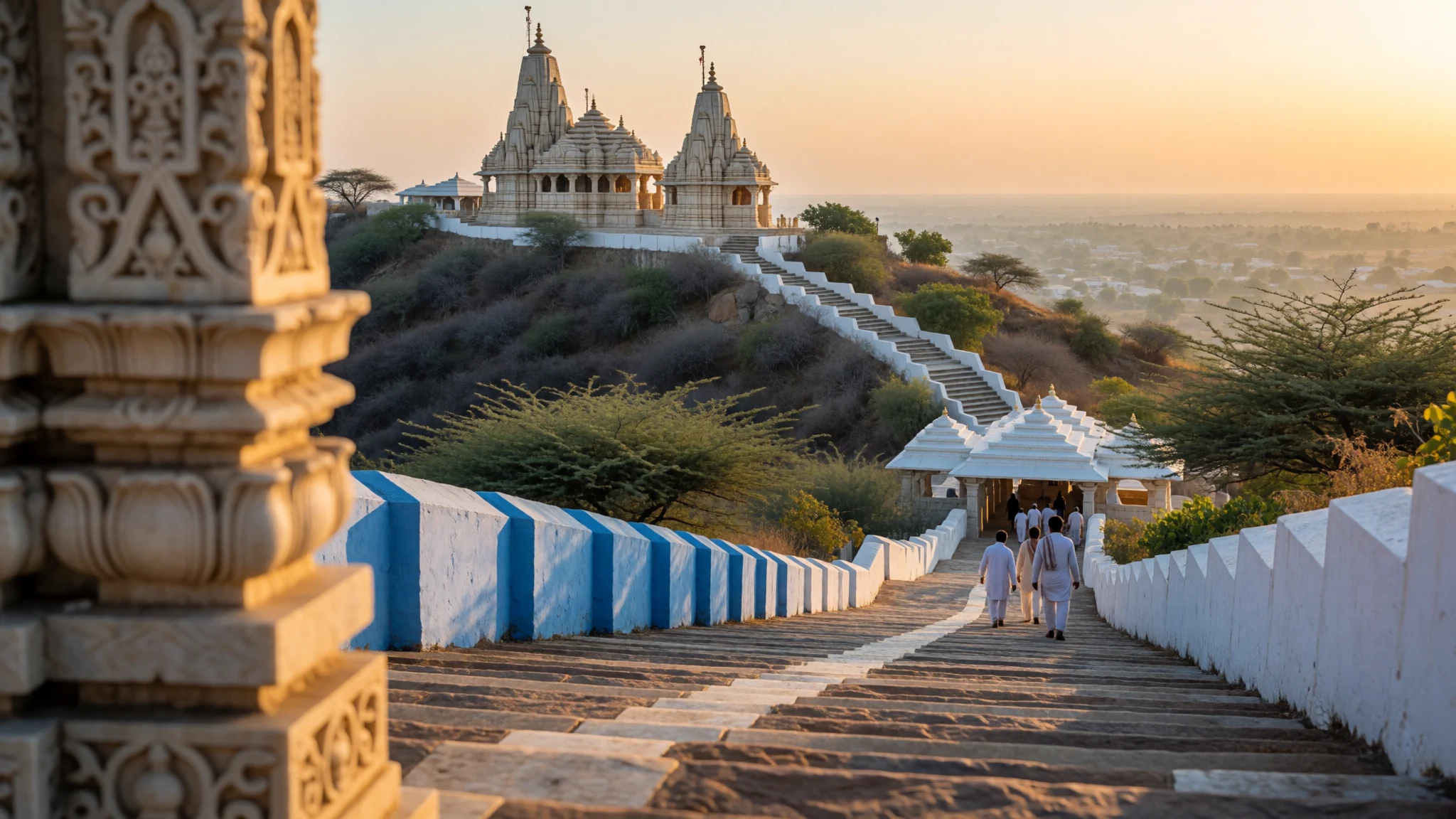
Palitana is a Gujarat hill crowned with Jain temples, reached mostly on foot up thousands of stone steps.
The place
Palitana, in Bhavnagar district of Gujarat, is both a small town and the name given to a cluster of Jain temples on the Shatrunjaya hills beside it. Almost 900 shrines and larger temples crowd the ridges, which is why the site is often called a city of temples. The buildings are grouped into walled compounds known as tonks (or tuks), strung along the ridges near the summit, and marble is the favoured stone. The earliest structures date from the 11th century. Most people who come are pilgrims. The Śvetāmbara tradition counts this among its most sacred places, and the principal temple honours Rishabhanatha, the first Tirthankara. Reaching it means a climb of about 3,500 stone steps on a hill trail, and some visitors hire a palanquin, a seat carried by bearers, at the foot of the hill. Digambara Jains have a single dedicated temple here, and the guardian of the hill is the yakshini Hingraj Ambikadevi, also called Hinglaj Mata. Because the hill is a place of worship first and a sight second, the mood is quiet and purposeful rather than touristy. The town below is modest, with pilgrim lodgings called dharmashalas, a small railway station and a bus stand, and most travellers treat it as a base for the climb rather than a destination in itself.
Its story
The story of Palitana is mostly one of belief rather than of kings. Jains hold that all but one of their Tirthankaras, the teachers who show the way out of rebirth, came to the Shatrunjaya hills and made them holy. That is why a devout Jain hopes to climb to the summit at least once in a lifetime, and why the ascent is treated as spiritual discipline rather than a day out. The rules are strict. Food is neither eaten nor carried on the way up, and everyone must start down before evening, because no soul is meant to remain on the mountain overnight. The temples close for the monsoon months and reopen around the full moon of the Kartika month, in autumn. Separately, in February or March, pilgrims make the Chha Gau Teerth Yatra, a long walk around the hills on foot that ends with prayers to Adinatha at the top. Another busy period falls in February or March, when pilgrim numbers climb far above normal. Mahavira's birthday is marked here too, with processions of decorated chariots carrying images of the tirthankara, alongside ceremonies in the temples. The first shrines appeared in the 11th century, and the dense, ridge-by-ridge layout seen today grew from the steady addition of temples over the centuries that followed.
What to see
- Shatrunjaya hill and the main Adinath temple — Shatrunjaya hills, above Palitana
The summit temple is dedicated to Rishabhanatha, also called Adinath or Adishwar, the first Tirthankara. Pilgrims come to perform puja before his marble image. Even if you are not a worshipper, the arrival at the top, with temple spires in every direction, is the reason for the climb.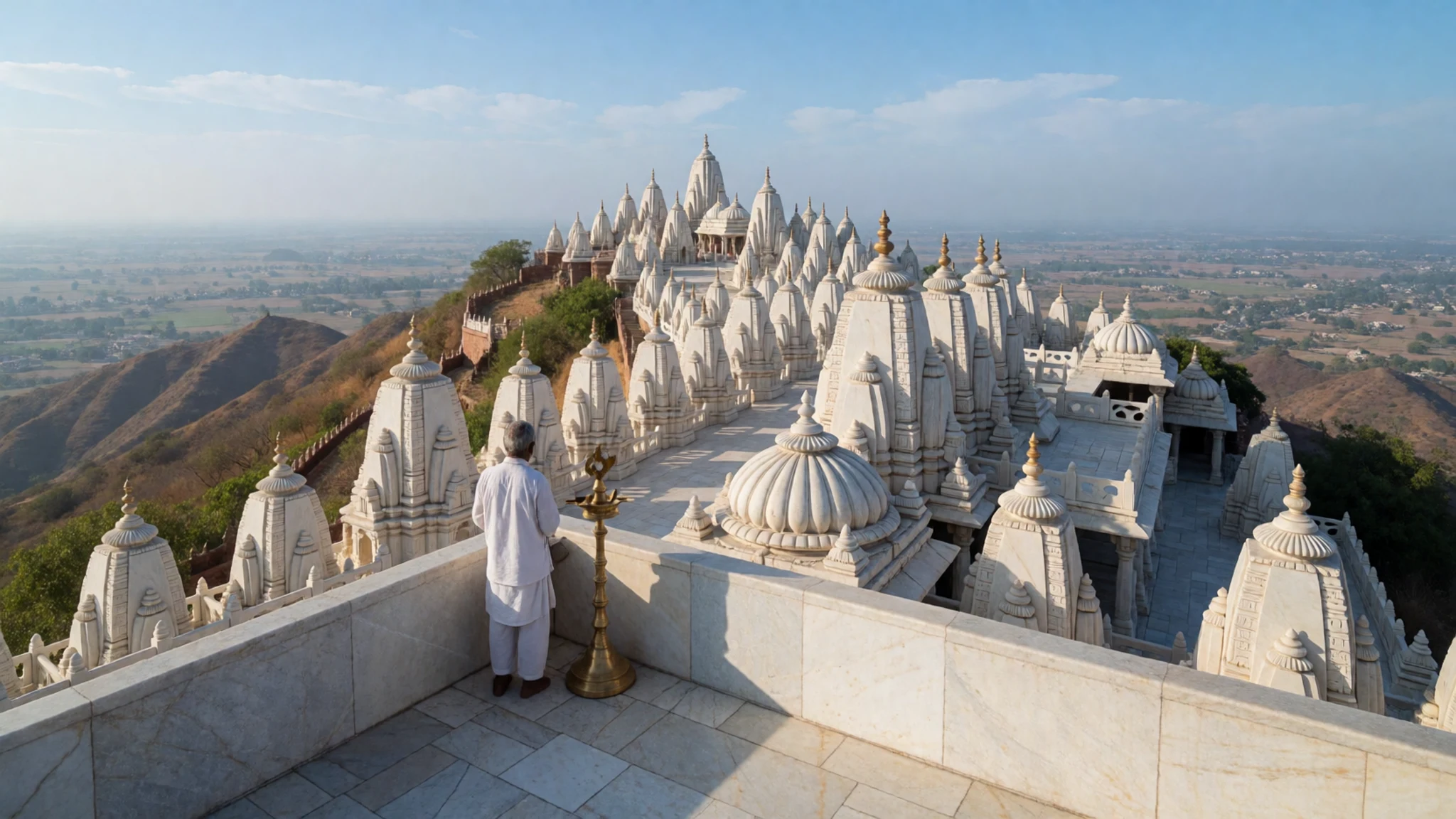
- Chaumukhji Tonk — Shatrunjaya ridge
One of the walled compounds on the ridge, with a temple whose four-faced design lets an image look out in every direction. The carved pillars and porches reward slow walking. Light is softest early in the day, and the courtyards are calmer before the main flow of pilgrims arrives.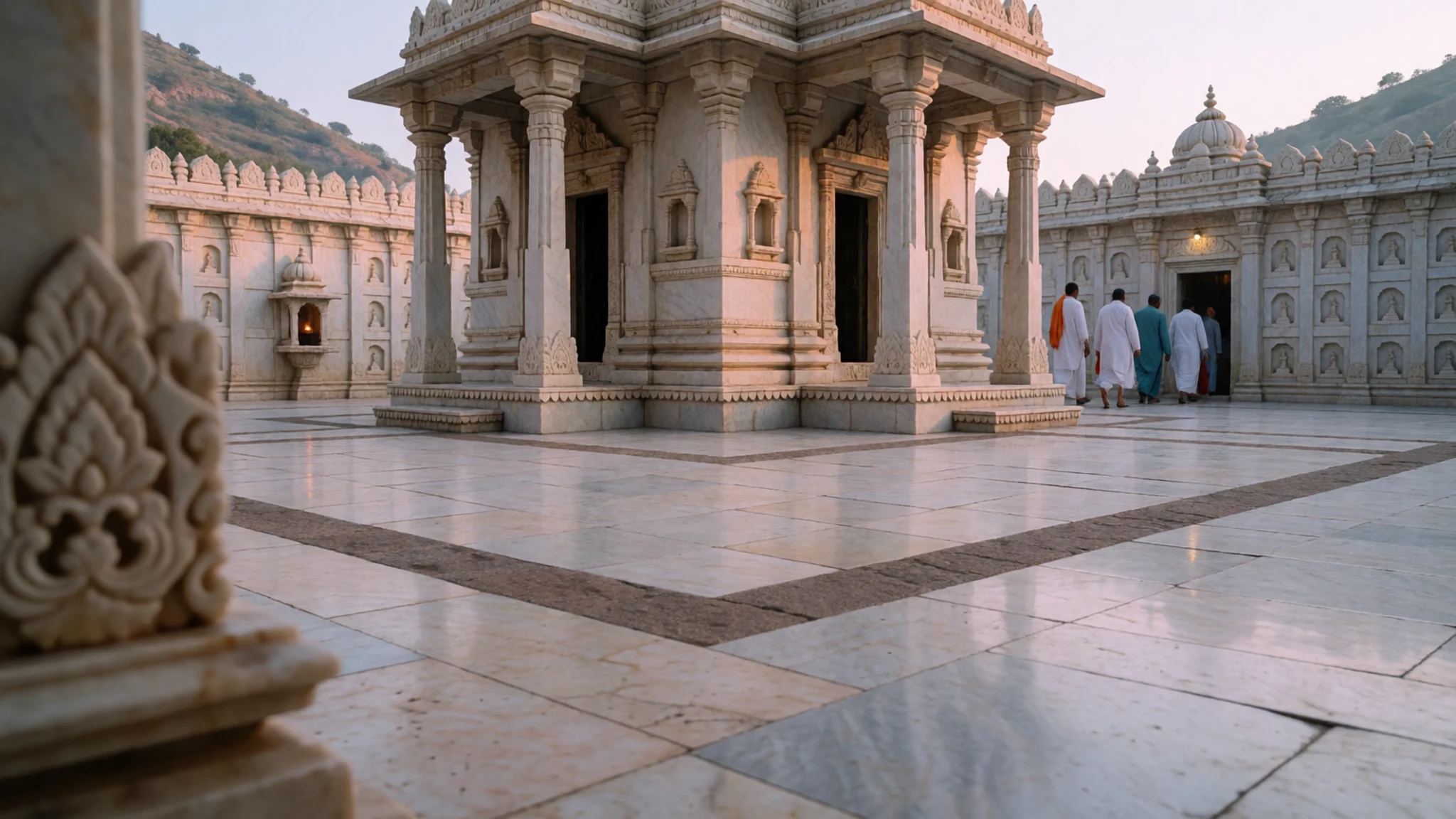
- Balabhai Tonk — Shatrunjaya ridge
Another tonk on the hilltop, worth seeking out for its cluster of small shrines inside a single enclosure. It shows how the complex works: many donors, many modest temples, one shared wall. Moving between tonks, you will notice how each has its own character and its own quiet.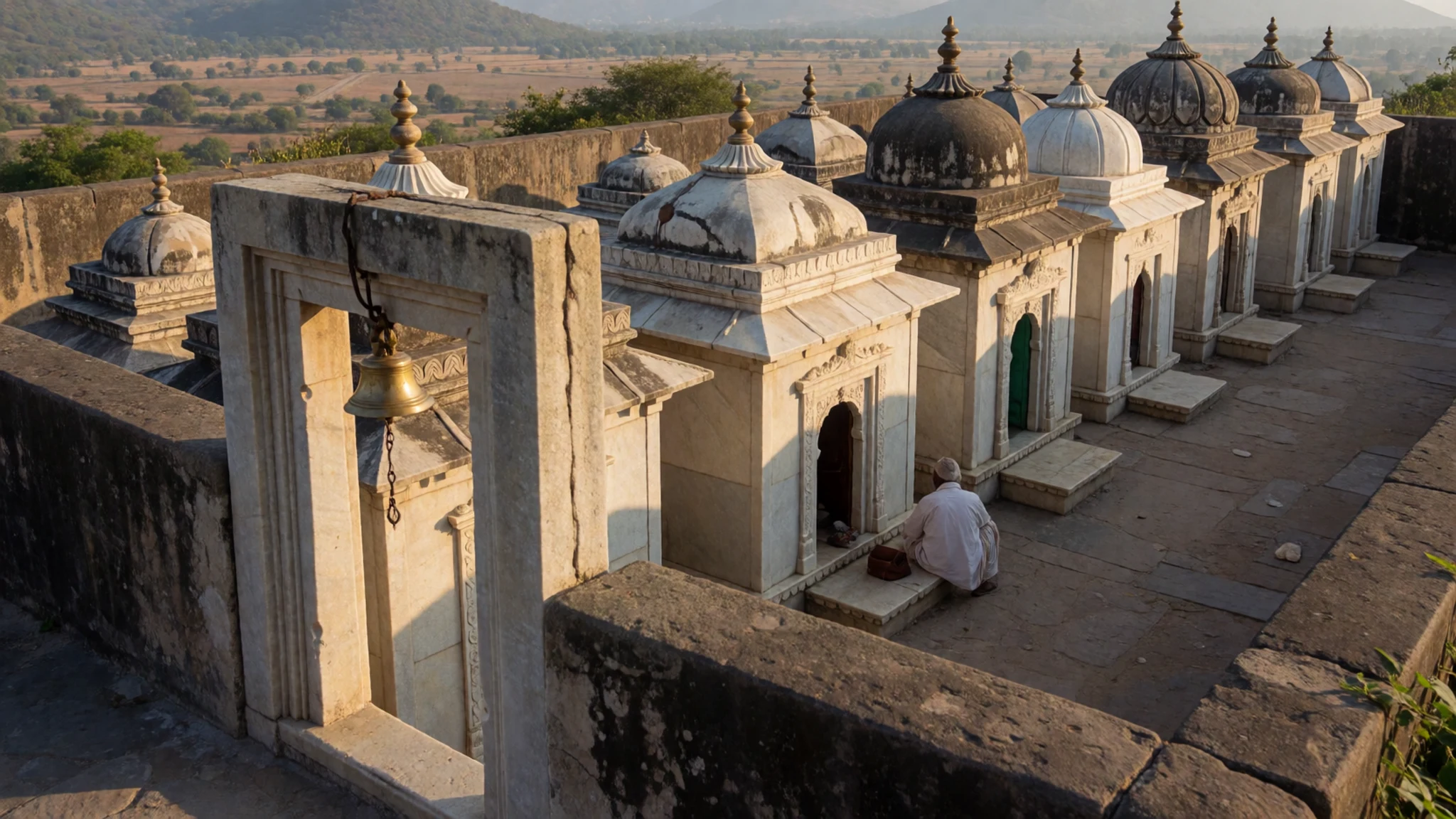
- Sheth Motisha Tonk — Shatrunjaya ridge
A further compound on the ridges, useful for seeing the hand-carved marble and stone detail at close range: brackets, doorways and spires covered in fine ornament. Allow time to walk the lanes between tonks, where the view back across the plain opens out.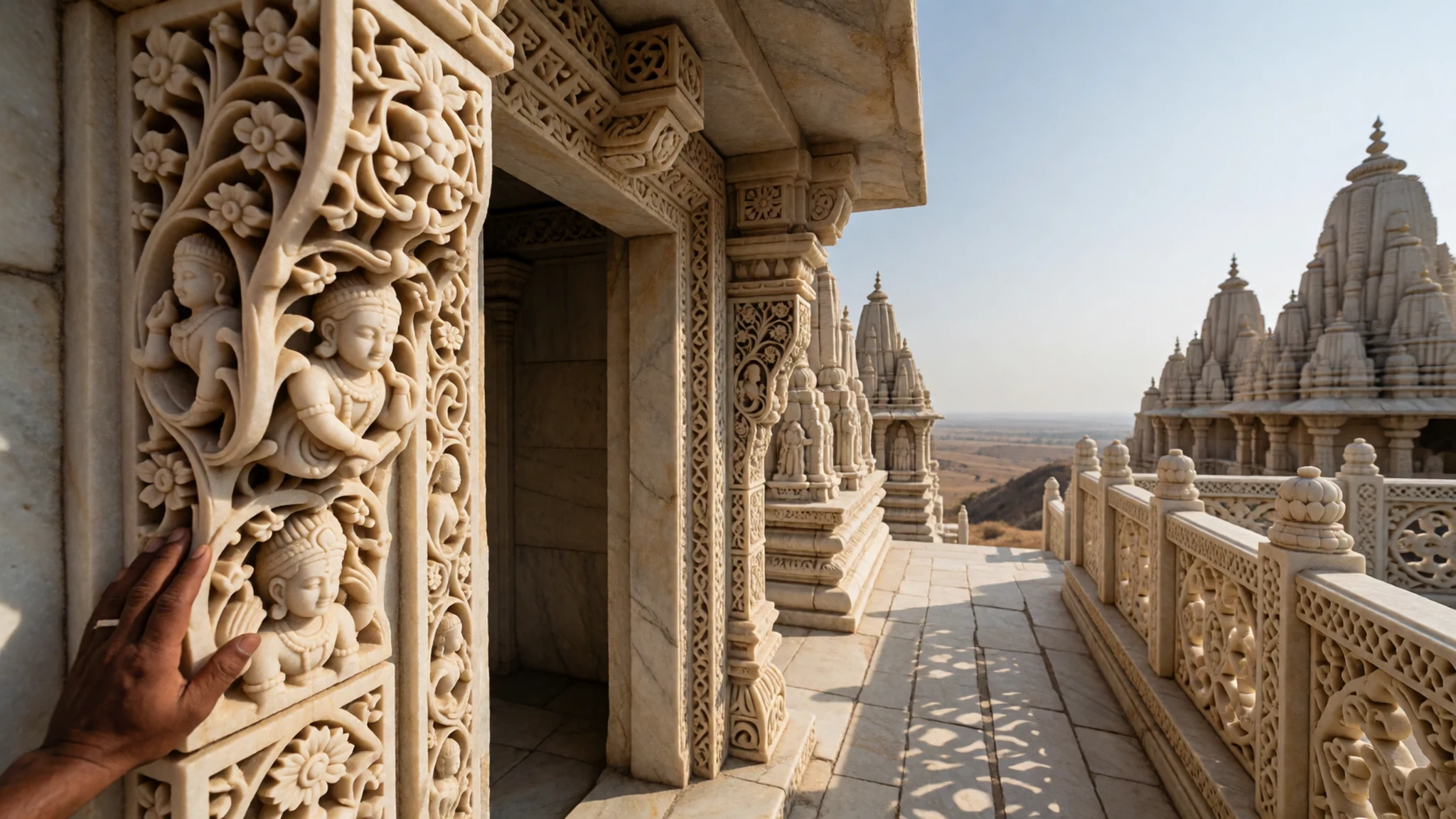
- Shri Vishal Jain Museum — Palitana town
A museum in the town that gathers ancient manuscripts, idols and models of episodes from Jain history, including the life of Mahavira. Some labels are in English. It is a good first stop if you want the background to the faith before climbing, or a cooler place to rest afterwards.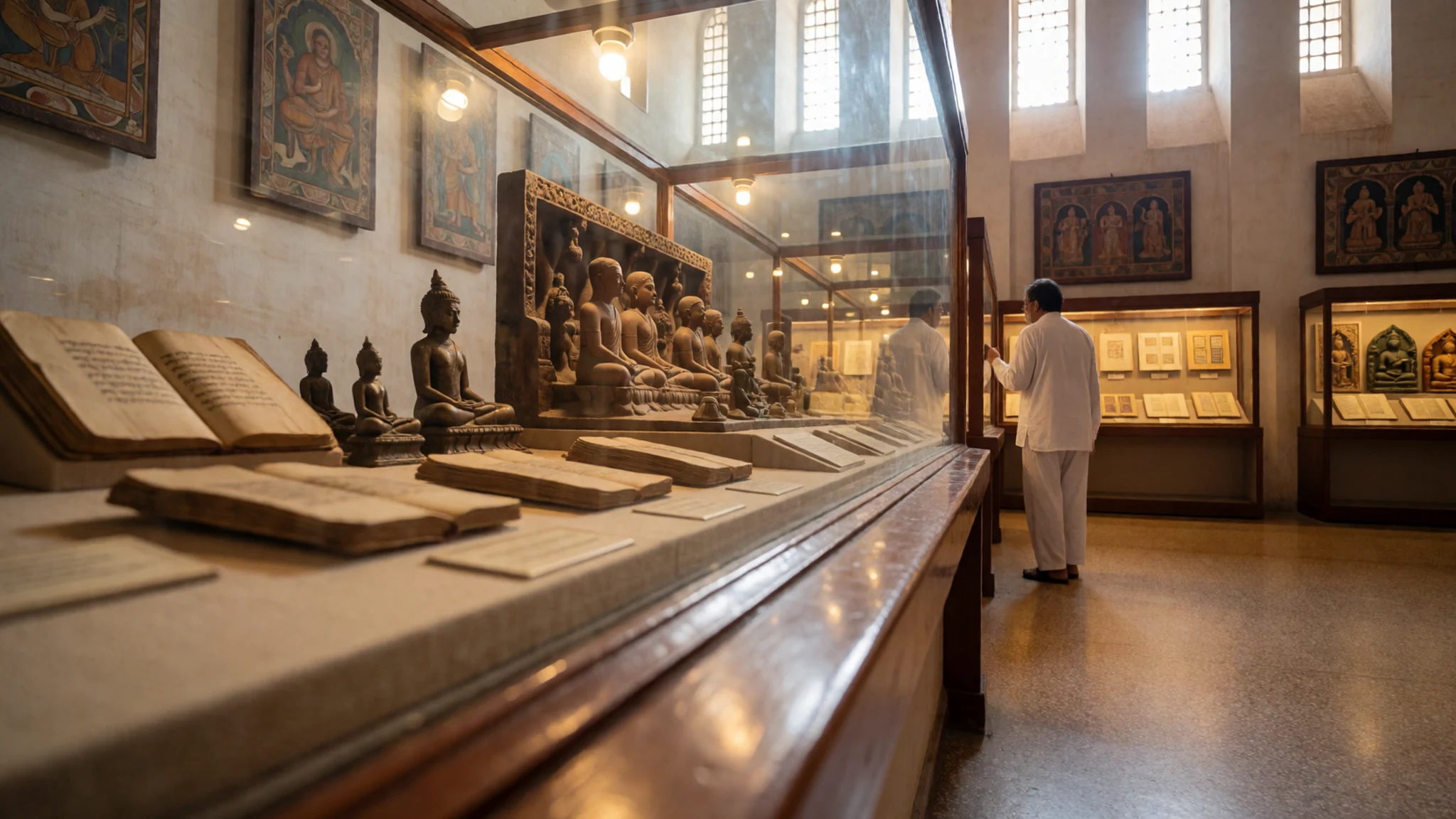
- Jambudweep Temple — Palitana town
This temple holds a large model of the Jain cosmos, with many explanatory notes written mostly in Gujarati and illustrated with art. Even without the language, the model gives a vivid picture of how Jains imagine the world. A cosmic view show is also offered here.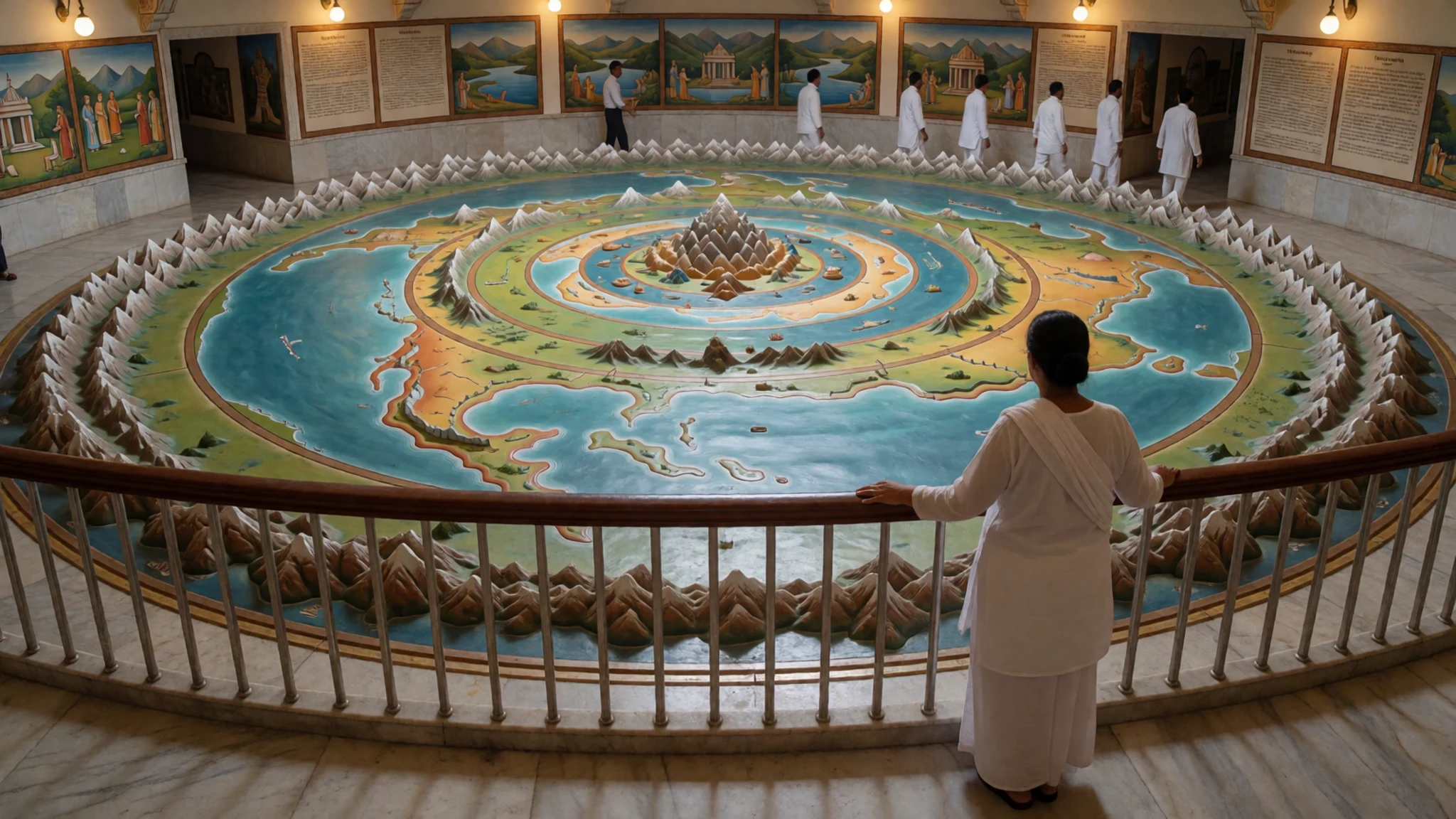
Culture
Palitana is a working pilgrimage site, and the customs of Jainism shape everything about a visit. The central idea is ahimsa, non-violence, which affects what people eat, how they walk and what they carry. Jains in this tradition aim to climb the hill at least once in their lives in the hope of moving closer to nirvana, and many treat the ascent as a vow. The code is demanding: no eating on the hill, a descent before dark, and no night spent on the summit. Worship centres on puja, the offering of rites to the image of Adinath, performed at set places on the body of the idol. Visitors who do not know the process can ask a fellow Jain pilgrim for guidance, and people are generally glad to explain. The calendar brings waves of devotees. Autumn sees the reopening of the hill after the monsoon, and February or March brings a large festival day, while Mahavira's birthday is marked with chariot processions. Lodging is mostly in dharmashalas, simple pilgrim houses run under religious rules, so expect plain food, early nights and a calm atmosphere. Respect for this setting matters more than any sightseeing list. Do not carry or eat food on the hill, remove your shoes before entering any shrine, and be back down before evening.
What to wear
In Palitana the clothes tell you who is who. Śvetāmbara monks and nuns wear plain white unstitched cloth, usually cotton, which reflects the faith's emphasis on simplicity and purity. Lay pilgrims often choose white or pale cotton too, and for puja many men wear a dhoti and a shawl, while women wear a sari. Gujarat's wider textile traditions are strong here: bandhani, the tie-dyed cotton or silk with tiny dots, and patola, a double-ikat silk from Patan, appear at weddings and festivals rather than on the hill. Day to day in town, people wear what suits the heat of Saurashtra: cotton shirts and trousers for men, salwar kameez or saris for women, and light scarves. Younger people mix in jeans and T-shirts. A visitor should dress modestly, with shoulders and knees covered, in loose cotton that breathes. Bright or dark colours are fine, but plain light shades suit the setting. Footwear needs thought: the climb is long and the steps can be hot, so wear sturdy sandals or trainers you can slip off easily, because shoes are removed at the temples, and bring a hat or cap for the sun. Leather items are best left behind, as many temples ask that they are not worn or carried inside.
What to eat
- Bhel with pomegranate seeds — street stalls near the bus stand and main market
The local snack Palitana is known for: puffed rice, chutneys and crunchy sev, lifted by a scatter of juicy pomegranate seeds. It is sweet, sour and crunchy at once. Look for it at stalls near the bus stand and around the town's main market.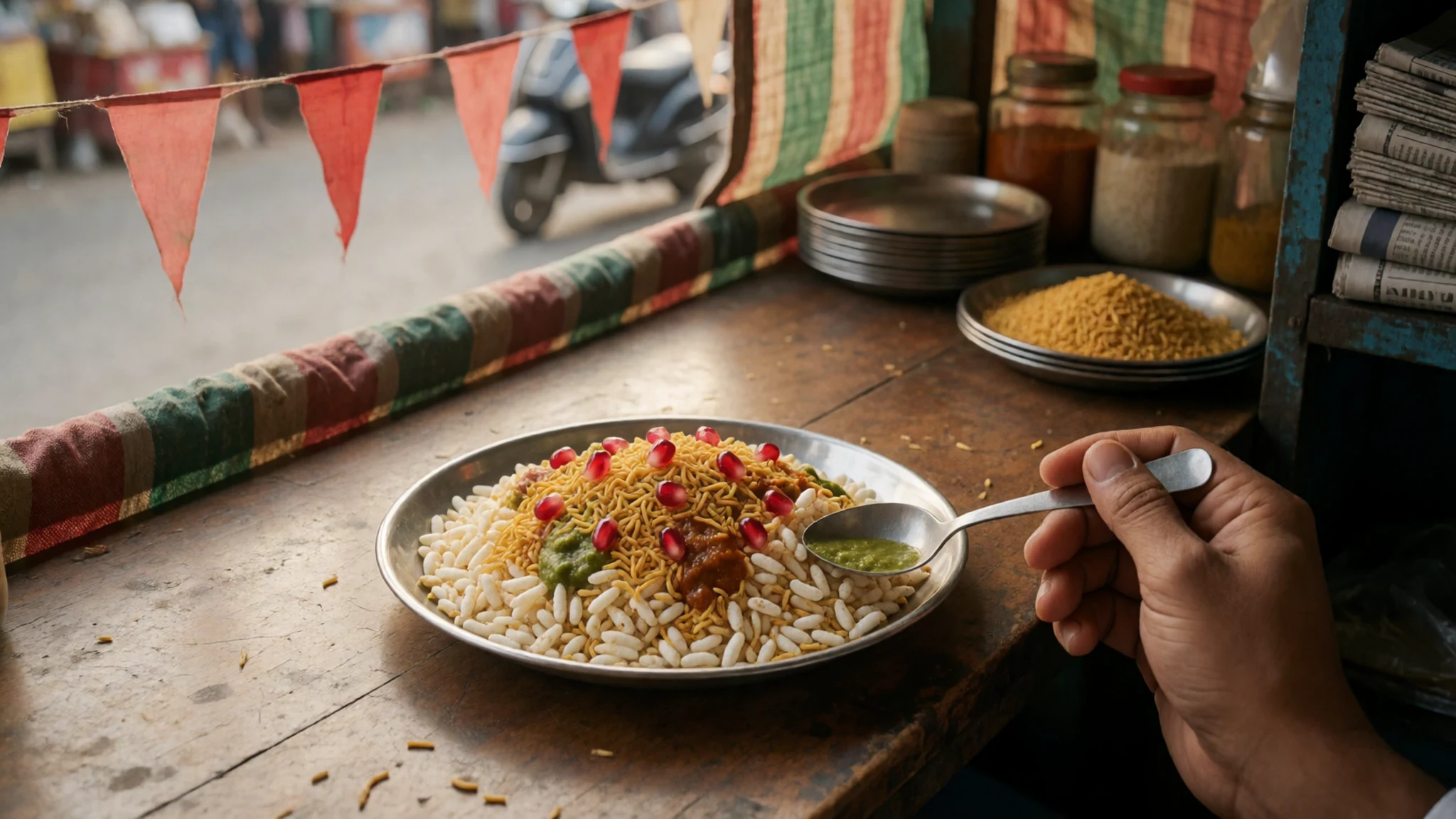
- Lemon soda — roadside carts and small shops around the town
A fizzy, salty-sweet desi soda, often made to order with lime juice, black salt and sometimes a pinch of spice. It is a welcome drink after the climb, when the sun is strong, and sold from roadside carts and small shops.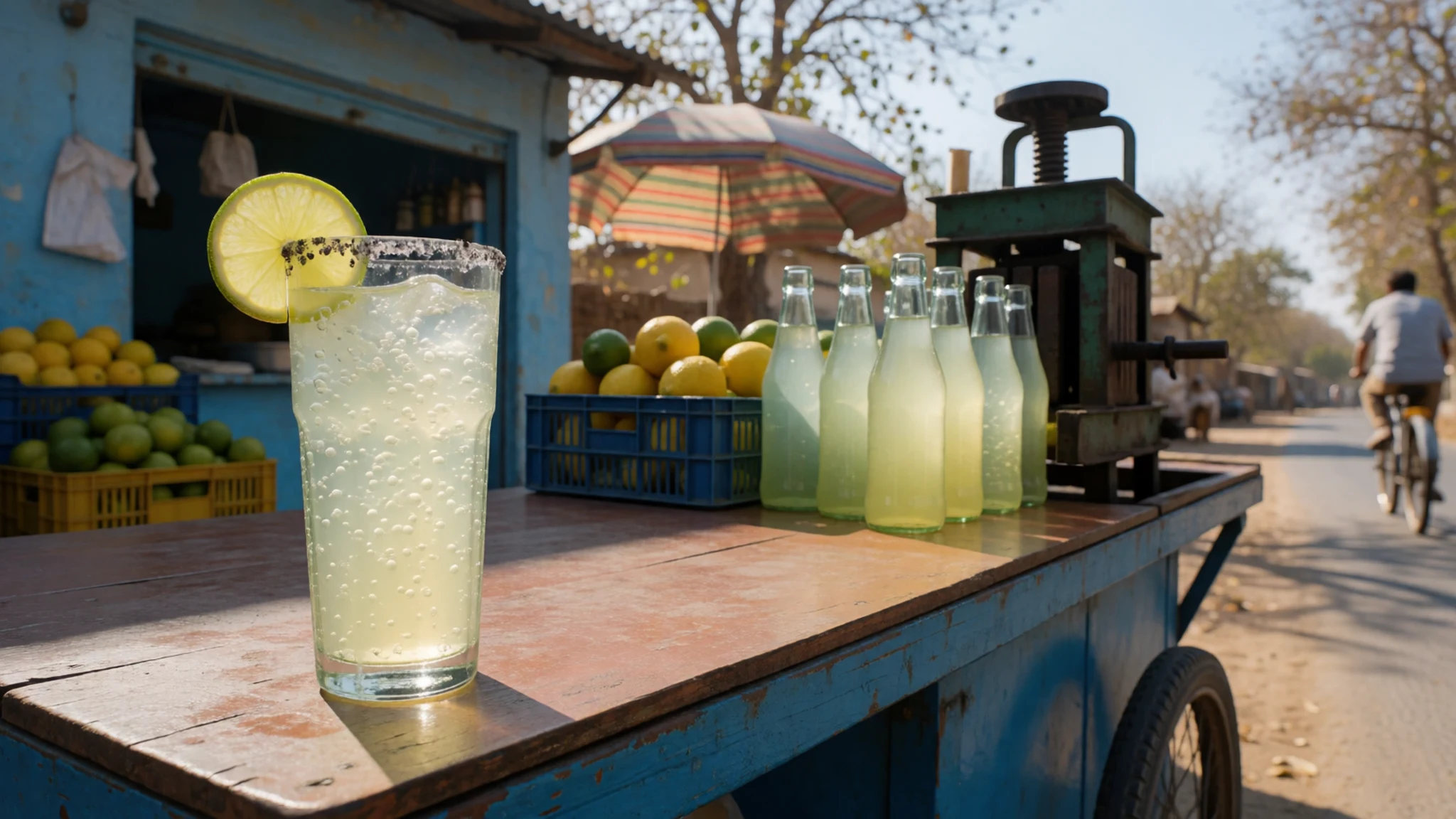
- Sugarcane juice — juice stalls near the base of the hill
Pressed fresh in front of you, usually with a squeeze of lime and a little ginger. It is cooling and filling, and good for restoring energy at the foot of the hill after the descent. Sellers cluster wherever pilgrims gather. - Jain thali — dining halls attached to dharmashalas
A meal served in many pilgrim lodgings and dining halls that follows Jain rules, with no root vegetables such as onion or potato. Expect dal, vegetables, roti or rice, and pickles. It is simple, freshly cooked and eaten early, usually before dusk. - Gathiya and farsan — snack and sweet shops in the town market
Gujarat's crisp, savoury snacks, such as gathiya, fried strips made from gram flour, and other farsan, are sold by weight and are easy to carry for the road home. They keep well and suit a travelling day, though they are not eaten on the hill itself.
Plan it
Best time. Late October to February, when the temples are open and the days are tolerable. The hill closes for the monsoon and reopens in autumn around the Kartika full moon. March to June brings fierce heat on a climb with little shade, so start very early if you come then.
How long. 1–2
Getting there. The nearest airport is Bhavnagar, about 51 km away, but it only connects to Mumbai. Ahmedabad and Vadodara have wider flight links. Palitana's small station has trains only to Bhavnagar, so many travellers take a train to Bhavnagar and then a bus or taxi. Buses also run from Ahmedabad, Talaja, Una, Diu and Mumbai, and taxis can be hired from Bhavnagar, Ahmedabad or Vadodara.
Budget. low
Tips
- Begin the climb at first light so you are well on your way before the heat builds and can be back down before evening.
- Food is not eaten or carried on the hill, so eat before you start and carry only water.
- Check the opening dates locally before travelling, because the hill is closed during the monsoon months.
- Expect very large crowds at the autumn reopening and the February or March festival; book lodging well ahead then.
- Carry cash for porters, palanquins and small stalls, and keep a hat and sun protection.
Etiquette
- Remove shoes before entering any shrine and avoid leather items inside the temples.
- Stay in dharmashalas only if you are willing to follow their religious code of conduct.
- Ask before photographing people, and follow signs about photography inside the shrines.
Nearby
Sources
- Wikidata Q2800980 (CC0)
- Wikipedia: Palitana temples (rev 1366826759) (CC BY-SA 4.0)
- Wikivoyage: Palitana (rev 5274889) (CC BY-SA 4.0)
- Photo: General Plan of Jain temples on Mount Shatrunjaya (Henry Cousens) (Public domain)
- Photo: Shatrunjay Adinath Rishabhdev Bhagwan (Rizhwickh) (CC BY-SA 4.0)
- Photo: Chaumukhji Tonk (Bernard Gagnon) (CC BY 3.0)
- Photo: Balabhai Tonk (Bernard Gagnon) (CC BY 3.0)
- Photo: Sheth Motisha Tonk (Bernard Gagnon) (CC BY-SA 1.0)
- Photo: Chaumukh temple, Satrunjaya Palitana Gujarat (Ms Sarah Welch) (CC0 1.0)
- Photo: Palitanas glory (Nirajdharamshi) (CC BY 3.0)
- Photo: Palitana Temples (Aashvi Sanghvi) (CC BY-SA 4.0)


