Pak Ou Caves
Pak Ou Caves, Vietnam
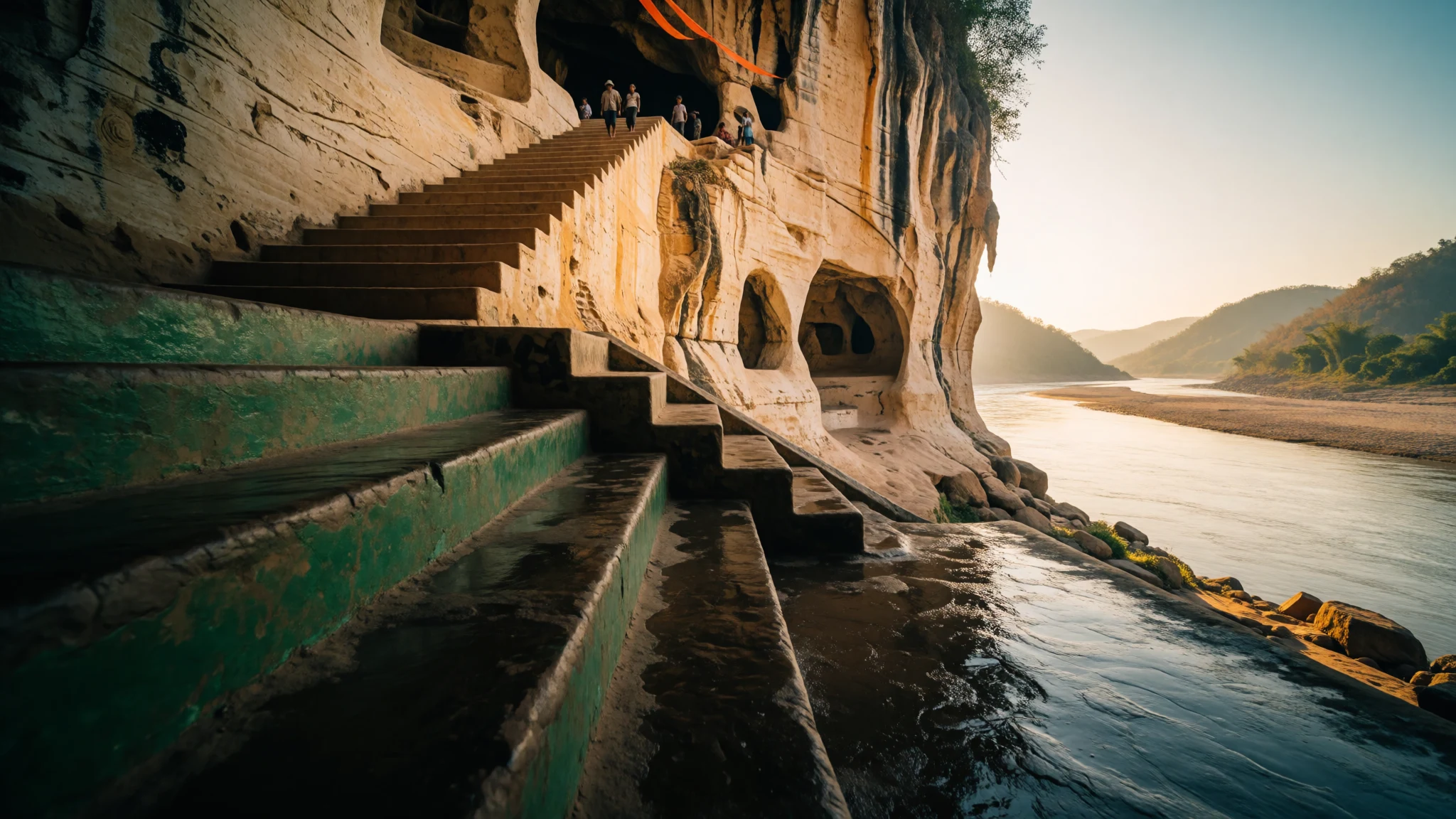
Pak Ou Caves hold a cliff shrine of Buddha figures where the Nam Ou meets the Mekong above Luang Prabang.
The place
Pak Ou Caves (ຖ້ຳປາກອູ) are shrine-chambers in northern Laos, set in a pale cliff at the confluence that gives the site its name. The Nam Ou comes out of the hills and meets the Mekong. The lower chamber is called Tham Ting and the upper chamber is called Tham Theung. Boats tie up at a small landing beneath the rock, at the foot of a stair between the mouths.
Tham Ting sits near the water. Inside, ledges and the cave floor carry a dense gathering of Buddha images, many of them small wooden figures, some gilded, some plain, left by people who travelled the river to make an offering. The space is shallow enough that daylight reaches the front rows, then gives way to shadow. Tham Theung is the climb. The steps are steep, the mouth is higher on the cliff, and the chamber beyond is darker, so a torch matters once the entrance light falls off. There is no carved temple front. What the caves hold is an accumulation: image set beside image, wherever a ledge would take a figure.
The wider setting is the river junction itself, not a town. The Mekong here is broad, with sandbanks, gardens and scattered houses along the bank, and the Nam Ou arriving from the hills of the north. Fishermen work the meeting of the waters. In the drier months the landing is a short step from the gunwale. When the river is high the same rock turns slick, and the stair to the upper cave asks for careful feet. Boats from Luang Prabang tend to arrive in a bunch, fill the lower cave with voices, and leave again, so the statues are quieter to see early or late.
Its story
Pak Ou Caves became a shrine because the cliff already stood at a river crossroads. People moving between Luang Prabang and the hills of the Nam Ou passed this rock, and the caves offered a dry shelter and a dark room that felt set apart from the traffic of the water. Over time the shelter turned into a place of vow. A traveller who wanted a child, a safe journey or relief from illness might bring a Buddha image and leave it where the older figures already stood. The caves did not need a workshop. The images arrived by boat, in cloth bundles and baskets, and stayed.
That habit is why the caves look the way they do. Almost every figure was a gift carried in from a household or a workshop elsewhere. Styles sit side by side: small household Buddhas, worn wooden pieces, and larger images dressed in cloth. Nothing is arranged as a museum. A new offering simply finds a gap. Monks and lay people from Luang Prabang have treated the caves as a sanctuary linked to the city, and the river journey itself is part of the rite.
The same water route folds ordinary life into the pilgrimage. Villages along the Mekong make lao-lao, the rice whisky of the region, and boats often pause so passengers can see the jars and the stills. The drink is strong, local and meant for sharing, and it belongs on the riverbank. The cave keeps to figures, incense and a quiet manner. Luang Prabang still sends devotion upstream, and households still add another image to the cliff.
What to see
- Tham Ting — Lower cave, Pak Ou
Tham Ting is the lower cave at Pak Ou Caves, close to the boat landing. Daylight reaches the front of the chamber, where Buddha figures crowd the floor and the rock ledges. Many are small and wooden, with flakes of gold leaf still clinging to a few. The cave is where most visitors step in before the climb, and it fills when several boats arrive together.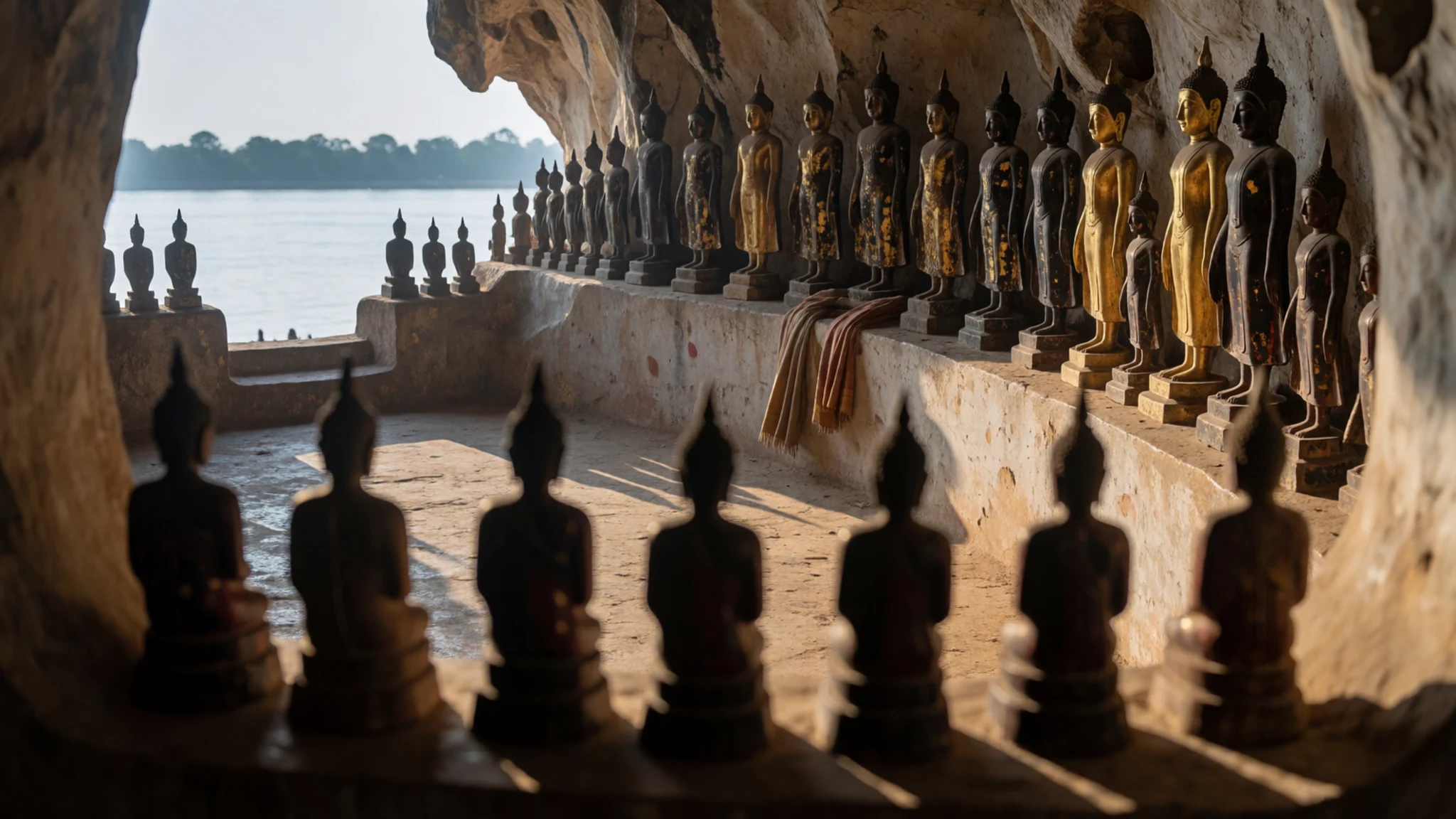
- Tham Theung — Upper cave, Pak Ou
Tham Theung is the upper cave at Pak Ou Caves, reached by a steep stair cut against the cliff. The mouth sits above the landing, and the chamber inside is darker than the lower cave. A torch or a phone light shows statues that daylight never reaches. The steps are uneven and slick after rain, so grip and a free hand matter.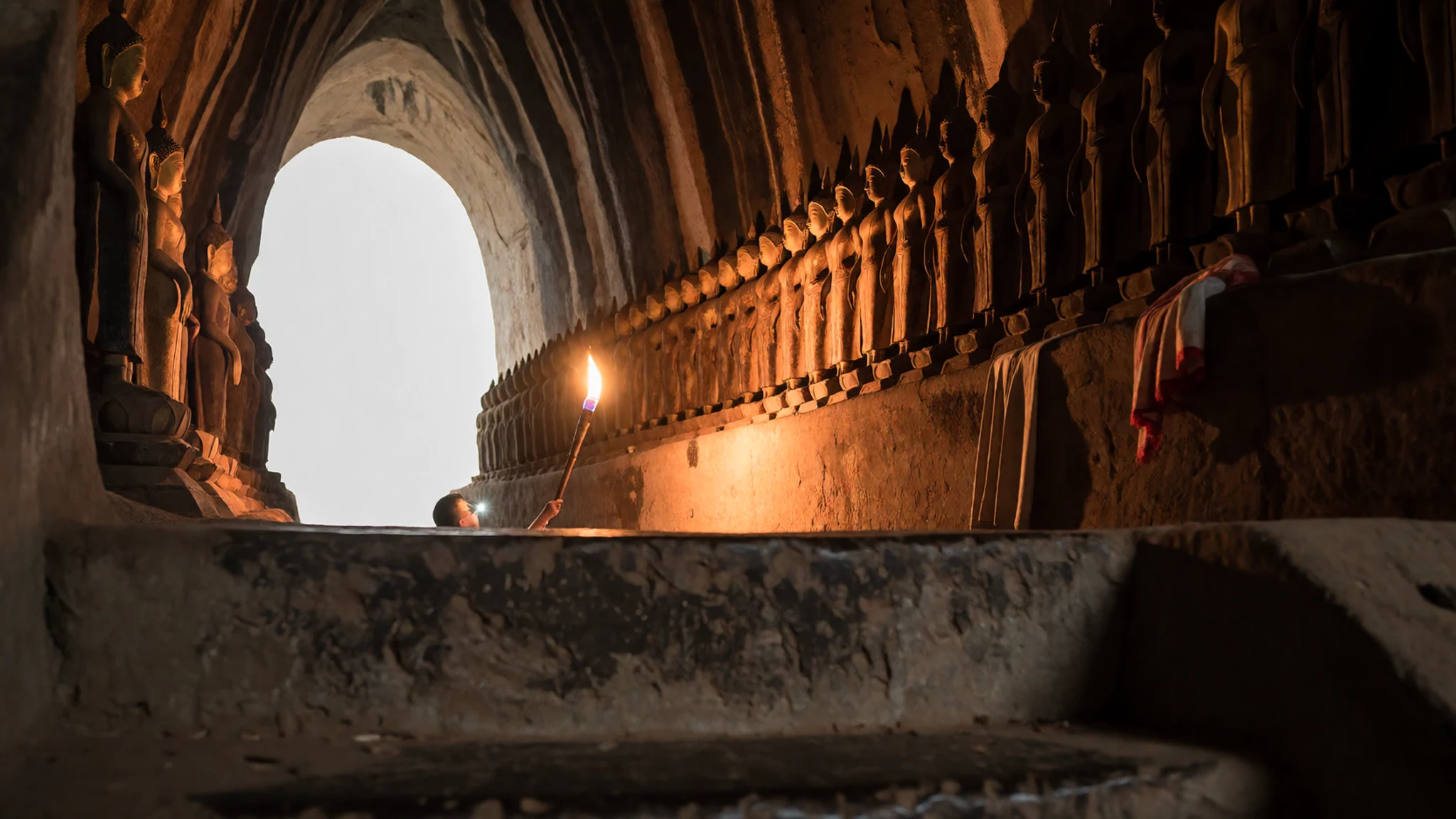
- Buddha figures — Tham Ting and Tham Theung
The Buddha figures are what Pak Ou Caves are kept for. They stand, sit and lean on every usable ledge, mostly small wooden images brought from homes and monasteries. Some still wear a scrap of gold leaf or a cloth sash. Others are cracked, soot-dark or missing a hand. The gathering is unordered, and that disorder is the record of separate vows left on the river and never collected again.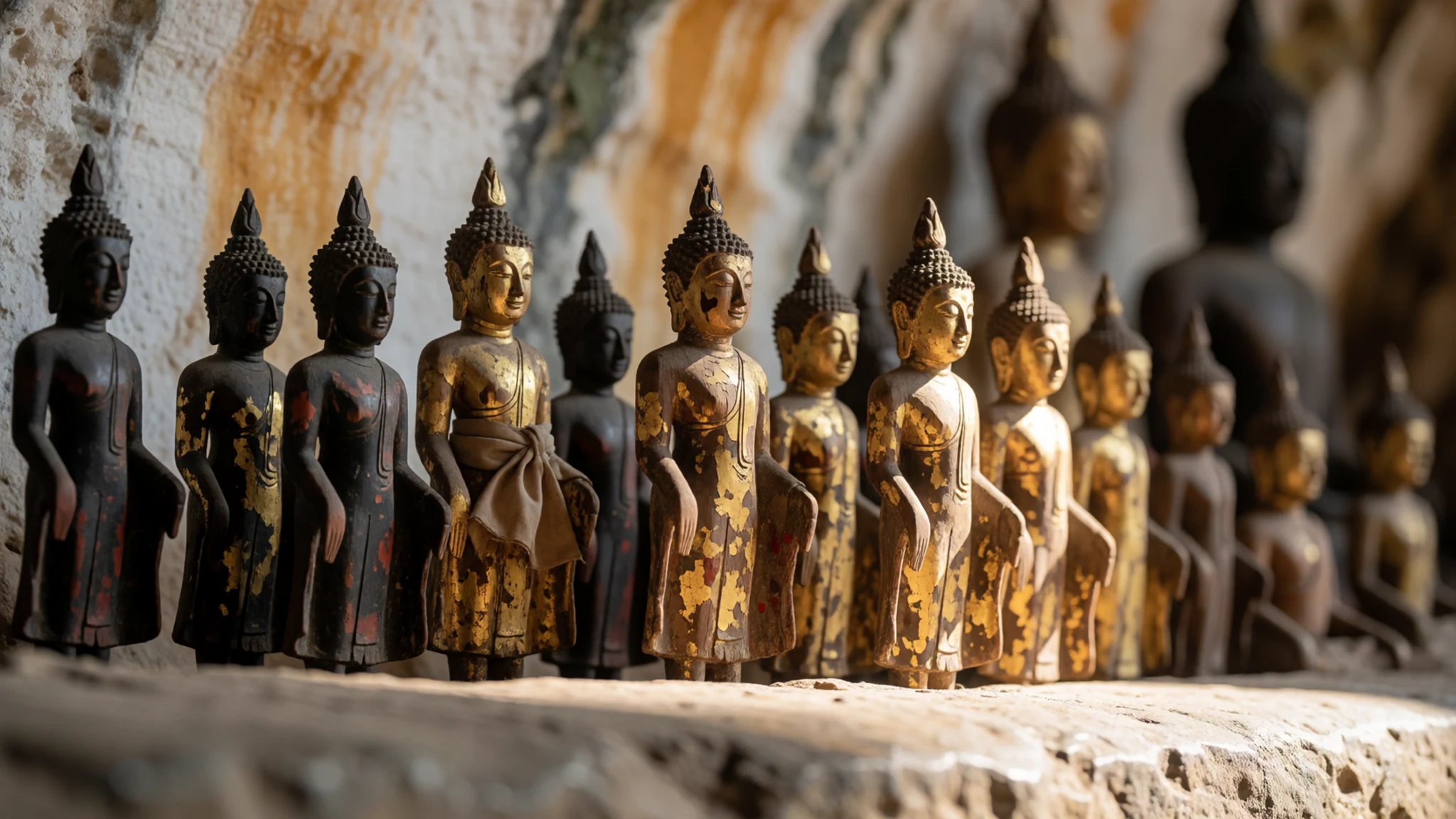
- The cliff and landing — Mekong cliff, Pak Ou
The cliff at Pak Ou Caves is a sheer limestone wall above the Mekong. The landing at its foot is small, a few steps from the gunwale when the river is low and a muddy scramble when it is high. From the water the cave mouths read as dark notches in the rock. The approach by boat shows the shrine set in the cliff.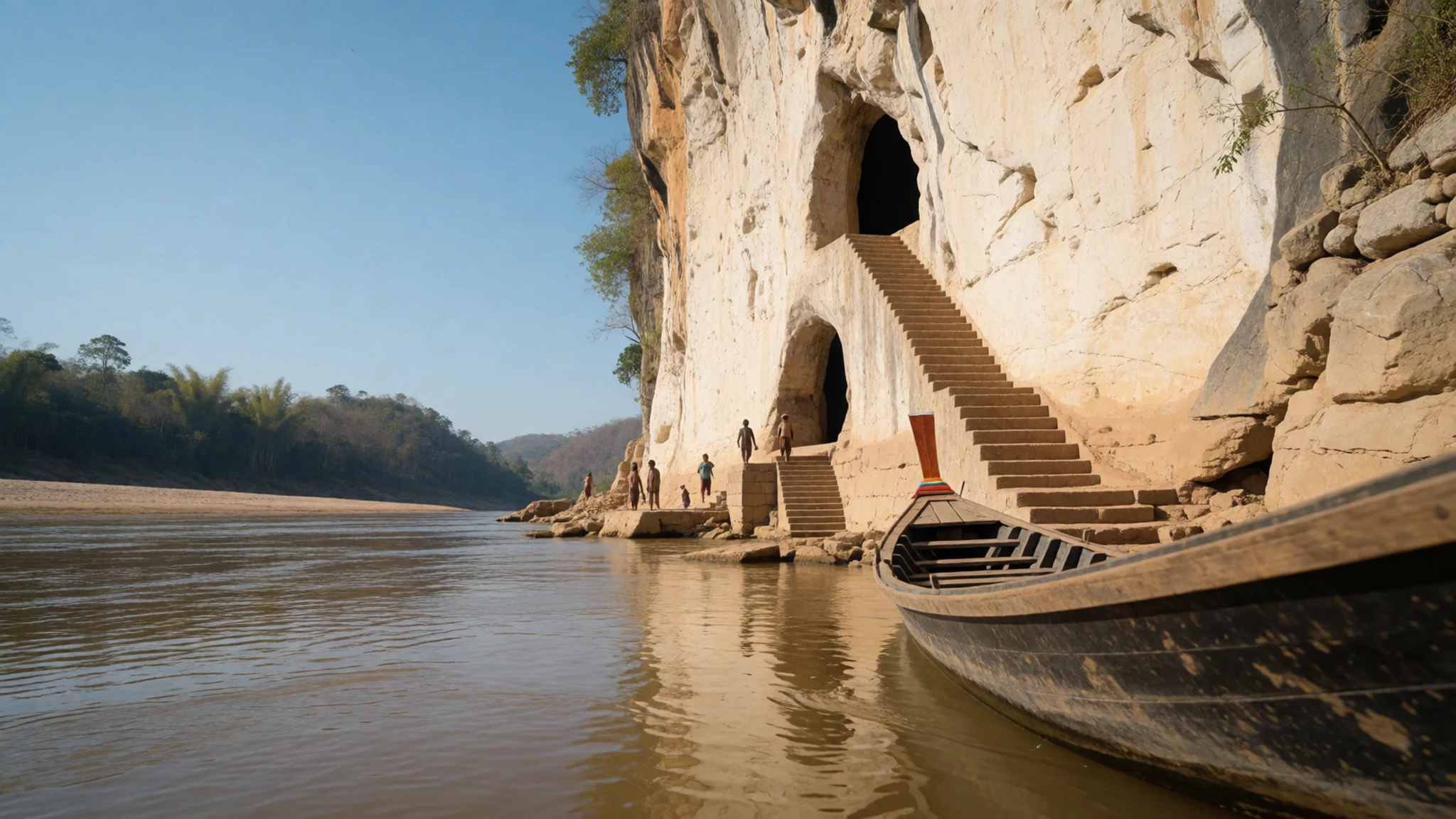
- Mouth of the Nam Ou — Confluence below the caves
Pak Ou Caves look over the mouth of the Ou, where the Nam Ou joins the Mekong beneath the cliff. The northern river comes out of the hills into the broader stream. Sandbanks shift with the season, and fishing boats work the seam where the waters mix. From the landing the junction is easy to read, a wide channel taking in the flow from the north.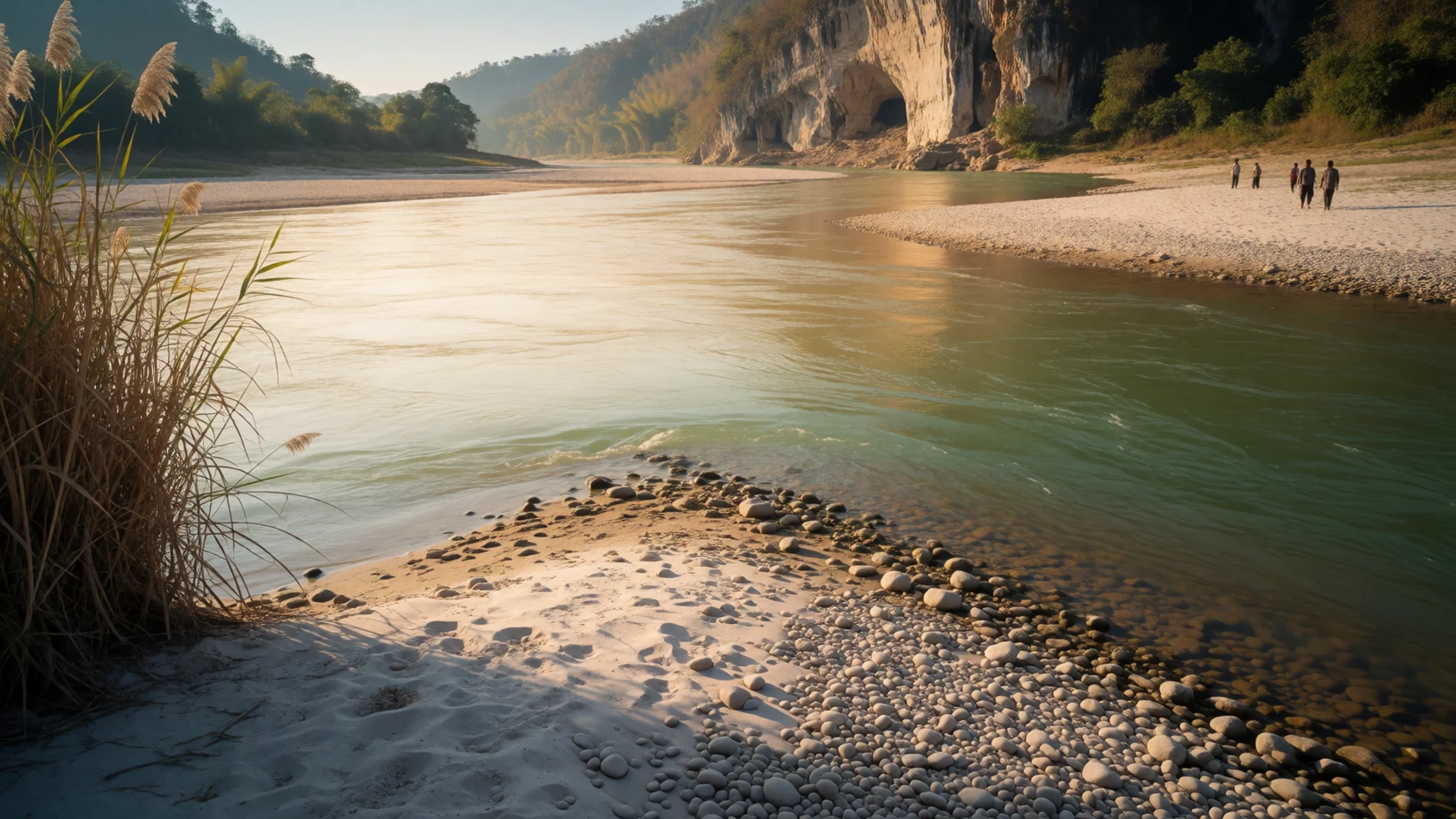
Culture
Pak Ou Caves belong to the everyday Buddhism of Luang Prabang and the river villages, as well as to visitors on a day boat. Bringing a Buddha image to a cave is a long-standing way of asking for help or of giving thanks, and the figures already there are treated as consecrated, even when they are small, wooden and worn. People light incense, bow, and leave the image where it can stay. The tone inside is closer to a shrine than to a viewpoint: voices drop, and hats come off among Lao visitors even when the climb has been hot.
The river journey carries its own manners. Boatmen, village hosts and the people selling whisky or snacks along the bank are neighbours on a working river, and a visit goes better when that is obvious. Photography of the statues for a private memory is widely tolerated. Pointing a camera at someone's face, pose or offering is a different matter.
At Pak Ou Caves, leave every Buddha figure where it stands, speak quietly inside the chambers, and dress so shoulders and knees are covered.
What to wear
Around Pak Ou Caves the formal dress of Laos is still the sinh, a wrap skirt woven in silk or cotton, often with a patterned border at the hem, worn with a blouse and, for ceremonies, a sabai or pha biang folded across the shoulder. Men mark the same occasions with a silk sampot or tailored trousers and a white shirt. On an ordinary day the riverbank looks practical. Boat crews wear T-shirts, shorts or worn trousers, and a hat against the glare. Teenagers dress much as they do in town. Monks, when they travel the river, wear saffron robes and little else that a visitor need interpret. The caves do not require costume, but they are a shrine, and the climate is hot, bright on the water and dim and damp inside the rock. A visitor does well in light, breathable cloth that still covers shoulders and knees for the chambers, with a scarf if a sleeveless top is all that was packed. Shoes should grip wet limestone and come off easily if a threshold asks for it. A hat and sun cover matter on the open boat, and a light layer is welcome in the cooler months when the wind on the Mekong feels sharp.
What to eat
- Khao niao — Morning market in Luang Prabang and riverside eateries
Khao niao, sticky rice, is the staple that travels with a day on the river from Pak Ou Caves. It is steamed and eaten by hand. Baskets of it show up at the morning market in Luang Prabang and at simple eateries along the Mekong bank.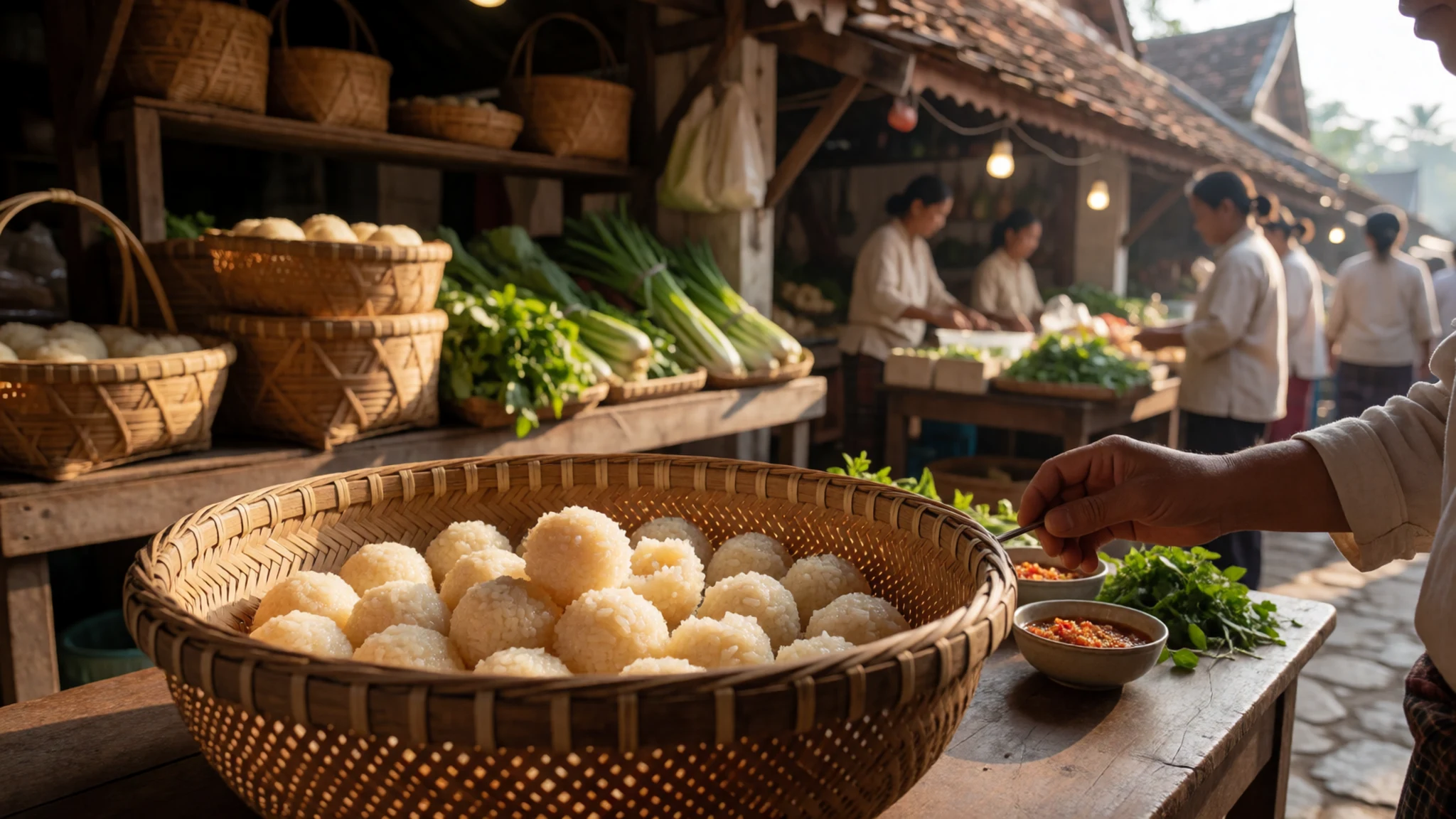
- Laap — Night market and riverside eateries in Luang Prabang
Laap, eaten widely after a day at Pak Ou Caves, is minced meat or fish tossed with lime, herbs, chilli and toasted rice powder. The herbs are sharp and the toasted powder adds crunch. It is sold at the night market in Luang Prabang and at riverside eateries in town.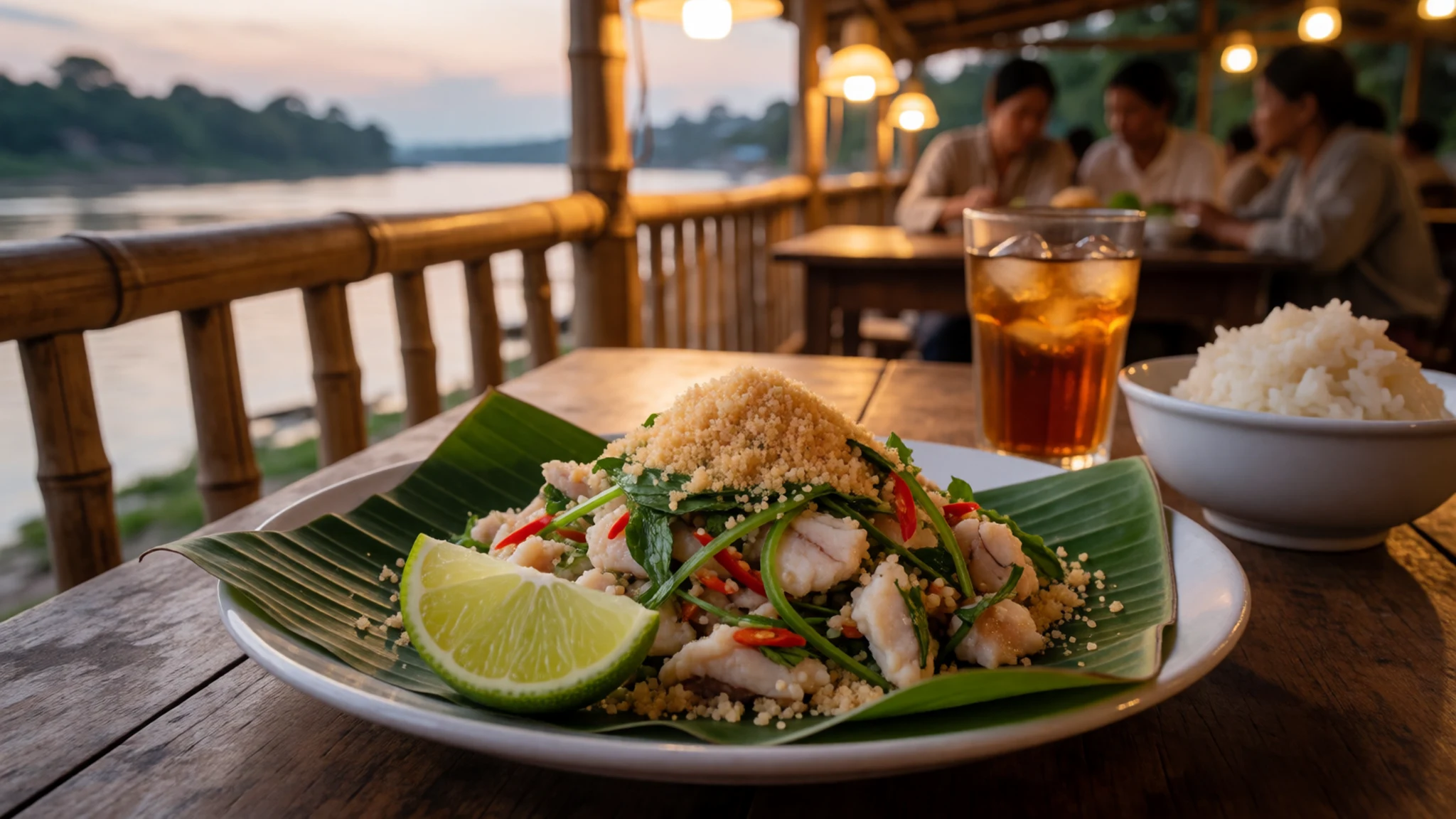
- Or lam — Old-town eateries in Luang Prabang
Or lam is Luang Prabang's stew to eat after Pak Ou Caves. The pot holds broth, dill, aubergine, herbs and mai sakaan, a peppery bark, with meat or without. It is served in old-town eateries with sticky rice on the side. - Tam mak hoong — Street stalls in Luang Prabang
Tam mak hoong is green papaya salad, pounded with lime, chilli, garlic and fish sauce, and it is the fresh plate that cuts the richness of a Lao meal after Pak Ou Caves. Street stalls in Luang Prabang make it to taste, milder or fierier as asked. - Grilled Mekong fish — Riverside eateries and market grills in Luang Prabang
Grilled Mekong fish is the river meal on a Pak Ou Caves day, cooked at riverside eateries and at market grills in Luang Prabang. The catch is grilled with herbs, salt and lime, or set into a sour soup. It is a common plate on the boat route.
Plan it
Best time. At Pak Ou Caves, November to February is the cooler dry season, with steadier footing on the steps and a calmer river landing. March and April stay largely dry but turn hot, and the middle of April is Lao New Year, when Luang Prabang is crowded and many boats are busy. From May into October the rains lift the Mekong, mud the landing and slick the stair to the upper cave.
How long. one day
Getting there. Fly into Luang Prabang and take a boat upstream from the town Mekong landing to Pak Ou Caves at the mouth of the Nam Ou. A road also runs toward the village of Pak Ou; the usual last stretch is the boat to the cliff.
Budget. mid
Tips
- Start early, before the day boats from Luang Prabang crowd the lower cave
- Carry a torch for the upper cave
- Wear shoes that grip wet stone
- Take cash for the boat and for village stops, since cards are unreliable on the river
- In the rainy months, ask about the landing before setting out, because the steps become slick
Etiquette
- Do not touch or move the Buddha figures
- Cover shoulders and knees inside the caves
- Ask before photographing people on the boats or in the villages
Nearby
Sources
- Wikidata (CC0)
- Wikipedia (CC BY-SA 4.0)
- Wikivoyage (CC BY-SA 4.0)