Pahalgam
Pahalgam, India
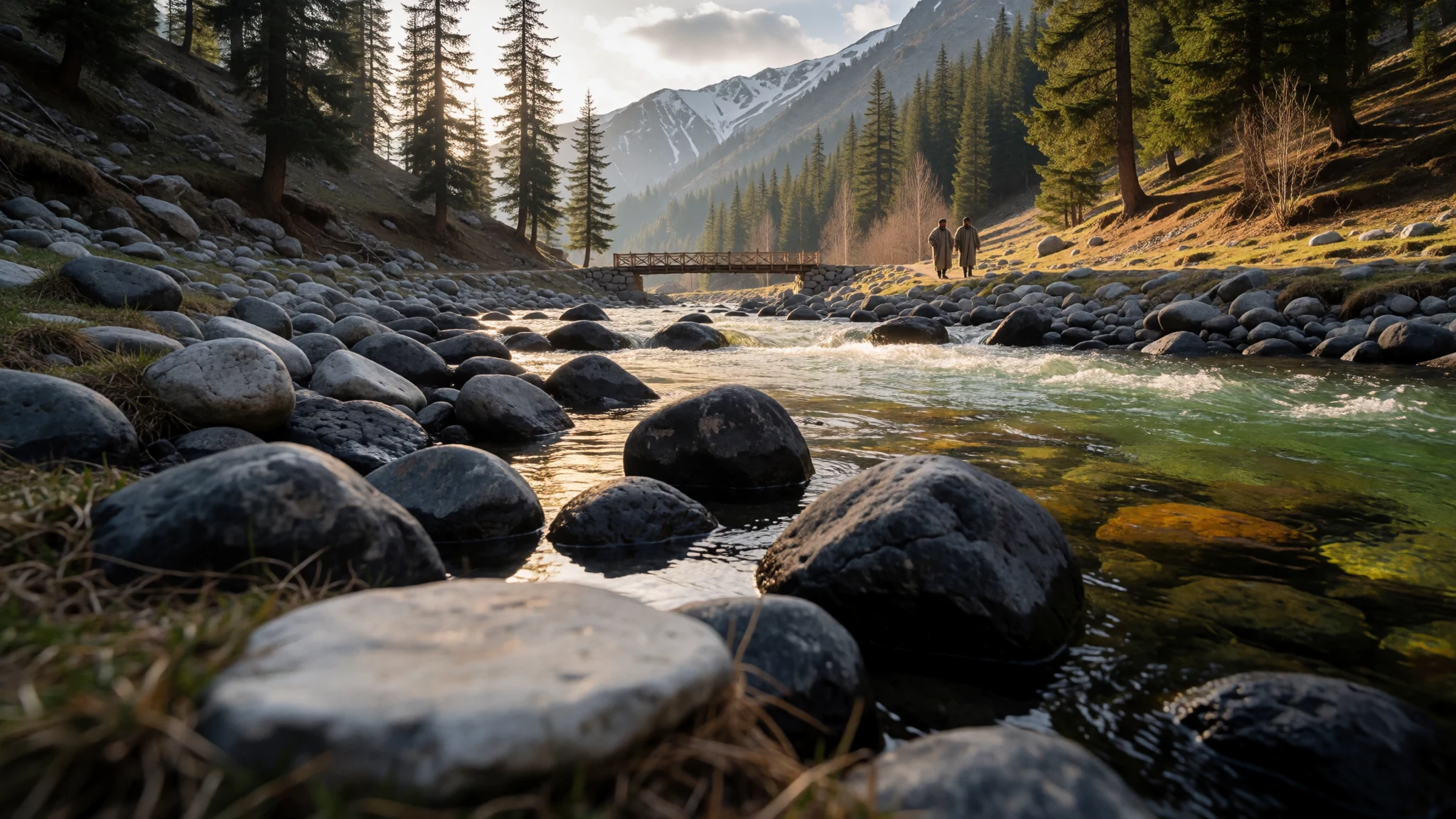
Pahalgam is a pine-fringed Lidder Valley town in Kashmir, a base for pony rides, meadows, glacier walks and the Amarnath pilgrimage.
The place
Pahalgam is a small mountain town in Anantnag district, Jammu and Kashmir, built along the Lidder River just below the point where its East and West branches meet. From the town the valley forks. One arm climbs north-east towards the Amarnath cave, and the other runs north-west to Aru. In between lie pine, spruce and fir forests, open meadows, and rock that is part limestone and part volcanic. The town itself is modest: one busy main street, a golf course, riverside guest houses, pony stands, taxi ranks and eateries that open and close with the season. It works as a hill station for families from the plains and as a trailhead for walkers heading up the valley. Climate shapes everything. Summers are mild and evenings turn cool, while winters are cold enough for night temperatures to fall below freezing and for snow to settle deep. Most rain and snow arrive between late autumn and early summer, and mountain weather can change within an hour even in the good months. Pahalgam is also where the annual Amarnath pilgrimage begins, in July and August. For those weeks the town fills with pilgrims, security staff and volunteers running free kitchens. Outside that window it is quieter, and the rhythm is set by shepherds, pony handlers and day-trippers. Srinagar is the usual gateway, a few hours away by road.
Its story
Pahalgam takes its name from Kashmiri words for shepherds and village, so the town is literally the shepherds' village, a reminder that herding families used these high pastures long before visitors arrived. Hindu tradition gives the place another name, Bailgaon, the bull's village. The story goes that Shiva, travelling to the Amarnath cave, left his bull Nandi here. He is said to have set down the moon from his hair at Chandanwari, the snakes from his neck at Sheshnag Lake, and the five elements at Panchtarni, arriving at the cave free of everything earthly. In the cave he is believed to have told Parvati the secret of creation, overheard by a pair of doves that are reborn again and again. That legend is why pilgrims come each summer and walk the route in stages. The twentieth-century story is lighter. A Bollywood film, Betaab, was shot in one of the side valleys, and the valley has carried the film's name ever since. Film crews, honeymooners and school groups followed, and the town grew around guest houses and pony businesses. Tourism has since been the main local trade, rising and falling with the security situation across Kashmir. Today Pahalgam holds all of these layers at once: a pastoral name, a sacred geography and a holiday town.
What to see
- Lidder River and the town riverbank — Pahalgam town
Pahalgam's own river is the easiest first look at the valley. The Lidder runs fast and cold over round stones beside the main street, and the paths along the bank pass pine trees, small bridges and picnic spots. Mornings are quiet, and the water level rises noticeably after rain or snowmelt.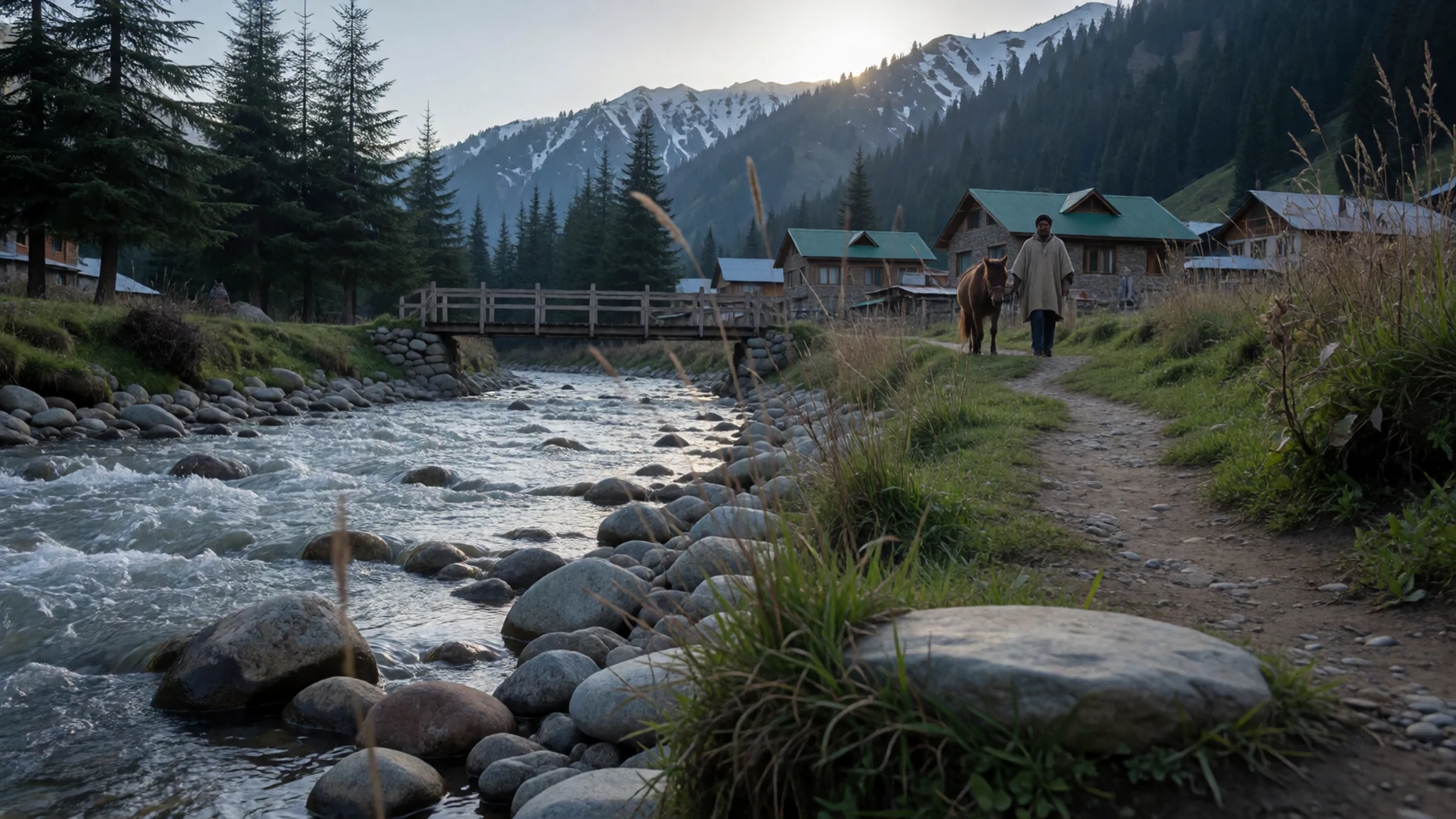
- Betaab Valley — Side valley near Pahalgam
Betaab Valley is a wide, green bowl of meadow and pine reached by a short drive from town, named after the film shot there. It is popular with families, so mid-morning in summer is crowded with vehicles and pony stalls. Come early or in the shoulder months for open grass and a clearer view of the slopes.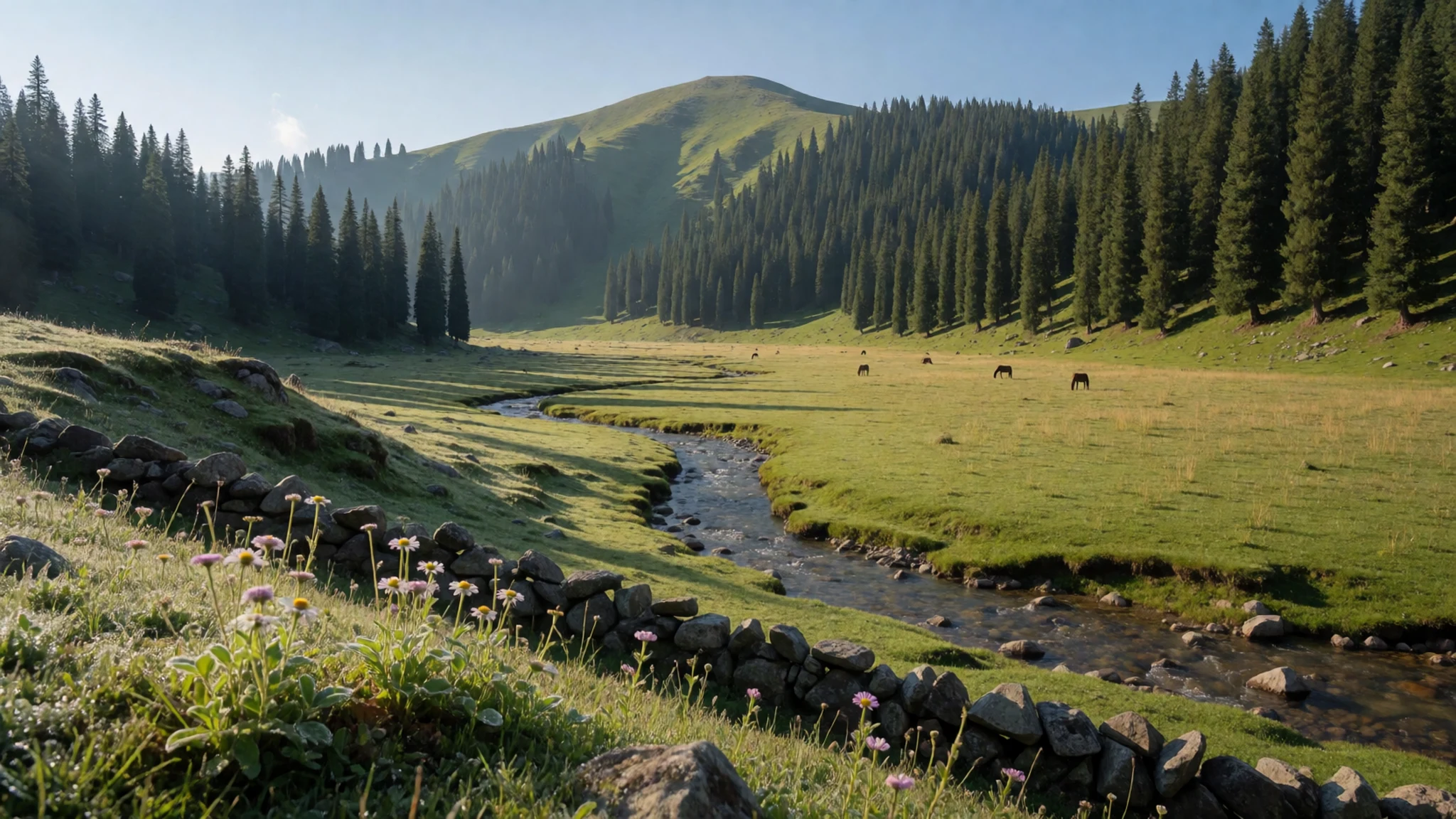
- Aru Valley — North-west of Pahalgam
Aru is a village and meadow at the head of the north-west arm of the valley, and a trailhead for longer treks. It is quieter than the town, with a handful of simple stays and views of high peaks. The road in is narrow, and landslides after heavy rain can close it for a day or more.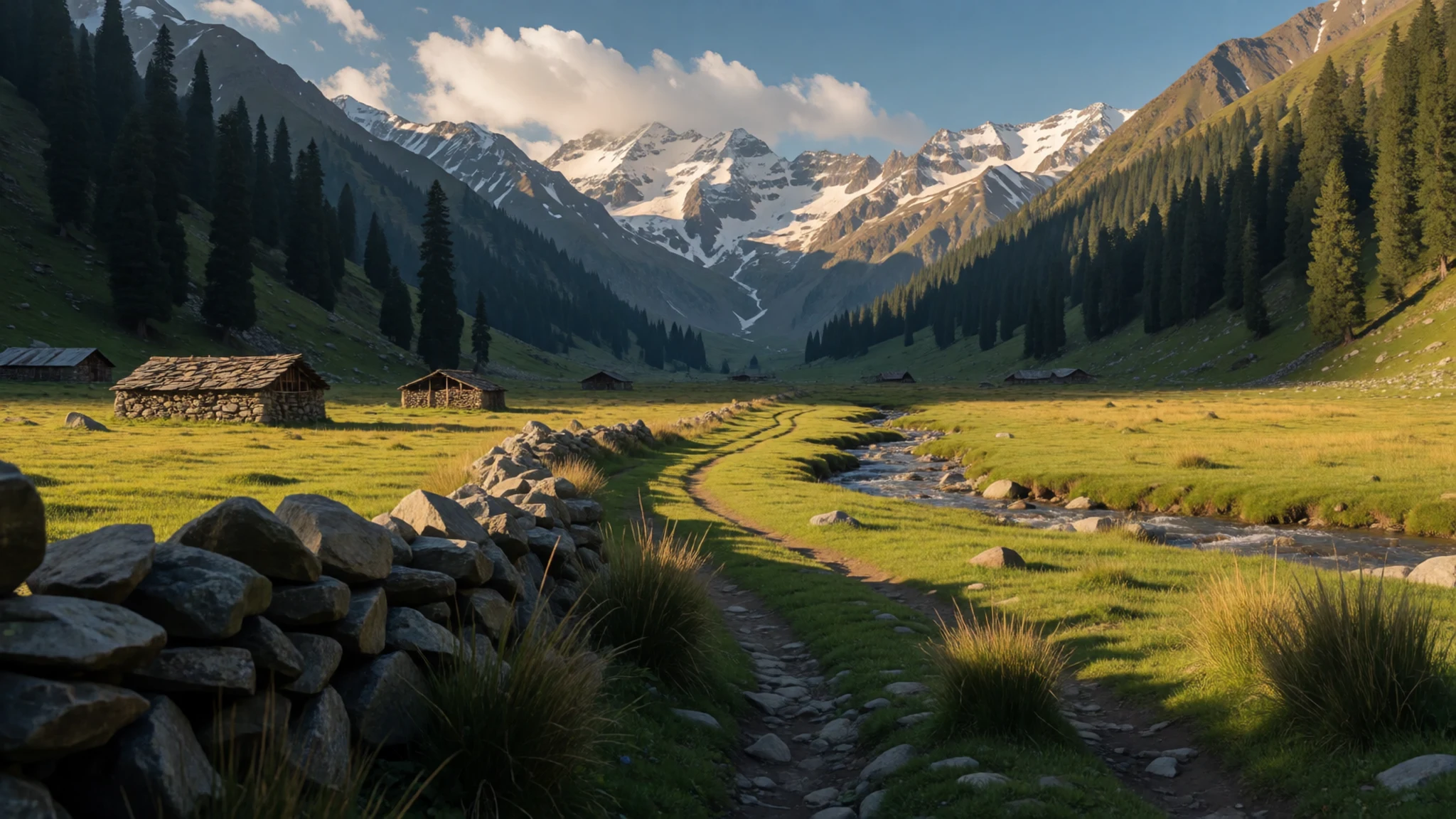
- Chandanwari — North-east of Pahalgam
Chandanwari lies about 16 km up the north-east arm of the valley and is where the Amarnath trek begins. Outside the pilgrimage season it is a quiet stretch of riverbank and snow bridge remnants early in the year. During the yatra the area is tightly controlled and busy, so check access before planning a visit.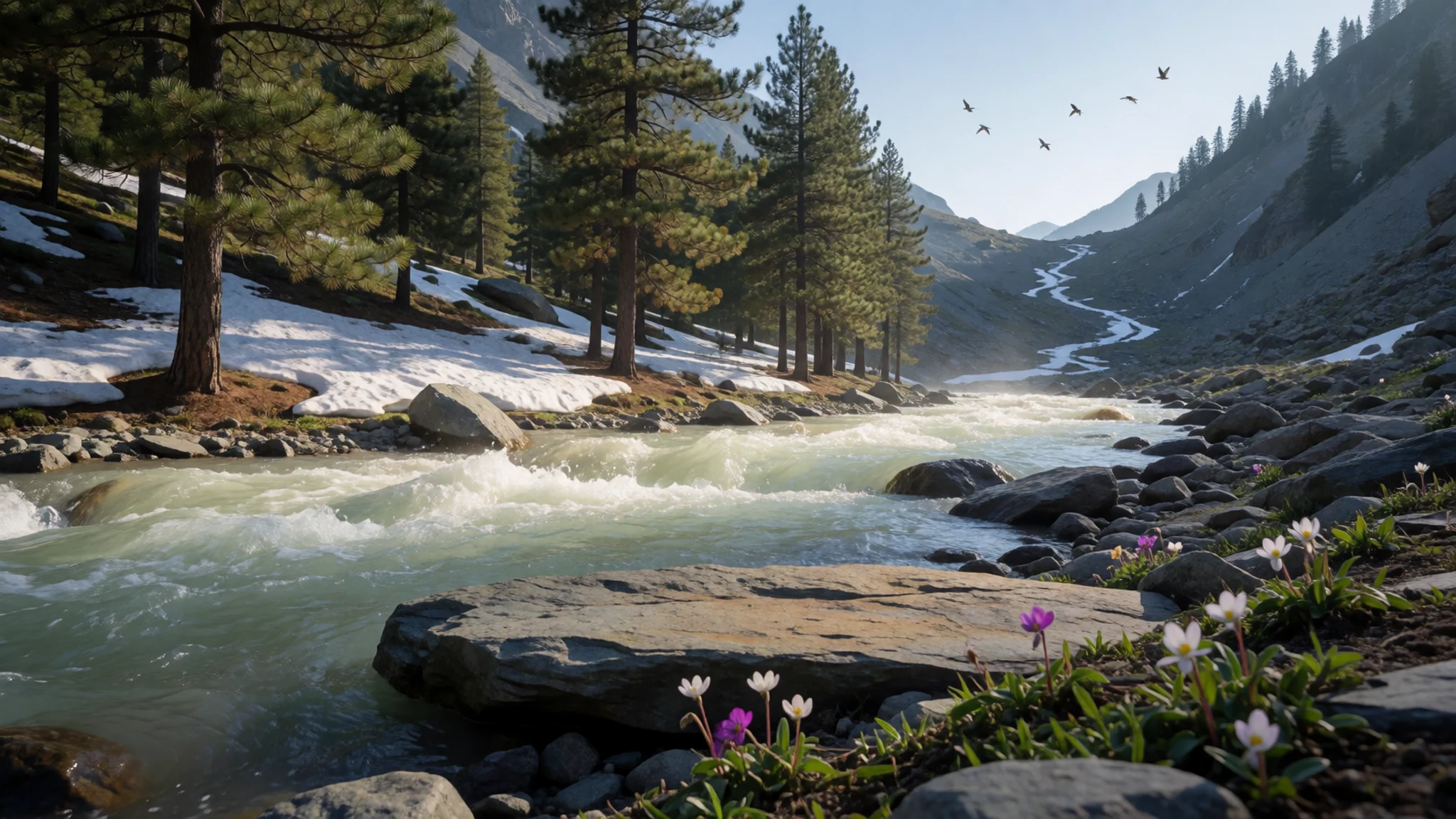
- Baisaran meadow — Above Pahalgam town
Baisaran is a high meadow ringed by conifers, reached by a pony ride or a steep walk from the town centre. It makes a good half-day with a packed picnic, since food and water are scarce on the way. Access rules in the area can change, so ask locally or check current official advice first.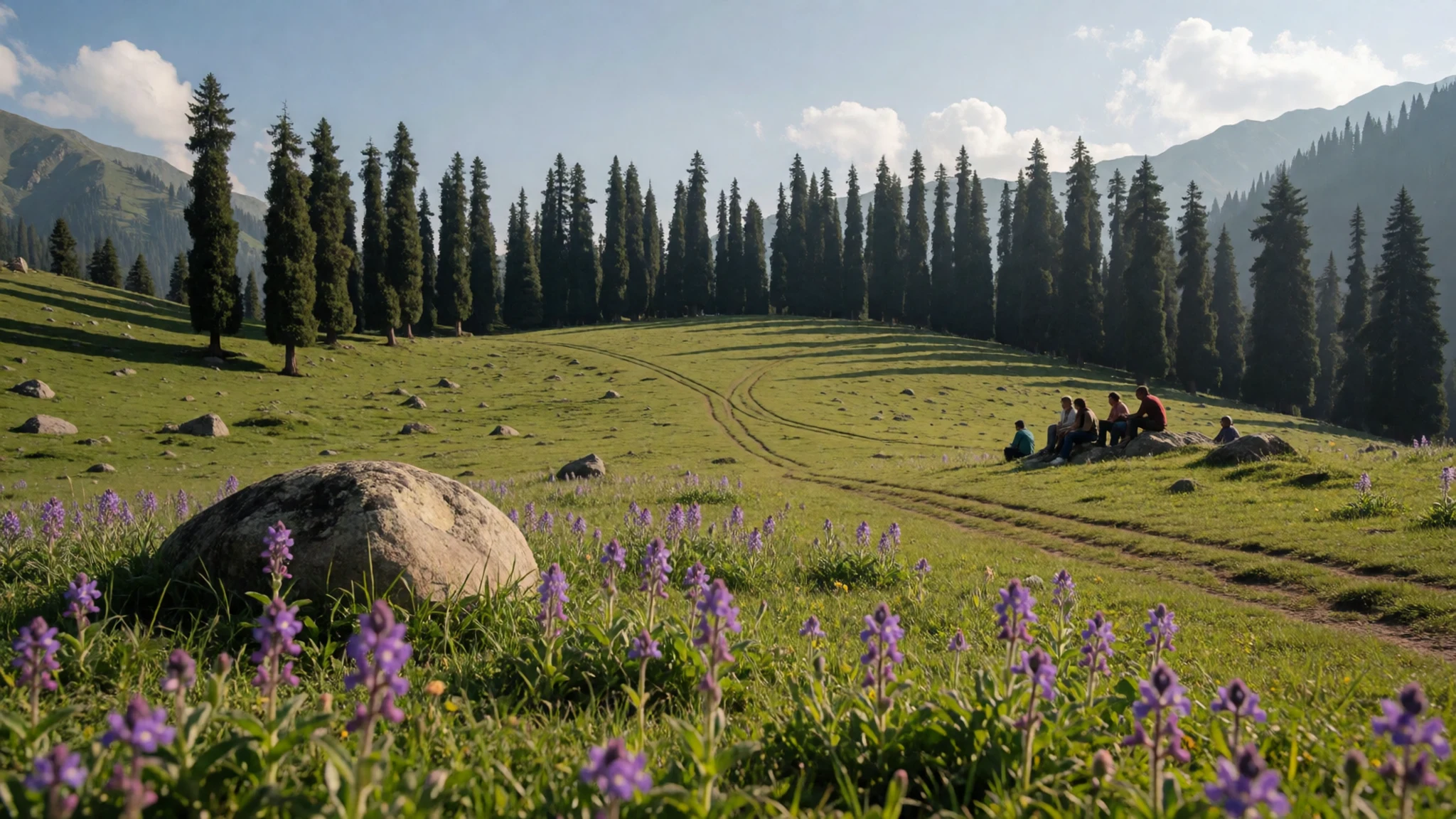
- Kolahoi Glacier trail — Head of the Lidder Valley
Kolahoi Glacier is a hanging glacier below Kolahoi Peak, reached by a trail of about 35 km from Pahalgam by way of Aru. It is a multi-day walk for fit trekkers, usually with a local guide and camping gear. Weather, river crossings and altitude all demand care, so go in settled months.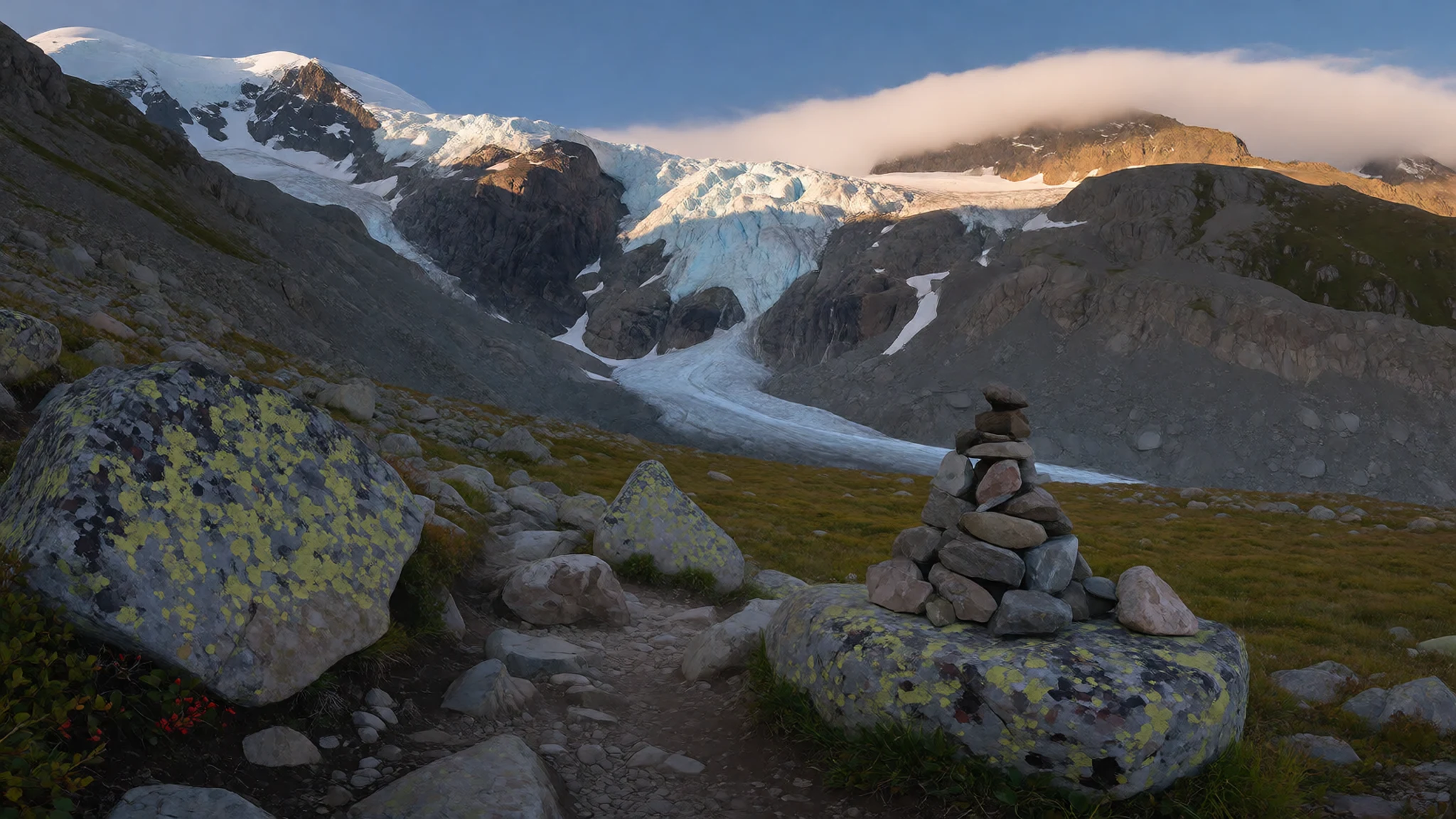
Culture
Pahalgam sits where two living traditions overlap: Kashmiri valley life and the seasonal rhythm of herding and pilgrimage. Local families, many of them Kashmiri Muslim, run the guest houses, taxis and pony stands, and the town's economy depends on goodwill between hosts and visitors. Gujjar and Bakarwal herding families still move flocks up to the high pastures in summer and down again before the snow, which echoes the shepherd meaning in the town's name. For Hindus, the valley is sacred ground on the road to the Amarnath cave, and each July and August thousands walk the route, supported by free community kitchens set up along it. Those weeks have their own mood of devotion and heavy security, and the town feels very different from the quiet months. Hospitality is central: expect to be offered tea, and expect conversation with drivers and shopkeepers to run longer than a transaction needs. Kashmiri tea, wool and embroidery are points of local pride. Life is also shaped by the weather and by uncertainty in the wider region, so people tend to be practical about plans changing. Mobile signal fades in the side valleys, and evenings are early and quiet. Ask permission before photographing local women, families or pilgrims at prayer, and dress modestly around shrines and in village areas.
What to wear
In Pahalgam, traditional dress is built around the pheran, a long, loose woollen or cotton gown worn by Kashmiri men and women through the cold months. Women's versions often carry embroidery at the neck and cuffs, known as sozni or aari work, and many people carry a kangri, a small clay fire pot in a wicker basket, tucked inside for warmth. Shawls of wool and finer pashmina are worn for warmth and for weddings, and men may wear a woollen or karakul cap. Herding families favour thick wool and sturdy boots suited to steep ground. Day to day, most residents now wear a mix of pheran in winter, jackets, jeans, sweaters and salwar kameez, with headscarves common among women. Visitors should dress for the weather first. Pack layers, a windproof and waterproof shell, a warm hat and gloves for evenings and any season with snow, and sun protection for the strong mountain light. Footwear matters: choose shoes with grip for muddy, stony paths and pony trails. Modest clothing, with shoulders and knees covered, is sensible in town and essential near shrines. In the pilgrimage season, expect pilgrims in simple practical clothes and rain gear. A scarf and a light fleece are useful in almost every month.
What to eat
- Nun chai — Tea stalls and guest-house kitchens on the main street
Nun chai is Kashmir's salted pink tea, made with milk and a pinch of soda, and served hot with bread. It is a good first order on a cold morning and is easy to find at tea stalls and in guest houses.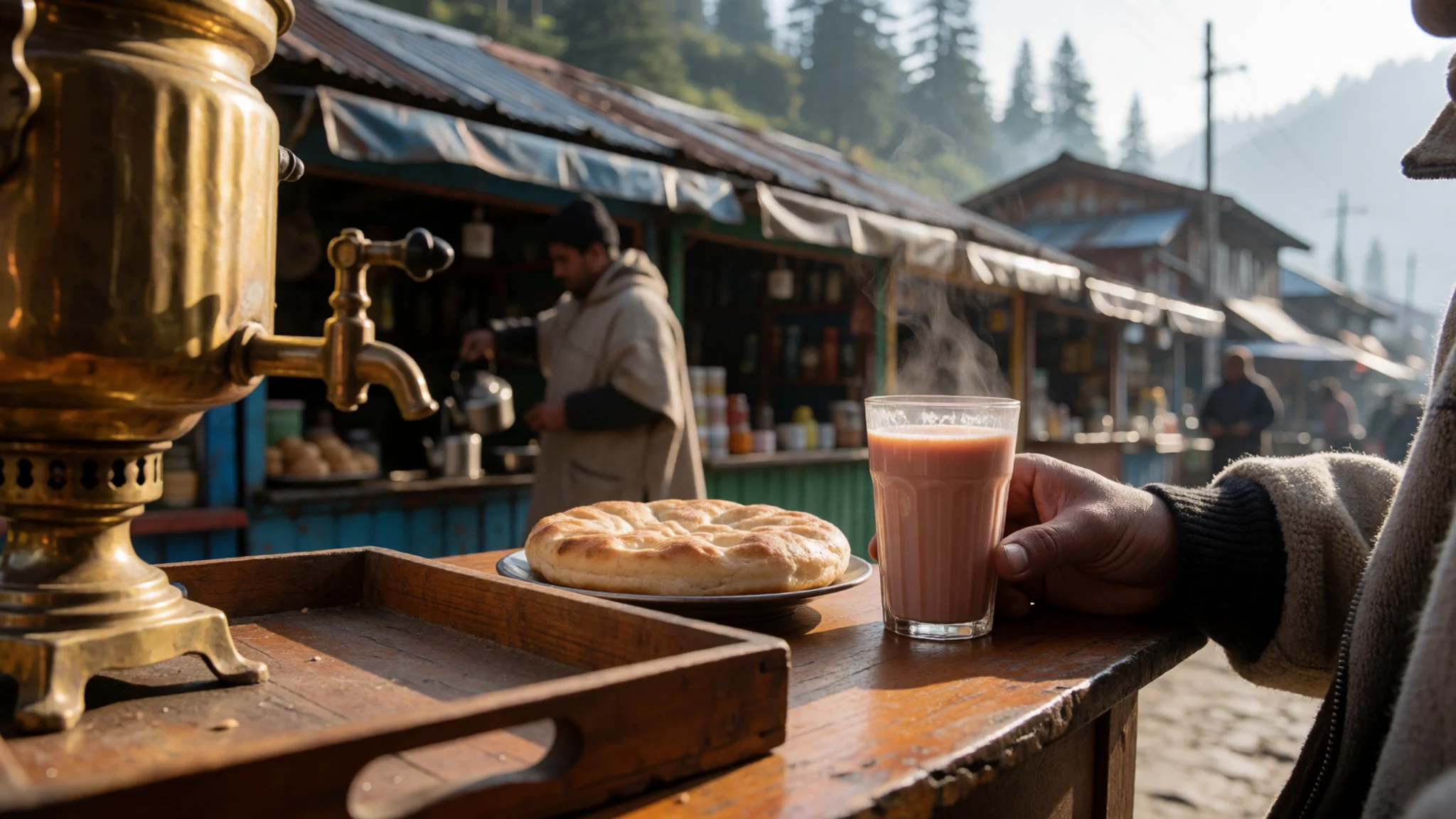
- Kehwa — Cafés and tea shops along the main street and riverbank
Kehwa is a green tea scented with saffron, cardamom and often almonds. It is lighter and sweeter than nun chai, and tastes best outdoors with a mountain view and a warm cup.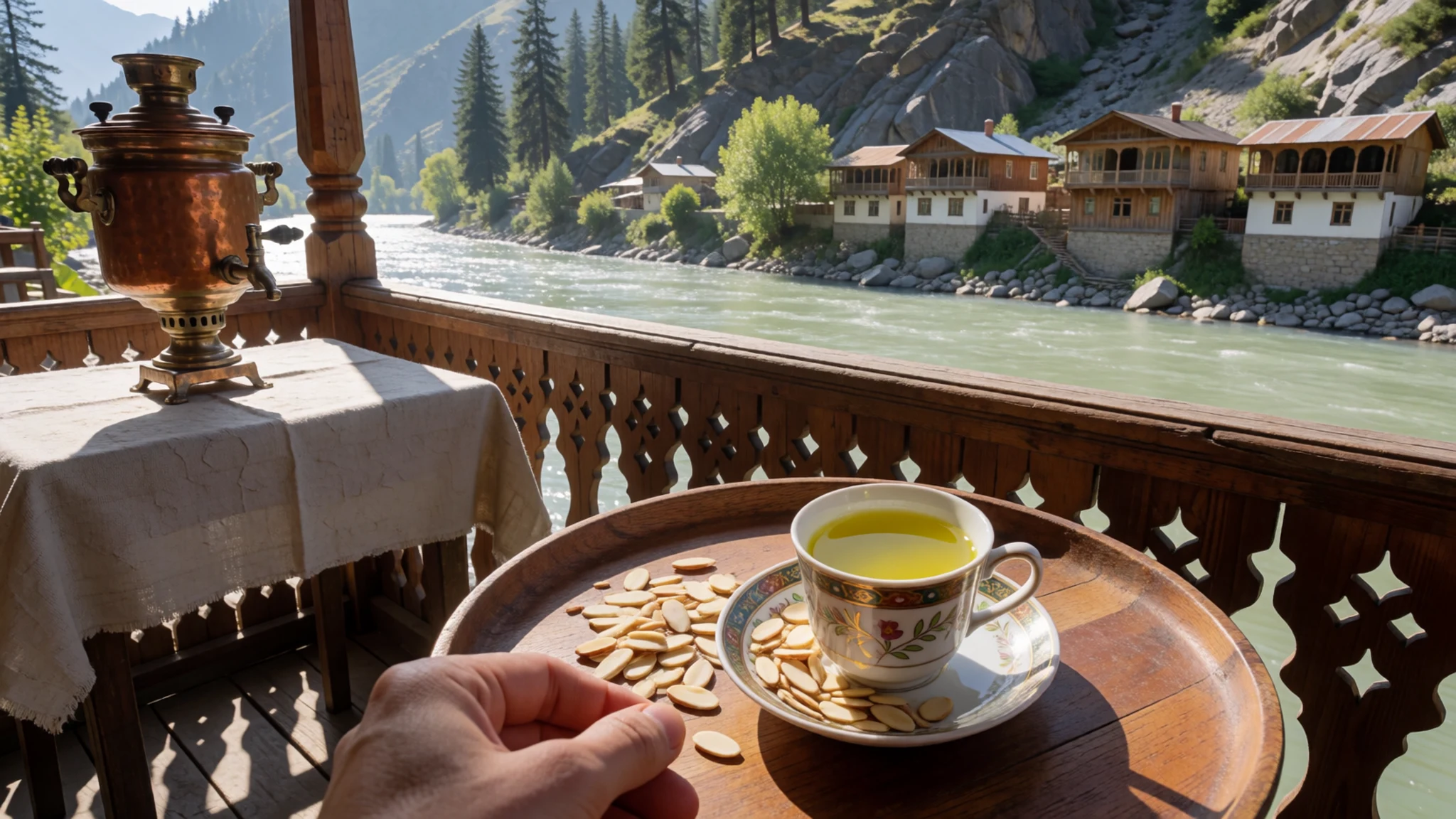
- Rogan josh — Kashmiri restaurants and guest-house dinners
Rogan josh is Kashmir's slow-cooked mutton curry, red from dried chillies and aromatic with fennel and ginger. It is usually served with rice. Ask locally which eatery has a good reputation, as quality varies between seasons. - Kashmiri bakery bread — Small neighbourhood bakeries in town
Kashmiri bakers make crisp, ring-shaped breads such as girda and lavasa, often eaten with tea for breakfast. Buying warm bread from a small bakery is a cheap, easy way to start a day of walking. - Dhaba thali and dosa — Roadside dhabas and budget vegetarian eateries
Dhabas in Pahalgam serve plain North Indian meals, with dal, vegetables, rice and flatbread, and some vegetarian places add dosa. It is dependable fuel before a trek. Some of these eateries open only in the peak season.
Plan it
Best time. May–June and September–October, when days are mild and the trails are mostly clear. April to June is peak tourist time, with higher taxi demand. July–August brings the Amarnath pilgrimage, with crowds and restrictions. Winter, from December to February, is cold with heavy snow and night temperatures below freezing, good for snow scenes but hard for travel.
How long. 2–3
Getting there. Fly into Srinagar, then take a taxi to Pahalgam, a drive of about two and a half hours. The nearest railhead is Jammu, from which the road trip is a full day by taxi or bus. For the last leg, local taxi unions run sightseeing cars within the valley.
Budget. mid
Tips
- Book guest houses early for May–June and the pilgrimage weeks
- Use local taxis for sightseeing, ask for the official rate list and agree the route before setting off
- Carry cash, since cards and mobile signal can be unreliable outside town
- Start trails and pony rides early, and carry water and food for meadow trips
- Check weather, road status and current official travel advice before leaving, as conditions in Kashmir can change
Etiquette
- Ask before photographing local people, especially women and pilgrims
- Dress modestly in villages and near shrines
- Respect the free community kitchens during the yatra by taking only what you need
Nearby
Sources
- Wikidata Q2085326 (CC0)
- Wikipedia: Pahalgam (rev 1377344192) (CC BY-SA 4.0)
- Wikivoyage: Pahalgam (rev 5413688) (CC BY-SA 4.0)
- Pahalgham (the valley of shepherds), Nawr'n k (CC BY-SA 4.0)
- LiddarRiverJhelum.jpeg, unknown author (CC0 1.0)
- Baisaran Meadow/Valley near Pahalgam, Vinayaraj (CC BY 3.0)
- Lavender Park Pahalgam, Suhayl091 (CC BY 4.0)
- Pine trees in the snow in Pahalgam, Mariiamir (CC BY-SA 4.0)
- A view of Pahalgam valley, Billjones94 (CC BY-SA 4.0)
- Betaab Valley, Nandanupadhyay (CC BY 3.0)
- "1 Himalayas India", Pahalgam June 2013, Harsha Narasimhamurthy (CC BY 2.5)


