Ouvéa
Ouvéa, France
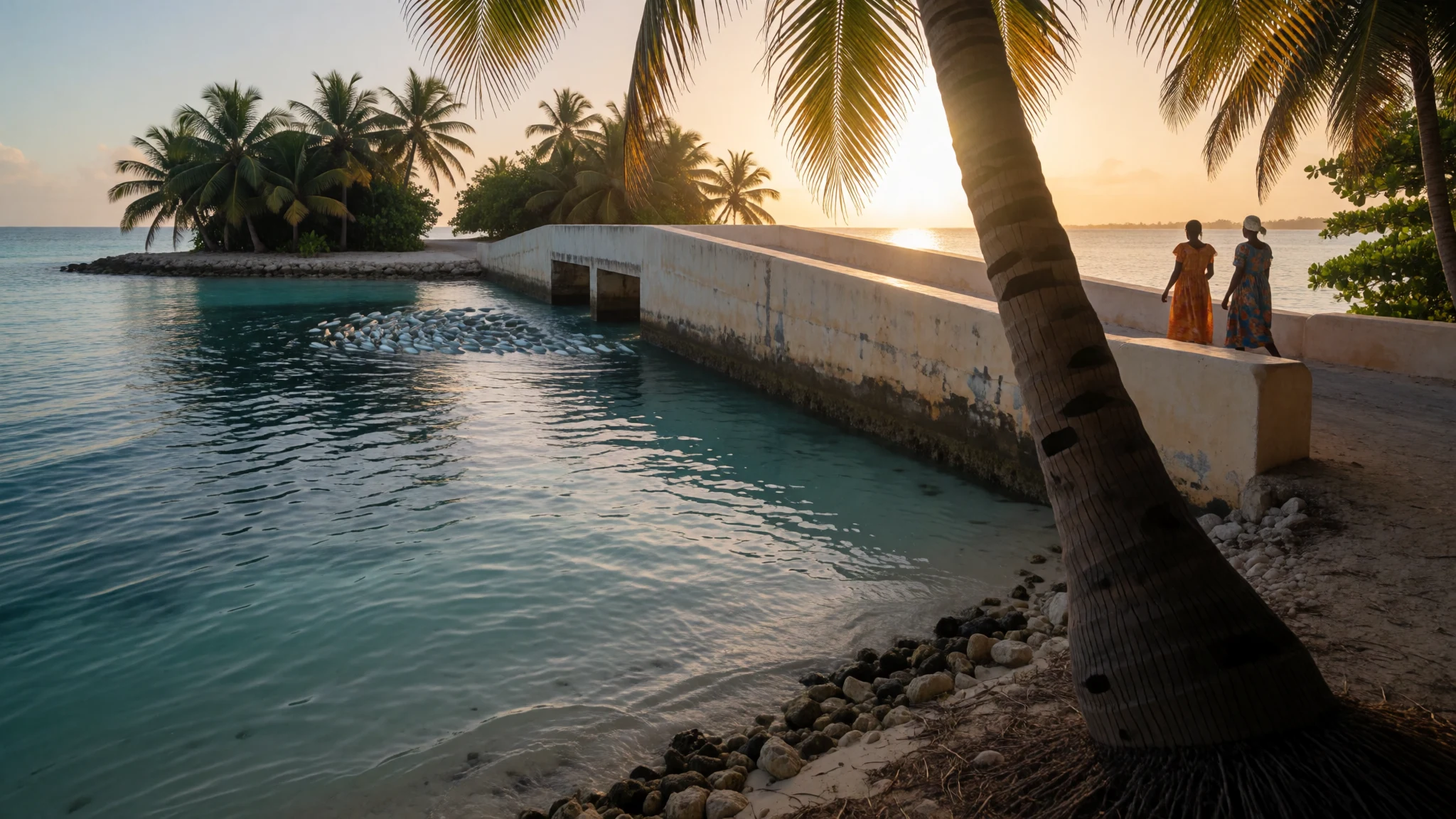
Ouvéa is a long Loyalty Islands atoll where a pale lagoon, Kanak custom and a quiet village road still set the pace.
The place
Ouvéa lies in the Loyalty Islands of New Caledonia, a French Pacific territory east of the Grande Terre. The island forms the long eastern rim of an atoll, a slim bar of sand and coral, with the lagoon on the western side and open ocean against the eastern cliffs. From the air the leeward shore is a long pale beach backed by coconut palms, the water shifting from milky turquoise over sand to darker blue beyond the reef. A coastal road links the villages, and at Mouli a low bridge crosses a narrow pass to a smaller islet at the southern end.
The people are Kanak. Customary authority is held in the Iaai customary area, and ordinary life still moves between the chiefdom, the church and the lagoon. Iaai and Fagauvea share the island: Iaai, a Kanak language of the Oceanic family, and Fagauvea, brought by migrants from Wallis, the Uvea whose name Ouvéa recalls. French is the language of school, the town hall and the shop. Fayaoué, on the west coast, is the administrative centre, with the church, the nearby airfield at Ouloup, and the stores that keep the island supplied. Gardens of yam, taro and coconut fill the spaces between villages.
Shade is scarce away from the palms, and the sand throws the noon light back in a hard glare. The lagoon is shallow enough in places that fish show clearly against the bottom; under the Mouli bridge the current gathers them into a dense shoal. After dark the road goes quiet, with only a few house lights and the sound of the reef. Ouvéa has no resort strip. Rooms are few, shelves depend on the plane and the ferry, and the shore people travel for is the same lagoon the island fishes.
Its story
Ouvéa’s story is a Kanak one first. The island belongs to the Iaai customary area, and clans have long ordered land, fishing and marriage through chiefdoms rather than through a map drawn in Paris. The name itself points to another arrival: people from Wallis, which they knew as Uvea, settled here and kept their language, Fagauvea, so that Kanak and Wallisian lineages share the atoll. They entered that order rather than replacing it, and custom still makes room for both.
Missionaries followed the ships. Catholic and Protestant churches took root in the villages, and the mission dress, the long cotton gown still worn by many women, is the visible trace of that long work of conversion. French administration placed Ouvéa under Nouméa, with a gendarmerie, a school and a town hall at Fayaoué, while customary chiefs kept authority over land and over visits to a tribe. Those systems have never fully merged. A visitor who sees only the beach misses that the shore is customary land, not a public park.
The wound that outsiders are most likely to have heard of came during the struggle over independence. A cave on the island was used to hold hostages, and a French assault ended the siege in blood. Families on Ouvéa still live with that loss, and the agreements that followed tied the island to a shared sovereignty and a vote on New Caledonia’s future. Speaking of the cave as scenery cuts across a grief that has not become a monument with opening hours.
Daily life now is quieter: gardens, the church calendar, the ferry and a lagoon that feeds people.
What to see
- Pont de Mouli — Mouli
The Pont de Mouli is the low bridge that joins Ouvéa to the islet of Mouli across a narrow pass. The deck sits close to the water, and the current is why fish pack into a shoal that shows clearly from the parapet. The pass itself runs hard, so swimming belongs in the slack water beside it, not in the channel.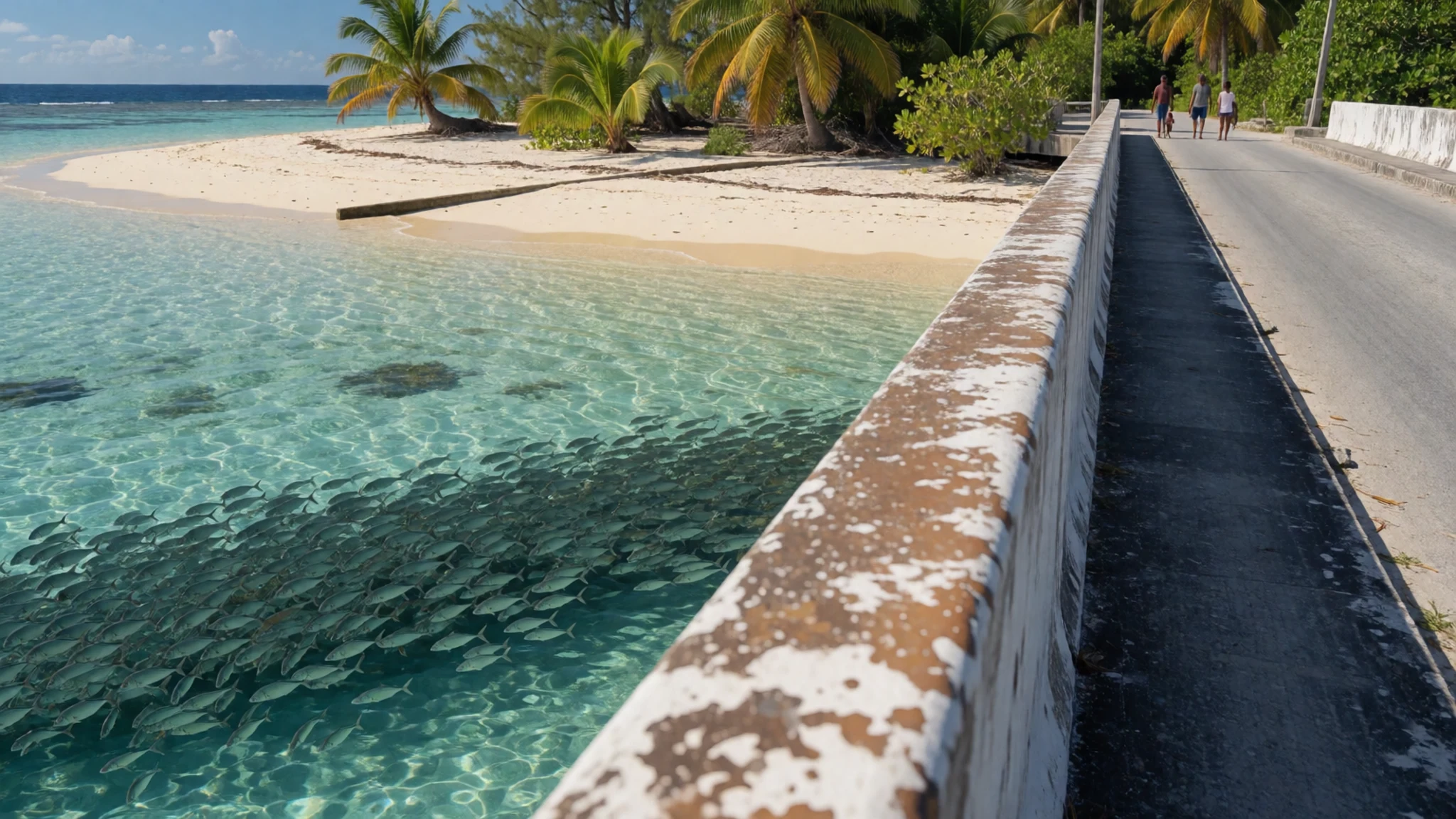
- Western lagoon beach — West coast
Ouvéa’s western lagoon is the shore people picture: a pale sand beach facing sheltered water, palms behind it and the reef somewhere out on the horizon. The bottom stays sandy for a long wade, which is why families swim here rather than on the ocean coast. Public access runs off the coastal road; there is no single gate or ticket.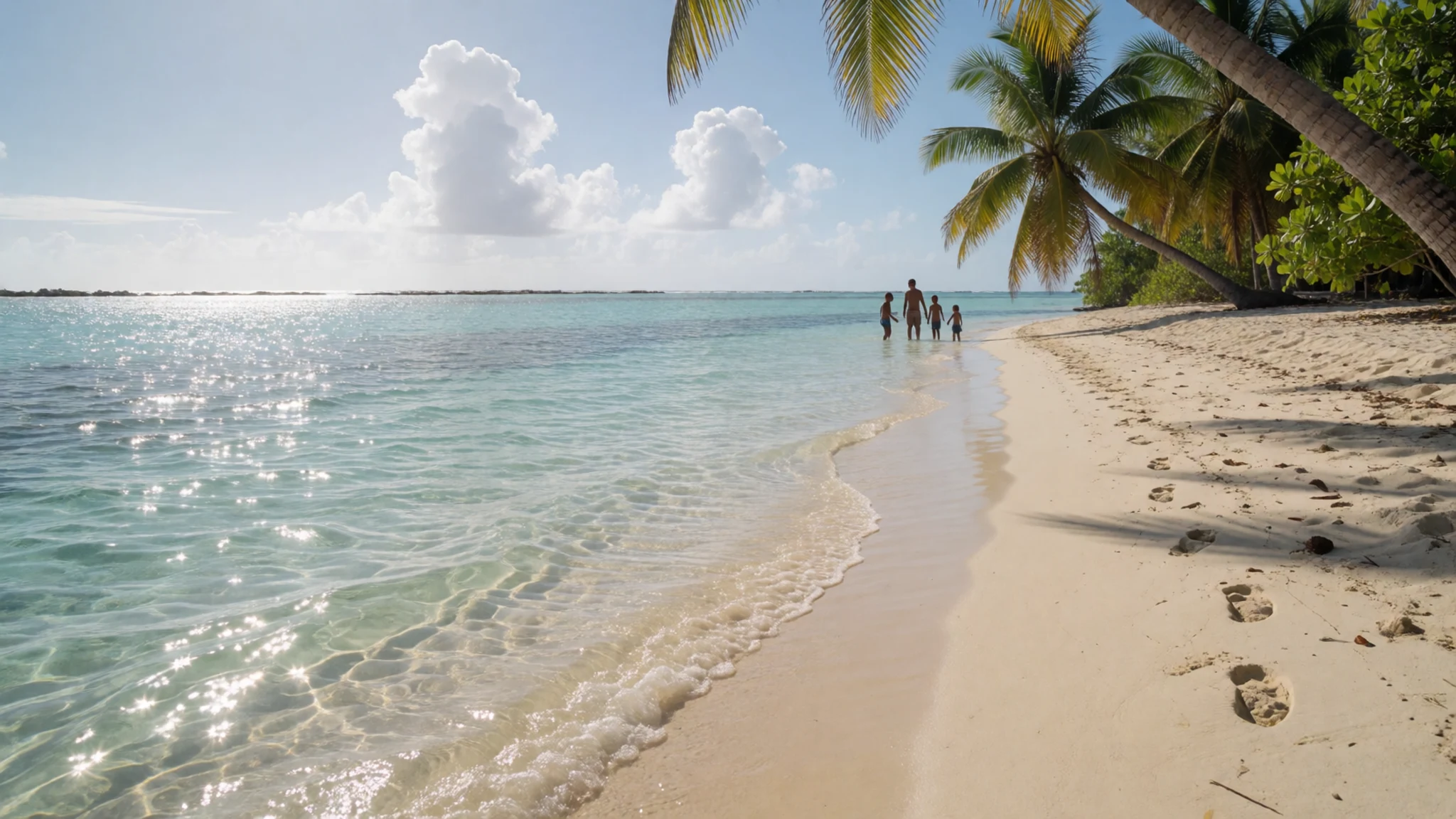
- Lékiny cliffs — Lékiny, east coast
The cliffs of Lékiny rise on Ouvéa’s ocean coast, a wall of coral rock where the atoll rim meets the open Pacific instead of the lagoon. The track to the viewpoint leaves the coastal villages and climbs into scrub and pandanus; the reward is height, rare on this flat island, and a view back across the rim. Footing is rough and the edge is unfenced.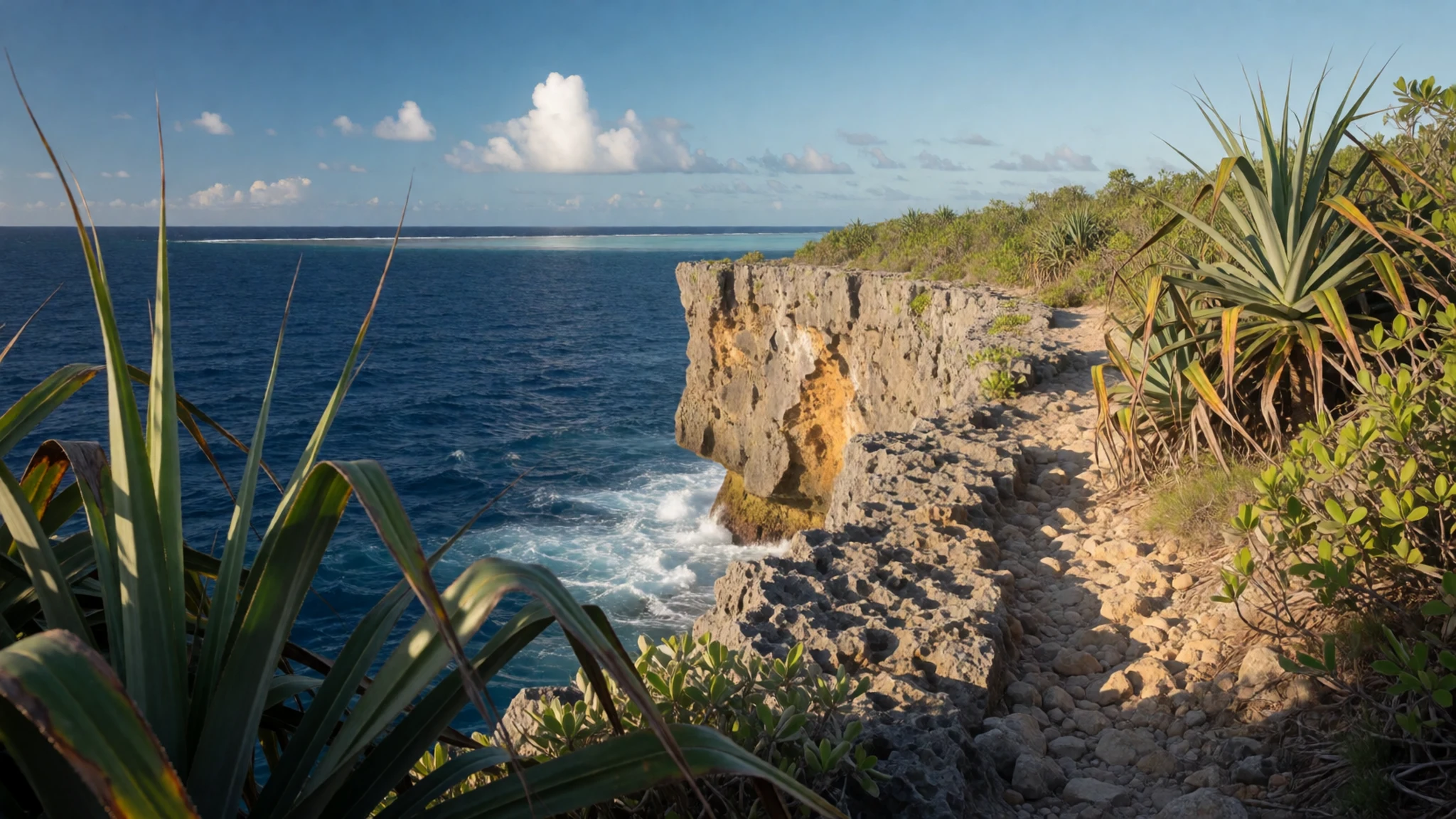
- Fayaoué — Fayaoué
Fayaoué is the administrative centre of Ouvéa, the village where the town hall, the church and the shops sit along the west-coast road. The church of Saint-Joseph marks the skyline; Sunday brings the island in, and modest dress is expected inside. This is the practical stop for fuel, drinking water and a simple snack. Ask here before going on to a tribal village.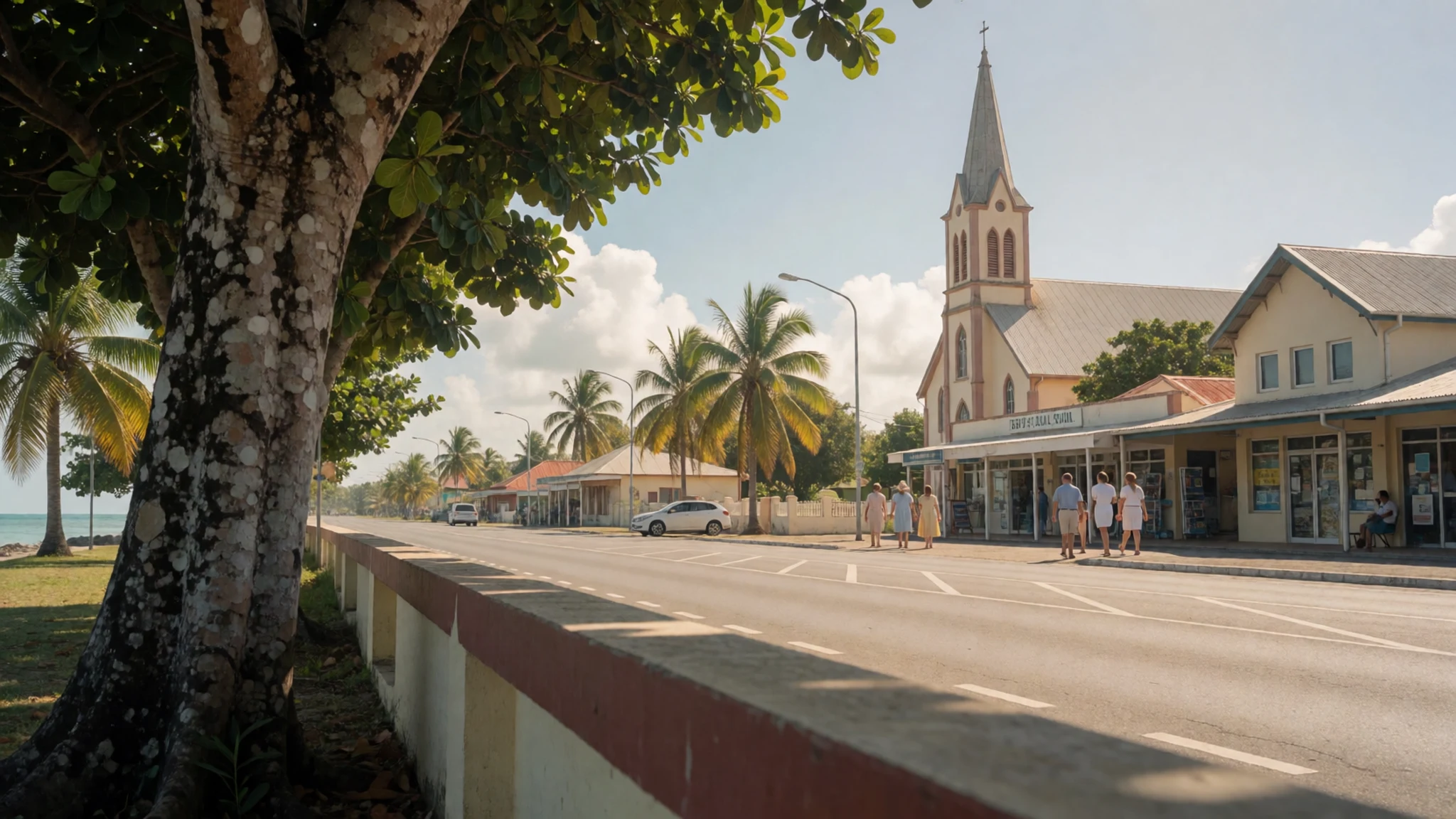
- Banoutr — Banoutr
Banoutr is a village street on Ouvéa rather than a viewpoint: a short high street of houses, a handful of shops, and people going about the day under the palms. The interest is the ordinary road, and that is the right scale for the island. There is no ticket office and nothing is billed as an attraction. A greeting is welcome.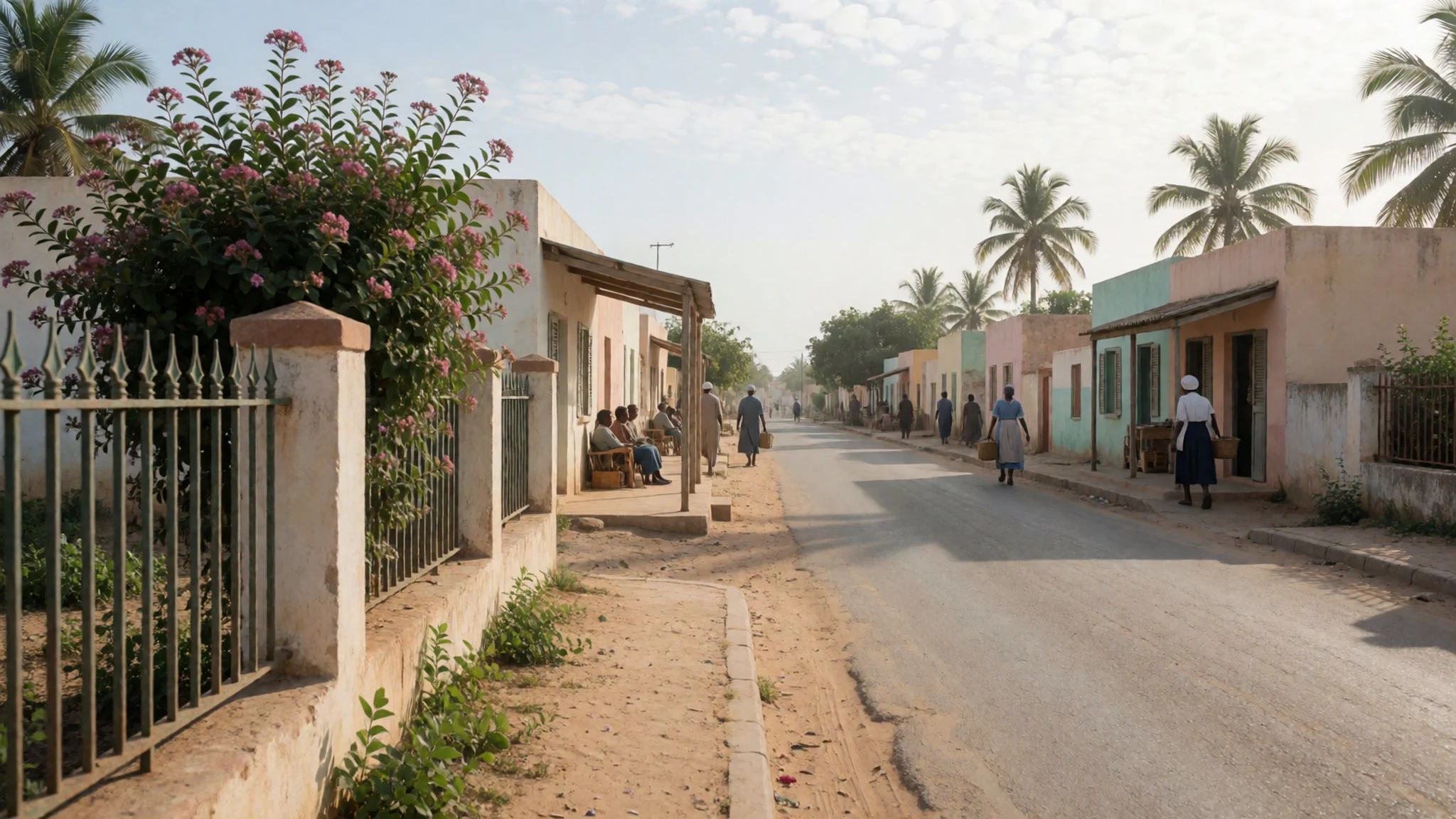
Culture
Ouvéa’s public life is Kanak custom lived in plain sight. The island is the Iaai customary area, and a chief still speaks for a tribe on land, on fishing and on whether outsiders may come in. A visit that hops from beach to beach without that greeting is a trespass, even when no fence marks the line. Church is the other gathering place. Catholic and Protestant congregations fill on Sunday, hymns carry out of open doors, and the church year structures the calendar as much as the yam harvest does.
Language is part of the welcome. Iaai is the Kanak language; Fagauvea, spoken in the northern villages, comes from Wallis and explains the island’s name. French will get a traveller through a shop, but a few words of greeting in the language of that tribe land better than a speech. Customary exchange is modest: a guest who has asked to be received does not arrive empty-handed, and a ceremony is not a show. The lagoon is also customary. Fishing spots, the pass under the bridge and the caves of the independence struggle are not neutral scenery.
Ask the customary authority before you enter a tribal village on Ouvéa, and do not photograph people or ceremonies without a clear yes.
What to wear
On Ouvéa, dress still signals whether the day is ordinary or customary. For ceremonies, Kanak dress uses plant fibre, leaves and printed cloth, worn by the people the custom names. The garment visitors notice every day is the mission dress, a long, loose cotton gown with sleeves, often bright, worn by women to church and to market. It came with the missions and stayed because it suits the sun and the standard of modesty in the villages. Men may wear a manou, a wrap of cloth, when custom calls for it.
Weekdays look simpler. Men wear shorts and a T-shirt; women the mission dress or a skirt and blouse; flip-flops on the sand, bare feet indoors. Printed pareos come out for the beach and for dancing. Cloth arrives by ferry, and much of the sewing happens at home.
A visitor should copy the modesty and leave ceremonial fibre to its owners. Swimwear stays on the lagoon beach; add a shirt or pareo for any village, shop or church. Shoulders and knees covered are the safe rule inside Saint-Joseph and at a customary welcome. The ground is sand, coral grit and hot tarmac, so sandals beat boots, and a hat matters more than a jacket.
What to eat
- Bougna — customary gatherings and family tables
Bougna is a ceremonial dish of Ouvéa: yam, taro, sweet banana and chicken or lagoon fish, moistened with coconut milk and cooked for hours in an earth oven over hot stones. It appears at customary gatherings, church feasts and family Sundays, not on a weekday snack counter.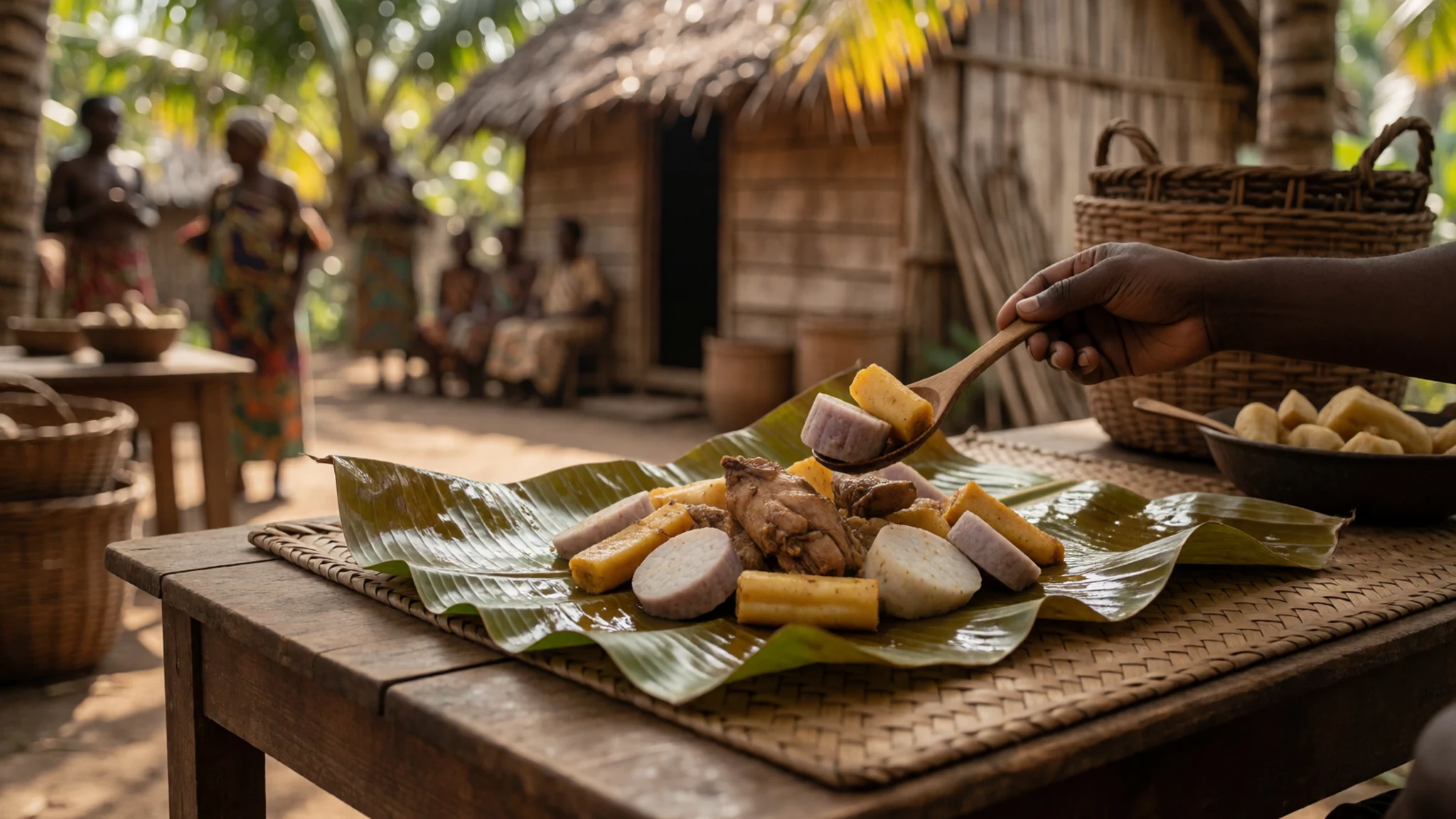
- Poisson cru — family eateries along the west coast
Poisson cru on Ouvéa is raw lagoon fish cut small, marinated in lime and folded through coconut milk, often with tomato, onion and cucumber when the boat has brought them. It is the cool dish of a hot day, served at family eateries along the west coast.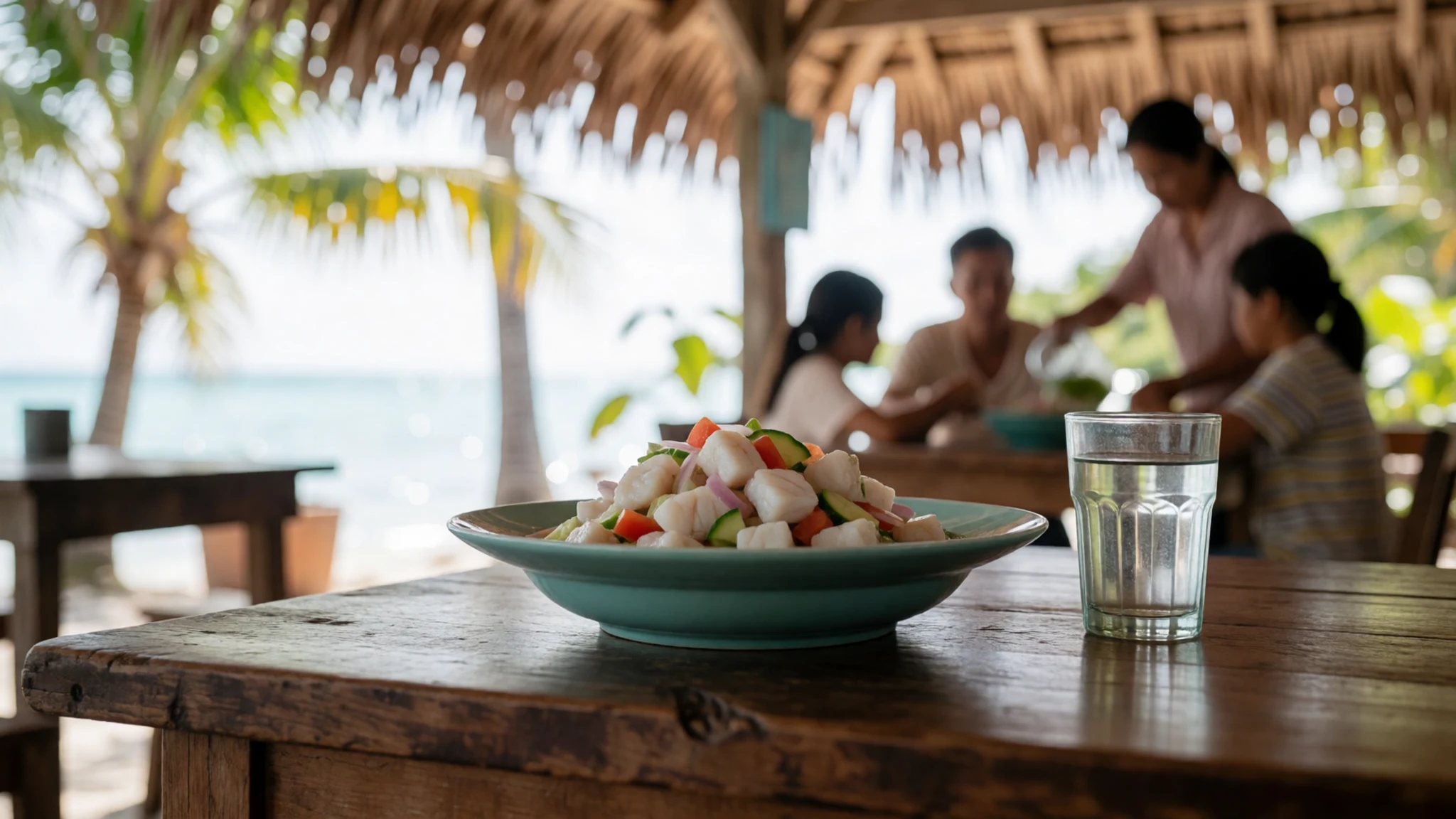
- Grilled lagoon fish — village snack bars near Fayaoué and Mouli
Grilled lagoon fish is the everyday meal on Ouvéa: parrotfish, trevally or whatever the morning’s catch was, simply charred and eaten with rice or boiled root vegetables and a squeeze of lime. Village snack bars and roadside tables near Fayaoué and Mouli serve it once the boats are back. - Coconut crab — celebration tables, when it is offered
Coconut crab is a feast animal on Ouvéa, not a daily plate. Islanders take it from the coconut groves under customary and territorial rules, and it turns up at celebrations more often than on a snack-bar menu. The meat is rich and sweet, usually boiled or grilled and shared. - Yam and taro — family tables and Sunday meals
Yam and taro are the staple starches of Ouvéa, ahead of rice in any customary meal. Boiled, roasted in the earth oven or pounded, they come to the table with grilled fish or in the bougna. Visitors meet them at family tables and at Sunday meals.
Plan it
Best time. The cooler, drier months from about May to October suit Ouvéa: trade winds, easier walking on the sand, and a lower chance of cyclones. November to April is hotter and wetter, with cyclone risk, though the lagoon is warm in every month.
How long. 3–4
Getting there. International flights land at La Tontouta, the airport for Nouméa. From there, Ouvéa is a domestic hop from Nouméa-Magenta to the airfield at Ouloup, or an inter-island ferry from Nouméa to the Loyalty Islands and then the coastal road.
Budget. high
Tips
- Book the domestic flight or the ferry before you book a room; both sell out around school holidays and long weekends.
- Carry cash. Card payment is patchy outside Fayaoué, and small snack bars may take notes only.
- Hire a car or arrange a driver in advance. The island is a long thin road, and public transport is thin.
- Start outdoor time early. Midday on the white sand is harsh, and there is little shade over the lagoon.
- Bring drinking water from Nouméa. Village shops are small and stock follows the ferry.
Etiquette
- Ask the chief or your host before entering a tribal village, and do not wander into gardens.
- Cover swimwear away from the beach, and cover shoulders and knees in church.
- Do not photograph people, ceremonies or the caves linked to the independence struggle without permission.
- Do not stand on coral, collect shells or feed the fish under the Pont de Mouli.
Nearby
Sources
- Wikidata (CC0)
- Wikipedia (CC BY-SA 4.0)
- Wikivoyage (CC BY-SA 4.0)