Oudong
Oudong, Cambodia
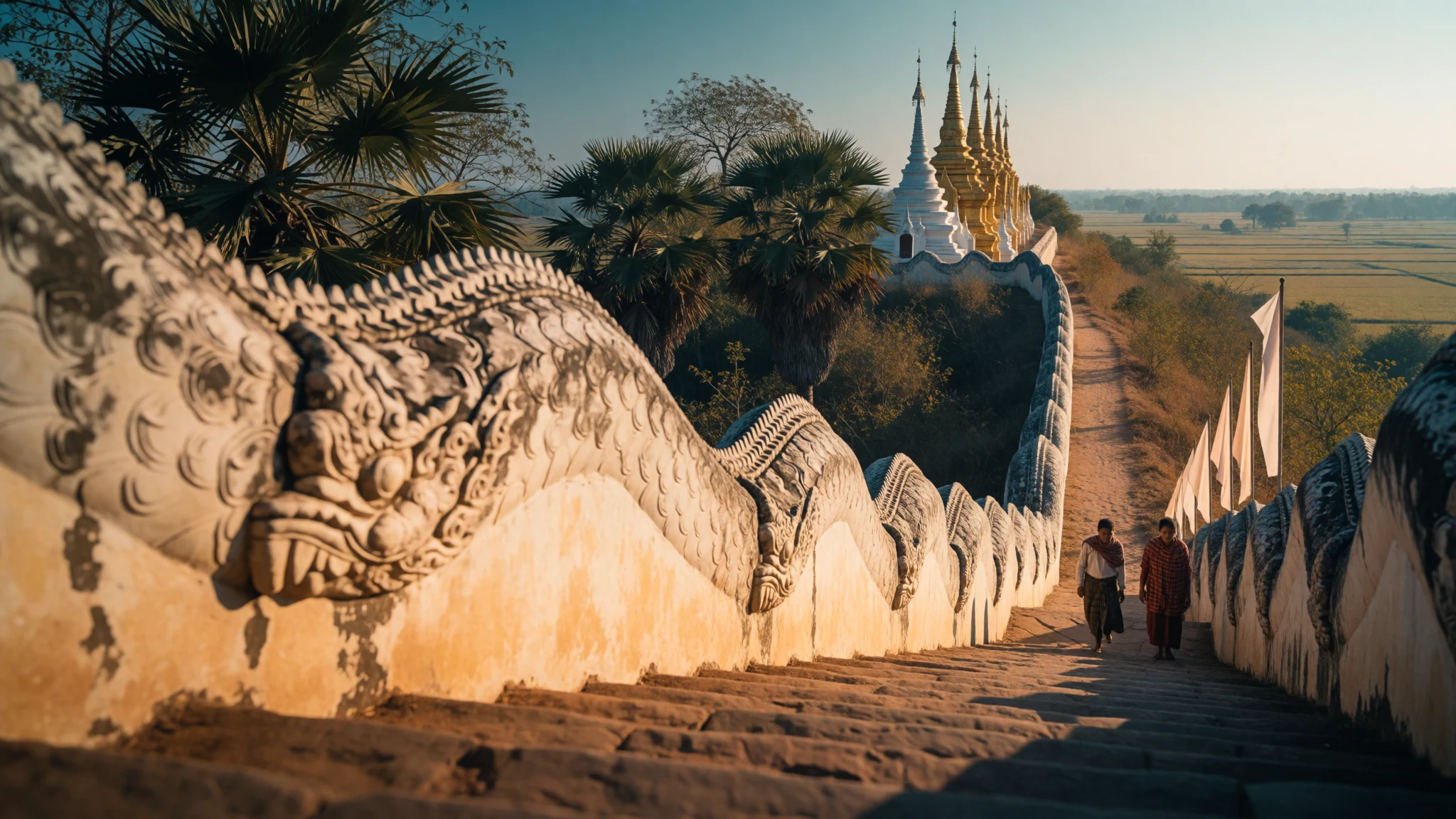
Oudong is Cambodia's old royal capital, a temple-studded ridge of kings' stupas that works as an easy, atmospheric day trip from Phnom Penh.
The place
Oudong is a former royal capital that now reads as a ridge, a scatter of monasteries and a long run of roadside stalls. It lies about 35 km northwest of Phnom Penh, at the foot of Phnom Oudong, a hill also known as Phnom Preah Reach Troap. The town belongs to Kampong Speu Province, near the point where Kandal and Kampong Chhnang meet, and the road from the capital crosses flat, bright rice country before the ridge comes into view. A dip splits the ridge into two summits. Along the crests stand stupas, shrines and royal memorials, reached by stairways lined with naga, the serpent figures that guard sacred ground in Khmer tradition. Below, an everyday town carries on around its monasteries, its market and the main road. Oudong is a pilgrimage place for Cambodians as much as a sight for outsiders, so weekends and festival days bring families, monks and picnics, while weekday mornings are noticeably calmer. Heat is the main difficulty. The steps are largely unshaded and the climb is far kinder early in the day or late in the afternoon. The setting makes sense for a court: the ridge gives a wide look over the plain, and it lends ceremony to a landscape that is otherwise very level. Most people come for a half-day or a day from Phnom Penh, often combining the hill with a stop at a village workshop or a riverside meal on the way back. Oudong is also a useful corrective to a trip centred on Angkor, showing a later chapter of Khmer royal history.
Its story
Oudong became a capital because an earlier one failed. After the court abandoned Longvek in 1594, it took some years to settle again, and King Srei Soryapor founded a new royal seat at Oudong in 1601. From 1618 the town was formally the capital, known as Oudong Meanchey, and it remained the seat of Cambodian kings for more than two centuries. The ridge became a royal necropolis, with sovereigns from several reigns laid to rest in stupas along its crest. King Ang Duong is remembered as a builder here, associated with waterworks, causeways, terraces and a great many pagodas across the district, which gave the area the layered, temple-rich character it still has. In 1866 King Norodom took his court downriver to Phnom Penh, and Oudong turned from a centre of government into a place of religious and royal memory. The twentieth century was harsher. In March 1974 the Khmer Rouge captured the town, marched its residents out into the countryside and killed many prisoners. Historians see this as a trial run for the emptying of Phnom Penh the following year. Government forces retook Oudong in August of that year. In 1977 Khmer Rouge forces wrecked much of what stood on the ridge, from temples to monuments. Much of what visitors see today is therefore rebuilt or restored, with older fragments among newer shrines, and the mix of devotion and loss is part of the place.
What to see
- Phnom Oudong ridge and summit stupas — Phnom Oudong, above the town
Phnom Oudong is the reason to come. Stairways climb the ridge to a string of stupas and shrines, several holding the remains of kings. Allow time for the climb, stop often in the heat, and take in the wide, flat view over rice fields from the top.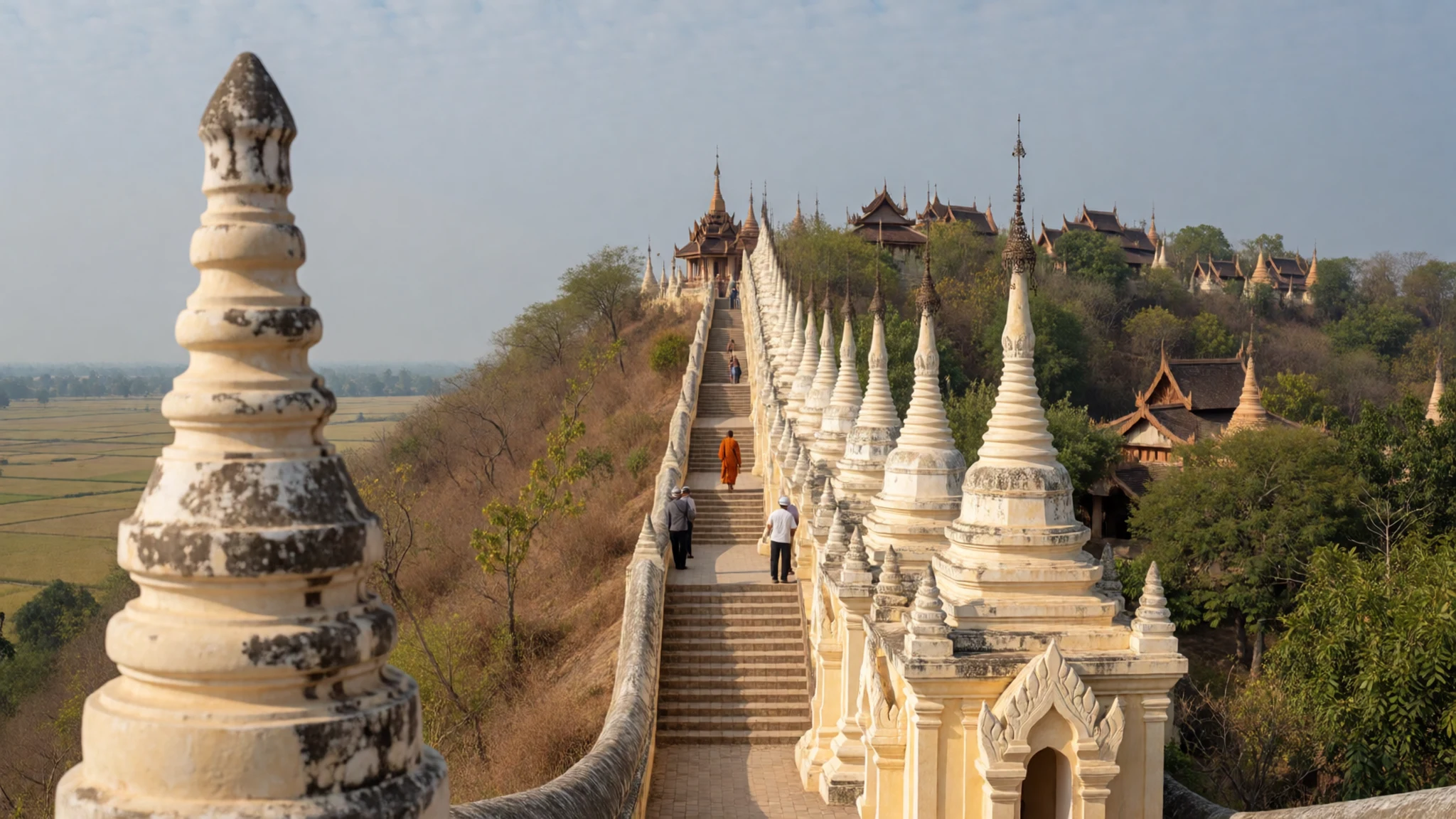
- Prasat Nokor Vimean Sour — On Phnom Oudong
This temple sits on the ridge and is best known for its naga balustrades and carved detail. It is worth slowing down here, since the stonework rewards a close look, and the view from beside it is among the clearest of the plain below the hill.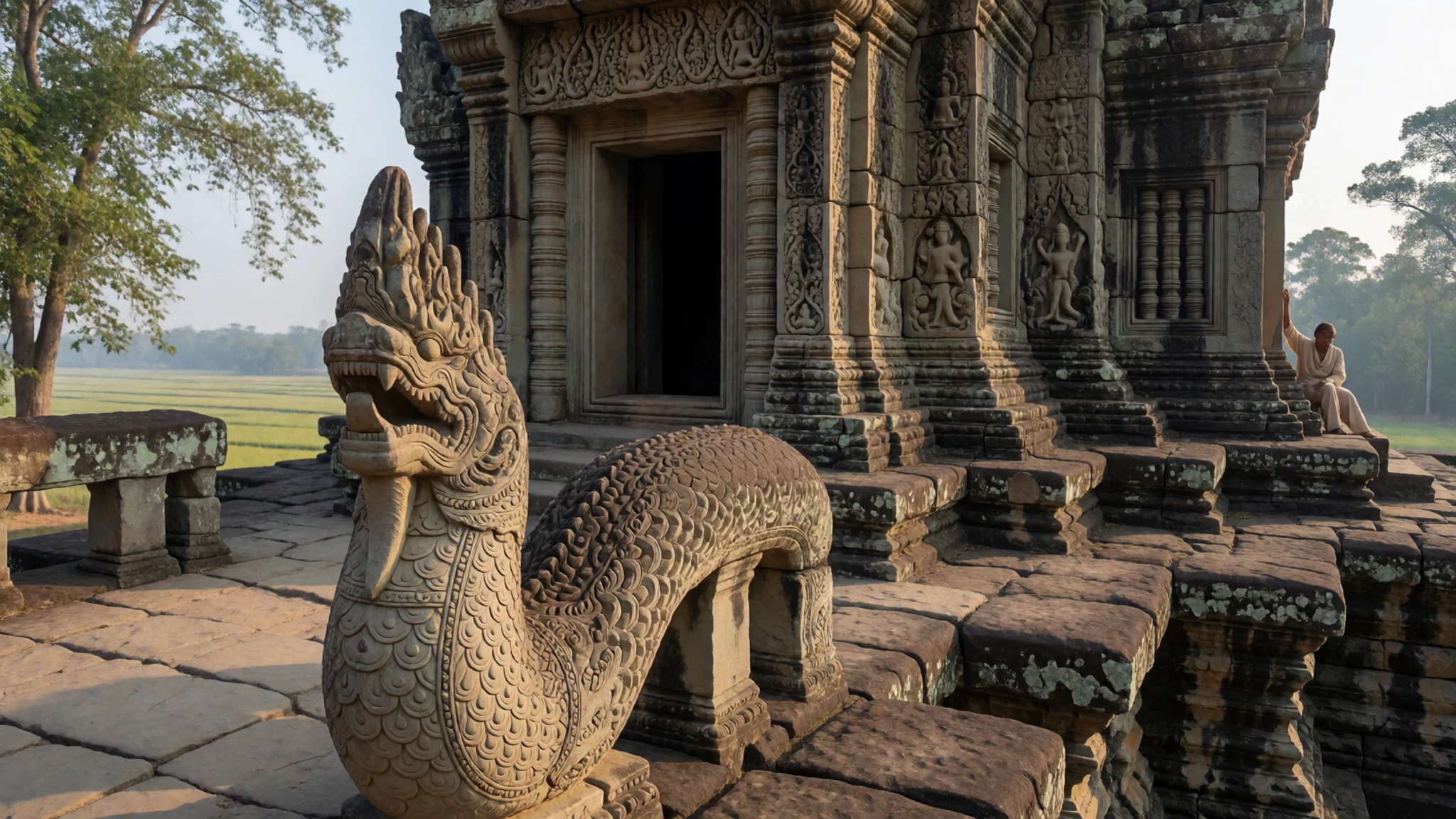
- Stupa of King Ang Duong — Along the ridge
A royal stupa commemorating Ang Duong, the king linked with much of the building in this district. It is one of the clearest reminders that Oudong was a royal burial ground, not only a hilltop temple, and it is a calm place to pause before descending.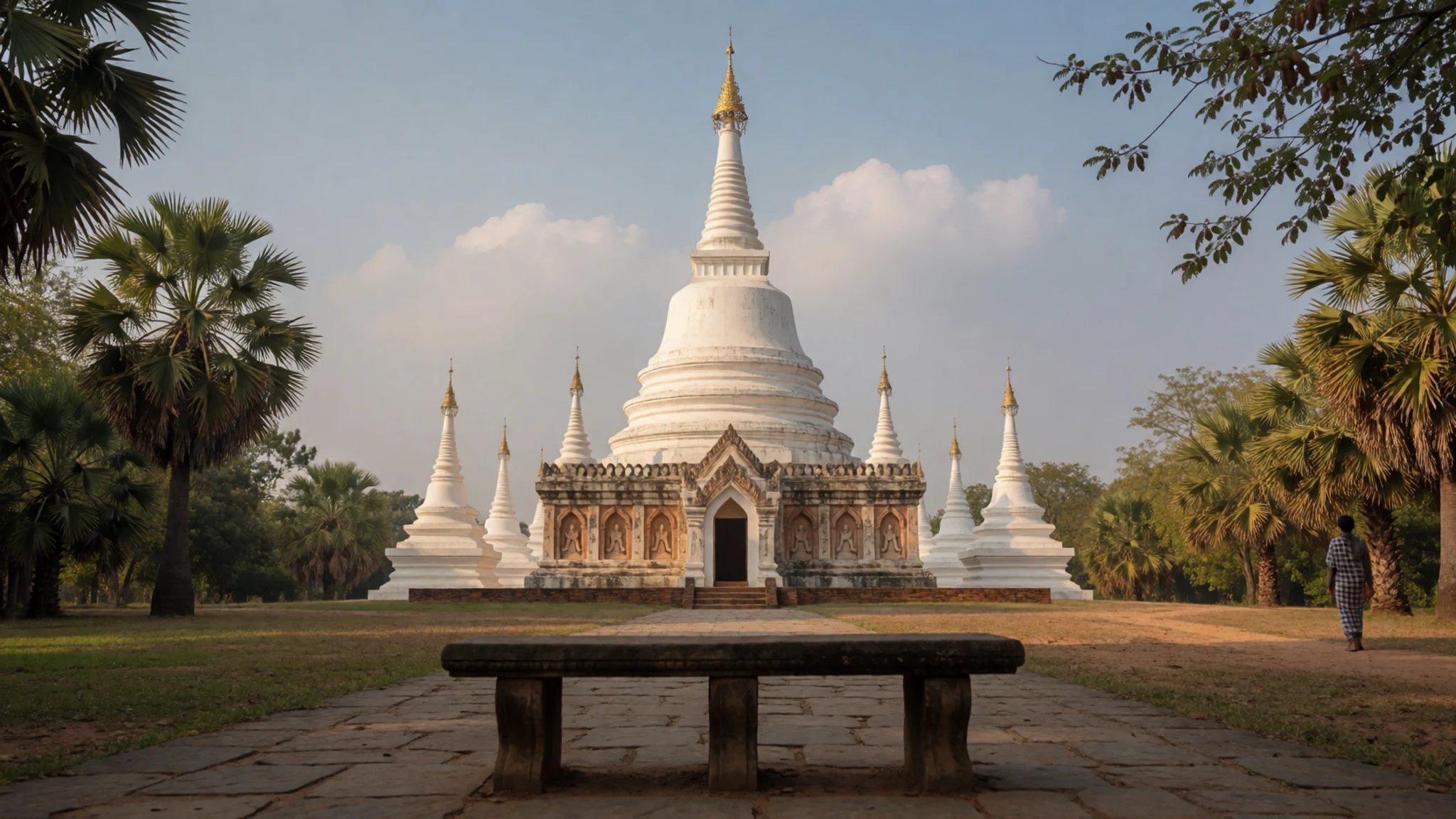
- The Big Buddha road and monastery — Oudong Monastery area
A road through the monastery grounds leads to a large Buddha statue, a popular stop for Cambodian visitors. Monks, school groups and families pass through, so it is a good place to see Oudong as a living religious site, not a ruin, and to buy a cold drink.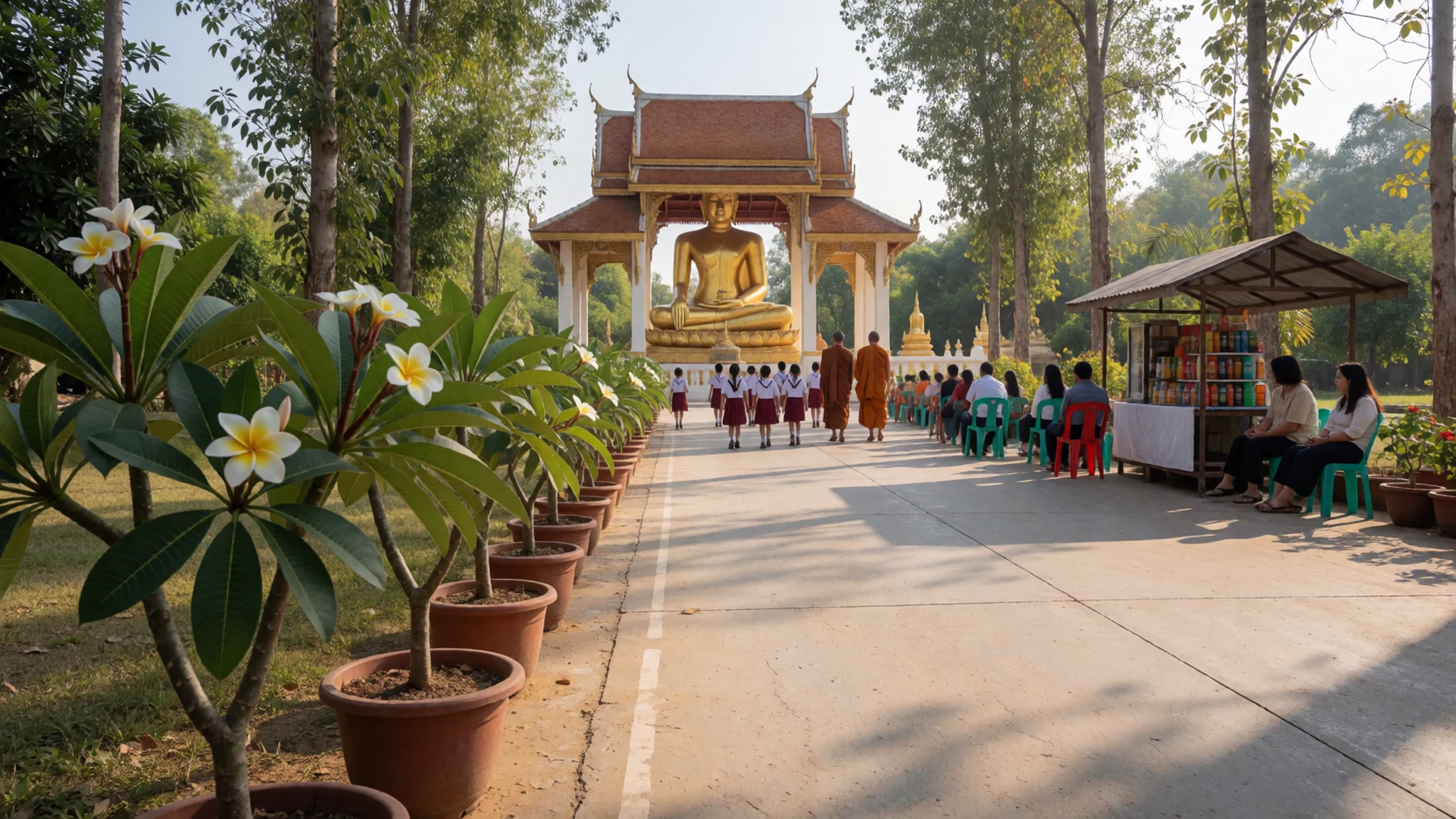
- Naga stairways — Foot of the ridge and approach steps
The serpent balustrades that flank the ascent are worth noticing in their own right. Their heads and curving bodies follow the steps, marking the climb as a ritual approach, and the older carved sections show how the ridge has been rebuilt and repainted over time.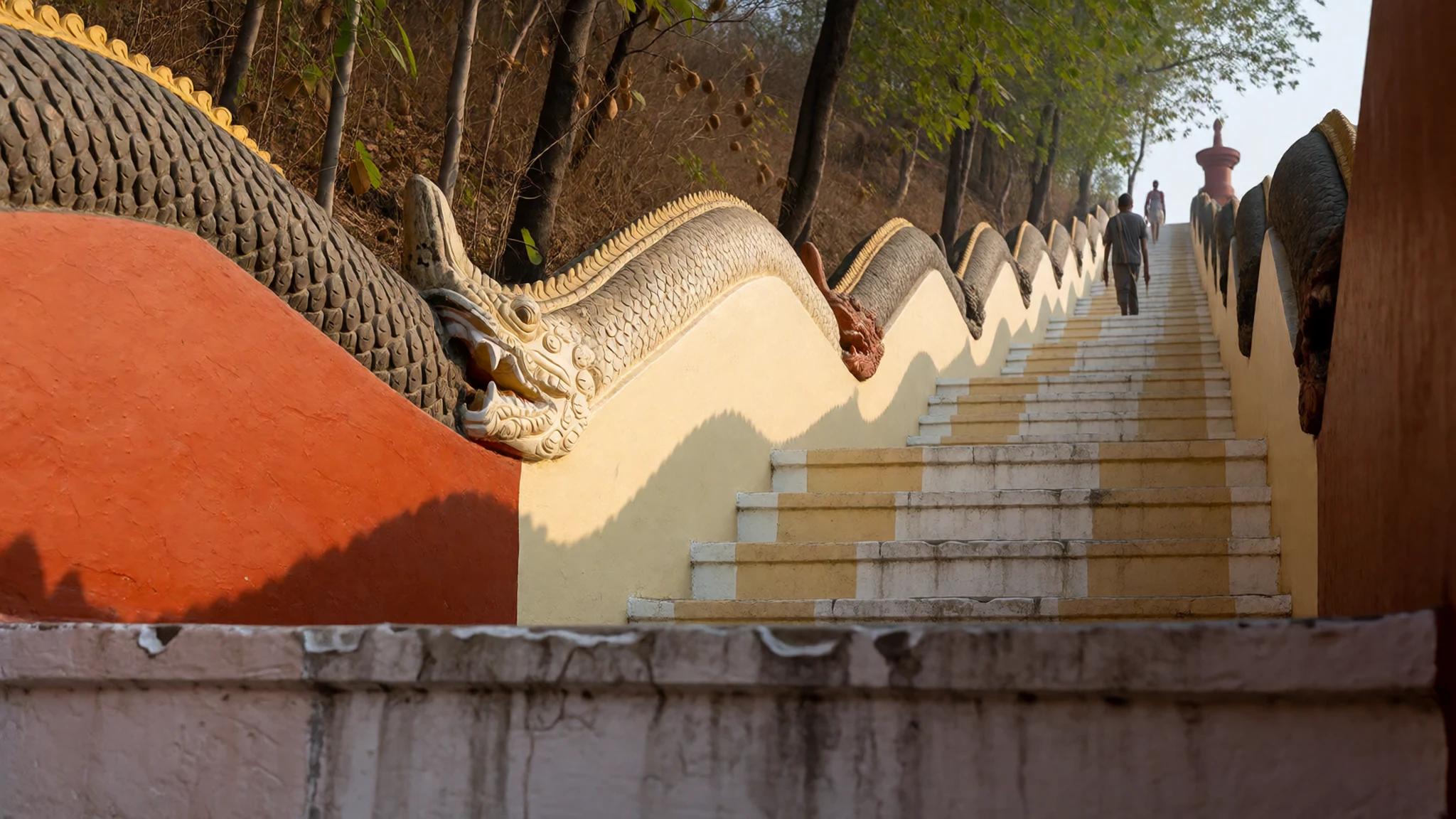
Culture
Oudong is first of all a Buddhist place, and its customs are those of Cambodian Theravada practice. Monks live in the monasteries around the ridge, families climb to make offerings, and many people come on festival days to pray, light incense and give food or money to the monastic community. Royal history sits alongside this: the stupas on the ridge hold the remains of kings, so the hill is treated as a place of memory as much as a viewpoint. Because the Khmer Rouge destroyed much of Oudong, restoration is a form of devotion here, and newer shrines are often paid for by donations from ordinary families. In this part of Cambodia, people are generally welcoming but not used to a stream of foreign visitors, and in rural areas many dislike being photographed, so it is polite to ask first. Modest dress is the norm, particularly for women, with knees and shoulders covered. Ceremonies, chanting and prayer are common at the stupas, and visitors are usually welcome to watch quietly from the edge. Remove your shoes and hat before entering any shrine or temple hall, dress modestly with shoulders and knees covered, and always ask before photographing monks, worshippers or anyone at prayer.
What to wear
Oudong shows Cambodian dress as it is worn at a pilgrimage site, and the traditional pieces are easy to spot. The sampot is a length of cloth wrapped and tucked around the hips, worn by women and, in ceremonial form, by men. Silk versions, often woven with patterned weft, are saved for weddings, temple festivals and formal occasions, while cotton is used day to day. The krama is a checked cotton scarf that people wear on the head, around the neck or as a sling, and it protects against sun and dust. Everyday clothing now is mostly practical: loose trousers or long skirts, T-shirts and sandals or flip-flops, with a krama on rural workers. On festival days, families often dress up in their best silk and white tops, and older women visiting temples may wear white. Many women cover up in the daytime to avoid tanning. A visitor should dress for heat and for a religious site together. Light cotton or linen, with covered shoulders and knee-length shorts or trousers at least, is the right choice. Choose sturdy, comfortable shoes with grip for the steps, since sandals that slip off are a nuisance, and bring a hat, sunscreen and a scarf that doubles as a cover-up.
What to eat
- Kralan (sticky rice in bamboo) — Roadside stalls near the foot of the ridge
Sticky rice cooked with coconut milk and beans inside a bamboo tube, grilled over charcoal, then peeled and eaten as a chewy, sweet-savoury snack. It is a common pilgrimage-site treat, sold from roadside stalls on routes to temples.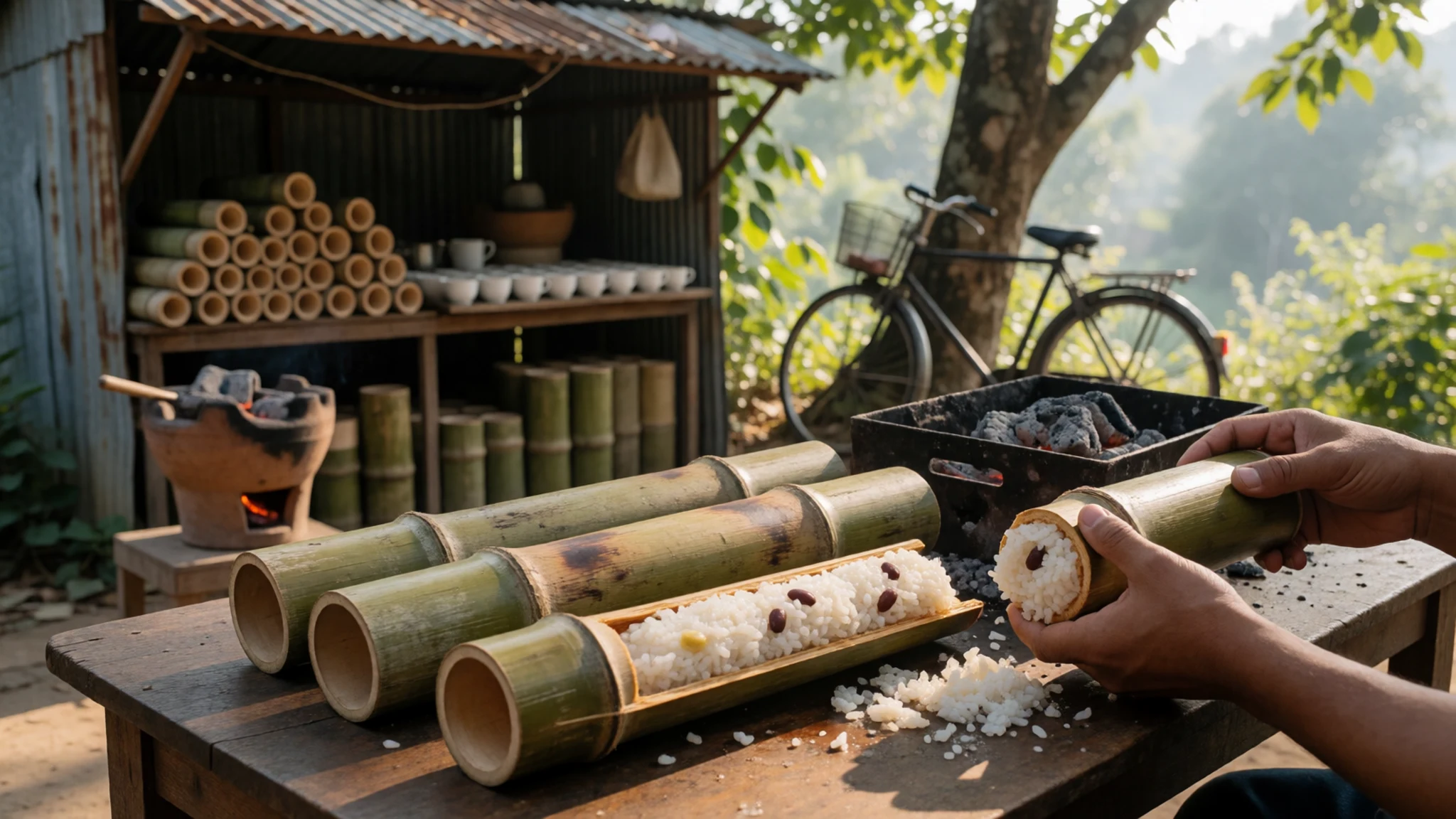
- Num banh chok — Morning market and breakfast stalls in the town
Fresh rice noodles topped with a cool green fish-based curry and a heap of herbs, flowers and crunchy vegetables. It is a classic Khmer breakfast, and the morning stalls in town are the place to try it.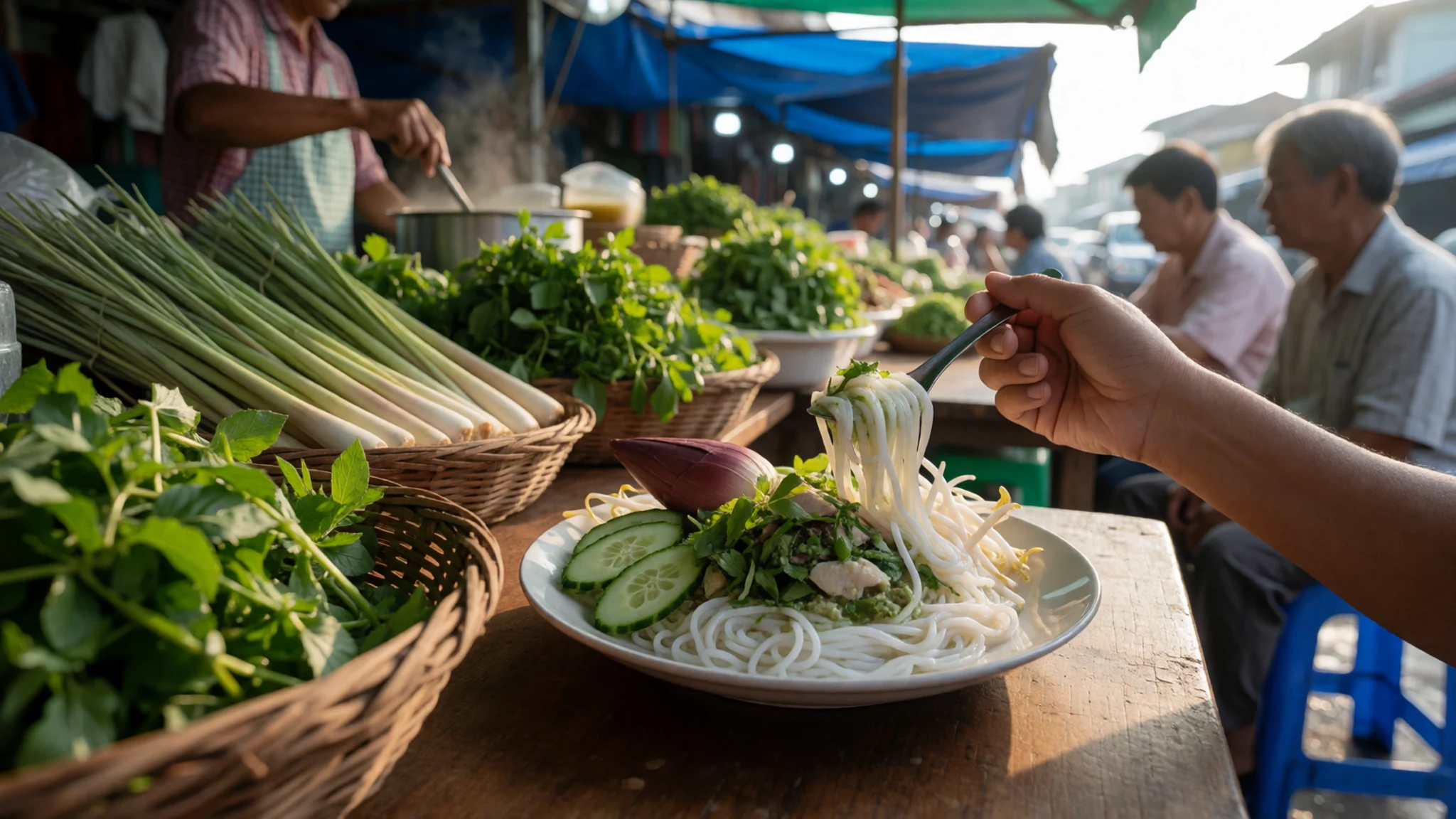
- Lok lak — Simple eateries on the main road
Stir-fried beef cubes in a dark, savoury sauce, served over lettuce, tomato and onion with a dip of lime and black pepper. It is a safe, filling dish for visitors, and a good illustration of how Khmer cooking prefers pepper to chilli. - Fish amok — Riverside and roadside restaurants on the Phnom Penh route
A soft, mousse-like curry of fish steamed with coconut milk and aromatic roots, traditionally in a banana-leaf cup. It is mild, fragrant and widely served across Cambodia, and is easy to find when stopping for a meal on the way back to the capital. - Prahok dishes — Local family eateries and the town market
Prahok is a fermented fish paste at the base of much Khmer cooking, added to dips, soups and stir-fries. Its smell is strong and it divides opinion. Try it as a dip with raw vegetables, a mild way to meet it.
Plan it
Best time. November to February is the most comfortable stretch, with dry weather and cooler mornings. March to May is very hot and the ridge steps are exposed, while the rainy season brings humidity and muddy paths, though the rice fields look their greenest.
How long. 1
Getting there. Fly into Phnom Penh International Airport, then travel northwest by road for about 35 km. A hired car or tuk-tuk with a driver is the simplest way, and the last leg ends at the foot of the ridge, where the stairways begin.
Budget. low
Tips
- Go early in the morning to avoid the heat and the weekend crowds
- Carry water, a hat and sun protection, as the stairs are mostly in the open
- Bring small cash for offerings, drinks and snacks, since cards are rarely used
- Agree the fare or hire price with your driver before leaving Phnom Penh
- Wear shoes that are easy to remove at shrine doors and sturdy enough for the steps
Etiquette
- Cover shoulders and knees, and remove shoes and hats at shrines
- Ask before photographing monks, worshippers or people at prayer
- Keep voices low near stupas and ceremonies
Nearby
Sources
- Wikidata Q2431796 (CC0)
- Wikipedia: Oudong (rev 1384630486) (CC BY-SA 4.0)
- Wikivoyage: Cambodia (rev 5395048) (CC BY-SA 4.0)
- Photo: The Old Cambodian capital Udong near Phnom Penh, Stefan Fussan (CC BY-SA 2.5)
- Photo: Naga and detail of Prasat Nokor Vimean Sour, MoonsMoon (CC BY 4.0)
- Photo: Prasat Nokor Vimean Sour from atop Phnom Oudong, MoonsMoon (CC BY 4.0)
- Photo: Stupa of King Ang Duong, Lars Olsen (CC BY-SA 2.0)
- Photo: Big Buddha Statue, David Stanley (CC BY 4.0)
- Photo: Cambodge - Oudong - Naga, BluesyPete (CC BY 3.0)
- Photo: Faces of Oudong, n ole (CC BY 2.5)
- Photo: Oudong Cambodia November 1964, Don Christie (CC BY-SA 4.0)


