Otaru
Otaru, Japan
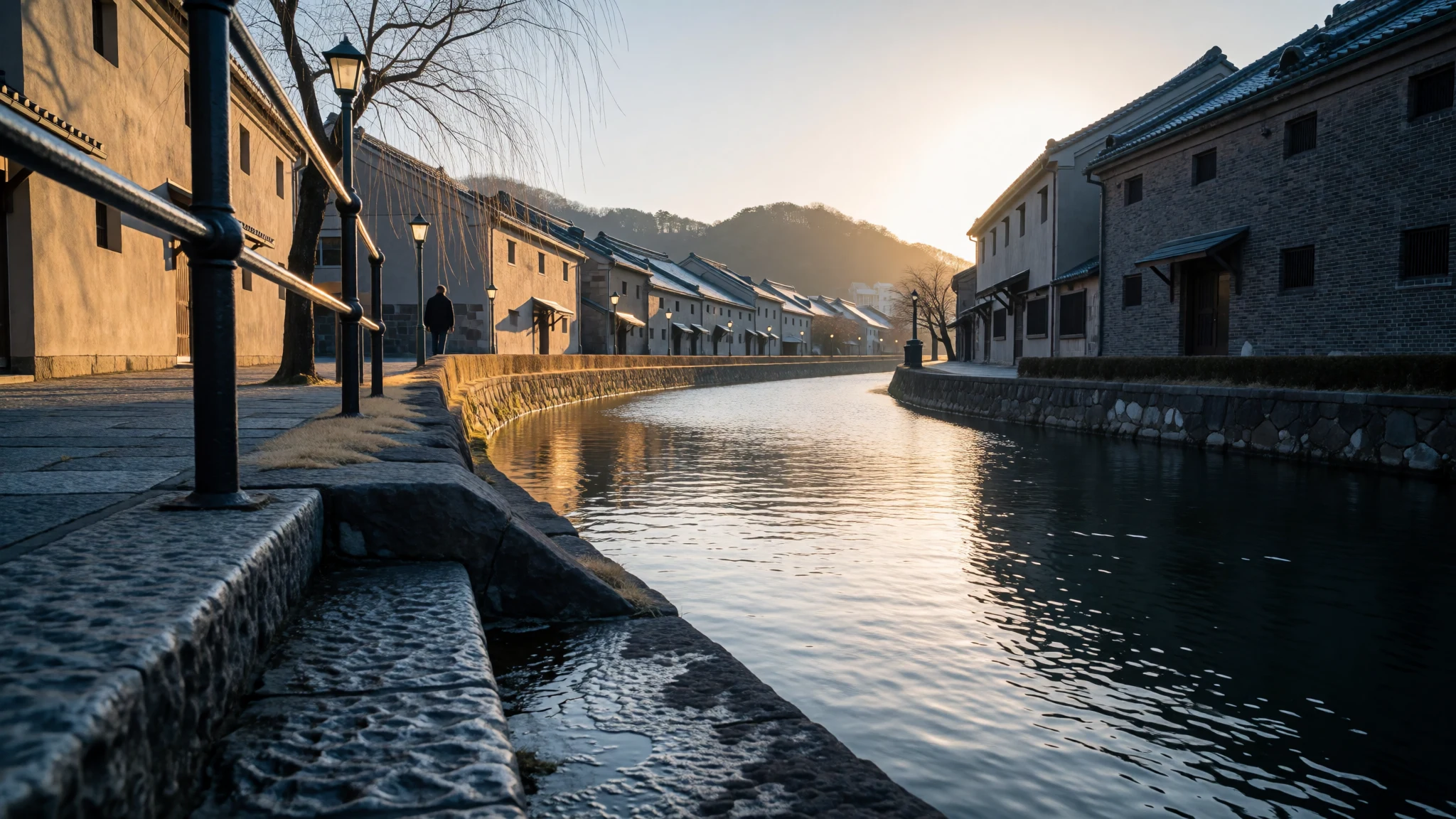
Otaru is a snowy Hokkaido port where Meiji-era warehouses, a lamp-lit canal and fresh sushi sit within easy reach of Sapporo.
The place
Otaru is a port city on Hokkaido's Sea of Japan coast, facing Ishikari Bay, with a little over a hundred thousand residents. It lies north-west of Sapporo, close enough that many people live here and commute to the larger city, yet it keeps its own character as a harbour town. The geography is tight. Mountains, with Mount Tengu the best known, fall steeply towards the water and leave only a narrow strip of flat land along the shore. That strip has been built over almost completely, so housing climbs the hillsides in terraces, a district called Saka-no-machi, the hill town. Two of its slopes have memorable names: Funamizaka, Boat-view Hill, and Jigokuzaka, Hell Hill, a label that makes sense in an icy winter. Around the old waterfront stand trading houses and warehouses from the Meiji era, now used as cafés, glass shops and museums, and a stone-edged canal runs through the middle. Summers are warm and humid but milder than in southern Japan. Winters are long, dark and extremely snowy, with very little sunshine. Otaru is the largest city in Shiribeshi Subprefecture, although the subprefecture's capital is Kutchan, further inland. Visitors gather around the canal and the nearby shopping streets, so afternoons there can be crowded, while the lanes up the hillsides stay much quieter.
Its story
Otaru takes its name from the Ainu language, probably meaning a river running through a sandy beach. The Ainu presence here is old: the small surviving part of Temiya Cave holds carvings made in the Zoku-Jōmon period, many centuries ago. A local legend about Mount Akaiwa tells of Sitonai, a village chief's teenage daughter who killed a white snake living in a cave on the mountain after it demanded girls as yearly sacrifices. The tale explains the name of Hakuryu Gongen Cave and the shrine built to keep the snake's spirit from returning. The modern town grew with Japan's push into Hokkaido. It was recognised as a village late in the shogunate period, and in 1880 Hokkaido's first railway opened between Otaru and Sapporo. An imperial decree in 1899 made the port open to trade with the United States and the United Kingdom. Through the early twentieth century Otaru was Hokkaido's financial and business centre and a trading port linked with Japanese-ruled southern Sakhalin, which is why so many solid bank and merchant buildings survive. It became a city in 1922. Tragedy followed when a freight train carrying dynamite exploded at Temiya Station, killing dozens of people and wrecking warehouses and harbour facilities. During the Second World War the city also held a prison camp for Aleuts.
What to see
- Otaru Canal
The Otaru Canal is a short, stone-edged waterway, completed in 1923 and now a walking route about ten minutes from Otaru Station. Old warehouses line the water. Gas-style lamps and path lights come on at dusk, which is the best time to see it, though also when the crowds are thickest.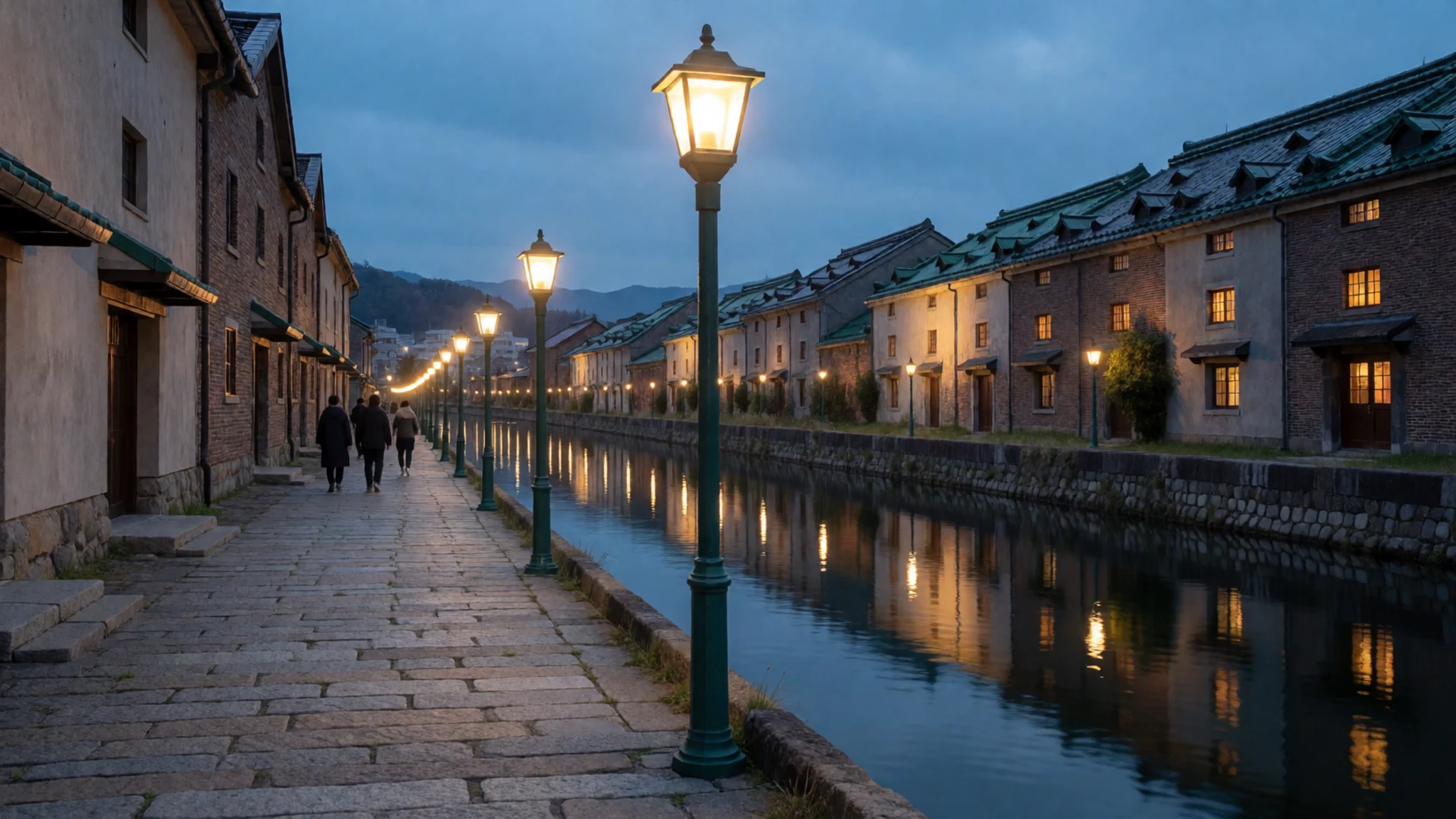
- Otaru Music Box Museum
Near the old centre, Otaru's music box museum explains how these mechanical instruments developed and shows several notable examples. A large shop attached sells many kinds, from small trinkets to elaborate pieces. It suits a wet or snowy afternoon, when outdoor sightseeing loses its appeal.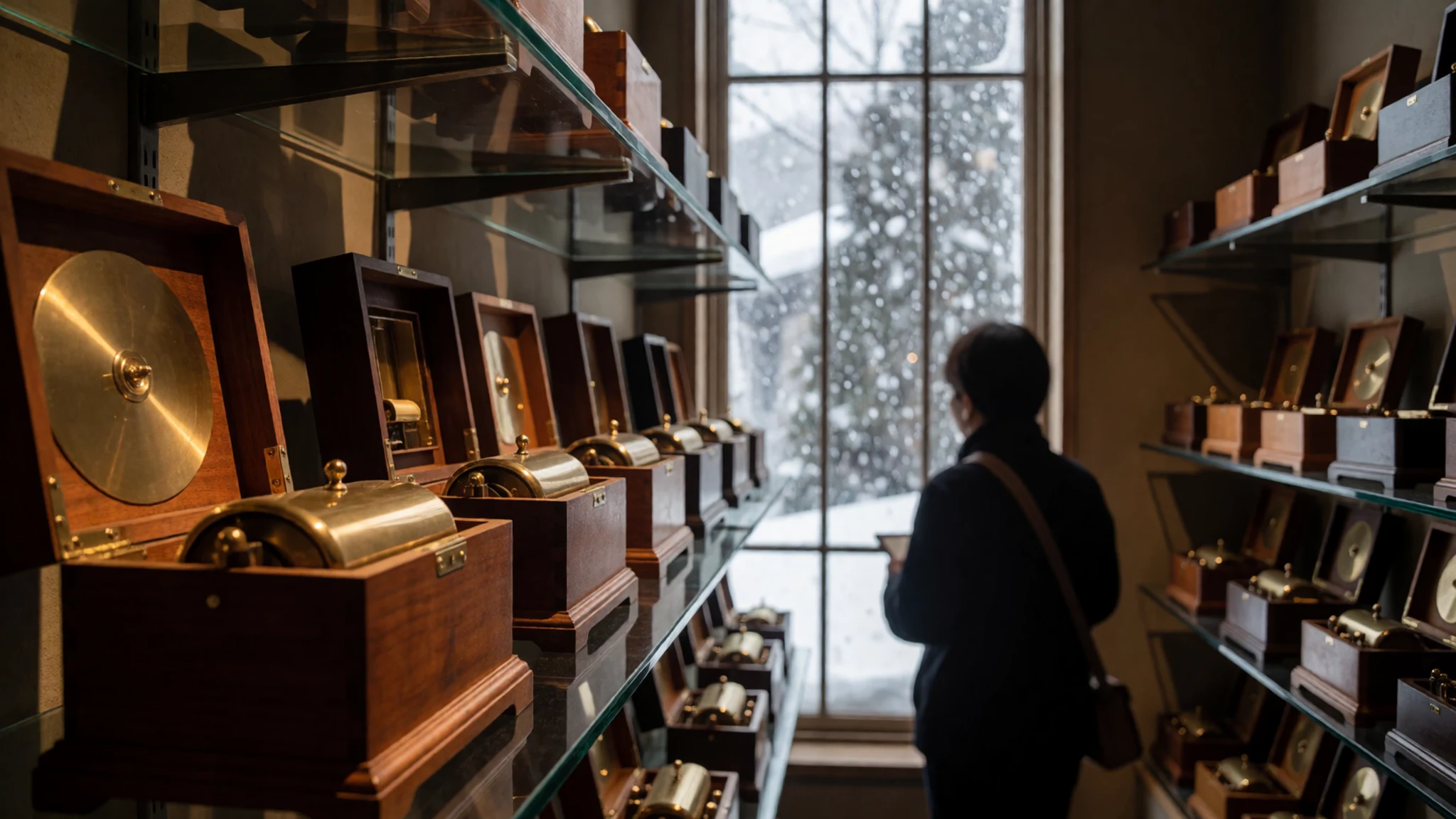
- Steam Clock
Outside the music box museum, a steam-powered clock stands as a local attraction. It chimes every quarter hour and sounds its main whistle on the hour. A small crowd usually gathers just before the hour, so arrive a few minutes early for a clear view.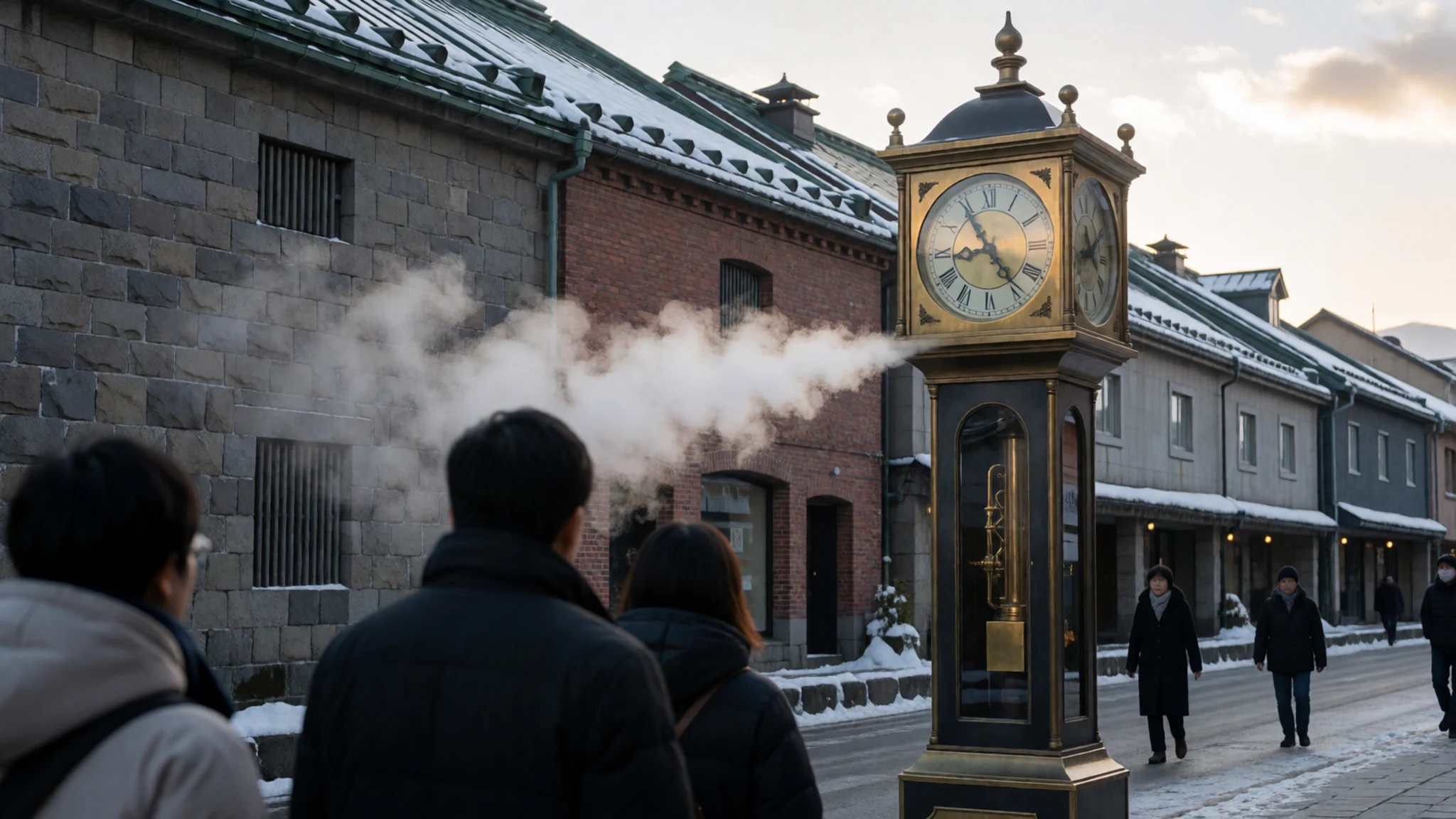
- Mount Tengu
Mount Tengu, named after the elusive tengu spirit, is the city's popular viewpoint. From the top the whole town, the harbour and the Sea of Japan lie spread out below, and the night view is especially admired. Dress warmly, because the summit is cooler and windier than the waterfront.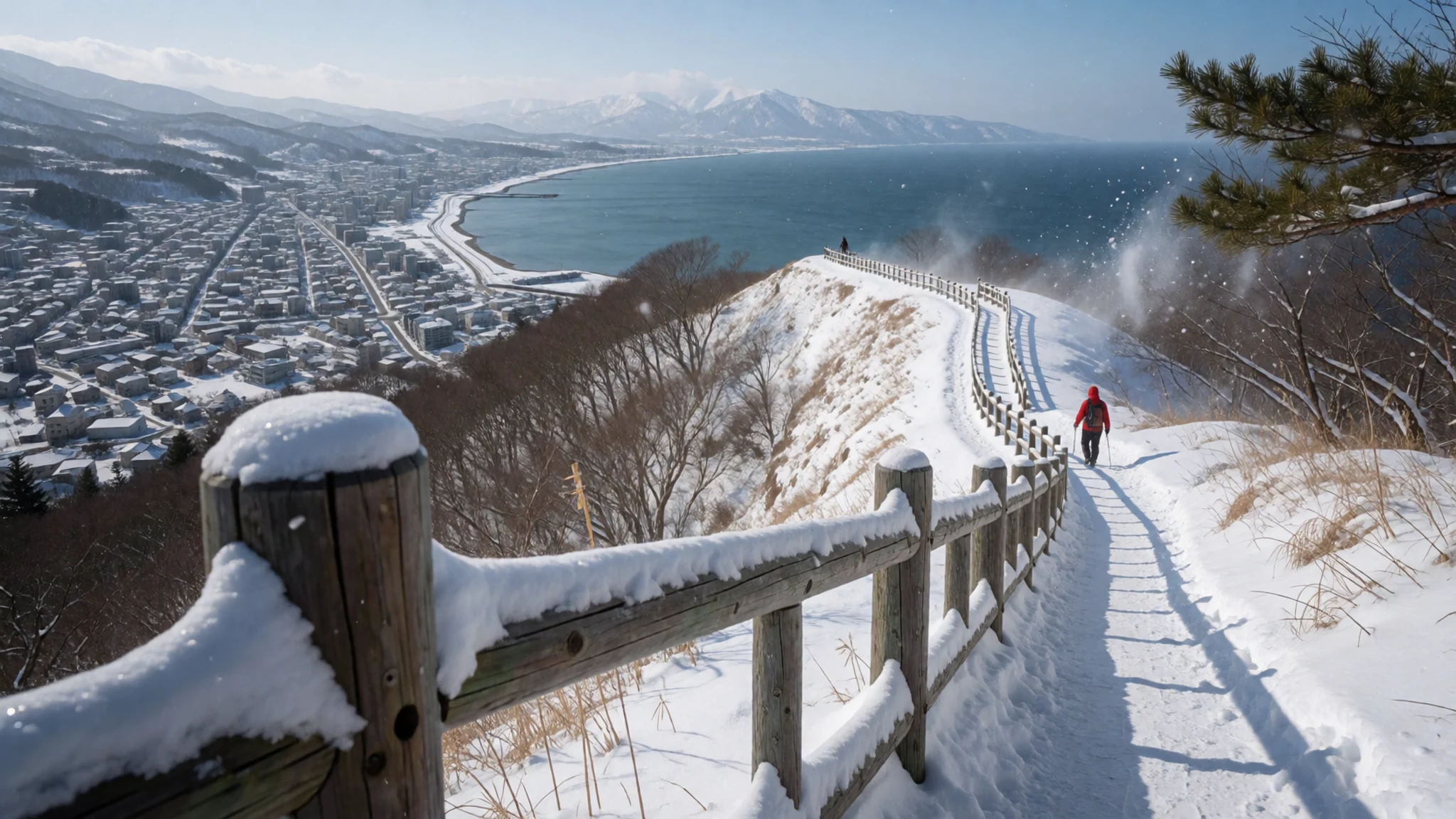
- Otaru City Museum
Otaru Art Base is a contemporary art space, which makes sense for the town's creative spirit. Its galleries feature diverse modern works, a useful reminder of how art shapes the city's culture. It sits north of the canal area, away from the busiest streets.
Culture
Otaru's culture is layered. The name and the oldest carvings belong to the Ainu, Hokkaido's indigenous people, and local stories such as that of Sitonai and the white snake are still told in connection with Mount Akaiwa and its shrine. On top of that lies the Japanese settlement of the Meiji era, when merchants, shipping firms and banks built in stone and brick, and the heavy facades along the waterfront come from this period. Today the town's identity rests on craft and hospitality: music boxes, glasswork, sweets and a reputation for sushi. Otaru is also a commuter suburb of Sapporo, so ordinary life, with schools, supermarkets and trains full of workers, goes on beside the visitor trail. Winter shapes everything. Snow is cleared from steep streets, lanterns and candles are used to decorate the canal in the colder months, and locals have a practical, unfussy attitude to the weather. Hill streets above the centre are residential, and a short climb gives a better sense of everyday Otaru than the main tourist strip does. Shrines on the slopes are small and local rather than grand, and they are best visited quietly. In shops and narrow lanes, please keep your voice low, do not photograph residents or their houses without asking, and stand aside for people clearing snow or carrying shopping.
What to wear
Otaru sits in Ainu homeland, and the traditional Ainu robe is the garment most tied to this part of Japan. Historically it was made from the inner bark fibre of the elm, woven into a sturdy cloth called attus, and decorated with bold appliqué and embroidered patterns believed to protect the wearer. Such robes appear now at ceremonies and cultural events rather than daily life. Elsewhere in Japan, the kimono and the lighter cotton yukata are worn for festivals and summer evenings, and some visitors hire them for photographs. What people actually wear in Otaru is practical. In winter that means long padded coats, wool hats, scarves, gloves and waterproof boots with deep treads. In summer, residents choose light shirts and trousers, with a layer for cool sea breezes. Office workers in the commuter trains tend towards plain, neat clothes. Visitors should plan for the season. From November to March, bring insulated, waterproof boots with real grip, because pavements and hill streets turn to ice, along with thermal layers, a windproof coat, gloves and a hat. In summer, pack light, breathable clothes, a rain jacket and comfortable walking shoes for the steep slopes. There is no strict dress code, but cover shoulders and avoid beachwear when entering a shrine or temple.
What to eat
- Sushi — sushi counters in the streets around the canal and Kitaichi area
Otaru has a strong reputation for sushi, built on fresh seafood landed on this coast. Counter restaurants cluster on the streets near the old warehouse district, and those a short walk towards the canal are often easier on the budget.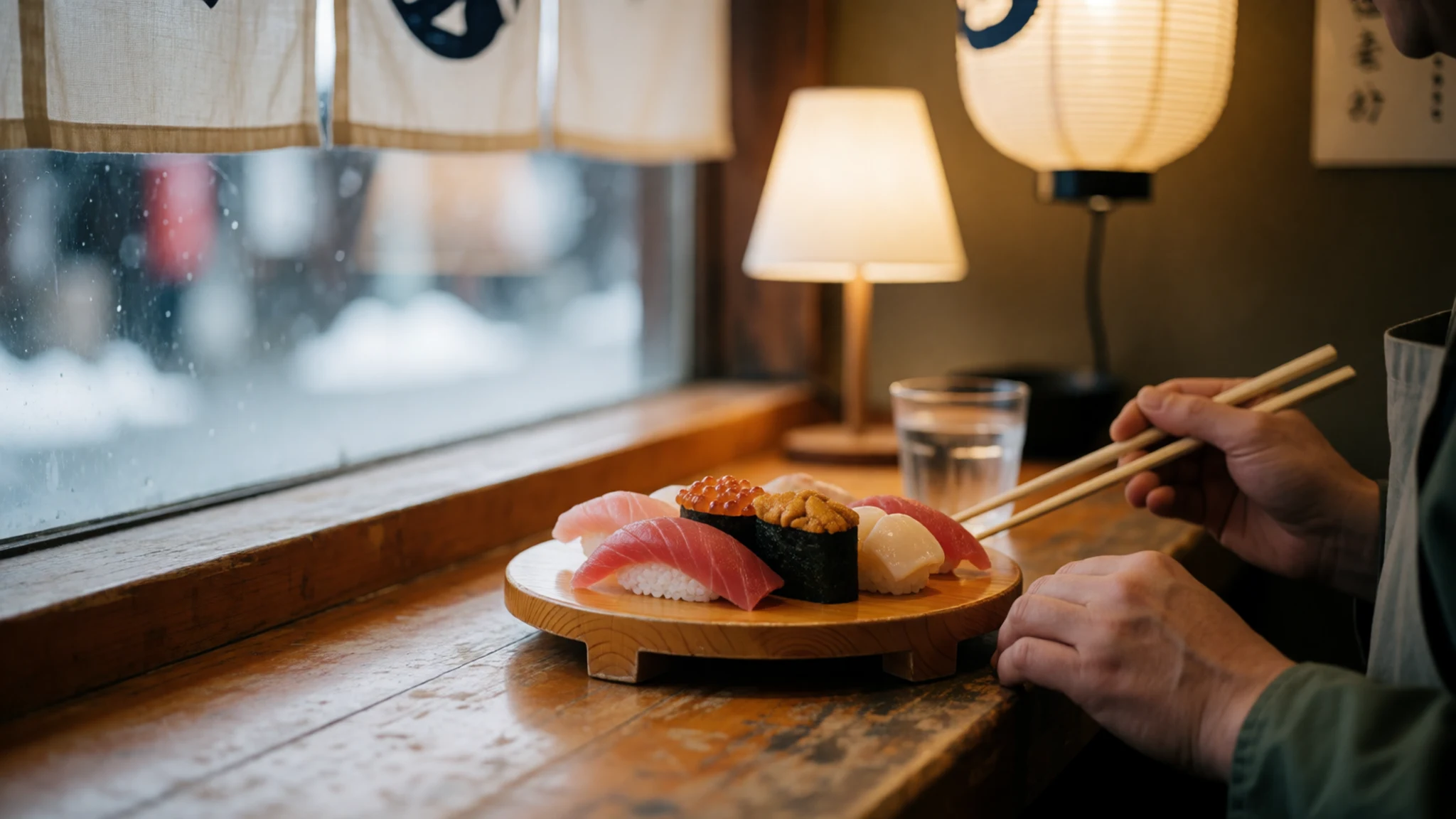
- Kaiten sushi — busy conveyor-belt sushi restaurants in the town centre
Conveyor-belt sushi is the relaxed way to eat the local catch. Plates circle past, you take what appeals, and ordering is simple even without Japanese. Popular places have long queues at meal times, so go early or off-peak.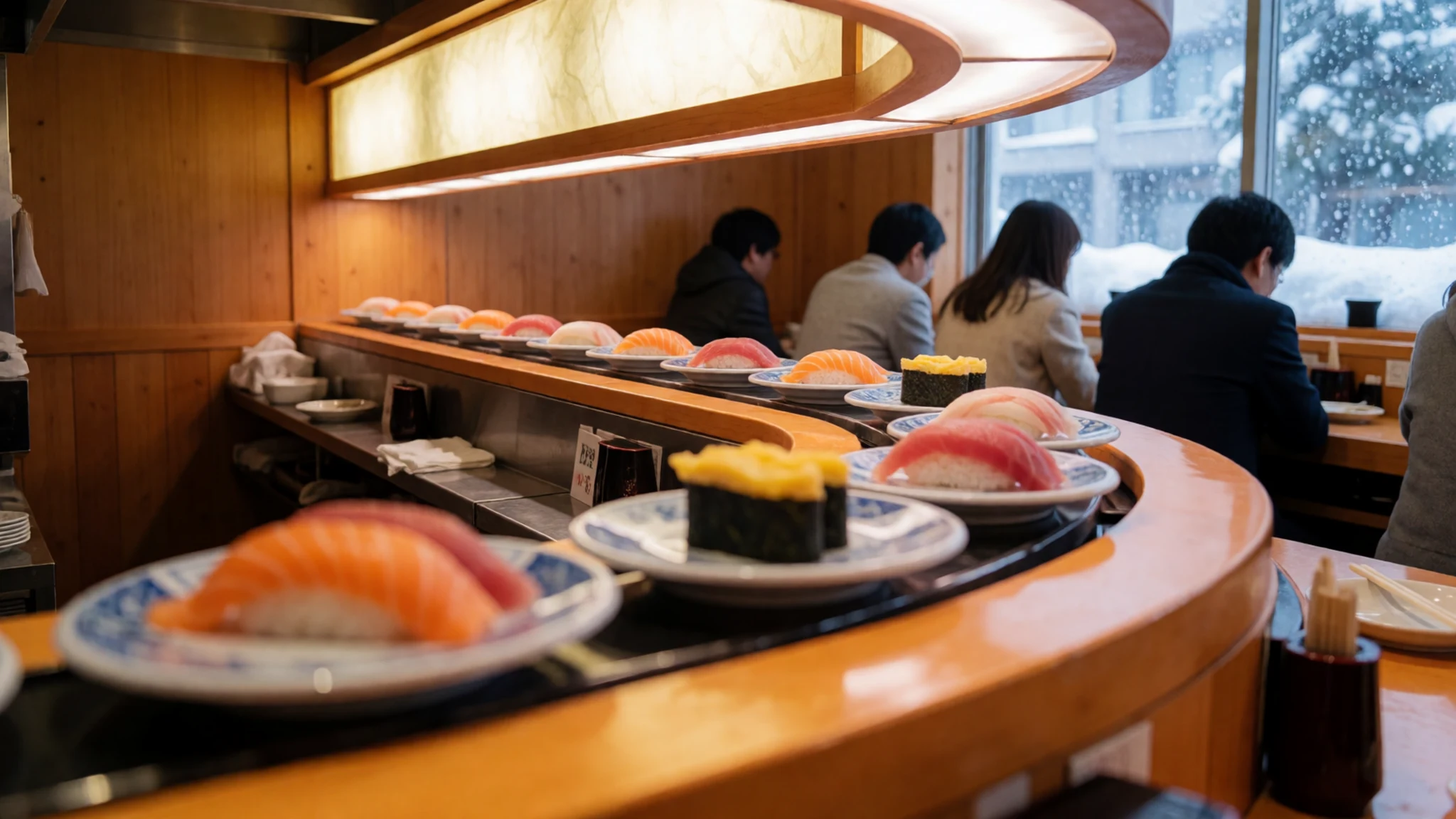
- Warehouse-hall set meals — converted warehouses near the old waterfront
Some of the old stone warehouses now hold large, wood-panelled dining halls serving local home-style meals rather than sushi. They suit a group with mixed tastes and make a good pause from the cold, with the building itself part of the interest. - Double Fromage cheesecake — confectionery shops on the main shopping street near the music box museum
Otaru's confectioners are known across Japan for cheesecake, and the double-layered Double Fromage is the signature of one famous shop. It is eaten as a soft, light sweet with coffee, and sold in boxes for taking home. - Local beer — the brewery beer hall in the old waterfront district
A beer hall in Otaru brews its own beer and serves it in a room decked out with old-fashioned props. It is a comfortable place for an evening drink after a day on the hills, and the beer pairs well with seafood.
Plan it
Best time. May to June and September to October are the easiest months: summer is warm and humid but milder than southern Japan, and autumn is cooler and clearer. August can be sticky. From November to March the town is extremely snowy and sunless, beautiful but slow and slippery.
How long. 1–2
Getting there. Fly to New Chitose Airport near Sapporo, then take a direct rapid train towards Otaru, about an hour and ten minutes. From central Sapporo, trains on the JR Hakodate Line are frequent, and the fastest rapid service takes around half an hour. Otaru Station is the closest to the centre, and the canal is a short walk away. From Niseko, only slow local trains run, so allow about two hours.
Budget. mid
Tips
- Visit the canal early in the morning or after the day-trippers leave, when the lamps are lit and crowds are thinner
- Queue for popular sushi places before the usual meal times, or eat off-peak
- Wear boots with good grip in winter, because the hill streets are steep and icy
- Check the city website, https://www.city.otaru.lg.jp/, for current events, opening times and winter conditions
- Carry some cash for small shops and eateries, as not every place takes cards
Etiquette
- Keep your voice low on residential hill streets and ask before photographing people or their homes
- Do not climb on snow banks or block pavements when taking photographs in winter
- Finish what you take from a sushi conveyor and follow the counter's lead on ordering
Nearby
Sources
- Wikidata Q242108 (CC0)
- Wikipedia: Otaru (rev 1381844964) (CC BY-SA 4.0)
- Wikivoyage: Otaru (rev 5431502) (CC BY-SA 4.0)
- Photo: Otaru from Tenguyama (Soica2001) (Public domain)
- Photo: Otaru Montage (Komatta) (CC BY 3.0)
- Photo: Otaru harbour, 1873 (Mitsumine Imamura) (Public domain)
- Photo: Otaru city, 1909 (Public domain)
- Photo: Otaru port, 1909 (Public domain)
- Photo: Bank of Japan Otaru Museum (663highland) (CC BY 3.0)
- Photo: Otaru aerial panorama (Chensiyuan) (CC BY-SA 4.0)
- Photo: Mt. Tengu (Gulgardiner) (CC BY-SA 4.0)


