Orkney
Orkney, United Kingdom
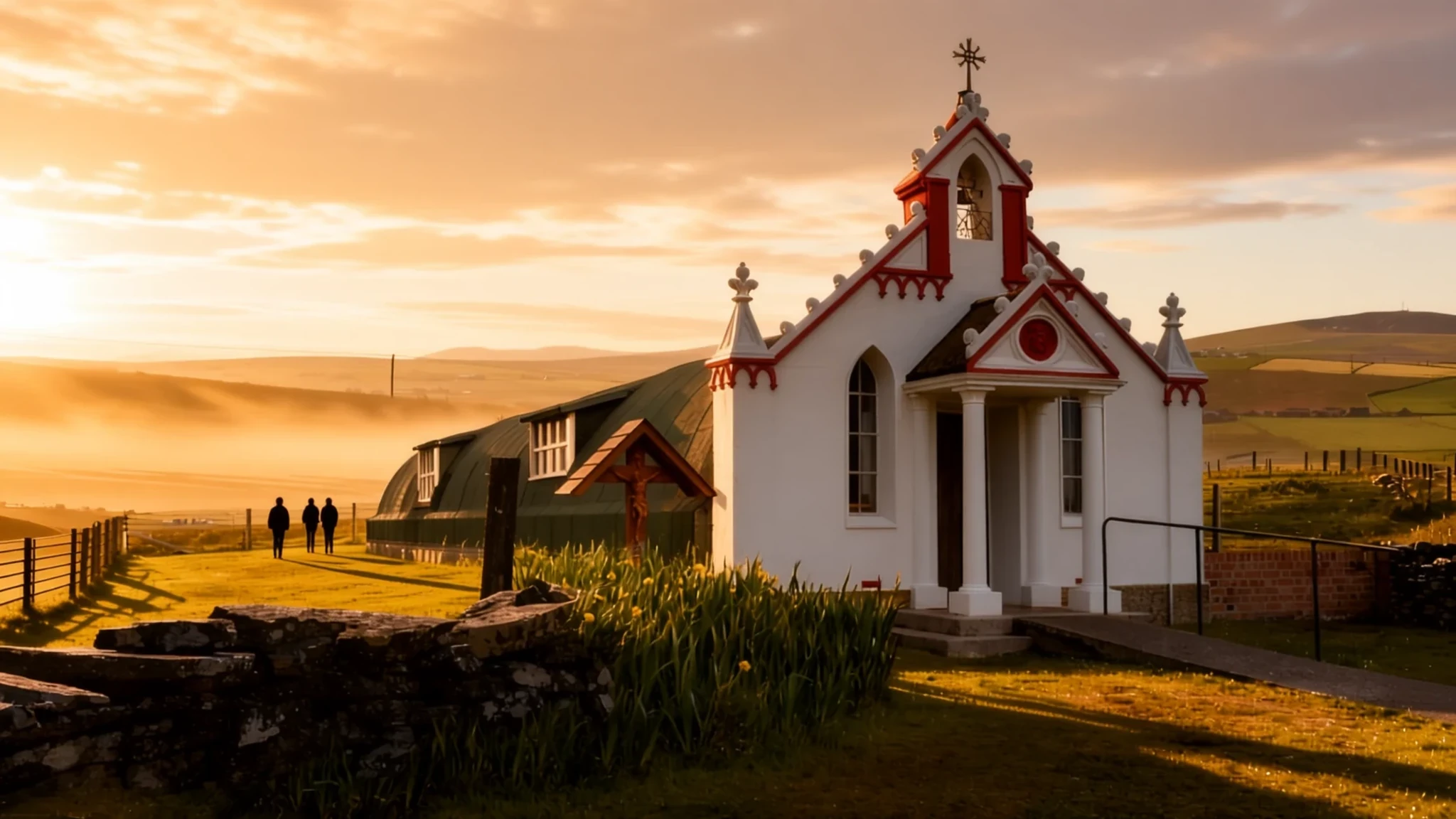
Orkney packs some of Europe's oldest stone-built villages and tombs into soft green islands, with whisky, wide beaches and very few crowds.
The place
Orkney is an archipelago lying just off the north coast of mainland Scotland, separated from Caithness by a short, often rough stretch of sea. It belongs to the Northern Isles, together with Shetland. There are about 70 islands, and around 20 of them have people living on them. The population is 22,270, so the feel is rural and unhurried, with farms, quiet roads and big skies rather than towns.
The biggest island is called the Mainland, which can confuse newcomers, since the real Scottish mainland is a separate place. It covers 523 square kilometres. Kirkwall is the largest settlement and the administrative centre, and Stromness is the other main town and ferry port. Most of the remaining islands fall into two groups, the North Isles and the South Isles, and reaching them means a further ferry or a small plane.
Orkney is a council area in its own right, run by Orkney Islands Council, and it is also a historic county. The land is mostly low and treeless, with farmland, heather and cliffs, so the weather is always part of the view. Wind is constant, light lasts very late in summer and disappears early in winter, and a sunny morning can turn grey by lunchtime.
All accommodation is independent and family-run. There are no hotel chains, only guesthouses, B&Bs, hostels, campsites and small hotels, with the most choice around Kirkwall. Book early for summer, and treat the islands as a place for slow days, not a checklist.
Its story
Orkney's story is told in stone, and it is long. Tools left by hunter-gatherers suggest people were here around 8000 BC, and a charred hazelnut shell found at Tankerness on the Mainland has been dated to roughly 6800 BC, pointing to nomadic Mesolithic visitors. The earliest known permanent settlement is the Knap of Howar, a Neolithic farmstead on Papa Westray dating from 3500 BC.
The great flowering came soon after. Skara Brae, often called the most intact Neolithic village in Europe, is thought to have been occupied from roughly 3100 BC. Around it sit the Standing Stones of Stenness, the Maeshowe passage grave and the Ring of Brodgar, along with other standing stones. Many of these Neolithic settlements were abandoned around 2500 BC, possibly because the climate changed. Even in 2021, archaeologists announced two polished stone balls from a 5500-year-old burial tomb on Sanday, a reminder that the ground still holds surprises.
Picts held the islands in the Iron Age. Around 875, Norse people began settling Orkney, and the Norwegian crown later took control of the islands. Those settlers shaped its language, its place names and its sagas. That Norwegian link ended in 1472, when the Scottish Parliament absorbed the Earldom of Orkney after the family of Margaret of Denmark failed to pay the dowry promised to James III of Scotland on her marriage.
The result is an island group that feels Scottish yet carries a strong Norse memory, with a landscape where the prehistoric and the medieval sit side by side in the same fields.
What to see
- Heart of Neolithic Orkney — Stenness, Mainland
This cluster around Stenness is the core of prehistoric Orkney and holds UNESCO World Heritage status. The Ring of Brodgar and the Standing Stones of Stenness stand in open ground, while Maeshowe is a chambered tomb. The dig at the Ness of Brodgar lies between them. Tour buses come and go, so wait out the lull.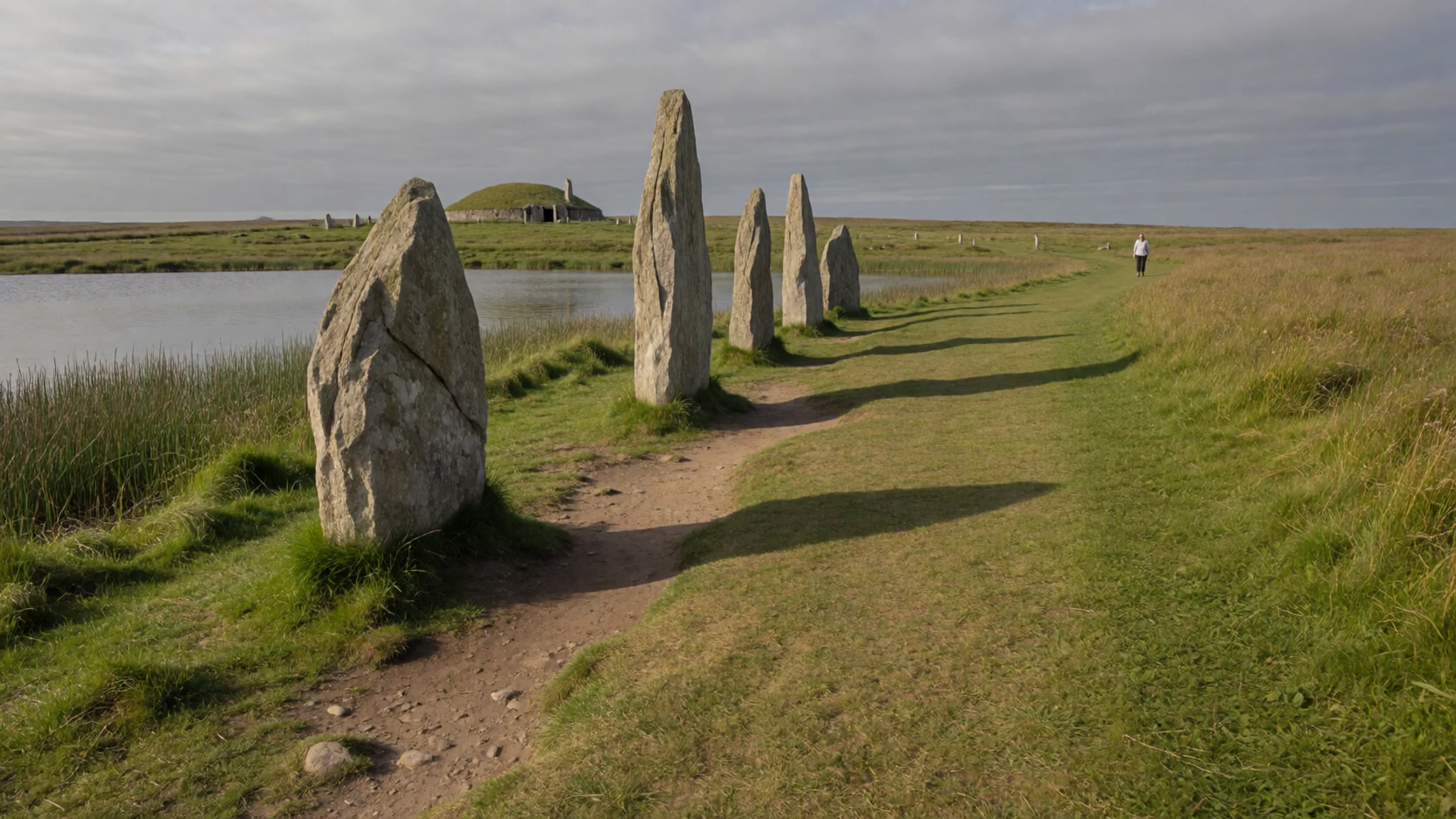
- Maeshowe — near Stenness, Mainland
A Neolithic passage grave, entered through a low tunnel into a stone chamber. Space is limited and access is restricted, so it can be fully booked days ahead. Reserve through the official visitor body before you travel, and do not rely on turning up on the day.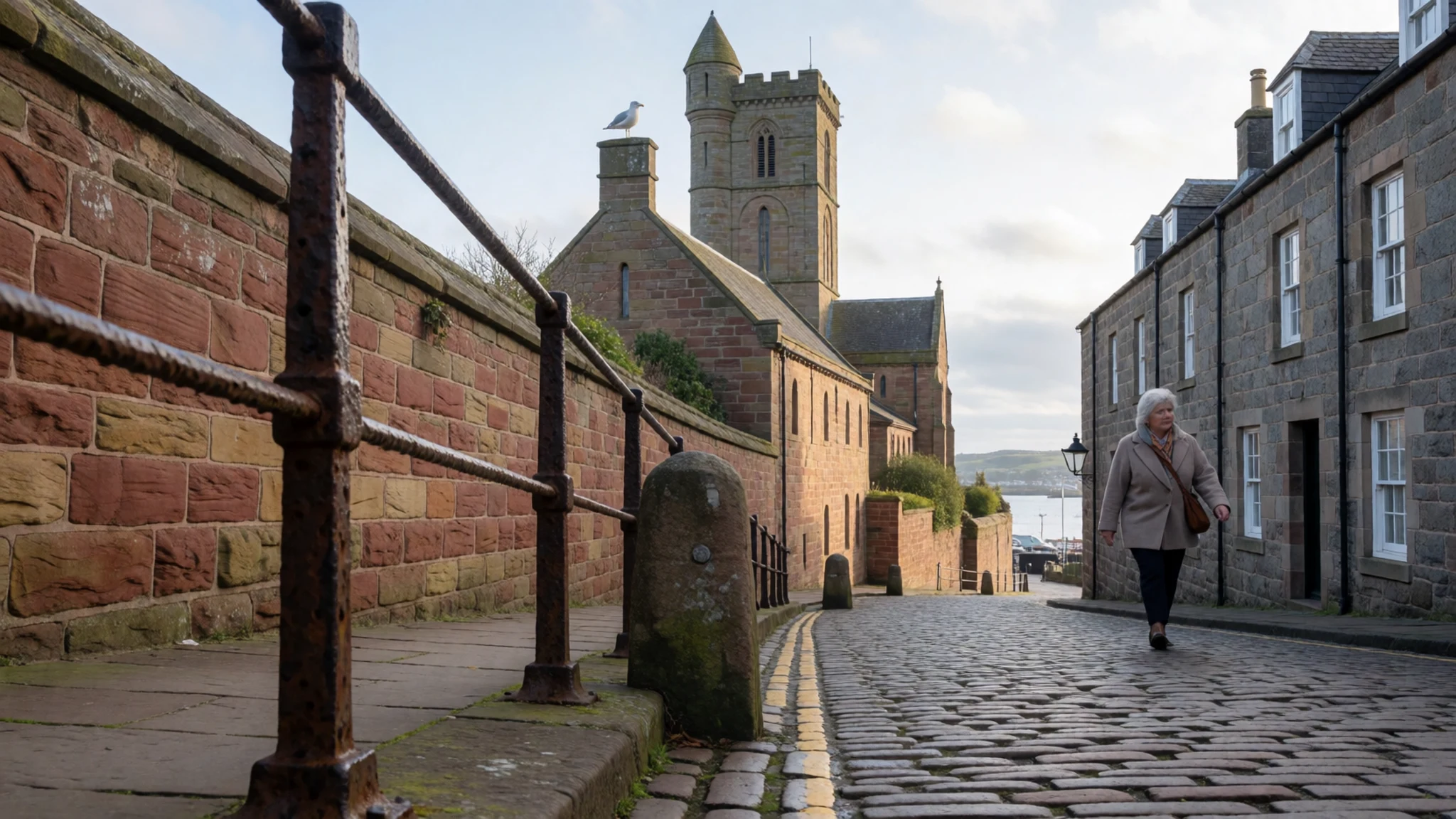
- Skara Brae — Bay of Skaill, west Mainland
A Neolithic village on the Mainland's west coast, believed to have been lived in from about 3100 BC. Low stone houses with built-in furniture survive beside a sandy bay. It is the best place to understand how ordinary people lived here, and it works well as a first stop.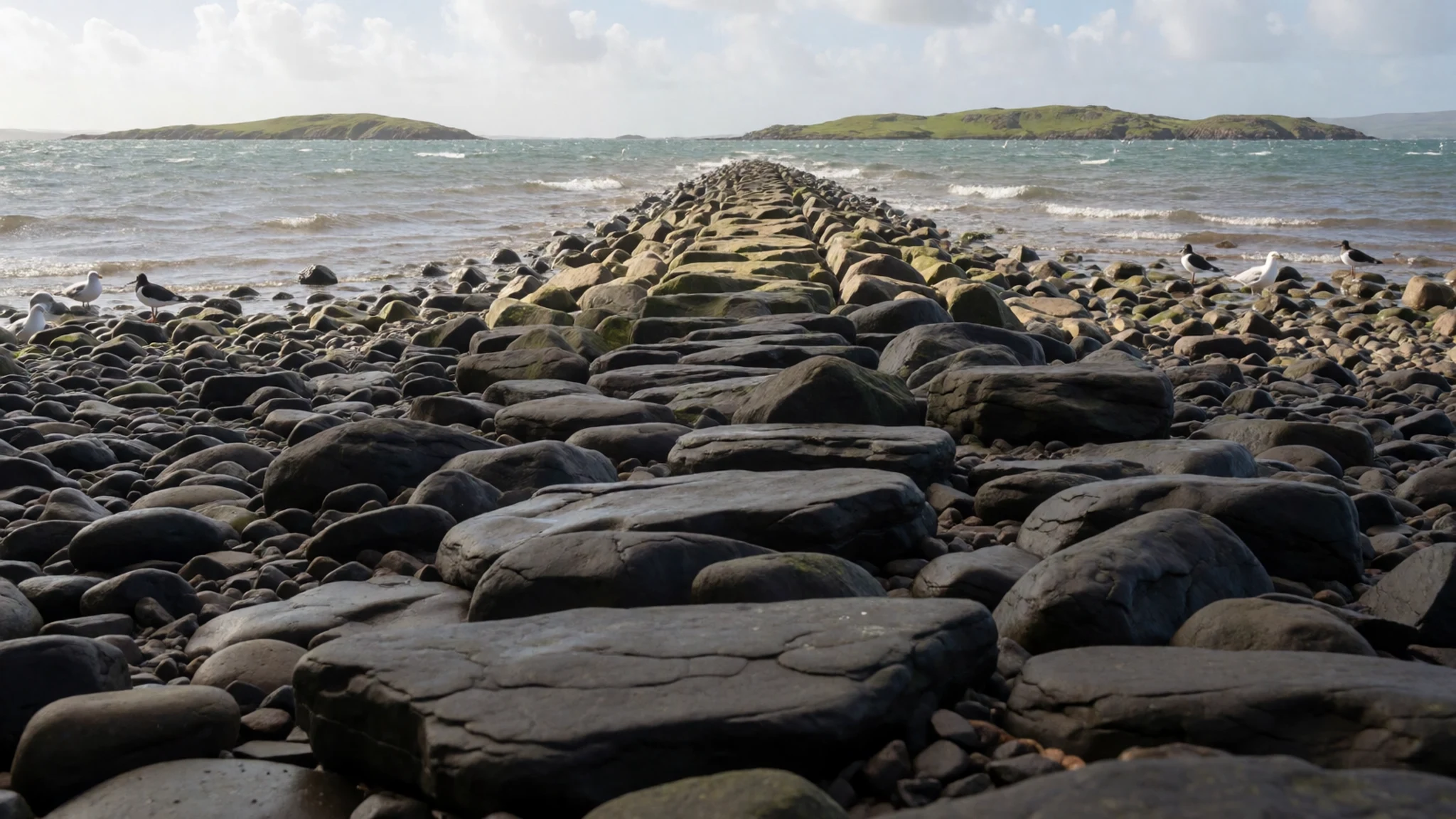
- Knap of Howar — Papa Westray
A small farmstead on Papa Westray, dating from 3500 BC and the earliest known permanent settlement in Orkney. It sits close to the shore and needs a ferry or flight to reach, which keeps it quiet. Allow time for the crossing and check sailings in advance.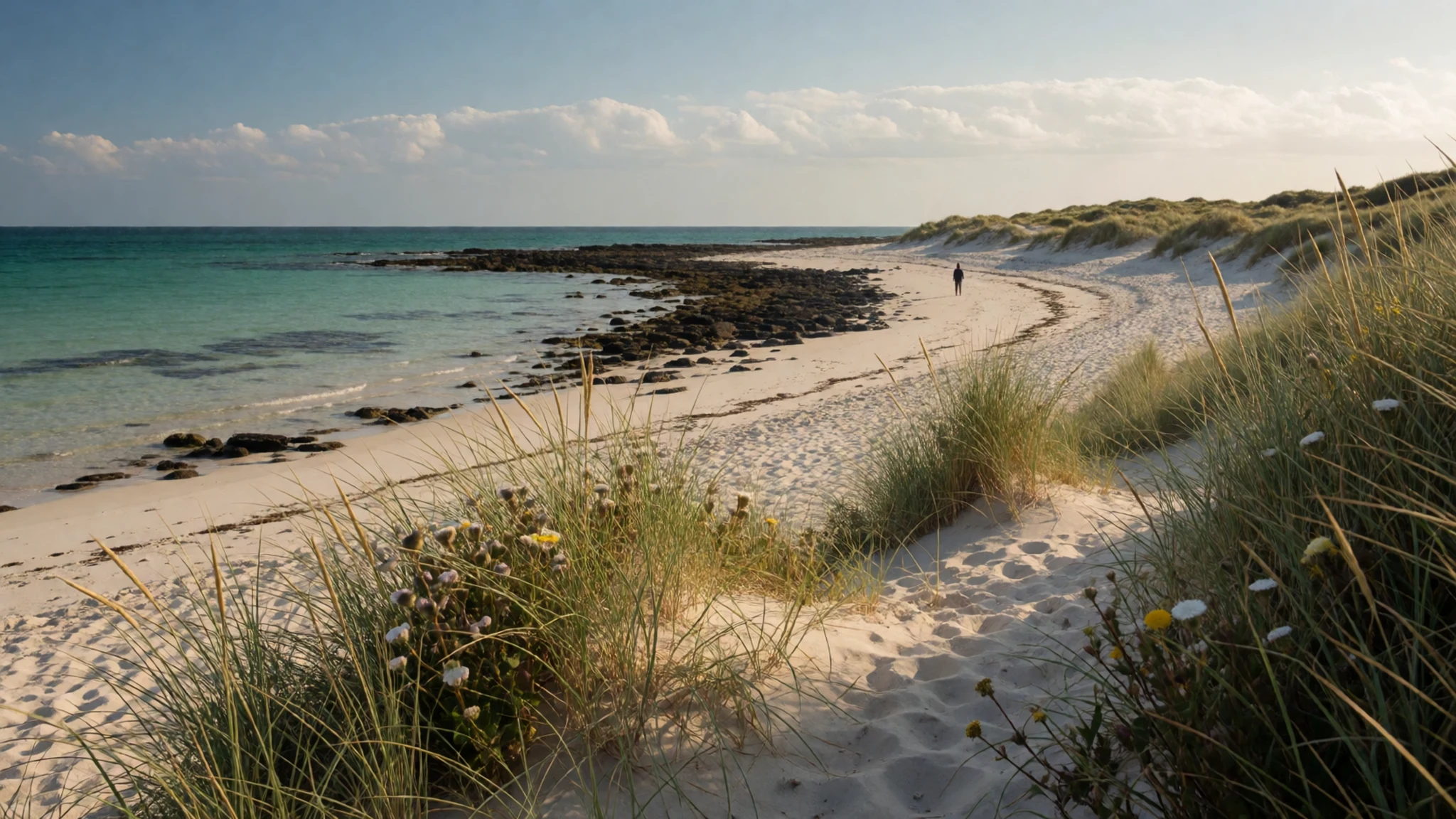
- Kirkwall and St Magnus Cathedral — Kirkwall, Mainland
Kirkwall is Orkney's administrative centre and the usual base for visitors. Its red sandstone cathedral is the town's landmark, and the streets around it hold shops, cafés and the nearby whisky distilleries. It is a sensible place for a rainy afternoon.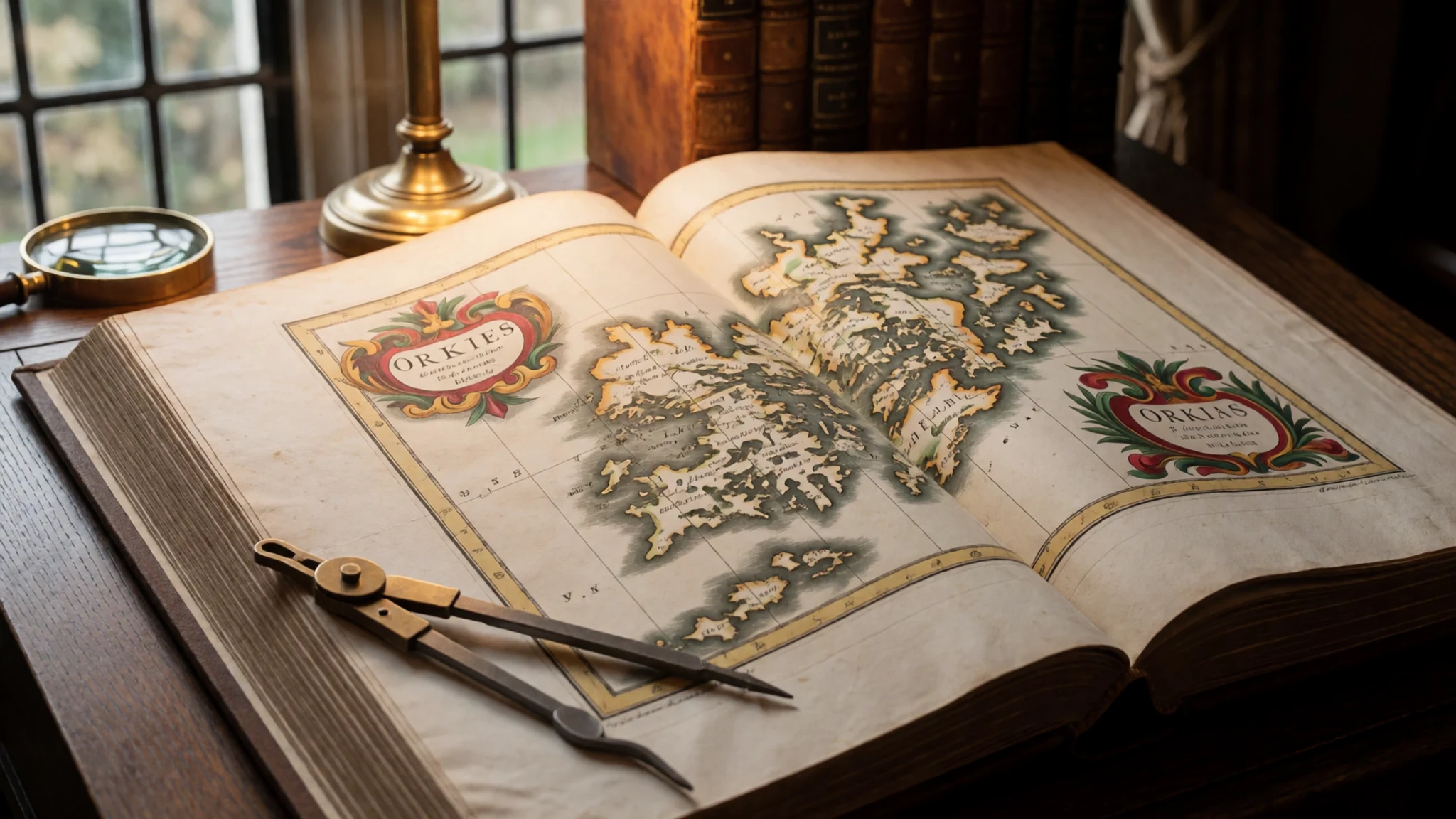
- Sands of Evie — Evie, Mainland
A wide beach on the north coast of the Mainland, with Rousay visible across the water. It is a calm place to walk after a day among tombs. Expect wind and cold water even in summer, and bring layers rather than swimwear.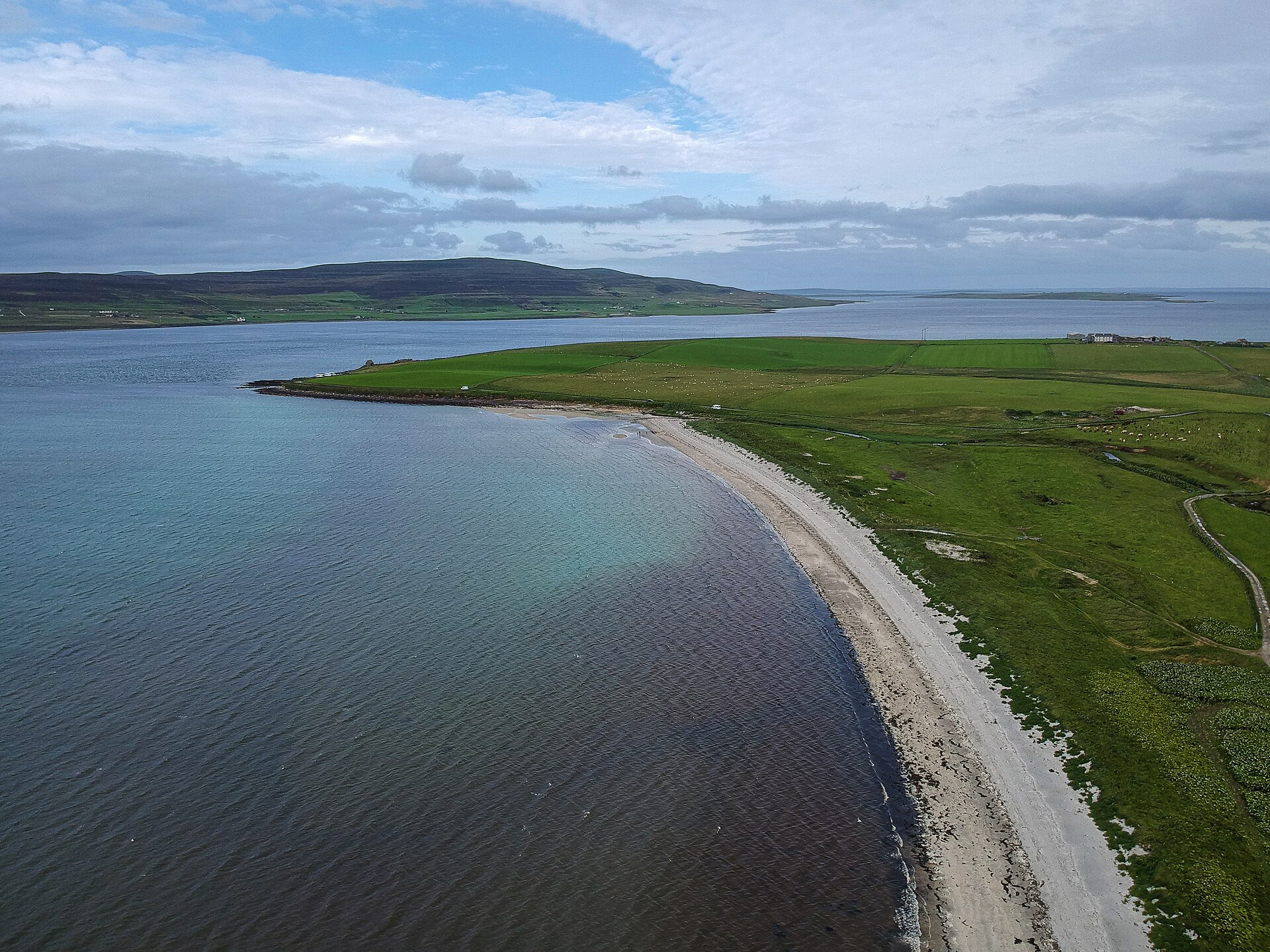
Culture
Orkney's culture grows out of farming, fishing and the sea, with a strong Norse inheritance layered over much older Neolithic roots. Orcadians are proud of that double history, and place names, family names and local stories keep the Norse link alive. Visitors often notice that people say they are from Orkney first and Scotland second, and that is said in a friendly, not a political, way.
Life runs at a measured pace. Shops in smaller communities can close early or on certain days, buses are infrequent, and ferries and flights depend on the weather. Locals take this calmly, and visitors do best when they do the same, leaving slack in the plan. Neighbours know each other, so a greeting on a quiet road or in a village shop is normal.
Prehistory is treated as living heritage and also as a working archaeological landscape. Digs, such as the Ness of Brodgar, are carried out by teams who share findings with the public. Sites are cared for by local and national bodies, and the stones and tombs are fragile despite their age. The islands also host music, crafts and food events, with an emphasis on small, local producers, and the whisky, beer and gin makers across the islands are part of the same community pride.
When you visit the standing stones and tombs, stay on the marked paths, do not climb or lean on the stones, and follow any staff instructions in the chambers.
What to wear
Orkney has no single national costume in daily use, and visitors should not expect one. Its textile tradition is practical and rooted in sheep farming and knitting, producing wool jumpers, hats, gloves and socks made for wind and wet. Patterned knitwear is still made and sold by local makers, and it is worn at festivals and by those who like a traditional look.
What people actually wear now is outdoor, sensible clothing. Waterproof jackets, fleeces, walking boots and woollen layers are normal on the street, at work and in the pub. Smart clothes appear for weddings, concerts and church, but even then a coat is never far away. Nobody dresses up for dinner at an ordinary eatery.
For visitors, the key point is layers. Even in summer the wind can feel cold and rain arrives quickly, so pack a waterproof jacket, waterproof trousers if you plan to walk, a warm mid-layer, a hat and light gloves. Sturdy shoes with a good grip matter on wet grass, coastal paths and the uneven ground around the stone circles. Sandals are fine only for the warmest days.
There are no strict modesty rules, although a church such as the cathedral in Kirkwall expects respectful, covered-up dress. Sun cream and sunglasses are worth packing too, as long summer days can bring strong light off the sea.
What to eat
- Orkney whisky — Kirkwall distilleries, Deerness and Sanday
Highland Park and Scapa both have distilleries at Kirkwall and offer tours. Deerness Distillery at the eastern end of the Mainland makes gin, vodka and a whisky still maturing, while Kimbland makes whisky on Sanday. Book tours ahead in summer.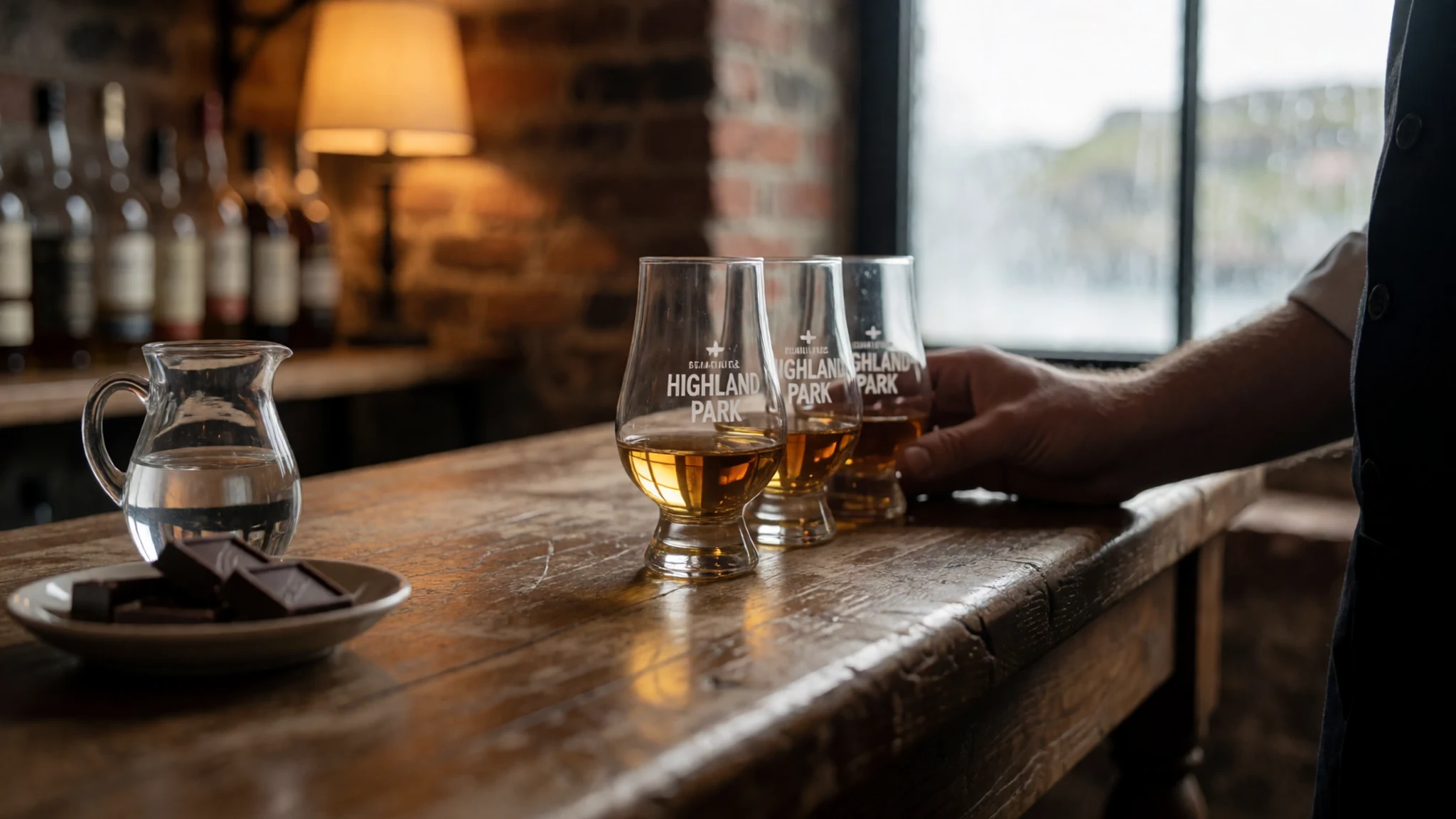
- Orkney beer — between Skaill and Birsay, west Mainland
Orkney Brewery lies between Skaill and Birsay and runs tours. Its café serves tasting flights, a gentle way to sample the local ales after a day outdoors. Check opening arrangements on the brewery's own site before going.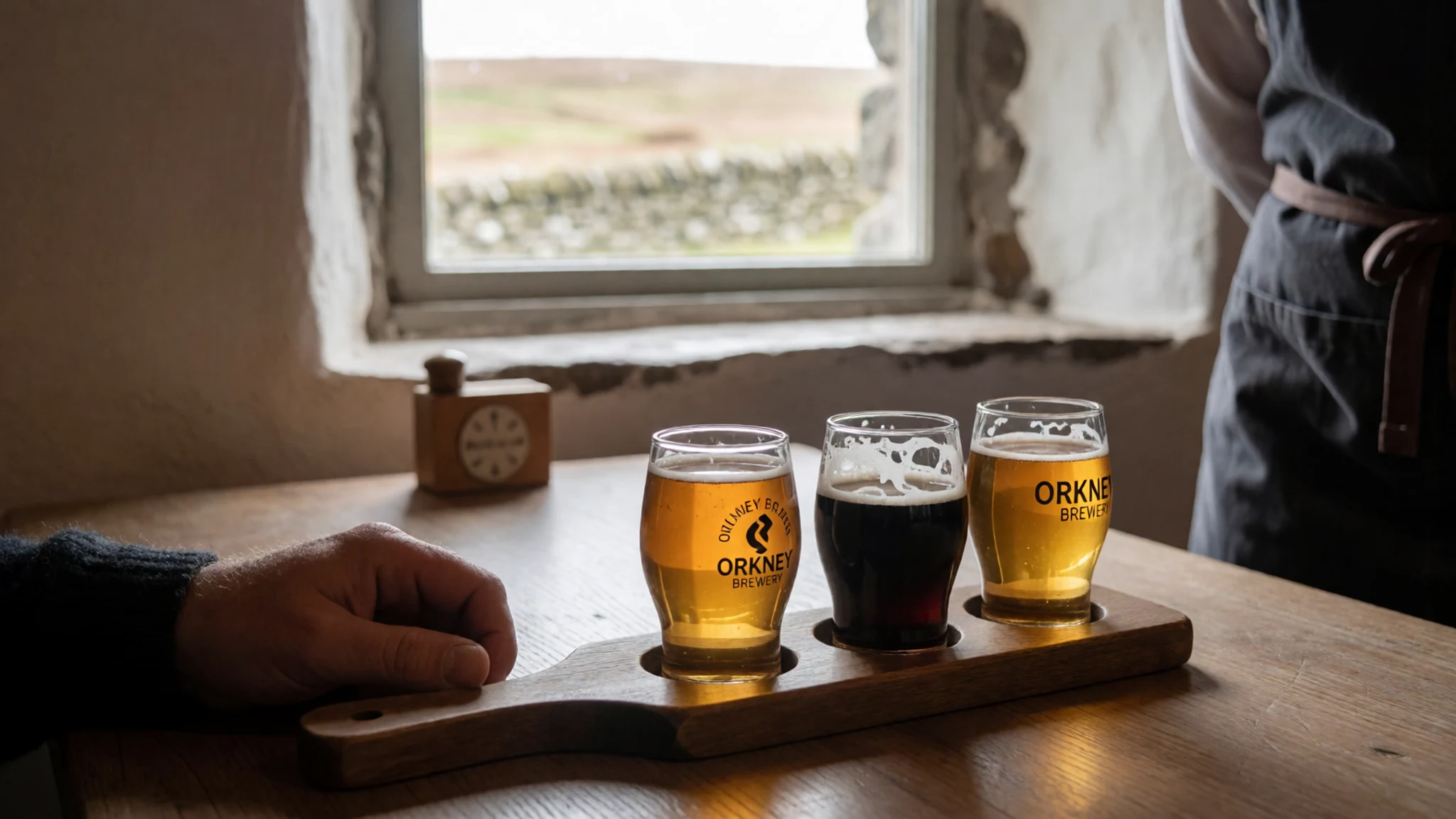
- Orkney gin and rum — Lamb Holm, near the Italian Chapel
Spirits are made in small batches across the islands. J Gow Rum is distilled on Lamb Holm, next to Orkney Wine, close to the turn for the Italian Chapel. It makes an easy stop on the road between Kirkwall and the South Isles. - Local seafood — harbour-side eateries in Kirkwall and Stromness
Fish and shellfish landed around the islands appear on menus in Kirkwall and Stromness, usually simply cooked. Ask what came in that day. Crab, scallops and white fish are typical choices, and portions are usually generous. - Island cheese and bakes — farm shops and village cafés across the Mainland
Farm shops and village cafés sell local cheese, oatcakes and baking, often made by small producers. These are good picnic supplies for a day among the stones, when the weather allows eating outdoors.
Plan it
Best time. May to September is the easiest time, with long daylight and milder weather, though wind and showers are possible at any time. Winter is dark, stormy and quiet, and some visitor services run on reduced schedules.
How long. 3–5
Getting there. Fly to Kirkwall from the Scottish mainland, or take the Northlink car ferry from Scrabster, near Thurso, to Stromness (about 90 minutes, two or three sailings a day). Pentland Ferries sails from Gill's Bay to St Margaret's Hope in about an hour. Northlink's Aberdeen service also calls at Kirkwall. Stromness is about 20 minutes' drive from Kirkwall, with hourly buses. Do not book flights to ORK, which is Cork in Ireland.
Budget. mid
Tips
- Book Maeshowe well ahead, since it can be full for days
- Hire a car or plan bus routes carefully, as public transport is thin
- Visit the stone circles early or late to avoid tour groups
- Book ferries and accommodation early for summer, and check the official site, orkney.gov.uk, for updates
- Spread out beyond the best-known sites; quieter ones are rewarding
Etiquette
- Stay on marked paths at the stones and tombs
- Follow staff instructions inside chambers
- Close farm gates and keep dogs under control near livestock
Nearby
Sources
- Wikidata Q100166 (CC0)
- Wikipedia: Orkney (rev 1384422902) (CC BY-SA 4.0)
- Wikivoyage: Orkney Islands (rev 5257901) (CC BY-SA 4.0)
- Orkney Islands by Sentinel-2, Copernicus Sentinel-2, ESA (CC BY-SA 3.0 igo)
- Orkney Islands UK relief location map, Nilfanion (CC BY 3.0)
- Kirkwall cathedral, unknown author (CC BY 3.0)
- ORCADVM ET SCHETLANDIAE, Blaeu (Public domain)
- The King Pays 4-day Visit To the Home Fleet, Lt H A Mason (Public domain)
- Aerial image of Sands of Evie, Matthew Prior (CC BY-SA 4.0)
- Council Offices on School Place, Kirkwall, Ian S (CC BY-SA 2.0)
- Dig at the Ness of Brodgar in August 2018, Gaius Cornelius (CC BY-SA 4.0)


