Orkhon Waterfall
Orkhon Waterfall, Mongolia
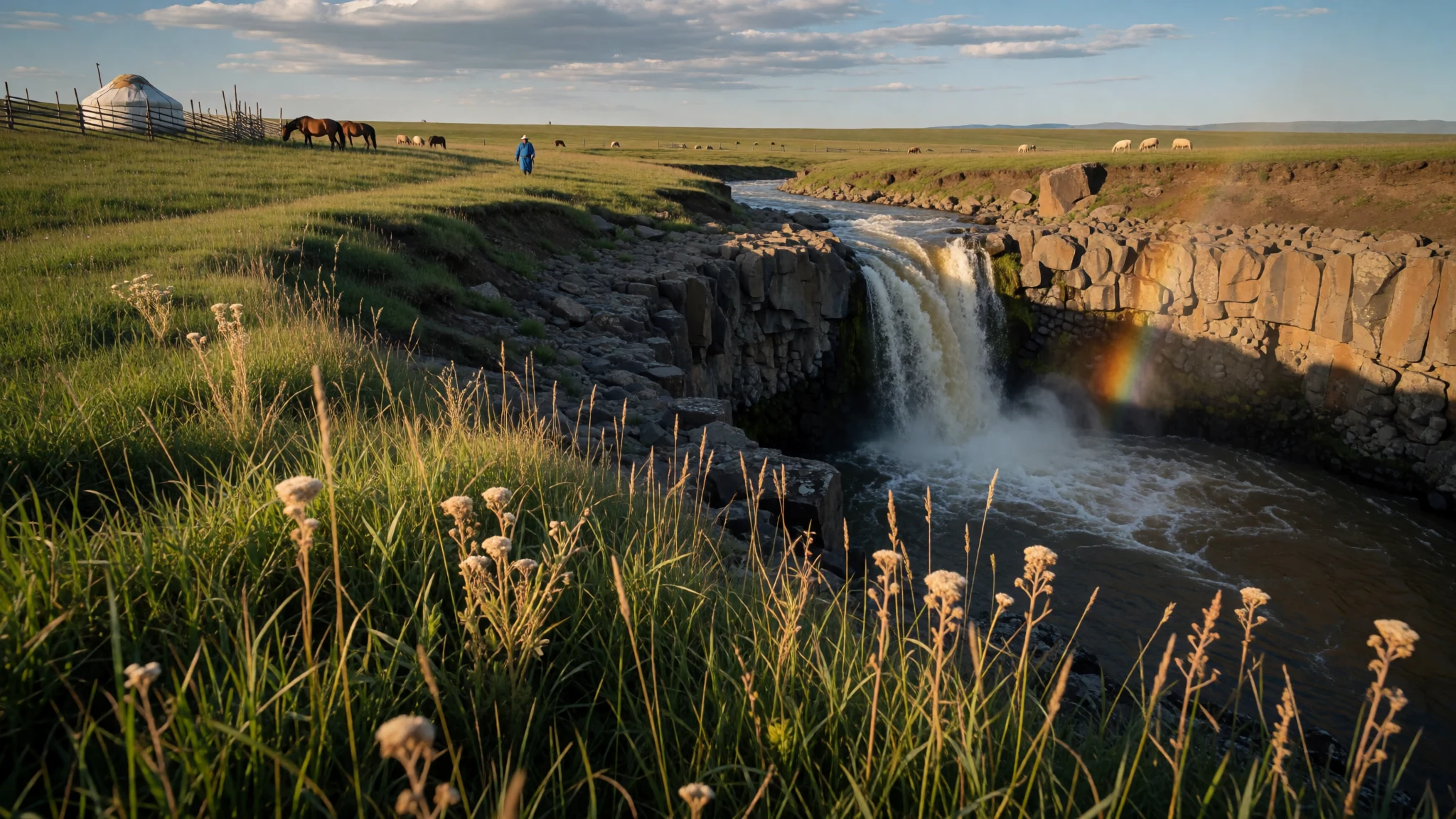
Orkhon Waterfall drops a wide river into a volcanic canyon in the Mongolian steppe, reached on a road trip through nomad country.
The place
Orkhon Waterfall, called Ulaan Tsutgalan (Улаан цутгалан) in Mongolian, lies in Bat-Ölzii District of Övörkhangai Province in central Mongolia. Here the Orkhon River crosses open grassland and then plunges about 24 m over a lip around 10 m wide into a narrow canyon of dark rock. Wikipedia calls it the widest waterfall in Mongolia, which is a useful reminder that the drop itself is modest. The draw is the setting: a flat, nearly empty steppe that suddenly splits open, the river vanishing into a gorge with spray rising against the walls.
The surroundings matter as much as the water. Herding families graze horses, sheep and goats on the grass around the valley, gers (felt-walled round tents) sit on the slopes, and the sky is enormous. Sunshine is frequent across Mongolia, but summer weather swings between hot afternoons, passing rain and surprisingly cool nights.
The falls change with the season and the year. After rain the water runs thick and loud. In a dry spell the flow thins, and a visitor's photograph from mid-June 2013 shows part of the river bed bone dry. Deep winter is bitterly cold, with temperatures falling to -40°C in some parts of the country, and the river is likely to freeze, a trip only for the well equipped.
Reaching it is a journey rather than a quick stop. Mongolia is vast and thinly settled, so the waterfall is normally folded into a longer loop of valley and monastery sights with a night or two in a ger camp. Visitor numbers are small by world standards, though the camps nearest the falls tend to be busiest in high summer.
Its story
Orkhon Waterfall exists because of a volcano. During the Quaternary period an eruption at the head of the Tsagaan Azarga River sent lava rolling down the Orkhon Valley, and as it cooled it set into heavy sheets of volcanic rock stacked along the valley floor for several kilometres.
The Orkhon River arrived later on this hard, freshly laid ground and began to cut. Water follows the weakest line, and over a very long span it carved a canyon through the lava layers, leaving the step in the riverbed where the falls drop today. What looks from the rim like a crack in the grassland is really a river slowly excavating an old lava flow.
The human history around the falls is quieter than the geology and belongs mostly to the wider valley. Herding families have worked this steppe along the river for generations, and the same valley holds Karakorum (now Kharkhorin), the brief-lived Mongol imperial capital built by Ögedei, son of Genghis Khan. Genghis himself is said to have raised only a single permanent building, a store for his plunder, and Ögedei's city is one of the few traces of imperial power left in the homeland.
Buddhism supplies the next layer. After the Mongol Empire broke up, many Tibetan Buddhist monasteries rose across the country, and Stalinist purges later left only a few standing. Erdene Zuu in Kharkhorin is one of the survivors and is still an active religious site. Seen this way, the waterfall is one chapter in a longer valley story: volcanic rock at the falls, empire and monastery downstream, and herding life running through all of it.
What to see
- The main viewpoint — Bat-Ölzii District, Övörkhangai
The main viewpoint runs along the canyon rim, where the full width of the river is visible as it tips over the lip, a drop of about 24 m. The sound carries across the grass before the falls come into view. Edges may be unfenced and the rock is slick with spray, so most visitors keep well back.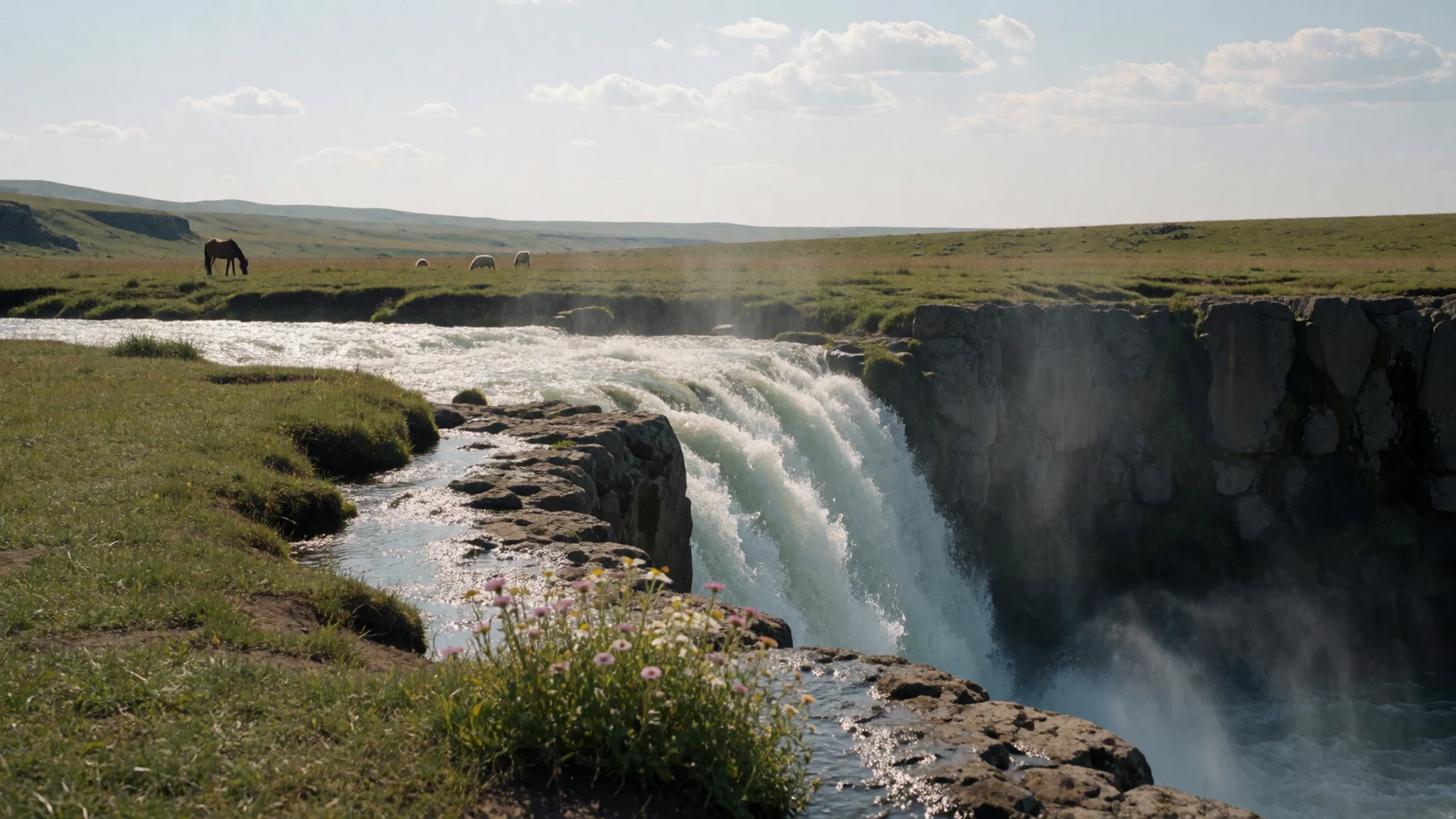
- The canyon floor — Below the falls, Orkhon Valley
Paths and steps descend into the canyon below the falls, where the dark volcanic walls rise on both sides and the spray reaches the viewer directly. This is a good place to see how the river cut through the lava layers. The descent can be steep and slick, so sturdy shoes matter, and the climb back out is worth pacing.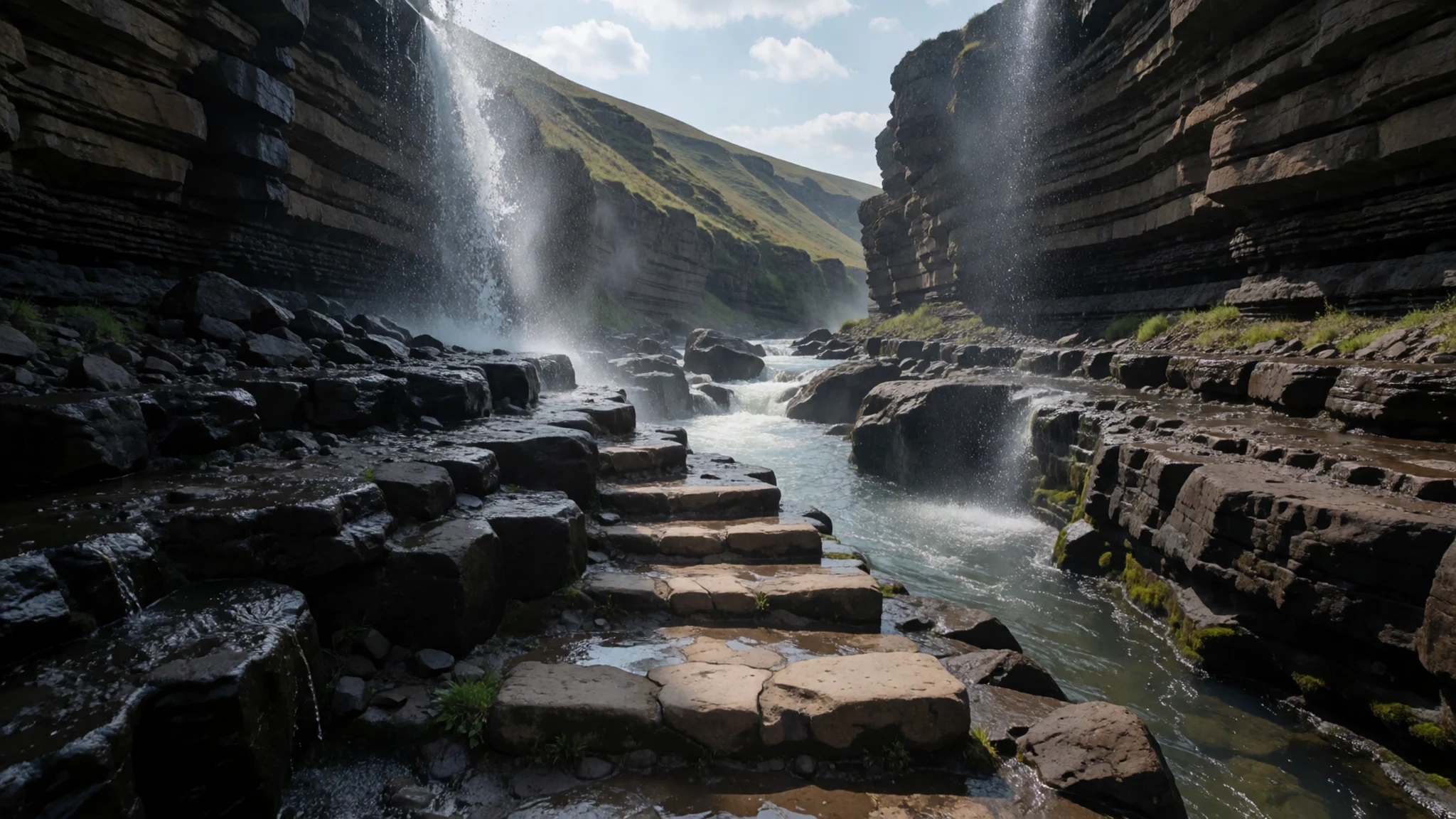
- The river above the falls — Upstream of the falls
Upstream of the drop the Orkhon runs through open grassland, and this stretch shows how much the flow varies. A mid-June 2013 photograph records part of the river dry, so a visit in a dry year may find the falls thinner than the pictures. Ask the camp or driver about recent water before planning around a particular shot.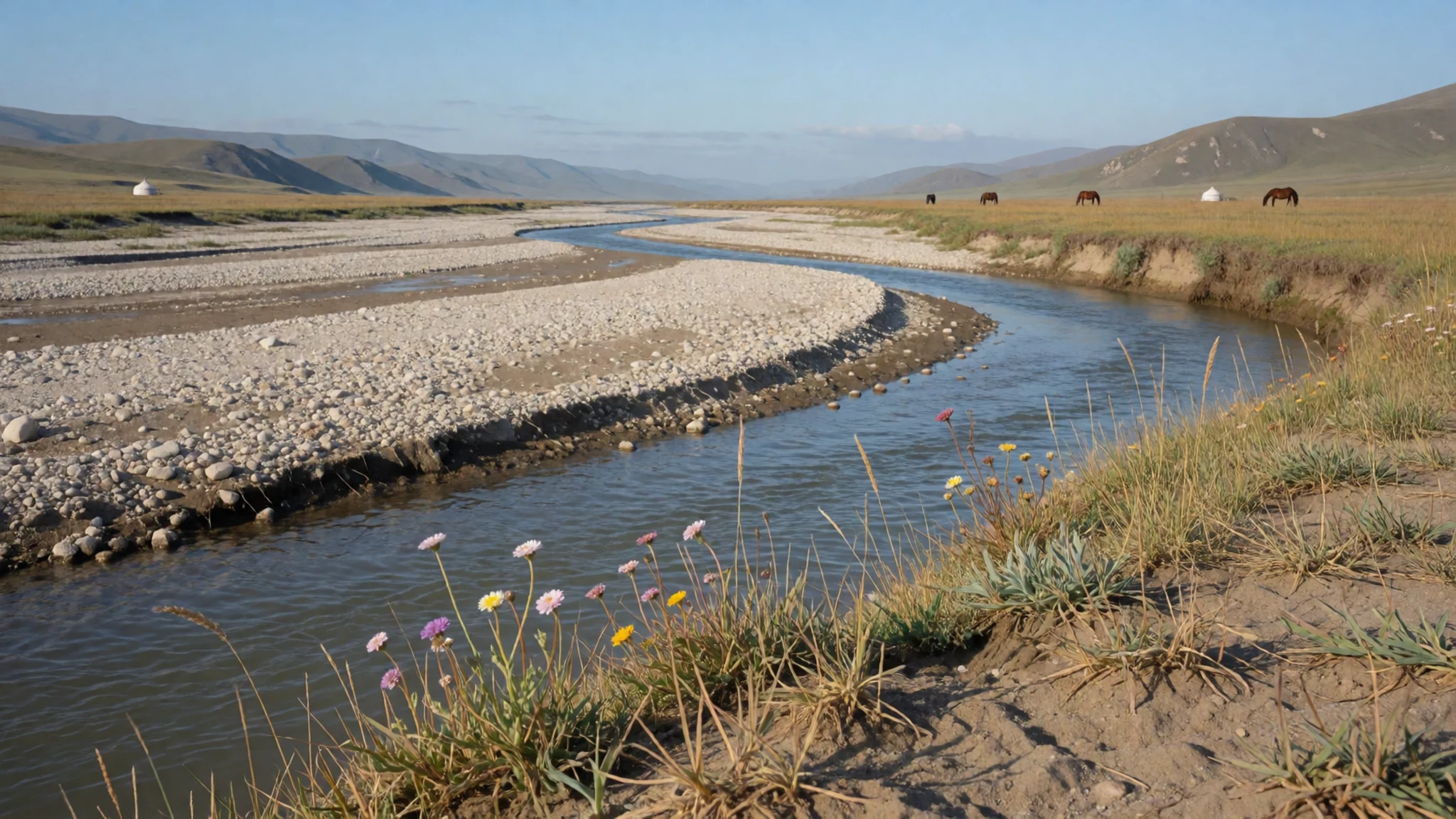
- Erdene Zuu Monastery — Kharkhorin, Övörkhangai
Erdene Zuu is a Tibetan Buddhist monastery in Kharkhorin and one of the few in Mongolia to survive the Stalinist purges, still active with resident lamas. It is the natural companion stop to the falls, tying the valley's landscape to its religious and imperial past. Dress modestly and check locally for access.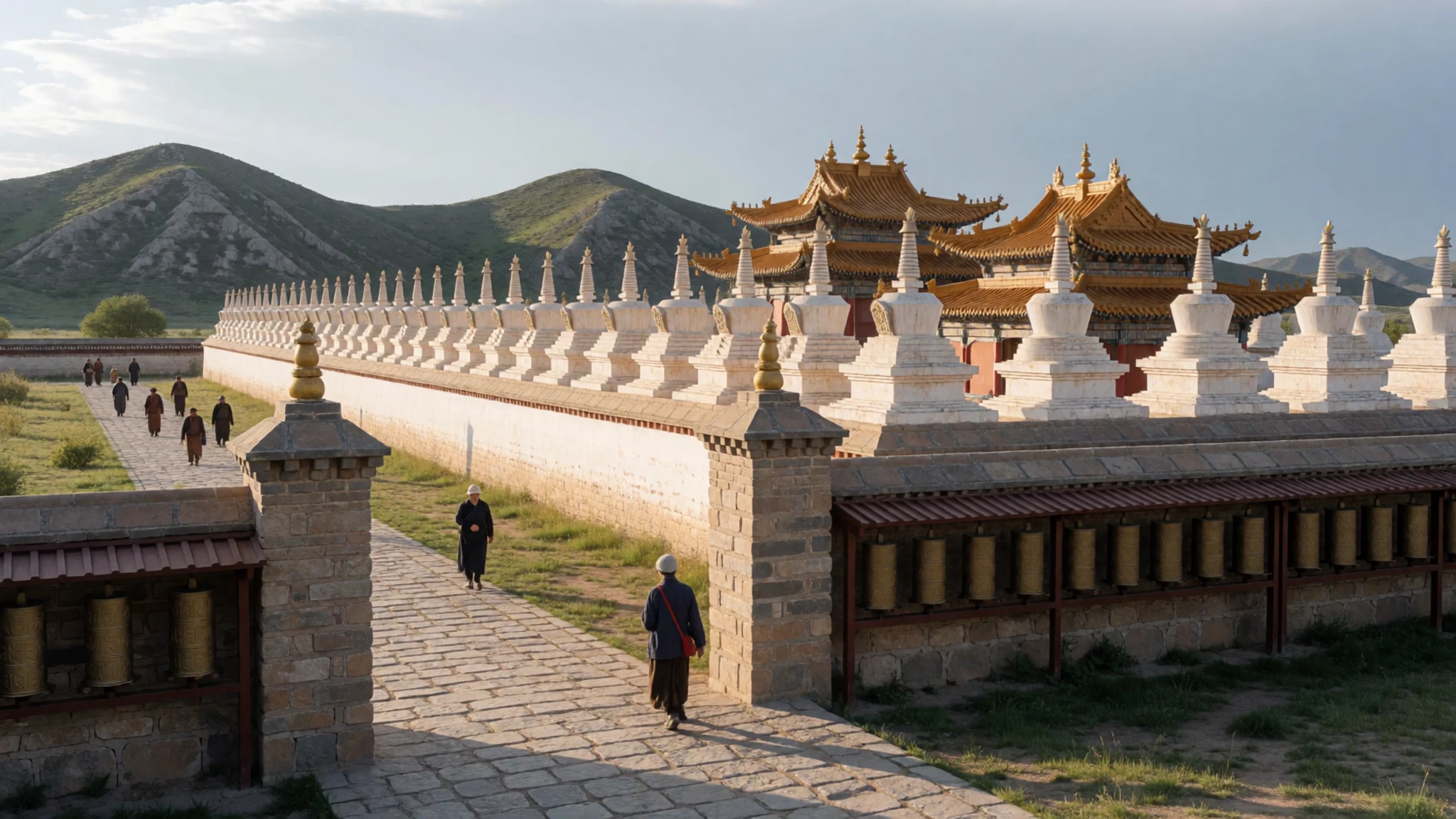
- Ger camps in the valley — Orkhon Valley
The grassland around the falls is working pastureland, and ger camps along the valley offer beds, meals and a look at herding life. Horses, sheep and goats graze on the slopes, and evenings are long and cool. A night here, rather than a day trip, gives the place its sense of scale. Camps vary, so confirm what is included when booking.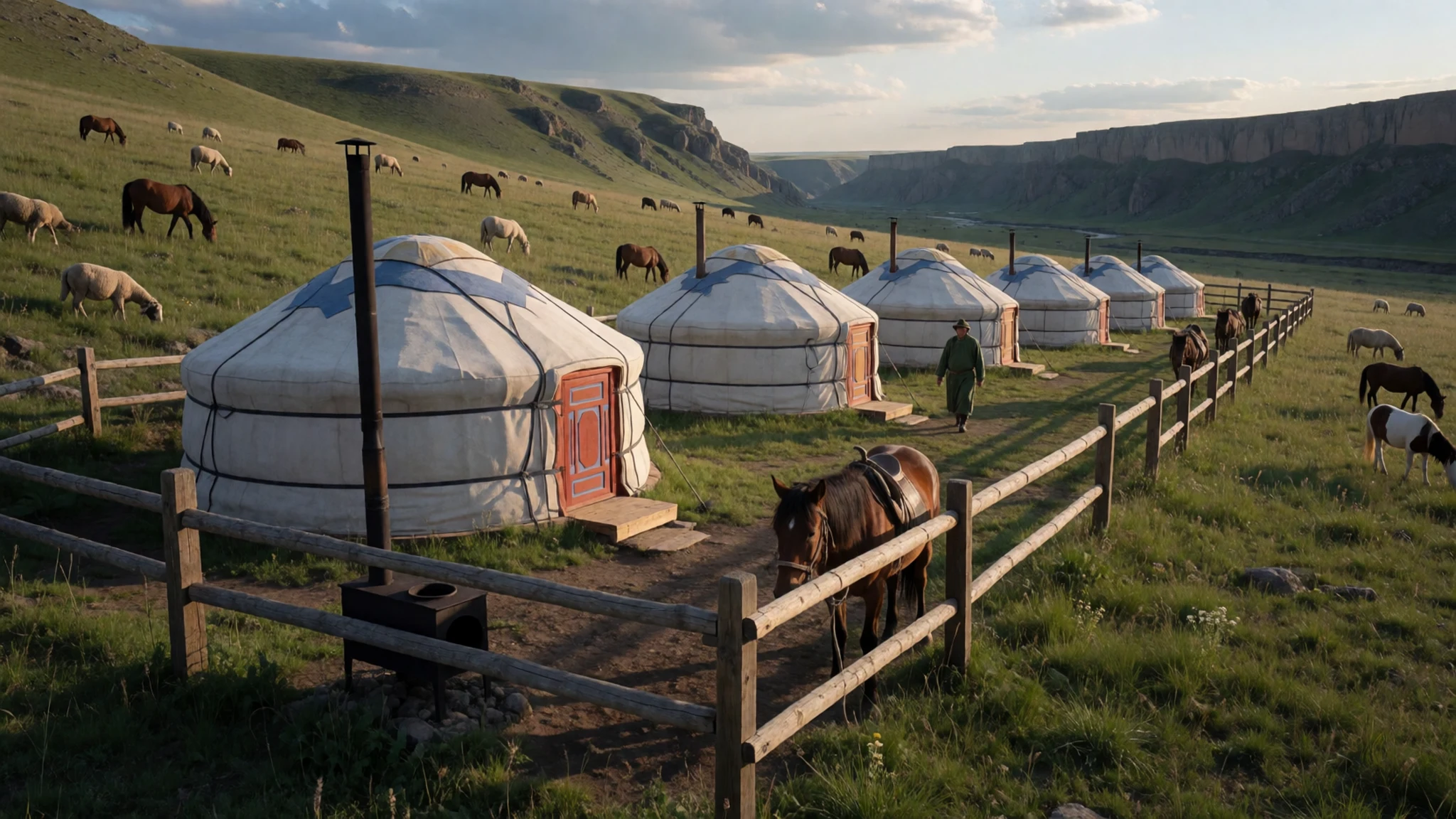
Culture
Orkhon Waterfall sits in herding country, where livestock still shape daily life and the manners of the steppe shape any visit. Mongolians tend to be direct, and a host may say exactly what they think; this is honesty, not hostility. Pleasantries borrowed from elsewhere often land differently here, so it helps to watch what people do and follow suit.
Hospitality carries real weight. A family that offers tea, fermented mare's milk or a plate of food is following a long custom, and turning it down is treated as rude. Things are handed over and taken with the right hand, palm turned upward, and a cup is held the same way. A token sip or bite is better than a flat refusal.
History is a live subject too. Many Mongolians feel strongly about China because of disputed history and culture, and the Chinese province of Inner Mongolia is commonly called 'southern Mongolia'. It is wise to leave China-themed clothing at home and to steer clear of the subject. Mongolia's Buddhist inheritance is visible at monasteries such as Erdene Zuu in Kharkhorin.
If a family invites you into their ger (felt-walled tent), step over the threshold rather than onto it, and accept the first cup of tea with your right hand, palm up.
What to wear
Around Orkhon Waterfall the traditional garment is the deel, a long, wrap-over robe that fastens at the side and is cinched with a sash. It is made from heavy wool or sheepskin-lined cloth for winter and from lighter cotton or silk in warmer months, and the colour and trim vary by region and occasion. Leather boots with upturned toes and felt hats complete the outfit, and families bring out their finest deels for festivals and weddings.
Day to day, the picture is mixed. Herders often wear a deel over practical layers, especially for riding, while townspeople and younger people favour jeans, fleeces, trainers and padded jackets, keeping the deel for celebrations.
Visitors should dress for weather rather than style. Summer days can be hot, rain comes in some areas, and nights turn cool, so layers work best: a base layer, a fleece and a waterproof shell, plus a sun hat and sunglasses for the open steppe. Footwear matters most at the falls, where steps and canyon rocks get wet, so choose boots or shoes with good grip. For monasteries such as Erdene Zuu in Kharkhorin, cover shoulders and knees. Winter travel calls for serious insulation, since temperatures in parts of the country fall as low as -40°C. Avoid clothing associated with China.
What to eat
- Buuz (бууз) — Ger camp kitchens, roadside canteens and tea shops
Steamed dumplings stuffed with minced mutton or beef, pleated shut and eaten by hand. Often called Mongolia's national dish, they are served at ger camps, roadside canteens and tea shops, and a plate makes a solid lunch before a canyon walk.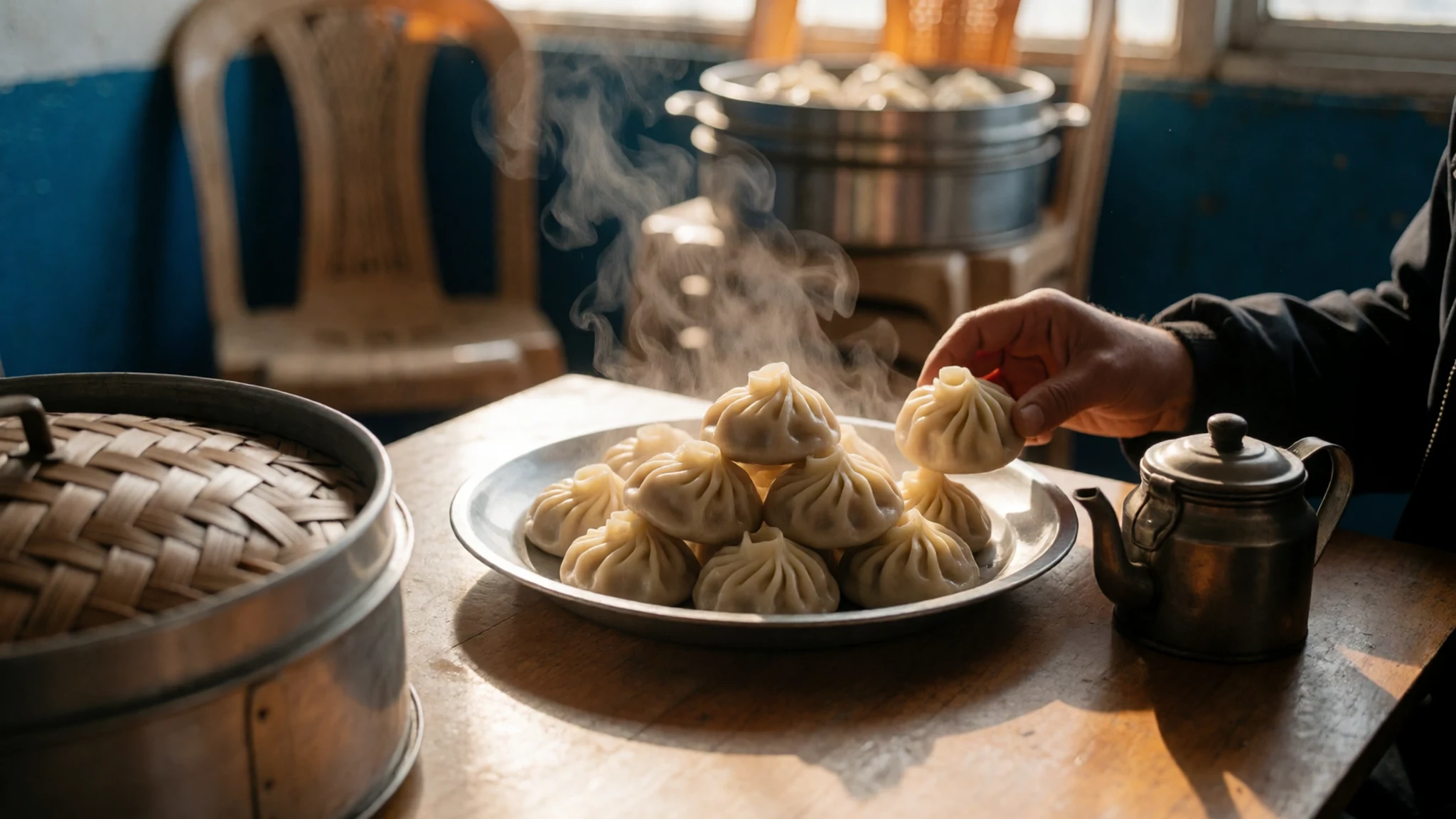
- Khuushuur (хуушуур) — Market stalls and canteens in Kharkhorin
Fried half-moons of dough around seasoned minced meat and onion, crisp outside and juicy within. Once kept for celebrations, khuushuur now turns up at market stalls, canteens and roadside stops in towns such as Kharkhorin, and a few of them make a meal.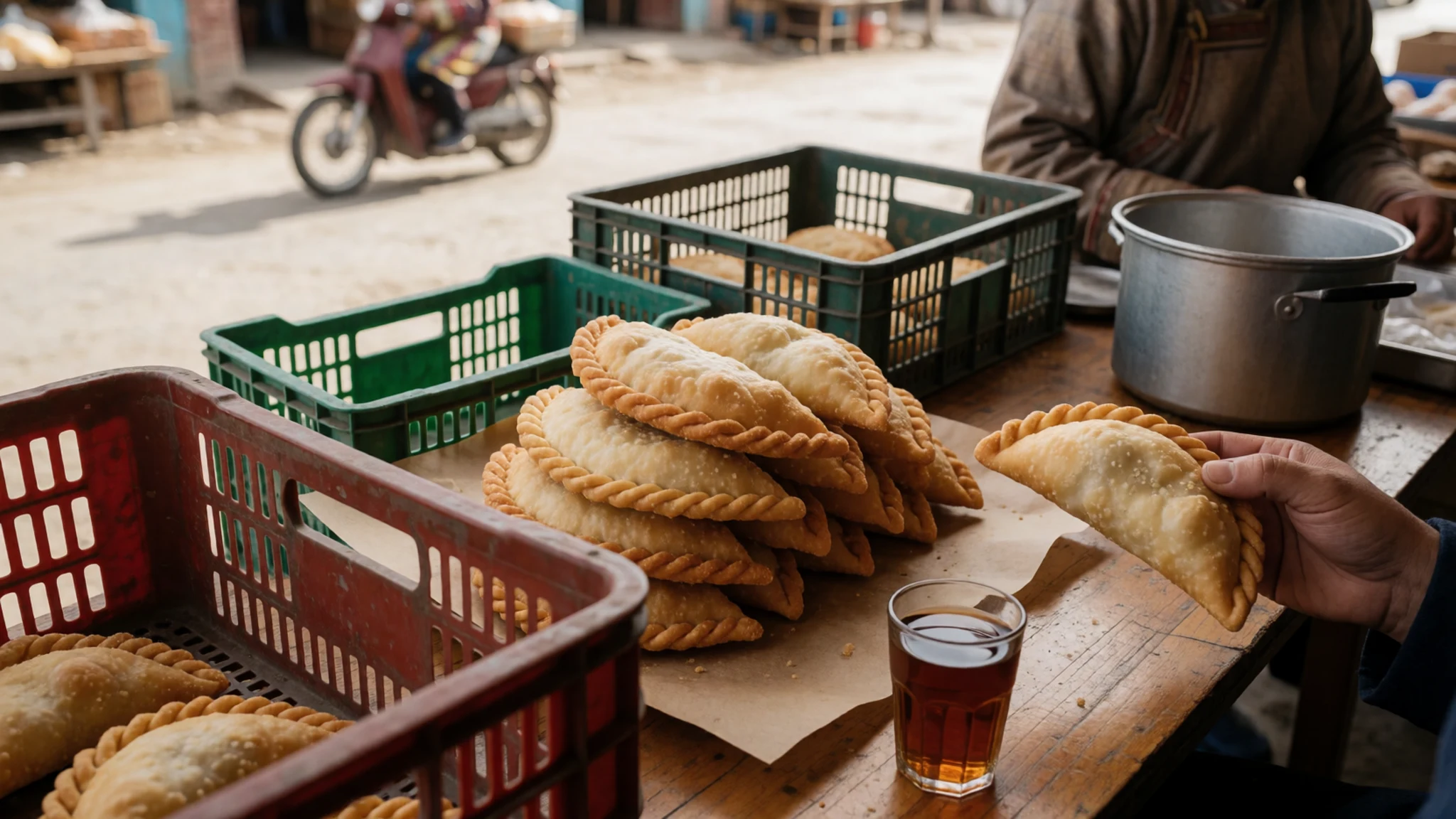
- Tsuivan (цуйван) — Canteens and tea shops along the valley road
Noodles fried with mutton and whatever vegetables are to hand, usually not many, sometimes served with ketchup on the side. It is the dependable plate at canteens and tea shops, and herder families cook it at home too. - Boiled mutton — Ger camps and herder households
Mutton simmered in salted water, the everyday meal of herding families. It is hearty rather than elaborate, with little seasoning beyond salt. Expect it at ger camps and countryside canteens, often served on the bone with the broth alongside. - Suutei tsai (сүүтэй цай) — Any ger, and tea shops in the valley
Milk tea cooked with salt, the usual welcome at a ger door. It tastes closer to a thin soup than to sweet tea, and the first cup is part of the hospitality. Found in every ger and at tea shops along the valley.
Plan it
Best time. June to September, when days are warm to hot, rain can fall and nights are cool. The flow over the falls varies, so check recent conditions with a camp or operator. Winter is bitterly cold, with lows reaching -40°C in some parts of Mongolia.
How long. 2–3
Getting there. Fly to Ulaanbaatar (Chinggis Khaan International Airport), then travel by road, typically via Kharkhorin; the last stretch is usually on unsurfaced steppe tracks. Most visitors go with a driver and 4x4 or an organised tour arranged in Ulaanbaatar. Check entry rules before booking: UK and EU citizens were listed as visa-free for up to 30 days for tourism until the end of 2026, and Indian passport holders should expect to apply for a visa.
Budget. mid
Tips
- Hire a driver with a 4x4 or join a tour; tracks are unsurfaced and signage is thin.
- Book ger camps ahead for July and August, and confirm meals and washing facilities.
- Carry cash for camps and small shops, as card acceptance in the countryside can be patchy.
- Pack layers and waterproofs, since nights are cool even in summer.
- Ask about water levels before going; the flow thins in dry spells.
Etiquette
- Receive tea and gifts with your right hand, palm up; refusing a gift is rude.
- Step over, not on, the threshold of a ger.
- Avoid China-themed clothing and conversation.
Nearby
Sources
- Wikidata Q4470791 (CC0)
- Wikipedia: Ulaan Tsutgalan Waterfall (rev 1386195235) (CC BY-SA 4.0)
- Wikivoyage: Mongolia (rev 5427090) (CC BY-SA 4.0)
- Photo: Ulaan Tsutgalan Waterfall, Bat-Ölzii, Övörkhangai, Mongolia — Chongkian (CC BY-SA 4.0)
- Photo: Ulaan tsutgalan Waterfall in Mongolia — MN5 (CC0 1.0)
- Photo: Ulaan tsutgalan Waterfall in Mongolia — MN5 (CC0 1.0)
- Photo: Orkhon valley - waterfall Ulaan Tsutgalan — Ljuba brank (CC BY-SA 4.0)
- Photo: Casacada Ulaan Tsutgalan — Lohen11 (CC BY 4.0)
- Photo: Mongolia — Niek van Son (CC BY 2.5)
- Photo: The Ulaan Tsutgalan waterfall dry, June 18, 2013 — SJDavisIV (CC BY-SA 4.0)
- Photo: transmongolie-535 — Vaiz Ha (CC BY 2.5)


