Onon River
Onon River, Mongolia
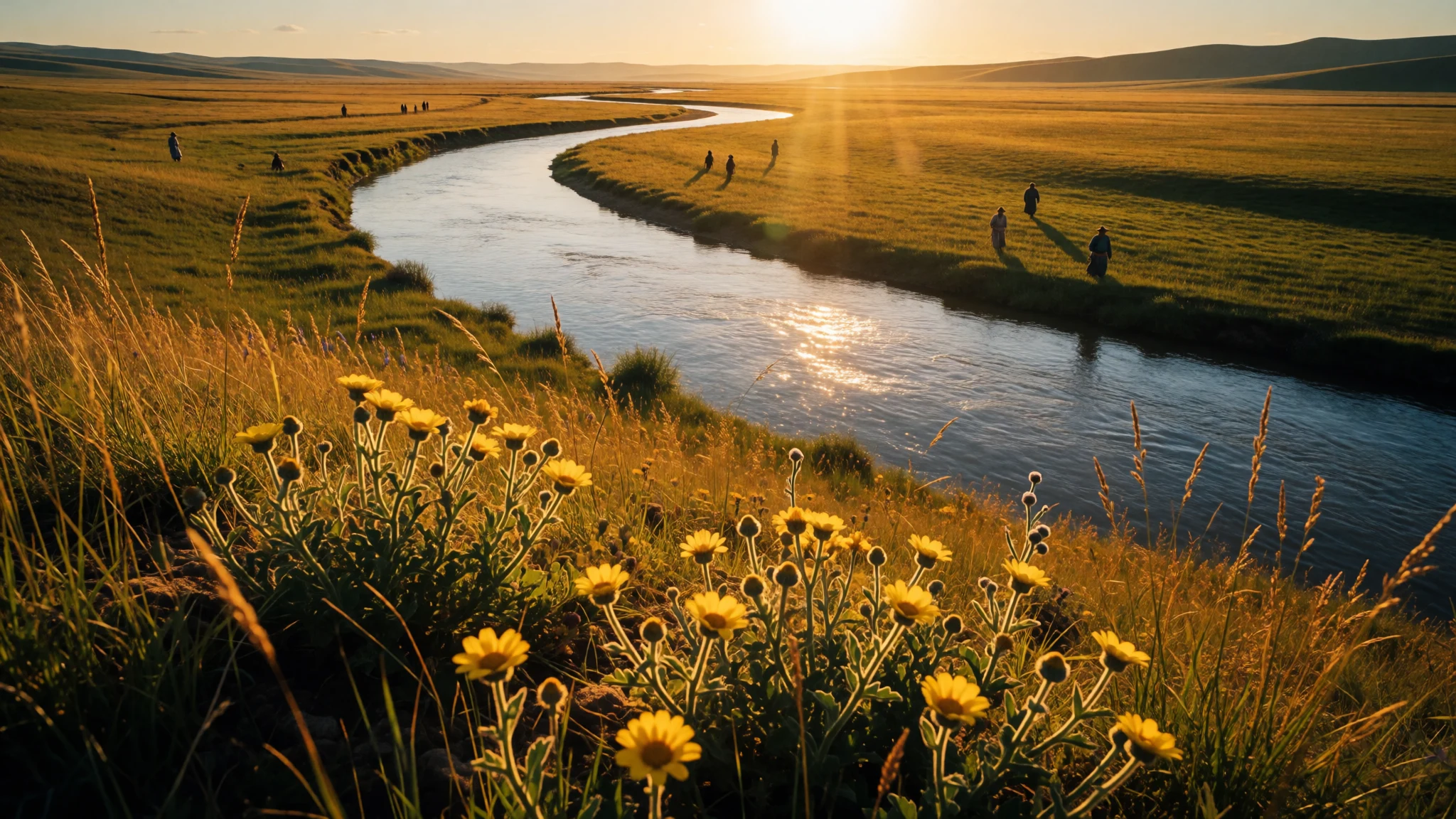
Onon River is a quiet steppe-and-forest river in north-east Mongolia, tied to early Mongol history and shared with Russia.
The place
Onon River runs through the north-east of Mongolia before crossing into Russia, which makes it a transboundary river. Its upper reaches lie in the forested Khentii highlands, where larch and pine cover the cooler slopes and open grass takes the sunnier ones. Lower down, the valley widens into meadow, braided channels and gravel bars, with herders' gers scattered along the banks and horses and cattle grazing right to the water's edge. This is not a waterfall-and-gorge destination in the usual sense. The appeal is a slow, clear river in big open country, with riverside camping, birdlife on the floodplain, arranged fishing for those who go through a licensed operator, and long evenings under very dark skies. Settlements are small and far apart, roads are often dirt tracks, and mobile coverage comes and goes. The nearest towns are in Khentii and Dornod provinces, and most visitors reach the river as part of a longer eastern Mongolia trip rather than as a single stop. Summer is green and, by local standards, busy, which still means very few people. Winter freezes the river hard and makes travel a different and much colder undertaking. Because the river crosses a border, the Russian stretch is a separate matter with its own permits and access rules; this reading concerns the Mongolian valley.
Its story
Onon River matters in Mongolia less for its scenery than for its place in the national story. Mongol tradition links the valley with the birth and youth of Temüjin, the man later known as Genghis Khan, and the Secret History of the Mongols, the medieval chronicle of his rise, names the Onon repeatedly as the setting for camps, feuds and gatherings. The river is also bound up with the sacred mountain of Burkhan Khaldun in the same Khentii highlands, which the chronicle presents as a refuge and a place of thanksgiving. Exactly which bend of the river saw which event is argued over, and several spots compete for the label of birthplace, so such claims are best treated as local tradition rather than settled fact. In later centuries the Onon became part of a frontier region where Mongol and Russian worlds met, and today it is a boundary-crossing river, rising in Mongolia and carrying its water on into Russia. For Mongolians it has a quiet, almost domestic importance: a place for pilgrimage, family trips and summer pasture rather than an attraction with ticket booths and souvenir rows. A visit rewards some reading beforehand, because little is signposted, and the landscape itself, rolling grass, birch and larch, is what most resembles the scenes in the chronicle.
What to see
- Upper Onon near Burkhan Khaldun — Khentii highlands
The headwaters region in the Khentii mountains is forested, cool and sacred to many Mongolians. Access to the mountain itself is controlled and often tied to pilgrimage, so ask a local guide and check current rules before planning. The foothills and river valleys nearby are worth the effort for the forest and the quiet.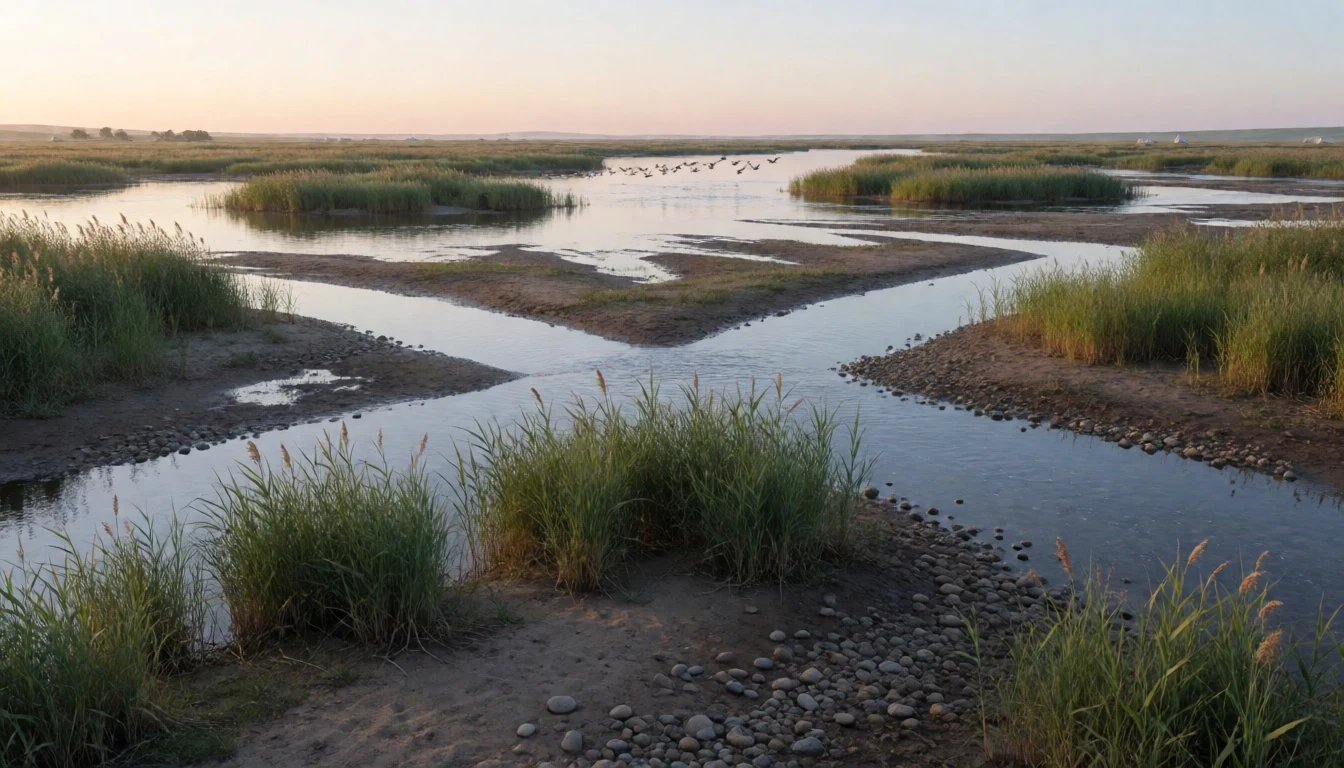
- Binder steppe reaches — Binder area, Khentii
Further downstream the river slips through wide grassland where herding families still move between seasonal camps. Bends here make good spots for a walk along the bank, a picnic, or a night in a ger camp. Cattle on the track and shallow crossings are part of the scenery rather than hazards.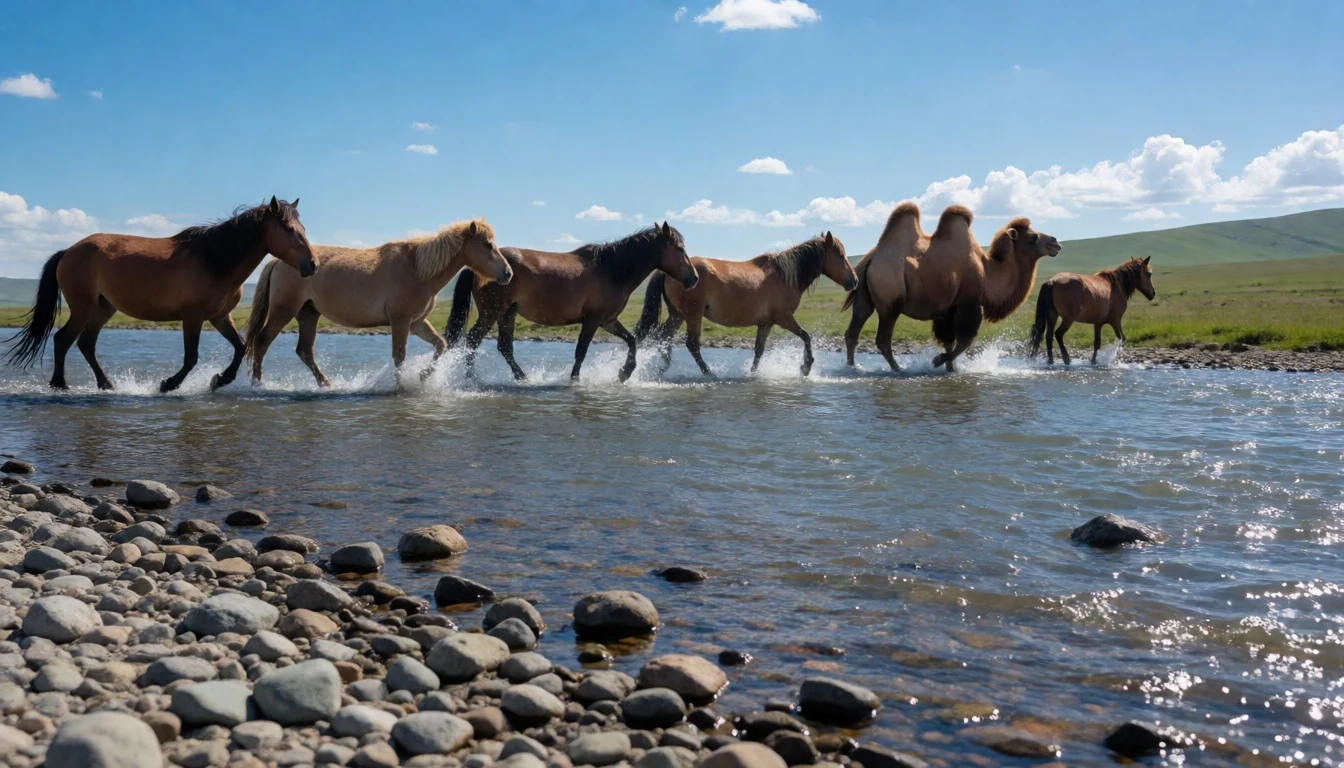
- Dadal and Delüün Boldog — Dadal, Khentii
Dadal is the small administrative centre of this stretch and the usual base for the river valley. Nearby Delüün Boldog is one of the places traditionally named as Genghis Khan's birthplace, marked by monuments and an ovoo. Treat it as a place of memory, with modest facilities, rather than a developed site.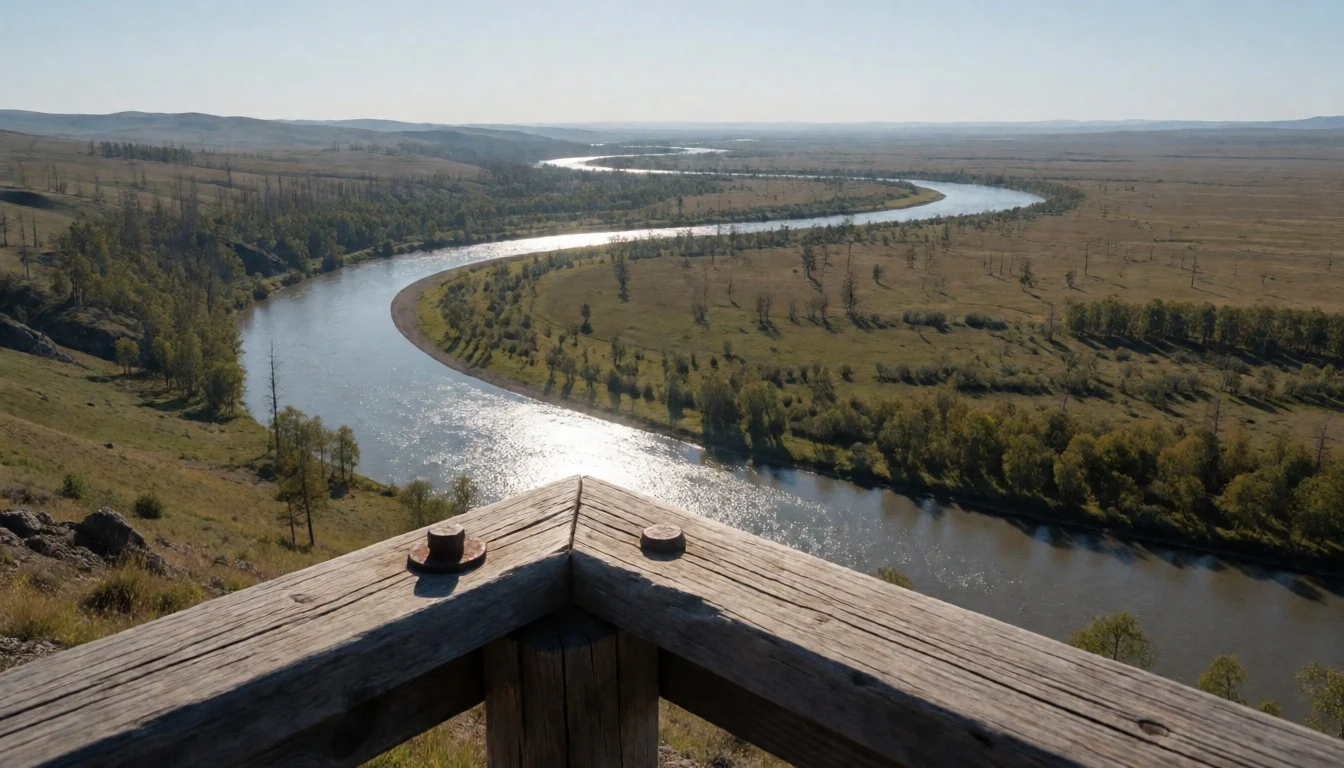
- Onon-Balj National Park area — Khentii province
The protected landscape around the river mixes forest, steppe, wetland and low hills, and suits slow walking, birdwatching and horse riding with a local guide. Rules on camping, fishing and entry can change, so ask the park office or your operator rather than relying on old trip reports.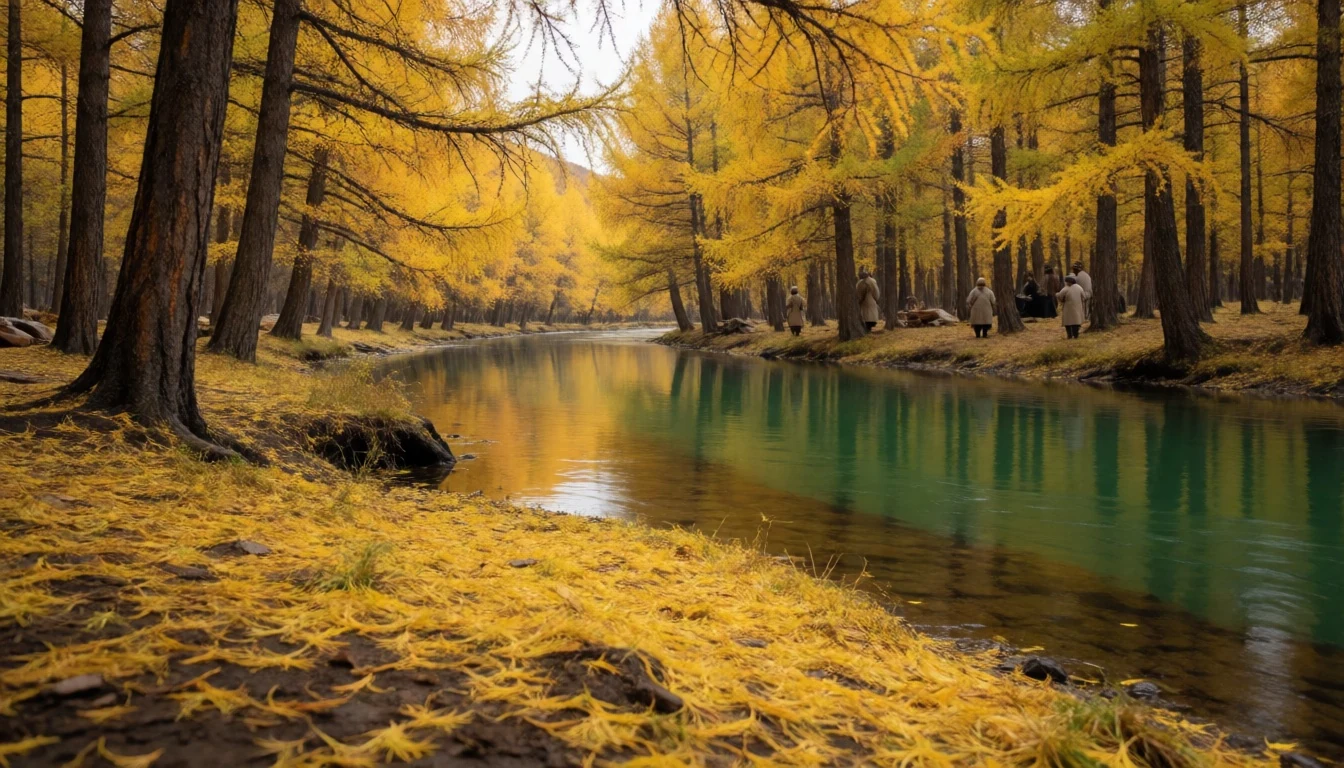
- A riverside ger camp stretch — Onon valley, near the facts coordinates
Several camps sit close to the water, and a night in one is the easiest way to see the river at dawn and dusk, when mist often lifts off the meadow. Expect shared facilities, a wood or dung stove, and meals built around mutton, dairy and tea.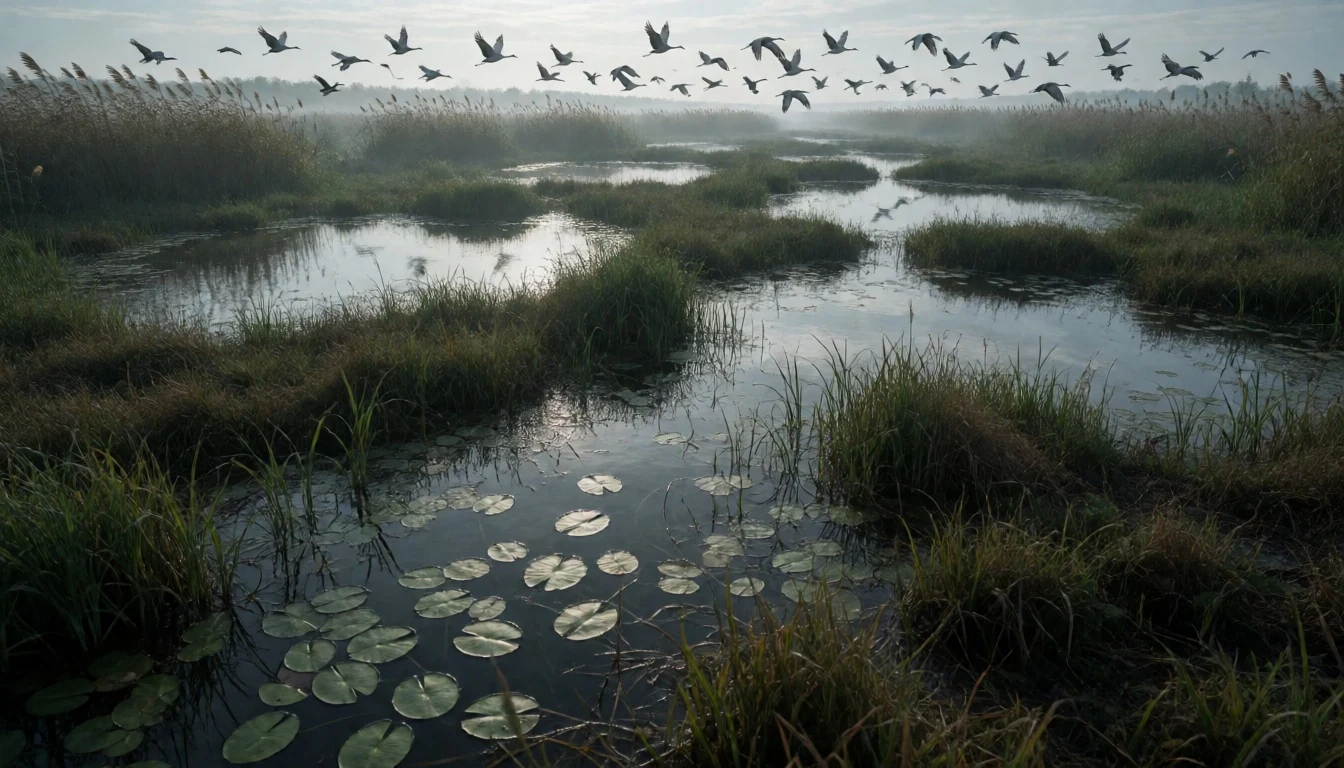
Culture
Onon River lies in the Mongol heartland, and the culture along it is one of herding, hospitality and reverence for land. Many families keep older beliefs about sacred mountains and waters alongside Buddhism, and that shows in small ways: ovoo, cairns of stones and sticks topped with blue silk scarves, mark passes and hilltops, and travellers add a stone and circle the cairn as a gesture of respect. Rivers are treated with care; washing clothes or dumping rubbish directly in the water is frowned upon. Hospitality is automatic. A visitor entering a ger is usually offered salty milk tea, dried curds or fermented mare's milk, and refusing outright can seem cold, though a polite sip and a hand over the bowl is understood. Families are generous but not showy, and conversation tends to start with livestock, weather and the road. The valley's link to Genghis Khan carries pride, and visitors are welcome to ask about it, but local people may disagree about exact sites, so listening works better than debating. Seasons shape life here: summer is for milking and moving camp, autumn for preparing meat for winter, and spring is lambing season, when families are busy and guests are best arranged through a guide. Walk clockwise around any ovoo, never step on the threshold of a ger, and accept food and drink with your right hand or both hands.
What to wear
Onon River's herding communities wear the deel, the long wrapped Mongolian robe, fastened at the right shoulder and tied with a long cloth sash. Everyday deels are of cotton or wool, winter ones are lined or trimmed with sheepskin, and festival and ceremonial versions are cut from silk brocade in deep blue, burgundy or green. Leather boots with upturned toes (gutal) and felt hats or fur-trimmed caps complete the older outfit, which is still worn for weddings, Naadam and family occasions. Day to day, people mix it with practical modern clothing: a deel over a fleece for riding, jeans, rubber boots in wet meadows, baseball caps against the sun. In towns such as Dadal, outfits are largely ordinary jackets and trousers. For a visitor, layers matter most, since the weather can swing from hot sun to cold rain and a cold night within a day. Pack a waterproof jacket, a warm mid-layer, a sun hat, sunglasses, sturdy boots with ankle support, and long trousers or light long sleeves against insects and tall grass. Dress modestly near ovoo, monasteries and family gers: shoulders and knees covered is a safe default. Swimwear is fine on the riverbank away from camps, but bathe a good way from settlements and drinking spots.
What to eat
- Buuz — Ger camps and small town canteens (guanz)
Steamed dumplings filled with minced mutton or beef, onion and a little salt, served hot with tea. They are the standard family meal and a holiday staple, easy to find at ger camps and small canteens in Dadal and Binder.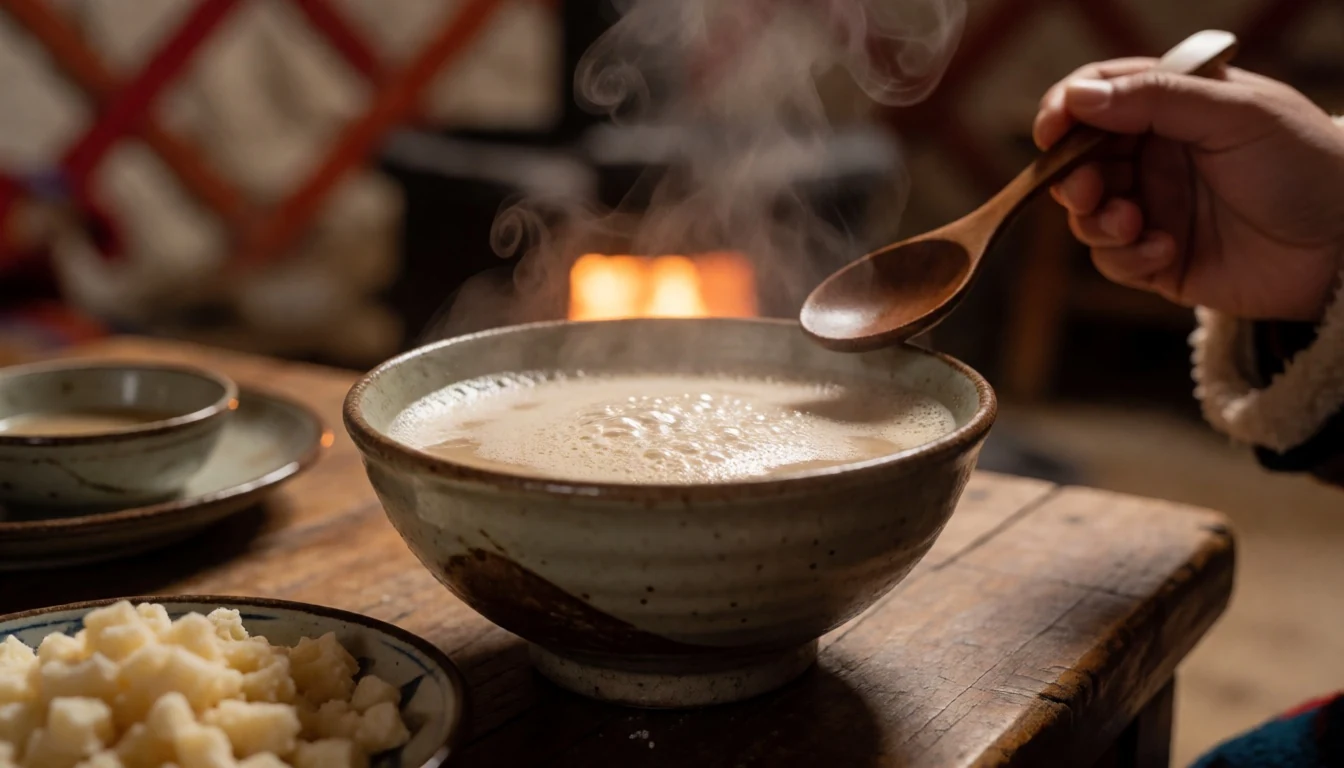
- Khorkhog — Ger camps, by arrangement
Mutton cooked with hot stones in a sealed pot or milk churn, with potatoes and carrots. It is a feast dish, often prepared for guests, and the greasy, hot stones are passed around to hold for good luck.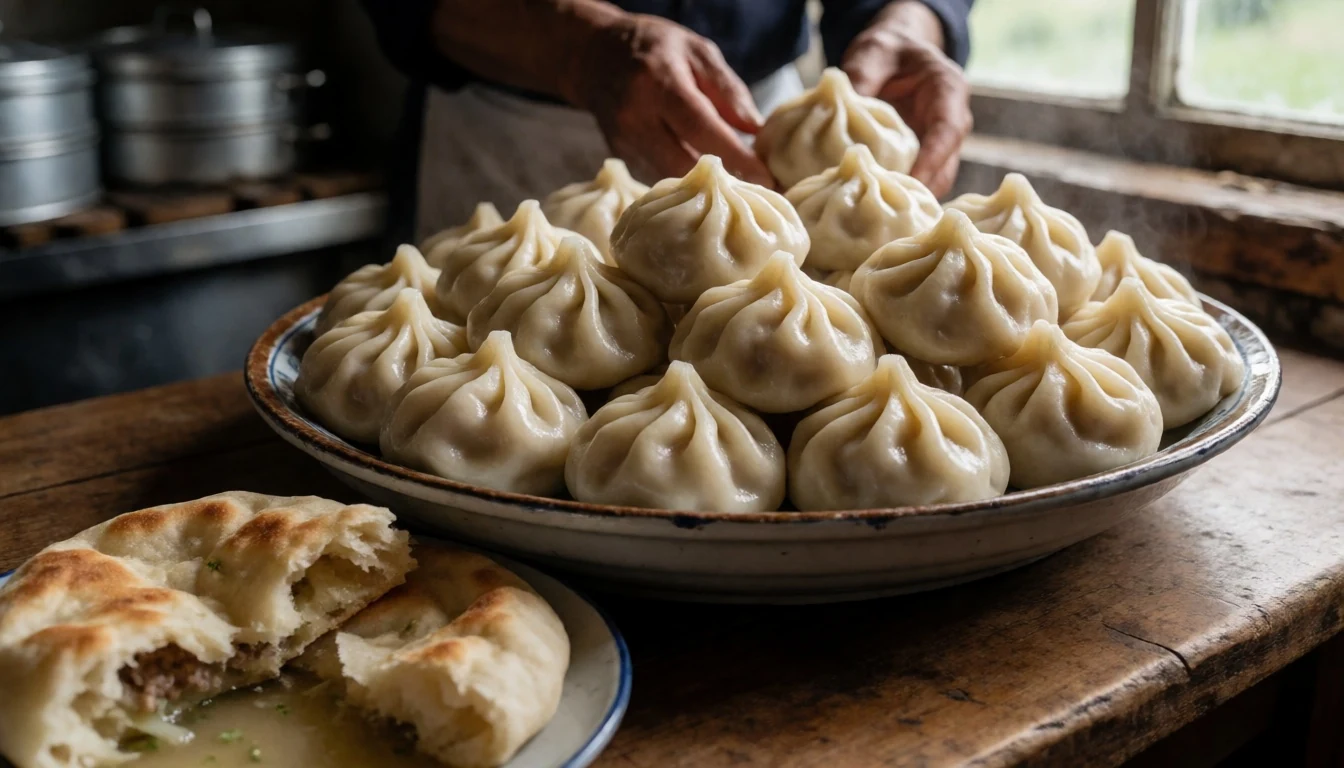
- Suutei tsai — Any herder's ger or camp
Salty milk tea, often with a little millet or rice floating in it, offered to nearly every guest on arrival. It tastes odd at first and is excellent after a cold, wet day on the steppe. - Aaruul and other dried curds — Family gers and small shops in Dadal
Hard dried milk curds, sour and chewy, made in late summer and set on the roof of the ger to dry. A good trail snack, though the hardest varieties can need a long suck before they give way. - Airag — Herding camps in summer
Fermented mare's milk, lightly sour and mildly fizzy, made in summer when mares are milked. Visitors are often offered a bowl; a small taste is polite, and a full bowl is not expected. Take care if your stomach is sensitive.
Plan it
Best time. June to September, when the grass is green, the valley is accessible and days are warm; summer can bring heavy rain and mosquitoes, and winter is bitterly cold with frozen roads and rivers, so most visitors avoid it.
How long. 2–3
Getting there. Fly to Chinggis Khaan International Airport near Ulaanbaatar, then travel east by road through Khentii province to Binder or Dadal; the last leg is usually on dirt tracks, so arrange a driver with an off-road vehicle in advance, and allow a long day for the journey.
Budget. mid
Tips
- Book a driver or tour operator early for summer, since vehicles and ger camps in the east fill up around Naadam
- Carry cash in small notes; cards rarely work outside Ulaanbaatar and larger towns
- Bring insect repellent, a water filter or bottled water, and a good map or offline navigation
- Ask about permits and access for protected areas and sacred sites before travelling
- Expect patchy mobile coverage and tell someone your route
Etiquette
- Circle ovoo clockwise and do not take stones or items from them
- Ask before photographing people, their animals or their gers
- Keep litter and soap out of the river
Nearby
Sources
- Wikidata Q206694 (CC0)
- Wikipedia — Onon River (CC BY-SA 4.0)
- Wikivoyage — Mongolia (CC BY-SA 4.0)
Wildlife
- Heron (animal)
The grey heron is a big grey wading bird with long legs that fishes by standing very still, like a patient fisherman. Along the Onon it hunts in the shallow water, and its call sometimes breaks the quiet of the river. Look along the water's edge, and keep a respectful distance so it does not take fright. Go quietly, let a guide lead you to it, and never feed it, however tame it seems.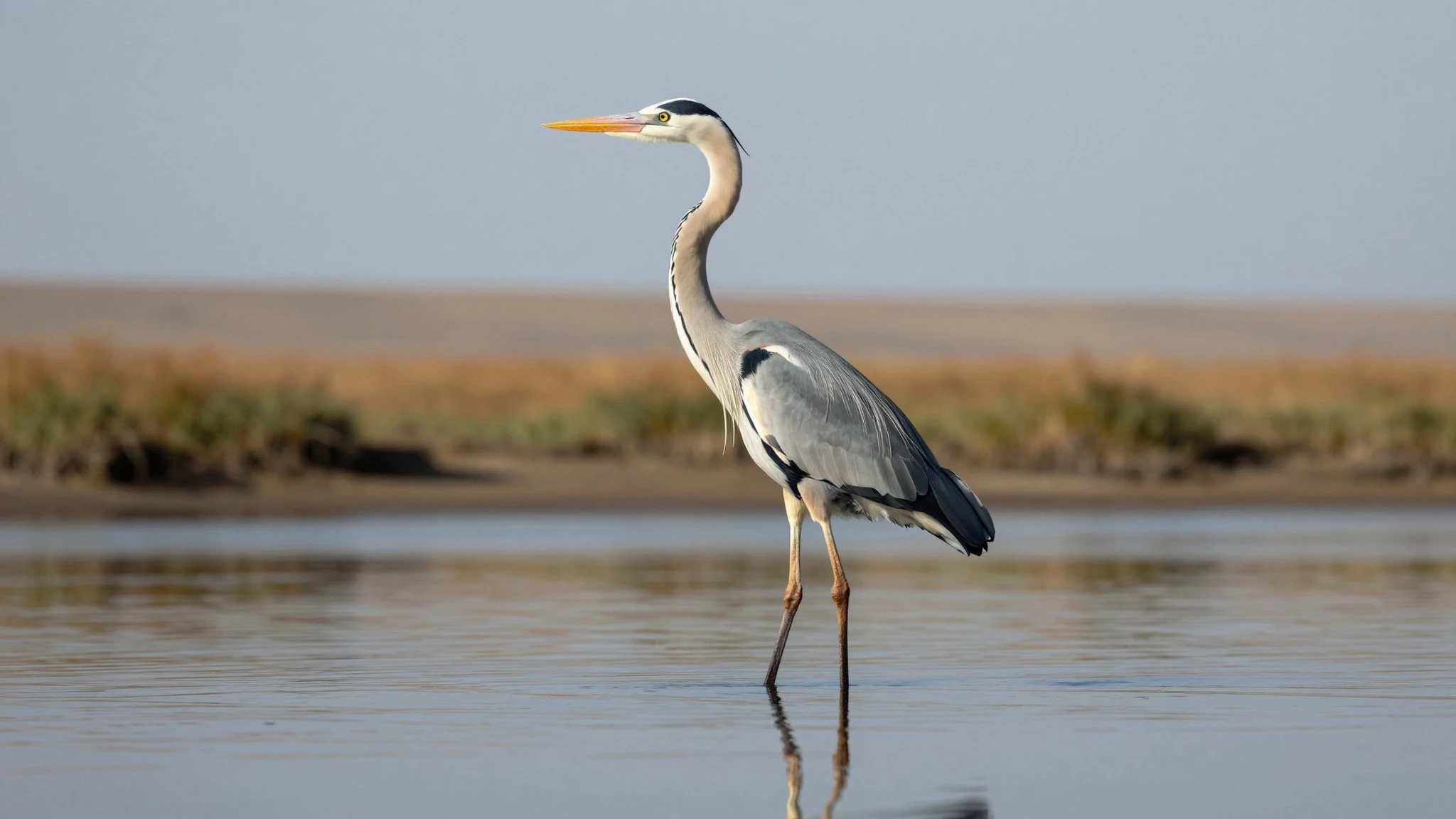
- Otter (animal)
The Eurasian otter is a furry swimmer that lives in the water and eats mostly fish. On the Onon, your best chance of seeing one is at dawn, in the hush before the day begins, on a walk where the river opens out into a wider basin, often alongside waterfowl. Otters are fiercely territorial, so watch from far back, keep silent and still, go with a guide, and never feed them.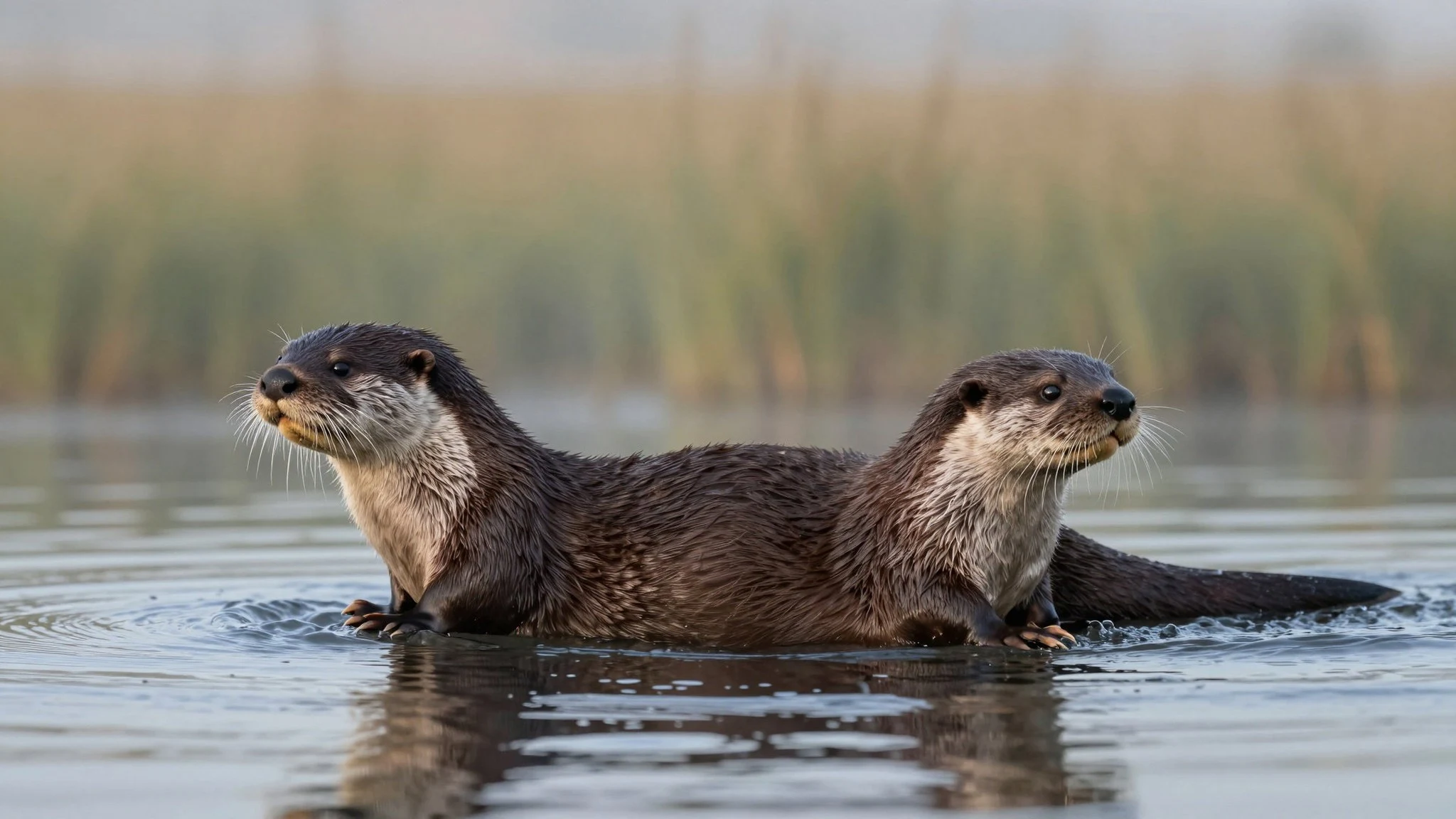
- Heron (bird)
The grey heron is a big grey wading bird with long legs that fishes by standing very still, like a patient fisherman. Along the Onon it hunts in the shallow water, and its call sometimes breaks the quiet of the river. Look along the water's edge, and keep a respectful distance so it does not take fright. Go quietly, let a guide lead you to it, and never feed it, however tame it seems.