Onomichi
Onomichi, Japan
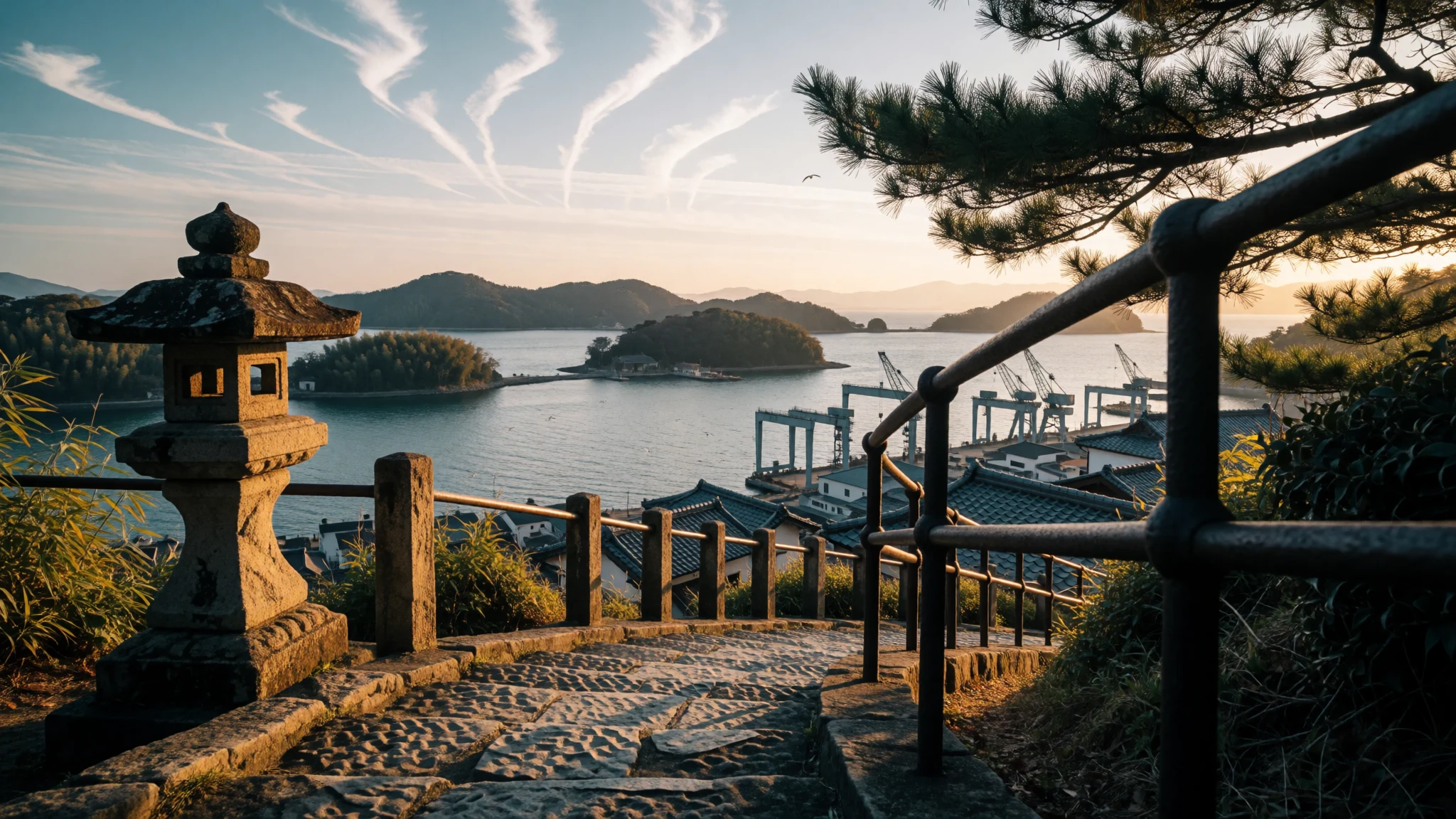
Onomichi is a steep Inland Sea port of old temples, literary lanes and ramen, and the quiet starting point for the cycle route to Shikoku.
The place
Onomichi sits on the Seto Inland Sea in the south-east of Hiroshima Prefecture, squeezed into a thin strip between the water and a steep green hillside. Flat ground is scarce, so houses, temples and lanes climb the slope in tiers, while the main streets run parallel to the shore. A narrow channel separates the waterfront from the island of Mukaishima, and small ferries shuttle across it through the day, with the harbour right beside the railway station. Shipyards and cranes line the coast, a reminder that this is a working port as much as a place for strolling. The coastline is ragged and forms part of Setonaikai National Park, which gives the views from the hill a layered look of islands, bridges and haze. Filmmakers have used the town's scenery often, and a small film museum stands in the centre. The climate is humid subtropical: winters are cool to mild, summers hot and sticky, with July the wettest month and August the warmest. Most visitors come for the old temples and the walking routes that link them, then use the town as the gateway to the island-hopping cycle route towards Shikoku. It is a place for climbing slowly, stopping for noodles, and watching ships from a bench. Foreign visitors are still fewer here than in Kyoto or Hiroshima, so the temple paths are often quiet outside blossom time and public holidays.
Its story
Onomichi's story is the story of its harbour. Ships began using the port in 1168, and for roughly five centuries it worked as a collection point for rice and a link in overseas trade. Merchants grew rich here, and their donations help explain why a town this size holds so many temples, many of them scattered up the hillside rather than gathered in one precinct. Commercial weight shifted during the Edo period, but the sea lanes kept the town busy as a coastal stop. Onomichi was formally made a city on 1 April 1898, the second in Hiroshima Prefecture. Shipbreaking and shipbuilding became part of its identity in the twentieth century; the liner RMS Adriatic was cut up at the docks in 1935, and the yards still shape the skyline. The city grew by absorbing neighbouring towns and villages across several decades, then took in Mitsugi and Mukaishima in 2005 and Innoshima and Setoda in 2006. Those mergers stretched its boundaries out to island communities, which is why the municipality now reaches well beyond the compact waterfront. Writers and film directors later found the stepped lanes and sea views congenial, and that literary and cinematic afterlife is now a quiet part of the town's appeal. The old photographs of the waterfront in the 1930s show a shoreline that is recognisably the same one, only with fewer roads and more small boats.
What to see
- Senkō-ji Park — Hilltop above the town centre
Senkō-ji Park is the top of the hill walk and the place to get your bearings. Cherry blossom fills it in season, and the outlook takes in the Inland Sea, the island-dotted strait and the shipyards below. The ropeway runs up from the town for those who prefer to start high and walk down.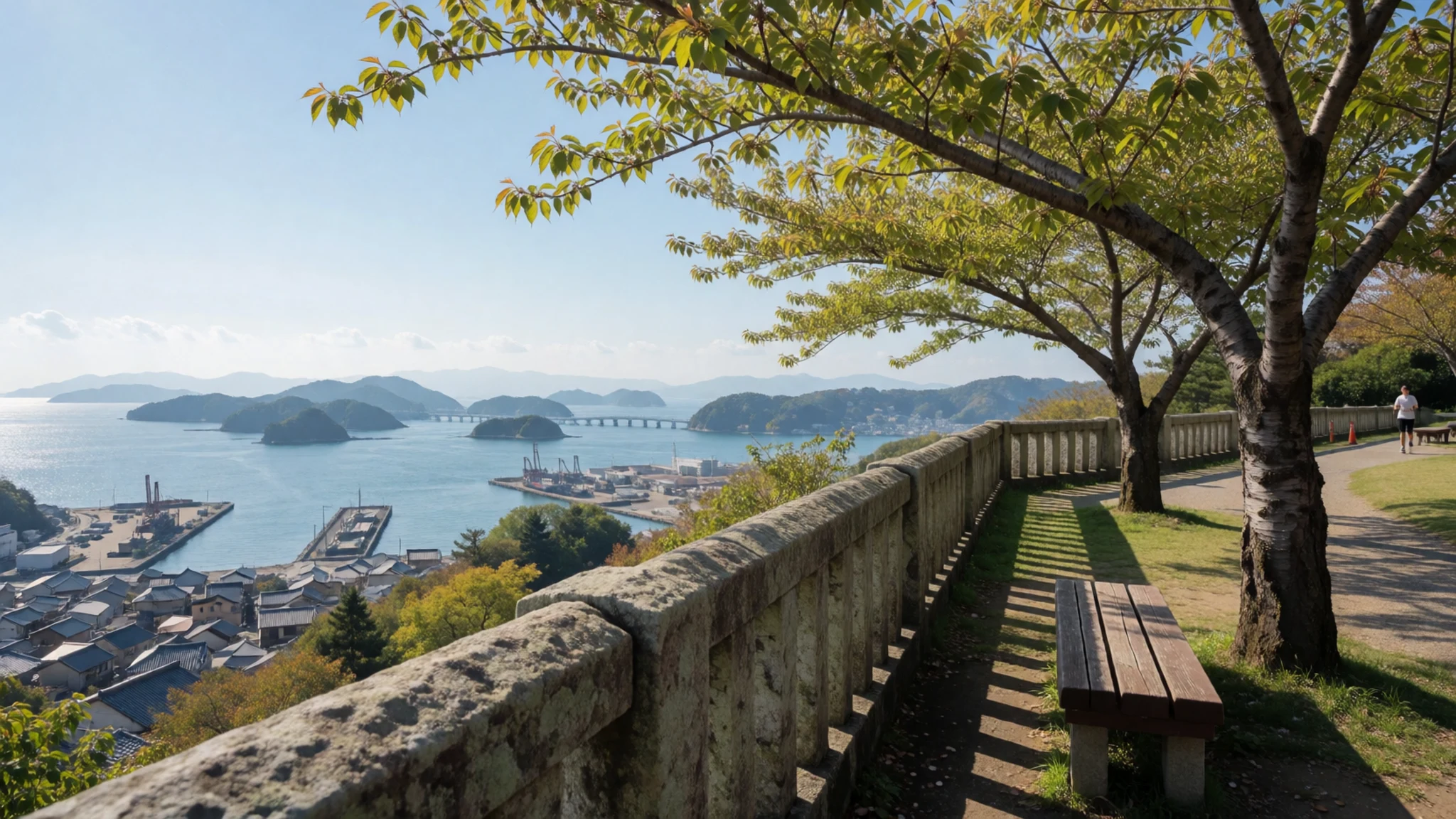
- Senkō-ji temple — Hillside, on the Path of Literature
Senkō-ji temple sits partway down the Path of Literature and is the best known of the hillside temples. It is associated with the Niko Niko Jizō, a grinning guardian figure for children, and the terrace buildings make a good pause on the descent. Go early for the calmest light and fewest people.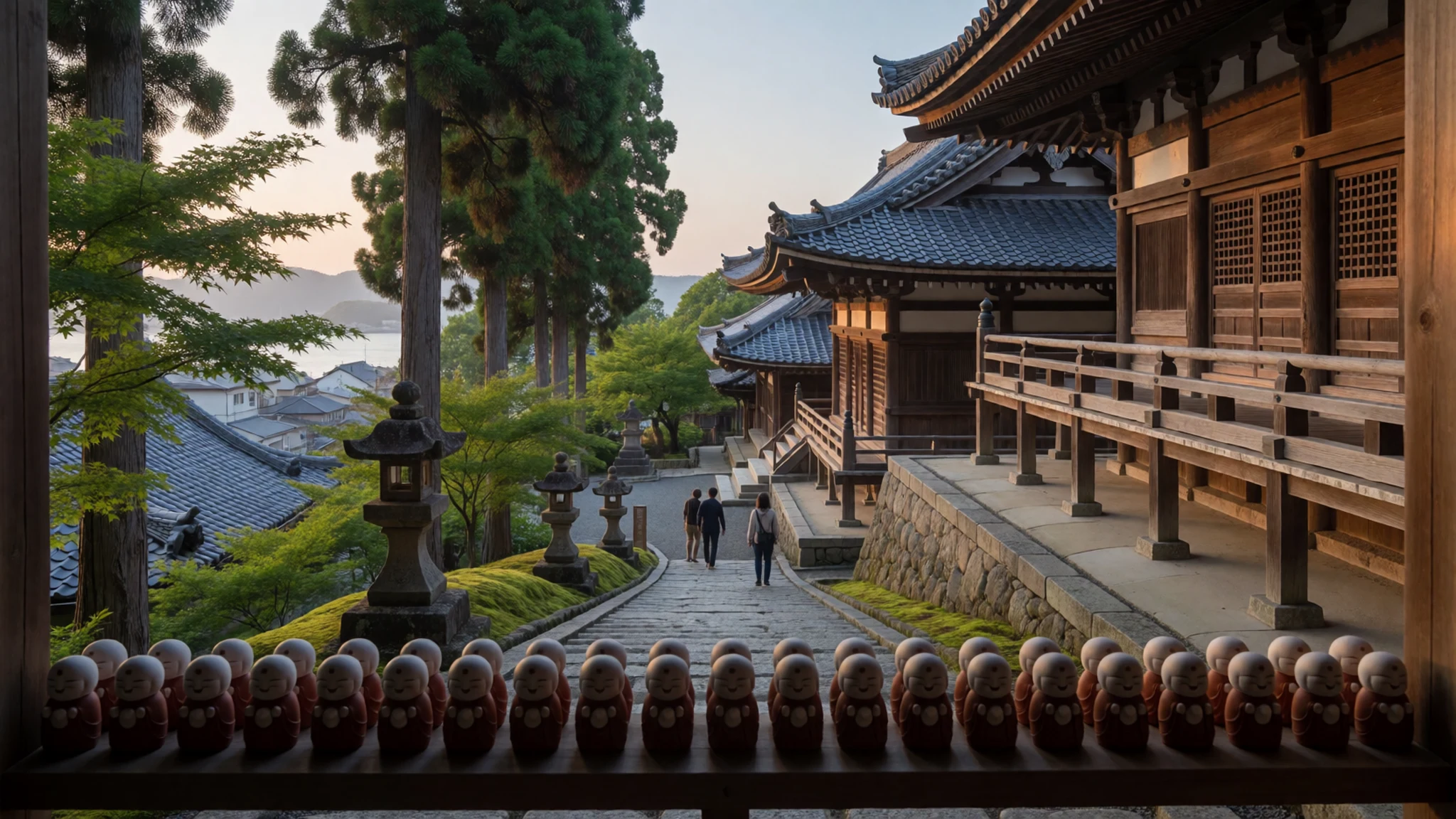
- Jikō-ji — Western end of the temple hillside
Jikō-ji is the first stop on the Old Temple Loop and is mostly remembered for its imposing stone gate. Visitors can also make a small Buddha figure by pressing clay in their hands, a quiet, tactile activity that suits a rainy day or a pause from the stairs.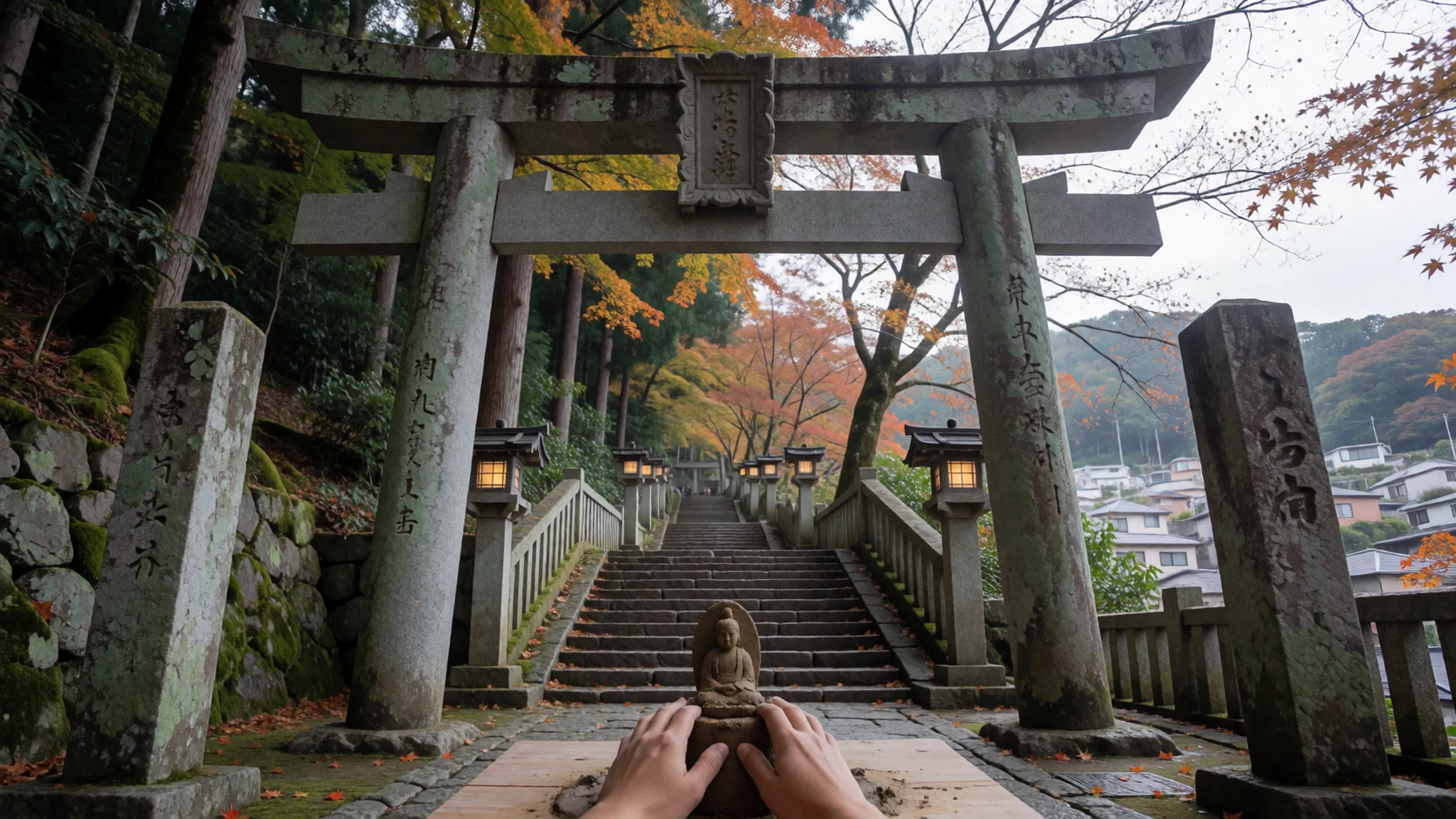
- Saikokuji — Northern slope above the railway line
Saikokuji has a gate hung with enormous straw sandals, a playful sign of the giants said to pass through. The red pagoda is a National Treasure and rises over the grounds, which are a little away from the main lanes and so tend to be calmer than the temples closer to the station.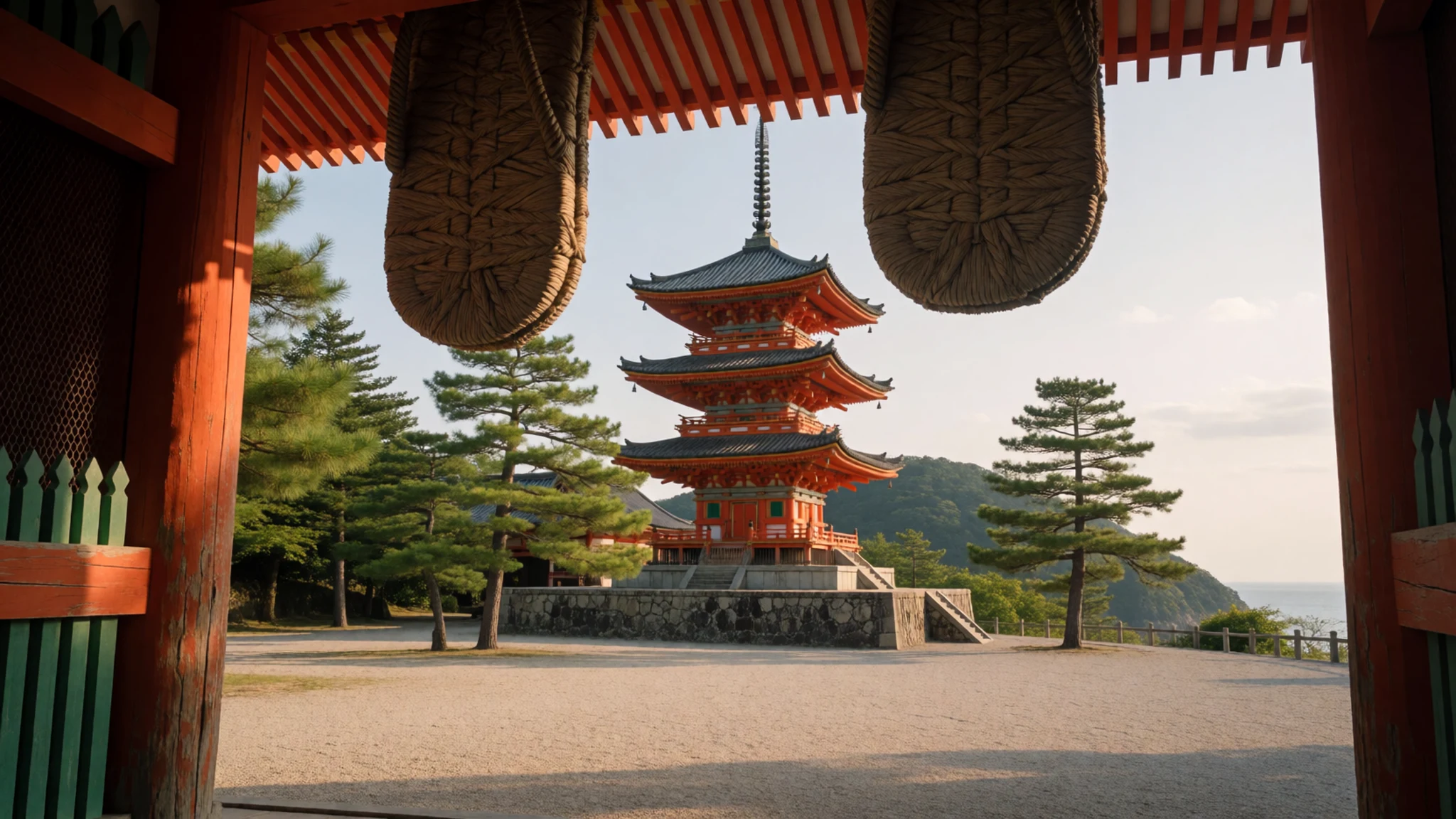
- Jōdoji — Eastern end of the old town
Jōdoji is a temple believed to date back to Prince Shōtoku's time, set in leafy precincts at the eastern end of the temple loop. The buildings are old and weathered, and the grounds feel more rural than the central hill. It rewards anyone interested in Pure Land Buddhism or simply in a quiet half hour.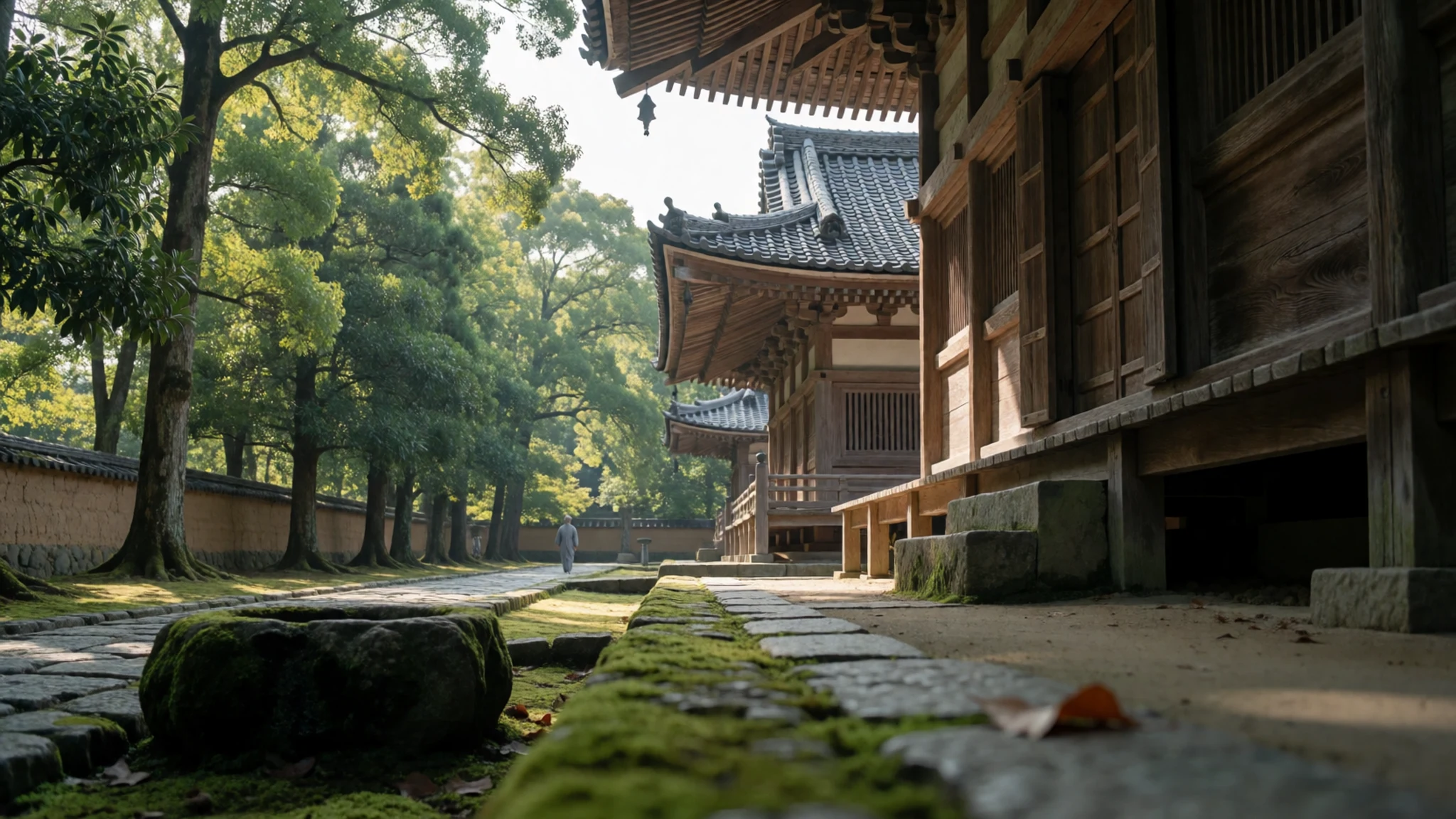
- Onomichi City Museum of Art — Hillside near Senkō-ji Park
Onomichi City Museum of Art holds a modest mix of Chinese, Japanese and Western art and crafts, but most people come for the building. It was reworked in 2003 by the architect Tadao Ando, and its clean concrete lines contrast neatly with the old wooden temples nearby.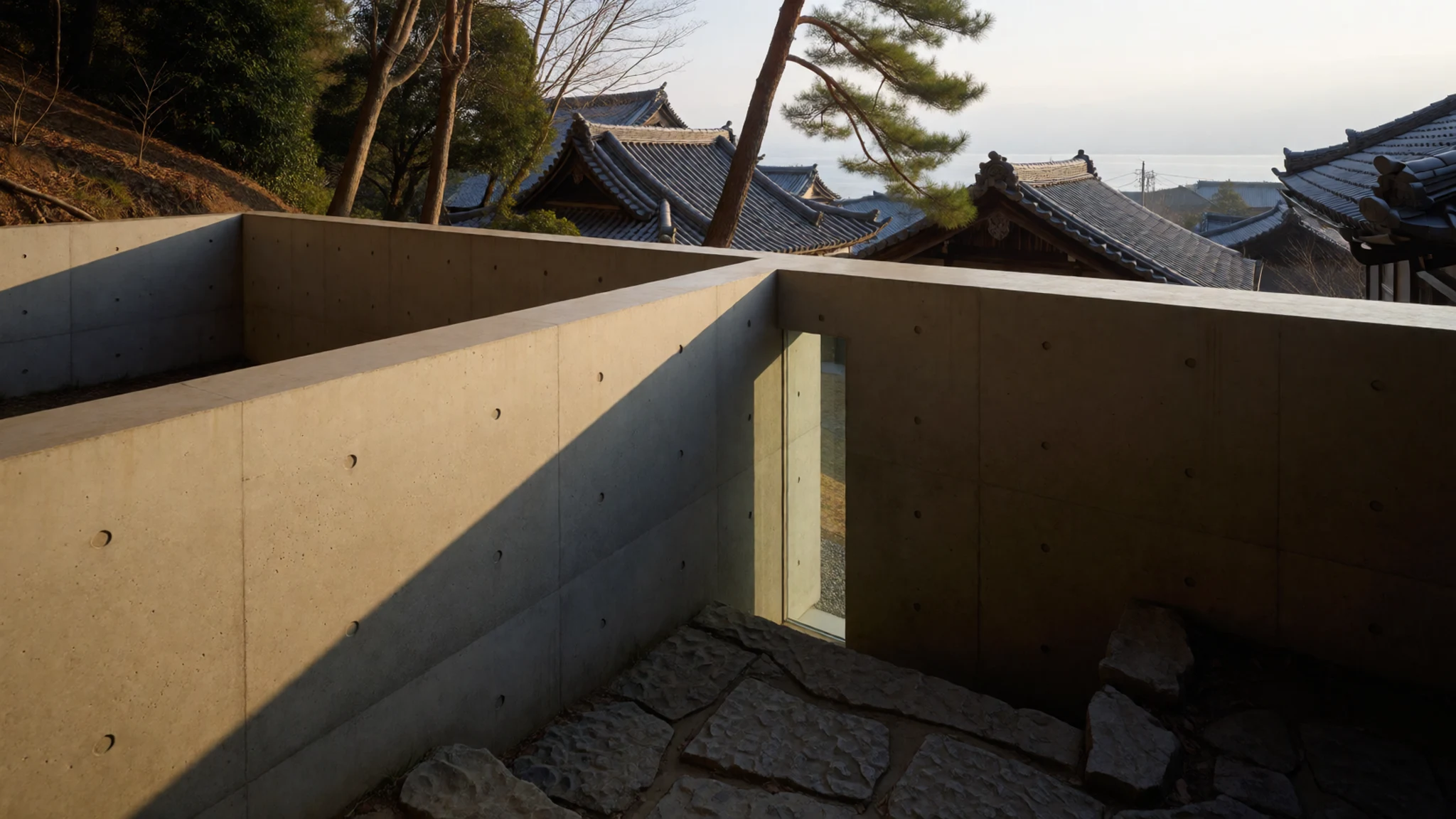
Culture
Onomichi's culture is shaped by its temples, its harbour and its habit of attracting writers and filmmakers. Buddhism, especially the Pure Land tradition, runs through the hillside, where temples sit close together and are linked by walking routes known as the Old Temple Loop. The Path of Literature carries short quotations from authors who lived or stayed here, set on stones along the way, so a walk becomes a slow reading as well as a climb. The film connection is just as visible: the town has served as a location for many movies, and a small museum in the centre celebrates that history. Everyday life is unhurried. Residents carry shopping up steps, ferries run across the channel, and cats doze on garden walls. Small local touches, like the grinning Jizō at Senkō-ji or the clay Buddha figures you can shape by hand, give the religious sites a warm, approachable feel rather than a solemn one. Shipyard work remains a source of livelihood, and the sound of the docks is part of the background. Public baths are a long-standing neighbourhood habit, with separate sections for men and women. Evenings are quiet and nightlife is limited; most people eat early and go to bed. At temple halls and shrines, take off your shoes where there is a raised floor, keep your voice low, and ask before photographing monks or worshippers.
What to wear
Onomichi's traditional dress is the same family of garments seen across western Japan. The kimono, usually silk and worn with an obi sash, appears at weddings, tea gatherings, graduations and New Year visits to shrines. In summer the lighter cotton yukata comes out for festivals and fireworks, and priests and temple staff wear plain robes in the working halls. Indigo-dyed cotton and simple woven fabrics are common in workwear such as happi coats at local celebrations. Day to day, people here dress practically. Locals tend to wear casual layers, jeans or work trousers, trainers and light jackets, and cyclists in sportswear are a common sight near the harbour because of the island route. Dressing smartly matters mostly for ceremonies and office work, rather than for walking around town. A visitor should dress for hills and weather. Wear comfortable, grippy shoes that slip on and off easily, since the lanes are steep and stepped and temple halls require shoes to be removed. Pack light, breathable clothes for the hot, humid summer, with a hat and water, and add a rain jacket for June and July. Winters are cool rather than harsh, so a warm layer is enough. Temples do not demand strict dress, but covered shoulders and knees are respectful, and clean socks without holes are a good idea.
What to eat
- Onomichi ramen — Ramen shops around the station and harbour
Onomichi ramen is the local noodle bowl: a soy-flavoured broth with a hint of fish in the stock and a layer of melted pork fat on top. It looks ordinary at first glance, then tastes richer and rounder than expected.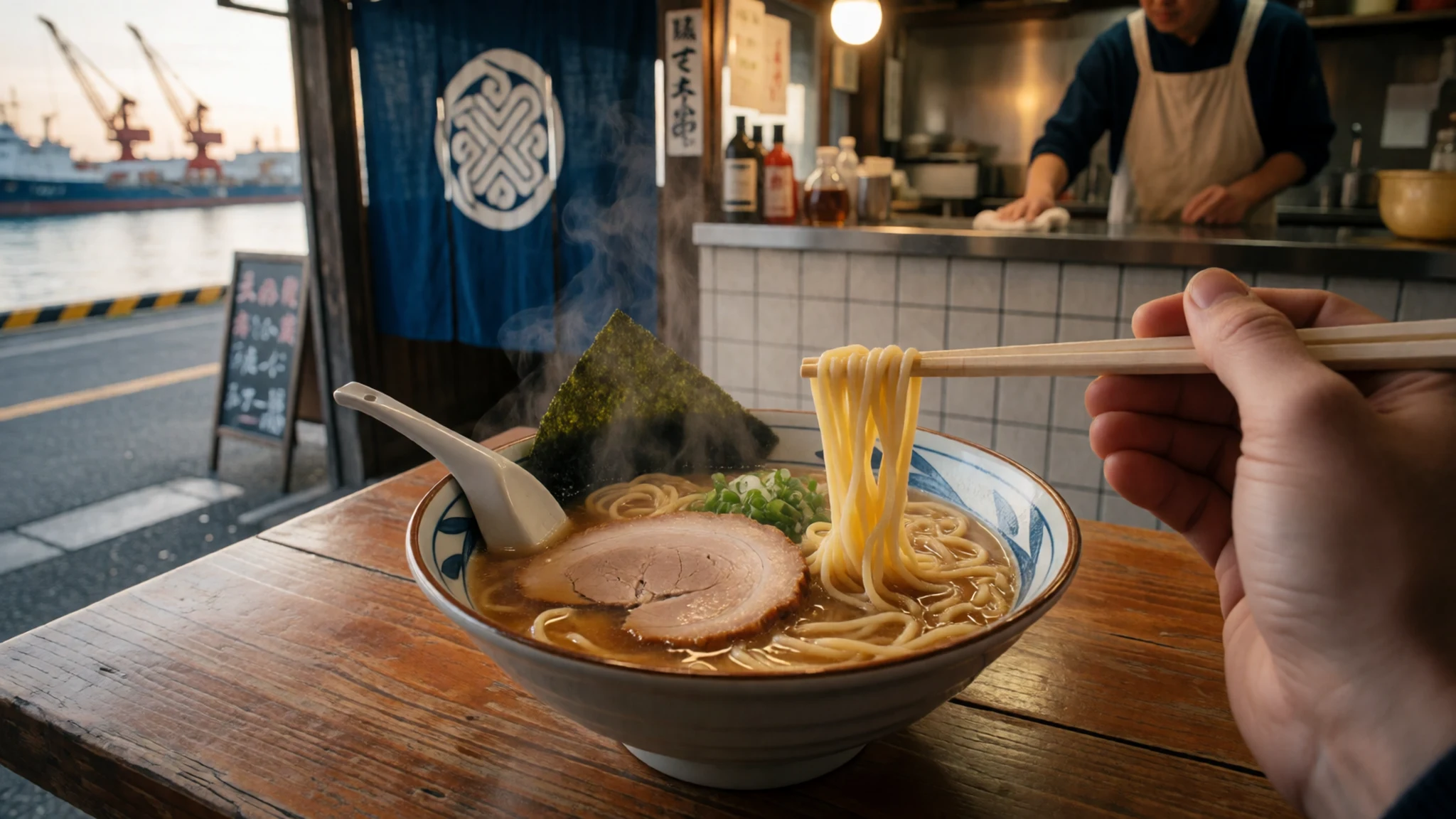
- Queue-worthy ramen counters — Narrow shopfronts in the town centre
A few small ramen counters have become destinations in their own right, with only a handful of seats and lines to match. Arrive early, accept the wait, and the reward is a classic bowl eaten shoulder to shoulder with locals.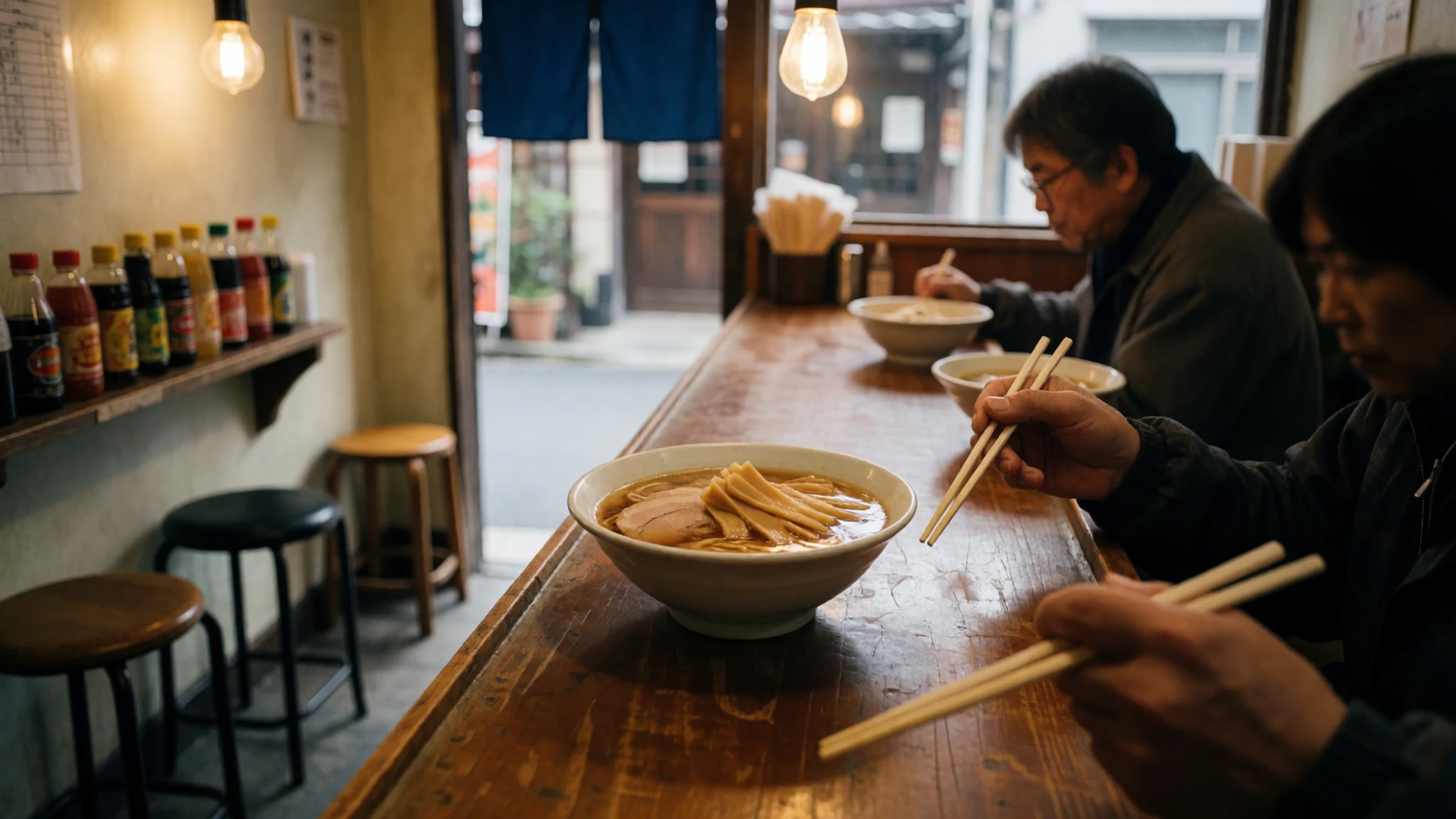
- Tempura and soba — Small eateries slightly away from the station
When ramen fatigue sets in, some neighbourhood eateries offer crisp tempura and buckwheat soba. They tend to be cheaper and calmer than the busy noodle shops, and their slightly off-centre locations help keep the crowds thin. - Chaider — Independent cafés on the hillside lanes
Chaider is a tea-flavoured cider created in Onomichi, fizzy, lightly sweet and faintly tannic. It is a refreshing break after climbing the temple hill, and the café where it is served is also a handy place to ask for local tips. - Ramen with a view — The hilltop restaurant at the ropeway station
At the top of the ropeway, a round restaurant serves bowls of the local ramen with the strait spread out behind the window. It is more about the outlook than the noodles, but the combination suits a first day.
Plan it
Best time. March–April for cherry blossom on the hill, and October–November for mild, clear walking weather. June and July are rainy and humid, August is the hottest month, and January is the coldest.
How long. 1–2
Getting there. JR Onomichi Station is on the San'yo Main Line between Hiroshima and Okayama. Shin-Onomichi Station is on the Shinkansen but only the all-stops Kodama train calls there, so many travellers change at Fukuyama and finish the trip on a regular train. Shuttle buses also link Hiroshima Airport and several big cities; check the official site, https://www.city.onomichi.hiroshima.jp/, for current timetables.
Budget. low
Tips
- Start the hill walk early, before the heat and any tour groups arrive.
- Take the ropeway up and walk down the Path of Literature, so the steps are all downhill.
- Carry some cash for small eateries, temples and ferries, and check card acceptance before you queue.
- Go to the popular ramen counters off-peak, since seating is limited and queues form quickly.
- Bring water in summer; the lanes are steep and shade is patchy.
Etiquette
- Remove your shoes where there is a raised floor or slippers are laid out at temple halls.
- Ask before photographing monks, worshippers or people in their own gardens.
- Keep voices low on the narrow residential lanes and take your litter with you.
Nearby
Sources
- Wikidata Q696694 (CC0)
- Wikipedia: Onomichi (CC BY-SA 4.0)
- Wikivoyage: Onomichi (CC BY-SA 4.0)
- Photo: Higashigoshocho, Onomichi (Nagono) (CC BY 3.0)
- Photo: Senkoji in Onomichi (663highland) (CC BY 3.0)
- Photo: Jodo-ji precincts (Reggaeman) (CC BY 3.0)
- Photo: Onomichi film museum (663highland) (CC BY 3.0)
- Photo: Innoshima Murakami Suigun castle (Yoshio Kohara) (CC BY 3.0)
- Photo: Onomichi Channel (663highland) (CC BY 3.0)
- Photo: Onomichi in 1930 (Ministry of Railways) (Public domain)
- Photo: Onomichi City Hall (Asturio Cantabrio) (CC BY-SA 4.0)


