Ölgii
Ölgii, Mongolia
Ölgii is Mongolia's Kazakh capital in the far west, where eagle hunters, mosques and Altai steppe feel closer to Central Asia than Ulaanbaatar.
The place
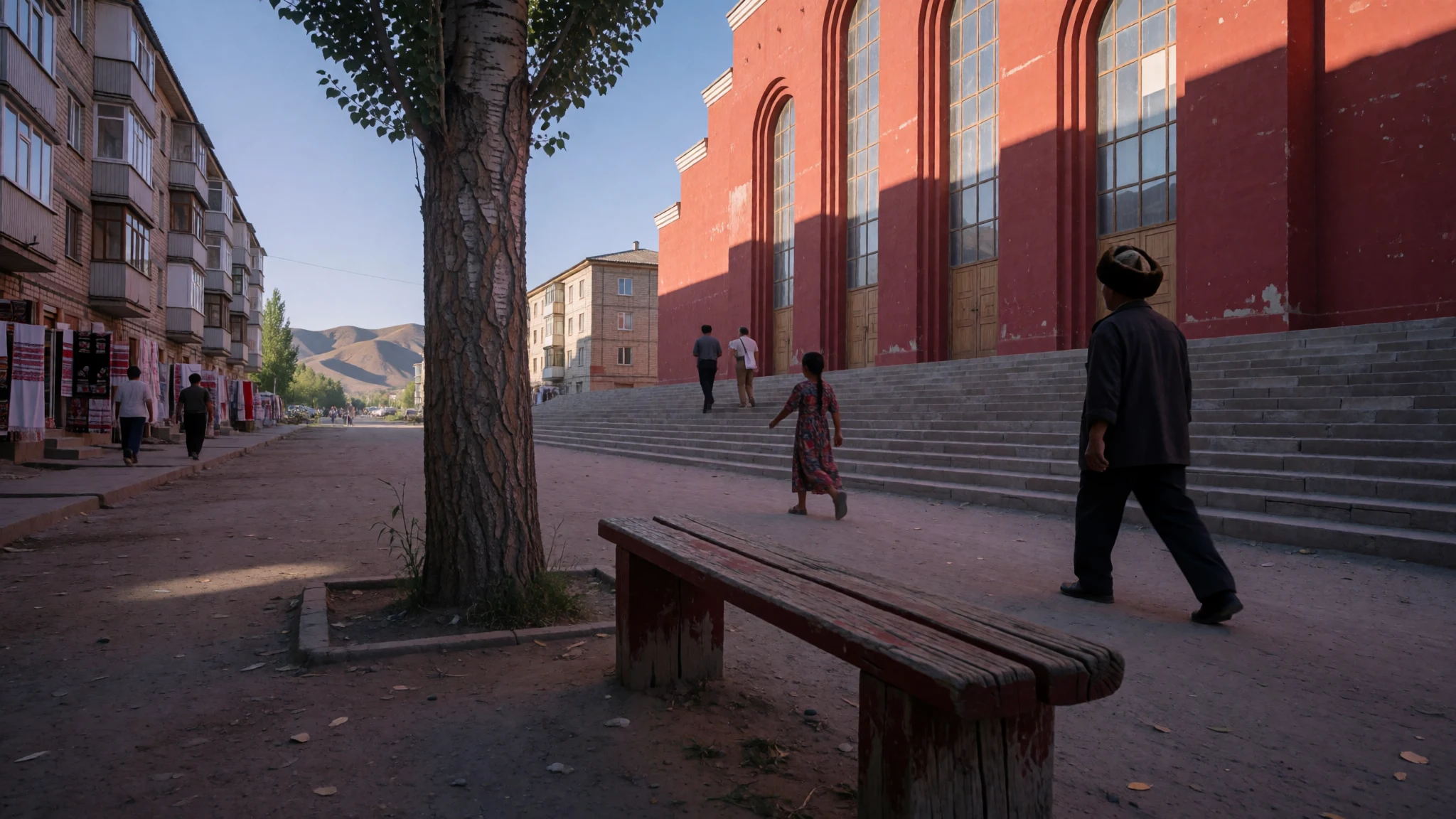
Ölgii sits at 1,710 m in the far west of Mongolia, on the Khovd River, a small city of about forty thousand people tucked among the Altai mountains. It is the capital of Bayan-Ölgii province, a region that is predominantly Kazakh, and Kazakh is the language heard in the street, the shops and the bazaar. The feel is closer to Central Asia than to the Mongolia of the postcards: mosques, embroidered caps, kebabs and tea at the corner, and families who greet each other at length. The centre is a grid of Soviet-era blocks and wide roads, plain rather than pretty, and the city works best as a base for the mountains and steppe beyond it. The climate is a cold desert. Winters are long, very dry and very cold, while summers are short and warm, with clear light and dust whenever the wind picks up. Ölgii is remote, and the journey in, by plane or a long bus ride, shapes any trip. What draws travellers is the living culture of the herding families in the hills, above all the eagle hunters, who train birds to hunt alongside them. In town itself, the museum, the theatre, the bazaar and the mosques fill a day comfortably, and the rest of the time goes on arranging a driver, a guide and supplies for the countryside. Expect a working town rather than a resort: dust, stray dogs, patchy English outside a few cafés, and generous hospitality once a conversation starts.
Its story
Ölgii began in the 1840s as a settlement of Kazakhs moving east into the Altai to escape pressure from the expanding Russian Empire, joining herders who had long wintered in these valleys. More families arrived after the 1917 revolution and again in the 1930s, when communist rule, the suppression of religion and civil war in China pushed people across the border. By then the town was the centre of Islam in Mongolia, and in the purges of the 1930s its mosque was destroyed and its imam executed. For a time the state also tried to suppress Kazakh language and customs. That changed in 1939, when Bayan-Ölgii province was created with Ölgii as its seat, and in 1961 the town was formally made a city. Because it had no railway and little mineral wealth, the region was largely left alone, which helped Kazakh music, embroidery, herding and eagle hunting survive. Much of the centre was built in the Soviet period as apartment blocks, offices and civic buildings. After the democratic revolution of 1991 and the breakup of the Soviet Union, about a quarter of the population left for newly independent Kazakhstan. Many later came back, and the population has largely recovered. Since 1992 Ölgii has been classed as a district, though everyone still calls it a city. Today the mosques are new, built within recent decades, and the town carries a double inheritance: a Soviet street plan and a Kazakh identity that outlasted the pressure on it.
What to see
- Bayan-Ölgii Museum — Town centre
The museum is the sensible first stop before heading into the countryside. Its displays cover Kazakh culture, local history and the wildlife of the Altai, which gives useful context for the felt-lined homes, eagle hunters and mountain scenery waiting outside town. Allow an hour or so and ask staff what is open.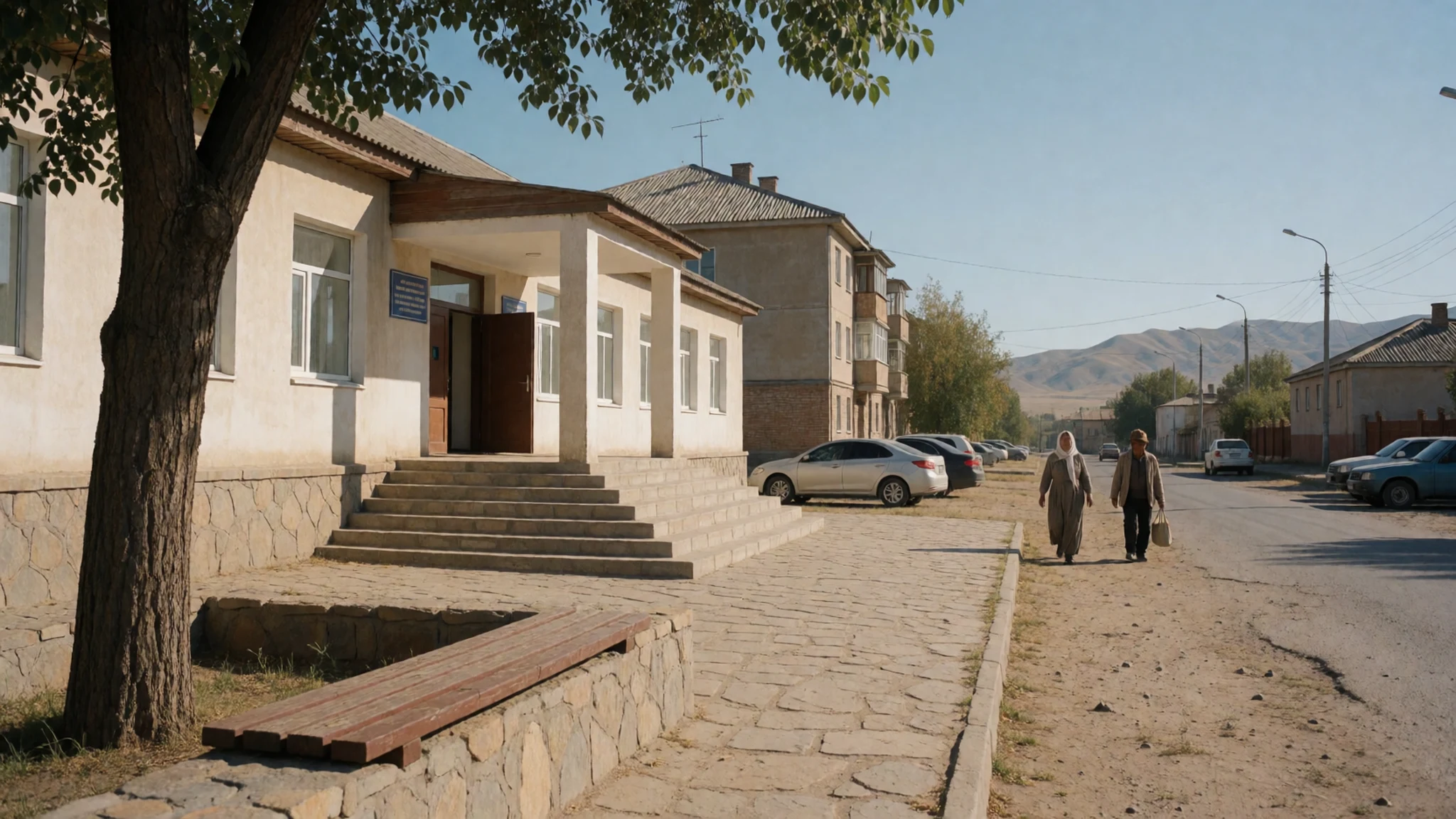
- Kazakh National Theatre — Town centre
A large red building put up to promote Kazakh culture, the theatre hosts concerts and plays by local companies and by visiting groups from Kazakhstan and other parts of Mongolia. Programmes change, so check what is on locally. Even without a ticket, it is a landmark worth seeing from the outside.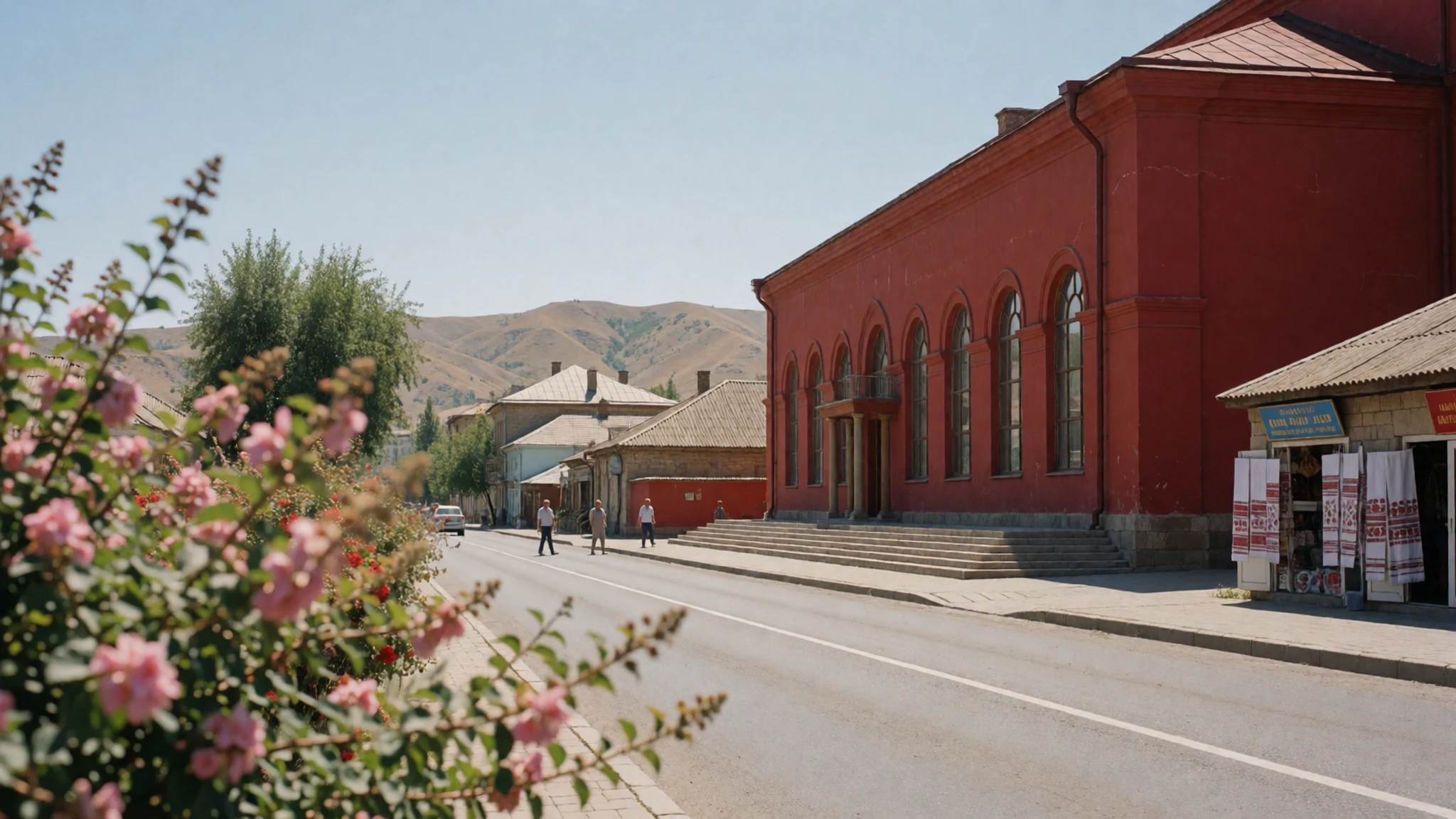
- Central square and statues — Central square
Ölgii has plenty of modern statues, and the central square is dominated by a Soviet-Mongolian memorial to Mongolia's part in the Second World War. Nearby, busts of Lenin and the Mongolian revolutionary Sukhbaatar show how deeply the Soviet era shaped the city. A short, free walk.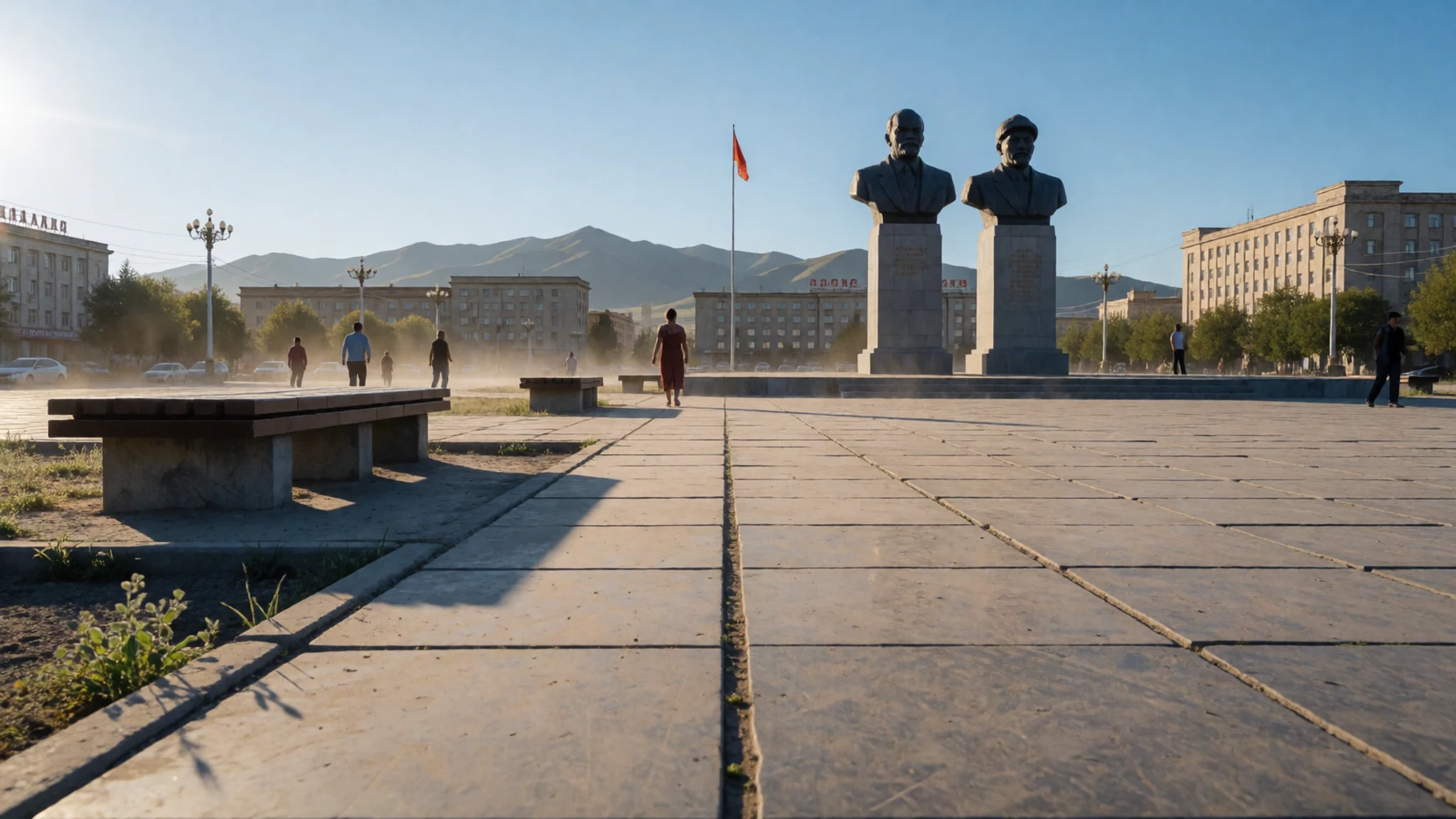
- Mosques — Across the city
Half a dozen or more mosques stand in the city, all built within recent decades, after the religious purges that destroyed the earlier one. The central mosque is the most visible. Visit outside prayer times, dress modestly, and ask before going in or taking photographs, since these are working places of worship.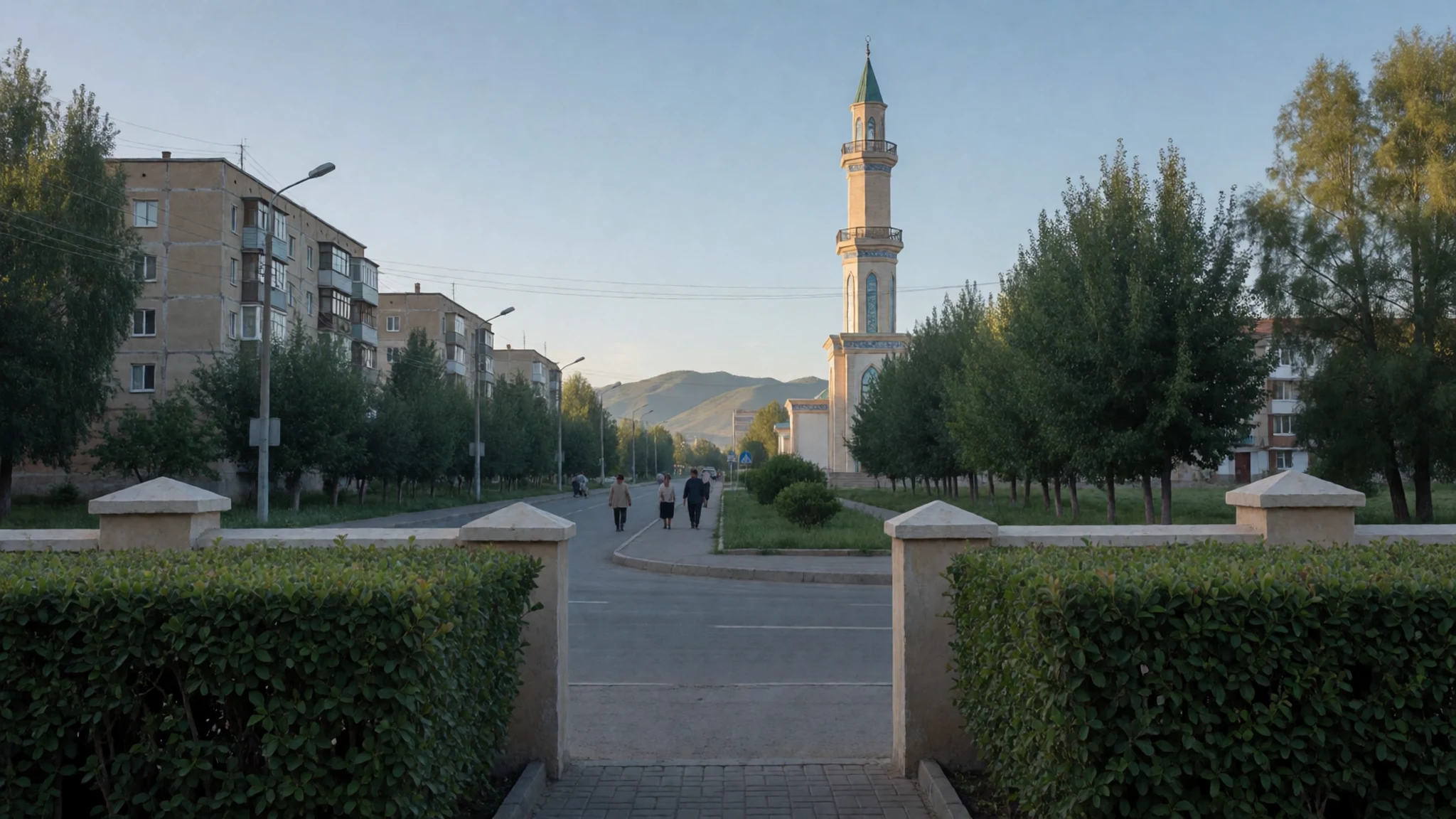
- Petroglyphs and standing stones — Countryside around the city
The wider province holds a huge number of petroglyphs, images pecked into rock over many thousands of years, along with ancient Turkic standing stones carved to resemble human figures. They lie outside town, so hire a driver or guide in Ölgii, and treat the carvings gently: no rubbing, chalk or climbing.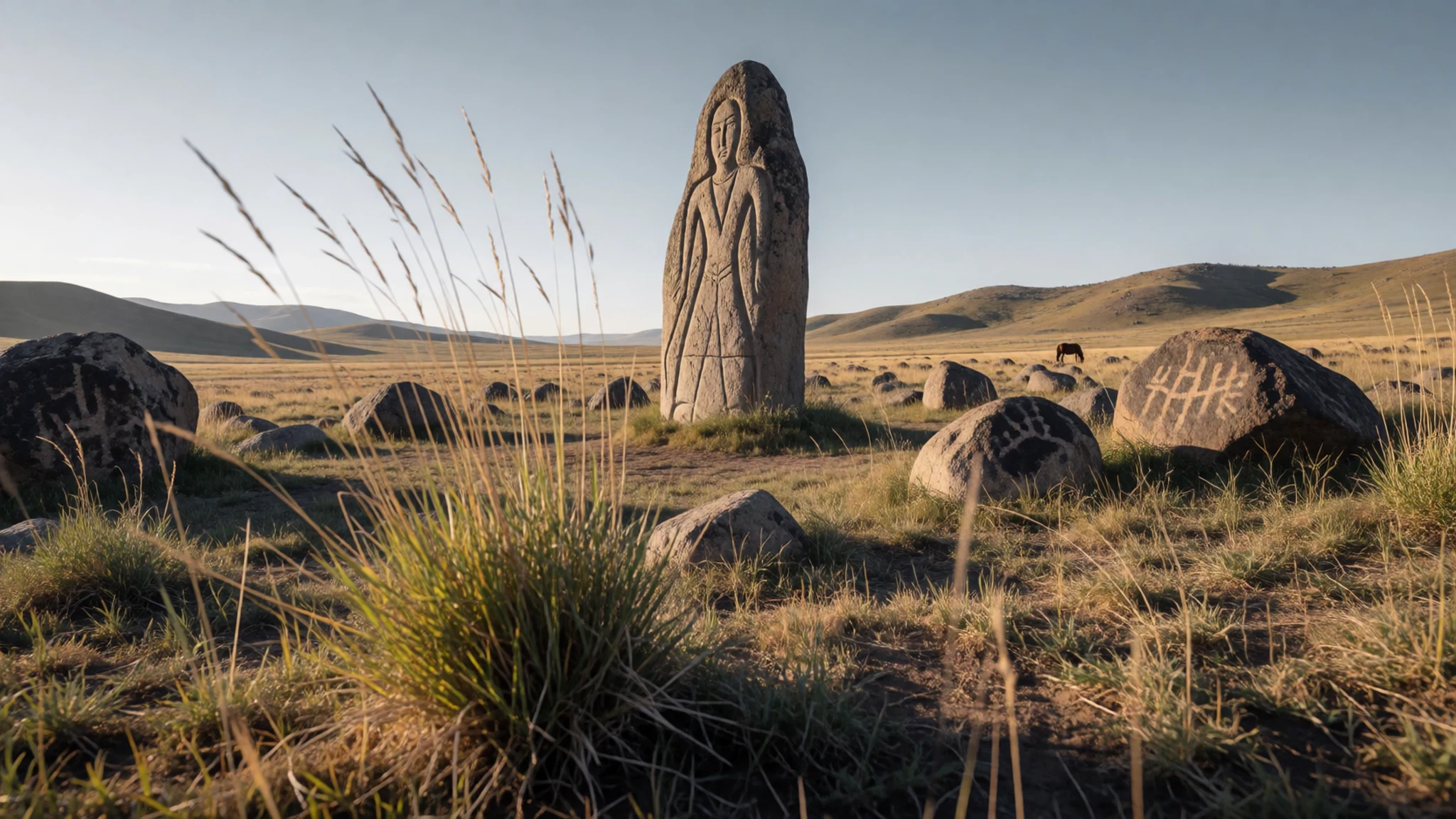
- Green Garden — Near the town centre
One of the few leafy corners of town, the Green Garden is a relaxed place to sit in the evening with a cold drink or a soft drink after a dusty day. It is informal and inexpensive, and a good spot to meet local people and swap travel tips.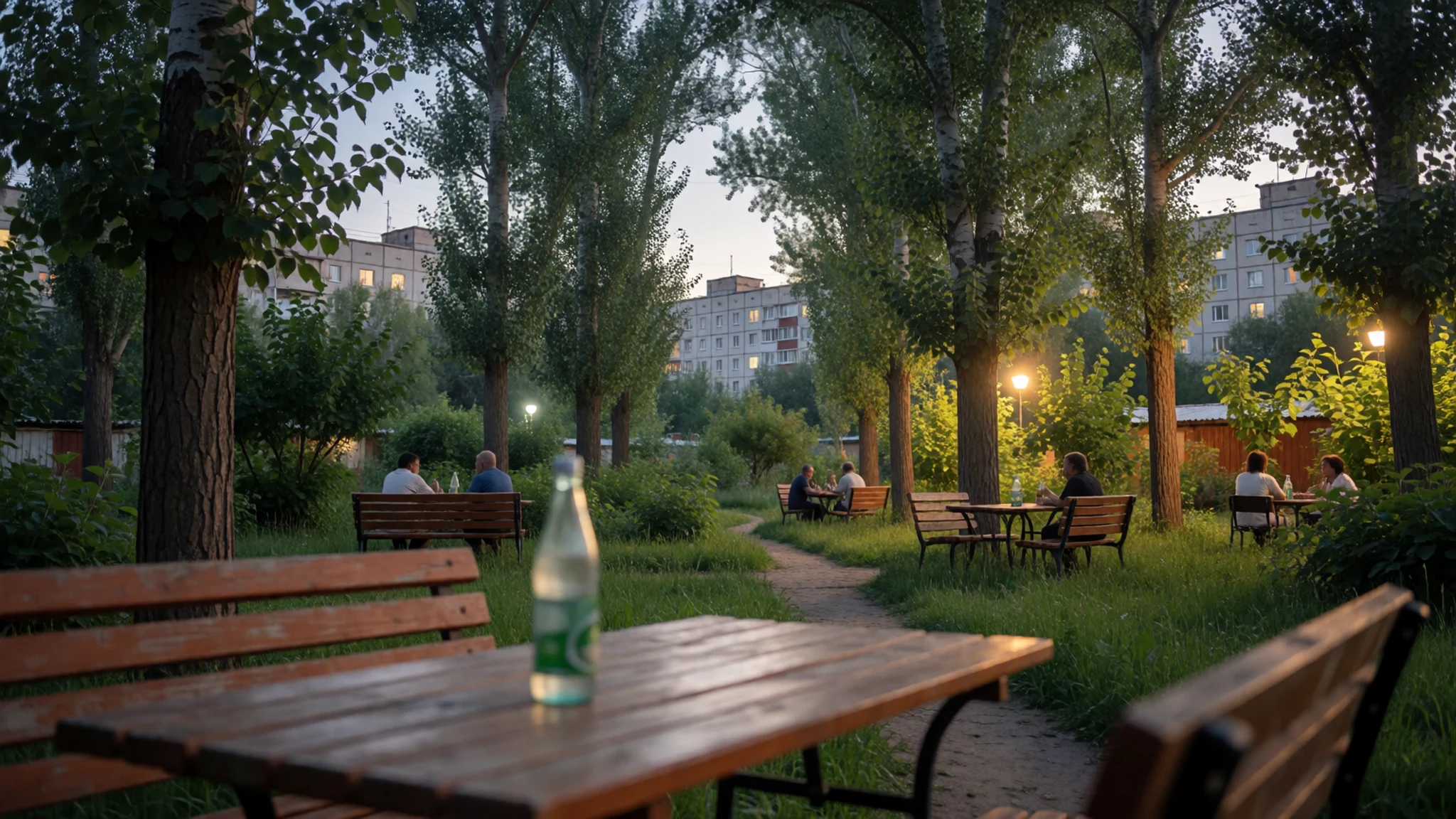
Culture
Ölgii is the centre of Kazakh life in Mongolia, and the culture here is Kazakh first, Mongolian second. Kazakh is the main language, Islam is the main faith, and large, close families are the backbone of social life. The region is known for its embroidery, its music and above all its eagle hunting, in which hunters raise and train golden eagles to hunt in winter. Each October the city hosts the Golden Eagle Festival, where riders and their birds show off skills passed down through families. Embroidered wall hangings and felt carpets decorate homes, and music centres on the two-stringed dombra, played at gatherings and in the theatre. Hospitality is serious business. A guest in a family home is usually offered tea, bread, sweets and then a meat meal, and refusing everything outright can seem cold. Meat is halal, and alcohol is less visible than elsewhere in Mongolia, though it is available. Daily rhythms follow the seasons: families move between winter and summer pastures, so a trip to the countryside shows a lifestyle that is still active rather than staged. The festival draws visitors, but ordinary life carries on around it, with school, work and markets continuing as normal. Learning a few Kazakh greetings, even badly, earns real warmth. Always ask permission before photographing people, their homes or their eagles, and before entering a mosque, remove your shoes and dress modestly.
What to wear
Traditional Kazakh dress in Ölgii is built around felt, wool, leather, fur and velvet, materials suited to a harsh climate. Men wear long quilted or sheepskin coats, sashes and fur-trimmed hats, and eagle hunters add heavy leather gloves and boots for riding. Women's festive dress includes embroidered velvet waistcoats, long dresses and tall decorated headdresses, and brides traditionally wear elaborate caps. Embroidery on cloth, felt and wall hangings is a source of local pride, with flowing floral and horn-like patterns. These outfits come out for weddings, festivals, the October eagle gathering and holidays. Day to day, people in town wear much what they would in the rest of Central Asia: jeans, jackets, trainers, headscarves for many women, and a skullcap or flat cap for some men. Shiny, formal clothes appear for celebrations. Winter calls for very serious layers, including down coats and fur hats, because the cold is long and deep. Visitors should dress for the weather first: warm layers even in summer mornings and evenings, sun protection, a windproof jacket and sturdy shoes for dusty, uneven streets. Women and men alike should keep shoulders and knees covered in town and especially near mosques, and women may want a light scarf to cover their hair when entering one. For the countryside, bring boots with ankle support and a warm hat.
What to eat
- Bisbarmak — Kazakh family eateries in the centre
Often called five fingers, this is slow-boiled mutton served over flat noodles and eaten communally. It is the Kazakh celebration dish. Look for it at family-run Kazakh eateries and ask in advance, as it takes hours to prepare properly.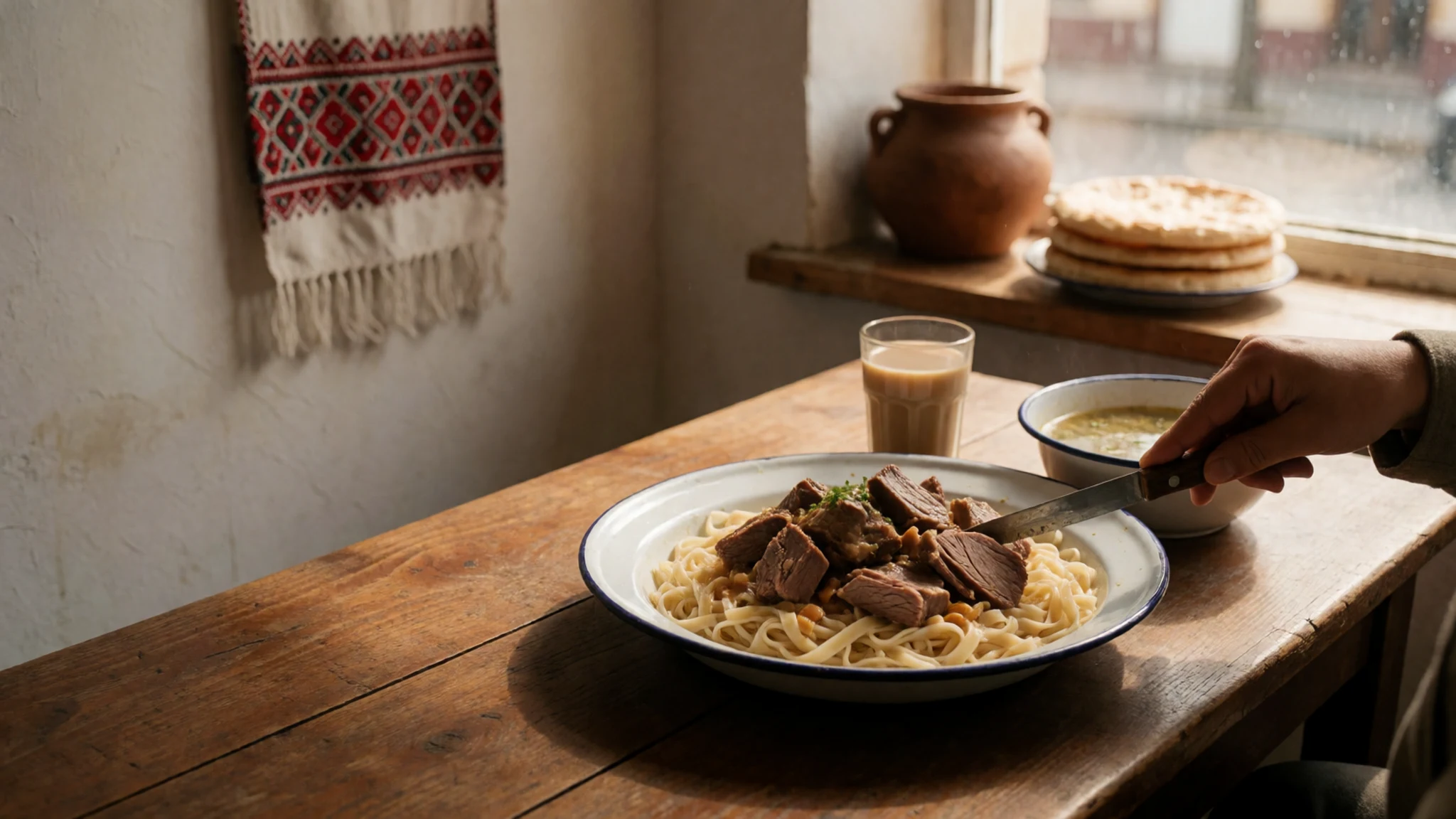
- Sirne — Grill restaurants around the main streets
Grilled mutton, seasoned and cooked until the fat renders, usually served with bread and onions. It is easy to find at simple grill-style restaurants, and it shows how much more flavour Kazakh cooking tends to have than plain boiled Mongolian meat.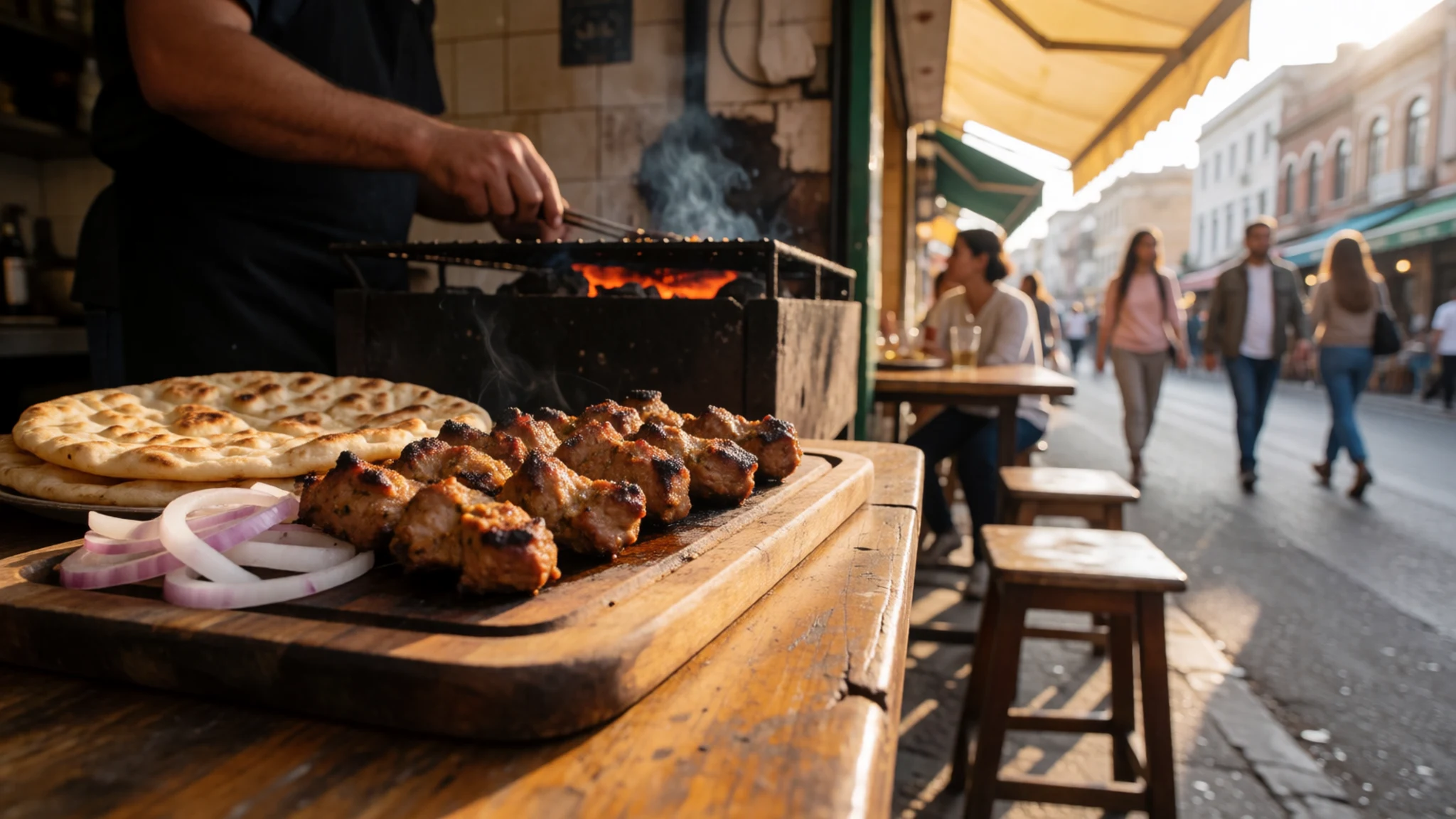
- Kaz — The bazaar and Kazakh restaurants
A smoked, fatty horse sausage and a traditional Kazakh delicacy. It is rich, salty and best sliced thinly and shared. Try it at a Kazakh restaurant or buy it from stalls that sell meat products in the covered market. - Hoshuur and buuz — Small guanz canteens in the town centre
Fried meat pastries and steamed dumplings, with milky tea, make a quick cheap meal in a plain canteen-style eatery known locally as a guanz. They are Mongolian rather than Kazakh, but they are filling and widely sold throughout the city. - Kumiz and milk tea — Tea houses and kumiz parlours
Kumiz is fermented mare's milk, sour, lightly fizzy and an acquired taste. It is served alongside salty milk tea and sometimes kebabs. Seek out a traditional tea house, which may also have a lounge area for relaxing in the evening. - Uighur and Turkish dishes — Café-style restaurants near the centre
Beyond Kazakh and Mongolian food, Ölgii has Uighur and Turkish restaurants serving spicy vegetable dishes, noodles and kebabs. They make a welcome change from the meat-and-flour routine, especially after several days on the road.
Plan it
Best time. June to September for the warmest weather and easiest travel in the hills, with October for the Golden Eagle Festival, when it is cold. Winters are long, very dry and very cold, so most visitors avoid them.
How long. 2–3 in town, longer with countryside trips
Getting there. Fly to Ölgii Airport, usually from Ulaanbaatar or from Kazakhstan, and take a taxi into town. Buses also run from Ulaanbaatar and from the Altai region of Russia, but they take a long time. For local information, check the official site at http://olgii.bo.gov.mn/.
Budget. low
Tips
- Book flights early, especially around the October festival, since seats are limited
- Bring warm layers even in summer, as mornings and evenings are cold at 1,710 m
- Carry enough cash for the bazaar, small cafés and drivers, as card use is patchy
- Arrange guides and drivers for the countryside through the town's agencies before heading out
- Drink bottled or boiled water and carry sun protection for the dry, bright days
Etiquette
- Ask before photographing people, eagles or inside homes and mosques
- Dress modestly and remove shoes before entering a mosque or a family home
- Accept tea and food when offered, and a small taste is polite if you cannot finish
Nearby
Sources
- Wikidata Q297060 (CC0)
- Wikipedia: Ölgii (city), rev 1379660221 (CC BY-SA 4.0)
- Wikivoyage: Ölgii, rev 5423355 (CC BY-SA 4.0)
- Museum in Ulgii, Mongolia Expeditions (CC BY 3.0)
- Ölgii and Khovd River, BatboldDorjgurkhem (CC BY 4.0)
- Picture of the central mosque in Ölgii, Nahcamuk (CC BY 3.0)
- Lenin & Sukhbaatar bust, Mongolia Expeditions (CC BY 3.0)
- Mazim Ekei statue in Olgii from front, BatboldDorjgurkhem (CC BY 4.0)
- Mazim Ekei statue in Olgii, BatboldDorjgurkhem (CC BY 4.0)
- Mongolian Archery Competition in Bayan-Ölgii, Bfreeproductions (CC BY-SA 4.0)
- Horses seen from Bugan Tou Mt overlooking Olgii, Altaihunters (CC BY 3.0)


Wildlife
- Golden eagle (animal)
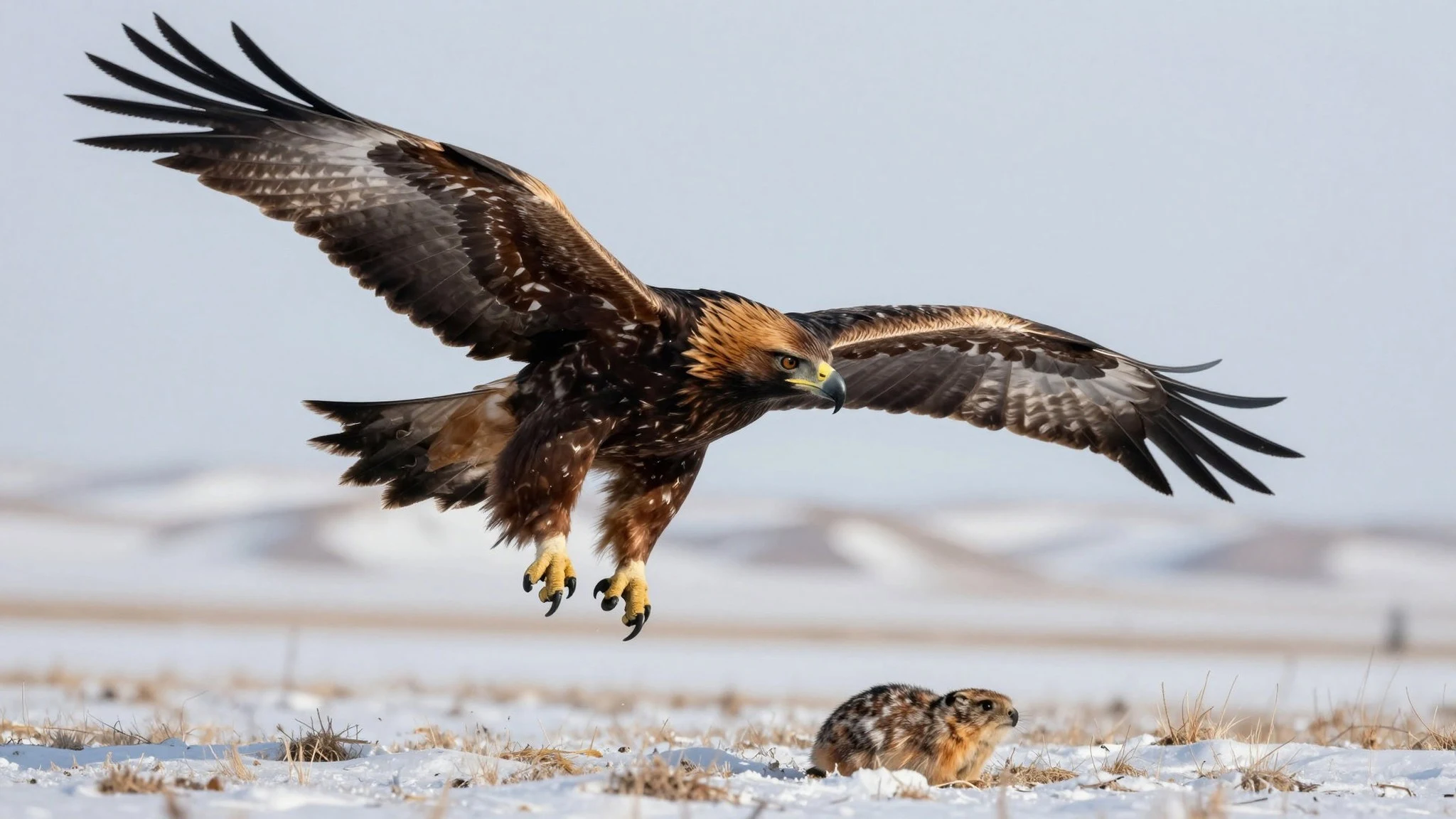
The golden eagle is a hunting bird with dark brown feathers, a golden glow on the back of its neck, and fast, strong feet tipped with sharp claws. Around Ölgii it is best known through the local hunters who raise and train these eagles, and it is in winter that they take them out to hunt. Watch quietly and from a respectful distance, ideally with a local guide beside you, and never offer the birds any food.