Oecusse
Oecusse, Timor-Leste
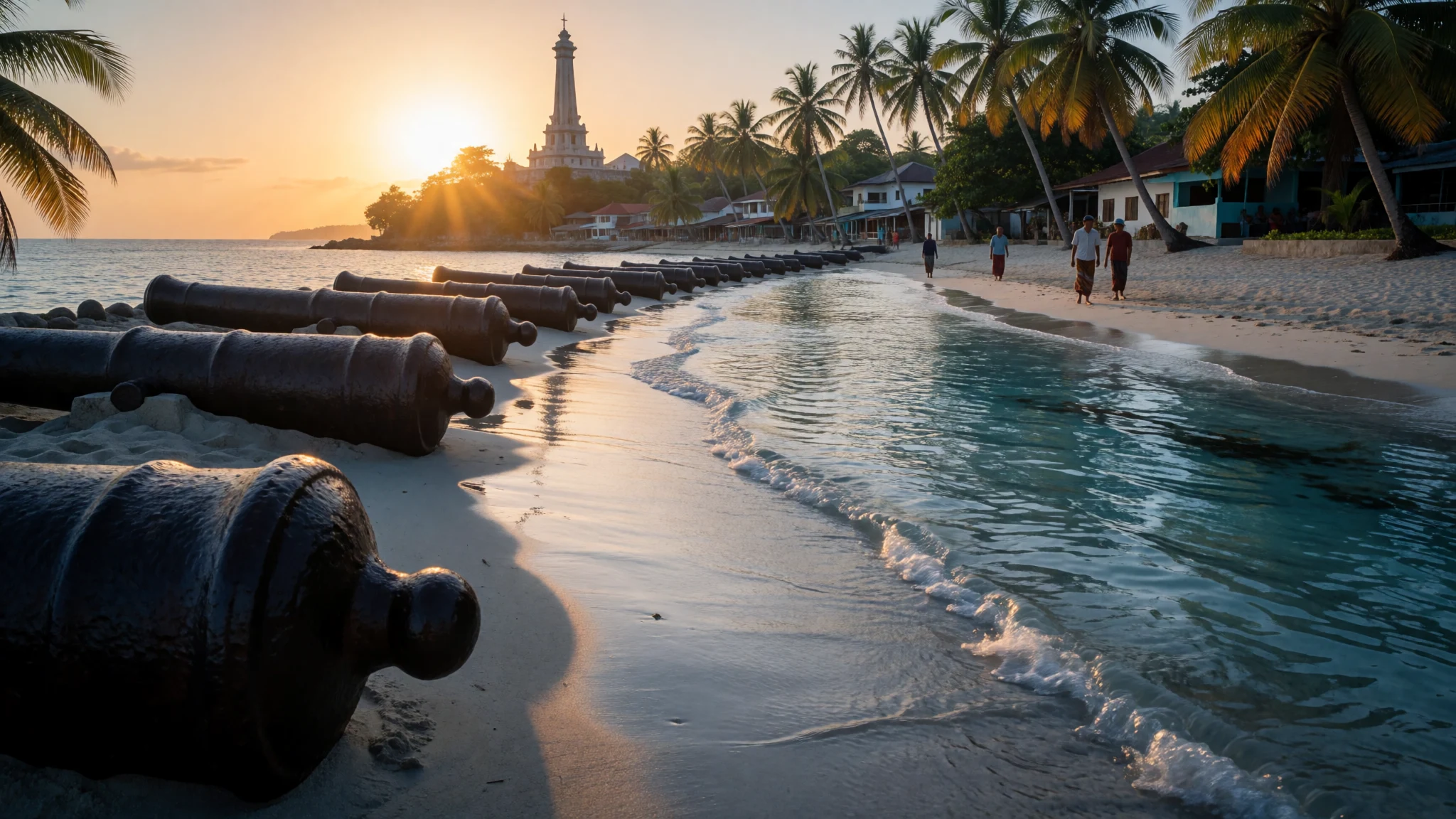
Oecusse is a Timorese enclave inside Indonesian West Timor, reached by an overnight ferry, with a quiet coast, dry hills and a deep colonial past.
The place
Oecusse is a piece of Timor-Leste that sits on the wrong side of a border. It is a semi-exclave on the north coast of the western half of Timor island, cut off from the rest of the country by Indonesian West Timor, which surrounds it on every side except the sea. Here the sea is the Savu Sea, called the Ombai Strait at this point. About 69,000 people live in the region, which has special administrative status within Timor-Leste, and its capital is Pante Macassar, also known as Oecussi Town. The local names vary: Oé-Cusse Ambeno in Portuguese, Oecussi Ambeno in Tetun. The landscape is plain and dry. A coastal plain of savanna runs along the shore, then the land lifts into arid hills of up to about 1,000 m and on into mountains. The main river, the Tono, reaches the sea near Lifau, just west of the capital, though outside the rainy season it shrinks to almost nothing. Towns are small and strung along the coast, and there is nothing resembling a resort. The rest of Timor-Leste lies about 58 km east of the nearest point, and the road between them is much longer and runs through Indonesia. The pace is slow, evenings are quiet and the clock runs on UTC+09:00, the same as Dili. This is somewhere to come for the oddity of the map, the sea and the hills, not for a packed itinerary of sights.
Its story
Oecusse is often called the cradle of Timor-Leste, because the Portuguese settled here before most of the island. Two kingdoms gave the area its names, Oecusse and Ambeno, and Ambeno was already established before colonial times. The draw was sandalwood. Around 1556 a Dominican friar, António Taveiro, began mission work along Timor's north coast from a base on the island of Solor, and by 1569 a European map marked a village called Alifao, today's Lifau, about five kilometres west of Pante Macassar. Traders liked it as a landing point south of their Solor base, and the Ambeno kingdom that controlled the area was sometimes simply called the kingdom of Lifau. In 1641 Dominican priests baptised the royal families of Ambeno, Mena and Amanuban, which widened Portuguese influence across western Timor. Meanwhile the Topasses, a people of mixed Eurasian descent who had migrated from Larantuka on Flores in the 1650s, rose to power. From 1664 officers of the Hornay and Costa families led them, and they came to dominate most of the island, using Lifau as their main stronghold even though their leaders spent much of their time in Larantuka. Sandalwood made them rich in the later seventeenth century, and merchants arrived from Siam, Batavia, Macao and Goa to buy it. That trading past helps explain why a quiet stretch of coast carries so much weight in the history of the country.
What to see
- Pante Macassar seafront — Pante Macassar
Pante Macassar's waterfront is the centre of the capital: a small grid of streets beside a grey-sand beach lined with palms. A few colonial-era cannons sit on the sand, with an Integration Monument at the western end and a statue of Mary at the eastern end. It is modest, so treat it as a place to walk slowly.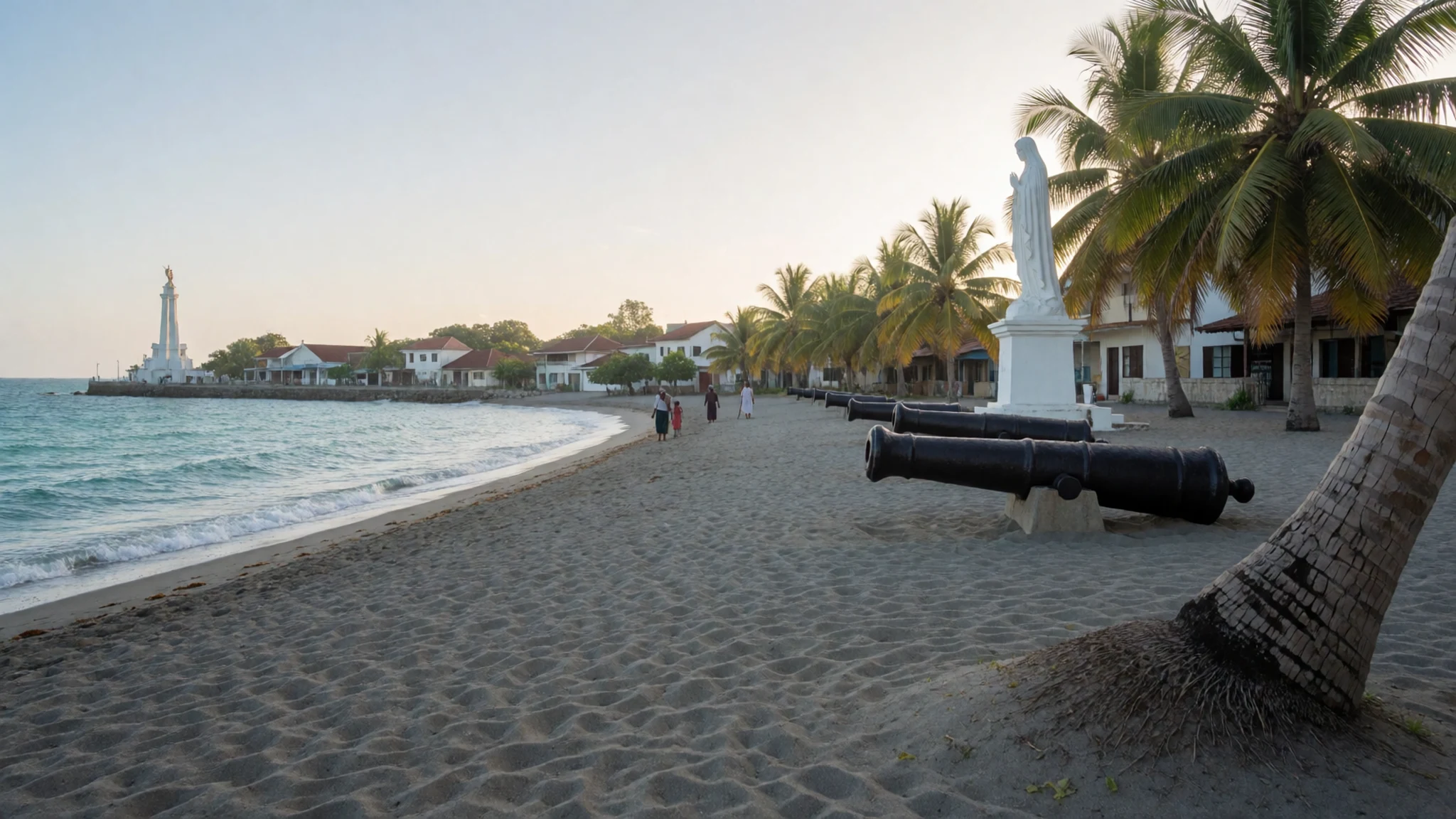
- Former Portuguese administration building — Pante Macassar
Along the promenade from the fountain at the junction of Rua Frei A Taveiro and Rua Francisco Mousinho stands the former Portuguese colonial administration building. It is a quick stop from outside for anyone curious about how Portuguese rule shaped the town. Ask locally whether it can be entered and what it is used for now.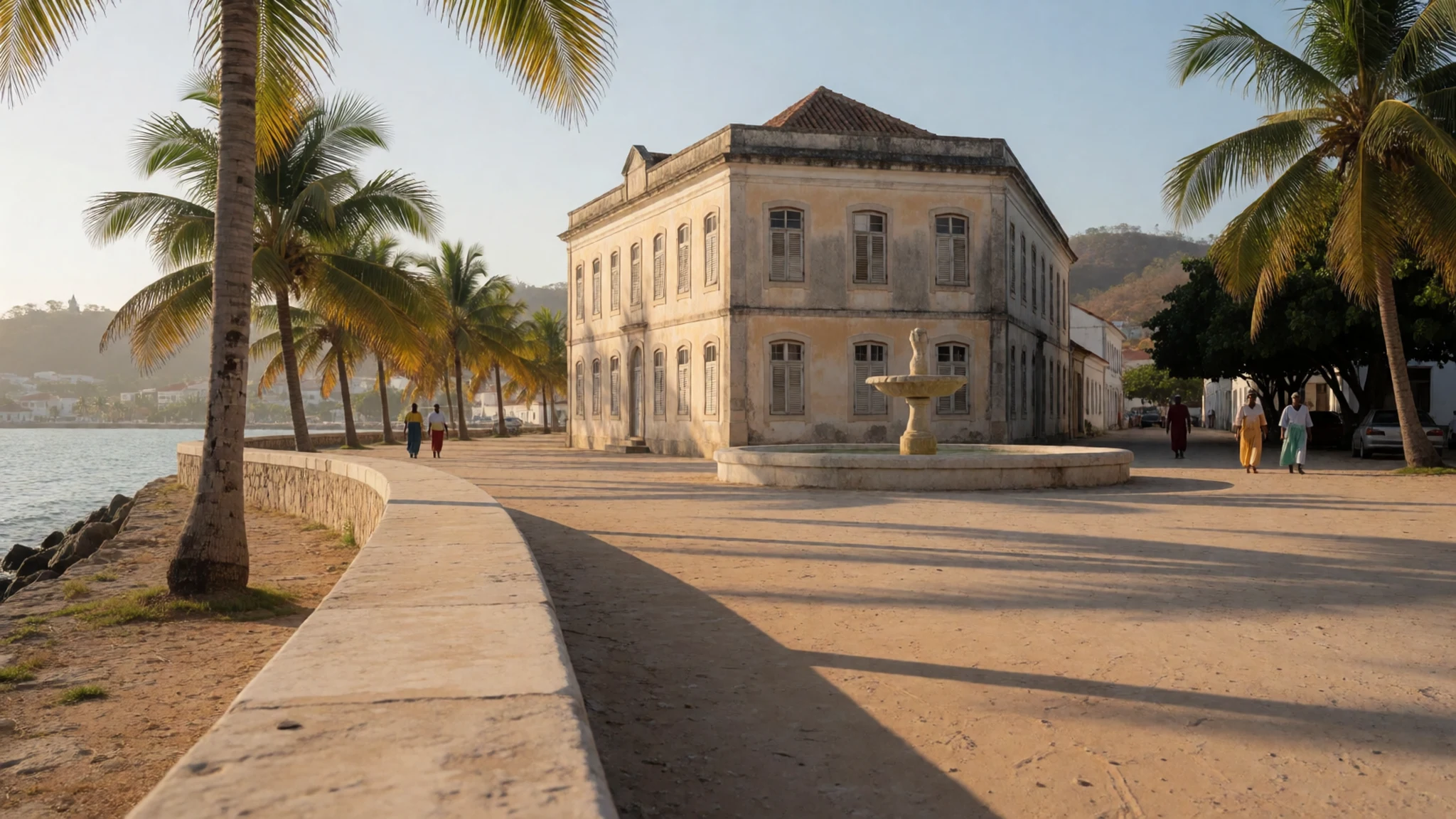
- Saturday market — Pante Macassar
Pante Macassar holds a market on Saturdays, which is a good chance to see people from the surrounding area gathered in one place. Go early, carry small notes, and ask before photographing stalls or people. Market days and activity can change, so confirm with someone local the day before.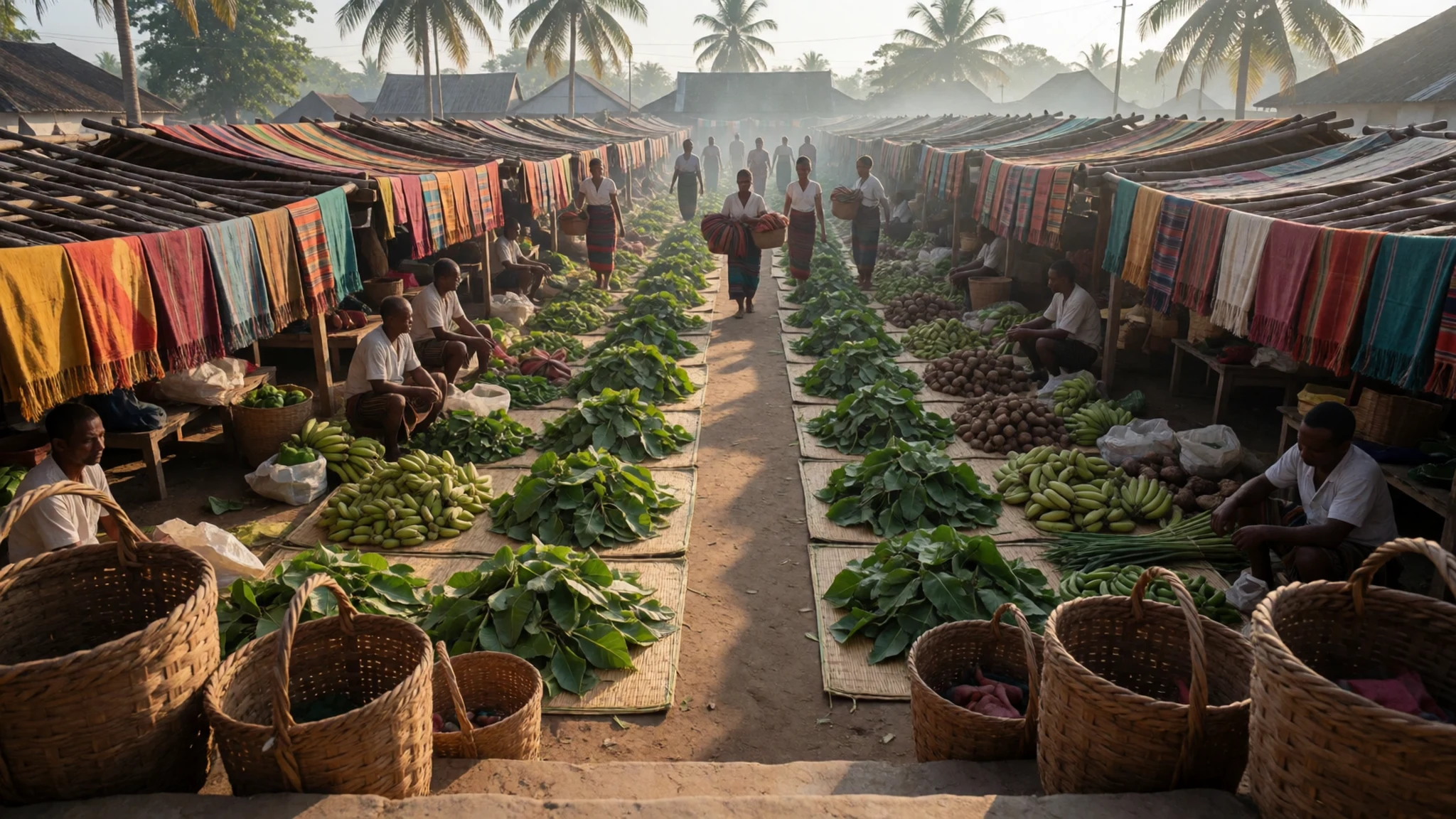
- Lifau — West of Pante Macassar
Lifau lies a short way west of Pante Macassar and is where Portuguese missionaries and traders first became established on this coast, and where the Topasses later based themselves. Visitors go for the setting and the history rather than a polished site. Ask in town about transport and what is currently open to see.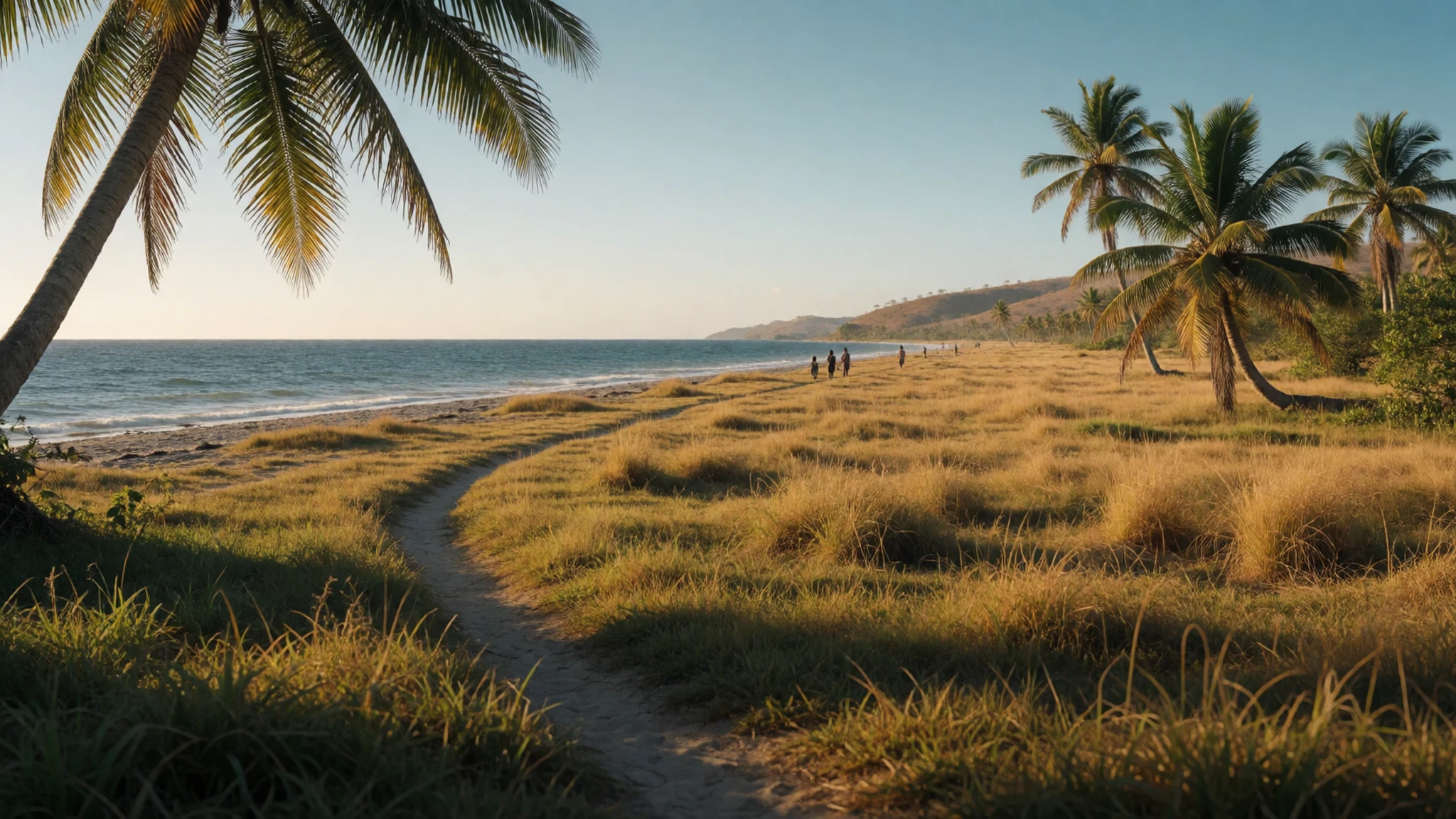
- Tono River and the coastal plain — Near Lifau
The Tono River, the main river of Oecusse, meets the Savu Sea near Lifau. In the dry months it shrinks to almost nothing, while the rains bring it back to life, so the scene changes with the season. The savanna and flats around it suit a slow walk or drive with plenty of water.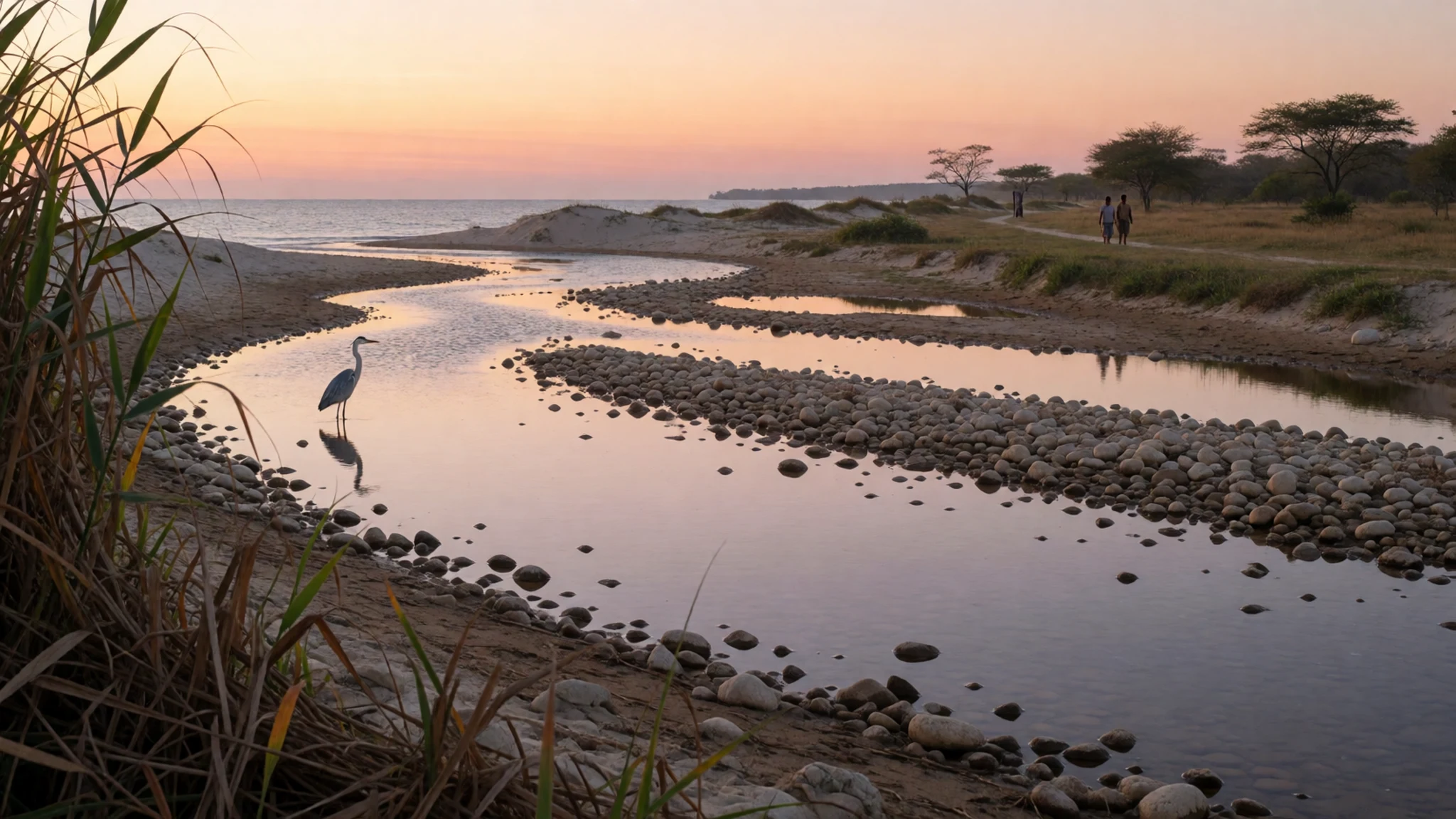
- Inland hills and mountains — Inland Oecusse
Behind the coast, dry hills climb to about 1,000 m before the land turns mountainous, with villages scattered across the slopes. The views over savanna and sea are the main reason to go. Roads can be rough, so ask in Pante Macassar about local drivers and conditions, and leave early to avoid the afternoon heat.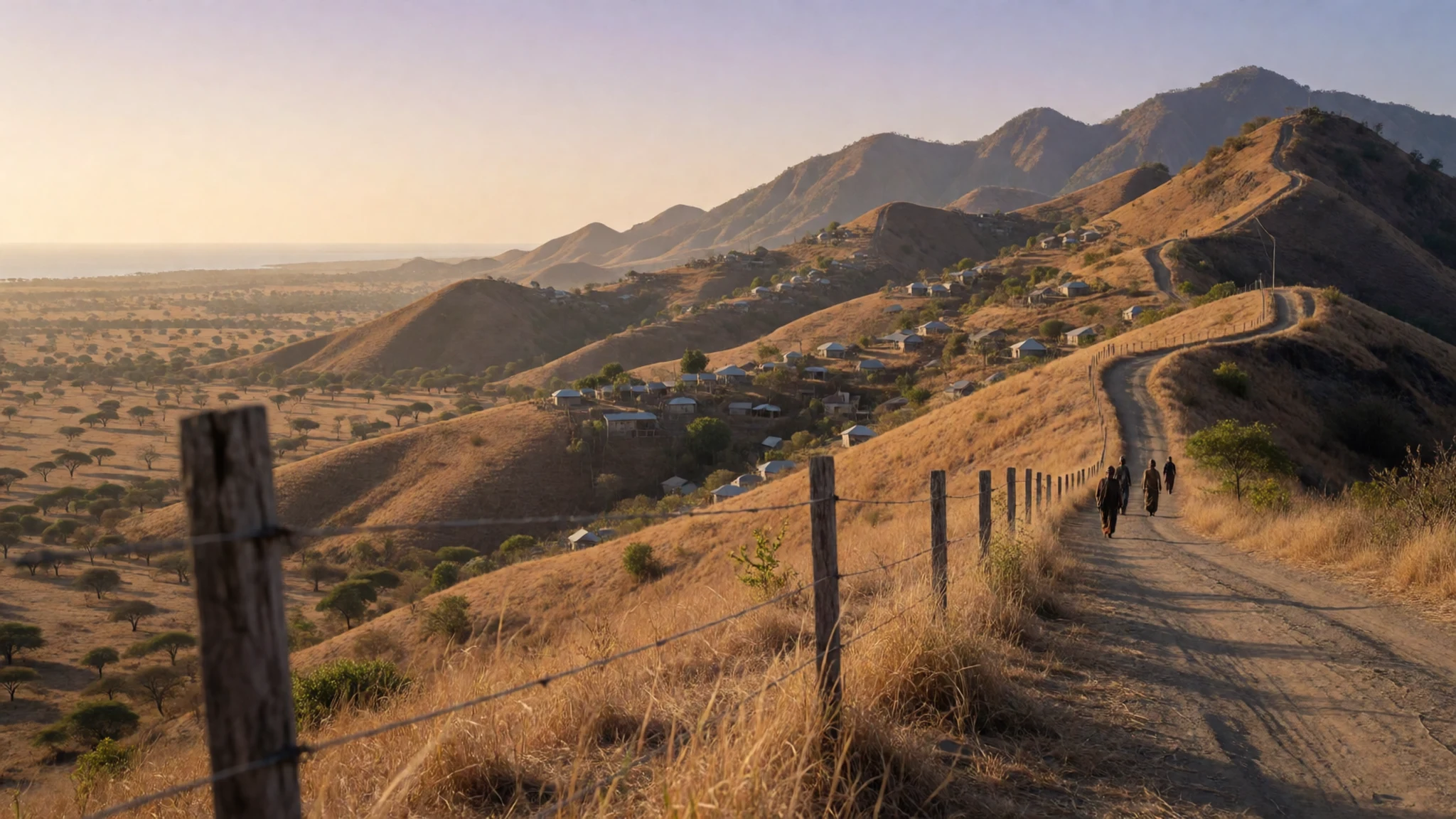
Culture
Oecusse has a layered culture shaped by old kingdoms, Portuguese missionaries and its position inside Indonesian territory. The Catholic faith arrived with the Dominicans in the colonial era, and church life remains part of the rhythm of towns and villages. Tetun and Portuguese are the national languages, while local languages are spoken in homes and villages, and Indonesian is also familiar because of the border and the trade across it. Clan identity matters: families belong to clans known as kanaf, and these carry customs of their own. One of the more unusual results is a widespread set of food taboos that differ by clan, covering foods such as seafood, coconut or even eggs. This is one reason fishing has stayed so little developed on a coast that might otherwise seem made for it. Daily life is quiet and community-centred, with the Saturday market in Pante Macassar a regular meeting point. Visitors who arrive by ferry or across the land border find a place with little tourist infrastructure, so contact with local people tends to be direct and unhurried. A few words of Tetun or Portuguese are welcomed. Ask before photographing people, ceremonies or churches, and when offered food or drink in a home, accept politely and mention any dietary needs, since food rules here can be personal and clan-based.
What to wear
In Oecusse, as across Timor island, the traditional textile is tais, a hand-woven cloth. It is typically made from cotton on a simple loom, often with patterned bands and natural or commercial dyes, and each region and community has its own designs. Tais is worn as a wrap or sarong-style skirt, as a shawl or sash, and is given and exchanged at weddings, funerals and other ceremonies, when people wear their best. Ask local weavers about the patterns rather than assuming a meaning. Day to day, most people dress simply for the heat: T-shirts, shorts or long trousers, sarongs at home, flip-flops or sandals, and school uniforms for children. On Sundays and church occasions people dress smarter and more modestly. Visitors should pack light cotton or linen that covers shoulders and knees, which suits both the climate and local expectations, plus a wide-brimmed hat, sunscreen and sunglasses, because the coast and savanna are hot and offer little shade. Closed shoes or sturdy sandals help on dusty hill tracks, and a light layer is useful on the overnight ferry, where the deck can be breezy. Swimwear is for the beach only; cover up when walking through town. If buying tais, buy directly from weavers or the market and pay a fair price.
What to eat
- Fresh fruit juice — Cafes in Pante Macassar
Cafes in Pante Macassar are known mainly for their juices, made from whatever fruit is in season and good against the heat. A courtyard table makes a pleasant midday stop. Ask what is fresh that day, and whether the water or ice is safe before drinking.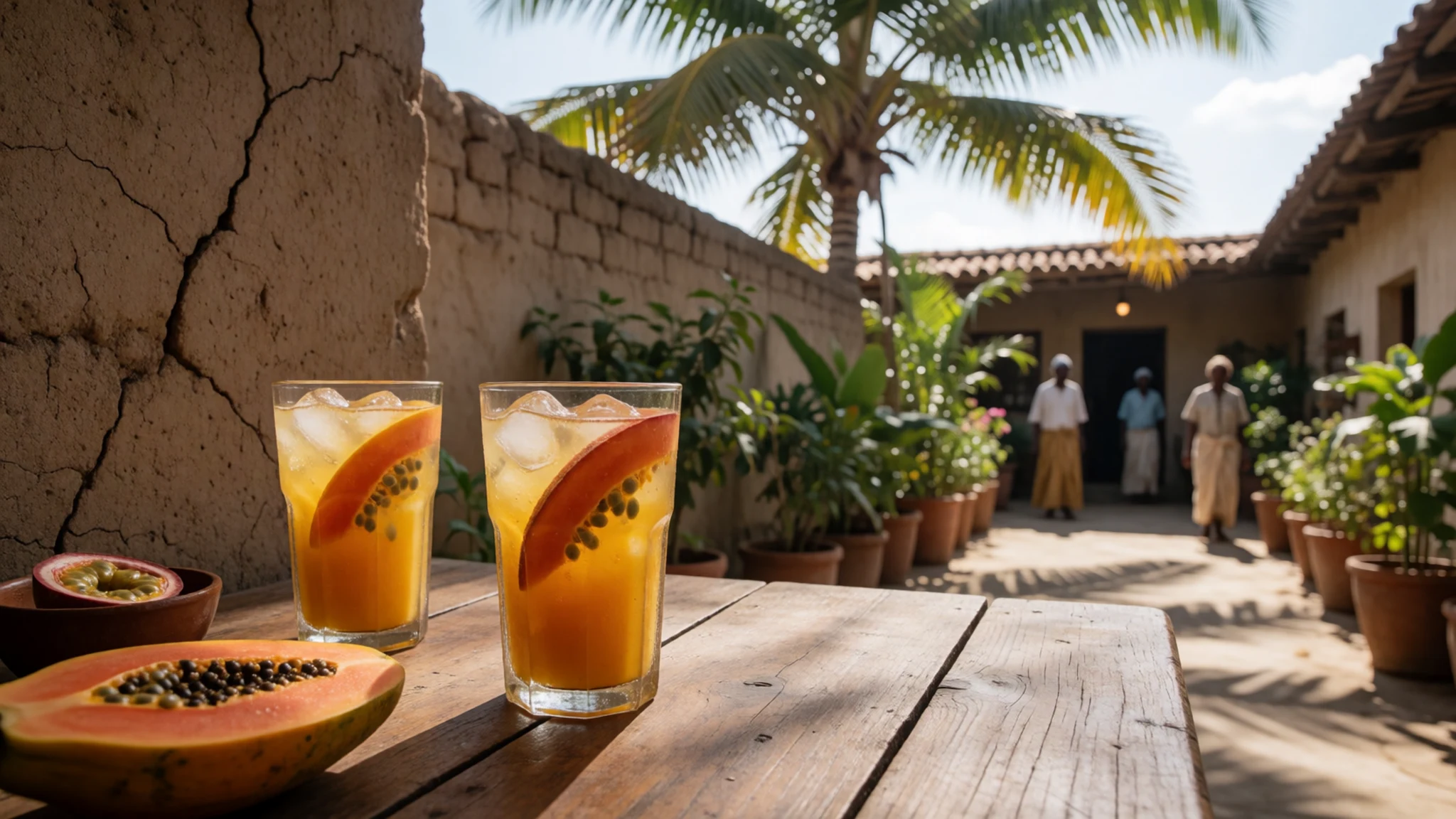
- Maize and root vegetables — The Saturday market and roadside stalls
Maize, cassava and other starchy staples are the sort of everyday food to expect in rural Timor, often boiled or roasted and sold in small portions. They are filling, cheap to try and a good way to taste what local households actually eat.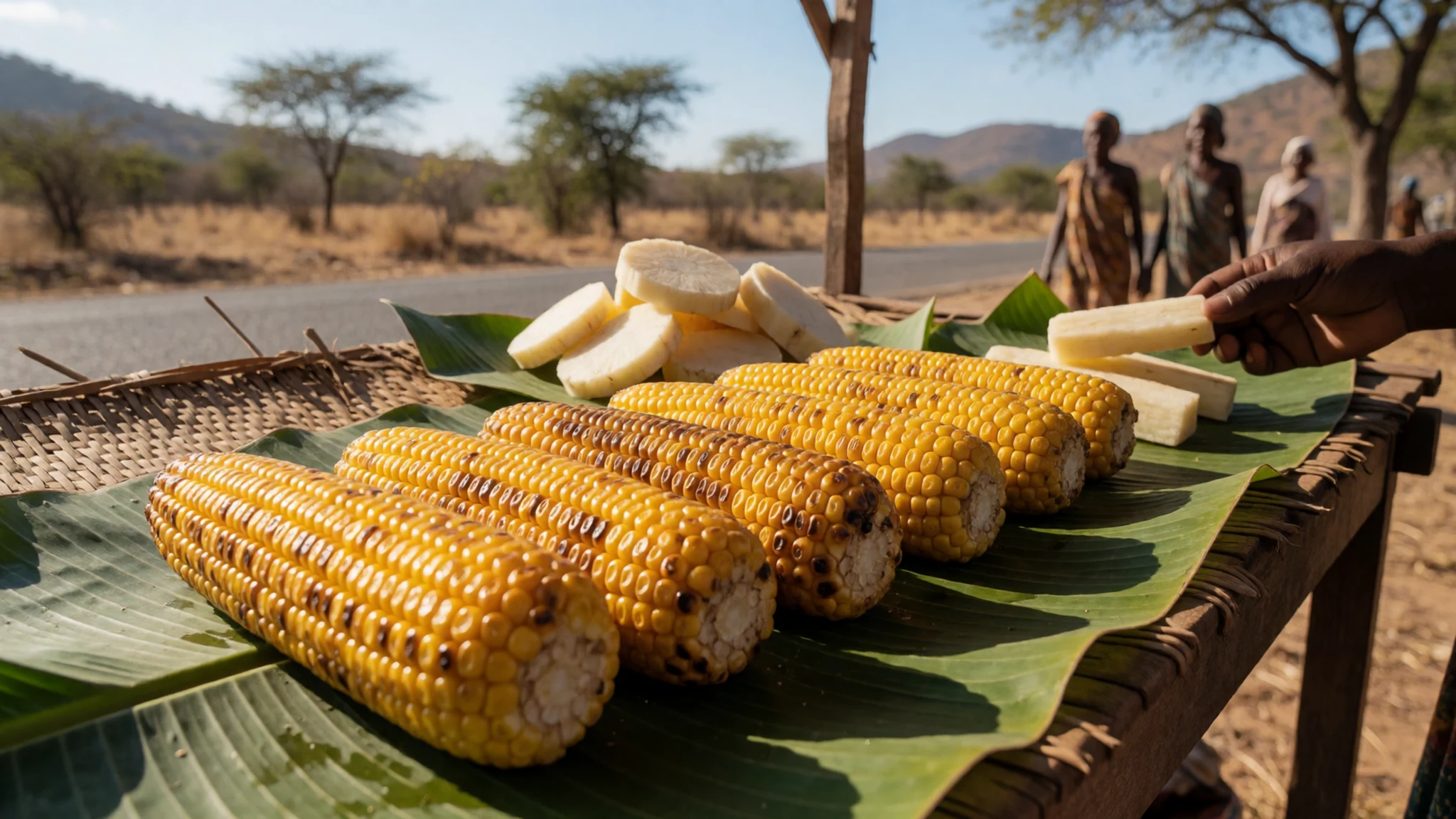
- Rice or noodle plates — Small eateries in Pante Macassar
Small restaurants and eateries in Pante Macassar generally serve simple rice or fried noodle plates with vegetables, sometimes with chicken, in a style that owes something to the Indonesian side of the border. Menus are short, so ask what is available that day. - Timorese coffee — Cafes and market stalls
Coffee is grown across Timor and is easy to find in small cafes and at stalls, usually served strong and sweet in a glass or cup. Drink it slowly the way locals do, and ask where the beans came from, as people are usually glad to say.
Plan it
Best time. The drier months, roughly June to September, are the most comfortable, with less rain on rough roads and a river that is low but still running. The rainy season brings mud and heavier travel conditions, and outside it the Tono comes close to drying up. The coast is hot throughout, so plan for early starts.
How long. 2–3
Getting there. There is no rail. The usual routes are the overnight ferry from Dili to Pante Macassar, which takes about 13 hours, or buses and minibuses from Dili through Indonesian West Timor via Kefamenanu, with a border crossing at Bobometo or Sacato. Check current ferry schedules and any flights from Dili before booking, and check transit visa rules with the Indonesian embassy in Dili.
Budget. low
Tips
- On the ferry, board early to claim a spot to lie down, and bring a mat or towel for the floor
- Check the current ferry timetable and border-crossing rules locally before travelling, as both change
- Carry cash and small notes, as card use is unlikely outside a few places
- Bring a refillable water bottle and sun protection, and expect hot, dry days with few shady spots
- Do not rely on constant electricity or phone signal; carry a power bank and download maps before you go
Etiquette
- Use only the legal border crossings, Bobometo and Sacato, and carry your passport and visas
- Ask before photographing people, churches or ceremonies
- Accept food and drink politely, and mention dietary needs, since food taboos are common
Nearby
Sources
- Wikidata Q860639 (CC0)
- Wikipedia: Oecusse (rev 1382070736) (CC BY-SA 4.0)
- Wikivoyage: Oecussi (rev 5342312) (CC BY-SA 4.0)
- Photo: Berge in Oecusse, Clementina de Oliveira (CC BY 4.0)
- Photo: Locator map of Oecusse municipality since 2015, J. Patrick Fischer (CC BY-SA 4.0)
- Photo: Kussi, Banafi, Vicente da Rosa (CC BY-SA 4.0)
- Photo: Berge bei Sacato, Nipane, Regio Da Cruz Salu (CC BY 3.0)
- Photo: Landkarte der Sonderverwaltungsregion Oe-Cusse Ambeno, João S. Gusmão (Public domain)
- Photo: Cities and rivers of district of Oecusse, J. Patrick Fischer (CC BY 3.0)
- Photo: Campo de concentração de Oecussi (manada de búfalos), Joaquim Lourenço Fernandes (Public domain)
- Photo: Campo de concentração de Oecussi, Joaquim Lourenço Fernandes (Public domain)


