Ōdaigahara
Ōdaigahara, Japan
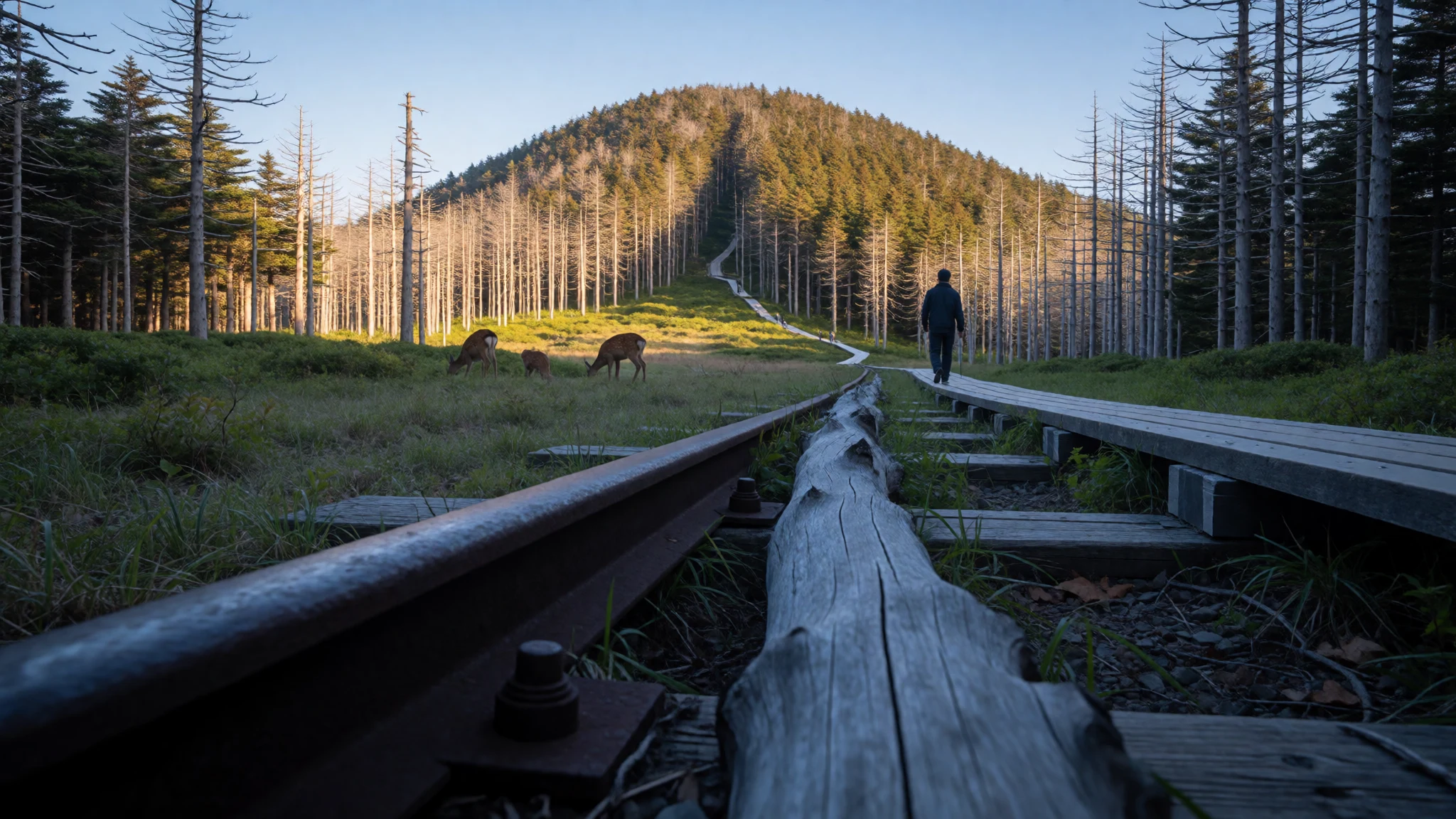
Ōdaigahara is a cool, misty forest plateau on the Mie–Nara border, where deer, birdsong and gentle trails sit well above the Kansai plain.
The place
Ōdaigahara (大台ヶ原山) lies in the Daikō Mountain Range, on the border between Mie and Nara prefectures in Honshu. Its highest point, Hinode-ga-take, stands at 1,695 metres and is the highest ground in Mie. Despite the height, the mountain does not feel like a single sharp peak. It is better understood as a broad forested plateau. Trails from the Nara side start at a car park at about 1,400 metres, so the climbing is modest and most of the effort goes into loops across the tableland. The landscape is a patchwork of mossy forest, open grass and stands of bleached dead trees, and the skyline is a long, rounded ridge rather than a spike. Wild deer are the mountain's best-known residents. Birdwatchers come for wrens, Japanese robins, treecreepers and woodpeckers, which are easiest to hear on quiet early walks. Weather decides everything here. Cloud can swallow a viewpoint within minutes, rain is common, and the air is far cooler than in the cities of the Kansai plain below, so a sunny forecast in Osaka says little about the summit. The area is protected as part of a biosphere reserve, and the paths are managed to keep walkers off fragile ground. Ōdaigahara suits people who prefer forest walking, changeable light and a simple day outdoors to a long summit scramble.
Its story
Ōdaigahara has been treated as a special landscape for about a century. In 1927 two newspapers, the Tokyo Nichi Nichi Shimbun and the Osaka Mainichi Shimbun, chose it for their 100 Landscapes of Japan list, a public campaign that pushed many remote places into national awareness. In 1980 an area of roughly 36,000 hectares around Ōdaigahara and neighbouring Mount Ōmine was designated a UNESCO Man and the Biosphere Reserve, a sign that the forests and wildlife here deserve long-term care as well as admiration. The mountain sits at the edge of Nara Prefecture, a region with deep human history. Nara claims to be the home of Japan's Imperial family and holds three ancient capitals, Asuka, Fujiwara and Nara itself, and its plain is scattered with great temples and imperial burial mounds called kofun. The highlands to the south and east have always played a different role from that busy plain. They were a place of forest, cloud and distance, associated with mountain ascetics, especially around Ōmine. More recently the mountain reached listeners far from Japan, when the American folk band Fleet Foxes released the 2017 song "Third of May / Ōdaigahara", which carries its name in the title. Together these threads explain why a plateau with no grand monument still draws walkers. It has been admired, protected and sung about, and it remains a quiet counterweight to the temples of the lowlands.
What to see
- Hinode-ga-take summit — Ōdaigahara plateau, Mie–Nara border
Hinode-ga-take is the top of Ōdaigahara and the highest point in Mie, at 1,695 metres. A walking path across the plateau leads there. The summit is wooded rather than bare, so views come from clearings and lookouts nearby. On clear days the Kii ridges stack away in every direction; in cloud, the forest is the reward. - Daijagura — Edge of the Ōdaigahara plateau
Daijagura is a rocky outcrop on the plateau's edge, photographed often for its sweep over deep valleys and forested ridges. The viewpoint is exposed, so wind and mist change the scene within minutes, and the drop is steep. Keep to the marked path, stay behind any barriers and treat the view as a bonus, not a promise.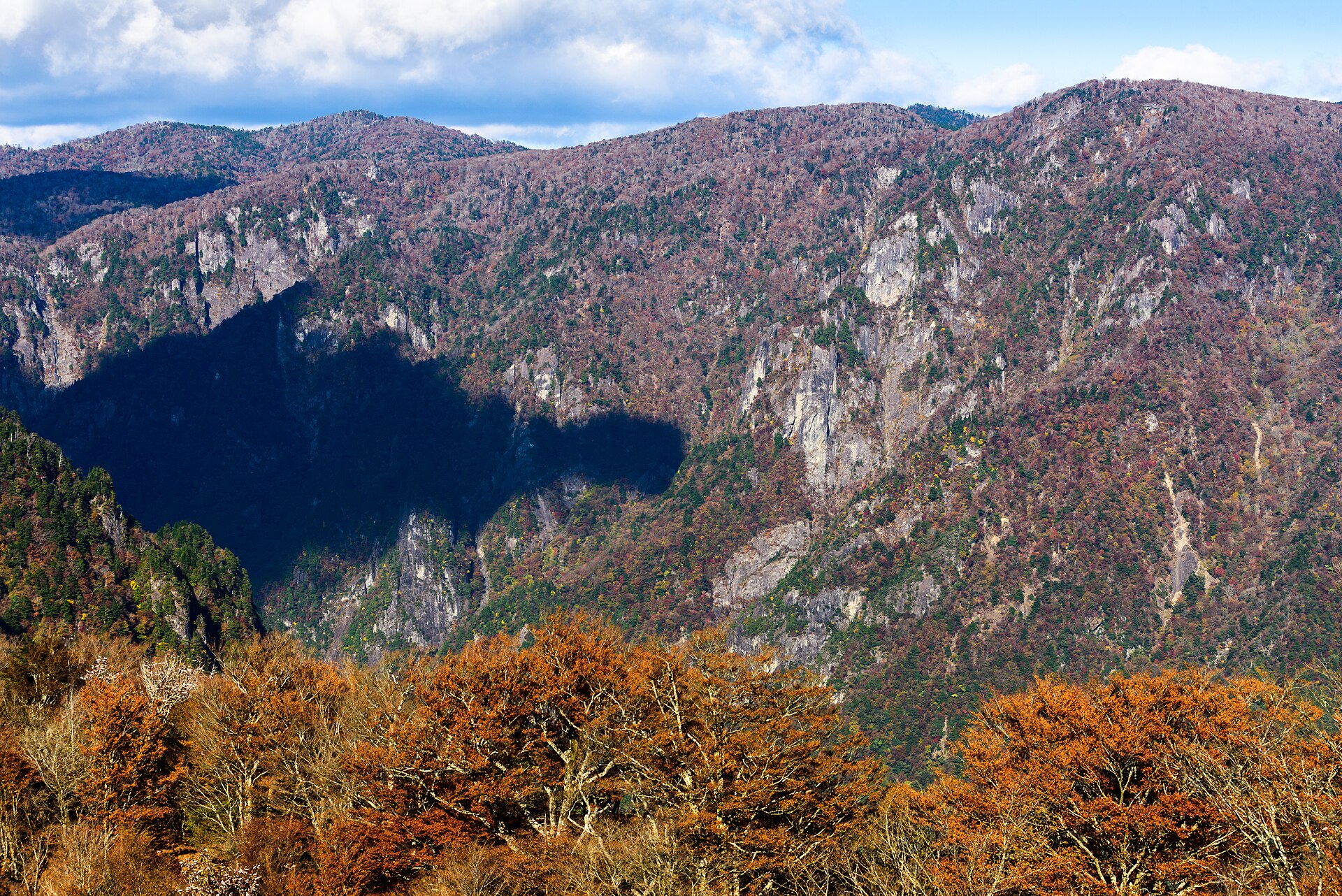
- The plateau forest loops — Ōdaigahara tableland
The loop trails across the plateau are the heart of a visit. They pass mossy forest, open grassy patches and stands of pale dead trees that stand out against the green. Boardwalks and fixed paths protect the ground. Allow time to walk slowly, listen for birds and watch for deer at the forest edge. - Nara-side car park and trailhead — Nara side of the mountain, about 1,400 metres
Walking trails from the Nara side begin at a car park at about 1,400 metres, which is why the plateau feels approachable. It is the practical start for most visitors. Weather here can differ sharply from the valleys, so check conditions, the bus or road arrangements and the seasonal opening on the official Visit Nara site first. - Hōryū-ji — Nara lowlands, Ikaruga area
Hōryū-ji is a very old and extensive temple complex in the Nara lowlands, and a regional guide singles it out as one of Japan's oldest and grandest. It makes a calm contrast to a day on the mountain, with timber halls and quiet courtyards. Check the Visit Nara site for current visiting arrangements.
Culture
Ōdaigahara is a place where culture and nature are hard to separate. The mountain belongs to a region of Japan long associated with forest ascetics and pilgrim routes, and Mount Ōmine nearby is part of the same protected biosphere area. Visitors will find little ritual spectacle on the plateau itself. The culture here is a quieter habit of respect for the land, passed on through signs, ranger advice and the ordinary courtesy of walkers who greet one another on the trail with a short "konnichiwa". Wild deer are part of this picture. They are not tame park animals like those in Nara city, and they are best watched from a distance and never fed. Birdwatching has its own manners too: people speak softly, keep to paths and avoid playing recorded calls. Because the plateau is protected, paths and boardwalks exist to keep feet off fragile moss and roots, and rubbish is expected to be carried back down. Lowland Nara adds another layer, with temples and shrines where the same attitude applies indoors: shoes off at raised floors, quiet voices, and photography only where it is allowed. Many Japanese walkers dress for the weather and carry their own food and water, treating a mountain day as a serious outing even when the paths are gentle. Keep to the marked paths, carry all your rubbish back down with you, and never feed or approach the deer.
What to wear
Fashion around Ōdaigahara is mostly about weather, though Nara Prefecture has its own dress and textile traditions. Traditional Japanese dress includes the silk kimono for formal occasions, the lighter cotton yukata worn in summer and at festivals, and the hakama, a pleated divided skirt worn over a kimono at ceremonies. Mountain ascetics of the Ōmine tradition, the yamabushi, wear white jackets and a small black cap and carry a conch shell, and may be seen on pilgrimages in the wider region. Nara is also associated with fine bleached hemp cloth. In daily life, almost everyone on the mountain wears modern outdoor gear: waterproof jackets, quick-dry trousers, brimmed hats and sturdy walking shoes, often in bright colours that show up in mist. In the towns below, people wear ordinary casual clothes, with neat, understated styles favoured over beachwear. Visitors should dress in layers, because the plateau is cooler and wetter than the Osaka plain: a waterproof shell, a warm mid-layer, a hat and gloves in spring and autumn, and sun protection and insect repellent in summer. Footwear matters most. Boots or trail shoes with good grip are best, since paths and boardwalks turn slippery when wet. For temples and shrines in lowland Nara, covered shoulders and knees are courteous, and clean socks help where shoes come off.
What to eat
- Kakinoha-zushi — Station shops and food stalls in Nara city and Yoshino
Pressed sushi, usually salted mackerel or salmon, wrapped in a persimmon leaf and left to settle so the leaf lends a faint herbal scent. A staple of Nara and the Kii region, it travels well, which makes it a sensible lunch for a long day on the trail. - Miwa somen — Noodle eateries around Miwa and Sakurai
Thin wheat noodles associated with the Miwa area near Sakurai, served cold in summer with a light dipping sauce, or hot in winter in broth. They are delicate rather than filling, so they pair well with pickles or tempura as part of a longer meal. - Chagayu — Traditional eateries and temple-area restaurants in Nara city
Rice porridge simmered in roasted tea, a traditional Nara comfort dish with a gentle, slightly smoky flavour. It is plain by design, light on the stomach and welcome after a cold, misty morning, and it usually comes with pickles and a few small side dishes. - Narazuke — Pickle shops in Nara city's covered shopping streets
Vegetables such as melon or cucumber pickled in sake lees until they turn sweet, savoury and faintly boozy. They are sold in small packs, make a handy snack or gift to carry home, and are most often eaten alongside plain rice. - Kuzu sweets — Tea shops and sweet stalls in Yoshino
Kudzu starch, a speciality of the Yoshino area, is made into translucent jellies, noodles and chewy mochi. They are usually eaten chilled with dark sugar syrup, which makes a refreshing finish after a day of walking in cooler mountain air.
Plan it
Best time. Late May to June for fresh green forest, though June is the rainy season and mist is likely; October to November for autumn colour and cooler, clearer walking weather. Summer is cooler than the lowlands but wet, and winter brings cold that can limit access, so check seasonal arrangements first.
How long. 1–2
Getting there. Fly to Kansai International Airport, then take trains to Osaka and on to Nara Prefecture by the JR Yamatoji Line or Kintetsu Railways, which reach more of the prefecture than JR. The last leg to the Nara-side car park is by seasonal bus or mountain road, so check the Visit Nara official site for current services.
Budget. mid
Tips
- Check the weather and the seasonal bus or road arrangements on the official Visit Nara site before setting out
- Start early, since cloud tends to build later in the day and views are clearest in the morning
- Carry water, food and a waterproof layer, as the plateau has few services
- Wear boots or trail shoes with good grip for wet boardwalks and roots
- Download an offline map, as mobile signal can be patchy in the forest
Etiquette
- Stay on marked paths and boardwalks to protect the moss and roots
- Never feed or approach the wild deer
- Carry all your rubbish back down with you
Nearby
Sources
- Wikidata Q3139461 (CC0)
- Wikipedia: Mount Ōdaigahara (rev 1369587622) (CC BY-SA 4.0)
- Wikivoyage: Nara (prefecture) (rev 5164967) (CC BY-SA 4.0)
- Photo: Mount Odaigahara around Daijagura, a photographer, via Wikimedia Commons (CC BY-SA 4.0)
- Photo: Japan natural location map, Alexrk2, via Wikimedia Commons (CC BY 3.0)
- Photo: Asia relief location map, Uwe Dedering, via Wikimedia Commons (CC BY 3.0)
- Photo: Mount Ōdaigahara relief map (SRTM-1), Batholith, via Wikimedia Commons (Public domain)


Wildlife
- Sika deer (animal)
Picture a deer wearing a coat of spots: that is the sika deer, and on Ōdaigahara it is the mountain's best-known resident. Hunters once brought it close to vanishing, but laws were passed to protect it and its numbers have since recovered. The notes do not say which season or hour is best, so ask a local guide where to look. Keep a respectful distance, stay quiet and still, and never feed the deer, however gentle they seem.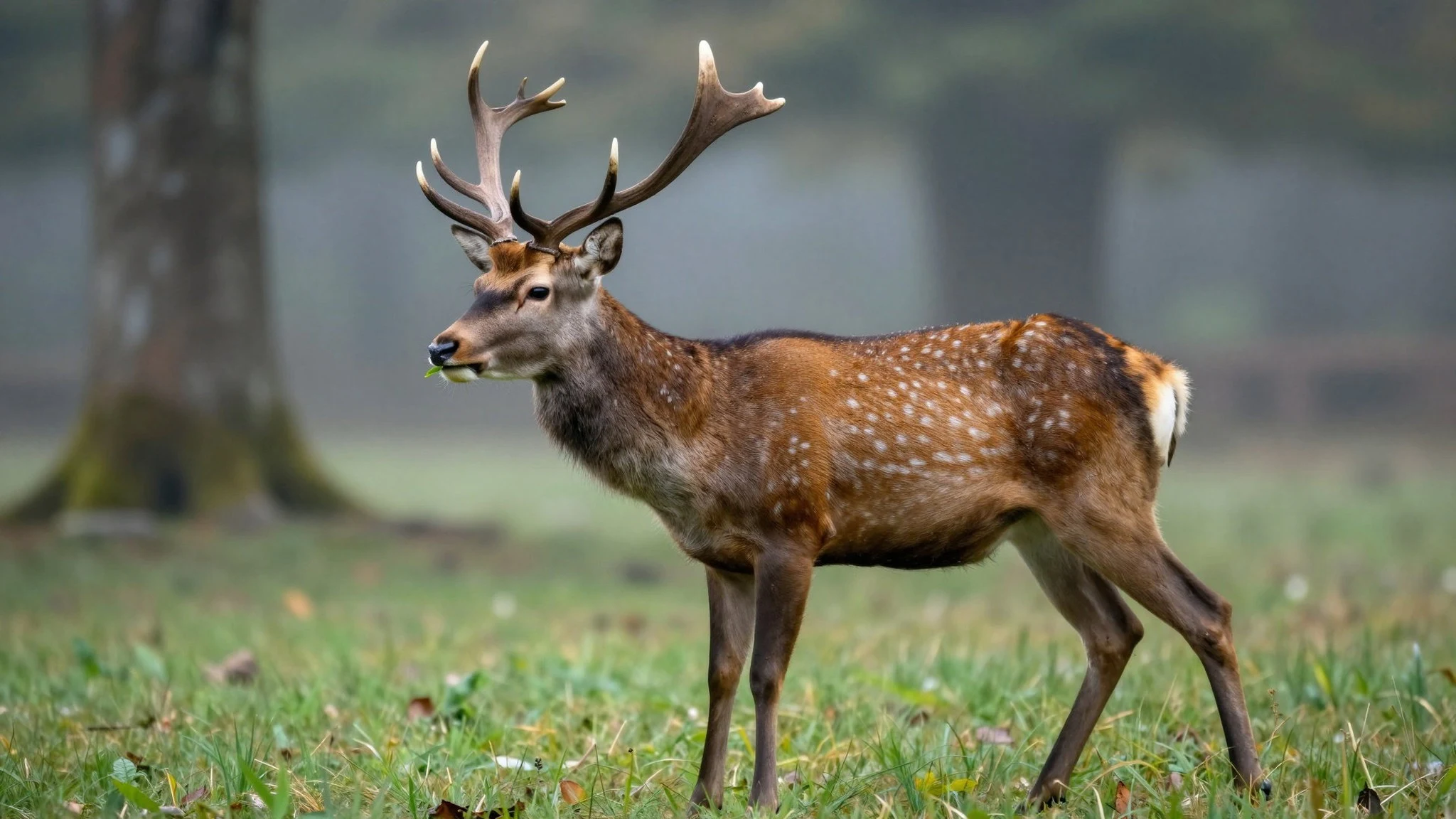
- Japanese robin (animal)
Think of the Japanese robin as a small songbird that lives all over Japan. On Ōdaigahara, birdwatchers come hoping to meet it, and their best chance is a quiet early walk, when its voice is easiest to pick out. Walk gently, pause often, and stay well back from it. A guide can show you where to listen. Please never feed it, and never crowd it to get a closer view. - Japanese robin (bird)
Think of the Japanese robin as a small songbird that lives all over Japan. On Ōdaigahara, birdwatchers come hoping to meet it, and their best chance is a quiet early walk, when its voice is easiest to pick out. Walk gently, pause often, and stay well back from it. A guide can show you where to listen. Please never feed it, and never crowd it to get a closer view. - Japanese wren (bird)
The Japanese wren is a bird, and one of the favourites that draw birdwatchers to Ōdaigahara. Like the robins, it is easiest to hear on quiet early walks, so rise early, walk softly and stop often to listen. A guide can help you tune in to its song. Keep your distance, speak in whispers, and never feed it or crowd it for a closer look.