Nuwara Eliya
Nuwara Eliya, Sri Lanka
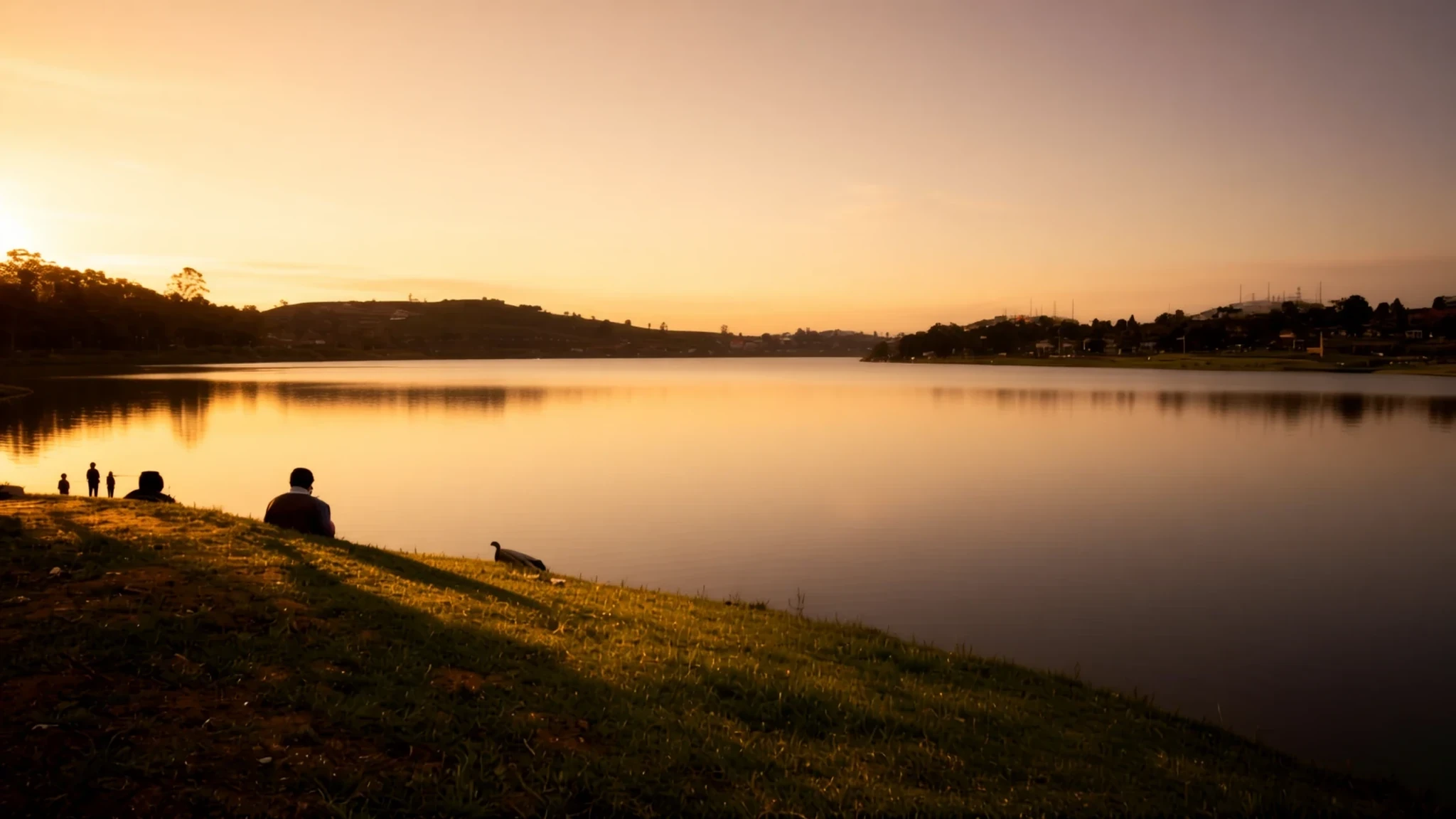
Nuwara Eliya is Sri Lanka's cool hill station, a misty plateau of tea gardens, lakes and colonial bungalows above the heat of the plains.
The place
Nuwara Eliya sits on a high plateau in Sri Lanka's central highlands, a compact town of water, lawns and tea that feels far from the heat of the coast. The road up passes through forest and then opens onto slopes planted in tight rows of tea, with workers moving along the contours and cloud sitting on the ridges, lifting, and closing in again. Rain can arrive in a single afternoon and leave the grass shining. In the centre the distances are short: a lake along its southern edge, a public garden, a golf course spread across the valley floor, and bungalows with steep roofs and chimneys from the decades when the British treated the plateau as a refuge. Horses and walkers share the open ground when the turf is dry, and at weekends the edge of the water fills with picnic rugs. Vegetable plots and flower beds run between the houses, and the market trades in produce that the hot lowlands grow less willingly. Past the last streets the estates take over — factory sheds, lines of shade trees, and tracks that vanish into mist. Nuwara Eliya is a working plantation landscape with a holiday town set inside it. It fills when families come up from Colombo and goes quiet when rain keeps people indoors. Evenings call for a jumper. The pleasure is physical and ordinary: a circuit of the water, tea grown within sight of the cup, and a view that keeps dissolving into cloud.
Its story
Nuwara Eliya took shape when British officials and planters went looking for a cooler season than the coast could offer and settled on this plateau. Samuel Baker is widely associated with that early camp; what followed was a small colonial town of bungalows, a park, a made lake and civic buildings that still look like a fragment of provincial Britain. The landscape changed again with tea. Coffee had covered much of the highlands until blight destroyed the crop, and tea replaced it, bringing Tamil workers from southern India whose families still pluck, weigh and fire the leaf. Factories, line rooms and Hindu kovils grew up beside the church, the club and the race week that lowland society treated as its highland season. Independence shifted ownership: estates moved through state control and later reform, and the town became a national holiday place as much as a planter's retreat. School parties, honeymooners and New Year crowds now use the bungalows, while vegetables and cut flowers leave the plateau for markets across the island. Race week and the flower shows outlived the empire, though the crowd is Sri Lankan now and the old clubs answer to local members. Nuwara Eliya therefore holds twin histories in the same mist. The first is leisure, the nickname of a little England included. The other is labour — the people who made the slopes productive and whose temples, food and festivals are not a side note to the colonial face. A visitor who sees only the lake misses the estates that feed the town.
What to see
- Gregory Lake — south side of town
Gregory Lake is the open water on the south side of Nuwara Eliya, laid out in the colonial period and now the town's evening walk. Families take the path, boats go out when the cloud lifts, and small stalls set up near the road. Mist on the far bank can erase the hills and then give them back. The point is the circuit and the air, not a swim.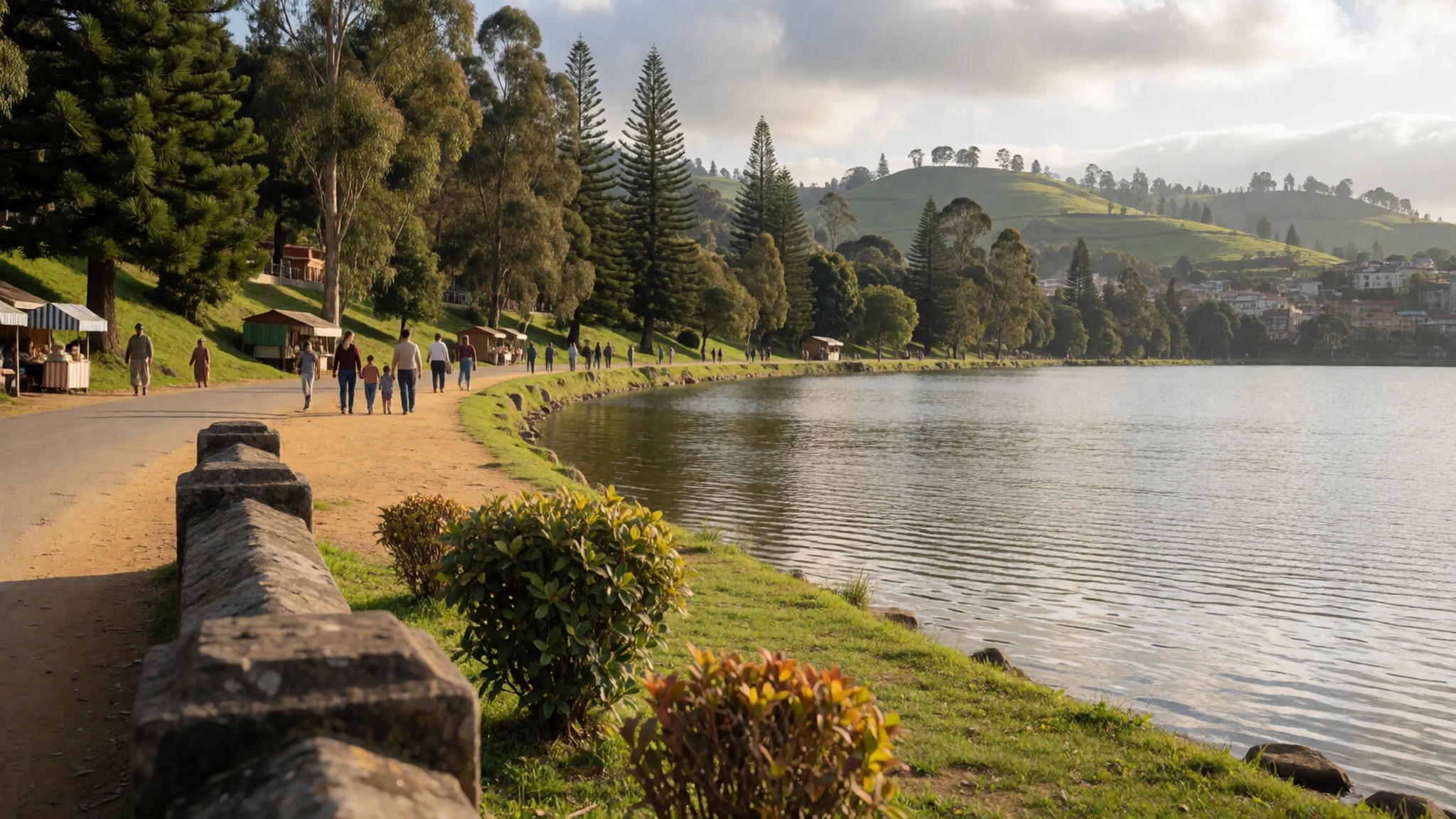
- Victoria Park — town centre
Victoria Park is Nuwara Eliya's public garden, a short walk from the centre, with lawns, flower beds and tall trees laid out in the colonial manner. Birds use the quieter corners, and in the clearer months the beds draw visitors from the lowlands who come to see blooms that struggle in the heat below. It is a gentle hour between the lake and the market.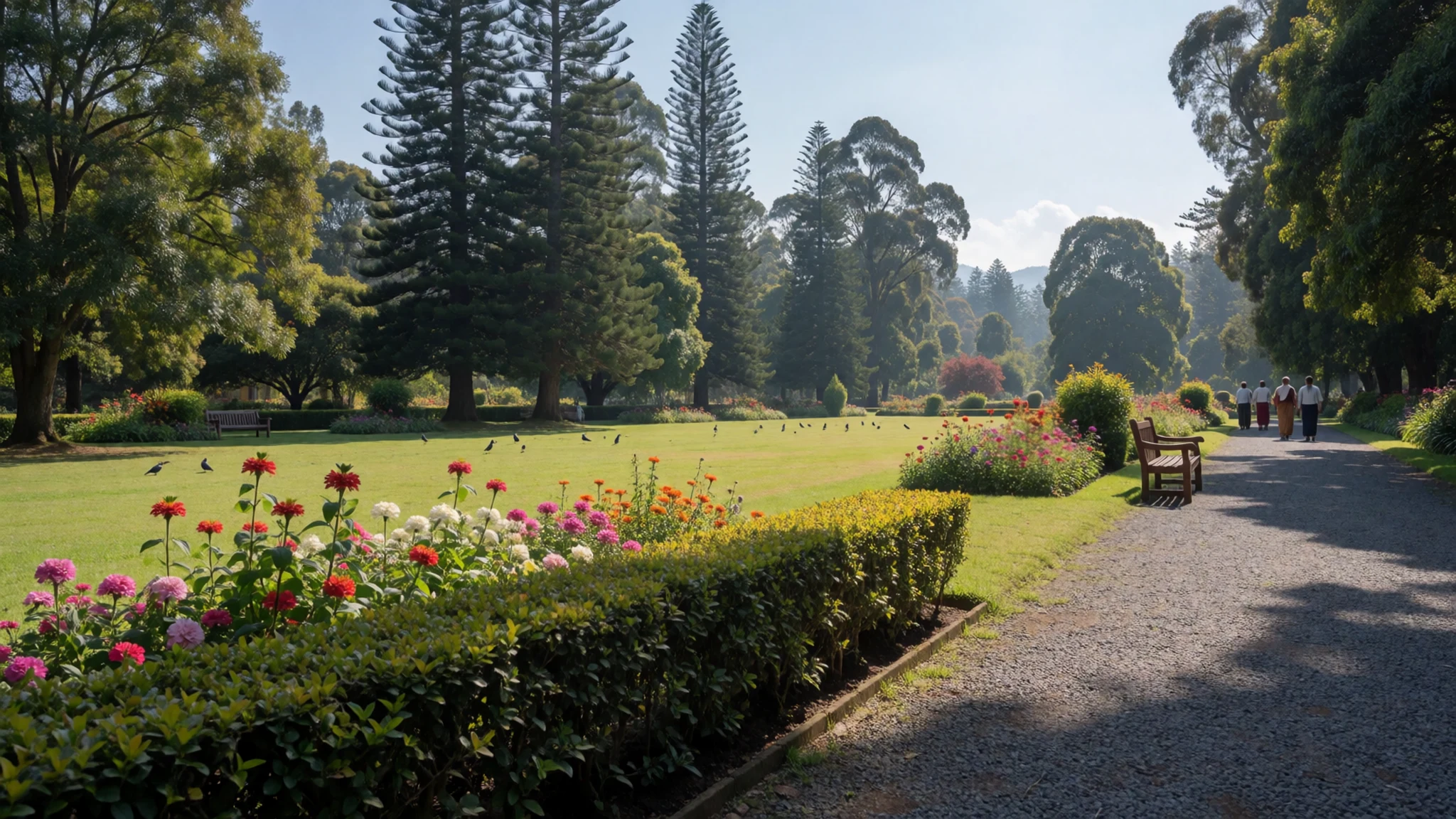
- The ridge above town — the ridge above town
The ridge above Nuwara Eliya is where the town suddenly makes sense: tea slopes in the foreground, roofs and the lake below, and higher ground disappearing into cloud. The lookout is a short, often muddy walk rather than a drive. Morning is the likelier time for a gap in the mist. The ground is slick, and the air on the ridge is colder than in the street.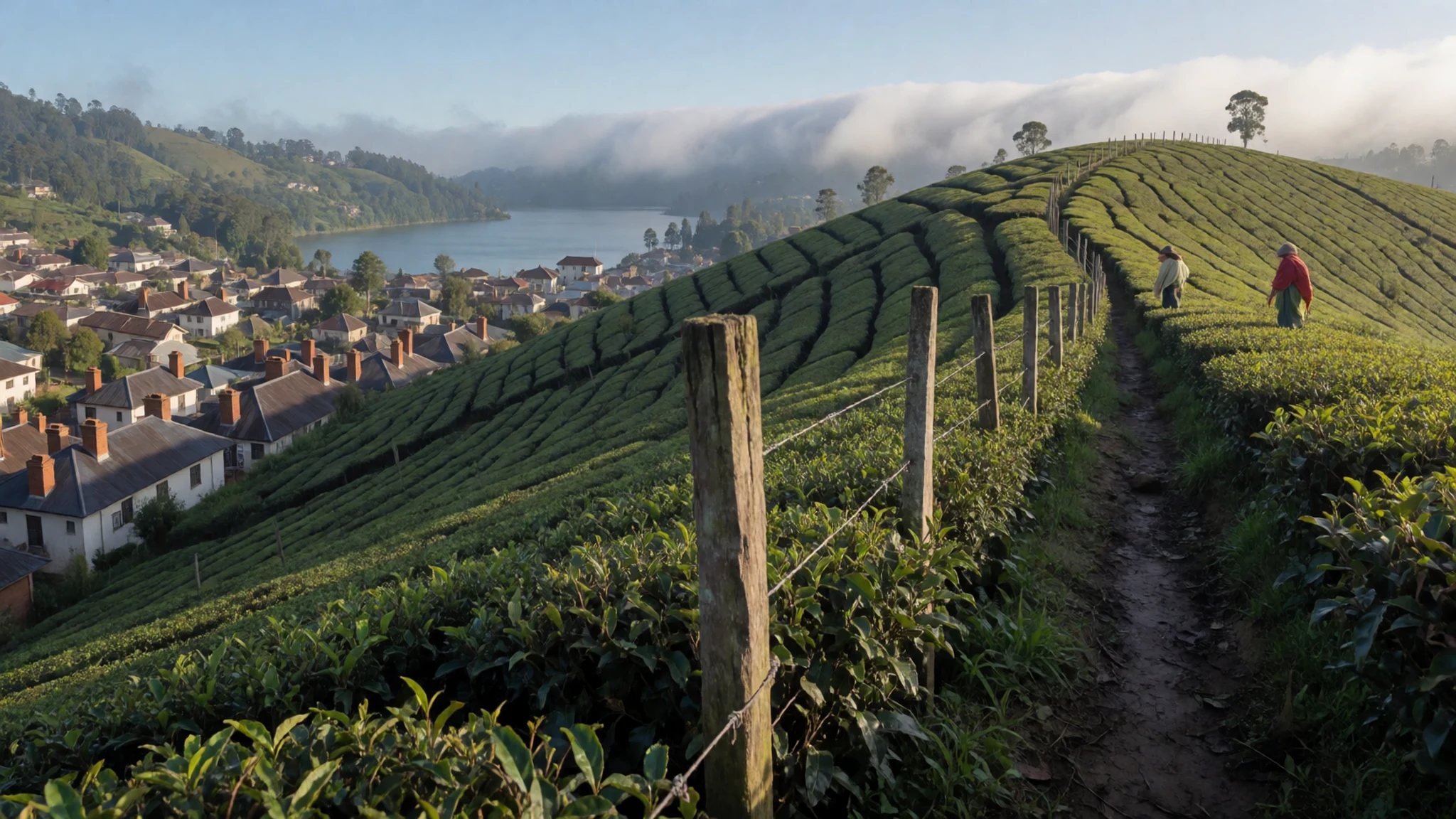
- The road through the tea — roads out toward the estates
The roads out of Nuwara Eliya run through working tea, and the stretch toward the dairying country around Ambewela shows it plainly. Buses and vans share the bends with estate trucks, and pluckers are often in the rows beside the carriageway. There is no gate and no viewpoint fee; the slope is a workplace. Pull-offs are few, so the looking is mostly done from a slow vehicle.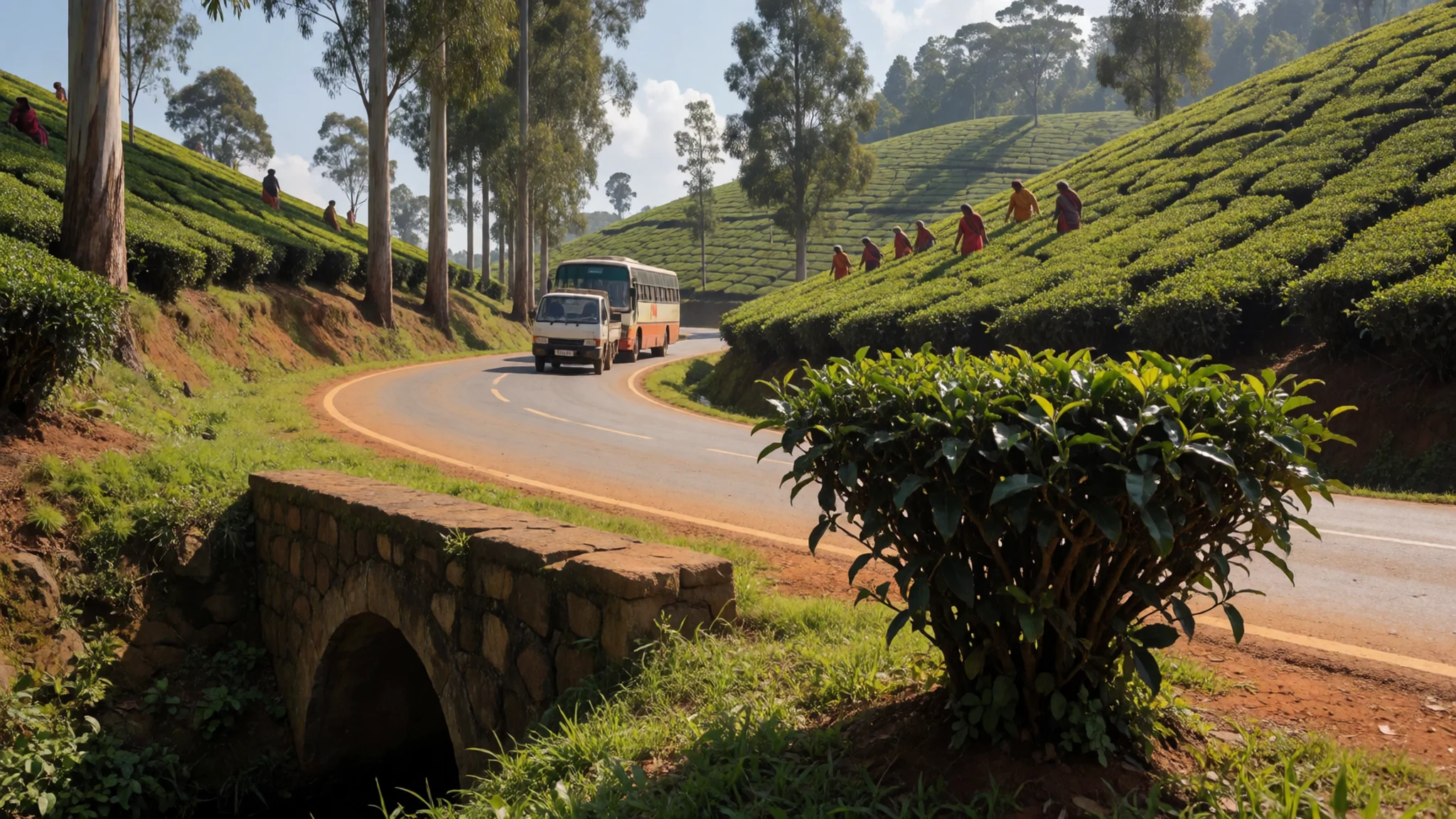
- The town centre — town centre
The centre of Nuwara Eliya is a few streets of shops, bakeries, a market and colonial civic buildings, including the old post office, gathered under roofs built for rain. It is the practical town: buses, banks, a place to buy a jumper if the mist has won. On a wet day the interest is the architecture and the covered walking, not a list of monuments.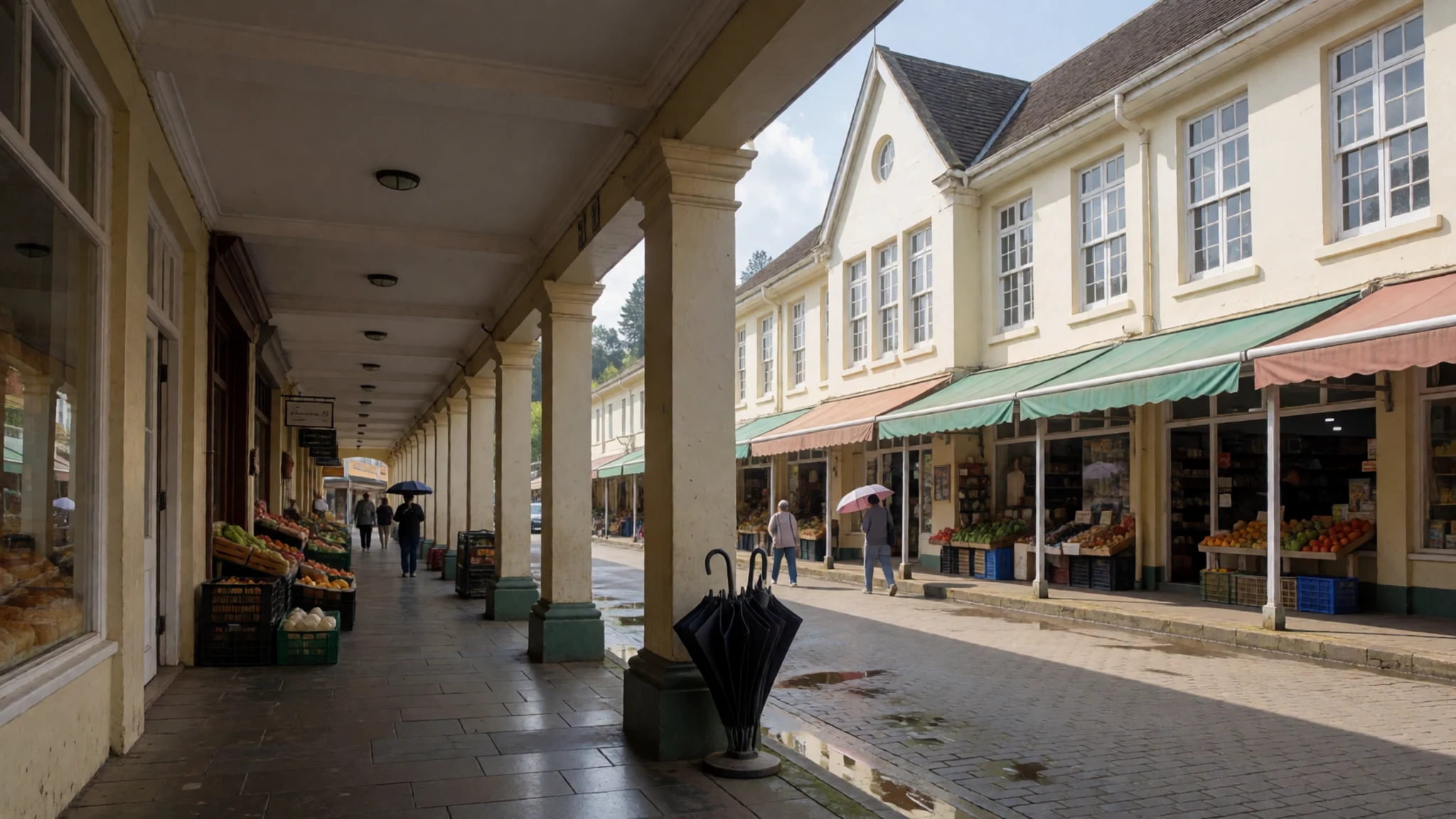
Culture
Nuwara Eliya's daily life braids Sinhalese Buddhist custom, the Hindu tradition of the hill-country Tamil community, a smaller Muslim presence, and what remains of the colonial social calendar. The April New Year, kept by both Sinhalese and Tamils, is when the town fills: families travel up, lodgings fill, and even a wet week feels like a holiday. On the estates, kovils mark Thai Pongal and their annual festivals with drums, lamps and food shared past the gate. In town, poya days still slow the shops and restrict the sale of alcohol, a reminder that the Buddhist calendar governs the island even in these hills. Fragments of the old season survive in the golf club, seasonal racing and flower shows, now firmly local occasions. Estate manners are part of the culture a visitor actually meets. A factory is a workplace, a row of tea is someone's wage, and a path along a division crosses a job rather than a viewpoint. English is widely understood in the centre; Sinhala and Tamil are the languages of home, and a greeting tried in either is received as effort. At temples and kovils in Nuwara Eliya, cover your shoulders and knees, take off your shoes before you step inside, and keep your voice low while people are praying.
What to wear
Nuwara Eliya dresses for festivals, for field work and for a climate that asks for an extra layer once the sun drops. On wedding days and at New Year the Kandyan osariya appears, its frill and drape distinct from the coastal sari, in silk for the ceremony or a crisp cotton for a long day of visits; the ordinary sari is just as common, especially among Tamil women going to the kovil in deeper colours. In the tea fields the working dress is practical: a sari or long cloth and blouse, a basket or sack at the waist, a plastic sheet or woollen shawl when rain or wind arrives. Men wear the sarong at home and for ceremonies, and shirts with trousers in the factory, on the bus and in town. Everyday Nuwara Eliya looks like any cool Sri Lankan town: jeans, trainers, knitted caps, school uniforms with a jumper added, a raincoat stuffed into a bag. Visitors who copy that layering stay more comfortable than visitors who pack only for the coast. A light waterproof, a warm mid-layer and shoes with a grip suit the slick paths and the chill that settles after dark. At religious sites, covered shoulders and knees matter more than the coat. Beach sandals belong on the coast; the plateau is kinder to socks and a closed shoe.
What to eat
- Estate tea — estate stalls and factory shops on the roads out of town
Black tea is the local drink of Nuwara Eliya, and the cup worth asking for is leaf grown on a nearby slope. Estate stalls and factory shops serve it plain or with milk and sugar, hot, in small glasses or mugs.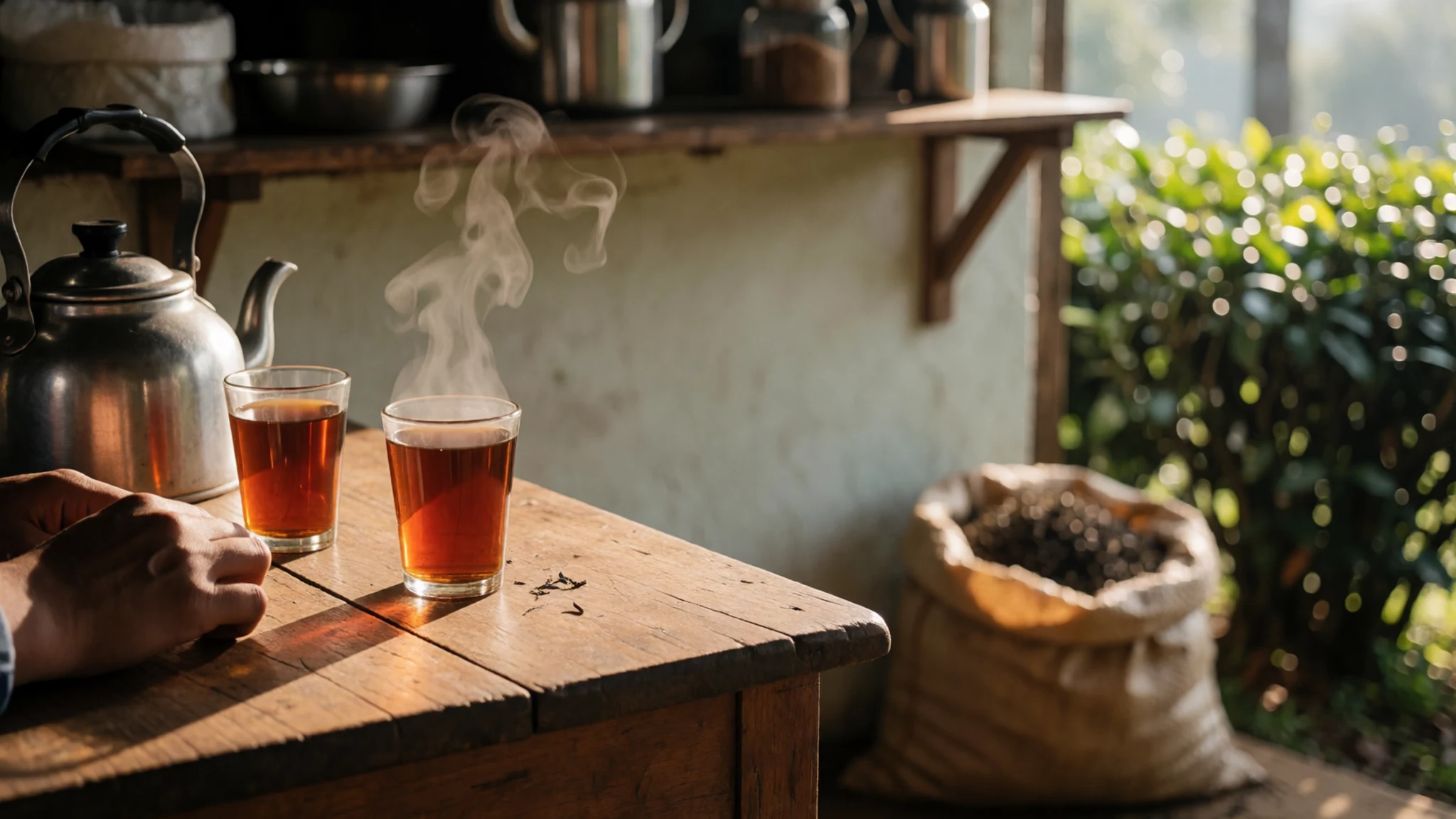
- Rice and curry — rice-and-curry eateries on the main streets
Rice and curry is the ordinary midday meal in Nuwara Eliya, a plate of rice with dhal, a mallum of greens and several vegetable curries, sometimes fish or chicken. Highland kitchens use leeks, carrots, cabbage and potato grown around the town.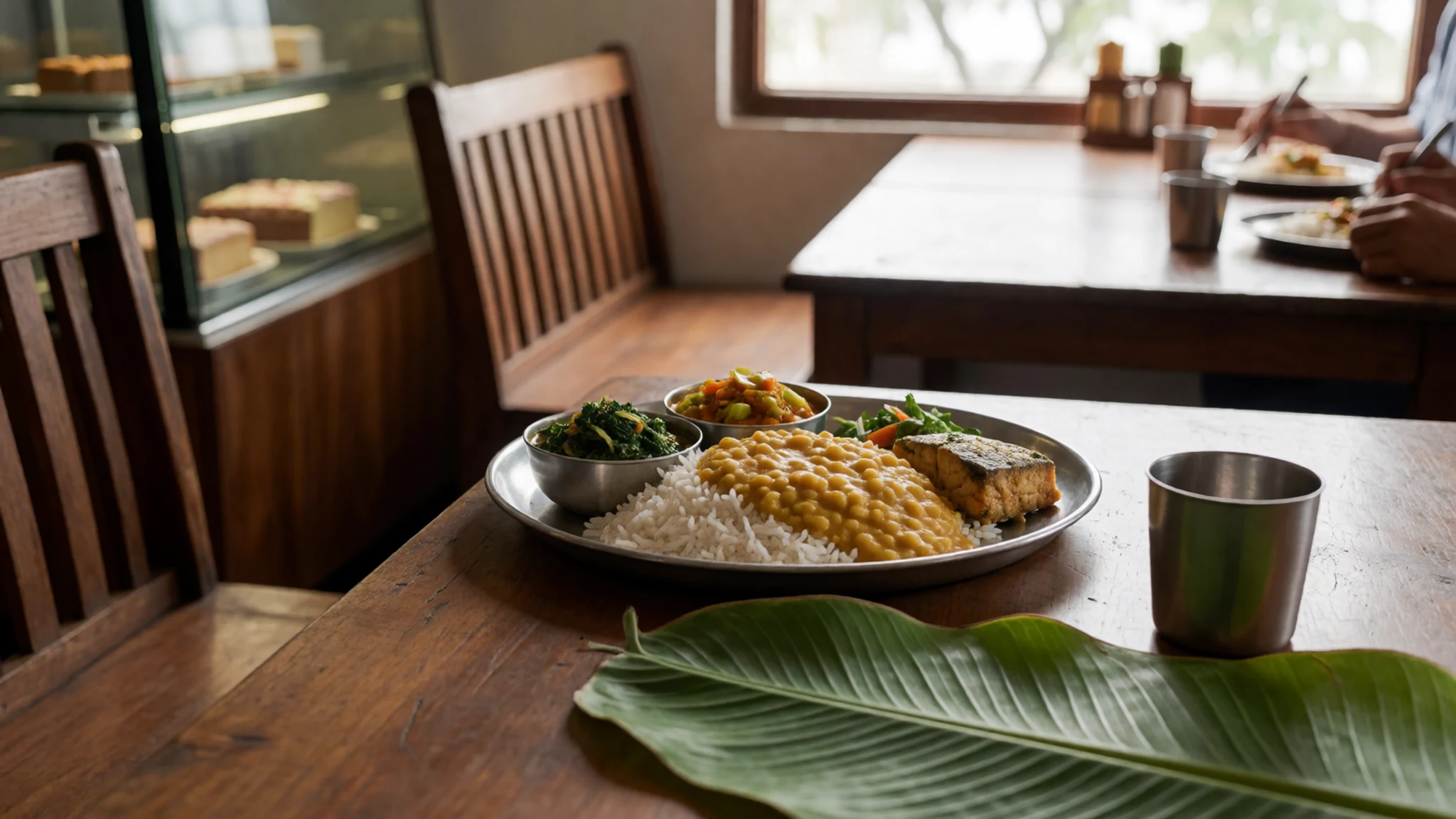
- Hoppers — hopper stalls and evening eateries in town
Hoppers are bowl-shaped pancakes of fermented rice flour, crisp at the rim and soft in the middle, eaten in Nuwara Eliya at breakfast and again late in the evening. An egg broken into the centre is the usual upgrade, with sambol or a thin curry on the side. - Kottu — roadside stalls in the town centre after dark
Kottu is chopped godamba roti fried on a flat griddle with vegetables, egg or chicken, and spices, and in Nuwara Eliya it is the loud late meal after a cold walk. The blades on the metal plate announce it from down the street. It is filling, common and unfussy. - Strawberries and market vegetables — the town market and roadside stalls toward the estates
Strawberries, carrots, leeks and cut flowers are the plateau's other crop, sold in Nuwara Eliya at the town market and from stalls on the estate roads. The fruit is eaten fresh, or as juice and jam made nearby. Quality follows the rain and the week. - Bakery short eats — bakery counters and tea shops in the town centre
Bakery counters in Nuwara Eliya sell fish buns, vegetable rolls and butter cake, snacks that suit a cold afternoon and echo the bungalow era. A glass of sweet milk tea beside a bun is the ordinary pause between the lake and the market.
Plan it
Best time. February and June to August are the most comfortable months in Nuwara Eliya, with lighter rain and easier walking. March and April are the hottest, and October to December the wettest, good for atmosphere and poor for views. April, around the New Year, is busy and changeable: book lodging and expect company on the paths.
How long. 2–3
Getting there. International flights land at Bandaranaike International Airport, north of Colombo. From there, Nuwara Eliya is reached by road through the hills, or by train to Nanu Oya and a road transfer for the last stretch into town. The final climb is winding, and anyone prone to motion sickness does better with a view of the road ahead.
Budget. mid
Tips
- Book lodging ahead for the April New Year and for long weekends, when families come up from Colombo.
- Start outdoor walks in the morning; cloud and rain often build later in the day.
- Carry a light waterproof and a warm layer, because the weather turns quickly.
- Keep some cash for estate stalls, small shops and the market; card machines are uneven.
- If you walk the ridges, tell someone your route and turn back when the mist closes in.
Etiquette
- At temples and kovils, cover shoulders and knees and remove shoes and hats.
- Ask before photographing tea pluckers, worshippers or people in the market.
- Do not pick tea, flowers or fruit from the estates; the slopes are working land.
Nearby
Sources
- Wikidata — Nuwara Eliya (CC0)
- Wikipedia — Nuwara Eliya (CC BY-SA 4.0)
- Wikivoyage — Nuwara Eliya (CC BY-SA 4.0)