Colombo
Colombo, Sri Lanka
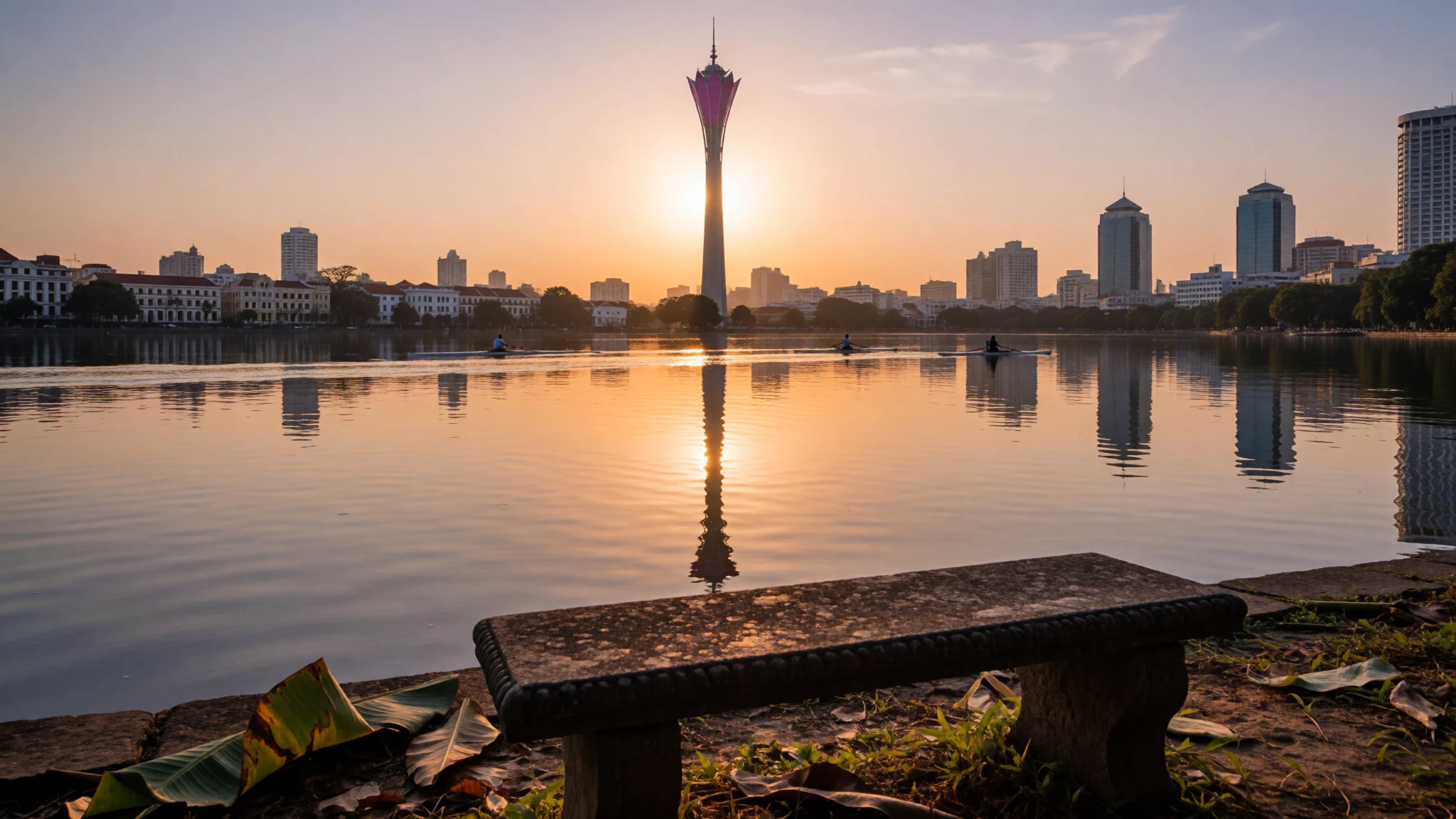
Colombo is Sri Lanka's low-lying commercial capital, a west-coast port where temples, markets and the harbour still share one city.
The place
Colombo (Sinhala: කොළඹ, Koḷam̆ba; Tamil: கொழும்பு, Koḻumpu) sits on Sri Lanka's west coast, only 1 metre above the sea, with about 648,000 people in the city proper. It is the island's largest city and its de facto capital. Daily government business still clusters here, although the formal administrative seat moved to neighbouring Sri Jayawardenepura Kotte. The same city is the hub of the Western Province and of Colombo District, and the address of the island's banks, shipping firms and wholesale markets. Canals slip behind the traffic, and Beira Lake, about 65 hectares, fills the middle of the map. Colonial garrisons once treated that water as a defensive moat; today rowing crews use it and audiences collect on the shore for shows. Beyond the lake's western edge the harbour meets the sea roads that turned a trading post into a capital, and a line of high buildings is the picture most people carry away, harsh in the noon light and switched on after dusk. Fort is the old commercial quarter, the Colombo Fort named on taxi vouchers from the airport. Temples, mosques and churches share those streets because the town grew by cargo, not by royal plan. Shade is thin on the big avenues, and the air stays damp precisely because the ground barely clears the tide. A first orientation is the lake, the harbour and Fort, before any single shrine. City notices are posted at http://www.cmc.lk/.
Its story
Colombo entered the record as a harbour rather than a palace town. The fourteenth-century traveller Ibn Battuta called the place Kalanpu. Arab merchants had been settling from about the eighth century, because a grip on this anchorage meant a grip on goods moving between the Sinhalese kingdoms and overseas buyers. That Muslim thread never left the city. Portugal's turn began in 1505. Ships under Dom Lourenço de Almeida made terms with Parakramabahu VIII, king of Kotte between 1484 and 1518: coastal cinnamon, Colombo's crop included, would flow to Portuguese traders, and in exchange those traders would watch the shoreline. They were allowed a trading post. Not long after, they forced Colombo's Muslim residents to leave, and in 1517 the walls of a fort started to rise. The Portuguese had concluded that the island had to be in their hands if their stations along the Indian coast were to remain secure, and they leaned on Kotte's rulers until the hold spread. A later Dutch administration left Colombo a civic emblem still copied as the city's old device. Britain, taking the island in 1815, placed the capital here; Colombo was still the capital at independence in 1948. From 1978 the administrative offices sat in Sri Jayawardenepura Kotte, and Colombo carried the commercial title its warehouses had long since earned. The fort, the harbour and those warehouses are why today's towers still crowd the same shore.
What to see
- Seema Malaka — Beira Lake
Seema Malaka is a Buddhist temple in Colombo whose south side carries Buddha statues in several mudras, each a different gesture of the hands. The figures are the reason to stop: every pose is distinct, and together they read as an outdoor lesson rather than one shrine image. Shoulders and knees should be covered, and shoes come off at the entrance.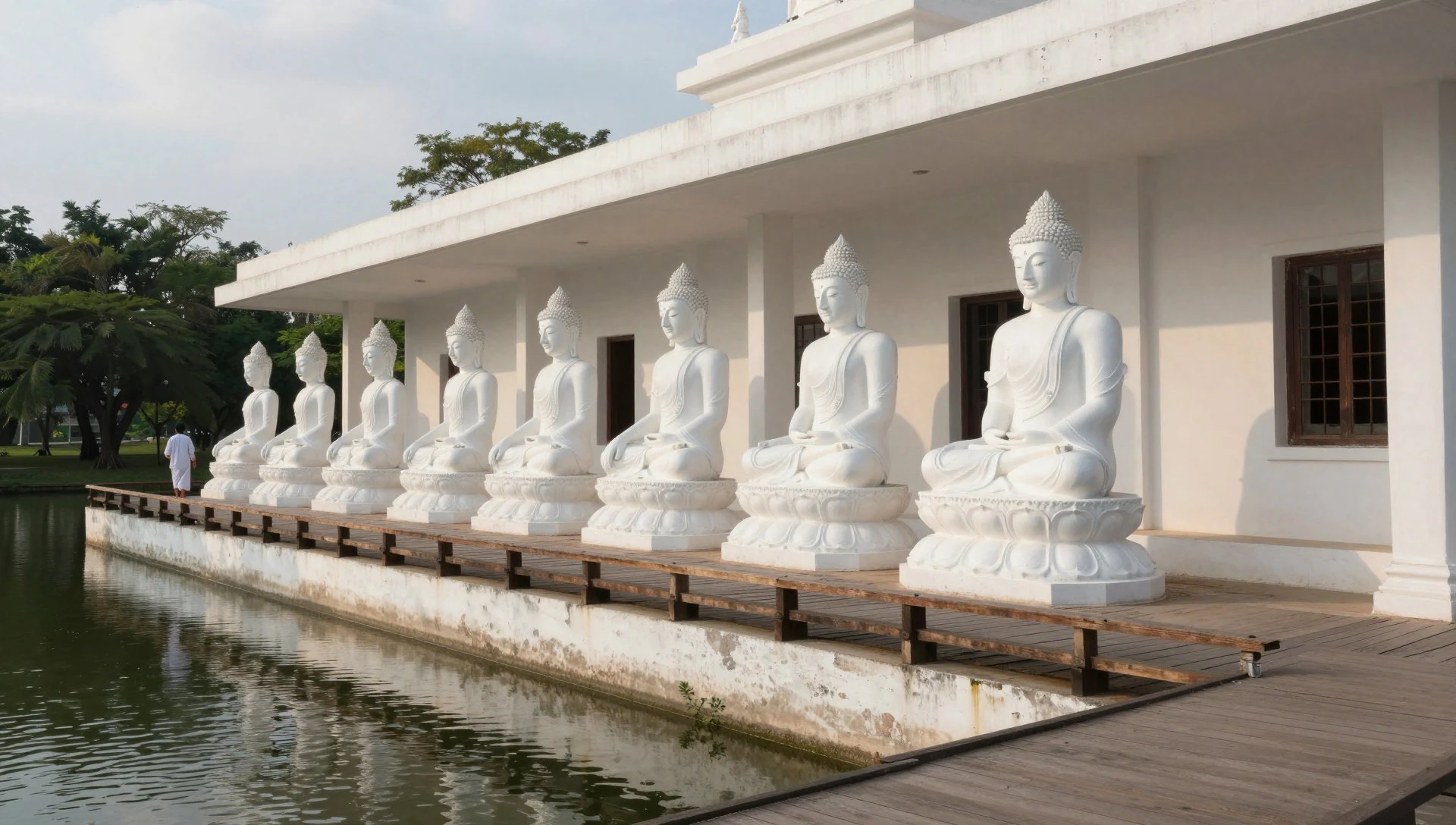
- Jami ul-Alfar Mosque — Pettah
Jami ul-Alfar is Colombo's Red Mosque, its walls painted in only two colours in a repeating pattern that makes the facade easy to find. It is a working mosque for a large Muslim community, full at Friday prayers and during Eid. Visitors who are not there to pray should stay at the public edge, dress modestly, and ask before photographing people.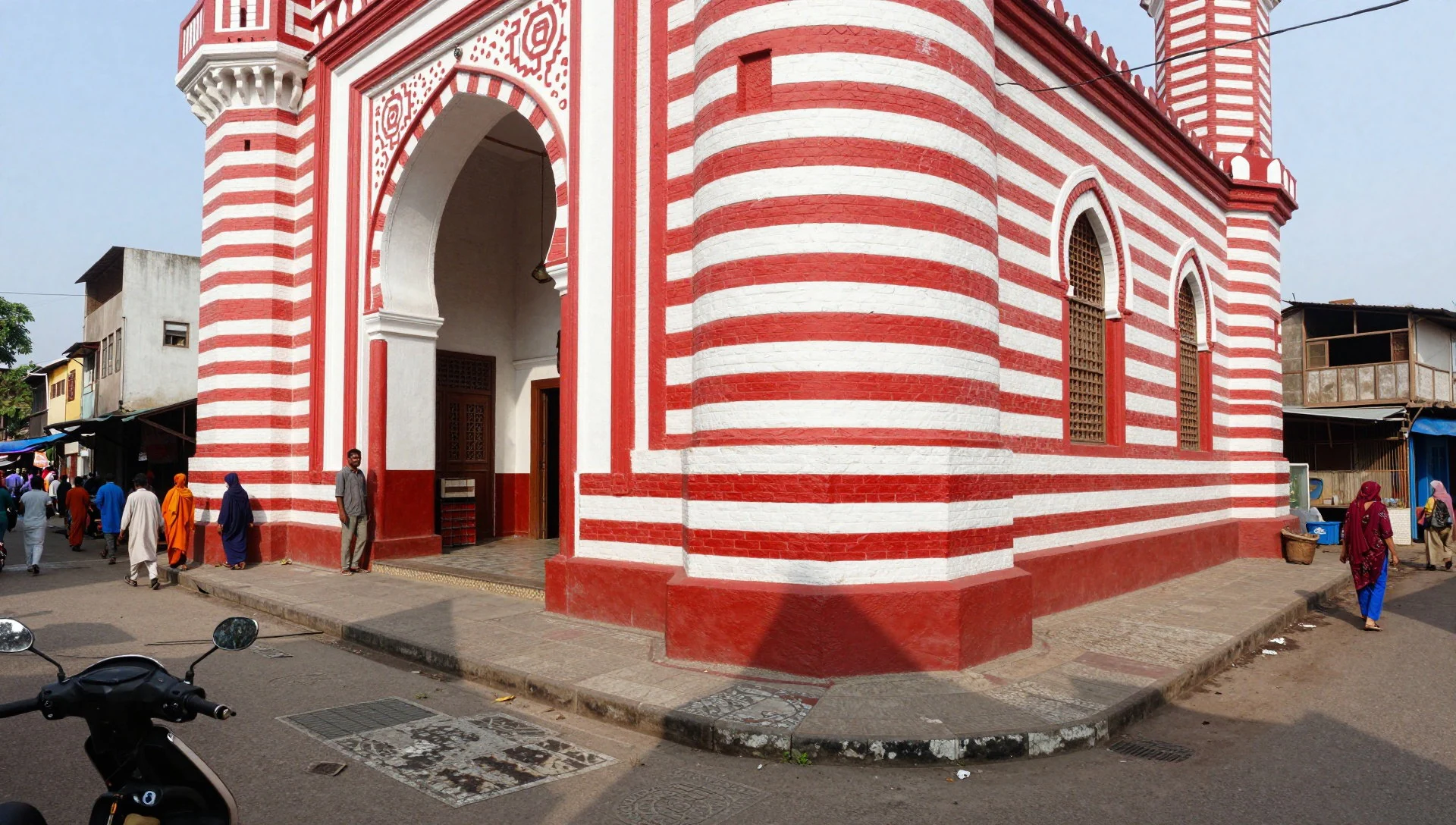
- Independence Commemoration Hall — Colombo
The Independence Commemoration Hall is Colombo's civic monument to the island's independence. The building itself is the sight, a formal open hall that families and school parties walk around at an unhurried pace. It is a public memorial, so the stonework is not for climbing and the steps should be left clear for others.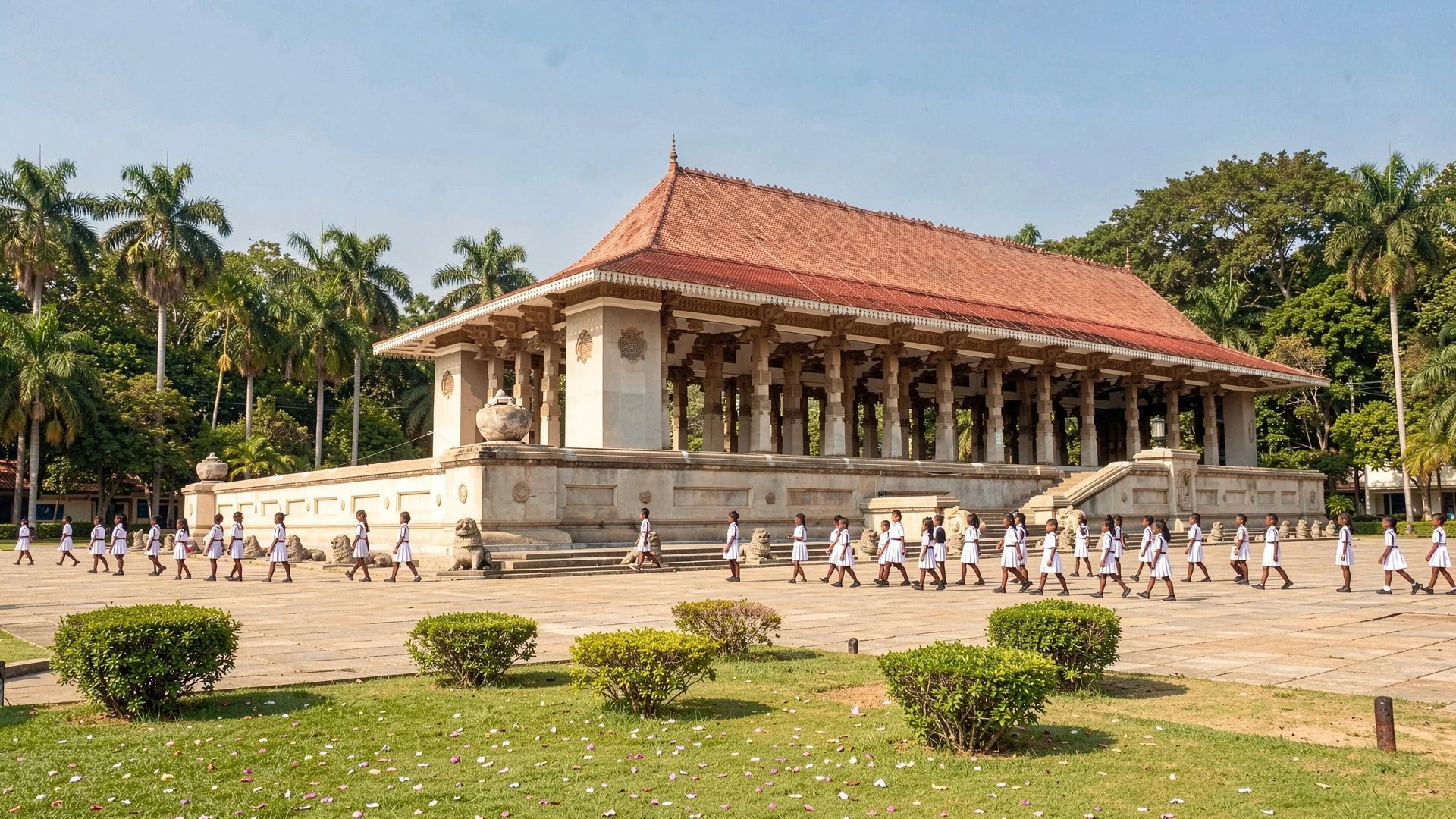
- Old Parliament — Colombo
Colombo's old parliament is the earlier home of the island's legislature, a colonial civic building that still stands in the commercial capital. The visit is an exterior one: the facade is there to be read from the pavement, a heavy official front from the years the assembly sat in the port city. When ropes or police lines are out, they mark where to stop.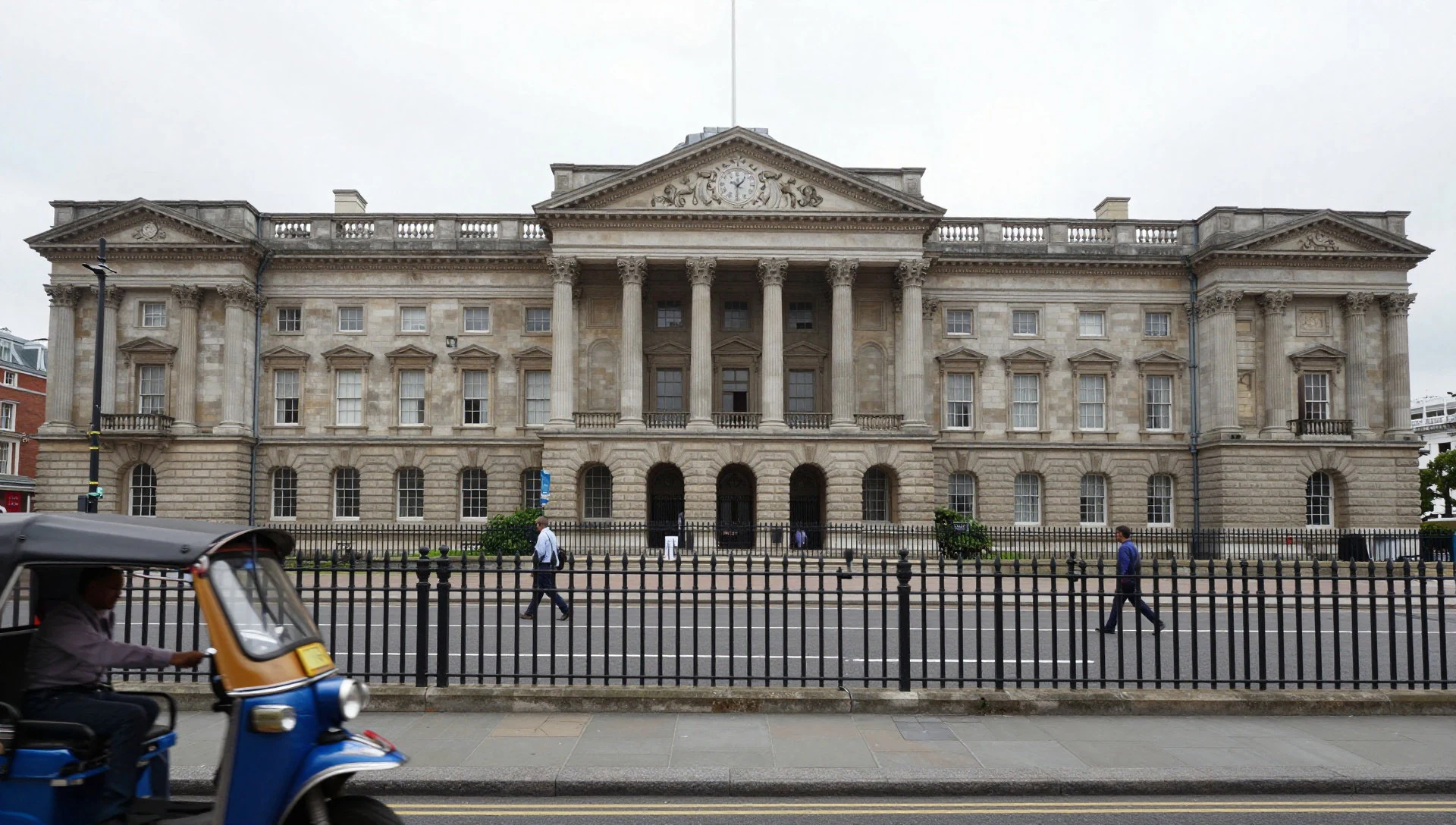
- St Lucia's Cathedral — Colombo
St Lucia's Cathedral is Colombo's Roman Catholic cathedral, home church of the archbishop of the archdiocese. The parish and the port grew up together, through the colonial centuries and after. People still come for mass, so visitors fit themselves around the service, speak softly, and leave flash photography for the street.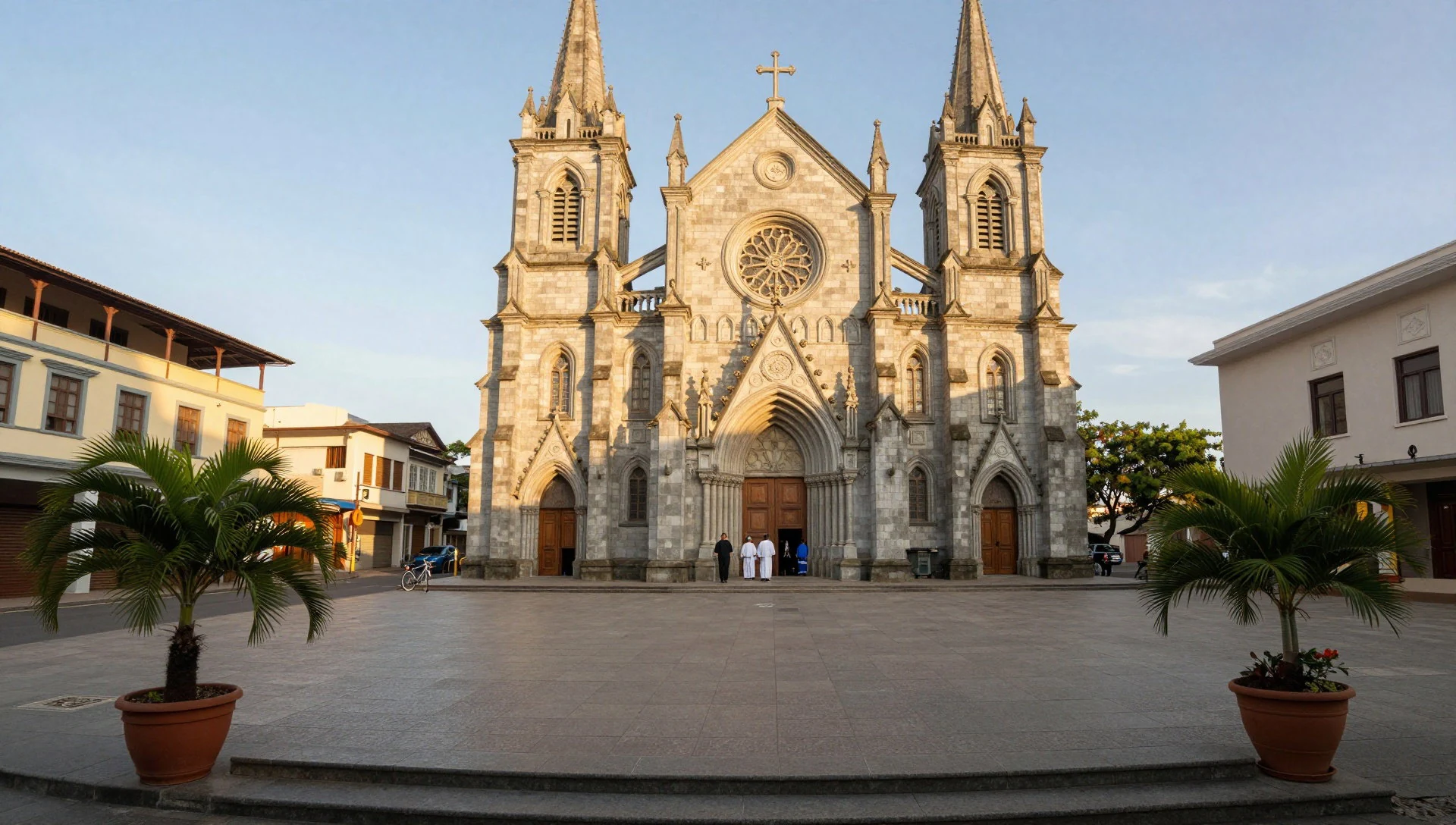
Culture
Colombo keeps its festivals in the street. Vesak is the one people cross town for: Sinhala Buddhists mark the Buddha's birth, enlightenment and death on the same day. It comes in mid-May and runs for about a week. Paper lanterns, strings of bulbs and thoran — built frames of coloured lamps — appear at junctions, and families ride in from the suburbs to compare them. On the pavements, dunsal open as charity stalls, giving away rice, drinks and snacks; taking a plate is part of the custom, and nobody is charged. Muslim life is just as public. Eid ul-Fitr and Eid ul-Adha are kept across Colombo, and the shops are busiest in the days before Eid ul-Fitr, when the fasting month ends and clothes and sweets sell quickly. Older Christian churches, several of them begun by foreign missions, celebrate on the same map as the mosques and the Buddhist temples. A commercial capital, Colombo still clears space for religion. At Colombo's temples, kovils and mosques, cover shoulders and knees, take off your shoes before entering, and do not photograph people who are praying.
What to wear
Colombo dresses by community and by heat. Sinhala women wear the sari, and for formal occasions the Kandyan osariya, a draped sari of cotton or silk with a structured blouse. Tamil women in the city wear the sari both as daily cloth and for ceremonies. The traditional public dress for men is a sarong with a shirt, still usual at home, at the temple and at family gatherings. Batik — cotton marked by wax-resist dyeing — is the textile sold in shops as shirts, sarongs and folded lengths of strong colour. Plain handloom cotton is what people actually rely on in a city only 1 metre above the sea. On a weekday the commercial capital is more mixed. In Fort and the office streets, men wear shirts and trousers, and women wear saris, shalwar kameez or plain dresses. Younger Colombo switches to jeans and T-shirts. Many Muslim women add a headscarf to a sari, a shalwar suit or a long coat. Market lanes are relaxed; rooms that handle shipping look more formal. Visitors should carry breathable cotton or linen, something light for rain, and sandals that come off in a second. A scarf or spare sarong covers shoulders and knees at Seema Malaka, at Jami ul-Alfar and at any kovil. Swimwear belongs on the beach, not on a shrine step.
What to eat
- Rice and curry — Tamil eateries in Colombo
Rice and curry is Colombo's ordinary meal: a mound of rice with several small dishes of vegetables, fish or meat, plus pol sambol of coconut, chilli, onion and lime. Jaffna-style plates, often including crab and a hotter northern spice mix, turn up at Tamil eateries in the city.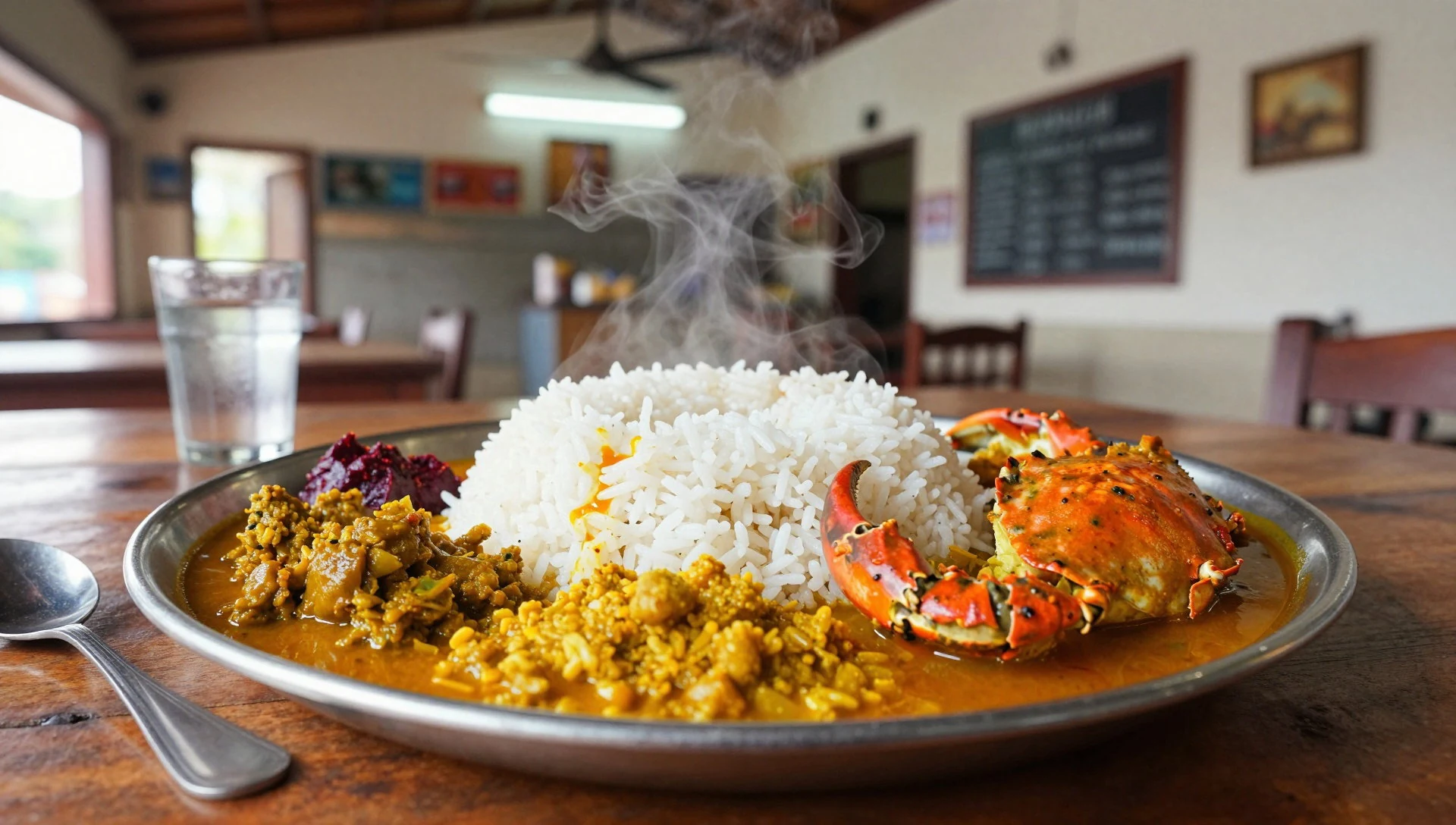
- Crab — seafood eateries near the harbour
Crab is the catch Colombo cooks when the boats are in, usually in a thick spicy gravy or cracked with pepper at the table. Seafood eateries around the harbour and in the commercial districts serve it as a full plate beside rice, not as a small starter.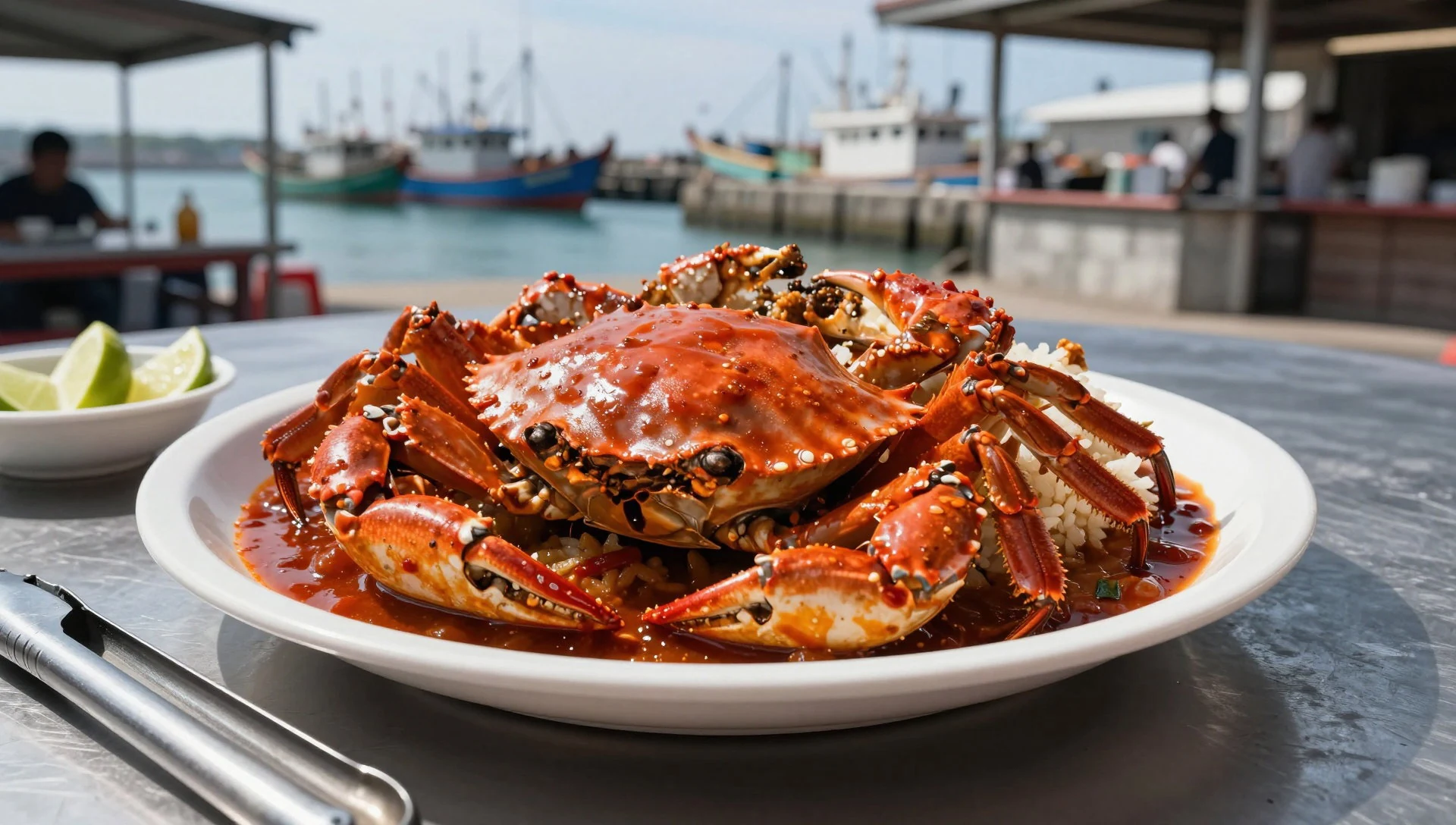
- Hoppers — casual evening eateries
Hoppers, or appa, are fermented rice-flour pancakes cooked in a small curved pan so the rim crisps and the centre stays soft. Colombo eats them plain, with an egg in the well, or beside sambol and curry. Casual eateries sell them in the evening. - Kottu — roadside eateries at night
Kottu is chopped flatbread fried on a griddle with strips of curry, vegetables and often egg or chicken, the blades clattering as the cook works. It is Colombo's late, filling street meal, sold from roadside eateries once the offices empty. - Lamprais — Burgher and local lunch eateries
Lamprais is a banana-leaf packet from Colombo's Burgher kitchens: rice cooked in stock, a portion of curry, a meatball and sambol, wrapped and baked until the leaf turns fragrant. Local eateries serve a packet per person at lunch.
Plan it
Best time. Colombo is hot and humid in every month. January and February are the most comfortable months on this west coast, March the hottest, while heavy rain falls in April to June and September to November, July and August a shorter drier spell and October and November the wettest. Mid-May brings Vesak, worth timing if you can accept crowds and showers.
How long. 2–3
Getting there. Colombo's airport is Bandaranaike International, closer to Negombo than to the city, with Sri Lankan Airlines and foreign carriers from India, the Gulf, East and Southeast Asia, Europe and Australia. Immediately after customs, a taxi counter on the right prints a voucher with the fare; settle that figure before the ride. The toll road, Highway E03, brings taxis to Colombo Fort in about 45 minutes. For a late arrival or an early flight, a night in Negombo is the simpler choice.
Budget. mid
Tips
- Take the printed airport taxi voucher and read the destination before the car leaves.
- Sleep in Negombo when the flight is late or very early; the airport sits closer to Negombo than to Colombo.
- Check http://www.cmc.lk/ for municipal notices, and ignore printed prices in old guidebooks.
- Book a room before Vesak week in mid-May, when lantern crowds fill Colombo.
- Carry cash for hopper stalls, short rides and temple offerings; larger shops take cards.
- Keep drinking water; Colombo's elevation is about 1 metre and the humidity stays high.
Etiquette
- Remove shoes at Buddhist temples, Hindu kovils and mosques, including Seema Malaka and Jami ul-Alfar.
- Cover shoulders and knees at every religious site in Colombo.
- Ask before photographing monks, worshippers or people at a dunsal.
- Take free Vesak food with thanks and do not waste it.
Nearby
Sources
- Wikidata Q35381 (CC0)
- Wikipedia (rev 1379112228) (CC BY-SA 4.0)
- Wikivoyage (rev 5400342) (CC BY-SA 4.0)
- Photo photos/01-colombo-skyline-2024.jpg (CC0 1.0)
- Photo photos/02-colombo-city-skyline-at-night.png (CC0 1.0)
- Photo photos/03-seema-malaka-buddha-statues.jpg (CC BY-SA 4.0)
- Photo photos/04-independence-commemoration-hall.jpg (CC BY 2.5)
- Photo photos/05-logoshope-colomboharbour-november2015-01.jpg (CC BY-SA 4.0)
- Photo photos/06-jami-ul-alfar-mosque.jpg (CC BY-SA 4.0)
- Photo photos/07-lk-colombo-altes-parlament.jpg (CC BY-SA 4.0)
- Photo photos/08-.jpg (CC BY 3.0)


