Bentota
Bentota, Sri Lanka
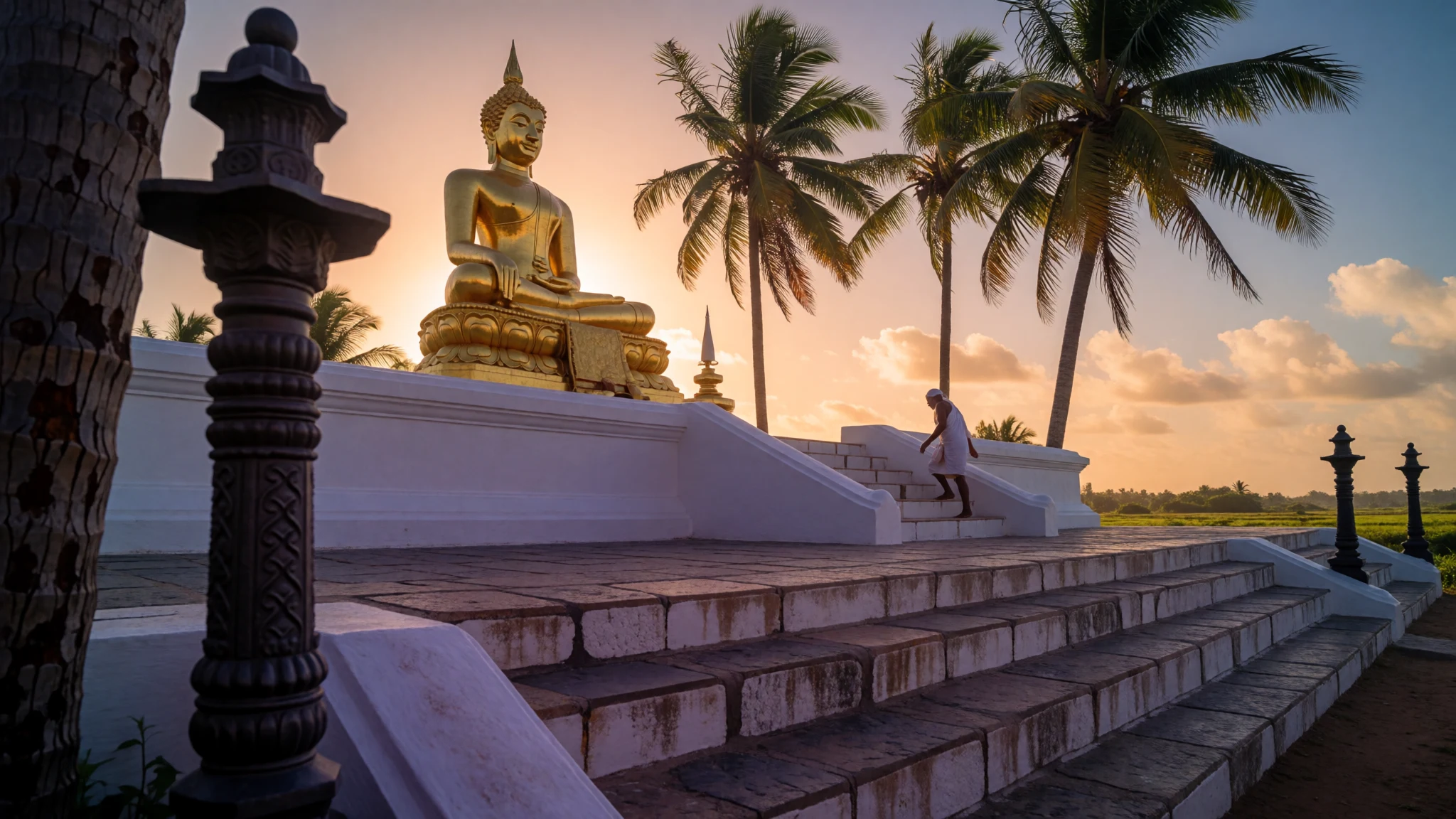
Bentota pairs a long Indian Ocean beach with a calm river estuary, plus temples and turtle hatcheries, all within easy reach of Colombo.
The place
Bentota is a seaside town in Sri Lanka's Southern Province, in Galle District, set on the southern bank where the Bentota River reaches the sea. It lies about 65 km south of Colombo and 56 km north of Galle, at just 3 m above sea level, so the whole place is flat, green and never far from water. The geography gives the town two settings in one. On the seaward side is a broad sandy beach facing the Indian Ocean. On the other is the river mouth and estuary, where boat trips and watersports are based. That pairing explains most of what Bentota does for visitors. Resorts line the shore, some of them boutique in scale, and Ayurveda treatments are sold alongside the beach stay. A helipad near the estuary runs joyrides, a sign of how tourism-minded the place has become. It is still a working coastal community, though, with coconut palms, toddy tapping and the Colombo–Galle railway running close behind the beach. Almost everyone in the surrounding division is Buddhist, so temples and festival days are part of ordinary life rather than a show put on for guests. Aluthgama, the busier neighbouring town about 2 km away, handles most of the train traffic, shops and markets. Heat and humidity are constant all year. The sea is at its friendliest in the drier months, while the south-west monsoon brings rain and rougher water. Bentota suits people who want a beach base with day trips, not a nightlife town.
Its story
Bentota's name comes from a legend about a demon called Bem who was said to rule the tota, or river bank. Historians link the area to the ancient Bhimatirtha, and it appears in old Sinhala messenger poems known as sandesa kavya. Chronicles such as the Mahavamsa and Pujavaliya mention a Bhimatittha monastery, which is thought to be the Galapatha temple still standing here. A 13th-century rock inscription at Galapatha repeats the older name, which shows how long the river mouth has been a landmark. A small Portuguese fort stands at the river mouth, built in the 17th century. Locals called it Parangi Kotuwa, the Portuguese fort, and the river marked the southern edge of the territory Portugal held on the island. The Dutch who followed let the fort decay, but reused one of its large buildings as a rest house for officers travelling between Colombo and Galle. The British later turned that rest house into a coastal sanatorium. Sir James Emerson Tennent, writing in his 1859 account of the island, described it as set in a small park shaded by tall tamarind trees where the river meets the sea, and counted it among the coolest and most pleasant rest houses in Ceylon. The British also brought the railway down this coast, mainly to move coconut produce north to the capital, and built a permanent bridge across the river to carry it. That line still runs along the shore, and it is how many visitors arrive today.
What to see
- Bentota Beach — Bentota coast
The main beach is a long, wide stretch of sand facing open ocean, with resorts set back among palms. Swimming conditions change with the season and the day, so check flags and local advice. Mornings and late afternoons are the comfortable hours for walking, before and after the midday heat.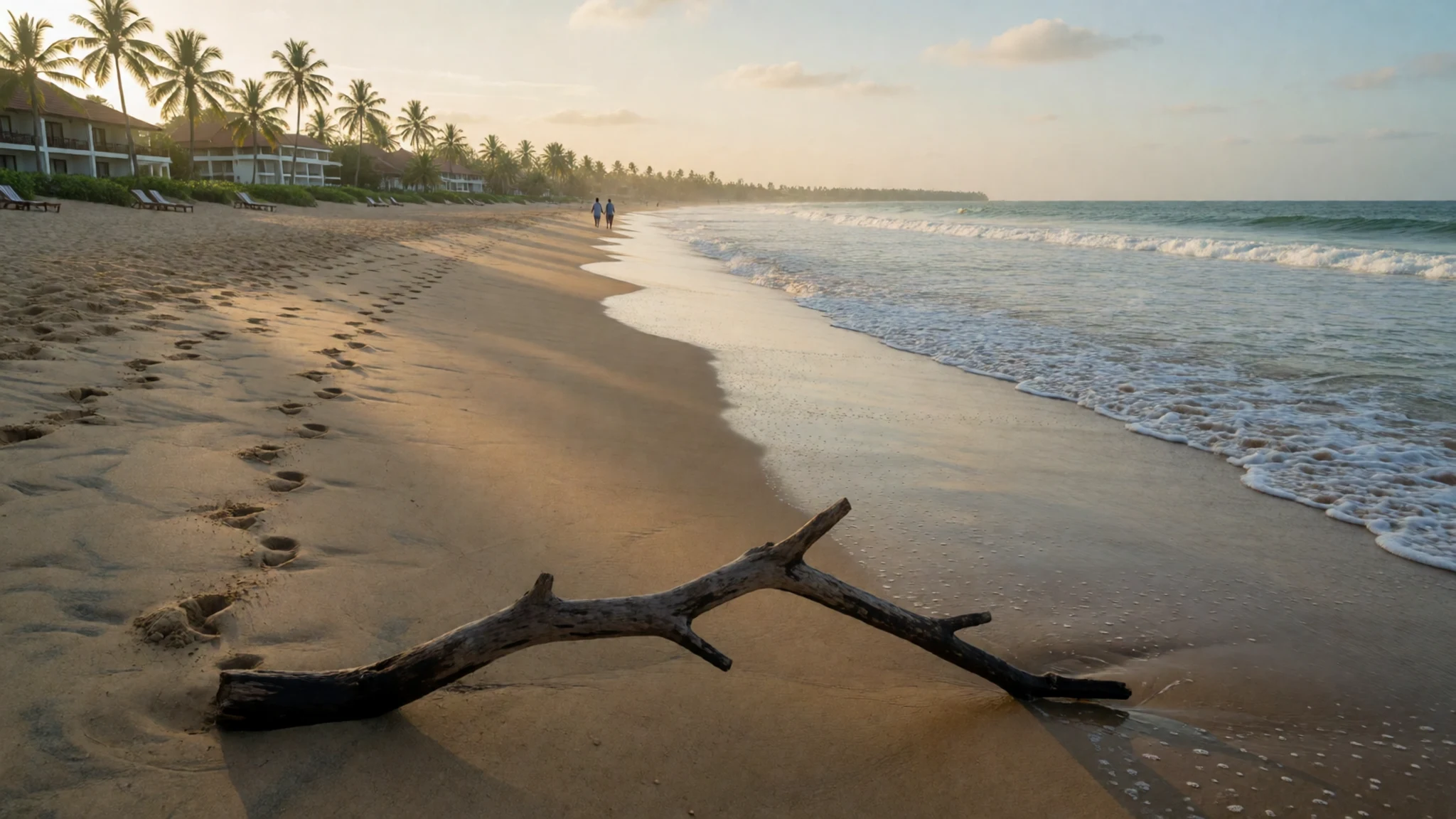
- Bentota River estuary — Bentota River mouth
Where the river meets the sea, the water is calmer than the surf and is used for boat trips and watersports. Mangrove edges and bird life reward a slow cruise at quieter hours. A helipad nearby runs short joyrides over the estuary for anyone wanting the view from above.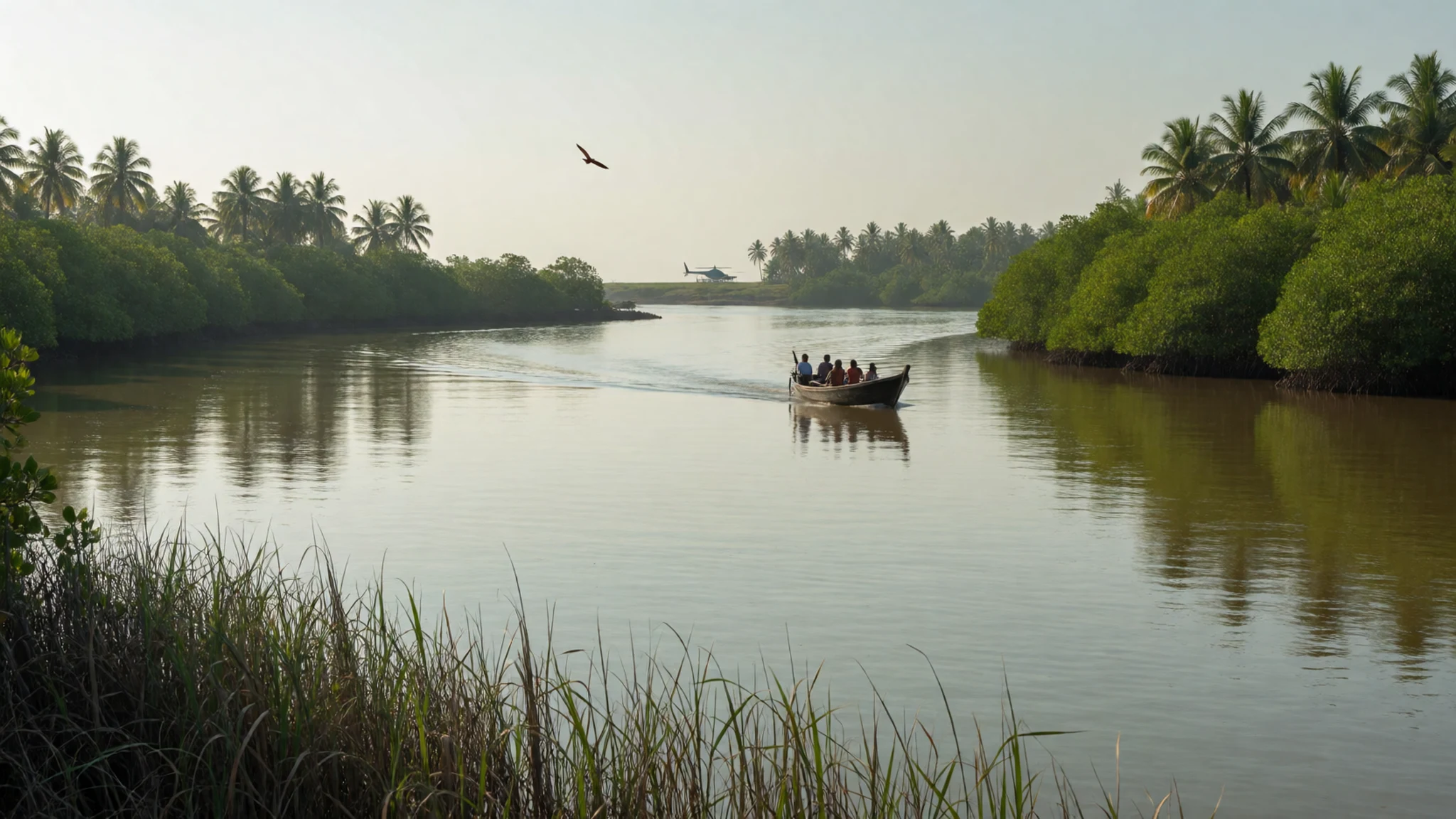
- Galapatha Raja Maha Vihare — Bentota
This Buddhist temple has origins reaching back to the 12th century. It holds medieval stone inscriptions, carvings, pillars, ponds and troughs, so it rewards people who like to look closely at old masonry. Go early, dress modestly and treat it as a place of worship first.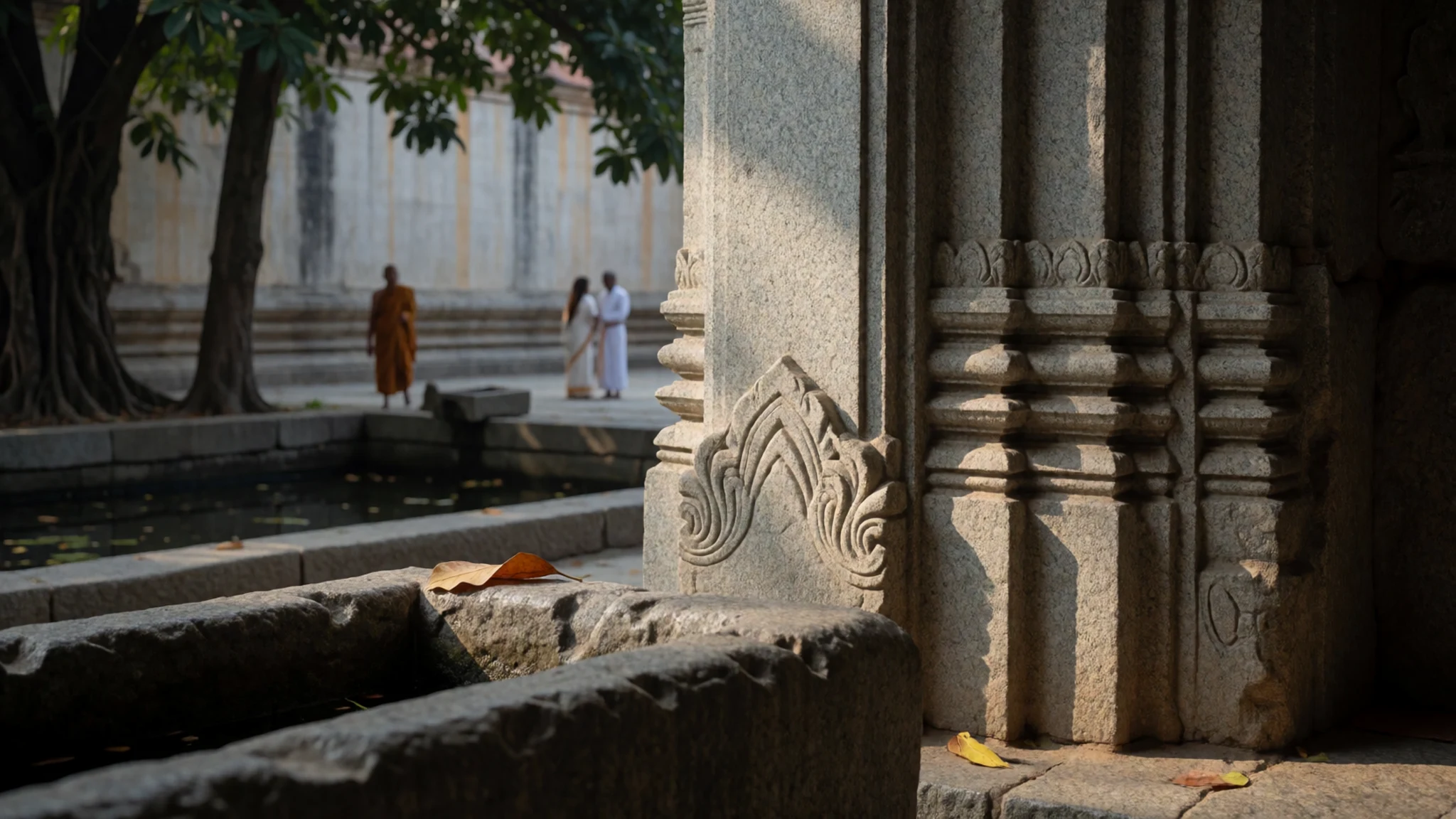
- Kande Viharaya — Near Aluthgama
A large golden Buddha is the reason most visitors come to this temple. It sits on a rise just inland of the coast road, and the grounds are quiet outside festival times. Allow time for the climb, the view and a few minutes of stillness before returning to the beach.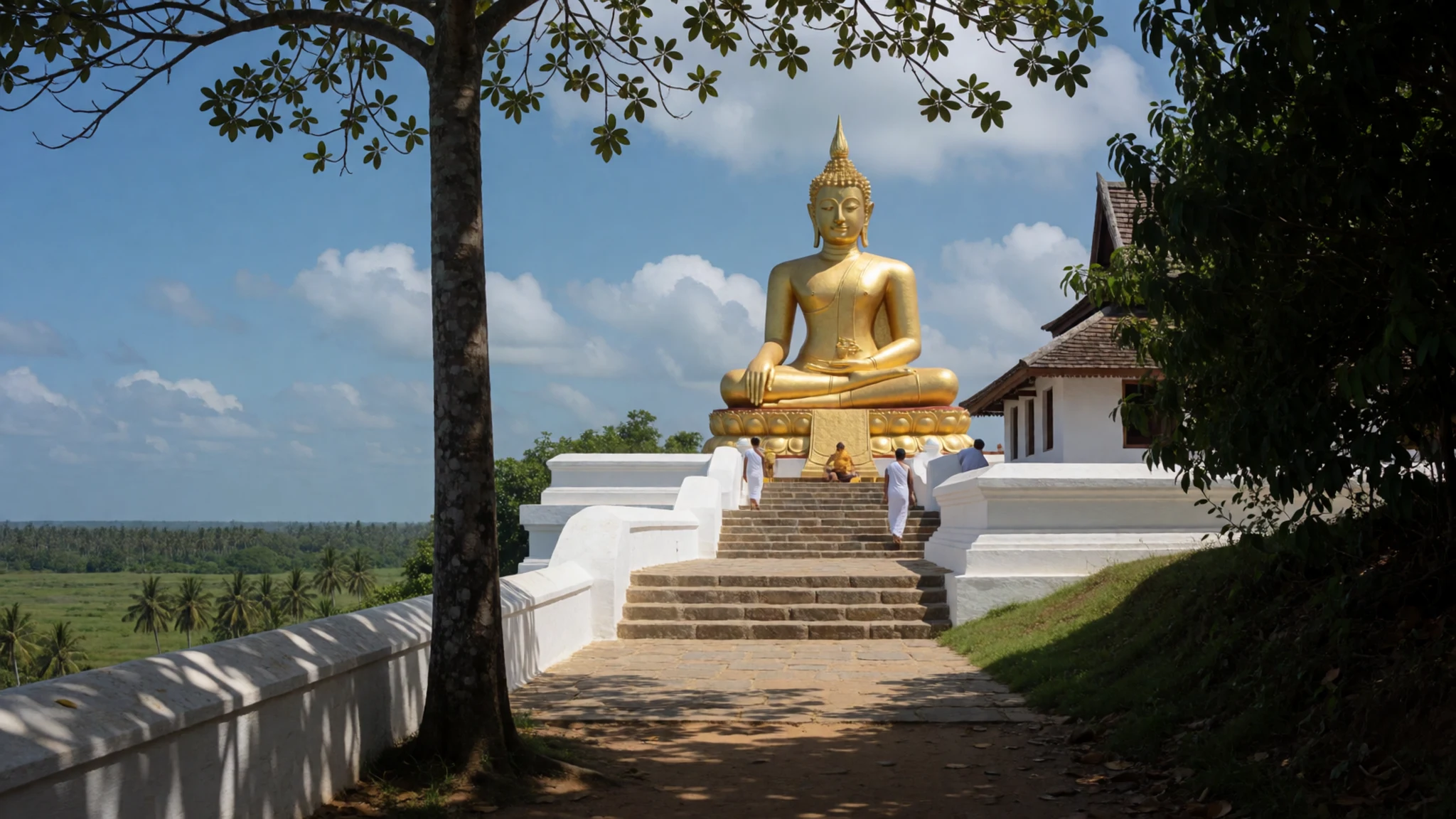
- Turtle hatcheries — Kosgoda and Induruwa
Several hatcheries along this coast, including one at Kosgoda to the south and one at Induruwa, protect turtle eggs and hatchlings until release. Visitors can see tanks and egg nests. Treat them as conservation projects, not zoos, and ask about the hatchery's release practice before donating.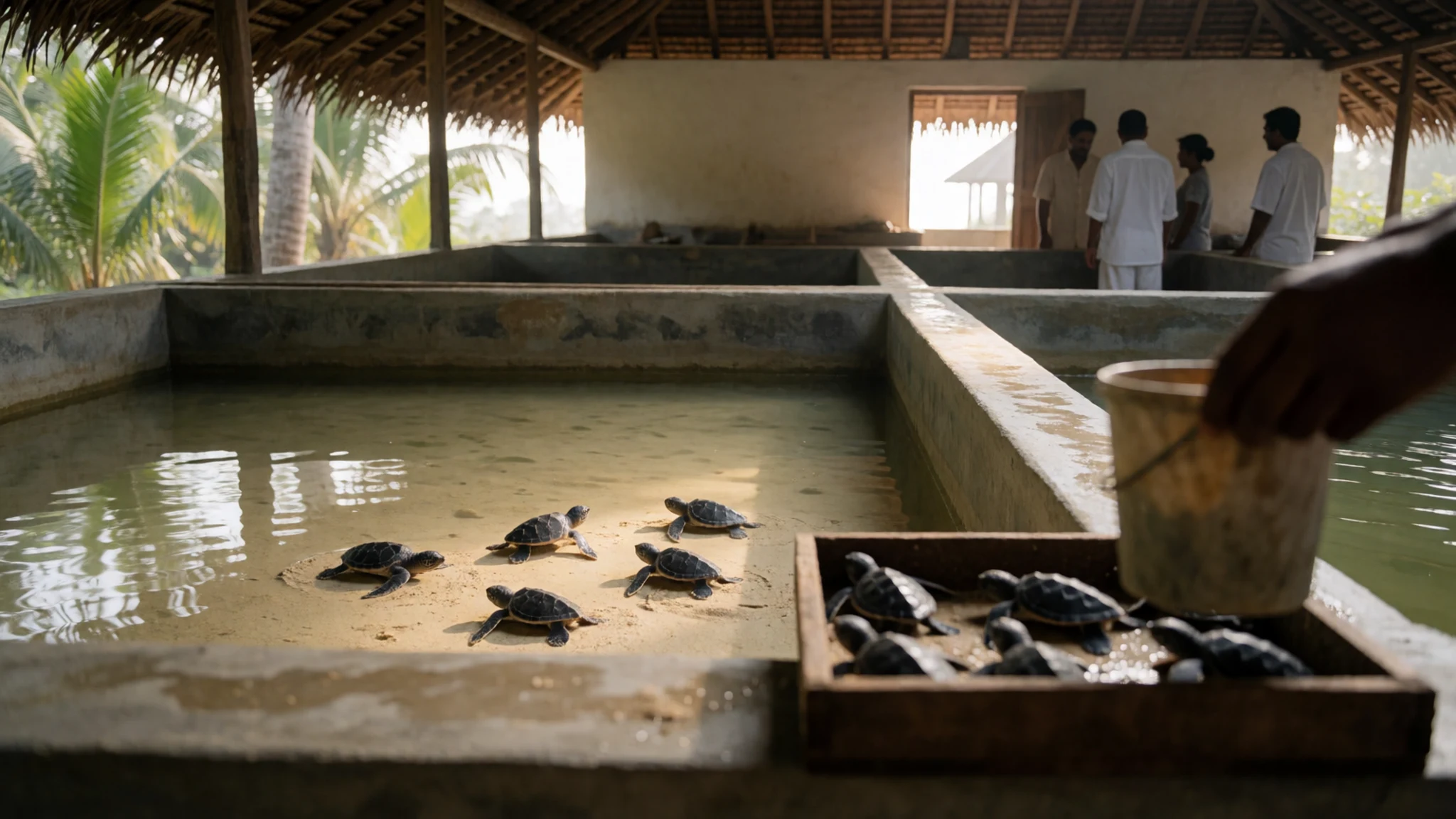
- Brief Garden — Inland from Bentota
About 11 km inland, this house and garden was made by the Sri Lankan landscape architect Bevis Bawa, older brother of the architect Geoffrey Bawa. He began it in 1929 on a former rubber plantation and kept shaping it until his death in 1992. It is a shaded, slow-paced half-day outing.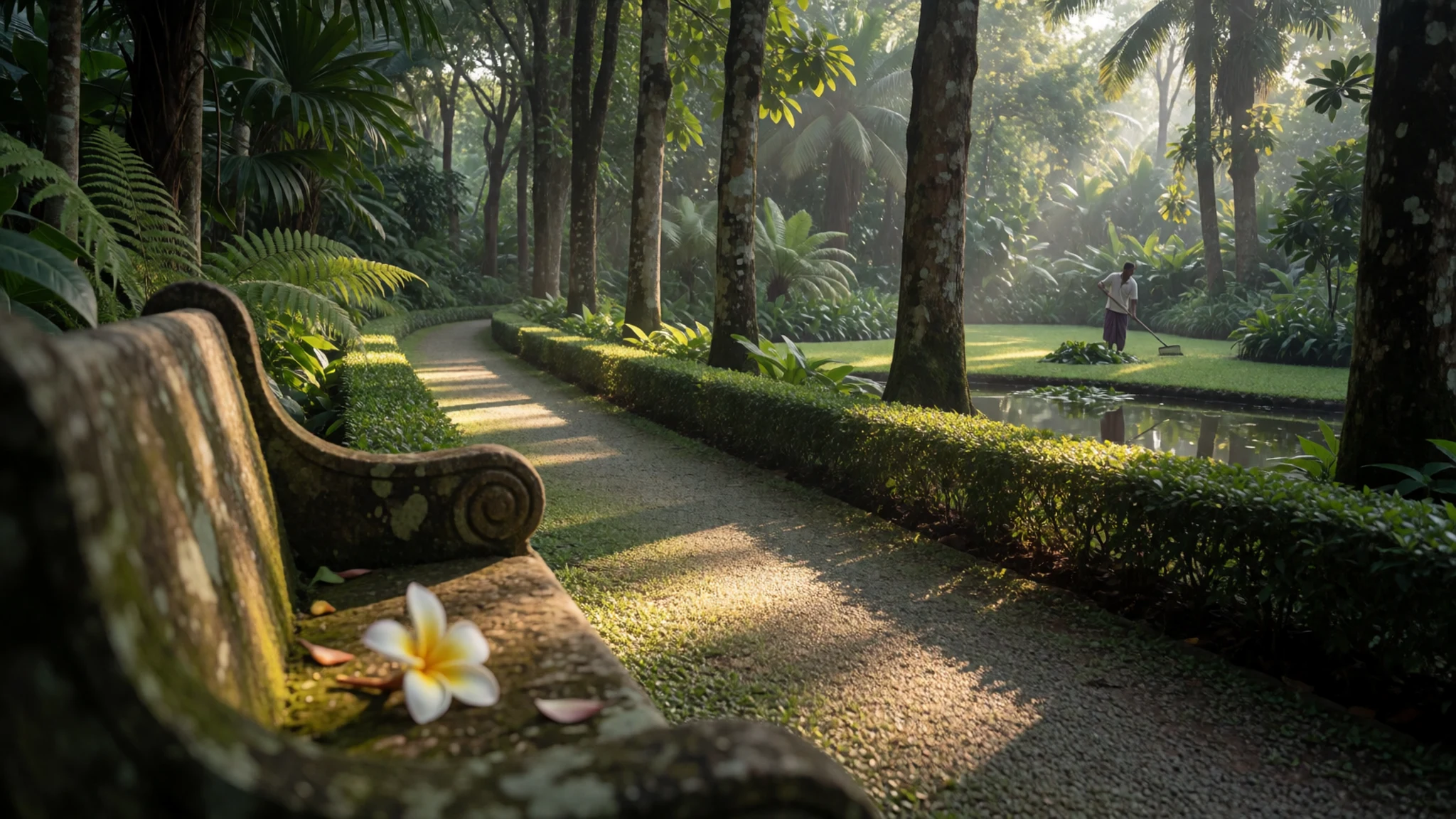
Culture
Bentota is overwhelmingly Buddhist, and that shapes the calendar and the landscape. Temples such as Galapatha and Kande Viharaya are active places of worship with their own routines, and white-clad worshippers bringing flowers and lighting lamps are a common sight, especially on full-moon days. Once a year, at the end of December, the town holds the Bentota Perahera, a procession of elephants, dancers, fire jugglers and musicians that runs late into the night, roughly from 11 pm to 1 am. It is smaller than the great Esala Perahera at Kandy but lively, and locals turn out in numbers. Beyond Buddhism the town has small Muslim, Hindu and Christian communities, and the wider coast has a long history of mixing, from early Sinhala kingdoms to Portuguese, Dutch and British rulers. Everyday life revolves around coconut, fishing and tourism. Toddy, an alcoholic drink made from coconut palm sap, is a local product, and Ayurveda is both a home tradition and a spa business here. Tourism has been part of the town's economy for decades, so most people are used to visitors, though the beach resorts and the village streets behind them can feel like different worlds. Visitors should cover their shoulders and knees at temples, take off shoes and hats before entering, and never pose for a photo with their back to a Buddha statue.
What to wear
In Bentota, as across Sinhala-speaking Sri Lanka, traditional dress means the saree for women and the sarong, called a sarama, for men. Sarees are usually cotton or silk, and many women drape them in the Kandyan style, with a short blouse and a pleated frill at the waist, for weddings and temple ceremonies. Men may wear a white sarong with a white shirt or national dress for formal events. Handloom cotton and batik are the textiles you will see most in local shops. Day to day, people dress for heat and humidity. Women often wear loose cotton dresses, skirts or trousers with a tunic, and men wear shirts with trousers or sarongs at home. Office workers and schoolchildren in Aluthgama wear tidy, light uniforms or smart casual clothes. Beachwear is normal on the sand and by hotel pools, but locals cover up in town and in villages. Visitors should pack light, breathable cotton or linen, plus a hat and sunscreen for the strong sun. For temples bring a scarf or sarong that covers the shoulders and a skirt or trousers that reach below the knee, and wear shoes that slip off easily because they come off at the door. Sandals suit the beach and the estuary, but closed shoes help on muddy garden paths and hatchery steps after rain.
What to eat
- Rice and curry — Small local eateries along the coast road and in Aluthgama
The everyday meal is a plate of rice with several small curries, typically a fish or chicken curry, a dal, a vegetable or two, and a coconut sambol. Eat it at any small local eatery along the coast road, where the spread changes with the day's market.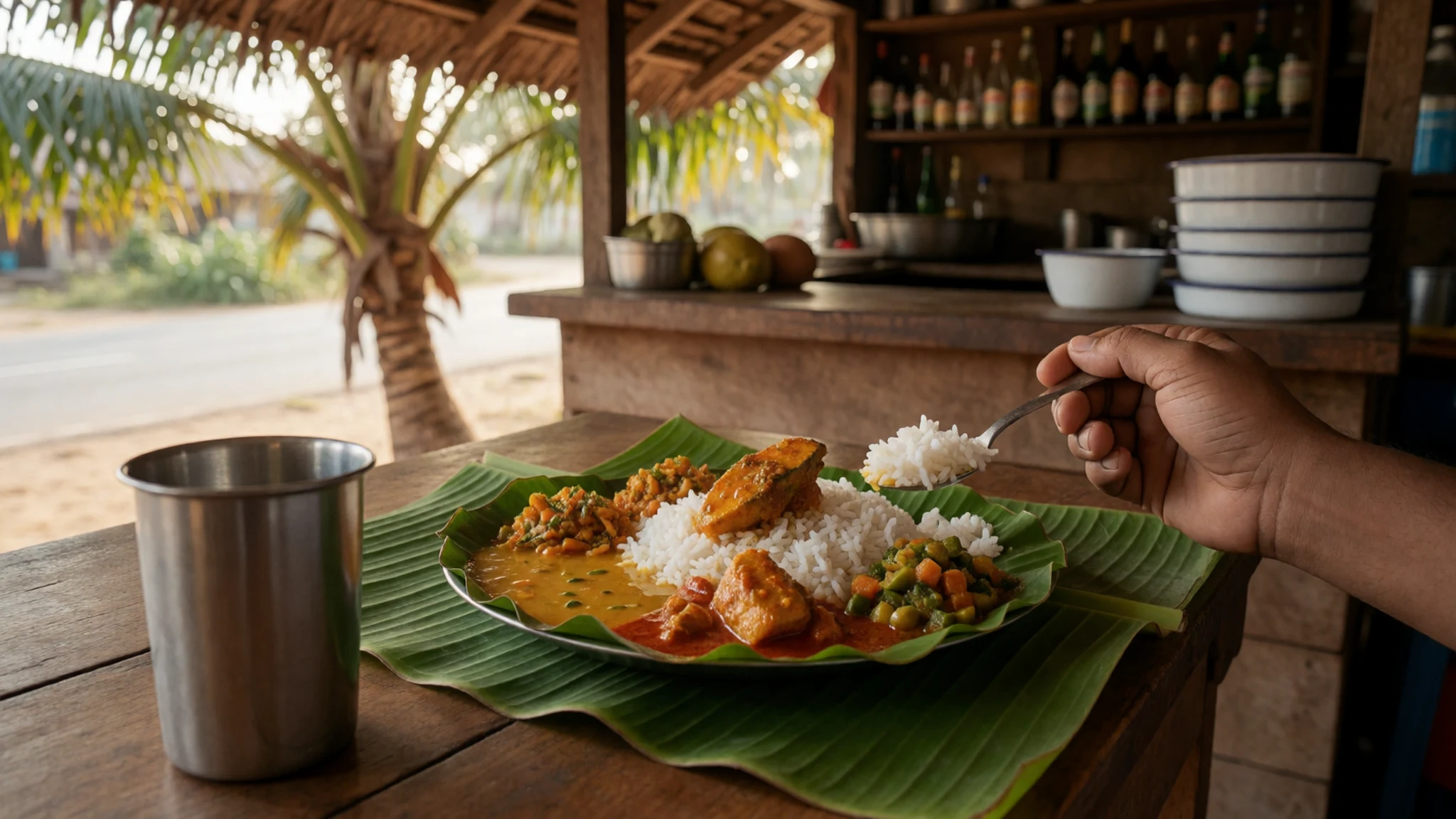
- Hoppers and string hoppers — Morning and evening stalls and simple eateries in Aluthgama
Hoppers are bowl-shaped pancakes of fermented rice flour and coconut milk, crisp at the edge and soft in the centre, often with an egg. String hoppers are steamed rice-flour noodle nests eaten with curry and sambol. Both are mainly breakfast and early-evening foods.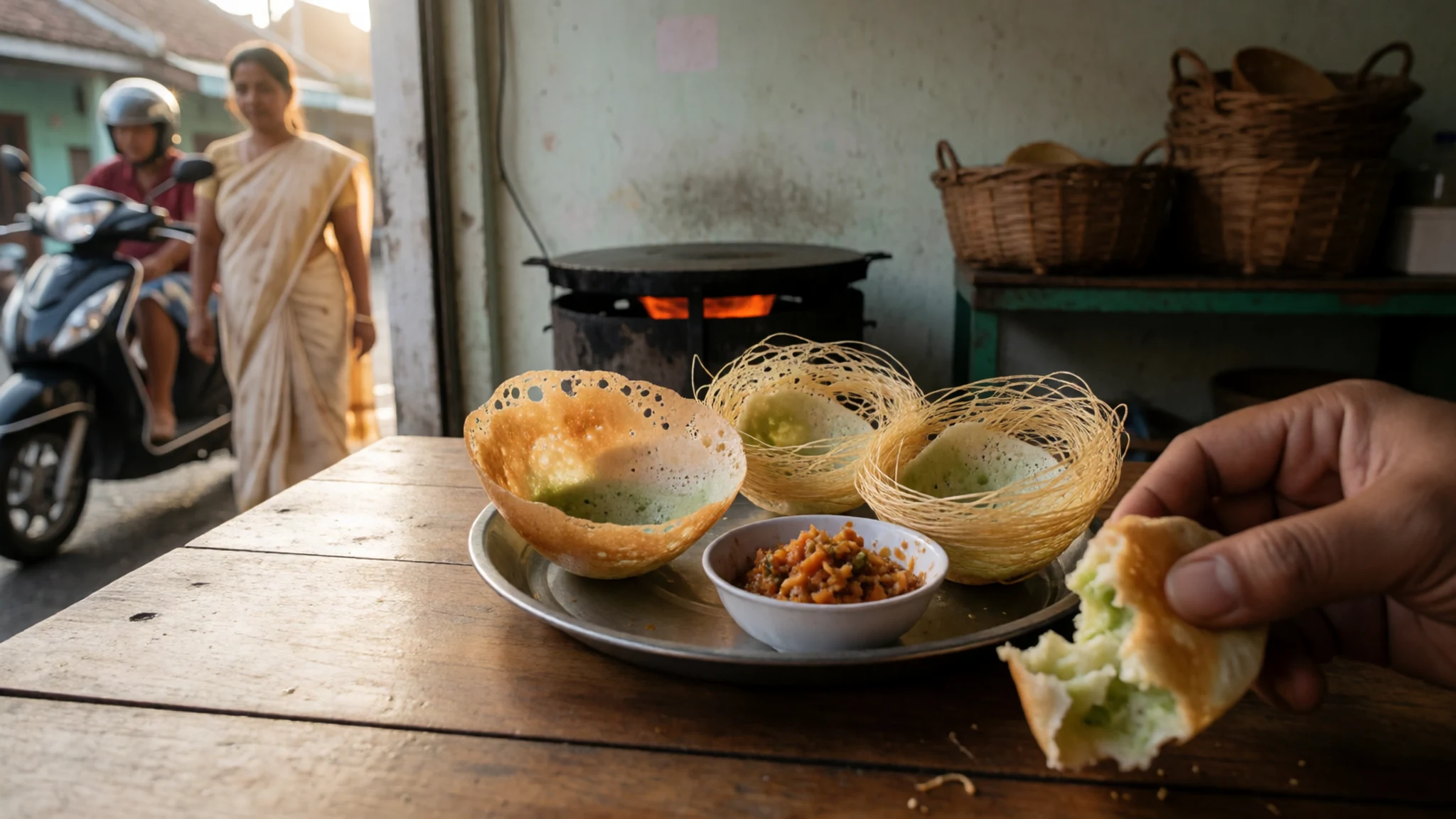
- Fresh grilled or curried fish — Beach-side restaurants and the fish stalls near the river mouth
With the sea and river mouth so close, fish and prawns are central to the local table. They are grilled over charcoal, or cooked in a spicy, sour curry. Pick what looks freshest and ask how it is cooked before ordering. - Kottu roti — Street eateries and small roadside shops in the evenings
Flatbread chopped on a hot griddle with vegetables, egg and spices or meat, the clatter of the blades announcing it from the street. It is a filling evening dish, usually eaten from a plate with a side of gravy. - Toddy — Licensed toddy sellers and taverns in the surrounding villages
Toddy is a lightly alcoholic drink made from the sap of the coconut palm, and Bentota is known for producing it. Fresh toddy is mildly sweet and turns sharper as it ferments. Try it only from a licensed, reputable seller and in small amounts first.
Plan it
Best time. December to March is the usual choice for the south-west coast, with drier weather and calmer seas. April brings extra heat, and the south-west monsoon from about May to September means rain and rougher water. It is hot and humid all year.
How long. 2–4
Getting there. Fly into Colombo's Bandaranaike International Airport, then take the coastal railway south from Colombo Fort to Aluthgama, about 2 km from Bentota, and finish with a short tuk-tuk ride. Air-conditioned buses on the Colombo Fort to Galle route also stop at Bentota and take around 2 to 2½ hours. Check current timetables and fares with the railway and bus operators.
Budget. mid
Tips
- Book beach resorts well ahead for the December to March season, especially around Christmas and New Year.
- Do beach walks, temple visits and estuary trips early in the day to avoid the midday heat.
- Carry some cash for small eateries, tuk-tuks and temple donations, as cards are not accepted everywhere.
- Drink bottled or properly filtered water and use sunscreen and a hat, as the sun is strong year-round.
- Check sea conditions and flags before swimming, particularly in the monsoon months.
Etiquette
- Cover shoulders and knees and remove shoes and hats before entering any temple.
- Ask before photographing people, and avoid posing with your back to Buddha statues.
- Treat turtle hatcheries as conservation projects and follow staff instructions around the tanks.
Nearby
Sources
- Wikidata Q4890663 (CC0)
- Wikipedia: Bentota (rev 1377115290) (CC BY-SA 4.0)
- Wikivoyage: Bentota (rev 5394901) (CC BY-SA 4.0)
- Photo 01-turtlesnesting.jpg, Pufacz (Public domain)
- Photo 02-sri-lanka-bentota-beach-2.jpg, Vincent van Zeijst (CC BY 3.0)
- Photo 03-sri-lanka-bentota-railway.jpg, Vincent van Zeijst (CC BY 3.0)
- Photo 04-robinson-r44-skylark-at-bentota.jpg, Miniace (CC BY 3.0)
- Photo 05-bentota-estuary.jpg, Miniace (CC BY 3.0)
- Photo 06-500px-photo-56743530.jpg, Mahesh Gudladona (CC BY 3.0)
- Photo 07-bentota-banner.jpg, Saman Villas Bentota (CC BY-SA 4.0)
- Photo 08-bentota-beach-panoramio-1.jpg, Pavan Lulla (CC BY 3.0)


Wildlife
- Olive ridley sea turtle (animal)
The olive ridley is a small sea turtle, among the tiniest of its kind yet the most plentiful, roaming warm seas across the Indian, Pacific and Atlantic oceans. Along this coast you can meet them at hatcheries, such as Kosgoda to the south and Induruwa, where eggs and young turtles are looked after until they go back to the sea. Visit with a guide, keep your voice low, stay gently back from the eggs and little ones, and never feed them.