Dambulla cave temple
Dambulla cave temple, Sri Lanka
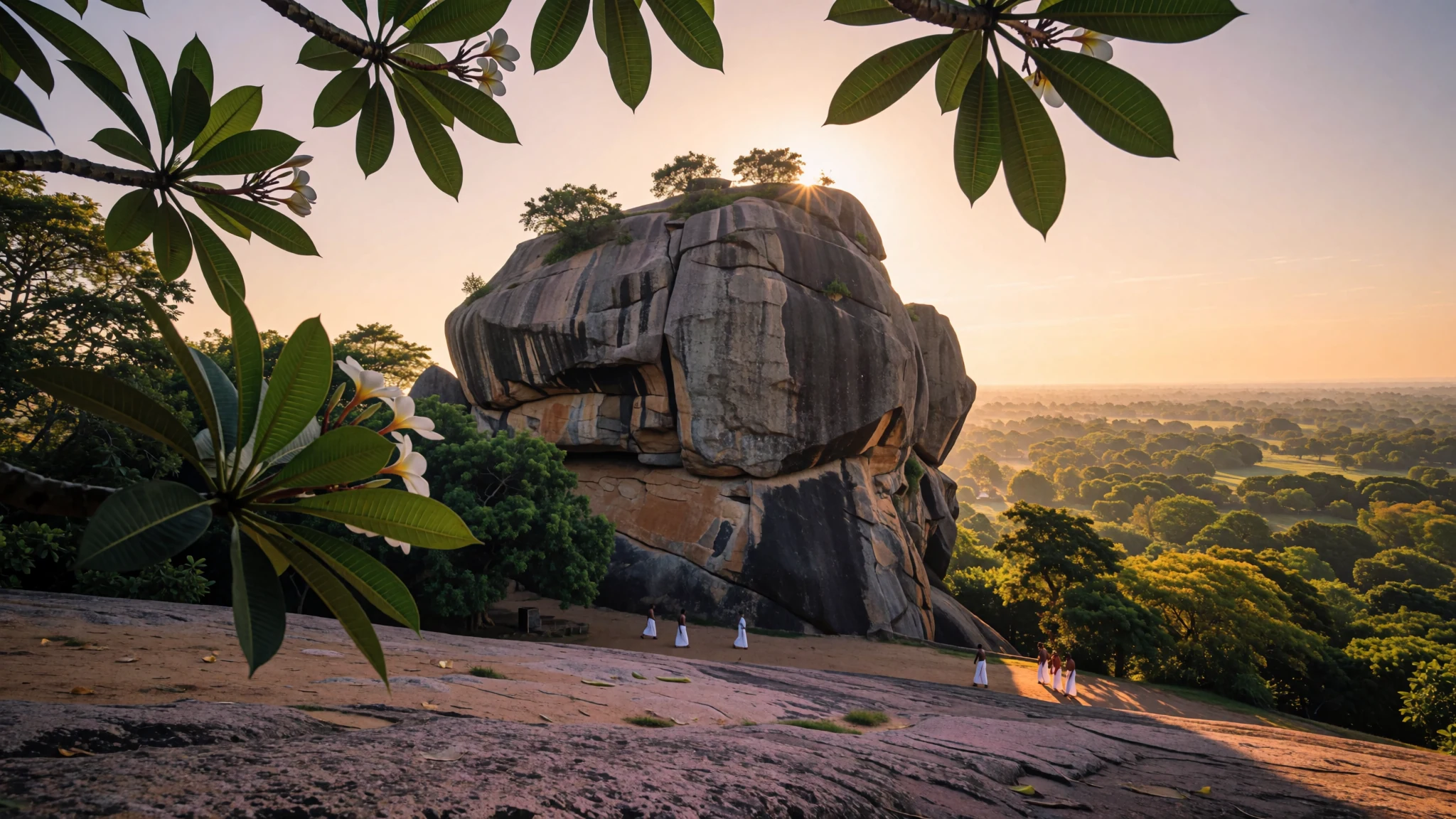
Dambulla's rock-cut caves hold painted ceilings and 153 Buddha statues beneath a 160 m rock, best seen in the cool early morning.
The place
Dambulla cave temple stands in the central part of Sri Lanka, about 148 km east of Colombo, 72 km north of Kandy and 43 km north of Matale. It has been a World Heritage Site since 1991, but it remains an active place of worship, so monks, offerings and chanting are part of the scene rather than a performance laid on for visitors. Its main caves are cut into a rock that rises 160 m over the surrounding plains. Dozens of other caves have been recorded in the area, yet the temple's five caves hold nearly all of its statues and paintings.
The paintings and statues describe the life of Gautama Buddha. Inside are 153 Buddha images, three likenesses of island monarchs, and four deity sculptures, including Vishnu and Ganesha. The murals cover 2,100 square metres, and they show scenes such as the demon Mara tempting the Buddha and his first sermon. Many of the ceilings follow the curve of the rock, so the painted patterns seem to bend with the stone.
Because the site is still used for ritual, the rooms can feel busy with worshippers, particularly on full-moon days and public holidays. Tour groups tend to arrive through the late morning, so an early start brings a quieter climb up the steps and a clearer look at the murals. The approach is steep in places and the caves can be warm, so a steady pace and a supply of water make the visit far more comfortable.
Its story
Dambulla cave temple has roots that reach back to the first century BCE, when the caves beneath a large overhanging rock were first adapted for monks. A groove cut along the overhang sheds rainwater away from the walls, which helped keep the interiors dry and the paintings intact. In 1938 the entrances were given arched colonnades and gabled fronts, a change that gave the complex the look most visitors see today.
Tradition credits King Valagamba of Anuradhapura with turning the caves into a temple. He had been driven from his capital by South Indian usurpers and spent 15 years in hiding here. Once he regained his throne, he built the temple as an act of thanks. Subsequent kings expanded the site. By the 1000s CE, the caves were a major place of devotion, and people have kept worshipping there ever since.
In 1190 Nissanka Malla of Polonnaruwa had the caves gilded and placed a large number of additional Buddha statues in them. In the 18th century the Kingdom of Kandy restored the caves and repainted their walls. Kandy was the last independent Sinhalese kingdom, and it held out against Portuguese and Dutch attempts at conquest for generations before falling to the British in 1815. The temple outlasted that political change and is still in use.
Earlier still, people lived in these caves before Buddhism arrived on the island, and burial remains from that period have been found nearby at Ibbankatuwa. The complex therefore carries layers of use across many centuries, from prehistoric shelter to royal patronage to modern pilgrimage.
What to see
- The rock and the cave entrances — Matale District, central Sri Lanka
The rock rises 160 m above the plains, and its caves open in a line beneath a broad overhang. The approach is by a stepped path from the car park, and it is worth stopping at each entrance rather than rushing to the top. From the base the reason for the choice becomes clear: the overhang keeps rain off the walls, which is why the interiors have survived so long.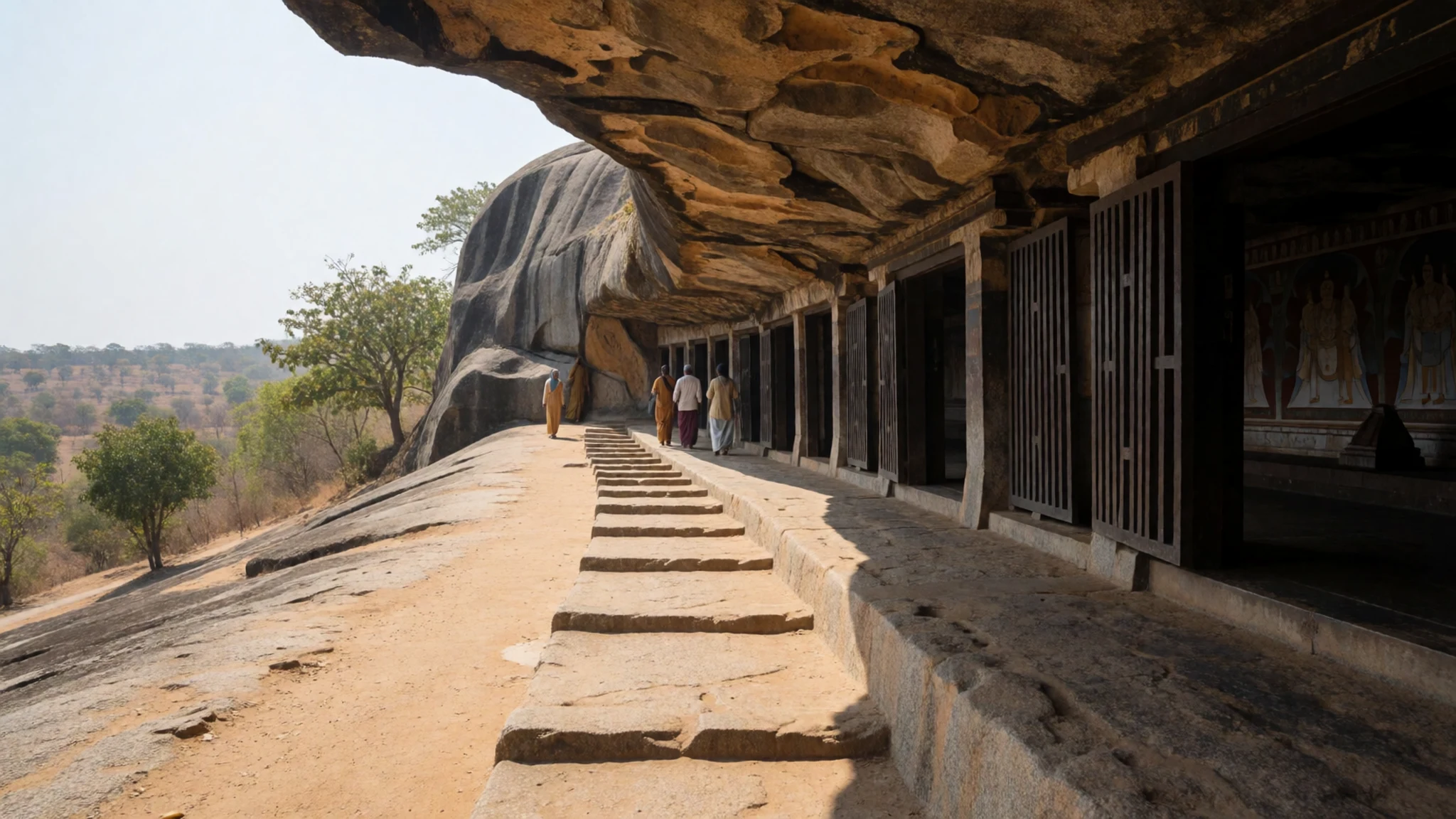
- The reclining Buddha — Inside the main cave complex
A large reclining Buddha lies in one of the caves, shown at rest on his right side. Its scale and smooth surface draw the eye as soon as the visitor steps inside. Quiet is expected here, and people often sit on the cave floor for a few minutes before moving on to the next chamber.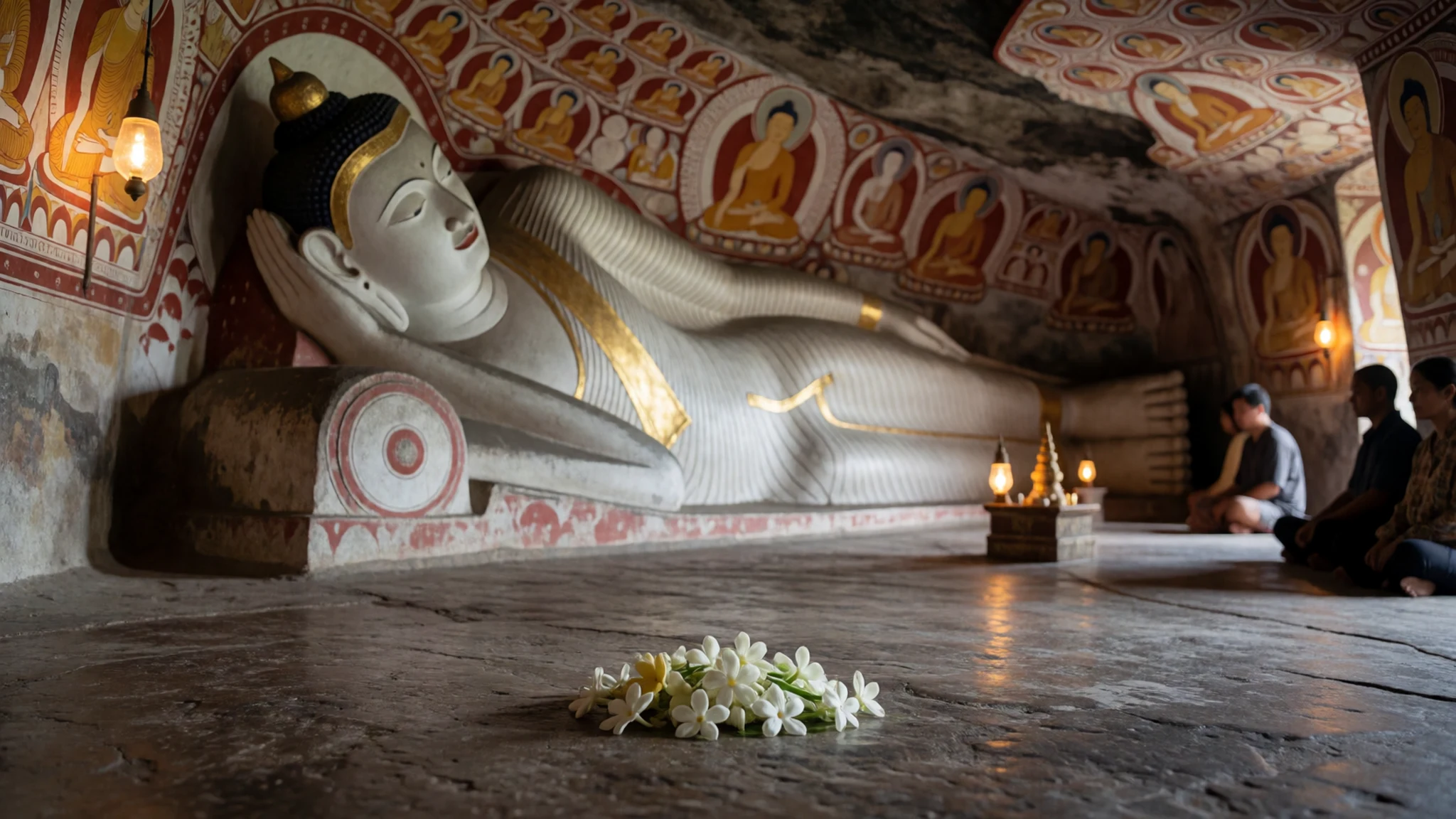
- Rows of Buddha statues — Inside the main cave complex
The complex holds 153 Buddha statues in total, which makes the caves feel crowded in the best sense. Many are seated and some stand in niches cut into the rock. Walking the full circuit slowly lets you notice the differences in posture, gesture and the carved detail around each figure.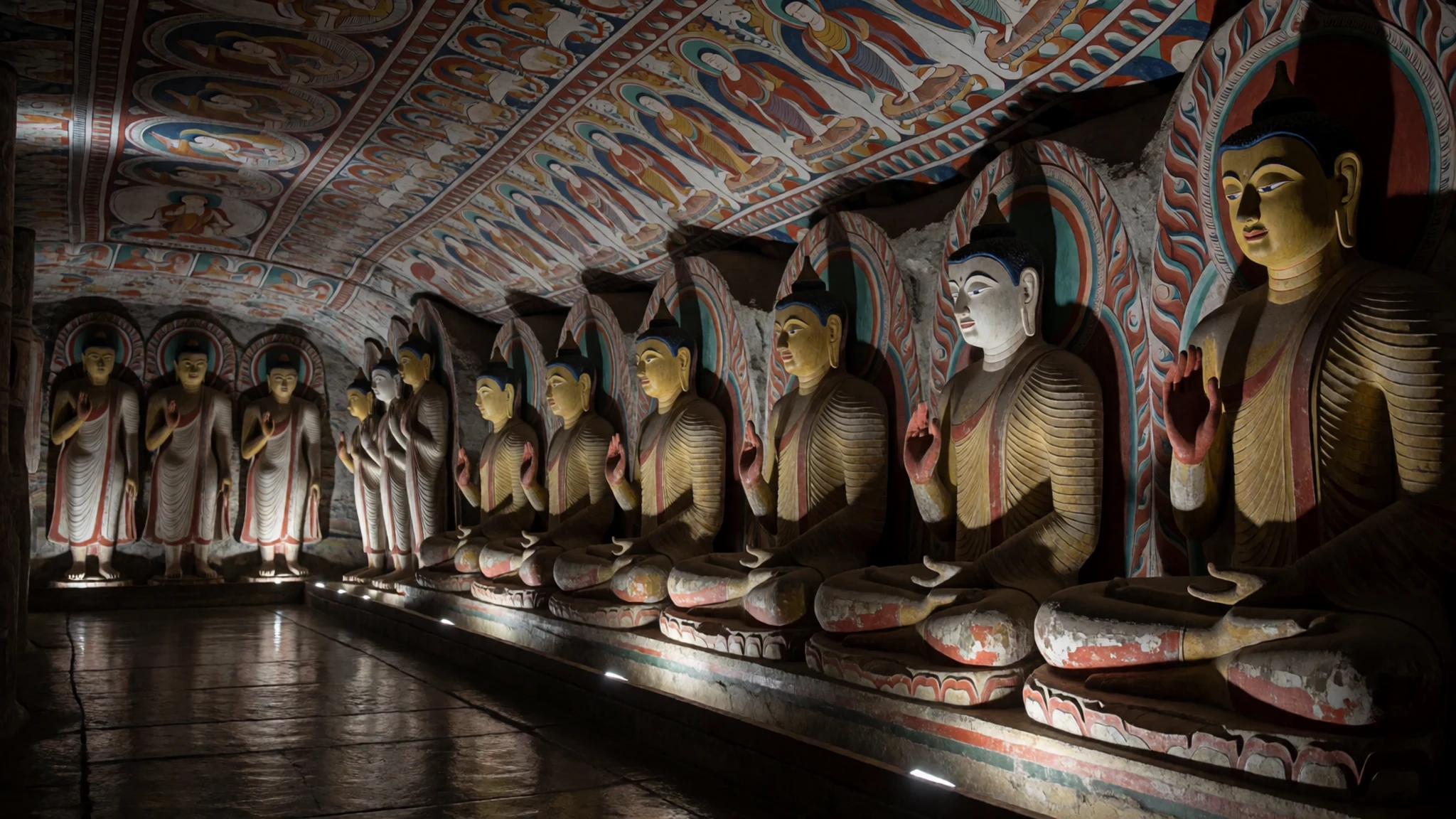
- The stupa and seated Buddhas — Dambulla temple complex
A stupa stands within the complex, with seated Buddha figures arranged around it. Stupas are solid, dome-shaped monuments that mark sacred ground, and this one is a focus for offerings and quiet devotion. The surrounding area is a good place to sit and watch worshippers at their own pace.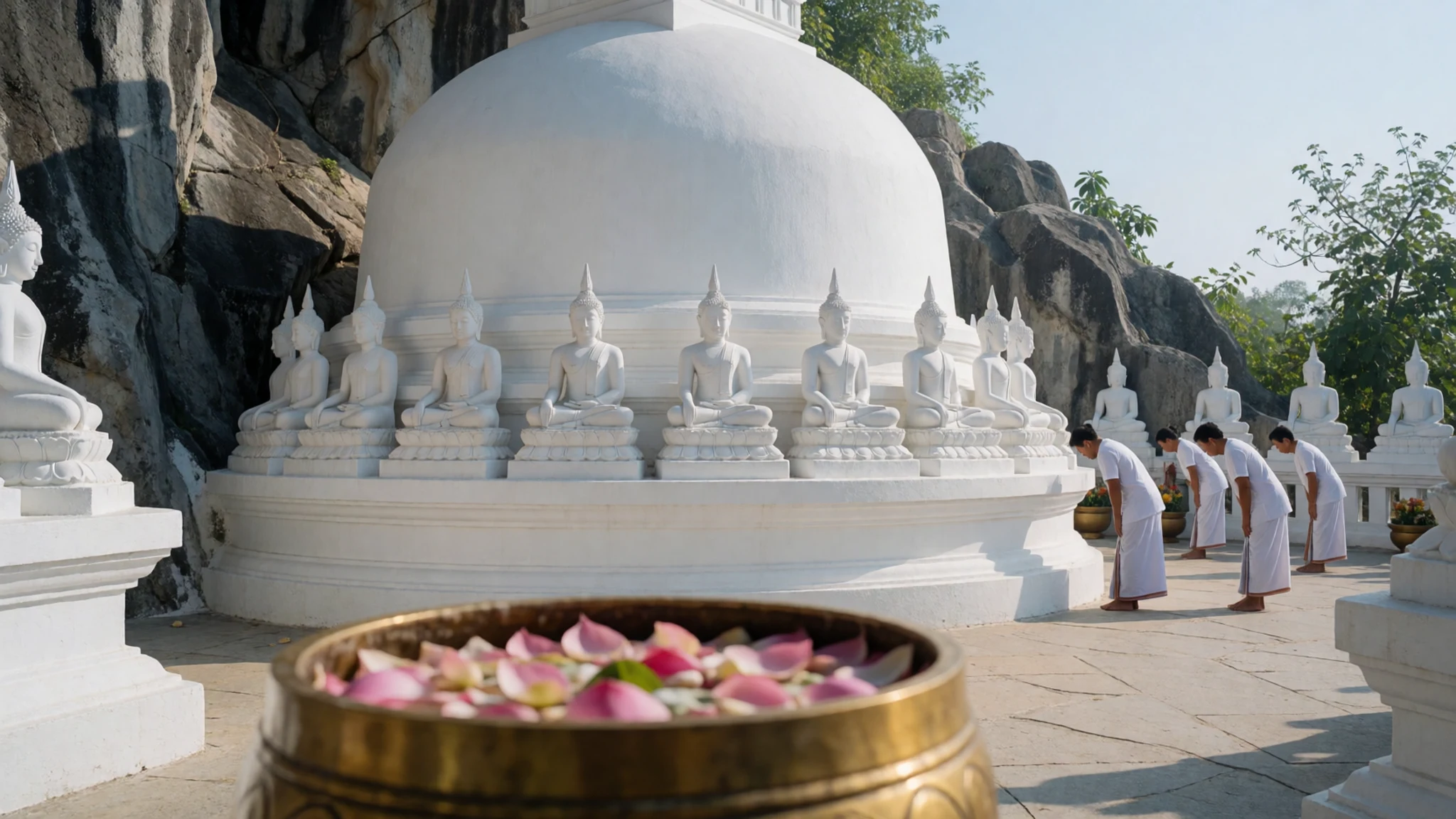
- The golden temple building — Foot of the rock, Dambulla
The golden temple building sits at the foot of the rock and gives the site its popular name, the Golden Temple of Dambulla. Its gilded roofline is the first thing many visitors see as they approach. Photographs from the forecourt capture it well in the early morning, before the tour groups arrive.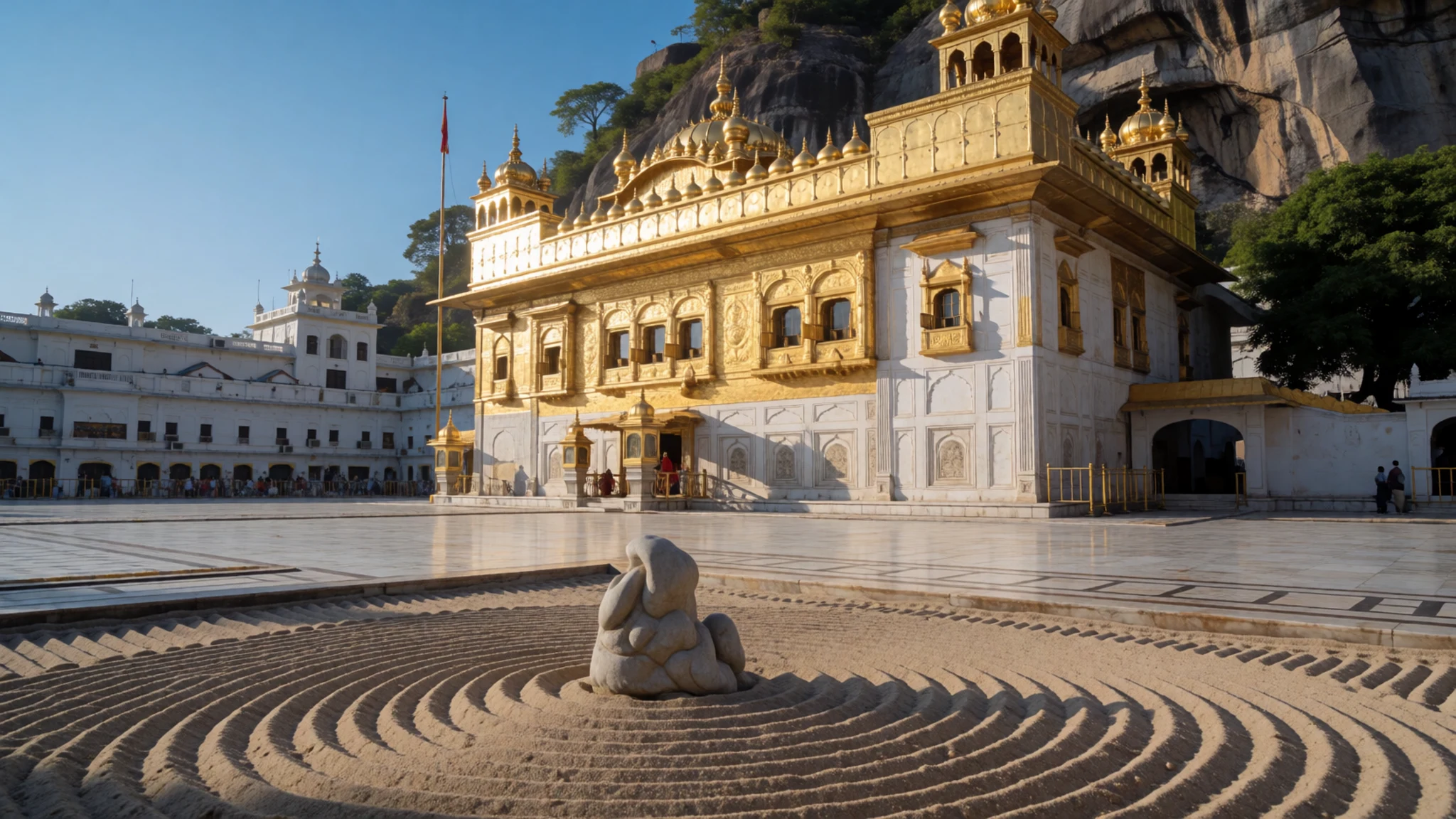
Culture
Dambulla is still a working Buddhist temple, and the caves are used for daily worship as well as for visits. The murals and statues are cared for under a long-running conservation effort that began in the 1960s and was later carried out with UNESCO and the Cultural Triangle Project. Much of the work has focused on keeping the existing layout intact, while improving paths, paving and lighting for visitors. Because the site is sacred, behaviour matters as much as appearance. Monks and pilgrims often sit quietly in the caves, and voices should be kept low. Photography is generally welcome, but flash can damage old paint, so switch it off and avoid touching the murals. Shoes must be removed before entering the caves, and visitors should keep their feet pointing away from the Buddha images. Shoulders and knees should be covered, so carry a light scarf or wrap that you can use as a shawl at the door. Hats should come off inside, and visitors should step back if a worshipper is praying in front of a statue. Any small offering can be left at the designated spots rather than on the statues themselves. Above all, remove your shoes at the foot of the stairs before you climb.
What to wear
Dambulla's dress tradition is the same as much of Sri Lanka's, with the sarong and the sari as the main garments. Men traditionally wear a sarong, a long piece of cloth wrapped around the waist and falling to the ankles, often in cotton. Women more often wear the sari, a length of fabric draped over a fitted blouse and petticoat, with cotton and silk the common materials, though many weave variations exist. Dress for religious and rural settings is still modest by convention.
In everyday life across the region, people mix traditional and modern clothing. Men commonly wear trousers and shirts, while sarongs are seen at home, in the countryside and at temples. Women may wear salwar kameez, skirts with blouses, or saris for special occasions and religious events. White is a common colour at temples, so it is a familiar sight in the crowd.
A visitor should choose light, loose clothing that covers the shoulders and knees, since the heat in the caves and the surrounding plains is intense. Sandals or shoes that slip off easily are the most practical choice, because footwear must be taken off at the cave entrances and the stone steps can be hot. A lightweight scarf is useful for covering shoulders at the temple door, and a sun hat helps on the climb to the caves.
What to eat
- Rice and curry — Local eateries on the main roads near Dambulla
Rice and curry is the staple meal of Sri Lanka and the easiest way to eat like a local near Dambulla. A plate of steamed rice comes with several small dishes of vegetable, lentil, fish or chicken curry, plus sambol. The best examples are served in homely eateries along the main roads, where the dishes change daily.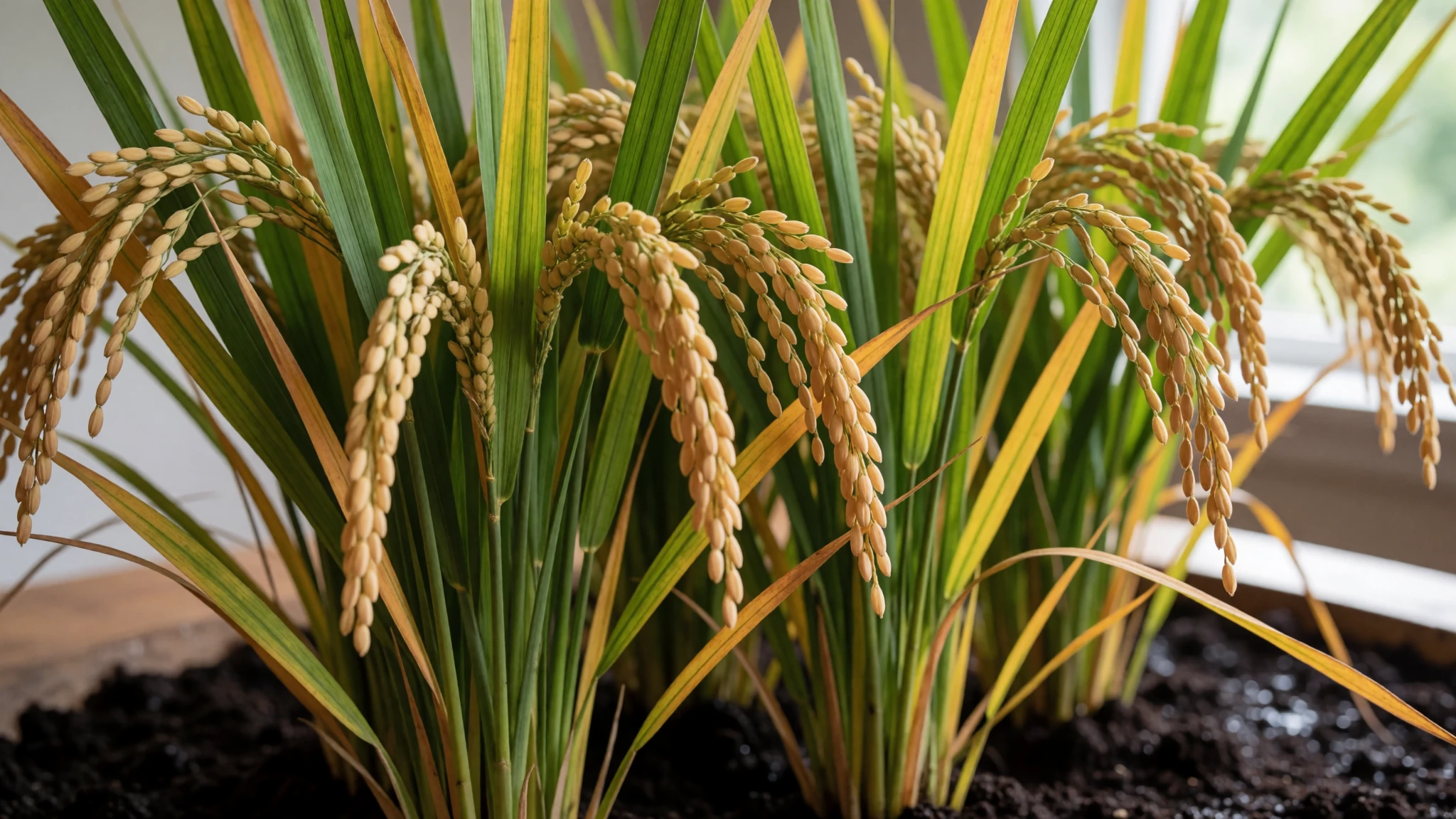
- Kottu roti — Evening street stalls in Dambulla town
Kottu roti is shredded flatbread stir-fried on a hot griddle with vegetables, egg or meat and spices. The chopping sound of the metal blades is part of the experience. It is usually served late in the evening, and it is filling enough to be a full meal on its own.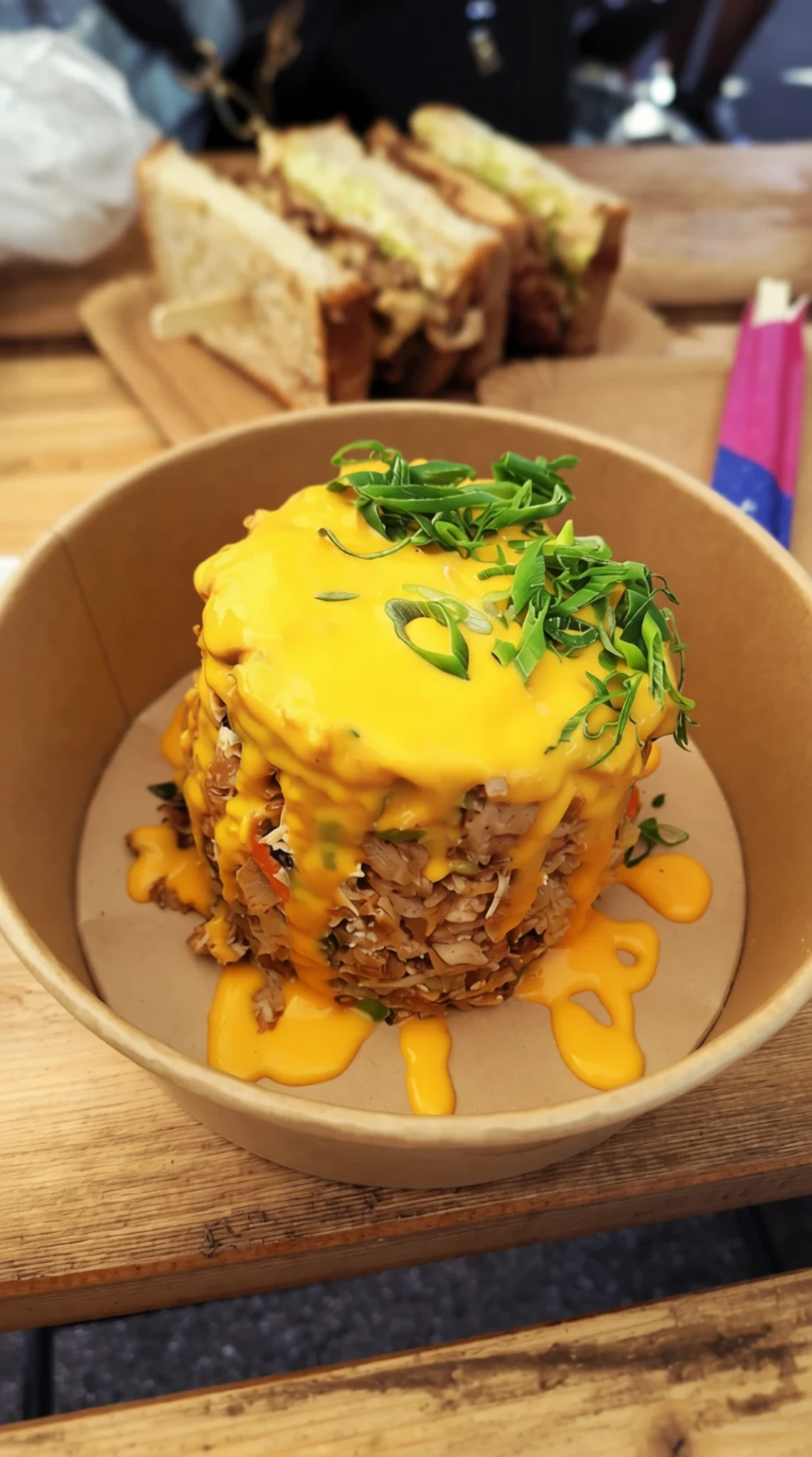
- Hoppers and string hoppers — Morning food stalls and small breakfast eateries
Hoppers are bowl-shaped pancakes made from fermented rice batter, often served with an egg cracked into the centre. String hoppers are pressed rice noodle nests, usually eaten with curry and coconut sambol. Breakfast is the best time to find them freshly made. - Buffalo curd with treacle — The morning market and rural eateries
Buffalo curd is thick, tangy yoghurt made from buffalo milk, usually topped with kithul treacle, a dark palm syrup. It is a classic dessert, and it appears on the menu at many small rural eateries. Look for it at the morning market, where local dairies bring fresh pots. - Ceylon tea — Roadside tea stalls and the eateries near the temple
Ceylon tea is grown in the central highlands and is served strong and sweet in cups at roadside stalls. A cup is a quick way to take a break after the climb. Tea shops near the cave entrance and in the town are where most people stop for a drink.
Plan it
Best time. The drier months, roughly January to March and July to September, are generally the most comfortable for the dry-zone plains around Dambulla. April and May can be very hot, and the monsoon-influenced months bring heavier rain. Check current forecasts before you travel.
How long. 1–2
Getting there. Colombo is about 148 km away, and Kandy is about 72 km south. Scheduled helicopter and light aircraft services from Colombo serve Sigiriya Airport (GIU), mostly. Kandy is very well connected to Colombo by train, and the last leg to Dambulla is by road from Kandy or Matale.
Budget. low
Tips
- Start before the tour groups arrive, usually in the late morning
- Carry cash in small notes for the entrance and for small offerings
- Bring water, since the climb and the caves are warm
- Check the official site for current opening times before you set out
Etiquette
- Remove shoes before entering any cave
- Cover shoulders and knees and keep voices low
- Do not touch the murals or point your feet at the statues
Nearby
Sources
- Wikidata Q45690 (CC0)
- Wikipedia: Dambulla cave temple (rev 1366943089) (CC BY-SA 4.0)
- Wikivoyage: Central Province (Sri Lanka) (rev 5181846) (CC BY-SA 4.0)
- Photo: Dambulla-buddhastupa.jpg, Lankapic (CC BY 3.0)
- Photo: Dambulla-outside.jpg, Lankapic (CC BY 3.0)
- Photo: Dambulla-buddha.jpg, Lankapic (CC BY 3.0)
- Photo: Sri Lanka - Golden tample off Dambula - Boudha couché, Serge Ottaviani (CC BY 3.0)
- Photo: Sleeping Buddha SLDCT2019 AS, 3point1four1 (CC BY-SA 4.0)
- Photo: Dambulla 01, Bernard Gagnon (CC BY-SA 1.0)
- Photo: Golden temple dambulla, Photnart (CC BY 3.0)
- Photo: Buddha Dambulla 1, Philip Nalangan (CC BY 4.0)


