Bundala National Park
Bundala National Park, Sri Lanka
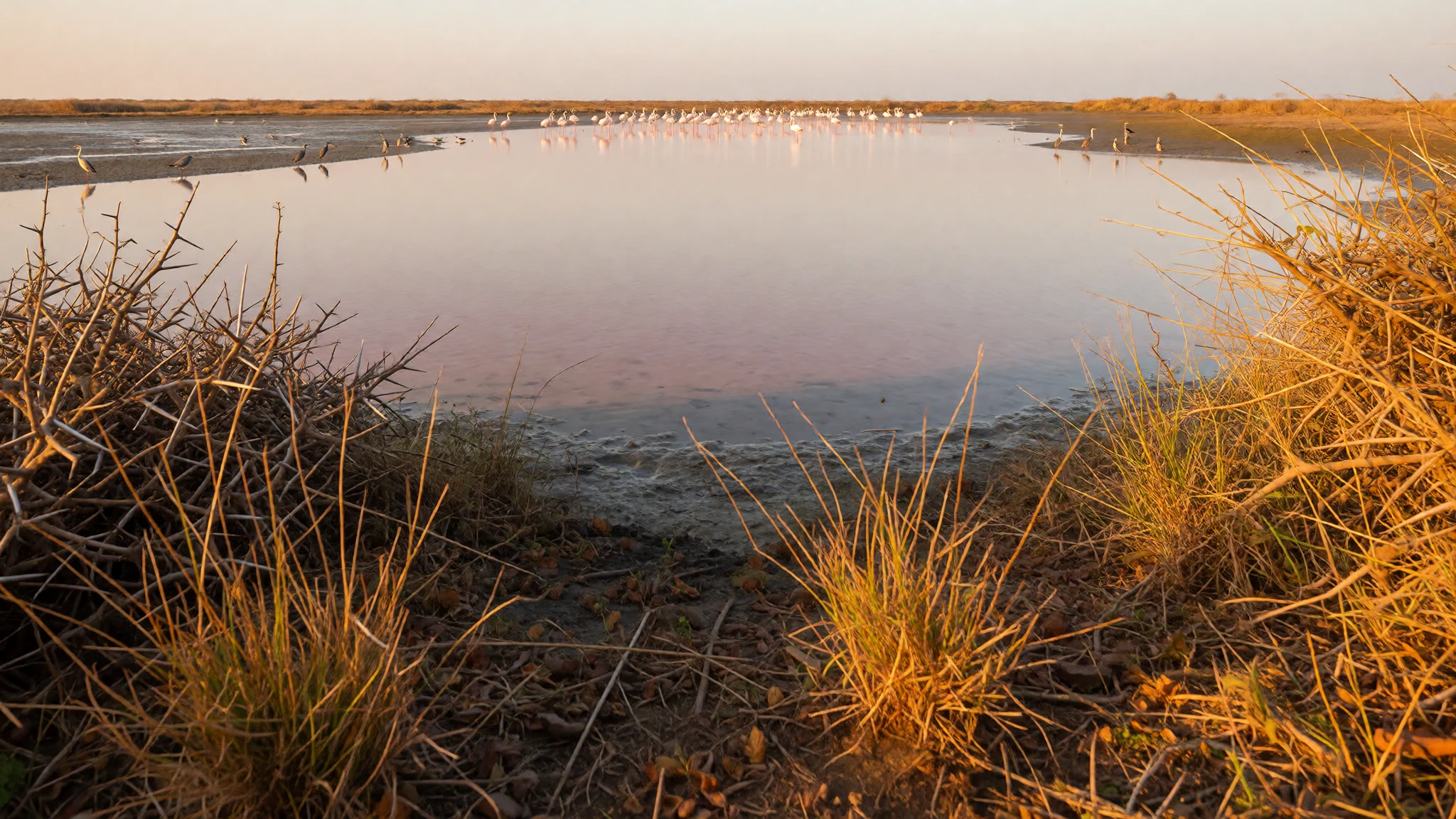
Bundala National Park draws people for its winter lagoons, where greater flamingos and other migratory waterbirds gather.
The place
Bundala National Park occupies a flat stretch of Sri Lanka's southeast coast. The Hambantota river and the Kirindi river bracket it, 245 kilometres southeast from Colombo. Lagoons, salt-tinged flats and thorn scrub make up the ground. Mountains are not the scenery; open water is. Through the northern winter, birds that breed far to the north settle on these shallows, and greater flamingos come in large flocks, showing first as a pink line across a pale lagoon.
The recorded birdlife runs to 197 species, so the day is wider than one famous wader. Herons, terns and small dry-zone birds work the same mud and scrub. Shade is thin, the light turns harsh before noon, and wind off the sea keeps the flats feeling exposed. Kirinda is the nearby coastal settlement, and the low wildlife country continues toward Yala.
On paper, Bundala National Park has carried a Ramsar listing since 1991, the earliest wetland in Sri Lanka to receive one, and a biosphere-reserve title since 2005. Those labels fit a coast where fishing villages and wildlife share a horizon. The national-park boundary itself dates from 1993 and has been redrawn since, so the place is a working wetland with a legal history, not a sealed scenic reserve. Most viewing is from a vehicle on sand tracks, waiting until birds in the shallows separate into species.
Its story
Bundala National Park entered the statute book as a wildlife sanctuary in December 1969, when these lagoons and the scrub around them were reserved for animals as well as for the people who already used the coast. National-park status followed in January 1993, and the block then measured 6216 hectares. That figure did not last. A 2004 gazette shrank that earlier block to 3698 hectares, so a map from before that year and a map from after it do not describe the same ground.
The international notices did not wait for the final boundary. From 1991 the wetland held Sri Lanka's earliest Ramsar designation, already in place while the area was still a sanctuary. UNESCO added a biosphere reserve in 2005, the country's fourth, a title that assumes villages and fishing remain part of the landscape rather than problems to remove. A biosphere listing describes a relationship; it does not, by itself, tell a driver which track is open.
Wilmanna widened the picture in January 2006. Officials then protected an adjoining tract of 3339.38 hectares under the name Wilmanna. Wilmanna sits beside Bundala National Park; it is not a rename of it. Read in order, the paperwork runs sanctuary, Ramsar site, national park, a smaller core, biosphere reserve, neighbouring sanctuary. The migrants, greater flamingos among them, kept using the shallows while those lines moved.
What to see
- Wintering lagoons — Bundala lagoons
Bundala National Park's shallows are where greater flamingos spend the northern winter, often as a distant pink band rather than a bird at arm's length. Large flocks feed in water too soft for a casual walk. Other waders use the same edges. The rewarding view is usually from the track, with time to let one lagoon sort itself into species.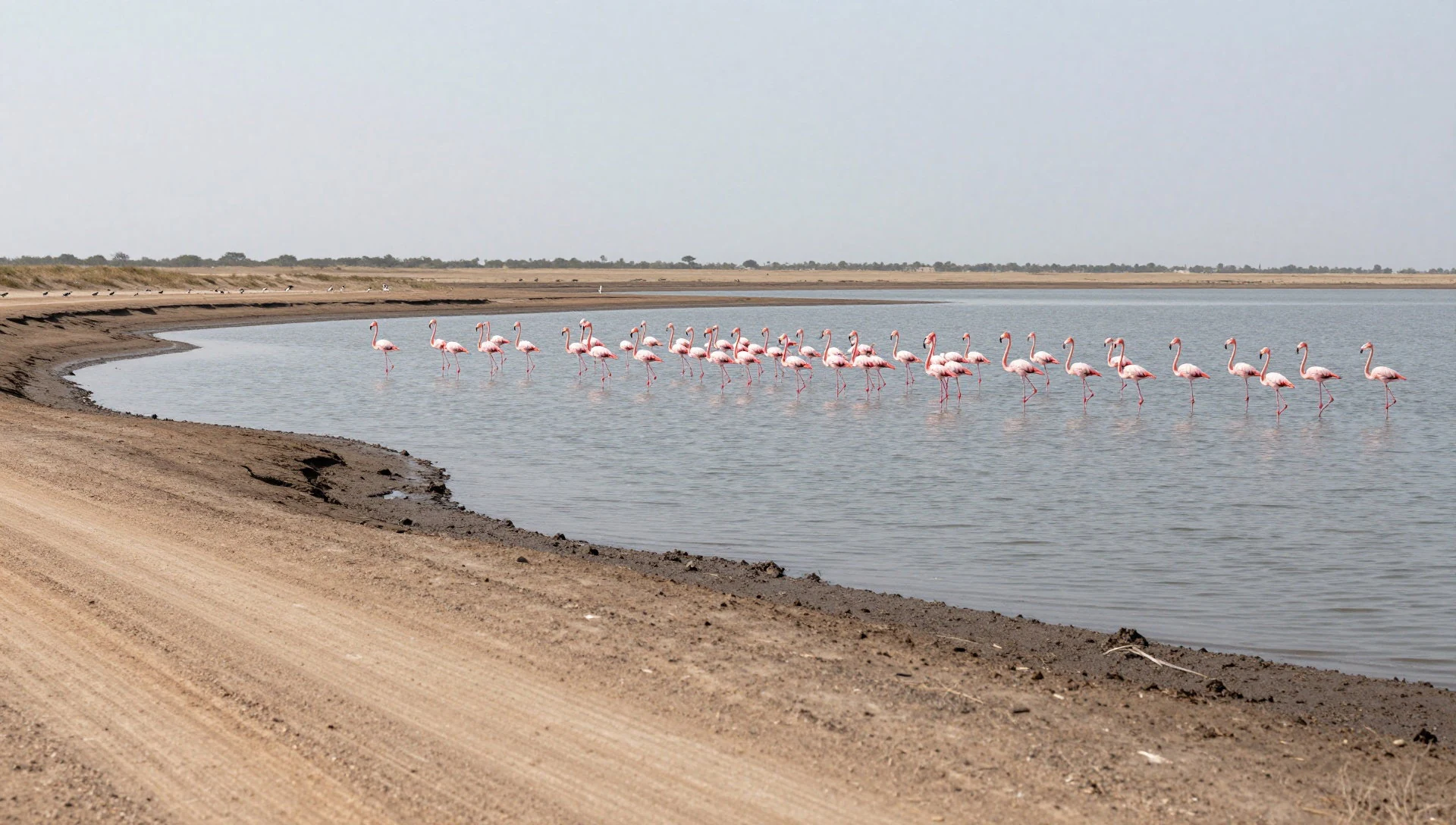
- The two rivers — Hambantota and Kirindi rivers
Two rivers, the Hambantota and the Kirindi, give Bundala National Park its frame, and that pair explains the wetland better than a single landmark would. River water, lagoon water and the sea meet across flat mud. The channels themselves can stay out of frame from a vehicle, while the birds massed on the flats show where fresh and salt water mingle.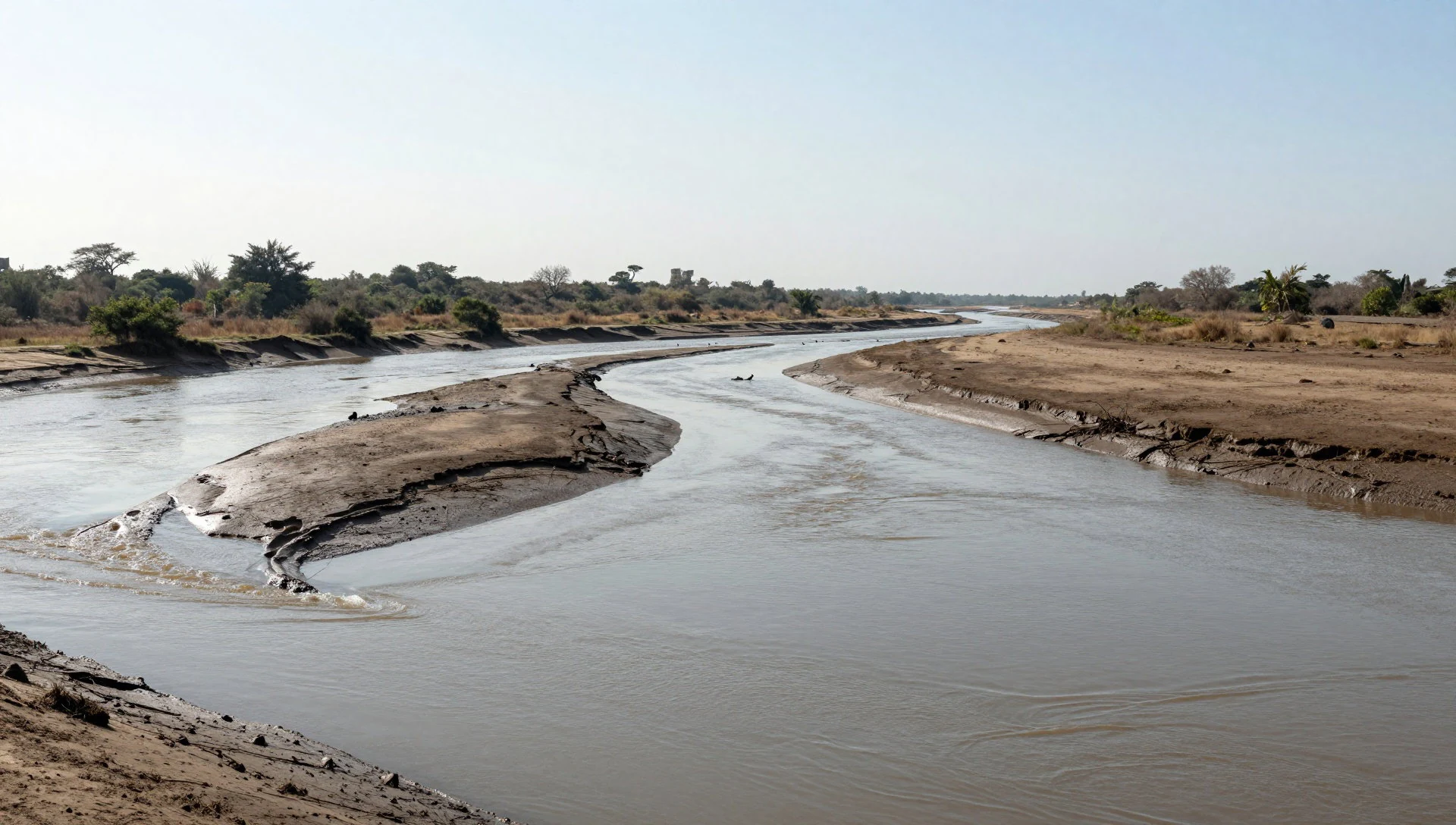
- Kirinda fringe — Kirinda
The Kirinda approach to Bundala National Park is scrub, sand and a wide sky, the look of a coastal wildlife preserve rather than a forest interior. Animals read small against that horizon until they move. The village lies immediately outside, so a park morning and ordinary shoreline life are separated by a short drive and a gate, not by a day of travel.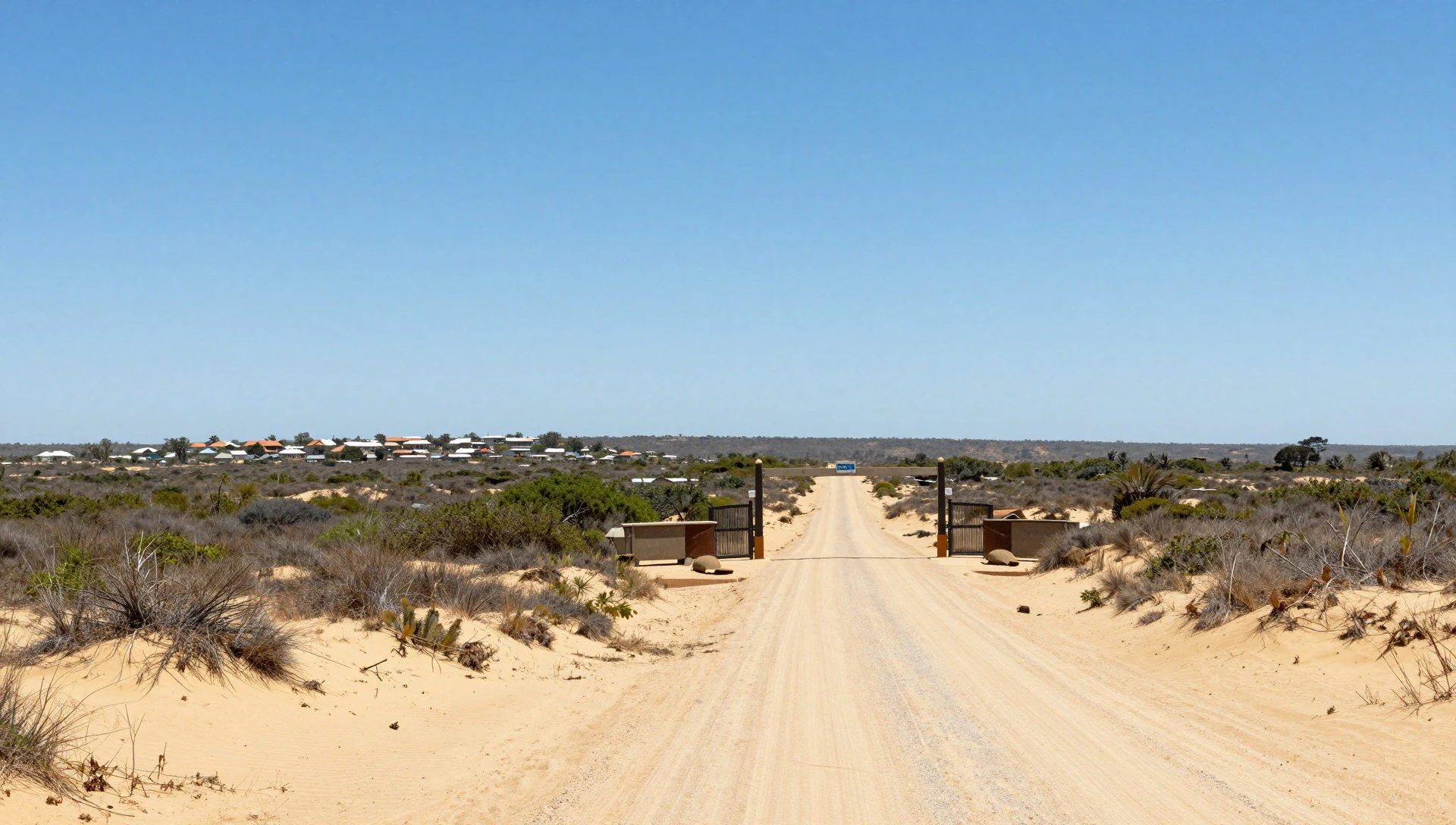
- Wilmanna Sanctuary — Beside Bundala National Park
Wilmanna Sanctuary is the adjoining reserve, given that title in January 2006 and then covering 3339.38 hectares. It is neighbour to Bundala National Park, not a second label for the same gate. The national park had already been reduced in 2004, which is why the two boundaries need a local check before a driver treats every sandy track as included.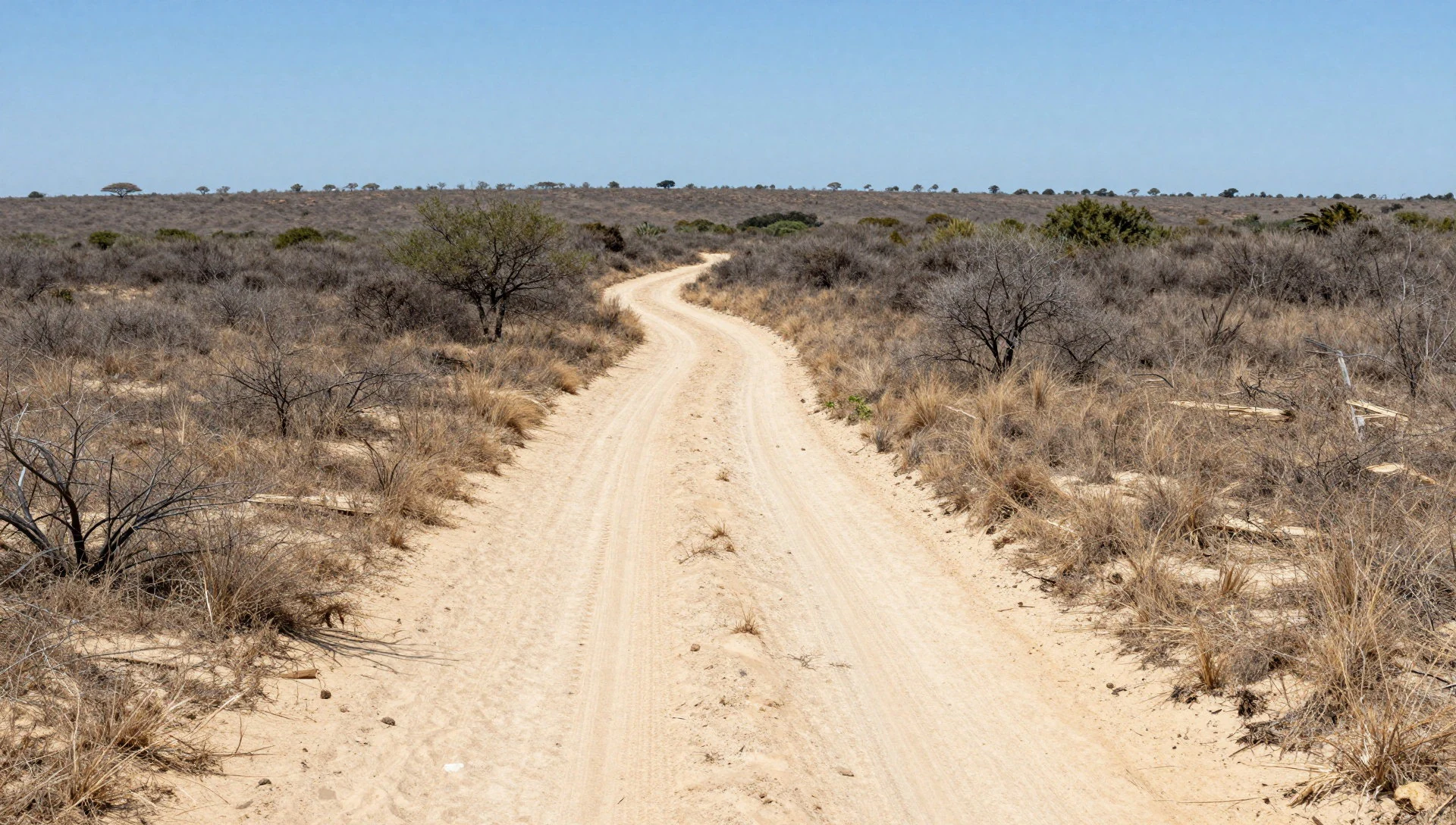
- Dry-zone scrub — Park scrub
Bundala National Park's list runs to 197 bird species, with the greater flamingo as the famous arrival rather than the whole cast. Crows and other dry-zone birds sit in open scrub where a dark shape on a bare limb is easy to see. Waders and herons fill the gaps when the pink flocks are distant. A slow scan beats a rush between photo stops.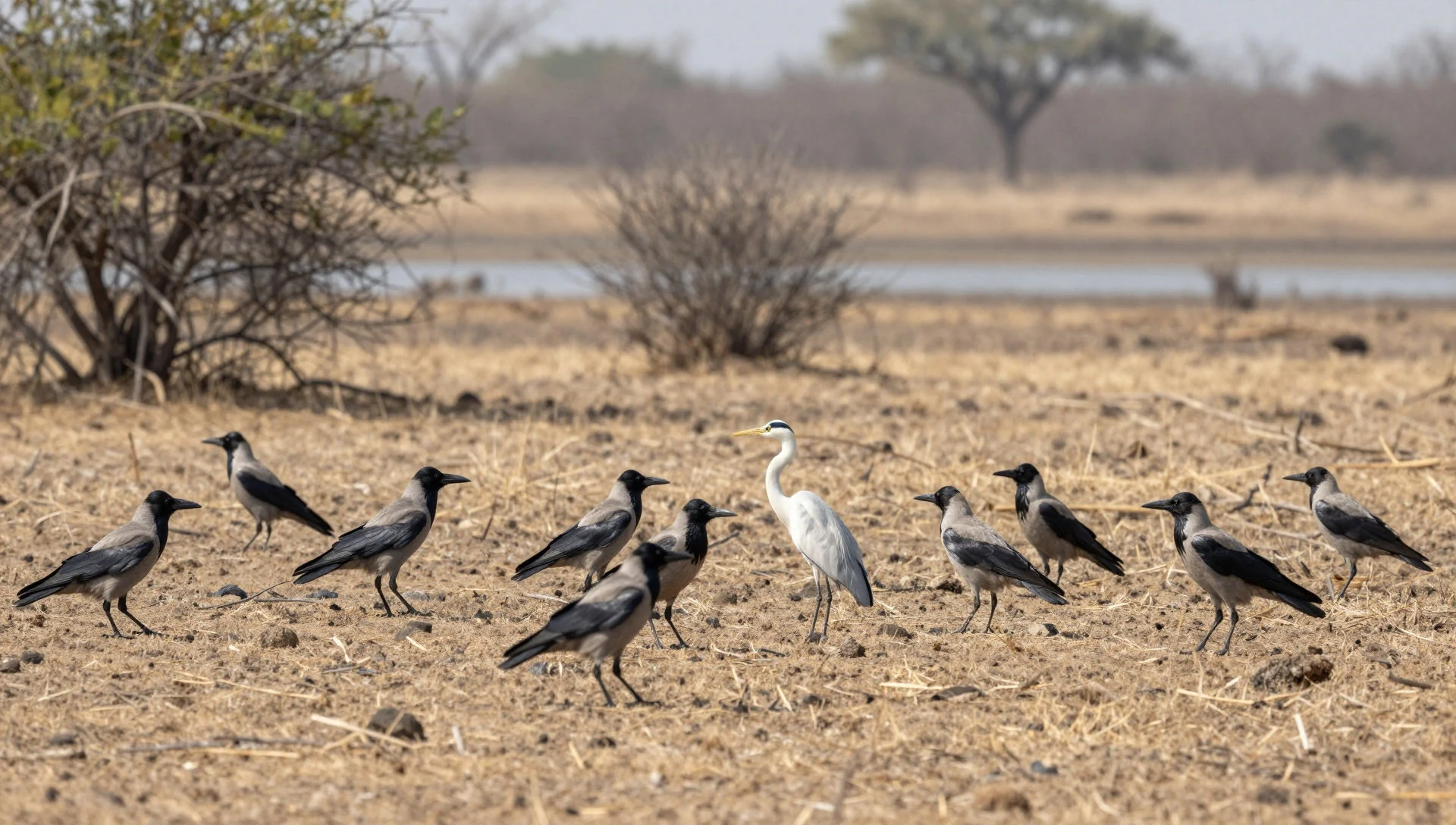
Culture
Bundala National Park belongs to the peopled southeast coast of Sri Lanka. Fishers, village houses and small Buddhist communities share the shore with the lagoons, especially near Kirinda, and the water has long been a workplace as well as a refuge for birds. The Ramsar listing of 1991 and the biosphere reserve of 2005 both assume that overlap: conservation here is a pact with local use, not a story of an empty wilderness. A visit shows the pact in small ways — a boat far out, a path at the boundary, a gate that returns visitors to roadside life in minutes.
Crowding the birds undoes the reason the wetland is known. A vehicle nosing onto the flats, or a group walking out for a closer photograph, can lift a whole flock of wintering migrants. Temple stops nearby follow ordinary Sri Lankan custom: shoes off, shoulders covered, no clowning in front of Buddha images. Dress on this coast stays modest even though the park itself is only sand and scrub.
Stay on the indicated track in Bundala National Park, keep noise down, and do not fly drones or walk into the shallows to chase a photograph.
What to wear
Bundala National Park has no costume of its own; dress is that of Sri Lanka's hot south coast. Traditional cloth is still everyday wear, not only wedding wear. Women use the sari and the redda and hatte — a wrapped cloth with a fitted jacket — usually in cotton or a light synthetic. Men wear the sarong, with or without a shirt, at home and at the temple. Batik and handloom cotton supply a great deal of that cloth, bright for festivals and plain for work.
In Hambantota and Kirinda now, T-shirts, collared shirts, trousers and sandals are the street norm, and a sari or sarong comes out for worship, ceremonies and older company. Visitors on the tracks need sun sense more than either traditional dress or a khaki uniform. Shoulders and knees covered suit village streets and any Kirinda temple; closed shoes or firm sandals beat thin flip-flops in thorn scrub; a hat and sleeves answer lagoon glare and thin shade. Pale, breathable cotton handles the dust and the heat better than dark heavy layers.
What to eat
- Rice and curry — Simple eateries on the Hambantota–Kirinda road
Rice and curry is the midday plate near Bundala National Park: rice beside several small vegetable and fish dishes, often built on coconut and hotter than newcomers expect. The pots change with the market. Plain eateries on the Hambantota–Kirinda road are the right kind of place.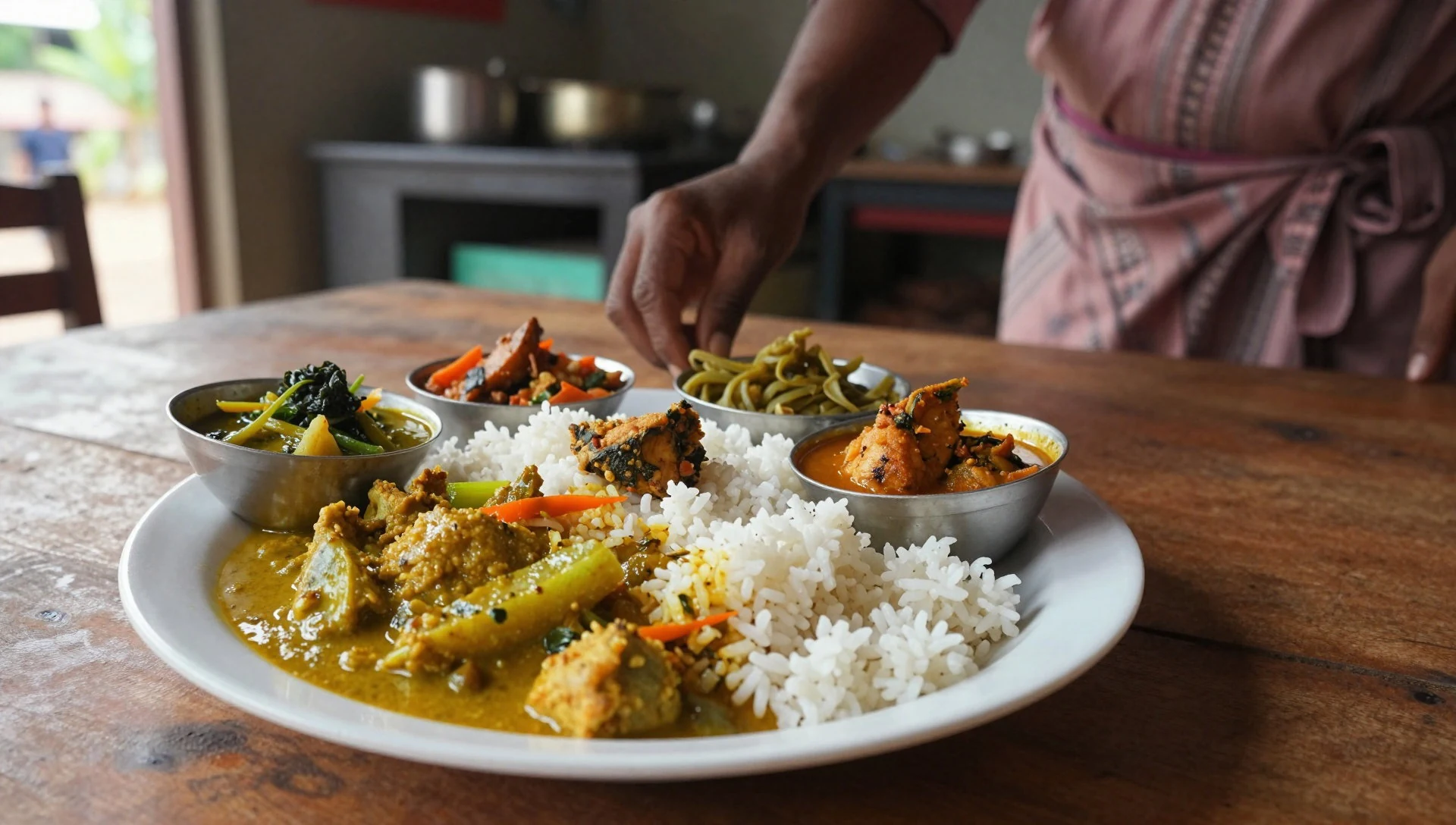
- Ambul thiyal — Home-style eateries in Hambantota and Kirinda
Ambul thiyal is the sharp southern fish curry eaten around Bundala National Park, firm fish simmered with goraka until it tastes sour rather than creamy and keeps well in the heat. It sits on the rice plate, not alone. Home-style eateries in Hambantota and Kirinda serve it.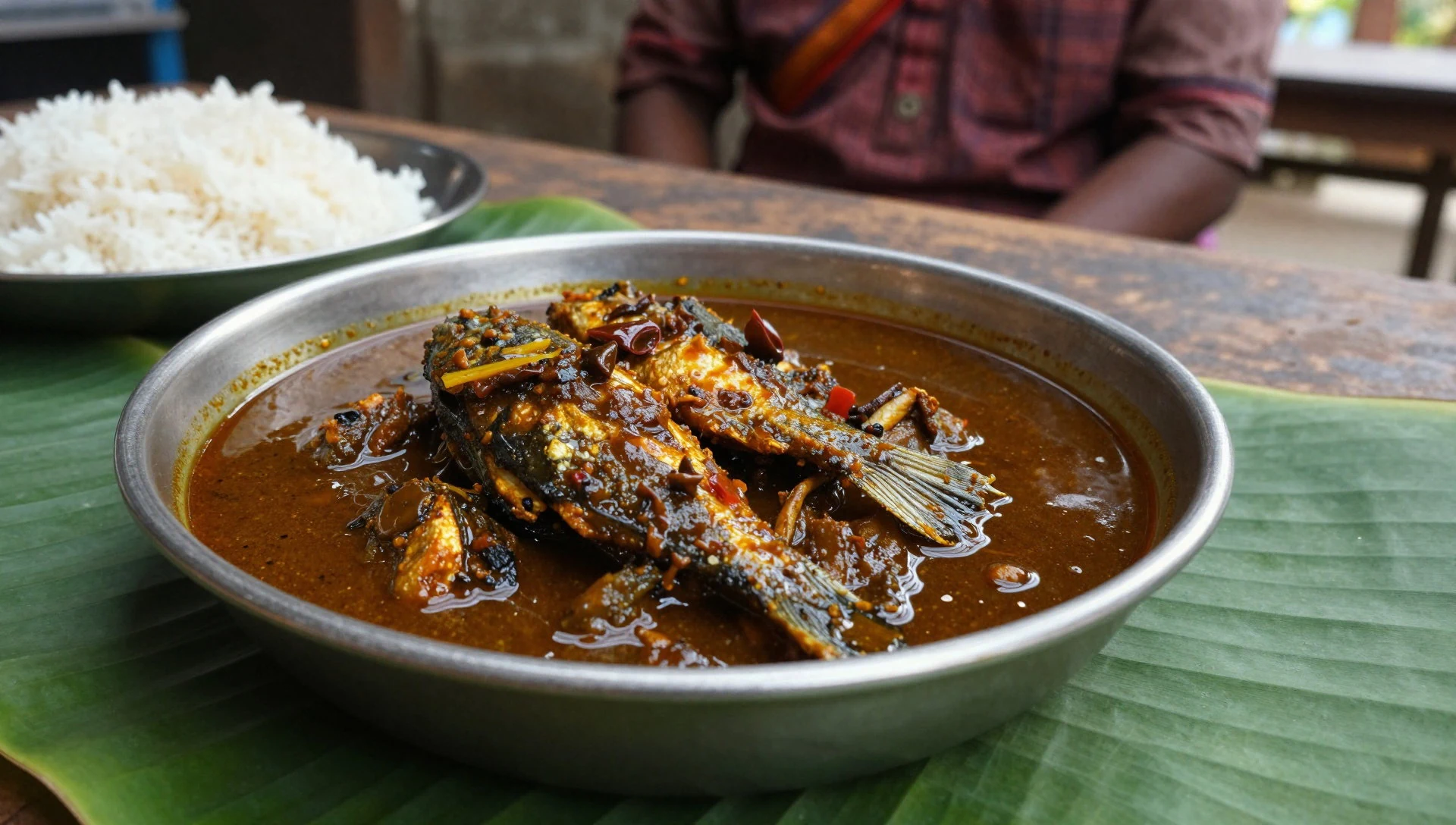
- Pol sambol — Village eateries from Hambantota to Kirinda
Pol sambol is scraped coconut with chilli, onion, lime and dried fish, served beside rice almost everywhere around Bundala National Park. It is a relish, yet the chilli is often what people talk about afterwards. Village eateries from Hambantota to Kirinda each grind their own. - Hoppers — Evening street stalls in Hambantota and Kirinda
Hoppers, appa in Sinhala, are rice-flour pancakes with a soft centre and a crisp rim, eaten in the evening around Bundala National Park. An egg broken in before cooking makes an egg hopper. Street stalls in Hambantota and Kirinda sell them. - Buffalo curd and treacle — Shops and roadside stalls around Hambantota
Buffalo curd with kithul treacle is the clay-pot sweet sold inland of Bundala National Park, especially around Hambantota. The curd is thick and a little sour, the treacle dark and smoky. Shops and roadside stalls set it out through the day, as a snack rather than a full meal.
Plan it
Best time. Bundala National Park rewards a visit most from November through March, when migratory waterbirds, greater flamingos among them, settle on the lagoons. Outside that window the park is still open country, but the coast runs hot and the midday glare off the water is tiring, so early mornings matter in every month.
How long. 2–3
Getting there. Colombo stands 245 kilometres northwest of Bundala National Park. Travel is by road, with the last hop from Hambantota or Kirinda to the entrance. Check the official wildlife service for the gate in use and whether a permit is required before travelling.
Budget. mid
Tips
- Start at first light, when birds are feeding and the heat has not yet glazed the lagoons.
- Ask in Hambantota or Kirinda whether a permit and a vehicle are required that day, and do not plan on walking the flats.
- Carry drinking water; shade in Bundala National Park is scarce and the open water reflects heat.
- Take cash for eateries, small shops and any local guide; cards are unreliable in the villages.
- Give a clear winter morning priority over extra days when the migrants are absent.
Etiquette
- Remain in the vehicle where required, and do not step onto the flats for a closer look at flamingos.
- Keep voices low and leave music off, so wintering flocks are not pushed into the air.
- At Kirinda temples, remove shoes, cover shoulders and ask before photographing people.
Nearby
Sources
- Wikidata Q2003663 (CC0)
- Wikipedia (rev 1362705395) (CC BY-SA 4.0)
- Wikivoyage (rev 3969490) (CC BY-SA 4.0)
- Photo photos/01-wildlife-preserve-near-kirinda-sri-lanka.jpg (CC BY 2.5)
- Photo photos/02-bundala-hambantota-sri-lanka.jpg (CC BY-SA 4.0)
- Photo photos/03-bundala-national-park.jpg (CC BY-SA 4.0)
- Photo photos/04-bundala.jpg (CC BY-SA 4.0)
- Photo photos/05-crow-sri-lanaka.jpg (CC BY-SA 4.0)
- Photo photos/06-d3300-10.jpg (CC BY-SA 4.0)
- Photo photos/07-d3300-15.jpg (CC BY-SA 4.0)
- Photo photos/08-d3300-54.jpg (CC BY-SA 4.0)


