Galle
Galle, Sri Lanka
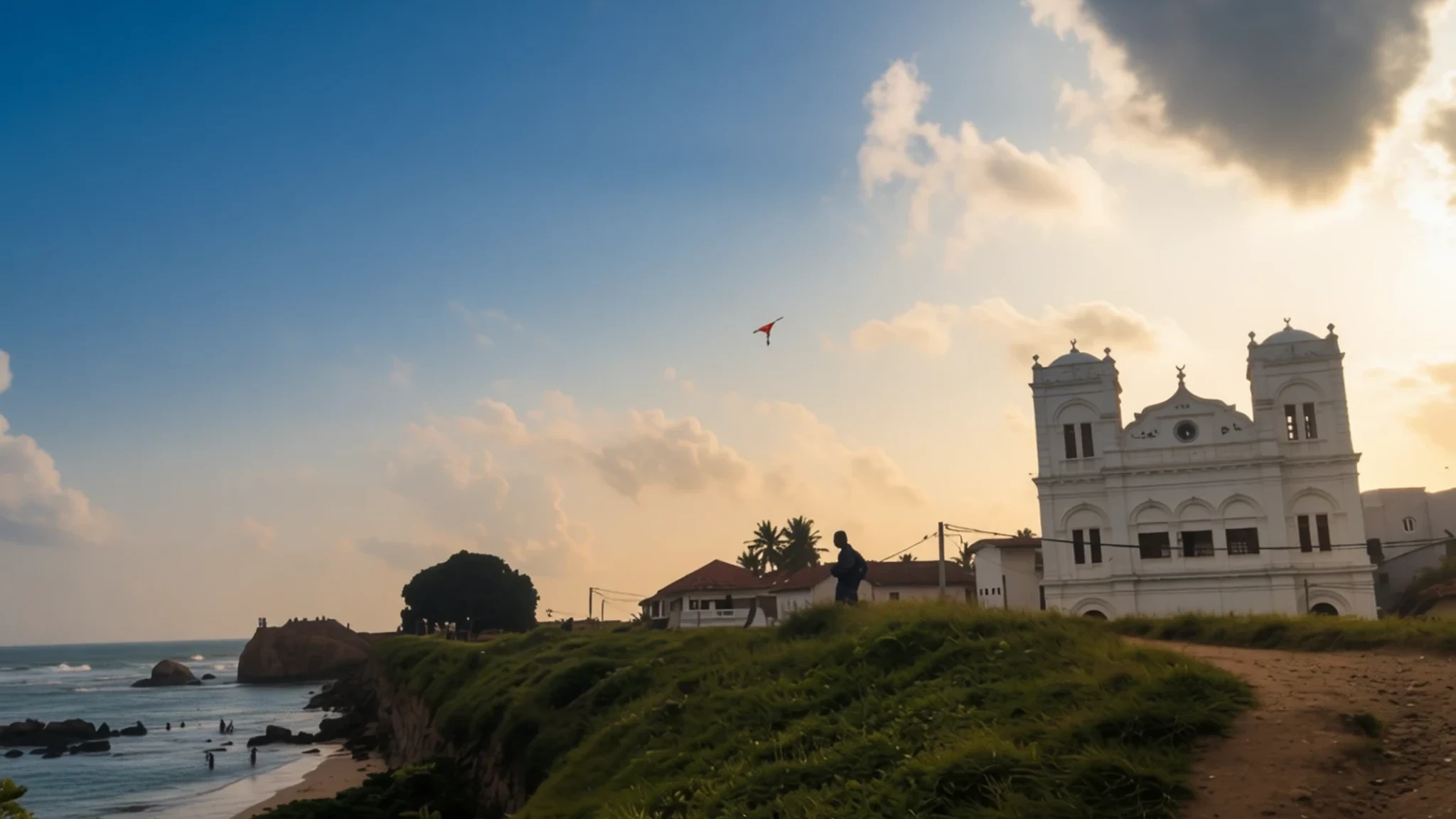
Galle offers a striking blend of ancient maritime heritage and European colonial architecture centred around a grand stone fortress.
The place
Galle sits upon the southwestern coast of Sri Lanka, anchoring the island's southern province as its principal administrative capital. The city's geography is defined by a natural harbour that has sheltered seafarers for centuries, flanked by the sprawling defensive walls of its historic fort. Within the massive stone bastions, a dense grid of narrow lanes reveals whitewashed colonial residences, red-tiled rooflines, and quiet courtyards shaded by frangipani trees. Beyond the fortifications, the broader municipal area extends along coastal roads and railway tracks where the daily life of the region unfolds amidst tropical greenery and sea spray. The climate remains consistently warm throughout the year, shaped by tropical rainforest patterns that bring frequent downpours balanced by brighter spells, particularly in the opening months of the year. Life inside the old quarters moves at a deliberate pace compared to the capital further up the coast, drawing travellers who come to walk the ramparts at dusk, inspect old maritime relics, and observe the slow rhythm of the Indian Ocean tides crashing against the coral reefs below the walls.
Its story
Galle has served as an international meeting point for maritime commerce since antiquity, when ancient traders sought out the island for spices and precious gems. Early seafarers from Persia, Arabia, Malaysia, China, and the Mediterranean regularly anchored in the natural harbour to trade goods long before European flags flew over the coast. In 1502, Portuguese ships arrived unexpectedly after storms diverted their course and paused briefly in the harbour, and the first defensive fort on the rocky headland was not built until 1588. Decades later, the Dutch East India Company captured the settlement and substantially expanded the fortifications into the formidable stone circuit that defines the peninsula today. Over subsequent centuries, control shifted to British administrators who laid down the railway lines and civic infrastructure that still serve the district. Through foreign occupation, shifting trade routes, and the severe natural disasters that struck the coast in more recent decades, the community has continuously rebuilt itself while preserving the architectural layers left by successive empires.
What to see
- Galle Fort Ramparts — Galle Fort
The massive stone ramparts enclose the historic heart of the old city, offering wide paths for walking at sunrise or sunset. Visitors can trace the perimeter from bastion to bastion, watching local residents gather in the evenings while taking in expansive views across the ocean waves and surrounding coastline.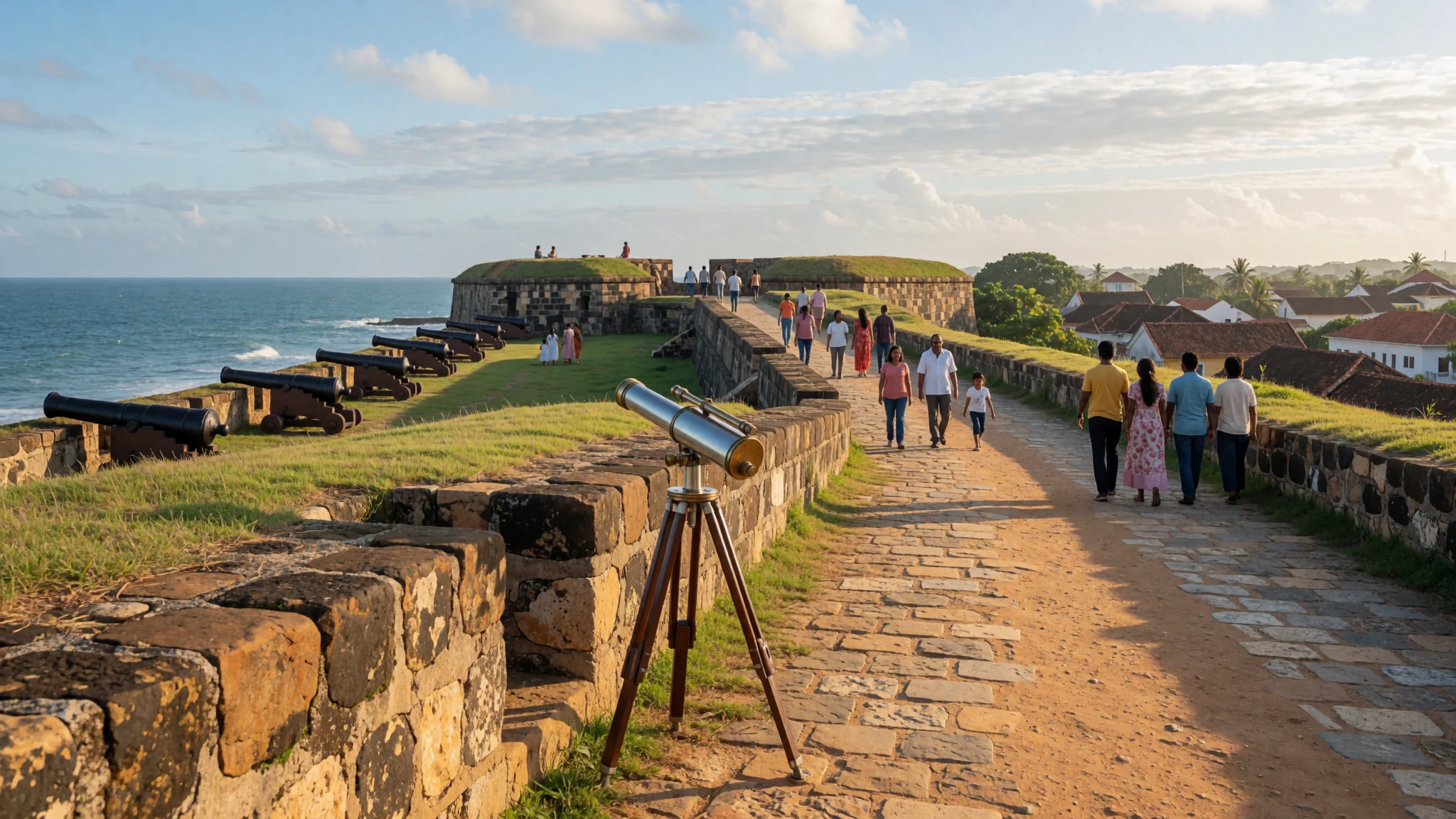
- National Maritime Museum — Galle Fort
Housed within a restored warehouse built by the Dutch East India Company, this museum documents the maritime history of the southern coast. Exhibits feature marine specimens, navigation equipment, and artifacts recovered from shipwrecks lying in the surrounding waters, illustrating centuries of seafaring trade.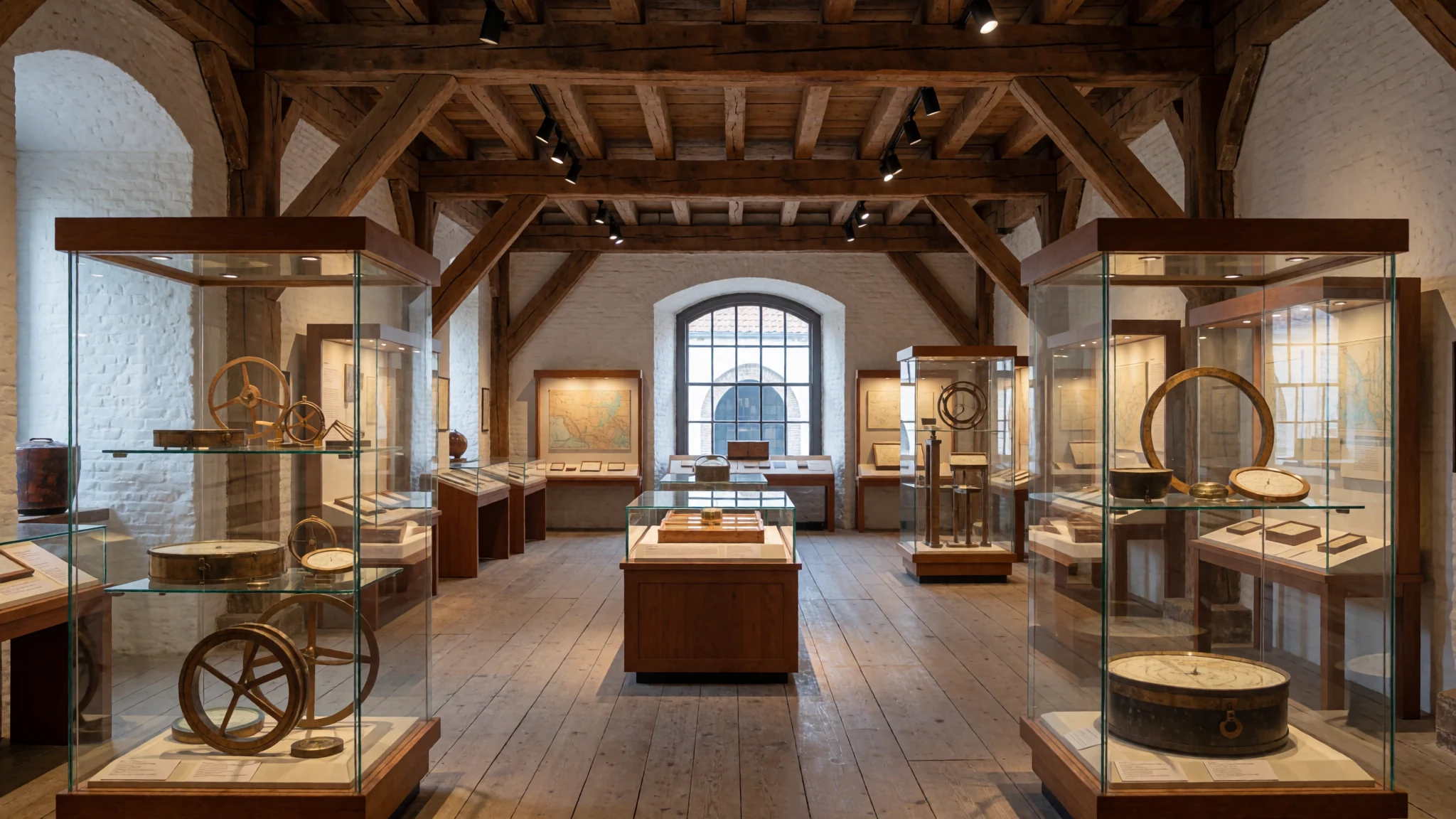
- Galle International Stadium — Near Galle Fort
Positioned right beside the historic fortifications and the sea, this cricket ground is widely celebrated for its scenic setting. When matches are not taking place, the surrounding perimeter provides a clear vantage point to observe how deeply the sport is woven into daily local life.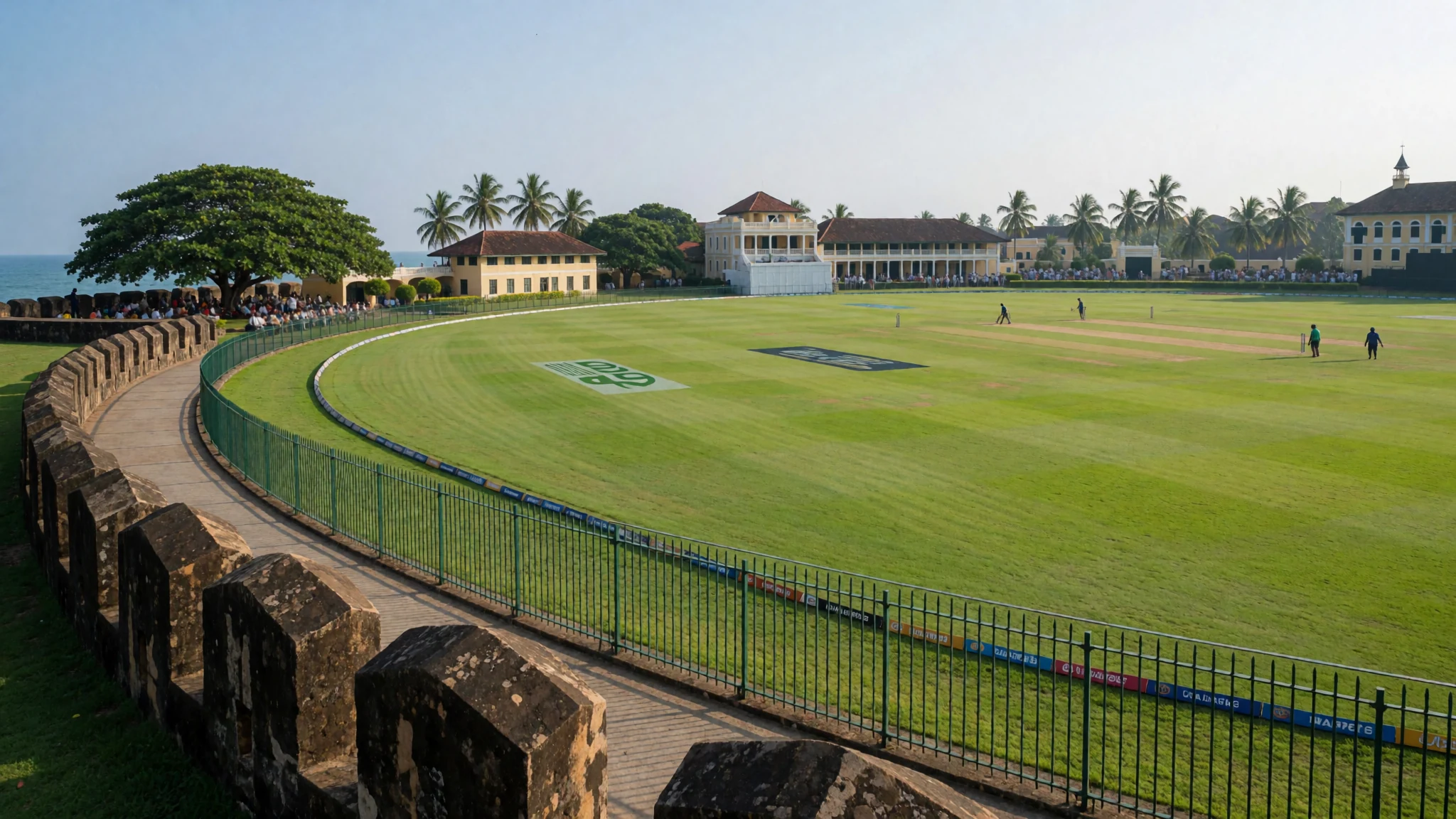
- Dutch Reformed Church — Galle Fort
Constructed during the seventeenth century inside the fort walls, this stately church features a traditional floor paved with gravestones from colonial administrators. The interior maintains an atmosphere of quiet solemnity, complemented by antique wooden pews and heritage plaques mounted along the whitewashed stone walls.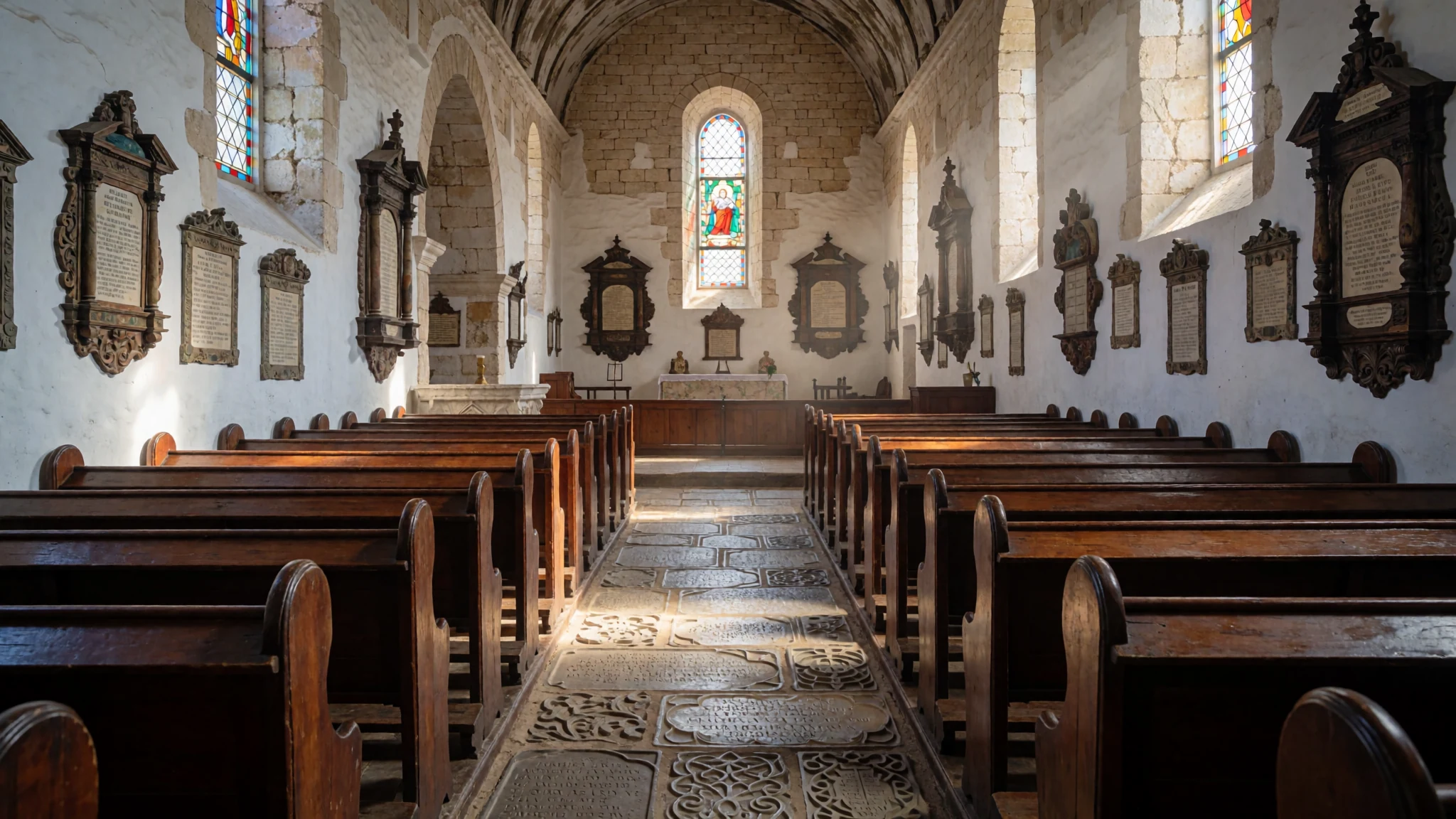
- Meeran Masjid — Galle Fort
Standing prominently near the ramparts, this mosque displays an eclectic architectural style that incorporates Victorian and Islamic design elements. The ornate facade and gleaming white minaret serve as a visual landmark for pedestrians exploring the narrow streets of the historic quarter.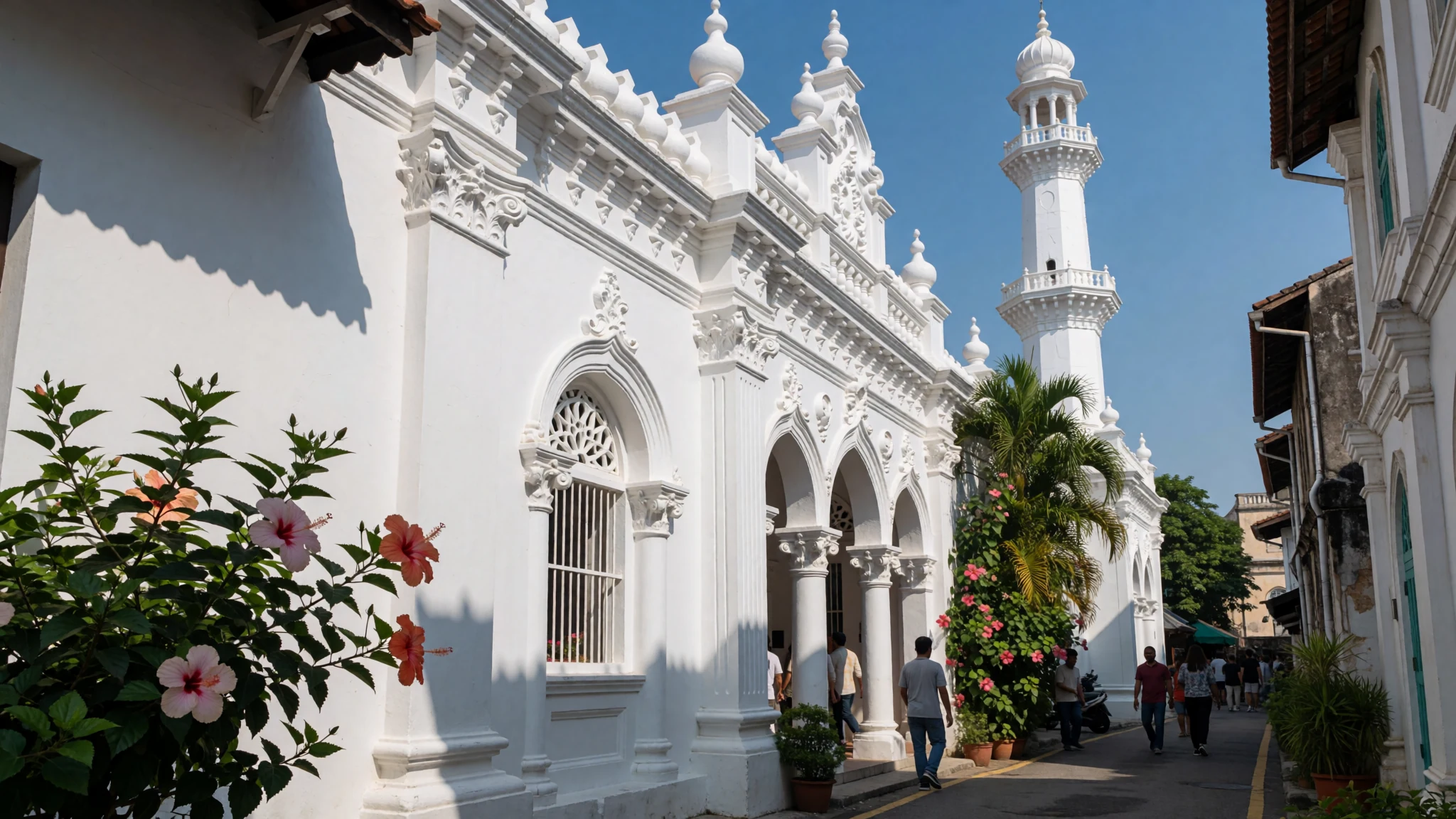
Culture
In Galle, cultural traditions reflect a diverse heritage shaped by Sinhalese, Tamil, Muslim, and European influences accumulated over generations of maritime exchange. Families celebrate major religious festivals across Buddhist, Hindu, Islamic, and Christian calendars, fostering a community life where neighbourhoods share public spaces along the narrow streets and coastal pathways. Traditional crafts such as lacework and wood carving remain practiced by local artisans within the historic quarters, passed down through families alongside culinary knowledge. Daily routines often slow down during the warmest afternoon hours, giving way to lively community gatherings along the ramparts as the sun sets over the ocean. Visitors are encouraged to engage respectfully with residents and participate in local customs when exploring community spaces. Always remove your footwear and dress modestly with covered shoulders and knees before entering temples, mosques, or churches.
What to wear
In Galle, traditional attire for women traditionally includes the osariya, a distinctive Kandyan style of the draped saree featuring a ruffled frill at the waist, worn for formal occasions and celebrations. Men often wear the sarong, a length of fabric wrapped around the waist and paired with a light cotton shirt suited to the coastal climate. Day-to-day wear for most locals across the city has shifted towards casual modern clothing such as trousers and shirts for men, and lightweight tunics or skirts for women, while traditional garments remain common during religious holidays and cultural events. Visitors walking through Galle should dress comfortably for warm, humid weather by choosing breathable cotton and linen fabrics. Modesty is essential when visiting religious sites or moving through residential neighbourhoods, so both men and women should ensure their shoulders and knees are covered. Sturdy walking shoes are recommended for navigating the uneven stone paving found throughout the historic fort ramparts and older streets.
What to eat
- Fresh Seafood Curry — Galle Fish Market area
Local catch prepared with heavy coconut milk, fragrant curry leaves, and toasted spices. Found at the small local eateries located directly behind the main fish market. - Hoppers and Lunu Mitissa — Street food stalls across the city
Bowl-shaped fermented rice flour pancakes with crisp edges, often served with a spicy onion sambol. Found at traditional breakfast stalls and neighbourhood teashops. - Lamprais — Galle Fort lanes
Meat, rice, and sambals baked together inside a packet of banana leaf following Dutch-Burgher culinary traditions. Found at bakeries and traditional family-run eateries inside the fort.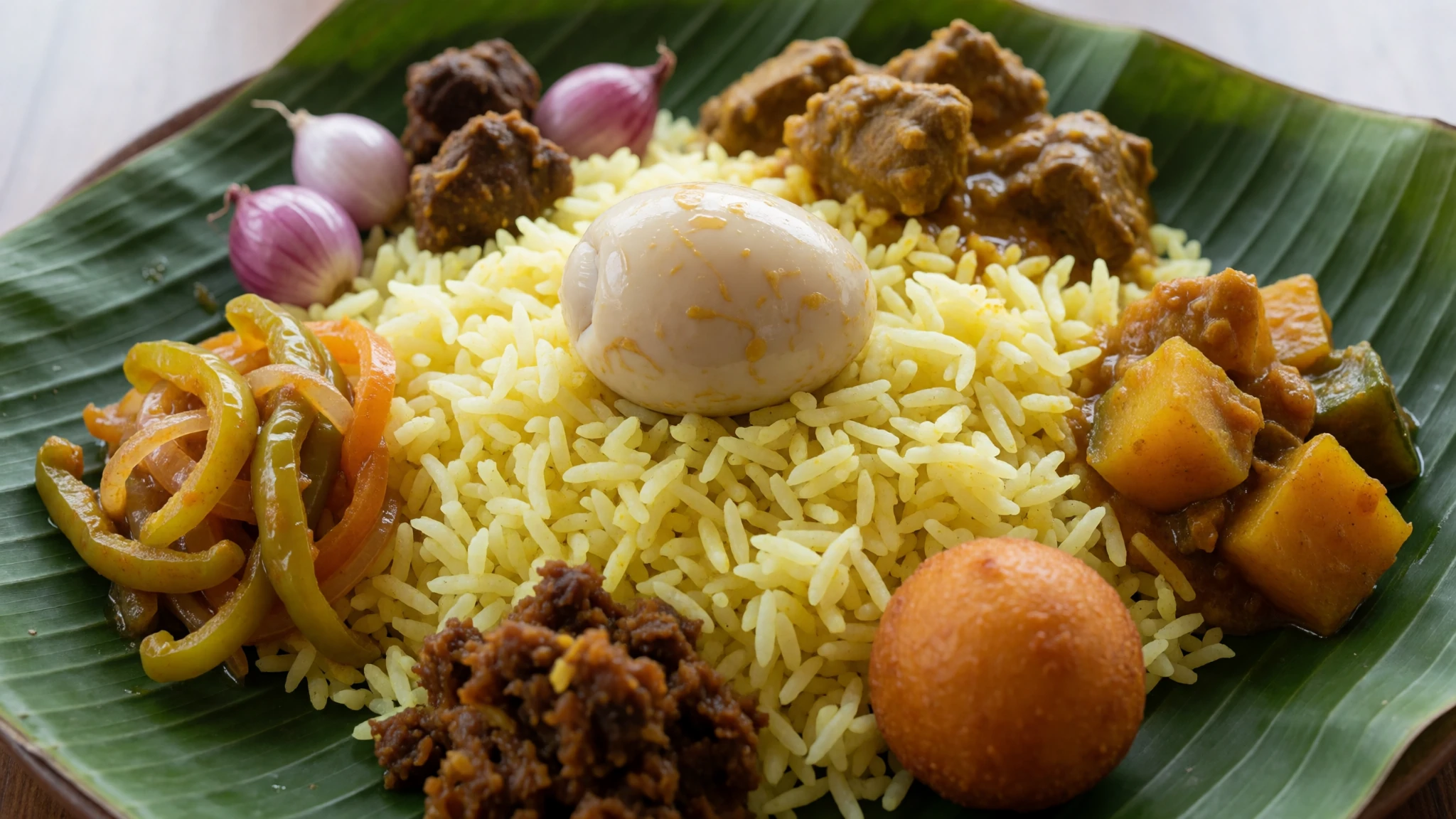
- Kottu Roti — Main commercial streets
Chopped flatbread tossed on a heated iron griddle with vegetables, eggs, and spices with a rhythmic metallic clatter. Found at evening food stalls and roadside canteens. - Homemade Mango and Coconut Ice Cream — Pedlar Street area
Cold, refreshing artisanal ice cream made using locally sourced tropical fruits to beat the afternoon heat. Found at small dessert parlours and cafes within the old town.
Plan it
Best time. January and February offer the driest weather and clearest skies for exploring the coast, though warm temperatures persist throughout the year.
How long. 2–3
Getting there. Take a southern line train or coastal bus from Colombo for a scenic journey along the shore, arriving directly at the municipal station.
Budget. mid
Tips
- Walk the fort ramparts early in the morning before the tropical sun peaks
- Carry cash in small denominations for local buses, markets, and entry tickets
- Drink plenty of bottled water to stay hydrated in the high humidity
- Book accommodation well in advance if visiting during the peak dry months
Etiquette
- Remove shoes and hats before entering any religious building
- Ask permission before photographing local residents or artisans at work
- Dress with shoulders and knees covered outside the beach areas
Nearby
Sources
- Wikidata Q319366 (CC0)
- Wikipedia (CC BY-SA 4.0)
- Wikivoyage (CC BY-SA 4.0)
- Photo 01-galle-fort.jpg (CC BY-SA 4.0)
- Photo 02-galle-international-stadium.jpg (CC BY 3.0)
- Photo 06-maritime-museum-galle.jpg (CC BY 4.0)


