Adam's Peak
Adam's Peak, Sri Lanka
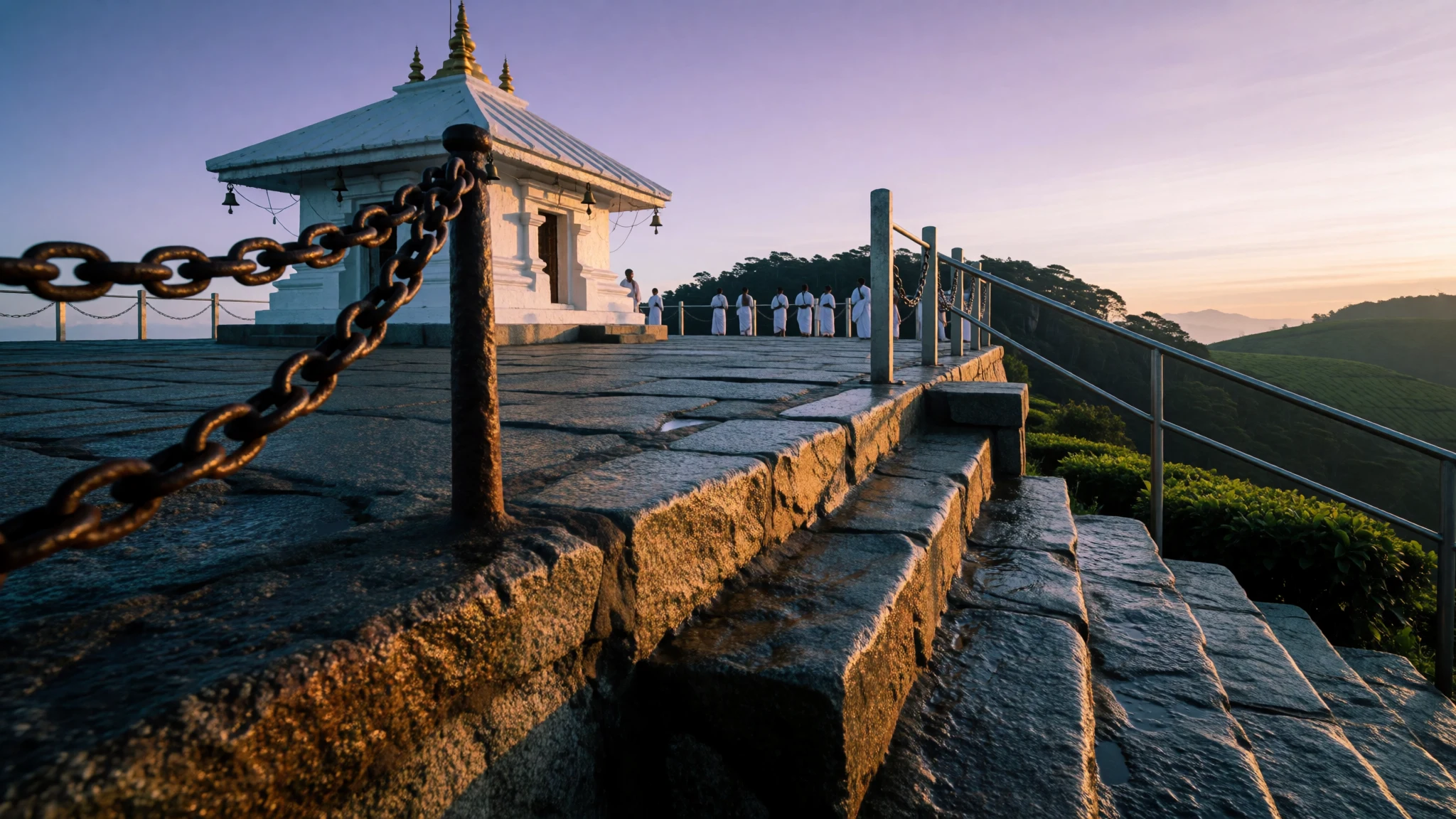
Adam's Peak is a night pilgrimage up a sacred Sri Lankan mountain, ending at a shared footprint shrine as the sun rises.
The place
Adam's Peak, also called Sri Pada and Samanala Kanda, stands in the wet highlands of south-central Sri Lanka, above the tea country around Maskeliya. The mountain is a steep, isolated cone. Cloud often wraps the slopes by day and breaks near dawn, which is why the usual visit is a climb in the dark and a wait on the summit for first light. From the top the land falls away toward forested ridges and, on a clear morning, toward the far lowlands.
The peak is holy to more than a single community, and the same rock at the summit is read differently by each. Buddhists know it as the footprint of the Buddha, Hindus as the mark of Shiva, Muslims as the place where Adam stood after leaving Eden, and Christians have long linked it with a saint's footprint. That shared claim is the life of the mountain. For much of the year the paths are quiet and wet. In the pilgrimage season the main stair from the Maskeliya side becomes a line of people, lamps and tea stalls, and the summit is crowded, cold and loud with bells.
Steps are steep and often slick, and the last stretch uses chains set into the rock. Most people start from the village at the northern foot, walk through the night, and come down after sunrise. A longer path rises from the Ratnapura side, one of the two main routes, with tea shops and lighting in season. Around the base, tea estates and a reservoir sit in a green bowl that the hill railway reaches from the coast.
Adam's Peak is both a viewpoint and a working pilgrimage. Both sit awkwardly together when the season is busiest, and the mountain feels almost private when rain has emptied the stairs.
Its story
Adam's Peak entered Sri Lanka's sacred geography through a mark on the summit rock that each tradition explains in its own way. In the Buddhist telling, the Buddha left the print on a visit to the island, and the mountain took the name Sri Pada, the sacred foot. Hindu worship treats the same hollow as Shiva's. Muslim tradition, which gave the English name Adam's Peak, holds that Adam stood here in long penance after leaving Eden. A Christian reading has attached the print to St Thomas. None of these accounts cancels the others on the mountain. Pilgrims still climb side by side.
The season has its own story. When the rains ease, the paths open, white flags go up, and people come from across the island, many in family groups, walking through the night to arrive before dawn. The reward they wait for is not only the shrine. As the sun clears the horizon, the cone throws a long triangular shadow across the mist, a dark shape that shortens as the light strengthens. Climbers talk about that shadow as much as devotees talk about the footprint.
Locally the mountain is also Samanala Kanda, the peak of the god Saman, guardian of the region. His shrine shares the summit terrace with the footprint, so the climb is a visit to him as well as to the mark in the rock. Older travel accounts fixed the name Adam's Peak on European maps of the Indian Ocean, but the names used on the stairs are still Sri Pada and Samanala.
What those stories share is the approach. There is no road onto the terrace. Adam's Peak is reached by a night of steps, wind and a crowded platform.
What to see
- Summit shrine and Sri Pada — Summit terrace
The summit of Adam's Peak is a small stone terrace and a shrine built over the rock mark called Sri Pada. Pilgrims queue, ring bells and leave offerings; the print itself is covered and indicated rather than left open to the weather. At busy dawns the terrace is packed, the wind is sharp, and the view opens only after the cloud drops.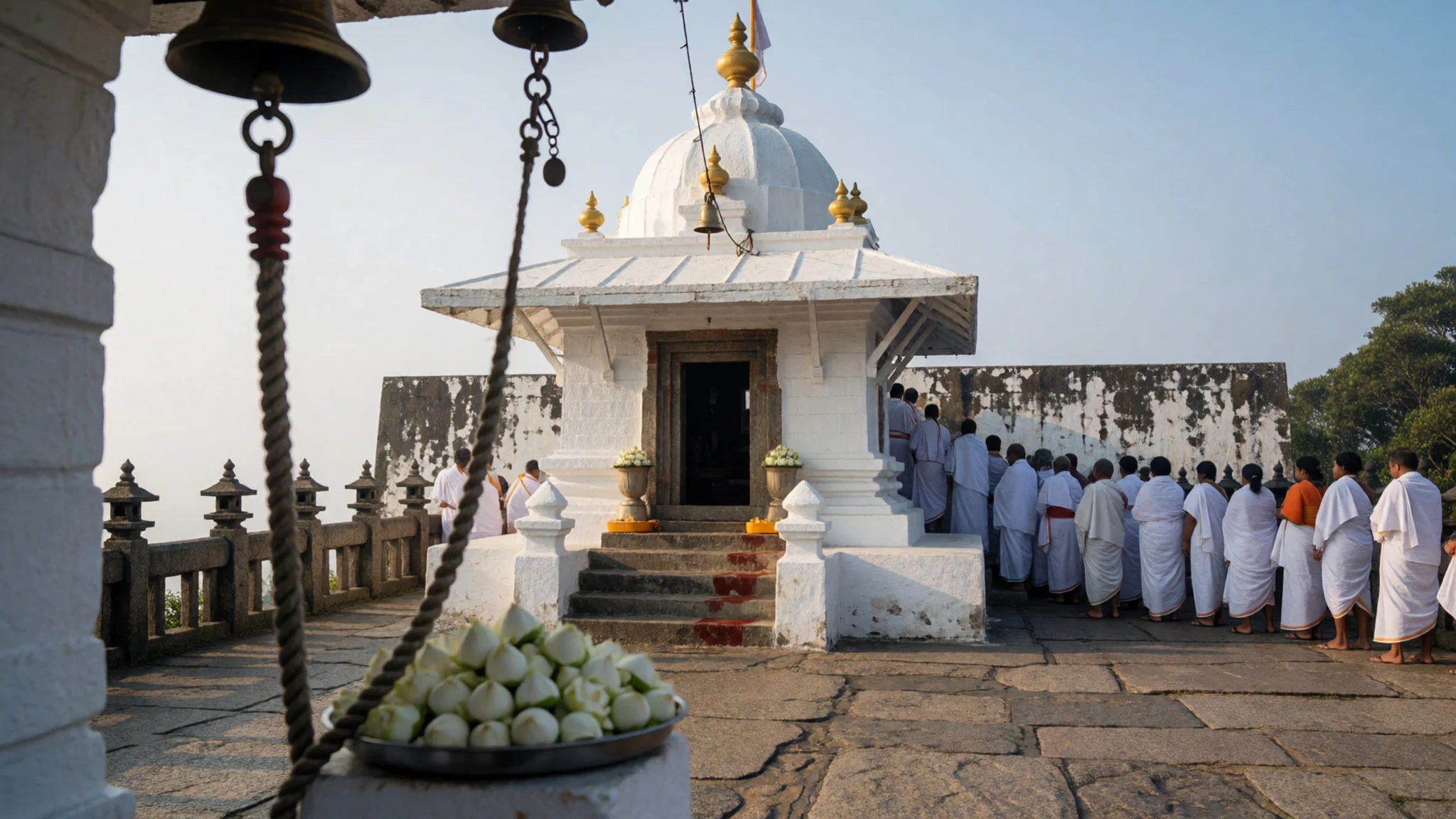
- Shadow of the peak — Summit, looking west
The shadow of Adam's Peak appears just after sunrise, a long triangle laid over the mist to the west of the summit. It is the sight many non-pilgrims climb for, and it fades as the sun climbs and the mist burns off. Cloud on the western side hides it completely, which is common outside the clearer months.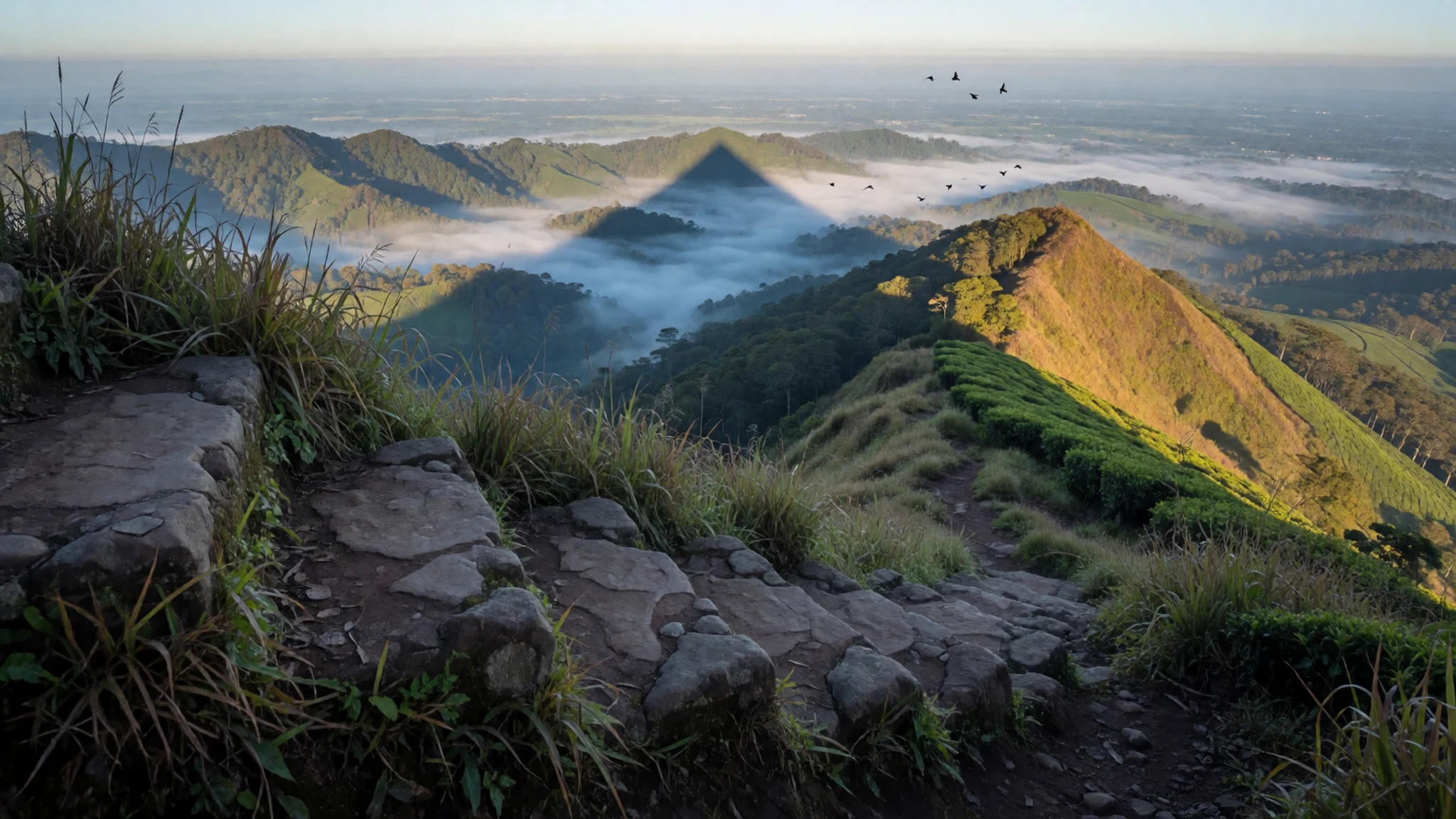
- The Dalhousie stair — Dalhousie (Nallathanniya), Maskeliya side
The usual way up Adam's Peak leaves from Dalhousie, also called Nallathanniya, on the Maskeliya side. A long flight of steps, lit in season, runs through forest and past tea stalls to the chains near the top. The walk is steep rather than technical, and the hard part comes before dawn, when legs are tired and the rock is cold. In heavy rain the steps are a stream.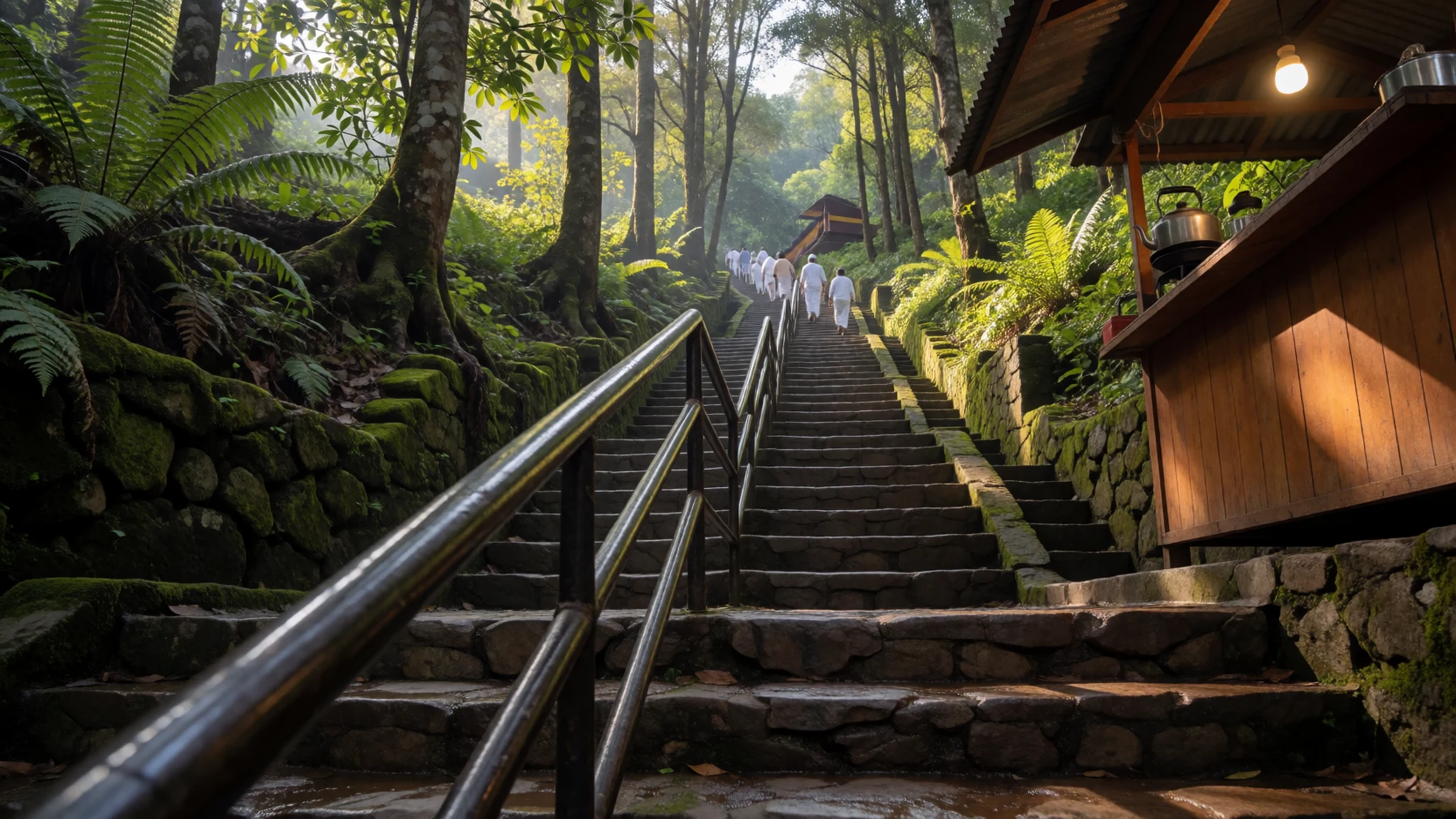
- Mahagiri Dambaya — Upper path
Mahagiri Dambaya is the great rock beside the upper path on Adam's Peak, a dark face that climbers meet in the last part of the ascent. It breaks the forest and opens a wide view before the summit terrace. People rest against it, and in season the steps around it jam with climbers. Treat it as part of the walk rather than a side trip.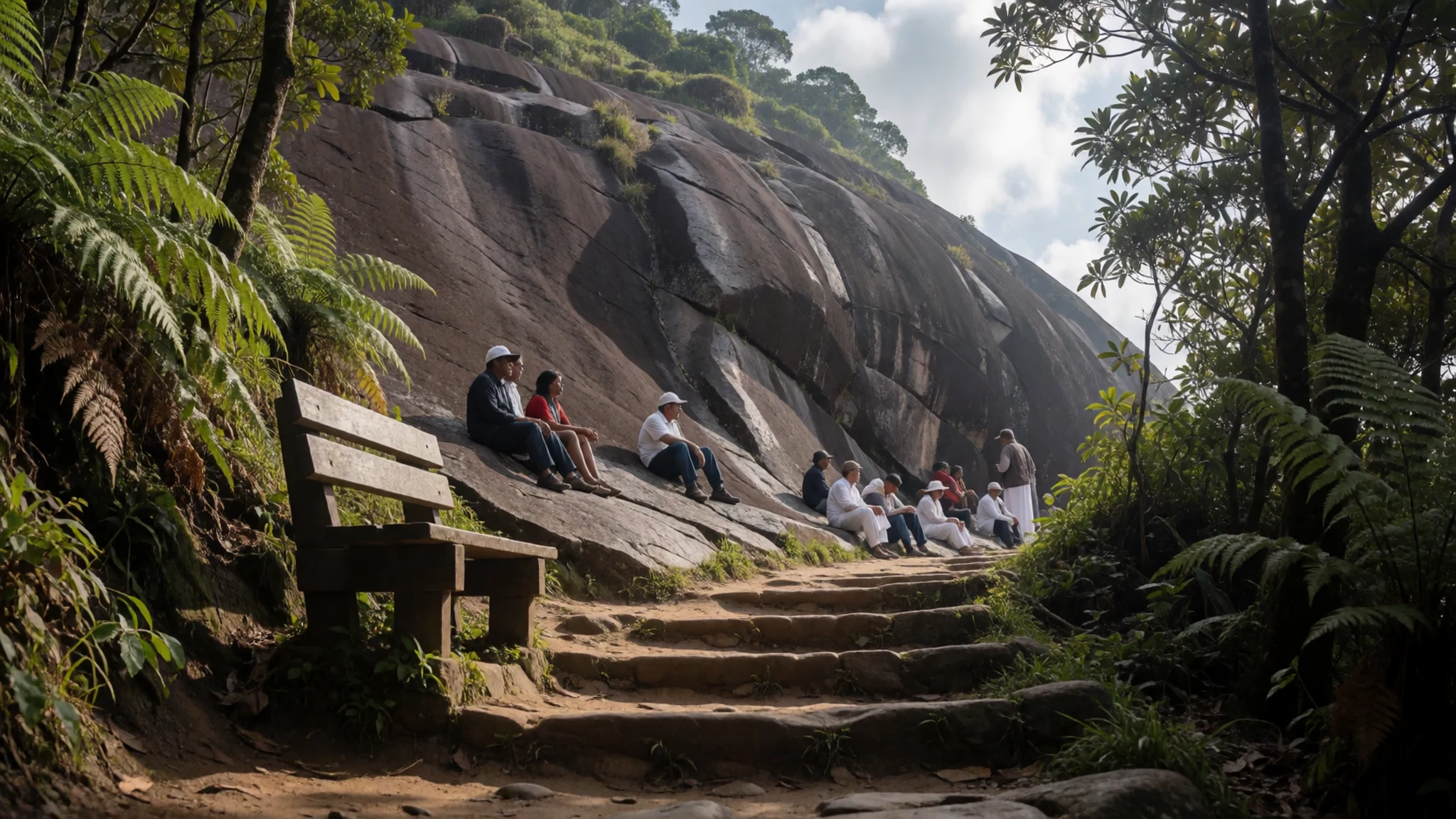
- Maskeliya and the reservoir — Maskeliya
Maskeliya is the tea town and reservoir country below Adam's Peak, the green basin most climbers pass through before a night start from Dalhousie. Estates cover the ridges, water fills the valley, and the road to the path runs through this landscape. Daylight shows the peak's setting, which the climb itself, done in the dark, mostly hides.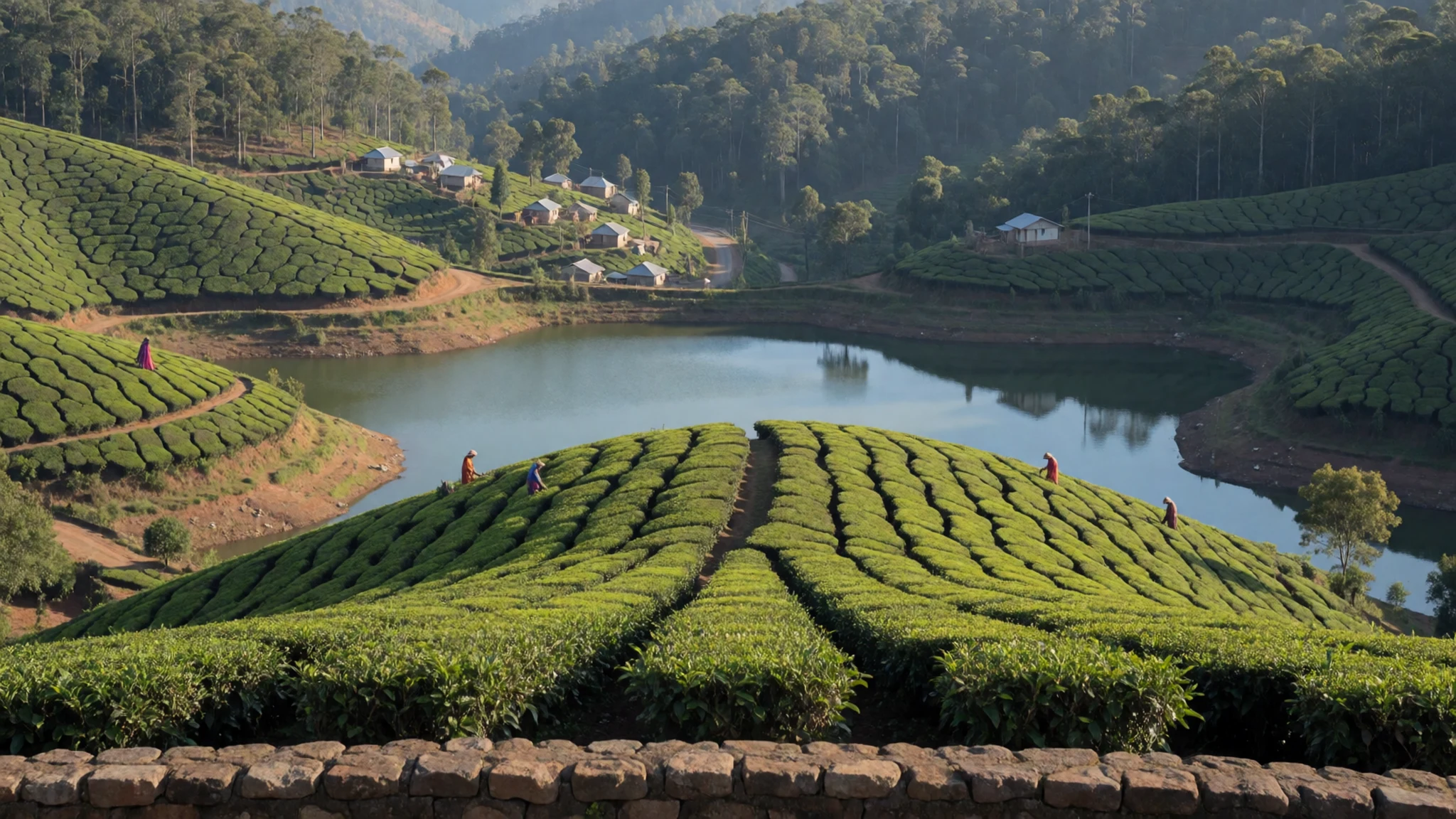
Culture
Adam's Peak is a living pilgrimage, not a monument with a single rite. Buddhists, Hindus, Muslims and Christians each have a reading of the summit mark, and in season they share the same stairs. White clothing is common among Buddhist pilgrims, bells and offerings mark the terrace, and the god Saman is honoured alongside the footprint. Full-moon days draw the thickest crowds. People greet strangers on the way up and make room on the narrow flights, because the climb is understood as a shared effort. Families climb together, including elders and children, and the path has a village rhythm: rest, sweet tea, a shrine, more steps.
The mountain also belongs to the Tamil and Sinhala communities of the hill country, and to estate workers for whom the peak is a skyline rather than a once-in-a-lifetime vow. Outside the season the religious life is quieter and the paths can feel like an ordinary, if steep, forest walk. Respect does not drop away with the flags. Take shoes off where the summit shrine requires it, keep voices low at the footprint, and do not treat praying pilgrims as a photo subject.
What to wear
Adam's Peak has a pilgrim dress code that is custom more than uniform. Many Buddhist visitors wear white: a shirt and sarong for men, a white blouse with a sari or an osariya for women, cloth bought for the vow and washed simple. Cotton is the usual fibre; it dries in the wind and reads as plainness rather than display. Hindus may wear a sari or a veshti, and Muslim men a shirt with a sarong or trousers, women a salwar kameez or an abaya with a scarf.
On an ordinary day in Maskeliya the clothing is hill-country working dress: shirt and trousers or a sarong in the tea fields, jeans and T-shirts in town, a jacket once the mist comes down. Climbers who are not observing a vow already look like this, with the addition of a light fleece and shoes that can grip wet concrete.
A visitor should dress in layers. The foot of Adam's Peak can be warm and humid while the summit, before dawn, is cold and windy, and rain arrives without much warning. Covered shoulders and knees are the respectful choice at the shrine. Sandals belong in town; the steps punish thin soles. White clothes suit a pilgrim climb, and ordinary modest outdoor clothes suit everyone else. A small scarf or shawl helps both for warmth and for covering up at the terrace.
What to eat
- Estate tea — Tea stalls on the steps and in Maskeliya
Tea is the drink of the Adam's Peak climb, poured sweet and milky at stalls on the steps and sold plain when asked. The leaf comes from estates around Maskeliya, and a cup is the usual pause when the stair turns steep.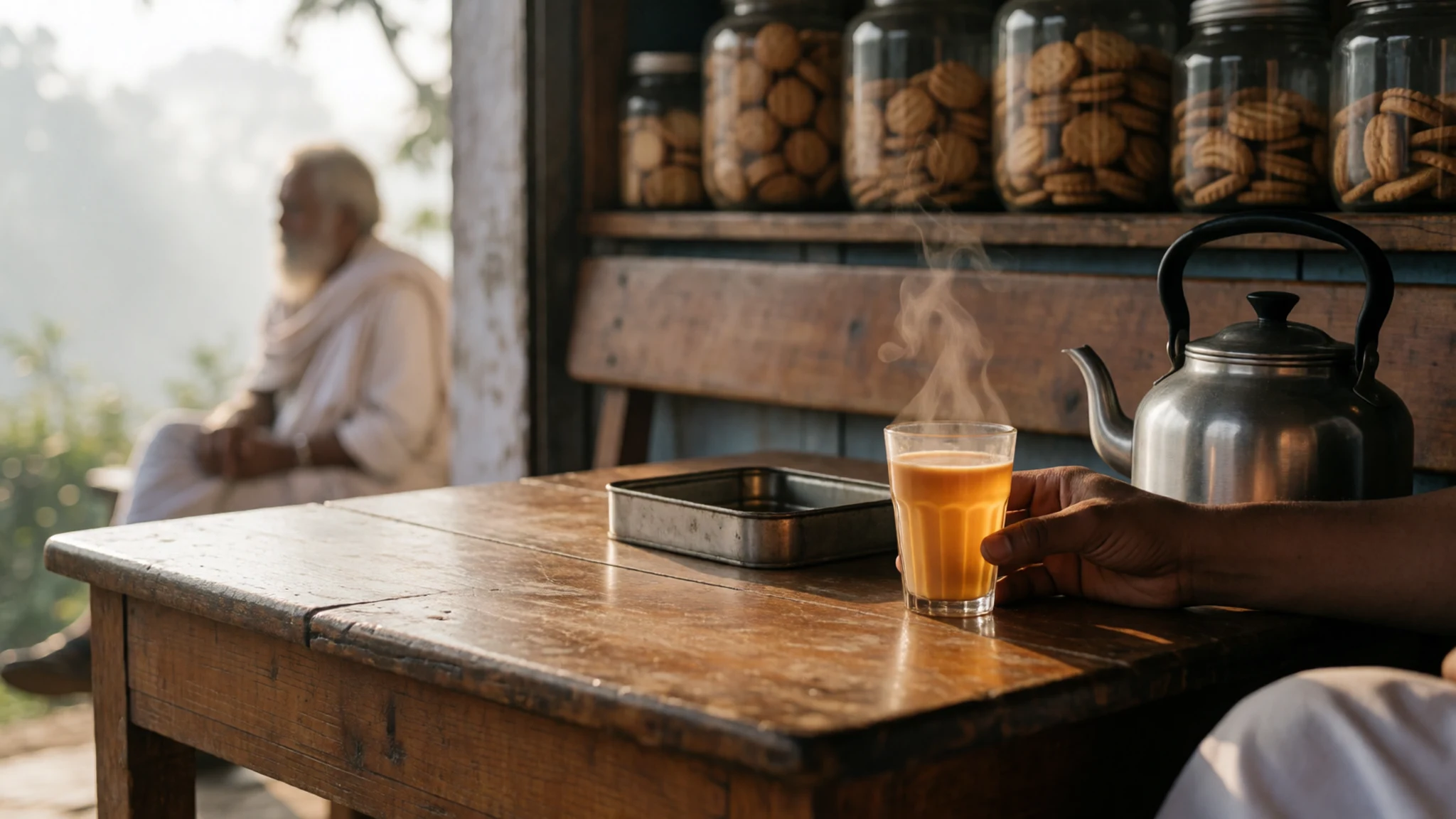
- Rice and curry — Dalhousie guesthouse kitchens and Maskeliya eateries
Rice and curry is the full meal around Adam's Peak, a mound of rice with several vegetable or fish curries, mallung greens and a coconut sambol. Guesthouse kitchens in Dalhousie and eateries in Maskeliya serve it through the day, and it is the sensible dinner before a night climb.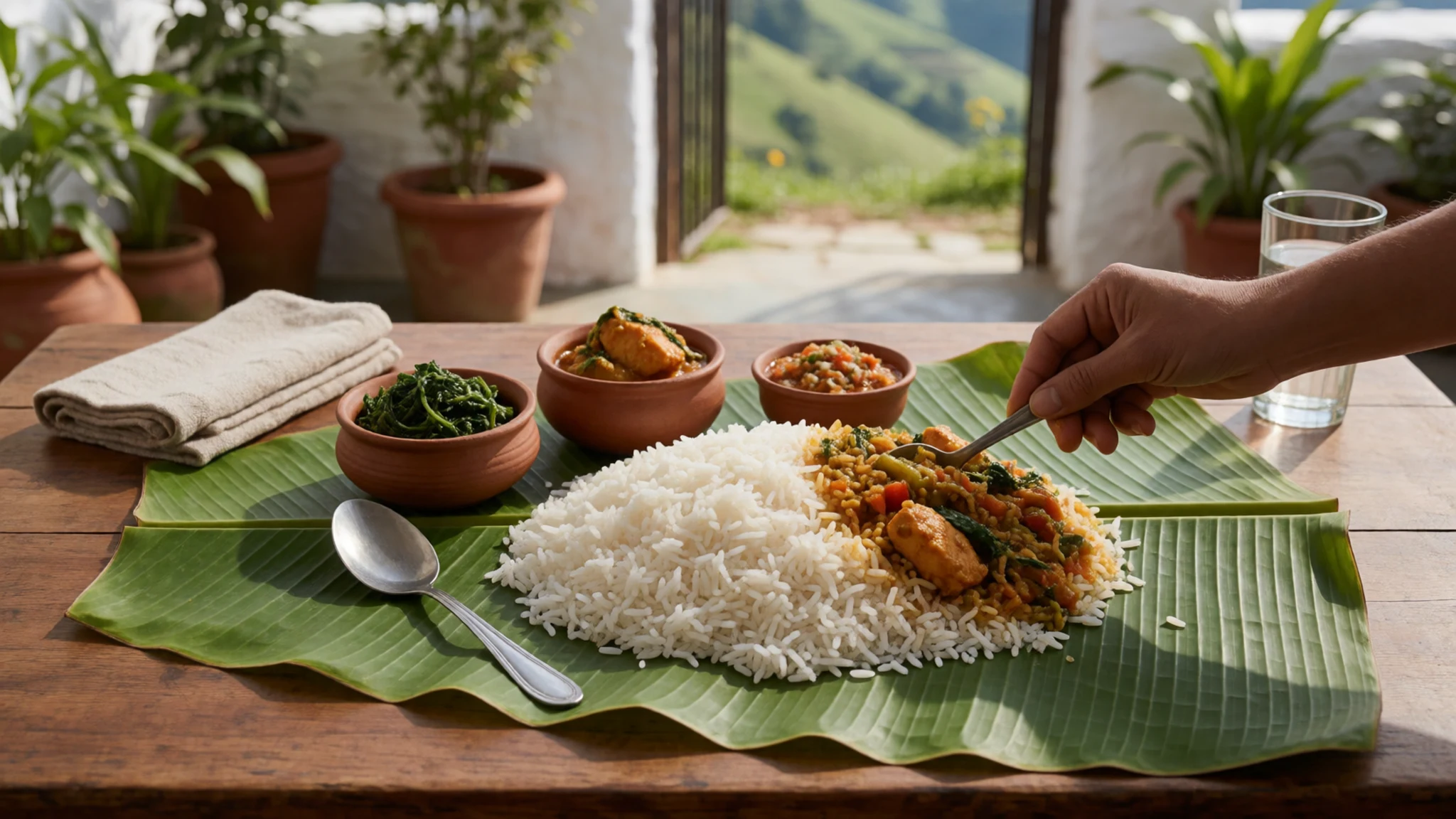
- Hoppers — Breakfast stalls in Dalhousie and Maskeliya
Hoppers, or appa, are bowl-shaped rice-flour pancakes with crisp edges, eaten with egg, sambol or a thin curry. Around Adam's Peak they turn up at breakfast in Dalhousie and in Maskeliya town, often from a roadside shop cooking to order. - Kottu — Evening shops in Maskeliya and Hatton
Kottu is chopped flatbread tossed on a griddle with vegetables, egg or chicken and a curry sauce, a loud evening dish in hill towns near Adam's Peak. It belongs in Maskeliya and Hatton rather than on the summit path, where stalls keep to tea and small snacks. - Kiribath — Stalls and home kitchens near Dalhousie
Kiribath, rice cooked in coconut milk and cut in slices, is festival and pilgrimage food around Adam's Peak, often eaten with a hot onion sambol called lunu miris. Stalls and home kitchens near Dalhousie serve it on full-moon days and at the opening of the season.
Plan it
Best time. Adam's Peak is climbed in the pilgrimage season, from December to May, a lit season of six months whose busiest month is April. January, February and March are the settled months. March and April are the hottest months, October and November the wettest, and January and February the most comfortable.
How long. 2–3
Getting there. Fly into Bandaranaike International Airport near Colombo, take the hill railway to Hatton, then a bus or taxi to Dalhousie, also called Nallathanniya, where the main stair up Adam's Peak begins. A longer path starts from the Ratnapura side, and the usual way is up by Hatton and down by this path. Check current season notices locally before setting out.
Budget. low
Tips
- In season, arrange a bed in Dalhousie before full-moon nights; the village fills and late arrivals sleep poorly.
- Set off in the dark so as to be on the summit of Adam's Peak before sunrise; the shadow fades quickly.
- Carry a warm layer and a rain shell. The foot of the mountain is humid and the terrace before dawn is cold.
- Take cash for tea stalls and offerings. Card machines are not something to rely on along the stair.
- Carry drinking water. Stalls help, but the steep stretches between them are long.
Etiquette
- Remove shoes where the summit shrine requires it, and do not block the footprint.
- Ask before photographing people who are praying.
- Keep the stair clear and let faster pilgrims pass; the flights are narrow.
Nearby
Sources
- Wikidata Q334097 (CC0)
- Wikipedia: Adam's Peak (CC BY-SA 4.0)
- Wikivoyage: Adam's Peak (CC BY-SA 4.0)