Arugam Bay
Arugam Bay, Sri Lanka
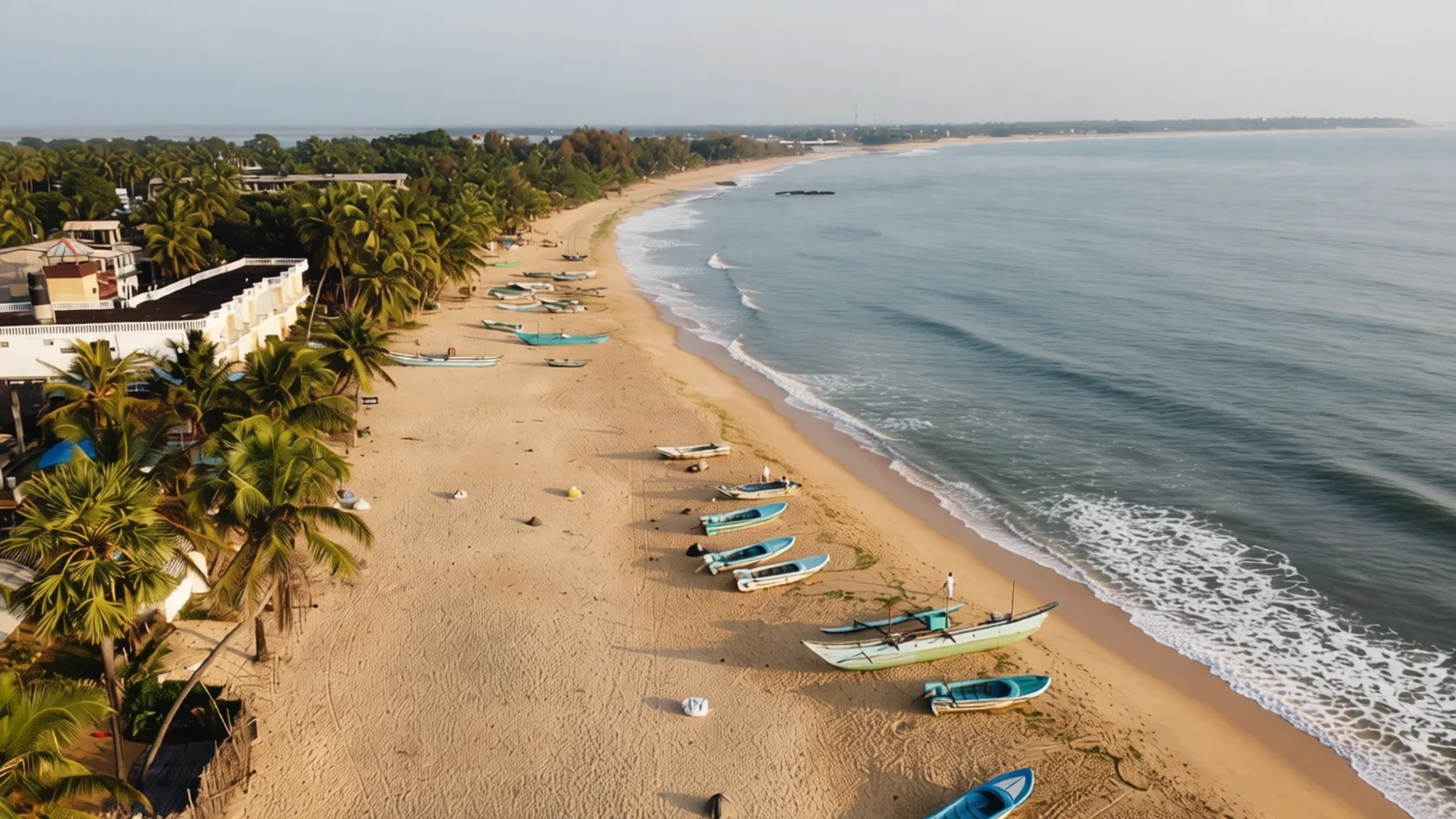
A surf town on Sri Lanka's dry southeast coast, with long right-hand waves, a quiet lagoon and a gateway to wild elephant country.
The place
Arugam Bay lies on the Indian Ocean, in the arid southeastern coastal belt of Sri Lanka, a little way south of the market town of Pottuvil. It lies about 320 km east of Colombo, and it has been a settlement for a long time, part of the old Batticaloa territory. Most visitors come for the surf, but the bay has more to it than one break. The town is strung along Panama Road, which runs parallel to the beach from the Pottuvil end. Nearly every business worth knowing sits on it: guesthouses, surf schools, yoga studios, small shops, bars and cafes. Heading south, the road gets quieter, passing beaches such as Elephant Rock and Peanut Farm before it ends at the edge of Kumana National Park. Tourism has grown quickly in recent years, yet fishing boats still work the shore, and the lagoon behind the town is where boat tours look for eagles, crocodiles and elephants. Expect cabana-style rooms, a relaxed pace and little that is polished. The bay's mood changes with the calendar, so choose your month before anything else.
Its story
Arugam Bay's modern story begins with the surf. Since the 1960s, surfers from around the world have come to its main point, and a quiet fishing village slowly became a travel destination. Tourism stayed low-key during the fighting between the government and Tamil separatists. Back then, hotels frequently purchased their catches from local fishermen, and many fishing families had resettled in places where the conflict had left a lighter mark. When peace arrived, tourism expanded and fishing families began to return. Hotel owners complained about the smell of drying fish and about fishing huts blocking their view, and the tension grew. Then the 2004 tsunami struck. It destroyed much of the bay and the neighbouring town of Pottuvil. In its aftermath, fishing people were forbidden to return, officially on grounds of safety, though many believed hotel owners had pushed for it. Today the bay has a mix of simple family-run places and newer rooms, and Israeli visitors are a common sight. The seasonal rhythm still shapes everything, with most hotels and restaurants closed from November to March.
What to see
- Surfing at the main point — Main Point and Baby Point, Arugam Bay
Surfing is the reason most people come to Arugam Bay. The main point, a right-hand reef break famous for runs of up to 750 m, has drawn surfers since the 1960s. Other breaks such as Baby Point and Crocodile Rock suit different levels. July and August bring the biggest crowds and the best waves; March and October offer quieter water and fewer people.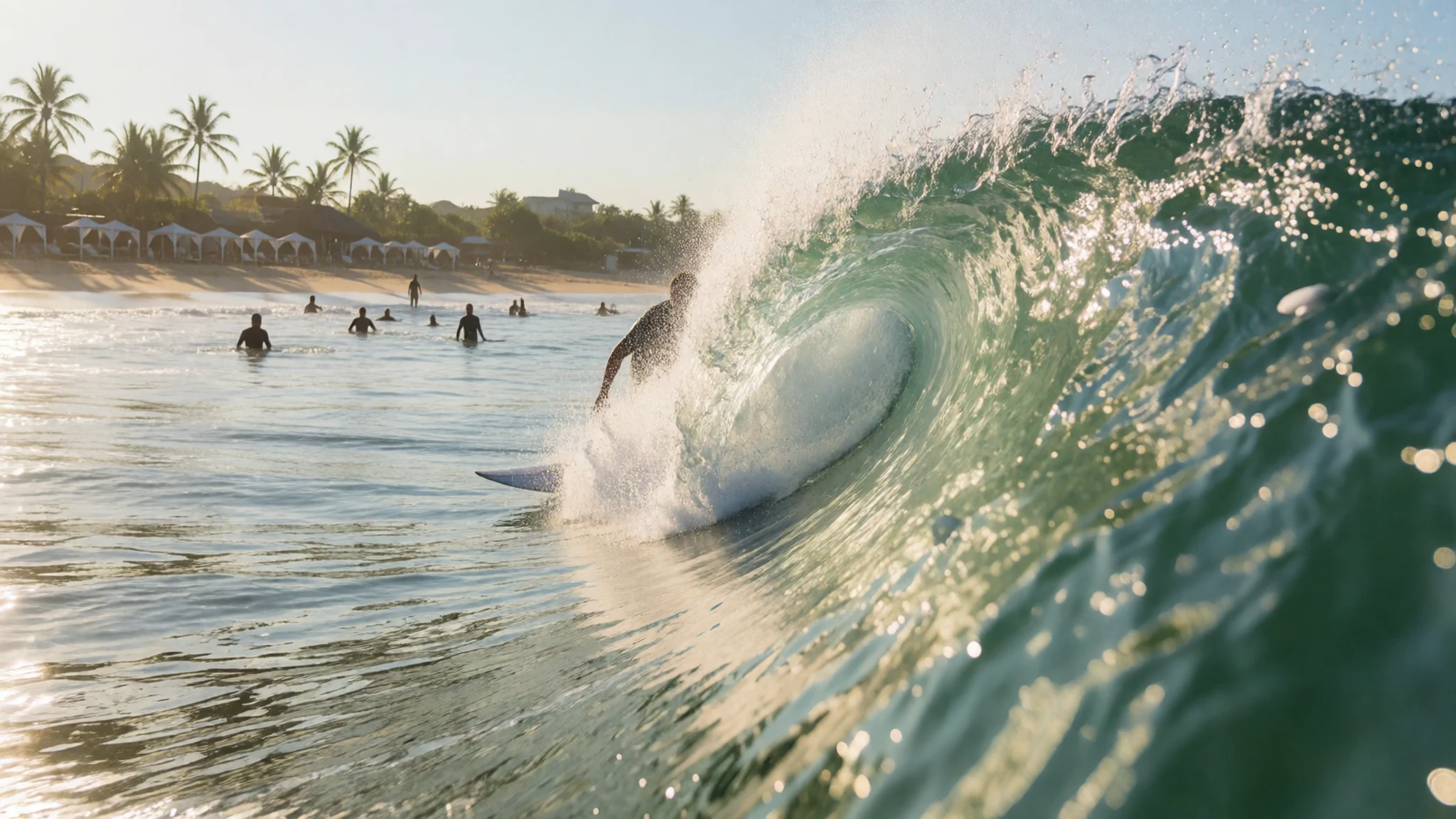
- Jeep safari into Kumana — Kumana National Park, south of Panama
Jeep safaris from Arugam Bay run into Kumana National Park, also known as Yala East, where elephants often move between Lahugala and Kumana. The price covers park entry and the drive, so check what your operator includes. Book the morning slot if you can, when animals are most active and the heat has not yet built. Dust and rough tracks are part of the day.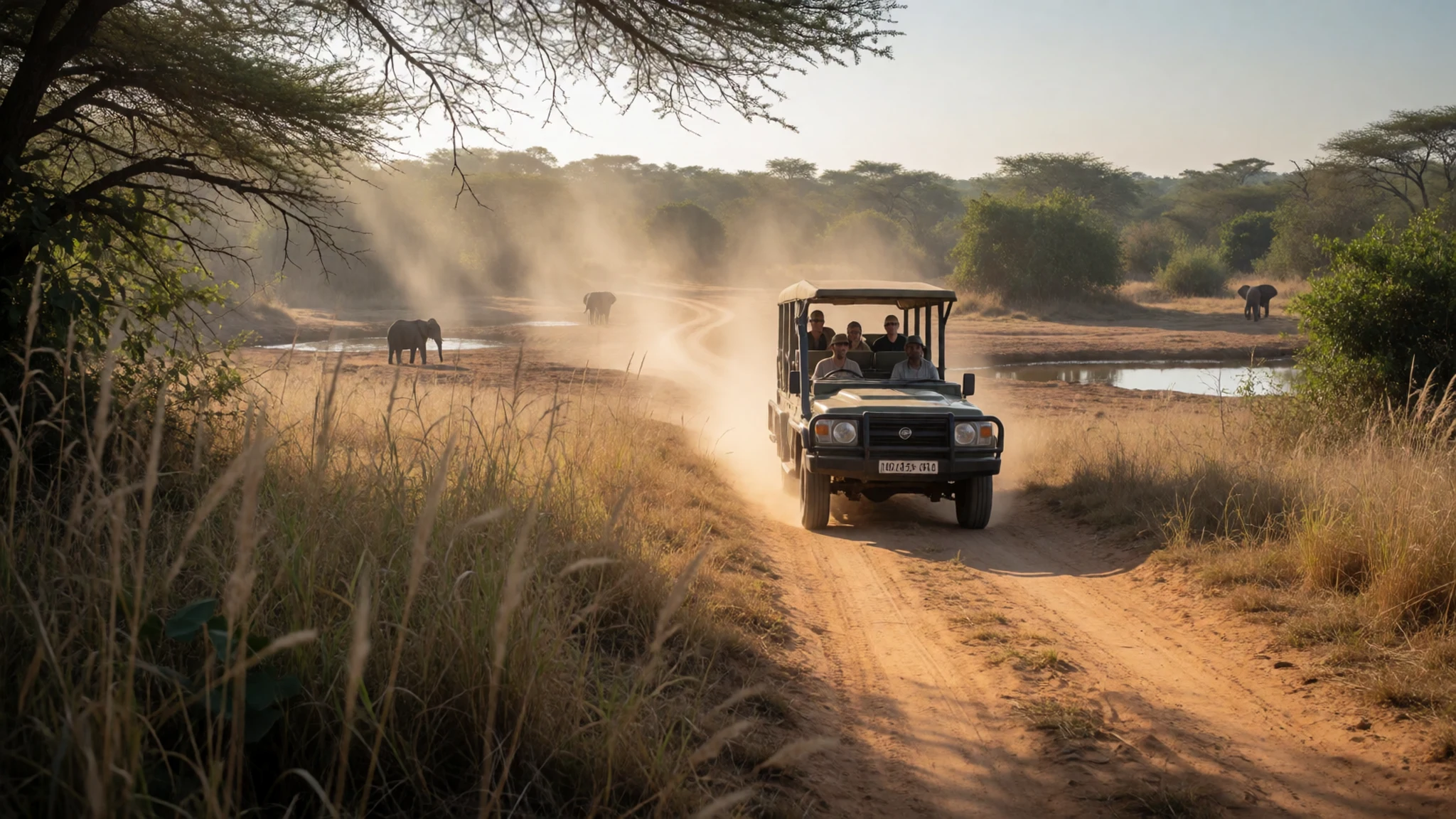
- Boat trip on Pottuvil lagoon — Southern end of Pottuvil lagoon
Near Arugam Bay, small boats leave from the southern end of the Pottuvil lagoon, and local fishermen usually take you on a tour of about two hours. You may see eagles, crocodiles, elephants and other animals along the banks, and the quiet water makes a good break from the surf. Bring water, a hat and a little cash for the boatman. Go early or late, when wildlife is easier to spot.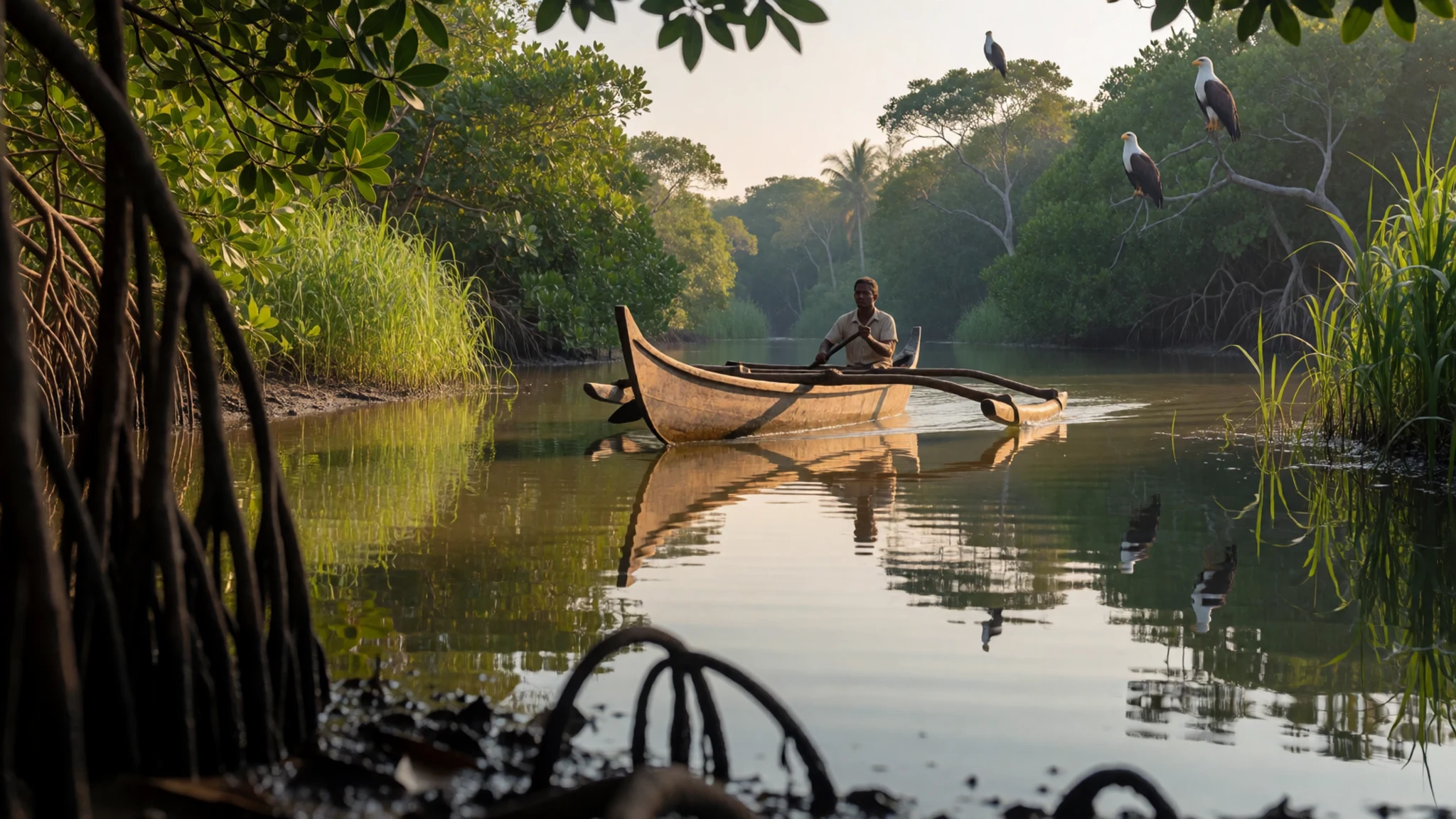
- Lahugala Kitulana National Park — Across Pottuvil lagoon from the bay
Lahugala Kitulana National Park lies close to Arugam Bay and borders the far side of the Pottuvil lagoon. It is a good option if you want to see wild elephants without the longer trip to Yala. Access and opening arrangements change, so check locally before you set out. Go with a licensed guide or a tour agency, and keep your distance from the animals at all times.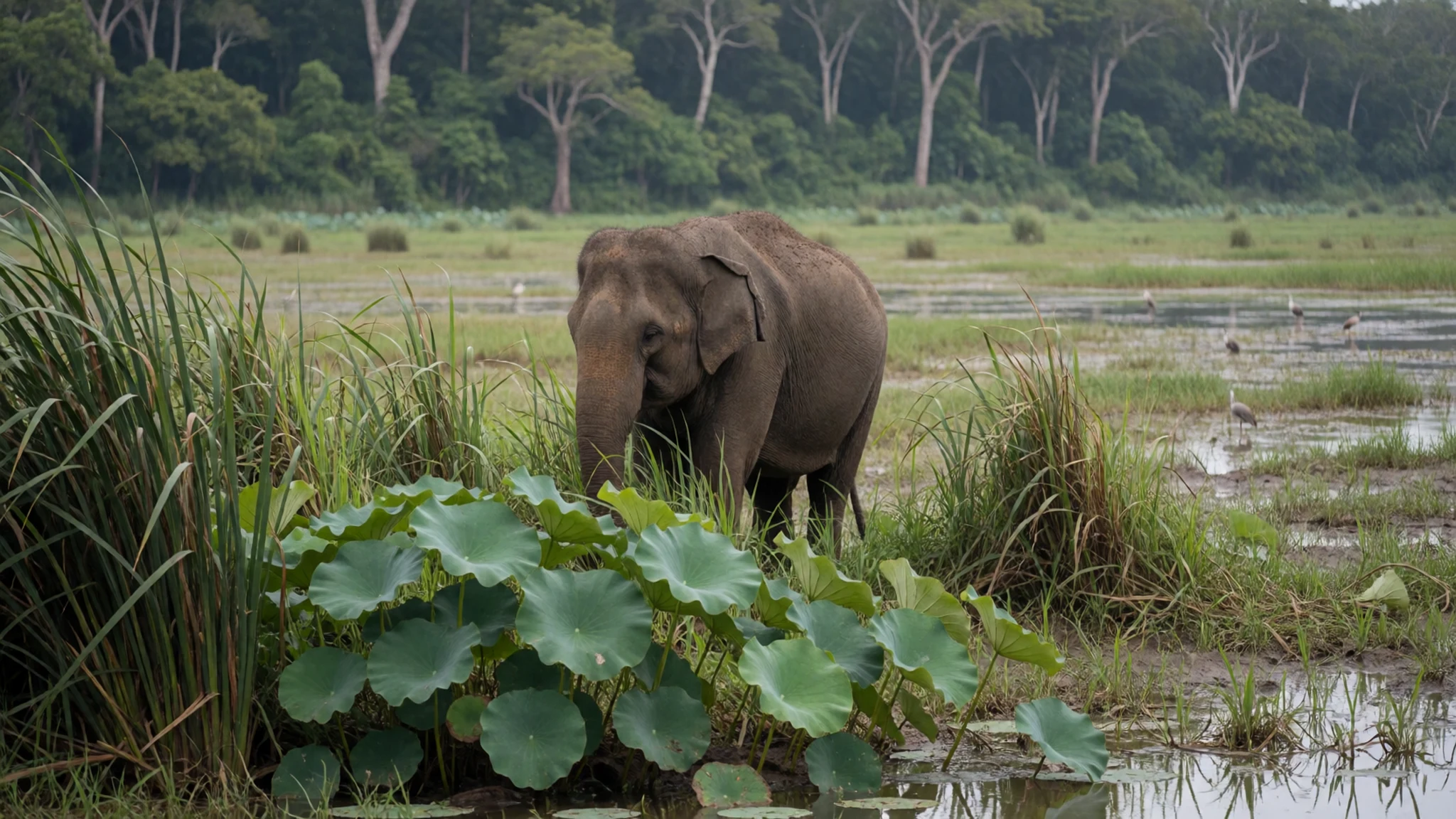
- Tuk-tuk safari — Tour agencies on Panama Road
Tuk-tuk safaris from Arugam Bay are a cheap way to see the local area, with drivers from tour agencies along Panama Road taking you to nearby beaches, temples and lagoons. Several agencies run them, including Arugambay Tours and We Joint Tours, both with offices on the main road. Agree the route and the price before you set off, and ask for water. Expect dusty roads and an open-air ride.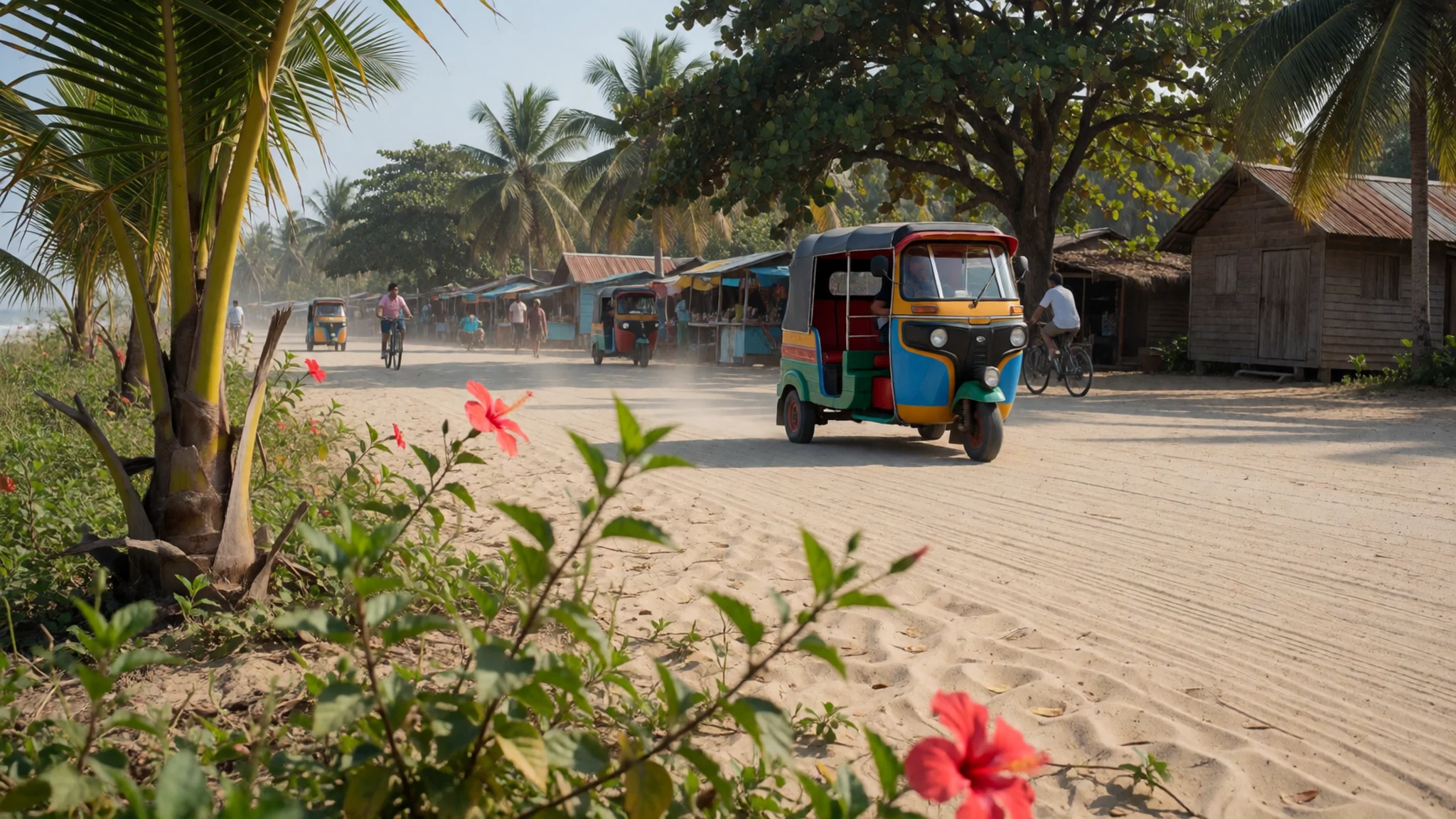
Culture
Arugam Bay is a surf town, but it sits inside a mixed community. Pottuvil, about 4 km north, is a Muslim village and the centre of trade and transport, while Tamil and Sinhalese settlements lie to the south at Panama and Okanda. Fishing shaped life here long before tourism arrived. During the years of conflict, hotels often bought the fishermen's catch. After the 2004 tsunami, fishing families were kept from returning for a time, and some friction over drying fish and boats in view of hotels still surfaces. Be curious rather than judgemental about it. Religious sites are part of the landscape too. The Hindu kovil at Okanda and the Buddhist monastery at Kudumbigala are visited by locals as well as travellers. Alcohol is limited on full moon days, when everywhere in Sri Lanka goes dry and sales stop, so buy in advance. Photograph people from a distance, and ask first before you lift a camera toward a family or a shrine. When you visit the kovil at Okanda, cover your shoulders and knees and take off your shoes before you step onto the threshold.
What to wear
In Arugam Bay, traditional dress comes from the wider island, where cloth matters more than tailoring. Sinhalese and Tamil women often wear the saree, a long piece of cotton or silk draped over a fitted blouse. Men commonly wear the sarong, a wrapped cloth worn at home and at temples. Cotton handloom and batik are the common textiles, with batik patterned by wax-resist dyeing. Muslim women in Pottuvil often wear long, loose dress and a headscarf. Today most people wear shirts, jeans or school uniform in town, while shorts and vests are common among surfers and tourists on the beach. For a visitor, pack light cotton or linen that covers shoulders and knees for villages, temples and the kovil. Bring a sun hat, sunglasses and sturdy sandals or reef shoes for rocky entry points. Swimwear belongs on the beach and in the sea only.
What to eat
- Fresh grilled fish — Beachfront restaurants on the sand, such as Emma Restaurant
In Arugam Bay, fresh grilled fish is the natural choice, with tuna and marlin often on show. Look for beachfront places where the catch is laid out. Ask what came in that morning, and check freshness before you order.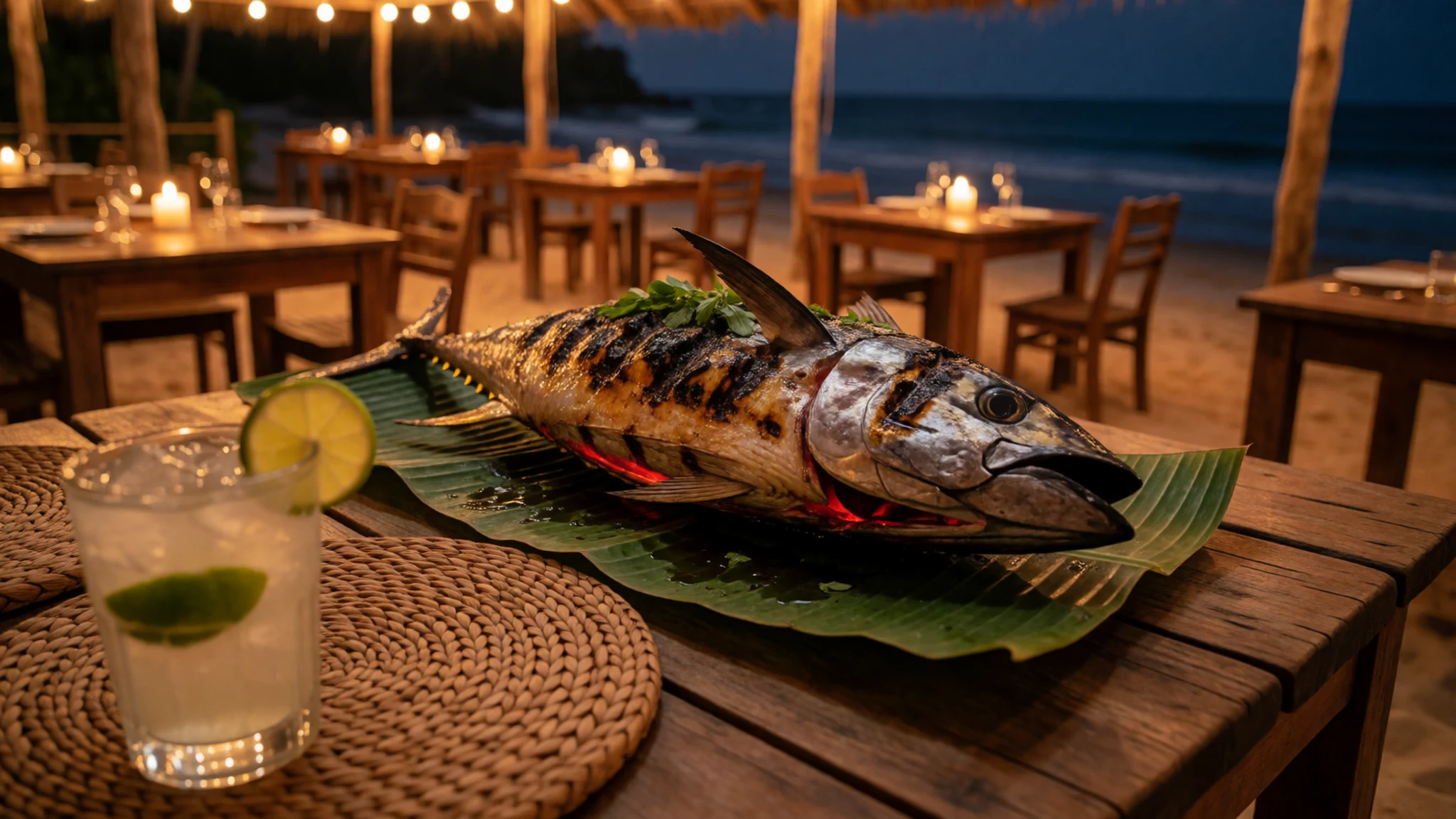
- Shawarma wraps — Mama's Restaurant on the main road, and other eateries along Panama Road
Large shawarma wraps are a fixture in Arugam Bay, filled with meat or vegetables and eaten on the go. One well-known option is the enormous wrap at Mama's Restaurant, which also runs a popular buffet. Eat them after a surf, when a hot meal feels good.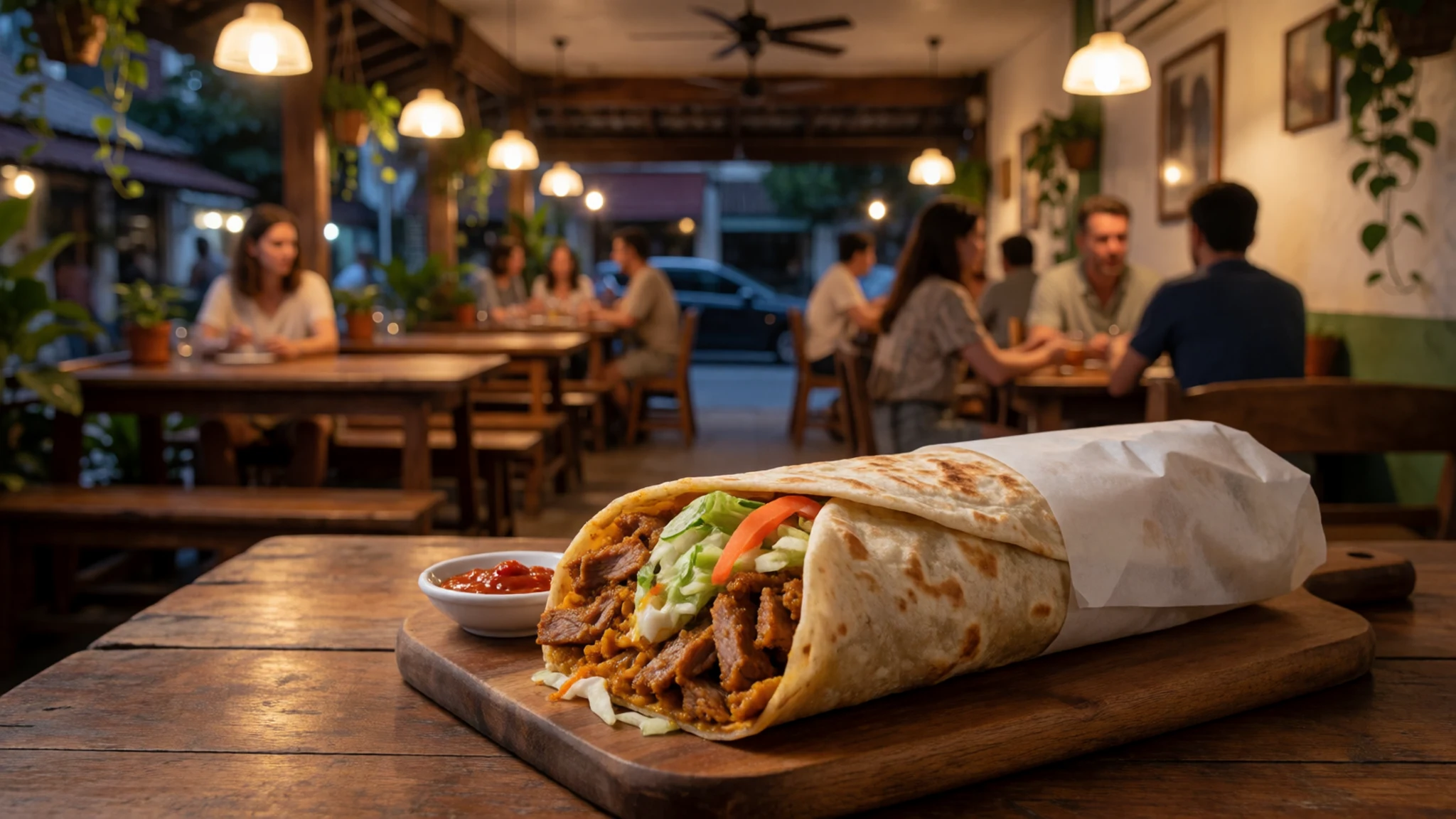
- Vegetarian and vegan plates — Cafes on the main road, such as Shady Lane
Vegetarian and vegan dishes are easy to find in Arugam Bay, and the cafes cater well to them. Shady Lane is a popular choice, with tourist-friendly plates for people who do not eat meat. Expect salads and smoothies after a morning surf.
- Western bakery treats — Kaffi, on the main road
Bakery cafes in Arugam Bay do a steady trade in cakes, pastries and breads that are hard to find elsewhere on the island. Kaffi has a display case full of Western-style goodies, which makes a useful stop for breakfast or a snack after the beach. - Bar food and evening drinks — Bars along Panama Road, and bottle shops across from Palm Grove
Bars in Arugam Bay serve food as well as drinks, and some have live music. Fins is always busy, especially on Wednesday ladies' night, and the late crowd arrives after dark. For drinks to take to the beach, use the bottle shops.
Plan it
Best time. April to October is the surf season, with July and August busiest and best for waves; March and October offer quieter water. November to March is the wet season, when surfable waves rarely form and most hotels and restaurants close.
How long. 2–3
Getting there. Fly into Colombo, then take an overnight bus to Pottuvil. Most buses stop there rather than on the bay, so take a tuk-tuk or walk the flat last stretch to your guesthouse.
Budget. low
Tips
- Book ahead for July and August, when the town fills with surfers
- Start jeep safaris early, before the heat builds
- Carry cash for tuk-tuks, boatmen and small shops
- Drink plenty of bottled water, as the dry zone is hot and sunny
- Ignore touts at Pottuvil who say the bus has gone or will not run
Etiquette
- Ask before photographing fishing families or people at the market
- Cover up when walking through Pottuvil and on temple grounds
- Keep noise down in guesthouses late at night
Nearby
Sources
- Wikidata Q27442751 (CC0)
- Wikipedia, Arugam Bay (rev 1381147429) (CC BY-SA 4.0)
- Wikivoyage, Arugam Bay (rev 5388031) (CC BY-SA 4.0)