Diyaluma Falls
Diyaluma Falls, Sri Lanka
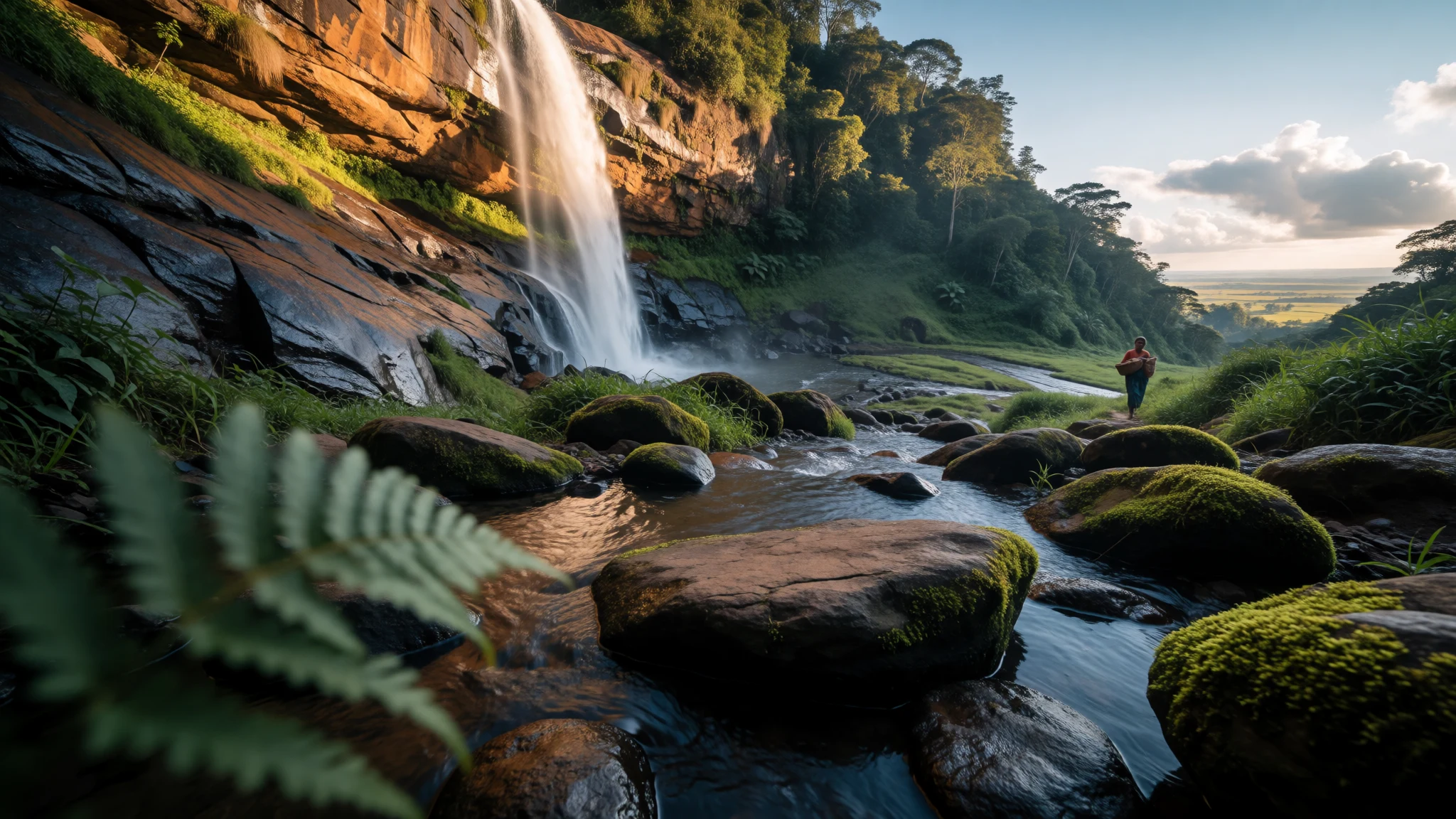
Diyaluma Falls pours 220 m down the edge of Sri Lanka's hill country, visible from the roadside near Koslanda.
The place
Diyaluma Falls drops 220 m (720 ft) down a rock wall on the southern edge of Sri Lanka's hill country, in Badulla District, and is ranked the second highest waterfall in the country. It lies about 6 km from the small town of Koslanda, right beside the Colombo–Badulla highway. That makes it unusual: most of Sri Lanka's big falls need a walk or a detour, while this one shows itself from the road. The water comes from the Punagala Oya, a stream that runs into the Kuda Oya and then the Kirindi Oya, a river system that carries the hill country's rain down towards the drier southeast. The setting explains the drama. The cool, green uplands of tea and forest end abruptly here, and the land steps down to a hotter plain. A stream that has wandered gently across the plateau reaches the lip and simply falls. From the valley below, the fall is a long white ribbon against dark rock in the wetter months, thinning to streaks in dry spells. A smaller waterfall, Beragala, sits upstream of the main drop. For a bed, the usual bases are Koslanda, Haputale and Ella. Haputale is a quiet tea-country ridge town, while Ella is busier and more used to backpackers. Mist often fills the valley by afternoon, so mornings give the clearest views.
Its story
Diyaluma Falls owes its shape to the way Sri Lanka's land is built: a high central plateau that ends in steep steps, with hotter lowlands beyond. Streams on the plateau cut slowly backwards into those edges, and where the rock resists, the water leaves the cliff in a single leap instead of wearing a gentle ramp. The Sinhala name begins with diya, meaning water, and local people tell their own tales about the fall. A visitor will hear different versions from different guides, so they are best enjoyed as stories rather than record. The human history is more recent and easier to trace. Across the surrounding hills, forest was cleared for tea estates during the colonial period, and much of the labour came from southern India. Their descendants form the Tamil communities still living in the estate villages, which is why the hill country feels so different from the Sinhala-majority areas around it. The Colombo–Badulla highway later threaded through this landscape, and the falls became something bus passengers could see without leaving their seats. In recent years the top of the drop has gained a following of its own, thanks to rock pools reached on foot from above, and photographs of people sitting near the edge have circulated widely. Locals are blunt that the place has caught people out: the rock is slick, the current strengthens fast after rain, and the drop is not forgiving.
What to see
- The roadside view from below — Colombo–Badulla highway, near Koslanda
The easiest way to see Diyaluma Falls is from the road that runs past its foot, where the full height of the drop fits into one frame. Buses and tuk-tuks slow here, and stalls sell snacks and tea. Come early, before the mist thickens and the weekend picnic crowds arrive.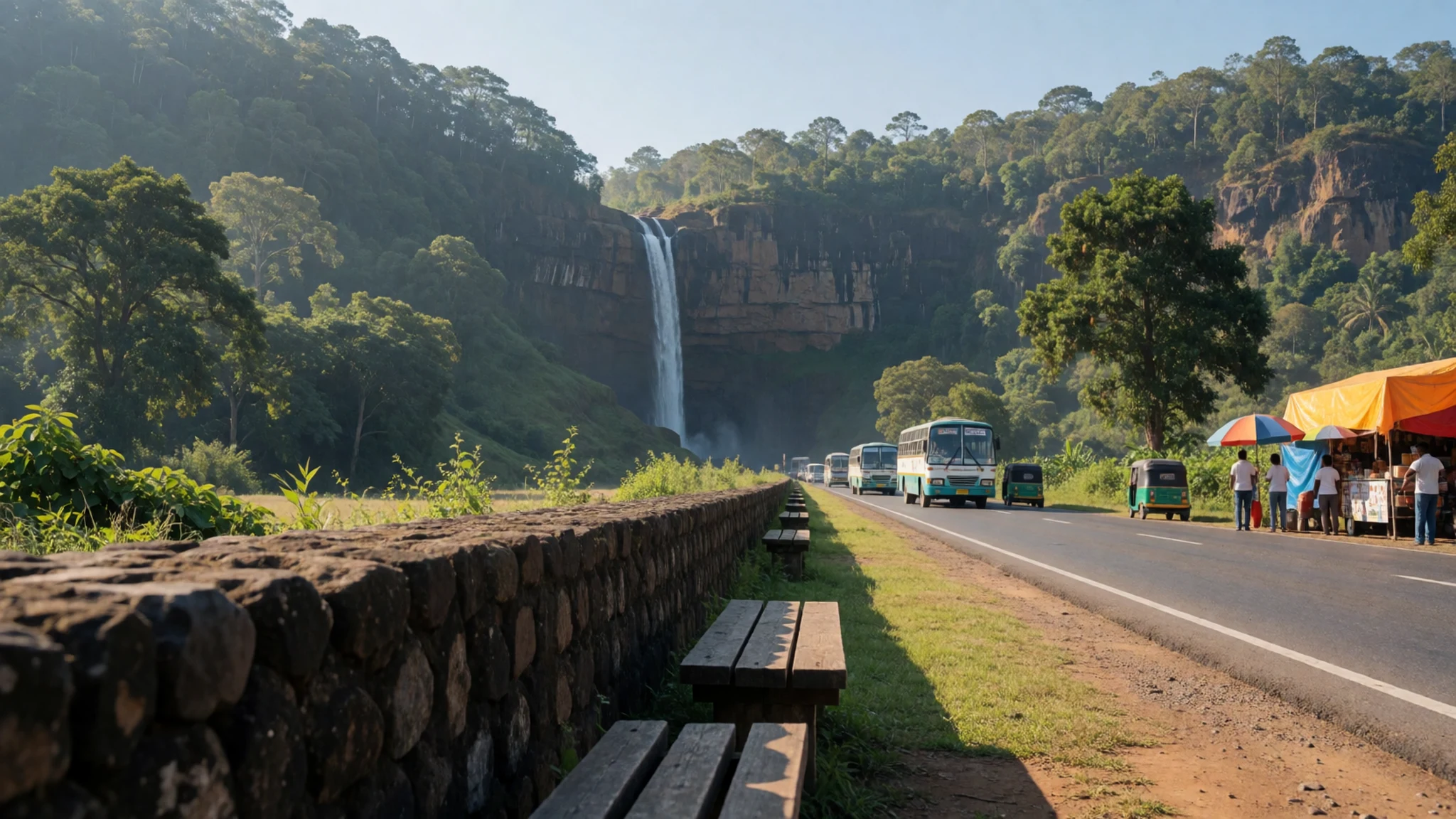
- A broader view across the valley — Koslanda, Badulla District
Moving a little away from the road gives a wider angle, with the fall set against forest and the stepped edge of the plateau. This is the best spot for photographs that show scale, and for watching how the flow changes with the season. In the dry months it thins to a few bright threads.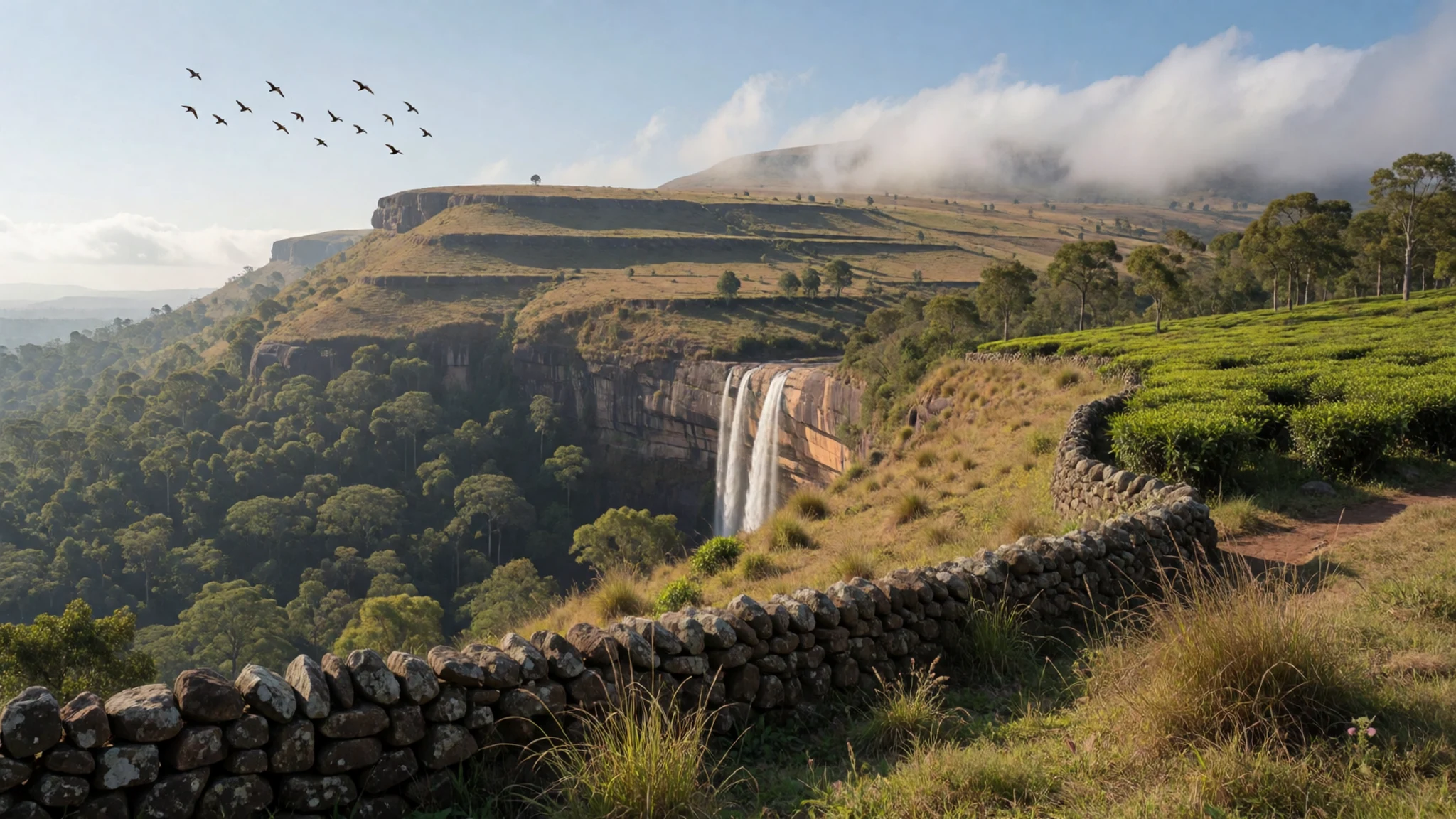
- The top of the falls — Upper Punagala Oya
Above the drop, the stream crosses flat rock and gathers in shallow pools that have become a popular walk. It is reached on foot from the upper side, usually with a local guide. Treat it with respect: the rock is slippery, and after rain the water rises fast. Stay well back from the edge.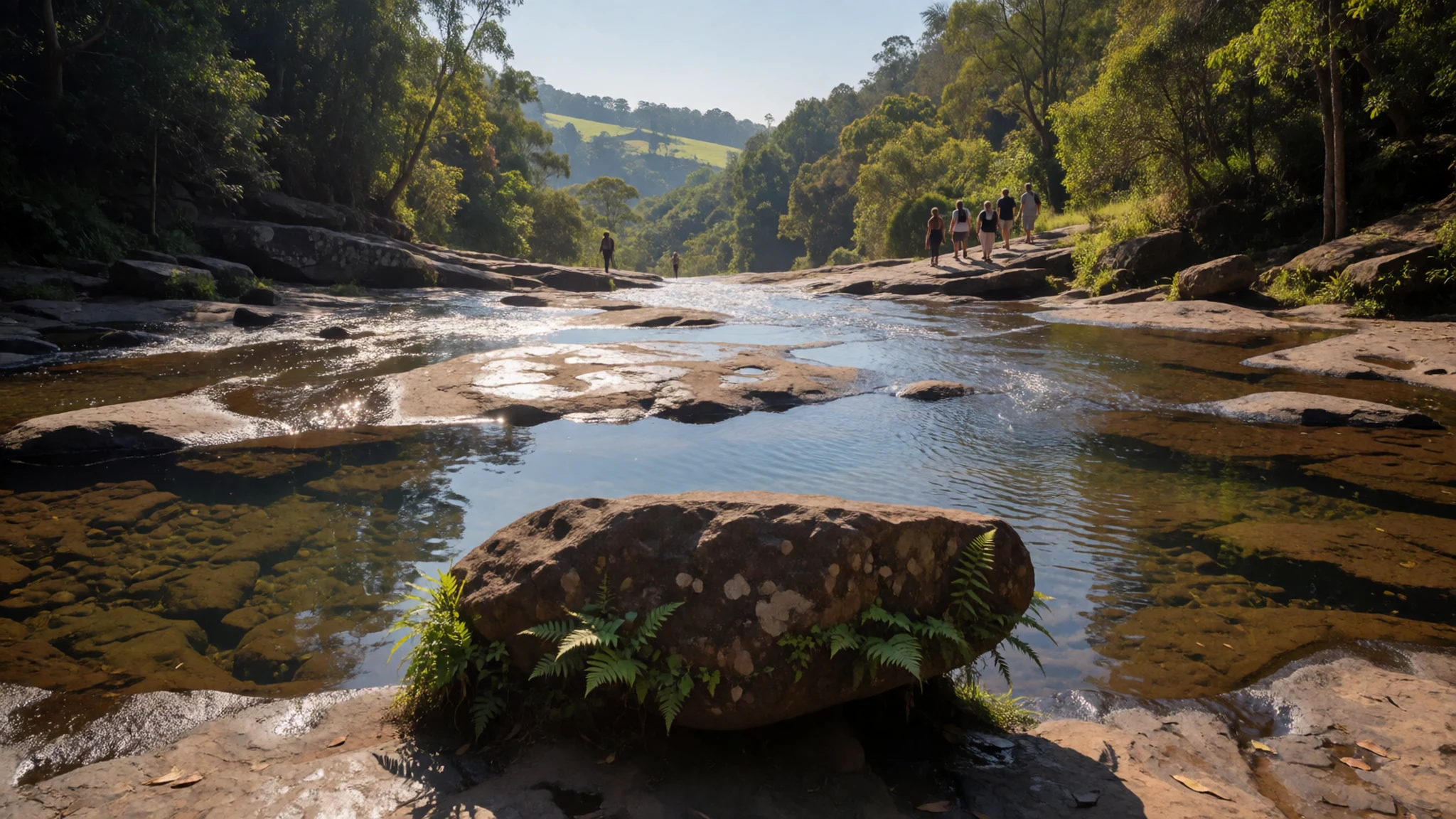
- Beragala Falls — Upstream of Diyaluma Falls
Beragala is a much smaller waterfall lying upstream of the main drop, and it takes a little more effort to find. It is a gentler stop for people who want the sound of falling water without the height, and it shows where the stream gathers speed before the plunge.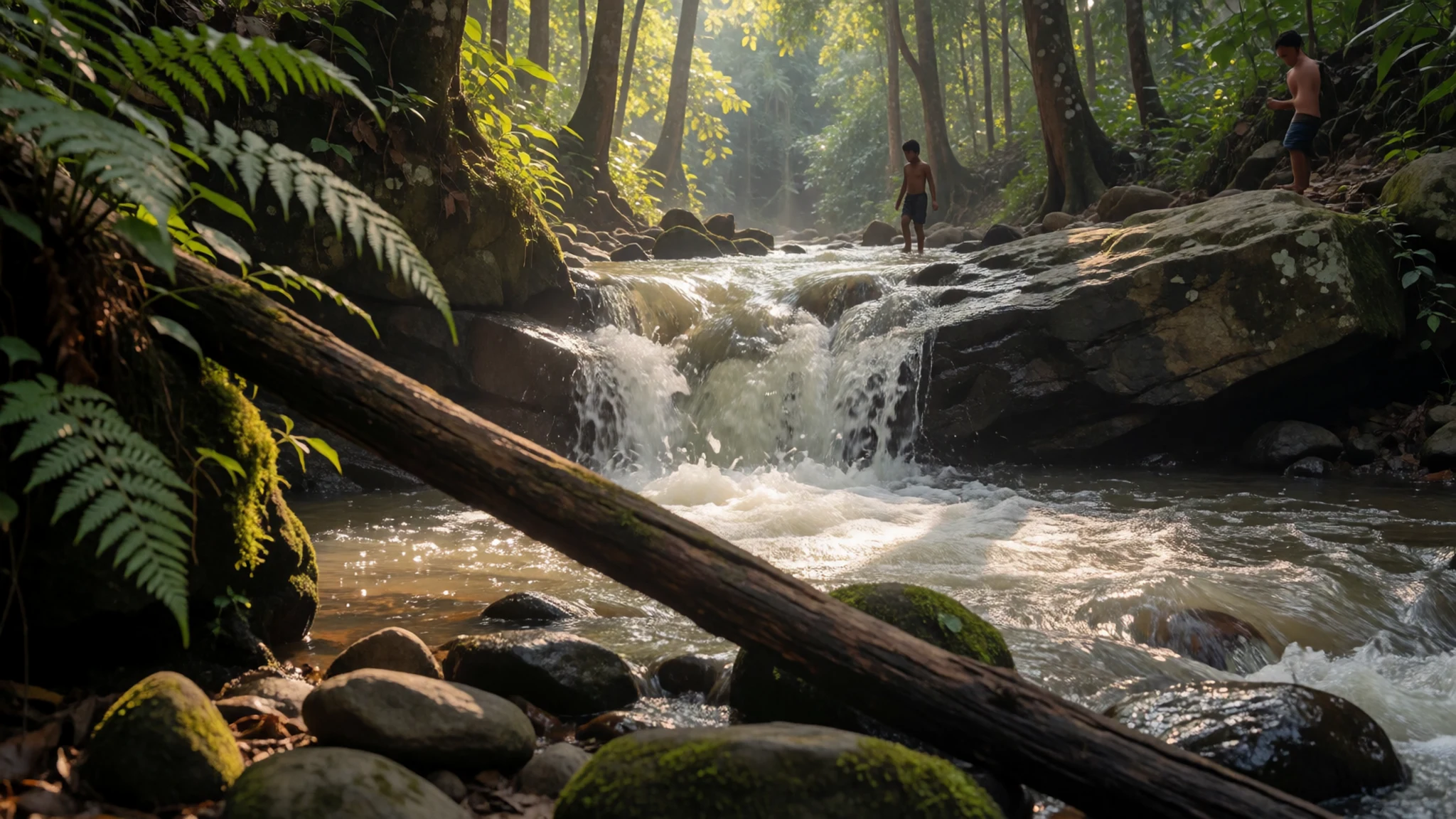
- Haputale ridge and tea slopes — Haputale, Badulla District
Haputale sits on a ridge on the edge of the hill country, with tea estates running down the slopes and, on clear mornings, long views over the plain to the south. A half-day here pairs well with the falls, and it is the quieter alternative to Ella for an overnight stay.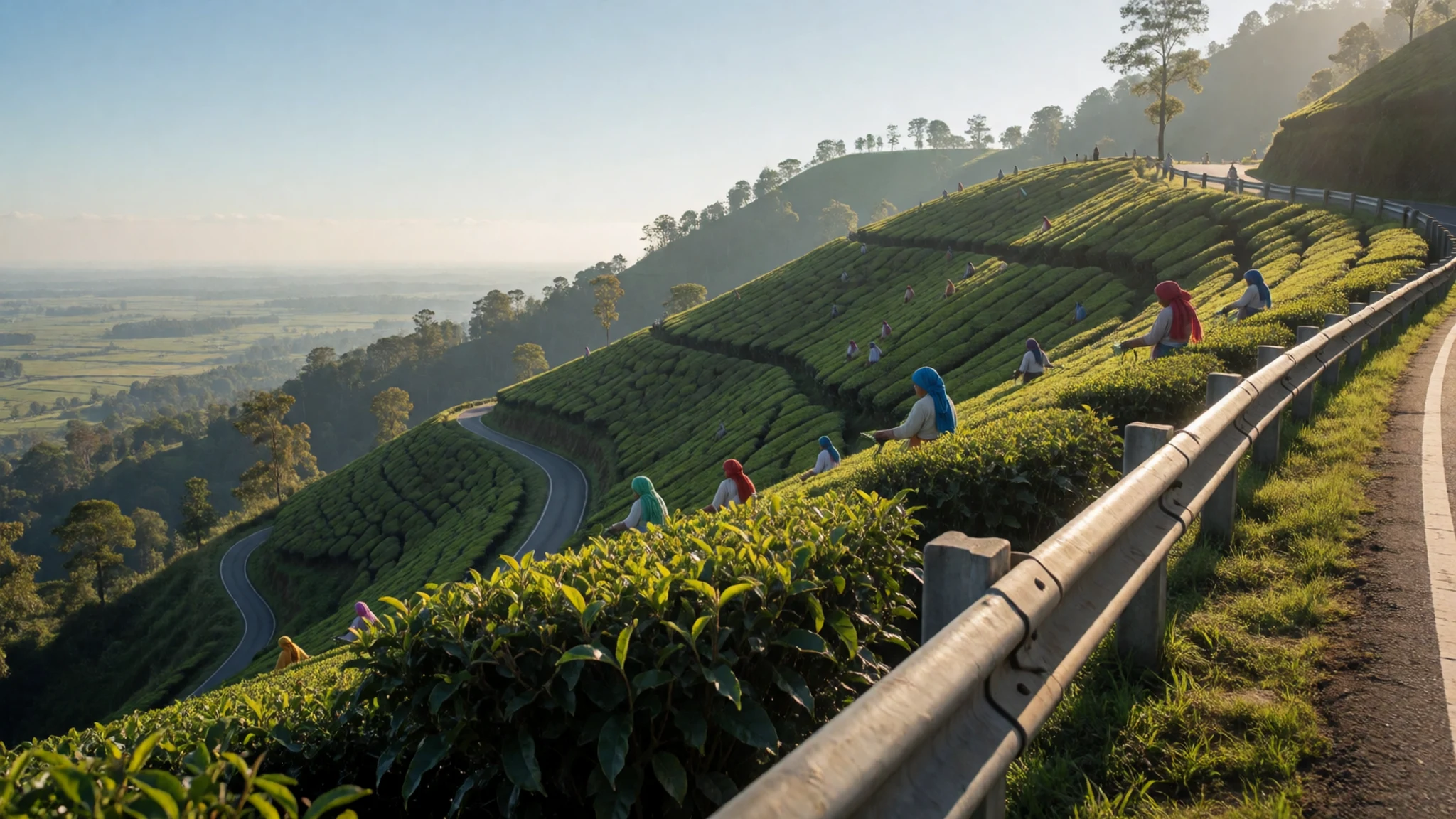
Culture
Diyaluma Falls sits where two communities of Sri Lanka's hill country meet. The Sinhala villages of the area are mostly Buddhist, and small roadside shrines, often with a Buddha figure or a painted shrine to a local deity, mark many bends in the highway. Alongside them are the Tamil families of the tea estates, whose community has its own temples, festivals and food. The falls themselves are a favourite stop for Sri Lankan families and bus parties, so weekends and public holidays are busy, with picnics, loud music from vans and children splashing in the shallows. Full-moon days, called Poya, are religious holidays across the island; shops selling alcohol are normally shut, and the roads fill with pilgrims and travellers. Tea is woven into daily life here: a cup at a roadside kiosk, often sweet and milky, is the standard way to rest on a journey. People are generally friendly and curious, and a greeting or a smile goes a long way. Local guides at the top of the falls are a useful source of safety advice, and their knowledge of recent rain and water levels is worth more than any app. At roadside shrines and temples, dress modestly, remove shoes and hats before entering, and ask before photographing anyone at prayer.
What to wear
Around Diyaluma Falls, traditional dress in Sri Lanka's hill country draws on island-wide custom. Men wear the sarong, a wrapped length of cotton or handloom cloth, often with a white shirt for formal and religious occasions. Women wear the saree, and in the Kandyan style the osariya, a sari draped with a pleated frill at the waist, worn for weddings and temple events. Cotton, handloom weaving and batik are the best-known textiles. On the tea estates, many women wear a saree or long skirt with a headcloth for plucking. Day to day, most people now dress in a mix of western and local clothes: trousers or jeans and shirts, simple dresses, and a sarong at home. Schoolchildren in white uniforms are a common sight on the highway. A visitor should plan for changeable weather. Light, quick-drying cotton or synthetic layers work best, along with a rain jacket, because showers can arrive in minutes and mist can make the air feel cool. Shoes need real grip for the wet rock and muddy paths, so choose trainers or trail sandals with a firm sole. Swimwear is best kept modest by the pools, and when visiting temples, cover shoulders and knees. Long socks help against leeches in the wetter months.
What to eat
- Rice and curry — Roadside eateries in Koslanda and Haputale
The everyday meal is a plate of rice with several small curries, typically dhal, a vegetable, perhaps fish or chicken, and a sambol. It is filling and mild to fiery. Look for it at any small roadside eatery or in the market towns.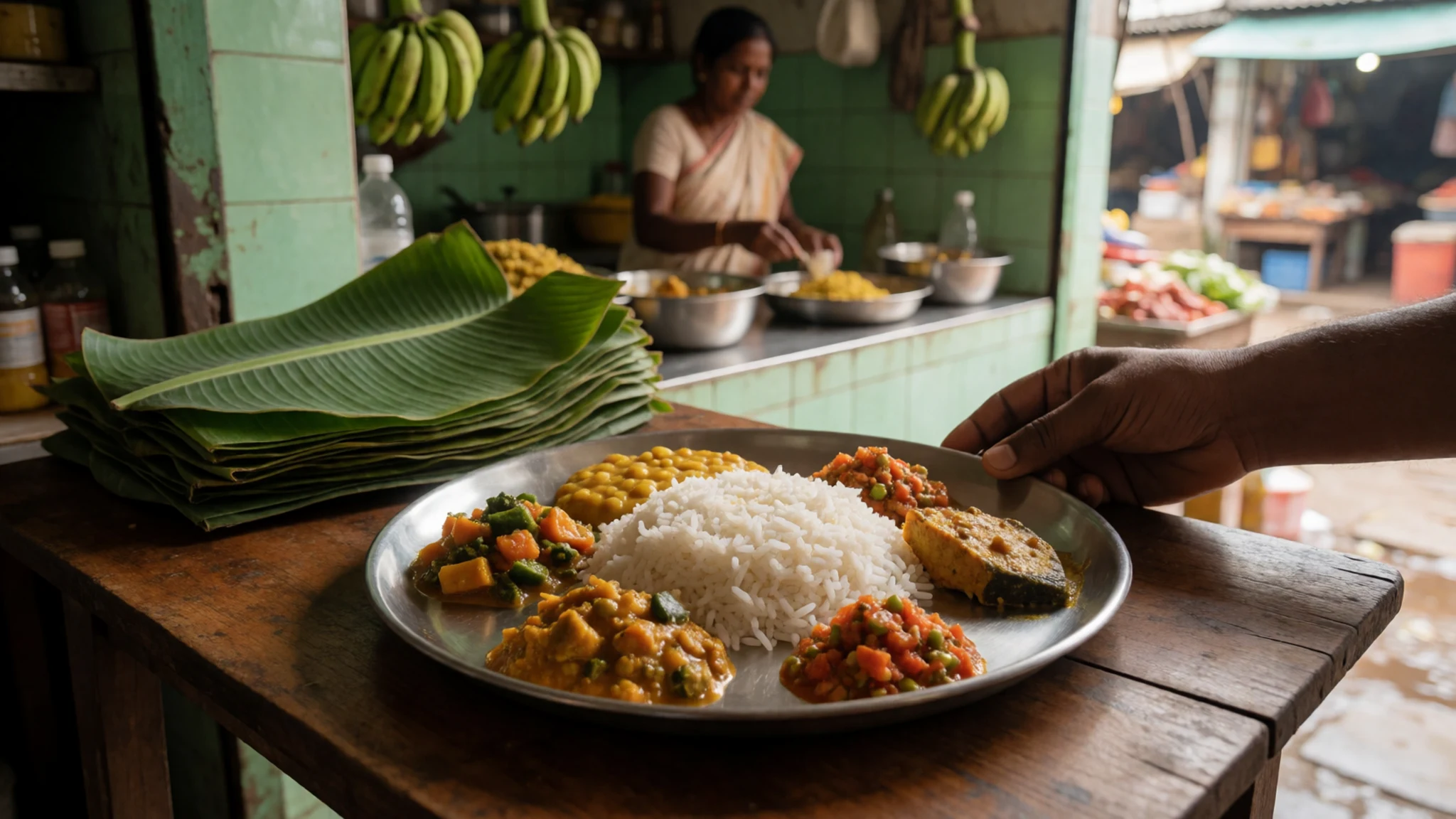
- Hoppers — Small eateries and breakfast stalls in Ella and Haputale
Hoppers, or appa, are bowl-shaped pancakes made from fermented rice batter, crisp at the rim and soft in the middle, often with an egg cooked in the centre. They are mostly a breakfast and evening food, served with a hot onion relish.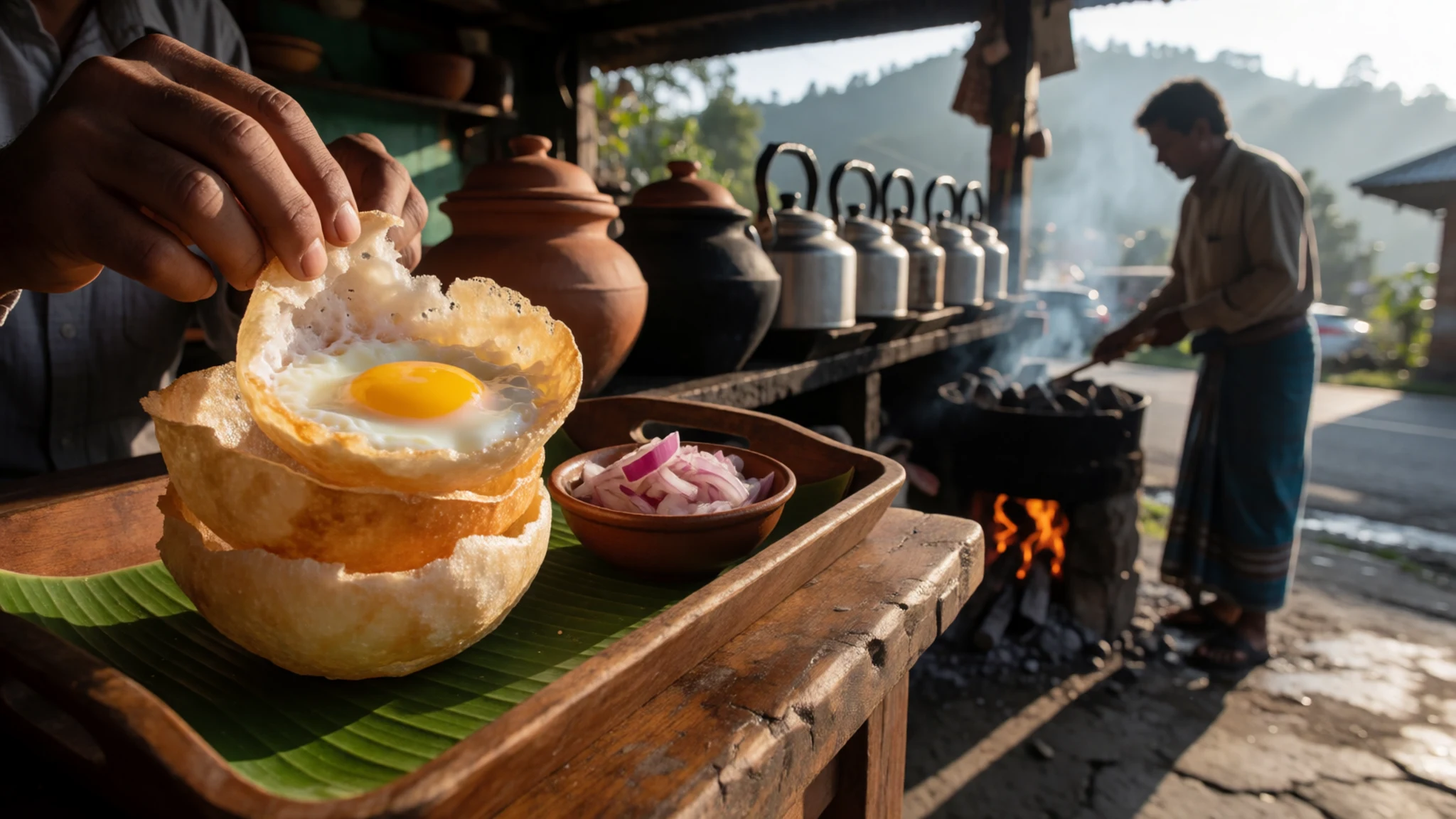
- Kottu roti — Street stalls and small restaurants in the evening, in the towns near the falls
Kottu is chopped flatbread stir-fried on a hot griddle with vegetables, egg or meat and spices, announced by the rhythmic clanging of two blades. It is an evening street dish and a cheap, filling end to a day outdoors. - Kiri bath with lunu miris — Morning food stalls and home-style eateries
Kiri bath is rice cooked in coconut milk and cut into diamonds, a dish for mornings and celebrations. It is served with lunu miris, a fiery paste of chilli and onion. The mix of creamy and sharp is typical of Sri Lankan breakfast. - Hill-country tea — Roadside tea kiosks and estate shops around Haputale
The area is tea country, and a cup of strong, often sweetened black tea or milk tea is the natural stop after a day at the falls. Many roadside kiosks and estate shops serve it fresh, and some sell packets to take home.
Plan it
Best time. January to April is usually the more settled stretch in this part of the hill country, with clearer mornings and easier walking. The falls run fuller after rain, so they look most dramatic in wetter spells, but mist and slippery rock are more likely. Check the forecast before heading to the top.
How long. 1
Getting there. Fly into Bandaranaike International Airport near Colombo, then travel by road or by the hill-country railway towards Haputale or Ella. From there, take a bus or tuk-tuk along the Colombo–Badulla highway to the falls, which lie about 6 km from Koslanda. Check the railway and bus timetables locally.
Budget. low
Tips
- Go in the morning, before mist and weekend crowds build
- Carry some cash for snacks, tea and guides, as card use is patchy on the roadside
- Bring water, a rain layer and shoes with proper grip
- Stay away from the edge and the upper pools after rain, as water levels rise quickly
- Combine the falls with a morning in Haputale or Ella
Etiquette
- Dress modestly when visiting roadside shrines and temples
- Ask before photographing people, especially at prayer or at work on the tea estates
- Take your litter with you and keep noise down on the paths
Nearby
Sources
- Wikidata Q37549 (CC0)
- Wikipedia: Diyaluma Falls (rev 1362219938) (CC BY-SA 4.0)
- Wikivoyage: Sri Lanka (CC BY-SA 4.0)
- Photo: Diyaluma Falls 1 (Travel Local) (CC BY 2.5)
- Photo: 1.1 best friends (Ruwanil dushan) (CC BY-SA 4.0)
- Photo: 1.2 best friends (Ruwanil dushan) (CC BY-SA 4.0)
- Photo: Beragala banner (SarangaRodrigo) (CC BY-SA 4.0)
- Photo: Dilayuma Ella (BluesyPete) (CC BY 3.0)
- Photo: Diyaluma Falls, Koslanda (Adbar) (CC BY 3.0)
- Photo: Diyaluma falls 1 (Dbulathwatta) (CC BY-SA 4.0)
- Photo: Diyaluma falls from the bottom (Venushka Fonseka) (CC BY-SA 4.0)


